Blog

  • He carried his classmate to school for ten years, then missed his own medical school by a quarter of a point. Six years later, that school read out his name.

    He carried his classmate to school for ten years, then missed his own medical school by a quarter of a point. Six years later, that school read out his name.

    In 2020 a teenager in Trieu Son district, in the Vietnamese province of Thanh Hoa, sat the national university entrance examination and scored 28.15 out of 30. His marks were 9.4 in mathematics, 9.75 in chemistry and 9.0 in biology. He wanted to study general medicine at Hanoi Medical University, which is the most competitive medical course in the country. That year the cut-off landed at 28.40. He was short by a quarter of a point.

    What made the near miss national news was not the score. It was that for the previous ten years he had been carrying another boy to school on his back.

    The one doing the carrying is Ngo Van Hieu. The one being carried is Nguyen Tat Minh. They were neighbours. Minh was born with a congenital disability affecting both legs and his right arm, described in Vietnamese reporting as limbs that contracted and wasted as he grew, which left him unable to walk unaided. No diagnosis has been published and no medical source is attached to any account of it, so there is no name to give it here.

    What is documented is the arrangement the two boys came to as small children and then simply kept. Hieu carried Minh to class. He did it through primary school and he did it through secondary school, in heat and in rain, until they finished in 2020. Ten years is not a gesture. It is a decade of mornings.

    When the examination results came out, the story was everywhere in Vietnam. Hieu was given a national youth award that year and named an inspirational figure of 2020 by one of the country’s larger news outlets. And then came the part of the story that most of the coverage at the time rushed past, and which is probably the most revealing thing about him.

    With the public mood behind him, there were widespread calls for Hanoi Medical University to let him in anyway, by special dispensation, on the strength of who he evidently was. A quarter of a point, for this boy, surely could be waived.

    He said no.

    His reasoning, as he gave it at the time, was in two parts and both are worth sitting with. He did not want to put the university in an awkward position. And he did not want a place that would have to come out of somebody else’s hands. There were other candidates who had made the cut-off fairly. If he went in over the line, one of them went out.

    So he enrolled instead at Thai Binh University of Medicine and Pharmacy, in a different province and a different city, which waived his tuition fees. General medicine in Vietnam is a six-year degree. He had six years ahead of him at the school that had not been his first choice, which is a long time to live with a quarter of a point.

    Minh, meanwhile, had sat the same examination in a different subject combination and scored about 28.1, with marks of 9.6 in mathematics, 9.25 in physics and 9.25 in chemistry, which by one account included half a point of bonus credit. He went to Hanoi University of Science and Technology to read computer science, and here the story stops being about the boy who was carried and starts being about the person Minh actually is, which the sentimental version of this tends to skip entirely.

    By his own account, computer science was not a calling. It was where his score and his list of preferences landed him. He found it interesting once he got there, which is roughly how most people choose most things.

    It was hard, and not only for the obvious reason. He has use of one hand for typing, in a degree that is almost entirely typing. He also walked into a cohort of people who had all been the best in their own schools, after a secondary education where he had been near the top of his. His first semester algebra grade was a D plus, which in the Vietnamese marking band is a bare pass and, for someone who had never had to worry about marks, a shock.

    He did not treat it as a verdict. He rebuilt how he studied. More practice problems than he thought he needed, material pulled off the internet to fill the gaps, and study groups rather than grinding alone. His grade averages in later semesters came up to around 3.5 out of 4. He finished with a cumulative 3.23 and a distinction, and he graduated in the spring of last year.

    He has said, when asked, that he made a decision early on not to let his disability function as an excuse, and that he would rather be judged on whether he can do the work than be given credit for managing at all. That is not an inspirational slogan. It is a working professional’s boundary, and he states it plainly.

    Which brings us to the graduation ceremony, the one moment in all of this that is genuinely hard to read about without feeling something.

    Hieu was by then in his fifth year of medicine in Thai Binh. When Minh’s turn came to collect his degree at Hanoi University of Science and Technology, Hieu travelled close to a hundred kilometres to be there, put his friend on his back, and carried him up onto the stage in front of the hall to take it. The university’s own photographers covered it. It is the same action, in the same posture, that the two of them had performed thousands of times on a provincial road, done once more in a room full of people who had no idea it had ever been ordinary.

    Then everybody went back to work, and the cameras left, and that is usually where this kind of story ends. It is worth being honest that six years went by in which almost nothing was written about either of them.

    Minh went home to Thanh Hoa. He got an office job, found through a family connection, and he works as a web programmer. His father drives him in. He puts part of his wage into the household. Asked about his ambitions he declined to talk about anything distant and said he was working on getting better at his job, which is the least quotable and most believable answer available.

    He describes Hieu as being like a brother to him. He has made a point, more than once, of saying that Hieu never made him feel like a burden and never seemed to be keeping score. They do not see each other every day the way they did for ten years, and he says the friendship is unchanged anyway. Asked what he thinks matters in a person, he talked about honesty, nerve, kindness and not being fake with people.

    Hieu finished his six years earlier this year and holds a degree in general medicine. At the time he graduated he was studying for the next hurdle, and he was candid that he might not clear it. If he did not, he said, he would start clinical training at health facilities to accumulate the practice hours he needed, then sit the national licensing examination and look for a hospital post the long way round.

    The hurdle is worth explaining, because it is a feature of Vietnamese medical training that most readers outside the country will not know, and it is the reason the story was not finished in August.

    A Vietnamese medical degree does not make you a specialist. The route that does, and the route that essentially determines the shape of a career, is the residency programme, bac si noi tru, and entry is by competitive examination taken once, shortly after graduation, with no second attempt in later years for most candidates. It is a single door and it opens once. Around a thousand people sat it this year. A little over seven hundred cleared the pass threshold. There were 444 places.

    Hieu scored 20.76 out of 30 and finished 293rd.

    On match day, in the second week of September, he chose diagnostic imaging. And the institution he will be doing it at is Hanoi Medical University.

    Six years after the quarter of a point, after declining the offer to be let in on sympathy, he went back and got in on the examination.

    There is a temptation to call that poetic justice and a stronger temptation to make it the moral of the whole thing, and neither is quite right. He is not a qualified radiologist. He has a medical degree and a training place, and three years of residency in front of him, which in diagnostic imaging means nights, volume, and the particular pressure of being the person who has to see the thing on the scan that nobody else has seen yet. He has not arrived anywhere. He has been admitted.

    What is true, and is more interesting than a tidy ending, is that both of these men got where they were going by routes neither of them would have drawn in advance, and in an order nobody would have predicted.

    The disabled boy who had to be carried up a flight of stairs every morning finished his degree first, in four years, with a distinction, and has been earning a living writing code for over a year. The boy who did the carrying took six years, needed a seventh step to get into training, and is still, by the strict definition, not yet practising. Nobody plans that. It is just what happened, and it quietly dismantles the version of this story in which one of them is the hero and the other is the lesson.

    It also raises the question that the feel-good framing tends to leave alone, which is why a child needed to be carried in the first place.

    The answer is not complicated and it is not unique to Vietnam. A rural district school with steps, no ramps and no lift, on a route with no accessible transport, means a child who cannot walk gets to class on somebody’s back or does not get to class. Minh’s education, from the age of about six to about sixteen, depended on the physical willingness of one particular friend who lived nearby. Had Hieu been a less decent boy, or had his family moved, there is no mechanism in that story that would have picked up the slack.

    That is worth saying because the ten years get told as a triumph of friendship, and they were. They were also ten years of a boy’s schooling resting on a single point of failure. Both things are true at once, and the second one does not take anything away from Hieu. It is simply the part that a ramp would have fixed.

    The two of them still visit each other’s houses. Neither seems especially interested in being an inspiration, and Minh in particular bristles gently at the idea, which is probably the healthiest response available to anyone who has been a national news item since adolescence.

    If you want a single image to keep from all of it, it is not the stairs and it is not the stage. It is a reply Minh gave about those ten years, which was that Hieu helped him naturally, without calculation, as if there were nothing to work out. For a decade, neither boy appears to have thought of the arrangement as remarkable. One of them could not get up the steps and the other one could. That was the whole of it.

    One is a programmer in his home province, getting better at his job and driving his own ambitions at a scale he can see. The other is starting three years of training at the school that once came up a quarter of a point short of him, learning to read the inside of a body from a screen.

    They walked to the same school for ten years and have ended up in different cities, in different trades, both of them employed and neither of them finished. Which, for two kids from a district in Thanh Hoa, is not a fairy tale. It is better than that. It is just a life, working out.


  • Fifteen photographs, sixty seconds each, taken on a telescope he will never stand next to. The thing he found had already gone past us.

    Fifteen photographs, sixty seconds each, taken on a telescope he will never stand next to. The thing he found had already gone past us.

    Earlier this year, on a February night, a 28-year-old man in the Russian Far East asked a two-metre telescope on a volcanic ridge in the Canary Islands to take fifteen photographs of one patch of sky, sixty seconds each. He was roughly 6,800 miles away from the instrument and had never been anywhere near it. When the frames came back he laid them in order and looked for the one point of light that had moved while everything around it stayed still. Something had. Within hours it had a temporary label, RFD0284, on a public web page that professional astronomers refresh like a trading screen. Within a day it had a permanent name, 2026 CQ3, a near-Earth asteroid somewhere between the size of a house and the size of an office block.

    The man is Filipp Romanov. He lives in Nakhodka, a port town on the Sea of Japan coast of Primorsky Krai. He is self-taught. He has no degree in astronomy and, more to the point, he has no telescope. Every object he has ever found, and the list now runs to 82 variable stars, ten planetary nebula candidates, three novae in other galaxies, three supernovae and thirteen asteroids, he found on somebody else’s glass, booked in slices, from a desk thousands of miles from the mirror.

    That is a genuinely new way to do this, and it is worth understanding why, because it explains both how he got there and why almost nobody else has.

    For most of the history of the subject, finding a new object in the solar system was something an amateur could reasonably hope to do. You needed patience, dark skies, a decent instrument and a tolerance for cold. People found comets from their gardens. The famous ones have their names on things because of it. Then, over about twenty years, the professionals took the sky. Automated survey systems now sweep the whole visible sky on a repeating cycle, night after night, with wide-field cameras and software that flags anything that shifts between frames. Catalina, Pan-STARRS, ATLAS and the rest find the overwhelming majority of near-Earth objects now. They are not better observers than amateurs. They are simply everywhere, every night, and they never get tired or bored or clouded out in the same place twice.

    The honest consequence is that the garden-telescope discovery became close to impossible. Not forbidden, just arithmetically unlikely. If a machine photographs the entire sky every few nights, the odds that you personally will be the first human being to notice any given moving dot collapse.

    What Romanov does is a third thing, and it did not exist as an option for most of the past century. Professional observatories increasingly sell or grant remote observing time. You submit a request, specifying coordinates, exposure length, filter and number of frames. A queue scheduler somewhere decides when conditions suit your request, the telescope points itself, the shutter opens, and the data lands in your account. You never touch the dome. You never see the mountain. For the February discovery he used the Liverpool Telescope, a two-metre reflector at the Roque de los Muchachos Observatory on La Palma, operated by the Astrophysics Research Institute at Liverpool John Moores University. Its station identifier in the international records is J13. He has also worked the iTelescope network, which has instruments in the Utah desert and in Australia.

    So the skill is not in the optics any more. It is in the choosing. Romanov’s method, by his own account of earlier finds, is to work out where the automated surveys are not looking. The surveys publish what they have covered. Sky near the moon, sky at awkward elevations, sky close to the horizon in the hour before dawn, sky in a band the machines happened to skip while chasing something else: these are the gaps. You find a gap, you buy fifteen minutes, and you point the borrowed mirror into it.

    Fifteen sixty-second exposures is a specific and deliberate choice. Shorter and a small, faint object does not register at all. Longer and anything moving fast enough to be nearby smears into a streak and stops being measurable as a point. Sixty seconds, repeated, gives you a stack of still frames in which a solar system object betrays itself by drifting a measurable distance against the fixed stars. Blink them in sequence and the thing walks across the screen. That is the entire trick, and it has not changed since photographic plates. What has changed is that the plates arrive by internet from another hemisphere.

    The next part is where the clock starts, and it is the part most people do not know about. A single night of observations is not a discovery. It is a candidate. Fifteen frames spanning about twenty minutes give you an arc so short that the object’s orbit is barely constrained at all, and a near-Earth candidate that is not followed up within a day or two can simply be lost, because the uncertainty in where it should be next grows faster than anyone can search.

    So the Minor Planet Center, which is the clearing house for all of this, runs the Near-Earth Object Confirmation Page. New candidates go up there with a temporary designation and a predicted position, and observatories around the world pick them off. Romanov’s object went up as RFD0284. The window is hours, not weeks, and whether a candidate survives depends entirely on whether somebody else with clear sky and a free instrument decides to look.

    Somebody did. Later the same day, Peter Birtwhistle, working a 0.41-metre Schmidt-Cassegrain at Great Shefford in England, got three measurements. The following night a 0.61-metre telescope at Cerro Tololo in Chile, with observers listed as T. Linder, R. Holmes and L. Hutton, added three more. That is how the chain closed: a Russian amateur on a British-run telescope in Spanish territory, confirmed by a private observatory in southern England and a research instrument in the Andes, inside about thirty hours.

    The published circular, MPEC 2026-D07, carries the formal record. Twenty-four astrometric measurements, and an asterisk on one line marking the discovery observation. The asterisk sits on Romanov’s first frame.

    The name it ended up with is not arbitrary either, and it encodes the whole sequence. In 2026 CQ3, the year is obvious. The first letter records the half-month in which the object was found, and C is the first half of February. The second letter and the trailing numeral record its place in the queue for that fortnight, counting through the alphabet with the letter I left out to avoid confusion with the digit one, then starting again with a tally of how many times the alphabet has been exhausted. Q with a 3 after it works out to the ninety-first minor planet designated from the first two weeks of February 2026. So the label itself tells you that in the fortnight Romanov went looking, ninety other new rocks were catalogued, most of them by the machines. His is the one that got there by hand.

    Here is the detail that complicates the simple version of this story, and it deserves saying plainly rather than being tidied away. The same circular contains two measurements made five days earlier, on 10 February, by the Mt. Lemmon Survey in Arizona, with D. Rankin listed as observer. The machine had the object. Photons from 2026 CQ3 landed in a professional survey camera almost a week before an amateur in Nakhodka ever pointed at it. Those two lines were matched to the object afterwards, which is routine: once an orbit exists, archives get searched for earlier sightings, and recovering them is valuable because it lengthens the arc and sharpens the orbit.

    But the machine did not flag it as new. It photographed it and moved on. The discovery credit in the official record goes to the observation that was recognised and reported, and that one is Romanov’s. The accurate way to put it is not that he beat the surveys to the sky. He beat them to the realisation.

    It is also worth being honest about what sort of object this is, because the easy version of asteroid stories is not the true one here. 2026 CQ3’s absolute magnitude is about 25.5, which is the only size information anyone has. Converting brightness into diameter requires guessing how reflective the surface is, and that guess spans a wide range for small rocky bodies. Assume a dark surface and you get something near fifty metres across. Assume a bright one and you get nearer fifteen. Nobody has measured it, and nobody is likely to, so the honest answer is a range, and the range is the answer rather than a failure to produce a number.

    Its orbit is now reasonably well described. It goes round the sun once every 503 days, comes no closer to the sun than about 1.02 times Earth’s distance, and is tilted a little over twenty-one degrees out of the plane of the planets. That combination puts it in the class called Amor, which matters more than it sounds: Amor asteroids approach Earth’s orbit from outside but do not actually cross it. The closest the two orbits come to each other is a little over five percent of the distance from Earth to the sun, which in human units is around five million miles.

    It had already used that approach. On 13 February, two days before Romanov photographed it, 2026 CQ3 passed Earth at about 0.054 of the Earth-sun distance, roughly five million miles, moving at around eleven and a half kilometres per second. That is twenty times further away than the moon. It was never going to do anything. It was already on its way out when it was found, which is the slightly deflating and completely honest shape of most small near-Earth discoveries: they are brightest, and therefore findable, precisely when they are nearest, and by the time anyone has confirmed them they are receding.

    The orbit is built on 51 measurements over a twelve-day arc, which is enough to say where it will be in a decade and not enough to say much with precision beyond that. On current numbers it comes back on 18 February 2037, at about 0.16 of the Earth-sun distance, which is three times further off than last time. Eleven years is a long wait for a second look at a rock the size of a building.

    None of which is really why this story holds. The reason it holds is the geography, and the names.

    Romanov has had four asteroids officially named, and he did not name them for himself. 623826 Alekseyvarkin and 623827 Nikandrilyich were approved by the international naming body in 2023. 679996 Mariyafilippovna and 679999 Mariyavarkina followed the next year. They are his great-grandparents. Four people who lived in the Russian Far East and are now attached, permanently and in the official catalogue, to four objects between Mars and Jupiter that will still be there when every record of the family has crumbled. He has also put names on the catalogue for the telescopes and observatories that lent him time, which, when you think about what he is actually doing, is a fairly precise kind of thanks.

    He has said that he studies and popularises astronomy for free, and that he intends to go to university for it. He was 28 at the time of the February discovery and had not done so yet.

    It would be easy to make this into a parable about the little guy beating the system, and that is not what happened. The system is what made it possible. Without professional remote-observing programmes, a self-taught observer with no instrument in Primorsky Krai would have no way into this at all. Without the Minor Planet Center’s confirmation page, his fifteen frames would have been a curiosity on a hard drive. Without a man in a garden observatory in England choosing to spend part of an evening on a stranger’s unconfirmed dot, the object would have been lost by morning and nobody would ever have known it existed.

    What he supplied was the one thing none of the machines have. He decided where to look, he looked at what came back, and he understood what he was seeing fast enough to tell someone while it still mattered.

    The asteroid is catalogued now. It has a number, a period, a class and a return date, and it will keep all of them whether anyone watches or not. In February 2037 it will come back round, further out and fainter, and somewhere in the archives the first line that anyone recognised will still have an asterisk on it, next to a station code for a telescope its discoverer has never seen.

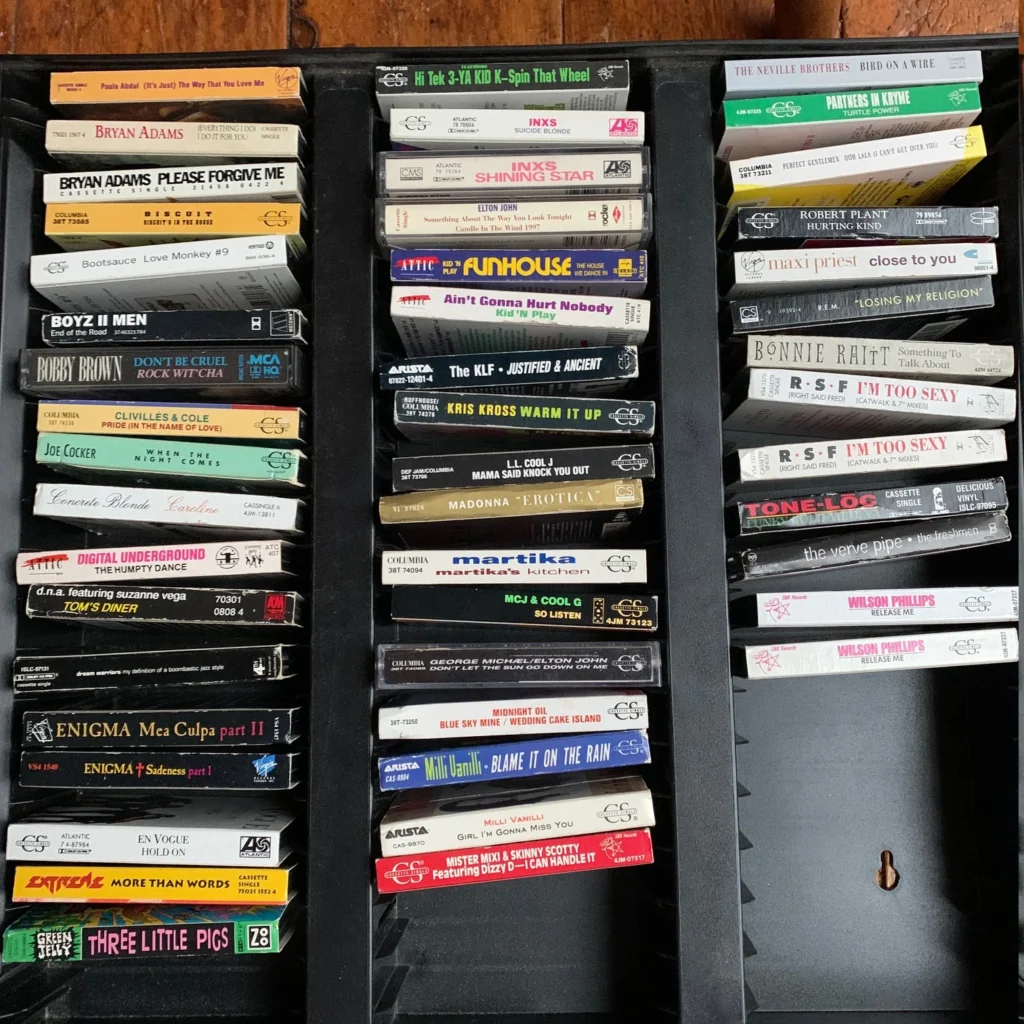
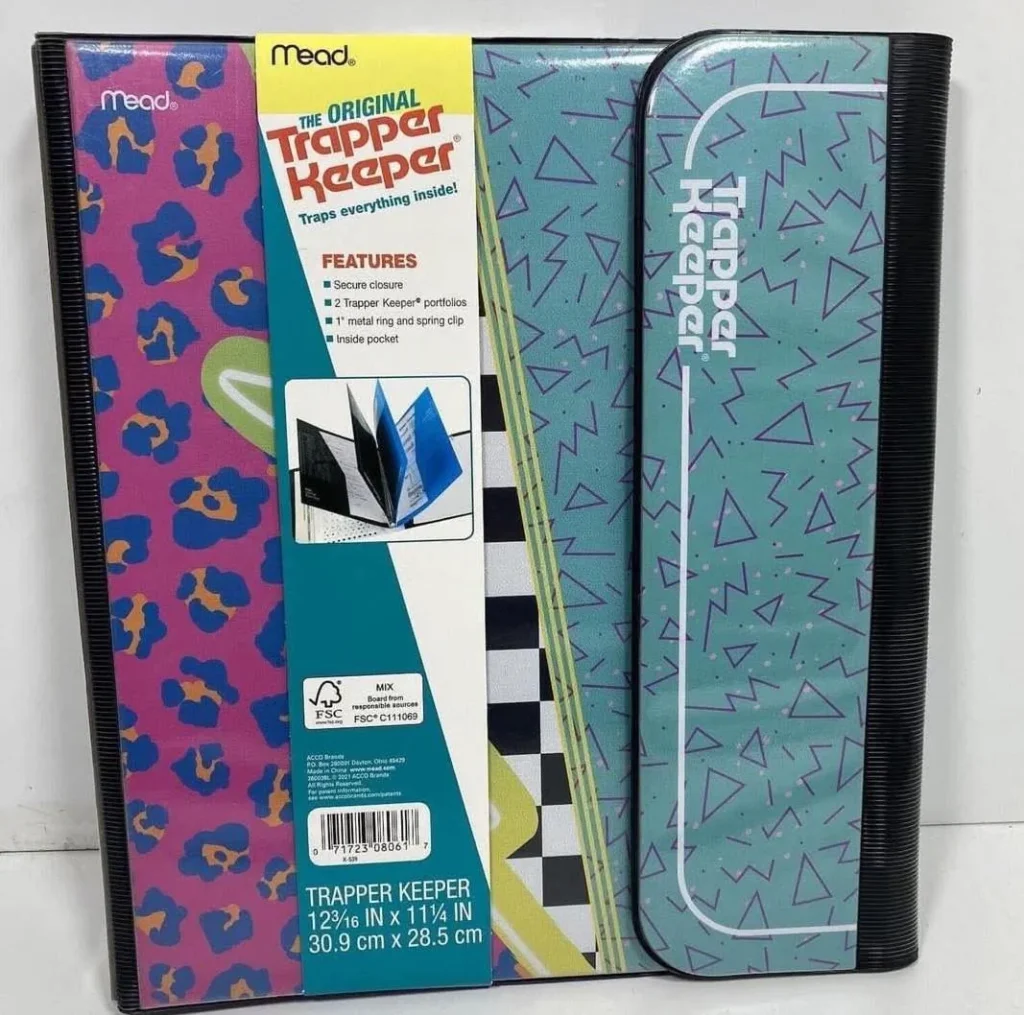
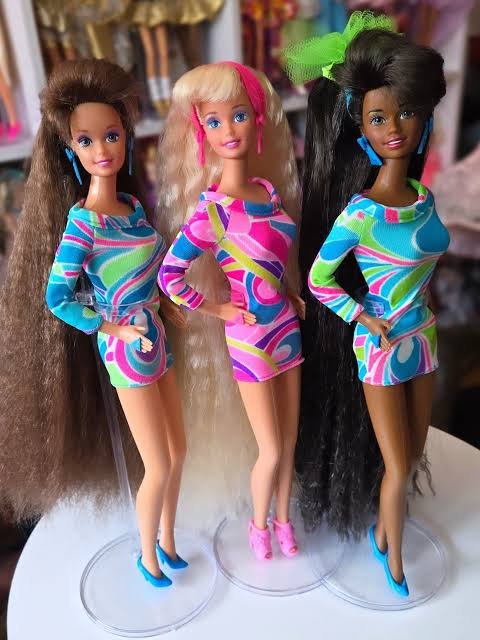
  • Things that instantly take you back to the 90s

    Things that instantly take you back to the 90s

  • The eagle arrived with lead in its blood and shotgun pellets in its chest. The first operation was not the hard part

    The eagle arrived with lead in its blood and shotgun pellets in its chest. The first operation was not the hard part

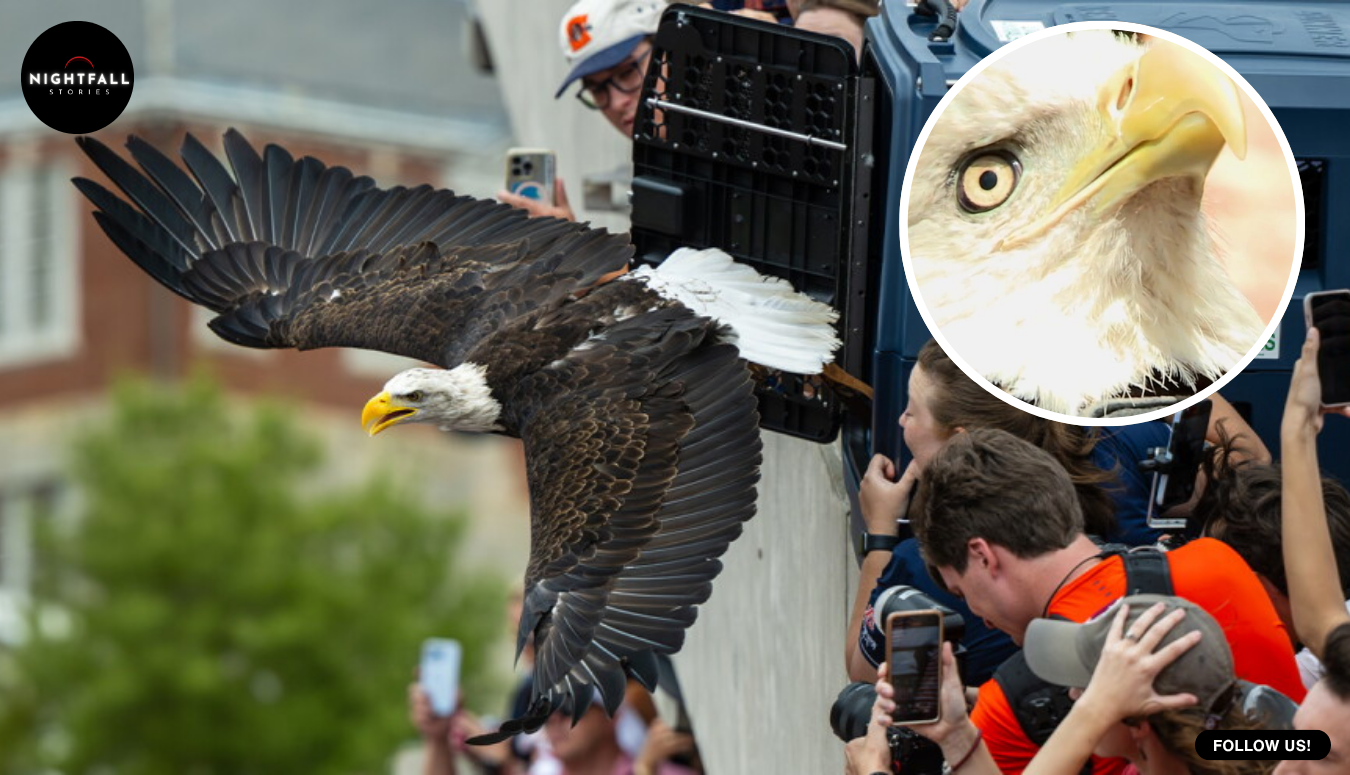
    A bald eagle was found on the ground near Prattville, Alabama on the last day of the year, unable to get back into the air. When it reached the raptor hospital at Auburn University it had two fractures in one wing, shotgun pellets lodged in its wings and chest, and a dangerous level of lead in its blood. Eight months later it was carried back out to a managed pine forest about ten miles from the spot where it was picked up, and it flew.

    The ten miles is the detail worth holding onto, and the eight months is the part people underestimate. Between those two facts sit two surgeries, months of physical therapy several times a week, and one piece of very bad news that arrived after everyone had already decided the bird was going to make it.

    One caveat belongs up front rather than buried, because readers deserve it. Nearly everything documented about this case comes from Auburn University itself, in a feature its own communications office published about its own hospital. A regional television station in Alabama reported the release at the time, which puts an independent eye on the fact that a bald eagle was let go, but the clinical account is single-sourced to the institution that treated the bird. No independent veterinary record, no wildlife-agency case file and no investigation document has been published. The people are named and their roles are checkable, the hospital is real and long-established, and nothing in the account is implausible. But it has not been corroborated in detail by anyone outside Auburn, and this piece will not pretend otherwise.

    With that said, here is what the hospital says happened, and why the hard part was the second operation rather than the first.

    The veterinarian on the case was Amberly Sokoloff, at Auburn’s Raptor Center. The first surgery addressed the two wing fractures, which is the kind of work a raptor hospital does often and does well. Fixing a bird’s wing is not like fixing a dog’s leg, and the difference is not sentimental. A dog that heals with a slightly crooked front leg limps, and then lives a full life limping. A bird that heals with a wing a few degrees out of true cannot fly, and a bald eagle that cannot fly cannot hunt, cannot hold territory and cannot be released. There is no version of a wild raptor that gets by with reduced performance. The margin is absolute, and that is why wing orthopaedics in birds of prey is one of the less forgiving corners of veterinary medicine.

    The surgery worked. Then the wing refractured during recovery, and the bones began knitting together in the wrong configuration, fusing in a way that threatened the bird’s ability to fly at all. That is a materially worse problem than a clean break. A fresh fracture is a known quantity with a known procedure. A healing error means going back into a wing that has already been operated on once, taking apart what the body has built, and getting a second shot at alignment with less to work with than the first time. Sokoloff operated again.

    The centre’s director, Robyn Miller, has described the recovery as long and grueling, which is not promotional language and is probably the most useful summary available. The physical rehabilitation ran two to three times a week over months. For a raptor that means controlled flight work: the bird has to rebuild the specific muscles, the range of motion in the repaired joint and the stamina to carry its own weight for a sustained period, and all of it has to be assessed by people who can tell the difference between a bird that is flying and a bird that is getting away with it. A rehabilitator watching an eagle cross a flight enclosure is reading wingbeat symmetry, height held, and whether the animal can still do it on the fourth pass. There is no self-reporting from the patient. There is only what the handlers can see.

    Then there is the lead, which is the part of this story that is much bigger than one bird.

    Auburn says the eagle’s lead levels were dangerous on admission. No figure has been published, so no figure belongs here. What can be said, on the record of institutions that study this specifically, is how widespread it is. The Raptor Center at the University of Minnesota, which has built a long-term dataset by testing every eagle it admits, reports that between eighty and ninety percent of the more than 150 bald eagles it takes in each year show some lead in their blood, and that between a quarter and a third have documented lead toxicity. That is not an occasional accident. That is a background condition of being a bald eagle in North America.

    The mechanism is the part most people do not know, and it is not shooting. Lead rifle bullets and lead shot fragment violently on impact, breaking into hundreds of pieces that spread well beyond the wound, by the Minnesota centre’s account up to about eighteen inches from it. Hunters field-dress deer and leave the gut pile behind, or an animal is wounded and never recovered, and in winter a carcass on open ground is exactly what a scavenging eagle is built to find. The bird swallows soft lead fragments along with the meat. Lead does not need to be a bullet to do harm; it needs only to be eaten. The Minnesota centre lists the effects, which include gastrointestinal and neurological damage, weakness and seizures, and notes that most seriously affected eagles either die or have to be euthanised. The solution it argues for is narrow and practical: non-lead ammunition, which does not require anyone to stop hunting.

    So this eagle was carrying both routes at once. Pellets in its body from somebody shooting at it, and lead in its blood from something it ate. Those are two separate events, and the second one was probably not the fault of whoever fired the first.

    Treatment for lead in a bird of prey generally involves chelation, a course of drugs that binds the metal so the body can clear it, alongside supportive care while the animal is too weak to self-feed. Auburn has not published the specifics of what this bird received, so none are claimed here. The relevant point for the case is sequencing: a bird with a toxic metal load is a bird whose body is in no condition to heal bone, which means the lead has to come down before orthopaedic work has much chance of holding. Two problems arrived together and one of them had to be solved first.

    It is also worth noting how a grounded eagle gets to a hospital at all, because it is never the hospital that finds it. Somebody sees a large bird on the ground that should not be on the ground, and makes a call. In the United States handling a bald eagle, even to help it, requires federal authorisation, so the chain usually runs from a member of the public to a wildlife agency or a permitted rehabilitator, and then into a crate and a vehicle. Auburn’s own account of its caseload includes a golden eagle with lead toxicity that arrived in taped-up packing boxes, which tells you how improvised the front end of this system is. Every case in a raptor hospital starts with a stranger deciding not to drive past.

    Shooting a bald eagle is a federal crime. The Bald and Golden Eagle Protection Act prohibits taking the birds without a permit, and it defines taking broadly enough to cover shooting at one, wounding one, or simply disturbing it. A first criminal violation by an individual carries a fine of up to one hundred thousand dollars, up to a year in prison, or both, with a second offence treated as a felony. None of which is directly relevant to this case, because no investigation outcome, no suspect and no charge has been documented anywhere. Shotgun pellets is the hospital’s description of what was in the bird. Who fired them, when, and whether anyone ever looked into it is simply not on the record, and the honest thing is to say that once and move on rather than to build a crime story out of a silence.

    The last stage is the one nobody writes about, and it took real work: deciding where to put the bird.

    A rehabilitated raptor cannot be released wherever is convenient. It needs prey it can actually catch, cover, water, and ideally not an immediate fight with an established resident bird over the same airspace. Releasing a recovered eagle into good habitat that is already fully occupied is a slower way of failing. Stephanie Kadletz, the centre’s assistant director of raptor rehabilitation, ran the search for a site, and the person on the other side of that conversation was Preston Payne, a registered forester with Auburn’s College of Forestry, Wildlife and Environment, who manages the Autauga Experiment Forest.

    That property is a longleaf pine landscape, managed with prescribed burning and timber thinning in a way that keeps the understory open and supports the small mammals, the rodents and rabbits, that a predator needs. What that means in practice is two professionals reading the same stand of trees for different reasons and arriving at the same answer. A forester looks at burn history, canopy spacing and stand structure. A rehabilitator looks at whether a bird with a repaired wing can hunt there next week. Open, burned longleaf is good for an eagle for exactly the reason it is good for a woodpecker or a quail: you can see the ground, and things live on it.

    Longleaf pine is its own quiet comeback story sitting underneath this one. It was once the dominant forest across a vast sweep of the American Southeast, blanketing something like ninety million acres, and a combination of logging, land conversion and decades of fire suppression reduced it to a small fraction of that, bottoming out late last century. Restoration partners put the current figure at more than five million acres, roughly five percent of the historic range, rebuilt deliberately with fire as the main tool. A forest type that depends on burning is a hard sell in a culture that spent a century treating all fire as the enemy. The fact that there was a well-managed longleaf stand ten miles from where this eagle fell, with somebody employed to look after it, is a result of forty years of other people’s unglamorous work.

    The release happened in late summer, with the forester, the rehabilitators and the veterinary staff present. The bird left the crate, flew to a longleaf pine nearby, and within minutes was up on thermals, circling with vultures. That is a better outcome than it sounds. Soaring on a thermal is not a victory lap; it is a functional test. It means the repaired wing can hold a stable shape in rising air for a sustained climb, which is the single most energy-efficient thing an eagle does and the thing it cannot fake.

    Nobody named the bird, which is appropriate. It is tempting to write this animal as a character who fought for its life, and that is not what happened. The eagle did not know it was in a hospital. It did not understand the second surgery, did not consent to physiotherapy, and spent eight months being handled by large frightening primates for reasons entirely opaque to it. It almost certainly experienced the whole episode as an extended ordeal. The choosing, the persistence and the judgment in this story belong to the people: a veterinarian who went back into an already-operated wing, a rehabilitation team that showed up two or three times a week for months with no guarantee, a director who kept the case open, and a forester who knew the right ten square miles.

    Auburn’s Raptor Center has been doing this since 1972, originally set up at the request of the federal wildlife agency to fill a gap in raptor care across the Southeast. It reports more than two thousand birds released since 2000, out of a caseload driven overwhelmingly by human activity: vehicle strikes, lead, barbed wire, power lines, lost habitat. Most of its patients arrive because of something a person did, usually without meaning to.

    The arithmetic of this case is not flattering to anybody. It took one person with a shotgun, plus whatever carcass carried the lead, to put this eagle on the ground. It took a hospital, two operations, a surgeon willing to try twice, months of structured rehabilitation and a forester with a well-burned pine stand to put it back in the air. Eight months of skilled work against an afternoon’s damage.

    It went back up about ten miles from where it came down. Nearly the same sky.

  • Her country’s entire deep-sea collection could be carried in two hands. Then a ship went out for a month

    Her country’s entire deep-sea collection could be carried in two hands. Then a ship went out for a month

    Trinidad and Tobago is a small country with a large ocean. Its waters run to roughly fifteen times its land area, they sit on top of a hydrocarbon province that has been drilled for more than a century, and until last year almost nothing that lives in the deep part of them had ever been collected, catalogued and kept. The national reference collection of deep-sea animals, the physical jars on physical shelves that any future scientist would have to start from, was small enough that a single person could have carried the whole thing across a room.

    Then a research vessel left port with a Trinidadian deep-sea biologist as its chief scientist, spent a month working the country’s own seabed, and came home with more than seven hundred specimens. According to the expedition’s own figures, that single month multiplied the University of the West Indies Zoology Museum’s deep-sea holdings roughly twelvefold. Run the arithmetic backwards on the museum’s own number and the starting point was somewhere around sixty specimens. For an entire nation’s deep ocean. Ever.

    That is the story, and it is a stranger one than the headlines it produced. The coverage went, understandably, to the animals: twenty suspected new species, an octopus, carnivorous sponges, ghost sharks, a dead manta ray lying on the seafloor a kilometre down being slowly taken apart by the things that live there. All of that is real and all of it is lovely. But none of it is the thing that changed. What changed is that a country which had been described, in the most literal sense, by other people’s ships now has its own evidence, in its own museum, with its own catalogue numbers on it.

    The chief scientist was Dr Diva Amon, a Trinidadian who runs the marine research non-profit SpeSeas. Her route to that deck is worth a minute, because it explains why she cared about the jars. She did her master’s and then her doctorate in the United Kingdom, at Southampton and the Natural History Museum in London, working on chemosynthetic environments, the places in the ocean where life runs on chemistry seeping out of the seabed rather than on sunlight. She has described learning, as a student, that the overwhelming majority of the deep ocean has never been explored, and treating that as an instruction rather than a piece of trivia. She went on to manage a seafloor baseline project in the Pacific nodule fields out of the University of Hawaii, where she was credited with describing nine new deep-sea species, and has sailed on something like fifteen research expeditions. She has a Pew marine conservation fellowship. She has done the television thing, descending thousands of feet in a submersible for a streaming series.

    What she had not done, in all of that, was work her own country’s deep water with her own name at the top of the science plan. Almost nobody from the region had. The pattern across the Caribbean has been foreign vessels passing through, taking data that goes home with them, and the host country learning about its own seabed secondhand, if at all. Amon has put that plainly in interviews, and the organisers’ framing of this expedition as the first locally led deep-sea expedition in the country’s history, and the first Caribbean-led one of its kind, is their own claim rather than an independently audited record. It is worth attributing rather than flattening into a bare first. But the claim is doing real work, because it describes a thing that genuinely is unusual: the co-principal investigators were based at the Institute of Marine Affairs and at the University of the West Indies in St Augustine, alongside colleagues from Florida Atlantic, Dalhousie and Calgary, and the people who would be left holding the specimens afterwards were in the room when the decisions were made about what to pick up.

    The work itself ran for a month across the back half of last year, on the Schmidt Ocean Institute vessel Falkor (too) with the remotely operated vehicle SuBastian doing the diving. The hunting method was almost comically simple in description and brutal in execution. Cold seeps, the ecosystems they were after, are places where methane and other fluids leak up through the seafloor. The leak often shows up in the water column as a stream of bubbles, which a ship’s sonar can see from the surface. So you map, you find bubbles, you queue them up, and then you spend your nights and days sending a robot down to look at each one.

    They logged 219 bubble streams. They followed them and confirmed twenty-five active cold seep ecosystems. Those are not good odds, and the misses were not random. Amon has described the frustration of it: a fat, impressive plume of gas that led down to essentially nothing, and then a thin, unpromising little wisp of a bubble stream that opened onto a sprawl of mussels and tube worms. The largest seep community they found covered roughly half an acre of seabed.

    A cold seep is one of the few places on Earth where you can watch a whole food web run without the sun. The methane and sulphide coming out of the sediment feed bacteria, the bacteria live inside the tissues of mussels and tube worms, and those animals become the structure that everything else hangs off: crabs, shrimp, fish, the eelpout that was photographed sitting on a bed of chemosynthetic mussels like a cat on a sofa. The animals are not visiting a vent for warmth. They are eating the planet’s chemistry. On a seabed that has been leased, surveyed and drilled for oil and gas for generations, these are also the specific ecosystems most likely to sit directly in the path of the next well.

    There is a detail in the hunting method that explains why a month is both a long time and nothing at all. An ROV dive is not a quick look. The vehicle has to be lowered through a kilometre or more of water, which takes hours before anybody sees anything, and then it works a transect at walking pace with a pilot driving, a navigator tracking, a biologist calling the shots on what to sample and a watch-keeper logging every observation by timestamp. Then it comes back up, which takes hours again. The ship runs that cycle around the clock, in shifts, for weeks, and everybody on board is doing a job that is half discipline and half staring. Scientists who have spent a month on a vessel tend to talk less about wonder and more about sleep. The romance of the footage is produced by people who were extremely tired.

    By the end of the month the team had mapped 11,335 square kilometres of seafloor at high resolution. That figure is also reported as about thirteen percent of the country’s marine territory, and the two numbers are one achievement expressed two ways rather than two achievements. Before this, by one account, less than a thousandth of one percent of the nation’s deep ocean had been explored at all. Thirteen percent in a month is an enormous jump and an uncomfortable statement at the same time, because it means that after the biggest single effort in the country’s history, the overwhelming majority of its own seabed remains a blank space on the chart.

    They took close to a thousand samples of water, sediment and animals. They froze tissue from eighty-six deep-sea species so that the genetic material survives for work nobody has thought of yet. They recorded at least fifty-four species never before documented in Trinidad and Tobago’s waters, which is a quieter and more solid number than the new-species count, because it describes the state of local knowledge rather than the state of global taxonomy.

    About those twenty suspected new species: suspected is the operative word, and it will stay the operative word for years. A species is not new because a camera saw something odd. It is new when a specialist compares the specimen against everything already described, writes it up, gets it through peer review and publishes a name. That process routinely takes a decade. Several of the twenty will turn out to be known animals in an unfamiliar colour or at an unfamiliar depth. None of them has a name yet, and printing one would be making it up. The octopus that went around the world under framing about a single known specimen is a Graneledone, a possible new species, photographed again after a glimpse years earlier. Possible. Not confirmed.

    Which brings the story back to the shelves, because the shelves are the part that survives the news cycle.

    More than seven hundred specimens went into the Zoology Museum at the University of the West Indies in St Augustine. That is not a press release outcome. That is a logistics problem with a thirty-year tail. Every jar needs the right preservative at the right concentration, and alcohol evaporates, so somebody has to top them up for decades. Every specimen needs a catalogue number, a locality, a depth, a date and a collector, and a record somewhere that a researcher in another country can search. Cryopreserved tissue needs a freezer that does not fail, which means a freezer alarm, and a person whose phone it rings on, and a maintenance budget. Twelve times the holdings means twelve times the cabinet space in a building that was not built with this month in mind.

    That is the least glamorous sentence anyone will write about this expedition and it is the one the whole thing rests on. A photograph is a claim. A specimen in a jar with a number on it is evidence, and it can be re-examined in 2070 by somebody who disagrees with everything the original team concluded. Keeping the collection at home, rather than sending it to a museum in Europe or North America, means the next Trinidadian graduate student does not need a visa and a grant to look at their own country’s animals. That is the actual transfer of power in this story, and it happened in a storeroom.

    The governance side is where it gets pointed. Trinidad and Tobago has, by the account of reporting on the expedition, a single marine protected area, and it is a shallow-water coral reef. There is nothing offshore. No deep-water protected area, and no real management mechanism for the deep seabed, at a moment when the country is weighing drilling in deeper water as its shallower reserves decline. You cannot protect a place you have never described. You also cannot argue about it. A negotiator asking for a buffer around a seep community has nothing to put on the table if nobody has ever collected a mussel from it.

    The oil and gas history makes this sharper rather than softer. Trinidad and Tobago has been a petroleum country for well over a century, with one of the oldest commercial industries in the hemisphere, and the national economy has leaned on gas for decades. That means the offshore seabed has been surveyed, licensed and worked for generations by companies whose seismic data is far better than any public map. The country’s own scientists were, until this voyage, in the odd position of knowing less about the national seafloor than the firms operating on it, and having no independent biological baseline at all. A baseline is the boring word for the thing that makes accountability possible. Without one, there is no before to compare an after to, and any argument about damage becomes a matter of assertion.

    That is the use the expedition’s organisers have stated for the data, in fairly dry language: marine spatial planning, governance, and identifying candidate areas for protection. Amon’s own summary of where things stand has been that the real work starts now, which is the opposite of a victory lap and is probably correct. A map and a cabinet full of jars are not a policy. They are the minimum requirement for having the argument at all.

    The team also spent the month talking to people onshore, running live links from the ship and visiting schools, reaching a few thousand people by the various counts given. That number is reported slightly differently in different places, so treat it loosely. The underlying point does not need precision. A generation of children in a small island country watched a robot a kilometre below their own coastline, piloted on a voyage whose chief scientist went to school where they go to school.

    Twenty suspected new species may come to nothing much. Taxonomy is slow and unsentimental, and some of those animals will quietly turn out to be ordinary. The 11,335 square kilometres will be superseded, eventually, by somebody mapping the rest. What will not change is what sits in St Augustine now. A country that had a few dozen deep-sea specimens to its name has more than seven hundred, held locally, catalogued locally, available to anyone who asks locally. The expedition ended, the ship went elsewhere, and the evidence stayed.

  • For thirty years the human bones at Göbeklitepe came out in pieces and nobody could say why. Two intact graves finally answered it, and the answer was the boring one.

    For thirty years the human bones at Göbeklitepe came out in pieces and nobody could say why. Two intact graves finally answered it, and the answer was the boring one.

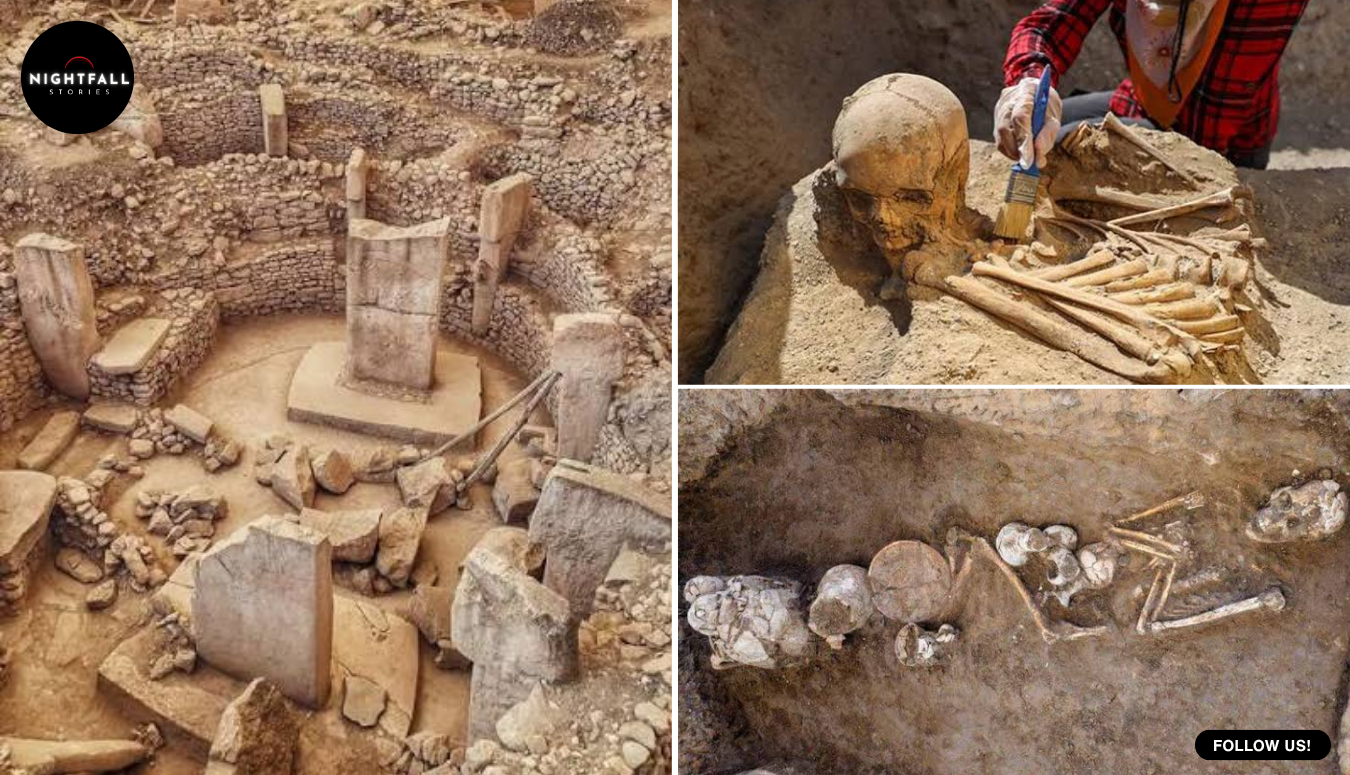
    More than nine hundred loose human bone fragments have come out of the ground at Göbeklitepe, by one published count 928. Not one complete skeleton among them for most of the site’s excavated history. Just pieces, turning up in the fill of the great circular buildings with their carved T-shaped pillars, snapped across the shaft, missing their ends, scattered with no body to belong to.

    For about three decades that absence was the most suggestive thing about the place. A site with monumental architecture eleven thousand years old, animals carved in relief on standing stones, and human remains that arrived exclusively in fragments. If you wanted to believe something strange had been done to the dead there, the evidence was perfectly shaped for it, because there was no evidence at all of the ordinary alternative.

    Then two intact burials turned up, and a physical anthropologist named Julia Gresky spent years reading the damage on the bones in them rather than the bones themselves. Her conclusion, published with her colleague Lee Clare, is that most of those fragments probably never represented a ritual of any kind. They were ordinary graves. The mound they were buried in slid downhill on top of them for eight thousand years.

    Before going further, one thing needs saying clearly, because the way this story has travelled makes it sound like a dig that happened last month. It did not. Göbeklitepe has been excavated for around thirty years. Part of the skeleton at the centre of this paper came out of the ground in 2012. The rest of it came out in 2022. The second burial was found under a building floor years ago as well. Nothing was dug up recently. What is new is the analysis, published in a journal this autumn. The find is old. The reading is new. That distinction is the whole reason the paper matters, and it is also why nobody noticed the answer for so long: it was never going to come from digging faster. It had to come from somebody going back to material already in storage and asking a different question of it.

    The question Gresky asked is the one forensic anthropologists ask, and it has almost nothing to do with archaeology as most people picture it. It is not what did these people do. It is what happened to this bone after the person inside it died. The discipline is called taphonomy, and it is the study of everything that intervenes between a body and the moment an archaeologist picks it up. Soil chemistry. Water. Animals. Temperature. Weight of earth. Time. Every one of those leaves a signature, and the signatures are distinguishable if you know what you are looking at.

    Start with how a bone breaks, because this is the heart of the argument and it is genuinely satisfying once you see it.

    Fresh bone is not like dry bone. A living long bone is a composite material, mineral for stiffness and collagen for flex, and it is damp. Break it while it is still fresh and it behaves a bit like green wood. It fails in a spiral. The fracture travels around and along the shaft at an angle, producing what is called a helical break, with edges that are relatively smooth and surfaces that match the colour of the rest of the bone because the inside and the outside have aged together ever since.

    Dry bone, bone that has lost its collagen and its moisture after decades or centuries in the ground, behaves like a stick of chalk. It snaps. The fracture runs straight across the shaft, transverse or close to it, with a rougher edge, and the newly exposed surface often looks different from the weathered outside.

    So the orientation and texture of a break carries a rough clock. A long bone in a Neolithic grave with a helical fracture broke while it was still relatively fresh. One with a flat transverse break broke long after burial. In the burials Gresky examined, the long bones showed both, and that mixture is informative rather than confusing: it says the damage accumulated over a long period rather than all at once in a single event at the funeral.

    Then there are the teeth marks. Rodents gnaw bone, and they do it in a way nothing else does. A rodent’s incisors are paired, chisel-edged and self-sharpening, and they work in parallel strokes, so what they leave behind is not a puncture or a crushing bite but a field of shallow parallel grooves, often in a patch on a flat or prominent surface where the animal could brace. On the bones from one of these burials, rodent gnawing shows up as patches on a shin bone and along the outer edges of ribs and at a bony ridge on an upper arm bone. Rodents did not dig a tunnel to a sealed body and eat it for pleasure. Their access tells you the grave was not sealed for very long, or was reopened, or that the ground above it had broken up.

    Third signature: calcareous deposits. Water moving through limestone picks up dissolved calcium carbonate, and where it sits against a surface it leaves a crust, the same process that furs up a kettle. Several bones in the single burial are coated in it, and at least one patch of rodent gnawing is partly or completely buried underneath the crust. That is a sequence, and it is a lovely piece of reasoning. The rodents came first. The water came after. On one shin bone fragment a thick layer of dense outer bone had peeled away from the back surface entirely, which is what happens to bone that has been through repeated wetting and drying and mineral loading, not what happens to bone that somebody cut.

    And fourth, the pattern of what is missing. In the single burial the forearm bones are fragmented and both ends of the shafts, the joint ends, are gone. That distribution matters. Joint ends are spongy, porous and thin-walled, the weakest parts of a long bone. They are the first thing to go when bone is crushed, weathered or churned. If you were looking at deliberate dismemberment you would expect damage concentrated at the joints in the form of cut marks and shaving, not simply the structurally weakest parts of each bone having quietly vanished.

    Put all of that together and a picture assembles that has nothing to do with ritual. Bodies buried under floors. Long periods during which the ground above them was permeable enough for rodents to reach them. Water passing through, depositing minerals, soaking and drying the bone repeatedly. Breaks happening at widely different points in the process, early ones spiral and late ones snapped. The weakest parts eroding away. And then, over thousands of years, the mound itself moving.

    That last part is the mechanism that explains the scatter, and it is specific to this landscape. Göbeklitepe sits on a limestone ridge, and the site is a tell, an artificial hill built up from generations of construction, demolition and refuse. Tells are not stable. Material at the top travels downwards under rain and gravity, slowly and relentlessly, a process geologists call slope wash or colluvial movement. The paper’s argument is that the lower-lying parts of the site, which include the monumental buildings everybody comes to see, became buried under deposits that had washed down from higher up, and those deposits carried with them the broken contents of graves that had originally been dug further up the slope.

    Which is why the bones kept turning up in the monumental buildings. Not because anyone put them there. Because the buildings were downhill.

    It is worth sitting with how much that reframes. For decades, the fact that human bone appeared inside the special buildings was treated as a clue about what those buildings were for. If the bone arrived as part of the sediment that filled them in, long after they stopped being used, then its location says nothing about their function at all. It is the archaeological equivalent of finding leaves in a gutter and concluding something about the roof.

    The two burials themselves are worth describing, partly because they are the first of their kind at the site and partly because one of them has an oddity that is hard to beat.

    The first sits in a feature the excavators call Drainage Channel 1, beneath the floor of a rectangular building from the later Pre-Pottery Neolithic phase. Both burials date to roughly 8,700 to 8,000 BCE. It is a collective grave, which is to say more than one person in it, and the people in it are an adult woman, an adult man and an adolescent girl. There is also a cranium, a skull vault, which most likely belongs to the adolescent but might belong to a fourth, older individual. The paper leaves that genuinely open and so does this piece: it is not resolved and the authors do not pretend it is.

    The arrangement inside the grave is the interesting part. Three cranial vaults were grouped together in the eastern corner. Some of the long bones were piled in the western corner. That is not how a body comes to rest. Somebody moved the bones of people already in the grave, gathered the skulls to one side, stacked the limbs to the other, and made room. Which means the grave was opened again, probably more than once, to add someone new. That is a mortuary practice, and it is a human and recognisable one, found across the ancient world and in plenty of places still. It is also the opposite of exotic. It is what a family does with a grave plot.

    The second burial, in a trench next to the structure known as Special Building A, held a single young adult woman, laid on her left side with her knees drawn up, facing east. And here is the oddity: she was excavated in two halves, ten years apart. Some of her bones came out in 2012. The rest were still in the ground until 2022. For a decade, part of a woman sat in storage while the rest of her stayed in the ground, and nobody knew the two sets belonged together until the second set came out and somebody matched them.

    Even then, the match is not total. Of the bones recovered in that first season, some turned out to belong to the same individual as the 2022 material, and others could not be, and may belong to a different person, possibly a man. Which is precisely the kind of ambiguity you get at a site where graves were reopened and the ground has been moving ever since.

    Now, the thing this paper does not do, and the place where the headlines have been sloppier than the science.

    Göbeklitepe’s reputation for a skull cult is not a tabloid invention. It rests on a 2017 study in which modified human crania from the site were described in detail: deep grooves cut into the bone with flint tools, and on the best-preserved example a drilled perforation, which the authors suggested could have been used to hang the skull from a post or a beam. Those carvings are now documented on several individuals. One of the authors of that study was Julia Gresky.

    That is worth pausing on. The person who has just argued that most of the fragmented bone at Göbeklitepe is ordinary burial disturbed by erosion is the same person who established that some of the skulls there were deliberately carved and drilled. There is no contradiction and no retraction. There are two different populations of evidence. Grooves cut with a flint tool and a drilled hole cannot be produced by rainwater, rodents or a hillside moving. Helical fractures, gnaw patches, mineral crusts and missing joint ends cannot be produced by a mortuary ritual. The new paper is not saying nothing unusual happened with the dead at Göbeklitepe. It is saying that the great mass of scattered fragments, the many hundreds of pieces that have carried most of the speculation, do not need an unusual explanation, and that the authors cannot rule out further mortuary practices alongside the ordinary burials.

    That is a harder argument to publish than a skull cult, and the reason is structural. A dramatic claim needs you to find one spectacular thing. A deflationary claim needs you to account for everything, and to show not only that erosion could have produced the pattern but that it did, bone by bone, signature by signature. It wins no headlines in proportion to the work. It is also the kind of argument that has to be made before anything else at a site can be trusted, because the alternative is a literature built on an absence.

    And it clarifies what the famous pillars have to do with any of this, which is less than most people assume. Göbeklitepe’s T-shaped monoliths with their foxes, boars, snakes and vultures have spent twenty years being read as evidence of a death cult, partly on the strength of the vultures and partly on the strength of bone fragments found nearby. If the fragments washed in from uphill long after those buildings were abandoned, then the carvings have to be interpreted on their own merits. They are still extraordinary. They are just no longer corroborated by the bones.

    The graves add something else, quieter. For thirty years the human beings at Göbeklitepe existed only as inventory, a count of fragments in a store. Now there are a handful of actual people: a woman and a man and a girl in their late childhood, buried together under a floor in a grave their community went back and opened again; and a woman in her twenties, laid on her side with her knees pulled up, facing the sunrise, under the shadow of one of the most famous buildings in prehistory, who waited eleven thousand years to be dug up and then another ten to be made whole.

  • An intern opened one 2018 file and found a number missing. Twenty five years of a crime lab’s DNA work went back on the bench.

    An intern opened one 2018 file and found a number missing. Twenty five years of a crime lab’s DNA work went back on the bench.

    The number should have been there, and it was not.

    An intern at Colorado’s state crime lab was working through an old case file, a routine piece of training on a sample processed back in 2018, and the raw data from the instrument did not match the report that had been signed off on top of it. Something had been taken out. Not corrupted, not lost in a transfer, not garbled by old software. Removed.

    That was three years ago. The analyst whose name was on the file had been at the Colorado Bureau of Investigation since January 1994. By the time anyone finished counting, more than a thousand criminal cases carried her initials, and the state of Colorado had a problem it could not solve by firing one person.

    Earlier this year Yvonne Woods, 66, known to almost everyone who worked with her as Missy, pleaded guilty to four felonies. In September a district court judge, Andrew Poland, sentenced her to ten years in the Colorado Department of Corrections. The top count was cybercrime, a class 2 felony, and it carried the ten years on its own. Perjury in the first degree and attempt to influence a public servant, both class 4 felonies, drew six years each. Forgery, a class 5, drew three. All of them run at the same time as the first. Prosecutors had originally filed 102 counts against her, covering conduct the state says ran from 2008 to 2023.

    The sentence is the ending. The part worth understanding is the mechanism, because almost nobody outside a forensic laboratory has ever had it explained, and it is the reason a single missing value could unpick a quarter of a century of work.

    When a laboratory tests a sample for DNA, the output is not a name and it is not a yes or no. It is a graph. The instrument copies specific stretches of DNA, sorts the copies by size, and draws a trace with a series of peaks on it. Each peak sits at a position that corresponds to a particular variant at a particular location in the genome, and the height of the peak tells you how much of it was there. An analyst reads that trace, decides which peaks are real signal and which are background noise or artefacts of the chemistry, and writes down what the sample contains. There is judgement in that reading. There has to be. Degraded samples, mixed samples and tiny samples all produce traces that need an expert eye.

    One of the things a trace can show is the presence of male DNA. There is a marker on the Y chromosome that is included in the standard testing kits precisely so that an analyst can say whether any male contributor is present in a mixture, even a very small one. If the peak at that marker is there, male DNA is there. If it is not, it is not. It is about as close to a binary readout as forensic DNA gets, and investigators rely on it to decide whether a sample is worth pursuing at all.

    The state’s case is that Woods deleted values showing male DNA was present, and then wrote reports saying none had been detected. The effect of that is not merely a wrong answer on a page. A report saying no male DNA was found closes a door. There is nothing to compare against a suspect, nothing to upload to the national DNA database, no reason for a detective to request further work, no reason for a prosecutor to look again. The case stops moving, and it stops moving for a reason that looks like science.

    Prosecutors also say she altered or deleted data tied to critical parts of the quality control process in her laboratory workbooks. That is the second half of the mechanism and the more unsettling half. Forensic laboratories do not catch this kind of thing by having a supervisor squint at a graph. They catch it through controls, the blank samples and known samples run alongside the real ones, which prove the instrument and the chemistry behaved. If those records are the thing being edited, the system that is supposed to notice is the system being switched off.

    And the reason it could go on for years is almost banal. A reviewer reads the report. The report is internally consistent, written in the right language, signed by an analyst with decades of standing and an excellent reputation. Checking it properly means going back to the raw instrument output, panel by panel, and comparing what the machine recorded against what the human wrote. In a working laboratory with a backlog, nobody does that on a file that looks fine. The intern did it because the intern was learning, and learning means looking at everything slowly.

    The First Judicial District Attorney’s Office, which brought the case, has put hard numbers on the documented part. Investigators identified 52 laboratory reports containing false statements. In 41 of those, no criminal charges were ever filed. Twelve were connected to cases where a suspect had been charged. Three of those twelve went to trial: one conviction, two acquittals. In 32 of the cases, women and children had reported a sexual assault. That is where this piece stops describing, and it is a deliberate stop. The people in those files are not a case study and there is no public interest in a single further detail about any of them. What matters here is that the laboratory told them something that was not true, and that it did so in the one category of work where a negative result most reliably ends an investigation.

    Beyond the 52, the district attorney’s office says hundreds more cases were affected by data manipulation. The Bureau itself has put the number of cases it considers impacted at 1,045. Colorado’s Alternate Defense Counsel, which represents defendants when the public defender cannot, has identified 1,536. Those figures are not the same measurement and should not be blended into one. They reflect different thresholds for what counts as touched by this, and the gap between them is itself part of the story: three years on, the state and the defence bar still do not agree on how large the hole is.

    What the state did agree on, early, was that it could not investigate itself. The review of Colorado’s laboratory was run by the South Dakota Division of Criminal Investigation. That decision gets one line in most of the coverage and it deserves more. A crime laboratory’s entire value is that a jury will take its word. The moment an analyst inside it is accused of fabricating results, any audit performed by her colleagues is worth very little, no matter how careful it is, because the people doing it have the strongest possible interest in the answer being small. Importing the reviewers from another state was not a courtesy. It was the only version of the exercise that anyone outside Colorado would have believed.

    Then came the bill, in money and in work. The Bureau put the cost of the misconduct through 2024 at just over 11 million dollars. The state legislature’s budget writers approved 7.5 million dollars specifically for retesting DNA samples. Colorado’s Alternate Defense Counsel had spent close to half a million dollars on these cases by early this year and asked the legislature for 2 million more, while estimating that the eventual cost to the defence side alone could approach 11 million. Roughly 600 people have asked the public defender system for a lawyer because of this.

    Retesting sounds like the obvious fix, and where it is possible it works. Police in Denver asked the Bureau for hundreds of sexual assault kits for review, then expanded the request to more than 1,300 cases. The Bureau flagged 27 as impacted. The city’s own laboratory took that further and retested 13. Those retests produced 11 suspect profiles, which went into the national DNA database, and six of them came back with hits that gave detectives real leads. All 13 cases were reopened. No arrests have followed so far.

    Read that sequence again, because it cuts both ways. Eleven usable profiles came out of samples that had been sitting in storage for years behind a report that said there was nothing there. That is the recovery, and it is genuine. It is also, for the people whose cases those are, an answer that arrived a decade late, from material that was in the building the whole time.

    And retesting only works while there is something left to test. DNA analysis consumes sample. A small swab from a difficult surface may have been used up the first time, or may have degraded past the point of yielding anything. Evidence from old cases gets destroyed on schedule. For a sizeable share of the files on the list, there is no second reading available at any price, and the honest position is that nobody will ever know what the first one should have said.

    Colorado’s legislature passed a law in 2025, the Forensic Science Integrity Act, to force the system to deal with the consequences in the open. It requires crime laboratories to report every case worked by an employee accused of misconduct, and it gives defendants a route to bring new evidence after conviction. The Bureau has sent out more than 10,000 notices under it, covering every case touched by any employee under suspicion. Deadlines were missed. Defence attorneys describe themselves as swamped, partly because most of this is post-conviction work, a specialism that attracts few lawyers because it is slow, technical and rarely wins. One attorney involved said it should not all land on the defence, given that the law puts the duty on the Bureau and the prosecution. Some of them are still fighting in court for records about who reviewed what, and the Bureau has appealed an order to hand its own forensic files over.

    In the courts, the consequences have started to arrive case by case. A man convicted of a 1994 murder in Boulder had his conviction vacated last year after independent testing of the DNA contradicted what Woods had concluded. Prosecutors said they intended to retry him. In a separate matter in Weld County, a district judge dismissed a felony prosecution outright earlier this year on the grounds of outrageous government conduct, a ruling so rare that most defence lawyers never see one. What makes that ruling remarkable is its reasoning. The judge did not find that Woods had manipulated anything in that particular case. He found that the scope and breadth of the scandal, combined with the Bureau’s failure to deal with it, violated fundamental fairness and was shocking to the universal sense of justice, and that the defendant’s right to due process could not be protected any other way. In other words, the laboratory’s credibility had fallen far enough that its work no longer needed to be shown wrong in a given case to be unusable in it.

    That is the real scale of the damage, and it is the thing a prison sentence cannot touch. One analyst’s integrity is not a personal matter in a system like this. It is load-bearing. Jurors cannot evaluate an electropherogram. Detectives cannot. Most lawyers cannot. Everyone downstream of the laboratory is accepting, on trust, that the person who read the graph read it honestly, because the alternative is a justice system in which every DNA result has to be independently reproduced before anyone can act on it, and no state can afford that. Trust is the efficiency. Which means it is also the vulnerability.

    In court, Woods said she had failed the responsibility entrusted to her as a forensic scientist. Judge Poland described what she did as intentional misconduct by a highly trained professional in a position of extraordinary trust. Her plea deal had set a range of eight to sixteen years; he landed near the bottom of it.

    One question that has stayed unanswered is why. Nothing in the public record points to money, or to pressure from any particular detective, or to a grudge. The pattern that emerges from the charges is of a very experienced analyst taking shortcuts around the slowest and least interesting part of her own job, the controls and the documentation, and then covering the gaps so the paperwork held together. If that is what happened, it is worse than corruption, because corruption has a motive you can look for in the next person. Boredom and shortcuts do not leave a trail until someone compares the signed report to what the machine actually recorded.

    The intern who did that comparison has never been publicly named. No account of this case identifies them, and the institutions involved have not put a name forward, which is almost certainly the right call for someone who was a trainee at the time. They do not have a quote in any story. They are a job title in a press release. But every number in this case, the 52 reports, the 1,045 cases, the 11 million dollars, the 10,000 notices, the vacated conviction, the ten years, descends from one person at the start of a career deciding that a file that looked fine was worth checking anyway.

    What is still open is the money owed to the people and agencies on the other end of it. The restitution hearing is listed for November, and the figure has not been set. Nobody involved is willing to guess at it, which is the most honest thing anyone has said about this case so far.

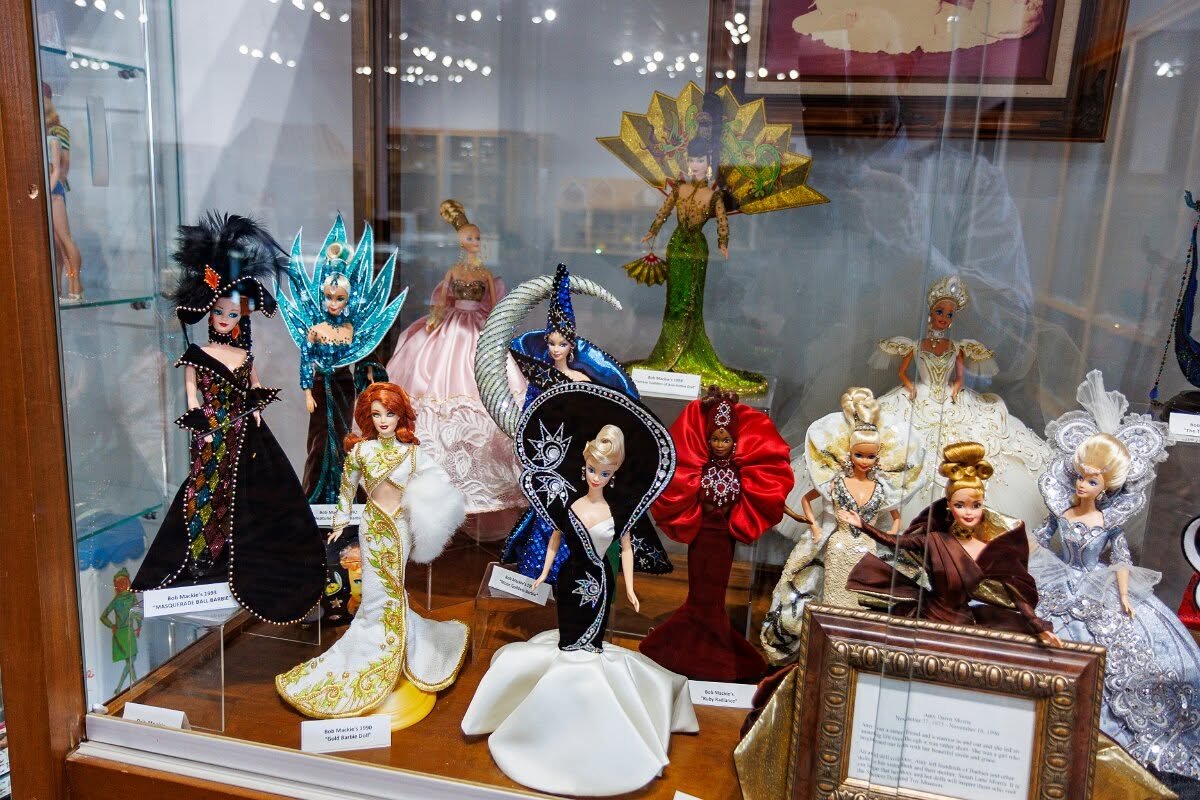
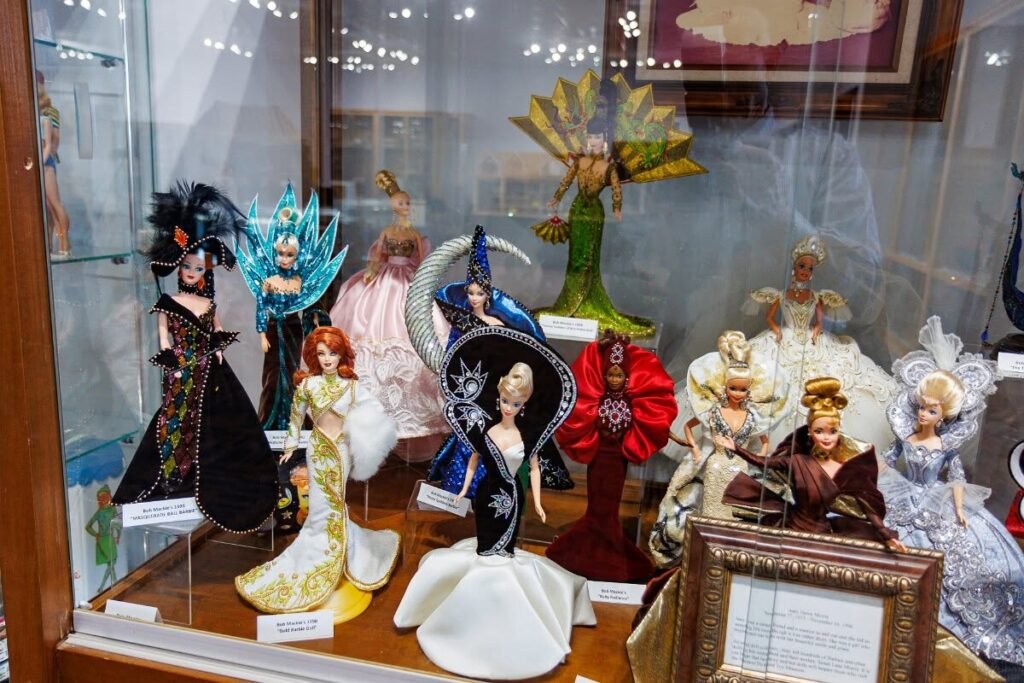
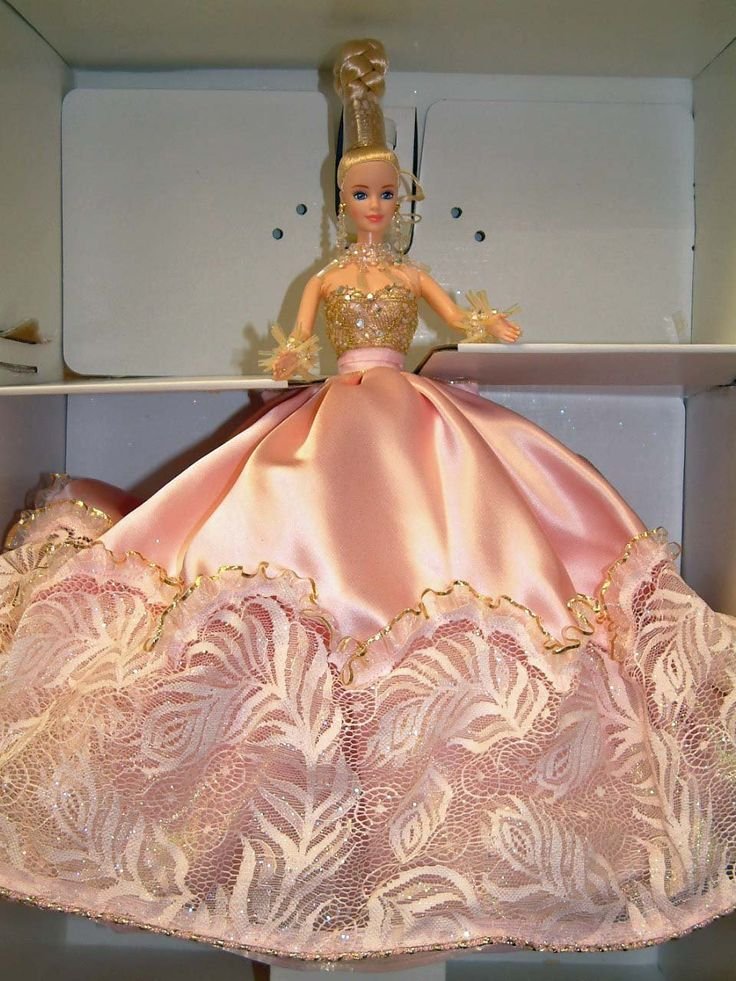
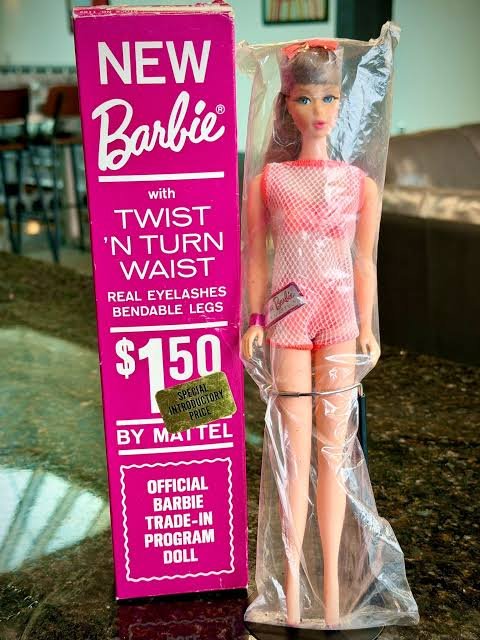
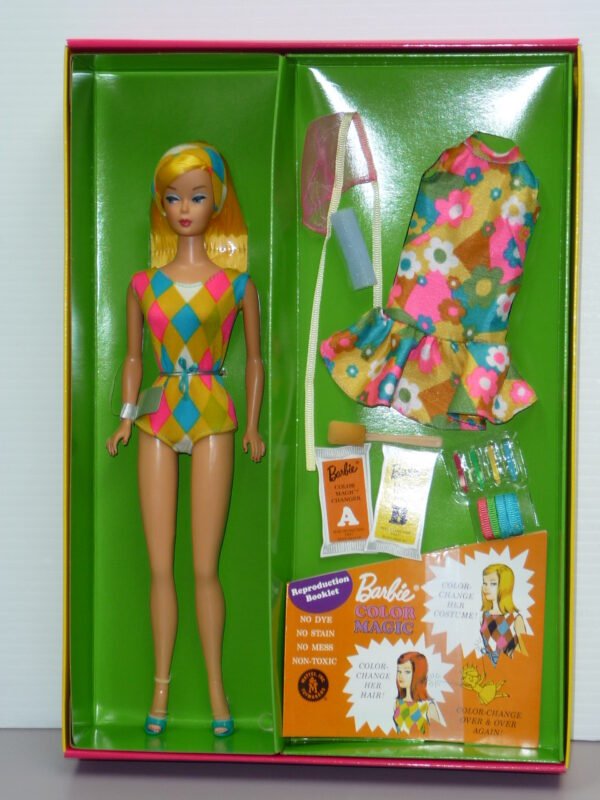
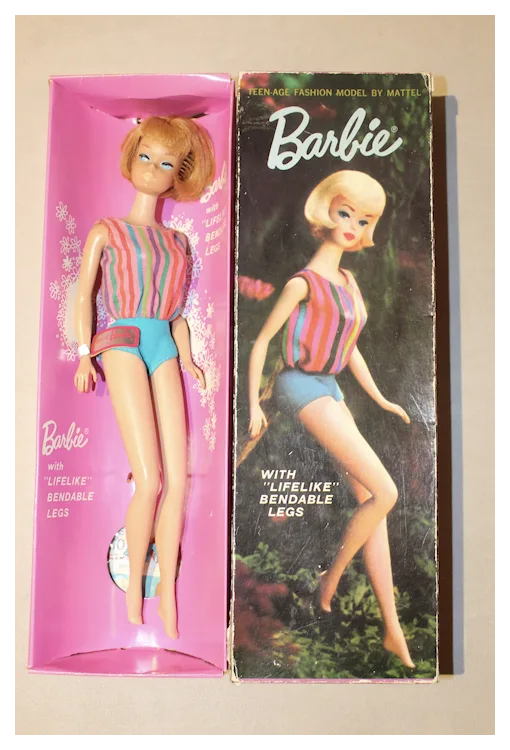
  • 15 old barbie dolls that could be worth more than you think

    15 old barbie dolls that could be worth more than you think

    Dolls dressed by the famous costume designer are dazzling, detailed and often valuable.
  • He paid about twenty dollars for an odd record on eBay. Working out who was actually playing on it took him the next ten years.

    He paid about twenty dollars for an odd record on eBay. Working out who was actually playing on it took him the next ten years.

    The record turned up on eBay more than ten years ago, listed without much ceremony, and the man who bought it paid somewhere around twenty dollars for it. It was an album of jazz and country, cut in Texas in the early 1970s, and the musicians on it were all prisoners. The thing had originally been sold as a souvenir at an annual prison rodeo, the way you might buy a programme or a pennant.

    Maurice Chammah, a staff writer at The Marshall Project, put it on and expected, by his own account, something grim. What he got was the opposite. The playing was good. The mood was far lighter than anyone would guess from the cover. And one of the drummers on it had described his time inside in a way that stuck with Chammah for a decade afterwards: that for a musician, the place had functioned essentially like a conservatory.

    That single cheap record is where this starts. What it turned into, ten years later, was an attempt to identify twenty-five songs that between them trace roughly a century of music made by incarcerated people in the United States, a body of work that is deep, strange, geographically scattered and almost entirely unknown to anyone outside a small circle of collectors. The project is called Redemption Songs. It ran as a limited newsletter from The Marshall Project, one song a week, beginning in the spring of this year and running its course over about six months. It has since reached its full twenty-five.

    But the newsletter is the easy part to describe. The decade of work underneath it is the interesting bit, because identifying this music is genuinely hard in ways that are worth spelling out.

    Consider what Chammah was working with. A record sold at a rodeo in the 1970s had no commercial ambitions, so it has almost no apparatus around it. Liner notes are thin or absent. Performers are sometimes credited by first name, sometimes by a nickname, sometimes by a band name attached to the prison unit they were housed in rather than to themselves. The labels involved were tiny, often one-off operations, and most of them folded long ago, which means no catalogue, no master tapes, no rights holder to call. The institutions that housed these musicians kept records for administrative reasons, not musical ones. And the performers themselves are, in the older cases, long dead, and in many cases were never asked a single question about their music while alive.

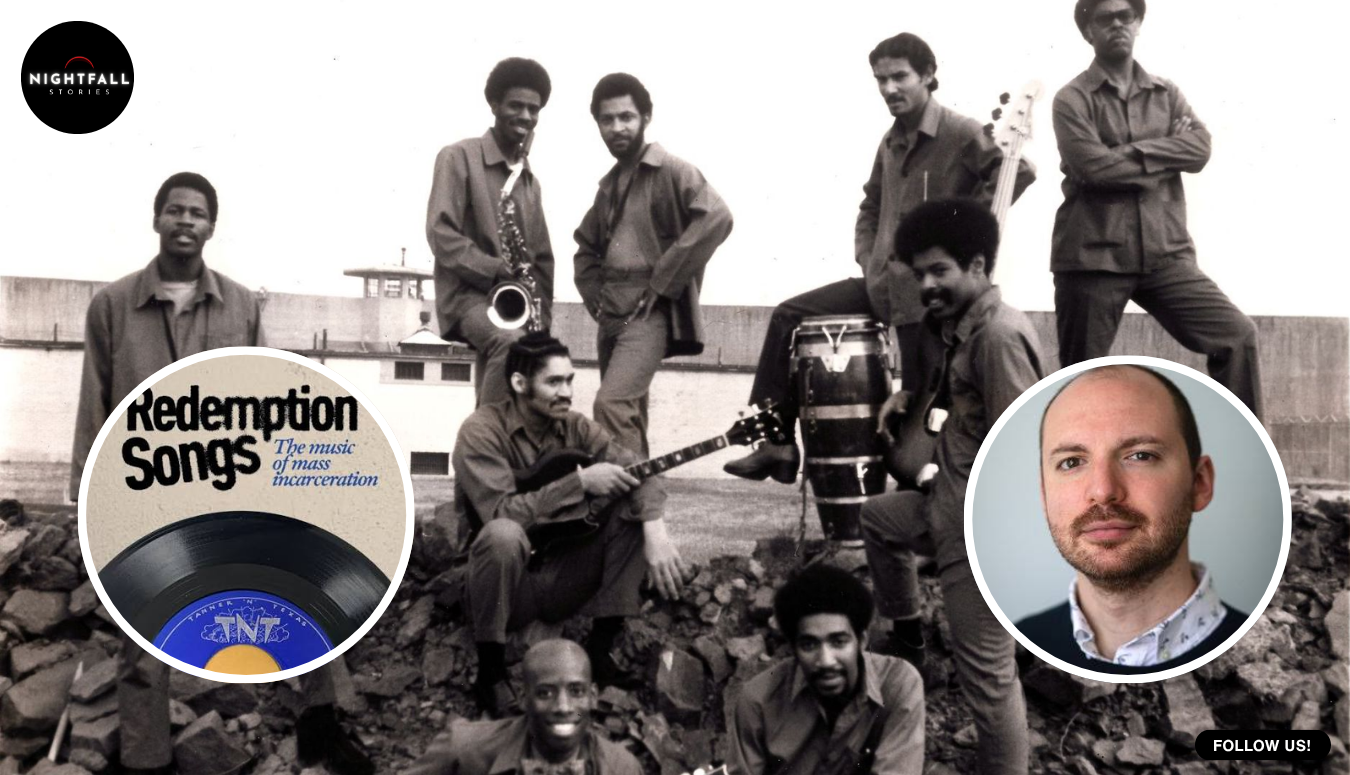
    So the work is slow and unglamorous: cross-referencing a half-credit on a sleeve against a prison newspaper, chasing a radio broadcast log, finding a collector who owns the only other copy, matching a voice on one record to a voice on another. Along the way, Chammah and The Marshall Project digitised around a hundred songs from Texas prison vinyl of the 1970s and 1980s and put them online, simply so the recordings would exist somewhere a person could hear them.

    What emerged from all that has a shape to it, and the shape is the story.

    Go back to the 1930s and the oldest thread in the list is a radio show. Hattie Ellis was a blues singer who performed on a Texas programme broadcast out of a prison, carried under the title Thirty Minutes Behind the Walls. Her recording Desert Blues is in the twenty-five. Think about what that broadcast was: a state-run prison system putting its own musicians on the public airwaves, with an audience of ordinary listeners at home, in the 1930s. That arrangement is almost unimaginable now, and it is the earliest evidence in the collection that prison music was once something the institutions themselves were proud to show off.

    The high point came later. The 1960s and 1970s are described by people who study this material as a kind of golden age, and the reason is not mysterious. Rehabilitation was the governing idea of the era, which in practice meant programming: bands, instruments, practice rooms, teachers, performances, and in some places recording operations. The rodeo record Chammah bought is a direct product of that. The Wynne Unit Band, whose track It’s Over appears in the list credited to Morgan White and the Wynne Unit Band, played the Texas rodeo in the 1970s because a prison with a band was a prison with something to put on at half time.

    The most remarkable thing to come out of that period, and the one general readers are most likely to have heard without knowing it, is The Escorts. Seven singers formed a vocal group inside Rahway in New Jersey in the late 1960s. A record producer named George Kerr happened to attend a prison talent show in 1969, which at the time was open to the public, and heard them.

    What Kerr did next is the kind of improvisation that makes this history worth telling properly. He could not bring a studio inside, so he cut the instrumental tracks in outside studios and brought the tapes in. He rehearsed the group in the prison. And when it came to recording the vocals, he needed a room with dead acoustics, so he set his microphones up in the psychiatric ward and used its padded walls for soundproofing. His argument to the officials who had to approve all this was pragmatic rather than idealistic: put the proceeds back into the prison and let these men pay for themselves.

    The debut album, All We Need Is Another Chance, came out in the early 1970s and reportedly sold somewhere around 310,000 copies, which is a real commercial record by any measure. The seven men who sang on it were Robert Arrington, Stephen Carter, William Dugger, Lawrence Franklin, Reginald Haynes, Frank Heard and Marion Murphy. Naming them matters, because they are the people most likely to be reduced to a curiosity. The follow-up album’s title referenced how many of them had by then been released. They eventually played a live concert at Symphony Hall in Newark. As more members came out, the group carried on as a working civilian act, and Reginald Haynes was still performing with a later line-up until his death a few years ago.

    Their music has had a long afterlife that almost nobody traces back to its origin. It has been sampled by J Dilla, by Jill Scott, by Public Enemy and by Ice Cube, and turned up on television soundtracks. Somebody’s favourite loop was recorded by seven men in a padded room because it was the quietest space available.

    The list holds others from that stretch. Power of Attorney were a funk band of the 1970s whose cause was taken up by James Brown. Ike White was a multi-instrumentalist who recorded an album called Changin Times in 1976 inside Tehachapi in California, a record that has since acquired a devoted following among people who collect this kind of thing.

    And then the thread goes quiet, which is the other half of the arc. The arts and education programming that produced all of this was dismantled over the following decades as sentencing policy hardened and rehabilitation stopped being the organising principle. You can hear the gap in the list. The music does not vanish, because people do not stop making it, but the institutional machinery that recorded it and sold it at the gate largely does.

    Which is what makes the newest entry in the twenty-five worth sitting with. B. Alexis is a woman currently serving a long sentence in a prison in the southern United States. She is identified only that way, by her own choice and on the advice of those working with her, because people who speak publicly from inside can face consequences for it. She started with poetry, written while she was held in solitary confinement. She now records music through FREER Records, an operation set up to make properly produced recordings with incarcerated artists, and her album 9th and Gasoline is described as possibly the first full album recorded by an incarcerated woman in the country. Her track Black Barbie opens the Redemption Songs list.

    Paraphrasing what she has said about it, because her own framing is better than any gloss: people still have a life after whatever they have been through, whatever the mistakes, whatever they were dealing with growing up. She uses music to say that she is a person with an identity beyond the worst day of her life.

    The twenty-five is wider than the Texas and New Jersey thread suggests, and the breadth is deliberate. There is a Parchman Band recording out of Mississippi and a work song credited to Virgil Asbury and others, which is the oldest kind of music in the collection and the kind most people have encountered only through field recordings. There is Lifers Group, the Rahway rap project of the early 1990s. There is a collaboration between the blues musician Rita Chiarelli and prison bands at Angola in Louisiana. There is Songs in the Key of Free, and work by artists including Mac Dre, G. Dep, Chico DeBarge and Antwan Banks Williams, alongside gospel, a protest ballad and a piece made with the chamber ensemble Decoda. Choosing across that spread, rather than assembling a list of greatest hits from one archive, is what turns a collection of curiosities into an argument about a century.

    The practical conditions have changed too, and not only for the worse. A musician recording inside today has no prison rodeo pressing plant and no state-run radio hour, but there are small outside operations willing to do the technical work, bring in equipment where rules allow it, and release the results properly rather than as a souvenir. FREER Records is one of them. That is a narrower pipeline than the 1970s offered, and it depends entirely on the goodwill of people outside, but it means a recording made in a cell block can now reach a listener anywhere without a state agency deciding to put it on sale at a rodeo gate.

    That is also, inevitably, where this project runs into the argument it cannot avoid, and it would be dishonest to write around it. Every one of these musicians was convicted of something, and in some cases of something very serious. There are people on the other side of those convictions, families who lost someone, who did not ask for the person responsible to be presented to the world as an artist. Curating this music and putting it in front of a general audience is not a neutral act, and anyone who claims otherwise is not being straight.

    Chammah’s stated position is clear and he does not hedge it. The premise of Redemption Songs, as he has put it, is to take at face value the idea that people in prison are artists as much as anyone else can be. His broader argument is that music does something arguments cannot: it closes the empathy gap that makes it easy for a public to support extremely long sentences for people they have never had any reason to imagine as human.

    You can accept that and still find it uncomfortable. Both things can be true at once, and the project does not pretend to settle it. What it does is insist on a factual point that is hard to argue with: this music exists, it was made, in many cases it was good, and for decades nobody was keeping track of it. Whatever you conclude about the men and women who made it, a recording that nobody can identify is a recording that is on its way to not existing at all.

    That is why the identification work is the real achievement here rather than the newsletter that carried it. Before Chammah started, the Texas rodeo records were a handful of objects circulating among collectors with no context attached. Hattie Ellis was a name on a broadcast nobody had catalogued. The Wynne Unit Band was a band name without a person in front of it. The Escorts were a sampled breakbeat.

    Now there is a traced line running from a prison radio programme in the 1930s, through a padded psychiatric ward in New Jersey, through a rodeo half time show in Texas, through a funk record cut in California, to a woman writing in solitary confinement who has since made an album. Twenty-five songs, chosen deliberately to span regions, decades and genres, from jazz to opera to gospel to country to rap to a lullaby. Each one now has a performer attached to it where a performer could be found, a date, a place and a reason for being on the list.

    Chammah has said what he set out to do, which was to identify twenty-five songs that meaningfully captured how music tracks against a century of incarceration. The honest measure of whether he managed it is not how many people subscribed. It is that a drummer who once compared a Texas prison to a conservatory, on a record that sold for about twenty dollars to a man who had never heard of him, is now a documented part of American musical history rather than an anonymous voice on a souvenir pressing nobody kept.

    That took ten years. It is the sort of work that nobody notices until someone has already done it.

  • For three decades he taped every band that came through Chicago. Then a stranger started driving boxes out of his house, twenty at a time.

    For three decades he taped every band that came through Chicago. Then a stranger started driving boxes out of his house, twenty at a time.

    Once a month, a man pulls up outside a house in Chicago and loads his car with cassettes. Not a handful. Roughly twenty boxes at a time, and each box holds somewhere between fifty and a hundred tapes. He drives them away, copies every one of them onto a hard drive, and brings the next load back. He has been doing this since the autumn of 2024, and he is nowhere near finished.

    The house belongs to Aadam Jacobs, who is 59 and who spent most of his adult life standing at the back of Chicago clubs with a recorder running. The tapes are what he has to show for it. More than 10,000 of them, holding something close to 30,000 separate sets by at least 3,000 acts, recorded from the middle of the 1980s through to the end of the 2000s. On some of them are bands that nobody has thought about in thirty years. On some of them are bands that went on to fill arenas, caught on a weeknight when they were still the opening act and nobody in the room knew their name.

    The man with the car is Brian Emerick, a volunteer archivist, and the whole collection is now being handed over. Not sold. Handed over, free, to the Internet Archive, where anyone with a browser can stream it or download it without paying anyone a cent. Jacobs is giving away the thing he spent three decades making.

    The reason he decided to do that is the part of this story worth sitting with, and it is not sentimental. It is chemical.

    Start with how the collection came to exist at all, because it was never a plan. Jacobs began taping in 1984, when he was sixteen. By his own account a fellow music obsessive put the idea in his head: if you love the show, record it, and you get to have the show again tomorrow. The first machine was reportedly his grandmother’s dictation device, which is roughly the least suitable piece of equipment imaginable for capturing a loud band in a small room. He upgraded over the years, through better cassette recorders, through digital audio tape, eventually through digital recorders, but the method never changed. Turn up. Press record. Stand still.

    What changed was the scale. Jacobs went out constantly, several nights a week, and on a good night he would catch three separate bands and tape all three. He has described his aim in flatly unromantic terms: he had one unstated goal, which was to enjoy music every night. That was it. No archive in mind, no resale value, no idea that any of it would matter to anyone.

    The venues read like a map of a particular era of Chicago: the Empty Bottle, the Fireside Bowl, the Hideout, Metro, Schubas. In the early days the people running those rooms were not pleased to see him. A man with a recorder is a bootlegger until proven otherwise. Jacobs got around that the only way anyone ever does, which was by being around so often, for so long, and so obviously harmless, that he stopped being a problem and became furniture. He became the taper guy. He handed copies to the bands he recorded and asked nothing for them. Plenty of doors eventually stopped charging him.

    It helps to know that Jacobs was not a lone eccentric. He was part of a tradition. Taping culture grew up around bands who decided they did not mind, and some of them, most famously the jam bands, set aside a whole section of the room for people with microphones on stands. The deal was understood on all sides: record it, trade it, never sell it. Tapers swapped copies by post, built catalogues, argued about microphone placement, and in doing so quietly assembled a parallel history of live music that no record label was bothering to keep. The Internet Archive’s Live Music Archive, which is where Jacobs’s collection is now going, exists because of that tradition and is built on the same rule. Nothing in it is for sale.

    What makes Jacobs unusual inside that tradition is the breadth. Most tapers follow a band. They have a favourite act and forty recordings of it. Jacobs followed a city. He was indiscriminate on purpose, which is why the collection is valuable in a way a devoted single band archive is not: it is a near continuous audio record of what one music scene actually sounded like, night after night, for over twenty years, including all the parts of it that failed.

    That habit of giving tapes away is why pieces of his collection have already escaped into the world under other names. A 1987 Sonic Youth show he caught at Metro is, in its entirety, the album that circulates as Hold That Tiger. His recordings have turned up on official releases by Wilco, Cap’n Jazz, Built to Spill, The Mekons and The Replacements, who used his material to fill out a live album from a 1986 night at Cabaret Metro that came out for Record Store Day a couple of years ago. There is a 1989 Nirvana recording in there from a night when they were nobody’s headliner. There is a Tracy Chapman set from 1988. There is Pavement, Pixies, Depeche Mode, Hüsker Dü, Björk, Stereolab, Liz Phair, Phish, Neutral Milk Hotel, R.E.M., The Cure.

    And then there are the thousands of bands whose tapes are the only tapes. Local acts who played four shows and broke up, opening slots that were never reviewed, one-off line-ups that existed for a single evening in a room with eighty people in it. Those are the recordings that cannot be replaced by anything, because there is no second copy anywhere on earth. That was Jacobs’s own stated passion, in a line he has repeated: he wanted to document the thing that was otherwise not being documented.

    Which brings us to the problem. Magnetic tape is not a stable object. It is a plastic ribbon carrying a layer of magnetic particles that are glued on with a chemical binder, and that binder is the weak link. Over decades, in ordinary household conditions, the binder absorbs moisture out of the air and begins to break down. The United States National Archives, which maintains a condition assessment table for exactly this purpose, describes the result in plain terms: the binder or backing layer breaks down, the oxide starts shedding off onto the playback machine, and the tape squeals as it passes the heads. Archivists call it sticky shed syndrome, or soft binder syndrome in the milder version that affects a lot of cassettes.

    It gets worse than that. Older tape built on an acetate base can develop what preservation people call vinegar syndrome, where the base itself decomposes and gives off acetic acid, which is why a box of bad tape smells like a chip shop. The tape shrinks. It goes brittle. The National Archives guidance on that one is blunt and worth quoting for its lack of hope: there is no cure for vinegar syndrome, so copy the tapes as soon as possible. Mould is its own separate threat, showing up as a powdery white or mustard coloured bloom, and it is both a risk to the recording and a health hazard to whoever opens the box. Tapes can also block, meaning the layers stick to each other in the pack and cannot be unwound without tearing.

    None of this is dramatic. That is the trouble with it. A tape sitting in a box in a house is not visibly dying. It just quietly stops being playable, and the day you find out is the day you try to play it, which may be the day after it became impossible.

    To be straight about the evidence here: nobody has published a condition survey of Jacobs’s specific collection, and no source has named a particular syndrome eating a particular shelf. What is documented is Jacobs’s own judgement, stated publicly and repeatedly, that the collection is decaying, and that he does not have enough life left in him to digitise it himself. The rest is what magnetic tape does, which is extremely well documented by people whose job is to lose sleep over it. He was not being poetic. He was doing arithmetic.

    The thing that turned that arithmetic into action was, of all things, a film. In 2023 a Chicago filmmaker named Katlin Schneider made a documentary about Jacobs called Melomaniac. It played to a sold out room at the Chicago Underground Film Festival and took the audience award. And somewhere in the aftermath of that, a volunteer connected to the Internet Archive’s Live Music Archive found out this man and this hoard existed, and made contact.

    Sit with how thin that thread is. A collection that took three decades to build, and whose survival now depends on a transfer project, got rescued because a first-time documentary subject became visible enough for the right stranger to notice. Had nobody made the film, the most likely outcome is the ordinary one: a house full of boxes, a family that does not know what any of it is, a skip.

    The partnership started in the autumn of 2024, and what it actually involves is about as glamorous as it sounds. Emerick collects his twenty boxes. He plays each cassette through a deck in real time, because there is no fast way to copy a tape, which means a ninety minute show takes ninety minutes. Around two dozen other volunteers, spread across the United States and Europe, then take the raw files and do the slow work: cleaning up the audio, levelling it, identifying which song is which when the band in question was a punk group from 1992 with no recorded output and no setlists anywhere, labelling it, and getting it uploaded.

    Jacobs made that last part possible by accident, decades earlier. He did not just stack tapes. He wrote on them, by hand, band by band, date by date, venue by venue, and he kept the ticket stubs, the flyers, the posters, the stickers and the backstage passes alongside them. Without that, 10,000 unlabelled cassettes would be close to worthless as an archive, because a recording nobody can identify is just noise with provenance. His handwriting is the index.

    One detail from the people doing the transfers is quietly lovely. For a lot of these shows Jacobs was working with fairly mediocre gear in rooms with terrible acoustics, and the volunteer audio engineers have been able to make the results sound genuinely good. The tapes are turning out better than anyone had a right to expect.

    There is also a question hanging over all of this that Jacobs seems to have decided not to be troubled by. A private hoard of 10,000 unreleased live recordings is, in principle, worth money. Bootleg markets exist. Reissue labels pay for this kind of material, as the Replacements release showed. The moment a recording goes up on a free archive, that value collapses to zero, permanently, for everyone including him. He went the other way without much visible agonising, on the straightforward logic that a recording nobody can hear is not worth anything either. The rights situation underneath it all stays genuinely murky, since he had permission from some bands and not others, and a free archive run on the taper tradition’s rules is the only arrangement that makes that history workable rather than a legal problem.

    Now the honest accounting, because this is a story with a milestone in it rather than a finish line. The public collection went live and started small. In January 2025 it held 171 recordings. By the spring of 2026 it was past 2,300. As of now it is somewhere around 3,500 items. That is a remarkable rate for a volunteer effort moving at the speed of a cassette deck, and it is still less than a third of what is in the house. Emerick’s own estimate is that several more years of this are ahead. Nobody involved is pretending otherwise.

    So the race is real and it is not won. There are boxes in that house that have not been opened since the 1990s, and some of what is in them may already be gone. That is the part of the story that cannot be tidied up.

    But here is what has actually changed, and it is worth being precise about it rather than vague. Until a couple of years ago, roughly 30,000 performances existed in exactly one copy, in one building, in one city, in a format that degrades. Today around 3,500 of them exist in a form that can be copied infinitely, downloaded by anyone, and mirrored to as many machines as anyone cares to mirror it to. Those ones cannot be lost any more. Not by damp, not by a house fire, not by an estate sale, not by anyone’s death.

    Jacobs put it about as plainly as a person can. He cannot sit on the hoard until he dies. Someone else is going to have to do the work.

    Somebody is. Twenty boxes at a time.