The number should have been there, and it was not.
An intern at Colorado’s state crime lab was working through an old case file, a routine piece of training on a sample processed back in 2018, and the raw data from the instrument did not match the report that had been signed off on top of it. Something had been taken out. Not corrupted, not lost in a transfer, not garbled by old software. Removed.
That was three years ago. The analyst whose name was on the file had been at the Colorado Bureau of Investigation since January 1994. By the time anyone finished counting, more than a thousand criminal cases carried her initials, and the state of Colorado had a problem it could not solve by firing one person.
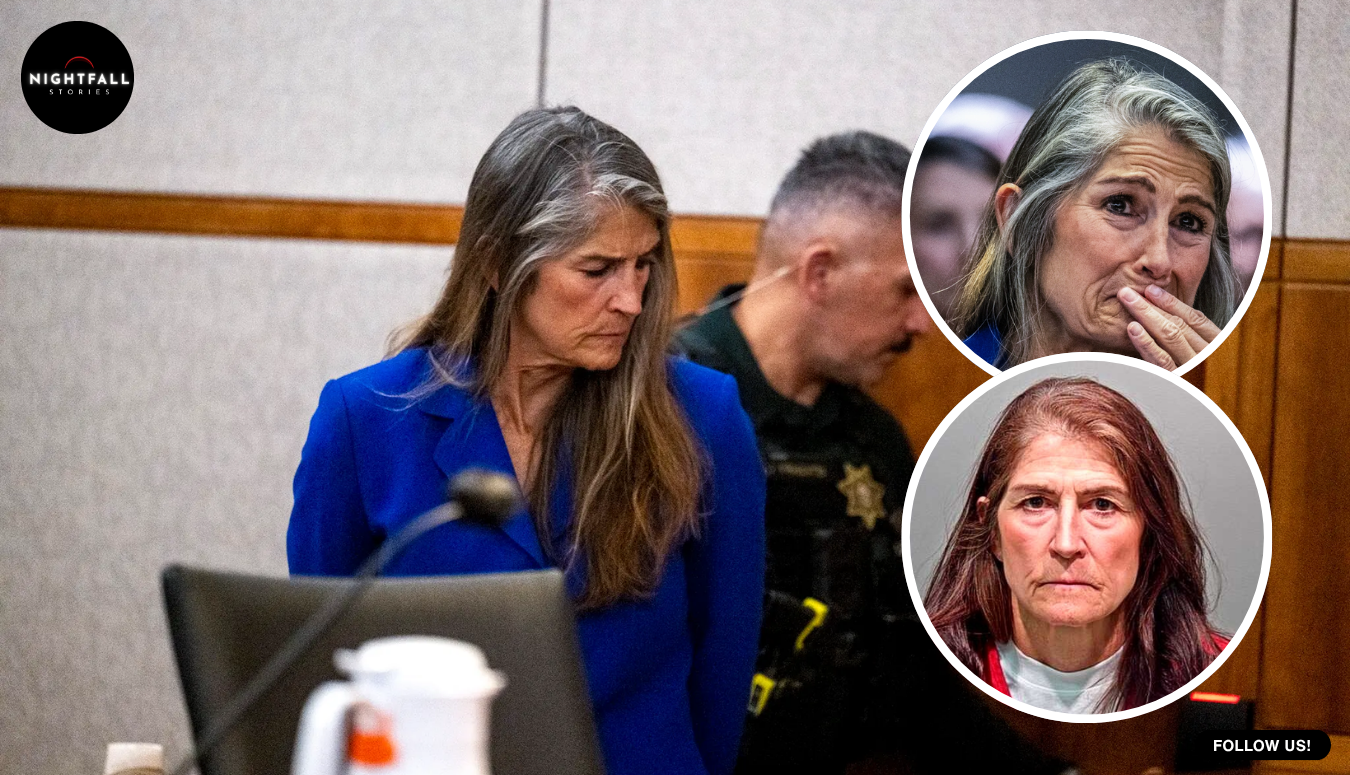
Earlier this year Yvonne Woods, 66, known to almost everyone who worked with her as Missy, pleaded guilty to four felonies. In September a district court judge, Andrew Poland, sentenced her to ten years in the Colorado Department of Corrections. The top count was cybercrime, a class 2 felony, and it carried the ten years on its own. Perjury in the first degree and attempt to influence a public servant, both class 4 felonies, drew six years each. Forgery, a class 5, drew three. All of them run at the same time as the first. Prosecutors had originally filed 102 counts against her, covering conduct the state says ran from 2008 to 2023.
The sentence is the ending. The part worth understanding is the mechanism, because almost nobody outside a forensic laboratory has ever had it explained, and it is the reason a single missing value could unpick a quarter of a century of work.
When a laboratory tests a sample for DNA, the output is not a name and it is not a yes or no. It is a graph. The instrument copies specific stretches of DNA, sorts the copies by size, and draws a trace with a series of peaks on it. Each peak sits at a position that corresponds to a particular variant at a particular location in the genome, and the height of the peak tells you how much of it was there. An analyst reads that trace, decides which peaks are real signal and which are background noise or artefacts of the chemistry, and writes down what the sample contains. There is judgement in that reading. There has to be. Degraded samples, mixed samples and tiny samples all produce traces that need an expert eye.
One of the things a trace can show is the presence of male DNA. There is a marker on the Y chromosome that is included in the standard testing kits precisely so that an analyst can say whether any male contributor is present in a mixture, even a very small one. If the peak at that marker is there, male DNA is there. If it is not, it is not. It is about as close to a binary readout as forensic DNA gets, and investigators rely on it to decide whether a sample is worth pursuing at all.
The state’s case is that Woods deleted values showing male DNA was present, and then wrote reports saying none had been detected. The effect of that is not merely a wrong answer on a page. A report saying no male DNA was found closes a door. There is nothing to compare against a suspect, nothing to upload to the national DNA database, no reason for a detective to request further work, no reason for a prosecutor to look again. The case stops moving, and it stops moving for a reason that looks like science.
Prosecutors also say she altered or deleted data tied to critical parts of the quality control process in her laboratory workbooks. That is the second half of the mechanism and the more unsettling half. Forensic laboratories do not catch this kind of thing by having a supervisor squint at a graph. They catch it through controls, the blank samples and known samples run alongside the real ones, which prove the instrument and the chemistry behaved. If those records are the thing being edited, the system that is supposed to notice is the system being switched off.
And the reason it could go on for years is almost banal. A reviewer reads the report. The report is internally consistent, written in the right language, signed by an analyst with decades of standing and an excellent reputation. Checking it properly means going back to the raw instrument output, panel by panel, and comparing what the machine recorded against what the human wrote. In a working laboratory with a backlog, nobody does that on a file that looks fine. The intern did it because the intern was learning, and learning means looking at everything slowly.
The First Judicial District Attorney’s Office, which brought the case, has put hard numbers on the documented part. Investigators identified 52 laboratory reports containing false statements. In 41 of those, no criminal charges were ever filed. Twelve were connected to cases where a suspect had been charged. Three of those twelve went to trial: one conviction, two acquittals. In 32 of the cases, women and children had reported a sexual assault. That is where this piece stops describing, and it is a deliberate stop. The people in those files are not a case study and there is no public interest in a single further detail about any of them. What matters here is that the laboratory told them something that was not true, and that it did so in the one category of work where a negative result most reliably ends an investigation.
Beyond the 52, the district attorney’s office says hundreds more cases were affected by data manipulation. The Bureau itself has put the number of cases it considers impacted at 1,045. Colorado’s Alternate Defense Counsel, which represents defendants when the public defender cannot, has identified 1,536. Those figures are not the same measurement and should not be blended into one. They reflect different thresholds for what counts as touched by this, and the gap between them is itself part of the story: three years on, the state and the defence bar still do not agree on how large the hole is.
What the state did agree on, early, was that it could not investigate itself. The review of Colorado’s laboratory was run by the South Dakota Division of Criminal Investigation. That decision gets one line in most of the coverage and it deserves more. A crime laboratory’s entire value is that a jury will take its word. The moment an analyst inside it is accused of fabricating results, any audit performed by her colleagues is worth very little, no matter how careful it is, because the people doing it have the strongest possible interest in the answer being small. Importing the reviewers from another state was not a courtesy. It was the only version of the exercise that anyone outside Colorado would have believed.
Then came the bill, in money and in work. The Bureau put the cost of the misconduct through 2024 at just over 11 million dollars. The state legislature’s budget writers approved 7.5 million dollars specifically for retesting DNA samples. Colorado’s Alternate Defense Counsel had spent close to half a million dollars on these cases by early this year and asked the legislature for 2 million more, while estimating that the eventual cost to the defence side alone could approach 11 million. Roughly 600 people have asked the public defender system for a lawyer because of this.
Retesting sounds like the obvious fix, and where it is possible it works. Police in Denver asked the Bureau for hundreds of sexual assault kits for review, then expanded the request to more than 1,300 cases. The Bureau flagged 27 as impacted. The city’s own laboratory took that further and retested 13. Those retests produced 11 suspect profiles, which went into the national DNA database, and six of them came back with hits that gave detectives real leads. All 13 cases were reopened. No arrests have followed so far.
Read that sequence again, because it cuts both ways. Eleven usable profiles came out of samples that had been sitting in storage for years behind a report that said there was nothing there. That is the recovery, and it is genuine. It is also, for the people whose cases those are, an answer that arrived a decade late, from material that was in the building the whole time.
And retesting only works while there is something left to test. DNA analysis consumes sample. A small swab from a difficult surface may have been used up the first time, or may have degraded past the point of yielding anything. Evidence from old cases gets destroyed on schedule. For a sizeable share of the files on the list, there is no second reading available at any price, and the honest position is that nobody will ever know what the first one should have said.
Colorado’s legislature passed a law in 2025, the Forensic Science Integrity Act, to force the system to deal with the consequences in the open. It requires crime laboratories to report every case worked by an employee accused of misconduct, and it gives defendants a route to bring new evidence after conviction. The Bureau has sent out more than 10,000 notices under it, covering every case touched by any employee under suspicion. Deadlines were missed. Defence attorneys describe themselves as swamped, partly because most of this is post-conviction work, a specialism that attracts few lawyers because it is slow, technical and rarely wins. One attorney involved said it should not all land on the defence, given that the law puts the duty on the Bureau and the prosecution. Some of them are still fighting in court for records about who reviewed what, and the Bureau has appealed an order to hand its own forensic files over.
In the courts, the consequences have started to arrive case by case. A man convicted of a 1994 murder in Boulder had his conviction vacated last year after independent testing of the DNA contradicted what Woods had concluded. Prosecutors said they intended to retry him. In a separate matter in Weld County, a district judge dismissed a felony prosecution outright earlier this year on the grounds of outrageous government conduct, a ruling so rare that most defence lawyers never see one. What makes that ruling remarkable is its reasoning. The judge did not find that Woods had manipulated anything in that particular case. He found that the scope and breadth of the scandal, combined with the Bureau’s failure to deal with it, violated fundamental fairness and was shocking to the universal sense of justice, and that the defendant’s right to due process could not be protected any other way. In other words, the laboratory’s credibility had fallen far enough that its work no longer needed to be shown wrong in a given case to be unusable in it.
That is the real scale of the damage, and it is the thing a prison sentence cannot touch. One analyst’s integrity is not a personal matter in a system like this. It is load-bearing. Jurors cannot evaluate an electropherogram. Detectives cannot. Most lawyers cannot. Everyone downstream of the laboratory is accepting, on trust, that the person who read the graph read it honestly, because the alternative is a justice system in which every DNA result has to be independently reproduced before anyone can act on it, and no state can afford that. Trust is the efficiency. Which means it is also the vulnerability.
In court, Woods said she had failed the responsibility entrusted to her as a forensic scientist. Judge Poland described what she did as intentional misconduct by a highly trained professional in a position of extraordinary trust. Her plea deal had set a range of eight to sixteen years; he landed near the bottom of it.
One question that has stayed unanswered is why. Nothing in the public record points to money, or to pressure from any particular detective, or to a grudge. The pattern that emerges from the charges is of a very experienced analyst taking shortcuts around the slowest and least interesting part of her own job, the controls and the documentation, and then covering the gaps so the paperwork held together. If that is what happened, it is worse than corruption, because corruption has a motive you can look for in the next person. Boredom and shortcuts do not leave a trail until someone compares the signed report to what the machine actually recorded.
The intern who did that comparison has never been publicly named. No account of this case identifies them, and the institutions involved have not put a name forward, which is almost certainly the right call for someone who was a trainee at the time. They do not have a quote in any story. They are a job title in a press release. But every number in this case, the 52 reports, the 1,045 cases, the 11 million dollars, the 10,000 notices, the vacated conviction, the ten years, descends from one person at the start of a career deciding that a file that looked fine was worth checking anyway.
What is still open is the money owed to the people and agencies on the other end of it. The restitution hearing is listed for November, and the figure has not been set. Nobody involved is willing to guess at it, which is the most honest thing anyone has said about this case so far.