Category: News

  • A village clerk died with his appeal still unheard. What his family did next took another eight years

    A village clerk died with his appeal still unheard. What his family did next took another eight years

    In the spring of 2002, in the Hoshiarpur district of Punjab in northern India, a team from the state’s Vigilance Bureau dusted nineteen banknotes with a white chemical powder and handed them to a man named Kulwant Singh. The powder was phenolphthalein. It is invisible on skin until you wash your hands in a solution of sodium carbonate, at which point the water turns a bright pink that is very hard to argue with. The notes were five hundred rupees each. Nineteen of them came to nine thousand five hundred rupees, which at the exchange rate of that April was worth a little under two hundred US dollars.

    The man the trap was set for was a Patwari named Jaswinder Singh. Everything that followed, a criminal trial, a conviction, a prison sentence, an appeal to a High Court, a further appeal to the Supreme Court of India, and twenty four years of case files, came out of that sum. He did not live to see the end of it. He died with his final appeal still waiting its turn, and the people who finished the case were not him.

    It is worth saying straight away what a Patwari is, because the whole story sits on it. In the village revenue system that much of South Asia inherited and still runs, the Patwari is the person who holds the land records. He keeps the register of who owns which field, he measures and maps, and when ownership changes he records the change. That recording is called a mutation. It is a clerical act performed by one of the lowest paid officials in the chain, and it is also the single document that turns a family’s claim to a piece of ground into something a bank, a buyer or a court will recognise. If your name is not entered, in practice you do not own the land, whatever you believe.

    In this case, according to the Supreme Court’s own account of the prosecution story, Kulwant Singh’s sister in law wanted her late husband’s land entered in the names of his legal heirs. An ordinary piece of paperwork, the kind that happens after every death in every village anywhere. The allegation was that the Patwari asked for ten thousand rupees to move it along, and that the figure was then negotiated down to nine thousand five hundred. Kulwant Singh went to the Vigilance Bureau instead of paying, and the Bureau did what anti corruption units across the subcontinent do.

    The method is standardised and, read cold, almost theatrical. The complainant’s own money, or money provided for the purpose, is noted down by serial number so that it can later be identified beyond dispute. Each note is treated with phenolphthalein. A raiding party is assembled, and crucially one member of it is designated as the shadow witness. The shadow witness has exactly one job. He is supposed to stay close enough to the complainant to see and hear the whole transaction, so that when the case reaches a courtroom years later there is an independent human being who can say, under oath, that he watched the official ask for the money and watched him take it. Everything else in the procedure is corroboration. The shadow witness is the evidence.

    On the day of the raid the notes were recovered from the Patwari’s shirt pocket. His hands tested positive. In the ordinary course that looks like a complete case, and in February 2004 a special judge in Hoshiarpur agreed. Jaswinder Singh was convicted under two provisions of the Prevention of Corruption Act and sentenced to two years of rigorous imprisonment and a fine of ten thousand rupees, which is to say a fine slightly larger than the bribe he was found to have taken. He appealed to the Punjab and Haryana High Court, which took until November 2013 to decide and then affirmed the conviction. Eleven years had passed. He took it to the Supreme Court of India, which granted him leave to appeal in September 2014.

    Then the file went quiet, in the way enormous court systems go quiet. The Supreme Court of India receives tens of thousands of matters a year. A criminal appeal from a two year sentence over a small sum is nobody’s emergency. And somewhere in that waiting, Jaswinder Singh died. The judgment does not say when, and it does not say how old he was, and this piece is not going to guess at either. What the record shows is that in October 2018 the Court permitted his legal representatives to be substituted for him, which means he had died at some point before that. From then on the case was titled with a bracket after his name noting that the appellant was dead and that the appeal was being carried by his legal representatives.

    That phrase is where this stops being a story about a bribe and becomes a story about a decision somebody made.

    Here is the mechanism, because it is genuinely not widely known, and it is the hinge of everything. Under Indian criminal procedure, most appeals simply die when the appellant dies. The reasoning is obvious enough. The point of a criminal appeal is to relieve a living person of a punishment, and you cannot un imprison a dead man. So the rule, broadly stated, is that an appeal finally abates on the death of the appellant, and the file is closed.

    But the rule has two openings in it, and they matter. An appeal against a sentence of fine does not abate, because a fine attaches to the estate, and an estate survives its owner. And there is an express exception written in for appeals against a conviction carrying death or imprisonment. Where the appellant dies while such an appeal is pending, any of his near relatives may apply to the appellate court for leave to continue it. The application has to come within thirty days of the death. If leave is granted, the appeal does not abate. It goes on exactly as before, with the dead man still named as the appellant and somebody else standing in his place.

    Read that provision twice and you see what the law is quietly conceding. It is accepting that a criminal conviction is not only a punishment. It is also a public statement about a person, entered in a public record, that outlives the body of the person it is about. The relatives who continue an appeal are not trying to get anyone out of prison. There is no prison left to get out of. They are going after the statement.

    And there is a detail in that provision that is easy to read past and hard to forget once you have noticed it. The application has to be made within thirty days of the death. Whoever did this had one month, starting from the day they buried him, to decide that a decades old conviction over a sum worth less than two hundred dollars was worth continuing to fight, find out that such a thing was even legally possible, instruct someone who knew how to ask, and file. Thirty days is the window the law allows for that, and it runs through the worst month a family has.

    There was also, to be fair, a concrete stake beyond the name. The fine attached to his estate, and a fine does not die with the person it was imposed on, which is precisely why the law treats a fine appeal differently. But a fine of ten thousand rupees, by 2018, was a trivial amount of money in absolute terms and nothing like enough to justify eight years of Supreme Court litigation. Anyone doing this purely as a financial calculation would have paid it and walked away in an afternoon.

    Somebody in Jaswinder Singh’s family filed that application. We do not know who. The judgment records that legal representatives were permitted to step into the shoes of the appellant, and it names nobody, and neither does any reporting of the case, and neither does the case headnote. The courts of India are unusually open compared with most jurisdictions, and the full text of the judgment is free for anyone in the world to read, but it does not name the family, and so this article will not either. That is a real hole in the middle of the story and the honest thing is to mark it rather than fill it. What his widow or his children or his brother or his sister thought, how long they argued about it, whether anyone told them it was a waste of money, whether they could afford it, none of that is in the public record. All that is in the public record is that the application was made, and that it was allowed, and that the case continued.

    It then continued for eight more years.

    Think about what those eight years consisted of, in practical terms, for a family in a district town. A Supreme Court matter has to be maintained. There is counsel to instruct and pay, there are listings that come and go, there are adjournments, there are years when nothing at all happens and the only thing required of you is that you do not give up and withdraw. The person at the centre of it is dead and cannot be helped. The sentence can no longer be served or not served. The only thing still available, the entire prize, is the removal of a line in a register.

    In September 2026 the Supreme Court of India removed it.

    What the Court actually held matters enormously here, and it needs to be stated precisely, because the comfortable version is not the true one. The Court did not find that the trap was fabricated. It did not find that the money was planted, or that the Vigilance Bureau behaved improperly, or that nothing happened in Hoshiarpur in April 2002. It made no positive finding of innocence at all. What it found was that the prosecution had not proved its case, and the reason is the shadow witness.

    Onkar Singh was the shadow witness. In the witness box he accepted that the money had not been handed over in his presence, because at the relevant moment he had stepped out of the office. The official witness, Harnandan Singh, said the same thing. Neither man saw the demand. Neither man saw the money change hands. The only person who claimed to have witnessed the transaction was the complainant himself.

    That left the prosecution resting on the recovery of the notes from the Patwari’s pocket and the chemical test on his hands, and on this the Supreme Court applied a principle settled by a larger bench of the same Court in a case called Neeraj Dutta. Stripped of the Latin, it comes to this. To convict a public servant of taking a bribe, the state has to prove two separate things, that he asked for the money and that he accepted it. Both. Proof that money ended up in his possession is not the same as proof that he demanded it, and the law refuses to treat it as such, because the alternative is that physical possession of a note becomes conviction by itself, regardless of how it got there.

    The Court held that mere recovery of tainted money, standing alone, could not establish the charges. With no witness to the demand and no witness to the acceptance, the two things the state was required to prove were simply absent from the evidence, whatever else the evidence showed. Both the trial court’s judgment of 2004 and the High Court’s affirmation of 2013 were set aside, and the conviction and sentence went with them.

    So the honest summary is this. A Supreme Court of India acquittal is final, with nothing further to appeal and nothing left interlocutory about it. The conviction is gone, entirely and permanently. Whether Jaswinder Singh asked a widow’s family for ten thousand rupees in 2002 is a question no court will ever now answer, and the Court was careful not to pretend otherwise. What was decided is that he should never have been convicted of it on the evidence the state brought, and that is what his family was after, and that is what they got.

    The arithmetic of the thing is what stays with you. The sum at the centre of the case was worth under two hundred dollars at the time. It was, for a global reader, roughly a decent week of groceries. For that, a man spent the last years of his life as a convicted person with a two year sentence hanging over him and a fine larger than the money he was said to have taken. The case outlasted his working life and then it outlasted him. By the time it ended, the trap was twenty four years in the past and the conviction had stood for twenty two.

    And none of it was ever going to be given back. That is the part worth sitting with. His family did not win him anything. They could not restore a single year, or a single rupee of what the case had cost, or the ordinary dignity of not being a man who had been convicted. There was no compensation at the end of this and nobody suggested there would be. The only available outcome was a sentence in a judgment saying the conviction could not be sustained, and the family went after it anyway, for eight years, with no deadline and no guarantee and nobody left to thank them for it.

    People talk about clearing a name as though it were a figure of speech. In this case it was the literal and only objective, pursued at real cost by people whose names we do not know, on behalf of someone who could not be told it had worked.

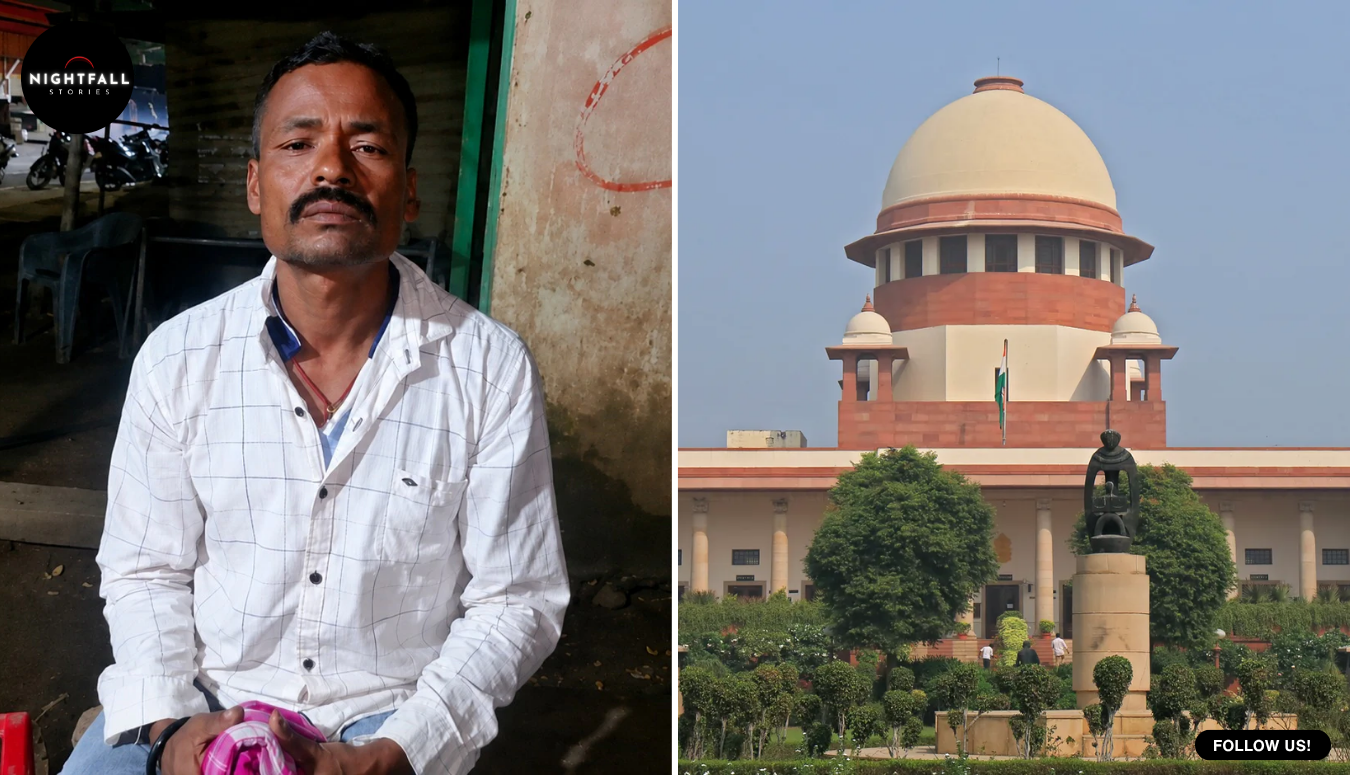
  • He quietly quit acting after reading more than a hundred scripts he did not like. Three years later, India came looking for him.

    He quietly quit acting after reading more than a hundred scripts he did not like. Three years later, India came looking for him.

    Anant Nag did not hold a farewell press conference. He did not post anything. He did not give the interview where an actor explains that it is time to let the younger ones have a turn. What he did was simpler and much stranger. He kept asking producers to send him the script first, and he kept reading, and he kept saying no. More than a hundred scripts over three years, across five different languages, from people who very much wanted him. He liked none of them. And somewhere in the middle of all that reading, without ever announcing it, a fifty year career ended.

    Then, three years into a retirement nobody had been told about, the Government of India gave him the Dadasaheb Phalke Award, the highest honour the country has for a life in cinema, and the hall stood up.

    That is a peculiar sequence, and it is worth sitting with for a moment. Most long careers end with a long goodbye. There is a last film, a tribute reel, a round of interviews about legacy. Nag’s ended the way a reader puts down a book they are not enjoying. He has been blunt about why. Seeing what was on offer, he stopped. He was being sent work, he says, from both the Hindi industry and the Kannada industry, and his answer every time was the same: send the script, and if I like it, I will do it. The scripts came. He read them. None of them were good enough to be worth the years he had left.

    He was in his late seventies by then. He is seventy eight now, born in 1948, which means he was being asked to spend what is left of a working life on films he already knew were mediocre. Put that way, the decision stops looking like retirement at all. It looks like the same judgement he had been exercising for five decades, applied one more time, and arriving at zero.

    Almost nobody outside India has heard of him, which is the part that is genuinely hard to convey. He has acted in more than three hundred films. More than two hundred and fifty of them are in Kannada, the language of the southern Indian state of Karnataka, and the rest are spread across Hindi, Telugu, Tamil, Marathi, Malayalam and English. If you are from Karnataka, this is not a biography you need explained. There are lines of his that people quote at each other without needing to say where they are from, in the way that certain films become a shared vocabulary rather than a thing you watched. If you are not from Karnataka, he is a stranger with three hundred credits.

    That gap is worth explaining rather than glossing over, because it is not a measure of how big he is. Karnataka has a population in the tens of millions, and Kannada cinema is one of several large film industries operating inside India at the same time, each with its own stars, its own history and its own audience that does not necessarily follow the others. An actor can be a household name to tens of millions of people, carry films for fifty years, and still never appear in the export version of Indian cinema that reaches the rest of the world, which is overwhelmingly the Hindi one. Nag is not a regional figure who never made it. He is a very large figure in a place the rest of the world does not get told about.

    Here is the shortest way to understand what he actually is. In the 1970s, Indian cinema split into two worlds that mostly did not talk to each other. On one side was the commercial industry, the songs, the fights, the stars and the money. On the other was a movement of serious, austere, politically angry films, made cheaply, about caste, land and power, which came to be called parallel cinema. Its most important director was Shyam Benegal, who died in late 2024 at the age of ninety. Nag was in Benegal’s films. He was in Ankur, which arrived in 1974 and is still taught as the film that opened the door for everything that followed. He was in Nishant the year after, and Manthan the year after that, and then Bhumika, Kondura and Kalyug. That body of work alone would be a career worth a lifetime honour.

    And at the same time, in the same years, he was a genuine commercial star in Kannada cinema, in exactly the kind of popular films that the parallel movement was set up as a rebuke to. That is the unusual thing about him, and it is the thing that is hard to do. Actors who become credible in the serious films tend to stay there, partly by temperament and partly because the commercial industry stops believing in them. Actors who become stars rarely get asked back by the directors who are trying to make something difficult. Nag did both, for decades, without either side deciding he belonged to the other. He kept working in big Kannada films well into his seventies, which means there are audiences who know him only as a beloved presence from films made after the parallel cinema years were already history, and who would be surprised to learn what he was doing in 1974.

    The route into all of it is more improbable than the career. He grew up in rural Karnataka, in a stretch of coast running roughly four hundred kilometres from Karwar in the north to Kasaragod in the south, and he was raised in an ashram and a math. A math, sometimes written as mutt or matha, is a monastic institution, a religious house with a teacher at its centre, and for a child it means being brought up inside an austere and ordered devotional routine rather than in an ordinary family home. He was schooled in Kannada up to the eighth standard, which is about as far as a village education went. Then, at twelve, he was put on a train and sent to Mumbai to be educated in English, at St Xavier’s High School.

    Think about what that journey actually was in the early 1960s. A boy of twelve leaves a monastic house in a coastal village where he has been taught in his own language, and arrives in the largest, loudest, most commercially frantic city in the country, to be educated in a language he has not been using. Whatever else that does to a person, it gives them two registers. He has spent a career working in both.

    What came next was theatre, not film. In Mumbai he acted in Kannada and Konkani plays, and the people he worked with in that world read now like a roll call of modern Indian drama: Satyadev Dubey, Girish Karnad, Amol Palekar. Stage work is where he learned the thing that is most obvious about him on screen, which is that he almost never appears to be acting. There is no visible effort in his performances. Fifty years of that is harder than it sounds, because the temptation in a long career is to develop a manner, a set of reliable gestures that an audience recognises and applauds, and he never did. He has the quality of a man who has walked into the frame from somewhere else and has somewhere else to be afterwards.

    His screen career began in the early 1970s, and it is one of those filmographies where the sheer volume is the point. Three hundred films over fifty years is an average of six a year, every year, sustained through the entire adult life of a man who was also, at various points, doing other things entirely. He did not coast. The films he is loved for in Karnataka are spread across the whole span, not bunched at the start.

    The other person in this story is his brother. Shankar Nag was six years younger, and he was a star in his own right and a director, and the two of them worked together. The piece of that relationship that Anant tells best is small and very revealing. An opportunity came from the north, a television series for Doordarshan, the state broadcaster, and Shankar was weighing it against continuing to direct films. Anant pushed him towards the television. It was a chance, he argued, for his brother to show what he could actually do as a director, and a serious opportunity coming south. Shankar took it, and the result was Malgudi Days, which became one of the most loved things Indian television has ever produced. Anant appeared in thirteen episodes of it.

    He also told his brother, at one point, to stop producing films, because they were losing money on them. That is not a glamorous thing to say to a sibling who is a star. It is the kind of thing you say to someone you are actually looking after. Reading it back now, next to the retirement, a pattern shows up: this is a man with an unusually clear eye for when something is not working, and an unusual willingness to say so out loud and then act on it.

    Which brings us to what the Phalke actually is, and why the timing of it matters.

    The Dadasaheb Phalke Award is named for the man generally regarded as the father of Indian cinema, and it is given by the Government of India for lifetime contribution. It is not a popular vote and it is not a trade prize. It sits inside the National Film Awards, which are run by the Ministry of Information and Broadcasting, and it is handed over in person by the President of India. Nag’s was the award for 2024, presented at the 72nd National Film Awards. The ceremony was held last month at Ekta Nagar, in the Narmada district of the state of Gujarat, and President Droupadi Murmu gave him a shawl and a certificate.

    He had already received the Padma Bhushan, one of the country’s highest civilian honours, the year before. So the state had not overlooked him. But the Phalke is a different kind of statement, because there is only one of them each year and it is explicitly about a whole life.

    What makes it land is the order of events. He had already gone. He had made his own assessment of the work being offered to him, decided it was not worth doing, and stopped, without telling anyone, three years before the award existed as a possibility. The honour did not arrive in time to persuade him to stay, and it was not a consolation for being pushed out, because nobody pushed him. It arrived after the decision, on top of it, as if to say that the judgement had been correct all along.

    By his own account he found the occasion slightly overwhelming. He said he was trying to take in the scale of the thing, which from a man who has been on film sets since the early 1970s is a more interesting reaction than gratitude. And when he spoke about the award itself, he did not keep it. He said it did not belong to him alone, that it belonged to everyone, and he dedicated it to Karnataka, the state whose language he had been schooled in to the eighth standard before anybody sent him anywhere.

    There is one loose thread, and he left it loose himself, so it should stay that way here. Asked directly whether he has retired, he said yes, he has. Asked whether that is final, he said that if something interesting came along he would consider it, and then added, flatly, that it does not come along, and that he means across all the languages he could work in. Both of those things are true at the same time. He is not sitting by the phone. He is also not going to pretend that he would refuse a good script out of principle, because refusing good scripts was never what he was doing. The door is not locked. It is simply that nothing has walked through it in three years, and he has stopped expecting anything to.

    That is a better ending than a farewell tour, and it is a far more honest one. A farewell tour is a performance about stopping. This was just stopping, privately, for a reason, with no audience and no reel. The reel came three years later, from the state, at a ceremony he had not campaigned for, for a body of work he had already closed.

    It is worth separating the two honours, because they are not the same gesture. A high civilian decoration is given across every field in the country, dozens at a time, to scientists and civil servants and musicians and surgeons. The Phalke is one award, once a year, for one person, and it is only about cinema. Getting the first says the state has noticed you. Getting the second says the state has decided where you sit in the history of the form. For a man who had spent the previous three years quietly establishing that he no longer wanted anything the industry was offering, being placed in that history by the country rather than by the industry has a certain symmetry to it.

    He read a hundred scripts looking for one worth doing and did not find it. That is not a sad story about a man the industry forgot. It is a story about someone who was still, at seventy eight, applying exactly the same standard he had applied at twenty five, and who turned out to be the only person in the room willing to enforce it.

  • A judge sent him home in 2022, and he stayed a convicted murderer for four more years until the state wrote one sentence about itself

    A judge sent him home in 2022, and he stayed a convicted murderer for four more years until the state wrote one sentence about itself

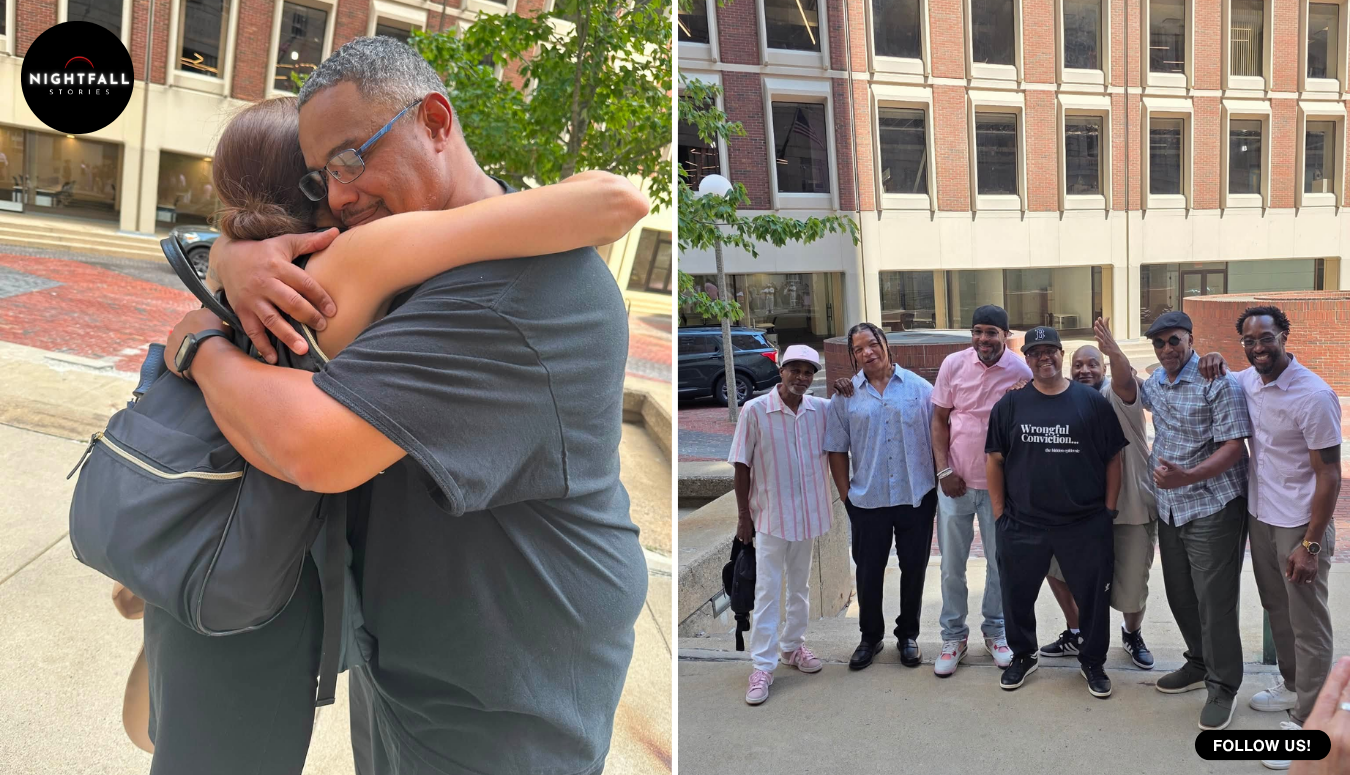
    The hearing in Suffolk Superior Court in Boston took a few minutes. The prosecution filed a motion stating that it was unable to sustain its burden of proof at trial, the judge dismissed the charges, and Stephen Pina, fifty eight years old, stopped being a man convicted of first degree murder. His mother Josephine was in the room. So were two other men who had each spent decades in prison for killings they said they did not commit.

    Pina had already been out of prison for four and a half years when that happened. That is the part of this worth sitting with, because most people assume the walking out is the ending.

    Before anything else, one thing needs saying plainly, because readers collapse it almost automatically and it is not fair to anybody to let that stand. Charges being dropped is not a court finding that nobody did it. No judge has declared Stephen Pina innocent. What the courts found was that his trial was unsound and that the state could not lawfully convict him on what it had. Those are different findings, and the distance between them matters.

    It matters most to one family. Keith Robinson was twenty six when he was shot and killed outside the Mission Hill housing complex in Boston in the winter of 1993. Thirty three years later nobody has been held to account for his death, and with both of the eyewitnesses who testified now dead, that is almost certainly how it will stay. There is no version of this story in which his family gets an answer. Everything that follows is about what happened to another man inside the machinery of the case, and none of it undoes that.

    The trial itself was thin, and that is not a characterisation, it is what the state’s highest court said in writing. There was no forensic evidence, no video, no photograph, nothing physical connecting Pina to the shooting. The case was two people who said they saw it.

    The first was Timothy Hall. He picked Pina out of a photographic array and put his own confidence at roughly six out of ten. By the time he was on the stand he told the jury he had always been a hundred percent certain, and explained the gap by saying he had been having second thoughts earlier. His descriptions of the shooter had shifted over time on height, on weight, on complexion.

    The second was Debra Annas, and she was the one the case rested on. She said she had known Pina for a year and a half or two years and had bought drugs from him most nights. She testified that she watched a man get out of a maroon car, fetch a gun and shoot Robinson. But when police first showed her eight photographs weeks after the killing, she identified nobody. She picked Pina out of a different array that September, six months after the shooting. She testified that she had been high on crack cocaine when she viewed at least one of the arrays. Her account and Hall’s did not match on significant points.

    And there was something about Debra Annas the jury was never told, and neither was the defence.

    When she testified in January 1996, she was a psychiatric inpatient. She was hospitalised at Taunton State Hospital at the time she took the stand in the case that convicted Stephen Pina of murder. The prosecution had in its file a detective’s note containing the contact details of her psychologist. Nobody told Pina’s lawyers. Her records also reflected diagnoses that bore directly on perception and memory. More than a decade passed before the defence learned any of it existed.

    It is worth being precise about why that is a serious failure rather than a procedural annoyance, because the phrase withheld evidence gets used loosely.

    A criminal defendant is allowed to test a witness’s credibility, and one of the legitimate ways to do that is to ask whether the witness was in a condition to perceive events accurately, to remember them accurately, and to describe them accurately. That is not an attack on a person’s character. It is the core function of a trial. The prosecution carries a constitutional obligation to turn over evidence favourable to the defence, including material that undermines its own witnesses, and it carries that obligation whether or not the defence knows to ask for it. The state’s highest court said in its decision that the Commonwealth had violated that obligation.

    When the Supreme Judicial Court of Massachusetts ruled on the case, Justice Frank Gaziano writing for the court, it put the point about as directly as a court does. Given the evidence linking what was in those treatment records to Annas’s capacity to perceive, remember and articulate the events she described, the records had impeachment value. In other words, the defence had been deprived of a real and material line of attack on the only witness who truly mattered. The court added that this was not a case where there was a mountain of other evidence to fall back on. Annas was the key to the prosecution’s case, and there was nothing hard underneath her.

    It was not only the psychiatric records, and the piece would be misleading if it suggested otherwise. The motion judge, Peter Krupp, granted a new trial on the totality of what had been withheld, newly discovered or newly available, finding that justice may not have been done. Three strands did the work. The first was Annas’s hospitalisation and treatment history. The second was evidence pointing at other people: two men, Brian Johnson and Anthony Woods, who had access to the murder weapon and were stopped in a stolen maroon Nissan in the weeks after the killing, with Johnson carrying injuries consistent with a robbery that had happened hours before Robinson died, and Woods resembling Pina. That material had not been shared either, and the judge found it supplied the missing links that turned an alternative theory from speculation into something a jury could have been asked to consider. The third was DNA. Testing done in 2015 and again in 2022 excluded Pina as a contributor to samples taken from the weapon and from the victim’s jacket, and it is worth noting honestly that the court treated the DNA as marginal support rather than the centrepiece. Krupp also observed that there was no evidence Pina knew Robinson or had any motive to shoot him.

    Pina had been convicted in January 1996, at a second trial, the first having ended in a mistrial the year before. The sentence for first degree murder in Massachusetts is mandatory life imprisonment without the possibility of parole. His appeal was rejected by the same court that eventually ruled in his favour, back in 1999. His lawyers filed the motion for a new trial in 2020.

    Now the strange part.

    In March 2022, Judge Krupp ordered Pina released from prison while the court went on considering that motion. He did not vacate the conviction. He said the likelihood that Pina would ultimately prevail looked fairly high, scheduled a further hearing to examine the evidence more closely, and let him go home to his mother’s house in Dorchester that night. Pina had served twenty eight years.

    So he was out. And in the eyes of the law and of every records system in the state, he was a man convicted of murder in the first degree, serving a life sentence, who happened to be at liberty.

    Think about what that actually involves day to day. He was on GPS monitoring, which means an ankle device and a log of where you are at all times. He had probation requirements, including weekly check ins with the court. His conviction was not under review in any way a form could reflect: it simply stood. A first degree murder conviction is the single heaviest thing a background check can produce, and the ordinary machinery of adult life runs on background checks. Rental applications. Employment. Licences of almost any kind. Anything that asks whether you have ever been convicted of a felony, where the honest answer was yes and the explanation was a sentence nobody has time to hear.

    There is also the part that no form captures. A man in that position cannot plan. He cannot take a job that requires a year of training, or sign a lease with confidence, or make a promise to anybody about where he will be, because the honest answer to any question about his future is that it depends on a ruling that has not come yet. Everyone around him treats his release as the end of the story, and he is the only one who knows it is not. He has to keep explaining that the thing everybody is congratulating him on has not actually happened.

    And underneath all of it, the state was actively trying to put him back. That is not a metaphor. The prosecution was litigating to keep the conviction standing. For a man who had already lost twenty eight years, the appeal was not an abstraction about legal principle. It was a live attempt to return him to a cell for the rest of his life, and he had to get up every morning and live beside it without knowing which way it would go.

    The common assumption about these cases is that a judge opening the door means you have won, and it is wrong in a way that is hard to grasp until you look at the dates. Krupp did not vacate Pina’s conviction in 2022. He vacated it on the third of February 2025, almost three years after sending him home. For those three years Pina was free and the conviction was entirely intact, with no ruling in his favour on the merits at all, waiting on a decision that might simply have gone the other way and sent him back inside to die there.

    Then, when the vacatur finally came, it did not end anything, because the Commonwealth appealed it. So the vacatur was provisional too, and he waited another eighteen months for the Supreme Judicial Court to say whether Krupp had been right.

    There is an institutional story folded into that delay, and it should be attributed rather than asserted, because it is a characterisation of two officials’ positions as reported. The withheld material was reportedly uncovered by an integrity review unit inside the district attorney’s own office under Rachael Rollins. Her successor in the post, Kevin Hayden, opposed the new trial and took the appeal. The same office that found the problem fought the remedy, four years apart, under two different names on the door. Whatever you make of either decision, it is a large part of the reason a man spent four and a half years free and convicted at the same time.

    The Supreme Judicial Court affirmed Krupp on the twenty eighth of July 2026, after hearing argument in the spring. Just over a fortnight later, in the late summer, the Commonwealth filed the motion that ended it and the charges were dismissed. By then the arithmetic of a retrial had become impossible: both eyewitnesses were dead, their earlier testimony was unlikely to be admissible, and there had never been any physical evidence to fall back on. The state did not concede that Pina was innocent. It stated that it could not carry its burden. That is a narrower thing, and it is also the only thing the state was ever going to say.

    In the room were Jill Tessier of the Committee for Public Counsel Services, who had represented him, and Josephine Pina, who had outlasted the whole case. Also present were Sean Ellis and FuQuan McGee, each of whom had served more than two decades before their own convictions came apart. When Pina had walked out of that same courthouse four years earlier, it was Ellis and another exonerated man, Darrell Jones, that he turned and held on to in the corridor. There is a small and specific community of people who understand what the four years in the middle feel like, and they tend to show up for each other.

    The National Registry of Exonerations lists him now: Massachusetts, murder, convicted 1996, exonerated 2026, roughly thirty years lost. The contributing factors recorded against the case are mistaken witness identification, perjury or false accusation, official misconduct and inadequate legal defence. Two different measures of lost time sit in that entry and both are true: twenty eight years in custody, and about thirty years carrying the conviction. No compensation is recorded, and whether he intends to seek any has not been established.

    Later that same month he sat down with Sean Ellis on Boston Public Radio and talked about it, as two men who had moved from accused to convicted to imprisoned to free while maintaining throughout that they had not done it.

    It would be easy to write Stephen Pina as a saint and the twenty eight years as a journey, and both would be a kind of lie. He is a fifty eight year old man who lost most of his adult life to a case built on two shaky identifications and a file the defence never saw, and who then spent another four and a half years at home with an ankle monitor and a murder conviction, because getting out of prison and getting the conviction off you turn out to be two separate processes with years of silence in between.

    What finally ended it was not a dramatic exoneration or a confession or a new suspect in the dock. It was the Commonwealth of Massachusetts putting on paper, after thirty three years and an appeal it chose to bring and lost, that it could not prove its own case. Thirty three years to write it. A few minutes to read it out. And his mother was alive to hear it.

  • One orchestra turned him down over what he would not do on Saturdays. Seventy years later, Tokyo came looking

    One orchestra turned him down over what he would not do on Saturdays. Seventy years later, Tokyo came looking

    Sometime in the early 1950s, a young Swedish conductor was in conversation with the Gävle Symphony Orchestra about a job. The orchestra was interested. Then the question of his availability came up, he explained that he would not work from sunset on Friday until nightfall on Saturday, and that was the end of it. They turned him down because of it. The Norrköping Symphony Orchestra, a little further south, decided to make an exception for him, and in 1954 he took the post there and kept it for eight years.

    Seventy-two years after that rejection, in September, the Japan Art Association announced that the music laureate of its 2026 Praemium Imperiale was Herbert Blomstedt. He is 99 years old. The other four laureates were the artist Jenny Holzer, the sculptor Andy Goldsworthy, the architect Daniel Libeskind and the actor Cate Blanchett. The citation praised the depth and balance of his readings across an unusually wide repertoire, and said his authority comes from meticulous preparation and complete command of the score.

    Which is a slightly extraordinary thing to say about a man who spends one day in seven refusing to prepare.

    Blomstedt is a Seventh-day Adventist, and the Sabbath observance follows from that. Adventists keep the biblical Sabbath on the seventh day rather than Sunday, counting it from sunset on Friday to sunset on Saturday, and treat it as a day set apart from ordinary work. In Blomstedt’s case the practice is more specific than most people assume, and the detail is the whole point. He does conduct concerts on Saturdays. What stops at Friday sunset is the preparation. He does not rehearse with an orchestra, and he does not sit down with a score and study it. The work ends; the performance does not.

    That distinction is not a loophole he found. It is the result of a conversation he has described having, as a young man, with Johannes Norrby, who ran the Stockholm Philharmonic and was a believing Christian himself. By Blomstedt’s own account, given to a church publication when he turned 90, Norrby said he respected the position on rehearsals but did not understand the rest of it. If you say you make music to glorify God, Norrby asked him, why would you not want to glorify God on the Sabbath?

    Blomstedt went away and thought about it, and read the Gospels, and noticed how often and how deliberately Jesus is described as doing things on the Sabbath. He settled on a model drawn straight from his own father, who was an Adventist pastor: a minister spends his week writing the sermon and then stands up and delivers it on the Sabbath, and the delivery is not work in the sense that the writing is. So Blomstedt rehearses all week and studies scores all week, and when the sun goes down on Friday he stops studying, and whatever happens on the podium on Saturday happens on what the orchestra and he have already built together. He has described it in almost exactly those terms: on the Sabbath they do not practise any more, they play what they rehearsed.

    Now consider what that costs in this particular profession.

    A symphony orchestra is a weekend business. Its revenue comes from the nights when the hall is full, and the hall is fullest on Friday and Saturday. The working week of a guest conductor is built backwards from those nights: a series of rehearsals across the week, tightening as it goes, with the last and most important one commonly falling on the Friday, sometimes a public general rehearsal, sometimes a final sitting the same day as the first concert. That is the session where everything that has gone wrong gets fixed. It is the one a conductor would least willingly give up.

    Blomstedt gives it up, every single week, in winter especially. In northern Europe in December the sun sets in the middle of the afternoon. In Stockholm at the turn of the year it is dark before four o’clock, which means a Friday is not a working day with an inconvenient ending; it is most of a working day gone. Any orchestra engaging him has to shift rehearsals to earlier in the week, compress them, or lose one. It has to do that around the schedules of eighty or a hundred players, a hall booked months ahead, soloists with their own commitments, and in some cases a broadcast slot. Doing it once is a courtesy. Doing it for every engagement of a seventy-year career is a structural accommodation, and somebody at every one of those orchestras had to decide it was worth it.

    In the 1950s nobody had decided that yet, which is why this is a hard-choice story rather than an anecdote about an eccentric maestro. A conductor in his twenties applying for a provincial orchestra job has no leverage of any kind. He is not a brand, he is not a draw, and there are more qualified young conductors than there are posts. The only thing he can offer is total availability, and that is precisely the thing he was not offering. Gävle’s decision was not unreasonable from where Gävle was standing. It is simply what the choice cost, in the only currency a young musician has, which is the chance to be in front of an orchestra at all.

    Most stories about a costly decision are about one decision. This one is the same decision, made again, every seven days, for the length of a working life. Nobody renegotiated it as he got more famous and could have. If anything the stakes rose, because the bigger the orchestra the more expensive its rehearsal time.

    And the career did get big. After Norrköping he went to the Oslo Philharmonic in 1962, then the Danish Radio Symphony, then the Swedish Radio Symphony, which established him as one of Scandinavia’s leading conductors before he was fifty. His international reputation turned on his decade as chief conductor of the Staatskapelle Dresden, from 1975 to 1985, a partnership with one of the oldest orchestras in Europe that produced recordings people still argue about favourably. Worth noting, and worth noting carefully: Dresden in those years was in East Germany, a state that was officially atheist, and nothing I could find suggests his observance was obstructed there. From 1985 to 1995 he was music director of the San Francisco Symphony, where he is generally credited with lifting the orchestra into the front rank of American ensembles through sheer rehearsal discipline. Then Hamburg, and then from 1998 to 2005 he was Kapellmeister of the Gewandhaus Orchestra in Leipzig, which is about as serious a chair as the art form offers.

    His Beethoven is admired for rhythmic drive and architectural clarity. His Bruckner is admired for patience, which is the hardest thing in Bruckner. He has done as much as anyone alive to put Carl Nielsen, Jean Sibelius and the almost forgotten Franz Berwald in front of audiences who would otherwise never hear them. He conducts from memory routinely. His reputation is built explicitly on serving the composer rather than himself, which in a profession full of personalities is a position as much as a method.

    The honours accumulated accordingly: two Grammy awards in the 1990s, Sweden’s Rolf Schock Prize, Denmark’s Léonie Sonning Music Prize, and in 2022, in Dresden, the Great Cross of Merit with Star of the German Order of Merit, presented by the state premier of Saxony, who remarked on his vitality and mental elasticity. He already held the Great Cross from nearly twenty years earlier. The star was the upgrade.

    He also kept working into his nineties in a way that has very few parallels. After a fall put him in hospital in late 2023 and forced a string of cancellations, he was back on a podium within months, conducting the Leipzig Gewandhaus in Schubert and Berwald, and at that point had engagements booked more than a year ahead.

    This past year was harder, and this is the part that has to be reported precisely, because the temptation to round it off in either direction is strong and both roundings would be wrong.

    In the late spring he conducted Mahler’s Ninth Symphony with the Detroit Symphony, then travelled to San Francisco to conduct the same piece with the orchestra he once ran. He led the Friday concert. During it he became visibly tired, and afterwards he was taken to hospital, which a San Francisco Symphony spokesperson described as a decision made out of an abundance of caution. He withdrew from the Saturday and Sunday performances and David Robertson took them over. A week later he cancelled two Mahler Ninths with the Swedish Radio Symphony in Stockholm, where he is honorary conductor; the orchestra said he had been through a period of health problems, was on the road to recovery, and had been prescribed rest. Alan Gilbert stepped in at very short notice.

    At that stage he was still intending to conduct a special concert in Bamberg in July, Beethoven and Brahms, programmed in honour of his own ninety-ninth birthday, with the Bamberger Symphoniker, whose honorary conductor he also is. According to a statement from that orchestra reported at the time, he was unable to travel for health reasons and did not conduct it. I was not able to reach the orchestra’s own notice directly, so that one rests on a secondhand transcription of an official statement rather than on the document itself. He is also reported to have withdrawn from concerts in September, in a trade report I could not open.

    What I can establish is this, and no more than this. He has cancelled engagements this year for reasons of health. No orchestra, agency or family statement announcing a retirement exists that I could find, and his management in Munich was still publishing news about him in September. Around the time of the award, reports described him as scheduled to return to conducting in April and July of next year, around his hundredth birthday. The San Francisco Symphony’s current season carries three concerts in January under the title Celebrating Herbert Blomstedt, and when he withdrew in the spring the orchestra said he was expected back at that hall in the new year. Whether he will stand in front of an orchestra again is not something anyone outside his family is in a position to say, and nobody who respects a 99-year-old man should pretend otherwise. What is documented is that the diary is not empty and nobody has closed it.

    Into the middle of that came the telephone call from Tokyo.

    The Praemium Imperiale is not widely understood outside Japan, which is a shame, because it is one of the largest arts prizes in the world. It was established in 1988 by the Japan Art Association, the country’s oldest cultural foundation, in memory of Prince Takamatsu, who had been its honorary patron, and first awarded the following year. The structure is deliberate. There are five fields, painting, sculpture, architecture, music, and theatre or film, chosen precisely because they are the areas of human achievement that the Nobel prizes do not touch. Each year an international panel of advisers nominates candidates and the association selects one laureate per field, for a lifetime body of work rather than a single piece. Previous music laureates stretch across composers, performers and conductors from every major tradition.

    Each laureate receives 15 million Japanese yen, which at the exchange rate prevailing when the 2026 announcement was made comes to roughly 96,000 US dollars, along with a medal and a testimonial letter. The presentation takes place in Tokyo at the end of October, at the Meiji Kinenkan, where Prince Hitachi, the association’s honorary patron, hands the medals over in person. This was the thirty-seventh edition.

    It is a prize for a life, in other words, awarded by a committee that had the whole of a life to look at, and what it chose to praise in Blomstedt was his preparation.

    That is worth sitting with for a second. The quality the award singled out, complete command of the score, is the direct product of the week he spends working, and it exists alongside a rule that shuts that work down for roughly a seventh of his existence and has done since before most of the people in the hall in Tokyo were born. The constraint did not dilute the thing he was eventually honoured for. On his own account, the two are not in tension at all: the week is for building, and the Sabbath is for whatever you have built.

    None of which required anybody to agree with him. The interesting thing here is not the theology, it is the arithmetic. He decided something in his twenties that made him more expensive and less convenient than every one of his competitors, in a business with no shortage of conductors, and he never once traded it away for a better job. He lost at least one post over it that we know about. He almost certainly lost others nobody recorded, because orchestras that decline to hire you do not usually explain why.

    The Gävle Symphony Orchestra, for what it is worth, is still going. It plays in a hall on the Gävle river, it has had a long line of chief conductors since the 1950s, and it is a perfectly respectable regional orchestra in a country full of them. It is the job Herbert Blomstedt did not get. He went on to Dresden, San Francisco and Leipzig instead, and at 99, with his diary half empty and half full, he was handed a prize in Tokyo for the thoroughness of his preparation by people who had no idea they were describing six days of the week.

  • He has torn out more dams than almost anyone alive, and his hardest opponent was never the concrete

    He has torn out more dams than almost anyone alive, and his hardest opponent was never the concrete

    Town Brook runs about a mile and a half through the middle of Plymouth, Massachusetts, from a freshwater pond down to the sea, and for roughly two centuries a fish trying to swim up it had to get past six dams. Five of them are now gone. Before the removals began, something like 25,000 river herring came up the brook in a year. Recent runs have come in above 200,000, and in one recent season the camera that counts them logged more than 276,000 fish. The man most responsible for that is David Gould, who runs the town’s Department of Energy and Environment, and who has quietly pulled out so many barriers that a retired federal biologist told the writer Ben Goldfarb that Gould has probably removed more dams single-handedly than anyone east of the Mississippi.

    Up the coast, in Durham, New Hampshire, somebody on a lawn above a different river had put out an all-capitals sign. It read HELP SAVE MILL POND DAM.

    That sign is the whole problem in four words, and it is a much better story than the usual one about rivers.

    The famous dam removals are the enormous western ones. The Klamath, where four hydroelectric dams came down and opened more than 400 miles of spawning water in a single project. The Elwha in Washington State before that. Those are the ones that get documentaries. But the great majority of dam removals in the United States happen in the east, where the barriers are small, old, and almost completely unknown outside the towns that own them. By the accounting of the conservation group American Rivers, more than 1,100 eastern demolitions have reopened over 20,000 miles of river. The same organisation counts about 2,350 documented removals across the whole country since 1912, with a hundred of them in a single recent year, reconnecting nearly 4,900 miles of water, the most ever recorded in twelve months.

    And then there is what is left. One regional inventory puts at least 35,000 dams still sitting across eastern fish runs. More than 3,000 of them are in Massachusetts alone, a figure the state’s own restoration programme confirms, along with the detail that roughly 541 of those Massachusetts dams, about eighteen percent, are in poor or unsafe condition. Connecticut has something like 5,000. New York has around 9,000. Almost none of these are the concrete monsters of the Colorado basin. Most are low walls of granite block or mortared fieldstone, built when the only thing that could turn a wheel was falling water.

    To understand why there are so many, you have to picture the economy that made them. From the middle of the 1600s, colonists in New England dammed essentially every stream capable of turning a wheel. Gristmills to grind corn. Sawmills to cut boards. Fulling and textile mills. Paper mills. Tanneries. Anchor forges. By the mid 1800s, by one calculation, more than 65,000 mills had been stapled across eastern creeks. Town Brook’s six dams, in that mile and a half, had powered grain, cloth, leather shoes, and anchors.

    The fish paid for it. The great migratory runs of the northeast were alewives and bluebacks, collectively called river herring, silvery things about a foot long that spawn in freshwater and feed at sea. They came in volumes it is hard to credit now. One historian called them the passenger pigeons of the sea, and scientists have estimated that New England’s dams have cost the region’s ecosystems more than 20 billion pounds of alewives over four centuries, something close to the weight of 300,000 humpback whales. Shad went the same way, along with Atlantic salmon, sturgeon, sea lamprey, tomcod and eels.

    One of the earliest people to get properly angry about this was Henry David Thoreau. In 1859 a committee of farmers in Billerica, Massachusetts, hired him to survey the Concord River, because they believed a dam owned by an industrialist named Charles Talbot was flooding their hay fields and they wanted a court to order it destroyed. Thoreau found the work tedious and said so in his journals. But he took the job partly because he already hated that dam. A decade earlier he had written about it blocking the spawning runs, and asked, in a line that has outlived every mill it was aimed at, where the poor shad was to find redress. His surveys proved the farmers right. The state let the dam stand anyway. Thoreau predicted gloomily that it might take a few thousand years for nature to level the Billerica dam, if the fish could be patient.

    He was wrong, which is the good news. It has taken about 167 years rather than a few thousand, and the Talbot Mills dam may finally come down. But Thoreau was also right about something else, which is that dams make intractable opponents. He just had the wrong idea about why.

    Gould’s education in this began in the early 2000s, when Plymouth went looking for federal help to repair a bad fish ladder on the Billington Street Dam. The ladders on Town Brook were a disgrace. They were too long, badly sited, and hard for fish to find in turbulent water, and Gould has described watching thousands of herring wash back downstream bruised and cut. The request landed on the desk of Eric Hutchins, then a restoration biologist with the National Oceanic and Atmospheric Administration, who suggested something nobody in the town had seriously proposed: do not fix the ladder, take out the dam.

    In 2002 they did. An Army Reserve engineering battalion pulled the Billington Street Dam apart with excavators in exchange for food, fuel and lodging, which is the kind of arrangement that only happens once. It became the first coastal dam removed in Massachusetts. Then Gould went after the others, one at a time, with whatever money he could assemble: Off Billington Street in 2013, the Plymco dam in 2015, the Holmes Playground dam on Newfield Street in 2018, which also restored 2,000 feet of channel.

    What he discovered along the way is that in a town with four centuries of industry layered on top of itself, dam removal is mostly not dam removal. Asbestos shingles had to come off mill buildings. Rights of way had to be legally extinguished. Contaminated sediment that had settled behind the walls for generations had to be dug out and landfilled. The brook itself had to be rebuilt afterwards, because the bottom of a drained reservoir is not a river, and boulders, bends and streamside plants all had to be put back by hand. And the permitting was enormous. Gould’s own summary of it is that you are working through the same regulatory framework that would permit a large retail store.

    The masonry of a couple of the old Town Brook dams had crests that doubled as town streets, and those were converted into bridges, so that the road still crosses where it always did and the fish now run underneath. Walk the trail upstream today and Gould will point at a field, a park, a patch of oak and pine, and tell you it used to be underwater. The evidence is subtle once you know to look: a rotting dock skeleton, a high water stain on a glacial boulder.

    So that is the success. The complication is that nobody is entirely sure how big it is.

    Nathan Furey is an associate professor in the biological sciences department at the University of New Hampshire, where he studies fish ecology and animal movement. He came to the state in 2018 having done most of his doctoral research on relatively undeveloped Pacific salmon rivers in British Columbia, and found himself cast in a role he had not trained for. When you are the fish person at a state university in New England, people expect you to tell them what happens after a dam comes out.

    The honest answer is that very often nobody knows. Furey works the Great Bay watershed, a tidal estuary fed by seven rivers. On one of them, the Bellamy, two old dams at a defunct woollen mill funnelled the whole river through a narrow pipe until a coalition of agencies, nonprofits and the mill’s current owner demolished them a few years ago. After that, the state tried to count returning alewives by visual survey, which means a person standing by the water tallying fish. Furey’s assessment of what that tells you is blunt. They have no idea how many fish come back there.

    Alewives are not salmon. As Furey puts it, they cannot jump, they are not powerful swimmers like sturgeon, and they are not eels that can climb and crawl. Taking a wall out does not automatically mean a foot-long herring can get through the rapids left behind. So Furey and his students catch them as they enter the river and implant rice-grain microchips called passive integrated transponders, then chain a battery box to a streamside tree with a cable running down into a riffle, so that every tagged fish that wriggles past gets logged by serial number. It is a very old migration being surveilled by very new equipment, and it exists because the celebratory numbers everyone quotes have mostly never been properly measured.

    Which brings us back to the sign on the lawn in Durham.

    The Mill Pond Dam on the Oyster River was built in 1913, about 140 feet across, originally for water power it had not generated in decades. It was one in a series of dams that had stoppered that river since the 1600s. Water sheeted over its lip and frothed at its base and the pond above it was, by any ordinary standard, lovely. Families skated on it in winter and paddled it in summer. People fed the ducks.

    It is very easy to write about those people as an obstacle. They are not. They are the reason this story is interesting, because what they are defending is real.

    A millpond is not a mistake to someone who learned to swim in it. It is a view from a kitchen window that has not changed in three generations, a place where a grandmother watched her children and then her grandchildren, a fixed point in a town that has lost most of its other fixed points. Dam enthusiasts are sometimes labelled NOOMBYs, for Not Out of My Backyard, which is a clever enough joke and also a way of not taking the argument seriously. In Billerica, officials objecting to the demolition of Thoreau’s old enemy argued that the Talbot Mills dam had long served as a symbol of the Industrial Revolution and remained one of the major focal points in the area. That is a historical claim, and it is true. Eric Hutchins once found himself arguing with a man whose objection was that his golden retriever played fetch in the impoundment. Hutchins countered that the dog was stirring up toxic sediment and probably poisoning itself, which is also true, and which is not the point the man was making.

    Here is the asymmetry that actually decides these fights, and Furey named it exactly. On the west coast, salmon runs collapsed inside living memory, so people remember what the river used to be. In New England the rivers have been plugged for so long that almost nobody alive has seen one run silver with herring. The pond is in living memory. The fish are not. Two biologists, John Waldman and Karin Limburg, gave the resulting feedback loop a name: eco-social anomie. The fewer fish there are, the less anyone cares, and the less anyone cares the fewer there will be.

    So the millpond defenders are not being sentimental against the facts. They are being loyal to the only version of the river they have ever been shown.

    Durham is what it looks like when that changes. In 2002 the state declared the Mill Pond Dam structurally deficient and told the town to repair it, and engineers worked out that repairing it would cost considerably more than demolishing it. Residents protested, and the town dropped the idea. The logic did not go away. Opponents of removal gathered over a thousand petition signatures and forced the question onto a ballot, and in 2022 the town voted 1,706 to 596 to take the dam out, close to three to one. The project, about 3.1 million dollars with most of it covered by grants, began last summer and is due to finish next year with native planting around the drained pond bed. The town administrator’s summary was that the Oyster will run free for the first time since colonial settlers began damming it.

    The pond is gone. People who loved it have lost something, and saying so is not a concession to nostalgia; it is just accurate.

    Not every dam is an easy call either. Hundreds of northeastern dams are twentieth-century structures still feeding electricity into regional grids, some owned by towns, some by utilities, some by investors holding them inside renewable energy portfolios. A few power only a handful of houses. But with energy prices rising and data centre construction expanding, it is genuinely hard to argue for switching any generation off, and the people who say so are not being unreasonable. What is moving those dams toward removal is less often fish than money: as small hydroelectric plants age, repair costs and the flood risk of a failure can turn them into liabilities their owners would rather be rid of.

    The money for all of this is unsettled. A great deal of federal infrastructure funding was directed at fish passage, and by one independent tally about 2.2 billion dollars of it was earmarked specifically for removing blockages in waterways, of which roughly 1.78 billion has been awarded and around 420 million was still waiting to go out. That same tally found none of the projects had been targeted for cancellation. Goldfarb’s reporting, though, describes a programme that put a billion dollars toward culverts and barriers falling into administrative limbo, with applications unreviewed and money unspent, alongside staffing and budget cuts at the federal agency that has driven dozens of New England removals. Andrew Fisk, who runs American Rivers’ northeast region, told him the reductions in funding and the pressure on partner agencies have made the work no easier. American Rivers has set a target of 30,000 dams removed by the middle of the century. At the current rate, hitting it would require going roughly ten times faster.

    Fisk also said the thing that explains why Plymouth matters more than any funding table. Proximity to abundance, he said, is transformational. You cannot argue someone out of loving a pond. You can show them a river with a quarter of a million fish in it.

    Which is what Plymouth now does every spring at its Herring Festival, where parents and children walk up the path beside the brook, someone has chalked LOOK FISH on the asphalt, and the alewives stack up thicker and thicker the higher you climb. Malissa Costa, a Mashpee Wampanoag cultural leader, keeps a kiosk there. Massachusetts has banned alewife harvest since 2005 and the Wampanoag are exempt; Costa takes around twenty each spring, sometimes with her bare hands, salts and smokes them, and gives them away to elders and tribal members who need them. She does not especially like the taste. She goes anyway, every year, because she feels she owes it. Her family has been meeting these fish at this brook since the end of the last ice age.

    And here is how Plymouth is finishing the job, which is the part that nobody expected.

    One dam is left on Town Brook, at the old grist mill, and the town is not going to remove it. The mill is a working museum and the pond is part of the town. Instead, with a ten million dollar federal habitat grant, Plymouth is building what engineers call a nature-like fishway, a constructed channel that routes the river around the dam, along with dredging the pond and repairing the dam itself. When it is done, herring, eels and the rest will get access to another 1.6 miles of brook and 270 acres of spawning water in the pond at the top of the watershed. The mill stays. The millpond stays. The fish get through.

    It took twenty-odd years, five dams, an Army battalion, thirteen partner agencies and an unreasonable number of permits, and it ends not with a wall coming down but with a river being given a way around the last one. Gould sometimes pushes a kayak out onto the spawning pond to watch the fish swirl in the willows, by himself, which is a strange hobby for a municipal department head and a reasonable one for a man who has spent his career on this. He has said that to him the single most historic thing in Plymouth is this brook. In a town that has built an entire identity out of its history, that is a provocative thing to claim, and he is probably right. The mills ran for two centuries and stopped. The herring have been coming since the ice left, they are still coming, and nobody has yet managed to count them properly.

  • The broadcast gave her about ten seconds. What Christine Sun Kim did with the rest of it.

    The broadcast gave her about ten seconds. What Christine Sun Kim did with the rest of it.

    Inside the stadium, the whole thing was visible. The giant screens carried Christine Sun Kim in real time as she performed the American national anthem and America the Beautiful in American Sign Language, in front of a stadium full of people and alongside the singers who were doing the audible half of the job.

    Everyone else got something else. In her own words, the people watching on their televisions, computers and phones got a seriously truncated version. One estimate of her total screen time across both songs is about ten seconds. The network cut between angles repeatedly and showed a couple of snippets of her. There was even a dedicated feed on the broadcaster’s own website, set up for exactly this, and that cut away too. Two days later the National Association of the Deaf, which she was there representing, posted the full performance on Facebook so that anyone who wanted to watch it finally could.

    Kim wrote about it afterwards in a newspaper op ed with a headline that functioned as a shrug and an accusation at the same time: she had performed at the Super Bowl, and you might have missed her. The question she put in that piece is the one nobody at the network appears to have asked beforehand. Why stage a sign language performance that is not accessible to the people who would like to see it.

    If you only know one thing about Christine Sun Kim, that is probably it, and it is the least interesting thing about her. What makes the episode worth more than a complaint is that she had already spent fifteen years making work about precisely this: who gets to decide what counts as communication, what hearing people assume sound is, and the specific texture of being left out of something while being thanked for taking part in it.

    Last week the MacArthur Foundation named her one of twenty fellows for 2026 and attached 800,000 dollars to it, paid over five years, to spend however she likes. The citation does not mention the Super Bowl. It says the fellowship is for exploring the political, cultural and multisensory dimensions of sound, spoken language and communication, which is a dry way of describing a body of work that is frequently very funny.

    Here is what that work actually looks like, because it is nothing like what people expect when they hear that a Deaf artist makes art about sound.

    Kim draws, mostly in charcoal, and what she draws looks like the kind of thing a management consultant would put on a slide. Pie charts. Bar graphs. Musical notation. Flow diagrams with labels. She takes the visual grammar of information, the stuff we all accept as neutral and objective, and uses it to deliver observations that are personal and pointed. One series is called Deaf Rage, and it is exactly that: her frustrations with living in a world organised around hearing, plotted as angles on a diagram. Degrees of rage, measured and sorted.

    She has been explicit about why she works that way. The best way to reach a wide audience that is not Deaf, she has said, is to use a format people already understand instantly. Nobody needs a wall text to read a pie chart. The joke lands before the viewer has a chance to get defensive about it.

    She also likes charcoal specifically because it is messy, and because that mess sits oddly in the very clean white rooms where her work ends up hanging. That is not an accident either.

    Her relationship with musical notation is the part that tends to make people stop and think. Notation is a system invented to put sound on paper for people who can read it. Kim takes that system and runs it in a direction it was never designed to go, borrowing its symbols for volume and duration and rest to describe things like social attention, politeness, interruption and the way a conversation gets handed around a room. A rest in music is a measured absence. Used her way, it describes a person being left out of a group chat.

    American Sign Language is her first language, and a great deal of her work involves translating its movement and its grammar into something fixed. ASL happens in three dimensions and in time. It uses space, direction, facial grammar, the body’s position relative to other people. Putting that on a flat surface means losing almost all of it, so instead of trying to transcribe signs she traces what they do. One of her large murals, Prolonged Echo, treats the gallery floor as a flat open palm and runs the walls as the rebounding path of the sign for echo. The sign has a shape in the air. She gave the shape a building.

    At the MIT List Visual Arts Center, in a show called Off The Charts that opened weeks after the Super Bowl, she put up drawings that broke the ASL alphabet into three separate points of view, which she labelled speller, bird and lurker. The speller is the person whose hands are doing it. The bird is the view from above, which is to say the view nobody in a conversation ever has. The lurker is the person watching from the edge of a group, trying to follow a language they half know. Anyone who has sat at a table in a country whose language they are still learning recognises the lurker instantly, which is the point. She was asked what she wanted visitors to take away and declined to offer a lesson, saying only that she wanted it to sit at the back of their minds and stay with them in terms of respecting Deafness and sign language.

    Another drawing is titled sorry zero, sorry not sorry, which tells you most of what you need to know about the tone. The work is not polite. It is precise, and precision about social behaviour tends to read as rudeness.

    It is worth saying plainly what a job like the Super Bowl one actually involves, because the public assumption is that signing is a kind of decorative accompaniment. It is not. Performing song lyrics in ASL is a translation problem with no good answers, done live, in front of an audience, with the prosody and rhythm and emotional register of the music all having to be carried by a body rather than a voice. It takes preparation and it takes judgement. It is work, and it was commissioned as work.

    Her scale varies wildly and deliberately. There are small charcoal drawings. There are site specific murals that take over an entire wall. There are sculptures, videos and installations. One piece made with Thomas Mader, called ATTENTION, puts two oversized red inflatable arms through opposite walls of a white room, their index fingers pointing at each other and meeting over a rough stone sitting on the floor. It is an enormous physical pun about getting someone’s notice, which, if your access to a room depends on people looking at you, is not an abstract subject.

    And then there is a work that answers the broadcast directly. In 2020 she made a piece called The Star Spangled Banner. She did not write a letter to the network. She put the thing into her own medium, where nobody can cut away from it.

    There is another strand of her practice that gets less attention and is arguably the most radical thing in it. She has made audio works. One Week of Lullabies for Roux came out of her becoming a parent: she wrote a score, then invited seven other artists who were also parents to make songs from it, and required each of them to write a description of their song so that the piece would be conceptually accessible to Deaf audiences. Think about what that inverts. The audio is not the work with a translation bolted on afterwards for the people who cannot hear it. The description is part of the composition, commissioned at the same time as the music, from the same person. Access is not an accommodation added at the end. It is a material the piece is made of.

    Kim has described what shifted her thinking, and it happened after she moved to Europe. She found that the Deaf community knew an enormous amount about sound. Not about hearing, about sound: how it moves, who controls it, what it does to a room, who is permitted to make it and how much. She has talked about sound as something auditory, visual and spatial all at once, which is a definition that includes vibration through a floor, the behaviour of a crowd, the way a loud room makes people stand, and the social fact of being shushed.

    Once you have that definition, the Super Bowl stops being an insult and becomes a case study. A performance was commissioned in a visual language. It was transmitted on a medium that is almost entirely visual. And the people controlling the pictures spent the available seconds on other pictures. Not out of malice, as far as anyone can establish. The network does not appear to have offered a public explanation at the time, and nobody should fill that silence with invented motive. What happened is more ordinary and more useful than malice: a room full of professionals making rapid decisions about what was worth showing, and a sign language performance never making the cut, over and over, in real time.

    Others who watched described it as feeling tokenised, the camera pulling away mid song on both songs. That is the right word. The performance was booked. It was announced. It was presented as inclusion. The part that would have made it inclusion was the part that did not get aired.

    Her career, to be clear, is not a story of someone being overlooked. The institutional record is substantial and it predates all of this. Her work has been shown at the Museum of Modern Art and the Whitney Museum of American Art in New York, the Art Institute of Chicago, the Walker Art Center in Minneapolis, Secession in Vienna, the Contemporary Art Gallery in Vancouver and the National Museum of Modern and Contemporary Art in Seoul. She holds a bachelor of science from the Rochester Institute of Technology, taken in 2002, and two master of fine arts degrees, one from the School of Visual Arts in 2006 and one from Bard College in 2013.

    The gap between that record and ten seconds of airtime is the actual story. Somebody whose work hangs in several of the most heavily visited museums on two continents was, for one afternoon, a logistical problem for a camera operator.

    Last year she had her first major museum survey, which is the point in an artist’s life where the work stops being a series of shows and becomes a body. All Day All Night opened at the Whitney in New York and ran through to late September, co organised with the Walker Art Center, curated by Jennie Goldstein at the Whitney and Pavel Pys at the Walker with the independent curator Tom Finkelpearl, and assisted by Rose Pallone and Brandon Eng. It pulled together work from 2011 onwards: drawings, site specific murals, paintings, video installations and sculpture. It then travelled to Minneapolis, where it ran from the spring of this year through to the end of the summer, closing only weeks before the fellowship was announced.

    That survey is the context for the prize, and it matters, because a fellowship given to someone in the middle of a career can look like a response to a moment. This one is not. The Foundation’s description of her is of an artist conveying the experiences of Deaf people and finding new ways to understand sound through drawings, large scale murals, video and interactive work. That is a description of twenty years of practice, not of an incident.

    The money is the part that is difficult to explain to anyone who has not been a working artist. Grants normally come with a shape. There is a project, a budget, a timeline, a report at the end, a funder with a view about what the work should be for. The MacArthur has none of that. It is paid out across five years, there is no application, there is nothing to deliver, and the Foundation does not get a say in what she does next. It is money given to a person on the theory that the person is the thing worth funding.

    For an artist whose subject is access, there is something quietly appropriate about being handed a sum with no conditions on it. Access, in her work, is rarely about generosity. It is about control: who holds the frame, who decides what gets transmitted, who gets to be in the room and who gets described to afterwards. An unconditional fellowship takes the frame out of anyone else’s hands for five years.

    Kim is forty six and lives and works in Berlin. She was born in California, grew up in a Korean American family, trained in New York, and has spent well over a decade in Germany, which is where that realisation about the Deaf community and sound arrived. The MacArthur announcement lists her as a Berlin artist and that is accurate in the plain sense, though the work does not belong to anywhere in particular. Pie charts are universal. So is being talked over.

    She has not, as far as anything published shows, made a public statement about the fellowship yet, which is in character for someone whose response to being cut from a broadcast was to make an artwork rather than issue a press release.

    What is on the record is this. Six years ago she was given the largest audience available to any performer on the planet, and the apparatus in charge of that audience looked somewhere else for almost all of it. This year an institution read the entire body of work she had built about exactly that problem, and gave her the one thing no camera operator can take back, which is the next five years, to make whatever she wants, with nobody at a desk deciding how much of it the rest of us get to see.

  • Three men admitted the robbery. Guy Miles still had to accept the conviction to go home.

    Three men admitted the robbery. Guy Miles still had to accept the conviction to go home.

    Guy Miles was not in Orange County on the morning of 29 June 1998. He had collected his twelve year old son from Carson at around three in the morning and driven him to Las Vegas, arriving somewhere between seven and eight. His parents said so. His son said so. A neighbour in Las Vegas said she saw him there that morning. Flight records and telephone records backed up the timeline, and the trial judge kept those documents away from the jury on the grounds that they had not been properly authenticated.

    Three men robbed a loan office in Fullerton that day and left with roughly 5,400 dollars in cash and cheques, at 1998 values. Two of the people who were in that office picked Guy Miles out. He was convicted in 1999 and sentenced to 75 years to life.

    Three other men later said, under penalty of perjury, that they had done it and that he had nothing to do with it. Bernard Teamer, who by his own account planned the robbery. Jason Steward, who went inside. Harold Bailey, the third man. None of that got Miles out of prison for another decade and a half, and when he finally did walk out, he walked out carrying a robbery conviction he had agreed to accept.

    That last part is the piece of this story most people have never heard of, and it is worth slowing down on, because it is the bargain at the centre of everything that happened to him.

    Start with how the identifications were made, because the appeal court eventually spent a great deal of time on them. The photographic lineups put more than one suspect into a single array. There were not enough filler photographs. Nobody had bothered to find people who actually resembled the description the witnesses had given, which meant that a stocky man in a six pack of thinner ones was the only face that could possibly be the answer. Miles was the stocky man. His photograph stood out.

    Then there was what happened in the courthouse hallway. One of the two witnesses, an employee of the office, could not identify Miles in the courtroom. During a morning break, with the jury out, she told the prosecutor she could not do it. The prosecutor showed her a colour photocopy of Miles’s booking photograph. After looking at it, she said she was certain. The booking photograph carried his arrest date on it, which told her, without anyone having to say a word, that the police had already decided he was the man.

    The National Registry of Exonerations lists four factors in this case: mistaken witness identification, false or misleading forensic evidence, official misconduct and inadequate legal defence. The hallway photograph is what sits behind the third of those. It is not a dramatic act. It is a tired prosecutor in a corridor handing a wavering witness the reassurance she was looking for, and it took twenty seven years to undo.

    There was no physical evidence putting Miles in that office. The prosecution leaned on the two identifications and on an argument about who he was associated with. The jury convicted.

    For the next several years he worked his own case from inside. He filed something in the order of thirteen appeals himself, without a lawyer, and lost all of them. In 2001 he wrote to the California Innocence Project, which took the case and then spent roughly fifteen years on it. Its investigators found the three men. Teamer, Steward and Bailey all gave accounts saying Miles was not there.

    And it still did not work, because of the standard that applied. For decades, a Californian prisoner bringing new evidence after conviction had to produce something that pointed unerringly to innocence and completely undermined the prosecution’s case. That is close to an impossible test. Three people saying they committed the robbery does not point unerringly at anything, because a court can always decide they are lying for a friend. Under that standard the confessions were not enough, and Miles stayed where he was.

    What changed was a piece of legislation. In 2016 California lowered the bar. The new wording asks whether the evidence is credible, material, presented without substantial delay, and of such decisive force and value that it would more likely than not have changed the outcome at trial. More likely than not is an ordinary human question. Pointing unerringly is not. The amendment took effect at the start of 2017, and by one account Miles’s case was the first to benefit from it.

    On 19 January 2017 the Court of Appeal, Fourth District, Division Three, granted his petition and vacated his convictions in a thirty five page opinion. Justices Eileen Moore, Richard Aronson and Richard Fybel sat on it. Moore wrote separately about the identifications, and her language was restrained and damning at the same time: the pretrial lineups were unduly suggestive, and the booking photograph had given the witness positive feedback that converted her doubt into false confidence.

    Here is where the story stops behaving the way people expect it to behave. The convictions were gone. Miles was not free.

    The ruling gave the prosecution a choice. It could retry him within a set period, or he had to be released. The prosecution said it would retry him. Bail was set at a million dollars, which he could not pay. So the real choice was not between freedom and a second trial. It was between sitting in custody for however long it took to get to that second trial, in front of a new jury, with the same 75 years to life waiting at the end of it, or taking a deal.

    The deal was a plea entered under a California rule known as a West plea, after the case that established it. It is a strange instrument. It lets a defendant accept a conviction and a sentence without admitting that he did the thing. On paper the conviction is real and enforceable. Underneath it, nobody has said the words. In Miles’s case it covered two counts of second degree robbery and a firearm enhancement, and it came with credit for the time he had already served, which meant he could go home.

    He took it. He was released on 20 June 2017, after 6,895 days in custody, a figure that comes from the state body that later paid him compensation and works out at more than eighteen years.

    Talk to anyone who has been through this and the plea is the part they come back to. Miles gave an interview to a prison newsroom at San Quentin later that year and he was plain about his reasoning. The prosecution was ready to take him back to trial. He needed to get back to his mother and father, and he suspected they were hiding health problems from him. He also said something that explains the shape of the whole bargain better than any legal commentary could. It felt, he said, like having to prove it all over again, starting the trial from the beginning, and that was not a good feeling.

    So he went home with a conviction. Not a cloud, not an allegation, a conviction, on a record, for a robbery that three men had sworn he had no part in. He had refused for nineteen years to say he had done it, and in order to walk out of a county jail he had to accept the court’s finding that he had.

    The organisation that eventually took over his case has a name for this. A dark plea is a plea entered not because someone committed the crime but because the alternative is too dangerous to risk, and it happens most often to exactly the people in Miles’s position: someone whose conviction has just been overturned, who is standing one inch from the door, and who is told that fighting on means years more inside and a chance of never coming out. The pressure does not appear anywhere in the paperwork. The record simply shows a plea.

    What the plea cost him was not only the record. In 2021 the California Victim Compensation Board paid him 965,300 dollars, which is calculated per day of wrongful imprisonment, and that payment reflects a state determination in his favour. But the conviction itself stayed on his file for another five years after the money arrived. A robbery conviction is a background check, a rental application, a job interview, a licence, a form that asks a question with only one honest answer. For nine years after his release he carried the thing he had never admitted to.

    Then, on 21 August 2026, something happened that does not happen very often.

    The Orange County District Attorney’s office has a Conviction Integrity Unit, a team whose job is to look back at the office’s own work. It reviewed the Miles file. It concluded, on the totality of the evidence, including the confessions of the three men and the identification procedures, that the office had lost confidence in the conviction. That phrase is doing a lot of work. It is not an apology and it is not a finding of innocence. It is a prosecuting office saying it is no longer willing to stand behind a result it obtained.

    Then it did the thing that matters more than the phrase. Rather than waiting to be sued or petitioned, the unit filed a joint motion with Miles’s own lawyers, Claudia Salinas and Audrey McGinn of The Innocence Center, asking the court to set aside his plea and vacate the conviction. District Attorney Todd Spitzer’s office put its name on the same piece of paper as the people who had spent years arguing against it.

    The court granted it, and it is worth being exact about what the court actually did, because two separate things happened that day and they are not the same thing.

    First, vacatur. The conviction was set aside. The plea Miles had accepted in 2017 was undone, which means that in law the conviction no longer exists and never did. That alone would have left the case technically open, with charges still on file and a theoretical possibility of the whole thing starting again.

    Second, dismissal. The charges themselves were dismissed. There is nothing left to retry, nothing to revive, nothing pending. The registry of exonerations records both the vacatur date and the dismissal date as 21 August 2026, which is the paperwork equivalent of closing a door and then taking the door off its hinges.

    The arithmetic of this is worth separating out, because two different numbers get quoted and both are correct. He was in custody for more than eighteen years. The conviction stood for twenty seven. The gap between those two figures is the nine years he spent at home, free, with a robbery on his record that he had accepted in order to be at home at all.

    A few things in this story remain unresolved and are worth saying rather than smoothing over. It is not established in the public record whether Teamer, Steward or Bailey were ever charged with the robbery they described. The registry’s reference to false or misleading forensic evidence is not explained in the material available, and should not be assumed to mean anything more than the registry’s own classification. And the organisations involved have themselves been inconsistent about the year of his release, with some of the 2026 material saying 2018; the court’s opinion, the contemporaneous reporting and the registry all put the appeal ruling and the release in 2017.

    What is not in doubt is that there was a robbery. Three men went into a workplace with a gun, and the people who were behind that counter had a morning they presumably still remember. Nothing that happened to Guy Miles makes that less true. Two of them gave an honest answer to a badly built question and were then nudged, by the people who were supposed to be testing their memory, toward the answer the police had already chosen. That is not a failure of the witnesses. It is a failure of procedure, and the procedure was not theirs.

    Miles is around sixty now. The lawyers who finished his case have used it to argue for something small and specific: that when a court reverses a conviction and the prosecution then offers a plea, the trade being made should be stated out loud, on the record, so that the coercion is visible rather than buried in a form. It is a modest ask. It is also an admission that the system currently has a mechanism for making an innocent person agree to a conviction and leaves no trace of having used it.

    For twenty seven years the state of California held that Guy Miles robbed a loan office in Fullerton while he was several hundred miles away with his son. He never said he did it. He agreed, once, in order to go home, to let a court say it for him. And in the end the office that had put him there was the office that stood up and asked for it to be taken back.

  • A Hollywood producer cut the film on the negative. The woman who put it back together had her own reason.

    A Hollywood producer cut the film on the negative. The woman who put it back together had her own reason.

    In 1950 Michael Powell and Emeric Pressburger finished a Technicolor film in the hills of Shropshire, in the west of England, and their American producer hated it. That part is ordinary. Producers and directors have been falling out since the first week anyone pointed a camera at anything. What David O. Selznick did next was not ordinary, and it is the reason a group of archives, a studio and one of the most decorated film editors alive have spent years on a single 111 minute picture.

    Selznick had the film re-edited, had extra scenes shot in Hollywood by a different director, and released the result in 1952 under a different title, The Wild Heart, running 82 minutes instead of the original 110. And he made his changes directly onto the negative.

    If you have never worked with film, that sentence lands softly. It should land like a dropped plate. The negative is the original. It is the strip that was actually inside the camera when Jennifer Jones walked across that hillside, and it is the only piece of film in the world that holds the full image. Everything else is a copy, and every copy is a step down: a little more grain, a little less detail, a little more contrast crushed into the shadows. When an editor cuts a film, they cut a work print, a cheap positive copy made for exactly that purpose. The decisions get written down as a list of numbers, and only at the very end does a specialist cut the negative to match. You can change your mind a hundred times before that point. After it, you cannot change your mind at all, because the frames you removed are no longer attached to anything.

    So when Selznick re-cut Gone to Earth on the negative, he did not simply release a version he preferred and leave the directors’ version sitting on a shelf. He took the directors’ version apart and threw pieces of it away. There is no undo on a pair of scissors.

    It gets worse, technically, because of how the film was shot. Three strip Technicolor did not use one roll of colour film. The camera held three separate black and white negatives behind a prism that split the incoming light, so one strip recorded the red information, one the green, one the blue. Put them back together in a dye transfer printing process and you get those saturated, slightly unearthly Technicolor colours. What it means for anyone trying to repair the film seventy odd years later is that the original negative is not one object but three, and all three have to line up frame for frame, perfectly, or the image goes soft and fringed with colour. Three strips of film that have sat in cans for three quarters of a century do not shrink at the same rate. They do not pick up damage in the same places. And if someone has gone through them with a blade, they have gone through all three.

    That is the raw material. Thelma Schoonmaker has known about it for a long time, and she has said out loud, years before this restoration was finished, that it frightened her a little. Speaking to the film magazine Little White Lies a few years ago about which Powell films were still waiting to be rescued, she said that Selznick had cut into the original version, that frames and things were therefore missing, and that it was going to be a really hard one. She was not managing expectations for a press release. She was describing a job she already knew the shape of.

    Schoonmaker is 86. She has been editing Martin Scorsese’s films since his first feature in 1967, she won an Academy Award for Raging Bull and two more for The Aviator and The Departed, and she holds the record for nominations in the editing category with nine. Woodstock, the film that made her name in 1970, is still studied for what she did with split screens and superimpositions on a mountain of unruly documentary footage. If you wanted to assemble a list of the people on earth best qualified to judge where a cut belongs in a picture, you would have a very short list and her name would be on it.

    She was also married to Michael Powell. They married in 1984, when he was in his late seventies and his reputation had already been through a long cold stretch, and he died in 1990. She became his executor. In the decades since, she has worked on restoring his films the way other people tend gardens, patiently and repeatedly and for a long time with very little public reward: The Red Shoes, The Life and Death of Colonel Blimp, The Tales of Hoffmann, Peeping Tom. She has said that watching these films forty times over during a restoration does not wear her down, because they sustain her. She has also said, plainly, that when Powell died she did not much want to go on living, and that having to finish Goodfellas with Scorsese is what carried her through.

    It would be easy and wrong to write her into this story as a widow guarding a legacy. The reason her involvement matters is not sentiment. It is that the central problem of this restoration is an editing problem, and she is one of the great editors. Someone has to decide, shot by shot, where a missing piece went. Someone has to look at a sequence reassembled from a print and say that the rhythm is wrong, that the cut lands two frames late, that this is not how Powell and Pressburger would have let it play. Nobody alive is better placed to make that call, and the fact that she also knew the director personally is a bonus on top of a professional qualification, not a substitute for one.

    The route back ran through positive film. The restoration, credited as the work of Walt Disney Studios in association with Martin Scorsese’s Film Foundation and with the participation of the British Film Institute, the George Eastman Museum and the Museum of Modern Art, was built from positive materials held at the BFI together with what the festival programme calls the film’s tattered negative. Image restoration was handled by Cineric in New York and the audio by Audio Mechanics, with Schoonmaker credited as supervisor and special thanks to Scorsese and Steven Spielberg.

    Unpack what that credit is actually describing. Where the negative survives, you scan the negative, and you get the best possible image. Where the negative does not survive, because somebody cut those frames out in 1952, you have to find a print that still contains them, and you scan that instead. Then you have two kinds of picture in the same film, and they do not match. A print is a generation away from the negative, so it carries different grain, different contrast, different colour. A print has also been through a projector, which means scratches, splices, dirt ground into the emulsion and sprocket damage down the edges. Matching the two so a viewer does not notice the join every time the film cuts to a repaired shot is the entire craft. It is painstaking, frame by frame work, and it is why a restoration of this kind takes years and why a list of institutions that long is on the credit.

    The colour is its own nightmare. Three strip Technicolor was never meant to be read off a print and copied. The look of the film was created at the printing stage by laying dyes onto blank film, and the person deciding how saturated that green hillside should be was working inside a system that no longer exists in commercial form. So the grade on a 4K restoration of a Technicolor film is a judgement call every single time, informed by surviving prints, by what the technology could do, and by how the people who made it said it was supposed to look. Get it wrong in one direction and the film looks like a faded postcard. Get it wrong in the other and it looks like a modern film wearing a costume.

    There is one claim around this restoration worth being careful about, and it is better to be straight about it than to repeat it. The Film at Lincoln Center programme note describes the screening as the first complete restoration of the original version of Gone to Earth. That phrasing is doing a lot of work, because the original full length version has been reassembled before. London’s National Film Archive, the BFI’s own archive, put together a full length Powell and Pressburger version decades ago, and it circulated in retrospectives; programme notes from those seasons describe the authentic version as having been triumphantly restored and revived at its original length. The BFI’s own listing for the new version, screening in London this month, calls it a major new restoration and does not claim it is the first complete one.

    So the honest version is this. The original cut has not been missing from the world entirely. What is new is the level of the work: a 4K restoration built from the best surviving elements, with the colour reconstructed and the sound repaired, supervised by an editor of Schoonmaker’s standing. That is a smaller claim than first ever, and it is still a considerable one, because the earlier reconstruction was limited by the same physical problem and by the tools of its time. A film can be put back more than once, and each time the question is how much of the original information you can recover.

    As for what Selznick actually did, the record is murkier than either side would like. He was involved during the shoot, disliked the finished picture, and went to court to force changes. He lost, but kept the right to alter the American release, which he used thoroughly. The reported alterations include a new prologue, explanatory scenes added to make the plot more legible, additional close ups of Jones, and the deletion of plot points he thought lacked impact. Rouben Mamoulian, a considerable director in his own right, shot the new material in Hollywood. Powell later claimed in his memoirs that only around thirty five minutes of the original survived in the American version and that Mamoulian had shot everything else, a claim that is hard to square with the running times and is best read as a wounded man’s estimate rather than a measurement.

    Underneath the business dispute there was something more particular at stake, which is the reason this film keeps drawing people back to it. Gone to Earth is an adaptation of Mary Webb’s novel about Hazel Woodus, a young woman who refuses to be owned, by the father who wants her settled, by the clergyman she is pushed toward, or by the squire who hunts her the way he hunts everything else. Jones plays her. The film was shot in the landscape where Powell’s own father grew up, and it was made immediately after The Red Shoes, at the point where Powell and Pressburger were at the height of their powers and interested in exactly the kind of story that does not resolve tidily. The programme note calls it a tribute to those otherworldly landscapes, and that is the thing a producer chasing dramatic impact would be most likely to cut: the long looks at hills, the bits that are not plot.

    Which is the quiet argument for why the restoration matters more than the row does. The version Selznick released was shorter, clearer and more conventional. The version he cut up was stranger, slower and more interested in a place. Those are not two edits of the same film. They are two different ideas about what a film is for.

    The restored Gone to Earth had its world premiere in the revivals section of the 64th New York Film Festival, screening at the Walter Reade Theater, and it is also playing at the BFI London Film Festival. It runs 111 minutes. It is finished, it exists, and people are sitting in dark rooms watching it.

    There is a detail in the credit that is easy to skip past. The production company behind Gone to Earth became, through decades of corporate acquisitions nobody involved in 1950 could have predicted, part of the same company that now owns the Selznick library. The studio that paid for this restoration is, in a legal sense, the inheritor of the man who took the negative apart. Whatever you think about how we got here, the bill for undoing it was paid by his successors.

    And the person who signed off on each repaired cut was an editor who happened to be married to one of the men it was done to. She was not chosen for that. She was chosen because she is Thelma Schoonmaker and because the job was an editing job of the hardest kind, where the right answer has to be inferred from a gap. That the gap was cut into her husband’s film by someone who did not understand what he was destroying is a fact she has lived with for forty years and has mostly declined to be dramatic about. She said years ago that it was going to be a really hard one. It was. It is done.

  • A party committee buried this film in 1966. The woman at the centre of it is 89 and still walks on stage every week.

    A party committee buried this film in 1966. The woman at the centre of it is 89 and still walks on stage every week.

    The resolution is dated 30 June 1966 and its title is a piece of pure bureaucratic flatness: on serious shortcomings in the organisation of film production at the Kyiv Dovzhenko Film Studio. Inside it, the Central Committee of the Communist Party of Ukraine dealt with a 73 minute film that had been finished the year before. The director, it said, was inexperienced, and he had permitted ideological perversions. That was the finding. The film went onto a shelf and stayed there for twenty two years.

    It was called A Well for the Thirsty, and it was the first feature Yuri Illienko ever directed. He had just come off shooting Shadows of Forgotten Ancestors as cinematographer, the film that made Ukrainian poetic cinema famous outside the Soviet Union, and this was his own turn behind the camera. He never got to find out whether it worked. By the time anybody watched it, in late 1987, he was in his late forties and the movement he had helped start had been taken apart.

    Larysa Kadochnykova is the reason this is a story about people and not about an archive. She is in the film. She is billed first in the state catalogue’s cast list, playing the dead wife who appears to the old man in his visions. She was also Marichka in Shadows of Forgotten Ancestors, which means the same woman stands at the centre of the film that made the movement’s reputation and the film that was taken away from it. She is 89 years old. She is still a company member at the Lesya Ukrainka Theatre in Kyiv, still performing, and she gave an interview in which she called that theatre her home and said she could not imagine life without going out on its stage.

    So there is somebody alive who was there in 1965, who watched the thing be made and then watched it disappear, and who is still working in the city where it was made. That is not a footnote. That is the spine.

    The film itself is strange enough that you can see why a committee reached for a word like perversion. It has almost no dialogue at all. Levko, an old peasant played by Dmytro Miliutenko, lives at the edge of a desert in a village that has emptied out. His children have gone to the cities. His eldest son was killed in the war. His wife is dead. He keeps a well, and he gives water to anyone who passes, and he summons the family home in the hope that someone will drink from it and take something of his with them. Mostly he is besieged by memories and apparitions while he prepares, calmly and practically, for his own death.

    That is the plot, and calling it a plot is generous. What the film actually is, is a sequence of black and white images with a sound design that was radical for a Soviet studio feature in 1965: sand moving, a house, faces, a woman who is not there. The Ukrainian public broadcaster’s critic, writing about it decades later, called it a complex, whimsical, surrealist parable and said the censors had evidently detected something dangerously Ukrainian in its magical poetics. The programme note written for its New York screening calls it cryptic and visionary and says it announced Illienko as a worthy heir to Alexander Dovzhenko, the studio’s namesake.

    What the official objection actually was is the part most coverage skips, and it is worth being precise about, because twenty two years on a shelf is not a mood. It is an administrative act with a document behind it and the document exists. The Central Committee resolution of 1966 is not a review. It is a production audit of an entire studio, and the film is handled inside it as a symptom of poor organisation. The language is about inexperience and about ideology, not about aesthetics. That is how the system preferred to do this: not by banning a work of art, which would concede that a work of art had been made, but by filing it as evidence that a studio was being run badly.

    The composer has his own account of what the real problem was, and it is more specific. Leonid Hrabovsky wrote the score. He has said he believes the film was suppressed because of material read as anti Soviet, and he named what he meant: the poverty in it, and the marks left on Ukrainians by the famine. A film in 1965 about an emptied village, an old man with no family left and no water to spare, is a film about why the village emptied. Nobody needed to say the word out loud for a committee to hear it.

    Hrabovsky is worth a moment because of how he came to be there at all. He was one of the central figures of the Kyiv musical avant garde of the 1960s, a composer whose actual work had no commercial prospects whatsoever in the Soviet Union, and he has said plainly that he was dependent on film work because it was his only income. That is a familiar arrangement and it produced a lot of good music. An experimental composer takes a studio job, writes a score for a parable about a well, and the parable is then shelved for longer than most careers last. Everything he was doing in those years ran on the same arithmetic.

    Here a small discipline about what can and cannot be stated. Hrabovsky was born in 1935 and emigrated in 1990 at the invitation of the Ukrainian music community, becoming composer in residence at the Ukrainian Institute of America. His publisher’s own biography has him settling in the United States and currently living in New Jersey. No source available here carries a death notice, and no source available here carries a dated confirmation that he is alive now. So he is reported as living and nothing stronger than that will be claimed, and the neat coincidence that would have made a lovely sentence, the composer of a buried film watching it screen in his own city, does not survive contact with his publisher’s page. He does not live in New York. He lives across the river, which is close enough to be moving and not close enough to be a line in an article.

    The shelving happened inside a broader shutting down. The early 1960s had been unusually open by Soviet standards, and a generation of film makers in Kyiv had used that opening to make work that looked and sounded nothing like official cinema: slow, image led, drawing on folk material, visibly and unapologetically Ukrainian. Shadows of Forgotten Ancestors, directed by Sergei Parajanov with Illienko shooting it, was the breakthrough. Then the window closed. Parajanov eventually went to a labour camp. Illienko spent his career being made to argue for films. And A Well for the Thirsty, the first thing he had ever been allowed to direct, became the clearest single example of what the closing cost, because it was complete. It was not interrupted or abandoned. It was finished, it worked, and it was put away.

    Twenty two years is long enough that the film outlived the reason it was banned. Its first screenings came in November 1987, at a Ukrainian film festival in Zaporizhzhia, as the Soviet system loosened. Illienko was there to see it. But the audience it had been made for, in the year it had been made, in the cultural moment it belonged to, had been gone for two decades, and a film that arrives twenty two years late arrives as a historical document rather than as a new work. That is the quiet injury in all of this, and it is not fixable. You cannot give a film its own year back.

    There was a word for what happened to it. Soviet cinema produced a whole category of finished films that were never released, and they were spoken of as being on the shelf, which was both a literal description of where the reels went and an administrative status. A shelved film was not destroyed and not formally disowned. It was simply removed from circulation and left intact, which sounds merciful and was in some ways worse. A banned film at least has the dignity of having been fought over. A shelved film has been declared not worth the argument.

    The mercy in it, if there is any, is physical. Because shelving was filing rather than destruction, the materials usually survived, and in this case the thing that mattered survived in the best possible form. Not a battered distribution print struck for cinemas that never showed it, but the 35mm original camera negative, the element closest to what the cinematographers Feliks Rzheshutek and Hryhorii Syhalov actually exposed in 1965. Sixty years of a film sitting in a vault because nobody was allowed to look at it is also sixty years of a film not being scratched by projectors. The same indifference that kept it from an audience is the reason there is anything good enough to rebuild.

    The restoration is the part of the story where strangers do the work. The 35mm original camera negative survived, and it is held at the Oleksandr Dovzhenko Centre in Kyiv, Ukraine’s national film archive. The Polish restoration house Fixafilm did the rebuild. The scanning credit names two people, Lukasz Ceranka at Fixafilm and Oleksandr Bertman at the Dovzhenko Centre, and the grading was done with reference to an archival print the Centre lent for the purpose. Fixafilm and the Polish Film Institute funded it between them.

    That credit list repays reading slowly, because it describes an arrangement that did not exist a few years ago. A Polish laboratory and a Polish state film institute paid to rebuild a Ukrainian film frame by frame, working from a negative held in Kyiv and a reference print shipped out of Kyiv, in a period when Ukrainian archives have had rather more pressing problems than colour grading. Who keeps whose film heritage safe, and where the physical materials sit while that is being decided, is not an abstract question for a Ukrainian archive at the moment. One paragraph of that context is honest. More would turn a 1965 film into a symbol, and it was not made to be one.

    The restored version runs 71 minutes, two short of the 73 in the Ukrainian state catalogue, which is the ordinary consequence of measuring a rebuilt print properly rather than evidence that anything is missing.

    It has gone into the Revivals strand of the New York Film Festival, the section the festival keeps for restorations and recovered work, and it screens at the Walter Reade Theater at Lincoln Center with an introduction from the film historian Daniel Bird. The company it is keeping there is instructive: Ken Russell’s The Devils, Powell and Pressburger’s Gone to Earth, Hou Hsiao hsien, a Barbara Hammer, two programmes of Artavazd Pelechian. Films that were cut, suppressed, mangled on release or simply lost track of. A Well for the Thirsty fits that shelf exactly, which is both the point and a little grim: it belongs to a category defined by what was done to it rather than by what it is.

    The people who made it are mostly beyond being told. Yuri Illienko died in 2010, without seeing the negative scanned or the film graded or a New York audience sit down in front of it. Ivan Drach, the poet who wrote it, died in 2018; he had been a significant figure in Ukrainian letters and later in its politics, and the screenplay for an almost wordless film about an old man and a well was one of the first things he put his name to. Dmytro Miliutenko, who carried the whole picture on a face and very few lines, has been dead since 1966, the same year as the resolution. He never saw it either.

    Which leaves Larysa Kadochnykova, who is 89, who is in both of the films that define this entire chapter, and who still goes to work at a theatre in Kyiv. If anybody is owed an account of what happened in 1965 and what it was like to watch something you had made be filed as a shortcoming in studio organisation, it is her, and she is the only person left who can give it.

    The thing they all made, in the end, was a film about an old man who keeps a well nobody comes to drink from, and who refuses to leave it anyway on the chance that somebody eventually will. It then sat untouched for twenty two years and was rebuilt, one frame at a time, by people in another country who had never met him. Nobody planned that. It is simply what happened, and the film is better than the irony.

  • A prisoner can file an appeal by handing it to a jail officer. His took eight and a half years to arrive.

    A prisoner can file an appeal by handing it to a jail officer. His took eight and a half years to arrive.

    There is a line in India’s criminal procedure law that almost nobody outside a courtroom has ever read, and it is the only thing standing between a convicted man with no lawyer and no money and a life sentence nobody ever checks. It says that if the appellant is in jail, he may present his petition of appeal to the officer in charge of the jail, who shall then forward it to the proper appellate court. That is the whole provision. One sentence, and inside that sentence is the entire safety net.

    Arjun Jani used it. He was in a prison in Odisha, in eastern India, serving life for murder, and he did the thing the statute told him he could do: he put his appeal in the hands of the jail. By the time that paper reached the Orissa High Court, it was 3,157 days late. Almost eight and a half years. The High Court did not excuse the lateness, and because it did not excuse the lateness, it never looked at whether the conviction was any good. The appeal was dismissed on the delay alone. He had already served twelve years at that point. He served ten more.

    When the Supreme Court of India finally read the evidence against him, it found one eyewitness whose account it called shaky and highly improbable, and a confession it said had been extracted by third-degree methods and could not be relied upon in any case. It set the conviction aside and acquitted him. In the judgment the court wrote that twenty-two years had been erased out of a person’s life without any reliable evidence.

    Before anything else, a distinction that matters and that readers collapse almost automatically. An acquittal is not a finding that no crime happened. Three women, Kamala, Sonbari and Ratanai, were beaten to death at night in a locality in the Koraput district of southern Odisha. That happened. Nothing in this case has ever suggested otherwise. What the Supreme Court found is that the state could not show that this man was the one who did it. Those are two completely different things, and the second one leaves three families where they have been for more than two decades, which is to say without an answer. Both facts sit in this story at once. One man lost twenty-two years. Three deaths remain unanswered for. There is no version of this where the reader gets to pick.

    Start with the mechanism, because the mechanism is where the twenty-two years actually happened.

    The provision is Section 383 of the Code of Criminal Procedure of 1973, now re-enacted as Section 424 of the Bharatiya Nagarik Suraksha Sanhita of 2023, the new code that replaced it. The logic is sound and even generous. A man who has just been convicted is, by definition, in custody. He cannot walk to a court registry. He may not be able to afford a lawyer, may not know one, may not know that a deadline exists. So the law puts the burden on the institution that is holding him. He hands his petition to the jail. The jail is duty bound to forward it.

    Think about what that means in practice. There is no receipt in the statute. There is no clock that starts ticking visibly. There is no second copy that goes to anyone with an interest in chasing it. The prisoner hands over a piece of paper and then he waits, and from that moment he has no way of knowing whether his appeal is on a desk, in a file, in a post bag, or nowhere. If it moves, it moves because somebody in an office decided to move it. If it does not move, nothing happens, and nothing continuing to happen looks exactly like the ordinary passage of time in a prison.

    That is how a delay of several thousand days is built. It is not a man forgetting to post a letter. A figure like 3,157 days is the measure of how far an unrepresented prisoner’s paperwork can fall into the gap between a jail and a court before anyone notices, which in this instance was most of a decade.

    And here the two numbers that circulate around this case need separating, because they are not two versions of the same thing and averaging them would hide the actual shape of the case. The 3,157 days is the delay in the jail appeal before the Orissa High Court, the delay the High Court refused to condone and on which it dismissed him. The 3,703 days is a different and later figure: the delay in the appeal that eventually went up to the Supreme Court, filed with the help of the legal services system after he had already served twenty-two years, and that delay was condoned, by an earlier bench of the same court, in an order made a few months before the acquittal. Two filings, two stages, two measurements. The first number is the one that cost him the merits hearing. The second is the one that got him back into a courtroom.

    That earlier order is worth sitting with, because it tells you the second court saw exactly what had happened. The bench condoned the 3,703 days, described the High Court’s approach as very disturbing, and granted him bail after twenty-two years inside. The acquittal came three months later, in a judgment by Justice J. B. Pardiwala and Justice K. Vinod Chandran, with the court invoking its constitutional power under Article 142 to do complete justice.

    Now the evidence, which is the part that makes the procedural failure unbearable rather than merely bureaucratic.

    He was picked up on suspicion. There was a recovery procedure, the kind where police produce material and witnesses attest to it, and one of the witnesses to that very procedure told the court that the police had beaten the accused to extract a confession. The Supreme Court’s position on that confession was flat: it had been obtained by third-degree methods, and in any event a confession made to police in those circumstances carries no weight. The court stated it, and it is the state’s own conduct that is being described. There is no reconstructed scene here and there should not be. The finding is the fact.

    Strip the confession out and what remains is one witness. She said she had seen the assault from inside her own house, looking through a gap in her door, at one o’clock in the night. The court noted that the locality had no electricity. Three women died that night and he was convicted for a single one of those deaths, the one this witness said she saw. The Supreme Court read her account and concluded that it was shaky and highly improbable and did not lead to any definite conclusion that the accused had murdered the three women.

    Whether he was formally convicted over one death or all three is one of the few things that was reported inconsistently, and the judgment settles it: the conviction was for one, the one the eyewitness spoke to, out of three alleged. Who, if anyone, was ever held responsible for the other two, or for any of them now that this conviction is gone, is not addressed anywhere in the record this piece rests on. It would be dishonest to imply an answer. The most that can be said is that nothing in the public record shows anyone answering for those three deaths.

    The thing that is hardest to write about this case is that there is nobody to ask what it was like, and that absence should be stated rather than covered.

    Nobody has spoken to Arjun Jani. Not in English and not, as far as can be established, in any other language. There is no interview with him anywhere. The judgment, which is effectively the only document about his life, records that he is from Koraput district and that he was about forty-five years of age. That is it. His occupation is not in it. Whether he has family is not in it. Whether anyone visited him across twenty-two years, whether anyone was waiting when the bail order came through, where he slept the first night, what he did with the first morning: none of it exists on paper, and inventing any of it would be worse than leaving the space empty.

    What the two facts that do exist will carry is arithmetic. If he was about forty-five when the court acquitted him and he had served twenty-two years, he went in at around twenty-three. Everything a person ordinarily does between twenty-three and forty-five, he did not do. He did not work, or build anything, or decide anything, or be present for anybody. Those are not the years at the start of a life or the end of one. They are the whole middle.

    The poverty in this is load-bearing and it belongs in the story as poverty, plainly. Koraput is one of the poorer districts in a poor part of the country. The court itself described the locality where the three women died as a place without electricity, lived in by people with very little. That is not background colour. It is causal. A man from that locality, convicted of murder, has no lawyer on a retainer. There is no family member with the money for train fare to a High Court registry, or the literacy to write to a judge, or the standing to telephone anybody and ask where a file has got to. The reason a jail appeal provision exists at all is to cover people in exactly that position, and the reason it failed here is the same reason it was needed. Nobody was going to chase the paper, because there was nobody whose job or means it was to chase it.

    It would be convenient to treat this as one unlucky file, except that the Orissa High Court itself has since looked at the pattern. In a separate matter the same court laid down procedural safeguards for jail appeals: registers so that a petition handed over in a prison is recorded as having been handed over, written documentation when a jail declines to forward something, and judicial inspection to check that the system is working. Those are the fixes of an institution that has concluded the old arrangement could lose a man’s appeal and that nobody would find out. Which is to say the gap Arjun Jani fell into was a known gap, and it was identified because of cases like his, which is not much comfort to someone who was inside it for ten years.

    None of this makes the Supreme Court the hero of the story, and the court does not present itself that way. Its own account is of a collective failure. Twelve years of imprisonment, then an appeal dismissed without anyone looking at it, then ten more years, then a correction. The correction is real and it is final, with no further appeal and no retrial ordered. But a system that takes twenty-two years to notice that its evidence was worthless has not been vindicated by noticing.

    Which brings the story to its last act, and to what that act quietly concedes.

    Having set the conviction aside, the court did one more thing. It cancelled the personal bond of ten thousand rupees, roughly a hundred and twenty dollars, on which he had been released. And it directed the District Legal Services Authority, Koraput, in the state of Odisha, to attempt rehabilitation or resettlement of the appellant, with the district collector’s administration directed to assist.

    Read the verb. Attempt. Not provide, not guarantee, not compensate. A court that had just removed a man’s conviction understood perfectly well that removing a conviction gives a person nothing back, and so it told an arm of the state to try to find him somewhere to live and some way to live. That is an unusual order and it is an honest one, and it is also the measure of how little the law had left to offer.

    What it did not order was money. There was no compensation. No sum for the twenty-two years, no sum for the confession the court itself said was beaten out of him, no sum for the appeal that sat somewhere for eight and a half years while he waited in a cell for an answer that never came. A rehabilitation direction and not a rupee.

    Whether the Koraput legal services authority has in fact done anything is not known. Nobody has published a word about compliance, which means that the last verifiable fact in this story is the instruction itself.

    So the ending is a man of about forty-five walking out of twenty-two years into a country that had no place prepared for him, and a court with nothing to give him except the name of an office that had been told to try.