Blog

  • The glasses in row F

    The glasses in row F

    Somewhere in a British cinema this week, an usher is going to have to make a decision about a pair of spectacles, and there is no honest way for that usher to get it right.

    The glasses on the person’s face might be ordinary prescription lenses. They might be a camera capable of recording the entire film in high definition without anybody in the row noticing. They might be an assistive device that is the only reason that customer can follow the dialogue at all. In a darkened auditorium, standing at the end of an aisle, looking at a stranger who has paid for a ticket, the usher cannot tell the difference. Nobody can.

    That is the problem the UK Cinema Association has just admitted it does not know how to solve. The association represents the operators behind the overwhelming majority of cinema screens in Britain, and in guidance to its members it acknowledged that many of them are now introducing policies to prohibit or restrict the wearing of camera-enabled smart glasses in their venues. In the same breath it conceded that operators recognise these devices can genuinely help customers with access requirements, and that the whole question is, in its own careful phrasing, clearly a developing area. Having said that much, the association said it would make no further comment for now.

    Read that carefully and you can see an industry working out loud. Cinemas have two commitments here and the technology has put them directly into conflict. One commitment is to the studios, which insist that the auditorium is the last secure room in the film business, where recording is not merely against the house rules but a criminal matter. The other commitment is to the several million customers who cannot fully use a cinema without help, and who have spent decades asking the industry to take their access seriously. A blanket ban on smart eyewear honours the first commitment by breaking the second.

    What makes this worth paying attention to is that Britain already tried this once, and the man who announced it then is the same man in charge now. Back in 2014, when Google Glass launched in the UK, the trade body then known as the Cinema Exhibitors Association asked customers not to wear wearable recording technology in auditoriums, with staff empowered to ask anyone who did to take them off or leave. Its chief executive, Phil Clapp, explained the reasoning at the time in language that has aged almost too well. Phones can be put away when the film starts. With something you wear, he said, it is generally harder to know when it is recording and when it is not.

    Britain was not even first. An American cinema chain known for its strict rules about talking and texting had banned the devices a few weeks earlier on the same reasoning, and casinos, bars and restaurants across the United States were doing the same. For a brief period the wearable camera looked like a settled social question that had been answered no.

    That policy went precisely nowhere, for the simple reason that Google Glass went precisely nowhere. Nobody had to enforce a rule against a product that almost nobody bought and that anyone wearing in public was instantly, conspicuously identifiable as wearing. The device announced itself. It sat above the eyeline on a titanium band with a visible prism hanging in front of one eye, and people who wore them acquired a nickname that ended their social viability faster than any cinema policy could.

    What has changed in the intervening years is not the rule and not the anxiety. It is the industrial design. The current generation of camera glasses do not look like technology. They look like Wayfarers, because a very large number of them are Wayfarers, built in partnership between Meta and the eyewear conglomerate that owns Ray-Ban. The second-generation Ray-Ban Meta glasses carry a twelve megapixel camera, on-board microphones, live streaming, and a voice assistant, inside a frame that is visually indistinguishable at two metres from a pair of sunglasses somebody has owned since university. Last year Meta went further and announced a version with an actual display built into the lens, controlled by a wristband that reads the small electrical signals in your forearm, so the wearer can operate the thing without moving a hand that anyone would notice. It went on sale at around eight hundred dollars.

    The scale is the part that makes this different from the last time. The eyewear group that manufactures the frames reported selling around seven million smart glasses in a single recent year across its Ray-Ban and Oakley lines, after reaching only two million cumulative units in the first year or so on sale. It has talked about pushing annual production capacity toward ten million, and there have been reports of discussions about going considerably higher than that. Google Glass never sold in numbers anyone bothered to publish. These are mass-market sunglasses that happen to contain a camera, bought overwhelmingly by people with no interest whatsoever in recording a film, and that is exactly why a cinema cannot treat their presence as suspicious.

    There is a safeguard, and it is the thin thread the entire consent argument hangs from. A small white LED on the frame lights up when the camera is running. In a bright room, at conversational distance, from the correct angle, it works. Privacy researchers have pointed out for years that it is far less reliable in low light, which is a polite way of describing the exact conditions inside a cinema, and there has been a small aftermarket in modifications that disable the light altogether for a few dollars. A safeguard that costs sixty dollars to remove is not really a safeguard. It is a courtesy extended by people who were never the problem.

    The privacy half of this story arrived before the piracy half did. The glasses picked up an ugly nickname online after reports of men using them to film women without consent and post the footage, in some cases attached to enough personal detail that the women involved were then harassed. That is not a cinema problem specifically. It is a public space problem, and cinemas simply happen to be a dark public space where people sit still for two hours next to strangers. The industry did not ask to become the test case, but it is a reasonable place for the argument to land, because a cinema is one of the last places where an audience genuinely cannot see what is happening around them.

    The piracy half is where the money is, and where the numbers get slippery. The film industry has argued for a very long time that the great majority of pirated copies in circulation originate from somebody recording a screen inside a theatre, a claim that has been repeated so often it is now treated as settled fact and that independent researchers have never been able to verify at the stated level. What is not in dispute is that camcorded copies are the first copies. A film that leaks on its opening weekend leaks from a room with a screen in it, and everything downstream flows from that single recording. British cinemas have run anti-camcording training for staff for years, with reward schemes for employees who spot a recording in progress, and every one of those programmes assumes an object the staff member can see. A phone held up. A camera bag on a lap. A red standby light in the back row.

    The economics behind all of it are brutally simple. A film earns most of what it will ever earn from cinemas in its first two or three weekends, and the value of that window collapses the moment a watchable copy is available for nothing. It does not need to be a good copy. A shaky recording with heads in the bottom of the frame and muffled sound is enough to satisfy a meaningful number of people who were never going to pay, and enough to satisfy some who would have. Every additional week a distributor can keep a clean copy off the internet is money, which is why the studios treat the auditorium the way a bank treats a vault.

    None of that training survives a pair of glasses. The whole apparatus of cinema anti-piracy enforcement depends on a recording device looking like a recording device, and that assumption has now quietly stopped being true.

    Which brings us back to the person in row F, and to the part of this story that most of the coverage skipped. Cinemas have spent the better part of two decades putting glasses on people’s faces on purpose. When the industry finally took accessibility seriously, one of the answers it reached for was eyewear. Captioning glasses, developed by Sony and rolled out across thousands of screens, display subtitles that float in the wearer’s field of view while the screen itself stays clean, so a deaf or hard of hearing customer can go to any showing at any time rather than the one subtitled screening at eleven in the morning on a Tuesday that nobody else wants to attend. That was a genuine advance, and it was achieved with a pair of glasses with a display in them.

    The modern devices do the same job better and do other jobs besides. Meta has argued publicly that its glasses are critical technology for blind and low vision users, and that restricting them would be a significant step backwards. It would be easy to dismiss that as a company defending its product, and partly it is, but the underlying point is not wrong. An AI assistant that can describe your surroundings out loud, read text to you, and answer a whispered question is a meaningful improvement in independence for someone who has spent their life asking other people to read things to them. Somebody who relies on that does not switch it off at the cinema door because it is inconvenient for the studios.

    So the door staff are being asked to do something genuinely impossible. They must distinguish, in low light, at speed, without embarrassing anybody, between a device that threatens a distributor’s release window and a device that is the reason a customer can attend at all, when the two devices are frequently the same device being used for different purposes. The obvious answers all fail. Banning everything punishes disabled customers for the behaviour of pirates. Allowing everything leaves a hole in the one security perimeter the film industry has left. Asking people to declare their disability at a ticket desk in order to keep their glasses on is the kind of policy that sounds reasonable in a meeting and humiliating in practice, and access campaigners have spent years explaining why.

    There is no national rule in Britain, and that is a deliberate choice rather than an oversight. The association has not mandated anything. Individual operators are writing their own policies, which means the answer to whether you can wear your glasses depends entirely on which company’s building you walk into, and in some cases on which member of staff is on the door. Cinemas are not alone in this. Courts in England and Wales have restricted the devices, as have courts in New York state, and Germany’s data protection authority has suggested there are legal grounds for banning them in certain settings. In the United States, the major theatre chains were asked directly what their policies were and had not answered publicly, which is its own kind of answer.

    The most likely outcome is not a ban at all. It is the same thing that happened with phones, which is to say the industry will eventually stop trying to keep the device out of the room and start trying to make the recording useless once it leaves. Cinemas already run forensic watermarking on digital prints, invisible markers baked into the projected image that let a distributor trace a leaked copy back to a specific screen and a specific showing. That technology does not care what recorded it. Glasses, phone, professional camera, the watermark survives all of them, and it turns a detection problem the staff cannot win into an evidence problem the studios can.

    In the meantime, the honest position is the one the trade body took, which is to admit the thing is unresolved rather than pretend otherwise. That is unusual and worth noting. It would have been much easier to issue a firm-sounding ban, generate a day of supportive headlines about protecting films, and quietly leave the enforcement problem with the lowest-paid person in the building. Instead the industry said out loud that it has two duties here, that they point in opposite directions, and that it has not worked out the answer yet.

    Twelve years ago the same organisation, under a different name and the same chief executive, wrote a rule about glasses and never had to enforce it, because the glasses failed. This time the glasses are selling, and they look like glasses, and the rule will have to mean something. Somebody is going to have to decide what happens in row F, and for once the people responsible have admitted they do not yet know.


  • Live Nation gets to keep the festival. It just cannot run it.

    Live Nation gets to keep the festival. It just cannot run it.

    When a competition regulator looks at a takeover, there are normally three things it can say. Yes. No. Or yes, if you sell something first. Belgium’s competition authority spent the best part of a year examining the world’s largest live music company’s purchase of one of Europe’s biggest festivals, and then said a fourth thing that almost nobody had on their list. You can own it. You just cannot run it. For ten years. Possibly fifteen.

    The festival is Pukkelpop, which takes place every August on a site at Kiewit, just outside Hasselt in the Flemish part of Belgium. It has a capacity of around 66,000 and draws somewhere near a quarter of a million visits across its four days. It has been running since the late 1980s, it built its reputation on booking bands slightly before the rest of the continent caught up with them, and it is the sort of institution that people in a small country feel a proprietary affection for. When the announcement came that Live Nation had become its ultimate parent company, the reaction in Belgium was not a shrug.

    The regulator’s reaction was not a shrug either. Within weeks it had opened a formal investigation, and the thing it said out loud was unusually blunt for a competition body at that stage of a case. It suspected the deal might breach competition law. The auditor general leading the case said the worry was that the takeover could compromise the festival’s ability to operate independently, specifically around who gets booked and what tickets cost.

    To see why that worry had teeth, you have to look at what else the buyer already owned in the same small country. Live Nation’s Belgian arm was already behind Rock Werchter, which is one of the most decorated festivals in Europe, along with its smaller sibling Werchter Boutique, the metal festival Graspop, and Dour. Add the company’s venue interests and its ticketing business, and the picture is not one buyer acquiring one festival. It is the dominant operator in a market acquiring the largest remaining thing it did not already control.

    Festivals in a country that size do not really compete for audiences in the way shops compete for shoppers. Plenty of people go to more than one. What they compete for is acts, and specifically for the exclusivity clauses that stop a band playing a rival festival in the same territory in the same summer. If one company is programming nearly all of the significant festivals, it is not just choosing what goes on its own stages. It is in a position to decide what does not go on anyone else’s, and to negotiate with agents from a position where there is no realistic alternative buyer in the country.

    That is what the investigation was actually about. Not the price of a ticket in isolation, and not who holds the shares. Who books the bands.

    The first move the authority made was to prepare to freeze the situation. Its investigation service went to the decision-making college and asked for interim measures, the competition-law equivalent of an injunction, which would have kept Pukkelpop structurally separate from its new owner while the full case ran. That is a heavy step. Regulators do not ask for it unless they think there is a real risk of damage happening faster than the case can be decided.

    And then, instead of a prohibition or a forced sale, the case closed with commitments. The authority accepted a package and shut the proceedings without any finding of infringement. The settlement is the part worth reading carefully, because it is genuinely unusual.

    Live Nation keeps ownership. The entire operation of the festival, along with the assets that go with it, transfers to an entity controlled by Chokri Mahassine, who founded Pukkelpop and has run it for most of its existence. That entity gets full independent control over the decisions that actually make a festival what it is: which artists and which booking agents, the programming, ticket prices, the site, the dates, the capacity, the staging, and the staffing. Live Nation may sell services to the festival, but only at market rates and only on a non-exclusive basis, which means the festival is free to buy sound, staging, security or anything else from a competitor if it prefers.

    Mahassine is also permitted to hand those exclusive operating rights to an independent third party, which is a detail that matters more than it looks. It means the arrangement does not die with one man’s involvement. An independence remedy that depends on a single founder staying in post is only as durable as that founder’s energy, and founders eventually retire.

    A monitoring trustee, independent of both parties, oversees compliance. The term is ten years, with a possible extension of a further five if market conditions at the time justify it.

    The prosecutor general who led the case described the outcome as preserving diversity and independence in the Belgian festival scene by letting Pukkelpop carry on as a distinct festival with its own artistic identity and its own organisational autonomy. Live Nation’s Belgian president made a point that was, in context, almost conciliatory: the festival is what it is because of the people who built it and the identity they created over many years.

    Both statements are diplomatic, and both are also fair descriptions of what the remedy does. It splits ownership from control and puts a ten-year wall between them.

    Why would a company accept that? On the face of it, Live Nation has bought a festival it is not allowed to operate for a decade, which sounds like an expensive way of acquiring nothing.

    It is not nothing. The buyer gets the asset on its balance sheet, gets the economics of a festival that reliably fills a field, and gets the option of full control in ten or fifteen years when the commitments expire. Competition remedies have an end date. Industry structures rarely reverse themselves. There is also the simpler calculation: the alternative outcomes on the table were a prohibition, a forced divestment, or years of litigation with interim measures hanging over the festival the whole time. Against those, a decade of hands-off ownership is a reasonable trade.

    The other reason to accept is that the commitments describe something fairly close to what the company said it was doing anyway. When the deal was announced, the line was that day-to-day operations would continue unchanged under the founder and his long-standing co-founders. The remedy takes that promise and converts it into a legally binding, trustee-monitored obligation with a decade on the clock. A company that meant the promise loses very little. A company that did not mean it loses a great deal, which is exactly the point of writing promises down.

    There is a quieter human question underneath the legal one, which is why an independent festival that had spent nearly four decades resisting absorption chose to sell at all. The published sources do not spell out the reasoning, so it would be wrong to guess at it. What is plainly true across the European festival business is that the economics have got harder in a way that punishes independence specifically. Production costs for a modern main stage have risen sharply. Insurance has risen faster. The fees that the handful of artists who can reliably headline a field now command have risen fastest of all, and they are set in a global market where a Belgian festival is bidding against operators with continental buying power. An independent festival can absorb one bad summer. It cannot absorb three. Selling to the largest buyer in the business is, for a founder looking at that arithmetic and at the question of what happens to the festival and its staff after he stops, a rational thing to do rather than a betrayal. The remedy the regulator landed on is notable partly because it tries to let both things be true: the festival gets the balance sheet it needed, and the country keeps the thing it was afraid of losing.

    The part that has competition lawyers reading the decision closely is not the festival at all. It is the jurisdictional route the regulator took to get there.

    Merger control everywhere works on thresholds. If the businesses involved are big enough by turnover, the deal has to be notified and cleared before it can happen. If they are not, it does not, and historically the deal was simply outside the system. That worked reasonably well when size and market power were the same thing. It works badly in markets where the target is small in revenue terms but strategically enormous, which describes an awful lot of modern acquisitions: a festival, a niche software firm, a start-up bought before it can grow into a rival.

    The purchase of Pukkelpop did not meet Belgium’s merger thresholds. Under the old understanding, that would have been the end of it.

    It was not, because of a ruling from the European Union’s top court a few years ago in a case involving a French broadcasting infrastructure company. That judgment confirmed that a national competition authority can examine a below-threshold acquisition after the fact under the rules on abuse of a dominant position, rather than under merger control. It is a different legal instrument with a different test, and it reopened a door that most dealmakers had assumed was bolted shut.

    Belgium’s authority was the first in Europe to use that door, in a telecoms case a few years back where a dominant operator bought a small internet provider. Pukkelpop is the second time it has reached for the same tool, and the first time it has produced a negotiated remedy rather than a fight. That is why the decision travels well beyond music. Two uses is a pattern. A pattern is a warning to every acquirer in Europe that a deal being too small to notify does not mean it is too small to be examined, and that the examination may arrive after the money has changed hands and the ink has dried.

    What makes the remedy itself interesting is that it is a behavioural fix in a place where competition authorities usually insist on a structural one. The orthodoxy, for decades, has been that promises about future conduct are hard to police and easy to erode, and that the only reliable remedy is to make a company sell something. Behavioural commitments have a reputation for quietly decaying over the years as attention moves on and the people who negotiated them leave.

    The Belgian authority seems to have decided that in this particular market, the structural fix would have solved the wrong problem. Forcing a sale would have changed who owned the festival without necessarily changing anything about who books artists across the country, since the buyer would have been whichever other consolidator could afford it. Keeping the booking function in independent hands, under a trustee, for a decade, targets the actual mechanism of harm. It is a bet that the danger lay in the programming, not the ownership, and that the programming is the thing worth protecting.

    Whether that bet pays off is a question nobody can answer yet, and there are honest reasons for doubt. Ten years is long by competition-remedy standards, but a festival’s character can drift in far less than that without anyone breaching a single clause. Independence on paper coexists uneasily with an owner who has a view. A trustee can verify that the festival chose its own headliners. A trustee cannot easily verify why an agent decided not to offer a particular act to a particular festival, because that conversation leaves no paper trail.

    There is also a question the published summaries simply do not answer, which is whether the ten-year term can be shortened on review as well as extended. The extension mechanism is described. A shortening mechanism is not mentioned either way, and until the full decision text is public, anyone claiming to know is guessing.

    What is not in doubt is that the festival itself carried on through all of this. Its most recent August edition went ahead on the usual site while the case was still open, with the same team running it, and the decision landed a few weeks after the last tent came down. For the roughly quarter of a million people who went, the year of legal argument was invisible. That is arguably the best evidence that the remedy is aimed at the right thing. Nobody in a field in Flanders was ever going to notice a change in the ownership structure. They would have noticed, eventually, if the same company had started programming every field in the country.

    The broader story here is about what consolidation in live music has quietly become. The industry spent the last fifteen years worrying about ticketing, because ticketing is where fans feel the pain and where the fees are visible on a receipt. Meanwhile the more consequential consolidation happened upstream, in the unglamorous business of who owns the festivals and who negotiates with the agents, which no consumer ever sees and which determines what is on the bill long before a ticket goes on sale.

    Belgium’s answer is not a template anyone can copy exactly, because it depends on a founder who was still there, still willing, and still trusted enough by a regulator to be handed control of a festival his buyer had just paid for. Those conditions will not exist in most deals. But the underlying idea will travel, because it identifies the thing that actually needed protecting and protects that instead of gesturing at the balance sheet.

    For once, a regulator looked at a takeover and asked not who will own this, but who will decide what happens on the stage. Then it wrote the answer down and gave it a decade to hold.

  • His detector went off near home, and then it went off again

    His detector went off near home, and then it went off again

    Kalle Lappinen was working ground he already knew, in the place he is from, when the machine in his hand roared. He has described the sound that way, a roar rather than a beep, because after enough years with a metal detector you stop hearing individual tones and start hearing volume, and volume means mass. He started digging through soil and cobbles beside a rock outcrop in the woods, and about eighteen inches down he reached something that was not a nail, not a bottle cap, not a scrap of a broken farm implement.

    It was silver. Not a coin. Thousands of them, packed into a container made of birch bark, along with a bracelet and a handful of other worked pieces, all of it sitting where somebody had put it roughly a thousand years ago.

    That would have been the story. It would have been a very good story. A hobbyist in Sysmä, a quiet municipality in southern Finland about ninety-five miles north of Helsinki, turns up a Viking Age hoard in his own home area. Photographs, a museum visit, a paragraph in the news and a nice memory for the rest of his life.

    Except he did not stop. He kept going over the ground, and about forty feet away from the first hole the detector went off again. A second birch-bark container. More silver.

    Together the two deposits weigh around four and a half kilograms, which is a shade under ten pounds. That is the single figure that turns this from a local curiosity into the biggest find of its kind ever made in Finland. The previous record holder was a hoard turned up at Nousiainen back in 1895, which contained somewhere north of seventeen hundred coins and weighed a little over two kilograms. The Sysmä find is roughly twice as heavy. And nobody yet knows how many coins are actually in it, because they have not been cleaned, separated or counted.

    That last part is worth pausing on, because it is the opposite of how these stories usually get told. The number everyone wants is the number nobody has. The coins came out of the ground fused together by a millennium of soil, corroded, stuck in clumps, and the archaeologist handling them has said flatly that there are a great many and that he has not had time to go through them. Thousands is an estimate based on weight and on what the top layers look like. The real count will come out of a lab, slowly, over a period that will be measured in months rather than days, and the precise dating will come with it.

    The birch bark itself is part of the find, and it is the sort of thing that usually does not survive. Organic material rots. Wood, leather, cloth and bark almost always vanish from a burial of this age, which is why archaeology is so heavily weighted toward metal, stone and pottery, the things that happen to last. That two bark containers held together well enough to be recognised as containers says something about the specific conditions in that patch of ground, and it gives researchers a rare look at how a hoard was actually packaged rather than just what was inside it. Birch bark was a workhorse material across the northern forests, folded and stitched into boxes, baskets and shoes, and someone reached for it here because it was what you used when you needed a container in a hurry.

    Lappinen reported the find immediately, which is both what Finnish law requires and what a large number of people in his position would find surprisingly hard to do. Under Finland’s Antiquities Act, anyone who finds an object more than a hundred years old has to report it to the Finnish Heritage Agency without delay, and is specifically not supposed to keep digging around the site to see what else is there. The reporting is done through a national online service, and the practical effect is that a huge amount of Finnish Iron Age archaeology now comes from hobbyists rather than from professional excavations. Researchers there have been openly saying for years that the surge in metal detecting has reshaped what is known about the period, because detectorists cover ordinary farmland and forest that no university dig would ever have a reason to survey.

    The system only works if the finders behave, and Lappinen did. An archaeologist from the regional museum in Lahti, Esko Tikkala, was on site the next day, and the excavation was done properly, with the containers recorded in position rather than emptied into a bag. That matters enormously for what can be learned. A hoard that arrives at a museum as a bucket of loose coins is a pile of objects. A hoard recorded where it lay, in two containers, twelve metres apart, at a known depth, wedged among stones, is evidence about a decision somebody made.

    And the decision is the interesting part. Nobody buries four and a half kilos of silver in a forest for fun. Tikkala has offered the two obvious possibilities and been honest that neither is proven. It could have been a merchant putting wealth somewhere safe between journeys, the eleventh-century equivalent of a safe deposit box, with every intention of coming back for it. Or it could have been someone with a great deal to lose hiding it because trouble was coming, an attack, a raid, a season of unrest, with the same intention and worse luck.

    Either way, the person did not come back. That is the only thing the silver proves with certainty. Somebody put it in the ground and something prevented them from ever retrieving it, and a thousand years later a man with a detector found it in two pieces, forty feet apart, because they had split the stash rather than trusting it all to one hole.

    That detail about splitting it is quietly revealing. It suggests planning rather than panic. Someone thought about what happens if one cache is found, and hedged.

    What is actually in the containers says something else again, and it upends the picture most people carry around of Viking Age Finland as somewhere remote and peripheral. The coins are not local. Finland was not minting its own currency at that point. The silver comes from what is now Germany, from Sweden, from Britain, with English coins that predate the Norman Conquest, and it includes Islamic dirhams, which could have been struck anywhere from Spain at the western edge of the Islamic world to the far eastern reaches of the old Byzantine frontier.

    That is not a pile of loot from one raid. That is the sediment of a trade network. Silver moved north and west along the great river routes through what is now Russia and Ukraine, exchanged for furs, wax, amber and slaves, and it accumulated in the hands of people who lived along the routes. Coins in that economy were often not spent as coins at all. They were weighed. That is why hoards like this one contain hack silver, which is exactly what it sounds like, pieces of jewellery and ingots and coins deliberately cut into fragments so they could be weighed out to the exact value of a transaction. A dirham struck in Baghdad and an arm ring made in Scandinavia were, on a set of scales, the same thing.

    The Sysmä hoard has that hack silver in it, alongside the intact bracelet, a fitting and a bead. So what Lappinen dug up is not really a coin collection. It is somebody’s working capital.

    The question of whether any of it was plunder has been raised, and the honest answer is that nothing found so far ties this silver to a raid. The mix of origins points much more strongly toward exchange than toward theft, because loot tends to look like loot and a spread of coinage from four or five distant mints looks like commerce. But the two were never cleanly separated in that world, and the archaeologists have been careful not to claim more than they can show.

    The location makes sense of a lot of this. Sysmä today is a small municipality, the kind of place that empties out in winter and fills again when the summer houses open. It sits on the shore of Lake Päijänne, which is one of the great water routes of southern Finland, and in the Iron Age that geography made it something entirely different. Archaeologists working the area describe it as having been a genuine hub, with evidence of trade connections running well beyond the region. It is not a coincidence that several hoards have surfaced around Sysmä over the past decade. Wealth was passing through, and some of it stopped.

    The dating puts the burial somewhere around the year 1000 to 1050, which sits at the tail end of the Viking Age and right at the edge of a period of enormous change in the region. Within a couple of generations of whoever buried this silver, Christianity would arrive in Finland, the old trade patterns would shift, and the world that made a forest cache of weighed silver a sensible way to store wealth would be gone.

    The comparison with the old record is worth sitting with, too, because the Nousiainen hoard has been the benchmark in Finnish archaeology for well over a century. It was found in the 1890s, it held more than seventeen hundred coins, and for generations it was simply the answer to the question of how much Viking Age silver had ever turned up in one place in Finland. A find that doubles it does not merely edge past a record. It changes the scale of what is considered possible, and it gives researchers a second large sample to compare against the first, which is often more useful than the object count. One rich hoard is an anecdote. Two are the beginning of a pattern.

    For Lappinen, the experience seems to have been mostly disbelief followed by a hard hit of adrenaline. He has been refreshingly unromantic about what detecting is actually like, pointing out that something like ninety-nine percent of what a detector finds is rubbish or scrap metal in the ground. That is the part nobody films. The hobby is hours of walking, thousands of signals, and a hole dug for almost every one of them, the overwhelming majority producing a fragment of wire or a rusted bolt or a ring pull. He has said he was not out hunting treasure in the fairy-tale sense. He searches to help confirm where Iron Age settlement actually sat, which is a much more patient and much less glamorous motivation, and which is exactly why professional archaeologists have come to value people like him.

    It also explains why the second hoard exists as a discovery at all. A person out for a thrill takes the first container, calls it the greatest day of their life and goes home. A person who is methodically covering ground keeps covering ground.

    What happens to the silver now is not a treasure-hunt ending, and it is worth being clear about that rather than letting readers imagine a cheque. In Finland, finds of this age go into the national heritage system, and the silver belongs to the record rather than to the finder. The coins will be cleaned one at a time, identified by specialists who can read a worn dirham or place an English penny to a particular reign, counted properly, weighed properly and dated properly. Scientific papers will follow, on the hoard as a whole and on individual coins within it. What the finder is owed in law has not been reported in the coverage, and inventing a figure would be doing exactly the thing this story does not need.

    Because the reward that has actually been reported is a different one. Tikkala and the museum have publicly described what Lappinen did as responsible and responsive detecting, which is the language the archaeological community uses for people who do not wreck the context, do not keep quiet, and do not sell. It sounds dry. Within that world it is close to the highest thing you can say about an amateur.

    And there is something genuinely satisfying about how ordinary the whole thing was. No expedition. No funding round. No ground-penetrating radar survey or drone mapping or geophysics team. A man from Sysmä walked around Sysmä with a machine he presumably bought himself, in ground he already half knew, listening to noise that is almost always nothing, and on one afternoon it was not nothing. Then, instead of going home to tell everyone, he carried on walking the same ground he had just walked, and found the rest of it.

    The silver has come up out of the forest floor and gone to a museum lab in Lahti, where somebody is going to spend a very long time separating coins that have been stuck together since before Finland had a written history. The count will eventually be published, and it will almost certainly be a number that gets quoted for decades. Whoever buried it went to considerable trouble to make sure nobody would ever find it. They were right for a thousand years.

    They were just not right forever.

  • The company that spent eleven years refusing to tell anyone how many tickets it sold

    The company that spent eleven years refusing to tell anyone how many tickets it sold

    For eleven years, Netflix put films into cinemas and then declined, politely and consistently, to say how they did. Not vaguely. Not with a rounded figure. Nothing at all. Rival studios published their weekend grosses every Sunday morning like clockwork, the trade press built an entire ritual around the numbers, and Netflix simply stood outside the ritual and said the number was not the point. Now it has changed its mind on six films, and the interesting question is not why it stopped hiding the number. It is what happened to make the number worth showing.

    The announcement landed a few weeks ago and it is narrower than the headlines suggested. Netflix confirmed it will publicly report box office grosses on six upcoming titles: a Spanish-language epic called La Bola Negra from the directing pair Javier Ambrossi and Javier Calvo, The Further Mis-Adventures of Cliff Booth, The Mosquito Bowl, a Danny Boyle picture called Ink, Greta Gerwig’s Narnia: The Magician’s Nephew, and an animated Charlie vs. the Chocolate Factory. Six films. Not the slate. Everything else the company sends into cinemas, and it sends a fair amount, still goes out with no gross attached and no plan to attach one.

    That partial quality is the whole story. A company that genuinely converted to transparency would report everything. A company that has decided a specific set of numbers now helps its argument reports exactly those numbers, and Netflix has always been unusually clear-eyed about which numbers help it.

    To understand how strange this reversal is, you have to go back to where the policy started. Netflix’s first real theatrical release went out in autumn 2015, a war drama shot in West Africa, released in a small number of cinemas on the same day it appeared on the service. The major chains refused to carry it because it broke the exclusivity window they considered non-negotiable, so it played in independents and arthouses and made an amount of money that was, by studio standards, close to nothing. Reporters asked for the figure. Netflix declined, and instead announced that three million people had watched it at home in its first days.

    That was the opening move of a philosophy the company stuck to for over a decade. Box office, in this telling, measures how many people bought a ticket to a specific building on a specific weekend, which is an interesting fact about the twentieth century and a poor measure of how many people saw a film. Netflix had a better number, or at least a bigger one, and no obligation to publish either. It was also, quietly, a defensive position. If you do not report, you cannot be reported as having flopped.

    For years the policy held under real pressure. The company put some of the most expensive and most decorated films of the era into limited theatrical runs purely to qualify for awards, and in every case the grosses stayed private. Cinema owners hated it. Rival executives found it faintly insulting. Analysts built estimates out of ticketing-site scrapes and guesswork. Netflix kept saying the same thing in slightly different words, which was that theatrical release was a service it performed for filmmakers and for awards eligibility, not a business it was in.

    Then something happened that made the position much harder to hold, and it happened by accident.

    Last year Netflix put an animated musical it had already released on the service back into cinemas for a weekend, as a sing-along event. There was no serious marketing campaign behind it, no exclusivity, nothing on the line. The film was already free to anyone with a subscription. It went to number one in North America anyway, the first time a Netflix film had ever topped a weekend, with third-party estimates putting it somewhere in the region of 18 to 20 million dollars across two days.

    Netflix declined to report the figure.

    Think about that for a moment. The company finally had the thing it had spent a decade saying it did not care about, the number one slot, and its own policy meant the number had to come from other people’s estimates. It was beaten on its own weekend by arithmetic done by outsiders. Trade reporters noted the absurdity with obvious enjoyment. The policy that had been designed to prevent embarrassment had produced a new kind of embarrassment, one where the company could not take credit for a win because it had spent eleven years arguing the win did not exist.

    That weekend is not the official reason for the change. Netflix has not given an official reason beyond confirming the plan. But it is very hard to look at the sequence and not see cause and effect.

    The other thing that changed is the size of what Netflix is now putting into cinemas, and the length of time it is leaving them there. La Bola Negra, a Cannes-decorated Spanish-language film with serious awards ambitions, is getting a theatrical run of roughly 47 days before it reaches the service, which is the longest gap Netflix has ever allowed between a cinema release and a streaming release. For most of the company’s history, the gap was measured in days, sometimes in hours. A month and a half is a conventional studio window. It is the kind of window cinema owners have been demanding from Netflix since 2015 and being refused.

    Cliff Booth, the David Fincher film continuing the story of a character from a Quentin Tarantino picture, is getting a two-week exclusive run on giant-format screens over the American Thanksgiving holiday, which is one of the two or three most valuable release corridors in the calendar. You do not put a film there to satisfy an awards technicality. You put it there because you want the money.

    And then there is Narnia, which is the clearest signal of the lot, and where the story has moved more than most coverage has caught up with.

    The plan for Greta Gerwig’s adaptation of The Magician’s Nephew was originally an exclusive giant-format run in late 2026 followed by a streaming release a month later. That plan changed. Reporting attributes the shift partly to a production delay, but the replacement plan is far more ambitious than the original: a full worldwide theatrical release in early 2027, in ordinary cinemas as well as giant-format ones, with preview screenings on around a thousand large-format screens two days ahead of the wide opening, and a gap of roughly seven weeks before it arrives on the service. International distribution in most territories is being handled by a traditional studio’s releasing arm rather than by Netflix itself.

    That is not a company performing a theatrical release. That is a company doing one, in the ordinary sense, for the first time. Which means Cliff Booth, not Narnia, is the film taking the giant-format slot that Narnia was going to occupy, and Narnia has been upgraded rather than converted into an experiment.

    It is worth remembering how bitter the fight over that gap used to be. For most of the last decade the major cinema chains held a simple line: a film gets a period of weeks in which cinemas are the only place to see it, or the chains will not carry it. Netflix refused, on the grounds that asking a subscriber to wait ninety days for a film they were already paying for was an insult dressed up as tradition. Whole films were effectively locked out of the biggest chains as a result. Directors who wanted both the Netflix budget and the big screen had to choose. The pandemic shortened the standard window for everyone, and the gap most studios now use has settled somewhere around six or seven weeks, which is very close to what Netflix has just agreed to on its two biggest upcoming titles. The argument did not end with either side winning. It ended with both sides quietly moving to roughly the same number and declining to say so.

    Once you are releasing films that way, the refusal to report grosses stops being a principled stand and starts being a liability. Cinema owners program their screens weeks ahead based on what they think will sell. A film with no published performance history is a film a booker cannot reason about. Marketing partners want the number. Awards campaigners want the number, because a Spanish-language film with a serious Best Picture ambition is helped enormously by evidence that audiences turned up for it rather than merely that a streaming service says they did. And filmmakers, who are the people Netflix is competing for hardest of all, want the number most of all, because it is the currency their whole profession uses to keep score.

    That last point deserves more weight than it usually gets. Netflix has spent a decade persuading directors who grew up in cinemas that a film released on a service is a real film. The money helped. The creative freedom helped. But every director who signed knew that when the film came out, there would be no Sunday morning when their peers saw a number next to their name. For a certain kind of filmmaker that absence is not a relief, it is a void. Reporting grosses on six films is, among other things, a recruitment pitch.

    There is a reading of all this that is less flattering and probably also true. Netflix’s subscriber growth has slowed in its mature markets, and the company stopped reporting quarterly subscriber numbers entirely a couple of years ago, which tells you something about how it handles metrics that have stopped flattering it. When one number stops being an argument in your favour, you look for another. Theatrical grosses, on six carefully chosen films with real windows and real marketing behind them, are a number Netflix can now expect to look good. It is not hypocrisy exactly. It is a company that has always understood that a published figure is a piece of rhetoric, and has simply changed which rhetoric it wants.

    The exhibition industry’s reaction has been a kind of guarded delight. Cinema owners have spent eleven years treating Netflix as the adversary, the company that wanted to collapse the window and had the cash to do it. The head of the main North American exhibitors’ body appeared publicly alongside Netflix’s co-chief executive around the announcement, which would have been unthinkable a few years ago. One veteran distributor, speaking anonymously to the trade press, put it plainly: exhibitors would welcome this, because the prospect of Netflix throwing its marketing weight behind a genuine theatrical campaign is worth more to a cinema than any argument about principle.

    What nobody in that industry is saying out loud is that the welcome is conditional and slightly nervous. Six films with reported grosses is six films Netflix can point to when it wants leverage. If the numbers are strong, Netflix has evidence that it can do theatrical on its own terms and does not need the traditional window to do it. If the numbers are weak, Netflix has evidence that theatrical is not worth the trouble and can go back to saying so with data instead of philosophy. Either result strengthens the company’s hand. That is what a well-chosen metric does.

    There are also things this change does not do, and they matter. Netflix has not committed to reporting grosses on anything beyond these six. The many films it will continue to put into token theatrical runs for awards purposes will still go out into silence. There is no published detail on exactly what will be reported, whether it will be a full Sunday estimate in the standard format that every other studio files, or a cumulative figure released when the company chooses. The difference is not trivial. Reporting a weekend estimate on a Sunday morning means accepting public comparison with everyone else’s film in real time. Reporting a cumulative total later means controlling the moment and the framing. Until the first reporting weekend actually happens, nobody outside the company knows which of those two things has been agreed to.

    And the reversal does not resolve the underlying argument, which was always more interesting than the accounting. Netflix’s original claim was not that box office was unflattering. It was that box office was a bad measure of how many people watch a film, and on that narrow point the company was right and still is. A ticket sold is one person in one seat. A film on a service can be watched by a household of five and counted once, or left half-finished by a million people and counted as a million views. Every number in this business is a story someone chose to tell. The difference is that the theatrical number is audited by a hundred years of habit and everyone has agreed what it means, and the streaming number is whatever the company that owns the data says it is.

    That is probably the real concession here. Not that Netflix has admitted box office matters, but that it has admitted an externally checkable number carries a kind of weight that an internal one never will, no matter how large the internal one is. Eleven years of insisting otherwise ended not with an argument lost but with a business that finally had something it wanted to prove to people who only accept one kind of proof.

    The first test comes with the Spanish-language release in the autumn, the one with the long window and the awards campaign behind it. It will be the first time in the company’s history that anyone outside it will be able to open a trade paper on a Monday morning and read what a Netflix film made, in a figure the company itself supplied. Whether the figure is big or small, the era of not knowing is over for those six titles, and probably, eventually, for the rest.

    Somewhere in a Netflix office there is a person who has spent a decade declining that exact question from reporters. They are about to have a very different job.

  • He has walked 36,000 miles without once getting into a vehicle. The last 21 miles are the ones he cannot walk.

    He has walked 36,000 miles without once getting into a vehicle. The last 21 miles are the ones he cannot walk.

    There is a front gate on a housing estate in Hull, in the north of England, and a woman in her seventies who has been waiting at it for twenty-eight years.

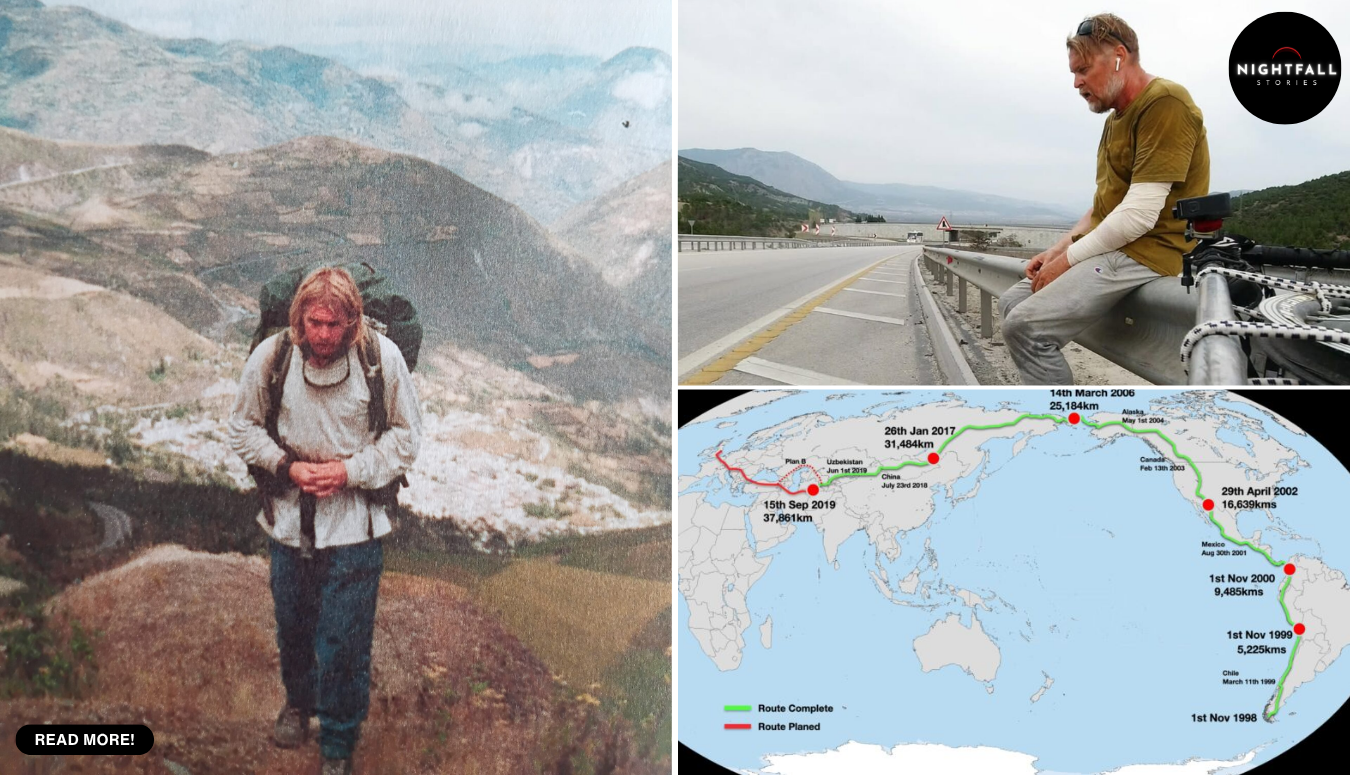
    Her son left in the autumn of 1998. He flew to the far southern tip of Chile, stood on the shore at Punta Arenas with about $500 to his name, and started walking north. The rule he set himself was simple enough to explain in one breath and brutal enough to eat most of his adult life: he would not get into a vehicle. Not a bus, not a taxi, not a boat, and absolutely not a plane home for Christmas. Every mile between that beach and his mother’s front door would be covered under his own power, in an unbroken line, or the whole thing meant nothing.

    He thought it would take twelve years. He is now fifty-seven, and he has covered roughly 36,000 miles, and he is still not home.

    Karl Bushby was twenty-nine when he set off. He had served twelve years with the British Army’s Parachute Regiment and come out the other side of it without much idea what to do next, which is a more common story among former soldiers than most people realise. What he chose to do instead was invent a problem enormous enough to fill the rest of his life, and then live inside it. He called it the Goliath Expedition, and for most of the last three decades it has behaved exactly like the name suggests.

    He walked the length of South America. He crossed the Darién Gap, the roadless stretch of jungle and swamp between Colombia and Panama that swallows people every year, and got briefly detained on the other side for his trouble. He walked up through Central America, through Mexico, through the United States, and then up through Canada and into Alaska, which is where the map stops being helpful and starts being a joke. To keep the line unbroken he had to cross the Bering Strait. So in 2006 he walked across it, over the moving sea ice, with a French adventurer named Dimitri Kieffer, hopping between floes that were not designed to hold a man and a sled. He became the first Briton to do it. Russia arrested him when he arrived.

    It is worth understanding why he could not simply take the ferry from Alaska and pick the line up again, because that logic governs everything that has happened since. The moment you accept a lift, even a short one, even a legal and sensible one, you are no longer walking around the world. You are walking most of the way around the world with a gap in it. The whole value of what he was doing lived in the absence of that gap, which meant every obstacle he met had to be solved rather than bypassed. A normal traveller sees a closed border and books a flight. He saw a closed border and lost two years.

    That set the pattern for the second half. The extraordinary thing about this walk is not the terrain. It is the paperwork. By his own reckoning, close to half of the twenty-eight years has gone not on walking but on sitting somewhere waiting for a stamp, an exemption, a letter, a visa, a ruling. Russia banned him for five years in 2013 over a border technicality, then reversed it. He lost years to the global financial crisis, when sponsorship simply evaporated and there was no money to move. He lost more years to the pandemic, which stranded him in Mexico. When he could not get a visa for Iran, he did not shrug and take a ferry, because a ferry would have ended the expedition. He swam instead. In 2024 he and the American walker Angela Maxwell swam roughly 179 miles across the Caspian Sea, with the Azerbaijani coastguard shadowing them, and it took thirty-one days and about 132 hours in the water.

    That detail matters enormously for what is happening to him right now, so hold onto it.

    The rest of the Asian leg reads like a list of places people drive through. He crossed Kazakhstan, Uzbekistan and Turkmenistan, including a traverse of the Kyzylkum desert, and came out through Azerbaijan. None of that was sponsored adventure with a film crew. For long stretches there was no money at all, because the funding for a project like this depends on public interest, and public interest depends on visible progress, and visible progress is the exact thing that visa refusals take away from you. He has spent years parked in Mexico, more than once, not because he wanted to be there but because it was the only country that would keep letting him back in while he waited for somebody else’s government to decide something.

    He entered Europe in the spring of last year, crossing the Bosphorus in Istanbul on foot, with something like 3,000 kilometres left. He walked through Turkey, Bulgaria, Romania and into Hungary, stopped for the winter near Győr, resumed in the spring, and came west through Austria, Germany and Belgium. And there, with roughly 600 miles left out of 36,000, the walk ran into the thing that has stopped it dead.

    Britain is an island. There is no footpath to it.

    There is, however, a tunnel. The Channel Tunnel has a service tunnel running between the two rail bores, a maintenance corridor a little under five metres wide, and for years Bushby’s plan for the final crossing was to be walked through it under escort. It is not a public right of way and nobody was pretending it was. It was a request, made politely and repeatedly, for a one-off exception at the end of a twenty-eight year project.

    Earlier this year the tunnel’s operator said no. The stated reason was operational rather than personal. Closing the service tunnel for something in the region of fifteen hours, or spread over two days, would disrupt essential maintenance and create a safety risk to passenger services, and the company said it could not accommodate the request. Read coldly, that is a reasonable position for a business that moves millions of people a year through a hole under the sea. Read from the Belgian roadside, it is a man being told that the last 0.06 percent of his life’s work is administratively inconvenient.

    Then came the second wall. Swimming the Channel sounds like the obvious fallback, and it was always the backup plan, but there is a French rule dating from 2018 that blocks departures from French shores toward Britain. The reasons behind that order have nothing to do with adventurers and everything to do with the small boats that cross those shipping lanes, and nobody sensible argues the rule is malicious. But its effect on one particular man was absolute. He could not walk under the water and he could not legally start swimming across it. A supporters’ petition went up. Coverage picked the story up and ran it as bureaucracy versus a hero, which is satisfying and not quite fair to either side.

    Here is where the story stands as of now, and it is worth being precise, because this is a live situation rather than a finished one.

    The tunnel answer has not changed. It is still no. But in early September his team confirmed that after a long negotiation they had secured permission from the French authorities for him to swim out from the French coast. He said the wording carefully, as a man does when he has been disappointed before: it looks like, after a prolonged period, they have managed to secure permission to swim from the coast of France. A crossing date around the start of October has been reported, with a support boat alongside, and the expectation is that it takes two to three days rather than the single push a Channel swimmer would normally attempt.

    To put the scale of that in perspective, he has walked the equivalent of one and a half times around the planet. What is left is about the distance from one side of a mid-sized city to the other, and it is the only part he has never been able to solve on his own.

    Twenty-one miles. Strong tides, one of the busiest shipping lanes on earth, and water sitting somewhere around 17 to 19 degrees Celsius, which is roughly 63 to 66 Fahrenheit, which sounds survivable until you have been in it for forty hours.

    And after the swim, it still is not over. He would land somewhere on the English coast and then walk, and his mother’s home is in Hull, which is a long way northeast of Kent. The estimate given this month was that he expects to reach her door within about two months of finishing the swim. So the finish line everyone has been writing about is not a date anyone can hold you to yet. It has moved from twelve years to twenty-eight, and it is still moving.

    People sometimes ask whether swimming breaks his own rule, and it is a fair question. His rule was never that his feet must touch land at all times. It was that he would never be carried. A vehicle moves you whether or not you are trying. Swimming does not. The Caspian settled that argument long before the Channel raised it.

    Now for the part that the headlines about tunnels and petitions tend to skip, and it is the only part that really matters.

    When Karl Bushby walked out of Hull in 1998, he left behind a five-year-old son named Adam. Adam is a grown man now. In the intervening decades his father has seen him a handful of times, in the gaps, on the pauses, when visas and money forced a stop. Bushby has said plainly that two romantic relationships ended because of the expedition, because you cannot build a life with someone whose entire identity is the refusal to stay. In twenty-eight years he has been with his family three times.

    His mother, Angela, is seventy-five. She worked as a packer in a snack food factory before she retired. She lives on the Sutton Park estate in Hull, in the house her son is walking toward, and her front room has been slowly colonised by him: photographs, scrapbooks, clippings, the accumulated paper record of a journey she has mostly experienced as an absence. For years there were occasional phone calls from wherever he was. Now it is mostly messages.

    She has said she will be there when he comes through the gate, that she will give him a hug, and then she will ask him what time he calls this. Anyone who has a mother will recognise the tone instantly. It is the joke you make when the alternative is saying something you cannot get through.

    She has also said something quieter and sadder, which is that she does not think he will ever be able to stay in one place now. Twenty-eight years is long enough for a decision to stop being a decision and become a personality.

    Bushby himself does not sell the ending as triumph, and that is one of the more honest things about him. Asked about finishing, he has talked about mixed feelings, about the thing needing to be wrapped up, about it being a hard stop and effectively the end of a life rather than the completion of a trip. He does not know what he is supposed to do afterwards. He has spent his entire adult existence pointed at one gate in one city, and once he walks through it, the direction is gone.

    What he will not accept is the idea that the years were spent on suffering. His account of the world, told again and again across three decades, is almost embarrassingly warm. Strangers fed him. Strangers put him up. In Colombia he was stopped at gunpoint by armed men who, once they understood what he was doing, bought him a coat. He has said the world did that, meaning the walk was not something he achieved against people but something people carried him through, which is a strange thing to say about a man whose rule was that nobody was allowed to carry him.

    Both things are true at once, and that tension is the whole story. He made a choice at twenty-nine that cost him his son’s childhood, two relationships, most of his mother’s later life and any conventional version of a future, and in exchange he got a line on a map that nobody else has drawn and a quarter of a century of ordinary people being decent to him in seventy-odd countries. Nobody gets to say whether that trade was worth it except the people who paid for it, and one of them was five years old and did not get a vote.

    So, clearly, because this story is still moving and will keep moving: he has not finished. He has not swum the Channel. He has not reached Hull. The tunnel operator has not changed its answer. What has changed, and changed only recently, is that the French side has reportedly cleared the way for him to get in the water and start, which after months of looking like the end of the road is the difference between a stalled expedition and a live one.

    If it goes the way he hopes, sometime in the next few months a fifty-seven year old man will walk up a street on the Sutton Park estate with a battered trailer behind him, and a woman of seventy-five will be standing at a gate she has been standing at, in one sense, since before most of the people reading this were born.

    He has said he already knows what he wants his first words to be. Told you I could do it. Now, what’s for tea.

    That is not the line of a man who thinks he has conquered anything. It is the line of a boy coming in late for dinner, which is, when you strip out the ice and the jungle and the shipping lanes and the twenty-eight years, exactly what this has always been.

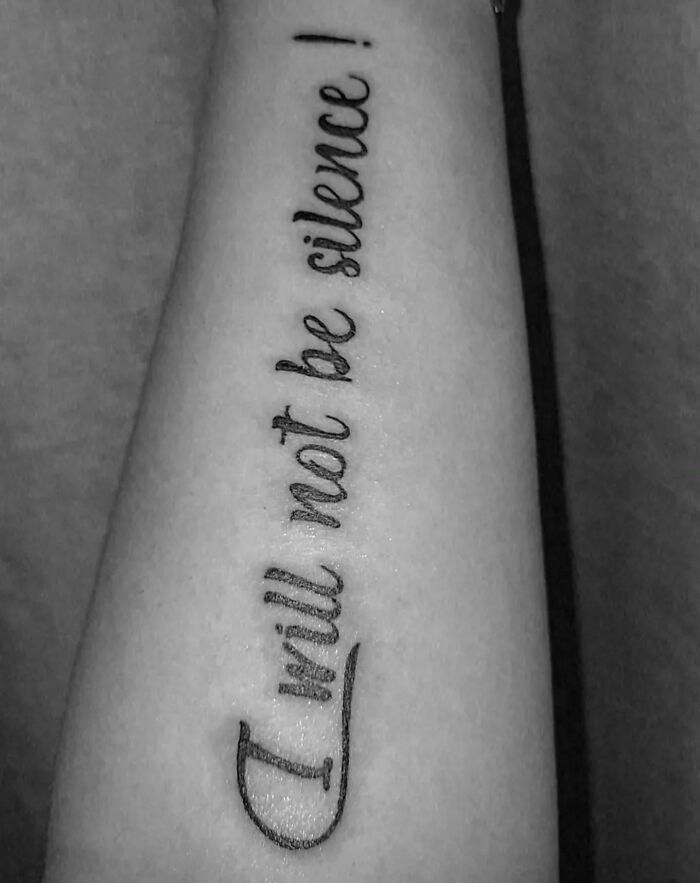
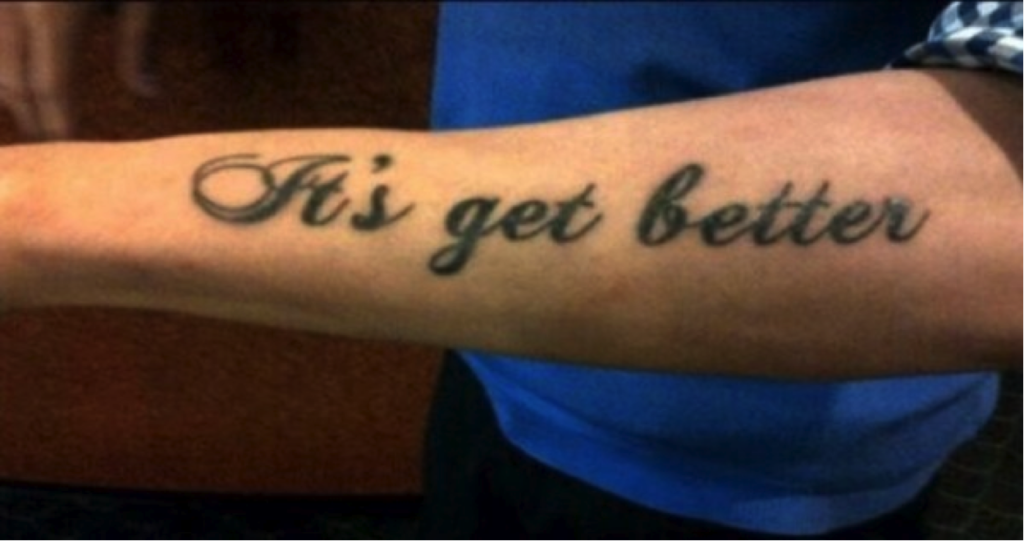
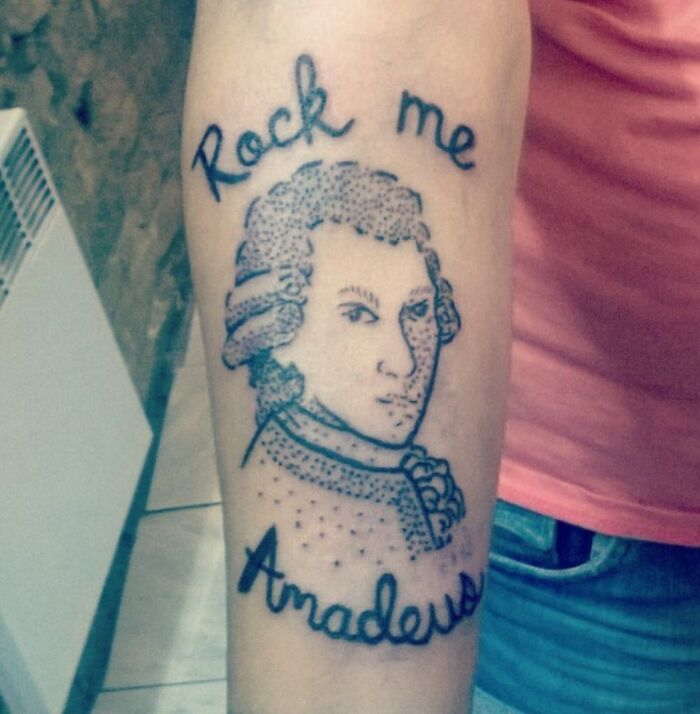
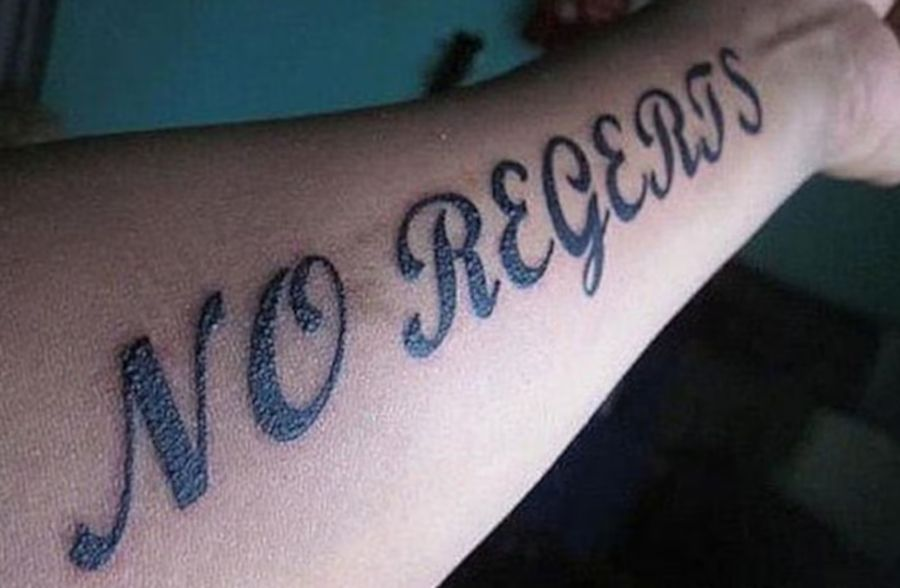
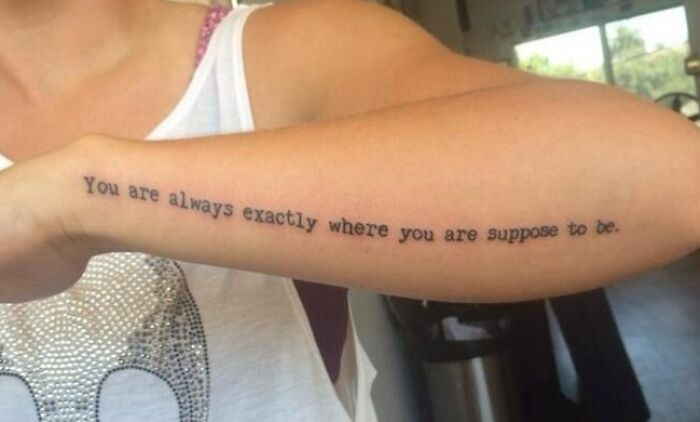
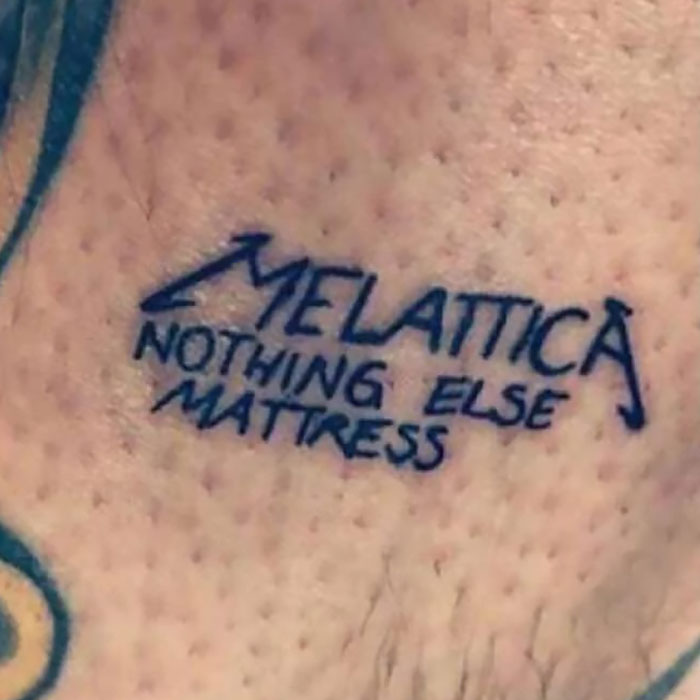
  • Tattoos People Regret Putting on their Bodies

    Tattoos People Regret Putting on their Bodies

  • Biggest stories of the week.

    Biggest stories of the week.

  • They were throwing rocks at the same tree.

    They were throwing rocks at the same tree.

    There is a tree in the savanna woodland of Guinea-Bissau with a pile of stones at its base. Not stones that rolled there. Stones that were carried, sometimes for a considerable distance, and thrown hard at the trunk by an adult male chimpanzee who then shouted about it.


    The pile has been growing for more than a decade. Nobody knows why.


    That last sentence is not a tease. It is the actual state of the science, and two researchers spent a field season in one of the least accessible corners of West Africa trying to change it. Robyn Nakano and Ammie Kalan, who work out of the Great Ape Behaviour Lab in the anthropology department at the University of Victoria in Canada, went to Boé National Park with field assistants Djei Baldé and Balu Séra and a lab colleague, Taylor Tippett, and set up camp twenty-two kilometres out into the bush near a river, well away from the nearest village. They are not there to habituate the chimpanzees or to follow them around. These chimpanzees are not habituated and they do not want company. If a human appears, they leave.


    So the entire study is machines. Cameras strapped to trees, microphones left running, batteries swapped, memory cards collected at half past six in the morning, day after day, while the animals go about a behaviour nobody has ever watched with their own eyes at close range.


    The behaviour has a clinical name that does very little to convey how strange it is. Accumulative stone throwing. A chimpanzee picks up a rock, approaches a particular tree, and either hurls it at the trunk, bangs it repeatedly against the wood, or tosses it into a hollow in the base. Then it leaves the rock there. Over years, the rocks pile up, wedged between buttress roots or stacked inside the cavity, until the tree has a visible cairn at its foot.


    It was first caught on camera in 2011, and even that happened by accident. A wildlife camera in Guinea, set up as part of a huge multi-site survey of chimpanzee behaviour across Africa, recorded a male doing something that made no sense to the people reviewing the footage. When the survey team went looking, they found the behaviour at a handful of other sites and nowhere else. The results were published in 2016 and they were genuinely disorienting, because chimpanzee behaviour is one of the most intensively studied subjects in animal science and this was a completely new one, hiding at four sites in one corner of the continent.


    The scale of that search is worth knowing, because it tells you how confident the negative result is. The survey ran across thirty-four sites over roughly four years, with cameras out continuously, and it produced sixty-four recorded stone throwing events. Sixty-four, from a continent-wide effort. The team also sorted the action into three distinct forms: hurling the stone at the trunk with one or both hands, banging it repeatedly against the wood, and tossing it into a hollow cavity. Different chimpanzees, at different sites, doing recognisably the same thing in recognisably different styles.


    Boé itself is not a small or marginal population, which makes the exclusivity stranger. Estimates put somewhere between one thousand and fifteen hundred chimpanzees in the sector, living in a landscape that is not dense rainforest but a mosaic of savanna, woodland and gallery forest along the rivers. It is hot, open country, and the chimpanzees there live at the dry edge of what their species can tolerate.


    Those four are Boé in Guinea-Bissau, Sangaredi in Guinea, Mount Nimba in Liberia, and a reserve in Côte d’Ivoire. All of them hold western chimpanzees, a subspecies that has lost the large majority of its numbers in a generation and is now listed as critically endangered. Chimpanzees elsewhere in Africa, including populations that have been watched continuously for half a century by some of the most famous field projects in biology, do not do this.


    That distribution is the first reason the behaviour matters so much. When a behaviour appears in some populations of a species and not others, and the difference cannot be explained by what is physically available in the environment, you are looking at culture in the technical sense. Something learned from other individuals and passed along, rather than something every chimpanzee would invent on its own given the same rocks and the same trees.


    And the availability argument really does fail here. Earlier work in Boé found that out of hundreds of suitable trees in the area, only around thirty-nine are used for stone throwing. There is no shortage of trees and no shortage of stones. The chimpanzees have selected specific trees, and they keep going back to those, and they have kept going back for long enough that a researcher who mapped the sites in 2017 could return nearly a decade later and find them still in use.


    Look at the list of tree species involved and the pattern gets more interesting rather than less. Analysis of years of camera footage from Boé lists silk cotton, a kola relative, African rosewood, African breadfruit, red kapok and a smaller savanna tree. That is a mix of very different trees, so the choice is not simply about wood density or hollowness in any obvious way. Something else is deciding which tree becomes a stone tree.


    What we know about the act itself comes almost entirely from footage. It is predominantly adult males. They do it in the daytime and, more recently documented, at night. They do it in the rain. They frequently do it while producing a pant hoot, which is the loud rising call chimpanzees use to broadcast over long distances, and they often combine it with buttress drumming, the familiar behaviour of hitting a tree’s flared roots with hands and feet to produce a low boom that carries through the forest.
    That combination is the strongest clue anyone has. Drumming is well understood as a signal. It travels, it identifies the drummer to those who know him, and it announces position and probably mood. If stone throwing is happening in the same package as drumming and pant hooting, the obvious hypothesis is that it is also a signal, and that the crack of a rock against a hard trunk is doing something drumming alone cannot do. In open, dry savanna woodland, sound behaves differently than it does under closed rainforest canopy, and a sharper, higher-frequency impact may simply carry better.


    The other hypothesis is the one that makes people uncomfortable, and it is the reason this behaviour got so much attention in the first place. Humans have been stacking stones at particular places for a very long time, and often for reasons that are not practical. Cairns mark boundaries and routes, and in many traditions they mark something less tangible than that, accumulating because each person who passes adds one. When the 2016 paper went out, researchers noted carefully that they could not rule out a symbolic or ritual dimension to what the chimpanzees are doing, and that careful wording travelled around the world in a considerably less careful form.


    It is worth being clear about what is and is not being claimed. Nobody serious is saying chimpanzees have religion. The point is narrower and more useful. If a behaviour is socially learned, tied to specific places rather than specific resources, repeated across generations, and has no obvious function in getting food or avoiding danger, then it has some of the structural features that human ritual has. Whether it has any of the internal content is not a question a camera trap can answer, and it may not be a question anybody can answer.


    Which brings us back to the two people sitting in a bush camp collecting SD cards.


    Nakano and Kalan’s approach is to stop guessing and start measuring. Two video cameras at each stone throwing site rather than one, so they can see the tree from more than one angle and identify individual animals. Audio recorders running alongside, because if the sound is the point then the sound needs to be recorded properly rather than captured incidentally by a camera microphone. They measured the trees. They made three-dimensional scans of the thrown rocks, which sounds excessive until you consider that nobody has ever established whether the chimpanzees are selecting stones by size, shape or weight, or grabbing whatever is nearest. They surveyed nests and feeding signs to work out who was in the area and when.


    None of it would happen without the people who live there. The two field assistants working with the team, Djei Baldé and Balu Séra, are local, and in a place where the chimpanzees flee from strangers and the terrain does not forgive guesswork, that is not a courtesy hire. Knowing which trees are the stone trees, and how to reach them, and when the rivers are crossable, is knowledge held locally and shared, and the whole project sits on top of it.
    What they want out of the footage is a set of fairly basic facts that have never been established. Who throws, by age and sex. Whether the same individuals return to the same trees. What the rest of the community does when it happens, whether others come, respond vocally, or ignore it entirely. Whether the sites cluster near the boundaries of a community’s range, which would support the territorial signalling idea, or sit in the middle of it, which would not.


    And there is one observation already on the record that points somewhere specific. Reviewing a decade of camera footage from Boé, researchers noted juveniles at the sites, apparently picking the behaviour up. That is the transmission mechanism made visible. A young chimpanzee watching an adult male throw a rock at a tree and, eventually, throwing one too.


    It also explains the timescale. A stone pile that has been growing for over a decade is not the record of one animal’s habit. It is a record of a practice outliving individuals, which is exactly what culture means and exactly what makes the piles worth protecting as objects and not just as data.


    That last point is not abstract, and it is where the story stops being a curiosity.


    Boé sits on bauxite. Bauxite is the ore that aluminium comes from, and the region is one of the more significant untapped deposits in West Africa. During the field season the researchers reported seeing bore holes, the physical marks of exploration drilling, in the landscape they were working in. Neighbouring Guinea is one of the largest bauxite producers on Earth, and the record there is well documented: bauxite is strip mined, which means the surface comes off, along with the trees standing on it, the soil, the water table and everything living in the way. Dust and sediment do the rest downstream.


    If that arrives in Boé, it does not just kill chimpanzees, though it would do that too, to a subspecies that cannot afford it. It erases the specific trees. And because the behaviour is attached to those particular trees rather than to trees in general, and because it is passed on by young animals watching old ones at those places, the tradition would very likely go with them. You would not be losing a population and hoping it recovers elsewhere. You would be losing a cultural practice documented at exactly four sites on the planet, one of which happens to be the one sitting on the ore.


    This is a genuinely new problem for conservation, and the people who study animal culture have been pushing on it for years. Protection frameworks are built around species and habitats. They count individuals and hectares. They have almost no language for a behaviour that exists in one population and nowhere else, that is not encoded in any genome, and that cannot be relocated, bred back or reintroduced. Once the chimpanzees who know how to do it are gone from a place, or the place itself is gone, the behaviour does not come back. There is no seed bank for this.


    Nakano and Kalan are careful about what they can currently say. There is no new peer-reviewed paper establishing a function, and it would be wrong to suggest otherwise. What exists is a body of published work stretching back a decade, an enormous archive of camera footage, and a fresh field season whose recordings are still being analysed. The researchers describe the project as ongoing and the question as open, which is an unusual thing to say publicly in a field that rewards conclusions.


    The honest summary is this. In one specific stretch of West African savanna woodland, male chimpanzees carry stones to about three dozen chosen trees, throw them, shout while doing it, and leave the stones behind. They have been doing it at those same trees for longer than anyone has been watching, and they were doing it for an unknown period before a camera happened to catch one of them in 2011. Young ones are learning it. Nobody can yet say what it is for.


    The piles themselves are the part that stays with you. Every stone in them was picked up by an individual animal and thrown at a particular tree for a reason that mattered enough to do it again the next time. Thousands of decisions, stacked up at the foot of a trunk, sitting there in plain view in a forest that may or may not still exist in twenty years.


    Somebody is finally sitting in the dark with the recorders running, trying to work out what is being said.