When a competition regulator looks at a takeover, there are normally three things it can say. Yes. No. Or yes, if you sell something first. Belgium’s competition authority spent the best part of a year examining the world’s largest live music company’s purchase of one of Europe’s biggest festivals, and then said a fourth thing that almost nobody had on their list. You can own it. You just cannot run it. For ten years. Possibly fifteen.
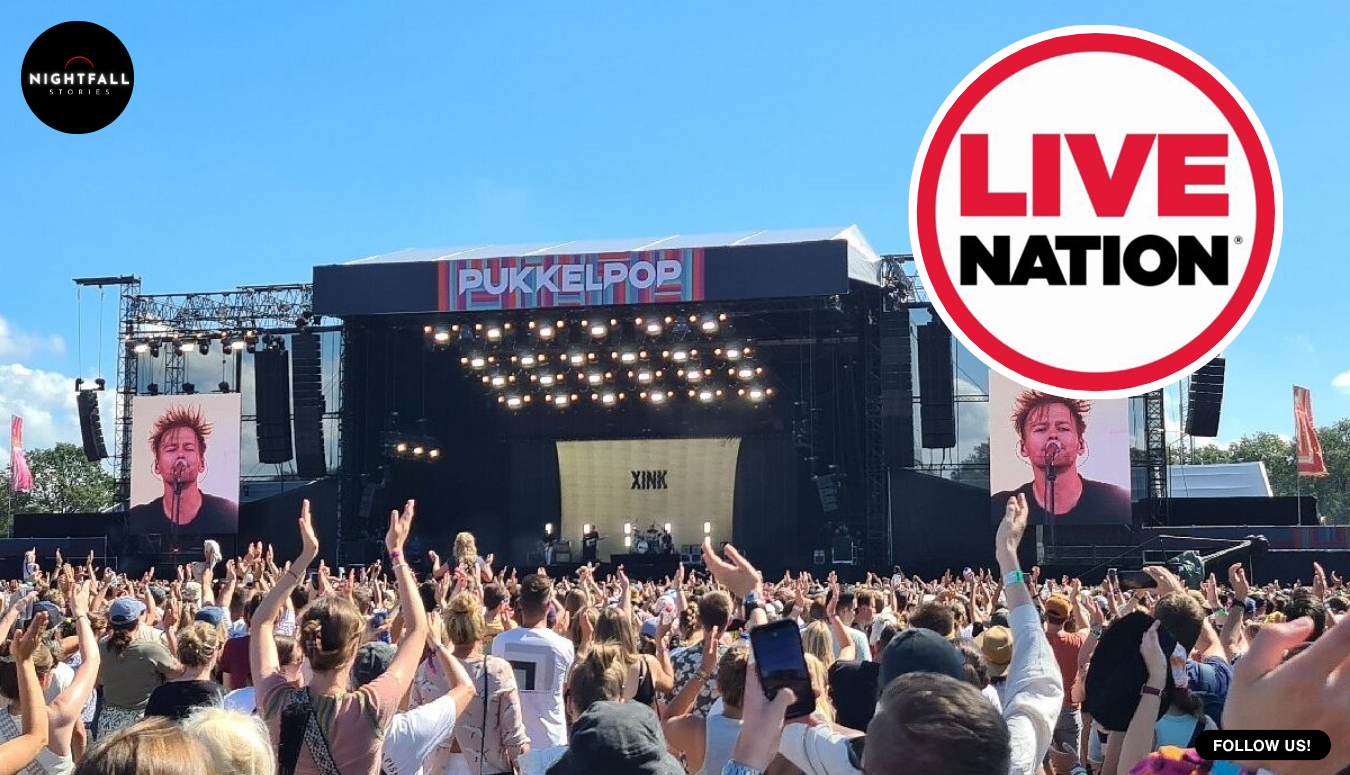
The festival is Pukkelpop, which takes place every August on a site at Kiewit, just outside Hasselt in the Flemish part of Belgium. It has a capacity of around 66,000 and draws somewhere near a quarter of a million visits across its four days. It has been running since the late 1980s, it built its reputation on booking bands slightly before the rest of the continent caught up with them, and it is the sort of institution that people in a small country feel a proprietary affection for. When the announcement came that Live Nation had become its ultimate parent company, the reaction in Belgium was not a shrug.
The regulator’s reaction was not a shrug either. Within weeks it had opened a formal investigation, and the thing it said out loud was unusually blunt for a competition body at that stage of a case. It suspected the deal might breach competition law. The auditor general leading the case said the worry was that the takeover could compromise the festival’s ability to operate independently, specifically around who gets booked and what tickets cost.
To see why that worry had teeth, you have to look at what else the buyer already owned in the same small country. Live Nation’s Belgian arm was already behind Rock Werchter, which is one of the most decorated festivals in Europe, along with its smaller sibling Werchter Boutique, the metal festival Graspop, and Dour. Add the company’s venue interests and its ticketing business, and the picture is not one buyer acquiring one festival. It is the dominant operator in a market acquiring the largest remaining thing it did not already control.
Festivals in a country that size do not really compete for audiences in the way shops compete for shoppers. Plenty of people go to more than one. What they compete for is acts, and specifically for the exclusivity clauses that stop a band playing a rival festival in the same territory in the same summer. If one company is programming nearly all of the significant festivals, it is not just choosing what goes on its own stages. It is in a position to decide what does not go on anyone else’s, and to negotiate with agents from a position where there is no realistic alternative buyer in the country.
That is what the investigation was actually about. Not the price of a ticket in isolation, and not who holds the shares. Who books the bands.
The first move the authority made was to prepare to freeze the situation. Its investigation service went to the decision-making college and asked for interim measures, the competition-law equivalent of an injunction, which would have kept Pukkelpop structurally separate from its new owner while the full case ran. That is a heavy step. Regulators do not ask for it unless they think there is a real risk of damage happening faster than the case can be decided.
And then, instead of a prohibition or a forced sale, the case closed with commitments. The authority accepted a package and shut the proceedings without any finding of infringement. The settlement is the part worth reading carefully, because it is genuinely unusual.
Live Nation keeps ownership. The entire operation of the festival, along with the assets that go with it, transfers to an entity controlled by Chokri Mahassine, who founded Pukkelpop and has run it for most of its existence. That entity gets full independent control over the decisions that actually make a festival what it is: which artists and which booking agents, the programming, ticket prices, the site, the dates, the capacity, the staging, and the staffing. Live Nation may sell services to the festival, but only at market rates and only on a non-exclusive basis, which means the festival is free to buy sound, staging, security or anything else from a competitor if it prefers.
Mahassine is also permitted to hand those exclusive operating rights to an independent third party, which is a detail that matters more than it looks. It means the arrangement does not die with one man’s involvement. An independence remedy that depends on a single founder staying in post is only as durable as that founder’s energy, and founders eventually retire.
A monitoring trustee, independent of both parties, oversees compliance. The term is ten years, with a possible extension of a further five if market conditions at the time justify it.
The prosecutor general who led the case described the outcome as preserving diversity and independence in the Belgian festival scene by letting Pukkelpop carry on as a distinct festival with its own artistic identity and its own organisational autonomy. Live Nation’s Belgian president made a point that was, in context, almost conciliatory: the festival is what it is because of the people who built it and the identity they created over many years.
Both statements are diplomatic, and both are also fair descriptions of what the remedy does. It splits ownership from control and puts a ten-year wall between them.
Why would a company accept that? On the face of it, Live Nation has bought a festival it is not allowed to operate for a decade, which sounds like an expensive way of acquiring nothing.
It is not nothing. The buyer gets the asset on its balance sheet, gets the economics of a festival that reliably fills a field, and gets the option of full control in ten or fifteen years when the commitments expire. Competition remedies have an end date. Industry structures rarely reverse themselves. There is also the simpler calculation: the alternative outcomes on the table were a prohibition, a forced divestment, or years of litigation with interim measures hanging over the festival the whole time. Against those, a decade of hands-off ownership is a reasonable trade.
The other reason to accept is that the commitments describe something fairly close to what the company said it was doing anyway. When the deal was announced, the line was that day-to-day operations would continue unchanged under the founder and his long-standing co-founders. The remedy takes that promise and converts it into a legally binding, trustee-monitored obligation with a decade on the clock. A company that meant the promise loses very little. A company that did not mean it loses a great deal, which is exactly the point of writing promises down.
There is a quieter human question underneath the legal one, which is why an independent festival that had spent nearly four decades resisting absorption chose to sell at all. The published sources do not spell out the reasoning, so it would be wrong to guess at it. What is plainly true across the European festival business is that the economics have got harder in a way that punishes independence specifically. Production costs for a modern main stage have risen sharply. Insurance has risen faster. The fees that the handful of artists who can reliably headline a field now command have risen fastest of all, and they are set in a global market where a Belgian festival is bidding against operators with continental buying power. An independent festival can absorb one bad summer. It cannot absorb three. Selling to the largest buyer in the business is, for a founder looking at that arithmetic and at the question of what happens to the festival and its staff after he stops, a rational thing to do rather than a betrayal. The remedy the regulator landed on is notable partly because it tries to let both things be true: the festival gets the balance sheet it needed, and the country keeps the thing it was afraid of losing.
The part that has competition lawyers reading the decision closely is not the festival at all. It is the jurisdictional route the regulator took to get there.
Merger control everywhere works on thresholds. If the businesses involved are big enough by turnover, the deal has to be notified and cleared before it can happen. If they are not, it does not, and historically the deal was simply outside the system. That worked reasonably well when size and market power were the same thing. It works badly in markets where the target is small in revenue terms but strategically enormous, which describes an awful lot of modern acquisitions: a festival, a niche software firm, a start-up bought before it can grow into a rival.
The purchase of Pukkelpop did not meet Belgium’s merger thresholds. Under the old understanding, that would have been the end of it.
It was not, because of a ruling from the European Union’s top court a few years ago in a case involving a French broadcasting infrastructure company. That judgment confirmed that a national competition authority can examine a below-threshold acquisition after the fact under the rules on abuse of a dominant position, rather than under merger control. It is a different legal instrument with a different test, and it reopened a door that most dealmakers had assumed was bolted shut.
Belgium’s authority was the first in Europe to use that door, in a telecoms case a few years back where a dominant operator bought a small internet provider. Pukkelpop is the second time it has reached for the same tool, and the first time it has produced a negotiated remedy rather than a fight. That is why the decision travels well beyond music. Two uses is a pattern. A pattern is a warning to every acquirer in Europe that a deal being too small to notify does not mean it is too small to be examined, and that the examination may arrive after the money has changed hands and the ink has dried.
What makes the remedy itself interesting is that it is a behavioural fix in a place where competition authorities usually insist on a structural one. The orthodoxy, for decades, has been that promises about future conduct are hard to police and easy to erode, and that the only reliable remedy is to make a company sell something. Behavioural commitments have a reputation for quietly decaying over the years as attention moves on and the people who negotiated them leave.
The Belgian authority seems to have decided that in this particular market, the structural fix would have solved the wrong problem. Forcing a sale would have changed who owned the festival without necessarily changing anything about who books artists across the country, since the buyer would have been whichever other consolidator could afford it. Keeping the booking function in independent hands, under a trustee, for a decade, targets the actual mechanism of harm. It is a bet that the danger lay in the programming, not the ownership, and that the programming is the thing worth protecting.
Whether that bet pays off is a question nobody can answer yet, and there are honest reasons for doubt. Ten years is long by competition-remedy standards, but a festival’s character can drift in far less than that without anyone breaching a single clause. Independence on paper coexists uneasily with an owner who has a view. A trustee can verify that the festival chose its own headliners. A trustee cannot easily verify why an agent decided not to offer a particular act to a particular festival, because that conversation leaves no paper trail.
There is also a question the published summaries simply do not answer, which is whether the ten-year term can be shortened on review as well as extended. The extension mechanism is described. A shortening mechanism is not mentioned either way, and until the full decision text is public, anyone claiming to know is guessing.
What is not in doubt is that the festival itself carried on through all of this. Its most recent August edition went ahead on the usual site while the case was still open, with the same team running it, and the decision landed a few weeks after the last tent came down. For the roughly quarter of a million people who went, the year of legal argument was invisible. That is arguably the best evidence that the remedy is aimed at the right thing. Nobody in a field in Flanders was ever going to notice a change in the ownership structure. They would have noticed, eventually, if the same company had started programming every field in the country.
The broader story here is about what consolidation in live music has quietly become. The industry spent the last fifteen years worrying about ticketing, because ticketing is where fans feel the pain and where the fees are visible on a receipt. Meanwhile the more consequential consolidation happened upstream, in the unglamorous business of who owns the festivals and who negotiates with the agents, which no consumer ever sees and which determines what is on the bill long before a ticket goes on sale.
Belgium’s answer is not a template anyone can copy exactly, because it depends on a founder who was still there, still willing, and still trusted enough by a regulator to be handed control of a festival his buyer had just paid for. Those conditions will not exist in most deals. But the underlying idea will travel, because it identifies the thing that actually needed protecting and protects that instead of gesturing at the balance sheet.
For once, a regulator looked at a takeover and asked not who will own this, but who will decide what happens on the stage. Then it wrote the answer down and gave it a decade to hold.