Blog

  • A lost elephant calf walked into a safari camp in Samburu. Working out whose she was took nearly thirty years of records.

    A lost elephant calf walked into a safari camp in Samburu. Working out whose she was took nearly thirty years of records.

    A female elephant calf about four months old walked out of the bush one morning and into Elephant Bedroom Camp, a tourist camp inside Samburu National Reserve in northern Kenya. She was on her own, which at that age is close to a death sentence, and by the account of the researchers who arrived shortly afterwards she was disoriented, reportedly after a rough ride in a vehicle before she turned up. The camp staff did the practical thing. They tied her to a tree so she could not wander back out into a landscape full of lions, and they telephoned the people who keep the files.

    That phone call is the actual beginning of this story, and the files are the reason it goes anywhere at all. Because a lost elephant calf is not a solvable problem. She cannot be asked where she came from. She cannot be matched to a parent by paperwork. She is a grey animal in a reserve with several hundred other grey animals in it, and if you cannot work out which family she belongs to, you have no option left except to raise her by hand for the next several years. The only way to give her back is to already know, in advance, who every elephant in the area is.

    In Samburu, somebody does. Save the Elephants was founded in 1993 by the zoologist Iain Douglas-Hamilton, and its research station in Samburu has been running since 1997. In the decades since, the team has built up individual records on more than 900 elephants that use the reserves along the Ewaso Nyiro river. Not estimates of how many. Not a population figure. Individuals, each one recognised on sight, each one placed inside a known family, with known associates and a known history.

    Individual identification of elephants is unglamorous and slow. It works because elephant ears are effectively fingerprints. Every nick, tear and vein pattern along the edge of an ear is permanent and slightly different, and once a researcher has photographed and drawn an animal’s left and right ears, that animal can be picked out of a crowd from a vehicle a hundred metres away. Tusks add a second layer, their length, their curve, whether one is broken and at what angle. Body size and the shape of the back help with age. None of it is clever technology. It is the same method a person uses to recognise a neighbour, applied with discipline and written down for twenty-nine years.

    The discipline is the hard part, and it is the reason this kind of archive is rare. An identification file only works if it is complete and current. Calves are born and have to be added. Young males leave their families in their teens and have to be tracked separately. Ears pick up new tears, so the drawings need updating. Animals die and the record has to say so, because a family with an unrecorded death in it will throw off every count made afterwards. A team that skips six months of this loses far more than six months of value, because the chain of who was with whom breaks. Wittemyer’s wider research programme in Samburu layers newer tools on top of the notebooks, satellite collars on selected animals, drones, acoustic recorders listening for the low-frequency calls elephants use at distance, but the collars are on a handful of individuals and the notebooks cover everybody. When a four-month-old with no collar turns up at a camp gate, it is the notebooks that answer the question.

    The families get names, usually in themes, which is how field teams keep hundreds of animals straight in conversation. The family at the centre of this story is known to the researchers as the Royals, and its members carry names to match. Anastasia is the matriarch. Among the adult females are Adelaide, Markle, Grace Kelly and Catherine. And there was Sylvia.

    When the call came in from the camp, Professor George Wittemyer of Save the Elephants, who is also a professor at Colorado State University and has tracked elephant movement in and around this reserve for more than two decades, put the team onto the only question that mattered. Not where had the calf come from, but who was missing one. The team began a systematic check of the status of every elephant in the reserve, working through roughly forty monitored family groups and accounting for every calf in each of them. It is a process of elimination done with binoculars and notebooks. Every calf you can tick off narrows the field. Eventually you are left with one family that has a gap in it.

    The gap was Sylvia’s. She had separated from the Royals about two weeks earlier while unwell. Sylvia carried an old jaw injury from a gunshot wound sustained more than a decade before, and the organisation’s read is that the injury was connected to her decline, though that chain of cause is their inference rather than a veterinary finding and is worth treating as such.

    An adult elephant leaving her family when she is in trouble is not abandonment and it is not unusual. Elephants move constantly, at a pace set by the fittest animals, and a female who cannot keep up falls behind. If she is also struggling to feed, which a damaged jaw makes likely, she will spend longer in one place working at softer vegetation while the rest of the group moves on to the next thing. A calf of four months stays with its mother because its mother is the food supply. If the mother becomes unable to travel and then dies, the calf is left in a landscape it does not know, among animals that are not obliged to feed it.

    And milk is the whole problem. An elephant calf is not weaned at four months. It is barely begun. Calves nurse for two years at minimum and often considerably longer, taking solid food alongside milk for most of that time but depending on milk for the protein and fat they need to keep growing. There is no substitute available in the wild. A four-month-old orphan is not a calf that needs company and reassurance. It is a calf that needs a lactating female willing to let it nurse, and that is a much rarer thing.

    David Lolchuragi, a research assistant with Save the Elephants, spent part of that first day cooling the calf with water while the identification work went on. Then the team loaded her up and drove out to find the Royals, who were on the GirGir plains.

    What happened next is the part that circulated widely afterwards, and it is worth describing carefully rather than sentimentally. The researchers brought the calf down from the vehicles. Adelaide, one of Sylvia’s sisters, noticed her and called. The calf responded immediately. Within moments the rest of the family converged, rumbling and trumpeting, and closed around her in the behaviour Wittemyer described as the greeting ceremony elephants perform when members of a group come back together after a long separation.

    That behaviour is well documented and it has a function. Elephant families split and recombine constantly across large distances, and the greeting is how the group re-establishes who is present and where everyone stands. The low rumbles carry information over long distances, much of it below the range of human hearing. Trumpeting, urination, defecation, ears spread wide, trunks reaching into one another’s mouths: the whole display is a rapid exchange of identity and status. It is not the elephant equivalent of a hug, and reading it that way flattens something more interesting. It is a recognition system, and the fact that it fired for a four-month-old who had been missing for a fortnight tells you the family knew exactly who she was.

    Markle, another of Sylvia’s sisters, had recently lost a calf of her own, which meant she was lactating. She let the calf nurse. On the face of it the problem had solved itself in the most economical way imaginable: the research files had located the family, the family had taken the calf back, and an aunt with milk was already feeding her.

    It did not hold.

    Markle’s milk supply was not enough. A female who has lost her own calf will not sustain production indefinitely, and a growing four-month-old needs a great deal. More seriously, the calf kept leaving. She rejoined the Royals and then wandered off, repeatedly, and at one point tourists spotted her alone in an area known for lions. Nobody has a confident explanation for why. She may simply have been too young and too recently displaced to track a moving family across open country.

    What the team had, then, was not a failed reunion but a worse kind of success. The family had accepted her. She would not stay with them. And the reserve she was wandering around in on her own contains predators that take elephant calves.

    So the hard call got made. On the fourth day the calf was handed into the care of Reteti Elephant Sanctuary, and the following day Save the Elephants confirmed what the fieldwork had already implied: Sylvia was dead, and had been for some weeks. There was no mother to go back to. There had not been one since before the calf walked into the camp.

    That is the ending, and it is a more honest one than the version that travelled. The reunion was real and it was recorded and it did not solve the problem. The decision that saved the calf’s life was the decision to overrule it.

    It is worth being plain about what the alternative was. Lions in this part of northern Kenya do take elephant calves, and a lone calf is the only realistic opportunity they get, because a calf inside a family is defended by several adults weighing a few tonnes each. The protection is the group, not the animal. A four-month-old that keeps separating from the group has effectively opted out of the only defence available to her, over and over, in open country, at the age when she is small enough to be worth the attempt. The team was not choosing between a family and a sanctuary. It was choosing between a sanctuary and the statistically likely outcome of leaving her where she was.

    Hand-rearing is not a soft option either. An elephant calf of that age needs milk feeds around the clock, every few hours, for months, and then a tapering mix of milk and solids for years. Cow’s milk is unsuitable because the fat and lactose profile is wrong for elephants and will damage a calf’s gut, so sanctuaries work with specialist formulas. Reteti’s answer to this is the most quietly impressive thing about it. During the pandemic, with imported formula expensive and hard to get and a drought hitting pastoralist families at the same time, the sanctuary and its operating partner built a feeding programme around goat milk bought from Samburu women inside the conservancy, who keep control of the supply chain and the pricing. The sanctuary developed a formula with goat milk as the base. By its operating partner’s account the programme cut the annual milk bill by more than half, ended the reliance on imports, put a weekly income into households around the sanctuary, and in its first year recorded a full success rate with calves under six months old, which had always been the hardest group to keep alive. A four-month-old is exactly the animal that programme was built for. Calves at that age also need company at night and keepers who stay with them, because an animal that has just lost its mother and its family will not settle alone. What Reteti took on when it accepted this calf was a commitment measured in years, with a release back into the wild at the far end of it.

    Reteti is worth understanding, because the choice to put her there is not the same as the choice to put her in a foreign-run orphanage. It opened in 2016 inside Namunyak Community Conservancy in northern Kenya, and it was the first community-owned elephant sanctuary on the continent. It exists because people in Namunyak asked for it. The keepers are all Samburu, drawn from inside the conservancy, trained in hand-rearing, rehabilitation and release, and Reteti was the first operation of its kind to employ women as keepers, in a region where handling livestock and wildlife had been men’s work. The Sarara Foundation acts as operating partner and covers the running costs. By Reteti’s own account, somewhere between ten and fifteen elephant calves are rescued in northern Kenya in a typical year, which gives a sense of how routine the underlying problem is and how unusual it is to know the orphan’s name.

    Which brings the whole thing back to the files. Strip the long-term monitoring out of this story and you get a different, much duller outcome. An unidentified calf turns up at a camp. Nobody can say where she came from, so nobody tries to put her back. She goes straight into hand-rearing, and in five or ten years, when she is ready to be released, nobody knows which family she should be released near, because nobody ever knew which family she came from.

    Instead, because somebody has been drawing elephant ears in Samburu since 1997, this calf has a documented mother, a documented aunt who nursed her, a documented matriarch and a documented family on the GirGir plains that recognised her by voice. Reteti’s keepers are raising an orphan whose relatives are known animals with known ranges. Elephant memory for individuals is long, which is the one piece of sentimentality in this story that the evidence actually supports. Her family will almost certainly still know her.

    There is a caution to attach to all of this. Almost everything documented here traces back to Save the Elephants’ own account of its own fieldwork, with the university press release and the science outlets that picked it up running from the same original. That is one source with a direct stake in how the episode reads, and it has not been independently verified in the field by anyone else. The dates, the names and the sequence are consistent across every version. The interpretation of why Sylvia separated and died is the organisation’s.

    But the part that is hardest to argue with is also the least dramatic. It took a tourist camp to find the calf, a research assistant with a jerrycan to keep her comfortable, a team with binoculars working through forty families to name her mother, and a community-run sanctuary staffed by local keepers to actually keep her alive. None of that is a rescue in the sense the word usually gets used. It is an archive, maintained by people who kept writing things down for twenty-nine years with no particular expectation that a frightened four-month-old would one day make the whole exercise pay off in a single afternoon.

    The quiet detail is where she went for help. Of all the places in several hundred square kilometres of reserve, the calf walked into the one with people in it.
  • Things you did when you were bored before smartphones

    Things you did when you were bored before smartphones

    Pick a color, pick a number, and find out your future.
  • A hidden camera watched a moorland roost for nineteen days. The telling part was which bird the men decided not to shoot

    A hidden camera watched a moorland roost for nineteen days. The telling part was which bird the men decided not to shoot

    The camera was already in the heather when the three men arrived. It had been there since the start of the month, pointed at a hen harrier roost on a grouse moor inside the Yorkshire Dales National Park, recording sound as well as pictures, left by the investigations unit of a bird charity that had spent years knowing what happened on moors like this one and almost never being able to prove it.

    On an evening in early October, two years ago now, it recorded three men walking in at dusk. Camouflage. A semi-automatic weapon and binoculars. Radios, which they used to coordinate their positions around the roost, and which meant the microphone picked up what they said to each other while they waited.

    What they said is the reason this case eventually mattered. At one point a satellite-tagged harrier came in. The men identified it as tagged, and the conversation on the recording turns to the consequences of killing a bird that is being tracked, specifically that a transmitter going dead on their moor would bring the authorities down on it. So they did not shoot that one. They used a local verb for what they did instead, flegging it, which means firing to frighten a bird off rather than to kill it.

    Then, according to the recorded evidence, they shot a different hen harrier. One without a tag. One whose death nobody would be notified about.

    That single decision, taken on a hillside by men who believed they were alone, is the most revealing thing in the entire record. It is not the behaviour of people who did not know the law. It is the behaviour of people who knew the law precisely, understood exactly which bird carried an evidential risk and which did not, and allocated their shots accordingly. Every satellite tag fitted to a harrier in the preceding decade had been, in effect, teaching them which birds to leave alone.

    Earlier this year, fifteen months after the recording was made, Racster Dingwall, thirty five, of Ellingstring in North Yorkshire, head gamekeeper on the Conistone and Grassington Estate, pleaded guilty at York Magistrates’ Court. The gap between the evening on the moor and the morning in court is not incidental. Covert recordings made by a charity rather than by police are not automatically admissible, and the defence challenged whether this material could be used at all. Working out whether the evidence would stand took longer than gathering it.

    The precise thing he admitted matters, and it has been widely reported loosely, so it is worth getting right. He pleaded guilty to two charges. The first was possession of an article capable of being used to commit a summary offence under the wildlife protection legislation. The second was encouraging or assisting the commission of a summary offence, believing that it would be committed, which is an offence under serious crime legislation rather than wildlife legislation.

    He did not plead guilty to killing a hen harrier. He was not convicted of conspiracy, despite that word appearing in some coverage. And the superlative attached to the case belongs to the second charge specifically: both the police and the charity describe this as a legal first in England, because the encouraging and assisting provision had not previously produced a conviction in a bird of prey persecution case there. That is a narrower claim than the first hen harrier case in England, and the narrower version is the one that holds.

    The penalty was eight hundred pounds, roughly a thousand dollars, described by the charity and by the farming press as the total of fine, prosecution costs and a victim surcharge combined. One specialist raptor crime blog, reading the court register, puts the components higher and totals them nearer nineteen hundred dollars, with a twenty five per cent reduction applied for the guilty plea. Either figure is small. Neither is in the same order of magnitude as what it cost to get there.

    Think about what that cost actually was. An investigations unit had to decide, in advance and on judgement, which roost on which moor in which month was worth covering. It had to get equipment in without being seen, leave it for nineteen days, retrieve it, process hours of footage and audio, identify a voice, build a file, hand it to a rural crime unit, and then defend the legality of the method in court against a challenge. The output of all of that was a financial penalty a reasonably paid professional could absorb without changing anything about their week.

    The charity’s head of investigations, Mark Thomas, called the conviction a landmark that had shone a light on the issue, which is the language of someone who understands that the deterrent here is not the fine. Howard Jones, a senior investigations officer, made the point more concretely: it was video evidence again that made the difference, as it has in previous cases. The value of the result is not the eight hundred pounds. It is the precedent that covert recording of a roost can survive a court and that a named individual can be convicted of helping a persecution offence happen rather than only of committing one.

    To understand why anyone would spend that effort on one bird, you need to understand why it is this bird. The hen harrier is a ground-nesting bird of prey that hunts low over open moorland, and its diet includes red grouse. Open moorland in northern England is also, in large part, managed to produce red grouse in shootable numbers, which is an industry with staff, leases, revenue and expectations. The result is that the harrier’s ideal habitat and the commercial grouse moor are the same landscape, and have been in conflict for well over a century.

    The bird has come close to being wiped out in England more than once. The population has spent decades at a level far below what the available habitat could support, and the gap between the two numbers is not explained by food, weather or disease.

    Which is where the satellite tags came in. Conservation bodies began fitting transmitters to young harriers, partly to learn where the birds go and partly because a transmitter produces a record. A tagged bird that dies of natural causes usually leaves a recoverable body and a last location that makes sense. What the programme kept producing instead was tags that stopped transmitting abruptly, in good weather, over or near managed grouse moor, with no body found. Enough of those, over enough years, stops looking like an accident and starts looking like a distribution.

    The tags were never meant to be a deterrent. They were meant to be evidence. But the recording from the Yorkshire roost shows what they became in practice, which is a sorting mechanism. A tagged bird is a liability. An untagged bird is not. The programme designed to document killing had the side effect of advertising which killings would be documented.

    There is a coda to that, and it is bleak. The tagged harrier the men chose not to shoot was a young bird that had fledged from a nest in the Forest of Bowland only about three months before that evening. It was flegged off the roost and it flew away. Roughly three months after that, it was found dead near a different Yorkshire grouse moor, illegally poisoned with a mixture of agricultural and veterinary compounds that investigators have encountered often enough in that part of England to have given it a nickname. Police investigated. Nobody has been charged in relation to it.

    So the calculation on the hillside was correct right up until it was not. Avoiding the tagged bird did protect that particular moor from scrutiny. It did not protect the bird, which simply died somewhere else, and in a way that produced a body, a toxicology report and no defendant.

    It is worth resisting the urge to tell that part as a tragedy with a character in it. The bird was not spared and it did not escape. It was assessed as an evidential risk, declined on that basis, and killed later by someone else. That is a description of a system, not a story about a creature’s luck, and the system is the thing worth being angry about.

    Two other men walked onto that moor. Both were interviewed. According to the published account of the case, both declined to answer questions, which the specialist commentary attributes to a concern that voice analysis might match them to the audio. Neither was charged. That is a lawful and entirely predictable outcome, because a recorded voice without a reference sample is not an identification, and silence in an interview is the obvious response to evidence that consists mostly of talking.

    It also means the case ends with one conviction out of three men present, which tells you something about the ceiling on this kind of enforcement even when it works. Covert recording solved the problem of nobody being there to witness the offence. It did not solve the problem of attributing a voice to a face.

    The charity used the result to repeat a demand it has made for years, which is that grouse shooting should be licensed. The argument is structural rather than moral: individual prosecutions punish individual employees, usually the person holding the gun, and leave the commercial arrangement that employs them untouched. A licensing regime would attach a consequence to the business. Scotland legislated along those lines a couple of years ago, creating a framework under which an estate can lose its permission to shoot where there is evidence of raptor persecution, and the charity points at that as the model England has not adopted.

    The counter-argument from shooting and gamekeeping interests is worth stating straight rather than caricaturing, because it is not a stupid one. It runs that criminals exist in every trade, that the overwhelming majority of gamekeepers do not shoot protected birds, that collective licensing punishes the compliant alongside the guilty, and that moorland managed for grouse supports waders and other ground-nesting species that do badly where management stops. In this instance, though, there was no immediate response from the estate or from shooting organisations when the conviction was reported, so the argument has to be taken from the general case rather than from anyone’s statement about this one.

    What is not in dispute is the mechanism that produced the result. For as long as anyone has been trying to enforce wildlife law on open moorland, the obstacle has been geography. These are large, private, unpeopled landscapes where an offence takes a few seconds, leaves almost nothing, and has no witnesses by design. Police cannot patrol them. Ramblers do not walk them at dusk in October. There is a reason the camera was on a roost and not on a nest, too. A nest is a few weeks of the year, it is usually already known about and often already watched, and anyone intending harm knows that a nest site attracts attention. A communal roost is different. Harriers come back to the same patch of rough ground to sleep, night after night, outside the breeding season, in the months when nobody is monitoring them. It is a predictable gathering in an unwatched place, which makes it the most efficient spot to kill several birds and, for exactly the same reason, the most efficient spot to put a camera. The nineteen days the equipment sat there were not a fishing expedition. They were a bet on a known habit.

    A camera in the heather is not a clever trick. It is the only available answer to a place where nobody is looking.

    And the thing that camera caught was not a man who thought the rules did not apply to him. It was three men, on a radio, applying the rules with care, working out exactly how much enforcement existed and then operating inside the margin. One of them is now a convicted man roughly a thousand dollars poorer. The margin is still there. What changed is that somebody finally proved it was being measured.

  • Everyone sent guitars. One composer worked out what no relief cheque could ever replace

    Everyone sent guitars. One composer worked out what no relief cheque could ever replace

    When the instrument-giving network got going in the Los Angeles burn zone, the donations that arrived were exactly what you would expect. Guitars. Keyboards. Amplifiers, cables, microphone stands, the working parts of a musician’s life. All of it useful, all of it needed, and all of it the kind of thing that can be bought again.

    Then Brandon Jay, a composer who had lost his own home and studio in the Eaton fire, started noticing what people actually said when they came to collect a replacement instrument. They were grateful for the guitar. But a lot of them wanted to talk about something else, and what they wanted to talk about was their records. Forty years of crate digging. A father’s jazz albums. The twelve inch single somebody bought at fourteen with money from a first job. None of it insured, none of it itemised, none of it on any form anywhere, and none of it coming back.

    Earlier this year he opened a shop for exactly that. The Altadena Music Center sits on Lincoln Avenue in Pasadena, and for people who lost their collections in the fires it is free. Not discounted. Free. Fire survivors register for a slot, come in, and take away up to ten records a month at no cost. The shop opened with roughly three thousand donated LPs on the shelves, and it has been running since.

    That is a small thing set against the scale of what happened, and Jay has never pretended otherwise. But the reason this story is worth more than a feel-good paragraph is the argument sitting underneath it, which is a genuinely sharp one about how disaster relief works and where it stops.

    Relief money is built to replace tools. That is not a criticism, it is a design feature. A grant programme needs to know what was lost, what it cost and what it will cost to replace, because that is how a cheque gets written and audited. A producer can tell you the model number of the console that burned. A guitarist can tell you the serial number. There is a receipt, a market price, an insurance schedule, a comparable item sitting in a warehouse somewhere waiting to be shipped.

    And the sector did write those cheques, at real scale. The Guitar Center Music Foundation, whose executive director is Myka Miller, fulfilled grants for more than seven hundred people in the first six months after the fires, and put instruments into fifteen affected schools and community organisations. MusiCares, led by executive director Theresa Wolters, has distributed more than fifteen million dollars to over three thousand two hundred music professionals since the wildfires, and ran a health and wellness clinic in Altadena at the end of that first year.

    Those are the sector’s numbers, and they belong to those organisations, not to Jay’s network. It matters to keep them separate, because the temptation in a story like this is to let the big figures drift towards the sympathetic individual, and that would badly overstate what one composer and a room full of volunteers did. Jay’s operation is small. The institutional relief machinery is large. The point is not that the small thing replaced the large thing. The point is that the small thing noticed a gap the large thing structurally cannot reach.

    Because a record collection has no receipts. It was not bought in one transaction. It was accumulated, usually over decades, usually in small amounts, usually without any record of what was paid or when. Ask somebody to list it and they cannot. Ask an insurer to value it and the number comes out either absurdly low or impossible to defend. And even if a cheque arrived tomorrow for the full replacement cost, there is no shop where you can walk in and buy back the specific accumulation of one person’s taste over forty years. The thing that made it valuable was that it was assembled, and assembly is the part money cannot buy.

    So it falls outside every form. Not because anyone decided it should, but because the paperwork has nowhere to put it.

    There is also something specific about the format. A streaming library survives a fire because it was never in the house. A hard drive of purchased downloads might survive if it was backed up somewhere else. Vinyl is the opposite of all that. It is heavy, it is physical, it sits in one place on one wall, and in a fire it is gone completely and at once. The people who kept their music as objects rather than as subscriptions lost all of it, and they lost it precisely because of the choice that made them care about it in the first place.

    That is the quiet cruelty in the arithmetic, and it is worth saying plainly rather than dressing up. The more seriously somebody had taken their collection, the more completely they lost it. A casual listener with a phone lost nothing. Somebody who had spent thirty years building shelves lost thirty years.

    The loss itself is not abstract. More than sixteen thousand homes and businesses were destroyed across the Los Angeles fires, and the music community in and around Altadena was hit disproportionately hard, because it was a neighbourhood where working musicians could still afford to live and still afford to build a studio in a spare room. Rich Mouser, a producer and engineer whose home studio was known as the Mouse House, lost something in the region of half a million dollars of equipment. Adron McCann, a singer-songwriter and audio producer, lost her at-home studio, her instruments and her personal belongings together, in one night.

    Mouser’s figure is the measurable end of the loss. It is quantifiable precisely because it was professional equipment, which is to say it was the part of the disaster that the forms were built for. McCann’s loss sits at the other end, where the studio and the instruments and the belongings were not separate categories at all but one continuous life, and where the itemised claim stops describing the thing being claimed.

    Jay and his wife Gwendolyn Sanford, also a composer, started the network after losing their own house, studio and nearly all of their instruments. That matters to how the operation runs, because it is not an outside charity arriving with a programme. It is people in the burn area organising for people in the burn area, which means the information travels by conversation rather than by application form, and which is probably the only reason anyone noticed the records problem at all. Nobody fills in a grant application about the albums they used to own. They mention it while they are picking up a guitar.

    The network runs as a fiscally sponsored nonprofit under an established foundation, which is the unglamorous but important detail that makes donations tax deductible and keeps the books visible. It also runs a registry where displaced musicians can list what they lost so donors can match specific items, which is a neat inversion of how most giving works: instead of a warehouse of donated gear waiting for someone to claim it, a list of named needs waiting for someone to fill them. Before the record shop existed, the same operation had already got more than a thousand three hundred albums into survivors’ hands.

    Then came the shop, which is a different proposition from a giveaway. A giveaway is a pile. A shop is browsing, and browsing is the whole point, because the experience the fire destroyed was not ownership of discs, it was the act of flipping through a crate and finding something.

    It opens on the last Saturday of each month, by appointment. Survivors book a slot. Ten records a visit. The stock comes entirely from donations, which arrive in boxes from people across the city who went through their own shelves, and this is where the operation’s real fragility lives. Three thousand records sounds like a lot until you divide it by ten and remember that the shop is open twelve times a year and that the people coming through it are rebuilding collections, not buying a souvenir. Donated stock is also not the same as a giveaway count. Nobody publishes a figure for how many records have actually gone out of the door since opening day, and no honest version of this story will invent one.

    There is a harder question than the arithmetic, which is what a free record shop is actually for. It does not rebuild a house. It does not pay rent while a rebuild drags through permits and insurance disputes. It does not restore a studio, replace a client list, or recover the eighteen months of income a destroyed home studio costs a working producer. Anyone who has lived through a disaster recovery knows how quickly the warm gestures start to grate against the unglamorous things that are not getting done.

    Jay has answered that one himself, and the answer is more honest than the question expects. He has described the project as a lovely distraction that also keeps him going, which is the thing people rarely admit about running a relief effort while being one of the people who needs relief. It is not purely altruism. It is a structure to put a day inside when the day would otherwise be phone calls about a claim.

    And the second half of the answer is that the gesture is not competing with the house. The house has agencies, insurers, contractors, a city permit office and a timeline measured in years. Nobody else was coming for the records. If the free shop did not exist, the gap would simply stay a gap, because it is not anybody’s remit and never will be.

    The shop also stocks a benefit compilation put together for fire relief, with cover art by Shepard Fairey and a roster of Los Angeles artists, including a cover version recorded by Jay alongside roughly fifty other musicians who were affected. Alongside the records, the building keeps a room stocked with donated instruments, so the original mission and the newer one sit in the same space. Somebody who comes in for a guitar can leave with ten albums, which is not a coincidence of layout.

    What stays with you about the whole thing is how ordinary the insight was. Nobody ran a needs assessment. There was no commissioned report on uninsured cultural assets in wildfire recovery, though someone will eventually write one and it will say what Jay worked out by standing in a room handing out amplifiers. The relief sector was doing its job competently and at scale, writing seven hundred grants and moving fifteen million dollars, and the gap it left was not a failure of generosity. It was a failure of category. Records are not equipment, so they were not covered, so nobody mentioned them, so nobody noticed, until someone who was in the same position happened to be close enough to hear it.

    It is worth being careful about how this gets told, because there is a version of this story that turns a neighbourhood’s worst year into something charming, and that version does a disservice to the people in it. Sixteen thousand households lost their homes. Some people died. A free record shop does not soften that and should not be asked to. What it does is answer one specific, narrow, genuinely unaddressed thing, and it answers it well, and the reason it is worth writing about is the precision rather than the warmth.

    The shelves are the honest measure of where it stands now. They are stocked, they are being restocked, and they will empty if the donations stop, because there is no funding stream for a record shop that charges nothing. The operation has not announced a second location, a long-term lease, or a target. It opened, and it is running, and that is the whole of what can be said about it.

    Which may be enough. Most relief stories end with a number, and numbers are how large organisations prove they did something. This one ends with a room on Lincoln Avenue where, on one Saturday a month, somebody who lost everything sits on the floor in front of a crate and finds a record they had not thought about in thirty years, picks it up, and takes it home to a rental apartment. There is no line on any form for that. There is now a shop for it.

  • The wind once tore the lid off it. After eleven seasons outdoors, the hardest place to take this piano turned out to be a city

    The wind once tore the lid off it. After eleven seasons outdoors, the hardest place to take this piano turned out to be a city

    The piano was built in 1912. It is a Steinway Model D, the full nine foot concert instrument, the size that normally lives bolted to one stage in one building with a humidity controlled room and a technician who knows it by name. This one spends its summers on a flatbed trailer behind a pickup truck, going up gravel roads.

    In eleven seasons of that, according to the pianist who tows it, the wind has ripped the lid off it. It has been played in heat of 112 degrees Fahrenheit, around 44 Celsius, and in temperatures of two below zero Fahrenheit, which is nearly 19 degrees of frost in Celsius. It has worked through wildfire conditions and across washboard dirt roads into mountain meadows, river gorges and desert. It is still a working concert piano.

    And for all eleven of those years it had never once played Los Angeles. That was the gap the series closed in the last week of September, with three concerts: one in Elysian Park, then two in a disused quarry in Griffith Park, below the Hollywood Sign, both of which sold out with a waiting list.

    The pianist is Hunter Noack, who grew up in central Oregon kayaking and fishing and playing piano, left at fourteen to study at a specialist arts academy, and went on to conservatories in San Francisco and London. In 2016 he started a project called IN A LANDSCAPE, which does one simple and logistically absurd thing: it takes a concert grand piano to places that have no concert hall, no walls, and often no road surface worth the name, and plays recitals there.

    The audience does not sit in rows in front of the instrument. Everyone is given wireless headphones, which means the sound stays at a constant level while the listener walks away from the piano, lies down in the grass, wanders to the top of a rise, or stands with their back to the performance looking at the view. That single technical decision is the whole idea of the project, and it is worth arguing about rather than admiring, because it cuts both ways.

    Start with the instrument, though, because the instrument is the part that should not survive this.

    A grand piano is a tension device made mostly of wood. Steel strings pull against an iron frame with a combined force measured in tonnes. Under the strings sits the soundboard, a thin sheet of spruce built with a slight upward curve so that the string pressure bearing down on it keeps it under load, which is what lets it move air efficiently. That curve is held by glue joints and by the wood’s own stiffness, and it is sensitive to exactly two things pianos going outdoors cannot avoid: moisture and temperature.

    Spruce takes on water from humid air and gives it up in dry air, and it swells and shrinks as it does. A piano moved from a damp coastal morning into desert afternoon heat is a piece of furniture changing shape slowly while someone plays chords on it. The tuning goes first, because string tension responds instantly to the frame and board moving underneath it. Then the regulation drifts, the fine adjustment of every key’s travel and the hammer’s release point, because the wooden and felted parts of the action are moving too. Over years, the real risk is structural: glue joints working loose, the soundboard’s crown flattening, cracks opening along the grain.
    Add vibration. Road transport is not gentle, and a trailer on a corrugated gravel surface puts a specific kind of high frequency shaking through a structure for hours at a time. Professional piano movers treat a single cross town journey as an event requiring a dedicated truck, a board, straps and padding. This instrument has done hundreds of journeys, many of them ending somewhere a truck barely reaches.

    So the honest thing to say about a 114 year old Steinway that has done eleven seasons of this is not that it is indestructible. It is that it is being spent. Every trip uses up a small amount of a finite thing. A piano like this, kept indoors in one hall, would be expected to go a long time between major interventions. Towed around the mountain West for a decade, it is going to need rebuilding sooner, and tuning more often, and tuning at a time of day that bears some relationship to the time of day it has to perform.

    Tuning is where the outdoor problem becomes most obvious. Indoors, a technician tunes in the morning for an evening concert because the room is stable. Outdoors, between a tuning and a downbeat, the air can shift twenty degrees and lose half its moisture. The tuner is therefore not setting the piano to be right; the tuner is setting it to be right later, in conditions that have not arrived yet, and getting it wrong in public. Noack’s own description of the project leans on this: no two concerts are ever the same, he says, because the music is shaped by the light, the weather, the trees and the way people move around. That reads as poetry. It is also, quite literally, a description of a tuning problem.

    The project takes its name from a John Cage piece, and the LAist account of the series connects that to Cage’s idea that any sound can be music. That is where the headphones get interesting, because they sit in direct tension with the philosophy the name invokes.

    Put headphones on an audience in a canyon and you have guaranteed them something a concert hall cannot: perfect balance, no wind noise, no distance falloff, the piano as present at four hundred metres as at four. You have also removed the thing Cage spent his career pointing at. The listener is no longer hearing the piano in that place. They are hearing a signal of the piano, while looking at the place. The reverberation off a quarry wall, the way sound dies in open sagebrush, the hawk, the traffic two ridges over, all of the ambient material Cage would have called part of the music, is attenuated by a pair of pads on the ears.

    Which is not a criticism so much as a description of a deliberate trade. The project has chosen reliability and intimacy over acoustics, and the trade buys something real. In a hall, you must sit still, face forward, not cough, and share a silence with strangers. With headphones in a landscape, you can walk off alone with a Chopin nocturne in your head and nobody is watching you cry about it. For a lot of people that is the entire appeal, and it is a legitimate thing for a concert to be. It just is not the same art form as a recital, and the series is better described as a new one than as classical music taken outdoors.
    The scale of it is substantial, and the numbers should be attributed rather than stated flat, because the organisation’s own figures do not quite agree with each other. One recent release from the project’s press representatives describes this as its eleventh season, with fifty outdoor concerts in it, and says the series has presented over 370 concerts since 2016. Another release from the same desk says over 400 concerts, with 110 guest artists, to more than 100,000 people. The organisation’s own website, apparently not updated, says 355 concerts to over 95,000 people across ten years, in nine states and provinces. These are counts kept by the people doing the counting, and the difference probably comes down to whether concerts featuring guest artists are included. Either way the order of magnitude is clear: this is hundreds of outdoor concerts, not a stunt.

    The project also says it subsidises ticket prices at roughly 95 percent of its concerts and distributes over a hundred thousand dollars in free tickets a year through a scheme aimed at people who live where it plays. Those are its own figures and cannot be audited from outside, but the shape of them is consistent with how the thing is set up. A series that performs on public land, in partnership with conservation organisations, in small towns and at trailheads, is not selling a luxury product to a touring audience. It is mostly selling a cheap ticket to people who live within an hour’s drive of a meadow.

    The venue list from this season gives a sense of the range. Alongside the mountain and desert sites, the eleventh season has taken the piano to a major arts centre in the Canadian Rockies, a botanical garden in San Francisco, vineyards in Oregon’s wine country, a monastery in Utah, a museum above the Columbia River, and a night concert in one of Oregon’s certified dark sky areas, where the selling point is that the audience cannot see the pianist and barely needs to. Fifty dates in a season, on that geographic spread, means the truck is effectively living on the road from midsummer to the first week of October.

    So why did it take eleven years to reach the second largest city in the United States?

    Because the format needs a particular thing, and a city is the hardest place to find it: a large piece of open, publicly accessible ground, quiet enough to matter, reachable by a truck towing a nine foot piano, with somebody willing to let a few hundred people sit on it after dark. The series is run with the Trust for Public Land, a conservation organisation, and that partnership is the clue to how the Los Angeles dates finally happened.

    The Griffith Park concerts were held in Bronson Canyon, an old quarry under the Hollywood Sign whose rock faces are familiar to anyone who has watched enough film and television without knowing what they were looking at. Next to it sits Cahuenga Peak, and the story of that 138 acre piece of hillside is the reason there was anywhere to put the audience.

    Howard Hughes bought the land in 1940. After his death his estate sold it, in 2002, to investors who had it zoned for four luxury estates and put it on the market in 2008. Whoever bought it would have owned the ridgeline next to the most photographed sign in the world and could have built four houses on it. The campaign to stop that needed 12.5 million dollars. It got there with very large gifts from film industry figures and foundations, including Steven Spielberg, George Lucas, Hugh Hefner, the Tiffany and Co Foundation and the philanthropist Aileen Getty, and with the unglamorous end of fundraising as well: rallies, bake sales, benefit concerts. The land was protected in 2010 and formally dedicated into Griffith Park about two years later, chaparral and trails and all.

    That is a direct line from a planning fight to a piano. Without it, the hillside beside the quarry would have been four driveways and a gate, and the concert would have had nowhere to be.

    The programme for the Griffith Park dates included Nature Boy, the song written by eden ahbez and made famous by Nat King Cole. Ahbez is reported to have been living outdoors beneath the Hollywood Sign while he wrote it, which is the kind of biographical detail that gets repeated far more often than it gets documented, and it should be read as the account commonly given rather than as established fact. Playing it in that specific canyon is still a neat piece of programming.

    The third Los Angeles concert, in Bishop Canyon in Elysian Park, was added because the first two sold out. Elysian Park is the city’s oldest municipal park, established in 1886, which makes the pairing tidy: a 1912 piano in a park laid out before anyone alive had heard one.

    A note on something the series says about the instrument that should not be taken as a technical claim. Promotional material describes it as the same model used at Carnegie Hall. That is accurate about the model, the Steinway D is the standard concert grand in major halls worldwide, and it tells you nothing whatsoever about this particular 114 year old example, which has had a working life no Carnegie Hall instrument would survive. The piano’s interest is not that it is the same as a great hall’s piano. It is that it is not.

    A caution about the three Los Angeles dates themselves. They were scheduled for the last weekend of September, the two Griffith Park shows were reported sold out with a waiting list in advance, and the project’s own event listings carried no cancellation or postponement notice at the time of writing. No post concert account of any of the three has been published that could be found, so the sell outs are documented and the performances are best described as having been scheduled and sold rather than reviewed.

    What is documented is where the piano goes next, and it is almost comically ordinary after all that. The eleventh season ends at a college campus in Portland, Oregon, in the first week of October. Then the truck goes home and the instrument comes off the trailer.

    It will be 115 next year. The wind has already taken its lid off once. Somebody will tune it in the spring, in a shed, at a temperature nobody has to guess about, and then they will hitch it up again.

  • Eight movers eased it back through the doors, and the surprise was waiting under the lid

    Eight movers eased it back through the doors, and the surprise was waiting under the lid

    It took eight people to carry the piano back into the theatre. They came in off Cedar Avenue in the small city of Trail, in the mountainous southeast corner of British Columbia, carrying a Steinway grand built around 1926, an instrument that had been part of the building for more than eighty years and had then been away for more than two. A technician named Matt Arnott, who had driven it home, spent the rest of the day underneath it, putting the action back in, setting the lid, and tuning it. By evening the thing was standing on the stage of the Charles Bailey Theatre again, in tune, in an empty hall.

    The executive director of the Trail and District Arts Council, Amelia Ewart, had been teasing a detail all week. There was a surprise under the lid, she told the local paper, and she would not say what. It turned out to be colour. The underside of the lid came back a deep cherry red, so that when the lid is propped open the inside of the piano glows against the dark stage. The arts council’s own account describes the finish being revealed when the refinished instrument came home, after a top to bottom refinish in a shop five hundred kilometres away.

    The bill for all of this is approaching ninety thousand dollars. The population of Trail, at the last national census, was 7,920.

    That arithmetic is the real story here, and it is worth sitting with before anything else. Ninety thousand dollars is roughly what a small city of under eight thousand people decided one object was worth. Not a roof, not a boiler, not a parking lot. One piano. And the money did not arrive from a single donor with a naming claim. It came in layers, and the layers are documented, which is rare for a project this size.

    The campaign was called Grand Again. Its stated goal was eighty two thousand dollars. By the spring of this year it had reached $64,312, and the breakdown of that figure tells you what fundraising in a town of this size actually looks like. Just under ten thousand dollars of it, $9,812, was individual donations: cheques and tap payments and cash in envelopes from people who go to concerts in that building. Another $54,500 came from three institutional sources, the Columbia Basin Trust, the Kootenay Savings Foundation and the Regional District of Kootenay Boundary. The rest came from events, which in practice means a room, a bar, a volunteer at the door and somebody playing something.

    One of those individual donations was $3,000, from Linda and Raymond Masleck of nearby Warfield. They are not strangers to the building. Raymond Masleck has previously served as president of both the Trail Society for the Performing Arts and the arts council itself. He and his wife moved to the area decades ago. A gift of three thousand dollars is not transformative on its own, but against a line item of under ten thousand in individual giving, one couple putting in three is close to a third of everything the town’s own residents had contributed at that point, and it was reported locally as a moment that moved the campaign along.

    Masleck is also the source of the most quotable thing anyone says about this instrument, and it needs handling carefully. According to him, the piano has been used regularly for professional concerts and for student events like the Kootenay Music Festival for more than eighty years, and the late Canadian pianist and composer Hagood Hardy, best known outside the country for an instrumental hit in the 1970s, once called it the best piano in any concert venue in Western Canada.

    That is a wonderful line and it is almost certainly unverifiable. Hardy died years ago. There is no published assessment of his to check it against. What we have is one man’s recollection of what a visiting musician said about a piano in a hall in a smelter town, repeated in a local newspaper and then repeated again when the instrument came home. It should be read as exactly that, a recollection, not as a technical judgment on the record. What it does establish, reliably, is how the town thinks about the thing. People in Trail believe they have an unusually good piano. That belief is why there was ever a campaign at all.

    The work itself went to Verhnjak Pianos, in Surrey, near Vancouver. The firm is in its fifties now. By its own account it was founded in 1974 by Karl Verhnjak, a lifelong musician, moved to its current premises in the late 1980s, and passed to his son Rod after Karl died unexpectedly in 2003. Rod’s son Brandon has worked there full time since 2018. That is three generations in one shop, and the shop describes itself as the largest rebuilding operation of its kind in Canada, which is its own claim rather than an independently measured one.

    What the shop says about timescales explains a great deal about why Trail went more than two years without its piano. There is a two year wait list just to get work started, and a rebuild itself takes somewhere between eighteen and twenty four months. Those two numbers overlap in practice, but the point stands: you do not send a grand piano away and get it back in a season. You send it away and then you live without it for a long time, and you have to decide in advance that it is worth doing.

    It is also worth being precise about what a rebuild means, because the word restoration gets used loosely and this was not a polish and a tune. The published description of the work covers three separate trades. The action and the tone were rebuilt. Structural repairs were carried out. The instrument was refinished from top to bottom.

    A grand piano is in the region of ten thousand individual parts, most of them wood, felt and steel, held in a state of permanent tension. The strings pull against the frame with a combined force measured in tonnes. The felt on the hammers compacts over decades of being driven into wire until the tone goes hard and glassy. The leather and cloth in the action, the cluster of levers that turns a finger movement into a hammer strike, wear until the key feel goes vague and the repetition slows. The wooden block the tuning pins sit in can loosen, at which point the piano will not hold a tuning no matter who works on it. None of that is visible from the audience. All of it is why a hundred year old piano in regular use eventually stops being a usable concert instrument and becomes a piece of furniture that looks magnificent and disappoints every pianist who sits down at it.

    There is also a question of whether a shop like that can be trusted with an instrument a town has raised ninety thousand dollars for, and the only honest answer is to look at what else it has done. The firm’s recent work includes rebuilding a 1978 Steinway concert grand for the Orpheum in Vancouver, a hall of nearly three thousand seats, and it reported that the instrument had gone back into concert use with good notices. That is a useful reference point. A theatre the size of the Bailey is not normally in the same market as a major city’s main concert hall, and in this case both ended up with their pianos in the same workshop.

    Steinway’s own restoration literature is blunt about the philosophy involved. The company says a complete new action is fitted rather than the old one being repaired, that hardware is replaced with its own parts, and that replacing the soundboard, the large sheet of spruce that actually makes the sound, is often necessary to get the instrument’s voice back. Independent shops do not all work that way, and Verhnjak says it sources components, often made in Europe, that match the methods and materials used in vintage pianos rather than simply substituting modern equivalents. Either approach costs real money, which brings us to the choice at the centre of this story.

    For ninety thousand dollars a theatre with 721 seats does not have to rebuild anything. It can buy a serviceable used grand, a decent instrument from a Japanese or German maker, and have change left over for a sound desk and a season of guest artists. For a good deal less than that it can buy something perfectly adequate for a jazz trio and a music festival’s piano class. Any arts administrator who has ever stared at a repair quote has run those numbers, and the numbers point the other way.

    The arts council ran them and chose the piano it already had. The reason it gives is not acoustic, it is historical. Ewart has described the instrument as a very big part of the organisation’s history, and the ambition as restoring it so that it can be played for another hundred years. That is an argument about continuity rather than value for money. Generations of children in that part of the province have played their festival pieces on that specific piano. Replacing it with a better one would have been cheaper and would also have thrown away the only thing about it that could not be bought.

    A newly rebuilt piano is also not finished when it arrives, which is the part audiences never see. New strings stretch, and go on stretching for months, so the tuning drifts faster than it will later. New felt on the hammers packs down unevenly under playing and has to be voiced, which means a technician working the hammer surfaces with needles until the tone evens out across eighty eight notes. A new action has to be regulated, every key’s depth and let off and repetition adjusted by hand, and it will need regulating again once it has been played in. The tuning Arnott did on the day the piano came back through the door was the first of many, not the last one.

    That matters in a town where the instrument’s main users are not touring professionals. The piano’s documented history is a mixture of professional concerts and student performances, including the Kootenay Music Festival, the kind of regional event where children play a prepared piece in front of an adjudicator who writes comments on a sheet. A rebuilt action feels different under a small hand than a worn one does. The children who come through that hall over the next few years will be the first in roughly a generation to play the instrument in something close to the condition it left the factory in, and none of them will know that is what happened.

    There is a quieter detail that shows how the town handled the gap. While the Steinway was away, the Bailey kept working, because a Brodmann piano was donated by the Trail and Castlegar branch of the provincial registered music teachers’ association. For two years and more, every concert, every student recital, every visiting act played on a stand in. Nobody shut the building. That is the unglamorous part of a project like this and it is the part that makes it survivable: a loaner piano, quietly provided by a professional body, so that the fundraising campaign had something to run alongside rather than a dark stage to apologise for.

    It helps to know what kind of place is doing this. Trail sits on the Columbia River, hemmed in by mountains. Its economy has been organised for well over a century around one of the largest lead and zinc smelting operations in the world, which remains by a wide margin the region’s biggest employer with something close to eighteen hundred people on its books. This is an industrial town, not a resort, and the arts council runs a 721 seat hall in the middle of it.

    Which makes the restored piano an interesting kind of commitment. A rebuilt concert grand is not a trophy you put in a cabinet. It is a reason to book the sort of act that needs one. It needs regulating as the new felt settles, it needs tuning before performances rather than twice a year, it needs humidity control in a building beside a river in a climate with real winters, and it will need a technician on call who understands what was done to it. The council has effectively taken on a maintenance obligation stretching decades, which is the hidden cost nobody puts in a fundraising total.

    The campaign is not quite finished. Final costs were still being tallied when the instrument arrived, the total is approaching ninety thousand dollars against a goal of eighty two, and Ewart has said the community’s generosity has brought them very close while making it clear donations are still being taken. In other words the piano came home slightly before the money did, which is how most of these projects actually end, whatever the press release says.

    What happens next is scheduled rather than done, and it is worth keeping those two things apart. The first person due to play the rebuilt Steinway in public is David Restivo, a pianist with a national award to his name, at a jazz concert at the end of this month, when the Bailey opens its jazz series. That performance has not happened. Anyone writing about this before then is writing about an empty hall.

    And the empty hall is the better image anyway. One technician spent a day on his back underneath an instrument that was built when the town’s smelter was already old, putting back together something that had been in pieces in a workshop for two years, in a building paid for in ten dollar donations and three thousand dollar cheques and grants from regional trusts. By the time he finished, the piano was standing on the stage with its lid propped open and that unexpected cherry red glowing on the underside, in tune, with nobody in the seats and nobody playing it.

    It had taken eight people to get it through the door. It will take one to find out whether the ninety thousand dollars was worth it.

  • 15 Nickelodeon shows we still haven’t forgotten

    15 Nickelodeon shows we still haven’t forgotten

    Every kid was sure they’d make it through the temple, and every kid feared the temple guards.
  • She fed her through a tube on the night shift. Then she asked the state whether a nurse is allowed to take a patient home

    She fed her through a tube on the night shift. Then she asked the state whether a nurse is allowed to take a patient home

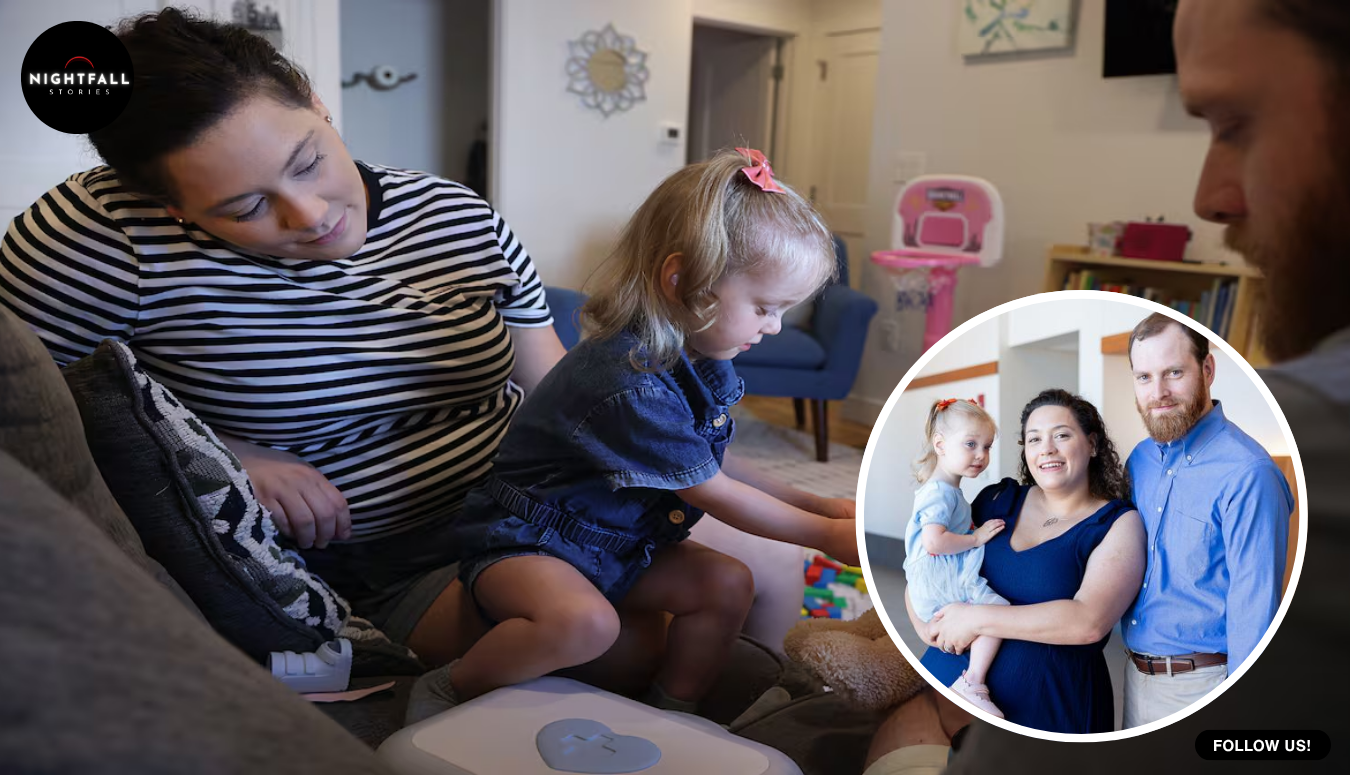
    The email went out in the middle of September two years ago, from a neonatal nurse in Massachusetts to a state caseworker she had never met. It asked a question that nurses are generally advised to think very hard about before they ask it. There was a baby in the special care nursery at Beverly Hospital, a few weeks old, fed through a tube because she could not yet manage a bottle, and the nurse who had been with her three nights a week from seven in the evening until seven in the morning wanted to know whether she could foster her.

    Her name is Nora Lussier. She was twenty eight at the time and four years into the job. The answer came back fast, and it was yes, which is the part most people do not expect. Just over two weeks later the baby came home with her. Just under two years after that, on the girl’s second birthday, Lussier and her husband Martin signed the papers that made Pamela legally their daughter, in a room with about twenty five people in it, including several of the nurses who had taken turns holding her on the night shift.

    That is the whole shape of it, and it is the kind of story that usually gets told in forty seconds and a soft piano cue. The more interesting version is the one that takes the professional question seriously, because a nurse adopting her own patient is not a small decision made in a quiet moment. It is a process with background checks in it, a statute behind it, a court report, a minimum residence period, and a professional code that has something quite specific to say about getting too close to the people in your care. All of that happened. None of it is sentimental. Most of it is the reason the ending held.

    Start with what the work actually was. A special care nursery is not a ward where babies lie quietly getting bigger. Anna McNicholas, the nurse manager of the unit, has described the particular case plainly: babies who were exposed to substances before birth tend to stay longer, and the nurses hold them more, because holding is part of the treatment rather than a kindness added on top. That is a named clinician describing her own unit’s practice, and it is worth repeating exactly at that level and no further. Pamela needed a feeding tube when she arrived. She needed specialist care that eventually involved an evaluation at Boston Children’s Hospital. Beyond that, nobody outside her medical team is in a position to say what her chart contained, and this piece is not going to guess.

    What a tube feed involves is less dramatic than it sounds and more laborious than people imagine. A measured volume, checked and rechecked. A line that has to be in the right place every single time, confirmed before anything goes down it. A baby who may be unsettled, whose cues you learn by repetition, in a room where the lights are kept low and the monitors do the talking. Then you write it down, and four hours later you do it again, and at seven in the morning you hand over to someone else and go home. Multiply that by three nights a week across most of a baby’s first three months and you have something that is not quite parenting and not quite nursing either, which is precisely the territory the professional codes are built to patrol.

    The current Code of Ethics for Nurses published by the American Nurses Association devotes a whole provision to it. The language is about protecting the patient and reducing the power imbalance that sits inside any care relationship, and it asks nurses to watch themselves for the risk of becoming either under involved or over involved with the people they look after. It does not say that what Lussier did is forbidden. What it says, in effect, is that a nurse must not settle a question like this privately, inside her own head, on a night shift. She has to examine her own conduct, work out whether she is still inside her professional role, and take it through the proper channels.

    An email to the child’s state caseworker is a proper channel. It is, arguably, the only one that matters, and that is the structural fact the short version of this story leaves out. A hospital does not place children. In Massachusetts, where a child is in the care of the Department of Children and Families, the department decides where that child lives, and the department’s own written placement policy is unusually welcoming to exactly this situation. It describes itself as a kin first agency. Its definition of kin is deliberately broad: biological relatives, adoptive relatives, and what the policy calls fictive kin, meaning another individual to whom the child or the parents ascribe the role of family on the basis of cultural and affectional ties, as well as people the department itself identifies as suitable caregivers for a particular child.

    That is the door Lussier walked through. The caseworker’s answer, by the family’s account, was an emphatic yes, and the route offered was fictive kinship, which lets someone with a close existing connection to a specific child be approved as that child’s foster parent rather than as a general purpose foster home. The policy calls this child specific licensing. It exists because the alternative, for a medically fragile three month old, is a stranger.

    It is not a shortcut in the sense of being easy. The licensing policy requires criminal and child welfare history checks on every member of the household aged fifteen and over, including criminal offender records, sexual offender records, the department’s own case history, and a fingerprint based check against the national crime database. Certain convictions disqualify an applicant for five years and certain convictions disqualify them for life, automatically, with no discretion. The home has to meet basic housing standards, which are spelled out down to the square footage of a child’s sleeping space and the requirement for working smoke detectors and carbon monoxide detectors on every level. There is an assessment of the caregivers themselves, built around a framework that looks at resilience, social connections, knowledge of child development and access to practical support. Foster parents have to complete twenty hours of training a year, and the initial training covers trauma, behaviour, permanency planning and the adoption process itself.

    What kinship status changes is mostly the clock. For an unrelated foster family the department’s assessment has to be completed within sixty working days. For a kinship family it is forty five working days, with a short extension possible, and in urgent cases the policy contemplates same day placement with the licensing finished behind it. In Lussier’s case there was a home visit, there was paperwork, and Pamela came home in early October, roughly three months old, after the stretch of hospital care that had begun at birth.

    There was also a reason the clock mattered. The family that had originally been lined up to foster her was not able to take her, because of the level of medical need involved. That is a quiet sentence with a lot inside it. Finding a foster placement for a newborn is hard. Finding one for a newborn who still needs a feeding tube and specialist follow up is considerably harder, and the pool of people who are both willing and competent to do it is small. A neonatal nurse who had already been doing that exact care, by hand, for weeks, is an unusually strong answer to a difficult problem, which is presumably why the answer came back as fast as it did.

    Martin Lussier is the part of this that gets skipped, and he should not be. He works in marketing. He had not been on the night shift. He had not held the baby, learned her cues, or watched her chart improve. He married Nora a little over three years ago, and fostering a medically fragile infant was the sort of thing the two of them had filed under someday. Then someday arrived as a question from his wife about a specific child with a specific set of needs, on a timeline measured in weeks. He said yes to a child he had no professional relationship with at all, which is in some ways the harder yes. His own account of how he knew it was right is simple and not especially poetic: once she was home and laughing, he stopped wondering.

    Fostering, though, is not adoption, and the gap between the two is where most of the two years went. In Massachusetts an adoption decree is a matter for the Probate and Family Court, and the statute is not casual about it. Ordinarily adoption requires the written consent of both lawful parents, executed no earlier than the fourth day after the child’s birth, witnessed and notarised, and final from the moment it is signed. Where that consent cannot be obtained, the court may dispense with it, but only on an application from someone with custody of the child or from the department or a licensed agency, and only where allowing the petition is in the child’s best interests.

    The statute then makes the court do actual work. It has to weigh the ability, capacity, fitness and readiness of the existing parents and of the prospective adoptive parents, with the child’s health and safety treated as paramount though not as the only consideration. It lists fourteen specific factors for the fitness assessment. One of those factors is whether the child has formed a strong bond with a substitute caregiver. It is a small clause in a long piece of legislation, and in this case it is close to the heart of the matter: the law anticipates that a child may attach to the person who has been doing the caring, and it instructs the court to count that.

    Nor can the paperwork outrun the reality. Before any decree, the department has to carry out an inquiry and file a written report with the court, normally within thirty days of being notified of the petition, covering the child’s background, whether the child is suitable for adoption, and whether the petitioners and their home are suitable for raising a child. And no decree can be made until the child has lived in the petitioner’s home for at least six months, unless a judge waives that for good cause and records the reason for doing so. Pamela had lived there for about twenty one months by the time the case was finalised. There was nothing to waive.

    For scale, the Boston Globe reported that the department had custody of nearly seven thousand children in 2024 and that eight hundred and seventy one adoptions were completed that year. Most of those children are not adopted by the nurse who fed them. The point of the comparison is not that this family beat the system. It is that the system has a narrow, specific provision for a person already bonded to a particular child, and this is what it looks like when that provision is used properly rather than bent.

    The unit did not stay out of it. Lussier’s colleagues, by the nurse manager’s description, were taken with Pamela from the start, and once she was going home with one of their own they behaved like what they had effectively become, which the family calls her nurse aunties. They threw Lussier a baby shower, because she had gone from no children to an infant with medical needs in a little over two weeks and did not own any of the equipment. They babysat. McNicholas has made the obvious professional observation about that arrangement, which is that a rota of neonatal nurses available to mind a medically fragile toddler is about as good as it gets. About twenty five people were there when the adoption was finalised, family and friends and nurses from the nursery together, on the child’s second birthday.

    Pamela is two now and does not have a feeding tube. She has developmental delays connected to her exposure before birth, which is as far as the reporting goes and as far as this account will go, and she is receiving early intervention speech and occupational therapy and, by her mother’s description, catching up quickly. She is described as sweet and happy. That is the whole medical picture that anyone outside her care team is entitled to offer.

    Her birth parents were not able to be involved. That is the only thing the reporting says about them, and it is the only thing worth saying. No one in that situation is a villain in somebody else’s feel good story, and the details of how a family comes apart are not public property. They are not the subject here. What happened to the baby is.

    The thing about a neonatal unit is that the entire discipline points one way. You learn a child completely, down to the volume and the timing and the particular way she settles, and then you hand her over and she leaves and you do not find out how the rest of it goes. The ability to do that without breaking is part of the professional skill, and it is why a code of ethics bothers to warn people about over involvement in the first place.

    Once, in that unit, somebody did not hand the child over. What makes the story worth more than forty seconds is that she did not simply decide to keep her. She wrote to the caseworker. She submitted to the fingerprints and the records checks and the home study and the square footage and the annual training hours. She fostered for close to two years while a court worked through a statute with fourteen factors in it and a department filed a report on whether her house was a fit place to raise a child. All of that machinery exists to stop people taking children they have become attached to. In this one instance it was pointed at the question properly, from both ends, and it agreed.

    The nurses who fed Pamela through a tube on the night shift still see her. They are not visitors. They are the aunts.

  • She lost three transplanted kidneys in twenty years. Her brother gave her a fourth, and something else went in alongside it.

    She lost three transplanted kidneys in twenty years. Her brother gave her a fourth, and something else went in alongside it.

    Nora is 55 and lives in Madrid, and for roughly two decades her body destroyed every kidney anyone gave her. Three transplants from deceased donors, three failures. By the time the fourth was being considered, her immune system had been sensitised to the point where a laboratory panel showed she would react against about 89 percent of the population. In transplant terms that is close to unmatchable. She was the patient surgeons look at and talk quietly about whether another attempt is justified at all.

    Her brother offered her a kidney. That part is not unusual; a living sibling donor is the best news a patient in her position can get. What was unusual is what else came out of her brother in the same operation, and what happened to it in a laboratory before it went into her.

    Alongside the kidney, the team at Hospital Universitario La Paz in Madrid harvested blood-forming stem cells from the same donor. Those cells were then filtered, not transplanted raw. The specific thing taken out of them was a population of immune cells called naive T cells, the ones that have never yet met anything and are therefore the ones most likely to launch an attack on unfamiliar tissue. What was left behind, the stem cells themselves and the memory cells that carry a lifetime of learned defences against infection, was infused into Nora over the weeks and months that followed.

    The intention was not to suppress her immune system. It was to teach it. Five years on, the kidney is working, there has been no rejection, and Nora takes a fraction of the medication she would otherwise be on for the rest of her life.

    That last sentence is the one that needs saying carefully, because it has been reported in places as something stronger than it is. Nora is not off her drugs. Neither is the other patient in this case. The paper the La Paz team published in late September says so in its own title: the aim described is to minimise immunosuppression after a solid organ transplant, not to abolish it. Nora has come down from the standard combination of roughly three immunosuppressant drugs to about one. Her doctors, by the account of the Spanish news agency that covered the publication, are reluctant to take away the last of it, because five years of good behaviour is five years and not thirty. If you have read a headline saying two Madrid patients have lived for years with no anti-rejection medication at all, that headline overshot.

    What is actually remarkable is less tidy and more interesting, and to see why it matters you have to understand what the alternative looks like from inside.

    A transplant is not an ending. It is a trade. The organ that saves your life is, to your immune system, foreign tissue that has no business being there, and the only way to stop your body from dismantling it is to spend the rest of your life taking drugs that hold your immune system down. Those drugs work. They are also, in the plainest possible terms, a long-term cost you agree to pay. A suppressed immune system is worse at fighting infections, which turns ordinary illnesses into hospital admissions. It is also worse at finding and killing early cancers, which is why transplant recipients carry a measurably raised lifetime cancer risk. Some of the most widely used anti-rejection drugs are themselves toxic to kidneys, which produces the particular cruelty of a kidney recipient whose medication is slowly damaging the organ it is protecting.

    Day to day it is less dramatic than that sounds and more relentless. The medication is taken on a schedule rather than when convenient, because blood levels matter and a late dose is not a neutral event. Blood tests are a permanent fixture of the calendar. A chest infection that a colleague shrugs off becomes a reason to call the transplant unit. People avoid crowds in winter, think about food preparation in a way most of us never have to, and get sun damage and skin checks taken seriously because the cancer risk is not theoretical. None of this is suffering, exactly. It is a life shaped at the edges by a prescription, and it does not end.

    So the patient takes the pills every day, on time, forever, because missing them risks the organ, and the pills are quietly taxing the rest of the body. Transplant medicine has known this for fifty years. The thing it has wanted for fifty years is a way to make the body accept the organ on its own, so the drugs are not needed. Within the field that goal has a nickname, and it is not a modest one. People call it the holy grail.

    The man who has spent much of his career chasing it at La Paz is Antonio Pérez Martínez, who heads the paediatric haemato-oncology service at the hospital. He co-leads the project behind this work, called OneTrasplant4Life, with the surgeon Francisco Hernández-Oliveros. Pérez Martínez’s route into the problem came from both directions. Professionally he had spent years doing bone marrow transplants in children, which is to say years of working on the immune system itself rather than on the organ. Personally, by his own account in Spanish reporting, his father died of a second cancer caused by the chronic immunosuppression he was on after a liver transplant. That is the cost of the trade, in one family.

    The biological idea underneath the technique is old and slightly absurd, which is part of its charm. Decades ago, researchers noticed that cattle twins which had shared a blood supply in the womb would afterwards accept skin grafts from each other. Each calf had been exposed to its sibling’s cells early enough that its immune system had filed them as self rather than as intruder. The lesson was that tolerance is not a fixed inheritance. It is something an immune system learns, and in principle it can be taught later.

    Turning that into a transplant protocol took the rest of the twentieth century and work by researchers including Megan Sykes and Sam Strober, who showed in animals and then in kidney recipients that you could establish what is called mixed chimerism, a state in which donor and recipient immune cells coexist in one body, and that tolerance could follow. The problem has always been that getting there safely is hard. Push donor marrow cells into a recipient and you risk the reverse of rejection, graft-versus-host disease, in which the donor’s immune cells attack the patient. That can be worse than the thing you were trying to avoid.

    The La Paz contribution is specific and narrow, and that is why it is credible. Rather than infusing whole donor marrow, they strip out the naive T cells and keep the rest. The reasoning is that naive T cells are the aggressors in graft-versus-host disease, while memory T cells carry the recipient’s practical protection against viruses and bacteria and are less inclined to start a war. By their account, the chimerism this produces is temporary, on the order of two hundred days, which is apparently long enough for the immune system to reset its idea of what belongs. Pérez Martínez has described the donor cells as an immunological passport travelling with the organ.

    Nora’s five years are one half of the published evidence. The other half is a young man the Spanish press has called Yassine, who is now 21.

    His case is the harder one and it came first. He had a condition affecting the lining of his intestine that left him unable to absorb nutrition, and by his mid-teens he had already been through two multivisceral transplants, both of which failed. A multivisceral transplant is about as large an operation as transplant surgery performs: in his case the organs replaced included stomach, intestine, pancreas, liver and kidney. A third attempt at 15, after two rejections, is the kind of decision made because the alternative is worse.

    That third transplant, in 2020, was paired with the same naive-T-cell-depleted stem cell infusion from the same donor. More than five years later his transplant is functioning, he has had no rejection, and according to the Spanish reporting he developed neither graft-versus-host disease nor the viral reactivations that are a constant hazard in heavily immunosuppressed patients. He is on a minimal dose of a single drug. He has spent the years from 15 to 21 doing the ordinary things that a boy on his third multivisceral transplant was not expected to get to do.

    It would be easy to write this story around him, and most coverage has. A teenager, five organs, a world first, a happy ending. But Nora is the more informative patient, and the reason is slightly deflating and extremely important. Immune systems get less flexible with age. A tolerance-induction technique that works in a 15-year-old might work precisely because the patient is 15, and would then be a paediatric curiosity. Nora was 49 when she received her kidney and is 55 now. Her immune system was not young, and it was aggressively sensitised by twenty years of rejecting other people’s kidneys. If the approach can get a result in her, it is not simply exploiting the plasticity of a child.

    Now the limits, which the authors themselves are clear about and which are the actual spine of this story rather than a disclaimer at the end of it.

    This is a case report. Two patients. It is not a trial, it has no control group, and a case report’s job is to say here is something that happened and deserves testing, not here is a treatment. The published paper is the reason any of this is sayable, and it is also the reason nobody should oversell it.

    The logistics are genuinely constraining. The stem cells have to come from the same donor as the organ, which means harvesting marrow or blood stem cells from that donor as part of the procurement, and then processing them in a specialised cell therapy laboratory. With a living relative, as in Nora’s case, that is awkward but arrangeable. The team has reported doing it with a deceased donor too, which is a bigger logistical feat and matters enormously for scale, because most organs come from deceased donors and most hospitals do not have a cell therapy facility on standby at three in the morning.

    And the drugs have not actually been withdrawn. Both patients remain on reduced regimens. The published work describes minimising immunosuppression, and the next phase of the research is the one designed to test whether it can be stopped. A phase I trial is now under way at La Paz, registered as NCT06997471, split between living and deceased donor recipients, with the enrolment target reported variously as ten and as fourteen patients in different accounts. A phase I trial asks whether something is safe and feasible. It does not ask whether it works better than the current standard. That question is at least one study further down the road.

    It is also worth being clear about why a two-patient report gets published in a journal at all, since that can look like thin gruel next to a trial. Case reports exist to put an observation on the permanent record in a form other researchers can scrutinise and attempt to repeat. The value is not statistical. It is that the method is now written down, the follow-up duration is stated, and anyone who thinks the result is explained by something other than the technique can go and argue with the published detail. That is a meaningful step up from a hospital press announcement, which is how a great deal of medical news reaches the public and then evaporates.

    Spain is a reasonable place for this to be happening. It has run the highest deceased-donor transplant rate in the world for years, which means a large, well-organised system with a national coordinating body, and the director of that body, Beatriz Domínguez-Gil, has given the work a careful endorsement: if it is verified, she has said, it could radically change the lives of transplant patients. If is doing a lot of work in that sentence, and she chose to include it.

    There is one group for whom even a partial result like this is not incremental. A child who receives a kidney at eight years old is not expected to keep it for sixty years. They are likely to need another, and then possibly another, and each cycle of rejection makes the next transplant harder to match, exactly as it did for Nora over her twenty years. Every one of those decades is also a decade of immunosuppression, with the infection risk and the cancer risk compounding across a whole life rather than a late stretch of one. Reducing the drug burden in a patient who is going to be a transplant patient for seventy years is a different proposition from reducing it in someone who received an organ at 60.

    Which leaves the thing this comes down to, and it is a gap rather than a triumph. On one side there are two people in Madrid who are alive, whose transplanted organs are working, and who are taking considerably fewer drugs than the rule of transplant medicine says they should have to. One of them is a young man who got his adolescence. The other is a woman in her fifties whose body had refused three kidneys before this one. On the other side there is a published case report, a phase I trial that has barely started, a technique that needs a cell therapy laboratory and the right donor, and a team of doctors who will not yet take away the last tablet.

    Both of those things are true at once, and the honest version of this story is the distance between them. Nora’s kidney has lasted five years, which is longer than any of the three before it. What nobody can tell her, and what her doctors are too careful to pretend, is whether it will last the next thirty.

  • The warning reached him by telephone, not by any alarm. Nine hundred children were already inside the building.

    The warning reached him by telephone, not by any alarm. Nine hundred children were already inside the building.

    The bell at Tribhuvan Trishuli Secondary School in Bidur, Nepal, is not an electronic chime. It is rung by hand, the way it has been rung since the school was founded in the middle of the last century, and on a Wednesday morning in late August it was rung by the principal himself, out of sequence, while the morning assembly was still standing in rows.

    Rajendra Dawadi had about fifteen minutes. That is his own figure, given later to a Nepali newspaper, and it is the only figure for the gap that comes from him rather than from the retelling. What he knew in that window was not much. A colleague had told him water was coming down the valley. A teacher had taken a phone call moments afterwards. A parent had turned up at the gate wanting her child, which in a river town is its own kind of alarm, because parents do not usually arrive mid-assembly without a reason.

    There was no siren. No message from a government system, no automated alert, no official instruction to evacuate. Three people with telephones and a bad feeling, and a man who had to decide in front of nine hundred children whether to believe them.

    He rang the bell and sent the school up the hill.

    What followed was less cinematic than it sounds and more logistically difficult. Around 900 of the school’s 1,643 enrolled pupils were on the premises. They did not all leave on foot. Students and staff crossed the bridge and went up to higher ground by car, by bus, by motorbike, in whatever was available and whatever direction was uphill. Dawadi got on the phone to his bus drivers, who were still out on their morning runs bringing children in towards the river, and turned them around. That detail is the one that tends to get lost, and it is arguably the most consequential thing he did, because a school bus heading towards a flooding river at nine in the morning is the worst possible place for a child to be, and the only person who could reverse it was the man holding the staff directory.

    By his own account to local reporters, he and one staff member were the last to leave. He left with roughly seventy students still around him, taking them to safer ground, and with no idea where most of the rest of his pupils were, because the ones who had been sent home were somewhere on the roads between the school and their houses, and the ones who had not yet arrived were somewhere else again. For days afterwards he was saying publicly that he did not know how many of his students were accounted for. Security agencies could not tell him. He had a register of 1,643 names and no way to read it against the valley.

    Then the water came.

    What hit Bidur that morning did not start there, and it did not start as rain. Shortly after half past eight, a mass of rock and ice detached from a steep slope on the northern side of the Langtang range, high above the Nepal and Tibet border. It did not simply fall. It travelled, gathering loose sediment and meltwater as it went, turning from an avalanche into a debris flow, which is a different and far more destructive thing. Somewhere along the route it dammed the Lhende Khola, a tributary, and a lake built up behind that temporary blockage until the blockage failed. When it failed, everything the mountain had already sent down came through at once, into the Bhotekoshi and then into the Trishuli, and down a valley lined with towns, bazaars, bridges, border posts and schools.

    This is worth being precise about, because the early shorthand for the disaster was a glacial lake burst, and that is not what the researchers who have since examined it describe. There was no long-standing glacial lake that overtopped. There was a slope failure, a cascade, a short-lived landslide dam and then a release. Cryosphere scientists looking at the sequence, among them Ashim Sattar at the Indian Institute of Technology Bhubaneswar, Christian Huggel at the University of Zurich and Basanta Raj Adhikari at Tribhuvan University in Kathmandu, have placed it in a category of multi-hazard chain events that are harder to monitor than lakes, for a simple and uncomfortable reason. You can put a sensor on a lake. Nobody has put sensors on every unstable slope in the Himalaya, and as one assessment of the response put it, monitoring those slopes is nobody’s job.

    It matters because the two mechanisms behave differently on the ground. A glacial lake that overtops gives a valley a known source, a known volume and, in the better-studied basins, a sensor and a siren. A slope that lets go gives you no address. Nobody can tell you in advance which of several thousand ice-and-rock faces above a populated valley is the one that has quietly lost its support, and the thing that comes down carries boulders and trees as well as water, which is why it removes bridges and foundations rather than simply flooding them.

    There is a reason those slopes are getting less stable. Research on the Langtang glaciers has found them retreating around one and a half times faster in the first two decades of this century than they were in the decades before, with warming above four thousand metres running at roughly a third of a degree Celsius per decade, well ahead of the global average. When glaciers thin and pull back, they stop buttressing the rock and ice above them. Hanging masses are left sitting on steep ground with less support underneath and thawing permafrost behind them. The mountains are not becoming more dangerous in some abstract future tense. They are becoming more dangerous now, and the people who live under them are the ones holding the risk.

    Nepal does have river monitoring. The gauges on the rivers transmit readings at ten minute intervals, which is a sensible design for the thing they were built to watch, a monsoon flood that rises over hours and gives a valley time to react. A debris surge arriving as a wall is a different problem. In this case the flood destroyed sensors before they could usefully transmit anything. One police officer who tried to warn people with a megaphone was swept away himself. The alert that actually worked that morning, the one that emptied a school of nine hundred children, was a colleague shouting and a teacher’s phone ringing.

    The building did not survive. Dawadi watched it go. Seventeen structures across roughly eighty-six ropani of school land were destroyed, and the way he describes it is not that the buildings collapsed but that the ground they stood on is no longer there. A newer block had been put up only a few years earlier with Indian grant funding under a community development programme, and the school’s origins also trace back to Indian assistance in the middle of the twentieth century, laid out by an engineer connected to the Trishuli hydropower project. None of that history is visible on the site now. A resident quoted afterwards said there was simply no sign of the school any more.

    Two members of staff could not get to higher ground. They were swept away and at the time of writing they remain missing. The piece you are reading is not a clean rescue story and should not be read as one. Every pupil who was inside the building that morning got out. Two of the adults who were there to get them out did not.

    Nor did the school’s losses stop at its gate. A pupil in the eleventh grade, Abhinash Nepali, and his mother were among the missing in the community. Dawadi has spoken about exactly this gap, and it is the most honest thing anyone has said about the morning. The students were safe from the school, he said, but they were not safe in their own neighbourhoods, and that is what keeps him awake. A principal can control what happens inside a compound for fifteen minutes. He cannot control what happens to a child’s house.

    What a working alert would have to do here is uncomfortable to spell out, because it is not expensive hardware. It is a chain of people with a protocol. Somebody upstream sees the river behaving impossibly. That person reaches somebody downstream who has the authority to empty a building, and that person does not spend four minutes deciding whether to believe it. Dawadi’s school survived because all three links of that chain happened to exist informally on one morning, in one town, between people who knew each other’s numbers. Eighty kilometres of valley cannot be run on acquaintance.

    Place that single morning inside the wider event and the proportions change again. The flood killed on both sides of the border. Early counts put the dead across Nepal and China at more than 900 with over 4,700 unaccounted for. By late September, assessments were describing at least 1,400 dead and more than 5,000 still missing, with Nepali figures at one point recording a thousand dead and close to four thousand missing across eight districts. Those numbers have moved as recovery work has gone on, and anyone quoting them should say which count they are using and when it was taken.

    The schools alone tell you something. At least 69 schools in northern Nepal were completely destroyed. The education of nearly 19,000 students was disrupted. Dawadi’s school is one entry in that list, and the only reason it is the entry people know about is that the man in charge of it happened to answer a phone.

    Which raises the question the story is really about. Why was a school sitting on a river terrace in the first place?

    Because that is where the flat ground is. In a steep valley, the level land is the land the river made, and the river made it by doing exactly what it did in August, repeatedly, over a very long time. Towns, markets, bus parks, clinics and schools go on river terraces because there is nowhere else to put a building with a football pitch next to it. This is not carelessness. It is arithmetic. The same geography that makes a terrace buildable makes it, once every few generations, the floor of a flood. What has changed is how often the mountain above sends something down, and how fast it arrives when it does.

    Dawadi, who has said he sat in that building as a pupil before he ran it as a principal, spent the weeks after the flood arguing rather than grieving in public. He pressed the education ministry to rebuild the school on safer ground inside Trishuli, and he made a point that goes beyond his own compound. Putting up stronger buildings is not enough on its own. If the paths children walk and the settlements they live in are still exposed, a safe school is a safe box in an unsafe place.

    Some of what he asked for has started to happen. India’s ambassador to Nepal, Naveen Srivastava, pledged support for the school’s full reconstruction. A Nepali private foundation put money towards getting classes running again immediately. Bidur municipality coordinated the construction of temporary learning structures. And a few weeks after the water, the school reopened, in pieces and in borrowed space. The younger grades went into a temporary centre. The senior grades were split between a site at a nearby bazaar and the campus of another secondary school in a neighbouring settlement. On the first day back, something over 870 students turned up out of more than 1,600 on the roll.

    The practical shape of that is worth picturing, because reopened does not mean restored. The younger grades and the senior grades are no longer in the same place, which means a staff of teachers now commutes between sites to cover a timetable. Laboratory work, libraries and anything that needed a specific room are gone with the rooms. Examination years are the ones that cannot absorb a lost term, and the senior grades were the ones split across two borrowed locations.

    Dawadi called that turnout the strongest psychological win available to them, which is a careful way of saying that children walking into a tent is not the same as a school existing, but it is not nothing either. A roll of 1,643 names and an attendance of 872 is a gap you can read two ways, and both are true. More than half the school came back within weeks of losing its building. Nearly half did not, and some of them have reasons that will not be resolved by a temporary roof.

    That is where it stands. The reconstruction is a promise, not a building. The two missing staff members are still missing. The land the school stood on is gone in the literal sense, washed into a different shape, and the replacement has to be found somewhere else. What exists for certain is a hand bell that was rung at the wrong time of the morning, nine hundred children who went uphill because of it, and a set of school buses that turned around on a road heading towards a river.

    Dawadi has been firm about one thing whenever anyone has called him a hero. He has said it was his responsibility, not heroism. Both can be true at once, and the version that matters more is his. Responsibility is a thing you can ask of a system. Heroism is a thing you can only hope for, and no valley should have to depend on it. The alert that saved that school came from a man with a phone and a colleague who shouted. Nepal has 69 destroyed schools and 19,000 displaced pupils, and the next time the mountain lets go, the question will not be whether someone is brave enough. It will be whether the phone call gets there first.