Category: News

  • Forty years in the same classroom, and a final pay envelope holding about twenty three dollars. The figure was not an error.

    Forty years in the same classroom, and a final pay envelope holding about twenty three dollars. The figure was not an error.

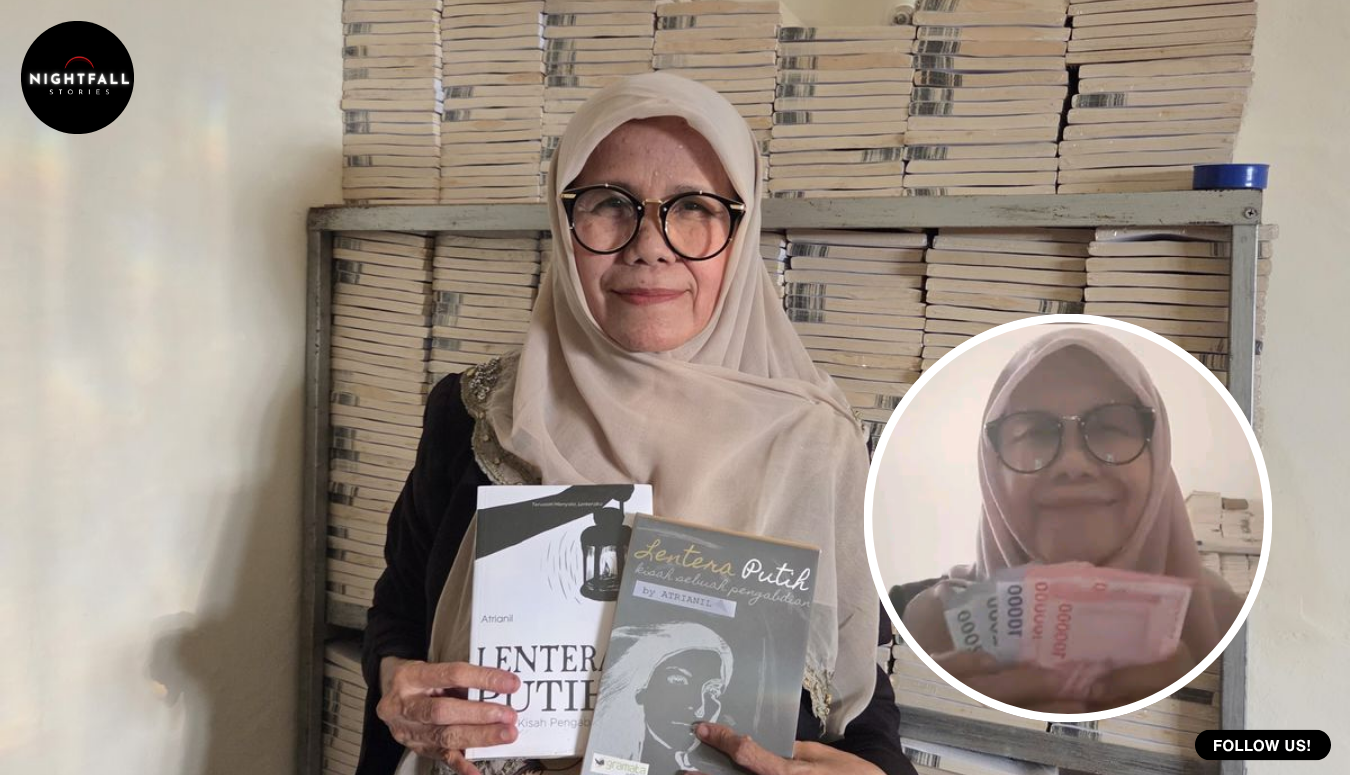
    The envelope was brown, the ordinary kind a school office keeps in a drawer, and the number written on it was 414,000 rupiah. At the exchange rate of the month she retired, that came to roughly twenty three dollars. It was the last money Atrianil was paid for teaching, and it arrived at the end of forty years at the same private vocational school in West Jakarta.

    She is sixty three. Her pupils have called her Bu Ijah for decades, and it was Bu Ijah, not any reporter, who put the envelope on camera. She posted it to her own social account in June, late in the month, a few days after her final working day. Within about a week the clip had been picked up by national media, the teachers’ association had been asked to comment, and Indonesia’s largest daily had run an editorial whose headline was simply the two numbers side by side: 414,000, and forty years.

    The first thing worth settling is whether the figure means what it looks like. It does. When the school was asked, it confirmed that 414,000 rupiah was the whole of her monthly pay, not a residual or a part payment. The teaching allowance was inside it. So was the transport money. There was no second envelope.

    A second number makes the first one legible. The minimum monthly wage for the province of Jakarta this year is 5,729,876 rupiah, about three hundred and twenty dollars, set by the provincial government and binding on employers of ordinary workers. Her pay was a little over seven percent of it. She was not being underpaid against that floor, because the floor did not apply to her. That is the part of the story that takes some explaining, and it is the reason the story is worth more than a sad number.

    Before going further, a word about where all of this comes from, because it matters here more than usual. There is one original. A Kompas reporter interviewed her and the school in the days after the clip spread, and effectively everything that has circulated since, across national outlets, aggregators and regional titles, traces back to that reporting. It reads like eight or ten independent confirmations and it is one. Kompas is not reachable from where this piece was researched, so the figures here were cross checked against pickups that reproduce them consistently, against the school’s confirmation as reported, and against the public response from the teachers’ association, which is independent of the original interview. Her own account includes one further episode from early in her career, concerning money she says she was asked for and refused. It is a striking claim and it appears in exactly one chain of reporting that could not be read at source, so it is left out here rather than repeated on trust. Everything below is either confirmable or flagged as her account.

    The category she belonged to is called guru honorer. The English rendering, honorary teacher, is misleading, because nothing about it is ceremonial. An honorary teacher is a working teacher without civil service status. In a state school, the local education office or the school itself hires them outside the national establishment, usually because there are classes to cover and no funded civil service post to cover them with. In a private school, which is where Bu Ijah worked, the employer is a foundation, and the foundation decides what it pays out of whatever fees and donations it collects. There is no national pay scale in that arrangement. There is no accrual of pension rights. There is, in the plainest terms, no mechanism by which forty years of continuous service converts into anything at the end of it except a last envelope.

    The scale is not marginal. According to ministry figures drawn from the national education database late last year, Indonesia had about 3.42 million educators, and 21.42 percent of them held non permanent status. That is roughly one in five of the people standing in front of classrooms, and the share is heaviest at primary level. A separate official count puts 237,196 non ASN teachers in state schools as registered and permitted to keep teaching through the end of this year, under a ministry circular issued earlier in 2026. The circular was widely read as a threat and the government insisted it was the opposite, a stabilising measure to stop regional authorities from cutting those teachers loose before replacements existed. Either way, the date at the end of it is real. The civil service law passed in 2023 set a horizon for clearing up non permanent employment, and the end of this year is when that horizon arrives for teachers.

    The route out, for those who get one, is a scheme called PPPK, a contract form of government employment that carries a salary scale and benefits without full civil service tenure. Converting honorary teachers into PPPK posts is the government’s main answer, and the ambition is large, more than nine hundred thousand conversions across five years. Here is the mechanical reason it was never going to reach Bu Ijah. PPPK positions are government positions, allocated to government schools. A teacher employed by a private foundation is not competing for a slot that happens to be scarce. She is outside the pool. The education ministry’s own director general for teachers set out that distinction at a parliamentary hearing late last year, and the policy conversation since has been about whether teachers who pass PPPK selection might be posted into private schools, which is a different question entirely, about redistributing existing public employees rather than recruiting the people already doing the work.

    So forty years in a private vocational school produced no eligibility for anything. That is not an oversight in her case. It is how the category is built.

    Nor is her number an outlier at the bottom of a broadly decent distribution. A survey of teachers carried out in the first week of May 2024 by the research institute IDEAS with the charity Dompet Dhuafa, covering 403 teachers across twenty five provinces, found that 20.5 percent of honorary teachers were paid under 500,000 rupiah a month, around twenty eight dollars, and that 74.3 percent were paid under two million rupiah, around a hundred and twelve dollars. Fewer than one in a hundred cleared five million. The sample is modest and the figures are two years old, so they should be read as an indication rather than a census. The indication is that a fifth of the honorary workforce lives in the band Bu Ijah’s envelope sits in.

    There is a detail in her last year that says more about the arrangement than any of the figures. By her own account, she had cut her teaching down to two days a week by the end, in order to reach the forty year mark at all. Forty years was not a term of employment she was serving out. It was a number she went after, on a timetable she had to shrink to afford, at a school that was paying her less per month than a single day of minimum wage work in her own city would have earned.

    The pay also sat behind a gate she was never going to get through. The large allowances in the system, the professional allowance of two million rupiah a month and the remote region allowance of the same size, go to certified teachers, and certification runs through a professional training programme that more than seven hundred and fifty thousand teachers passed through across the last two academic years. The basic incentive, the smallest of the three, is the one aimed at the uncertified. An uncertified teacher at a private foundation school is therefore at the bottom of both ladders at once, too far outside the public establishment to be converted and too far from certification to be topped up.

    What that produces, across the workforce rather than in one case, is a teaching profession that largely does something else as well. The same survey of 403 teachers found 55.8 percent holding a second job. Private tutoring was the commonest, which at least keeps them in their own trade, followed by trading, farming, manual labour, making online content and driving motorcycle taxis. The researchers also recorded what teachers pawn when something goes wrong in a given month, and the list ran from gold wedding gifts to motorbikes. None of that is about Bu Ijah specifically, and there is no reporting on whether she took outside work. It is about the shape of the thing she spent forty years inside.

    The teachers’ association that responded to her case put harder cases on the record. Its national coordinator, Satriwan Salim, called the situation deeply sad and then named two he said his organisation had documented: a part time contract teacher in Dompu, in the eastern islands, paid 135,000 rupiah a month, about seven dollars and fifty cents, and another in West Java paid 50,000 rupiah, under three dollars. His association’s demand is narrow and unglamorous, which is usually a sign it is serious: a minimum wage floor for non civil service teachers, pegged to the regional labour minimum the way it is for every other kind of worker. It has also gone to the constitutional court over this year’s state budget law. The budget in question runs to about 769 trillion rupiah for education, something in the order of forty three billion dollars, which is the figure that makes the envelope hard to argue away.

    There is a particular arithmetic in the government’s own relief scheme that lands without any need to raise the volume. From this year, non civil service teachers who qualify receive a monthly incentive raised from 300,000 rupiah to 400,000 rupiah, about twenty two dollars, paid to 377,143 recipients at a cost of around 1.8 trillion rupiah. Certified teachers get a professional allowance of two million rupiah a month, and teachers in remote regions get a special allowance of the same size, with the whole package passing fourteen trillion rupiah. The state’s top up for an underpaid teacher, in other words, is almost exactly the size of Bu Ijah’s entire salary. Whether she ever drew it is not documented anywhere that could be verified, and given the eligibility routes run through state school registration, it would be unsafe to assume she did.

    It is tempting, at this point, to make her into an argument, and she should not be one. The honest shape of her forty years is not devotion to a wage. She has said, in the reporting that exists, that she stayed because of the pupils and because leaving felt like abandoning something she had built, and she has also been plain that the money was an injury rather than a sacrifice she was content with. By her own account she raised the practical grievance of an age limit on a Jakarta support payment for educators, which cut off at sixty and therefore cut off her. She has objected to the word honorer itself being thrown around in public as a label for a kind of person. Those are the complaints of someone who thought she was owed better, not of someone who had made peace with less. Treating her as a parable of cheerful endurance would get her wrong, and it would also let the system off.

    Which brings this to an ending that is not satisfying, and should not be dressed up. Nothing happened to her. The clip spread, the association spoke, a national newspaper wrote its editorial, and there is no documented outcome for Atrianil: no reinstatement on better terms, no pension granted, no public fund, no official intervention on her behalf that can be sourced. It is possible something private was done and was never reported. It is not possible to claim it. Three months on, the only verifiable facts of her retirement are the ones she put up herself.

    What she actually did, in the last week of a forty year career, was to document it. She did not write a manifesto or address a rally. She held up the envelope with the number on it, the one piece of paper in the whole story that nobody has disputed, and let the arithmetic do the work. That turned out to be the most effective thing anyone involved has done. The association’s wage floor has not been legislated. The deadline at the end of this year is still a deadline, with 237,196 people in state schools on the near side of it and an unknown larger number in private schools who are not even counted in that figure. The category that produced her envelope is still producing envelopes.

    She taught in the same place for four decades and walked out with twenty three dollars and no pension. The number is not a scandal because it is small. It is a scandal because it is accurate, because the school was right that it was the total, and because it was arrived at legally, by a system that knows exactly how many people are inside it.

  • He was seventy and in cancer treatment when he finished primary school. The strangest part of the day came after the certificates.

    He was seventy and in cancer treatment when he finished primary school. The strangest part of the day came after the certificates.

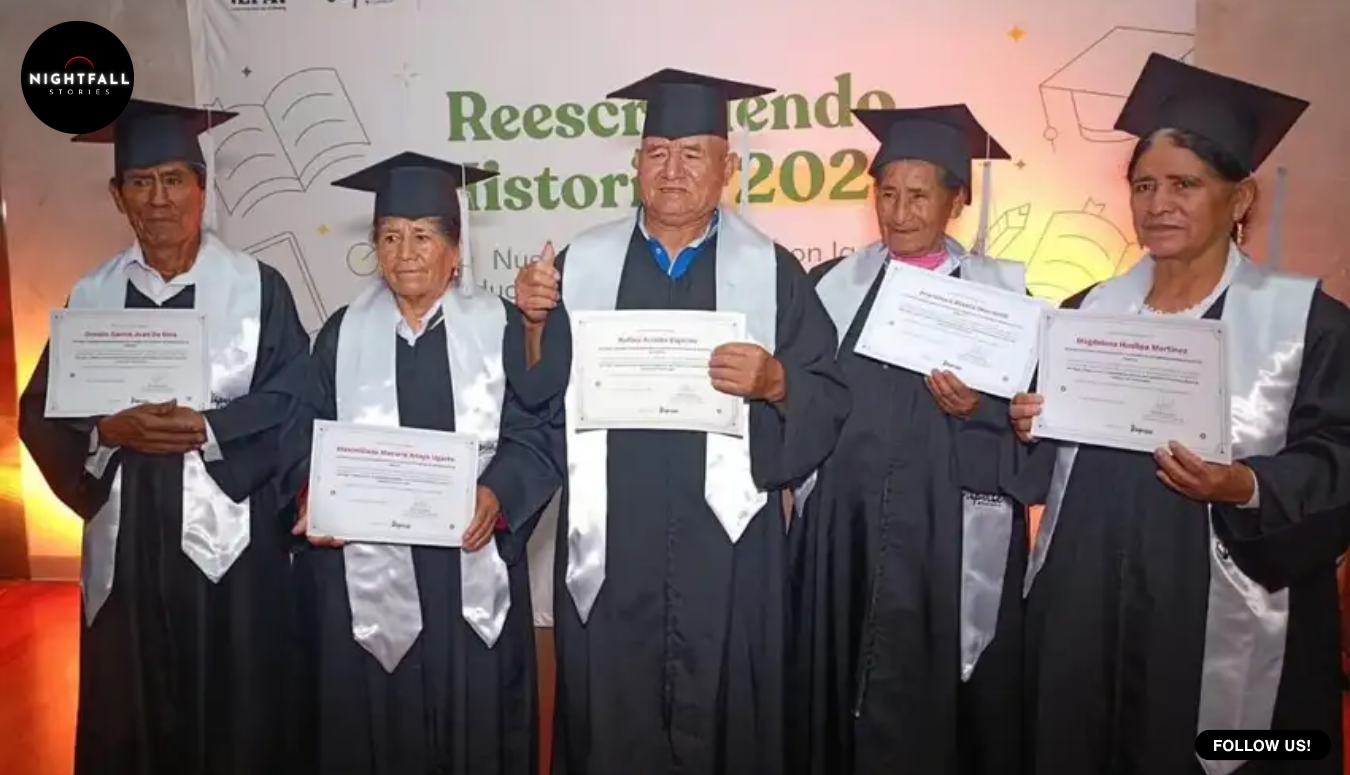
    Donato Garcia Juan de Dios learned to read and write on a tablet computer at the age of seventy, while he was being treated for cancer, and when he stood up at a theatre in Lima to collect the certificate that said he had completed his basic education, he told the room something very simple. He said he had the strength to finish what he had started. Then he and the rest of his class were walked outside, put on an open-top tourist bus, and driven around the capital.

    That is the part of the day that is hardest to explain to anyone who has not been in that position. The certificates were the achievement. The bus was the thing nobody had thought to ask for. Eighty people, the youngest in their twenties and the oldest in their eighties, were driven past the archaeological mound at Huaca Pucllana, along the clifftop viewpoints above the Pacific, through the parks, in a city many of them had lived in or travelled to for years without ever once seeing it from the top deck of anything.

    The theatre was the Teatro NOS in San Isidro. The ceremony was called Reescribiendo Historias, which translates roughly as Rewriting Stories, and it was run by two private organisations rather than by a government ministry: a Peruvian business movement called Es Hoy, which works on education among other things, and Fundacion Dispurse, a foundation that runs literacy circles and what it calls open community schools. The graduates had come from eight regions, including Cajamarca, Cusco, Pasco, Huanuco, Ancash, La Libertad and Piura, as well as Lima itself.

    Before going any further, there is something about the reporting on this day that has to be said out loud rather than buried, because it is the sort of thing that produces a wrong story if nobody checks it.

    Two separate counts were published about this ceremony within twenty four hours of each other, and they are not the same number counting the same people. One account, from the Peruvian state news agency, dated the ceremony to the seventeenth and reported that more than six hundred users of Pension 65, the state pension programme for older adults run by the Ministry of Development and Social Inclusion, had completed their basic education through digital literacy over the course of the year, and that the programme was honoured at the event. The other account, published the following day by a national newspaper, described eighty young people and adults graduating through the adult education programme run by Es Hoy and through Dispurse’s own literacy and community schools, followed by the bus tour.

    Six hundred and eighty are not two versions of one figure. The six hundred is a national annual total for a state programme. The eighty is the group that graduated through two private routes and climbed onto the bus. They were honoured in the same room on the same day, which is why both numbers attach to one ceremony, and anyone who adds them together or swaps one for the other has written a different article about a different thing. Donato Garcia is the point where the two accounts touch: he appears in both, named and aged seventy in each, which is how it became possible to be confident they describe one event rather than two.

    It also means something about how he learned. The state strand teaches reading and writing to older adults through an application called Focus, installed on tablets supplied by local governments. That is the tablet. A man of seventy, in oncological treatment, learning letters by swiping at a screen, in a programme that reached more than six hundred people like him in a single year.

    What makes the eighty worth two thousand words is not that they are inspiring, a word that gets used to flatten people. It is that each of them failed to finish school for a completely different structural reason, and you can see the whole shape of a national problem by lining up four of them side by side.

    Epifania Juanita Huaman Guevara is fifty eight. By the account published about her, she learned to read in order to manage her own accounts and to support her children. That is the least sentimental motive in the group and the most revealing one. Illiteracy is not primarily experienced as a sadness about books. It is experienced as a daily, grinding vulnerability at the point of transaction: not being able to check a figure someone else has written down for you, not being able to read what you are signing, having to take another person’s word for the arithmetic of your own livelihood. People who learn to read late very often say some version of what she said. They did it to stop being at a disadvantage in rooms where numbers were being written down.

    Luciana Flores Lopez is sixty, a Quechua speaking artisan from Cusco, and the reason she did not go to school is that there was no school. Not a school she was kept out of, not a school she dropped out of, simply no school in the community she grew up in. That is a geography problem rather than a willingness problem, and it is the explanation behind a large share of Peru’s older rural illiteracy. It is also why a Quechua speaker arriving at adult education is not starting from the same line as a Spanish speaking city dweller: she is being asked to become literate in a second language as well as literate at all.

    Lidia Mendoza Pacaya is forty four and went back to secondary school with the backing of her employer, finishing earlier in the year. The detail that matters in her case came afterwards. Her daughter resumed her own studies. That is the mechanism nobody budgets for when they fund adult education, and it is the one with the longest tail. A parent who goes back makes going back thinkable for the child who had quietly stopped.

    And Donato, who is the reason the story has a seventy year old at the centre of it rather than a statistic.

    The scale of the thing they stepped out of is genuinely large. Peru has more than eight million people aged fifteen and over who have not completed secondary education, which is close to thirty percent of that age group. Around fifty five percent of them are women, roughly four and a half million. Something like fifty seven percent are adults between thirty and fifty nine, meaning this is overwhelmingly not a story about teenagers who recently dropped out but about working adults in the middle of their lives. About fifteen percent of the group cannot read or write at all. Around a quarter never completed sixth grade.

    Where you live changes almost everything. In rural areas roughly fifty seven percent of the population carries this educational lag. In urban areas it is about seventeen percent. In Huanuco, Cajamarca, Loreto and Ayacucho, more than forty percent of the population over seventeen has not finished school.

    Now the part that explains why a business movement, rather than a ministry, was handing out certificates in a theatre. Peru does have a public route for this. It is called alternative basic education, delivered through roughly fourteen hundred centres nationwide. Enrolment in those centres sits at around a hundred and ninety thousand people. Against a target population of eight million, that is less than three percent. The route exists. It is simply not reaching the people it was built for, which is a different and more awkward failure than not existing.

    Es Hoy’s answer to that is a programme called EPA, short for education for adults, and the design is worth understanding because it is unusually practical. EPA does not try to recruit individuals off the street. It offers free support to companies so that those companies can help their own workers, their workers’ relatives and their suppliers finish basic education. In other words it uses the workplace as the point of contact, on the reasoning that if someone has a job, their employer already knows where they are every day, which is the single hardest problem in adult education. By the account published late last year, that approach had carried more than nine hundred young adults through to completion across around seventy companies. An education projects manager at the organisation, Jessica Guimac, made the economic case plainly: the lower the level of education, the higher the probability of working informally.

    There is a second edge to that design which the programme itself does not advertise, and it is worth naming. Routing adult education through employers means an adult’s chance of finishing school can depend on whether the company they happen to work for has signed up. Lidia Mendoza Pacaya finished secondary school with her employer’s backing, and that is genuinely good news for her, but it also means the opposite case exists: the identical worker at the firm down the road, with the same gap in her schooling and the same determination, gets nothing. A workplace is an efficient place to find people. It is not a fair way to decide who is reachable.

    Dispurse comes at the same gap from the opposite direction, from the countryside rather than the payroll. The foundation runs literacy circles and reading spaces, and its open community schools are built around a specific and clever premise: that adults who have spent decades acquiring real knowledge outside a classroom should be able to have that knowledge validated and converted into official recognition within the alternative basic education system. It works mainly in Cajamarca and Cusco, which are two of the highest-lag regions in the country, and it has also worked in Bolivia and developed its digital literacy application in Sweden. Earlier this year it expanded an agreement with Peru’s education ministry in Cajamarca, and it had already been recognised for its digital literacy work with older adults alongside the state pension programme the year before.

    That validation idea deserves a moment, because it is the least obvious and possibly the most useful thing in the whole arrangement. An artisan of sixty who has spent four decades costing materials, pricing work, managing orders and running a household has an enormous amount of applied knowledge. What she has never had is a piece of paper saying so. The conventional response is to sit her down at the beginning of a syllabus designed for eleven year olds. The alternative is to assess what she already knows, convert it into formal credit, and teach only what is actually missing, which for most adults in her position is literacy itself plus whatever the certificate formally requires. It is faster, it is less humiliating, and it treats a late learner as someone with a gap rather than someone with a deficit.

    The tablets matter for a similar reason. Handing an older adult in a rural district a printed primer asks them to begin with the exact skill they do not have. A device that can be practised on alone, as often as needed, with nobody watching the ninth attempt at the same letter, removes the single biggest obstacle to adult literacy, which is not difficulty but embarrassment. Grown adults will not practise reading badly in front of other grown adults. They will practise in front of a screen.

    So the ceremony was not a one-off act of charity. It was the visible end of three separate pipelines, one state and two private, converging on a stage in San Isidro.

    It is worth being careful about Donato Garcia at this point, out of straightforward respect. He was seventy and in cancer treatment at the time of the ceremony, he was present, he collected his certificate, and he spoke. Beyond that date there is no further published information about his health that could be found, which means nothing should be asserted about where he is now, in either direction. What is documented is a man who, by his own account, decided that a diagnosis was not a reason to abandon a goal he had carried for most of his life, and who finished the thing.

    What stays with you about the whole day, though, is the bus.

    If you wanted to design a gesture that understood exactly what being illiterate does to a person, you could hardly do better. Illiteracy is not only about words on a page. It is about the quiet daily decision to stay inside a small, known circuit of streets, because the risk of being lost somewhere unfamiliar, unable to read a sign or a timetable or ask for help from a written map, is not worth taking. It shrinks the size of the world a person is willing to move through. People who cannot read often know their own city only as a series of memorised routes.

    The certificate changes the paperwork. The bus changes the circuit. An open-top tour of Lima, taking in a fifteen-hundred-year-old adobe pyramid in the middle of a modern district, the long line of viewpoints above the ocean, the parks, is a city handed back to eighty people as something to look at rather than something to get through. The oldest of them was in her eighties. Some of them had come in from Cusco, from Piura, from Huanuco. For a number of them it was presumably the first time they had seen the capital of their own country from above the traffic.

    That is where the day ended, and it is a better ending than the stage. A seventy year old man with cancer who learned his letters on a borrowed tablet, a fifty eight year old woman who learned to read so nobody could fiddle her figures again, a Quechua speaking artisan who never had a school to attend, and a mother of forty four whose daughter went back to studying because she did, all sitting on the top deck of a tourist bus in a city that had always been there.

    Nobody on that bus is a symbol. They are eighty people who finished something late, and then got taken sightseeing.

  • He learned to swim as an adult for one reason. It took him 226 kilometres and most of a day, and he insists he was not the one doing the carrying.

    He learned to swim as an adult for one reason. It took him 226 kilometres and most of a day, and he insists he was not the one doing the carrying.

    The swim is 3.8 kilometres in open sea off Jurere Internacional, on the northern edge of Florianopolis. Then 180 kilometres on a bike. Then a full marathon, 42.2 kilometres, on legs that have already done the first two. Everyone gets seventeen hours. There is no separate clock.

    Gabriel Ferrari did all of it towing an inflatable float through the swell, then pedalling an adapted tricycle, then pushing a racing chair with something close to 60 kilograms of weight in it for the length of a marathon. About eighteen months before he started, he could not swim at all.

    That is the part of this story that is easy to skip past, and it is the part that actually took the work. Ferrari was already a runner. Running he had. Swimming he did not have, in any form, and cycling he had only just picked up. So the project was not a father deciding to do something hard. It was a man in his thirties walking into a pool to learn the single discipline in endurance sport that cannot be faked, and then doing it again with a boat tied to him.

    In the racing chair, and in the float, and on the back of the tricycle, was his son Lucca, who is six.

    Lucca was born early. He spent 46 days in intensive care. During that period he suffered a cardiorespiratory arrest, and the family says he has cerebral palsy. That is as much as the family has put in public about the medical side, and it is as much as belongs here. What matters for the rest of this is simpler: Lucca is six, he goes where his father goes, and on race day several thousand people along a coast road knew his name.

    Ferrari has a line he uses when people congratulate him, and he uses it so consistently that it reads less like modesty and more like a correction he has had to make a lot. He jokes that he is not the one pushing Lucca. Lucca, he says, carries him the whole way.

    Take the swim first, because it is where the learning curve was steepest. Open water swimming is not pool swimming with a view. You cannot see the bottom, you cannot touch a wall, the horizon moves, and you have to lift your head every few strokes to find out whether you are still going in the right direction. Adults who learn to swim late almost always learn it in a pool, where the water is flat and the end is visible. The sea takes that away.

    Now attach a float. A towed load does not sit still behind a swimmer. It yaws. It catches chop. Every time you accelerate it resists, and every time you glide it pulls your hips sideways. Swimmers talk about drag as if it were a constant and it is not; towing is an argument you have with the water several thousand times. Learning to swim badly takes a month. Learning to swim well enough to tow for nearly four kilometres in the sea, having started from nothing, is most of a year of mornings.

    The bike is a different problem. An adapted tricycle is heavier than a road bike and steers nothing like one. A standard racing bicycle leans into a corner because the rider does; a trike with a load does not lean, it resists, and the rider has to take the whole corner on steering input and judgement. On a climb you cannot stand up out of the saddle, which is how cyclists give their legs a change of angle and recruit different muscle. Everything is done seated, at whatever cadence the gearing allows, for 180 kilometres.

    Then the marathon. The running chair is the part of the kit that looks most ordinary and is probably the most brutal, because the figure that matters is weight. By one account the chair with Lucca in it came to somewhere around 60 to 64 kilograms. That is a load the size of an adult, on three wheels, pushed uphill and braked downhill, by a man who at that point has been going since early morning.

    There is a fourth leg nobody counts, and it is the one that explains why this format is so rare. An Ironman has two transitions. For an ordinary competitor they are a matter of pulling off a wetsuit, jamming on a helmet and running out with a bike, and the fast ones do it in a couple of minutes. For a pair racing adapted, each transition means getting a child out of one piece of equipment and securely into another, correctly positioned, strapped, padded and protected from the sun, while your own hands are shaking from exertion and your own heart rate is still somewhere near the top of its range. The clock does not pause for it. Whatever care that takes comes straight out of the seventeen hours.

    Ironman events do have a division for athletes who compete in adapted formats, and Ferrari and Lucca were classified in it rather than running as a side exhibition. That distinction is worth noticing. There is a long tradition in endurance sport of letting a pair like this go off the front or the back of the field with a nice photograph at the end and no place in the results, and the effect, however kindly intended, is that they were never actually in the race. A classified division means the pair are in the standings, measured against the same cut off as everyone else.

    And the cut off is the real test. Seventeen hours is seventeen hours. Nobody gets extra time for towing. Which means that the moment Ferrari entered, the arithmetic became unforgiving in a very specific way. A pair moving at towed pace in the water and loaded pace on the bike has to bank time it does not have, and then hold a marathon pace that would be respectable unloaded.

    Work the arithmetic and you can see the shape of the day. Four kilometres of towed sea swimming is not going to be quick, and a loaded tricycle over 180 kilometres of coastal road with real elevation on it is slower again, at a cadence you cannot vary much. Which leaves the marathon, the discipline where the load is heaviest and the legs are already finished, as the leg where the day is either saved or lost. Most competitors in an Ironman walk some of the marathon. A man pushing a chair who walks too much of it does not finish inside the limit. Ferrari had to arrive at the start of the run with enough margin to keep moving, and enough left in him to keep pushing uphill, after more than ten hours of work.

    They made it. Published accounts put the finish somewhere past fifteen hours, with one report describing it as around sixteen; the individual official result could not be retrieved, and the honest statement is that they came in inside the seventeen hour limit and were classified. They crossed together, which was the entire point of the exercise.

    The course itself is not a gentle one. The swim is a genuine sea swim rather than a sheltered lake, in a bay on the north of the island where the water has somewhere to come from. The bike leg runs out along the coast and back with rolling elevation rather than a flat loop, which for a seated rider on a heavy trike means the hills come at you repeatedly and you absorb all of them in one position. The marathon is run in the afternoon and evening, which on that coast means heat for the first half and darkness for the last of it.

    This was the twenty fourth running of Ironman Brasil, which has been held in Florianopolis for most of its existence and which brought in a field reported at roughly 2,000 athletes from 26 countries. At the front there was prize money and a handful of world championship slots. Professional triathletes were done and showered and eating by mid afternoon. Hours later the pair were still out on the marathon course, which is the part of a long distance race that the cameras have usually left.

    Then there is the question this kind of story normally walks straight past, so let us not. What does a six year old consent to?

    It is a fair question and it does not have a tidy answer. A six year old cannot evaluate a seventeen hour endurance event, and nobody should pretend otherwise. What can be said is this. The family has not treated the race as a private matter it then had to be asked about. Ferrari talks about it publicly. He accepted a public award for it, at a ceremony where the citation named Lucca and described the distance. The decision to put this in front of people was the family’s own, taken in the open. And adapted racing with a young child is not an improvised stunt but an established format with its own equipment industry, its own division at major events and its own long running internal argument about exactly this question, which the people in it have had far more thoroughly than any outside observer is about to resolve in an afternoon.

    The useful thing about that award is not sentiment. It is verification.

    Ten weeks after the race, the Instituto Guga Kuerten, a long established Santa Catarina foundation set up by the retired tennis player, gave Ferrari its Special Prize at a ceremony in Florianopolis. That matters because the institute is not the family and not the race organiser. Its citation independently records the race, the distance, the three pieces of adapted equipment and Lucca by name. For a story that otherwise rests largely on one interview with the father, having an outside body with no stake in the telling put the same facts on its own record is the difference between an account and a corroborated account.

    The company Ferrari was in that evening is also worth knowing, because it places the family inside something rather than making them a novelty. The overcoming prize went to a three time world champion in para jiu jitsu who rebuilt his life through sport. A social project award went to a padel programme for people with Down syndrome, run by a trainer in a coastal town. A volunteer award went to four women who provide sign language interpretation for deaf women during pregnancy and childbirth. An education award went to two schoolteachers using Minecraft to teach neurodivergent students. Five entries, five different problems, five sets of people who built something because the existing version did not work for someone they knew.

    Seen in that room, Ferrari is not an inspirational outlier. He is one of a category of people who looked at a thing their child was excluded from and set about engineering a way in.

    There is also a practical point that the romance of these stories tends to erase. Nobody does this alone. An adapted entry needs the equipment to exist, which means somebody specified and built a float rig, a tricycle and a running chair that fit one particular six year old. It needs a race organisation willing to accommodate the format on a closed course. And it needs people on the day handling the things a solo athlete handles for himself, from food to sunscreen to the hundred small checks on a passenger who cannot adjust his own position. The reachable reporting does not name who built the kit or who crewed, which is a genuine gap in the record rather than evidence that there was nobody.

    What he had to learn, in the end, was not really three sports. It was a fourth skill that has no governing body, which is how to move a load a long way without wrecking yourself or your passenger. Every triathlete learns pacing. Ferrari had to learn pacing for two bodies, one of which is not generating any of the power and all of which has to be comfortable, fed, shaded and safe for most of a day. There is no coaching manual for that. There is the trike, the chair, the float, and whatever you worked out on the last long Saturday.

    It is worth saying plainly that this did not come out of a sporting background, because that is the claim that makes the rest of it make sense. By his own account, reported in the one long interview the story rests on, he was a runner who could not swim and had only recently learned to ride, and he gave himself roughly a year and a half of serious preparation. That is a short runway. Most people who finish an Ironman at all have been swimming since childhood. Learning two of the three disciplines from scratch as an adult, while also learning to do them with equipment that makes each one harder, is the kind of timeline a coach would talk somebody out of.

    He has said, in the form that gets reported, that he never wanted to make history. He wanted to change his son’s story. It is a neat line, and the reason it holds up is that it describes the sequence correctly. The history was incidental. The thing he set out to alter was the list of places a six year old gets taken.

    Which is why the swim is the detail to end on, rather than the finish line. A finish line is a photograph. The pool was a decision, made by a grown man who could not float, repeated at an unsociable hour for most of a year, with nobody watching and nothing yet to show for it. The sea off Jurere does not care who you are doing it for. It only asks whether you learned.

    He learned. Then he went and got the boat.

  • A state agency cut down nine trees it was forbidden to touch. Six years later a court decided the money should not go to the government.

    A state agency cut down nine trees it was forbidden to touch. Six years later a court decided the money should not go to the government.

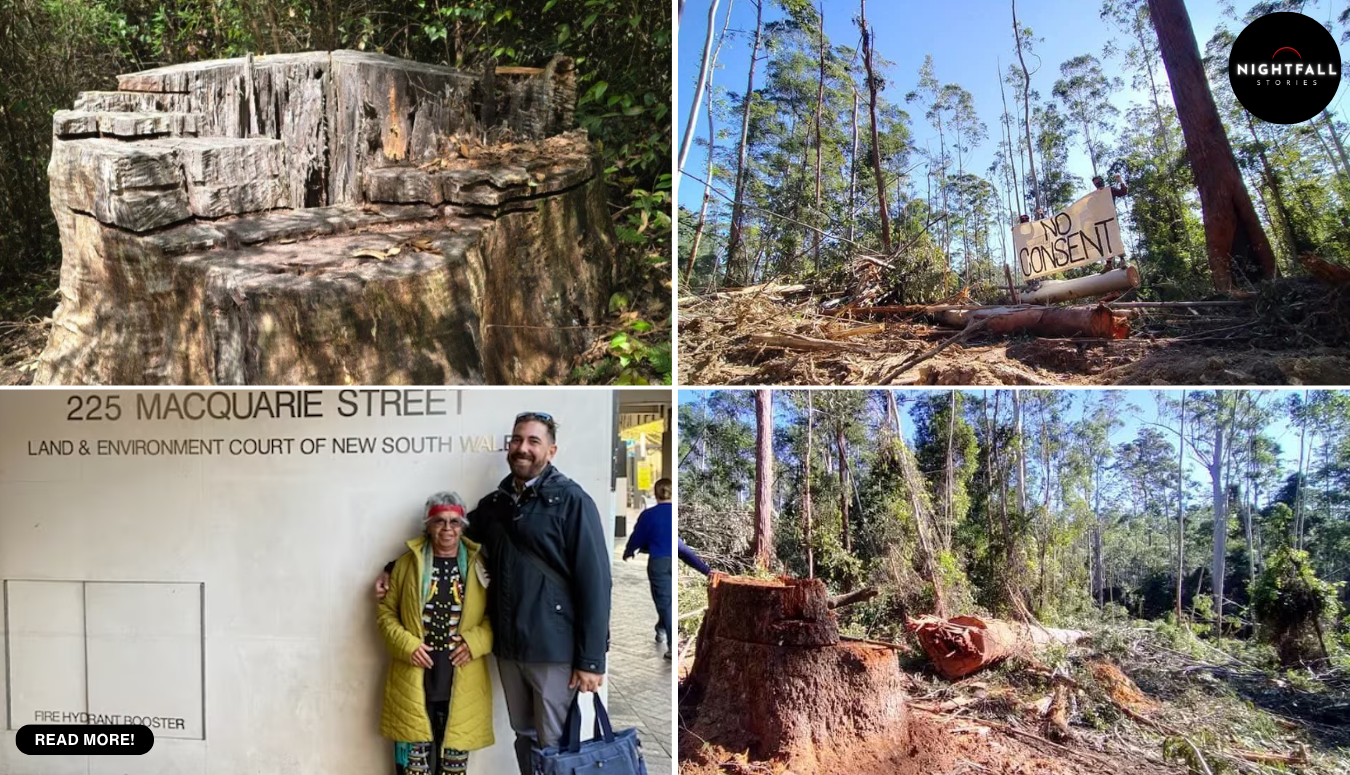
    Six of the trees were more than 140 centimetres across the trunk, which in New South Wales is the measurement that makes a tree legally untouchable. Three more were hollow bearing, the kind of old timber that gliders and owls live inside because nothing younger has holes big enough. Conservationists put their ages at between 300 and 500 years. All nine came down in the middle of 2020, in Wild Cattle Creek State Forest inland from Coffs Harbour, felled by crews working for the Forestry Corporation of New South Wales, a company owned by the state itself.

    What happened six years later is the part worth sitting with. In March of this year the Land and Environment Court convicted the Forestry Corporation of four offences and ordered it to pay 450,000 Australian dollars, roughly 312,000 US dollars at current rates. The money does not go to the court. It does not go into the state’s general revenue, which is where a fine normally lands and where it stops being traceable. It goes directly to the Yurruungga Aboriginal Corporation, a Gumbaynggirr organisation based in Bellingen, with a list of things it has to be spent on.

    That is a different shape of penalty, and the people involved have been careful about saying exactly how different.

    Start with how a state agency ends up cutting inside its own exclusion rules, because it is less dramatic than it sounds and more worrying. Under the approval that governs coastal forestry operations in the region, a tree over 140 centimetres in diameter has to be left standing. There are two species exempt from that rule, blackbutt and alpine ash. Everything else over the threshold stays. The rule is simple. Measuring is where it falls apart.

    The judgment found that in late 2019 an officer from the state Environment Protection Authority sat in on Forestry Corporation training that contained incorrect guidance on how to measure a giant tree. The next year, crews in Wild Cattle Creek used that incorrect method to decide which trees were protected, and nine trees that should have been flagged and left were not. Tony Chappel, the chief executive of the Environment Protection Authority, acknowledged afterwards that the offence may well have been avoided if his own officer had spotted the error and said something at the time.

    So the chain was not a rogue contractor. It was a training document, a classroom, a regulator in the room who did not catch it, and then a work crew with a tape measure applying the rules as they had been taught. Nobody set out to take a 400 year old tree. The system simply did not have a step in it where someone checked.

    It is also worth being precise about what was standing there, because nine trees is not nine units of timber. The area sits inside the footprint of the proposed Great Koala National Park, around 315,000 hectares of forest on the mid north coast. The hollow bearing trees were habitat for hollow dependent species including the greater glider. A tree that has been alive for four or five centuries is the only thing in a forest that offers a cavity of a certain size, and nothing growing now will offer one for another two hundred years. You cannot plant your way out of that gap.

    Measuring a standing tree sounds trivial and is not. Diameter rules are written as a measurement at a set height above the ground, which means the person holding the tape has to agree with the rulebook about where the ground is. On a slope, on a buttressed trunk, on a tree with a swelling or a burl at chest height, two honest people with the same tape get different numbers. That is precisely the kind of detail a training document is supposed to settle, and precisely the kind of detail that, settled wrongly, propagates into every tree a crew looks at for the next season.

    For the Gumbaynggirr people, whose country runs from the Nambucca River to the Clarence River and from the Great Dividing Range to the sea, the trees were doing other work as well. In evidence before the court they were described as habitat for totem species, as ancestral connection points, and as navigation markers, the landmarks that tell you where you are in a forest that otherwise looks the same in every direction. Remove the markers and you have not only lost nine trees. You have made a piece of country harder to read.

    Dean Kelly, of the Budaabang clan and chief executive of Yurruungga, gave evidence about going out to look at the stumps and the distress that caused him. His organisation is not a legal shell set up for the case. It manages the Bellinger Valley Indigenous Protected Area, runs cultural burning and restoration work, and delivers ceremonies and community programs out of an office on a main street in Bellingen.

    Dr Chels Marshall, a traditional owner, knowledge holder and cultural ecologist, put the loss to the court as death by a thousand cuts, the point being that no single felling ever looks like the one that matters. What goes with each of them is intergenerational knowledge, the things you can only teach someone while standing in front of the thing itself.

    There is a timing problem built into all of this that no penalty can fix. A hollow large enough for a greater glider does not form because a tree is big. It forms because a tree has been alive long enough to be injured, to rot in places, to lose limbs and heal badly. That process takes well over a century, and in many eucalypt forests considerably more. Which means the replacement for a 400 year old hollow bearing tree is not a sapling. It is time, measured in multiple human lifetimes, and the only way to have one in two hundred years is to be protecting a middle aged tree today.

    The six years between the chainsaws and the sentence were not empty. There was an unusual procedural fight along the way. In 2024 Justice Nicola Pain allowed the Bellingen Environment Centre to take part in the sentencing hearings as amicus curiae, a friend of the court, so that it could make submissions on how serious the offence was and convey community anger about it. That decision was itself written up in a law journal, where the author argued that framing the arrangement as restorative justice was a stretch, since restorative justice is supposed to rest on an offender choosing to take part rather than being made to sit through submissions by a third party.

    That critique matters for how we read what happened next, because it is the difference between a label and a mechanism. In April of last year there was an actual restorative justice conference, with Gumbaynggirr elders and Yurruungga on one side and the Forestry Corporation on the other. The Forestry Corporation took part. Out of that came the list of things the community said would help, and that list is what the court later turned into orders.

    So here is what is genuinely new, stated carefully rather than asserted. Restorative justice is not a novelty in Australian environmental law. New South Wales courts have run conferences in environmental prosecutions before, and the sentencing provisions that let a court order an offender to fund environmental work rather than simply pay a fine have existed for years. What had not happened before is this: the Forestry Corporation, an organisation with 14 prior criminal convictions behind it, had never been through a restorative justice process at all, and had never been ordered to make financial restitution specifically for cultural harm. The harm being compensated is not timber value and not ecological damage measured in hectares. It is the damage to a people’s relationship with a place, and the court priced it and assigned the payment to the people who hold that relationship.

    The structural difference is in where the money sits afterwards. A fine goes to consolidated revenue. It is a real penalty, it hurts the balance sheet, and it also disappears. Nothing connects the dollars to the forest they came from. Dean Kelly made exactly that point after the judgment, noting that penalties in cases like this had rarely returned to country, and rarely to the people carrying the loss. A payment to a community body with a defined worklist is traceable. You can go and look at whether the work happened.

    The worklist is specific. The money funds a healing ceremony. It funds repair plans for the sites where the trees stood and ecological assessments to go with them. It funds cultural mapping of the area. It funds a Gumbaynggirr forestry working group, and it funds training local rangers as Gumbaynggirr Guardians. It also covers the unglamorous costs that community work actually runs on, transport, venues and catering, which are the line items that quietly kill projects funded on paper.

    The court ordered more than money. The Forestry Corporation has to engage in genuine and meaningful consultation with Gumbaynggirr people about future harvesting in the area. It has to hire an independent consultant to audit its resourcing, its training, its procedures and its policies for identifying and retaining giant and hollow bearing trees, which goes straight back to the 2019 classroom. And it has to publish notice of the offences and the sentence in national, state, local and industry publications, which is a penalty of a different kind for an organisation that would rather this were a technical matter.

    Three days after the judgment the Forestry Corporation issued a statement. Its chief executive, Anshul Chaudhary, apologised for removing nine trees that were required to be protected and said the organisation had taken significant steps to stop it happening again. The statement lists them. Thirty six additional trees have been permanently protected on expert ecological advice, a replacement ratio of four to one. Twelve nest boxes have gone in. More than 400 hollow bearing trees already identified in the operational area have been retained. Standard operating procedures and staff training have been reviewed and rewritten so the rules are communicated clearly. The harvested area, the statement notes, has regenerated.

    How much is an apology worth next to a court order? Some of it is worth quite a lot, in the sense that nest boxes and 36 protected trees are physical objects in a forest and will be there whether anyone is watching or not. But the timing tells you something too. The apology came after six years of litigation, after a conviction on four counts, and after the court had already decided where the money was going. Richard Kelly, a Gumbaynggirr elder and Dean Kelly’s uncle, had been arguing for years that compensation paid to community should replace fines in cases of cultural damage. He was making that argument long before a court made it an order.

    There is a bill attached to all of this that nobody set out to run up. The Nature Conservation Council of New South Wales put the total cost to taxpayers at more than 1.18 million Australian dollars, around 817,000 US dollars, once legal fees, the audit, the publication orders and the restorative justice process itself are added to the 450,000. And this was not the first time. In 2022 the same organisation paid 285,600 Australian dollars, close to 198,000 US dollars, in fines and costs for logging in a koala high use area and rainforest in the same forest.

    The question everyone involved is now circling is whether this becomes a template. Jonathon Captain Webb, First Nations director at the Environmental Defenders Office, called the decision significant and rare and said it was one of the first times restorative justice had been applied in an environmental context, with the court effectively accepting that a fine was not the most appropriate way to deliver justice. Dr John Corkill, a member of the Bellingen Environment Centre who appeared in the case, was blunter about where it leads, warning that the Forestry Corporation has a long history of breaking the law and predicting further claims from First Nations groups now that one has succeeded.

    Whether that happens depends on things no single judgment controls. Another group would need a corporation capable of receiving and spending the money, evidence of cultural harm specific enough for a court to price, and an offender willing to sit in a room. Yurruungga had all three. Most of the hard work in this case was done years before the hearing, by people building an organisation that could stand up in court and say what had been lost.

    It also helps that Yurruungga was not starting from nothing on the practical side. An organisation that already manages an Indigenous Protected Area, runs cultural burns and employs people to be out on country has the one thing a court order cannot create, which is the ability to actually do the work. Money arriving at a body with no field capacity would have funded consultants. Money arriving here funds rangers who were already walking the same ground.

    Which brings it back to the mapping, because that is the part of the list that outlasts the payment. A healing ceremony happens once. A repair plan runs its course. A cultural map is a record of what is standing in a particular patch of forest and what it means, written down before anyone arrives with a measuring tape and a work order. It is the step the system did not have in 2019. If it exists next time, a crew cannot mismeasure a tree nobody told them about, because somebody will already have told them.

    Nine trees that stood for five centuries came down because of a mistake in a training document. The money is going to pay for the thing that would have prevented it.

  • A private spacecraft flew up to catch a falling NASA telescope and got within nine miles of it. What stopped it was a valve and a switch

    A private spacecraft flew up to catch a falling NASA telescope and got within nine miles of it. What stopped it was a valve and a switch

    A spacecraft the size of a large refrigerator, carrying three robotic arms and about 60 kilograms of xenon, got to within roughly 12 to 15 kilometres of its target. That is between about seven and a half and nine miles, which in orbital terms is close enough to see your destination and not nearly close enough to touch it. It needed to close that gap, reach out, grab a twenty two year old NASA observatory by a pair of handling flanges never designed to be gripped in space, and shove it back up into a higher orbit.

    It never got there. A reaction control valve stopped responding, the spacecraft began to spin, and a power circuit switch failure finished the job. The rescue vehicle, called LINK, built by a company called Katalyst Space under a NASA contract worth around 30 million dollars, was deliberately brought down into the atmosphere and destroyed in late September. Its target, the Neil Gehrels Swift Observatory, is still up there, still working, and still falling.

    Kieran Wilson, who was LINK’s principal investigator, listed the failures himself rather than waiting for anyone else to do it, and said flatly that they came very, very close. He also noted, with the kind of gallows accuracy engineers reach for, that he remained principal investigator for another twenty four hours or so until the thing reentered.

    This story is easy to write badly in two opposite directions. One version is the debacle: 30 million dollars of public money burned up over the Pacific, nothing to show for it. The other is the noble try: brave people reaching for something hard and failing beautifully. Both are lazy, and both skip the part that is actually useful, which is what specifically broke, what that tells anybody who wants to service a satellite that was never built to be serviced, and what now happens to a working telescope that nobody can reach.

    Start with why Swift was worth 30 million dollars of rescue attempt. It launched in November 2004 on a Delta II from Florida, into an orbit with a perigee of about 585 kilometres and an apogee of about 604. Its job was gamma ray bursts, which are the brightest explosions in the universe and, before Swift, were among the most frustrating objects in astronomy. A burst lasts seconds. By the time anyone could point a telescope at roughly the right patch of sky, the thing was gone and the position was vague.

    Swift’s whole design was about collapsing that delay. It detects a burst, works out where it came from, and then slews itself around to put its X ray and ultraviolet and optical instruments on the fading afterglow, fast, while the afterglow still exists. That turned gamma ray bursts from flashes into objects with addresses. It is the reason astronomers can now tie individual bursts to individual galaxies, to supernovae, to the collisions of dense stellar remnants. Swift cost around 500 million dollars to build and launch. Twenty two years later it still works.

    That matters beyond gamma ray bursts, because a telescope that can swing onto a target within minutes turns out to be useful for almost anything that changes fast. Swift has spent two decades being the instrument other astronomers call when something flares, erupts, explodes or simply does something unexpected, including following up the sudden events that other observatories and detectors flag. A fast, nimble, well calibrated X ray and ultraviolet observatory is a general purpose tool, and there is not a queue of replacements waiting.

    What is killing it is not a broken component. It is air.

    Low Earth orbit is not empty. There is a thin residual atmosphere up there, and it pushes back. How hard it pushes depends on the Sun. When solar activity rises, the upper atmosphere absorbs more energy, heats up and expands outward, so a satellite at a fixed altitude suddenly finds itself ploughing through thicker air than it was built for. Drag increases. The orbit decays faster. The models that planned Swift’s lifetime in the early 2000s assumed a certain amount of this, and the actual solar cycle around the 2024 maximum delivered more.

    The numbers tell it plainly. Swift started at roughly 600 kilometres. By 2026 its orbit had come down to a perigee of about 373 kilometres and an apogee of about 378. Without a boost, the assessment ahead of the rescue mission gave it a ninety percent chance of reentering before the end of 2026.

    Here is the part that makes the whole situation faintly absurd. Swift has no propulsion of its own to raise its orbit. It has no refuelling port, no docking fixture, no grapple fitting, nothing. This is not an oversight by the people who built it. In 2004, nobody designed science satellites to be serviced, because there was no way to service them. Hubble was the exception and Hubble got a space shuttle. For everything else the plan was simple: it works until it does not, then it falls down. An entire generation of still-functioning hardware is in orbit under that assumption.

    That assumption is now a growing problem rather than a historical quirk. The same solar conditions dragging Swift down are dragging on everything else in low orbit, and a good deal of what is up there is ageing hardware that still works, still produces data, and has no way to raise itself. Shawn Domagal-Goldman, who directs NASA’s astrophysics division, made the affordability case directly: pushing an existing observatory back up is a fraction of the cost of replacing it. The catch is that nobody has yet demonstrated that it can be done to a spacecraft built before anyone thought to leave a handle on it.

    So NASA tried something it had not tried before. In September 2025 it awarded Katalyst Space Technologies a contract, reported at around 30 million dollars, under a small business programme mechanism, to build and fly a spacecraft that could go up and physically push Swift higher. For scale, that figure is roughly six percent of what Swift itself cost. It is a fraction of what building a replacement would run. On those economics the attempt was worth making even at substantial risk of failure, and the people who approved it were explicit that they understood they were accepting a large risk.

    LINK was built fast. It weighed about 425 kilograms, carried 60 kilograms of xenon propellant, three Hall effect thrusters for the slow efficient orbital work and a set of reaction control thrusters for attitude. Its business end was three parallel robotic arms, each with its own lidar sensor and grippers, in an arrangement described as a split Stewart platform. The plan was to use all three for control, though the design could in principle have captured with one.

    The capture plan itself is the most interesting piece of engineering in the story. Since Swift has nothing built for grabbing, the team went looking for something on the spacecraft strong enough to take the load, and settled on the ground handling flanges on the satellite bus, which are the fittings technicians use to move the spacecraft around on Earth. LINK was supposed to approach, inspect visually and with lidar from a few tens of metres out, check that the flanges were not obstructed by degraded multi layer insulation or anything else twenty two years in orbit might have done to the surface, and only then make contact. The whole docking sequence was rehearsed on an air bearing table on the ground using a mock up of Swift.

    LINK launched on 3 July 2026, at 08:36 UTC, from Kwajalein Atoll in the Pacific, on a Pegasus XL rocket dropped from the Stargazer carrier aircraft at around 39,000 feet. It took three weather scrubs and a technical delay to get off. It was the last planned flight of the Pegasus, a vehicle chosen because, as Katalyst’s chief executive Ghonhee Lee put it, it was the only rocket that could hit the orbit, the schedule and the budget at once. Katalyst got a discount on a rocket originally built for a customer who never flew it.

    The launch worked. Separation was confirmed. Then things began to come apart in stages, and the sequence matters more than the headline.

    About a week into the mission there was a failure of a reaction wheel switch on the power side. Reaction wheels are how a spacecraft points itself without spending propellant: spin a flywheel one way, the spacecraft turns the other. Lose them and you are down to thrusters, which burn a finite resource.

    By 25 July, LINK had lost attitude control and was tumbling. Investigation found two of its three reaction wheels inoperable and the cold gas thruster system degraded, most likely the result of a temperature spike during an automatic bus reset. The spacecraft was spinning at about nine degrees per second. Over the following weeks the team wrestled that down to about 1.47 degrees per second by 5 August, which is genuinely impressive recovery work on a vehicle that had lost most of its pointing hardware.

    Wilson’s account of the end of the capture attempt names an unresponsive reaction control system valve as the start of the chain that spun the spacecraft up, followed by another power circuit switch failure, and it was that combination that ended any possibility of rendezvous and capture. On 19 August, Katalyst gave up on the boost and reframed the mission around rendezvous and proximity operations instead: get close, look at Swift, gather the data, do not attempt contact. The root cause of the original spin was never definitively pinned down.

    That is what took it to within 12 to 15 kilometres and no closer.

    And this is where the useful part lives, because a failed capture that got that far is not the same as a vehicle that died on the pad. All three electric thrusters fired. The spacecraft changed its orbit as planned. All three robotic arms deployed correctly. LINK photographed its own solar panel in orbit in late August. The propulsion worked, the arms worked, the orbital mechanics worked. What failed was attitude control, twice, through a valve and through power switching.

    If you are in the business of servicing satellites, that is a more specific and more valuable result than a general lesson about risk. It says the hard part of grabbing an uncooperative spacecraft may not be the grabbing. It says single point failures in valves and power switching can take out a mission whose headline technology performed. It says a vehicle built on a tight schedule with a modest budget can get within sight of a target it was never certain to reach, which is an argument for trying again rather than against it.

    John Von Eepoel, deputy project manager at NASA Goddard on the boost mission, described an organisation that had decided to accept a large risk deliberately, top to bottom, and said the question internally was never whether to do it but how. That is an unusual thing for a space agency to say out loud, and the fact that it was said after the failure rather than before it is the part worth noting.

    What happens to Swift now is the piece that has to be stated carefully, because it has not happened yet.

    Swift is still observing. Two of its instruments, the X ray telescope and the ultraviolet and optical telescope, were switched back on in late August 2026 after having been configured for the boost attempt, and the observatory went back to work. Jamie Kennea, who led Swift’s science operations from Penn State University and has since moved to Schmidt Sciences, coordinated reorienting the spacecraft to present the smallest possible cross section to the oncoming air and slow its fall. Brad Cenko remains the mission’s principal investigator.

    So the telescope is doing science on the way down. It is pointed to minimise drag and still returning data, and nothing about the LINK failure broke anything on board Swift.

    The reentry itself is a forecast, not an event. The pre mission assessment put Swift’s chance of coming down before the end of 2026 at ninety percent, and the reporting after LINK’s loss expects it within months. That is a projection built on atmospheric density models and solar behaviour, both of which have already proved harder to predict than the original planners assumed. Nobody has announced a date. An uncontrolled reentry of a spacecraft this size is expected to break up in the atmosphere. When it actually happens, and precisely where, is not knowable now.

    What is knowable is the shape of the thing. A telescope that changed how a whole class of cosmic explosion is studied is falling because the Sun was busier than the models said. A rescue was attempted for about six percent of the telescope’s original cost, using a rocket on its final flight and a spacecraft with arms designed to grip fittings meant for a loading dock. It got within nine miles. A valve and a switch stopped it, and the people responsible named both without being asked.

    Swift will keep taking data until the air gets too thick to point in. That is a strange and slightly undignified way for a great instrument to finish, and it is also, on the evidence, exactly how the people operating it intend to spend what is left: working the whole way down.

  • A chemical trace of chocolate turned up in Georgia pottery nine years ago. The problem was a native shrub, and it took ancient DNA to get past it

    A chemical trace of chocolate turned up in Georgia pottery nine years ago. The problem was a native shrub, and it took ancient DNA to get past it

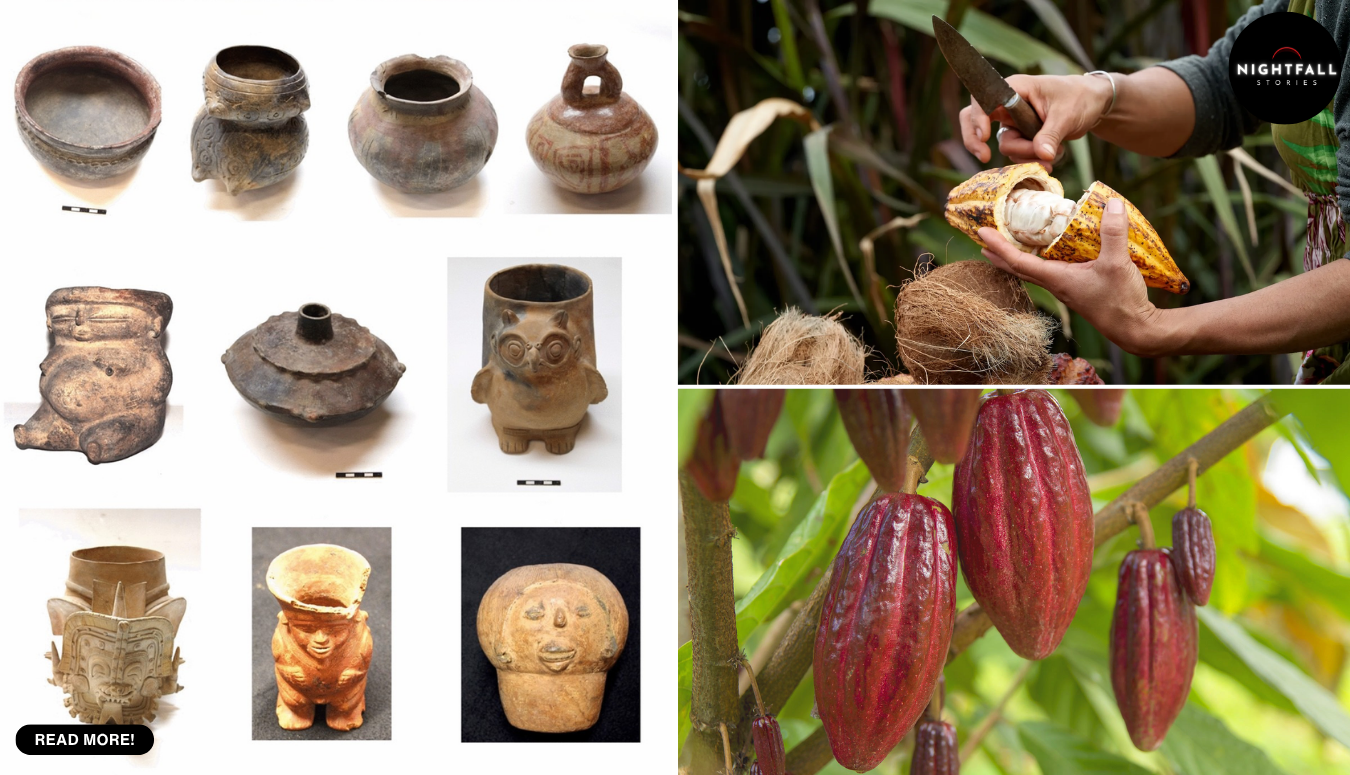
    Nine years ago, a team led by the archaeologist Adam King ran thirty one broken pieces of pottery from the Etowah site in Georgia through a chemistry lab and found something that should not have been there. The sherds, soaked for centuries in whatever had been cooked or brewed in them, gave up traces of a family of compounds called methylxanthines. Four of them were being looked for: theobromine, theophylline, caffeine and paraxanthine. Almost half the samples held at least two. Three samples held all four.

    That combination is the chemical signature of cacao. And cacao does not grow anywhere near Georgia. It does not grow anywhere in North America above Mexico. The nearest wild and cultivated populations were thousands of miles away, across terrain and water, in Mesoamerica and ultimately in the upper Amazon.

    So the obvious conclusion sat there, and the team could not take it, because of a shrub.

    Yaupon holly grows all over the southeastern coastal plain. It is a scrubby evergreen with red berries, and its leaves are caffeinated. Southeastern peoples brewed them for centuries into a strong, dark, ceremonial drink that Europeans later recorded under the name black drink. The trouble is that yaupon leaves contain more than caffeine. They carry the same methylxanthines, in combinations that overlap with cacao closely enough that an absorbed residue from one cannot be reliably told apart from an absorbed residue from the other.

    That is the whole problem in one sentence, and it is a hard one. A residue test tells you what class of chemistry passed through a pot. It cannot tell you which plant the chemistry came out of when two candidate plants share it, and one of those candidates was growing within walking distance. King’s own 2017 paper said so. The honest conclusion was that it was not possible to distinguish residues created by cacao consumption from residues created by yaupon holly.

    Earlier this year, a paper in PLOS ONE closed the gap, and it did it with genetics rather than chemistry. The answer came out of two sherds.

    Before the method, the place, because Etowah is not a minor site and this is not a story about a curiosity in a drawer. Etowah sits on the river of the same name in northwestern Georgia, a walled town of mounds and a plaza built and occupied in stages across several centuries. At its height it was one of the largest and most important centres of the Mississippian world, the network of mound-building societies that stretched across the river valleys of the North American interior. Its great mound rises steeply above the floodplain. Its burials produced some of the most remarkable Mississippian art known, including copper plates and marble human figures. Adam King, at the University of South Carolina, has spent much of his working life on it and is the archaeologist most closely identified with the site.

    The sherds in question, though, do not come from the famous period. They come from eleventh and twelfth century contexts, which is more than two hundred years before Etowah’s fourteenth century peak. That matters more than it first appears. This is not cacao arriving at a mature capital at the top of its power. It is cacao present early, while the town was still becoming the thing it became.

    Now the method. Ancient DNA recovered from the wall of a cooking vessel is not DNA in the sense most people picture. It is wreckage. The paper’s own supplementary data show it: read length distributions that pile up at the short end, and clear evidence of heavy fragmentation. The molecules survive in pieces measured in tens of base pairs, scattered among the overwhelming genetic noise of every microbe, root, insect and human hand that has touched that sherd in nine hundred years and in the decades since it came out of the ground.

    Finding cacao in that mess is a filtering problem, not a reading problem. The sequences are mapped against the Theobroma cacao genome, and anything that matches is then checked to see whether it matches cacao specifically rather than matching cacao because it would match almost any plant. Most of it fails that second test. What survives is a small handful of short sequences that are diagnostic of cacao and of nothing else available.

    Contamination is the permanent anxiety in this kind of work, and it cuts both ways. A single speck of modern plant material, a laboratory that has handled cacao before, a reagent batch, a glove, and you can manufacture a positive out of nothing. The defences are mostly procedural and mostly boring: clean-room handling, dedicated equipment, blanks run alongside the samples so that anything appearing in an empty tube can be subtracted, and a hard look at whether the damage pattern in the recovered molecules actually looks ancient. That last check is the useful one, because genuinely old DNA has a characteristic shape. It is short, and it is chewed. Modern contaminant DNA arrives long and intact, and in a dataset where almost everything is forty or fifty base pairs long, a clean full-length read is a red flag rather than a prize.

    The team, with the ancient DNA work done by Claire Lanaud and colleagues at CIRAD in Montpellier and at a palaeogenetics laboratory in Paris, did something in this paper that deserves more attention than the headline result. They set a numerical threshold before reporting, and they published it: at least five unique cacao-specific sequences in a sample before they would accept the plant was present.

    Three sherds went in. Sample 3 returned twelve unique cacao-specific sequences. Sample 25 returned eighteen. Sample 2 returned four.

    Four is not zero. Four is one short. And the paper reports it as a failure anyway and does not argue with its own rule.

    That is the part of this that makes the rest believable. A team that wanted a result could have found a reason why four was good enough, or quietly dropped the third sample from the write-up, and almost nobody outside the field would ever have known. Publishing the near miss is what converts a claim into evidence. It also tells you something useful about preservation: three sherds from the same site, all three positive for all four alkaloids back in 2017, and only two of them still holding recoverable cacao DNA. Survival is patchy at this depth of time, and a negative result from a single sherd means very little on its own.

    The threshold was not invented for tidiness. It exists because of a fight.

    In 2009, researchers reported cacao residues in cylinder jars from Pueblo Bonito at Chaco Canyon, in what is now New Mexico, from a period running roughly from the mid eleventh to the mid fourteenth century. The implication was the same as here: a Mesoamerican plant consumed deep inside what is now the United States, which means something was moving a very long way. The finding was influential and it was also contested, hard, for years, and on exactly the ground that tripped up the Georgia chemistry. If other caffeinated plants in the region can produce overlapping residue signatures, then a methylxanthine profile is suggestive rather than decisive. The argument has never been fully settled to everyone’s satisfaction.

    That history is the reason the Etowah paper reads the way it does. Having watched a residue claim get argued over for more than a decade, the authors did not simply assert a genetic match. They defined in advance what would count as one, applied it, and reported the sample that fell short. Cacao in North America north of Mexico is not a settled subject, and this paper is better understood as the first case where the identification itself is hard to argue with, rather than as a vindication of everything that came before it.

    So what moved? This is where the paper is noticeably more careful than the excitement around it, and the care is worth repeating accurately.

    The authors looked at how the recovered ancient sequences relate to the genetic groups of modern cacao and its wild relatives, using a standard measure of genetic distance. The two samples did not point the same way. Sample 3 came out closest to the Amelonado group, with the Marañón group next. Sample 25 came out closest to the Curaray group, with Marañón next. Those groups have their origins in South America, in and around the upper Amazon, which is where cacao’s deepest genetic diversity sits.

    The paper then does the thing a careful paper does and undercuts its own most exciting number. These ancestry results are described as preliminary and needing confirmation, because they rest on very few usable single nucleotide positions. With a handful of short fragments, the nearest match on a distance table is a hint about where to look next, not a shipping manifest.

    On the bigger question, the authors are explicit in a way that is easy to lose in retelling. They offer it as a possibility that the cacao reached Etowah from parts of Central America, which are closer to Georgia than Ecuador is, by way of networks that carried objects and people and ideas. And they state that for now, neither direct connections to Mexico nor direct connections to the American Southwest are supported by the archaeological evidence.

    Read that twice, because it is the honest version. What the DNA establishes is that cacao was consumed at Etowah. What it does not establish is a route, a trading partner, a direction or a mechanism. Something that originated thousands of miles to the south ended up in a pot in northwestern Georgia in the eleventh or twelfth century. The hands it passed through on the way are not in the data. It could have travelled as beans through many short exchanges, each one between neighbours who had no idea of the whole chain. It could have moved as a rare, high-value substance along routes archaeologists have not yet identified. Nobody has the middle of the story.

    None of which should make long-distance movement sound exotic for this part of the world, because the Mississippian record already contains plenty of it. Etowah’s own material includes copper worked into ceremonial plates and large quantities of marine shell, neither of which occurs locally, and both of which had to travel hundreds of miles before anyone at Etowah touched them. Mica, galena and particular stones for tools moved similarly. Long-distance exchange of valuable, portable, ceremonially loaded material is a documented feature of these societies rather than a surprise this paper invents. What is new is the distance and the direction. Copper from the Great Lakes region and shell from the coast are long hauls inside a continent. Cacao is an order of magnitude further, and it points south past every network archaeologists have mapped.

    It is also worth being clear about what cacao meant, since the modern word chocolate imports the wrong associations. Cacao in this period, everywhere it appears, is a prepared drink and a prestige good. It is bitter, often frothed, often spiced, and it belongs to ceremony, hospitality and status rather than to anything like dessert. If cacao was being drunk at Etowah, the likeliest setting is the same kind of setting the mounds and the plaza were built for. The paper’s framing of feasting fits the architecture, and that is an inference about context rather than a chemical result, which is how it should be read.

    Which puts the whole thing on a nine year arc that is more instructive than a simple before and after. In 2017 the chemistry found a signal and the team told the truth about its limits, which cost them the headline and left the question open. Terry Powis of Kennesaw State University, whose specialism is exactly this absorbed residue chemistry, had been doing the kind of work that made the signal findable in the first place. Nilesh Gaikwad, whose laboratory in California handled the alkaloid analysis, operates as a commercial outfit, Gaikwad Steroidomics, and that is listed openly as his affiliation on the new paper, which declares no competing interests. The gap between the two results was not laziness. It was a wait for a method capable of answering a question chemistry had been asked to answer and could not.

    What the DNA added was not confidence. It was specificity. Alkaloids told the team that something caffeinated had been in those pots and narrowed the candidates to two. Genetics named the plant. That distinction is small to describe and enormous in practice, because it is the difference between a finding that can be argued away by pointing at a shrub and a finding that cannot.

    And the caution at the end of it is real. Two sherds is two sherds. From one site, from one set of eleventh and twelfth century contexts, with a third sherd from the same batch that did not clear the bar. This is a foothold, not a map. It establishes that cacao reached Etowah; it does not establish how often, how widely across the Mississippian Southeast, or for how long. The next move is more sherds from more sites, and the method now exists to test them.

    Etowah is a state historic site today, and the mounds are still there above the river, walkable, mown, quiet. The town they belonged to is ancestral to living nations, among them the Muscogee and the Cherokee, and the objects that make findings like this possible came out of ground that holds their ancestors. That is worth saying as part of the story rather than as a footnote to it.

    What changed this year is modest and it is solid. For nine years the record said that people at Etowah had been drinking something caffeinated and that nobody could prove which plant. Now, from twelve sequences in one sherd and eighteen in another, the record says cacao, in the eleventh or twelfth century, at roughly the same time it was being drunk a continent’s width away at Chaco. Two broken pieces of a cooking pot, and a third that did not quite make it, which is the one that makes the other two worth believing.

  • He spotted the same picture twice in a cancer paper. Getting anyone to act took him ten years, and he says the job still is not finished

    He spotted the same picture twice in a cancer paper. Getting anyone to act took him ten years, and he says the job still is not finished

    In 2016, a biologist at Purdue University sat down with a paper that had been in print for three years and noticed that a picture in it appeared to be doing double duty. The paper was a 2013 study in the Journal of Experimental Medicine about targeting a protein called nucleolin in breast cancer. The problem was in Figure 1, in a small band of data labelled RNU6, the kind of loading control that sits at the bottom of a blot to show that the comparison between samples is fair. David Sanders wrote to the journal about it.

    Earlier this year, the journal retracted the paper. The notice went up on 30 June 2026, ten years and change after that first email. It says the RNU6 data in the original Figure 1, panels E and F, and in the corrected versions published afterwards, were falsified. That is the journal’s own word, and it is not the journal’s own finding: the determination came from an investigation committee at Ohio State University’s College of Medicine, which told the journal in 2021 what it had concluded.

    Sanders’s reaction to the retraction was not triumph. It was closer to exasperation. He has said plainly that the delay was unnecessary, that journals need to take these problems seriously and in good time and then address them properly, and that the notice as published still does not account for everything he identified in the paper. A decade of letters, and the document at the end of it is, in his reading, incomplete.

    That is an unsatisfying ending, and it is the true one, so it is worth walking the whole chain to see where the years actually went.

    Start with what Sanders does, because it is less glamorous than the word sleuth suggests. He is an associate professor of biological sciences at Purdue, and his day job is molecular virology: how viruses get into cells, and how that machinery can be borrowed for gene therapy. The image work happens around the edges of that. It consists of looking at figures. Not at the data behind them, which an outside reader almost never has, but at the pictures themselves, until something stops being two things and resolves into one. A smear of background noise in one panel reappears in a panel that is supposed to show a different experiment. A band has the same ragged top edge as a band from another gel. A region of grey has been flipped, or stretched, or shifted a few pixels.

    It is worth pausing on what RNU6 is, because the location of the problem is the point. RNU6 is a small nuclear RNA that sits at a roughly constant level in cells, which is exactly what makes it useful. Researchers measure it alongside the thing they actually care about, so that if one lane of a blot simply contains more material than another, the comparison can be adjusted for it. The loading control is the ruler. It is the least interesting row of data on the page and almost nobody reads it, which is precisely why a wrong ruler is both easy to miss and capable of changing what every other row appears to say. A reader scanning for the headline result looks at the top of the figure. Someone like Sanders looks at the bottom.

    None of that requires a laboratory. It requires a screen, patience, and a willingness to keep looking after the point where a normal reader would have moved on. It is also, almost always, unpaid. Nobody funds it. No journal commissions it. It is done in evenings and on weekends by people who already have full jobs, and it carries a risk that most unpaid hobbies do not, which is that the person whose figure you are questioning may have a lawyer.

    Sanders knows that part directly. The senior author on the 2013 paper is Carlo Croce, for many years one of the most prominent cancer geneticists at Ohio State. In 2017 a newspaper investigation into Croce’s record quoted Sanders describing problems he had found in that body of work. Croce sued him for defamation. The case did not go Croce’s way. It was dismissed in 2020, and the dismissal was upheld on appeal. In the course of ruling against the lawsuit, a judge noted that Sanders had a knack for detecting image duplication and referred to roughly thirty instances of fabrication or duplication across the papers at issue. Croce was later ordered to pay about a million dollars to the law firm that had represented him in the failed action, a dispute that ran on through the Ohio courts on its own track.

    It is important to be precise here, because this is the point where stories like this usually go wrong. A defamation case that fails is not a verdict on anyone’s science. A university investigation is not a criminal finding. And a retraction, on its own, is not a finding of fraud. Papers are retracted for honest error, for a reagent that turned out to be contaminated, for a cell line that was misidentified, for a statistical approach that collapsed under scrutiny. The only reason the word falsified belongs in this account at all is that the retraction notice itself uses it, and attributes it to the institutional committee that reached that conclusion.

    Now the chain. Sanders writes in 2016. In 2017 the journal publishes a correction. That is step one, and it is worth understanding why a journal reaches for it first, because the sequence repeats across almost every case of this kind.

    A journal has three tools of escalating severity. A correction says the record had an error and here is the fixed version; the findings stand. An expression of concern says something may be wrong, we cannot yet say what, and readers should treat the paper carefully in the meantime. A retraction says the paper should not be relied upon. The incentives all push toward the gentlest option available. A correction is quick, it does not require anyone to make a judgement about intent, it does not need an institution’s cooperation, and it does not invite a legal letter. An expression of concern is a holding position. A retraction is the one that requires someone to decide something.

    So in 2017 the paper got a correction, which replaced the figure. The duplication question had been answered, in the sense that the record now carried a different image. What nobody outside the lab could establish from a screen was where the replacement image had come from.

    That is the structural limit of this kind of work, and it explains more of the ten years than any single person’s inaction. An outside reader can see that two pictures are the same picture. An outside reader cannot see the original gels, the instrument files, the dated notebooks, the folder of raw scans. Only an institution with the power to compel those things can do that, and the institution with that power over this work was Ohio State.

    Ohio State did it. In 2020 its investigation concluded that Flavia Pichiorri, the first author, was responsible for manipulating and reusing images across four publications, spanning her time in Croce’s laboratory and the period after she set up her own group. The university recommended two of the four for retraction and one for correction. Pichiorri has two further retractions on papers co-authored with Croce.

    Then comes the gap that most people find hardest to accept. The university reached its conclusion in 2020. The journal notified the authors in 2021 about the falsified RNU6 data. The expression of concern did not appear until the autumn of 2022. The retraction did not appear until the middle of 2026.

    There is no single villain in that stretch, which is exactly why it is instructive. Institutional misconduct findings are confidential by default and arrive at journals in fragments, often without the underlying evidence attached. Publishers have to satisfy themselves independently rather than simply act on a letter. Authors have a right to respond, and responses take months. And in 2023 the journal’s executive editor told the authors that the plan was not a bare retraction at all, but a retraction paired with a replacement article built on repeat experiments. That is a defensible idea on paper. If the conclusions survive clean repetition, science is better served by a corrected record than by a hole in it. In practice it adds a long, open-ended delay, because it makes the retraction contingent on work that may never be finished.

    It is also an unusual route. Retract and replace exists in the publishing rulebook, but it is reached for rarely, and it was designed for cases where an honest error has corrupted an analysis that can be rerun cleanly. Applying it where an institution has already used the word falsified puts a journal in an awkward position, because it treats the paper as salvageable and unreliable at the same time. Three years later the retraction went out on its own, without a replacement attached.

    Running alongside all of this was litigation. In April 2023 Pichiorri sued the Ohio State Board of Trustees, arguing that the way the university investigated her and disclosed its findings had violated her constitutional right to due process. That challenge ended on 19 December 2025, when the United States Court of Appeals for the Sixth Circuit affirmed a lower court’s dismissal. The court found she had not established the kind of protected interest that would trigger the procedural protections she was claiming, and said neither of the injuries she alleged amounted to an actionable change to a recognisable interest. Six months later, the paper was retracted.

    It should be said that this date matters and is easy to get wrong. The appellate ruling landed in December 2025, not December 2026, which has not happened. It is the sort of digit that slides in a timeline and then gets repeated, and in a story whose whole subject is the care owed to a published record, it would be a poor thing to be careless about.

    Pichiorri’s position deserves to be stated as she states it, not as a shrug toward balance. She disagrees with the retraction. She has said that robust science rests on reproducibility, that forensic examination and repeated experiments support the data in the paper, and that the scientific conclusions of the manuscript have never been scientifically disputed. That last point is narrower than it first sounds, and it is also fair: the dispute in this case has been about the integrity of particular image panels and the loading controls in them, not about whether nucleolin matters in breast cancer. A paper can be retracted over its evidence while the hypothesis it advanced remains perfectly live in other hands. Those are different questions, and conflating them is how the general public ends up believing either that retraction means a result is false, or that it means nothing at all.

    The retraction notice carries one more detail that says a good deal about what a decade does to a paper. The journal tried to notify all the authors and reached out to everyone for whom it could still find contact information. It received no response. The 2013 paper has a long author list. People move institutions, leave research, change fields and change countries. By the time a record is finally put straight, many of the people attached to it have scattered beyond the reach of an email.

    Which brings the thing back to where it started, with one man and a figure panel. The part of this that is genuinely worth arguing about is not whether journals are too slow, a point on which almost everyone agrees and nothing much changes. It is the economics. The error in this paper was found by someone whose employer does not pay him to find errors, using no equipment, in time he could have spent on his own virology. The correction of the record then required a university investigation, a publisher’s legal review, two federal courts and ten years of correspondence. Every expensive part of that machinery was triggered by free labour, and the free labour is the only part with no institutional protection at all. When it goes wrong for a sleuth, it goes wrong in the form of a lawsuit, and the fact that Sanders won his does not make the next person’s cheaper.

    There are small signs of that changing. Publishers now run image-screening software on submissions. Some have integrity teams that did not exist when Sanders sent his first letter. A few funders have begun treating image forensics as a legitimate cost of doing business rather than a nuisance. None of it was in place in 2016, and none of it would have shortened this particular decade, because the hold-ups here were never about detection. Detection took one person one sitting.

    The paper is now marked retracted, for falsified data, ten years after the email that started it. The man who sent that email says the notice still does not cover everything he found, and he may well be right, and there is no mechanism anywhere that will make a journal go back and widen a notice it has already published. That is the ordinary shape of this work. You win, eventually, and the win arrives smaller than it should have been, and the only thing to do with it is open the next paper.

  • A soldier sweeping a Korean hillside for landmines hit something ten centimetres down. It took three years to work out what the 28 characters on it were saying.

    A soldier sweeping a Korean hillside for landmines hit something ten centimetres down. It took three years to work out what the 28 characters on it were saying.

    The object came out of the ground about ten centimetres below the surface, on a ridge on Mount Geumseong in Naju, in the southwest of South Korea. A soldier found it. He was not looking for antiquities. He was working an area that had been flagged as an unverified minefield, sweeping it ahead of plans to build a hiking trail, which is exactly the kind of slow, careful, unglamorous job that has to happen before anyone puts a path through ground nobody has cleared.

    What he turned up was a bronze tube, under a kilogram and a bit, small enough to hold in two hands. It was a weapon, but not the sort he had been sent to find. It was about six centuries older than that.

    The find was in late 2023. The answer took until this September. That gap is the whole story, and it is the part that usually gets flattened when a discovery like this reaches the news, because headlines compress three years of laboratory work into a single morning. What actually happened is that researchers at the Naju National Research Institute of Cultural Heritage spent three years establishing, carefully and with the real possibility of being wrong, that the thing was what it appeared to be. The announcement that it is the oldest gunpowder weapon yet recovered in Korea is the end of that process, not the beginning.

    There is a detail in the circumstances worth pausing on, because chance finds are a different problem from excavations. An archaeologist digging a site controls the sequence. Everything comes up in a recorded order, with the soil around it, and the layers themselves carry information about age. A barrel lifted out of a ridge during a safety sweep arrives with almost none of that. It had been sitting about ten centimetres below the surface, shallow enough that frost, roots, rain and foot traffic had all had access to it for centuries, which is also shallow enough that the whole thing could easily have been broken, dragged or thrown away by someone who took it for scrap. Bronze is forgiving in soil in a way iron is not, and that is most of the reason this object exists to be argued about. It also means the researchers had no stratigraphy to lean on. Everything they could learn, they had to learn from the metal and the writing.

    The object is called a Hwangja Hwatong, which translates roughly as the yellow character hand cannon. A hwatong is a fire tube, a short bronze barrel that used a gunpowder charge to launch an arrow further and harder than a bow could. This one measures 23.75 centimetres, has a bore of 1.66 centimetres, and weighs 1,032 grams. You could carry it in a coat pocket if coats of the period had pockets.

    And cut into it are 28 characters.

    That is why this is a story about people rather than about hardware. Most surviving early weapons are anonymous. You date them by shape, by alloy, by where they were dug up and what was dug up alongside them, and you end with a range and a shrug. This one introduces itself. Twenty seven characters are arranged in six columns on the socket, with a single character on the muzzle, and together they say approximately this: in the twelfth month of a Jeongsa year, the Hwangja Hwatong was made, its weight is one geun and 14 nyang, the supervising official was Noksa An Hyu-bo, and the craftsman was Seok.

    A name. The man who cast it, recorded on the thing he cast, six hundred years ago.

    Seok is the human centre of this, and it is worth sitting with what little we have of him, because it is more than almost anybody at his level of the social order ever gets. He was a foundry worker, a caster of bronze, operating under an official named An Hyu-bo whose title, noksa, places him in the lower working ranks of the state bureaucracy. We do not know Seok’s full name. We do not know where he trained, how old he was, how many of these he made, or whether he was proud of this one. We know he made it in the twelfth month of a particular year, that the state thought it worth recording who he was, and that he hit his weight specification: one geun and 14 nyang, in the units of his day, works out to very close to the 1,032 grams a modern balance reads today. Six centuries later, his number still checks out.

    The inscription also sets up the puzzle that the institute is still working on, and the one place where a lot of the coverage has gone slightly too confident. The date is given as a Jeongsa year, which is a position in a sixty year cycle rather than a number on a line. Jeongsa comes round every sixty years. To pin it, you have to bracket it with other evidence, and the research team did that by looking at the span in which a weapon like this could plausibly exist at all: from the mid fourteenth century, when barrels of this general family first appear in the written record, to the late 1440s, when the firearm system of King Sejong’s reign had been fully worked out and standardised. Inside that window, two Jeongsa years fall: 1377 and 1437.

    Sixty years apart, and they mean genuinely different things.

    If it is 1377, the object sits at the very start of organised state weapons production, in the year a Goryeo military official named Choe Mu-seon is recorded as having set up the first government directorate for gunpowder arms. That would make this not just an early piece but a piece from the founding moment, the output of the first workshop the state ever ran for the purpose.

    If it is 1437, it belongs to a completely different situation: a mature administration in the middle of a serious technical overhaul, a few years before the standardisation of new firearm types, with workshops already experienced and record keeping already tight.

    The team is unusually plain about not knowing. There is not enough comparable material, they say, to settle it. There is one structural hint that leans earlier. The powder chamber is rounded, and it lacks a feature called the gyeokmok, a wooden plug that appears in later barrels of this family. An absent feature is weaker evidence than a present one, but it is consistent with an object from before that refinement existed, which would favour 1377. The institute’s position is that the question is open and that it will keep working on it.

    Getting even that far took the slow part. Authentication of an object like this is largely the business of trying to prove it is a fake and failing. The institute ran metallurgical analysis and imaging, consulted outside experts across eight separate sessions, and examined the inscription, the construction and the alloy against each other. The composition came back as a copper, tin and lead bronze, with the tin content deliberately held under ten percent by weight. That is a real decision rather than an accident of supply. Higher tin gives you a harder, more brittle metal, which is fine for a bell or a mirror and dangerous for a tube that has to contain an explosion directly against a human hand. Keeping tin low trades hardness for ductility, so the barrel flexes rather than shatters. Somebody in that foundry understood that, whether as theory or as the accumulated lesson of barrels that had failed.

    The microscopic work was what closed the door on forgery. The metal carries impurities, traces of sulfur, silicon and silver, left by a smelting and refining process consistent with the period and inconsistent with any modern reproduction. A forger can copy a shape and can even copy a script. Getting the dirt right in the metal, at the level of trace elements left by medieval refining, is a different problem. That is the finding that lets the institute say this is genuinely old rather than merely old looking, and it is why the process took years and not weeks.

    The superlative being claimed needs to be stated precisely, because the compressed version of it is wrong in a way that matters. This is not the oldest Korean firearm anyone has ever seen or heard of. The claim is narrower and harder: it is the earliest surviving gunpowder weapon recovered in Korea with an establishable production year. The previous holder of that position was a piece known as the Cheonja Chongtong, dated to 1555. Which is where the arithmetic in the headlines comes from, and why there are two numbers rather than one. If the Hwangja Hwatong was cast in 1437, it pushes the earliest dated example back by 118 years. If 1377, by 178. Both figures are circulating, and treating either as the settled answer means picking a side in a question the researchers themselves say is open.

    There is a gap this closes, and it is a specific one. The written record in Korea refers to barrel weapons of this family from the middle of the fourteenth century onward. The objects did not match. For a long stretch of that early history there were documents describing a technology and almost nothing you could put on a table, and the earliest surviving pieces with firm dates sat well over a century after the texts begin. That is an uncomfortable place for a field to be, because it leaves the whole first phase of a technology resting on description alone. The Hwangja Hwatong lands inside the gap. Even at the later of its two candidate years it is the first physical object anyone can point to from the period the documents have been describing by themselves.

    Cho Mi-soon, who directs the Naju institute, presented the findings, and the Korea Heritage Service made the announcement. The object is now in Seoul, on show at the National Palace Museum of Korea in a special exhibition that opened in late September and runs until 22 November, displayed alongside the analysis that established what it is: the imaging, the metallurgy, the reading of the inscription.

    It is worth being careful about how a weapon gets talked about. There is a way of writing this story that turns it into a flag waving exercise about technological precedence, and that reading does not survive contact with the object. A hwatong was a battlefield tool for shooting arrows at people, made in a period when the Korean peninsula and its coasts faced raiding and invasion that killed and displaced a great many of them. The interest here is not that it was powerful. It was small, awkward, and probably frightening to use. The interest is administrative and human. It is a state learning to make a new and unstable technology, and leaving, on the object itself, the name of the man who did the physical work.

    That is genuinely unusual, and it reaches past weapons. Inscriptions like this are the thinnest thread connecting named individuals to the actual making of things in a period where the written record overwhelmingly belongs to kings, scholars and generals. The casting artisan of a hand cannon in the fourteenth or fifteenth century is precisely the kind of person who leaves no trace at all. Seok left one, not because anyone thought his life was worth commemorating, but because the state wanted accountability. If a barrel burst, somebody had to be answerable for it. Quality control, six centuries ago, is the reason we have his name.

    There is a thought in that about the people in this story generally. A soldier walking a ridge for mines so that other people can walk the same ridge safely. Heritage staff who took three years to say something they could have guessed in an afternoon. A low ranking official whose job was to put his name next to someone else’s work and vouch for it. And a caster who got the weight right to within a few grams of what his inscription promised. None of them were doing anything a chronicle would record.

    What happens next is that the dating argument gets fought out properly. The institute needs comparative material, which means other barrels of the same family with firmer dates, or documents that name a Hwangja Hwatong specifically, or another object by the same hand. Any of those could land. Until one does, the object sits in a museum case in Seoul as the oldest Korean gunpowder weapon with a production year that can be established, while the year itself stays an argument between 1377 and 1437, with the researchers who studied it the loudest voices saying they do not yet know.

    Which leaves the strangest thing about it. It can tell you who made it, and under whose supervision, and what it weighed, down to the fraction of an old unit. It just cannot tell you when. The one piece of information Seok did not think he needed to spell out, because everybody in the twelfth month of a Jeongsa year knew which Jeongsa year they were living in, is the one that will take the next few years of somebody’s working life to recover.

  • They aimed a laser at a Cyprus temple wall to study the stonework. Forty years of visitors had walked straight past what it found.

    They aimed a laser at a Cyprus temple wall to study the stonework. Forty years of visitors had walked straight past what it found.

    The plan was boring, and that is the point. Three researchers set up a tripod in front of a weathered limestone wall in Larnaca, on the southern coast of Cyprus, and started a terrestrial laser scanner turning. They were there to record the stonework of a Late Bronze Age temple: how the blocks were cut, how they were set, what the builders had done with stone that had been hauled from a quarry on the far side of the bay. Masonry research. Nobody expected to find a fleet.

    When the point cloud came back and they began measuring how far each mark dipped below the plane of the stone face, ships started appearing. Twenty three of them, cut into blocks that had been excavated, photographed, drawn, published and walked past by visitors for about forty years. The carvings had never been covered up or sealed behind anything. They were simply too shallow and too worn for a human eye to separate from the general damage of three thousand years of salt air. A machine that measures millions of points in three dimensions, without touching the surface at all, could tell the difference between a deliberate incision and a scratch.

    That work is now published in the International Journal of Nautical Archaeology, in a thirty four page paper by Graham C. Braun of the University of Cincinnati, Caroline Barnes of the University of British Columbia, and Tzveta V. Manolova, who is based at Ludwig Maximilian University in Munich. Braun and Barnes were the ones recording the architecture. Manolova built the photogrammetric models and the drawings, work connected to a digital documentation project for ancient Mediterranean material. Between them they turned an accident into a catalogue, which is a less glamorous sentence than it sounds and a much more useful one.

    To understand why 23 new carvings matters, you need to know what was already there. The site is Kition Kathari, a temple complex under the modern city of Larnaca, excavated across decades under the Cypriot archaeologist Vassos Karageorghis. In the early 1980s a recording campaign documented 19 ship images on the south face of Temple 1, and those drawings were published in the middle of that decade by Lucien Basch and Michal Artzy. For four decades, those 19 ships were the corpus. They were reproduced in survey books, argued over by specialists in ancient seafaring, and treated as a more or less closed set: a group of carvings, probably made at roughly the same time, probably connected to a single moment or a single ritual.

    The new work does not overturn that earlier campaign. It explains it. The 1980s team worked with raking light, tracing, photography and extremely good eyes, and they found everything that method could find. What they could not do was quantify depth. A carved line on Koronia limestone that has lost a millimetre or two to erosion stops reading as a line and starts reading as noise. The laser scanner does not care how a mark looks. It records where the surface is, and the researchers then asked two questions of every candidate: how far below the surrounding plane does this sit, and at what angle does its edge cut in. Tool marks cut at angles that weathering does not produce. Run that test across an entire wall and the invisible becomes measurable.

    It is worth picturing the actual labour, because it is not glamorous and it is where the discovery came from. Terrestrial laser scanning means a tripod, a levelled instrument, and a decision at every position about what the machine can and cannot see from there. A wall built of large upright slabs has recesses, overhangs and shadow, so one scan is never enough. You move the tripod, you scan again, you leave targets in the scene so the separate clouds can be stitched into one model afterwards, and you do that around a structure in coastal heat until the coverage has no holes in it. Then the real work starts, which happens at a desk, months later, as you query a surface made of millions of points for marks that your eyes already told you were not there. The 23 ships were not spotted. They were computed.

    The team was honest about the limits of that, which is one of the better things about the paper. They did not present 23 equally certain discoveries. They sorted them by confidence: nine they consider high confidence ships, six medium, and eight low. The low confidence group is exactly what it sounds like, marks that behave like carving and may well be carving, offered for other people to argue with rather than banked as fact. Added to the earlier 19, plus two carvings on an altar in a separate building at the site, the documented total at Kition now stands at 43 ship images, 41 of them on Temple 1 and two on the Temple 4 altar.

    That is a doubling of the corpus, and it would be interesting on its own. But the finding that actually changes something is not the count. It is the spread.

    The researchers sorted the vessels into six groups by hull shape, and the groups are not variations on one theme. At the simplest end there are ships reduced almost to a single curved line, the kind of mark anyone could make in a few minutes with a hard point. At the other end there are galleys with a triangular prow, a curved bow device that looks like a horn, and a tall sweeping stern. In between sit flat, symmetrical hulls with tall vertical posts at each end, a form that matches a known type of Levantine merchant ship, and hybrid galleys with asymmetrical hulls and curved ends that do not fit neatly into either the Cypriot or the Levantine tradition. The team found parallels for individual hulls in material from Enkomi and Lapithos on Cyprus, from Akko and the Carmel coast, and from Tell Tweini on the Syrian coast.

    Those traditions did not all exist at once. Some of these hull forms belong to the Late Bronze Age, when Kition was a working harbour town in a Mediterranean tied together by copper, tin, oil and grain. Others belong to the Early Iron Age, after that system came apart. Read the wall as a single composition and it makes no sense. Read it as a wall that people kept coming back to, for something in the order of three centuries, and it does.

    That is the argument, and it has teeth, because the period it spans is one that gets written as an ending. Around 1190 BCE, give or take, the eastern Mediterranean went through the collapse that ended the Late Bronze Age palace states. Cities burned, writing systems fell out of use, trade routes that had run for centuries stopped running. Kition itself was founded around 1300 BCE and went through a major rebuilding phase at roughly the moment of the collapse, which is when the monumental south wall of Temple 1 took the form the scanner recorded. If the ship carvings run from that rebuild forward into the Cypro Geometric period of the Iron Age, then people at this one building were still thinking about ships, still looking at ships, and still cutting ships into a sacred wall straight through the rupture.

    The carvers also seem to have been looking at each other’s work. One of the more quietly striking observations in the paper is that the carvings share conventions across the whole span, most obviously a habit of rendering lines as rows of dots. That shared habit is partly why the wall looks like one composition at first glance. It may not be a single hand or a single generation. It may be hundreds of years of people copying the local way of doing it, the way graffiti on any long lived surface develops a house style.

    There is a detail about the stone that gives this more weight. The south façade of Temple 1 is built of Koronia limestone orthostats, large upright slabs, the biggest of them between 2.4 and 3.1 metres long and about 1.4 metres high. That stone was not local. It was quarried roughly twenty kilometres away, on the other side of Larnaca Bay, and moved. Whoever built this wall chose expensive, imported, visibly special material for the most monumental structure at the site. People then cut ships into it. The researchers take that as evidence the carving was not casual vandalism done in the dark. You do not repeatedly mark the best stone on the most important building unless the marking means something and is tolerated.

    What it meant is the part nobody can scan for. The ships on Temple 1 cluster at around eye level along the south wall, which tells you they were made by adults standing in front of it, not by anyone on scaffolding or stretching, and that they were made to be seen at the height a person naturally looks. The conclusion the team lands on is deliberately modest and more interesting for it. Ships were not an exotic subject for these people. They were ordinary furniture of life, close enough to hand that marking one on a temple wall was a normal thing to do, repeated across generations. There is a version of this story where the carvings become sacred maritime offerings in a grand cult of the sea. The paper does not tell that story, and the evidence does not require it.

    It is worth being clear about what is still soft here, because the strongest part of this research is its willingness to show its own seams. Dating graffiti by style is an argument, not a measurement. There is no carbon in an incision. The three century span rests on matching hull forms to vessel types known from dated material elsewhere, and those matches are judgements made by specialists who can be wrong, or who can be right about one hull and wrong about the next. A yellow sandstone block in the wall, repaired at a later phase, gives one useful anchor, but one anchor is not a chronology. The eight low confidence marks may turn out to be erosion. None of that undoes the finding. It just means the finding is a case, published with its uncertainties labelled, rather than a verdict.

    What the finding changes most directly is an interpretation, and that is a quieter kind of correction than a new object. For forty years the reasonable reading of the Kition ships was that they were a group: a set of images of similar character on one wall, plausibly made in a single phase, plausibly connected to one event or one act of devotion. That reading was reasonable because the visible sample supported it. Double the sample and the picture breaks apart into something less tidy and more alive. Not one moment, but a long habit. Not a composition, but an accumulation. Anyone who has written about Late Bronze Age Cyprus using those 19 ships as a single dated data point now has to decide which of the six groups they were actually talking about.

    It also puts a small piece of evidence on an argument that runs well beyond one wall. The end of the Late Bronze Age in this region is usually told as a severing: the networks that moved copper and tin and oil across the sea stopped, and what followed was a different and poorer world. Specialists have been chipping away at the severity of that story for years, pointing to places where life and trade carried on at a lower volume rather than stopping. A wall where people kept cutting ships through the whole transition, in forms that change as shipbuilding changes, is not proof of continuous seafaring. It is one more reason to doubt that the lights all went out at once, and it comes from a source that is hard to argue with, because nobody carves a kind of ship they have never seen.

    There is also something in this story for every site that has already been dug. Kition was not a lost ruin. It was excavated over decades, published repeatedly, and is open to visitors. The south wall of Temple 1 had been studied by serious people with serious methods, and everything they said about it was true. There was just more on the stone than their instruments could reach. Somewhere between a quarter and a half of archaeology’s working material is sitting in exactly that condition right now: recorded, catalogued, considered finished, and legible to a machine that did not exist when the trench was backfilled. The team at Kition was not even looking for carvings. They were looking at how blocks were cut.

    The carvings themselves have now been published, numbered, drawn and grouped, which is the thing that actually protects them. Koronia limestone on a coastal site is losing a little of itself every year to salt and wind, and the marks that were too faint for the 1980s campaign to see are the ones closest to vanishing. A point cloud is a copy that does not erode. Even if the stone keeps going, the geometry of those 23 ships is now on record at a resolution that lets someone in fifty years re measure them and tell this team it got group four wrong.

    That is a decent place for a discovery to end up: not as a headline about hidden treasure, but as 43 catalogued ships on a wall, sorted by confidence, with a dating argument offered up for attack, and with a human conclusion that is almost ordinary. For centuries, people walked up to the best stone on the most important building in their town and drew the boats they knew. Different boats, different centuries, same wall, same height, same habit of making the lines out of dots. A laser scanner pointed at the stonework found them because it was measuring something else entirely.

  • A church gave its pipe organ away to Norway. Then it saw what the instrument had been standing in front of for over a century

    A church gave its pipe organ away to Norway. Then it saw what the instrument had been standing in front of for over a century

    Earlier this year, in a twelfth century church in the East Yorkshire market town of Beverley, a team began taking a pipe organ apart. It was a four manual instrument with thousands of pipes, the largest of them around 40 feet long, and it filled the north transept wall from floor to roof. Nobody was buying it. The church was giving it away, free, to a parish in Oslo, because the alternative on the table was not restoration. It was scrap.

    Then the last of the pipes came out, and the wall behind them was visible for the first time in well over a hundred years. There were medieval stone carvings on it. There were windows that had been blocked by pipework since before anyone now living was born, which meant daylight came back into a corner of the building that had not had any. There were memorial stones to people nobody had been able to read about for generations. Above, in the newly opened sightline, were roof bosses from the medieval and Tudor periods, part of a set of around 700 painted carvings that runs across the church’s ceilings. And there were stone gargoyles, including a pair flanking a doorway, that had been sitting in the dark behind an organ.

    The first thing to get straight about this story is the clock, because almost every retelling has it wrong. This was not a church that suddenly lost its organ. The organ had already stopped being the church’s instrument two years earlier. A Viscount Regent 361 digital organ was installed at St Mary’s on 5 February 2024 and has been doing the work at services ever since. By the time the pipes came down, they had been silent for a long time. The event of this year was not a loss. It was a removal, and a discovery.

    The reason the instrument lost its job is unglamorous and very common. It had chronic electrical faults in the run between its remote console and the pipes themselves. It would simply stop mid service. The temporary fix, by the account of the firm that replaced it, amounted to switching the thing off and on again. An organist can live with a reluctant stop or a wheezing rank. An organist cannot live with an instrument that goes dead during a hymn, in front of a congregation, with no warning and no way of knowing whether it will come back.

    St Mary’s organist, Michael Ellerington, played it through that period, which is its own kind of endurance. The vicar, the Reverend Becky Lumley, was the one who had to decide what happened next, and the numbers she was handed did not leave much room.

    Harrison and Harrison, one of the most respected organ builders in England, surveyed it. Their conclusion was that repairing or rebuilding it would cost somewhere close to 1.5 million pounds, roughly 1.9 million US dollars, and that little of the existing pipework merited reuse. The diocesan organ advisers agreed with that assessment. That second finding is the one that quietly decides everything. If the pipework had been judged worth saving, a long campaign to raise the money would have been the obvious route, and churches do run those campaigns and sometimes win them. If the pipework is not worth saving, you are not fundraising to rescue a treasure. You are fundraising to build a new instrument inside an old case.

    And the church did not have the money, or anything like it. St Mary’s was carrying an urgent repair backlog above 4 million pounds, around 5 million US dollars, on the building itself. Included in that backlog was the roof of the north transept, which is to say the roof directly above the organ. There was a hole over the instrument. Fixing the roof meant getting the organ out of the way regardless of what anyone wanted to do with it.

    That is the shape of the decision, and it is worth sitting with before anybody reaches for an opinion about heritage. A Grade I listed building founded in the first half of the twelfth century, with 900 years of fabric to keep standing, had a four million pound bill, a leaking transept roof, and an organ that had been declared not worth the one and a half million it would take to make it work.

    The instrument that left Beverley was also not quite the thing it has been described as. One widely shared account called it a hundred year old English organ. The real lineage is messier and more interesting. The church bought an organ in 1792, built by Donaldson of York and set in the rood loft, paid for with 311 pounds raised by voluntary subscription. In 1869 the Hull firm of Forster and Andrews built a new instrument, behind a richly carved oak screen with decorated front pipes. The same firm came back in 1889 to add a detached console and pneumatic action. Then in 1908 Lewis and Co of London rebuilt it completely and discarded the oak case. Between 1954 and 1957 Hall and Broadfield replaced the pneumatic action with an electromagnetic one and converted it from three manuals to four, and the rebuilt organ was dedicated in 1957.

    So what was dismantled this year was a Forster and Andrews foundation of 1869, rebuilt wholesale by a London firm in 1908, rewired and enlarged in the 1950s, with its original case long gone. Describing it as a Forster and Andrews organ is a reasonable shorthand for where it started. Describing it as a hundred year old instrument is not really accurate in either direction. It is the sort of layered object most large parish organs actually are, which is part of why the question of what to preserve is harder than it looks from outside.

    There is a local poignancy in that 1869 date that is easy to miss. Forster and Andrews were a Hull firm, which is about ten miles from Beverley, and in the second half of the nineteenth century they were one of the busiest organ builders in the country, turning out instruments for churches and chapels across Britain and well beyond it. An organ built by them for a church in their own county was a piece of regional industry as much as a piece of church furniture, made by people who could have walked to the building. What the 1908 rebuild and the 1950s rewiring did, between them, was gradually replace that local object with a national one, and then with a modern one, until the only Hull-made thing left in the transept was the layout. That is not an argument against any of those rebuilds, each of which was done to keep the instrument working. It is just worth knowing when you hear the organ described as theirs.

    The other end of the arrangement is a man called Marius Skjolaas, director of music at Trinity Church in Oslo, whose building is in the middle of a major renovation of its own. Oslo wanted pipes. Beverley had pipes it could not afford to keep and could not leave in place. The plan, as reported, is for the Beverley instrument to be combined with recycled parts from decommissioned Norwegian organs and installed in the rebuilt church, which will hold something like 1,200 to 1,300 people and is being set up to work as a concert venue as well as a parish church.

    Here is where honesty about sourcing matters. Essentially all of this rests on one piece of original reporting, a BBC item by Sally Fairfax and Paul Johnson. Everything else in circulation is derived from it. The independent corroboration that exists is thin but real: the organ builder’s own published case study on the digital replacement, which supplies the survey figure, the backlog figure, the names and the February 2024 installation date; a local Hull aggregation of the BBC piece; a short, pointed item on a classical music blog; the church’s own description of its building; and, separately and more usefully, Norwegian coverage of the Oslo renovation. For the discovery behind the organ, there is one account. Anyone telling you this story with more confidence than that is borrowing it.

    The blog item is also where the only real dispute lives. Norman Lebrecht, writing as the pipes came down, told his readers the organ’s space was to be replaced by a coffee shop, and called the whole thing a wretched example of the Church of England neglecting its heritage. The coffee shop claim does not match what the church says. St Mary’s own stated intention for the cleared area is to leave it open and use it to improve access for visitors with mobility difficulties, a new route into the building for people who could not easily get in before. Those are not the same plan, and one of them comes from the parish and the other does not. A Beverley resident turned up in the comments under the blog item to point out that the organ had been out of use for two years and was in poor condition, which is exactly what the documentary record shows.

    The heritage argument underneath the rhetoric is not silly, though. English parish churches are shedding large organs, and when one goes it rarely comes back, because the skills and the money that built them are both scarcer than they were. A report circulated this year warned that church organs across Britain could largely fall silent within fifty years. That is a real trend and Beverley is a data point in it.

    The counter-argument is simply the one the church was actually facing. The choice was not between a restored Victorian organ and a coffee machine. It was between an unplayable instrument blocking a damaged roof, and a working digital organ plus an open wall, with the pipes going somewhere they would be used rather than into a skip. Given a survey saying the pipework was not worth reusing and a four million pound hole in the budget, giving the thing away to someone who wanted it is not neglect. It is the least wasteful option available.

    Which leaves the question of whether the Oslo end has actually landed, and the answer, at the time of writing, is not yet.

    Trinity Church’s own renovation page is specific about a great deal: a new 650 square metre extension with offices and a parish hall, pews replaced with chairs to take capacity to around 1,200, a new wheelchair and lift entrance, new floors, public lavatories in the old sacristy. It says a completely new organ will go into the right side of the front gallery, built in English cathedral style, with pipework consisting mainly of recycled pipes from Norwegian organs. It names no English church at all. Beverley does not appear on it.

    Norwegian music press in September put the sequence differently and more usefully: a pre-opening of the church’s new concert stage in November, with the full reopening after complete renovation pushed out to late next year, and two instruments in the room, Norway’s largest recycled organ assembled from decommissioned Norwegian parts and, alongside it, an Anglican instrument brought from St Mary’s Church in Beverley. So the pipes are acknowledged, by somebody, in Norway. They are also not playing, and will not be for a good while, and the parish’s own account still foregrounds the Norwegian pipework.

    That is the honest state of the emigration, and it is why the ending of this story is not in Oslo. Crates of pipework waiting on a renovation that has already slipped twice is not an ending. It is a hope with a schedule attached.

    The ending is the wall in Beverley.

    Go into St Mary’s now and the north transept is open. The organ is gone and nothing is going in its place. The windows it had been covering are letting light into the transept again, which is the single change people notice first and the one no amount of money could have bought while the instrument stood there. The memorial stones are readable. The gargoyles that spent a century facing the back of a soundboard are facing a room again. Above, in a church already known for its painted roof carvings, there are bosses in the newly cleared sightline that were effectively private for over a hundred years. Somewhere in that same building is the white rabbit in a travelling cloak that visitors are told may have given Lewis Carroll his White Rabbit, which gives you a fair sense of what else the place has been quietly holding.

    And the floor where a four manual organ used to stand is going to stay empty on purpose, so that someone in a wheelchair can get into a twelfth century church.

    There is a tidy way to say this that would be too tidy, so here is the plain version instead. The organ at St Mary’s did not get a restoration, because the people who would have had to do the restoring said it did not warrant one. It did not get a glorious last recital, because it had already stopped working. What it got was a second life abroad that has not started yet, and one final act of use at home that nobody planned and nobody could have arranged: by leaving, it gave the church back a wall, a set of windows, and a way in.