Category: News

  • They spent six million dollars to make 74 war memorial bells ring again. Then they abolished the job of the only man who could play them

    They spent six million dollars to make 74 war memorial bells ring again. Then they abolished the job of the only man who could play them

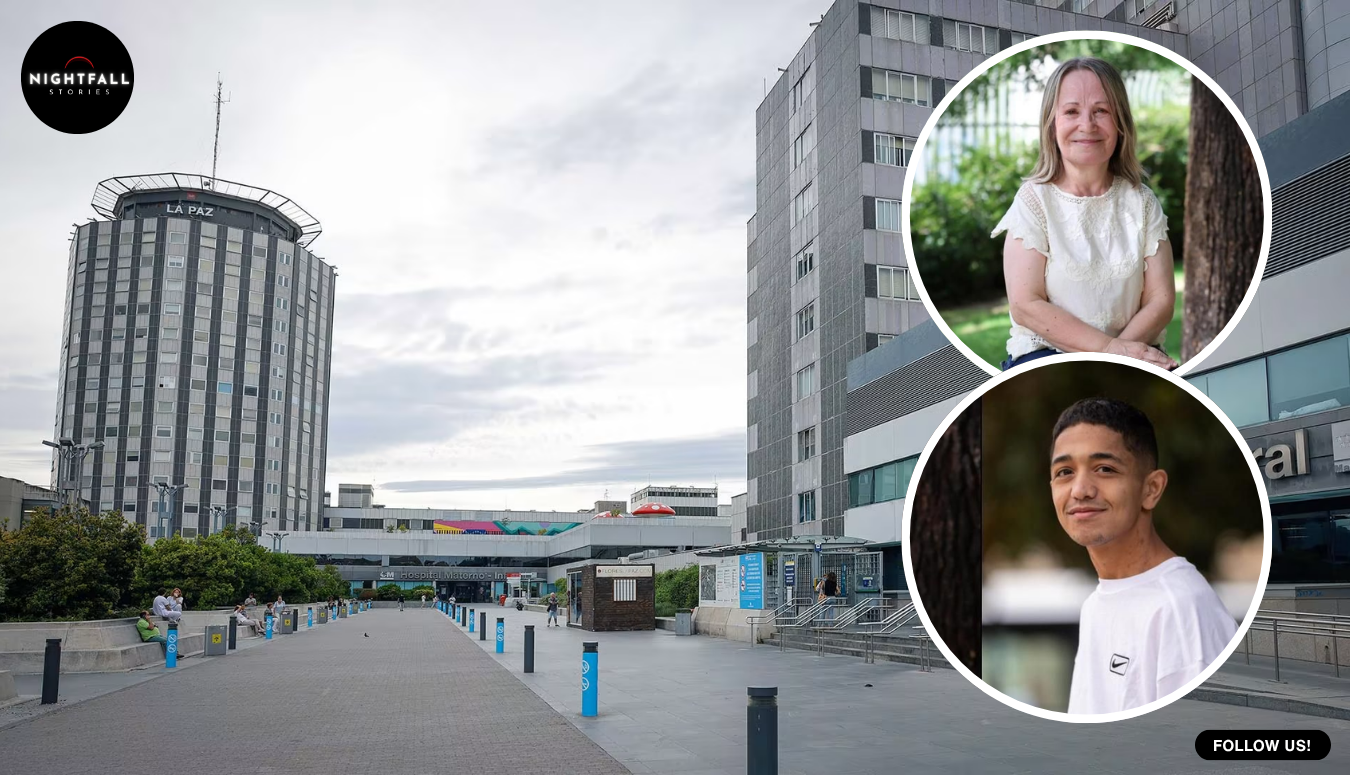
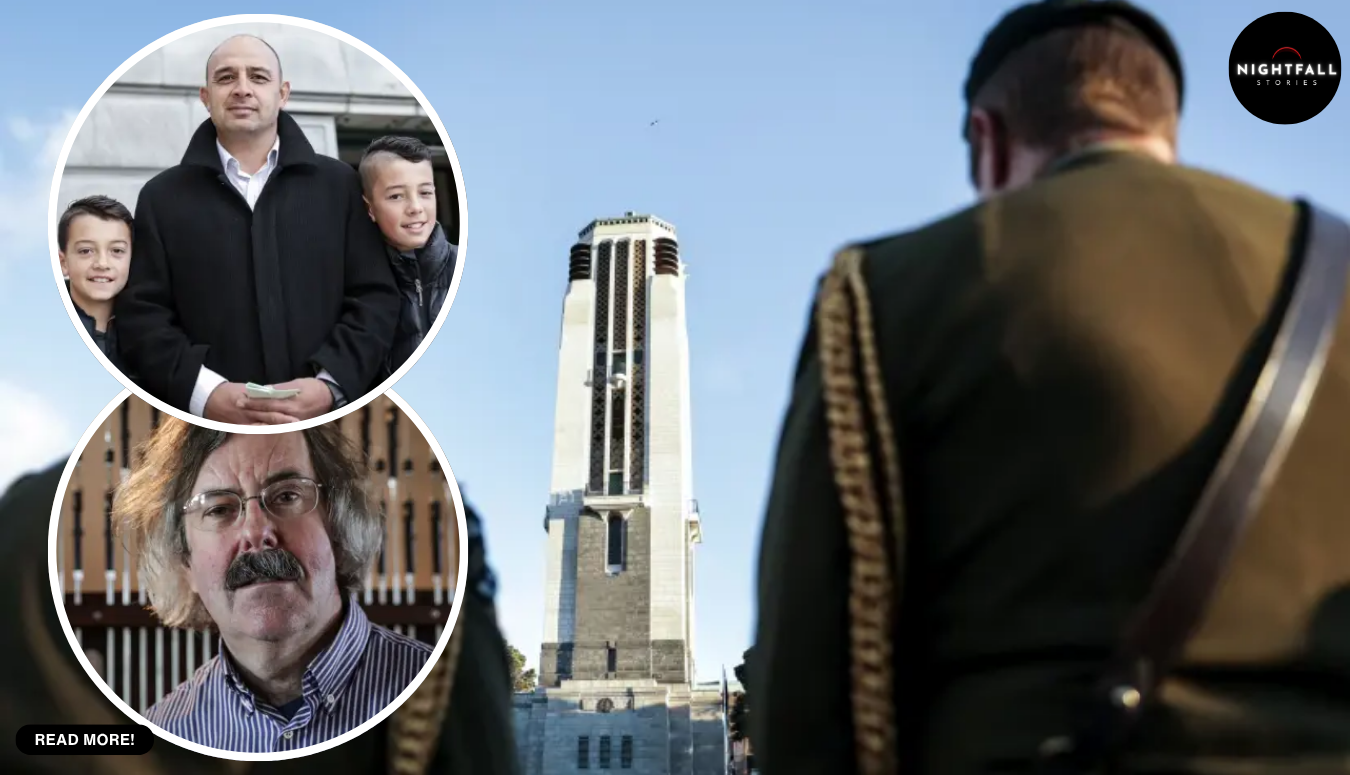
    On Anzac Day this year, a little before the service began in Wellington, a twelve and a half tonne bronze bell called Rangimarie was tolled four times from a tower above the city, once for the Army, once for the Navy, once for the Air Force and once for the Merchant Navy. Then 74 bells began to sound over Pukeahu National War Memorial Park for the first time in years, after roughly six million US dollars of earthquake strengthening and a silence that had swallowed most of the last decade and a half.

    The man at the keyboard had flown in from Canberra. He was 25 years into a career on an instrument he first touched at fourteen, and he had never played an Anzac Day service in New Zealand before. He was there because the job that should have put a New Zealander in that seat no longer existed. About ten weeks before the bells came back, the Ministry for Culture and Heritage confirmed that its change process had resulted in the disestablishment of the role of National Carillonist, a permanent public position that had existed since the tower opened in 1932 and had been held, in all that time, by exactly four people.

    To understand why that is strange rather than merely bureaucratic, you have to understand what a carillon actually is, because it is not a set of church bells and it is not a clock chime. It is a musical instrument the size of a building, and it has to be played by hand.

    The Pukeahu carillon hangs inside a campanile about 51 metres high, a tall pale tower that has been one of Wellington’s landmarks for most of a century. Inside it are 74 fixed bells, cast bronze, weighing something in the order of 70 tonnes in total, which makes the instrument the third largest carillon in the world by weight. The bells do not swing. Each one has a clapper connected by a stainless steel cord running down through the frame to a wooden baton keyboard in a small cabin partway up the tower. The player sits at that keyboard and strikes the batons with closed fists, and works a set of pedals with both feet for the heaviest bells. The sound does not come out of a speaker. It comes out of the tower and travels across a city.

    The tower is not a decoration on top of something else. It is the memorial. Beneath and beside it sit the Hall of Memories and the wider Pukeahu park, a place built so that a country could put its war dead somewhere and go and stand there. That matters to the engineering argument, because a carillon is a memorial that works by being audible. A silent one is a very tall headstone. Every mechanical fact about the thing therefore carries freight that a concert instrument would not: the cords are load-bearing in two senses, and a broken connection is not only a dead note.

    It is worth being precise about one detail that gets repeated wrongly, because it is the sort of thing that sounds better than the truth and does not need to be. Rangimarie, the great bass bell, is not the third heaviest carillon bell on earth. It is the heaviest bell in the southern hemisphere, which is a remarkable thing on its own. It is the carillon as a whole, all 74 bells together, that comes third in the world. That bell was one of four large bass bells added in 1995, more than sixty years after the instrument first sounded.

    The tower opened on Anzac Day in 1932 with 49 bells, cast by Gillett and Johnston at Croydon in England and shipped out the year before, weighing a little over 30 tonnes between them. The first national carillonist was Gladys Watkins, appointed to the role in 1932, which is its own small piece of history. The instrument was substantially rebuilt and enlarged from 1984 onward, with 21 smaller treble bells added, then the four bass bells in the mid nineties. By then its player was Timothy Hurd, who holds the Queen’s Service Medal and who occupied the post for around four decades, climbing the tower several times a week to play it.

    That is the part of this story that has no first person account anywhere that can be reached. Hurd has not, in any coverage that is publicly available, described in his own words what it was like to spend forty years as the only person in the country whose job was to play a war memorial, or what it was like to lose that job in the same season the memorial came back to life. It would be easy to write feelings into that silence. It would also be made up. What can be said is what the ministry itself said, and what the ministry itself did, and those two things are not perfectly aligned.

    Here is the documented sequence. In March 2012, engineers identified seismic vulnerabilities and the tower went into strengthening work. Refurbishment ran to late 2013, but the carillon did not reopen until the end of May 2018, after a job that reportedly involved taking some 15,000 individual pieces apart and putting them back. It played for about twenty months. In February 2020 it closed again, after an engineering report found the structure meeting only around 15 percent of the national building standard for earthquakes. A full seismic assessment completed later that year pointed at the bell frames as the weakest element in the whole thing. Along the way the tower’s cladding came under separate scrutiny as well.

    So the universal framing this year, that the bells rang for the first time in fourteen years, needs a small correction. They were silent from 2012 to 2018, they sounded for less than two years, and then they were silent again from 2020 until this past Anzac Day. The public broadcaster that has followed the tower’s engineering problems most closely was careful about this, writing that the bells had been silent for most of the last fourteen years rather than all of them, and an earlier piece put it as seven of the previous ten years. That is the accurate version. It is also, if anything, a worse story than the simple one, because it means the instrument was fixed once already and then found to be unsafe again.

    The strengthening that finally brought it back cost 10.1 million New Zealand dollars from 2020 onward, roughly six million US dollars. For a country that had lived through the Christchurch earthquakes, a 70 tonne array of bronze suspended 50 metres above a national memorial was not an abstract risk, and nobody seriously argues the work should not have been done.

    What is argued is the arithmetic that came next. An internal ministry report written in July last year recorded that the decision had been made to disestablish the carillonist, with the change deferred until the end of April 2026. That is the week the tower was due to reopen. When the decision became public in August last year, the framing in the national press was blunt: the government had spent ten million dollars fixing the bells and was removing the one person who could play them.

    In February this year the ministry set out its position in writing. Its change process had resulted in the disestablishment of the National Carillonist role. It said it was exploring a range of options, including contracting carillonists when required, and that this would cost it less than retaining a fulltime carillonist position. It said it was working with the Carillon Society of Australia to make sure a trained player would be available for Anzac Day. And in the same statement it said that Timothy Hurd had since retired, and acknowledged his long contribution to the carillon and to national commemorations.

    Those last two sentences sit together uneasily, and it is worth leaving them uneasy rather than tidying them up. One account has the role abolished in a restructure. Another has its holder retiring. Later coverage quoted the Secretary for Culture and Heritage saying that once Hurd had made the decision to retire, the ministry worked closely with the Carillon Society of Australia. Both things can be literally true at once, and the honest description is the narrow one: the ministry ran a change process, the outcome of that process was that the permanent position ceased to exist, and the ministry says the person who held it retired. He was not, on any available account, dismissed. Nor is this a simple retirement, because the post itself did not survive him. It is a job that ended at the same time as a career, and the ministry’s stated reason for the first of those is cost.

    There is a narrow version of that reasoning that is hard to dispute. A fulltime salary for a player whose instrument is closed for six years running is money spent on nothing, and the ministry had just absorbed a seven-figure bill it did not choose. Contracting a specialist for the handful of days a year the bells are needed is exactly what any organisation would do with a rarely used skill. The objection is not that the sum is wrong. It is that the skill is not rare because demand is low; it is rare because supply takes a lifetime to build, and the fulltime post was the thing building it. Abolish the post and you have saved the salary and quietly outsourced the pipeline too.

    Which brings us to the Australian in the cabin. Peter Bray learned the carillon at fourteen and has played something like 70 of the roughly 700 carillons in the world, a reasonable estimate of how small this profession is. He came from Canberra, home to Australia’s own National Carillon, to play Wellington’s.

    The preparation was tighter than anyone would have liked. Days before the service, around ten of the 74 bells were still being connected to their playing cords, which is to say the instrument was not fully assembled the week it was due to be heard by a nation. It came together. Bray played six pieces. Both published programmes agree on the waiata Pokarekare Ana and on a work by the Estonian composer Arvo Part; beyond that the lists differ, one naming Karl Jenkins and another naming Finzi, so the full running order is not something to state with confidence. Rangimarie was tolled its four times. People stood in a park built for exactly this and listened to bells they had not heard in six years.

    And then the visiting player went home, and the keyboard in the tower had nobody whose job it was to sit at it.

    That is the question the story actually leaves behind, and it is not a question about one man’s exit. A carillon is a slow instrument to learn. It is not transferable from a piano in an afternoon; the touch is different, the sound arrives late, the feedback comes off a tower rather than out of a box, and there are only a few hundred of these things on the planet to practise on. Timothy Hurd was in the post for around forty years because that is roughly the timescale on which carillonists are made. The ministry has talked about monthly recitals and about discussions with Victoria University’s music school on training a resident player, which is a genuine route and not a cynical one. But training a carillonist requires access to a carillon and someone who already knows how to play it, and New Zealand has one of the former and, in an official capacity, none of the latter.

    There is a version of this that ends well. The tower is strengthened and open. A university with a serious music school sits a short walk from it. Carillon societies across the world are small enough that people share students and share instruments, and the Australians have already proved willing to fly. If a New Zealander in their twenties starts on those batons this year, the post that was abolished for costing too much could be replaced by something better, which is a player who has decades ahead rather than behind.

    There is also a version where the bells become an occasional event, hired in for the days that matter, and the thing that made Pukeahu unusual quietly stops. The carillon was not built to be switched on twice a year. It was built in 1932 as a memorial you could hear, played several times a week by someone who lived in the same city as it.

    The bells opened on Anzac Day, 1932. They came back on Anzac Day, 2026, after six million dollars and a decade and a half of mostly silence, and they sounded, by every account, magnificent. Ninety four years, four national carillonists, and on the morning the instrument returned, the title had already been retired along with the man who held it. Somebody still has to climb the tower.

  • They reopened a school on an island with no roads, no cars and no mains water. Finding the classroom was the easy part.

    They reopened a school on an island with no roads, no cars and no mains water. Finding the classroom was the easy part.

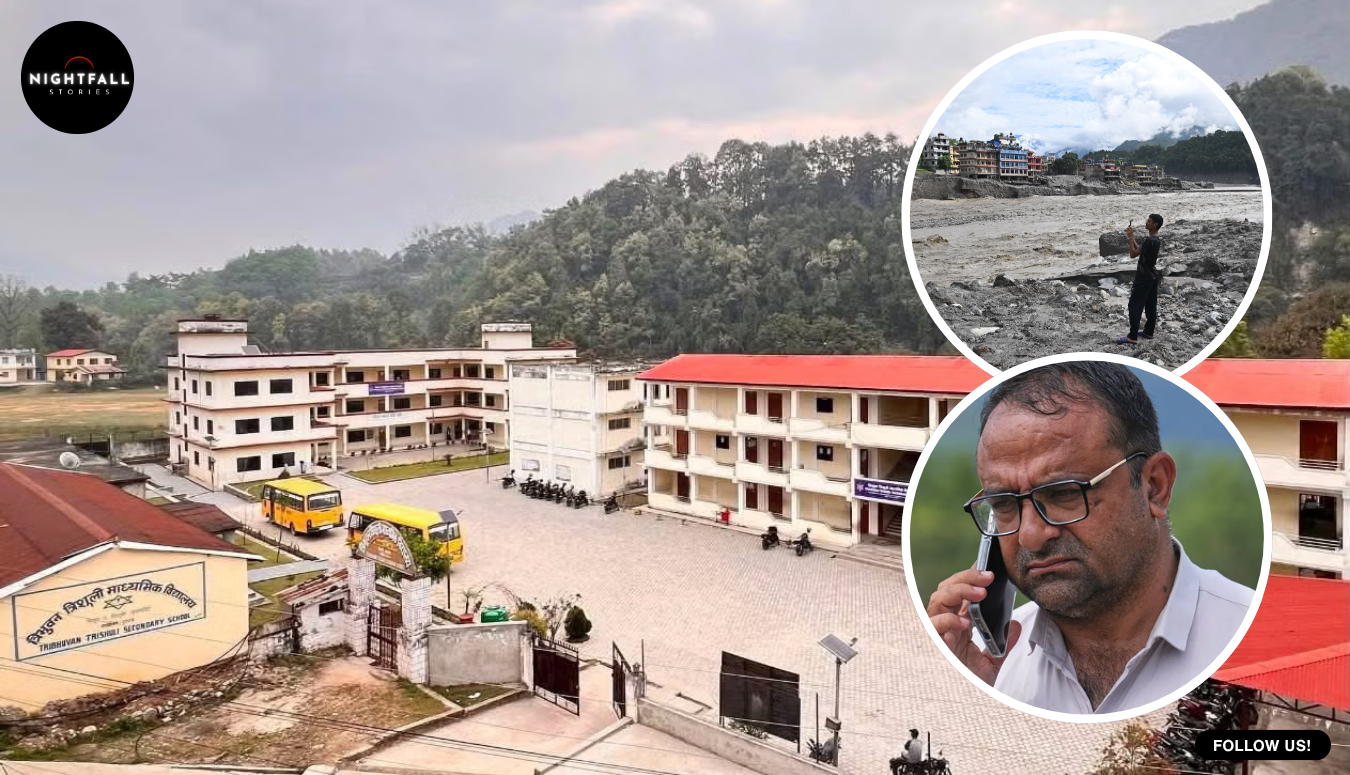
    On a Thursday morning last month, a primary school teacher climbed off a boat onto a concrete landing on the western side of Stromboli, walked up a path that no vehicle has ever used, and let herself into a room belonging to the village church. She had arrived the day before, because there is no way to arrive on the morning you are needed. By the time she opened the door, a bell was ringing in a hamlet of roughly thirty people for the first time in more than twenty years, and the register she was about to open had exactly one name on it.

    The name belongs to a six year old girl, and we are not going to print it. In a place where everybody knows everybody and the entire school roll is one child, naming her would identify her to every person who will ever read about her, and she did not choose any of this. The people who did choose it are the ones worth writing about: her mother, who spent years asking the Italian state for a classroom and eventually got one; a teacher who took a posting that almost nobody would take; a mayor, an education official and an archbishop who each had to sign something; and a set of rules that said a primary class needs fifteen pupils and then, for once, said otherwise.

    The mother is Monica Abbate. She has lived in Ginostra since she was eighteen, which makes her one of the small number of people who stay through the winter rather than one of the summer population, and she serves as the municipality’s delegate for the hamlet, an unpaid local role that mostly involves asking Lipari town hall for things that larger places take for granted. Reporting on the reopening credits her with having fought for it for a very long time, and the figure that keeps appearing is twenty years.

    That figure is worth slowing down on, because the honest version is slightly different and slightly more interesting. Twenty years is how long the school was shut. Abbate is in her mid thirties by the accounts of reporters who met her, and she arrived on the island as a teenager, so twenty years of personal campaigning does not quite add up and no source actually claims it in those words. What is documented is that she pushed for public services in a settlement that had almost none, that the school was the one she pushed hardest for, and that the paperwork which finally did it is recent and specific. A formal request went in at the start of this year. The Sicilian regional school office authorised the class eleven days later, inside the annual plan that decides which school sites in the province of Messina open, merge or close. The campaign was long and vague. The decision was fast and dated.

    To understand why it took so long, you have to understand what Ginostra is, and it is not a picturesque detail. It sits below the volcano on the side of Stromboli that faces away from the main village, and it is reachable only by sea. There are no roads and no cars. Goods come up from the landing on the backs of fewer than a dozen mules and donkeys, which is not a heritage attraction but the actual logistics system: if you buy a washing machine, a donkey brings it. There is no mains water. It arrives periodically by tanker ship and is stored, supplemented by rainwater. Mains electricity and running water did not exist here at all until 2004, which is to say that people were living without either within living memory of almost every reader of this sentence. Power now comes from photovoltaic panels and generators near the marina. There is no street lighting.

    The population numbers do not agree, and it is better to report the disagreement than to split the difference. The French newspaper feature that produced the most detailed account of the reopening puts the winter population at about thirty. Italian agency reporting from the same period puts it at about forty. Older census material also lands near forty. In summer the houses fill with visitors and the figure can reach a few hundred. All of those can be true at once, depending on who counts as resident and which week you ask, and the range itself is the point: this is a community small enough that a single family’s decision changes the arithmetic.

    Underneath the charm, there is a hard fact, and it is the reason there was a school to reopen in the first place. Ginostra once had enough children to need a classroom. Then it did not. Depopulation on the smaller Aeolian islands has been running for generations, driven by the ordinary things that empty villages everywhere, work and schools and hospitals, and in Ginostra’s case sharpened by the volcano. At the end of 2002 a flank collapse on Stromboli sent landslides into the sea and generated a tsunami that flooded houses along the shore, twisted metal structures and dragged furniture out of homes onto the rocks. Ash fell across the island. Most residents left on ferries. The civil protection authorities closed Stromboli to visitors while an alarm system was worked out. Nobody was ordered to leave permanently, and plenty came back, but an event like that does not help a place hold on to young families, and the school closed in roughly that era. A reopening is a good news story. A closure is the news story underneath it, and it is the bigger one.

    The rule that stood in the way is not unreasonable in itself. Italian regulations set a floor of about fifteen pupils to form a primary class, which exists so that regional authorities cannot quietly run schools with two children and one exhausted teacher as a substitute for proper provision. The floor can be lifted, and a government measure from last year explicitly allows regional education offices to grant waivers for island areas. Getting the waiver required the parents to ask, the municipality of Lipari under mayor Riccardo Gullo to back the request, the head of the local comprehensive institute to forward it, and the provincial and regional school offices, with the Messina superintendent Patrizia Muscolino involved, to approve it. None of that is dramatic. All of it is the thing that actually takes twenty years, which is the unglamorous truth about most campaigns of this kind. You do not win them with a speech. You win them when the right official signs a form in January.

    The school belongs to the Istituto Comprensivo Isole Eolie, a single institution that runs seventeen school sites spread across seven islands, from nursery through to lower secondary. It is an administrative arrangement that would look absurd on the mainland and is simply necessary here, because each island has a handful of pupils and none of them can share a bus. Until this autumn, the smallest class in the group, and by most reckonings the smallest in the country, was on Alicudi, an island of around a hundred people where the schoolhouse is reached by climbing something in the order of three hundred and fifty steps up from the shore. It had two pupils. Ginostra has now halved that record.

    The classroom itself is a room in the parish of San Vincenzo Ferreri, recently renovated, handed over rent free by the archdiocese of Messina, Lipari and Santa Lucia del Mela under an open ended loan agreement signed off by Archbishop Giovanni Accolla. There is no school building available, so the church gave up a room, which is a reminder that in very small places institutions substitute for one another out of necessity rather than ideology. A school with one pupil does not need a gym or a staff room. It needs a dry room, a table, a door that locks, and a teacher who is physically present.

    Finding that teacher was the part that could not be solved by paperwork. When the waiver was granted at the start of the year, two questions were still open in the coverage: where the classroom would go, and who would stand in it. Both have since been answered. The teacher is Laura Mongi, and the accounts of where she came from do not match, so here is both. Italian agency reporting from the first day of term describes her as forty two years old, originally from Gela in southern Sicily and resident in Messina, who came out to the island the day before lessons started. The longer French feature, published a couple of weeks later, describes her as having come from the outskirts of Milan. Those are not easy to reconcile, and there is an obvious possible explanation, that a Sicilian teacher had been posted to the north and transferred back, which is one of the most common career shapes in Italian teaching. But no source says that, so it stays a possibility rather than a fact. What is not in dispute is that she was not already living in Ginostra, because almost nobody is, and that taking the job meant moving to a place with no road out.

    Consider what the posting actually involves. One teacher, one pupil, the whole primary curriculum, no colleagues in the building, no supply cover within an hour, and a commute that depends on hydrofoils which in winter simply do not run when the sea says no. Housing has to be arranged in a village where the housing stock is largely holiday lets. Supplies arrive by boat and then by donkey. If a child in an ordinary class has a bad week, the class carries her. Here there is no class to carry anyone, and the relationship between the adult and the child is the entire institution. Teachers who take island posts tend to describe them as either the best or the worst year of their working lives, and on the evidence available this one walked up from the landing, met her pupil at the door, introduced herself by first name and asked whether they should go in.

    The reason any of this matters beyond one village is the timetable of the boats, which is the real argument the family made. The alternative to a school in Ginostra was not a slightly longer journey. Hydrofoil schedules do not line up with the start and end of lessons, and for several months of the year the crossing cannot be relied on at all. A six year old attending school on Lipari would have meant one parent renting a second home off the island for the school year, or the family leaving for good. That is the mechanism by which small places die, and it is not sentimental to say so. It is a transport problem wearing the costume of an education problem.

    Set against the national picture, the Ginostra classroom is swimming hard upstream. Italy is losing pupils at a rate that would close a city’s worth of schools every few years. The country’s schools had something in the order of one hundred and thirty thousand fewer pupils this year than the year before, and roughly a million fewer than in the 2017 to 2018 academic year. The median age is around forty seven. About a quarter of the population is over sixty five, the highest share in Europe, and only around twelve per cent is under fourteen, among the lowest. In that context, the default direction of travel for any school with a small roll is closure and consolidation, and most of the decisions being made in regional offices this year are about merging sites, not opening them. One room with one child does nothing to change those numbers. What it changes is the precedent, which is why people in other small places were watching.

    Some of them were watching with a grievance. On Filicudi, another Aeolian island in the same school district, a ten year old named Tiziana wrote to the Italian prime minister asking to be allowed to finish her schooling at home. She is about to age out of the provision that exists. The waivers that saved Ginostra apply to nursery and primary classes, and not to lower secondary, so families on these islands are told, in effect, that their children may stay until eleven and must then leave. The local course that would have let her continue was not restored, on the grounds that it would require eight teachers for a single pupil. Her own answer, reported in the Italian press, was that the course has historically run with two. A senator has raised the case in parliament, citing the constitutional articles on equality and on the right to education. And on the same morning that Ginostra’s bell rang, Filicudi was reportedly still waiting for a teacher who had not arrived, with the family refusing an offer of remote lessons as a substitute.

    That is the honest shape of this story. A classroom opened on an island with no roads because a handful of adults kept asking, and a parallel request a short boat ride away did not. The waiver is granted year by year, which means the campaign is not over, it has merely changed from asking for a school to asking for the same school again next summer. In five years the pupil will reach the age at which the rules currently say she has to go, and unless something changes, her mother will be back in the same office making the same argument about boats.

    None of which makes the morning less real. A teacher came a long way to a place that is hard to reach, a priest handed over a room, an official signed a waiver, and a woman who has spent most of her adult life in a village of a few dozen people got back a service that village had lost before her daughter was born. The register has one name on it. The point was never the name. The point was that a family living on the far side of a volcano, where the water comes by ship and the shopping comes by donkey, now has the same ordinary choice everyone else has, which is to stay.

  • She wheeled a trolley of wigs onto live television and took off the one she was wearing. The next night she won, and then she went back to her course.

    She wheeled a trolley of wigs onto live television and took off the one she was wearing. The next night she won, and then she went back to her course.

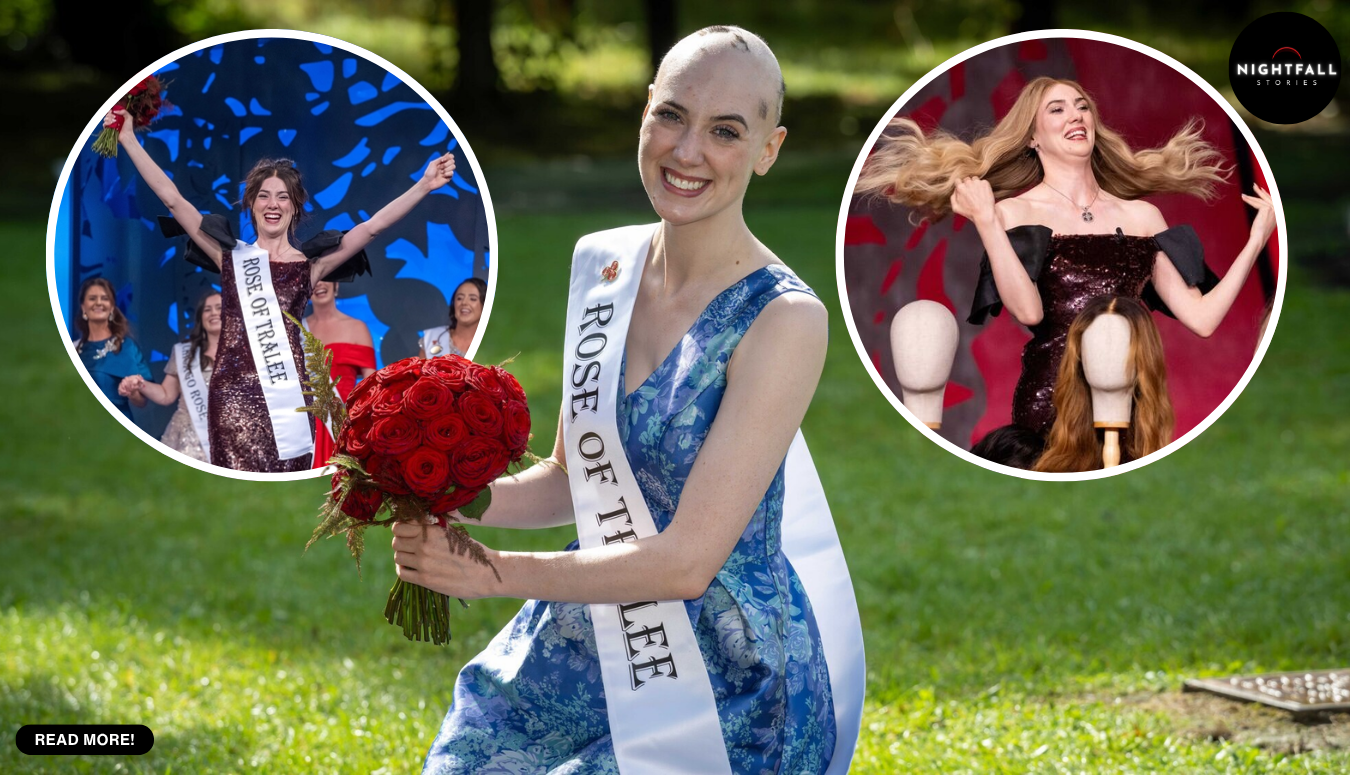
    The trolley was the giveaway. Every other woman on that stage had a party piece, a song or a dance or a recitation, and Caoilfhinn Ni Choiligh came out with a wheeled rail of wigs, like a props cart. She went along them. Then she reached up, took off the dark one she had walked on in, and put a blonde one on instead, and explained that this was the point, that she can change her hair whenever she likes and that a wig is an accessory you can have styled before you ever put it on.

    Then she took that one off too, and finished the rest of her interview bare headed, in front of a live audience in a sports arena in Kerry and a national television audience watching the biggest broadcast night in the Irish calendar.

    The following night, out of thirty two women, the judges picked her. She is the 2026 Rose of Tralee.

    What makes this worth more than a clip is what she did next, which was go back to the course she had already enrolled on. Caoilfhinn Ni Choiligh works in retail in Mullingar, in the Irish midlands, and she is training to be a wig maker. Not a wig seller. A maker. Of all the things that could have followed a moment like that, the one she chose was a hand trade.

    First, though, the thing that almost every piece of international coverage gets wrong about the event itself, because it changes how you read her twelve minutes on that stage.

    The Rose of Tralee is not a beauty pageant. That is not a defensive line from the festival’s own press material, it is how the thing is actually built. There is no swimsuit round. There never has been. Appearance is not scored. The published criteria are personality and suitability to act as an ambassador for the year, and the festival talks about aspirations, ambitions, intellect, social responsibility and Irish heritage. In practice each Rose gets an interview on stage with the host, a few minutes of conversation about who she is and what she cares about, and a party piece if she wants one.

    It started in 1959, got up by a handful of local business people in Tralee, in County Kerry, to pull visitors into the town. It was open only to women from Tralee at first, then to the county, and from 1967 to any woman of Irish birth or Irish descent anywhere in the world, which is why the lineup every year includes Roses from Chicago, New York, Sydney, Dubai and London alongside the thirty two counties. There is an upper age limit of twenty nine. Since late 2021 married women and transgender women have been eligible. Unmarried mothers were excluded until 2008, which is the kind of detail that tells you more about the institution’s history than any brochure.

    And here is the irony sitting at the centre of it. The festival is named after a nineteenth century ballad about a woman called Mary, and the entire burden of that song is that she was lovely to look at. The event named after it has spent decades insisting, correctly, that it is not judging anyone on their looks. Ireland has never quite stopped arguing about whether that works. The lovely girls jibe has followed it around for thirty years. Every August there are the memes and the eye rolls and somebody writing that it has had its day.

    Which is the context that a trolley of wigs was wheeled into.

    Caoilfhinn Ni Choiligh is from Mullingar in County Westmeath. She has had alopecia areata since she was fifteen, which she has talked about openly and at length in her own words, and which is the only basis on which it appears here. She has described what the start of it felt like in a way that nobody else writing about her has improved on: that when you lose your hair there is a bit of grief in it, because you are losing a small piece of yourself.

    Fifteen is a specific cruelty of an age for that to happen, for reasons that need no elaboration to anyone who was ever fifteen.

    She is twenty five in most of the reporting and twenty six in some of it, and both are probably right, because she said in the summer that she had turned twenty five the previous August, which puts her birthday within days of the festival itself. Earlier this year she passed the ten year mark, and she has said that was the thing that moved her. Ten years in, she worked out that she had accumulated practical knowledge that would be useful to somebody else, and that sitting on it was a waste.

    So she started putting herself out there, which is her phrase, not an interviewer’s. She co founded a support group called The Hair Loss Haven with her friend Saoirse. It runs meetups and events for people losing their hair, from any cause, and the work it does is the unglamorous specific sort: when do you get your first wig, what do you do about the in between stage, how do you handle the day you tell people. A clinic can tell you what is happening to your scalp. It cannot tell you what to say to your manager. She gets a steady traffic of messages from strangers asking exactly those questions.

    She has form on this kind of thing. Before any of it she had worked with Comhairle na nOg, Ireland’s network of local youth councils, and with the Irish Second Level Students’ Union, which are both organisations where the entire job is getting young people’s own views into rooms that would otherwise decide without them.

    She was chosen as the Westmeath Rose on a June evening at a hotel in Athlone, out of a field of twenty women. Then came the Rose Tour, which is a genuinely odd piece of Irish tradition in which the whole group travels the country together for a fortnight before the festival, and then Tralee.

    The clothes detail is worth a line, because it is the opposite of the image people have of this event. The gown she wore on the night she was crowned was rented, from a shop in her own town called The Dress Collective.

    About the stage itself. She has been candid that she thought hard about whether to do the wig segment at all, and that the hesitation was not stage fright. It was the risk of being flattened into one fact about herself, of becoming the alopecia Rose and nothing else for a year. She decided to do it anyway, on the grounds that it genuinely has shaped who she is and that pretending otherwise would be its own kind of lie. She has since said that taking the wig off on the opening night was the highlight of the whole thing, and the part of it she is proudest of.

    There is a strong temptation, in a story like this, to park the whole thing on the word brave and go home. It is worth resisting, partly because it is lazy and partly because she herself keeps steering away from it. Her line after she won was not about courage. It was that you can be a Rose whatever your imperfections and whatever your background. Her line to younger girls was that they should never let anybody dull their confidence. And the line she gave afterwards about the crying, hers and the audience’s, was that emotion is powerful and is not something we should be apologising for, which is a more interesting sentence than any of the headlines written around it.

    Now the part that nobody expected, and the reason this is a story with an ending rather than a clip with a caption.

    Wig making is a real trade and a dying one. A machine made wig is sewn: wefts of hair stitched in rows onto a cap, fast and cheap and recognisably a wig from across a room. A hand made one is knotted. Someone sits with a tiny hook and a base of lace or fine mesh and ties hair into it a few strands at a time, controlling the direction each one lies in, thinning the density at the front so the hairline looks like it grew there, building a parting that reads as scalp. It is close, slow, repetitive work and the difference between a good one and a bad one is almost entirely in the hands of the person who made it. The people who can do it properly are not numerous and they are not young.

    That is the thing Caoilfhinn Ni Choiligh is studying for, while working in retail to pay for it. Her route into it was not a careers fair. It was eight or nine years of being a customer, of wearing the things daily, of knowing from the inside which seams itch and which partings fool nobody and what it costs in confidence when a wig is slightly wrong.

    The money is the quiet scandal underneath all of this, and it is worth stating plainly because it is the part that shapes everyone else’s experience of hair loss and not just hers. In Ireland there is a state grant towards a hairpiece, wig or hair replacement, introduced in 2022 under the Department of Social Protection’s Treatment Benefit Scheme. It names alopecia areata specifically among the conditions it covers, along with hair loss from cancer treatment, scarring alopecias and hair loss after surgery, trauma or burns. You can claim it once in a calendar year. The ceiling is five hundred euro, which is roughly five hundred and eighty dollars.

    That is a real improvement on nothing, and nothing is what existed before 2022. It is also a long way short of what a good hand made human hair wig costs, which is why the second hand market, the online guesswork and the long silent misery of wearing something that does not quite sit right are all still thriving. Somebody has to actually make the things, and make them well, and know what they are for.

    So the arc of it is this. A fifteen year old loses her hair. She spends a decade learning, by necessity, everything there is to know about an object most people never think about. At twenty five she decides the knowledge is worth something to other people, starts a support group, and then goes on the most watched television programme in her country, takes the object off in front of about half a million people, and talks about it. Then she wins, which was not the plan, and now she has a year of public engagements and a car and a travel voucher worth around twenty nine thousand dollars, and she is still going to her wig making classes.

    The prize list has one accidentally perfect item in it, by the way. Among the travel voucher and the loan of an electric car and the free hotel room in Tralee, the new Rose of Tralee receives a year of hair styling services from the local further education college. Nobody designing that package was thinking about a winner with alopecia. She can presumably put it to use, given that she owns more hair than most people in the arena.

    The year ahead is a job, not a tiara. A Rose does school visits and charity work and openings and interviews, somewhere upwards of a hundred engagements, in Ireland and abroad. She has said she does not want the whole twelve months to be about her hair, and she is right to want that, because she is also a person who has worked on youth representation for years and who is halfway through qualifying in a skilled trade.

    But she knows exactly what the hair bought her. Her own reckoning of the stage moment was not that she had been inspiring. It was that she had a platform for a few minutes, that she wanted to say her piece about something that matters to her, and that if one person watching who was in the middle of losing their hair saw a woman take a wig off and keep talking, that was the whole point and she had got it done.

    The wig she pulled off on that stage is now the thing she is learning to build. Strand by strand, with a hook, badly at first, the way everybody learns a trade. It is not a metaphor. It is a course, with assessments, and she has to pass it.

  • He scored 721 and finished first in the whole country. The examination he sat was not the one the rest of China was sitting.

    He scored 721 and finished first in the whole country. The examination he sat was not the one the rest of China was sitting.

    The mathematics paper came back at 145. The anatomy paper came back at 139. The total was 721 against a stated maximum of 800, and it was good enough for first place nationally in the medical stream. Guo Bin is nineteen. He has been blind since he was six, when he was badly hurt by another person in Shanxi province, and he read every one of those papers with his fingers.

    The number that travelled around the Chinese internet was 721. The part almost nobody carried correctly, in Chinese or in English, was which examination it belonged to.

    It was not the gaokao. That matters, and not because of pedantry. China runs a second national entrance examination, sat on a different day, on different papers, with its own ranking and its own allocation of university places, and it exists only for candidates with disabilities. Its name in Chinese is dan kao dan zhao, which translates roughly as separate examination, separate admission. Guo Bin sat that one. When the reports say he came first in the country, the country they mean is the field of blind and low vision candidates who sat the medical papers on that route, which is a few hundred people rather than the thirteen million or so who sit the ordinary gaokao.

    That sounds, written down, like a deflation. It is the opposite. Once you understand what the second examination is and where it came from, the 721 stops being a feelgood number and starts being a genuinely interesting one.

    The route was invented at the exact university Guo Bin has now registered at. In 1987, Changchun University, in Jilin province in China’s northeast, opened a college of special education and became the first institution in the country to admit students with disabilities through a separate examination of its own. Before that, a blind school leaver in China had essentially nowhere to go. The ordinary examination was not available in braille and universities were not obliged to take anyone who could not sit it.

    Over the following decade the model spread. Nanjing University of Chinese Medicine, Tianjin University of Technology, Beijing Union University, Liaoning Normal University and others built their own versions. By the late 2010s there were somewhere in the region of twenty three institutions in China running the separate route.

    The catch was always the menu. For most of the route’s life, the majors on offer to blind candidates were a short and predictable list: massage, music, and fine art, with business management added for candidates with physical disabilities. The logic was employment, and in practice it meant that if you were blind and academically strong in China, your reward for being academically strong was a place on a massage course.

    The second thing worth knowing is that the separate route is no longer the only one. In 2014, for the first time, blind candidates were able to sit the ordinary gaokao on braille papers. Three years later the education ministry set out twelve specific accommodations that candidates with disabilities are entitled to ask for, braille and large print papers and extra time among them. Two roads now exist, and a candidate picks one.

    You can see both of them operating inside a single school. At the Wuhan School for the Blind, where Guo Bin spent twelve years, this year’s leaving cohort split. Five pupils sat the ordinary gaokao. Twelve took the separate route. Sixteen of them ended up with university places. That is the real texture of the thing, and it is a long way from the way the story was told in English, where the exam was simply called the gaokao and the distinction evaporated.

    Guo Bin took the separate route and he took the medical stream, which is where the choice gets interesting, because he did not take the obvious thing at the end of it.

    He is registered at Changchun University on two degrees at once. Traditional Chinese medicine, which sits broadly inside the historic track and is the respectable, well worn path for a blind student with a good head for study. And computer science and technology, which is not on that path at all. One half of his timetable is the oldest answer China has to the question of what a blind graduate does for a living. The other half is a bet that the answer has changed.

    That is not nothing for someone who has been reading by hand since he was seven. His mathematics teacher at the Wuhan school, Zheng Xiaokun, described the method plainly enough: where a sighted pupil takes in a diagram at a glance, Guo Bin would touch the braille over and over and reason the problem through again and again until it held. Braille mathematical notation is its own language, linear where print is spatial, and it is slow. Science came through tactile models, recordings, screen readers, and a lot of repeated explanation out loud.

    The school he did all that in is older than most of the city around it. It opened in 1919 as a mission school for blind girls and was renamed the Wuhan School for the Blind in 1952. In more than a century it has put thousands of children through, and since 2009 it has sent more than a hundred and twenty of them on to higher education.

    What a residential blind school actually teaches is not what people assume. New pupils there start with a compulsory week of orientation and mobility, and the course begins at the school gate, because the first thing you have to own is the route in. Boarding starts from the fourth year. Dormitory doors are fitted with voice alerts so that a corridor can be read by ear. Alongside the academic timetable there is daily life skills training, cooking, laundry, keeping your own things in order, and eighteen arts clubs running under the name Six Dot Angels, after the six dots of a braille cell. There is also a tuina wing with practice rooms, where pupils on the vocational track put in thousands of hours of hands on work.

    The school’s own line about its pupils is that they have simply swapped one way of looking at the world for another, which is a better sentence than most of what has been written about Guo Bin.

    He did not arrive there by accident. After he was hurt in 2013, his family had offers from schools in Beijing and in Guangzhou as well. According to the reporting by the Hubei Daily group, which broke and has owned this story throughout, they chose Wuhan because of how two members of staff behaved towards them: a vice principal named Zhou Dejun, and a music teacher named Zhang Long. Guo Bin enrolled in the spring of 2014.

    Zhang Long is the second person in this story, and not a supporting one. He is now a vice principal of the school himself. He was Guo Bin’s homeroom teacher for nine of the twelve years and his mentor for all of them, and he came at the boy sideways, through music, on the theory that a six year old who had lost his sight needed something to do with his hands before he needed a curriculum.

    It worked to a degree that is slightly absurd. Guo Bin plays the ocarina, the bass, the Native American flute and at least two more wind instruments, depending on which account you read. In 2015 he was one of the founders of VMV, described in the Chinese coverage as the first blind electronic band in Hubei province, in which he played bass. For years he was up at half past four in the morning to get an hour of practice in before school. The band built an online following in the tens of thousands.

    The city did its share too. The education authorities waived his fees and his books and paid a monthly living allowance. The school employed his father as campus security and his mother as a residential life teacher, which meant the family moved with him instead of handing him over. His sister went to a local primary school. Charitable foundations covered the rest. None of that makes the arithmetic of a 721 any less his, but it is the honest answer to how a child from a village in Shanxi ends up doing braille calculus in Hubei.

    And then, at the end of all of it, the part of the story that is actually about leaving.

    On the sixth of September, Guo Bin walked into Changchun University as its four thousand eight hundred and eighty third new student of the intake. He came in his school uniform, with his parents, his sister, the school’s principal Zheng Feng, and Zhang Long. He had admitted beforehand that he was nervous about an unfamiliar place. On the day he said he was excited, and that it was his first time in Changchun.

    Changchun is about a thousand miles from Wuhan, in the far northeast, where the winters are serious. It is also, because of that college founded in 1987, one of the few campuses in China with nearly four decades of practice at having blind undergraduates on it. Senior students came out to meet him. There were welcome boards at the gate, and Zhang Long walked him along them one by one.

    Then they went to the dormitory, and Zhang Long did the thing that the whole twelve years had been for. He took him round the room starting from the door, a piece at a time, until Guo Bin could get from the doorway to his own bed without help. The next task was the route from the dormitory to the canteen, which the two of them walked until it was learned.

    That is what a teacher of blind children does on the last day. Not a speech. A floor plan, transferred by hand, and then a walk to where the food is.

    They had one more day. On the seventh they went out to the Changchun World Sculpture Park, and when they reached a cast of Rodin’s The Thinker, Zhang Long solved the problem the way the school had taught him to solve every problem. He stood in the pose himself, let Guo Bin feel the shape of it, the angle of the back, the fist against the jaw, the line of the arm on the knee, and then stepped away and let him copy it. Guo Bin got it. Zhang Long, by the account of the Hubei reporters who were there, kept nodding, which was wasted on his pupil and presumably not on anyone else watching. His line was that not being able to see is all right, that looking at the world with your hands and listening to it with your ears and feeling it with your heart is quite enough.

    Then he went home to Wuhan, which is the ending, and the reason this is a story rather than a score.

    Guo Bin has been explicit about what he wants the two degrees for. His stated wish, repeated in every interview he has given, is to finish at Changchun and go back to the Wuhan School for the Blind as a teacher. He wants the job that Zhang Long has. He has said he wants to use what happened to him and what he has learned to look after other visually impaired children and give them a future, which is a nineteen year old’s way of saying he would like to be the person at the dormitory door next time.

    It is worth sitting with the shape of that for a second, because it is unusual. The conventional version of this story ends at the gate, with the score and the admission letter and a line about overcoming. This one ends with the pupil planning to walk back in the other direction, into the building, to do the slow unglamorous work of teaching a seven year old which way the canteen is.

    There is one more thing to say honestly, and it concerns the 721 itself. The examination Guo Bin topped is a smaller, separate, parallel system, and reasonable people in China argue about whether it should still exist in its current form. Keeping it means keeping a route that works, with places reserved and papers designed for the candidates who sit them. Keeping it also means keeping a narrower menu and a ranking that is not directly comparable to anyone else’s. The 2014 opening of the ordinary gaokao to braille papers was celebrated precisely because it offered a way out of that enclosure, and the twelve pupils at Guo Bin’s own school who chose the separate route this year, against five who did not, suggest the question is live.

    Guo Bin is now inside both arguments at once. He is a product of the separate system, first in it, and he is studying the subject that the separate system was built to channel blind students into, alongside the subject it never offered them. If the computer science half works, he will be an argument for the menu getting longer. If he goes back to Wuhan and teaches, he will be an argument for the school.

    Either way, the number on the paper was 721, the maths was 145, and the last thing anyone taught him before he was left to it was the way to the canteen.

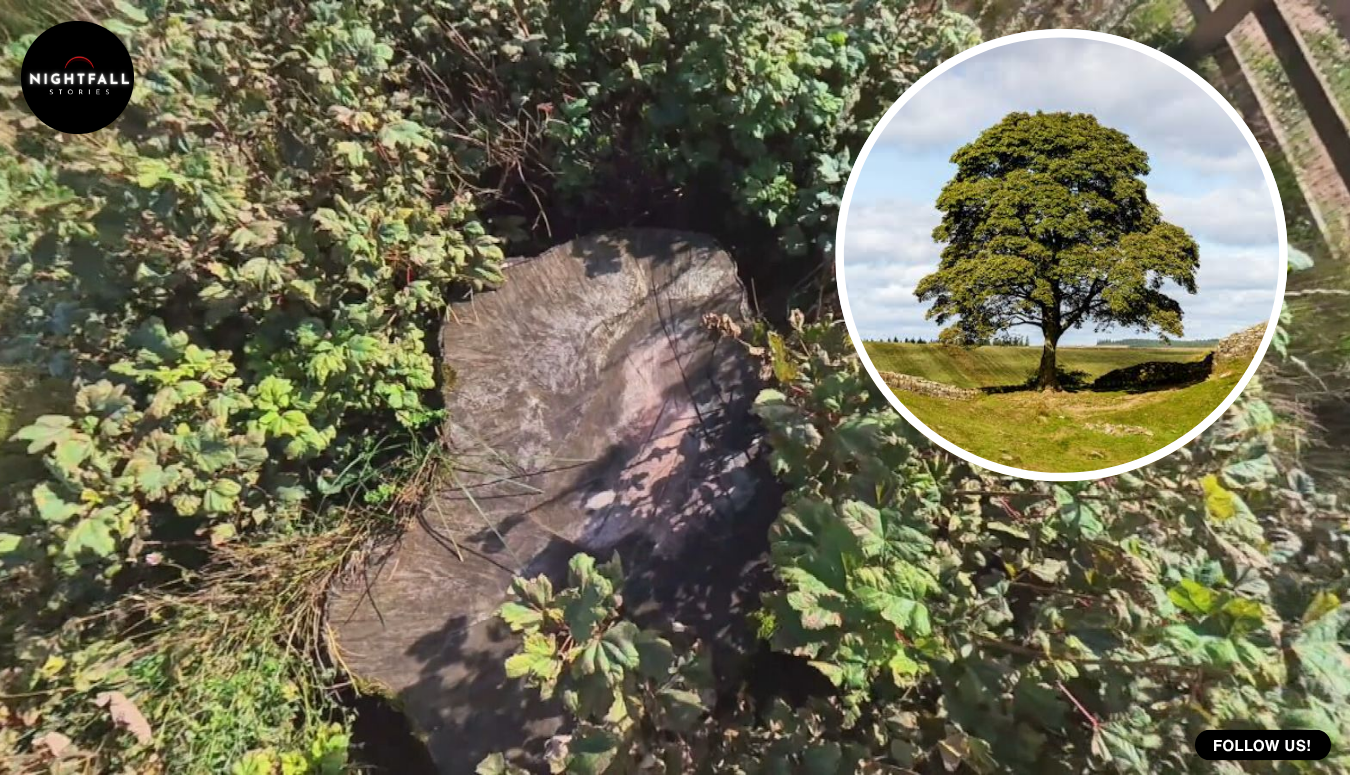
  • Two years ago the shoots on the Sycamore Gap stump were the size of a coin. Now there is a ring of them two feet high, and that creates a problem

    Two years ago the shoots on the Sycamore Gap stump were the size of a coin. Now there is a ring of them two feet high, and that creates a problem

    On a summer walk two years ago, a ranger called Gary Pickles went up to Sycamore Gap on Hadrian’s Wall to plan a guided walk and found something nobody had promised was coming. Around the raw edge of the stump where one of the most photographed trees in Britain used to stand, there were about a dozen tiny green shoots. Each carried between one and six leaves. The park measured them at two to four centimetres, and the comparison it used was a coin, because that is genuinely the scale we are talking about. You could have covered any one of them with a twenty pence piece.

    Three years after the tree was felled in one night, those shoots have become a thick ring of leafy growth standing two to three feet tall all the way around the stump. That is the state of the thing now, reported by the National Trust and attributed to Andrew Poad, its general manager at Hadrian’s Wall, who says the growth is really encouraging and that the protective measures taken at the site are paying off. It is a genuine two year progression, and anyone who saw the coin sized shoots photographed in 2024 and assumes that is still the picture is two years out of date.

    And here is the part that has not made the headlines. A thick ring of shoots is not a tree coming back. It is a stump doing something very particular, and what the people responsible for the site do next will decide whether Sycamore Gap ends up with one tree again or something that looks nothing like the thing in all the photographs.

    Start with what is actually happening in the wood, because the biology is the best part of this story and it is almost never explained properly.

    A felled sycamore is not a dead sycamore. Cutting the trunk off takes away the leaves, which is how a tree feeds itself, but it leaves two things intact: a root system that has spent a century storing sugars, and a layer of dormant buds sitting under the bark around the base. Those buds have been there the whole time, doing nothing, held in check by chemical signals coming down from the canopy above. Remove the canopy and the signals stop. The buds get released all at once, with the full stored energy of a hundred year root system behind them and no leaves left anywhere to compete for it.

    The result is not one careful replacement stem. It is a scramble. Dozens of buds break at the same moment and every one of them goes for the light, which is why regrowth from a cut stump comes as a ring rather than a single shoot, and why it is so fast. In the first season after cutting, the energy available per shoot is tiny, which is why 2024 produced coin sized sprouts. Once those first leaves start feeding the system, the growth rate changes completely, and two to three feet in the following couple of seasons is exactly what a healthy sycamore stool does.

    Humans have known about this for thousands of years and built an entire woodland economy on it. It is called coppicing. You cut a tree down to the base on a rotation, the stump throws up a crop of straight poles, you come back in a decade or two and cut those, and the stool regrows again, more or less indefinitely. Some coppice stools in British woodlands are far older than any of the single trunked trees around them, precisely because they keep getting cut. Sycamore is one of the species that does it extremely readily.

    Which means the thing on Hadrian’s Wall right now is, botanically speaking, a coppice stool. That happened by accident, after a crime, to a tree that nobody ever intended to coppice, and it is the reason the regrowth story is more complicated than good news.

    Because a coppice stool left alone becomes a multi stemmed thicket. Not a tree with a trunk and a crown, but a cluster of upright stems fanning out from a wide base, all roughly the same age, all competing. That is a perfectly healthy plant. It is not the silhouette that made Sycamore Gap famous. The tree that stood there was a single trunked sycamore of about fifteen metres, planted as a landscape feature in the late nineteenth century by the Newcastle lawyer John Clayton, who spent decades excavating and preserving stretches of Hadrian’s Wall and put a tree in a dip in the ridge because it would look right there. It did. For well over a century it sat in that gap in a way that photographers could not leave alone.

    So the decision ahead is a real one, and it is not a technicality. Leave all the shoots and you get a stool: vigorous, resilient, almost certainly long lived, and shaped like a bush. Reduce the shoots down to one and you are attempting to grow a single trunked tree out of the side of an old stump, trying to recreate the thing in the photographs. That second option has costs. Choosing a leader means cutting away healthy growth and concentrating everything on one stem, which is slower and more fragile. A stem growing from the edge of a stump does not have the structural geometry of a trunk growing from its own roots, and the union where it meets the old wood can be a weak point for decades. The old stump will eventually rot from the middle, which is normal and not fatal, but it does mean a single chosen stem has to establish its own root support as the thing it is standing on decays beneath it.

    There is a second reason the fencing matters, and it is older than any heritage site. The shoots coming off a cut stump are soft, green and highly palatable, and they appear at exactly the height a grazing animal browses. Coppice workers have fenced or stacked brush around their stools for centuries for precisely that reason, because a stool that gets browsed hard in its first years can be set back season after season until it gives up. Sycamore Gap sits in open, grazed upland where there is very little else growing tall, and anything tender at knee height is conspicuous. The ring of shoots has got to two or three feet, which is roughly the height at which it stops being a snack and starts being a thicket, and getting it through that window was never guaranteed.

    The place itself is part of the difficulty. The gap is a dip in a hard ridge of rock, high, thin soiled and fully exposed to weather coming across open country. That is exactly why the original tree was so striking, because it was the only vertical thing for a long way in either direction, and it is also why growing a replacement there is harder than growing one in a sheltered garden. Wind pulls at young stems and rocks their root plate, and a late frost can take the first flush of leaves off a stool that has just spent stored energy producing them. None of that is fatal to a sycamore, which is a famously tough species and happy in bad ground. It does mean progress at this site is measured in seasons that go well rather than in a straight line.

    Nobody has published a decision. The reporting says rangers will manage the growth depending on how it develops, which is the honest answer rather than an evasive one, because at two to three feet you cannot yet tell which stems are going to be strong and which are going to sulk. But the choice is coming, and it is a choice between a healthy plant and a recognisable one.

    It is also worth saying clearly what is not known. There is no published arboricultural assessment of this stump’s long term prospects. Vigorous regrowth in year three is a very good sign and it is not a guarantee. Stools can push out a mass of shoots on stored energy and then falter if the root system has been damaged or if the stems get weakened by disease or weather. The two to three feet figure comes from the Trust and the reporting, not from a survey anyone has published. The Times put it about as well as it can be put: it will be many years before the tree regains anything like its old presence. Three years in, what can honestly be said is that the stump is alive, well fed and growing fast.

    Which brings up the strangest problem at the site, and the most awkward one to talk about, because the threat is not vandalism. It is affection.

    The protective measures Poad named are fencing, reducing soil compaction around the roots and limiting human disturbance. Soil compaction is the one that matters most and the one people least expect. Tree roots do not need soil so much as they need the spaces between it. A root takes in water and oxygen through the pores and gaps in loose ground, and the fine feeding roots near the surface are the ones doing most of that work. When thousands of feet walk over the same few square metres, the soil squeezes shut. The pores close, water runs off instead of soaking in, oxygen cannot get down, and the fine roots in the top layer suffocate. It is slow, invisible and entirely capable of killing a tree that looks fine above ground.

    And the people doing it came out of love. In the weeks after the felling, Sycamore Gap turned into a place of pilgrimage. People walked up to stand by the stump, left flowers and notes, and brought children to see it. Some had scattered ashes at that tree, or been proposed to under it, or had it as the backdrop in a photograph on a wall at home. Asking those people to stay off the ground is a genuinely uncomfortable request, which is presumably why the Trust’s language is about fencing and limiting disturbance rather than telling anyone off. The visitors were never the problem. Their footsteps were. Those are different things and the site is managed on that distinction.

    Alongside the stump there is a second project running, and it is a quieter kind of success. Seed and material recovered from the tree were taken away and grown on, and from that stock came forty nine saplings, one for each foot of the original tree’s height. They have been distributed across the country to schools, parks, national parks and charities, under the name Trees of Hope. One went to King Charles for Windsor Great Park. A section of the trunk itself was moved off the ridge and later put on display at a visitor centre nearby, where people can stand next to a cut face of hundred year old wood.

    There is something clarifying about those saplings. Each one is genetically the same tree, grown from its own seed line, and not one of them is the Sycamore Gap tree. The thing that was lost was never the genetics. It was a particular organism in a particular dip in a ridge beside a Roman wall, in a landscape where almost nothing else grows tall, which is why it photographed the way it did and why it ended up in a film and on bedroom walls and in people’s memories of specific days. You can plant the same sycamore in forty nine places and give forty nine communities something to look after, and you still have not replaced the one in the gap. The only candidate for that is the stump.

    The crime itself can be told briefly, which is the right way to tell it. The tree was cut down on a windy night in late September 2023, when storm winds covered the sound of a chainsaw. Two men, Daniel Graham and Adam Carruthers, were convicted of criminal damage and jailed for four years and three months, with the damage to the tree assessed at more than six hundred thousand dollars in value and further damage to the ancient wall where the trunk fell across it. No motive that satisfies anybody has ever been established. That is the whole of it, and it is background to this story rather than the subject, because the interesting thing about Sycamore Gap now is not the men who cut it. It is what the stump did afterwards.

    What it did was behave exactly as sycamore wood behaves when you cut it, which is to say it refused to accept the premise. The buds under the bark did not know anything had happened except that the canopy was gone. Within a year they had produced a dozen specks of green you could cover with a coin. Within three they had produced a ring of growth up to the height of a child, dense enough that the reporting calls it thick, in a spot that thousands of people walk past.

    The decision still to come is the part worth watching. Somewhere in the next few seasons, somebody at the National Trust is going to stand in front of that stump and decide how many stems it keeps. Everything the site becomes for the next hundred years sits in that call: a broad, multi stemmed stool that will outlive everyone involved and look nothing like the photographs, or one chosen stem given everything, aimed at a silhouette in a dip on a ridge that people still drive for hours to see. The tree, for its part, has already done the hard half. It grew back without being asked. The rest is up to us.

  • The wind once tore the lid off it. After eleven seasons outdoors, the hardest place to take this piano turned out to be a city

    The wind once tore the lid off it. After eleven seasons outdoors, the hardest place to take this piano turned out to be a city

    The piano was built in 1912. It is a Steinway Model D, the full nine foot concert instrument, the size that normally lives bolted to one stage in one building with a humidity controlled room and a technician who knows it by name. This one spends its summers on a flatbed trailer behind a pickup truck, going up gravel roads.

    In eleven seasons of that, according to the pianist who tows it, the wind has ripped the lid off it. It has been played in heat of 112 degrees Fahrenheit, around 44 Celsius, and in temperatures of two below zero Fahrenheit, which is nearly 19 degrees of frost in Celsius. It has worked through wildfire conditions and across washboard dirt roads into mountain meadows, river gorges and desert. It is still a working concert piano.

    And for all eleven of those years it had never once played Los Angeles. That was the gap the series closed in the last week of September, with three concerts: one in Elysian Park, then two in a disused quarry in Griffith Park, below the Hollywood Sign, both of which sold out with a waiting list.

    The pianist is Hunter Noack, who grew up in central Oregon kayaking and fishing and playing piano, left at fourteen to study at a specialist arts academy, and went on to conservatories in San Francisco and London. In 2016 he started a project called IN A LANDSCAPE, which does one simple and logistically absurd thing: it takes a concert grand piano to places that have no concert hall, no walls, and often no road surface worth the name, and plays recitals there.

    The audience does not sit in rows in front of the instrument. Everyone is given wireless headphones, which means the sound stays at a constant level while the listener walks away from the piano, lies down in the grass, wanders to the top of a rise, or stands with their back to the performance looking at the view. That single technical decision is the whole idea of the project, and it is worth arguing about rather than admiring, because it cuts both ways.

    Start with the instrument, though, because the instrument is the part that should not survive this.

    A grand piano is a tension device made mostly of wood. Steel strings pull against an iron frame with a combined force measured in tonnes. Under the strings sits the soundboard, a thin sheet of spruce built with a slight upward curve so that the string pressure bearing down on it keeps it under load, which is what lets it move air efficiently. That curve is held by glue joints and by the wood’s own stiffness, and it is sensitive to exactly two things pianos going outdoors cannot avoid: moisture and temperature.

    Spruce takes on water from humid air and gives it up in dry air, and it swells and shrinks as it does. A piano moved from a damp coastal morning into desert afternoon heat is a piece of furniture changing shape slowly while someone plays chords on it. The tuning goes first, because string tension responds instantly to the frame and board moving underneath it. Then the regulation drifts, the fine adjustment of every key’s travel and the hammer’s release point, because the wooden and felted parts of the action are moving too. Over years, the real risk is structural: glue joints working loose, the soundboard’s crown flattening, cracks opening along the grain.

    Add vibration. Road transport is not gentle, and a trailer on a corrugated gravel surface puts a specific kind of high frequency shaking through a structure for hours at a time. Professional piano movers treat a single cross town journey as an event requiring a dedicated truck, a board, straps and padding. This instrument has done hundreds of journeys, many of them ending somewhere a truck barely reaches.

    So the honest thing to say about a 114 year old Steinway that has done eleven seasons of this is not that it is indestructible. It is that it is being spent. Every trip uses up a small amount of a finite thing. A piano like this, kept indoors in one hall, would be expected to go a long time between major interventions. Towed around the mountain West for a decade, it is going to need rebuilding sooner, and tuning more often, and tuning at a time of day that bears some relationship to the time of day it has to perform.

    Tuning is where the outdoor problem becomes most obvious. Indoors, a technician tunes in the morning for an evening concert because the room is stable. Outdoors, between a tuning and a downbeat, the air can shift twenty degrees and lose half its moisture. The tuner is therefore not setting the piano to be right; the tuner is setting it to be right later, in conditions that have not arrived yet, and getting it wrong in public. Noack’s own description of the project leans on this: no two concerts are ever the same, he says, because the music is shaped by the light, the weather, the trees and the way people move around. That reads as poetry. It is also, quite literally, a description of a tuning problem.

    The project takes its name from a John Cage piece, and the LAist account of the series connects that to Cage’s idea that any sound can be music. That is where the headphones get interesting, because they sit in direct tension with the philosophy the name invokes.

    Put headphones on an audience in a canyon and you have guaranteed them something a concert hall cannot: perfect balance, no wind noise, no distance falloff, the piano as present at four hundred metres as at four. You have also removed the thing Cage spent his career pointing at. The listener is no longer hearing the piano in that place. They are hearing a signal of the piano, while looking at the place. The reverberation off a quarry wall, the way sound dies in open sagebrush, the hawk, the traffic two ridges over, all of the ambient material Cage would have called part of the music, is attenuated by a pair of pads on the ears.

    Which is not a criticism so much as a description of a deliberate trade. The project has chosen reliability and intimacy over acoustics, and the trade buys something real. In a hall, you must sit still, face forward, not cough, and share a silence with strangers. With headphones in a landscape, you can walk off alone with a Chopin nocturne in your head and nobody is watching you cry about it. For a lot of people that is the entire appeal, and it is a legitimate thing for a concert to be. It just is not the same art form as a recital, and the series is better described as a new one than as classical music taken outdoors.

    The scale of it is substantial, and the numbers should be attributed rather than stated flat, because the organisation’s own figures do not quite agree with each other. One recent release from the project’s press representatives describes this as its eleventh season, with fifty outdoor concerts in it, and says the series has presented over 370 concerts since 2016. Another release from the same desk says over 400 concerts, with 110 guest artists, to more than 100,000 people. The organisation’s own website, apparently not updated, says 355 concerts to over 95,000 people across ten years, in nine states and provinces. These are counts kept by the people doing the counting, and the difference probably comes down to whether concerts featuring guest artists are included. Either way the order of magnitude is clear: this is hundreds of outdoor concerts, not a stunt.

    The project also says it subsidises ticket prices at roughly 95 percent of its concerts and distributes over a hundred thousand dollars in free tickets a year through a scheme aimed at people who live where it plays. Those are its own figures and cannot be audited from outside, but the shape of them is consistent with how the thing is set up. A series that performs on public land, in partnership with conservation organisations, in small towns and at trailheads, is not selling a luxury product to a touring audience. It is mostly selling a cheap ticket to people who live within an hour’s drive of a meadow.

    The venue list from this season gives a sense of the range. Alongside the mountain and desert sites, the eleventh season has taken the piano to a major arts centre in the Canadian Rockies, a botanical garden in San Francisco, vineyards in Oregon’s wine country, a monastery in Utah, a museum above the Columbia River, and a night concert in one of Oregon’s certified dark sky areas, where the selling point is that the audience cannot see the pianist and barely needs to. Fifty dates in a season, on that geographic spread, means the truck is effectively living on the road from midsummer to the first week of October.

    So why did it take eleven years to reach the second largest city in the United States?

    Because the format needs a particular thing, and a city is the hardest place to find it: a large piece of open, publicly accessible ground, quiet enough to matter, reachable by a truck towing a nine foot piano, with somebody willing to let a few hundred people sit on it after dark. The series is run with the Trust for Public Land, a conservation organisation, and that partnership is the clue to how the Los Angeles dates finally happened.

    The Griffith Park concerts were held in Bronson Canyon, an old quarry under the Hollywood Sign whose rock faces are familiar to anyone who has watched enough film and television without knowing what they were looking at. Next to it sits Cahuenga Peak, and the story of that 138 acre piece of hillside is the reason there was anywhere to put the audience.

    Howard Hughes bought the land in 1940. After his death his estate sold it, in 2002, to investors who had it zoned for four luxury estates and put it on the market in 2008. Whoever bought it would have owned the ridgeline next to the most photographed sign in the world and could have built four houses on it. The campaign to stop that needed 12.5 million dollars. It got there with very large gifts from film industry figures and foundations, including Steven Spielberg, George Lucas, Hugh Hefner, the Tiffany and Co Foundation and the philanthropist Aileen Getty, and with the unglamorous end of fundraising as well: rallies, bake sales, benefit concerts. The land was protected in 2010 and formally dedicated into Griffith Park about two years later, chaparral and trails and all.

    That is a direct line from a planning fight to a piano. Without it, the hillside beside the quarry would have been four driveways and a gate, and the concert would have had nowhere to be.

    The programme for the Griffith Park dates included Nature Boy, the song written by eden ahbez and made famous by Nat King Cole. Ahbez is reported to have been living outdoors beneath the Hollywood Sign while he wrote it, which is the kind of biographical detail that gets repeated far more often than it gets documented, and it should be read as the account commonly given rather than as established fact. Playing it in that specific canyon is still a neat piece of programming.

    The third Los Angeles concert, in Bishop Canyon in Elysian Park, was added because the first two sold out. Elysian Park is the city’s oldest municipal park, established in 1886, which makes the pairing tidy: a 1912 piano in a park laid out before anyone alive had heard one.

    A note on something the series says about the instrument that should not be taken as a technical claim. Promotional material describes it as the same model used at Carnegie Hall. That is accurate about the model, the Steinway D is the standard concert grand in major halls worldwide, and it tells you nothing whatsoever about this particular 114 year old example, which has had a working life no Carnegie Hall instrument would survive. The piano’s interest is not that it is the same as a great hall’s piano. It is that it is not.

    A caution about the three Los Angeles dates themselves. They were scheduled for the last weekend of September, the two Griffith Park shows were reported sold out with a waiting list in advance, and the project’s own event listings carried no cancellation or postponement notice at the time of writing. No post concert account of any of the three has been published that could be found, so the sell outs are documented and the performances are best described as having been scheduled and sold rather than reviewed.

    What is documented is where the piano goes next, and it is almost comically ordinary after all that. The eleventh season ends at a college campus in Portland, Oregon, in the first week of October. Then the truck goes home and the instrument comes off the trailer.

    It will be 115 next year. The wind has already taken its lid off once. Somebody will tune it in the spring, in a shed, at a temperature nobody has to guess about, and then they will hitch it up again.

  • Eight movers eased it back through the doors, and the surprise was waiting under the lid

    Eight movers eased it back through the doors, and the surprise was waiting under the lid

    It took eight people to carry the piano back into the theatre. They came in off Cedar Avenue in the small city of Trail, in the mountainous southeast corner of British Columbia, carrying a Steinway grand built around 1926, an instrument that had been part of the building for more than eighty years and had then been away for more than two. A technician named Matt Arnott, who had driven it home, spent the rest of the day underneath it, putting the action back in, setting the lid, and tuning it. By evening the thing was standing on the stage of the Charles Bailey Theatre again, in tune, in an empty hall.

    The executive director of the Trail and District Arts Council, Amelia Ewart, had been teasing a detail all week. There was a surprise under the lid, she told the local paper, and she would not say what. It turned out to be colour. The underside of the lid came back a deep cherry red, so that when the lid is propped open the inside of the piano glows against the dark stage. The arts council’s own account describes the finish being revealed when the refinished instrument came home, after a top to bottom refinish in a shop five hundred kilometres away.

    The bill for all of this is approaching ninety thousand dollars. The population of Trail, at the last national census, was 7,920.

    That arithmetic is the real story here, and it is worth sitting with before anything else. Ninety thousand dollars is roughly what a small city of under eight thousand people decided one object was worth. Not a roof, not a boiler, not a parking lot. One piano. And the money did not arrive from a single donor with a naming claim. It came in layers, and the layers are documented, which is rare for a project this size.

    The campaign was called Grand Again. Its stated goal was eighty two thousand dollars. By the spring of this year it had reached $64,312, and the breakdown of that figure tells you what fundraising in a town of this size actually looks like. Just under ten thousand dollars of it, $9,812, was individual donations: cheques and tap payments and cash in envelopes from people who go to concerts in that building. Another $54,500 came from three institutional sources, the Columbia Basin Trust, the Kootenay Savings Foundation and the Regional District of Kootenay Boundary. The rest came from events, which in practice means a room, a bar, a volunteer at the door and somebody playing something.

    One of those individual donations was $3,000, from Linda and Raymond Masleck of nearby Warfield. They are not strangers to the building. Raymond Masleck has previously served as president of both the Trail Society for the Performing Arts and the arts council itself. He and his wife moved to the area decades ago. A gift of three thousand dollars is not transformative on its own, but against a line item of under ten thousand in individual giving, one couple putting in three is close to a third of everything the town’s own residents had contributed at that point, and it was reported locally as a moment that moved the campaign along.

    Masleck is also the source of the most quotable thing anyone says about this instrument, and it needs handling carefully. According to him, the piano has been used regularly for professional concerts and for student events like the Kootenay Music Festival for more than eighty years, and the late Canadian pianist and composer Hagood Hardy, best known outside the country for an instrumental hit in the 1970s, once called it the best piano in any concert venue in Western Canada.

    That is a wonderful line and it is almost certainly unverifiable. Hardy died years ago. There is no published assessment of his to check it against. What we have is one man’s recollection of what a visiting musician said about a piano in a hall in a smelter town, repeated in a local newspaper and then repeated again when the instrument came home. It should be read as exactly that, a recollection, not as a technical judgment on the record. What it does establish, reliably, is how the town thinks about the thing. People in Trail believe they have an unusually good piano. That belief is why there was ever a campaign at all.

    The work itself went to Verhnjak Pianos, in Surrey, near Vancouver. The firm is in its fifties now. By its own account it was founded in 1974 by Karl Verhnjak, a lifelong musician, moved to its current premises in the late 1980s, and passed to his son Rod after Karl died unexpectedly in 2003. Rod’s son Brandon has worked there full time since 2018. That is three generations in one shop, and the shop describes itself as the largest rebuilding operation of its kind in Canada, which is its own claim rather than an independently measured one.

    What the shop says about timescales explains a great deal about why Trail went more than two years without its piano. There is a two year wait list just to get work started, and a rebuild itself takes somewhere between eighteen and twenty four months. Those two numbers overlap in practice, but the point stands: you do not send a grand piano away and get it back in a season. You send it away and then you live without it for a long time, and you have to decide in advance that it is worth doing.

    It is also worth being precise about what a rebuild means, because the word restoration gets used loosely and this was not a polish and a tune. The published description of the work covers three separate trades. The action and the tone were rebuilt. Structural repairs were carried out. The instrument was refinished from top to bottom.

    A grand piano is in the region of ten thousand individual parts, most of them wood, felt and steel, held in a state of permanent tension. The strings pull against the frame with a combined force measured in tonnes. The felt on the hammers compacts over decades of being driven into wire until the tone goes hard and glassy. The leather and cloth in the action, the cluster of levers that turns a finger movement into a hammer strike, wear until the key feel goes vague and the repetition slows. The wooden block the tuning pins sit in can loosen, at which point the piano will not hold a tuning no matter who works on it. None of that is visible from the audience. All of it is why a hundred year old piano in regular use eventually stops being a usable concert instrument and becomes a piece of furniture that looks magnificent and disappoints every pianist who sits down at it.

    There is also a question of whether a shop like that can be trusted with an instrument a town has raised ninety thousand dollars for, and the only honest answer is to look at what else it has done. The firm’s recent work includes rebuilding a 1978 Steinway concert grand for the Orpheum in Vancouver, a hall of nearly three thousand seats, and it reported that the instrument had gone back into concert use with good notices. That is a useful reference point. A theatre the size of the Bailey is not normally in the same market as a major city’s main concert hall, and in this case both ended up with their pianos in the same workshop.

    Steinway’s own restoration literature is blunt about the philosophy involved. The company says a complete new action is fitted rather than the old one being repaired, that hardware is replaced with its own parts, and that replacing the soundboard, the large sheet of spruce that actually makes the sound, is often necessary to get the instrument’s voice back. Independent shops do not all work that way, and Verhnjak says it sources components, often made in Europe, that match the methods and materials used in vintage pianos rather than simply substituting modern equivalents. Either approach costs real money, which brings us to the choice at the centre of this story.

    For ninety thousand dollars a theatre with 721 seats does not have to rebuild anything. It can buy a serviceable used grand, a decent instrument from a Japanese or German maker, and have change left over for a sound desk and a season of guest artists. For a good deal less than that it can buy something perfectly adequate for a jazz trio and a music festival’s piano class. Any arts administrator who has ever stared at a repair quote has run those numbers, and the numbers point the other way.

    The arts council ran them and chose the piano it already had. The reason it gives is not acoustic, it is historical. Ewart has described the instrument as a very big part of the organisation’s history, and the ambition as restoring it so that it can be played for another hundred years. That is an argument about continuity rather than value for money. Generations of children in that part of the province have played their festival pieces on that specific piano. Replacing it with a better one would have been cheaper and would also have thrown away the only thing about it that could not be bought.

    A newly rebuilt piano is also not finished when it arrives, which is the part audiences never see. New strings stretch, and go on stretching for months, so the tuning drifts faster than it will later. New felt on the hammers packs down unevenly under playing and has to be voiced, which means a technician working the hammer surfaces with needles until the tone evens out across eighty eight notes. A new action has to be regulated, every key’s depth and let off and repetition adjusted by hand, and it will need regulating again once it has been played in. The tuning Arnott did on the day the piano came back through the door was the first of many, not the last one.

    That matters in a town where the instrument’s main users are not touring professionals. The piano’s documented history is a mixture of professional concerts and student performances, including the Kootenay Music Festival, the kind of regional event where children play a prepared piece in front of an adjudicator who writes comments on a sheet. A rebuilt action feels different under a small hand than a worn one does. The children who come through that hall over the next few years will be the first in roughly a generation to play the instrument in something close to the condition it left the factory in, and none of them will know that is what happened.

    There is a quieter detail that shows how the town handled the gap. While the Steinway was away, the Bailey kept working, because a Brodmann piano was donated by the Trail and Castlegar branch of the provincial registered music teachers’ association. For two years and more, every concert, every student recital, every visiting act played on a stand in. Nobody shut the building. That is the unglamorous part of a project like this and it is the part that makes it survivable: a loaner piano, quietly provided by a professional body, so that the fundraising campaign had something to run alongside rather than a dark stage to apologise for.

    It helps to know what kind of place is doing this. Trail sits on the Columbia River, hemmed in by mountains. Its economy has been organised for well over a century around one of the largest lead and zinc smelting operations in the world, which remains by a wide margin the region’s biggest employer with something close to eighteen hundred people on its books. This is an industrial town, not a resort, and the arts council runs a 721 seat hall in the middle of it.

    Which makes the restored piano an interesting kind of commitment. A rebuilt concert grand is not a trophy you put in a cabinet. It is a reason to book the sort of act that needs one. It needs regulating as the new felt settles, it needs tuning before performances rather than twice a year, it needs humidity control in a building beside a river in a climate with real winters, and it will need a technician on call who understands what was done to it. The council has effectively taken on a maintenance obligation stretching decades, which is the hidden cost nobody puts in a fundraising total.

    The campaign is not quite finished. Final costs were still being tallied when the instrument arrived, the total is approaching ninety thousand dollars against a goal of eighty two, and Ewart has said the community’s generosity has brought them very close while making it clear donations are still being taken. In other words the piano came home slightly before the money did, which is how most of these projects actually end, whatever the press release says.

    What happens next is scheduled rather than done, and it is worth keeping those two things apart. The first person due to play the rebuilt Steinway in public is David Restivo, a pianist with a national award to his name, at a jazz concert at the end of this month, when the Bailey opens its jazz series. That performance has not happened. Anyone writing about this before then is writing about an empty hall.

    And the empty hall is the better image anyway. One technician spent a day on his back underneath an instrument that was built when the town’s smelter was already old, putting back together something that had been in pieces in a workshop for two years, in a building paid for in ten dollar donations and three thousand dollar cheques and grants from regional trusts. By the time he finished, the piano was standing on the stage with its lid propped open and that unexpected cherry red glowing on the underside, in tune, with nobody in the seats and nobody playing it.

    It had taken eight people to get it through the door. It will take one to find out whether the ninety thousand dollars was worth it.

  • She fed her through a tube on the night shift. Then she asked the state whether a nurse is allowed to take a patient home

    She fed her through a tube on the night shift. Then she asked the state whether a nurse is allowed to take a patient home

    The email went out in the middle of September two years ago, from a neonatal nurse in Massachusetts to a state caseworker she had never met. It asked a question that nurses are generally advised to think very hard about before they ask it. There was a baby in the special care nursery at Beverly Hospital, a few weeks old, fed through a tube because she could not yet manage a bottle, and the nurse who had been with her three nights a week from seven in the evening until seven in the morning wanted to know whether she could foster her.

    Her name is Nora Lussier. She was twenty eight at the time and four years into the job. The answer came back fast, and it was yes, which is the part most people do not expect. Just over two weeks later the baby came home with her. Just under two years after that, on the girl’s second birthday, Lussier and her husband Martin signed the papers that made Pamela legally their daughter, in a room with about twenty five people in it, including several of the nurses who had taken turns holding her on the night shift.

    That is the whole shape of it, and it is the kind of story that usually gets told in forty seconds and a soft piano cue. The more interesting version is the one that takes the professional question seriously, because a nurse adopting her own patient is not a small decision made in a quiet moment. It is a process with background checks in it, a statute behind it, a court report, a minimum residence period, and a professional code that has something quite specific to say about getting too close to the people in your care. All of that happened. None of it is sentimental. Most of it is the reason the ending held.

    Start with what the work actually was. A special care nursery is not a ward where babies lie quietly getting bigger. Anna McNicholas, the nurse manager of the unit, has described the particular case plainly: babies who were exposed to substances before birth tend to stay longer, and the nurses hold them more, because holding is part of the treatment rather than a kindness added on top. That is a named clinician describing her own unit’s practice, and it is worth repeating exactly at that level and no further. Pamela needed a feeding tube when she arrived. She needed specialist care that eventually involved an evaluation at Boston Children’s Hospital. Beyond that, nobody outside her medical team is in a position to say what her chart contained, and this piece is not going to guess.

    What a tube feed involves is less dramatic than it sounds and more laborious than people imagine. A measured volume, checked and rechecked. A line that has to be in the right place every single time, confirmed before anything goes down it. A baby who may be unsettled, whose cues you learn by repetition, in a room where the lights are kept low and the monitors do the talking. Then you write it down, and four hours later you do it again, and at seven in the morning you hand over to someone else and go home. Multiply that by three nights a week across most of a baby’s first three months and you have something that is not quite parenting and not quite nursing either, which is precisely the territory the professional codes are built to patrol.

    The current Code of Ethics for Nurses published by the American Nurses Association devotes a whole provision to it. The language is about protecting the patient and reducing the power imbalance that sits inside any care relationship, and it asks nurses to watch themselves for the risk of becoming either under involved or over involved with the people they look after. It does not say that what Lussier did is forbidden. What it says, in effect, is that a nurse must not settle a question like this privately, inside her own head, on a night shift. She has to examine her own conduct, work out whether she is still inside her professional role, and take it through the proper channels.

    An email to the child’s state caseworker is a proper channel. It is, arguably, the only one that matters, and that is the structural fact the short version of this story leaves out. A hospital does not place children. In Massachusetts, where a child is in the care of the Department of Children and Families, the department decides where that child lives, and the department’s own written placement policy is unusually welcoming to exactly this situation. It describes itself as a kin first agency. Its definition of kin is deliberately broad: biological relatives, adoptive relatives, and what the policy calls fictive kin, meaning another individual to whom the child or the parents ascribe the role of family on the basis of cultural and affectional ties, as well as people the department itself identifies as suitable caregivers for a particular child.

    That is the door Lussier walked through. The caseworker’s answer, by the family’s account, was an emphatic yes, and the route offered was fictive kinship, which lets someone with a close existing connection to a specific child be approved as that child’s foster parent rather than as a general purpose foster home. The policy calls this child specific licensing. It exists because the alternative, for a medically fragile three month old, is a stranger.

    It is not a shortcut in the sense of being easy. The licensing policy requires criminal and child welfare history checks on every member of the household aged fifteen and over, including criminal offender records, sexual offender records, the department’s own case history, and a fingerprint based check against the national crime database. Certain convictions disqualify an applicant for five years and certain convictions disqualify them for life, automatically, with no discretion. The home has to meet basic housing standards, which are spelled out down to the square footage of a child’s sleeping space and the requirement for working smoke detectors and carbon monoxide detectors on every level. There is an assessment of the caregivers themselves, built around a framework that looks at resilience, social connections, knowledge of child development and access to practical support. Foster parents have to complete twenty hours of training a year, and the initial training covers trauma, behaviour, permanency planning and the adoption process itself.

    What kinship status changes is mostly the clock. For an unrelated foster family the department’s assessment has to be completed within sixty working days. For a kinship family it is forty five working days, with a short extension possible, and in urgent cases the policy contemplates same day placement with the licensing finished behind it. In Lussier’s case there was a home visit, there was paperwork, and Pamela came home in early October, roughly three months old, after the stretch of hospital care that had begun at birth.

    There was also a reason the clock mattered. The family that had originally been lined up to foster her was not able to take her, because of the level of medical need involved. That is a quiet sentence with a lot inside it. Finding a foster placement for a newborn is hard. Finding one for a newborn who still needs a feeding tube and specialist follow up is considerably harder, and the pool of people who are both willing and competent to do it is small. A neonatal nurse who had already been doing that exact care, by hand, for weeks, is an unusually strong answer to a difficult problem, which is presumably why the answer came back as fast as it did.

    Martin Lussier is the part of this that gets skipped, and he should not be. He works in marketing. He had not been on the night shift. He had not held the baby, learned her cues, or watched her chart improve. He married Nora a little over three years ago, and fostering a medically fragile infant was the sort of thing the two of them had filed under someday. Then someday arrived as a question from his wife about a specific child with a specific set of needs, on a timeline measured in weeks. He said yes to a child he had no professional relationship with at all, which is in some ways the harder yes. His own account of how he knew it was right is simple and not especially poetic: once she was home and laughing, he stopped wondering.

    Fostering, though, is not adoption, and the gap between the two is where most of the two years went. In Massachusetts an adoption decree is a matter for the Probate and Family Court, and the statute is not casual about it. Ordinarily adoption requires the written consent of both lawful parents, executed no earlier than the fourth day after the child’s birth, witnessed and notarised, and final from the moment it is signed. Where that consent cannot be obtained, the court may dispense with it, but only on an application from someone with custody of the child or from the department or a licensed agency, and only where allowing the petition is in the child’s best interests.

    The statute then makes the court do actual work. It has to weigh the ability, capacity, fitness and readiness of the existing parents and of the prospective adoptive parents, with the child’s health and safety treated as paramount though not as the only consideration. It lists fourteen specific factors for the fitness assessment. One of those factors is whether the child has formed a strong bond with a substitute caregiver. It is a small clause in a long piece of legislation, and in this case it is close to the heart of the matter: the law anticipates that a child may attach to the person who has been doing the caring, and it instructs the court to count that.

    Nor can the paperwork outrun the reality. Before any decree, the department has to carry out an inquiry and file a written report with the court, normally within thirty days of being notified of the petition, covering the child’s background, whether the child is suitable for adoption, and whether the petitioners and their home are suitable for raising a child. And no decree can be made until the child has lived in the petitioner’s home for at least six months, unless a judge waives that for good cause and records the reason for doing so. Pamela had lived there for about twenty one months by the time the case was finalised. There was nothing to waive.

    For scale, the Boston Globe reported that the department had custody of nearly seven thousand children in 2024 and that eight hundred and seventy one adoptions were completed that year. Most of those children are not adopted by the nurse who fed them. The point of the comparison is not that this family beat the system. It is that the system has a narrow, specific provision for a person already bonded to a particular child, and this is what it looks like when that provision is used properly rather than bent.

    The unit did not stay out of it. Lussier’s colleagues, by the nurse manager’s description, were taken with Pamela from the start, and once she was going home with one of their own they behaved like what they had effectively become, which the family calls her nurse aunties. They threw Lussier a baby shower, because she had gone from no children to an infant with medical needs in a little over two weeks and did not own any of the equipment. They babysat. McNicholas has made the obvious professional observation about that arrangement, which is that a rota of neonatal nurses available to mind a medically fragile toddler is about as good as it gets. About twenty five people were there when the adoption was finalised, family and friends and nurses from the nursery together, on the child’s second birthday.

    Pamela is two now and does not have a feeding tube. She has developmental delays connected to her exposure before birth, which is as far as the reporting goes and as far as this account will go, and she is receiving early intervention speech and occupational therapy and, by her mother’s description, catching up quickly. She is described as sweet and happy. That is the whole medical picture that anyone outside her care team is entitled to offer.

    Her birth parents were not able to be involved. That is the only thing the reporting says about them, and it is the only thing worth saying. No one in that situation is a villain in somebody else’s feel good story, and the details of how a family comes apart are not public property. They are not the subject here. What happened to the baby is.

    The thing about a neonatal unit is that the entire discipline points one way. You learn a child completely, down to the volume and the timing and the particular way she settles, and then you hand her over and she leaves and you do not find out how the rest of it goes. The ability to do that without breaking is part of the professional skill, and it is why a code of ethics bothers to warn people about over involvement in the first place.

    Once, in that unit, somebody did not hand the child over. What makes the story worth more than forty seconds is that she did not simply decide to keep her. She wrote to the caseworker. She submitted to the fingerprints and the records checks and the home study and the square footage and the annual training hours. She fostered for close to two years while a court worked through a statute with fourteen factors in it and a department filed a report on whether her house was a fit place to raise a child. All of that machinery exists to stop people taking children they have become attached to. In this one instance it was pointed at the question properly, from both ends, and it agreed.

    The nurses who fed Pamela through a tube on the night shift still see her. They are not visitors. They are the aunts.

  • She lost three transplanted kidneys in twenty years. Her brother gave her a fourth, and something else went in alongside it.

    She lost three transplanted kidneys in twenty years. Her brother gave her a fourth, and something else went in alongside it.

    Nora is 55 and lives in Madrid, and for roughly two decades her body destroyed every kidney anyone gave her. Three transplants from deceased donors, three failures. By the time the fourth was being considered, her immune system had been sensitised to the point where a laboratory panel showed she would react against about 89 percent of the population. In transplant terms that is close to unmatchable. She was the patient surgeons look at and talk quietly about whether another attempt is justified at all.

    Her brother offered her a kidney. That part is not unusual; a living sibling donor is the best news a patient in her position can get. What was unusual is what else came out of her brother in the same operation, and what happened to it in a laboratory before it went into her.

    Alongside the kidney, the team at Hospital Universitario La Paz in Madrid harvested blood-forming stem cells from the same donor. Those cells were then filtered, not transplanted raw. The specific thing taken out of them was a population of immune cells called naive T cells, the ones that have never yet met anything and are therefore the ones most likely to launch an attack on unfamiliar tissue. What was left behind, the stem cells themselves and the memory cells that carry a lifetime of learned defences against infection, was infused into Nora over the weeks and months that followed.

    The intention was not to suppress her immune system. It was to teach it. Five years on, the kidney is working, there has been no rejection, and Nora takes a fraction of the medication she would otherwise be on for the rest of her life.

    That last sentence is the one that needs saying carefully, because it has been reported in places as something stronger than it is. Nora is not off her drugs. Neither is the other patient in this case. The paper the La Paz team published in late September says so in its own title: the aim described is to minimise immunosuppression after a solid organ transplant, not to abolish it. Nora has come down from the standard combination of roughly three immunosuppressant drugs to about one. Her doctors, by the account of the Spanish news agency that covered the publication, are reluctant to take away the last of it, because five years of good behaviour is five years and not thirty. If you have read a headline saying two Madrid patients have lived for years with no anti-rejection medication at all, that headline overshot.

    What is actually remarkable is less tidy and more interesting, and to see why it matters you have to understand what the alternative looks like from inside.

    A transplant is not an ending. It is a trade. The organ that saves your life is, to your immune system, foreign tissue that has no business being there, and the only way to stop your body from dismantling it is to spend the rest of your life taking drugs that hold your immune system down. Those drugs work. They are also, in the plainest possible terms, a long-term cost you agree to pay. A suppressed immune system is worse at fighting infections, which turns ordinary illnesses into hospital admissions. It is also worse at finding and killing early cancers, which is why transplant recipients carry a measurably raised lifetime cancer risk. Some of the most widely used anti-rejection drugs are themselves toxic to kidneys, which produces the particular cruelty of a kidney recipient whose medication is slowly damaging the organ it is protecting.

    Day to day it is less dramatic than that sounds and more relentless. The medication is taken on a schedule rather than when convenient, because blood levels matter and a late dose is not a neutral event. Blood tests are a permanent fixture of the calendar. A chest infection that a colleague shrugs off becomes a reason to call the transplant unit. People avoid crowds in winter, think about food preparation in a way most of us never have to, and get sun damage and skin checks taken seriously because the cancer risk is not theoretical. None of this is suffering, exactly. It is a life shaped at the edges by a prescription, and it does not end.

    So the patient takes the pills every day, on time, forever, because missing them risks the organ, and the pills are quietly taxing the rest of the body. Transplant medicine has known this for fifty years. The thing it has wanted for fifty years is a way to make the body accept the organ on its own, so the drugs are not needed. Within the field that goal has a nickname, and it is not a modest one. People call it the holy grail.

    The man who has spent much of his career chasing it at La Paz is Antonio Pérez Martínez, who heads the paediatric haemato-oncology service at the hospital. He co-leads the project behind this work, called OneTrasplant4Life, with the surgeon Francisco Hernández-Oliveros. Pérez Martínez’s route into the problem came from both directions. Professionally he had spent years doing bone marrow transplants in children, which is to say years of working on the immune system itself rather than on the organ. Personally, by his own account in Spanish reporting, his father died of a second cancer caused by the chronic immunosuppression he was on after a liver transplant. That is the cost of the trade, in one family.

    The biological idea underneath the technique is old and slightly absurd, which is part of its charm. Decades ago, researchers noticed that cattle twins which had shared a blood supply in the womb would afterwards accept skin grafts from each other. Each calf had been exposed to its sibling’s cells early enough that its immune system had filed them as self rather than as intruder. The lesson was that tolerance is not a fixed inheritance. It is something an immune system learns, and in principle it can be taught later.

    Turning that into a transplant protocol took the rest of the twentieth century and work by researchers including Megan Sykes and Sam Strober, who showed in animals and then in kidney recipients that you could establish what is called mixed chimerism, a state in which donor and recipient immune cells coexist in one body, and that tolerance could follow. The problem has always been that getting there safely is hard. Push donor marrow cells into a recipient and you risk the reverse of rejection, graft-versus-host disease, in which the donor’s immune cells attack the patient. That can be worse than the thing you were trying to avoid.

    The La Paz contribution is specific and narrow, and that is why it is credible. Rather than infusing whole donor marrow, they strip out the naive T cells and keep the rest. The reasoning is that naive T cells are the aggressors in graft-versus-host disease, while memory T cells carry the recipient’s practical protection against viruses and bacteria and are less inclined to start a war. By their account, the chimerism this produces is temporary, on the order of two hundred days, which is apparently long enough for the immune system to reset its idea of what belongs. Pérez Martínez has described the donor cells as an immunological passport travelling with the organ.

    Nora’s five years are one half of the published evidence. The other half is a young man the Spanish press has called Yassine, who is now 21.

    His case is the harder one and it came first. He had a condition affecting the lining of his intestine that left him unable to absorb nutrition, and by his mid-teens he had already been through two multivisceral transplants, both of which failed. A multivisceral transplant is about as large an operation as transplant surgery performs: in his case the organs replaced included stomach, intestine, pancreas, liver and kidney. A third attempt at 15, after two rejections, is the kind of decision made because the alternative is worse.

    That third transplant, in 2020, was paired with the same naive-T-cell-depleted stem cell infusion from the same donor. More than five years later his transplant is functioning, he has had no rejection, and according to the Spanish reporting he developed neither graft-versus-host disease nor the viral reactivations that are a constant hazard in heavily immunosuppressed patients. He is on a minimal dose of a single drug. He has spent the years from 15 to 21 doing the ordinary things that a boy on his third multivisceral transplant was not expected to get to do.

    It would be easy to write this story around him, and most coverage has. A teenager, five organs, a world first, a happy ending. But Nora is the more informative patient, and the reason is slightly deflating and extremely important. Immune systems get less flexible with age. A tolerance-induction technique that works in a 15-year-old might work precisely because the patient is 15, and would then be a paediatric curiosity. Nora was 49 when she received her kidney and is 55 now. Her immune system was not young, and it was aggressively sensitised by twenty years of rejecting other people’s kidneys. If the approach can get a result in her, it is not simply exploiting the plasticity of a child.

    Now the limits, which the authors themselves are clear about and which are the actual spine of this story rather than a disclaimer at the end of it.

    This is a case report. Two patients. It is not a trial, it has no control group, and a case report’s job is to say here is something that happened and deserves testing, not here is a treatment. The published paper is the reason any of this is sayable, and it is also the reason nobody should oversell it.

    The logistics are genuinely constraining. The stem cells have to come from the same donor as the organ, which means harvesting marrow or blood stem cells from that donor as part of the procurement, and then processing them in a specialised cell therapy laboratory. With a living relative, as in Nora’s case, that is awkward but arrangeable. The team has reported doing it with a deceased donor too, which is a bigger logistical feat and matters enormously for scale, because most organs come from deceased donors and most hospitals do not have a cell therapy facility on standby at three in the morning.

    And the drugs have not actually been withdrawn. Both patients remain on reduced regimens. The published work describes minimising immunosuppression, and the next phase of the research is the one designed to test whether it can be stopped. A phase I trial is now under way at La Paz, registered as NCT06997471, split between living and deceased donor recipients, with the enrolment target reported variously as ten and as fourteen patients in different accounts. A phase I trial asks whether something is safe and feasible. It does not ask whether it works better than the current standard. That question is at least one study further down the road.

    It is also worth being clear about why a two-patient report gets published in a journal at all, since that can look like thin gruel next to a trial. Case reports exist to put an observation on the permanent record in a form other researchers can scrutinise and attempt to repeat. The value is not statistical. It is that the method is now written down, the follow-up duration is stated, and anyone who thinks the result is explained by something other than the technique can go and argue with the published detail. That is a meaningful step up from a hospital press announcement, which is how a great deal of medical news reaches the public and then evaporates.

    Spain is a reasonable place for this to be happening. It has run the highest deceased-donor transplant rate in the world for years, which means a large, well-organised system with a national coordinating body, and the director of that body, Beatriz Domínguez-Gil, has given the work a careful endorsement: if it is verified, she has said, it could radically change the lives of transplant patients. If is doing a lot of work in that sentence, and she chose to include it.

    There is one group for whom even a partial result like this is not incremental. A child who receives a kidney at eight years old is not expected to keep it for sixty years. They are likely to need another, and then possibly another, and each cycle of rejection makes the next transplant harder to match, exactly as it did for Nora over her twenty years. Every one of those decades is also a decade of immunosuppression, with the infection risk and the cancer risk compounding across a whole life rather than a late stretch of one. Reducing the drug burden in a patient who is going to be a transplant patient for seventy years is a different proposition from reducing it in someone who received an organ at 60.

    Which leaves the thing this comes down to, and it is a gap rather than a triumph. On one side there are two people in Madrid who are alive, whose transplanted organs are working, and who are taking considerably fewer drugs than the rule of transplant medicine says they should have to. One of them is a young man who got his adolescence. The other is a woman in her fifties whose body had refused three kidneys before this one. On the other side there is a published case report, a phase I trial that has barely started, a technique that needs a cell therapy laboratory and the right donor, and a team of doctors who will not yet take away the last tablet.

    Both of those things are true at once, and the honest version of this story is the distance between them. Nora’s kidney has lasted five years, which is longer than any of the three before it. What nobody can tell her, and what her doctors are too careful to pretend, is whether it will last the next thirty.

  • The warning reached him by telephone, not by any alarm. Nine hundred children were already inside the building.

    The warning reached him by telephone, not by any alarm. Nine hundred children were already inside the building.

    The bell at Tribhuvan Trishuli Secondary School in Bidur, Nepal, is not an electronic chime. It is rung by hand, the way it has been rung since the school was founded in the middle of the last century, and on a Wednesday morning in late August it was rung by the principal himself, out of sequence, while the morning assembly was still standing in rows.

    Rajendra Dawadi had about fifteen minutes. That is his own figure, given later to a Nepali newspaper, and it is the only figure for the gap that comes from him rather than from the retelling. What he knew in that window was not much. A colleague had told him water was coming down the valley. A teacher had taken a phone call moments afterwards. A parent had turned up at the gate wanting her child, which in a river town is its own kind of alarm, because parents do not usually arrive mid-assembly without a reason.

    There was no siren. No message from a government system, no automated alert, no official instruction to evacuate. Three people with telephones and a bad feeling, and a man who had to decide in front of nine hundred children whether to believe them.

    He rang the bell and sent the school up the hill.

    What followed was less cinematic than it sounds and more logistically difficult. Around 900 of the school’s 1,643 enrolled pupils were on the premises. They did not all leave on foot. Students and staff crossed the bridge and went up to higher ground by car, by bus, by motorbike, in whatever was available and whatever direction was uphill. Dawadi got on the phone to his bus drivers, who were still out on their morning runs bringing children in towards the river, and turned them around. That detail is the one that tends to get lost, and it is arguably the most consequential thing he did, because a school bus heading towards a flooding river at nine in the morning is the worst possible place for a child to be, and the only person who could reverse it was the man holding the staff directory.

    By his own account to local reporters, he and one staff member were the last to leave. He left with roughly seventy students still around him, taking them to safer ground, and with no idea where most of the rest of his pupils were, because the ones who had been sent home were somewhere on the roads between the school and their houses, and the ones who had not yet arrived were somewhere else again. For days afterwards he was saying publicly that he did not know how many of his students were accounted for. Security agencies could not tell him. He had a register of 1,643 names and no way to read it against the valley.

    Then the water came.

    What hit Bidur that morning did not start there, and it did not start as rain. Shortly after half past eight, a mass of rock and ice detached from a steep slope on the northern side of the Langtang range, high above the Nepal and Tibet border. It did not simply fall. It travelled, gathering loose sediment and meltwater as it went, turning from an avalanche into a debris flow, which is a different and far more destructive thing. Somewhere along the route it dammed the Lhende Khola, a tributary, and a lake built up behind that temporary blockage until the blockage failed. When it failed, everything the mountain had already sent down came through at once, into the Bhotekoshi and then into the Trishuli, and down a valley lined with towns, bazaars, bridges, border posts and schools.

    This is worth being precise about, because the early shorthand for the disaster was a glacial lake burst, and that is not what the researchers who have since examined it describe. There was no long-standing glacial lake that overtopped. There was a slope failure, a cascade, a short-lived landslide dam and then a release. Cryosphere scientists looking at the sequence, among them Ashim Sattar at the Indian Institute of Technology Bhubaneswar, Christian Huggel at the University of Zurich and Basanta Raj Adhikari at Tribhuvan University in Kathmandu, have placed it in a category of multi-hazard chain events that are harder to monitor than lakes, for a simple and uncomfortable reason. You can put a sensor on a lake. Nobody has put sensors on every unstable slope in the Himalaya, and as one assessment of the response put it, monitoring those slopes is nobody’s job.

    It matters because the two mechanisms behave differently on the ground. A glacial lake that overtops gives a valley a known source, a known volume and, in the better-studied basins, a sensor and a siren. A slope that lets go gives you no address. Nobody can tell you in advance which of several thousand ice-and-rock faces above a populated valley is the one that has quietly lost its support, and the thing that comes down carries boulders and trees as well as water, which is why it removes bridges and foundations rather than simply flooding them.

    There is a reason those slopes are getting less stable. Research on the Langtang glaciers has found them retreating around one and a half times faster in the first two decades of this century than they were in the decades before, with warming above four thousand metres running at roughly a third of a degree Celsius per decade, well ahead of the global average. When glaciers thin and pull back, they stop buttressing the rock and ice above them. Hanging masses are left sitting on steep ground with less support underneath and thawing permafrost behind them. The mountains are not becoming more dangerous in some abstract future tense. They are becoming more dangerous now, and the people who live under them are the ones holding the risk.

    Nepal does have river monitoring. The gauges on the rivers transmit readings at ten minute intervals, which is a sensible design for the thing they were built to watch, a monsoon flood that rises over hours and gives a valley time to react. A debris surge arriving as a wall is a different problem. In this case the flood destroyed sensors before they could usefully transmit anything. One police officer who tried to warn people with a megaphone was swept away himself. The alert that actually worked that morning, the one that emptied a school of nine hundred children, was a colleague shouting and a teacher’s phone ringing.

    The building did not survive. Dawadi watched it go. Seventeen structures across roughly eighty-six ropani of school land were destroyed, and the way he describes it is not that the buildings collapsed but that the ground they stood on is no longer there. A newer block had been put up only a few years earlier with Indian grant funding under a community development programme, and the school’s origins also trace back to Indian assistance in the middle of the twentieth century, laid out by an engineer connected to the Trishuli hydropower project. None of that history is visible on the site now. A resident quoted afterwards said there was simply no sign of the school any more.

    Two members of staff could not get to higher ground. They were swept away and at the time of writing they remain missing. The piece you are reading is not a clean rescue story and should not be read as one. Every pupil who was inside the building that morning got out. Two of the adults who were there to get them out did not.

    Nor did the school’s losses stop at its gate. A pupil in the eleventh grade, Abhinash Nepali, and his mother were among the missing in the community. Dawadi has spoken about exactly this gap, and it is the most honest thing anyone has said about the morning. The students were safe from the school, he said, but they were not safe in their own neighbourhoods, and that is what keeps him awake. A principal can control what happens inside a compound for fifteen minutes. He cannot control what happens to a child’s house.

    What a working alert would have to do here is uncomfortable to spell out, because it is not expensive hardware. It is a chain of people with a protocol. Somebody upstream sees the river behaving impossibly. That person reaches somebody downstream who has the authority to empty a building, and that person does not spend four minutes deciding whether to believe it. Dawadi’s school survived because all three links of that chain happened to exist informally on one morning, in one town, between people who knew each other’s numbers. Eighty kilometres of valley cannot be run on acquaintance.

    Place that single morning inside the wider event and the proportions change again. The flood killed on both sides of the border. Early counts put the dead across Nepal and China at more than 900 with over 4,700 unaccounted for. By late September, assessments were describing at least 1,400 dead and more than 5,000 still missing, with Nepali figures at one point recording a thousand dead and close to four thousand missing across eight districts. Those numbers have moved as recovery work has gone on, and anyone quoting them should say which count they are using and when it was taken.

    The schools alone tell you something. At least 69 schools in northern Nepal were completely destroyed. The education of nearly 19,000 students was disrupted. Dawadi’s school is one entry in that list, and the only reason it is the entry people know about is that the man in charge of it happened to answer a phone.

    Which raises the question the story is really about. Why was a school sitting on a river terrace in the first place?

    Because that is where the flat ground is. In a steep valley, the level land is the land the river made, and the river made it by doing exactly what it did in August, repeatedly, over a very long time. Towns, markets, bus parks, clinics and schools go on river terraces because there is nowhere else to put a building with a football pitch next to it. This is not carelessness. It is arithmetic. The same geography that makes a terrace buildable makes it, once every few generations, the floor of a flood. What has changed is how often the mountain above sends something down, and how fast it arrives when it does.

    Dawadi, who has said he sat in that building as a pupil before he ran it as a principal, spent the weeks after the flood arguing rather than grieving in public. He pressed the education ministry to rebuild the school on safer ground inside Trishuli, and he made a point that goes beyond his own compound. Putting up stronger buildings is not enough on its own. If the paths children walk and the settlements they live in are still exposed, a safe school is a safe box in an unsafe place.

    Some of what he asked for has started to happen. India’s ambassador to Nepal, Naveen Srivastava, pledged support for the school’s full reconstruction. A Nepali private foundation put money towards getting classes running again immediately. Bidur municipality coordinated the construction of temporary learning structures. And a few weeks after the water, the school reopened, in pieces and in borrowed space. The younger grades went into a temporary centre. The senior grades were split between a site at a nearby bazaar and the campus of another secondary school in a neighbouring settlement. On the first day back, something over 870 students turned up out of more than 1,600 on the roll.

    The practical shape of that is worth picturing, because reopened does not mean restored. The younger grades and the senior grades are no longer in the same place, which means a staff of teachers now commutes between sites to cover a timetable. Laboratory work, libraries and anything that needed a specific room are gone with the rooms. Examination years are the ones that cannot absorb a lost term, and the senior grades were the ones split across two borrowed locations.

    Dawadi called that turnout the strongest psychological win available to them, which is a careful way of saying that children walking into a tent is not the same as a school existing, but it is not nothing either. A roll of 1,643 names and an attendance of 872 is a gap you can read two ways, and both are true. More than half the school came back within weeks of losing its building. Nearly half did not, and some of them have reasons that will not be resolved by a temporary roof.

    That is where it stands. The reconstruction is a promise, not a building. The two missing staff members are still missing. The land the school stood on is gone in the literal sense, washed into a different shape, and the replacement has to be found somewhere else. What exists for certain is a hand bell that was rung at the wrong time of the morning, nine hundred children who went uphill because of it, and a set of school buses that turned around on a road heading towards a river.

    Dawadi has been firm about one thing whenever anyone has called him a hero. He has said it was his responsibility, not heroism. Both can be true at once, and the version that matters more is his. Responsibility is a thing you can ask of a system. Heroism is a thing you can only hope for, and no valley should have to depend on it. The alert that saved that school came from a man with a phone and a colleague who shouted. Nepal has 69 destroyed schools and 19,000 displaced pupils, and the next time the mountain lets go, the question will not be whether someone is brave enough. It will be whether the phone call gets there first.