Category: News

  • Her mother signed the papers for her in 1976. Nobody expected the person who would undo it to be a relative who was not looking for anyone.

    Her mother signed the papers for her in 1976. Nobody expected the person who would undo it to be a relative who was not looking for anyone.

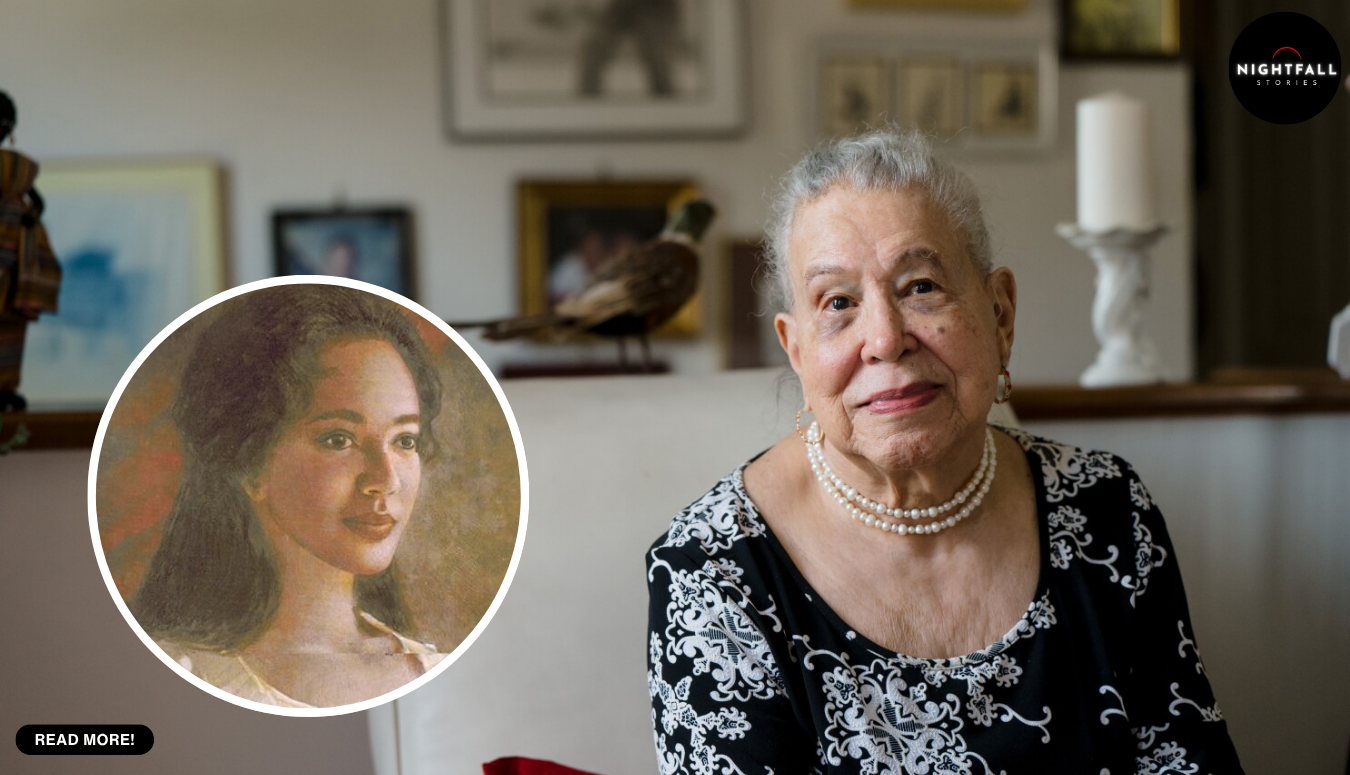
    Lillian Higgins was twenty years old when she gave birth in Louisiana, and she did not get to decide what happened next. Her mother decided. The baby was surrendered for adoption at birth, the paperwork closed behind her, and for the next forty nine years Higgins had no name for her and no legal route to one. By her own account, the reason her family gave for pushing the adoption through was that the baby was mixed race.

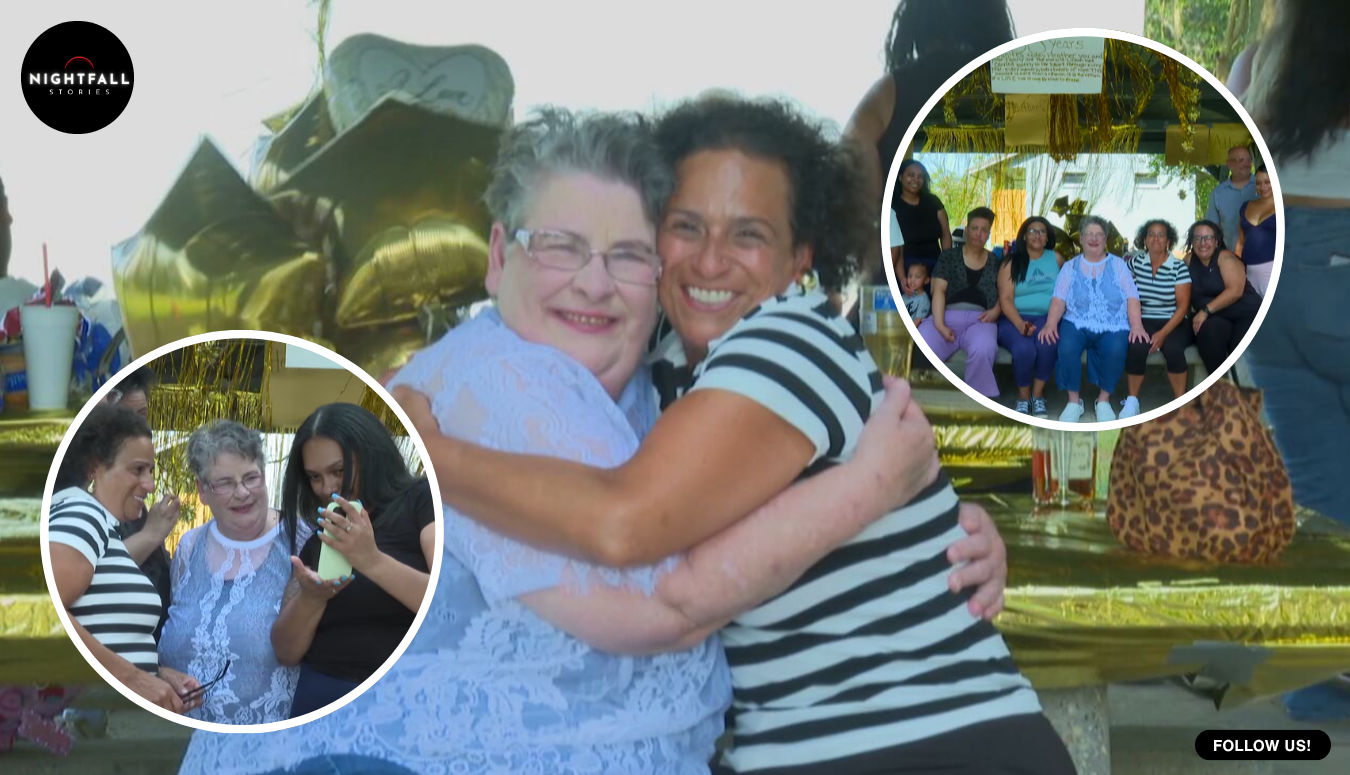
    She is about seventy now. Earlier this year a woman drove down from Oklahoma with her husband and children, parked outside Higgins’s home in Pineville, and walked up to the door. Her name is Heather Palmer. She is forty nine. She is the baby.

    What connected them was not a court, not a registry and not a private investigator. It was a saliva sample in a cardboard mailer, sent off by one of Higgins’s relatives who had no idea she was solving anything.

    That is the part of this story worth slowing down for, because the reunion itself took an afternoon and the machinery that kept it from happening took half a century to build and was dismantled almost by accident.

    Start with 1976, and with what a twenty year old in Higgins’s position could actually do. The honest answer is very little. In the United States of that period, an unmarried young woman who was pregnant and still living inside her family’s household was, in practice, subject to whatever her family arranged. She was old enough to sign her own name and young enough to have no money of her own and no standing to argue. The adoption system of the era did not treat that as a problem to be solved. It treated it as the normal way a case arrived.

    The prevailing professional theory at the time was what the literature later came to call the clean break. The idea was that everyone involved was best served by a complete and permanent severance: the child would be raised as though born to the adopting family, the birth mother would return to her life, resume it, and in the language social workers of the period actually used, go on. Grief was expected to be brief. Contact was assumed to be harmful. The record was sealed not as an accident of filing but as the point of the exercise.

    And the sealing was thorough. Across most American states, adoption records were closed by legislation passed in waves from the 1930s and 1940s onward. An adopted person received an amended birth certificate naming the adopting parents as the parents. The original certificate, the one with Higgins’s name on it, went into a sealed file. Getting it out required a court order, and a court order required what the statutes generally described as a compelling reason. In practice that meant a documented medical emergency or an inheritance dispute. Wanting to know who your mother was did not qualify. Wanting to know whether your daughter was alive did not qualify either.

    There were voluntary registries, and they are worth understanding because their design contains the whole problem. A registry works by mutual consent: the adopted person signs up, the birth parent signs up, and if both records are present the state confirms the match. The logic is respectful. The mathematics are brutal. Both sides have to be looking, at the same time, in the same place, with enough information to be recognised. A birth mother who did not know a registry existed, or who was never told her daughter had been adopted out of state, was invisible to it. Palmer had been registered on genealogy databases for years, by her own account two or three of them, and nothing came back.

    Louisiana did eventually change its rules, and the change is real. Under a 2022 state law that took effect that August, an adopted person aged twenty four or older who was born in Louisiana can request an uncertified copy of their original birth certificate directly from the state registrar. There is no birth parent veto and no judge to persuade. Birth parents can file a contact preference form saying how they would prefer to be approached, but filing one does not block anybody’s access. On paper, that reform is exactly the key that had been missing since the 1930s.

    It arrived forty six years after Higgins signed, and it is not what found her. Palmer grew up in Oklahoma and was adopted there, which puts a second state’s paperwork on top of the first, and in any case the thing that produced the match was not a record at all. It was biology, sold as a consumer product.

    Here is how that works, in plain language, because the mechanism explains why it beat the legal system so completely. A consumer DNA test of the common kind reads several hundred thousand positions scattered across your chromosomes. It then compares that pattern against every other customer in the company’s database and reports, for each person, roughly how much DNA you share and therefore how closely you are probably related. Full siblings share about half. A grandparent, an aunt or an uncle shares about a quarter. First cousins share something in the region of an eighth, and the figure keeps halving as the relationship gets more distant, with a widening margin of error as it goes.

    The crucial consequence is that you do not need the person you are looking for to be in the database. You need somebody in their family to be. A niece is enough. A cousin is enough. A second cousin who has never heard your name is often enough to narrow a search to a single household. Closed adoption law was written to control a document. It has no mechanism whatsoever for controlling what is in a stranger’s cheek cells.

    In this case the person who tipped it over was a relative of Higgins who sent a sample to 23andMe. Palmer’s account is that the hit came from a birth niece. Once the match surfaced, Higgins took a test of her own to confirm what the family arithmetic already implied. The confirmation was not the hard part. Finding one another after forty nine years was the hard part, and it was done by somebody who was not searching.

    There is a strange asymmetry buried in that. No legislature voted for it. No adoption agency consented to it. No court weighed anybody’s competing interest in privacy. A legal architecture built deliberately, over decades, to make this exact meeting impossible was rendered ineffective by millions of people independently deciding they were curious about their ancestry. Whatever you think of the outcome, and in this case the outcome is a mother and daughter sitting in the same room, it is a remarkable thing to have happened without anyone deciding it should.

    It is also more fragile than it looks. The company at the centre of this particular reunion filed for Chapter 11 bankruptcy protection in the United States in 2025. Its assets, including its genetic database, were sold for a reported 305 million dollars to a nonprofit research institute led by one of its own co-founders, a process that drew sustained scrutiny from privacy regulators and from customers who had never imagined their saliva sample as an asset in an insolvency. The reunion infrastructure that closed adoption law could not withstand is not a public service. It is a commercial product with shareholders, terms of service and a balance sheet, and families now rely on it for something no public body ever built.

    Which brings us to the forty nine years, and this is where the weight of the story actually sits. Not in the hug on the doorstep. In the two ordinary lives that ran in parallel and did not touch.

    Palmer was raised in Oklahoma in a large adoptive family. Reporting on her case puts the number of adoptive siblings at twelve, and includes a detail that is quietly devastating in its plainness: she was the only one of them without contact with any biological family. Everyone around her had a thread back to somewhere. She had a file she could not open.

    That is a specific kind of absence, and it is not mainly emotional. It is administrative. It is the medical history form at every new clinic, the one that asks about your mother’s heart and your father’s family and expects you to know. It is the school project about where your people came from. It is the mirror, and a face that resembles nobody you have ever met. Adopted adults describe this not as constant grief but as a low recurring hum, a thing that goes quiet for years and then arrives with the paperwork.

    On the other side of it, Higgins was not a woman who had gone on, whatever the theory of the era had predicted. Her own account of leaving the place where she gave birth is that she looked back at it and told herself that one day she would find her daughter, or her daughter would come looking for her. That is a promise made by somebody with no instrument for keeping it. She had no surname to search and no legal standing to ask for one. She knew the birthday. Reporting on the reunion gives Palmer’s birthday as the seventeenth of September, which means Higgins had, every year for forty nine years, a date she could count but not use.

    Think about what that does to a life at the practical level. Every form asking how many children you have has a wrong answer and a rude one. Every new relationship contains a disclosure you either make or carry. Any other children you raise grow up alongside a sibling whose existence is either a secret or a permanently open question. And the decision at the root of it was not even yours. Higgins did not choose this and then live with her choice, which is difficult enough. She lived for half a century with somebody else’s choice, made in a week, and with no mechanism to revisit it.

    The meeting, when it came, ran the way these meetings apparently often do. Palmer drove down with her own family. By her account the talking did not feel like an introduction at all, more like resuming with old family, people she already knew. Higgins, by her account, called it one of the best moments of her whole life, and the first thing she said to her daughter was that she was beautiful. They photographed the two of them together, and then the wider group, children and grandchildren included, because a reunion at this distance is never two people. It is two families discovering they are one.

    The honest thing to say next is the part that reunion coverage usually leaves out. A reunion is a beginning, not a repair.

    Nothing about that afternoon gives Higgins back the forty nine birthdays, and nothing about it gives Palmer a childhood in which she knew where her face came from. The people who meet in these rooms are not a mother and her baby. They are two adults, formed elsewhere, with different accents and different ideas about how often family should call, who happen to be related in the most fundamental way there is and to share not one single memory. Researchers who follow adoption reunions over time report a wide spread of outcomes. Some become the central relationship of both lives. Many settle into something warm and occasional. Some fade, not from anger but from the ordinary friction of two full schedules and a long drive.

    What they have said publicly is that they intend to keep visiting, in both directions, Oklahoma to Louisiana and Louisiana to Oklahoma. That is the realistic version of a happy ending and it is worth more than a grander one, because it is a thing people can actually do.

    It should be said plainly that almost everything known publicly about this reunion comes from a single local television station in Alexandria, Louisiana, whose report was then carried by sister stations across the country. That is one piece of original reporting, republished, rather than many outlets confirming each other. The core facts have been consistent everywhere they have appeared, and both women spoke on the record, but the record is thinner than the volume of coverage suggests.

    Still, one thing in it is unambiguous, and it is the right place to stop.

    In 1976 a decision about Lillian Higgins’s daughter was made by other people, in a system designed to be final, and she was given no say in it. At about seventy years old, she has reversed it. She has her daughter’s name, her phone number, her face, and her grandchildren. She did it in public, on camera, in her own front room, and she said out loud what her family would not let her say the first time.

    The paperwork was built to hold forever. It held for forty nine years, and then somebody’s cousin got curious about where their ancestors came from, and it did not hold at all.

  • A coroner decided exactly how long a heart monitor may stay silent in a delivery room. The number exists because of one baby, and her mother is still waiting on the rest.

    A coroner decided exactly how long a heart monitor may stay silent in a delivery room. The number exists because of one baby, and her mother is still waiting on the rest.

    There is now a rule in the maternity units of West Yorkshire that says three minutes. If a machine monitoring an unborn baby’s heartbeat loses its signal and staff cannot get it back, an alarm has to be raised within three minutes. Not soon. Not promptly. Not at the discretion of whoever is in the room. Three minutes, and then somebody more senior has to be told.

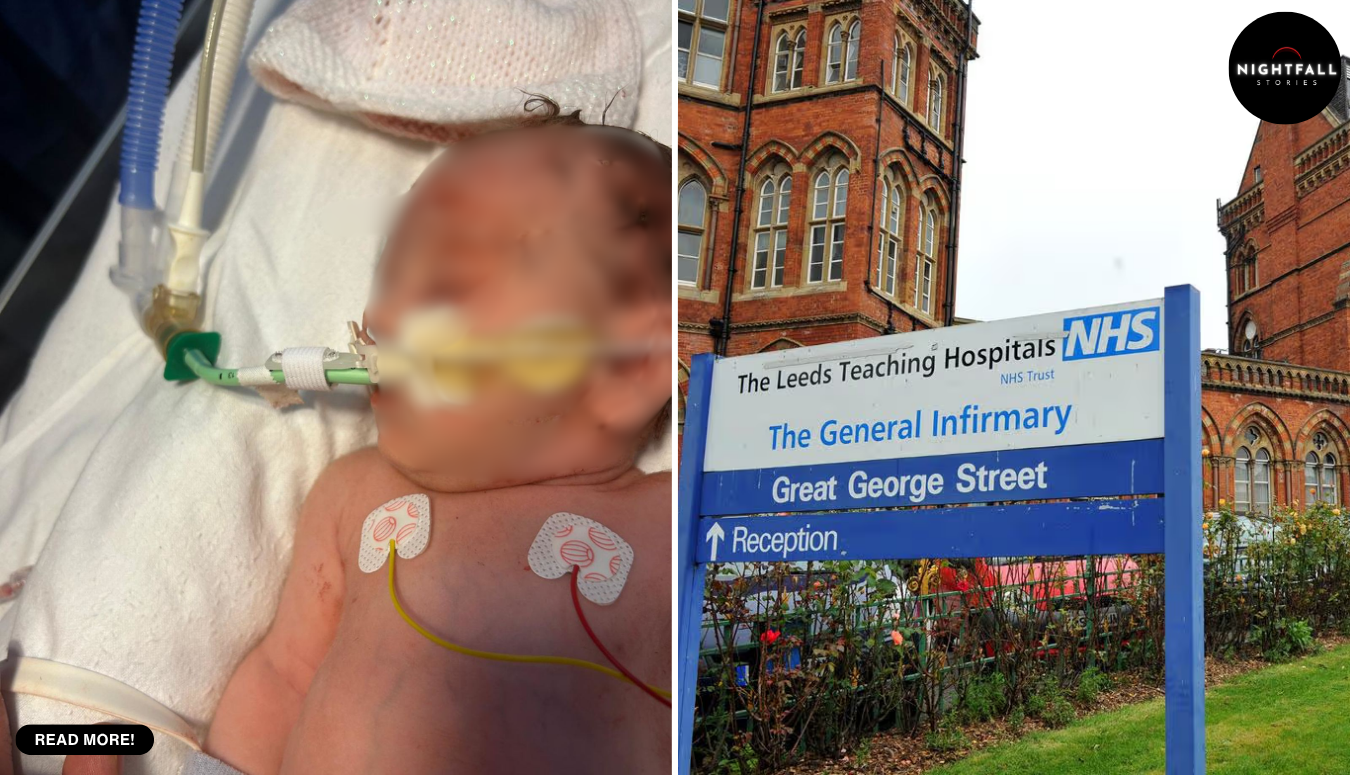
    Before that rule existed there was no number at all, and in late 2024, at Leeds General Infirmary, a baby’s heartbeat went unmonitored during labour for a period the coroner later put at between 33 and 42 minutes. Her name was Delilah-Jayde Arnold. She was delivered by emergency caesarean, she never recovered, and she died seven days later. She would now be nearly two years old.

    Her mother, Kelly-Marie Harris, spent two days at Wakefield Coroner’s Court last month listening to how that happened, holding a small white knitted heart. She came out of it with two things. One was the three minute rule, which is already in force across the region and did not exist when her daughter was born. The other was a finding she did not want, and the gap between those two things is what this story is actually about.

    Start with the machine, because almost nobody outside a maternity unit knows what it does or how it fails. During labour, staff watch an unborn baby’s heart rate continuously, because heart rate is the only usable window onto whether the baby is coping. Contractions squeeze the womb and briefly reduce the blood, and therefore the oxygen, reaching the baby. A healthy baby absorbs that and recovers between contractions. A baby in trouble shows it in the pattern: the rate dips after a contraction and takes too long to come back, or the baseline creeps up, or the small beat to beat variation that signals a well oxygenated nervous system flattens out. Those dips are called decelerations, and a midwife reading a trace is reading them the way a pilot reads an instrument.

    Usually the signal comes from a sensor strapped to the mother’s abdomen. It is non invasive and it is also fragile. Babies move, mothers move, fat and fluid get in the way, and the trace drops out. When a good reading matters enough, the alternative is a fetal scalp electrode, a small clip attached directly to the baby’s head through the cervix, which gives a far more reliable signal because it is not listening through anything.

    At Delilah’s birth, the inquest heard, staff tried repeatedly to attach a fetal electrode and could not get it to work. That detail matters for a reason that is not anybody’s fault in that room: the court also heard that an alternative type of electrode was not available, because of a national procurement problem. So the clinical picture was a labour where somebody had judged that a reliable trace was needed, the reliable method would not attach, and the other reliable method was not in the building.

    What follows is what the inquest called a failure to escalate. Loss of contact with a baby’s heartbeat is not itself an emergency. It happens constantly and most of the time it is resolved in seconds. The danger is that it looks identical, minute by minute, whether the baby is fine or the baby is dying. A silent monitor tells you nothing, and nothing is very easy to sit with when you are busy, because there is no alarming trace in front of you. That is the trap, and it is a human one rather than a mechanical one. The longer a gap runs, the more it feels like a technical nuisance and the less it feels like a clinical event.

    The inquest heard that midwives did raise concerns. One had noted worrying decelerations earlier and escalated; another asked for more senior support. But there was no rule that converted a certain number of minutes without a heartbeat into a mandatory alarm, and so the gap ran. On the first day of evidence the figure reported in court was around 45 minutes. In his conclusion the coroner narrowed it and put it as a range, between 33 and 42 minutes before delivery, with no monitoring of the fetal heart rate and no recognition that this was in itself a risk to the baby.

    Harris told the court she believes the emergency response was too slow, and that if an emergency bell had been pressed she might have reached theatre considerably sooner, which could have changed the outcome. A caesarean was eventually carried out that evening. Delilah was born in very poor condition, with a heart rate far below where it should have been, and she had seizures from the start. A pathologist concluded that her brain had not received enough oxygen around the time of birth. Her parents were told there was no brain activity. She lived a week.

    Oliver Longstaff, the Acting Senior Coroner for West Yorkshire Eastern, returned a narrative conclusion, which is worth explaining because the word narrative is doing real work. An inquest is not a trial. It does not decide blame or liability, and it cannot name anyone as responsible. It answers four questions: who died, and where, when and how. For that last one a coroner can use a short form conclusion, a single word or phrase from a fixed list, natural causes, accident, suicide, and so on. Or, when none of those captures it, the coroner can write a narrative, a short factual account of the sequence of events. That is what happened here. Longstaff found that the monitoring of Delilah’s heart rate had been deficient, and that this deficiency was directly causative of the condition she was born in and from which she died.

    He also said something that Harris had asked for and did not get. One of the short form options available to a coroner is neglect, and in the inquest context neglect has a narrow, demanding legal meaning. It is not the everyday sense of carelessness. It requires a gross failure to provide basic medical attention to someone in a dependent position, and a clear causal connection between that failure and the death. Gross means far beyond ordinary error. Basic means fundamental, not sophisticated. Courts have been deliberately strict about it, because a finding of neglect at an inquest carries a weight that ordinary substandard care does not.

    Longstaff declined to make that finding, and his reasoning was short. You cannot find a gross failure, he said, when something is being done, however badly it is being done. Staff were not absent. They were not ignoring the labour. They were trying, repeatedly, to attach an electrode, and failing, and not escalating. In law that is deficient care. It is not nothing being done at all.

    Harris said she was disappointed. That is the second injury families describe after an inquest, and it is worth taking seriously rather than treating as a technicality misunderstood. To a bereaved parent, a finding that care was deficient and directly caused a death, coupled with a refusal to call it neglect, can read as the system grading its own failure and awarding itself a pass. It is not that, legally. But the distinction is drawn on the shape of the failure rather than on its consequences, and consequences are all a parent has. Both things are true at once: the coroner applied the test correctly, and the test does not measure what Harris lost.

    Where she did get something is the part that will outlast the conclusion. After Delilah’s death, Leeds Teaching Hospitals NHS Trust reviewed what happened internally and externally, and changes followed. New guidance on fetal heart rate monitoring, including the three minute escalation requirement. Changes to equipment. Changes to training and staff education. And that guidance is not confined to one hospital. It is now used across West Yorkshire maternity services, which is a region of several million people and a substantial share of England’s births.

    The trust’s chief medical officer, Dr Elizabeth Garthwaite, said the trust’s thoughts remain with Harris and her family, offered its condolences, acknowledged the lasting grief, and said the trust is deeply sorry that failings in care were identified by those reviews and for the pain that has caused. That is an unusually direct acknowledgement from an English hospital trust, and it is worth recording as such, without pretending it settles anything.

    Then the coroner did the thing coroners do that has more reach than any conclusion. He issued what is formally called a report on action to prevent future deaths, known from the regulation that creates it as a Regulation 28 report. The power is simple and blunt: if an inquest reveals something that creates a risk of other deaths, the coroner must write to whoever has the power to fix it and say so. The recipient is legally obliged to respond in writing within fifty six days, either setting out what they will do or explaining why they will do nothing. Coroners have used it to change car park barriers, prison observation regimes, medicine labelling and motorway signage. It is one of the few mechanisms in English public life where a single death reliably generates a written answer from an institution.

    Longstaff sent his to the clinical director of the National Institute for Health and Care Excellence, the body that writes the clinical guidelines English maternity units are expected to follow. His question was essentially whether the West Yorkshire fix should be the national one: should there be a defined time limit, nationally, for escalating a loss of fetal heart rate monitoring.

    That referral is live. It has not been decided, and it should not be reported as though it has. NICE will consider it the way NICE considers things, which means looking at the evidence base for a specific number rather than at the merits of one case. The question it has to answer is harder than it sounds. A rule with a number in it is a genuinely different instrument from a rule without one, and that is the intellectual heart of this story.

    A guideline that says escalate promptly is unenforceable, unauditable and infinitely negotiable. Everyone agrees with it and nobody can be found to have breached it, because prompt is whatever it looked like at the time to someone under pressure. A guideline that says three minutes is a different object entirely. It can be taught in a sentence. It can be built into a machine’s alarm. It can be counted on a clock by the most junior person in the room, which means it transfers authority downward: a student midwife does not need to make a clinical judgement or win an argument, she needs to look at a watch and say three minutes, we escalate. Afterwards it can be audited from the records, and it gives anyone reviewing a case a fixed line rather than a debate about reasonableness.

    The cost of numbers is that they are arbitrary at the edges and they generate false alarms. Three minutes will sometimes summon a senior clinician for a signal that returns at three minutes and ten seconds, and in a busy unit that is a real cost. Every safety rule with a number in it buys clarity by accepting some waste. The argument for doing it here is that the failure mode being guarded against is silence, and silence is the one thing human attention is worst at noticing.

    None of this is happening in a vacuum. English maternity care has been the subject of a long run of published investigations, at Shrewsbury and Telford, at East Kent, at Nottingham, and in a national review, and the recurring findings across them are depressingly consistent: heart rate traces misread or not read, concerns not escalated, and a reluctance to interrupt the expected course of a labour. The Shrewsbury and Telford review concluded that more than two hundred babies might have survived with better care. Against that background, a single inquest producing a concrete, countable, regionally adopted rule is a small thing that actually bites, which is more than most of the reports can claim.

    Harris has said she hopes the national guidance changes so that other families do not go through this. That is the whole of her position, and it is a narrow ask from someone entitled to a much larger one.

    So here is where it stands. A rule that did not exist now exists, in a region with millions of people in it, and it exists because a woman sat through two days of evidence about the worst thing that has ever happened to her rather than letting the file close. The coroner found the care deficient and stopped short of neglect, and she has to live with that wording. The question of whether three minutes becomes the number for the whole country is sitting on a desk at NICE, waiting for a written answer.

    She changed the rule for one region. She is waiting to find out whether she changed it for everyone.

  • Her hospitals float, and the land they serve keeps disappearing. Asia’s biggest prize has just caught up with her.

    Her hospitals float, and the land they serve keeps disappearing. Asia’s biggest prize has just caught up with her.

    In 2002 a woman in Dhaka took a retired river barge that a French sailor had brought halfway around the world and had it rebuilt as a hospital. Not a clinic with a few beds. A hospital, with an operating theatre inside a steel hull, so that surgeons could reach people who live on land that is not on any map because it will not be there next year. Twenty four years later there are seven of those ships, two hospitals built on solid ground, and a staff of more than seven and a half thousand. Late last month, the Ramon Magsaysay Award Foundation in Manila named Runa Khan as one of its 2026 awardees, which is the closest thing Asia has to a Nobel for public service, and the citation spent most of its words on something other than the boats.

    It spent them on where she came from.

    To understand why that matters, and why a fleet of floating operating theatres is not an eccentric idea but the only sane one, you have to understand a char. In the north of Bangladesh the Brahmaputra arrives out of the Himalaya carrying an enormous load of silt, changes its name to the Jamuna, and then spends the rest of its journey dropping that silt in the middle of itself. The result is islands. Not islands in the sense of a rock with a lighthouse on it, but low banks of sand and clay that rise out of the braided channels, hold for a few years or a few decades, and then go. Sometimes the river takes one in a season. Sometimes it takes half of one and lays down a new one a kilometre downstream. These are the chars, and hundreds of thousands of people live on them.

    They live there because the land is free and the soil is astonishingly fertile, and because the alternative is a city slum. They grow chillies and groundnuts and maize in sand that would embarrass a European farmer. They keep cattle. They build houses designed to be taken apart in a day, because a house you cannot dismantle is a house you lose. And then the water rises, or the bank starts to crumble, and a family loads the roof and the posts and the cooking pots onto a boat and starts again somewhere else that also will not last.

    Now think about what that does to a person’s relationship with a state. Almost everything a government gives a citizen is attached to a place. A school is at an address. A clinic is at an address. A land title, a voter roll, a vaccination register, a ration card, a birth certificate, all of it assumes that where you were yesterday is where you will be tomorrow. When the ground itself is temporary, the paperwork never catches up. People who have lived their whole lives inside a country can end up functionally uncounted in it, not through anyone’s malice but because the filing system was never built for a moving target. The Magsaysay citation reached for a single word to describe what Friendship changed about that, and the word was recognition.

    Khan’s own starting point was as far from a char as it is possible to get while staying in the same country. She was born in 1958 into a family with deep landed roots, descended on her father’s side from Bengal’s zamindars, the old landholding class, with a maternal line that reaches back to a sixteenth century dynasty. By her own account the house she grew up in was full of visitors who argued about ideas, and her father encouraged her to listen to all of them. She studied geography and humanities, taught small children from the late 1970s, and in her thirties and forties ran a string of small businesses that each had a social edge to them, a boutique set up partly to employ people who struggled to find work elsewhere, a spell in the family printing business, a security company, a venture running trips on traditional wooden boats.

    That last one is the hinge. Boats were already in her life when a French sailor and aviator called Yves Marre turned up having sailed a decommissioned river barge from France to Bangladesh with the intention of donating it for medical use. The vessel was there. The question was what to do with it. Khan has said she took the idea of converting it into a floating hospital to existing organisations and was told it would not work. So she started her own, and in 2002 the first ship, the Lifebuoy Friendship Hospital, went into service on the Jamuna, backed by a corporate sponsor.

    Converting a cargo barge into a surgical facility is a genuinely interesting engineering problem, and it is not just a matter of screwing beds to the deck. A barge is a flat box built to carry weight, which is exactly what you want, because it draws very little water and can sit close to a sandbank where anything with a deep keel would ground. But an operating theatre needs things a cargo hold does not have. It needs a sealed, cleanable space with controlled air. It needs power that does not flicker, which means generators and the fuel to run them, and increasingly solar. It needs clean water and a way to deal with waste, on a river that people drink from. It needs sterilisation, refrigeration for drugs and blood, oxygen, lighting bright enough to operate under, and a floor that can be washed down. It needs to hold all of that while remaining stable enough that a surgeon is not compensating for a swell. And it needs to be able to move, anchor, and become a functioning hospital again within a day.

    The medicine they do on those decks is not exotic. It is the backlog of things that are completely fixable and completely life altering if nobody ever fixes them. Cataracts, which is to say blindness that can be reversed in an afternoon. Cleft lip, which is to say a child who can eat and be looked at without flinching. Obstetric fistula, an injury from obstructed labour that can quietly end a woman’s entire social life. Hernias. Tumours. The unglamorous middle of surgery, delivered to people who would otherwise need a day of travel and a month of wages to reach a district hospital.

    The ships alone would not be enough, and the Foundation’s account of the model makes clear that they were never meant to be. Beneath the hospitals sit mobile clinics that run out into the villages, and beneath those sit Community Medic Aides, local people, mostly women, trained to handle the simple things immediately, spot the serious things early, and get someone onto a boat when it matters. That is the part that does the quiet work. A hospital ship that visits is a periodic event. A trained neighbour who lives two houses away is permanent, or as permanent as anything is on a char.

    Here the honest caveats have to be stated, because the numbers attached to all this come from one place. The Ramon Magsaysay Award Foundation’s awardee record lists seven hospital ships, two land based hospitals, 550 mobile clinics and 700 trained Community Medic Aides. It credits Friendship with putting more than 205,000 people into work through 137 economic development hubs, reaching around 30,000 students through movable schools, training more than 10,000 volunteers for rescue and relief, and planting more than 200 hectares of mangrove. It records the staff going from twenty eight people, twenty four of them medical and four in a head office, to more than 7,500 today. Those figures were supplied to the Foundation by Friendship. The Foundation is a serious institution with a serious selection process, and the award has a sixty eight year record behind it, but a citation is not an audit. Read those numbers as what the organisation says about itself, verified to the standard a prize committee applies rather than the standard a regulator would.

    One figure in particular should carry a label. The Foundation’s record states that students in Friendship’s schools average 90.05 percent in national examinations. A number precise to two decimal places invites a confidence the source does not support on its own, and it belongs to Friendship, reported by the Foundation, not to any independent examination body that has published a comparison. It may well be right. It is not independently established.

    The schools deserve attention anyway, because of the adjective. They are described as movable, and on a char that is not a marketing word, it is a design specification. A school building on land that might be in the river next year is either temporary or it is a waste. So the structures are prefabricated, made to be taken down, carried and put up again, which means a community that relocates does not automatically lose a year of its children’s education. The same logic runs through the rest of it. Solar villages, because a grid needs poles and poles need permanence. Prefabricated shelter for people the organisation describes as climate migrants, which on the chars is not a projection about the future but a description of what a family has already done two or three times. Mangrove planting on the coast, where the threat is salt and cyclones rather than shifting silt, because a belt of trees is a sea wall that repairs itself.

    Khan has not been unnoticed along the way, which is part of why the piece you are reading is about twenty four years rather than about one announcement. She was made an Ashoka fellow in the mid 1990s, before Friendship existed. She was a Rolex laureate in 2006, took a development prize for women’s contribution in 2008, and a social entrepreneurship award in 2012. A hospital Friendship built on the coast, designed by the Bangladeshi architect Kashef Chowdhury, won the Royal Institute of British Architects’ international prize for the best new building in the world, which is not a category that usually goes to a low cost facility in a cyclone zone. Last year she was recognised in the climate category of the Earthshot Prize. The Magsaysay is the biggest of them in Asian terms, and it is the reason this story is being told now, but it is a peg, not an event. Nothing changed on the chars in August.

    What the citation added was an argument rather than a statistic. The trustees wrote about her empathy for the poorest people in her country, and about courage and tenacity in building the organisation, and then they made a point about class. In her hands, they said, privilege became a responsibility rather than an entitlement, and the family legacy she inherited was treated as something to share rather than something to defend. That is an unusually pointed thing for an award committee to put in writing, and it is the most interesting sentence in the whole record. It is also a sentence that only makes sense if you know both ends of the story, the zamindar descent and the sandbank.

    Accepting the award, Khan turned the credit around, saying it belonged to the people who had let the organisation walk alongside them for twenty five years. It is the sort of line that could be polite noise, except that the model she built is unusually literal about it. The Community Medic Aides are from the communities. Most of the seven and a half thousand staff are from the communities. The economic hubs exist so that the money stays there. An organisation that flew in doctors and flew out again would be a much simpler thing to run, and it would leave nothing behind when the boat left.

    She is now the fourteenth Bangladeshi to receive the award, and she will be in Manila in November for the ceremony at the Metropolitan Theater, alongside the Singaporean diplomat and scholar Tommy Koh and the Myanmar human rights advocate Bo Kyi. That is where the formal part of this ends, with a citation read out in a theatre eleven hundred miles from the river.

    The better ending is somewhere else, and it is the thing the citation was actually pointing at. For a long time the people of the chars were a rounding error in their own country, not because anyone decided they should be but because the administrative world runs on fixed addresses and theirs kept washing away. What a hospital ship does, beyond the cataracts and the hernias, is create a record. Someone arrives, is examined, is treated, is written down. A child in a movable school sits a national exam under her own name. A woman trained as a medic aide has a job with a title. None of that stops the river. The river will keep taking land, and the families on it will keep loading their roofs onto boats, and that is not a problem seven ships can solve.

    But being seen is not a small thing when the alternative is being uncounted, and it is the one part of this that does not float away. Twenty four years ago a woman with an inherited name and a borrowed barge decided that people without a permanent address were still people with one. Asia’s biggest prize has now said so out loud. The river, characteristically, has not commented.

  • A new DNA method identified a 9/11 victim for the first time in twenty-five years. The city announced it without her name.

    A new DNA method identified a 9/11 victim for the first time in twenty-five years. The city announced it without her name.

    The announcement came out of New York’s medical examiner’s office in late August, and the strangest thing about it was what was missing. A victim of the World Trade Center attacks had been identified. She was an adult woman. Her family had been told. And her name was not in the release, because the family asked for it to be kept out, and the city did as they asked.

    It was the first identification from that day ever made using a technique called forensic investigative genetic genealogy, and it happened because of a problem that had nothing to do with chemistry.

    Mark Desire has been working on these identifications since the morning of the attacks themselves. He is now the director of forensic biology at the city’s Office of the Chief Medical Examiner, and by his own account he is the only person left from the original team. Twenty-five years is a long time to stay on one case. It is a much longer time when the case is the largest forensic identification effort ever attempted in the United States and the work consists, in large part, of going back over the same material you have already gone back over.

    To understand why this particular identification took a quarter of a century, you have to understand what the standard method needs, and what it cannot do without.

    Ordinary DNA identification is a matching exercise. You take a profile from recovered remains, and you compare it against a reference sample given by a relative. A parent, a child, a sibling. If the two are related, the profiles line up in a predictable way, and you have your answer. It is reliable, it is well understood, and it has done almost all of the work in this case for twenty-five years.

    It also has a hard floor. If no relative ever gave a sample, there is nothing on the other side of the comparison. And that happens more often than people assume. Some families were never contacted, or moved, or could not be traced. Some declined. Some had nobody close enough left to ask, because the victim had no surviving parents, no children and no siblings, and cousins alone are often too distant for the standard approach to resolve. In those cases the laboratory could hold a perfectly good DNA profile for years and still have no name to attach to it, not because the science failed but because there was no second half of the equation.

    Forensic investigative genetic genealogy attacks the problem from the other end. Instead of asking whether a profile matches a specific relative who volunteered, it asks whether the profile shows distant relatedness to anybody in large public genealogy databases, the kind people upload their consumer ancestry results to. A distant match is not an identification. It is a starting point. From there, genealogists build family trees outward and backward, looking for a branch that leads to somebody who was in Lower Manhattan that morning and never came home. That gives investigators a lead, a name to test. The laboratory then has to confirm it with DNA or other forensic evidence before anybody is told anything.

    In this case that work was done with the New York Police Department’s Investigative Genetic Genealogy Squad, with the medical examiner’s office doing the confirmation. The method is not new in itself. It has been used in criminal cases for years. What was new was applying it to remains from the World Trade Center, and the city’s chief medical examiner, Dr Jason Graham, described it as a promising addition to the office’s toolkit and as a way of generating leads that otherwise might not have been possible. Mayor Zohran Mamdani framed the announcement as what happens when new technology meets a commitment the city has not put down.

    Now the arithmetic, and one part of it does not add up, so it is being given here exactly as the two sources give it.

    The Mayor’s Office and the medical examiner’s office, in their announcement in late August, called this woman the 1,654th victim identified since 2001. In the same release they gave the total who died at the World Trade Center in New York as 2,753, and said 1,099 victims, about 40 percent, remain unidentified. Those three numbers are internally consistent with each other.

    A little over two weeks later, in a profile of Desire published by amNewYork, the figure given was 1,651 victims identified, described as about 60 percent of the 2,753. Eight days separate the two publications and the numbers move in the wrong direction. A count like this can shift for real reasons, including remains being reassigned between previously identified people, but no reconciliation has been published, so neither figure is being treated here as the settled one. The Mayor’s Office release says 1,654. amNewYork says 1,651. Both are on the record and they do not agree.

    What both agree on is the shape of what is left. Roughly 22,000 individual pieces of human remains were recovered from the site. Of those, 14,968, about 68 percent, have been linked to a specific person. Around 40 percent of the people who died have never been identified at all. And before this identification, the office had not announced a new one for close to twelve months.

    That last number is the one that explains why a new method mattered so much. The standard approach had not stopped working. It had simply run out of the cases it was capable of solving.

    The gap between those two sets of figures is worth pausing on, because it is the whole problem in miniature. Around 22,000 pieces of remains were recovered and about 14,968 of them have a name attached. That leaves something in the order of seven thousand pieces of recovered human material that the laboratory holds and cannot place. The material is there. The identity is not. In some cases that is because no usable DNA has yet come out of the sample. In others a perfectly readable profile exists and there is simply nobody to compare it to, which is the exact hole this new method was brought in to fill.

    And there is a harder truth sitting beside all of it, which is that for some of the people who died, no identifiable remains were recovered at all. That is not a failure of the laboratory. It is a fact about what happened to two buildings of that size, and it means the count will never reach 2,753 no matter how good the chemistry gets. Everyone working on this knows that, including the families, and it shapes how the office talks about what it is doing. Nobody in that building promises anyone an answer.

    Desire’s laboratory has spent much of the last twenty-five years doing something that sounds repetitive and is, in fact, the entire reason the count has kept creeping upward. The same material gets tested again. And again. Every time extraction chemistry improved, every time a new method of pulling DNA out of badly degraded samples came along, the laboratory went back to samples that had already refused to yield a usable profile and tried once more with the better tool. Some pieces have been through that cycle more than ten times. A sample that gave nothing in 2003 might give a partial profile in 2013 and a full one later. Nothing is written off.

    That is a specific kind of patience, and it is not the kind institutions are usually good at. Budget cycles do not reward going back over finished work. Careers are not built on retesting. Desire has been there through multiple mayors, multiple chief medical examiners, and a public attention span that surges every year in September and recedes by October.

    Two of the families he has spent those years talking to have been open about where they have landed, and they have landed in opposite places, which is worth sitting with.

    Charles Wolf’s wife Katherine was in the North Tower. The first plane went into her office directly, and Wolf has said he does not expect her remains will ever be identified. He has made a kind of peace with that. He is not waiting for a phone call, and he has said so publicly for years.

    Monica Iken-Murphy’s husband, Michael Patrick Iken, was a bond trader in the South Tower. They were newlyweds. She has spoken about the possibility that genealogical research might one day produce an identification and has said she would welcome it, while also saying she would rather his remains stay where they are, at the memorial. She has since remarried and has two children. Both of those things are true at once, and neither cancels the other.

    Put those two next to each other and you have the thing the medical examiner’s office has to hold in its hands every time it makes a call. An identification is not an unambiguous gift. For some families it is the end of a twenty-five-year wait. For others it reopens something they have spent a quarter of a century learning to carry, and the phone call is the last thing they want.

    Which brings the story back to the name that was not printed.

    There is a genuine ethical question inside this method, and it is not a small one. In the standard approach, a family’s participation is the thing that makes an identification possible. They chose to give a sample. They asked, in effect, to be told. Genetic genealogy inverts that. It can identify someone through the uploaded ancestry data of distant relatives who have never heard of the case, on behalf of a family that submitted nothing and made no request. The person can be found without anybody in the immediate family ever having asked to find her.

    That does not make it wrong. It does make consent something the office has to think about after the fact rather than before it, and it means the family’s wishes at the moment of notification carry more weight than usual, because that notification is the first choice they have been offered.

    The people on the other side of the database are worth a thought too. Somebody, somewhere, spat in a tube to find out where their great-grandparents came from, uploaded the result, and has no idea that their data has just been part of identifying a stranger who died in 2001. That is the bargain underneath every genetic genealogy case, criminal or otherwise, and it is the reason the field has spent years arguing about which databases should be open to investigators, what users are actually told when they tick a box, and whether an opt-in buried in a terms page is a real consent or a legal formality. Applying it to a mass fatality does not create that argument, but it does remove the usual justification, because here nobody is being caught. Somebody is being found.

    A notification, when it comes, is not a press release either. It is a phone call, and then usually a meeting, and the office has spent twenty-five years learning how to make it. Families were asked years ago to say whether they wanted to be contacted at all for future identifications, and some said no, which the office honours. The call does not come with a story attached or a ceremony arranged. It comes with a fact and a set of choices about what happens next, including the choice this family made.

    This family’s choice was privacy. They were told who she was, and they asked that she not be named publicly, and the city announced the identification without her. The release describes an adult woman and says nothing else about her. Nobody outside her family and a small number of officials knows which of the missing she is.

    It is an unusual thing for a city to do, and a good one. New York has spent twenty-five years and an enormous amount of public money on the proposition that every one of these people deserves their name back. Here was the first success of a brand new method, on the eve of a major anniversary, and the obvious institutional temptation was to make it a story with a face. Instead the announcement was written around a hole where the name should be.

    The count went up by one. The list of the missing got one line shorter. Somewhere there is a family that now knows something it did not know last year, and has told the rest of us, politely, that it is none of our business.

    That is the ending. Not a name released, but a name recovered and then deliberately withheld. After twenty-five years of a public effort conducted largely in public, the first identification by this method is the one the public will never be told.

    It is also, in a small way, a correction to how this kind of science usually gets talked about. New forensic methods almost always arrive in public attached to a name, because the cases that make headlines are criminal ones and the point of those is the identification of a person who did something. Here the method arrived attached to nobody. Its first success on this case is a blank space in a press release, and the only way anyone knows it worked at all is that a city office said so and a family, offstage, agreed to let it be said.

    And Desire is still going. Roughly eleven hundred people are still unidentified, the samples are still in the building, and the method that just worked for the first time has only been pointed at a fraction of them. The next one may take another year. It may not. The only part of this anybody in that laboratory treats as settled is that they are not finished.

  • She gave her DNA to a fifteen-year study of her own family. At ninety-eight she asked for it back, and got it.

    She gave her DNA to a fifteen-year study of her own family. At ninety-eight she asked for it back, and got it.

    Mary Lee Brady-Atkins is ninety-eight years old, and late this summer she wrote a short letter saying she was withdrawing her consent, effective immediately. Within weeks the Smithsonian Institution had destroyed her saliva samples, destroyed the DNA extracted from them, and deleted the data that went with them. A laboratory at the University of California, Santa Cruz destroyed everything it held on her too. A lecture the lead scholar was due to give under the Smithsonian’s own banner was cancelled.

    She is the oldest living descendant of Sally Hemings, the woman Thomas Jefferson enslaved at Monticello. She had given her DNA, willingly, to a study that ran for about fifteen years and was built to answer the oldest and most argued question in American ancestry. And here is the part that surprises almost everyone who hears about it: her objection was never to the answer.

    It was to the order in which the answer was being told.

    That distinction is the whole story, and it is worth slowing down for, because it is the kind of thing that gets flattened in a headline. Brady-Atkins is not a bystander who read something upsetting in a newspaper. She is a retired professor who spent roughly five decades inside academia and science. She knows exactly how a finding is supposed to travel. It goes to a journal. An editor sends it to referees the editor chooses, not referees the investigator chooses. The referees try to break it. If it survives, it is published with the data that supports it, and then, only then, it gets written up for everybody else.

    What happened instead was that a trade book came out first.

    The book is called History by a Hair: Thomas Jefferson, Sally Hemings and Solving a 200-Year-Old Mystery. Its author is Richard Kurin, a senior Smithsonian scholar, and it was published by Crown, part of Penguin Random House, in late September. The scientific paper describing the genomic work behind it was, as the coverage began, still under review. It had not been published. It had not been through referees.

    Brady-Atkins had asked for an advance copy of the book in mid-July. By the account published by The Chronicle of Higher Education, she was told yes of course, and then later told that she would have one as soon as it came out. For a participant who had handed over a biological sample and waited fifteen years, that landed badly. She has said, in substance, that she came to feel she had been treated less like a research participant and more like a prop.

    She withdrew on 24 August.

    To understand why a fifteen-year study existed at all, you have to go back to the one everybody remembers. In 1998 a Y-chromosome study compared male-line descendants of Eston Hemings, one of Sally Hemings’s sons, against the Jefferson family’s male line. The match was real and it mattered enormously. But a Y chromosome is inherited nearly unchanged down a male line, which means it identifies a family, not an individual. The 1998 work could show that Eston’s male-line descendants carried the Jefferson male line. It could not distinguish Thomas Jefferson from his brother, his nephews, or any other Jefferson man who had access to Monticello. That gap is precisely the space the argument lived in for the next quarter of a century.

    Closing it needed something the 1998 study did not have, which was Jefferson’s own genome rather than his family’s chromosome.

    That is where the hair comes in. A lock of hair held in Monticello’s collection was labelled as having been cut on the day Jefferson died in 1826. According to the published accounts, the team recovered more than half of a genome from it, working with the geneticists Richard Green and Beth Shapiro at UC Santa Cruz, both of whom are well known in the field of degraded and ancient DNA. Earlier testing on a different lock, one associated with a Jefferson Bible, had reportedly concluded it was not his hair at all, which tells you something about how thin the material evidence in this area has always been.

    The team then compared what it had pulled from the hair against samples given by living descendants, concentrating on the lines coming down from Sally Hemings’s sons Madison and Eston.

    It is worth being clear about how difficult that first half of the job is, because the phrase more than half a genome sounds modest and is not. DNA in a two-hundred-year-old lock of hair is not a tidy strand waiting to be read. It has been sitting at room temperature for generations, breaking into shorter and shorter pieces, and it is mixed in with the DNA of everybody who has handled the lock and everything that has grown on it. Recovering a usable fraction of a specific person’s genome from that kind of material is the sort of work that only became possible in the last decade or so, and Green and Shapiro both built their reputations on exactly this problem. Nobody serious is disputing that the technical achievement is real.

    What peer review would examine is not whether they got DNA out. It is the chain of inferences laid on top: which fragments were accepted and which discarded, how contamination was ruled out, which stretches of the genome the comparison actually rested on, how the descendant samples were handled, and what statistical model turned all of that into a probability. A number like more than 99.9 percent is not a measurement. It is the output of a model, and the honest way to read any such figure is to ask what assumptions the model made and whether anyone independent has been allowed to poke at them. That is not scepticism about the result. It is the ordinary question, and at the moment it has no public answer.

    The figure that has travelled fastest out of all this is a reported chance of more than 99.9 percent that Jefferson fathered a child with Hemings. It needs handling carefully, and not because anyone has suggested it is wrong. It needs handling carefully because of where it came from. As reported, Kurin gave that number during a webinar in mid-July, before the book was out and before any paper had cleared review. It has not been peer reviewed. The supporting data has not been published for other scientists to pull apart. It is, at the time of writing, a reported and unvetted number.

    Which is, word for word, Brady-Atkins’s complaint.

    The sequence matters here, so it is worth laying out in order. The number was aired in a webinar in mid-July. The book landed on 22 September. The paper was still with reviewers. Somewhere in between, a participant asked to read the book before the world did, was told she would have it when everybody else did, and withdrew on 24 August. Every one of those steps is documented and dated, and read in order they describe a finding reaching the general public through three separate channels before it reached a single independent referee.

    There is something almost too neat about that. A ninety-eight-year-old participant said the finding should not be circulating before referees had seen it, and the finding is now circulating worldwide, quoted to one decimal place, with the referees still holding the paper. Whether the number eventually survives review is a separate question, and it is not one this piece can settle. What can be said is that nobody outside the study has yet been in a position to check it, and that is an ordinary, unglamorous fact about how science works rather than an accusation about anybody’s honesty.

    The consent question underneath it is harder, and more interesting, than the publication timing.

    In most research, consent is a deal between one person and one study. You give a sample, you are told what it will be used for, and you can walk away. Family genomics does not work like that, and it cannot. A sample from one relative is also information about every other relative, because that is what shared ancestry means. It says something about siblings who never signed anything. It says something about cousins who have never heard of the study. Above all, in a case like this one, it says something about people who died two centuries ago and cannot be asked.

    There is an asymmetry in this that no institution has really solved. Brady-Atkins could ask for her sample back, and she got it. She could not ask for the inferences about her family to be unlearned, because they were never only hers to begin with. Once the shape of a family tree has been read, taking one person’s saliva out of a freezer does not take that reading back out of the world. Her withdrawal was a real act with real consequences, and it was also, by the nature of the thing, partial. She seems to have understood that perfectly well. She was not trying to erase the study. She was refusing to be part of the version of it she thought was being done badly.

    Sally Hemings herself left no consent form. Neither did the children whose paternity is the subject. The people whose bodies and lives are at the centre of this question were, in life, denied almost every form of consent there is, which is the uncomfortable weight that sits under any genetic study of an enslaved family. Brady-Atkins is one of the living people who can still speak in that chain, and she used that position in a specific and procedural way rather than a dramatic one. She did not demand the finding be suppressed. She asked that it be vetted first, and when it was not, she took her own sample out.

    The institution complied, and quickly. The Smithsonian destroyed the samples, the extracted DNA and the associated data. UC Santa Cruz destroyed its copies. Researchers have said her removal did not materially change the findings, which is almost certainly true in statistical terms and also slightly beside the point, since she was not arguing that her single sample would flip the result. The Smithsonian also cancelled the lecture Kurin had been scheduled to give at Smithsonian Associates in late September. He has continued to appear elsewhere, at museums and public venues, talking about the book.

    It is worth saying plainly that the descendant communities here are not one constituency with one view, and anyone who writes about this as Hemings descendants versus the Smithsonian has got it wrong. John H. Works Jr, a lawyer and financier who is himself a Jefferson descendant, has been pursuing competing paternity theories on a separate track. A documentary filmmaker, Sanjay Rawal, has been following the story. Other Hemings descendants gave samples and have not withdrawn them. Brady-Atkins spoke for Brady-Atkins.

    It is also worth saying that this study was not settling a question its own institutions still treated as wide open. Monticello has had an exhibit dedicated to Sally Hemings since 2018. The historical consensus had moved a long way before any hair was sequenced, on the strength of the 1998 work, the documentary record and the accounts left by the Hemings family themselves, including Madison Hemings’s own published recollection in the nineteenth century. So the genomic study was not rescuing a truth from denial. It was tightening a bolt that history had already turned most of the way. That is a perfectly good reason to do a study. It is a less good reason to publish it out of order, because the urgency that might excuse skipping a queue was not really there.

    What makes her intervention land, and what makes it more than a family disagreement, is that she picked the one lever a research participant actually holds and pulled it at the one moment it would be felt. A participant cannot stop a book. A participant cannot force a journal to publish or a referee to hurry. A participant can revoke consent, and an institution that has built its authority on doing research properly has essentially no choice but to honour that. She used the only power she had, and she used it with the timing of someone who has sat on the other side of the table for fifty years and knows exactly which week a letter matters.

    There is also a quieter argument buried in here about what a book is for. A trade book and a journal paper are not competing formats, and plenty of good science has been written up for general readers. But they carry different guarantees. A paper comes with the claim that strangers who wanted to find the flaws were given the chance. A book comes with the publisher’s confidence and the author’s reputation, which are real things but are not the same thing. When the claim in question is a paternity finding about an enslaved woman and one of the most examined men in modern history, the difference between those two guarantees stops being an academic nicety.

    So where does it actually stand.

    The book is out. The paper is not. The reported figure of more than 99.9 percent is in wide circulation and has still not been through peer review. The Smithsonian has destroyed one participant’s biological material and data at her request, cancelled one lecture, and continues to stand behind the work. And a ninety-eight-year-old woman who spent her working life around science asked an institution to follow its own rules, was told it would get to that, and then removed herself from its study rather than let her sample be part of something published in what she considered the wrong order.

    She won the thing she asked for, which was her sample back and her data gone, and she has not yet won the thing she actually wanted, which is a referee’s verdict she can read. That is still sitting with an editor somewhere. When it comes, whichever way it goes, it will arrive into a public conversation that has already had its number for months.

    Her point was never that the number was false. It was that nobody was in a position to say.

  • The last film that played here was The Godfather. Nearly twenty years later, the volunteers chose very carefully what came next.

    The last film that played here was The Godfather. Nearly twenty years later, the volunteers chose very carefully what came next.

    In a river town in southern Ohio there is a long art deco building with glass block columns down its front, and for most of the last half century the only thing happening inside it was decay. The Ro-Na Theatre in Ironton opened in the summer of 1949 with about a thousand seats and a reputation as one of the best rooms of its kind in the state. It closed in 1973. The film on the screen at the end, according to the man who has led the effort to bring the place back, was The Godfather.

    Then nothing, for thirty five years. No projector, no audience, a roof that gave up, a building on the main street of a town that had been losing its industry and could not afford a ruin.

    The next film to play in that auditorium ran late last September. It was We Are Marshall, it was free, and about eight hundred and fifty people could get in on a first come basis. Between those two screenings sits a story that has almost nothing to do with cinema and everything to do with a small group of people who kept turning up for nearly two decades to work on a building that did not belong to them at the start and did not pay them at any point.

    Jeff Mowery, one of the people who has driven it, puts the figure at nineteen years, and says they have spent a lot of time and a lot of blood, sweat and tears in that building. The paperwork is slightly kinder to the calendar than he is. The Hampton family, who owned the Ro-Na, said in the first weeks of 2008 that they wanted to give it away, and the deed passed to the City of Ironton a month later, which makes the formal clock closer to eighteen and a half years, and one report has put it at eighteen. Mowery has been at it long enough that the difference is not worth arguing about. Nearly two decades is the honest description.

    What is genuinely unusual about this restoration is how well documented the slow part is, because most stories of this kind skip straight from ruin to ribbon and leave out the years that actually take the years. The Ro-Na’s own timeline is unsparing. The family offered the building in January. The deed transferred in February. In May the city council set a goal of getting a roof on it, which tells you what state the roof was in. Volunteers started clearing the inside out that July. And then the roof, the thing everyone had agreed was urgent, was not removed and rebuilt until July of the following year.

    That is the actual rhythm of a volunteer restoration. A year to get to the first structural job, because the money has to be found before the work can start and there is no budget line anywhere for a closed cinema. Then another five years before the next visible milestone, which came in the spring of 2014, when the Ro-Na’s marquee was put back up and lit for the first time since the early 1970s.

    Think about what that means as a piece of strategy rather than sentiment. Six years in, with no seats to sell and no film to show, the volunteers spent their money on the one part of the building the whole town could see from the street. It worked, in the way such things work. A lit marquee on a dark block is an argument that something is happening, and you need that argument when you are going back to the same donors and the same council for the eleventh year running.

    The building they were arguing for was worth it. Ironton sits on the Ohio River, and when the Ro-Na opened it was a serious room in a working town, streamline moderne with neon and those glass block columns, a single screen with a thousand seats, the kind of house that showed The Ten Commandments and King Kong to a population that had nowhere else to go on a Friday night. When it shut in 1973 nobody demolished it, which is the only reason any of the rest of this was possible. A great many American towns of that size lost the same building in the same decade and have a car park where it was.

    There is a thing worth saying about the donation itself, because a gift like that is not straightforwardly a gift. When a family hands over a closed cinema they are handing over a liability: a large uninsurable structure with a failing roof, a tax bill, a facade over a public pavement and no income. The Hamptons gave the town something valuable and something expensive in the same envelope, and the city took it on knowing which of the two it would feel like first. Everything that followed, the council setting a roof goal within months and the volunteers spending that summer carrying rubbish out by hand, is the sound of a town working out what it has just accepted.

    Money for that stage does not come in one piece. It comes from raffles, memberships, small foundation grants, sponsored seats, donated labour from local trades and the sort of fundraising where somebody’s uncle has a lift and does not charge for a weekend. It arrives slowly and it is spent immediately, and it produces years in which nothing visible changes. The hardest part of a nineteen year project is not the first year or the last; it is year eleven, when the novelty is gone, the original committee has aged and the building is still not open.

    The turn came when the state money arrived. Ohio ran a programme aimed at its Appalachian counties, and the City of Ironton was awarded about 5.28 million dollars under it for a riverfront and downtown scheme, of which roughly 2.7 million dollars was assigned to the Ro-Na itself. That is a different order of magnitude from what volunteers can raise at a fish fry, and it is what turned a saved shell into a usable theatre. The list of what it bought is the least glamorous list imaginable and the most important one: walls, ceilings, a levelled floor, heating and cooling, lighting, lavatories, the balcony, the facade. There was also a 50,000 dollar grant from a telecoms company’s community fund, and that one went to the parts a cinema needs to be a cinema, the screen itself and the digital projection and sound.

    Work began in the summer of 2025, with a local firm, Collier Construction, doing the building and an architect, Jake Henderson, who summed up the job in a line worth repeating: the building needed to come up to where the community is now, not the other way around. The plan was to extend the stage, level the floors, add seating and redo the walls, and to be finished inside a year.

    The finish line, when it came, came in two parts, and it matters that they are kept separate. In late June of this year the Ro-Na held its ribbon cutting. Rick Jansen of Friends of Ironton, the nonprofit that has held and run the building since 2008, cut the ribbon. Brad Bear ran the event and said the lights were back on, the doors were open and the Ro-Na was once again ready to serve Ironton. The mayor, Sam Cramblit, called the building a symbol of hope and resilience. A state representative, Jason Stephens, said the crowd was watching the old made new again. John Carey, from the state’s Appalachian office, made the point that none of the money would have mattered without the community behind it. School students let off confetti poppers. There were classic cars parked outside and children playing games in the lobby, and at one point Casablanca went up on the new screen.

    That was the building being declared open. It was not a film screening, and the distinction is the sort of thing that gets flattened in the retelling. A clip on a screen at a party in June is not a public showing. The first of those came three months later.

    The choice of what to show was not left to nostalgia, and it was not left to the volunteers alone. The state’s committee for the national 250th anniversary asked for something with local meaning, and Jansen has said the first thing that came to mind was We Are Marshall. It is not a film about Ironton. It is a film about Marshall University, an hour or so down the same river, and about what happened after 14 November 1970, when a chartered flight bringing the football team home came down near Kenova in West Virginia and seventy five people were killed, among them most of the players, the coaching staff, medical staff and supporters travelling with them. The film is about the years afterwards, and the decision to field a team again.

    That is a heavy piece of programming for a reopening, and it was chosen deliberately. In this part of the river valley the crash is not history that happened to somebody else; it is inside living memory and inside a lot of families. Screening that film in a town an hour away, for free, with the doors open at six, is a specific kind of gesture and the organisers were clear about the reason. Jansen said plainly that they wanted younger people in the room who did not know the story, and local football teams were invited for exactly that purpose. Before the film there was a panel, with Mark Snyder, a former head coach at Marshall, and half a dozen of the actors who appeared in the picture. Snyder, who was there, talked about what the restoration meant and about the building’s job of teaching people something.

    So on a Thursday evening in late September, more than fifty years after the last time, a film ran on the Ro-Na’s screen. Suzie Hamlin of Friends of Ironton was reported to have been overcome when she saw the room as it now is, which after that long is not surprising. The auditorium seats about eight hundred and fifty now rather than the original thousand, which is what happens when a 1949 house is brought up to modern requirements for access, sightlines and comfort. Fewer seats, better ones.

    It is worth being careful about one detail in this story, because it is doing a lot of work and it rests on less than it seems. The Godfather as the last film shown before the doors closed comes from the volunteers’ own account of the building’s history. The Ro-Na’s records confirm that the film played there. That it was the final one is what the people who saved the place have always said, and it is how the local broadcaster reported it. It has the ring of a fact a town keeps rather than a fact a town checks, and it should be read that way: the story Ironton tells about the night the lights went out, entirely plausible, sourced to the people who were there and not to a surviving ticket stub.

    The larger question the Ro-Na now has to answer is the one that faces every restored single screen in a small town, and it is not a question about films at all. Nobody drives to a thousand seat house to watch a new release; that battle was lost to the multiplex and then lost again to streaming. What a room like this can do is be the only large indoor space in a small town that is not a church or a school gymnasium. The renovation was designed for that from the start, which is why the money went into a levelled floor and an extended stage and a flexible ground level rather than into rows of fixed seating. Bear described the aim as a cultural arts centre that is also a multi purpose space, and the programme since the reopening has run to concerts and classic films rather than first runs.

    That is a more modest ambition than saving a cinema, and a more useful one. The Ro-Na is not going to make money showing movies. It can host a graduation, a touring band, a Christmas show, a free screening for eight hundred and fifty people who did not pay anything to get in, and it can do all of that on a downtown street that badly needs a reason for people to be on it after six in the evening.

    What the volunteers actually did, across nineteen years by Mowery’s count, was keep a large building standing through the period when it was worth nothing at all, so that it would still be there when public money finally turned up. That is the whole trick, and it is almost never recognised as a skill. A roof in 2009. A marquee in 2014. Decades of meetings, small grants, clean up days, and the steady work of being the people who did not let it be knocked down.

    Then the state wrote a cheque, a phone company paid for the screen, and last September a film about a town rebuilding after the worst thing that ever happened to it played in a room that had been dark since 1973. Nobody planned that echo when the grant applications were being written. It is just what fit, chosen by a committee looking for something local, in the only building in Ironton big enough to hold everyone who wanted to see it.

  • Four days after his brain haemorrhage he was writing again. Nobody on either film knew.

    Four days after his brain haemorrhage he was writing again. Nobody on either film knew.

    Brian Tyler was in his studio in the late summer of last year, in the last stretch of work on a score about the Nuremberg trials, when something happened in his head that he has since described as thunder. He had no frame of reference for it. He is an active man in his early fifties who had spent the previous two decades conducting orchestras and turning films around on deadlines that do not move. By his own account what he had suffered was a double subarachnoid brain haemorrhage, and he spent the next three weeks in hospital.

    Four days in, he started writing music again.

    Not in a metaphorical sense. He had no piano and no keyboard and no way of playing anything back, and he has said that the saving grace was that he composes in his head anyway. So from a hospital bed, with two films running at once, he wrote a large part of the main themes for a children’s adventure about a plumber in outer space, and he kept working on the score for a drama about the men who ran the Third Reich. Nobody on either production knew where the music was coming from. He did not tell them.

    That is the part of this story that is worth sitting with, because it is not obviously admirable and he has never presented it as though it were. The two films were The Super Mario Galaxy Movie and Nuremberg. The first has taken more than 747 million dollars worldwide and stands among the biggest releases of the year. The second, directed by James Vanderbilt with Russell Crowe as Hermann Goering and Rami Malek as the US Army psychiatrist Douglas Kelley, premiered at Toronto and went out in cinemas a couple of months later, taking about 71 million dollars against a budget of 40 million. Both scores were delivered. Both films came out on time. And the reason anyone knows what it cost is that Tyler decided, months afterwards, to say so.

    To understand why he made the choice he made, it helps to know what a composer’s position in a film actually is. The score is close to the last thing added. Everything ahead of it in the queue, the shoot, the edit, the visual effects, the sound mix, has already eaten whatever slack the schedule ever had, and by the time the music is written the release date is not a plan, it is a contract. Cinemas have been booked. Trailers have run. A film that does not deliver its final sound mix on a fixed date does not simply arrive a month late; it collides with other studios’ release weekends and loses its screens. Composers routinely get six to eight weeks to write and record an hour or more of orchestral music, and a scoring stage booking with seventy players on it costs enough per hour that it cannot be casually rebooked.

    So when Tyler says he did not want to let anyone down, he is describing a real structure and not a vague feeling. If he had made a phone call from that bed, the honest version of the conversation would not have been about giving him time. It would have been about replacing him. And in the case of the Mario film, replacing him meant handing over a job that had taken years of relationship to earn.

    Tyler had scored The Super Mario Bros. Movie in 2023, which put him in an unusual position with Nintendo’s own composer, Koji Kondo, the man who wrote the themes that hundreds of millions of people can hum without being able to name them. Kondo served as a score consultant on the Galaxy film. Tyler has said that after the first film Kondo essentially told him that he knew the material and should see what he came up with, which is about as much creative latitude as anyone is ever handed with somebody else’s melodies. There is also a fair amount of affection in the relationship. When Kondo was inducted into the Academy of Interactive Arts and Sciences Hall of Fame, Tyler was the one who introduced the award.

    That is the trust that Tyler was weighing in the hospital, against a medical situation he had no experience of and no way of predicting. He chose the work. He has been open that part of it was not selflessness at all. Composing gave him something to aim at while he was lying still, and he has described coming back to the music as cathartic, a goal to hold onto rather than a burden he shouldered for other people’s benefit.

    You can read that as remarkable and you can also read it as a man doing something no employer should ever want from anyone, and both readings survive contact with the facts. He has said that the staff around him were visibly baffled, that people were sitting there wondering what exactly was going on with this guy, and that his answer was simply that he was determined. He also says he stayed quiet later, after he got out, because he did not want people to worry. He went straight back to conducting and recording sessions without telling the musicians in front of him what had happened a few weeks earlier.

    What he was writing during that period is worth describing, because the tonal distance between the two jobs is almost comic and it was not a distance he could take a break from crossing.

    For Nuremberg, Tyler did not start with the film. He started with 1933. He wrote a four hour concert work in five parts that traces the rise of the Third Reich from the beginning, and only the fifth part became the score of the film. That is an enormous amount of unpaid architecture for a two hour drama, and his reasoning was that the music had to earn the right to be in the room with the subject. He has said he wanted the score to feel emotionally current rather than period correct, because in the span of human history this was yesterday. One detail from that work tells you how carefully he was thinking. He tracked down the musical notation of the alarm bells used in the camps and built them into three chords, and those chords sit underneath Goering’s final scenes, holding the weight of what the man was responsible for without offering him any sympathy.

    For The Super Mario Galaxy Movie he was doing something close to the opposite: building a huge, bright, symphonic ride that has to work for a small child who has never held a controller and for an adult who knows every bar of a twenty year old game soundtrack. Tyler has said he packed more than 300 references into the score, pulling from the Galaxy games, other Mario titles and even Star Fox, and he is firm that none of it is decorative. If a reference does not serve the scene, it comes out. He is a fan himself, which he cheerfully admits makes the job fun, but his rule is that nothing is allowed to get in the way of the story.

    The recording of that music is the quiet proof of the timeline. A seventy piece orchestra worked on the score at the Eastwood Scoring Stage at Warner Bros in Burbank across the winter and into the spring, and the soundtrack came out alongside the film. Standing on a podium in front of seventy players is not a thing you do gently. That was months after the haemorrhage, and the people in the room did not know.

    There is a practical reason the Nuremberg job was the harder of the two to abandon. A film about the International Military Tribunal, built around a psychiatrist’s long conversations with a man in a cell, has almost no action for music to ride on. The score has to carry the moral temperature of a room where two people are talking, and get it wrong in either direction and the film either turns into melodrama or goes cold. Tyler was writing the most delicate music of his year in the least suitable circumstances anyone could design for it, and the only person who knew that was him.

    The Mario film had the opposite problem and the same consequence. A studio animation aimed at families is scheduled years ahead, with toys, parks, promotions and a release date that several companies have planned their year around, and the score is the last piece to land. Kondo was involved throughout as a consultant, which means the music was being checked against thirty years of house style by the person who invented it. Handing that relationship to a substitute in the middle of the process would not have been a scheduling problem. It would have been the end of Tyler’s place in it.

    Tyler’s route into this work was never conventional. He studied at UCLA and at Harvard, and not in music. Early on he had an ordinary decision in front of him, a desk job or a first film for a dollar, and he took the dollar. Roughly 150 scores later, his films have taken something in the region of 20 billion dollars worldwide, which puts him among the ten highest grossing composers who have ever worked. He wrote the fanfares that play over the Universal and Marvel logos, so a great many people have heard his music without ever seeing his name. He has scored Fast and Furious films, Rambo films, Iron Man 3, Thor: The Dark World, and long stretches of the Yellowstone world. He has said that he does not take films because he has to, which he knows is rare for an artist.

    There is one more thing about how he hears, and it matters to the hospital story more than it sounds. Tyler has chromesthesia, a form of synaesthesia in which sound arrives as colour and shape. He calls it a cheat code when he is conducting, because he can see the orchestra’s balance rather than only hear it. It also means that composing without an instrument is less strange for him than it would be for almost anyone else. Music in his head is not an abstraction he has to imagine; it is a thing he can look at. That does not make what he did in that bed reasonable, but it does explain how it was even possible.

    He is now building something out of that particular wiring, a live electronic and visual show called Are We Dreaming, which he has described as somewhere between Fantasia and 2001: A Space Odyssey, an attempt to put an audience inside the way he perceives sound. He calls it the most ambitious thing he has taken on. For a man who spent three weeks in a hospital bed a year ago, the choice of next project is not subtle.

    None of the medical detail in any of this comes from a doctor. Every word of it comes from Tyler, in interviews he gave long after the fact, and he has been careful about what he claims and no one should add to it. He has not offered a prognosis and there is no reason to invent one for him. What is on the record is that it happened, that he describes it as a double brain haemorrhage, that he was hospitalised for three weeks, and that he went back to work sooner than anyone would have advised.

    The part that keeps nagging is the silence. Two productions, several hundred people between them, a studio with a hard release date and a Japanese composer who had handed over his life’s most recognisable melodies, and not one of them was given the chance to say that the music could wait. Tyler made that call alone, on the grounds that the alternative was letting people down, and the alternative he was actually protecting them from was the inconvenience of knowing. There is a version of this story in which that is heroic and a version in which it is simply the logic of an industry that has trained its best people to believe they are replaceable and unmissable at the same time, and the honest answer is that both versions are in play.

    What settles it, a little, is how the information finally came out. Not through a leak, not through a publicist managing a narrative around an awards campaign, and not while either film was still in the balance. He first mentioned the medical emergency in a conversation about the Nuremberg score, deep in the craft of it, while explaining why he had come to think differently about what he was doing and why. Only later, once both films were out and one of them was the biggest thing in cinemas, did he sit down and describe the hospital bed and the four days and the themes he wrote there.

    By then nothing was riding on it. The scores existed. The films had been seen. Telling it could not buy him a deadline or a job or sympathy that would change anything, and it could only ever make him look less invulnerable than a composer with 150 credits is supposed to look. He told it anyway, which is the actual end of this story. The music was always going to get finished; that was never in doubt, because he had decided it in a hospital bed before anybody else got a vote. What was in doubt was whether anyone would ever know the price of it, and that was a second choice, made much later, and the only one he made in the open.

  • Cyprus has been making films for decades and had never once entered the Oscars. What was missing was not a good enough film.

    Cyprus has been making films for decades and had never once entered the Oscars. What was missing was not a good enough film.

    Earlier this month, for the first time in the history of the Academy Awards, Cyprus entered the race for Best International Feature Film. The entry is Hold Onto Me, the debut feature of the Cypriot writer and director Myrsini Aristidou, chosen by a seven-member national selection committee appointed by the island’s Department of Contemporary Culture under its deputy ministry of culture. The film will compete for a place at the 99th Academy Awards, to be held in Los Angeles in the spring of 2027.

    That is a first in the plainest sense. Cyprus had never submitted a film to the category before. Not once, in the seven decades the Academy has been handing the award out under one name or another.

    The obvious explanation is the wrong one. Cyprus has not been absent from that category because nobody on the island was making films worth sending. It has been absent because of a piece of administrative machinery that did not exist.

    Best International Feature does not work the way the other Oscar categories work. You cannot enter it yourself. A director with a finished film and a good festival run cannot submit it, however many awards it has won. The Academy accepts exactly one film per country per year, and that film has to be chosen and submitted by an approved national selecting body. If your country does not have one, you are not eligible. The quality of your film is irrelevant, because nobody is looking at it.

    So the actual news, underneath the headline, is not that Cyprus found a good film. It is that Cyprus built a committee.

    It is worth knowing how old the hole is. The Academy has been giving a competitive award for films from outside the United States since the mid 1950s, and for most of that time it was called Best Foreign Language Film. It was renamed Best International Feature Film only a few years ago, on the reasoning that foreign was a strange word to apply to most of the planet. The rule requiring a single submission chosen by a national body has been the spine of the category throughout. Which means that for the entire life of the award, a country without that body has simply not been in the running, and no amount of festival success by an individual filmmaker could change it.

    The one-film limit deserves a moment too, because it is unlike anything else at the Oscars. Every other category is open. A country with a strong year can put forward several contenders for directing or acting, and American studios can enter as many films as they like. Here, a nation with twelve good films and a nation with one good film each get exactly one slot. It makes the selecting committee’s job genuinely consequential, and it also means that in a strong year somewhere, excellent films are eliminated by their own compatriots before the Academy ever sees them.

    The deputy ministry of culture opened submissions over the summer, running an open call for the first time to choose the island’s official entry. The eligibility conditions published with that call are the Academy’s own, and reading them tells you exactly why small film nations struggle. A film has to run over forty minutes. It has to be a fully Cypriot production, or a co-production in which Cyprus is the majority producer. More than half its dialogue has to be in a language other than English. It needs English subtitles. And it must have had a commercial theatrical run inside Cyprus of at least seven consecutive days, falling within a specific twelve-month window.

    Look at that last condition again, because it is the one that quietly does the damage. Somebody has to put the film in a cinema, in the country, for a week, on a commercial basis. In a large market that happens automatically. In a small one it requires a distributor willing to give up a screen for seven days to a local drama, and a film finished in time to do it. Plenty of films that could have represented small nations over the years simply never met that condition, and nobody was tracking it on their behalf, because there was no body whose job that was.

    The deputy ministry’s own framing when it opened the call was that the decision reflected the growing importance of the industry on the island and the recent international success of Cypriot cinema at major festivals. Which is a diplomatic way of saying that the films had started travelling far enough that the absence had become conspicuous.

    One film in particular made it conspicuous.

    Hold Onto Me premiered at the Sundance Film Festival at the start of this year, in the World Cinema Dramatic Competition. It was the first Cypriot film ever selected for that competition. Reports from the festival describe a sold-out premiere that drew a double standing ovation, and by the end of the festival the film had taken the Audience Award for World Cinema Dramatic, voted by the people in the seats rather than a jury. It has also been reported as the first Greek-language film to win an award at Sundance, a claim worth treating with a little care, but one that has been repeated in the record of the film since.

    It went on from there. Best Film and Best Director at Cyprus Film Days, the island’s own festival. Best Film at the Los Angeles Greek Film Festival. A special mention for its young lead at Sofia. A hundred per cent score on the main review aggregator, off a small but real critical sample.

    The film itself is quiet, and small, and has nothing in it that looks like an awards campaign. An eleven-year-old girl called Iris learns that her estranged father has come back for her great-grandfather’s funeral. She goes looking for him and finds him at an old shipyard, where he has been living more or less alone. What follows is the two of them working out whether they can be anything to each other, described by those who have seen it as a bond that is fragile and imperfect rather than redemptive. It runs a little over a hundred minutes, in Greek, and Aristidou has said the Cyprus she wanted on screen was the worn-out one, the backdrops that have been used up.

    Christos Passalis plays the father. He is a familiar face from Greek cinema, including Dogtooth. The daughter is played by Maria Petrova, and this is her first performance on screen of any kind. Aristidou found her through auditions and has said what drew her was how naturally the two of them read as family, and that children have a particular advantage in front of a camera because they are not self-conscious about it and do not much care that it is there.

    The route Aristidou took to this film is worth laying out, because it is not the route of somebody who stayed home and waited for an industry to grow around her.

    She was born and raised in Limassol, on the south coast, and by her own account she spent her childhood wanting to be elsewhere. She has said she always wanted to leave, always, all the time. At eighteen she went to New York. She took a bachelor’s degree in film and art history at Pratt Institute, then a master’s in film directing at NYU’s Tisch School of the Arts. She lived abroad for more than a decade, including a spell in Paris, and travelled to China looking for material.

    The shorts came first, and they are the reason the feature exists. Not Now, her directorial debut, won a directing prize at the international short film festival in Cyprus. Semele premiered at the Toronto International Film Festival and then played well over seventy festivals worldwide, collecting a string of awards and a jury commendation in Berlin for what was described as a sober and unsentimental approach. Aria, set in contemporary Athens, premiered in the Orizzonti section at Venice and later played Sundance, which means she had been to that festival before, with a short, years before she went back with a feature.

    Both Semele and Aria are about fathers and daughters. Aristidou has described Hold Onto Me as the final part of a triptych, which means the film that has just become her country’s first Oscar entry is the third movement of something she has been working on for roughly a decade.

    She also built the infrastructure she needed. She founded her own production company, One Six One Films, a decade ago, and it is one of the two Cypriot producers on the feature alongside Filmblades. She has passed through the development programmes that exist for exactly this kind of filmmaker, including the Cannes Cinefondation residence and the Talent Lab at Toronto, and she won an emerging filmmaker prize from the Sam Spiegel screenwriting lab in Jerusalem.

    The money tells its own story about what it takes. Hold Onto Me is a co-production between Cyprus, Denmark and Greece. The Cypriot producers are joined by Fredo Pictures in Denmark and Graal in Greece. The funding list runs from the Cyprus deputy ministry of culture to the Greek public broadcaster, the Danish Film Institute, the Greek Film Centre and NYU’s Tisch School, and the support is dated across roughly six years. Cercamon handles international sales.

    And a shipyard is a telling place to set it. Limassol, where Aristidou grew up, is a port, and the working coast of a small island is full of half-used industrial spaces that were built for a busier version of the economy. Putting an estranged father in one of those is a choice about the country as well as the character, and it lines up with what she has said about wanting the worn-out Cyprus on screen rather than the postcard one.

    Six years of assembling money from five or six institutions across three countries, for a hundred-minute film about a girl and her father at a shipyard. That is the real cost of a first feature from a small country, and it is why the theatrical-week condition and the missing committee mattered so much. A filmmaker who has spent six years on this cannot also be the person lobbying a government to create a submission process.

    There is a second country in the same position this year, and the parallel is the whole point. El Salvador has also entered the Best International Feature race for the first time in its history, in the same cycle, and it got there by the same mechanism: it formed a national selection committee for the first time and invited filmmakers to submit their films for consideration by a summer deadline. Its entry is Vertices, directed by Arturo Lopez Rodas.

    Two countries, thousands of miles apart, with nothing in common except that neither of them had a committee, and now both do. The running record of this year’s submissions also flags Papua New Guinea, Rwanda and Sri Lanka as first-time entrants, which suggests something broader than coincidence is happening. That list is compiled by journalists working at speed as announcements come in, so the exact roster of first-timers should be treated as provisional until the Academy publishes its own final list. The pattern, though, is hard to miss. The category has been steadily filling in the parts of the map it never covered, and it has been doing so not because the films appeared but because the paperwork did.

    It is also worth being clear about what has and has not happened, because this is where coverage of Oscar submissions usually overreaches. Cyprus has entered. That is all. The Academy will narrow the field to a shortlist, then to five nominations, in the new year. A submission is not a nomination and it is not a shortlisting. The great majority of the films submitted in any year go no further, and a film from a country with no institutional history in the category, no local awards-campaign industry and a small sales operation behind it faces a field that includes entries from countries with decades of practice at this.

    That practice is a real advantage and it is not mysterious. Getting from submission to shortlist means getting Academy members to actually watch your film, in a season when they have dozens of other things to watch and the competition is spending money to reach them. Countries that have been doing this for decades know which screenings to book, which publicists to hire and how early to start. A first-time entrant is learning all of it at once, in a language that is not the industry’s first, with a sales company rather than a studio behind it.

    None of which diminishes the thing that actually happened. For seventy years there was a category with a Cyprus-shaped hole in it, and the hole was not made of talent.

    Cyprus is a small island, and one with a complicated political history that has left it divided since the 1970s. Its film industry is young, and a good deal of what it produces travels through co-productions with Greece and with the rest of Europe, because that is how films from small countries get made anywhere. The island has not lacked stories. It has lacked scale, and the institutions that scale usually buys.

    Which is why the interesting part of this is not the entry but what the entry leaves behind. A committee that has met once will meet again. The deputy ministry has now run an open call, published eligibility rules, assembled seven people to read them and produced a decision. Next year there will be a process to enter rather than a process to invent, and the year after that as well, and the question for Cypriot filmmakers becomes whether their film can meet the conditions rather than whether the country will bother to have any.

    Aristidou did not build that. She made a film about a girl looking for her father in a shipyard, and made it well enough that the absence of a system became embarrassing. The system arrived afterwards. It will be there for whoever is next, long after the result of this particular race is forgotten, and that is a better outcome than a nomination.

  • He played cello professionally before he became a barrister, and now he has been made a High Court judge. The music diploma on his CV is not actually a qualification.

    He played cello professionally before he became a barrister, and now he has been made a High Court judge. The music diploma on his CV is not actually a qualification.

    When the King approved ten new judges of the High Court of England and Wales in late September, one of the ten had spent his twenties earning a living with a cello between his knees. This is not a colourful rumour attached to him by the music press. It is in his official biography, published by the Judicial Appointments Commission on the day the appointments were announced, which states that Aidan Eardley KC read French and Philosophy at Merton College, Oxford, completed a postgraduate performance course at the Royal Academy of Music, and then worked as a professional cellist in the BBC National Orchestra of Wales before retraining as a lawyer.

    That is the whole shape of it in one sentence, and it is worth slowing down, because almost nobody makes that particular move. Plenty of lawyers play an instrument well. Plenty of musicians end up doing something else for money. A salaried chair in a national broadcast orchestra, given up in order to start again at the bottom of a profession where the entry queue is famously brutal, is a different order of decision.

    And there is a detail buried in his chambers profile that most readers, including most lawyers, will glide straight past. Among his qualifications, alongside a First from Oxford and a Diploma in Law from City University taken with distinction, sits a line reading DipRAM, the Royal Academy of Music, 1993 to 1995.

    Here is the thing about a DipRAM. It is not a qualification. The Academy’s own regulations say so in plain institutional language: the DipRAM is an institutional prize and not a qualification outcome that follows a programme of study. It is awarded at the discretion of the examination board for outstanding performance in a postgraduate final recital. You cannot enrol in it. You cannot revise for it. You play your final recital, and afterwards a board of examiners decides, entirely at its own discretion, whether what it just heard was outstanding. If it decides yes, you carry three letters for the rest of your life. If it decides no, you carry the course and not the prize.

    Those regulations are the Academy’s current ones, and a conservatoire can adjust its awards over thirty years, so the precise wording he was judged against in the mid 1990s may have differed in its details. The principle has been consistent for a long time, though. The DipRAM has always been a distinction, not a certificate of attendance.

    So the first fact about the new judge is that when he was in his early twenties, a room full of professional musicians listened to him play and concluded he was exceptional at it. Then he went and did something else.

    To understand why that is less strange than it sounds, it helps to be honest about what an orchestral career actually is, because the popular picture of it is wrong in a specific way. People imagine the difficulty is getting good enough. The difficulty is arithmetic. In any country, at any time, there is a small and almost fixed number of salaried orchestral chairs. They do not multiply when a good generation comes through the conservatoires, and they do not open when somebody is ready. They open when somebody retires or moves on. Every year the Academy and its equivalents send out a cohort of players who are, by any historical standard, superbly trained, into a job market that has not grown to meet them.

    Eardley got one of those chairs. That is the part of his story that is hardest to do and easiest to skip over. Winning a place in a broadcast orchestra means surviving a blind audition process designed specifically to strip away everything except how you sound, usually against a field of people who have also been told they were exceptional.

    Then consider what the job is, once you have it. A section cellist is not a soloist. The work is to make your line disappear into fifteen other people’s and to subordinate your reading of a phrase to the conductor’s and the section leader’s. You rehearse one thing in the morning and record something else in the afternoon, then take a third programme on the road next week. It is craft of a very high order and it is also, structurally, a life of executing other people’s decisions with enormous precision. Some players find that deeply satisfying for forty years. Others find, somewhere around thirty, that they want to be the one deciding.

    His chambers profile records what happened next in the driest possible terms. A Diploma in Law at City University in London, taken over a single year around the turn of the millennium, with distinction. The Bar Vocational Course at the Inns of Court School of Law, graded outstanding. Called to the Bar in 2002. Then media and communications law, first at 1 Brick Court and later at 5RB, silk in 2022, twenty years after call.

    That one-year law diploma is worth a sentence of its own, because it is the piece of infrastructure that makes this whole story possible. It exists precisely for people who already have a degree in something else and want to convert. Without it, a cellist in his late twenties would have faced starting an undergraduate law degree from scratch. With it, the gap between leaving the orchestra and standing up in court was measured in a handful of years rather than most of a decade. A great many second careers at the Bar run through a door like that one.

    What the door does not do is make the years afterwards easy. Converting is the cheap part. The expensive part is pupillage, the apprenticeship year that every barrister in England and Wales has to win before practising, for which there have always been far more applicants than places. Someone arriving from an orchestra had no legal family, no set of chambers with a familiar surname on the door, and a CV whose most striking line was a music prize. He would have been competing against people who had been aiming at the Bar since they were nineteen. He got in anyway, and then spent two decades building a practice before anyone put silk in front of his name.

    The beat he chose is also, as it happens, the most explicable area of English law for a general reader, because it is about what newspapers, broadcasters and websites are allowed to say about people. Media and communications work sits on a permanent fault line between two things most people believe in simultaneously. One is that the press should be able to publish uncomfortable truths about the powerful. The other is that an ordinary person should be able to keep their private life to themselves. Almost every case in the field is a fight over where the line between those two falls in one specific set of circumstances.

    That is also why it is a field with an unusually high proportion of ordinary people in it. The reported cases tend to involve public figures, because public figures are the ones with the resources to litigate, but the law those cases make applies to everybody. Whether a newspaper may name the children in a story, whether a person acquitted of something can stop that story being republished forever, whether a photograph taken in a hospital car park is private: those are not abstractions to the people involved. A media barrister spends a career deciding, on behalf of one side or the other, how much of a stranger’s life is public property.

    The best illustration on his own case list is a contempt case that had nothing to do with privacy at all. A few years ago the UK Supreme Court was preparing to hand down its judgment on the expansion of Heathrow Airport. As is standard, the result went out in advance to the parties under embargo, the ordinary mechanism that lets lawyers prepare and journalists write before publication. Tim Crosland, an unregistered barrister involved with a climate campaign group, deliberately published the outcome early, and said so openly. His argument was that the breach was a proportionate response to what he described as suppressed evidence of extreme danger to the public.

    Eardley appeared for the Attorney General. The court found Crosland in criminal contempt and fined him five thousand pounds, roughly six thousand dollars at the time, with costs. Presiding, Lord Lloyd-Jones set out the principle that decided it: there is no such thing as a justifiable contempt of court, though the court accepted that acts of conscientious civil disobedience may attract some leniency in what follows.

    It is a small case with a very large idea inside it, and it is a useful window into what the work involves. Crosland was not accused of lying. He published something true. The question was whether a person who believes strongly enough in their cause may decide unilaterally which of a court’s rules bind them. Arguing the government’s side of that is not glamorous. It is the unshowy, structural end of the law, where somebody has to make the case that the machinery matters even when the person breaking it has decent motives.

    His profile lists other matters in the same territory, including a Court of Appeal case brought by the businessman Raffaele Mincione against the Italian publisher GEDI Gruppo Editoriale, and a libel claim between two members of the UK Parliament, Andrew Bridgen and Matt Hancock. Read together, the list is a fairly precise portrait of a practice: who can sue a publisher, where they can sue, and what a publisher is entitled to print.

    There is an obvious temptation here, and it should be handled carefully rather than indulged. It is very easy to write that a chamber musician and a judge are doing the same thing, that both are trained to hold several lines at once and decide which one governs, and that a person who has spent years listening for the moment a second violin is fractionally early will make a good listener on the bench. There is something in that. Ensemble playing genuinely is the discipline of tracking multiple simultaneous arguments without losing any of them, and a trial is genuinely the business of following several competing accounts of the same events and deciding which one holds.

    But it should be said plainly that Eardley does not appear to have made this claim about himself anywhere on the public record, and that the profession is full of excellent judges who cannot read a note of music. The honest version is narrower and more interesting. Both jobs demand an unusual tolerance for preparation that nobody will ever see. A cellist practises a passage two hundred times so that the audience hears it once and notices nothing. A barrister reads eleven thousand pages so that thirty minutes of argument sounds obvious. The person who can do the invisible part without resenting it is rare in either trade.

    One more thing in the official biography deserves attention, because it is the least musical and possibly the most consequential detail in it. Eardley grew up in Buckinghamshire and attended state schools, and he is the first lawyer in his family. The senior judiciary of England and Wales has spent years being criticised, accurately, for drawing from an extremely narrow slice of the population, and the Judicial Appointments Commission now says so directly in its own announcements, noting how many of the new appointees were the first lawyers in their families or the first to go to university. A man who financed his twenties playing in an orchestra, with no legal relatives to explain the route to him, is a data point in a slow correction that is nowhere near finished.

    The path to the bench itself was gradual and entirely conventional once he was on it. Fee-paid judge of the First-tier Tribunal in the Social Entitlement Chamber from 2013, which is unglamorous work on benefits and entitlements and about as far from media law as it is possible to sit. Recorder from 2020, hearing criminal cases on the Wales Circuit. Deputy High Court Judge from 2024, sitting in the King’s Bench Division, including in the Media and Communications List and the Administrative Court. Fifteen years of sitting part time before anyone made him a judge full time.

    That Welsh criminal work is worth pausing on, because it is the opposite of everything else on his record. Media and communications law is a small and highly specialised practice, concentrated in London, with clients who can afford it. Sitting as a Recorder in the Crown Courts of Wales means burglary, assault, dishonesty and the daily traffic of criminal justice, with defendants who have never met a lawyer before and juries who need the law explained in ordinary words. Judges who have only ever done one kind of case are a known weakness of the English system, and part-time criminal sitting is the mechanism by which the profession tries to fix it before anyone gets a permanent seat.

    And that appointment is not quite a finished fact yet, which is worth stating precisely rather than dramatising. The ten appointments were approved and published in late September, and they take effect in stages across the following months, into the end of the year. Eardley will sit in the King’s Bench Division, the division that handles, among much else, the media and communications cases he has spent two decades arguing. In court he will be addressed as Mr Justice Eardley, and in writing he becomes The Honourable Mr Justice Eardley, a formula that has been in use a great deal longer than the Royal Academy of Music has existed.

    There is a neat symmetry in where he ends up, and it is not the one about music and law being secretly the same. It is about who does the deciding. Thirty years ago a young cellist walked into a recital room and played for an examination board that had absolute discretion over whether what he did was outstanding. He could prepare for it, but he could not control it. Somebody else listened, and somebody else ruled.

    Shortly he will take his seat in a division of the High Court, and for the rest of his working life he will be the one doing the listening, with people who have prepared for months standing in front of him, unable to control the outcome, waiting to hear what he has decided. The same room, viewed from the other chair.

  • He spent thirty years telling one city whether the music was any good. His paper has decided to close the job rather than fill it, and his last piece was not about himself.

    He spent thirty years telling one city whether the music was any good. His paper has decided to close the job rather than fill it, and his last piece was not about himself.

    The final article Mark Swed filed as the staff classical music critic of the Los Angeles Times was not a summing up of his own career. It was about somebody else’s mother. Digging through his own newspaper’s archive, he had found a society page editor who worked there in the 1930s, a woman called Crete Cage, who used her column to argue that the city ought to build a permanent home for its orchestra. The campaign she pushed did not succeed in her lifetime as she imagined it, but it fed into the effort that produced the Music Center three decades later. Her son was John Cage, the composer who spent his life insisting that there is no wrong place to listen from and no such thing as the wrong sound.

    Swed had been quoting Cage for decades without knowing that Cage’s mother had worked the same building he did. He found her because somebody had been paid to write in that paper ninety years ago, and because the record survived. That is not a small thing to notice on your way out of a job that is being discontinued.

    He stepped down after thirty years. His newspaper announced it in its arts newsletter and described him, in its own words, as the last full-time classical music critic at a major American newspaper. Nobody is being hired to replace him.

    That description deserves to be handled carefully, because it is a claim by the paper about its own departing employee, and a looser version of it went around immediately. One well-read classical news site ran the headline that America’s last classical music critic had retired, full stop, which is not true and would insult a lot of people who are still filing reviews. Classical criticism has not ended. It continues in specialist magazines, at broadcasters, on subscriber newsletters, at university-affiliated outlets and in a large ecosystem of writers paid per piece or not paid at all. What the narrow claim says is something specific and much easier to check: that no major American general-interest newspaper now employs somebody full time, on staff, whose job is to go and hear the music and report back. On the evidence available, that appears to be right.

    The evidence is a run of separate decisions at separate companies, none of which was presented as a change of policy about classical music. Early last year the Washington Post cut around three hundred staff, and its classical music critic, Michael Andor Brodeur, was among them. No replacement has been announced. At the New York Times, Zachary Woolfe, who had been the paper’s classical music critic, was moved off the beat the year before that as part of a wider reshuffle of critics and is now an editor on the obituaries desk. At The New Yorker, Alex Ross, who joined the magazine in the same year Swed joined the Times and had held the post for three decades, announced his own decision to stop being the magazine’s music critic, though he stays on staff writing features. He was explicit that it was his choice and that the travel had worn him down.

    Put those next to each other and the pattern is not a conspiracy against Mozart. It is what happens to any specialised full-time post when the economics of a newspaper tighten and nobody is willing to be the person who defends it in a budget meeting. Two of those four departures were voluntary. One was a layoff. One was a reassignment. The outcome in every case is the same: a chair that is not refilled.

    Swed’s own exit was his choice too. He is eighty-one, and he had been reviewing for half a century. He filed his first music review fifty years before his last one, for the Los Angeles Herald Examiner, which no longer exists. He went on to be chief music critic at the Herald Examiner, at The Wall Street Journal and at a magazine called 7 Days, and he edited the twentieth-century section of a scholarly music quarterly through the 1990s. He arrived at the Los Angeles Times in 1996, taking over from Martin Bernheimer, a critic so feared and so quotable that following him was an unenviable assignment.

    Bernheimer is worth a paragraph of his own, because he is the measure of what the post used to be. He held the chief music and dance critic’s chair at the same paper from 1965 until 1996, thirty-one years, and won the Pulitzer Prize for criticism in 1982. He was famous for being severe. People who worked in Los Angeles music in those decades still describe his prose as something that could end an evening. Between the two of them, Bernheimer and Swed, one newspaper had a full-time classical critic continuously for sixty-one years. That run finished this year and nothing follows it. When Bernheimer left the paper he went freelance and kept reviewing for a magazine and a financial daily until ill health slowed him, which is roughly the arrangement now being offered to everyone in the trade as a first option rather than a second.

    It is worth being plain about what the job involved, because from the outside it can look like being given free tickets. A staff critic goes out four or five nights a week for most of the year. He hears music he has heard two hundred times before and has to find something honest to say about this particular performance of it. He hears new work that nobody has any received opinion about and has to form one in a few hours, in public, under his own name, knowing that the composer and the players will read it. Then he files, often the same night, and the next morning several hundred thousand people know what he thought. Do that for thirty years in one city and you are no longer a reviewer. You are the institutional memory of that city’s musical life.

    Los Angeles in 1996 was not the place it is now in classical terms. The orchestra was a century old and well regarded, and it had recently appointed a young Finnish conductor, Esa-Pekka Salonen, who ran it from 1992 until 2009 and turned it into one of the most adventurous large ensembles anywhere. It had no proper winter home. The hall that Frank Gehry designed for it, funded in part by the Disney family, spent years mired in cost problems before it finally opened in 2003. Swed covered all of that: the argument about whether the building would work, the opening, and the two decades of music made in it since. Salonen’s tenure and then the whole of Gustavo Dudamel’s, which began in 2009, were reviewed by the same pair of ears from start to finish, which almost never happens any more. Salonen is due back with the orchestra as creative director for the coming season, which means Swed is leaving just as the story loops around again.

    He tried, without much success, to get the concert hall to adopt a motto he borrowed from Cage: every seat is the best seat in the house. It sounds like a marketing line and is actually an argument. Cage’s position was that a listener’s position is never wrong, that what you hear from where you are sitting is the piece, and Gehry’s design happens to make that literally true in a way that traditional shoebox halls do not. A critic who spends thirty years pushing that idea in a mass-circulation newspaper is doing something other than handing out marks out of ten.

    Swed was a finalist for the Pulitzer Prize in criticism. The citation on record is for a series of essays written during the pandemic, when there were no concerts to review at all, in which he recommended recordings as something closer to necessary company than entertainment and drew lines back across seven centuries of written music. That is the part of his work that survives best on rereading, partly because the essays were not tied to an event. He had to justify the whole enterprise from scratch to readers sitting at home, and he did it without condescending to anyone.

    The question underneath all of this is not whether classical music can survive without newspaper critics. It obviously can; it predates newspapers. The question is narrower and more practical. When a reader who is not an expert wonders whether a concert was any good, or whether a new piece is worth two hours of their evening, who tells them, and who is paying that person.

    The answers available now are mostly interested parties. Orchestras have marketing departments and they are good at their jobs. Artists have publicists. Streaming services have recommendation systems that are trained on what you already liked, which is the opposite of what a critic is for. Specialist publications do serious work but are read almost entirely by people already committed. What disappears with a staff post at a general newspaper is not the verdict. It is the accident: the reader who was not looking for classical music and encountered a piece of writing about it next to the film reviews, and went.

    The other thing that disappears is the record, and that is the part Swed’s final piece quietly demonstrated. A newspaper critic writing several times a week produces, without meaning to, a continuous account of what a city’s musical life actually sounded like. Not the press releases and not the programmes, but whether the hall was full, whether the new commission worked, what the audience did. Historians use that. Biographers use it. Swed used it himself, in his last week, to find a woman whose contribution to the building of an orchestra’s home had gone uncredited for ninety years, and to connect her to a philosophy her son would later make famous.

    For the 2020s in Los Angeles, that layer of the record now thins out. Somebody will still be writing. The people doing it will be freelancers filing occasionally, bloggers writing for the pleasure of it, and broadcasters covering the biggest events. Between them they will produce something, and some of it will be excellent. What they will not produce is the same thing, because coverage that depends on whether an individual can afford the evening is coverage with holes in it, and the holes will be in exactly the places that matter least commercially and most artistically, which is to say small ensembles, new work and anything outside the main season.

    None of this is a complaint about editors. A newspaper arts desk in the 2020s is generally a small number of people covering film, television, music, theatre, art, architecture, books and whatever the internet did that week, for an audience that is measured in clicks by the hour. A full-time classical critic in that structure is the most expensive coverage per reader on the desk, and the numbers say so unambiguously every single month. Anyone defending the post has to argue that some things are worth publishing whether or not they perform, which is a difficult argument to win twice, let alone every budget cycle for thirty years. Swed’s tenure is better understood as an unusually long stay of execution than as a norm that has suddenly broken.

    There is one softening detail, and it should be stated accurately rather than dressed up. Swed is not vanishing from the paper. His editor said publicly that she hoped he would keep writing a monthly column and asked him, more or less in print, to come back now and again. Swed’s own wording was more modest: he said he still planned to contribute on an irregular basis. Those two sentences are not the same offer, and the gap between them is the story in miniature. A monthly column is a commitment with a slot in the budget. An irregular contribution is a favour. Either way it is a reduction rather than a silence, and nobody involved has pretended otherwise. A deputy editor at the paper put it about as bluntly as an employee can, saying that with no full-time critic writing about classical music at any newspaper, American journalism will be poorer.

    He is not retiring from music, either. He holds a fellowship at a humanities institute attached to the University of Southern California, and he has been working on a biography of Cage, which is presumably how he ended up in the archive that produced his last piece. A critic who leaves a staff job at eighty-one with a book in progress is not a sad figure. He got fifty years of going out to hear music and being paid to say what he thought about it, which is a better run than almost anybody in that trade has had.

    What is worth holding on to is the shape of the thing he did on the way out. He did not write about the decline of criticism, or about himself, or about the industry that is closing the job behind him. He went into a ninety-year-old archive, found somebody who had been overlooked, and gave her the credit. It was a working critic’s instinct, applied one last time on deadline. The reason he could do it is that in the 1930s a newspaper paid a woman to write about the arts in her own city, and kept what she wrote. Whether anyone in 2116 will be able to do the same for Los Angeles now depends on people who are doing the work for nothing.