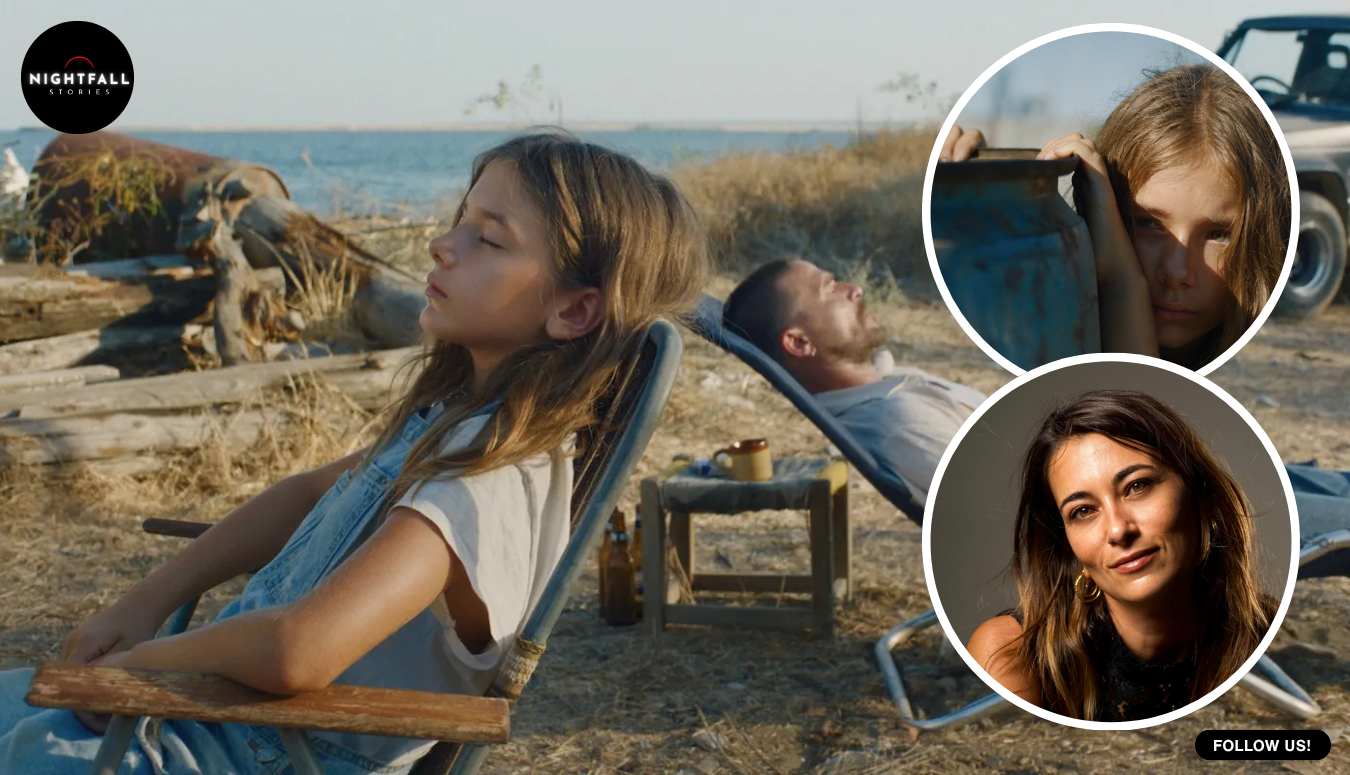
Earlier this month, for the first time in the history of the Academy Awards, Cyprus entered the race for Best International Feature Film. The entry is Hold Onto Me, the debut feature of the Cypriot writer and director Myrsini Aristidou, chosen by a seven-member national selection committee appointed by the island’s Department of Contemporary Culture under its deputy ministry of culture. The film will compete for a place at the 99th Academy Awards, to be held in Los Angeles in the spring of 2027.
That is a first in the plainest sense. Cyprus had never submitted a film to the category before. Not once, in the seven decades the Academy has been handing the award out under one name or another.
The obvious explanation is the wrong one. Cyprus has not been absent from that category because nobody on the island was making films worth sending. It has been absent because of a piece of administrative machinery that did not exist.
Best International Feature does not work the way the other Oscar categories work. You cannot enter it yourself. A director with a finished film and a good festival run cannot submit it, however many awards it has won. The Academy accepts exactly one film per country per year, and that film has to be chosen and submitted by an approved national selecting body. If your country does not have one, you are not eligible. The quality of your film is irrelevant, because nobody is looking at it.
So the actual news, underneath the headline, is not that Cyprus found a good film. It is that Cyprus built a committee.
It is worth knowing how old the hole is. The Academy has been giving a competitive award for films from outside the United States since the mid 1950s, and for most of that time it was called Best Foreign Language Film. It was renamed Best International Feature Film only a few years ago, on the reasoning that foreign was a strange word to apply to most of the planet. The rule requiring a single submission chosen by a national body has been the spine of the category throughout. Which means that for the entire life of the award, a country without that body has simply not been in the running, and no amount of festival success by an individual filmmaker could change it.
The one-film limit deserves a moment too, because it is unlike anything else at the Oscars. Every other category is open. A country with a strong year can put forward several contenders for directing or acting, and American studios can enter as many films as they like. Here, a nation with twelve good films and a nation with one good film each get exactly one slot. It makes the selecting committee’s job genuinely consequential, and it also means that in a strong year somewhere, excellent films are eliminated by their own compatriots before the Academy ever sees them.
The deputy ministry of culture opened submissions over the summer, running an open call for the first time to choose the island’s official entry. The eligibility conditions published with that call are the Academy’s own, and reading them tells you exactly why small film nations struggle. A film has to run over forty minutes. It has to be a fully Cypriot production, or a co-production in which Cyprus is the majority producer. More than half its dialogue has to be in a language other than English. It needs English subtitles. And it must have had a commercial theatrical run inside Cyprus of at least seven consecutive days, falling within a specific twelve-month window.
Look at that last condition again, because it is the one that quietly does the damage. Somebody has to put the film in a cinema, in the country, for a week, on a commercial basis. In a large market that happens automatically. In a small one it requires a distributor willing to give up a screen for seven days to a local drama, and a film finished in time to do it. Plenty of films that could have represented small nations over the years simply never met that condition, and nobody was tracking it on their behalf, because there was no body whose job that was.
The deputy ministry’s own framing when it opened the call was that the decision reflected the growing importance of the industry on the island and the recent international success of Cypriot cinema at major festivals. Which is a diplomatic way of saying that the films had started travelling far enough that the absence had become conspicuous.
One film in particular made it conspicuous.
Hold Onto Me premiered at the Sundance Film Festival at the start of this year, in the World Cinema Dramatic Competition. It was the first Cypriot film ever selected for that competition. Reports from the festival describe a sold-out premiere that drew a double standing ovation, and by the end of the festival the film had taken the Audience Award for World Cinema Dramatic, voted by the people in the seats rather than a jury. It has also been reported as the first Greek-language film to win an award at Sundance, a claim worth treating with a little care, but one that has been repeated in the record of the film since.
It went on from there. Best Film and Best Director at Cyprus Film Days, the island’s own festival. Best Film at the Los Angeles Greek Film Festival. A special mention for its young lead at Sofia. A hundred per cent score on the main review aggregator, off a small but real critical sample.
The film itself is quiet, and small, and has nothing in it that looks like an awards campaign. An eleven-year-old girl called Iris learns that her estranged father has come back for her great-grandfather’s funeral. She goes looking for him and finds him at an old shipyard, where he has been living more or less alone. What follows is the two of them working out whether they can be anything to each other, described by those who have seen it as a bond that is fragile and imperfect rather than redemptive. It runs a little over a hundred minutes, in Greek, and Aristidou has said the Cyprus she wanted on screen was the worn-out one, the backdrops that have been used up.
Christos Passalis plays the father. He is a familiar face from Greek cinema, including Dogtooth. The daughter is played by Maria Petrova, and this is her first performance on screen of any kind. Aristidou found her through auditions and has said what drew her was how naturally the two of them read as family, and that children have a particular advantage in front of a camera because they are not self-conscious about it and do not much care that it is there.
The route Aristidou took to this film is worth laying out, because it is not the route of somebody who stayed home and waited for an industry to grow around her.
She was born and raised in Limassol, on the south coast, and by her own account she spent her childhood wanting to be elsewhere. She has said she always wanted to leave, always, all the time. At eighteen she went to New York. She took a bachelor’s degree in film and art history at Pratt Institute, then a master’s in film directing at NYU’s Tisch School of the Arts. She lived abroad for more than a decade, including a spell in Paris, and travelled to China looking for material.
The shorts came first, and they are the reason the feature exists. Not Now, her directorial debut, won a directing prize at the international short film festival in Cyprus. Semele premiered at the Toronto International Film Festival and then played well over seventy festivals worldwide, collecting a string of awards and a jury commendation in Berlin for what was described as a sober and unsentimental approach. Aria, set in contemporary Athens, premiered in the Orizzonti section at Venice and later played Sundance, which means she had been to that festival before, with a short, years before she went back with a feature.
Both Semele and Aria are about fathers and daughters. Aristidou has described Hold Onto Me as the final part of a triptych, which means the film that has just become her country’s first Oscar entry is the third movement of something she has been working on for roughly a decade.
She also built the infrastructure she needed. She founded her own production company, One Six One Films, a decade ago, and it is one of the two Cypriot producers on the feature alongside Filmblades. She has passed through the development programmes that exist for exactly this kind of filmmaker, including the Cannes Cinefondation residence and the Talent Lab at Toronto, and she won an emerging filmmaker prize from the Sam Spiegel screenwriting lab in Jerusalem.
The money tells its own story about what it takes. Hold Onto Me is a co-production between Cyprus, Denmark and Greece. The Cypriot producers are joined by Fredo Pictures in Denmark and Graal in Greece. The funding list runs from the Cyprus deputy ministry of culture to the Greek public broadcaster, the Danish Film Institute, the Greek Film Centre and NYU’s Tisch School, and the support is dated across roughly six years. Cercamon handles international sales.
And a shipyard is a telling place to set it. Limassol, where Aristidou grew up, is a port, and the working coast of a small island is full of half-used industrial spaces that were built for a busier version of the economy. Putting an estranged father in one of those is a choice about the country as well as the character, and it lines up with what she has said about wanting the worn-out Cyprus on screen rather than the postcard one.
Six years of assembling money from five or six institutions across three countries, for a hundred-minute film about a girl and her father at a shipyard. That is the real cost of a first feature from a small country, and it is why the theatrical-week condition and the missing committee mattered so much. A filmmaker who has spent six years on this cannot also be the person lobbying a government to create a submission process.
There is a second country in the same position this year, and the parallel is the whole point. El Salvador has also entered the Best International Feature race for the first time in its history, in the same cycle, and it got there by the same mechanism: it formed a national selection committee for the first time and invited filmmakers to submit their films for consideration by a summer deadline. Its entry is Vertices, directed by Arturo Lopez Rodas.
Two countries, thousands of miles apart, with nothing in common except that neither of them had a committee, and now both do. The running record of this year’s submissions also flags Papua New Guinea, Rwanda and Sri Lanka as first-time entrants, which suggests something broader than coincidence is happening. That list is compiled by journalists working at speed as announcements come in, so the exact roster of first-timers should be treated as provisional until the Academy publishes its own final list. The pattern, though, is hard to miss. The category has been steadily filling in the parts of the map it never covered, and it has been doing so not because the films appeared but because the paperwork did.
It is also worth being clear about what has and has not happened, because this is where coverage of Oscar submissions usually overreaches. Cyprus has entered. That is all. The Academy will narrow the field to a shortlist, then to five nominations, in the new year. A submission is not a nomination and it is not a shortlisting. The great majority of the films submitted in any year go no further, and a film from a country with no institutional history in the category, no local awards-campaign industry and a small sales operation behind it faces a field that includes entries from countries with decades of practice at this.
That practice is a real advantage and it is not mysterious. Getting from submission to shortlist means getting Academy members to actually watch your film, in a season when they have dozens of other things to watch and the competition is spending money to reach them. Countries that have been doing this for decades know which screenings to book, which publicists to hire and how early to start. A first-time entrant is learning all of it at once, in a language that is not the industry’s first, with a sales company rather than a studio behind it.
None of which diminishes the thing that actually happened. For seventy years there was a category with a Cyprus-shaped hole in it, and the hole was not made of talent.
Cyprus is a small island, and one with a complicated political history that has left it divided since the 1970s. Its film industry is young, and a good deal of what it produces travels through co-productions with Greece and with the rest of Europe, because that is how films from small countries get made anywhere. The island has not lacked stories. It has lacked scale, and the institutions that scale usually buys.
Which is why the interesting part of this is not the entry but what the entry leaves behind. A committee that has met once will meet again. The deputy ministry has now run an open call, published eligibility rules, assembled seven people to read them and produced a decision. Next year there will be a process to enter rather than a process to invent, and the year after that as well, and the question for Cypriot filmmakers becomes whether their film can meet the conditions rather than whether the country will bother to have any.
Aristidou did not build that. She made a film about a girl looking for her father in a shipyard, and made it well enough that the absence of a system became embarrassing. The system arrived afterwards. It will be there for whoever is next, long after the result of this particular race is forgotten, and that is a better outcome than a nomination.