Category: News

  • A cellist opened his case in Manchester and found a crack down the back. One airline said no. The other said nothing at all.

    A cellist opened his case in Manchester and found a crack down the back. One airline said no. The other said nothing at all.

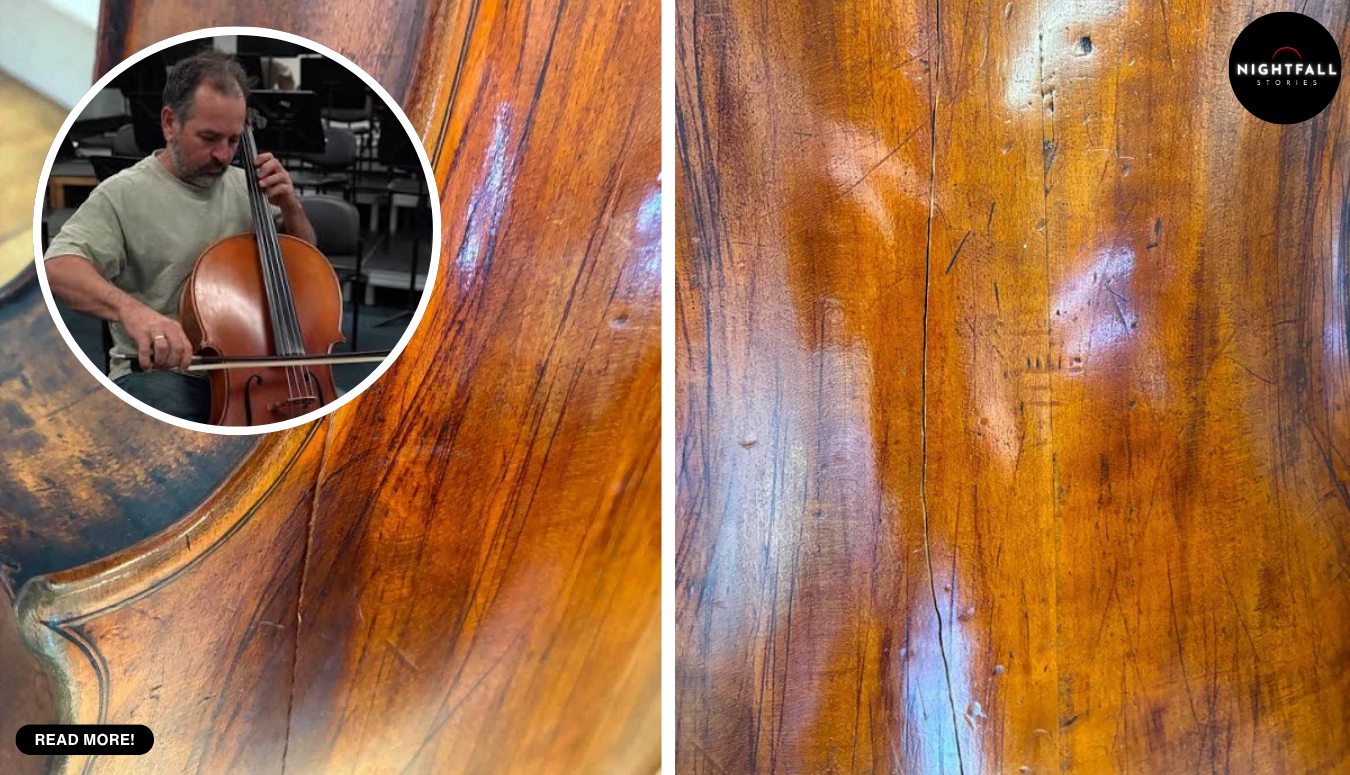
    The flight case was perfect. That is the detail that keeps snagging on people who hear this story. Jon Tooby’s cello had travelled from Western Australia to the north of England inside a Presto case, the double-thick fibreglass kind that touring string players buy precisely because they expect the worst. It was still wrapped in bubble wrap when it came off the belt. Not a scuff on it. Not a crack, not a dent, not a smear of grease from a loader’s glove.

    Then he opened it, and there was a long crack running down the back of a Tyrolean cello that is more than two hundred years old.

    Tooby plays with the Darlington Quartet, a group based in Perth that had just flown halfway around the world to start a tour of the UK and Greece. They landed in Manchester at the beginning of this month with a concert schedule already locked in, including the Elgar cello concerto, which is not a piece you busk your way through on a borrowed instrument. What they had instead of a working cello was a beautiful wooden object with a fault line in it and a set of questions nobody wanted to answer.

    The crack was the visible damage. The more telling damage was invisible from the outside, and it is the part of this story that actually explains what happened in the hold.

    Inside every cello, standing upright between the back and the belly, there is a small wooden dowel called the sound post. It is not glued. It is not screwed. It is held in place purely by the tension of the instrument’s own body pressing in on it from both sides, which is why violin makers in some languages call it the soul of the instrument. Move it a millimetre and the whole voice of the cello changes. Knock it out of true and the instrument goes dead. Luthiers spend careers learning to set one properly with a long bent tool through the f-hole, by feel, because there is no other way to reach it.

    Tooby’s sound post was cracked.

    Think about what that requires. A sound post does not crack because a case slides across a floor, or because a stack of suitcases leans on it, or because the cabin got cold. It is a short, thick piece of spruce standing on end, braced at both ends, in the most protected spot inside a sealed box that was itself inside a hard fibreglass shell with bubble wrap on top. For it to fracture, a force had to arrive through the back of the instrument, travel the full depth of the body, and keep going. That is an impact, not a jostle. It is the difference between somebody leaning on your car and somebody driving into it.

    Tim Toft Violins in Staffordshire, the shop that examined it, put it plainly enough. Their assessment was that the cello had been through excessive handling in transit. Tooby’s own reading, and it is hard to argue with the physics, is that a case that strong and that completely untouched on the outside leaves only one explanation on the table. Something that heavy was dropped, and it was dropped from a decent height.

    So the cello tells you, quite precisely, what kind of event happened to it. What it cannot tell you is where.

    And that, rather than the crack itself, is where this turned into a genuinely modern kind of nightmare.

    The journey ran from Perth to London on Qantas, and then from London up to Manchester on British Airways. Two carriers, one ticket, one bubble-wrapped case that nobody in the quartet saw again from the moment it left their hands in Australia until it reappeared in Manchester. It was never unwrapped in between. Nobody flagged it at Heathrow. There is no moment in that chain where someone can point and say, it was fine here and broken there.

    Qantas declined the claim. Their stated ground was a rule that anyone who has ever filed a lost-luggage form will half recognise: the airline that operates the final flight of a customer’s journey is the one responsible for reporting and managing damaged baggage. That is a real policy, it is written down, and under the international conventions that govern this sort of thing it is not an invention. If your bag arrives broken, the carrier that handed it to you is the one you file with.

    British Airways, which operated that final flight, has not responded.

    It would be easy to write those two sentences as though they were the same sentence. Plenty of coverage has, reaching for a line about both airlines denying liability, because it scans nicely and fits the shape people expect from airline stories. But they are not the same thing at all, and the difference matters for anyone who ever has to do this themselves.

    Qantas gave an answer. It was not the answer Tooby wanted, but it was a position, stated on a ground he can now test, argue with, escalate, or take to a regulator. A refusal with a reason attached is a door. It might be locked, but it is a door, and it has a handle on it.

    Silence is a wall. There is nothing to appeal, nothing to contradict, no clause to read back to anyone. You cannot dispute a position that has never been taken. And crucially, silence is not a denial of liability. It is not a denial of anything. It is the absence of a decision, which in practice functions like a denial while carrying none of the accountability of one, because nobody has had to put their name to it.

    This is the quiet trap in how multi-carrier journeys work. The rules are genuinely designed to stop passengers being passed around forever, by naming one airline as the point of contact. The system assumes the named airline picks up the phone. When it simply does not, the passenger is left holding a pile of broken wood and a rule that points at a door nobody is standing behind. The first carrier has correctly followed procedure by pointing down the corridor. The second has not done anything wrong in any documented way, because it has not done anything at all.

    There is a further sting buried in the rulebook, and it is one most travellers never learn until they need it. Under the international convention that governs damaged checked baggage, a complaint has to be made within about a week of receiving the bag, which is a brutally short window when the object in question needs a specialist to even assess it. And the carrier’s liability for baggage is capped, at a figure the aviation authorities revise upward every few years and which currently sits at roughly two thousand dollars. Unless a passenger makes a formal special declaration of value at check-in and pays a supplementary charge, that cap applies no matter what was in the bag. A cheap suitcase and a two-hundred-year-old cello are, in the eyes of that number, the same object. So even a claim that succeeds perfectly, against a carrier that accepts fault immediately and pays without argument, would not come close to covering what has happened here.

    It is worth saying that this is not a story about villains. Nobody at either airline woke up wanting to break a two-hundred-year-old instrument. Baggage systems move an extraordinary number of objects every day with a failure rate that, statistically, is remarkably low. The problem is that the system is built around a statistical view of luggage, and a cello is not luggage in any sense the system understands. It is a single irreplaceable object with no equivalent anywhere in the world, moving through a process designed for interchangeable rolling suitcases full of interchangeable clothes.

    And the loss does not work like luggage either. When an airline breaks a suitcase, it buys you a suitcase. When an airline breaks an old cello, there is no shop to send you to. The shop that examined Tooby’s instrument said the repair will take months, that the damage severely devalues the cello, and, most painfully, that no repair can guarantee the instrument will sound the way it used to.

    That last part is the one non-musicians tend to underestimate. A cello of that age is not valuable because it is old. It is valuable because two centuries of specific wood, specific varnish, specific thickness and specific playing have produced a particular sound that exists nowhere else. The maker is gone. The trees are gone. A luthier can close the crack with skill and glue and time, and can cut and fit a new sound post, and the cello will very likely be playable again. Whether it will still be that cello, in the only sense a player cares about, nobody can promise.

    Players talk about this in terms that sound sentimental until you have watched one of them work. An instrument you have played for years is not a tool you own. It is something you have negotiated with. You learn where it resists, which notes bloom and which ones need coaxing, how it responds to a dry hall or a wet one. That knowledge is stored in your hands, not in the wood, and it is calibrated to one specific object. Hand a professional a different cello of equal quality and they will play it beautifully and still feel, for months, like they are speaking a language they know with somebody else’s mouth.

    Which is roughly what Tooby had to do, on about a day’s notice, with the Elgar concerto on the schedule.

    Here is where the story turns, and it turns because of people rather than policy.

    The same shop that delivered the bad news, Tim Toft Violins, loaned him a French cello. Not as a transaction, not as part of any claim, just because a cellist had turned up in Staffordshire with a wrecked instrument and a concert coming. He played the Elgar on it. The quartet played their scheduled concert. Then they got on another plane and went to Greece and carried on with the tour, which, given what the first week looked like, is not a small thing.

    Other offers came in too, from players and shops who heard what had happened and simply wrote to say they had an instrument sitting available if it would help. The quartet’s response to all of it was gratitude, and the thing they kept coming back to was not the cello at all. It was that a genuinely awful week had been made survivable by strangers, quickly, with no conditions attached.

    There is something clarifying about that contrast. On one side, a claims process built to allocate blame, in which one party has correctly directed you elsewhere and the other has not picked up. On the other, a small business in the English midlands that looked at a problem, handed over an expensive instrument to someone they had just met, and got a concert played. One of those responses took weeks and resolved nothing. The other took an afternoon.

    None of it fixes the cello. The repair is still months away, the devaluation is real, and the question of who pays remains exactly as unresolved as it was on the day the case came off the belt.

    Touring musicians have been raising this for years, and the pattern is familiar enough to have its own grim rhythm. Two years ago, another Australian musician’s double bass was damaged beyond repair on a Qantas flight. Cellists trade advice about buying a second seat for the instrument, which costs a fortune and which some carriers make awkward, or about which airlines have staff who understand what is in the box. None of that advice would have helped here. Tooby did what the guidance says to do. He bought the strongest case on the market, wrapped it, and checked it, and the case came back flawless with a broken instrument inside.

    What the story leaves behind, more than anger, is a useful piece of knowledge for anyone who ever hands something precious to a system that measures success in bags per hour. Get a response in writing, even a bad one. A refusal you can read is worth more than a silence you cannot. A stated reason can be challenged, corrected, escalated, or simply shown to a regulator later as evidence that a position was taken. Nothing at all is not a position. It is just an absence with your loss inside it.

    And the cracked sound post is the reason this is not simply a shrug about bad luck. That small piece of spruce, wedged inside the body, is the closest thing the instrument has to a witness. It cannot say who or when. But it says, with more authority than any claims form, that this cello did not arrive in Manchester tired. It arrived having been dropped. Somebody, somewhere along the way, knows exactly when that happened, and has not said so.

    Tooby is still playing. The borrowed French cello did its job, the tour went on, and the Elgar got its performance. The old Tyrolean is in a workshop in Staffordshire, open on a bench, waiting for the long slow work of being made whole enough to try again.
  • She began nurse training in 1964. The question she carried out of that first year took six decades to answer in writing.

    She began nurse training in 1964. The question she carried out of that first year took six decades to answer in writing.

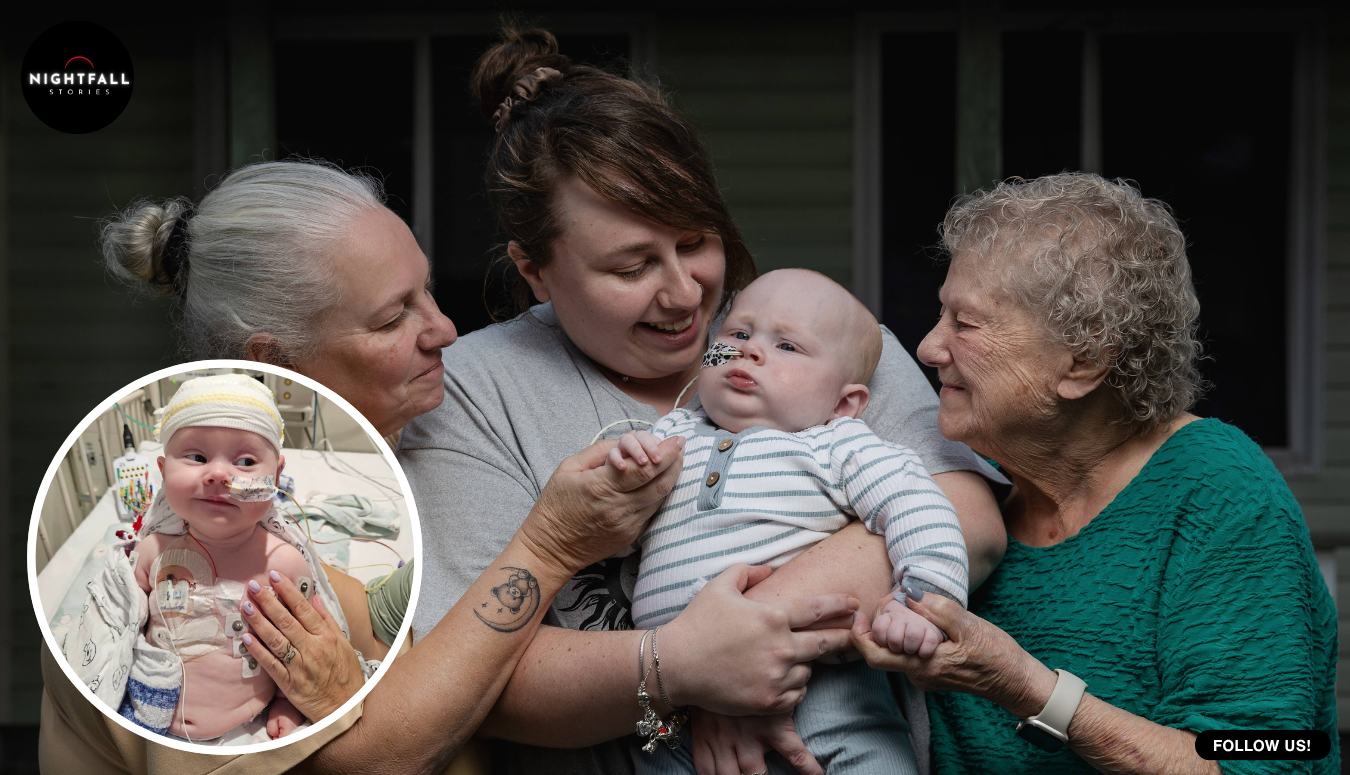
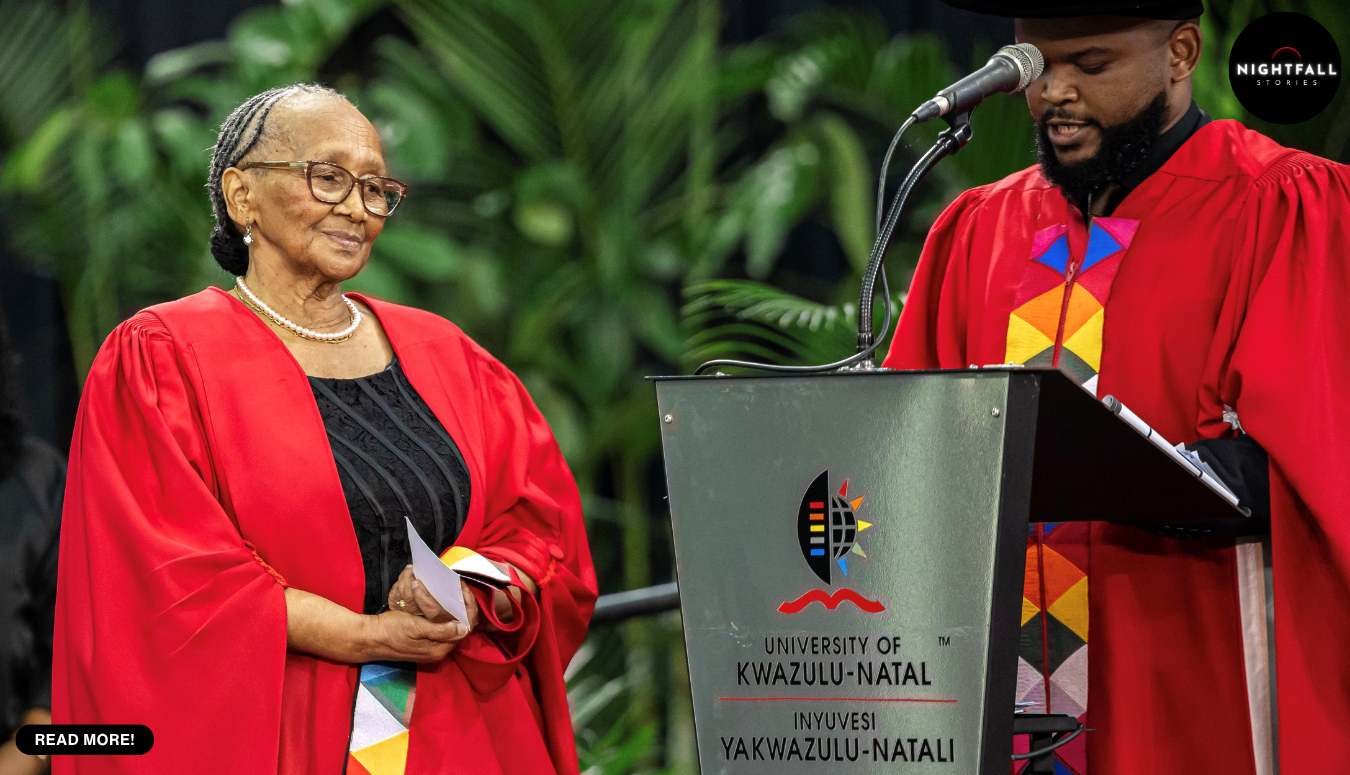
    In a graduation hall at the University of KwaZulu-Natal, a dean of research stood up and read out the title of a doctoral thesis about postnatal care in rural districts, and the woman it belonged to was 82 years old. She had first walked into a hospital as a trainee nurse in 1964. She had spent the intervening years delivering babies, teaching other people to deliver babies, and writing the provincial guidelines that told still other people how to do it. And she had only just finished putting on paper the thing she had been turning over since her first year on the wards.

    Dr Dolly Nontuthuzelo Nyasulu received her doctorate in public health earlier this month, and the detail that makes her story worth more than a nice photograph is what the thesis is actually about. It is not a memoir. It is a piece of research called a family-centred postnatal care approach in rural KwaZulu-Natal, and it asks a question that sounds almost too simple to need a doctorate: what would happen if the family were treated as part of the care team after a baby is born, rather than as visitors.

    She is the eldest of nine children, born in King William’s Town in the Eastern Cape. Accounts of her early years differ slightly on where the interest began. One national report has her growing up in Flagstaff, watching midwives work and listening to women tell their birth stories long before she had any professional reason to care. Another has the spark arriving in 1964 itself, during her general nursing training at Livingstone Hospital in Port Elizabeth, when older midwives described what a home delivery looked like: the whole household present, aunts and grandmothers and sometimes the neighbours, everybody with a job to do. The two versions are not really in conflict. Either way, the thing that stuck was the picture of a birth surrounded by people, and the contrast with what the hospital system was starting to build, which was a birth surrounded by staff.

    Entering nurse training in South Africa in 1964 meant entering a profession that was one of the very few routes into skilled work available to a Black woman, and one that was shaped at every level by the laws of the time. Training was segregated. Where you could work, what you could be promoted into and who you were permitted to supervise were all constrained. Nursing was a genuine ladder, and it was also a ladder with a ceiling, and a great many capable women spent forty years climbing it without anyone once asking them to write down what they had learned. Hold that thought, because it is the quiet argument underneath everything that happened in the graduation hall.

    What she did instead was collect qualifications the way other people collect stamps. General nursing first, then midwifery. Then psychiatric nursing, which is an unusual pairing and turns out to matter, because a great deal of what goes wrong in the weeks after a birth is not obstetric. Then advanced midwifery. Then neonatal nursing, the care of the smallest and sickest newborns. Then a nursing degree covering community health nursing and nursing administration. Then a clinical master’s specialising in maternal, child and women’s health. She worked in KwaZulu-Natal hospitals including Madadeni and King Edward, and eventually she was the provincial coordinator for maternal, child and women’s health, which is the post where you stop doing the work with your hands and start deciding how thousands of other people will do it. She contributed to midwifery education and to national and provincial guidelines.

    The psychiatric nursing is worth pausing on, because it is the qualification that looks like a detour and is not. A significant share of what damages women in the weeks after a birth is not bleeding or infection. It is depression, anxiety, and the particular isolation of a woman who is expected to be delighted and is not. A midwife who has also trained in mental health notices a different set of things in a room, and a policy written by someone with both trainings asks different questions of a follow-up visit. Sixty years later, when her research participants listed what they watch for on a household visit, the mother’s emotional state sat in the list alongside the physical checks, as though that were obvious. In a lot of systems it still is not.

    Put plainly, she was not a nurse who happened to go back to school late. She was one of the people the system consulted, and one of her former colleagues, in a public tribute after the graduation, called her the mother of midwifery in the country. That is affection rather than an official title, and it should be read as affection. But it tells you who she was to the people in the field.

    So why does someone like that need a doctorate at all. The answer is the gap between knowing something and being able to prove it.

    Postnatal care is the weak joint in maternal health almost everywhere. Pregnancy gets attention. Labour gets attention. The first six weeks after a birth get a discharge slip and a follow-up appointment that a large number of women never attend. That is the stretch where most maternal deaths and a very large share of newborn deaths occur, and it is also the stretch where the mother is at home, out of sight of the health system, with a body that has just done something enormous and a baby who cannot tell anyone what is wrong.

    On paper, most health systems in the region schedule a handful of contacts in those weeks, a visit within the first days and then a check at around six weeks. On paper is the operative phrase. A clinic appointment requires a woman who has just given birth to find money for transport, arrange care for the newborn or carry the newborn with her, and present herself somewhere she may expect to be spoken to sharply. Miss it and nothing happens, because nothing is designed to happen. The system’s answer to the riskiest weeks of a mother’s life is an invitation she may not be able to accept.

    The family-centred idea is that the people already in that house are the only continuous presence available, and that the health system should be preparing them deliberately rather than hoping for the best. Not just handing the mother a pamphlet on her way out, but working out before the birth who will be watching for heavy bleeding, who will be checking the cord, who will protect the mother’s sleep, who will notice if she stops speaking. It is the pattern those older midwives were describing in 1964, translated into something a district health service could actually run.

    Her doctoral work was supervised by Professor Myra Taylor and Dr Nelisiwe Khuzwayo at UKZN, and part of it has already been through peer review, which is the strongest thing anyone can say about a piece of research. A paper carrying her name alongside both supervisors appeared in the African Journal of Primary Health Care and Family Medicine last year, and it is worth walking through, because it shows what she was actually doing in the field rather than what a graduation write-up can convey.

    The study was set in the uMgungundlovu district of KwaZulu-Natal, a largely rural municipality of roughly a million people. The participants were 23 community caregivers drawn from seven sub-districts, the people who do household visits, almost all of them women, ranging from their twenties to their sixties. They were brought together in four focus groups, and the transcripts were worked through by hand using a grounded theory approach, which means you do not arrive with a theory and test it, you let the categories emerge from what people say. It received ethics approval from the university’s biomedical research ethics committee, and it received no external funding.

    It is worth saying why a study like that is built out of conversations rather than numbers, since to some readers that will sound like the soft option. You count things when you already know which things to count. When you do not, when the question is why a service that exists on paper is not reaching the people it was designed for, the only honest first move is to ask the people standing closest to the failure and let them tell you what the categories are. That is what a grounded theory approach is for, and it is also, not coincidentally, the method that treats community health workers as witnesses rather than as data points. Which is the same instinct that ran through the whole thesis.

    Five themes came out of it. The first was continuity: the caregivers were emphatic that what happens after the birth is set up during pregnancy, and that a mother who has been properly monitored antenatally is a different proposition afterwards. The second was the scope of their own role, which they described as far wider than the job description suggests, covering the mother’s physical recovery, her emotional state, the baby’s checks, immunisation, feeding and nutrition.

    The third theme is the uncomfortable one. Asked why young mothers do not come to the clinic, the caregivers did not talk about ignorance or distance first. They talked about judgement. Fear of being judged by health workers, by their own families, by the wider community. A young woman who expects to be lectured, or shamed, does not attend, and then she becomes a statistic about non-compliance.

    The fourth theme follows from it. When mothers miss appointments, the caregivers said, nurses can read it as the caregiver having failed, and the caregivers are then carrying blame for things outside their control, including something as small and as decisive as not having the money for transport. The fifth was practical: what these caregivers should be trained and equipped to do, from watching for postpartum bleeding to cord care to supporting feeding.

    The recommendations are correspondingly unglamorous. Train community caregivers properly in the family-centred approach, including hands-on demonstration rather than modules. Build real collaboration between them and the clinic staff through joint training and regular meetings, so the relationship is not one of quiet mutual blame. Give them workable caseloads and the resources to travel. And, the authors note themselves, do a larger study across more than one province, because 23 people in one district cannot speak for a country.

    That last point deserves saying out loud, because this is a story about research and the research should not be oversold. A qualitative study of community caregivers in one district is a piece of groundwork, not a proof. Her own position, as reported, is that a family-centred approach remains underused in the South African system and that implementing it could strengthen the chain of care and save lives. That is her professional argument, made on the basis of sixty years in the field and a doctorate, and it is reasonable. It is not yet a demonstrated outcome, and she has not claimed it is.

    The doctorate took years, and the years were not kind. Her daughter died in 2019. She lost two brothers. And her husband Guy, whom she has described as the person who backed the whole undertaking, died roughly two and a half years before she graduated. None of them saw the thesis finished.

    There is no good way to make that sound like part of a plan, and it would be wrong to try. What is on the record is narrow and worth keeping narrow: she kept working, she has said the period after her husband’s death was the hardest, and she has said that people around her carried her when she could not carry herself. She also dealt with the ordinary indignities of doing a doctorate in her eighties, including knee trouble, high blood pressure, and the software. Anyone who has watched an older relative fight with a word processor’s reference manager will recognise that last one as less trivial than it sounds.

    There is one more thing the provincial coordinator job explains. When you have written the guidelines, you know exactly where they are thin. You know which paragraph was a compromise, which recommendation was inserted because it was cheap, and which part of the document everybody nods at and nobody funds. Postnatal care is that part almost everywhere. Someone who spent years writing those documents and then chose, in retirement, to go and examine one of their weakest joints with a formal method and an ethics committee was not looking for a title. She was closing a loop she had left open on purpose.

    She has said that reaching the end felt hard to believe, and that it had been a long journey. On the day itself, the dean of research at the College of Health Sciences read out her thesis title, and a woman who started training when the guidelines she would later help write did not exist yet sat and listened to her own work being announced.

    She is a grandmother of five with two great-grandchildren. She is formally retired, and by her own account still available if anyone wants to use her in maternal, newborn and women’s health, which on the evidence would be a straightforward decision for whoever is hiring. Her advice to younger people, as reported, runs along the lines that education is a passport, and that you go on learning until you die.

    It would be easy to file this under inspiring pensioner and move on, and that would miss what is interesting about it. The remarkable part is not that an 82-year-old completed a doctorate, although that is difficult and she did it while grieving. The remarkable part is the content. The thing she researched, the idea that a family should be prepared before the birth to look after the mother and baby after it, is not new knowledge that she discovered in a library. It is what she was told by working midwives in her first year of training in 1964, describing how births had been managed in households for generations.

    That knowledge was in the room the entire time. It was held by women who were trusted enough to deliver babies and were never asked to write anything down, in a system that had no mechanism for taking them seriously as a source. It sat inside one nurse’s career for six decades while she rose to the top of a provincial health department, and it only entered the formal record, with a methodology and an ethics number and a peer-reviewed paper attached, when she was 82 and had to go and get a doctorate to put it there.

    Nobody is better placed to point out the cost of that than she is. Which is presumably part of why she bothered.

    The gown came off the same afternoon. The thesis is in the university’s record, the paper is in a journal that district health managers actually read, and the question she carried out of a hospital corridor in 1964 now has an author, a title and a citation. That is the part that outlasts the photograph.

  • Her surgeon told her the best graft on Earth would not give her face back. So he asked the regulator for something no burn patient had ever had

    Her surgeon told her the best graft on Earth would not give her face back. So he asked the regulator for something no burn patient had ever had

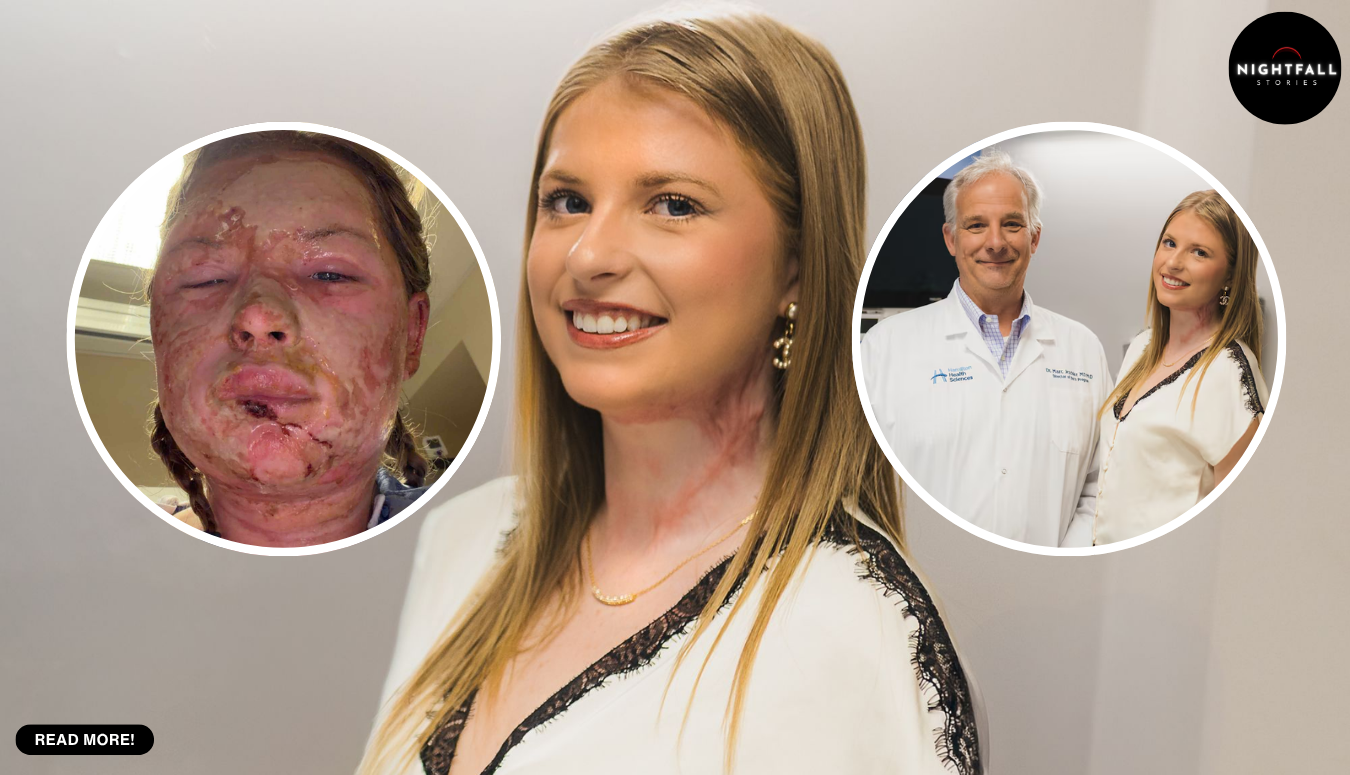
    The offer on the table was skin grafts to her face and neck. Kaitlin Jeffrey was eighteen years old, a first-year university student, and the offer was not a mistake or a failure of care. It was the correct treatment, the standard of care, what any good burn centre anywhere in the world would have recommended for burns as deep as hers. Her surgeon simply did not want to do it, and he had a specific reason that he has said out loud since: you can perform the best skin graft on the planet and you still will not give someone their face back.

    So instead he wrote to Health Canada and asked permission to put roughly one trillion microscopic particles into her wounds, a therapy that had been studied in laboratories for years and given to a burn patient exactly zero times.

    She said yes. That is the part of this that tends to get skipped when the story travels, because the headline goes to the surgeon and the science. But the person who had to decide whether to be the first human being on Earth to receive an unproven treatment on her own face, while lying in a burn unit at eighteen, was her.

    The fire happened in a student house in London, Ontario, late in 2025. It was a flash fire at a party, and five people were taken to hospital. Jeffrey, a student at Western University and originally from Toronto, was the most seriously hurt of them. Her burns covered her face, her neck, her hands and her right arm, and they ran from deep partial thickness into full thickness, which is the clinical language for damage that has gone through the layer of skin that can regenerate itself and into the layer that cannot. Nothing about how the fire started has been established in anything I could verify, and this piece is not going to speculate about it.

    She was transferred to the regional burn centre at Hamilton General Hospital, one of only two specialist burn units in the province. There is no gentle version of what the following weeks involve, and this story is not going to walk through it in detail, because the details are not what makes it worth reading. What matters is a single decision point, and to understand it you have to understand what a graft actually costs.

    Grafting works. It has saved an enormous number of lives, and for a large burn it is not optional. But what it does is take skin from somewhere on the body that is undamaged and move it to the place that is. The donor site becomes a new wound. The grafted area heals, but it heals as something slightly other than skin. It is often a different colour and a different texture from what surrounds it. It does not sweat or move quite the same way. On an arm or a back, that is a trade almost anyone would take without hesitating.

    On a face, the arithmetic changes. A face is not a surface, it is the thing other people look at when they talk to you, and it is the thing you see when you look in a mirror for the rest of your life. Dr Marc Jeschke, the surgeon in this case, has spent his career in burn medicine and is a vice president of research and innovation at Hamilton Health Sciences, medical director of the regional burn programme, and a professor of surgery at McMaster University. He is one of the more cited burn researchers in the field. His concern was not vanity. It was that for a young patient, a facial graft carries a psychological weight that outlasts the wound by decades, and that in his judgement a good graft was still the wrong answer if there was any alternative worth trying.

    It also matters that the person making this argument was in a position to act on it. A surgeon cannot simply decide to try something unlicensed on a patient. Getting an unapproved biological product into a hospital, through a pharmacy, past an ethics review and into a wound requires a specific kind of standing: a research record long enough that regulators take the request seriously, an institution willing to carry the risk, and the administrative reach to move it in weeks rather than years, because a burn will not wait. Jeschke has spent decades on burn biology and healing, and he holds a senior research post inside the hospital organisation itself. Someone with the same idea and none of that would very likely not have been able to do this, and that is worth noticing before anyone treats the case as a template.

    There was one, and it had been sitting in research literature for years without ever being used this way.

    Exosomes are one of those biological objects that sound made up until you understand how ordinary they are. Cells talk to each other. One of the ways they do it is by packaging up molecular instructions inside tiny bubbles of membrane and releasing them, so that other cells can pick them up and act on them. Those bubbles are exosomes. They are not cells and they are not stem cells. They are messages, in the most literal sense biology allows, and the signals they carry include instructions about repair, about building new tissue and about turning inflammation down.

    The therapeutic idea follows fairly directly. If a wound heals badly partly because the signalling in the area is overwhelmed, then flooding the area with the right messages, harvested from cells that produce them in abundance, might tip the process toward proper regeneration instead of scar. Exosome preparations have been studied in wound healing for some time, with encouraging results in other kinds of wounds. Nobody had given them to a burn patient.

    The particles used in Jeffrey’s case were derived from stem cells taken from umbilical cord and amniotic tissue, and they were sourced from a supplier in the United States. That distinction matters and the article is being careful with it: she was not given stem cells. She was given the material stem cells secrete, which is a far less unpredictable proposition, and one reason Jeschke has described the treatment as extremely safe.

    Getting it into a Canadian hospital required a regulator’s cooperation. The route the team used was a compassionate-grounds application to Health Canada, and it is worth being precise about what that is, because it is routinely misdescribed. This was not a clinical trial. Nobody was randomised, there was no control group, and there was no protocol being tested. A compassionate or special-access pathway exists for the situation where a specific named patient has a serious condition, the conventional options are inadequate, and there is a plausible unapproved option available. The regulator’s part is not to declare the treatment effective. In this case, as reported, Health Canada raised no objection, and the team proceeded on that basis.

    No objection is a phrase doing a lot of quiet work. It is not an approval, not an endorsement, and not a statement that the therapy works. It means the regulator reviewed a request for one patient and did not stand in the way. Everything after that sat with the surgeon’s judgement and the patient’s consent.

    She was given two treatments, several days apart, totalling somewhere around one trillion exosomes, injected into the injured areas. Platelet-rich plasma, a preparation made from a patient’s own blood that is already used fairly widely in wound and tissue medicine, was applied topically alongside it as a complementary therapy.

    Then they waited, and the waiting is the part nobody can shortcut. Skin heals at the speed skin heals.

    What happened is that her face closed. It healed without grafting, which was the entire point of the exercise, and it healed to a standard Jeschke has publicly called absolutely remarkable, a phrase he is on the record using and which is notably strong from a researcher who spends most of his professional life being careful. Jeffrey’s own description was that it is honestly a miracle, and that you would not know from looking at her face that she had been burned at all.

    Here is where a great deal of the copy circulating about this case gets it wrong, and it is worth correcting flatly, because the wrong version is unkind to her as well as inaccurate. She has not fully recovered. That framing has appeared in wire and social copy and it overstates what happened.

    Her face healed without grafts. Her neck did not need grafting either, but it is still in an active healing phase, still scarring, and still being treated with further platelet-rich plasma and laser work. Her hands and her right arm did require grafts. And she has spoken plainly about the part of this that no photograph shows, which is that being injured in a fire has had a deep effect on her mental health and is something she is still dealing with. She has said that having good results, particularly to her face, is helping her move forward. Helping her move forward is not the same sentence as fully recovered, and she never claimed it was.

    There is one more detail that gives this case whatever early suggestion of an effect it has, and it also happens to be the detail that should make everyone cautious. Another student was injured in the same fire and did not receive the exosome treatment. By the account given at the announcement, Jeffrey healed faster and with better results. That is the closest thing to a comparison that exists here, and it is nowhere near enough to prove anything. Two people, different burn depths, different anatomy, different areas of the body, different everything. It is a hint. It is not evidence, and no one should present it as such.

    What exists in the formal record, so far, is a case report that has been submitted for publication in the scientific literature. A case report is the smallest unit of medical evidence there is. It says this happened to this person. It cannot tell you whether it will happen to the next one, or whether the outcome would have been similar without the intervention, or whether there is a rare harm that only shows up when you treat a thousand people instead of one. Burn medicine has a long history of treatments that looked transformative in a single dramatic case and did not survive a proper trial. Anyone reading this and hoping for it should hold that in mind.

    There is a harder question underneath all of this, and it is the same one that follows every compassionate-access story. Jeffrey got this because of where she happened to be taken. She was burned within reach of one of the two specialist burn centres in the province, and the surgeon on duty at that centre happened to be one of the small number of people in the world with the research standing and the institutional position to ask a national regulator for an unapproved biological product and get an answer quickly. People sustain facial burns everywhere, every day, in places where none of those conditions apply. For them the treatment did not fail. It was never on the table.

    Both Jeffrey and Jeschke have said they want exosome therapy to become standard care for severe burn patients in Canada. He wants it because he thinks he has seen what it can do to the outcome for a face. She wants it for a more specific reason, which she has expressed as a wish that when something horrific happens to someone, it does not have to change their life permanently.

    But standard care is a status a treatment earns, not one it is granted. The path from one compassionate-access case to a therapy that any burn unit can offer runs through trials, through regulators making actual approval decisions rather than raising no objection, through cost and supply and manufacturing consistency for a biological product measured in trillions of particles. That process exists for good reasons and it will take years. Nothing about this case shortens it. What this case does is make it much harder to argue that nobody should bother starting.

    So the honest place to leave this is not on her face, remarkable as the outcome there appears to be. It is on the two things running at different speeds. One of them is finished: the grafts that were scheduled for her face and never happened, and a decision made by an eighteen-year-old in a hospital bed that turned out well. The other is not finished. Her neck is still healing. The research is barely begun. And the part of this that lives behind her eyes rather than on her skin is going to take as long as it takes, on nobody’s timetable but her own.

  • His worst day held 74 seizures. Three days after a first dose, they stopped, and the drug had never been given to anyone

    His worst day held 74 seizures. Three days after a first dose, they stopped, and the drug had never been given to anyone

    Seventy-four. That is the number Stephanie Higginson counted on her son’s worst day, and it is the number that explains everything else about this story. Bohdi Higginson was a few months old. He would go still, then stiffen, then jerk, then drool, and each episode could run for minutes, and then another would come. His mother learned to count them because counting was the only thing left to do. Seventy-four in twenty-four hours.

    Then, on an evening in the Australian autumn, at 7.58pm, Bohdi had a seizure and did not have another one. He was three days into the first dose of a medicine that, until that week, no human being had ever taken.

    That is the whole story in two paragraphs, and it would be easy to stop there and call it a miracle. His mother has been careful not to. So have his doctors. Bohdi is eight months old, he is still on the drug, he is still being watched closely, and nobody involved has used the word cured. What they have said is that a baby who was seizing dozens of times a day is now a baby who babbles, holds his own head up, and kisses his mother.

    The condition is called KCNT1-related epilepsy, and the name is doing something specific. KCNT1 is a gene. It builds a potassium channel, one of the tiny gated pores in the membrane of a nerve cell that let charged particles in and out and so decide when that cell fires. When the gene carries a particular kind of fault, the channel does not just work badly. It works too well. It stays open when it should close, current flows when it should not, and the electrical traffic in a developing brain goes haywire.

    The result, for most children who have it, is seizures that begin in the first weeks or months of life and do not respond to the standard anti-seizure drugs. Clinicians describe it as a catastrophic or often fatal epileptic encephalopathy, and the word encephalopathy is the part parents come to dread, because it means the seizures are not the only problem. The same electrical chaos interferes with everything a baby brain is supposed to be learning to do. Many affected children die in infancy. Many of those who survive live with profound disability. Those are the clinicians’ characterisations of the condition, not a prediction about any individual child, and they should be read that way.

    According to the Sydney hospital network that treated Bohdi and the New South Wales government release that followed, only eighteen cases of this form of the condition have ever been recorded in Australia. That figure comes from the hospital’s own accounting rather than from an independent registry, and it is worth noting that it is reported as cases rather than families, which are not the same thing when a genetic condition is involved. In the United States, where the population is far larger, the number of people thought to be living with KCNT1-related epilepsy in all its forms is estimated at around two and a half thousand. Either way, the point is the same. This is a condition so rare that a treating doctor may see one case in a career, and so rare that there is no comfortable body of evidence to reach for when a parent asks what happens next.

    Bohdi’s seizures started at three months. The diagnosis came a little later, once genetic testing gave the family a name for what they were watching. A name, in this situation, is a strange gift. It ends the uncertainty and replaces it with something worse, because the literature a parent finds after a KCNT1 diagnosis is not encouraging reading. His aunt, writing publicly to raise money for the family, described the years of infertility and lost hope that came before Bohdi arrived at all. He was the child they had stopped expecting.

    Before any of the science enters this story, there is the ordinary domestic version of it, and it is worth sitting in for a moment because it is what most families in this position are actually living. A seizure in a small baby does not always look like the thing people picture. It can be a stillness. A change in the eyes. A stiffening that lasts a few seconds and then passes, and that you second-guess yourself about afterwards. Parents in this situation become amateur clinicians very fast. They film episodes on their phones so a neurologist can see what they saw. They learn the vocabulary. They keep a log, because the log is the only instrument they have.

    And they learn, usually within weeks, that the standard treatments are not going to be enough. Conventional anti-seizure medicines mostly work by damping down excitability across the brain in a general way. They are blunt instruments by design, and against a fault this specific they tend to do two things badly: fail to control the seizures, and sedate a baby who needs to be awake and learning. Families often cycle through several drugs and several combinations, each one carrying its own side effects, each one raising hope and then not delivering. By the time anyone starts talking about experimental options, a great deal of hope has already been spent.

    What happened next depended on a piece of institutional machinery that almost never makes the news, which is a shame, because it is the genuinely interesting part.

    Sydney Children’s Hospitals Network runs something called the Innovative Therapies Pathway. In plain terms, it is a formal route by which a team of specialists can assess whether an experimental treatment that exists somewhere in the world might be used for one specific child who has run out of approved options. It is not a single doctor making a judgement call. It brings together neurologists, pharmacists, ethicists, geneticists and administrators, and it exists because precision medicine has created a new and awkward problem: treatments are now being designed for faults so specific that the number of people who could benefit from any one of them may be small enough to fit in a room. The old model, where a drug proves itself in a large trial and then reaches patients, does not fit that reality neatly.

    Dr Michelle Lorentzos, the network’s medical lead for advanced therapeutics, has described this as the beginning of a period in which highly personalised therapies for ultra-rare conditions become genuinely possible rather than theoretical. Dr Kavitha Kothur, a paediatric neurologist at the Children’s Hospital at Westmead, led Bohdi’s case.

    The treatment they found was a compound called ABS-1230, developed by Actio Biosciences, a biotechnology company based in San Diego. It is not gene therapy and it is not an injection. It is an oral small molecule, a drug you can swallow, and what it does is block the very channel the faulty gene builds. If the problem is a potassium channel stuck too far open, the drug is a selective inhibitor designed to close it. In preclinical work the company reported that the compound inhibited every pathogenic variant of the gene it was tested against. Before Bohdi, that work had been done in laboratories and in animals. No person had taken it.

    That is the sentence a parent has to sit with. The mechanism made sense. The laboratory data looked good. But the column in the file marked, what happened when a human took this, was empty, and the first entry in it was going to be her son.

    Stephanie Higginson has been direct about how she weighed it, and her framing is the reason this story is worth telling at length. She was not choosing between a risky option and a safe one. The alternative on the table was losing him. When the choice is structured that way, the word brave stops quite fitting, because bravery implies an easier path declined. She has said she begged for it to work.

    Bohdi began on 2 milligrams a day. After three days the dose was increased to 5 milligrams twice daily. That evening, at 7.58pm, he had his last seizure.

    The precision of that timestamp is not a flourish. It is what happens when a parent has spent months logging every event, and it tells you something about what the previous weeks had been like. She did not have to check the records to know when it stopped. She knew.

    Then came the part nobody had counted on, because it was never the thing being measured. Seizure freedom was the endpoint. What his mother started noticing instead was a baby. He was alert. He was moving. He was responsive in a way he had not been. He started reaching milestones that the diagnosis had quietly written off. Dr Lorentzos described the change in ordinary, unclinical language: a gorgeous, babbling baby, controlling his head, kissing his mum. Dr Kothur said that seeing a response this early in a child with a disease this severe was extraordinary.

    The hospital and the state government have called it a world first, the first time anywhere that a precision medicine has been given for this condition on this pathway. That claim belongs to them and to the broadcasters who reported it, and it is right to attribute it rather than assert it, if only because the word first is a slippery word in medicine and depends heavily on how the category is drawn. Other teams elsewhere have tried other genetic approaches to this same gene in infants. What is not in dispute is that Bohdi was the first person to receive this particular drug.

    He is still receiving it, and that matters to how the story should be read. The compound has since entered a formal clinical programme, a phase 1b/2 trial with an open-label period, a randomised placebo-controlled period and a long-term extension for children and young people from one month to twenty-one years old. Bohdi continues on treatment through that long-term extension, which means he is not a finished case study. He is a patient in an ongoing programme, taking a drug whose full safety picture over years rather than months is not yet known, and being monitored for exactly that reason.

    Around the same time as his story became public, the company that developed the drug was acquired by a larger pharmaceutical firm in a deal reported at around 850 million dollars upfront with further payments tied to milestones, on the strength of a compound for which no clinical data had yet been published. That is a useful reality check in both directions. It tells you that people who look at these things professionally believe the drug is doing something real. It also tells you that the enthusiasm currently attached to it is running well ahead of the published evidence, because as of now there is essentially none in the public domain beyond individual cases like this one.

    So here is the careful part, and any honest version of this story has to include it. One child is not a trial. Eighteen recorded cases in a whole country means there is no comparison group, no way to know what Bohdi’s next year would have looked like without the drug, and no statistical basis for saying what it will do for the next child. Rare disease is full of responses that looked transformative in one patient and did not hold up. It is also full of children who got nothing at all because the numbers were too small for anyone to build a trial around them, which is precisely the gap pathways like the one in Sydney were built to close.

    Which raises the question the coverage mostly does not. Bohdi got access because he was diagnosed in a system that had a named medical lead for advanced therapeutics, a functioning ethics process, a neurologist willing to chase a compound halfway around the world, and a state health network prepared to back the decision. Children with the same variant in the same gene exist in places where none of that machinery is in place. The drug is identical. The access is not. A world first is also, always, a description of where the first happened to be possible.

    For his family, none of that is the point. The point is smaller and more domestic. Bohdi is in occupational therapy, physiotherapy and speech therapy now, doing the ordinary work of a baby catching up, rather than the extraordinary work of surviving dozens of seizures a day. His mother has said he is like a completely different baby, and that the neurologist who took his case changed their lives.

    She has been notably unwilling to call it a finish line. The word she uses is hope, and she means it in the exact, limited, unglamorous sense: something is working now, and nobody can promise her about later. He is watched. He is measured. Every appointment is a small held breath.

    That is where this ends, and it should. Not on a cure, because nobody has claimed one. On a number instead. It was seventy-four in a day, and then it was zero, and the zero has held. In a condition where most families are told to expect the opposite, a zero that holds is not a small thing to be living inside, even while you are still counting.

  • A star laps our galaxy’s black hole in under nine years at eight percent of light speed. The number the team actually wants is still out of reach.

    A star laps our galaxy’s black hole in under nine years at eight percent of light speed. The number the team actually wants is still out of reach.

    There is a star at the centre of our galaxy that goes around the black hole there once every eight and a half years or so, and at the closest point in that loop it is moving at about 25,000 kilometres per second. That is more than eight percent of the speed of light. Nothing else known in the Milky Way travels that fast.

    The star is called S301, and the paper announcing its orbit was published last month in Nature by a team led by Felix Mang at the Max Planck Institute for Extraterrestrial Physics in Germany. Mang is at the beginning of his career. The observing programme he is publishing from is older than he is.

    That is the part of this worth slowing down for. Measuring a star’s orbit sounds like the sort of thing you do in an afternoon with a telescope and some patience. Around Sagittarius A*, the four million solar mass black hole at the centre of our galaxy, it is closer to a generational project, and the reason S301 matters is that it is the first object in that region that fits inside one person’s working life.

    Start with the problem of seeing anything there at all. The galactic centre is about 26,000 light years away and sits behind enormous quantities of dust, which means visible light from it barely reaches us. Even in infrared, which does get through, you are looking at a region so crowded with stars that in an ordinary telescope image they smear into an unresolved glow. Picking out one individual star in that crush, and then tracking its position precisely enough to trace a curve, is the actual technical achievement here. The orbit is the easy part once you can do that.

    The way they do it is interferometry. At the European Southern Observatory’s Paranal site, high in the Atacama Desert in Chile, there are four telescopes each with a mirror 8.2 metres across. An instrument called GRAVITY, and now its upgraded version GRAVITY+, takes the light from all four and combines it so that the array behaves, for the purpose of resolving fine detail, something like a single telescope more than a hundred metres wide. Getting that to work means holding the light paths from four separate buildings stable to within a fraction of the wavelength of the light you are measuring, while the ground shifts and the air moves and the Earth turns. It is one of the more absurd engineering propositions in modern astronomy and it has been running for about a decade.

    Behind that sits thirty years of doggedness. Teams at Max Planck have been photographing the same small patch of sky since the 1990s, watching stars crawl across it, and it was that work, combined with a parallel effort in the United States, that established that there is a supermassive black hole at our galaxy’s centre rather than merely something heavy and mysterious. Reinhard Genzel shared a Nobel Prize for it, and he is a co-author on the S301 paper, as are Stefan Gillessen and Frank Eisenhauer, who is the instrument’s principal investigator. Juan Osorno at the Paris observatory is among the more than eighty co-authors. When Mang’s name goes first on this, it goes first on top of a structure a lot of people spent careers building.

    The star that made the reputation of that programme is S2, which takes about sixteen years to go around. Sixteen years is already remarkable for a stellar orbit, and S2 did enormous work: it confirmed the black hole’s mass, and its close pass produced measurable effects predicted by general relativity, including the way its orbit fails to close neatly on itself and instead slowly rotates.

    S301 orbits roughly ten times closer in than S2. At its nearest approach it comes within about twelve times the distance from the Earth to the Sun, which puts it just outside where Saturn sits in our own system. Think about that geometry for a moment. A star, an actual star, swinging through a gap the size of the outer solar system around an object four million times the mass of the Sun, and getting flung back out again. Its orbit is extraordinarily stretched, with an eccentricity above 0.98, so it spends most of the eight and a half years far out and moving relatively slowly, then comes tearing through the close pass in a matter of months.

    And it is not a new star. This is worth being precise about, because a lot of the coverage has made it sound like something that turned up this year. S301 was first picked out in the spring of 2023. Its most recent close pass had happened just before that, in early 2023, which means the team was not watching for it when the most interesting part of its orbit occurred. What they did afterwards was go back through their own archive and find it in earlier data, tracing its path back to 2017, when they began concentrating the instrument on that inner region. The orbit published last month is the product of about nine years of accumulated positions, three of them spent turning a suspicious dot into a solved path.

    It is also worth knowing how small the movements being measured are. The precision GRAVITY works at is described in microarcseconds, and an arcsecond is already only one thirty six hundredth of a degree. Split that into a million parts and you have the scale of the position shifts that this whole result rests on. At that level, everything is a potential error: a faint star sitting behind a brighter one, a blob of gas that looks pointlike, an instrumental artefact that repeats. Part of what the three years bought was confidence that the dot was a single star and that it was the same star each time, rather than several different things being stitched into one imaginary orbit.

    Three years between first sighting and publication is not slowness. It is what the measurement requires. A single position tells you nothing. A short arc can be fitted by an enormous number of different orbits, most of them wrong. You need enough curve, measured precisely enough, before the fit collapses onto one answer, and in a field where stars occasionally get announced and then quietly revised away, the incentive to wait is strong.

    Now to the reason any of this is a story rather than a statistic.

    There is a second reason to want something orbiting that close, beyond the spin. The closer a star passes, the more strongly it tests whether the object at the centre is really what the theory says. General relativity makes very specific predictions about how a path bends and how light from that path is stretched in the steep part of a gravitational well, and those predictions get sharper and harder to fake the further in you go. S2 already pushed general relativity into territory it had never been tested in and it held. S301 goes ten times deeper. If something about our description of gravity in extreme conditions is wrong, this is the sort of place the discrepancy would show up first.

    Black holes have very few properties. Mass, spin, and electric charge, which in practice is zero. The mass of Sagittarius A* has been pinned down. The spin has not, and it is not a minor detail. How fast a supermassive black hole rotates, and which way its rotation axis points, carries information about how it grew, whether it built itself up by swallowing gas smoothly or by merging with other black holes, and how it has interacted with the galaxy around it over billions of years. It is one of the two numbers that define the thing, and we do not have it.

    There is a way to get at it, and it is beautifully indirect. A rotating mass does not just curve the space around it, it drags it, winding spacetime around with it like syrup around a turning spoon. This is called the Lense Thirring effect, predicted not long after general relativity itself, and it has been measured around the Earth with satellites, where the effect is minuscule. Around a spinning supermassive black hole, close in, it is not minuscule. Anything orbiting through that dragged region has its orbital plane slowly twisted. The whole ellipse tips.

    So the way to weigh a black hole’s spin is to find something orbiting close enough and fast enough that the twisting becomes visible, and then watch it long enough to see the ellipse move. That is what S301 is. It is not the discovery, it is the instrument. Its orbit is tight enough and its passes frequent enough that the dragging should eventually show up in the shape of its path.

    Here is where the story has to stay honest, because it is very easy to write this as done. It is not done. The spin has not been measured. What the team has established is that the measurement is now possible, with a specific object, on a knowable timescale. Getting from here to an actual number requires continued precise position measurements through more of S301’s orbit, and it will likely also require spectroscopic measurements of the star’s motion along our line of sight, which may need the next generation of telescope, the Extremely Large Telescope now being built not far from Paranal. The team’s own framing is that the effect could become measurable within roughly the next decade.

    Ten years, then, and a lot of it spent waiting. S301’s next close approach to the black hole comes in 2031. The years before that are the slow part of the orbit, the long outward arc where the star is far away and the signal builds up only gradually. You cannot hurry it and you cannot go and look at it more often than it comes round.

    That is the shape of Felix Mang’s situation, and it is a strange and rather wonderful one. He has published a first result that closes a real question, which is what that fast dot in the crowd was actually doing. The bigger number, the one that would go in textbooks, arrives when he is somewhere in the middle of his career, if it arrives at all, and it will arrive because a lot of people keep pointing the same instruments at the same patch of sky for another decade. He is now part of the thing he joined.

    There is a version of modern science reporting that cannot handle this. Every result has to be a breakthrough, every breakthrough has to be final, and a team saying we have found what we need and now we have to wait reads as an anticlimax. But that patience is the actual method. The reason the galactic centre programme has produced results other people trust is precisely that it has spent thirty years refusing to announce things early, and has published limits and uncertainties alongside its numbers rather than instead of them.

    It is also worth noting what the published images of S301 are and are not. Almost everything circulating with this story is artist’s impression or simulation, because nobody has a photograph of a star skimming a black hole and nobody is going to. What does exist, and what is genuinely the subject here, is the hardware. Four large telescopes on a mountain ridge in one of the driest places on Earth, an instrument in a laboratory that combines their light, and thirty years of people maintaining both. The star is 26,000 light years away. The achievement is in Chile.

    So the result stands like this. There is a star at the centre of our galaxy moving at more than eight percent of the speed of light, closer to a supermassive black hole than anything previously tracked, and after nine years of data its path is now known. That path runs through a region where a spinning black hole should be visibly dragging space around with it. The team that found it has said clearly that it has not yet measured the spin, and has said just as clearly what it will take and roughly how long.

    Which means the next real news in this story has a date attached to it, and the date is 2031, when a star that has never once been late comes back around.

  • He went into closed country alone to photograph paintings nobody had recorded. Fourteen years later, it was not a search party that found him.

    He went into closed country alone to photograph paintings nobody had recorded. Fourteen years later, it was not a search party that found him.

    When they finally brought Bill Ott out of the western Grand Canyon, the smallest thing he was carrying told the clearest part of the story. A lightweight daypack was with him, and inside it were his wallet, his camera, some cash, a GPS unit and a water bottle. That is the kit of a man who has set up somewhere and walked out for the day expecting to come back. His main backpack, with his sleeping bag and his food and his stove, has never been found.

    He had been missing since 2012. He was sixty-five when he went in, and he went in alone, which was how he had done almost everything in that country for thirty years.

    The people who found him were members of the Hualapai Tribe, out on their own land late last year, in more or less the same broken ground that a search party had combed fourteen years earlier and come away from with nothing. The remains went to the Coconino County Sheriff’s Office and the county medical examiner. DNA analysis by the state’s Department of Public Safety confirmed the identification earlier this year. A case that had been open since the spring Ott failed to come out was closed, and the thing it was closed on was a name, not an explanation.

    It is also worth understanding that putting a name to skeletal remains after that long is not a formality. There is no wallet to read from a distance and no assumption anyone is willing to publish on. The county has to establish that the remains are human and modern, work out whether they are consistent with a known missing person, and then get a usable genetic profile out of material that has spent more than a decade in heat and dust. That profile has to be compared against a reference, which means a family member’s sample or something of his held on file. Every one of those steps can fail quietly. When the sheriff’s office announced a confirmed identification through the state crime lab, it was announcing the end of a process, not the result of a hunch.

    That distinction matters, and most of the coverage blurred it. Nobody has said how Bill Ott died. Nobody is likely to. What happened is that he was located and he was identified, and for a family who had spent fourteen years without either of those things, that is not a small outcome. It is just not the same thing as an answer.

    To understand why he was out there at all, you have to understand what he had already done. Ott was born in Pennsylvania and raised in Florida, served in the US Air Force, and eventually landed in northern Arizona, where he worked as a guide on the Colorado River. In 1981 he walked the length of the Grand Canyon, from Lees Ferry at the eastern end to the Grand Wash Cliffs where the canyon opens out, a trip that took him somewhere around eighty days. He was reportedly only the second person to complete that traverse, and the first to do it along the north side. In a community where people measure each other by very specific and very unforgiving achievements, that put him in a category of his own.

    What changed his life, though, was something he saw from a boat. Somewhere on a river trip he came across a panel of polychrome rock art, the painted kind rather than the pecked kind, and it took hold of him the way a question takes hold of a certain sort of person. According to the anthropologist and writer Scott Thybony, who worked alongside him, it became close to an obsession, and a private one. Ott had no interest in publishing his findings or putting them on the internet. He was not building a reputation. He wanted to know what was out there.

    So he arranged his whole life around being able to go and look. He moved to Oregon, built himself a cabin, and took work in home care, sitting with elderly clients. In the long quiet hours of that job he would open a laptop and work on his photographs, pixel by pixel, digitally restoring faded painted panels back toward what they would have looked like when the pigment was fresh. Some of the images he was working from were of art thought to be three to four thousand years old.

    It is easy to hear the word amateur and assume hobbyist, and in rock art recording that assumption is usually wrong. A painted surface in the open desert is not stable. Pigment fades, rock spalls, water runs where it did not run before, and people find these places and scratch their initials into them. A photograph taken today is frequently the only version of that surface that will ever exist in that condition. Careful amateur recorders, working with professionals or feeding their material to them, have built a large part of what is known about rock art across the American Southwest. Ott’s digital reconstructions were the work of someone treating that seriously.

    His last trip was a planned loop of about twenty five days, on foot, in the far western canyon, looking for painted panels that were not in any record. The country he chose sits on the Hualapai Indian Reservation, land the Tribe holds and manages, and land where hiking permits are granted only in very rare circumstances. Ott did not have permission. He went anyway.

    There is no way to write around that, and it would be dishonest to try, because it shaped everything that followed. It meant that the man who was expecting to pick him up, his friend Glenn Rink, was in an awkward position when the days started running long. It meant there was no permit on file to point at, no itinerary lodged with an agency, no official record that anyone should be looking for a person in that drainage at all.

    Rink waited until around day thirty or thirty one to report him missing, and his reasoning is worth sitting with rather than judging. Ott had said he might stretch the trip to thirty days. More than that, Rink knew exactly what Ott thought about being rescued. Ott had once injured a leg out in that country and had effectively crawled his way out under his own power rather than accept a helicopter, on the grounds that a helicopter was not what wilderness travel was for. Rink’s position, as he has described it, was that Bill would not have wanted a search, and would not have wanted to be found by one. Reporting him was a decision made against the grain of everything his friend believed.

    When the search did start, it was substantial by the standards of that terrain. Something on the order of twelve to fifteen people, drawn from federal, state, local and tribal organisations and from civilian volunteer groups, worked the area. A helicopter put searchers into the tributary canyon where Ott had planned to look. Thybony, who knew both the man and the ground, was among them, and the account he later gave of it is the most useful thing anyone has written about why fourteen years is not surprising.

    His description of the task was finding one person, a single pinprick, in an enormous expanse of broken rock and sheer cliff. That is not writerly embroidery, it is a fair description of the Esplanade, the wide stepped platform of sandstone that runs through that part of the canyon. It is not a plain. It is a maze of benches and ledges and drainages, cut through with vertical cracks and undercut by low overhangs, and it goes on for miles in every direction in a landscape where distance is almost impossible to read. A helicopter can cover ground fast and see almost nothing. A person on foot can see properly and cover almost no ground.

    It helps to be clear that this is not the Grand Canyon most people have seen. The western end has no shuttle buses and no railings and, for long stretches, no maintained trails at all. Getting anywhere involves reading the rock for a route down through one cliff band to the next and hoping the ledge you are on connects to something. Water is the governing fact. Springs and potholes sit far apart, they are not reliably marked, and whether one holds water depends on what the weather did weeks earlier. Anyone travelling there is doing arithmetic constantly, on distance against load against the next place there might be something to drink. Ott had been doing that arithmetic for three decades and was extremely good at it, which is part of why his not coming out was so hard for the people who knew him to absorb.

    What the searchers found was boot prints. Some in the bed of the tributary canyon, some earlier near where the helicopter had put them down. After that, nothing. No camps. No caches. No further tracks. They also never found the painted panels Ott had gone in to photograph, which tells you something about how thoroughly that country hides things.

    Then the search ended, as searches do, and the case sat. For fourteen years there was a file with a name on it and nothing else, and a small circle of people who had been out there and never stopped thinking about it.

    The part of this story that deserves more weight than it has been given is who actually solved it. Not a task force. Not new technology. Members of the Hualapai Tribe, on Hualapai land, in country they live with rather than visit. The Tribe located the remains and recovered them and handed them to the county so that the identification could be made. The sheriff’s office ran the process that put the name to them, and the state lab did the DNA, and both of those things were necessary. But the hard part, the part that fourteen years of institutional effort had not managed, was done by people who had every reason to regard Ott as a trespasser and who brought him out anyway.

    He was found beneath a low cliff, roughly fifteen feet, in a stand of pinyon and juniper near the rim, and some distance from where he had been looking for rock art. Beyond that, the record is thin on purpose, and it should stay that way.

    It is tempting to imagine that the recovered camera and GPS unit will fill in the rest. They almost certainly will not. Electronics left in an open desert for more than a decade take in heat cycling, freeze and thaw, dust and water, and a memory card that survives at all is lucky. Even in the best case, what those devices could offer is a set of positions and images from earlier in the trip. They can show where a man stood and what he pointed a lens at. They cannot show what happened to him afterwards. Anyone promising otherwise is selling something.

    What is left is a genuinely open question, and the people closest to it are the ones asking it most plainly. Rink has said the mystery that remains is not where Ott ended up but why the pack was left behind, and what was happening to him before he died. Nobody knows. That season was reportedly an unusually dry one in a landscape where water sources are widely spaced and unreliable at the best of times, and people who know the country have pointed to that. It is a condition, not a conclusion. The cause of death is formally undetermined, and it will stay undetermined.

    So the honest shape of this is a recovery and an identification, and the piece that got closed is not the question of how. It is the much simpler and much heavier question of where, which is the one families actually live with. Fourteen years of not knowing whether there was anything to find is its own specific weight, and it has been set down.

    Ott is to be buried in Fredonia, in the high country on the north side of the canyon he had spent his life walking, in a cemetery next to the grave of a regional figure remembered under the name Walapai Johnny. The arrangements were waiting on the release of the remains. It is a local burial for a man who was only ever interested in one place, and it is hard to imagine he would have chosen differently.

    There is one more thing worth saying about him, and it is the thing that keeps this from being only a story about a disappearance. Bill Ott spent decades photographing and reconstructing painted surfaces that nobody was paying him to care about, on his own time, funded by shifts spent looking after other people, and he did not put any of it online or attach his name to it in any public way. That is an unusual kind of seriousness. The work was the point.

    He went out to look at something old and beautiful in a place almost nobody goes, and he did not come back, and fourteen years later the people whose land holds it walked him out. That is the whole of what is known. It is enough to say his name over.

  • A conductor’s arm sent her million dollar violin to the floor mid concerto. The reason it survived is a piece of design that is older than the instrument

    A conductor’s arm sent her million dollar violin to the floor mid concerto. The reason it survived is a piece of design that is older than the instrument

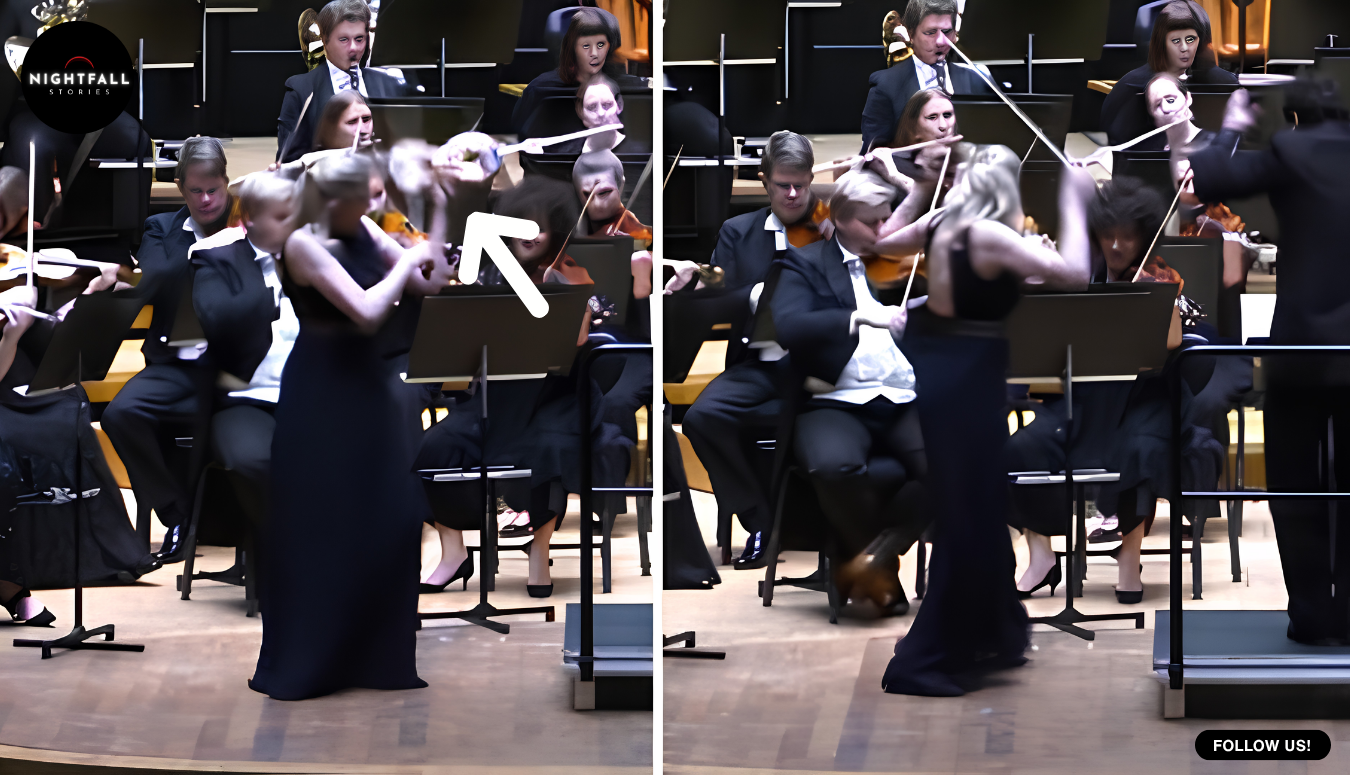
    The violin was in the air before anyone in the hall understood what had happened. Elina Vahala was playing the first movement of the Bruch concerto, the conductor Matthew Halls was beating time about a metre away, and then his arm and her instrument occupied the same space. The violin left her hands, went up, and came down behind her.

    What she did in the next few seconds is the reason the concert finished. She got a foot under it. Not a clean catch, nothing balletic, just a fast, instinctive shove of a shoe into the space between a 1780 Guadagnini and a hardwood stage floor. She has said since that it was incredible she managed to get her foot in the way, and that is not modesty, it is accurate. There is no version of that reflex you can practise.

    She picked it up. She checked it. She tuned it, in front of an entire audience that had gone completely silent. And then the orchestra went back in and they played the finale.

    The instrument, it turned out, was almost entirely fine. And the one thing that had actually moved is the best part of this story, because it sounds like the worst.

    When the luthier examined it afterwards, he found the top very slightly detached from the ribs. In plain terms, one of the seams where the front plate of the violin meets the sides had come unstuck. If you do not know how a violin is put together, that sentence reads like a death sentence for a three hundred year old object. It is not. It is closer to the opposite. That seam is designed to do exactly that.

    Here is the thing almost nobody outside the trade knows. A violin is not glued together with the strongest glue available. It is glued together with animal hide glue, and the joins are deliberately graded in strength. The centre joint, where the two halves of the front plate are joined down the middle, gets a strong bond, because a luthier never wants that one to open. The seams around the edge, where the top meets the ribs, get a weaker one on purpose.

    The reason is that wood moves. Spruce and maple expand and contract with humidity, and the top plate and the ribs do not move by the same amount in the same direction. Add central heating in winter, or a damp hall in summer, or a sudden mechanical shock, and something has to give. If the seam holds, the tension has nowhere to go and it goes into the wood, and the plate cracks. A crack in the top of an old Italian violin is a serious, expensive, permanent event in that instrument’s life. An open seam is a routine afternoon at a workshop bench.

    So luthiers build in the failure. The seam is the release valve. Specialists describe open seams as the canary in the coal mine for string instruments, the thing that opens, hopefully, before the tension can crack a plate. Vahala’s own account of the aftermath says the same thing in the same words the trade uses: the top was slightly detached from the ribs, which is a safety measure when there is a sudden change in humidity or pressure, and it prevents cracking. It has been glued back in place.

    That design predates the instrument it was protecting. Hide glue is ancient, and the practice of using a reversible, deliberately weaker bond at the seams is part of why we still have functioning violins from the seventeenth and eighteenth centuries at all. Every one of them has been opened up, worked on, and closed again, repeatedly, across centuries, by people the maker never met. A modern epoxy would be stronger and it would make the instrument disposable, because the day something needed doing inside it, you would have to destroy the thing to get in. Reversibility is the whole point.

    Which is why the correct way to read what happened in Lahti is not that a priceless violin narrowly escaped disaster. It is that a violin did precisely what a violin is built to do. It gave way at the cheap joint instead of the expensive one. The luthier’s report, as she relayed it, found no cracks and not even scratches. She described the survival as miraculous and credited the guardian angel of old Italian instruments, which is a lovely line, and the guardian angel in question is a pot of glue.

    Now the object itself, because the number that travelled with this story deserves a moment of honesty.

    The violin is attributed to Giovanni Battista Guadagnini and dated 1780. Guadagnini is the name you reach for after Stradivari and Guarneri. He worked across several northern Italian cities in the eighteenth century, moved his workshop more than once, and his instruments from different periods look and sound different enough that specialists talk about his Piacenza, Milan, Parma and Turin work almost as separate careers. The late instruments, the Turin ones, are the most sought after, and a 1780 falls in that late group. Players tend to describe Guadagninis as more immediately powerful and slightly more focused than the great Cremonese instruments, which is one reason soloists who do a lot of concerto work like them.

    The valuation reported around this incident was about a million pounds, roughly 1.3 million dollars. Take that as a press figure rather than an appraisal. Nobody published a valuation certificate, fine instrument prices move with the market and with attribution confidence, and the number is the kind of round figure that gets attached to a story to convey seriousness. The honest version is that this is an instrument in the seven figure bracket. That is enough to explain why the hall went quiet.

    It also raises the question that string players think about more than almost anything else and almost never discuss in public, which is: whose loss would it have been?

    Very few soloists own the instruments they play at this level. The maths does not work. A seven figure violin against a career income that, for all but a handful of players, is solidly professional rather than spectacular, simply does not add up. So the great instruments are held by foundations, banks, private collectors, national institutions and instrument trusts, and they are loaned to players, sometimes for years, sometimes for a career. The player gets the tool. The owner gets custody of an appreciating asset that is being maintained and played, which is genuinely better for the instrument than a vault.

    What that means in practice is that when a violin leaves a soloist’s hands and hits a stage, there is a small crowd of interested parties. There is the player. There is whoever owns it. There is the insurer, and fine instrument insurance is its own specialist corner of the market with its own assessors and its own arguments about whether a repaired seam constitutes diminution of value. There is the orchestra, whose conductor caused it. And there is the luthier, who is the only one of them who can say what actually happened to the wood.

    This is not paperwork trivia. It is part of why a moment like that is so frightening for the person holding the instrument. It is not only that the sound of their working life might have just been damaged. It is that they may be responsible for an object they do not own and could never replace.

    Which brings us to the most human part of it, and the part worth handling carefully.

    Matthew Halls did not do anything wrong in any meaningful sense. He was conducting. Conductors move their arms, that is the job, and a soloist in a concerto stands close enough to the podium that the geometry is always a little tight. Most violinists have a story about a near miss with a bow, a stand, a music desk, a colleague’s scroll. Halls is an experienced conductor with a serious career in both period and modern repertoire. He made a physical error of a few centimetres in front of a full hall, and the consequence was spectacular in a way that almost no professional mistake ever is.

    Vahala has been unambiguous about this and it is to her credit. She expressed no resentment at all, described him as a musician of the finest calibre, said that making music with him and with the orchestra had been a real pleasure, and said she would happily work with him again. That is not diplomacy for the sake of a press line. It is a working musician recognising that the only difference between this accident and a thousand harmless ones is luck and about a metre of trajectory.

    And then there is the decision she made, which is the part that says the most about her.

    Think about what is going through a soloist’s head in that moment. Your instrument has just hit the floor. You cannot see inside it. You do not know whether the soundpost has shifted, whether there is a crack running under the varnish where you cannot see it, whether the bridge has moved, whether the neck has taken a knock at the heel. You are two thirds of the way through the most popular violin concerto in the repertoire in front of a full hall and an orchestra of eighty people who are all looking at you. And you have to decide, in seconds, whether you are going to keep playing an object that may be injured.

    It is worth pausing on the retuning, because it is the most revealing small act in the whole episode. A violin that has been jolted hard goes out of tune in a specific way. The strings slacken unevenly, the pegs in the scroll can slip in their holes, and the whole instrument needs bringing back up by ear, quickly, with a hall listening. You cannot do that in a panic. It requires you to put your ear against the body of a thing you have just watched fall, hear what it is telling you, and adjust. And while you are doing it you are also running a silent diagnostic. Is the bridge still standing straight and in its notches. Does the thing still ring under the bow the way it did ten minutes ago. Is there anything rattling inside.

    That last one matters most. Inside every violin, wedged upright between the top and the back beneath the treble foot of the bridge, there is a small spruce dowel called the soundpost. It is not glued to anything. It is held in place purely by the pressure of the strings pushing the top down onto it, and it carries vibration from the front of the instrument to the back. Its exact position is fussy to the millimetre and it is a large part of what an instrument sounds like. A serious knock can move it or drop it, and a fallen soundpost is one of the sounds a player dreads, because you hear it before you feel it: the instrument goes dull, loses its core, and the top has lost its main internal support at the same time. Nothing of the kind happened here. She would have known within one bow stroke if it had.

    She tuned it and kept going. That tells you two things. First, that she checked and trusted what she felt, because anyone who has played an instrument for decades knows immediately whether it is answering normally under the fingers. Second, that she made a judgement about the room. Stopping would have turned the evening into the accident. Playing the finale turned the accident into an incident inside an evening.

    The Bruch finale is not a soft landing, either. It is fast, it is high, it sits on the instrument’s power, it demands a lot of bow, and it is the most exposed thing in the piece. She played it having just retuned a violin she had scraped off a stage floor with her shoe.

    There is one more thing about the Bruch specifically that makes the choice to continue less obvious than it looks. Bruch’s first concerto is one of the most played violin concertos in existence, which cuts both ways. Everybody in a classical audience knows it, so any wobble is heard. But it is also so deep in a professional soloist’s hands that it runs partly on muscle memory, and muscle memory is what you have left when the rest of your concentration has just been spent on a violin in mid air. She was not sight reading. She was playing something her body has known for decades, which is very possibly the only reason continuing was possible at all.

    The footage of the moment spread quickly, which is how most people encountered this at all, and the internet did what it does: it argued about whose fault it was, and it used words like destroyed, and it settled into a narrative about a priceless treasure nearly lost to a careless wave of an arm.

    The truth is quieter and better. A conductor made a small physical mistake. A player reacted faster than she could have planned to. A joint that an eighteenth century workshop deliberately made the weakest part of the instrument did its job and opened instead of letting the wood split. A craftsman in Finland warmed up some glue, closed the seam, found nothing else wrong at all, and sent it back.

    And the finale got played, on the same violin, on the same night.

    The instrument survived because somebody, two and a half centuries ago, assumed it would one day be dropped.

  • The tenor could not go on and nobody in the building was covering the role. What the Royal Opera did next split the audience in half

    The tenor could not go on and nobody in the building was covering the role. What the Royal Opera did next split the audience in half

    Somewhere in the wings of the Royal Opera House in London, a man who had not sung a leading role on that stage in his life stood in the dark with a score and began singing Calaf. Out in the light, twenty or so feet away, a woman in Calaf’s costume walked the part, turned when he should turn, reached when he should reach, and did not open her mouth. The audience had been told what was about to happen. They had also been told that the most famous four minutes in the opera were not going to happen at all.

    That was the night, earlier this year, when Roberto Alagna could not finish a performance of Puccini’s Turandot, and the Royal Opera had to decide in the space of one interval whether to send everyone home or try something nobody in the building had rehearsed.

    They tried it. And the honest ending, the one worth staying for, is that it did not turn into a triumph. Some of the house booed. Some walked out. The opera stopped short of its final scenes, the aria everybody had come for was cut, and the next day the company wrote to ticket holders offering half their money back. Two things were true at the same time, and both of them were defensible, which is exactly why the night is still worth talking about.

    Start with the two people who ended up carrying it, because neither of them is a performer in the way the word is usually meant.

    Richard Hetherington is the Royal Opera’s head of music. If you have never thought about what that job is, that is the point of it. A head of music sits at a piano for hours with singers who are about to go on and takes their roles apart with them. He hears the entrance that is always a shade flat, the consonant that is landing late, the breath that will not survive the third performance of the week. He works the room in rehearsal, coaches the covers, keeps the musical standard of an entire opera company from sagging, and then, on the night, he sits in the dark and listens to other people do it. He trained at the Royal College of Music and at the National Opera Studio, he joined the Royal Opera early in this century, and he has held the head of music post since 2017. He is a very serious musician. He is not a dramatic tenor, and Calaf is a dramatic tenor role.

    Tatiana Novaes Coelho is a choreologist. That word does real work in an opera house and almost nobody outside one has heard it. A choreologist is the person who writes movement down. Dance and staged movement can be recorded in notation the way music can, and a choreologist is the specialist who reads and writes that notation, holds the staging of a production in their head and on paper, and can rebuild it months or years later when a different cast arrives. She had the production in her body because knowing exactly where every figure goes and when is literally the job. When you needed someone who could put on a costume and be Calaf physically, with no notice, in a staging she already knew from the inside, there was arguably nobody in the building better placed.

    So here is how it reached that point. Alagna sang the first two acts. By the interval he was unwell, and he was not going to be able to carry the last act. The company’s own statement afterwards said he was taken unwell during the performance and that it prevented him from completing it, and wished him a swift and full recovery. That is where the record stops on his health, and that is where this piece stops too. He is a singer who got ill at work. Nothing else about it is anybody’s business.

    What happened next is the part that makes opera people wince in recognition, because the question the audience asked immediately is the question the industry has been quietly avoiding for years. Why was there nobody else who could sing it?

    The blunt answer is that a house does not keep a spare dramatic tenor sitting in a dressing room every night. Calaf is a punishing role. It sits high, it is loud, it fights an enormous orchestra, and the pool of singers on earth who can actually do it in a large house is small. Covers cost money, and a cover for a role like this is not a junior member of the chorus who has learned the notes. It is a specialist who has to be paid to sit in a building and probably never sing. Major international houses routinely run certain roles without a cover on every date, and the Royal Opera said as much. The Times noted the same thing: this is a specialised role and emergency cover for it is genuinely unusual across the industry.

    That is a real answer, and it is also an uncomfortable one, because it means the risk of exactly this night is priced in. Houses accept it because the odds are good. Most of the time the singer finishes. When he does not, the audience discovers that the safety net they assumed existed was a line item somebody decided not to buy.

    It is worth being precise about the arithmetic, because it is not villainy, it is a genuinely hard sum. A house running a long revival of a popular title puts on a lot of performances. This Turandot ran across two seasons. To guarantee cover on every date for a role at this weight, you would need a singer capable of walking on cold into a major house and being credible in it, which is a small and expensive group of people, and you would need them physically present and warm, in the building, night after night, for a job they would almost certainly never do. Multiply that by every high-risk role in every title in a season and the number stops being a rounding error. So houses cover some dates and not others, and they cover some roles and not others, and they take the bet. The bet is usually fine. On this night it was not.

    Which is how a head of music and a choreologist ended up doing a job neither of them signed up for.

    Before the last act resumed, staff came out and explained to the audience what they were about to see. That matters, because the alternative was to simply start and let people work it out. Instead the house told them: the voice will come from offstage, the body will be on stage, and the aria is not being performed.

    The aria is Nessun dorma. It is probably the single most recognisable piece of music in opera. It is the reason a large slice of any Turandot audience is in the room. People who have never seen a staged opera in their lives know it, can hum it, have cried at it in a stadium or an advert or a talent show. And it was cut.

    You can see why the boos came. If you have bought a ticket, arranged a babysitter, travelled in, dressed up, and possibly spent a serious amount of money for one evening, and the thing you came for is announced as not happening, disappointment is not unreasonable. One attendee said afterwards that people threw things, though that account was not independently confirmed. Some booed the announcement. Some got up and left rather than sit through an act without its centre.

    And you can equally see why cutting it was almost certainly the kind decision. Think about what the alternative was. You would be asking a coach who had not warmed up, who does not sing that repertoire, who was standing in the wings with adrenaline in his hands, to deliver the most exposed four minutes in the tenor literature, cold, to a house of two thousand people who know every note of it and would compare him instantly to the greatest voices of the last century. He would have been humiliated for trying, and the audience would have been given something worse than nothing. Cutting it protected him, and it also protected the piece. Act III was substantially shortened, and the performance stopped at the point where Liu takes her own life rather than give up Calaf’s name, before the final scenes. It ended on a death rather than on a resolution.

    The writer Kenan Malik, who was there, described the evening as disappointing and dramatic and, in a strange way, appropriately ended, and he called Hetherington’s intervention hugely brave and impressive. Both halves of that are honest. It was a diminished evening. It was also a remarkable one.

    Try to sit inside it for a second, because the craft of what those two did is easy to skate past.

    Hetherington had to sing a role he was not prepared to sing, in the wings, in the dark, without being able to see the conductor in the way a soloist on stage sees him, with an orchestra in a pit he was not standing in front of, and he had to stay in time with a body on stage that was not his. Singers are used to matching their movement to their breath. He had none of that. His phrasing had to fit someone else’s walking. If he breathed early, she looked wrong. If she moved early, he looked wrong.

    Novaes Coelho had the mirror of the same problem, and arguably the harder one. Acting a sung role in silence means every impulse a singer uses to justify a gesture is missing. She had to look like the source of a sound coming from offstage, in costume, in front of the same two thousand people, with other principals singing directly at her and needing something back. Anyone who has ever had to lip sync a single line at a wedding knows how quickly the body stops believing it. She had to do it for an act.

    They had no rehearsal. They had an interval.

    And they were not the only two people improvising. Everybody else on that stage was still singing a full role, and singing it at a silent partner. Turandot herself has to interrogate Calaf and be answered. Liu has to plead with him. The whole shape of the last act is built on people pushing against that one man and getting resistance back. On this night the resistance was arriving from the side of the stage, from a voice the other singers could hear but not see properly, attached to a body that could not answer them. Whatever adjustments those principals made in real time, they made without being asked and without being credited, and the audience mostly did not notice, which is what a good save looks like.

    There is also the orchestra and the conductor, holding a tempo for a soloist who was not where a soloist is supposed to be, in a shortened act whose cuts had been decided in a corridor.

    And then there is the refund, which is where the honesty of the whole episode lives. The next day the company wrote to ticket holders calling it an exceptionally rare situation and offering fifty percent of the ticket price back. Accounts differ slightly on whether this was framed as a refund or as a credit, and different outlets reported it both ways, which is worth saying plainly rather than smoothing over.

    Read what that gesture actually does, though. In one document the house both defended its staff and conceded that it had not delivered what it sold. It did not pretend the evening was complete. It did not tell the audience that the show going on was a gift they should be grateful for. It said, in effect: you paid for a Turandot with Calaf and Nessun dorma, you did not get one, here is half of it back, and also, what our staff did in there was extraordinary.

    Both of those statements are true. That is the whole story, and it is rarer than the triumph version would be.

    There is a version of this night that gets written as a feel-good moment. Plucky staff save the day, audience rises in ovation, art conquers all. That version is a lie, and it is a lie that would insult the two people who actually went out there, because it would turn a genuinely difficult professional judgment into a greeting card. What they did was not save the evening. The evening was not savable. What they did was stop it from being nothing.

    That distinction is the interesting one. In most jobs, when the person who is meant to do the thing cannot do it, the work simply stops and everyone goes home. In live performance the alternative is always visible and always embarrassing: an announcement, a cancelled house, refunds, a hole in the schedule. Opera has a long institutional memory for these moments, and it tends to remember the ones where somebody stepped forward. Alagna, as it happens, was on the other side of one of them years ago, when he left a performance of Aida and an understudy went on in street clothes and finished it.

    The difference is that the understudy in that case was an understudy. On this night there was not one, and the two people who filled the gap were a coach and a movement specialist whose careers are built entirely on making other people look good from a position the audience never sees.

    For one act, the audience saw them. Some of that audience booed. Some of it left. Some of it understood exactly what it was watching and will talk about it for the rest of their lives. The house gave back half the money. The company wished a sick singer well. Nobody got the evening they had paid for.

    And in a building whose entire business is the illusion that everything is under control, two members of staff who never, ever go on went on, and the illusion held together just long enough to reach the end of a shortened act.

  • He told Spielberg to hire one of four other composers. Six months and ninety-six musicians later, the toast at the last session was not about endings

    He told Spielberg to hire one of four other composers. Six months and ninety-six musicians later, the toast at the last session was not about endings

    When Steven Spielberg asked John Williams to write the music for his new film, Williams said no. Not a coy, persuadable no. He named four other composers who could do the job and suggested Spielberg use one of them.

    He had reason to. Williams had already indicated more than once that he was done with film scores. He was in his nineties. He had spent more than half a century doing the hardest version of a hard job, which is not writing memorable tunes but writing two hours of music to fit a picture that keeps changing underneath you, on somebody else’s schedule.

    Spielberg did not accept the no. What he offered instead is the part of this story that actually explains how it happened, and it had nothing to do with charm. He rebuilt the schedule around the composer. A film score is normally recorded in a compressed block, one or two weeks of sessions, the orchestra booked solid, everyone in and out. For this film the recording was stretched across six months. Seven separate sessions, from late in 2025 through to the following February. Williams could write when he could write, and the orchestra would come back.

    By the end of it he had recorded more than two hours and twenty minutes of music with an orchestra of ninety-six players in Los Angeles. He turned ninety-four during the process. He orchestrated the entire score himself, by hand, and conducted most of the sessions from a wheelchair.

    That last detail is the one worth sitting with, because most people have no idea what it describes.

    Orchestrating is not composing and it is not arranging. Composing is deciding what the music is. Orchestrating is deciding, note by note, which of the ninety-six people in the room plays which of those notes, in which register, with which articulation, against which other instruments. It is the difference between a piece of music and a piece of music that actually sounds like something when a hundred humans attempt it simultaneously. For two hours and twenty minutes of finished music, that is thousands of pages of decisions.

    Almost nobody at the top of the film industry does this themselves any more. The normal workflow is that the composer writes sketches and a team of orchestrators turns them into playable parts, which is not cheating, it is how the deadlines are met. Williams has always done his own, and he did it here, into his ninety-fourth year. The reporting also names William Ross and Randy Kerber as having handled adaptations for the film’s edits, which is a different and narrower job, reworking existing cues when a scene changes length, and that detail comes from a single strand of coverage rather than being widely confirmed.

    Then there is the conducting. Standing in front of an orchestra is a physical act. You are the timing mechanism for ninety-six people who are watching your hands and nothing else, for hours, in takes that have to line up to the frame with a picture running on a screen behind you. Doing that seated, in a wheelchair, does not make it easier. It removes most of the body you would normally conduct with and leaves you the arms, the face and the eyes. Anyone who tells you that is a minor adjustment has never tried to hold a large ensemble together.

    People who were in the room reported that he brought surprising energy to it. That word, surprising, is doing a lot of quiet work.

    Spielberg was at every single session. He sat near Williams, next to the music editor Ramiro Belgardt, for all seven of them across six months. Directors do not usually do this. They come to the main sessions, they approve the important cues, they leave. Sitting through the whole recording of a score is a way of spending time with somebody.

    And the music he was asking for was not the kind that made either of them famous. Spielberg has described it as probably the most restrained score Williams has ever written for one of their films, with the lovely qualifier attached that it is the most restrained until it is not. He has explained what he wanted in plainer terms too. He wanted the music behind the film and underneath the film rather than out in front of it. He wanted it to nudge the picture forward slightly without leading it, which is the exact opposite of the approach on something like Close Encounters of the Third Kind, where the music is arguably the main character.

    Ask a composer which of those two jobs is harder and most of them will tell you it is the second one. Writing a theme people hum for fifty years is a rare gift. Writing music that does its work while a viewer never consciously notices it, and then does not sound like wallpaper when you play it on its own, is a craft problem with almost no room for error. You cannot hide behind a big tune. Every choice has to justify itself at low volume.

    Some of those choices are visible in the details that came out of the sessions. Four bassoons for one dark cue, when a single bassoon is standard and two is already a statement. Two harps instead of the usual one. These are not showy decisions. They are the decisions of someone thickening a colour without raising the volume, which is exactly what restraint at that level actually requires. You do not get quieter by using fewer players. You get quieter by using more of them, gently.

    The most interesting technical choice was the choir. Thirty female voices, split evenly between sopranos and altos, with a soloist named Holly Sedillos, recorded in December with the orchestra rather than added afterwards.

    That is not how this is normally done, and the reason it is not how it is normally done is that doing it the older way is harder and riskier. A choir recorded separately can be balanced, tuned, moved and replaced later in the mix. A choir recorded live in the same room as ninety-six instruments cannot be untangled from them afterwards. The voices are in the orchestra’s microphones and the orchestra is in the voices’. If the balance is wrong, you do not fix it at the desk, you do another take. If one singer is a shade sharp on a held note, that note is now permanently part of the string sound.

    What you buy with that risk is a thing you cannot fake. Singers and players in the same acoustic listen to each other in real time and adjust, and the tuning and blend that results is audibly different from two good recordings laid on top of each other. The human ear catches it even when the listener has no idea what they are catching. It is the difference between a group of people making a sound together and a group of people making sounds near each other.

    The film is called Disclosure Day, and most of the work on its music belongs to 2025 rather than to this year. Five of the seven sessions happened before the calendar turned. The score was finished in the February that followed, the album came out in the summer, and the detailed account of how the thing was actually made only became public months after the orchestra had gone home. That gap is normal for scoring work and it is why almost nobody notices it happening.

    The shape of the schedule tells its own story. Seven sessions across six months is not a composer being slow. It is a score being written against an edit that is still moving. When a director spends that long finishing a film, scenes get shortened, reordered, cut and reinstated, and every one of those changes breaks the music written for it. That is precisely why adapters get hired. A cue that fit a two-minute scene has to fit a ninety-second scene, and the join cannot show.

    Then there is the arithmetic that anyone outside the industry finds startling. More than a hundred and forty minutes of music was recorded. Eighty-two minutes of it is in the finished film.

    Roughly an hour of fully orchestrated, fully recorded music by one of the most performed composers alive, played by ninety-six musicians, did not make the picture. That is not waste and it is not a failure. It is normal, and it is the cost of scoring to a moving target: you write for the film as it stands, and the film moves. Some of the unused material found a home on the soundtrack album, sixteen tracks running a little over sixty-four minutes, released in the summer, with a vinyl and CD edition following and liner notes written by Spielberg himself.

    Which brings us to the thing everyone wants this story to be, and the thing it stubbornly refuses to be.

    This was the thirtieth film Williams and Spielberg have made together. Their first was in 1974. That is a working relationship of more than fifty years, and there is nothing else like it in the history of film. Not a director and an actor, not a director and a cinematographer, nothing at that length and nothing at that count. Thirty films with one collaborator is not a statistic about productivity. It is most of two adult lives.

    So the temptation to write the last session as a farewell is enormous. Do not believe it if you read it that way somewhere else, including in headlines that call this his final score.

    Here is what is actually documented. At the final session, Spielberg made a remark to the room about it being their thirtieth film together, and said they were still in love. And then, according to the account of that day, he raised the subject of another film. Williams’ response was not a polite deflection. It was affirmative.

    A thirty-first has been hinted at. It has not been announced, nothing has been confirmed, and it would be irresponsible to promise it. But the room did not sound like a room where somebody was retiring. It sounded like a room where the older of the two men had just been asked again and had not said no, which by this point is a familiar pattern. Williams had already suggested at least twice that a particular score would be his last, and each time Spielberg came back, and each time the answer changed.

    Williams has been open about why, and it is the most human line in the whole story. Asked about being talked out of retirement, he has said that one thing Spielberg is not is a man you can say no to.

    That is funnier and more affectionate than it looks on the page, and it is also a slightly sad admission about a particular kind of friendship. Two people who have worked together for half a century do not really have the option of a clean ending, because the work is how they see each other. Spielberg sat beside him for seven sessions over six months. Williams wrote two and a half hours of music at ninety-three and ninety-four and gave up an hour of it without complaint. Neither of those is a professional obligation. That is what the relationship consists of.

    It is also worth being precise about the retirement question, because it has been reported loosely for years. Williams has never announced a retirement from composing. What he has done, more than once, is say that a particular score would probably be his last, which is a different statement and a much more honest one from a man in his nineties working one project at a time. Coverage of this score has described it as possibly his final collaboration with Spielberg, and that hedge is correct and should be kept. Anyone stating flatly that this is the last music John Williams will write for a film is going beyond what anybody involved has said, including Williams.

    For what it is worth, the score arrived and it works. Spielberg’s own description of his collaborator at ninety-four was that he is as exceptional now as he was at forty, which is the kind of thing a friend says, but the recorded evidence is on the table. Two hours and twenty minutes of self-orchestrated music. A live choir. A hundred musicians managed from a chair. An orchestra that kept coming back for six months because the man writing the music needed six months, and got them.

    There is a version of ageing that the film industry likes to tell, where a great figure is celebrated, honoured, applauded at a ceremony and then quietly retired into archive footage. This is not that. This is a man in his nineties doing the least glamorous parts of his own job, filling in staves by hand, one instrument at a time, because he does not trust anybody else to decide which bassoon plays what.

    And when the last session ended and the obvious moment for a goodbye arrived, the conversation in the room was about the next one.

  • His father gathered the Harlem Renaissance into one room, shot it in a single night, and never cut a frame. The son who held the camera knows why

    His father gathered the Harlem Renaissance into one room, shot it in a single night, and never cut a frame. The son who held the camera knows why

    In 1972, a documentary film-maker named William Greaves talked his way into Duke Ellington’s townhouse in Harlem and filled it with people who had built a movement and then scattered. The painter Aaron Douglas was there. So was the photographer James Van Der Zee, who had made the portraits that are still how most of the world pictures Harlem in the 1920s. Eubie Blake and Noble Sissle, who had put a Black musical on Broadway when that was not supposed to be possible. The writer Arna Bontemps. Richard Bruce Nugent. Louise Thompson Patterson. The historian John Henrik Clarke. Romare Bearden. Ida Mae Cullen, widow of the poet Countee Cullen.

    Most of them had not seen each other in decades. Greaves got roughly four hours of them talking. Then he put the film away and never finished it.

    He did not lose it. It was not stolen, it did not burn, and nobody found it in an attic. It sat in his own possession for the rest of his working life, and he worked for another three decades. He died in 2014, at 87, having produced something in the region of two hundred films and directed or written more than half of them, and this was still sitting there uncut.

    One of the people who had been in that townhouse holding a camera in 1972 was his son David. Fifty-odd years later, David Greaves is the one who finally decided what the film was. It is called Once Upon a Time in Harlem, it runs a hundred minutes, it is credited to both of them, and it opens in cinemas in the United States on 16 October. Between its premiere and that release it has collected a run of festival slots that documentaries of this kind almost never get, including the Directors’ Fortnight at Cannes, Telluride, Toronto and a main-slate berth at the New York Film Festival, and it currently sits at a hundred percent on Rotten Tomatoes across twenty-nine reviews.

    The obvious question, the one the film cannot answer and the coverage keeps politely stepping around, is why the father never cut it.

    Start with who he was, because it matters. William Greaves was born in Harlem in 1926, close enough to the tail of the Renaissance to have grown up inside its afterglow. He started out acting, got tired of the parts available to him, and went into documentary instead. He co-hosted and produced Black Journal, the public television programme that was, unusually and deliberately, made by Black journalists about Black American life, and won an Emmy for it. He made Symbiopsychotaxiplasm: Take One, an experimental film about the making of itself, shot in Central Park with three camera crews, which confused almost everyone in 1968 and is now in the National Film Registry. He taught acting for over a decade. He spent ten years on a film about the diplomat Ralph Bunche and then had to compress seventeen hours of material down to two.

    That last detail is worth holding onto, because it tells you something about how he worked. Greaves shot enormous amounts and then had to face the cutting. And 1972 in particular was not a quiet year for him. It is the year of Nationtime, his film about the National Black Political Convention in Gary, narrated by Sidney Poitier. He was busy with a piece of live political history while also convening a room full of elders whose movement was already half a century in the past.

    Nobody who has written about the Harlem footage has produced a document in which Greaves explains himself. The honest answer is that we do not know, and the film does not pretend to. What we do know is the shape of the problem he left behind, and anyone who has ever tried to cut a long conversation will recognise it immediately.

    Think about what he actually had. Not a story. Not a plot, not an event, not a crisis that resolves. Four hours of very old people being pleased to see each other. Conversations in twos, conversations in small knots around a room, and then one long sprawling exchange that pulls nearly everybody in at once, which the reviews single out as the best thing in it. There is no argument to build and no ending to arrive at, because the only ending available is that everyone in the room is going to die, which is not an ending a film-maker in 1972 could use.

    There is also the plain difficulty that this material is only legible if you already know who these people are. A viewer who cannot tell Aaron Douglas from the man sitting next to him is watching pensioners chat. To make it work you have to teach the audience the Harlem Renaissance while they watch, without turning the whole thing into a lecture with clips. That is a genuinely hard editorial problem, and it was harder in 1972, when the Renaissance had not yet been canonised in schools and museums the way it has since.

    And then the reason that is least romantic and most likely. He had commissions. Documentary film-making at that level is a business of deadlines and funders, and a personal project with no broadcaster attached is the thing that gets moved to next year. Then next year again. Greaves worked until 2001. There were something like thirty years of next year.

    Which brings us to the part that is actually unusual about this story, and it is not the footage. It is the inheritance.

    David Greaves was in the room. He is credited as one of the cinematographers on the 1972 shoot, alongside Doug Harris, David Hoffman and Jerry Pantzer. So when he came back to the material after his father’s death, he was not a stranger opening a stranger’s boxes. He was looking at images he had helped make, of an evening he had physically been present for, shot by a young man who was himself and who no longer exists in any practical sense. That is a strange position to be in, and it cuts both ways. He knows things about that night nobody else alive knows. He also has to accept that his memory of it is now fifty years old and less reliable than the film.

    The harder part is the authorship. Every edit is a decision about intention, and normally you can ask. In an ordinary edit suite, the question of whether a scene belongs in the film gets settled by the director saying what the film is about. Here the director is dead and the answer has to be inferred from the only evidence available, which is the footage itself and a lifetime of other films that show how the man thought. You can watch Symbiopsychotaxiplasm and learn that William Greaves was comfortable with mess, with people talking over each other, with letting the process show. You can watch the Bunche film and learn that he could be patient and conventional when the subject deserved it. Neither tells you what he wanted here.

    So David Greaves had to make a decision that is not really an editing decision at all. He had to decide whether he was finishing his father’s film or making his own. The credit, both names, father and son as co-directors, is the answer he arrived at, and it is a more honest answer than either alternative would have been. Crediting only William would be a fiction, because someone made a hundred minutes out of four hours and it was not him. Crediting only David would erase the fact that the casting of that room, which is the real act of genius here, was entirely his father’s. Getting those specific people into one specific house on one specific night, and having the nerve to think it was worth doing, is the whole film. Everything after that is carpentry.

    There is a technical dimension to this that is easy to miss. Material shot in 1972 on film, with sound recorded separately, does not simply open on a laptop. Picture and sound have to be brought back into relationship with each other, and every frame has to be transferred before anyone can even look at it properly, let alone start making choices. With four hours of coverage from multiple cameras running at a live event, much of it is people crossing in front of each other, backs to the lens, audio smeared by a crowded room. A modern editor working on modern footage takes decent sync and clean dialogue for granted. Here, a lot of the labour is just getting the material into a state where the editorial question can be asked at all.

    There is also the question of what you are allowed to do to it. You can cut a conversation to make a point the speaker was not making. You can put a reaction from one part of the evening next to a remark from another and invent an exchange that never happened. That kind of thing is ordinary craft in documentary and it is also the exact place where a son finishing a dead father’s film about dead subjects has nobody to stop him. The restraint the reviews keep describing, letting one long sprawling exchange simply run, reads like a deliberate refusal of that power.

    He did not work alone. Liani Greaves and Anne de Mare produced, de Mare and Lynn True cut it, and the composer Tamar-kali wrote the score. That is a real film crew doing real work on material older than most of them, and it took years.

    It is worth being clear-eyed about what has been recovered and what has not. Nothing about this was rediscovered. The footage was never missing, and the family knew exactly what it had. What was missing was a film, and a film is not footage. It is a set of choices about footage. For fifty years those choices had not been made, and the reason the thing exists now is not luck or archaeology but somebody sitting down and doing the work that his father, for whatever combination of reasons, did not.

    What that work produced, by the accounts of people who have seen it, is not a history lesson. It is a room. Reviewers describe friendship, needling, a gentle competitiveness between people who had been young together and were now in their seventies and eighties, comparing what they had made of themselves. Eubie Blake, who was around eighty-five that year and would live to be ninety-six, in the same space as Van Der Zee, who had photographed him decades earlier. Douglas, whose murals are now the visual shorthand for the whole movement, being talked over at a party. Nugent, who had written openly about desire between men in the 1920s and paid for it in obscurity, still there, still talking.

    None of them lived long enough to see it. Sissle died within a few years of that night. Douglas, Van Der Zee and Blake within a decade or so. William Greaves outlasted every one of his subjects by decades and still did not finish the film about them, and his son finished it long after that. There is no way to write that as uplifting and it should not be. It is simply what happened.

    What is not sad is what the material now is. A four-hour conversation from 1972 between people who made the Harlem Renaissance is not an interesting artefact. It is the only one of its kind. There was never going to be a second night like that, because by the time anyone thought to organise one, the guest list would have been empty. Greaves seems to have understood, in 1972, that he was on a clock and that the gathering had to happen whether or not he knew what to do with it afterwards. That is the decision the film rests on, and he got it right.

    The commercial afterlife has been improbable. A hundred-minute documentary consisting largely of old footage of conversations premiered at Sundance in January and set off a bidding war. Neon, the distributor behind an unusual run of crossover successes, won it, put out a teaser in the summer, and is giving it a proper theatrical release rather than dropping it onto a streaming service, which for a film of this shape is close to unheard of. Along the way it picked up a nomination for the Cannes documentary prize. It is, on the numbers, one of the best reviewed films of the year.

    David Greaves is in his seventies now himself. He spent part of his life as a young man working on his father’s crew, and part of his later life finishing his father’s last unmade thing, and the outcome is a film that has his name on it next to a man who died twelve years ago.

    The temptation is to call that a gift passed down, and that is not quite it. A gift is something you are given. This was a job left undone, handed over without instructions, by someone who could no longer be asked what he meant. David Greaves took it, worked out an answer he could defend, and in October it goes into cinemas with both their names on it. The father found the room. The son decided what happened in it.