Category: News

  • Opening day came and there was no festival. Now he is calling every artist who will pick up.

    Opening day came and there was no festival. Now he is calling every artist who will pick up.

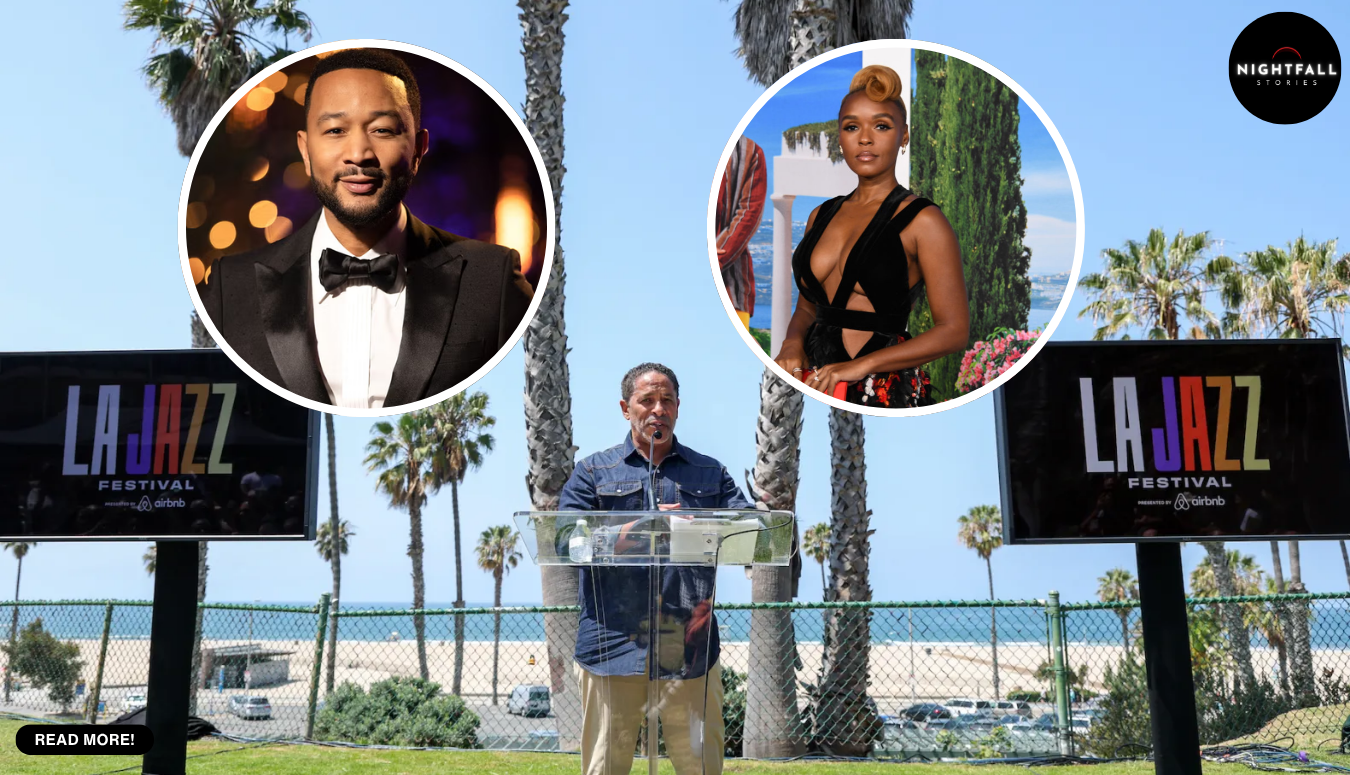
    The Los Angeles Jazz Festival was supposed to run for most of a month. More than a hundred events across the city, twenty-five free concerts in parks, a two-day conference about the state of the music, a youth camp, a Caribbean street festival with four stages, and a closing weekend on the sand at Dockweiler Beach with John Legend and Janelle Monáe on the bill. Organisers talked about a quarter of a million people coming through. Tickets went on sale. Musicians cleared their calendars. Some of them flew in.

    And then opening day arrived in early August, and there was nothing to open.

    Not a rained-out show, not a headliner pulling out at the last minute, not a stage that went dark halfway through. The whole thing, the entire month, simply did not happen. Artists had been told days earlier by email that the opening night event, the park concerts and the late-night club series were all being postponed because of what the message called unforeseen permitting and production challenges. The beach finale went a few days after that. What was left was a website, a set of ticket confirmations that pointed at nothing, and a jazz scene that had been told for months that this was finally its year.

    The man behind it is Martin Ludlow, a former Los Angeles city councilman who runs a firm called Bridge Street Inc. He had been talking about this festival for a long time. When it was announced earlier in the year, the mayor of Los Angeles stood up beside him and said she had been on a fifteen-year journey with him to get here, and that she was excited it was finally the year. Airbnb came in as the inaugural title sponsor. The framing was civic and generous: free admission for most of it, events in all fifteen council districts, deliberate bookings at venues owned by women and by people of colour, a celebration of a music that Los Angeles has a genuine claim to.

    That is a lot of promise to put into a room, and it is why the collapse landed the way it did.

    The reporting that pieced together what actually went wrong, published by the Los Angeles Times about two weeks after the cancellation, does not describe a single dramatic failure. It describes a slow one. The festival had a proposed budget of around sixteen million dollars, and according to that account the organisers were never able to finance all of it. There was a search for five million dollars of venture capital in exchange for a fifth of the company, and a hunt for a million-dollar title sponsorship. Airbnb’s contribution was reported at seven hundred and fifty thousand dollars. That is real money, and it is also a long way from sixteen million.

    Running alongside the money problem was the paperwork problem, and the paperwork problem is the one with a paper trail.

    According to the Los Angeles Times account, a lieutenant with the city’s police department wrote in late July that required documents were still outstanding despite repeated attempts to reach the organisers. A further letter at the end of that month reportedly warned that they were likely to miss the deadline. These are not accusations from a rival or a rumour from the scene. They are letters, written by the agency whose sign-off a festival of that size cannot proceed without, and they were written before anything was publicly cancelled.

    Ludlow’s own explanation, given at the time, pointed at what he called a demanding multi-agency process and significant, unanticipated last-minute public safety and municipal costs. Both things can be true at once. Permitting a month-long event spread across an entire city really is a grinding administrative job with a lot of separate desks to satisfy, and the record also shows that the desks were asking for material and not getting it.

    What that combination produced, in practice, was a festival that had committed to artists before it had secured the ground it would put them on.

    Ludlow has said he spent more than a million dollars on performance fees for shows that never took place. That figure is his own account as reported, and it has not been independently audited. Around twenty artists, by the Times’ count, had not received the advances they were owed. Some of them had already spent money of their own getting ready.

    The saxophonist Leah Concialdi’s Neighborhood Orchestra was one of them. Her group had paid out of pocket for photographers, for a video crew, for rehearsal time, all the invisible costs a band absorbs when it thinks a big date is coming. She reportedly found out the show was gone not through a phone call but because a ticket link stopped working. Her point afterwards was not a demand for money. It was closer to a warning to anybody else who wants to build something this size: you have to think about what happens to people once you have got them invested.

    That is the part of this story that does not get a headline. A cancelled festival is an inconvenience for a ticketholder and a catastrophe for a working musician, because a working musician’s year is a jigsaw. Blocking out a month for one festival means turning down the touring dates, the session work and the residencies that would have filled it. When the month disappears, the alternatives are already gone.

    The saxophonist Isaiah Collier had already flown to Los Angeles when his park show was called off. He described it afterwards as a wake-up call, and said much the same thing Concialdi did about the responsibility that comes with getting people invested. Neither of them sounded like people looking for a fight. They sounded like people doing the arithmetic on a month they were not going to get paid for.

    And here is where the story turns, because something happened next that was not in anybody’s plan.

    A New York musician and promoter called Gengis Don put together a replacement event at a Los Angeles gallery and gave it a name that told you exactly what it was for: Can’t Cancel Jazz. It was not a sixteen million dollar production. It was a room, a bill, and an audience, assembled fast by people who refused to let the month be a complete write-off. His summing up of the original festival was blunt and, in its way, fair-minded. He said the message had been right and the messenger had been wrong, and he worried aloud that a city with a genuinely rising jazz scene could be set back by a failure this public.

    That distinction matters, and it is the reason this is not a simple story about a man who let people down.

    Because the idea itself was not stupid. Los Angeles has an enormous, serious, historically deep jazz community, and it has never had a festival on the scale that community arguably deserves. Somebody was going to try. The question the collapse raised was not whether it should exist, but how you build one without breaking the people you build it on.

    There is an instructive comparison sitting right there in the same city. The bassist Stanley Clarke, a genuine elder of the instrument, staged the Santa Monica International Jazz Festival earlier in the same year, with Kamasi Washington headlining, and it went off. His account of how was almost boringly practical. He took two years to plan it. He surrounded himself with people he described as smart and ethical. And, in a line that reads like a direct if unintended note to his neighbours, he said the trick was not shooting too big.

    Two years, a realistic budget, and a smaller opening swing. That is not a glamorous recipe. It is, on the evidence, the one that works.

    There were other warning lights that only became visible once somebody went looking. Tickets for the paid events had reportedly started under seventy dollars and run up into the thousands for luxury boxes, which is the pricing of an established brand rather than a first year. When the organisers began exploring a move of some shows away from the original sites and into established venues like the Greek Theatre and the Peacock Theater, several headliners reportedly stepped away, which is what artists do when the shape of a booking changes late. The festival’s chief operating officer until a couple of years earlier had her own tax conviction on the public record. And the relationship with the title sponsor was not new money arriving from nowhere: Ludlow’s firm had reportedly earned more than two million dollars from work with the same company previously.

    None of that is proof of bad faith. Plenty of it is just how ambitious events get financed, with existing relationships doing the heavy lifting. But taken together it describes an operation that was running on optimism and personal credit rather than on locked-down funding, and an operation like that has no slack in it. The first serious delay becomes the last one.

    There is a further complication in the Ludlow story that the reporting did not leave out, and it would be dishonest to leave it out here. He pleaded guilty in 2006 to conspiring to embezzle union funds, and served probation and a substantial community service order. That is a matter of public record from two decades ago, and he has worked publicly in the city ever since. It is not the reason the festival failed. The permits and the budget are the reason the festival failed. But it is part of why some people in the scene reacted to the collapse with more anger than they might have given a first-time promoter, and any honest account of the temperature afterwards has to acknowledge it.

    What is genuinely unusual about this story is what Ludlow did once there was nothing left to save.

    He could have gone quiet. That is the normal move. Festivals collapse fairly often, a shell company absorbs the damage, the founder stops answering email, and the artists write the money off. Instead he sat down with a newspaper that had just spent weeks reconstructing everything that went wrong and answered the questions. He described the experience as a brutal fishbowl. He said he had started calling billionaires and millionaires trying to find the money in time, and that he had run out of road. He described the permit failure in physical terms, as a blow to the solar plexus, which is about as close as anybody in this story gets to saying how it actually felt.

    Then he made two commitments out loud. Refunds to ticketholders within thirty days. And a promise to call every single artist who would take the call, and settle what he owed them.

    Whether he has managed all of that is genuinely unresolved. The reporting captured the promise, not the completion, and there has been no comprehensive public accounting since of who has been paid and who has not. Anyone telling you the artists have all been made whole is guessing, and so is anyone telling you none of them have. What can be said is that the promise was made specifically, in public, with a deadline attached, which is harder to walk away from than a vague apology.

    He has also said, plainly, that he still thinks the idea is sound, and that he is living on the hope of working out how to rebuild it. That is either admirable or maddening depending on where you are standing. If you are a musician who is still owed an advance, a founder talking about the next attempt is not what you want to hear first. If you are someone who thinks a city that produced this much music ought to have a festival worthy of it, then somebody is eventually going to have to try again, and the person who has just learned the most expensive possible lesson about permits and budgets is not the worst candidate.

    The wider context is not comforting. Weeks after the jazz festival went down, another Los Angeles music festival was reported to have collapsed too, an ocean-side event that had booked major acts and then cancelled. Festivals are brutally expensive to stage, the margins are thin, the up-front costs land long before any revenue does, and a single missing approval can take the whole structure down. What looks from outside like a party is, financially, a construction project with a fixed and immovable completion date.

    What is left of the Los Angeles Jazz Festival, for now, is a set of lessons nobody wanted to pay for. That a mayor at a press conference is not a permit. That a title sponsor is not a budget. That announcing a lineup before the ground is secured shifts the risk onto the people with the least ability to carry it. And that the difference between a promoter who fails and a promoter who is finished is entirely in what happens in the weeks afterwards.

    The scene got its music anyway, in a gallery, under a name that was half a joke and half a statement of intent. It was smaller than a beach full of forty thousand people. It also actually happened, which that August the bigger version never managed.
  • He had seven weeks to prepare for the hardest role in opera. He spent them living with monks on a hill

    He had seven weeks to prepare for the hardest role in opera. He spent them living with monks on a hill

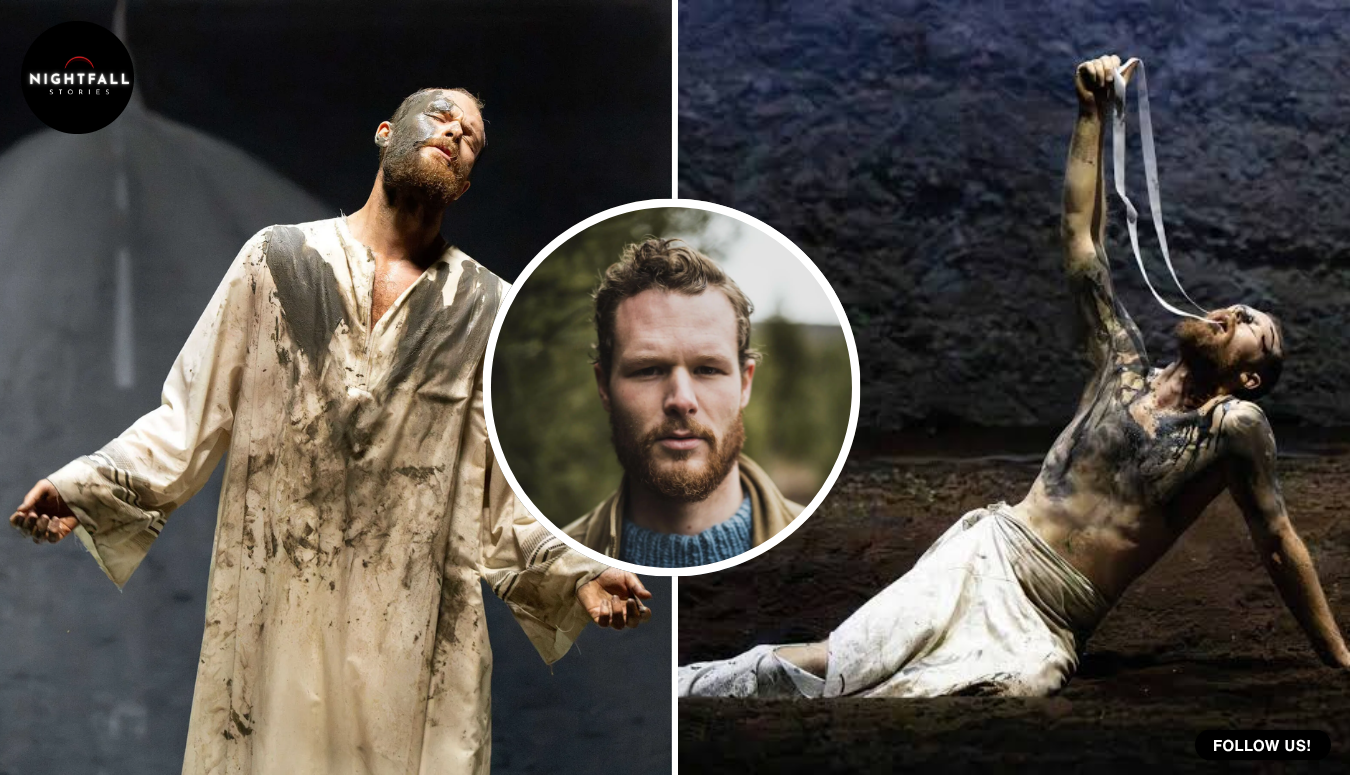
    Philippe Sly did not rent an apartment. He climbed a hill above an old European city, knocked on the door of a Capuchin monastery, and asked the friars if he could move in.

    They said yes. He stayed for seven and a half weeks, sleeping in a cell with no air conditioning through one of the hottest summers Europe has had, getting up for morning prayers with the community every single day, and walking the long stone stairway down into town and back up again several times a day. He was not on retreat. He was learning a part.

    The part was Saint Francis of Assisi, in the only opera Olivier Messiaen ever wrote, and it is widely considered one of the most punishing assignments in the repertoire. Six hours and twenty minutes of music. Eight tableaux. Two intervals of an hour each. A score that runs to around two and a half thousand pages. The title role is on stage for most of it.

    Sly is thirty-seven, a French-Canadian bass-baritone from Ottawa who trained at McGill University in Montreal, won the Metropolitan Opera National Council Auditions in his early twenties, came up through San Francisco Opera’s young-artist programmes, and has spent the years since singing Mozart in the big houses. Leporello. Guglielmo. Figaro. Don Giovanni himself at Aix-en-Provence. He is a father of two. None of that prepares you for Messiaen, because nothing does.

    What he decided, faced with this, was that the usual approach would not get him there. You can learn notes anywhere. What he could not learn from a score was what it feels like to live the way the man he was playing lived, and the Capuchins are a Franciscan order, which means they are the living continuation of exactly the movement Francis started eight hundred years ago. So he asked, and they let him in.

    His day started with Lauds, the morning prayers, and he went to them with the friars every morning for the whole stay. He joined Vespers in the evening. He went to Mass. He did not go as a tourist who watched from the back, and by his own account he did not stay separate from the rhythm of the house. He simply lived inside it for nearly two months and let it work on him.

    The monastery sits on a wooded hill above the city, reported at around 1,550 feet above sea level, which means the commute to the theatre was a stairway rather than a road. He walked it repeatedly, in high summer, in the heat. The cell had no cooling. Europe was in the middle of heatwave conditions. He did it anyway, because the discomfort was arguably the point, or at least it was inseparable from it.

    What he has said since is the part that sticks. He did not describe it as an exercise he completed. He described it as something he misses. He told a reporter that he longs for it and is excited to go back, which is not how people usually talk about a preparation method. Somewhere in seven and a half weeks the research stopped being research.

    And then he had to go and sing for six hours.

    It is worth being specific about what Messiaen wrote, because the scale of it is the reason this opera is so rarely staged. He composed it over close to a decade and finished in 1983, nine years before he died. He was a devout Catholic and a serious ornithologist, and both of those facts are all over the score. He spent years transcribing birdsong in the field and building it into his music, and the opera contains a scene in which Francis preaches to the birds, which Messiaen scored with the calls of species he had notated himself, from several continents.

    The forces required are enormous. This production used around 120 musicians and a chorus of roughly ninety. The conductor was Maxime Pascal, who has been blunt about the difficulty, pointing out that two and a half thousand pages of music, much of it extremely complex, is simply a different proposition from a standard night in the pit. The rhythmic writing is so intricate that a second conductor was stationed in the pit using a baton fitted with a white light, purely to give the percussion section beats that clash with what everyone else is counting. That is not a gimmick. That is what the notation demands.

    The staging around Sly was, if anything, more extreme than the score. The director was Romeo Castellucci, an Italian whose work tends to divide rooms, and his reading of the piece rejected the idea of telling a story in a line. He has described the opera as a deliberate counter-model to conventional opera, something Messiaen designed to be unorthodox, and said he thinks of it as a series of separate images in the way a medieval fresco cycle is a series of separate images rather than a narrative. His job, as Pascal put it, was making inner processes visible.

    So there were live animals. A Czechoslovakian wolfdog. A peahen. Seven sheep, which appeared near the end as the roof of the theatre opened above the stage, because the venue is the Felsenreitschule, a fourteen hundred seat theatre cut into the face of a rock quarry, with arcades carved into the stone behind the playing area. Older audiences know it without knowing they know it, because it is the theatre in the final act of The Sound of Music.

    And there was bread. Two industrial four-level ovens were brought onto the stage, each weighing roughly 1,200 kilograms, about 2,650 pounds. During every performance they baked thirty-three sourdough loaves. This was not mimed. The ovens worked, and the smell of baking bread filled a fourteen hundred seat auditorium while one of the most complex scores of the twentieth century was being performed in it.

    Sly connected the bread to the text rather than treating it as a stunt, pointing to the line about the kingdom of God being like yeast, the small hidden thing that transforms the whole loaf. And the loaves themselves were not thrown away. Following the Franciscan practice of giving bread to the poor, they went to the backstage crew after the show, which is a quietly perfect resolution: the most hands-on, least glamorous workers in the building eating the bread that the opera baked.

    The people around Sly mattered too. Soprano Lauranne Oliva sang the Angel. And in the smaller role of Brother Bernard was Willard White, now seventy-nine, one of the great bass-baritones of the last half century, who sang the title role himself in the only major American production this opera has ever had, in San Francisco in 2002.

    White mentored Sly through it, and the advice he gave was not technical. His point was that you cannot muscle your way through six hours of Messiaen on craft alone, and that what carries a singer is a mindset in which accepting the moment you are in is what leads you into the next one. Which is, if you think about it, almost exactly what the friars on the hill had been practising in front of Sly every morning at Lauds. The preparation and the performance advice turned out to be the same idea arriving from two directions.

    The lineage behind the role is short, because so few singers have ever done it. José van Dam created Francis at the premiere in Paris under Seiji Ozawa. Van Dam sang it again in a celebrated staging directed by Peter Sellars, with Esa-Pekka Salonen conducting the Los Angeles Philharmonic, at the same Austrian festival back in 1992. White took it on in San Francisco a decade later under Donald Runnicles, in a production championed by the company’s general director Pamela Rosenberg, who called the piece one of the two or three most compelling works of the second half of the last century. Then, for years, almost nothing. Sly now joins a list you could count on your fingers.

    There were six performances in total, each running well past six hours from curtain to curtain, delivered in a stone amphitheatre in high summer, with animals, ovens, a hundred and twenty players and a ninety-voice chorus, and a Canadian who had been getting up for dawn prayers with friars since early in the summer.

    The vocal demand is its own problem, separate from the length. Messiaen was not writing for the voice the way an opera composer usually does. He wrote long, slow, deliberately unshowy lines for Francis, often sitting in an uncomfortable middle part of the range where a singer gets no help from resonance and no chance to ride the orchestra. There are no arias to hide behind and very little repetition to lean on. The role asks a performer to stay quiet and steady for hours while the orchestra around him does enormous things, and to still have voice left at the end, when Francis dies and the whole apparatus, chorus included, opens up into a blaze of sound that the composer intended as the resurrection.

    There is also the scene most singers mention first, in which Francis forces himself to embrace a leper and is transformed by the act. It is written as the hinge of the entire piece. Messiaen, who believed all of it literally, built the opera around a handful of moments of grace rather than around events, which is exactly why Castellucci staged it as separate images. Nothing in it develops the way a plot develops. It accumulates.

    Knowing that, the choice to move onto the hill starts to look less eccentric and more like the only sensible response. An actor can research a character by reading about him. Sly was being asked to embody a specific inner state for six hours at a stretch, night after night, and there is no library that teaches that. What there is, still operating, eight centuries on, is a community of men who organise their entire lives around the same idea. The Capuchins are one of the Franciscan branches, the reformed one, historically the most austere. Their house above the city has been there for centuries. They keep the hours, they keep the poverty, they get up in the dark.

    It would be easy to write all of this as a story about excess, and plenty of the coverage did, because live sheep and industrial bakery equipment make for good headlines. But that misses what Sly actually did, which was quieter and more interesting than any of the staging.

    Actors talk about immersion constantly, and most of it amounts to a few weeks of reading and a change of diet. Sly did something that was genuinely inconvenient. He gave up comfort, privacy and air conditioning during a heatwave, accepted an externally imposed daily schedule that started before dawn and did not bend around his rehearsals, and submitted to the routines of a community he was not a member of. He did it for nearly two months. And he did it in service of a role in an opera that will probably not be staged again anywhere in the world for another decade.

    There is no career logic to that. There is no version of this that makes him more castable. Saint Francis is not a part that recurs, and the hours he put in on that hill are not transferable to the next Don Giovanni.

    The only explanation that holds is that he thought the piece deserved it, and that he could not get where he needed to be by any shorter route. Messiaen wrote an opera about a man who gave away everything he owned and went to live with nothing. It is difficult to argue that the right way to prepare for it is from a serviced apartment.

    The most telling thing is what happened to the plan afterwards. Preparation is supposed to end when the run ends. You do the work, you use it, you give it back. Instead Sly has talked about the friars in the present tense, about missing the shape of their days, about wanting to return. The habits stayed with him after the last performance, which suggests that at some point the monastery stopped being a method and started being something he actually wanted.

    Francis, the real one, was a wealthy young man who walked away from his family’s money and spent the rest of his life outdoors, talking to birds, and being regarded as either a saint or a lunatic depending on who you asked. Eight hundred years later a Canadian singer climbed a hill to try to understand him well enough to stand in a rock quarry and sing him for six hours.

    He came down changed, which is roughly what Francis tended to do to people. The sheep went home. The bread got eaten. And the friars, one assumes, kept getting up for Lauds, exactly as they had before a bass-baritone arrived on their doorstep with an unusual request and exactly as they did after he left.

  • The keyboard player collapsed at the interval. Then the composer walked to the front of the stage and asked the audience a question

    The keyboard player collapsed at the interval. Then the composer walked to the front of the stage and asked the audience a question

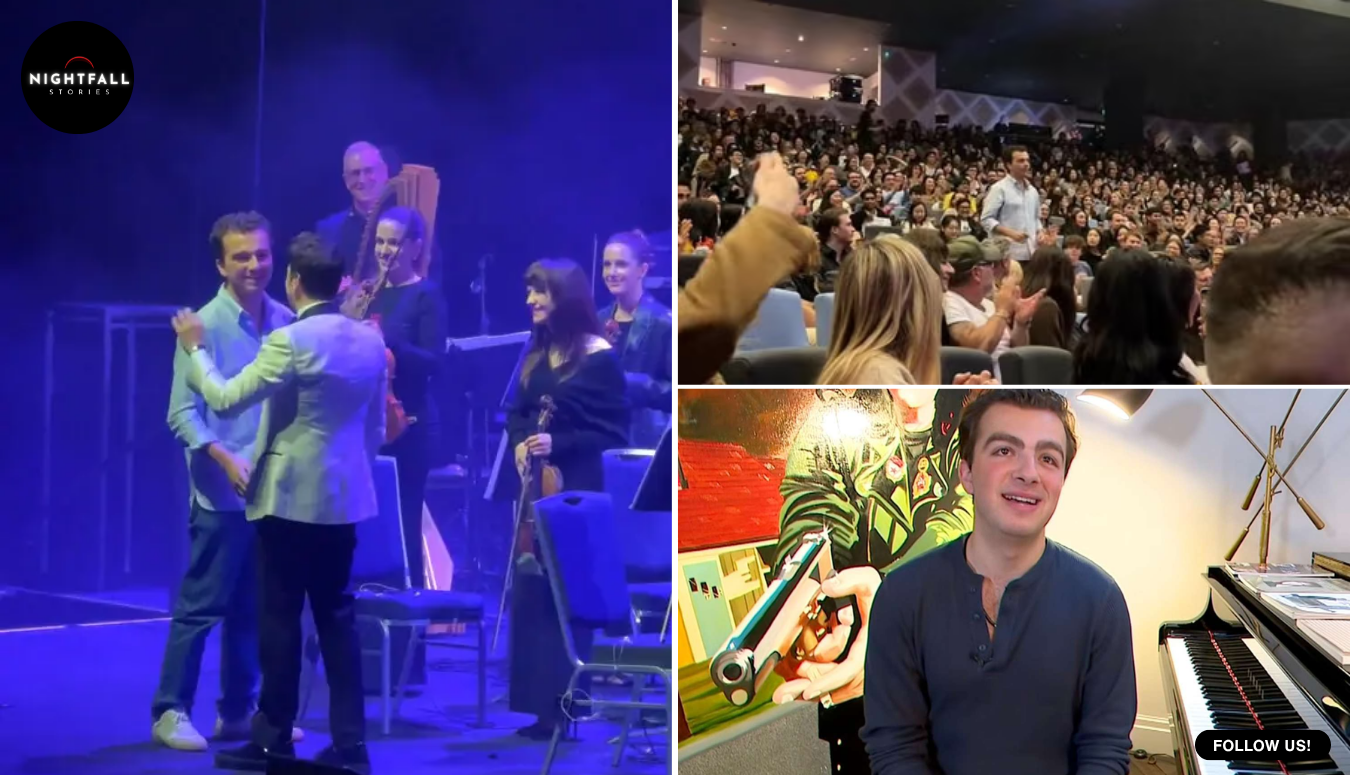
    Sterling Nasa had paid for his ticket like everyone else. He was twenty-one, a politics student, and he had come to a Sydney concert hall to watch La La Land on a big screen while a full orchestra played the score live underneath it. Two hours later he was sitting inside that orchestra, in front of a couple of thousand strangers, improvising a synthesiser solo on an instrument he had never touched before, with no rehearsal, no run-through, and the film rolling on above his head whether he was ready or not.

    The part that makes musicians wince when they hear this story is that he could not stop. A live-to-film concert is not a normal concert. The picture runs at a fixed speed, the orchestra is locked to it, and if the keyboard drops out the whole thing does not gently sag, it visibly comes apart in front of everybody. There is no pausing to find your place. There is no conductor slowing down to let you catch up, because the conductor is himself chasing a film that does not care.

    Here is how a student ended up in that chair. The show was La La Land in Concert, the touring version of the film in which the soundtrack is stripped out and replaced by a live orchestra playing it in real time. It had come to the theatre at Sydney’s International Convention Centre on Darling Harbour, and the man on the podium was Justin Hurwitz, who wrote the score in the first place and won two Academy Awards for it. Reports of the crowd size differ a little, with some putting it around two thousand and others at two and a half thousand. Either way, the room was full and the night was sold.

    The first half went fine. At the interval, the keyboard player fell ill and could not come back.

    That is a bigger problem in this particular score than it would be in most. Hurwitz’s music for La La Land leans hard on keyboards. There is jazz piano everywhere, there is celesta, there is synthesiser, and several of the film’s best known moments simply do not exist without a keyboard player. You cannot quietly redistribute that among the strings and hope nobody notices.

    So the break kept getting longer. What was supposed to be about ten minutes reportedly stretched towards forty while the production tried to find a professional keyboardist who happened to be free on a Saturday night in the middle of Sydney and could be in the building in under an hour. Anyone who has ever tried to book a musician at short notice already knows how that went.

    Eventually Hurwitz did the thing that composers do not do. He walked out to the front of the stage, in front of a room that by now knew something had gone wrong, and asked whether anybody out there was an amazing sight reader.

    Sterling Nasa did not put his hand up. His friend Scarlett put it up for him.

    She had a fairly specific argument for it, too, which was that whatever happened next, it would be worth telling his children about one day. That is how he has described it since, and it is a very good reason to do something terrifying. He says he was reluctant, and that the reluctance lasted about as long as it took him to realise she had already committed him. Then he found enough confidence to stand up.

    Somebody walked him backstage. And this is where the story stops being a cute anecdote about a helpful audience member and starts being genuinely absurd, because Nasa is a real musician, just not this kind of real musician. He plays piano. He plays organ. He also teaches bagpipes at a Sydney school, which is a sentence that tells you a certain amount about how his musical education went. What he had never done was play celesta, and the keyboard rig in front of him included one.

    He also had no rehearsal. Not a reduced one. Not a quick run of the tricky corners with the conductor. He was handed the second half of a film score and told the show would resume shortly.

    Then there were the page turns. In an orchestra, keyboard players and string players usually have somebody to turn pages for them, because you cannot take a hand off the instrument in the middle of a run. Nobody had arranged that. Nasa had to manage his own paper while sight reading music he had never seen, in time with a film he could not slow down.

    He has said he was properly nervous for the first ten minutes or so and then something settled, which is roughly what every musician who has ever been thrown into a deep end will tell you happens. The brain runs out of capacity for panic because it is using all of it on the notes.

    And then the second half arrived at Start a Fire.

    If you have seen the film, you know this one even if you do not know its name. It is the slick, glossy, faintly heartbreaking number that Keith’s band performs, the song that marks the exact moment Sebastian sells the thing he swore he would protect. John Legend sings it. In the middle of it there is a synthesiser solo, and it is not a polite one. It is fast, it is jazzy, it is the sort of writing that a session keyboardist prepares for.

    Nasa looked at it and made a decision that a more cautious person would not have made. He decided not to try to play what was written. He improvised instead, in the right key, in the right spirit, at the right speed, in front of the composer who wrote the piece.

    He has been refreshingly unromantic about why. Trying to sight read that solo cold would probably have produced a mess. Inventing something that fitted was, in his own assessment, simply the better option available to him at that moment. He took a creative liberty, he has said, and it turned out to be the right call.

    The room went up. Not a polite ripple of goodwill for the brave volunteer, but a genuine roar, the kind an audience gives when it has just watched somebody get away with something.

    Hurwitz found him afterwards and told him, with what sounds like complete honesty, that he had been worried Nasa would not be able to do it. Which is fair. From the podium, watching a stranger sit down at your score with a film already rolling, worry is the only reasonable emotion. He also said that being able to play a properly good solo with no rehearsal at all was remarkable. Coming from the man who wrote the notes, that is about as high as the praise goes.

    What makes this land is not that a hero appeared. It is how close it came to being nothing at all. If Scarlett had not raised his hand, he would have sat there. He has admitted as much. A reluctant twenty-one-year-old in a dark auditorium, doing the arithmetic on public humiliation, would almost certainly have let the moment pass, and the show would have been refunded, and two thousand people would have gone home mildly annoyed and forgotten about it by the following week.

    Instead there is now footage, and the footage travelled. Australian television picked it up, then the wires, and within a couple of days Nasa had been booked onto morning shows to explain how a politics and international relations student ends up rescuing an orchestra. He handled it, by all accounts, with the slightly dazed good humour of someone who has not yet caught up with his own weekend.

    It is worth saying plainly what he actually did, because the headlines flattened it into student plays piano, and that undersells it. Sight reading is a distinct skill, separate from playing well. Plenty of excellent pianists are mediocre at it, because they learn repertoire slowly and deeply rather than reading it cold. Sight reading a film score is harder again, because the music is written to serve picture rather than to sit comfortably under the hands, and it is full of sudden metre changes and rests measured in seconds rather than bars. Doing that on an unfamiliar instrument, with your own page turns, in a genre that is not your training, while a two thousand seat room waits, is an unusual amount to ask.

    It helps to understand what the format actually demands. Live-to-film concerts have become one of the steadier earners in the orchestral world over the past decade, and the reason is simple: they bring in people who would never buy a ticket to a symphony. The audience comes for the film. The orchestra is the surprise. But the musicians are doing something closer to session work than concert work, because the score has to line up with picture to within a fraction of a second, every night, without the elastic give that an orchestra normally enjoys. Many players wear an earpiece carrying a click track. The conductor watches a screen with streamers and punches on it, visual cues that tell him precisely where the beat has to land. It is a discipline, and it is unforgiving, and it is the environment a student was dropped into halfway through a Saturday evening.

    The instrument makes it stranger still. A celesta looks like a small upright piano and sounds like a music box, because inside it the hammers strike metal plates rather than strings. It turns up in film scoring constantly, wherever a composer wants that glassy shimmer, and Hurwitz uses it in the dreamier corners of the La La Land score. The keyboard layout is familiar to any pianist. The touch is not. The response under the fingers is different, the sustain behaves differently, and the sound only really works if you play it with a lightness that takes most people a few sessions to find. Nasa had no sessions. He had the second half.

    And he was not playing it for a forgiving room, either. Nobody in that audience had come to watch a plucky amateur. They had come to see a beloved film with a professional orchestra, at professional prices, and had already spent forty minutes wondering whether they were about to be sent home. Goodwill in a delayed auditorium is a finite resource.

    There is a wider thing here too, about how much of live performance is held together by people who are simply present. Orchestras run on deputies. A player falls ill, a call goes out, somebody who knows the repertoire walks in and does the job, and the audience never learns how close the evening came to collapse. That system works because the pool of available professionals is deep in most major cities on most nights. What happened in Sydney was that system failing on a Saturday, and the gap being filled by the amateur pool instead, which is the far larger and almost entirely invisible group of people who learned an instrument properly and then went and did something else with their lives.

    Nasa is one of thousands of them. He is not a conservatorium student. He is not about to abandon international relations for a career in film music. He is a young man who put in the hours as a child, kept playing because he liked it, and happened to be sitting in the right room on the night the machinery broke.

    That is the part worth holding onto. The story looks like luck, and some of it was, but the luck only paid out because the preparation was already there, laid down years earlier for no particular reason, by a kid practising scales with absolutely no idea that the payoff would be a synth solo in front of a couple of thousand people and an Oscar winner.

    He has been clear that he does not intend to change direction. He still goes to the same lectures. He still teaches bagpipes. The keyboardist recovered. The tour moved on to its next city with its regular player back in the chair, and the run continued as advertised, which is exactly how these things are supposed to end.

    What he has, instead of a new career, is the single best answer to a dinner party question that any twenty-one-year-old currently possesses. And he has Scarlett, who was right, and who now gets to say so for the rest of their friendship. The dad lore was secured. It turned out to be worth quite a lot more than that.

    There is one more detail that stays with you. When Hurwitz made the appeal, he did not ask for a pianist. He asked for an amazing sight reader, which is a much more specific and much more honest request, because he knew exactly what the job required. In a room of two thousand people, exactly one person eventually stood up, and he was not sure he could do it either.

    The gap between those two facts is where the whole story lives. Somebody has to be willing to find out.

  • He put up a closing sale sign. Two weeks later the queue was two hours long

    He put up a closing sale sign. Two weeks later the queue was two hours long

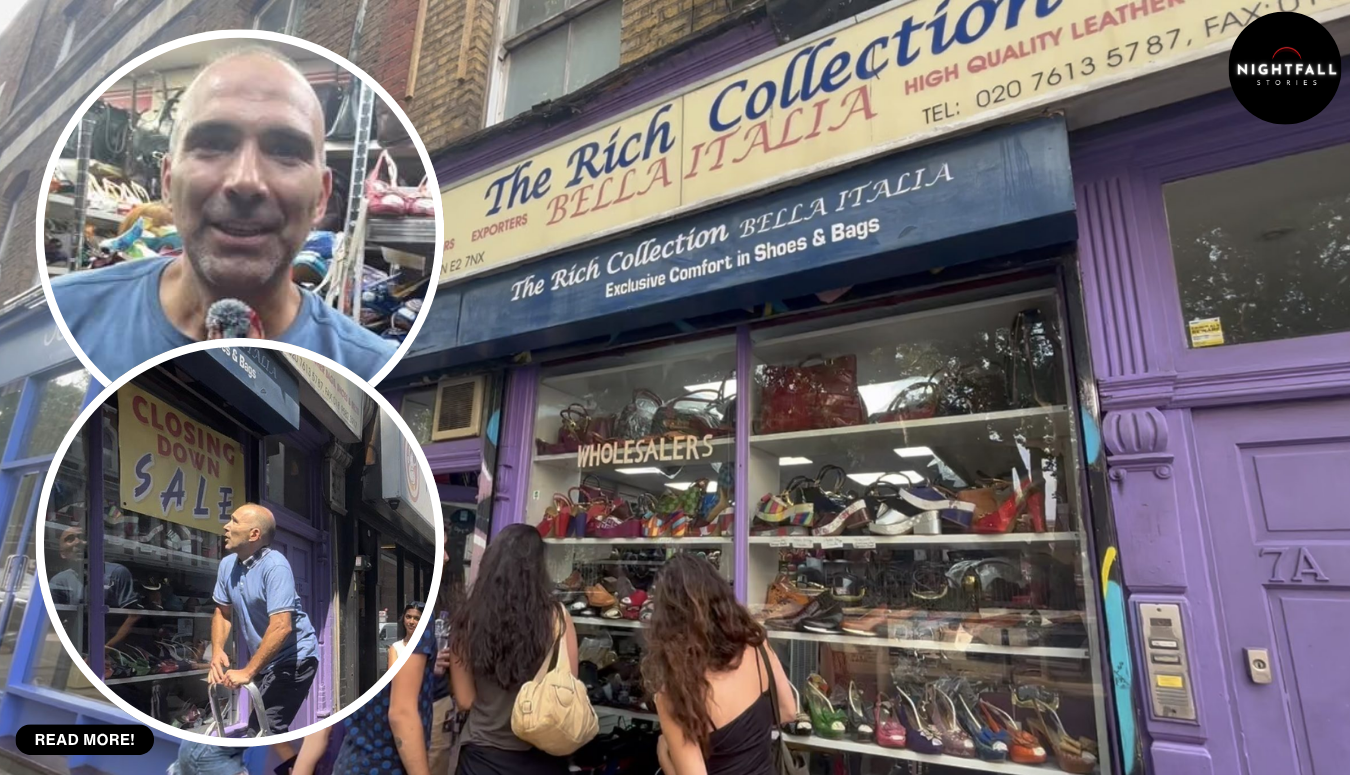
    The sign went in the window of a small shoe shop on Hackney Road in east London because there was nothing else left to try. Closing sale. Rachid Lazraq had been standing behind that counter for about thirty two years, and by the end there were winter days when not a single person came through the door. He is fifty nine. He had already started thinking about going home to Marrakech. The stock on the shelves, thousands of pairs of Italian leather shoes he had chosen himself over three decades, was simply not moving, and the honest reading of that was that nobody wanted it anymore.

    Two weeks later there were people queuing on the pavement outside for up to two hours, and he was taking the sign back down while the queue applauded.

    What happened in between was not a rescue fund or a landlord’s change of heart or a celebrity walking in. It was his twenty five year old daughter, out of work herself at the time, picking up her phone in the shop and filming the shoes the way she would show them to her own friends. That is the whole mechanism. The stock did not change. The prices did not change. The shop did not change. The only thing that changed was who was being shown it.

    Zineb Lazraq is a journalist by trade, the kind who makes short video pieces for news outlets, and she had recently lost her job. She started coming into the shop to help her dad, and what she found on the shelves genuinely surprised her. Pointed kitten heels. Slingbacks. Mules. Wedge sandals with the exact silhouette that had been everywhere around the turn of the millennium and had spent the intervening twenty years being quietly mocked before coming all the way back round into fashion. Her father had not been sitting on dead stock at all. He had been sitting on a warehouse of precisely what people her age were hunting for in vintage shops and paying a premium to find.

    The shop itself is easy to miss, which is part of the problem it had. It trades under a name that nods to where the stock comes from, the Rich Collection, Bella Italia, a small frontage at number seven on a road that people mostly use to get somewhere else. It opens in the early afternoon and closes in the evening, six hours a day, which is the timetable of a man who long ago worked out that nobody was coming in the mornings. Inside, it is shelves. Boxes stacked to the ceiling, leather that was cut and stitched in Italian workshops, in sizes and colours that were ordered by one person’s eye rather than by a buying algorithm sitting in a head office two hundred miles away.

    She has said since that she was amazed to discover what was in there. That is the part of this story that keeps nagging at me. She is his daughter. She had presumably been in and out of that shop her entire life. And she still did not know, because a shop you grew up around stops being a shop and becomes furniture. You stop looking at what is actually on the shelves.

    It helps to understand what those shoes had become worth to somebody else. The pointed kitten heel and the thin wedge sandal had been the defining shape of the early two thousands, then spent the best part of two decades as a punchline, and then came back the way everything comes back, arriving first in vintage markets and resale apps and then everywhere. By the time Zineb walked into her father’s shop, people her age were paying real money for scuffed second hand versions of exactly what he had in boxes, unworn, in every size, with the original stitching intact. He was not selling vintage. He had just never stopped selling the thing, and the world had gone away and come back.

    There was a trigger before the trigger, and it matters, because without it she might never have thought to film anything. A French content creator had already posted about the shop, treating it as a hidden gem she had stumbled on, and that post reportedly picked up well over three hundred thousand views on its own. Suddenly a handful of young women were turning up at a counter that normally served much older customers, asking for kitten heels. Rachid did not really know what to make of it. Zineb did. She recognised the shape of it immediately, because recognising that shape is literally her profession, and what she understood was that an audience for her father’s shop already existed. It just had no idea the shop existed too, and nobody had ever bothered to introduce them.

    So she filmed a simple day in the life video built around a pair of the wedge sandals. According to the agency coverage that carried the story, it did around three hundred thousand views overnight. Worth flagging honestly here: the reporting is not perfectly consistent about which video hit that number first, hers or the French creator’s earlier one, and both figures of roughly three hundred thousand appear in different accounts. What nobody disputes is what showed up outside the door.

    Within days there were lines down the pavement. People were waiting an hour, and at the peak reportedly two, to get into a shop that had recently gone whole days without a customer. They were not there for a sale. The closing sale had been running for a while and had not produced anything like this. They were there because someone had finally framed what was inside in a language they spoke.

    And then the moment that made the story travel. Rachid went to the window, took the closing sale sign out, and the people waiting outside cheered him. Zineb filmed that too. He told the crowd, in the plainest possible way, that they were not closing down anymore. If you want to understand why a shop full of shoes became an international news story, it is that four second clip of a man in his late fifties removing a sign he had genuinely expected to be the last thing he ever did in that room.

    It is worth sitting with how close to the end he actually was, because the happy version of this skips over it. Rachid opened the shop in the early nineteen nineties, when Hackney Road was lined with businesses like his. Several shoe shops on the same stretch, run by people who had come from somewhere else and built something small and specific. Zineb has described that street as it used to be, full of shops just like her father’s, and then described what happened to them one by one as the rents climbed. They closed. All of them. His was the last one standing, and not because he had cracked some formula, but because he kept turning up.

    The customers who had carried him for thirty years were mostly older, many of them from African communities that had themselves been steadily pushed out of the area as it changed and got expensive. His clientele did not abandon him. It was dispersed. The people who used to walk past his window on a Saturday moved further out, and the people who replaced them came for coffee shops and did not know a shoe shop was there, and would not have understood what was in it if they had.

    Then came the pandemic, which shut him for long stretches and taught everyone left standing to buy shoes on a phone instead. Then came the cost of living squeeze, which did the rest. He stopped restocking properly, because why would you buy in new shoes you cannot sell. The inventory on those shelves had barely been refreshed since before the world closed. Which, by a sort of accident, is exactly why it turned out to be so valuable. He had accidentally preserved a snapshot of a style era, because he could not afford to replace it.

    None of this is unusual, and that is the uncomfortable background to the whole thing. The Centre for Retail Research counted around thirteen and a half thousand shops closing permanently across the United Kingdom in a single recent year, roughly thirty seven every day, and about eleven thousand of those were independents rather than chains. Their forecast for the following year was worse again. Add in the reduction of business rates relief, which analysts at the property firm Altus Group calculated would push a typical shop’s annual bill from roughly four and a half thousand dollars to roughly ten and a half thousand, and you have an environment where a man doing everything right can still end up holding a marker pen and a sheet of paper that says closing sale.

    So the queue outside the Rich Collection is not really a story about one shop getting lucky. It is a story about the eleven thousand that did not have a daughter who makes videos for a living.

    That is the part I would push back on if anybody tries to turn this into a lesson. The tidy version says small businesses just need to get on social media. The tidy version is not true. Zineb Lazraq is a trained journalist who understands how attention actually moves, she had an unusual amount of free time because she had just lost her job, she had a genuinely rare product to show, and she had a father whose entire face on camera is the reason the footage works. Take away any one of those four and the shop is probably shut. Telling a struggling shopkeeper in their sixties to make a TikTok is not advice, it is a shrug.

    What is fair to take from it is smaller and more useful. The thing that saved this shop was not new money or new stock. It was a translation. The value was already sitting on the shelves. Somebody had to describe it to the people who would want it, in terms they recognised, in a place where they already were.

    Now for the part the cheerful headlines tend to leave out, because it matters and because being straight about it costs nothing.

    The shop is not closing. That much is documented, and Rachid said it himself with the sign in his hands. But what is actually on the record about the business is a surge in foot traffic and a surge in sales over a period of weeks, and very little else. No takings figures have been published. No revenue numbers, no profit, no rent, no lease length. Nobody has reported what the shop’s monthly costs are or whether a summer of queues covers a year of them. When the reporting says the shop was saved, what it can actually support is that the shop was, for a stretch, extremely busy. Those are not the same claim, and the second one is the only one anybody has evidence for.

    There is also the plain fact of Rachid’s age and intentions. He is approaching retirement and has spoken about eventually going back to Marrakech. A viral summer does not cancel that. It changes what he is retiring from, and possibly what he is able to hand over, but the long term future of a thirty two year old independent shop still rests on a fifty nine year old man’s knees and one family’s willingness to keep the lights on.

    What has changed structurally, and this is the genuinely hopeful bit, is the shape of the business itself. Zineb stopped being a visitor and became staff, working as shop assistant and running the social side. Her sister Maryam came in to help through the busy months. The family started talking about selling online, because the enquiries were arriving from all over the world and there was no way to serve somebody in another country who cannot stand on a pavement in east London for two hours. A shop that ran on one man and whoever walked past now has a family behind the counter and a reason to build something that is not limited by the door.

    The customer base flipped almost entirely, too. The people queueing were decades younger than the people the shop had been built for, which means Rachid is now selling to an audience whose taste he did not chase and did not predict. He simply outlasted a trend cycle until it came back to him.

    I cannot tell you where the shop stands today, and I am not going to pretend otherwise. The coverage clusters into a few weeks in the middle of the summer and then stops, the way coverage always does, because a queue is news and a functioning small business is not. Nobody has gone back to count. It is entirely possible the lines have thinned to something ordinary and sustainable, which would honestly be the best outcome available, because two hour queues are not a business model and no shop can restock at that speed forever. Sustainable is the win here. Viral was only ever the on ramp.

    What is certain is the thing Rachid did in the window. He had accepted an ending. He had written it down and put it where the street could read it. And then he got to stand in his own doorway and take it back, in front of a crowd of strangers young enough to be his grandchildren, who had queued in the sun for the chance to buy shoes he had chosen years before any of them started looking.

    He told them he was carrying on. As far as anyone has reported, he still is.

  • They signed the same form as everyone else. It took nearly four years to be accepted

    They signed the same form as everyone else. It took nearly four years to be accepted

    The form is not complicated. In most places on earth, two people who want to be married walk into a civil registry office, fill in their details, sign where indicated, and walk out again. It is paperwork. It is boring. Somebody behind a desk stamps it and calls the next number.

    Fabiana Banzer and Scarlett Rocha filed exactly that form, in the Bolivian city of Santa Cruz, and were refused. Then they spent three years and ten months making somebody accept it.

    They finally succeeded last month, and when Banzer wrote about it publicly, the phrasing she chose was striking for how plain it was. After a legal fight of three years and ten months, she said, they had finally been able to access civil marriage as two women. Not won. Not broke through. Accessed. The word you would use about a service everybody else already has.

    That is the whole shape of this story, and it is worth getting right from the beginning, because it has been widely described in ways that are not quite accurate.

    Nothing was legalised here. Bolivia’s constitution still says what it said before. Article 63 defines marriage as a union between a woman and a man, and no legislature changed a word of it. What happened is narrower and, in some ways, stranger than a law changing. Two specific people went to court, twice, and obtained rulings that applied to them. The civil registry then recorded their marriage. It is, as far as the public record shows, the first same-sex civil marriage on the books in the country. It did not make the next couple’s marriage automatic, and everyone involved has been careful to say so.

    The couple are both 29. They met through mutual friends in Santa Cruz around four years ago. Banzer works as a psychologist. Rocha is a neuroscientist, born in the United States and raised between both countries, which turns out to matter to why they wanted marriage specifically rather than the alternative on offer.

    Because there was an alternative, and this is the distinction that most of the coverage flattened.

    Bolivia has recognised what it calls free unions between same-sex partners since 2020. That precedent was set by David Aruquipa and Guido Montaño, who fought their own long battle and became the first same-sex couple in the country to have a civil union registered. It was a genuine landmark and it opened a genuine door. Since then, according to figures reported from the civil registry, around 148 same-sex civil unions have been recorded.

    It is worth pausing on what the 2020 case cost, too, because the pattern repeats. Aruquipa and Montaño had been together for years before they began trying to register anything, and their own process ran long and public and unpleasant before the registry gave way. They were not asking for marriage. They were asking for the lesser category, and even that had to be litigated. When people say the door opened in 2020, what they mean is that two people held it open with their shoulders for a very long time and then a small number of other couples were able to walk through.

    So Banzer and Rocha were not shut out of every form of recognition. They could have had a civil union. They chose to spend nearly four years pursuing something else instead, and understanding why is most of the point.

    A civil union and a marriage are not the same instrument. The union carries fewer protections. It sits slightly to one side of the ordinary legal furniture that everybody else’s relationship sits inside, which means that in any situation where somebody has to interpret your status, you are relying on their goodwill rather than on the obvious. For a couple who might one day move countries, that gap is not abstract. Marriage travels in a way that a locally defined union may not, and Rocha in particular wanted a status that would still mean something if they relocated. Representatives of the human rights organisations involved put it more simply, describing marriage as carrying a higher degree of social and legal recognition.

    The portability question deserves more than a passing mention, because it is the least romantic and most practical reason couples in this position fight for marriage rather than settle for a union. A marriage certificate is a document that other countries’ systems already know how to read. A locally defined civil union frequently is not. It can mean that a status recognised at home becomes a shrug at a border, or in a hospital, or on an immigration form, or in front of an official deciding whether you count as next of kin. For a couple where one partner holds ties to another country, that is not a theoretical inconvenience. It is the difference between having your relationship recognised automatically and having to explain it, with paperwork, to a stranger, at the worst possible moment.

    There is also the part that has nothing to do with law at all. A civil union is a category that exists because somebody decided you could not have the ordinary one. Choosing the ordinary one is a statement about wanting to be inside the same sentence as everybody else, not adjacent to it.

    The legal route they took is the genuinely interesting part, and it was not a Bolivian law.

    Their lawyers, working with the NGO IGUAL Bolivia, built the case on Advisory Opinion 24/17 of the Inter American Court of Human Rights, issued back in 2017. That opinion holds that states in the region should recognise same-sex families on the same terms as any other family. Bolivia is bound by the regional human rights system, and international human rights obligations can be treated as taking precedence over conflicting domestic provisions. So the argument was not that Bolivian law permitted this. The argument was that a document written years earlier, for an entire region, already required it, and that the registry had no standing to refuse.

    They won by pointing at something that had been sitting there the whole time.

    That advisory opinion is worth understanding, because it explains why a case like this can succeed in a country whose own constitution points the other way. It was issued at the request of a member state, and it set out the court’s reading of the obligations the regional human rights convention already imposed. Its conclusion was that the protections owed to a family cannot be withheld on the basis of the sex of the people in it, and that states should extend the existing institution rather than invent a lesser parallel one for some couples.

    It is an opinion rather than a statute, and it does not repeal anything by itself. What it does is give a lawyer in any country bound by that convention something concrete to hold up in front of a judge. Courts in the region have reached for it repeatedly since, and in more than one country the practical route to recognition ran through a courtroom citing that text rather than through a parliament voting on a bill. Banzer and Rocha’s case belongs to that pattern. The instrument was regional, the argument was old, and the only new thing was two people willing to spend four years pressing it.

    That did not make it quick. They filed their application in late 2022 and were turned down. What followed was two separate constitutional protection actions, the legal mechanism known locally as an amparo, and years of administrative grinding in between. Banzer has described the period in terms that are noticeably free of triumph. There were so many obstacles, she said, and so much discrimination.

    Rocha’s description of it is quieter and somehow worse. They had many doubts and a great deal of uncertainty, she said, because the process simply went on so long.

    That is the cost that does not show up in the headline. Nearly four years is not four years of dramatic courtroom scenes. It is four years of waiting for a response, of being told to resubmit, of a hearing being scheduled and then moved, of having your relationship treated as a legal question that other people are still thinking about. It is four years in which you cannot plan properly, because the thing you are planning around might not happen.

    And even winning did not mean it was over. Earlier this year, a constitutional tribunal ruled in their favour and ordered the civil registry to issue the licence within ten days. It then took roughly five more months before the registration actually happened. A court had said yes, a deadline had been set, and the paperwork still sat there through most of a year.

    When it finally went through, on a Friday last month, they married in white dresses with more than a hundred friends and family in the room. Banzer’s description of the day is the least legal sentence in this entire story. They had not expected it to be so beautiful, she said. It was really, really great. They danced until late.

    After three years and ten months of arguing about whether a form could be filed, the thing itself turned out to be an ordinary wedding. Which was, of course, the entire request.

    The question now is what this means for anyone else, and the honest answer is that nobody is certain yet.

    Legally, the rulings applied to Banzer and Rocha. The registry recorded their marriage because it was ordered to record theirs. Another couple walking into another office on Monday morning is not guaranteed anything. What they have is a precedent, which in practice means an argument that has now worked once and a set of filings that can be reused.

    There are early signs it is being used. A lawyer involved in the case has reported that in the weeks after the wedding, somewhere between five and ten couples had already approached them about doing the same thing.

    The useful comparison is the civil union. After Aruquipa and Montaño won their case in 2020, it took roughly three years before registration became broadly available to other couples rather than a one-off. Then the numbers started accumulating, and now there are nearly 150. If marriage follows the same curve, the practical effect of what happened last month will not be visible for a while, and it will arrive as an administrative shift rather than an announcement.

    Aruquipa himself, who has more standing than most to comment, framed it as continuity rather than a beginning. He suggested it should be understood as a historical throughline, from the first recognised union to the first civil marriage, with courts progressively widening what is available rather than any single moment changing everything.

    That framing is worth borrowing, partly because it is accurate and partly because it is a corrective. Stories like this get reported as a country flipping a switch. Bolivia did not flip a switch. Its constitution is unchanged, its legislature has not acted, and it remains one of a handful of South American countries without legislative recognition of same-sex marriage. What actually happened is that two people used an existing regional human rights instrument to compel one office to process one form, and that outcome is now written down somewhere other people’s lawyers can find it.

    That is slower and less satisfying than a law passing. It is also, on the evidence, how a great deal of this has actually moved across the region. Somebody applies. Somebody refuses. Somebody spends years on it. The next couple’s version is shorter.

    There is a temptation to make this sound larger than it is, and it is worth resisting, because the restraint is what makes it land. Banzer and Rocha did not set out to change a country. They were two people in their twenties who met through friends, stayed together, and wanted the same legal arrangement that millions of people obtain without thinking about it. The extraordinary part was not the ambition. It was the amount of time and argument and public exposure required to get something entirely unremarkable.

    They are married now. They have the certificate, which after everything is just a piece of paper with their names on it, filed in a registry in Santa Cruz alongside everybody else’s.

    Somewhere in that same system, five or ten other couples are currently starting their own applications, armed with a set of arguments that did not exist four years ago. Some of them will be refused too, at first. But they will be refused with a precedent in hand, which is not nothing, and their wait will probably be shorter.

    That is how it tends to go. The first one takes nearly four years. The rest take a little less each time, until eventually somebody walks into an office, signs a form, and walks out again without it being a story at all.

  • He applied for a job, then started counting. The number got a state involved

    He applied for a job, then started counting. The number got a state involved

    Jay Jones was laid off near the end of 2023, and his daughter was about to be born. That is the part of the story most people skip past, but it is the part that explains everything that came after. He was not a researcher with a grant or a journalist with an assignment. He was a man with a newborn on the way, a severance clock ticking, and a laptop open to a job board, doing exactly what tens of millions of people do every single day.

    Then the recruiters started messaging him. And something about them was off.

    Not dramatically off. Not the obvious, badly spelled, too-good-to-be-true kind of off that anyone would catch. These were polished. They had headshots and job titles and company names you recognised. But Jones, who had spent his career around verification and fraud work, kept noticing small things that did not sit right. A recruiter whose entire digital existence was one LinkedIn profile and nothing else. A corporate hiring manager emailing from a free consumer address. A company that claimed a decade of operation but whose web domain had been registered a few weeks earlier.

    So he did what almost nobody does. Instead of blocking the account and moving on, he opened a spreadsheet.

    What happened over the next two and a half years is genuinely hard to hold in your head. By his own public accounting, Jones has now documented and had removed tens of thousands of job listings he says were never real. The number he has attached to his campaign is 57,952. His own website puts the running total higher, past 58,500. A petition he filed cited 55,308 as of the middle of this year. Those figures do not contradict each other so much as they show you what kind of number this is. It is not a finding. It is an odometer. Every time he goes back to work, it climbs.

    Alongside the listings, he says he has flagged more than 7,000 fake recruiter profiles, and disrupted over a thousand hijacked accounts belonging to real people whose identities had been quietly taken over and repointed at job seekers.

    The thousand-plus hijacked accounts deserve their own moment, because they are the strangest part of all this. These were not invented people. They were real professionals, with real careers and real connections, whose accounts had been taken over and quietly redirected. The photograph stays. The work history stays. The decade of genuine endorsements from genuine former colleagues stays. Only the purpose changes. Someone who has spent fifteen years building a professional reputation becomes, without knowing it, the friendly face on an operation aimed at people in trouble. Most of them found out only because a stranger with a spreadsheet noticed and filed a report.

    All of this was, for a long time, one man’s private obsession. It stopped being private this summer, when the state of Texas got involved.

    The Attorney General’s office there opened a formal investigation into LinkedIn over what it describes as fake and misleading job opportunities advertised to people who were paying for the privilege. The legal instrument is a Civil Investigative Demand, which is a compulsory request for documents, and the office has asked the company to hand over internal material about its advertising, its marketing, its verification practices, and specifically what it tells subscribers about job listings.

    The money angle is what gives the investigation its teeth. A Premium Career subscription runs about $40 a month, and a Premium Business one around $70. The state’s position is that people are paying those fees on the strength of a promise about the quality of the job market they are buying access to, and that a meaningful share of what they find there may be inactive, already filled, or not attached to any real hiring intention at all. Attorney General Ken Paxton framed it simply, saying the company has a duty to actually deliver the service it advertises to people who are paying for it.

    It is important to be precise about what this is, because it is easy to read the headline and conclude that something has been proven. Nothing has. This is an investigation, not a finding. No charges have been filed and no lawsuit has been brought. A Civil Investigative Demand is the state asking questions, and the company is entitled to answer them.

    LinkedIn, for its part, has not conceded any of it. The company says its goal is to help job seekers find their next role and that its policies require posted jobs to be authentic and accurately represented. On the fraud side specifically, it says its automated systems catch and remove the overwhelming majority of spam and scam content before any user ever sees it, and that it proactively blocks the large majority of fake accounts it detects. Those are real numbers and they are almost certainly true in percentage terms. The uncomfortable arithmetic is that a platform with billions of pieces of content can block 99 percent of something and still leave an enormous absolute quantity standing.

    The state’s release also points to something broader than any one company. It notes that independent studies have estimated ghost listings may account for somewhere between a fifth and a third of online job adverts generally. That is an estimate, and estimates in this area vary widely depending on who is counting and what they count. But it matches the lived experience of nearly everyone who has looked for work recently, which is part of why this story travelled the way it did.

    It is also worth separating two things that get tangled together, because the investigation sits exactly on the seam between them. Outright fraud, the invented recruiter with the stolen photograph, is one problem. The ghost job is a different one, and in most places it is entirely legal. A real company with a real page posts a real-looking vacancy it has no current intention of filling. Sometimes that is a firm keeping a pipeline warm for a role it expects to open next quarter. Sometimes it is a policy requiring a position to be advertised externally when an internal candidate has already been chosen. Sometimes a listing is simply left up long after the seat was filled, because nobody’s job description includes taking it down. None of that is a crime, and none of it involves a scammer. It still means a person spent an evening writing a cover letter into a void.

    For the applicant refreshing their inbox, those two problems are indistinguishable. The silence feels identical. That overlap is part of why the numbers in this area are so contested, and why any estimate of how many listings are not real depends enormously on what the person counting decided to count.

    What makes Jones’s work land, though, is not the totals. It is the texture.

    There was a recruiter he found operating under the name Linda Anthony. Same name, same photograph, multiple accounts, each one claiming a different title in a different place. One version was a contract recruiter at a firm in one state. Another was a contract specialist at the same firm, in a different state entirely. Same face, looking out of every profile. Jones described the experience of pulling on that particular thread as one rabbit hole opening into another.

    More troubling than the invented people were the borrowed companies. Jones documented fake vacancies posted against the genuine pages of large, well-known employers, including a major carmaker and a large financial services firm. When a listing sits on a real company’s page, it arrives wrapped in that company’s logo, its follower count, its verification marks, its entire accumulated credibility. A job seeker doing everything right, checking the employer, looking for the badge, can still walk straight into it. And in some cases the companies themselves have said plainly that they do not hire for the roles being advertised in their name.

    He also mapped out what he alleges are networks of shell company pages, clusters of fabricated employers posting hundreds of listings between them, all funnelling applications away from the platform and toward systems nobody can see. His allegations about what those systems are for are serious. He says they harvest personal information, in some cases push malware, and in some cases extract money outright.

    Here is where you have to be careful, and it is worth saying so directly. Those are Jones’s characterisations, drawn from his own documentation. They have not been established in court. He is one person, working from open sources, following patterns. His work has drawn coverage from major news organisations and he now speaks to law enforcement and corporate security audiences about it, which suggests professionals take him seriously. But his numbers are his numbers, and they should be read that way.

    What is harder to dispute is who these operations aim at. The people most likely to answer a suspicious recruiter are the people who cannot afford to ignore any message at all. Someone recently laid off. Someone new to a country and unfamiliar with how hiring normally works. Someone in low-paid care work, applying to a dozen places a week. The tactics Jones catalogues include asking for sensitive personal documents before anyone has been hired, moving the conversation off the platform almost immediately, and requesting fees for equipment or training. Each of those only works on somebody who is already stretched thin enough to say yes.

    Jones has turned a good deal of what he learned into practical advice, and it is unglamorous in a way that makes it more useful. Look at whether the recruiter exists anywhere else on the internet. A person who has genuinely been hiring for fifteen years leaves a trail. If the single LinkedIn profile is the whole of them, that is a signal. Look at the email domain. Someone recruiting for a major corporation should not be writing to you from a free consumer address. Look up when the company’s web domain was registered, because a business claiming twenty years of history with a domain three weeks old is telling on itself. Check whether the vacancy also appears on the employer’s own careers site, because the good ones almost always do.

    His favourite technique is the simplest. Ask an unscripted question. Real scams run on templates, and a fraudulent recruiter working from a script has nothing prepared for a candidate who wants to know about the benefits package, or who is leaving the role, or how the team has grown in the last year. The conversation either stalls or goes strange, and you have your answer in about ninety seconds.

    He is candid that reporting is where the frustration lives. He has described the process as constant friction, opening case after case on the same networks, watching pages come down and near-identical ones go up. That is a familiar shape to anyone who has worked in platform safety. It is not necessarily evidence of indifference. It is evidence that removal is cheap for the platform and even cheaper for the people building the fakes.

    And that, in the end, is what the state investigation is actually probing at. Not whether fraud exists on the internet, which is not in dispute anywhere. The question is narrower and sharper. If a company sells a paid product on the promise of a better hiring marketplace, what does it owe the people who pay for it about the condition of that marketplace. Nobody has answered that yet. The investigation may answer it, or it may quietly conclude, or it may end in a settlement nobody reads. Those are all real possibilities.

    What has already changed is smaller and more concrete. Tens of thousands of listings are down that would otherwise still be up. Thousands of invented recruiters no longer exist. Over a thousand people got their own professional identities back without ever knowing they had lost them. That happened because one person, at the worst possible moment in his own working life, with a baby coming and no income, decided that the pattern he was noticing was worth writing down.

    He could have done the entirely reasonable thing. Block, report, move on, keep applying. Almost everyone does. The gap between that and what he actually did is not talent or resources. It is just the decision to keep a record.

    Jones now works in fraud prevention professionally, which is the tidy ending, and it is a real one. But the better ending is less tidy. The spreadsheet is still open. The count is still moving. Every so often the total on his site ticks up again, and somewhere a person who was about to send their passport scan to a stranger does not.

    If you have applied into silence recently and quietly concluded that the problem was you, this is worth sitting with. Sometimes it was you, and sometimes the market was just brutal. But some meaningful share of those listings were never going to answer anybody, because there was nobody on the other end to answer. That is not a comfort exactly. It is just true, and one man spent two and a half years proving it one line at a time until a state government picked up the file.

  • A French archaeologist noted this wall in the 1930s. It took ninety years to ask how old it was.

    A French archaeologist noted this wall in the 1930s. It took ninety years to ask how old it was.

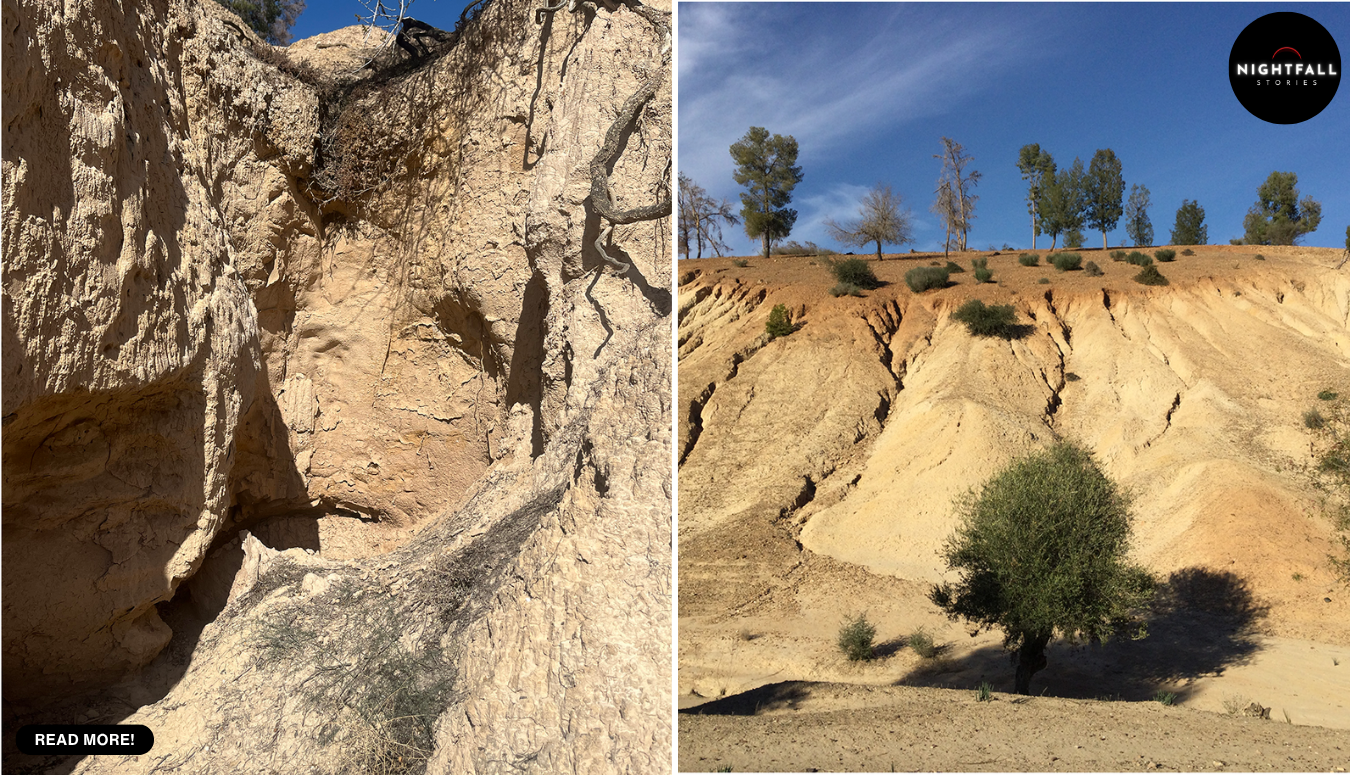
    There is a ridge in northwestern Morocco with a line running across it. You can see it from the air and you can see it from the ground, a bank of earth and stone cutting off the southern approach to a spur of high land, the kind of feature that any walker would clock as man-made and then stop thinking about. It sits about a hundred kilometres inland from the Atlantic, in Khémisset province, above a village whose houses you can see in the background of the photographs the archaeologists have been taking.

    An archaeologist named Armand Ruhlmann wrote it down in the 1930s. He even said what he thought it was, a prehistoric fortified spur, a settlement that had sealed itself off by walling across the neck of the ridge. And then, in his own words and everybody else’s afterwards, the dating of it was very uncertain.

    So it sat there. For close to ninety years, the deep history of this part of the world was written without it. Not because anyone hid it or lost it or argued about it. Because nobody went back and asked the question. The wall was a known feature of a known place, sitting in the published record, and the simple follow-up of finding out when it was built did not get done until a few years ago.

    When it finally did get done, it produced what the research team describes as the oldest defensive system known anywhere in North Africa outside the Nile Valley.

    The site is called Oued Beht, and to understand why the wall matters you have to understand what the same team had already found underneath it. Because this is the second surprise at a place that had already delivered a big one.

    Until recently, the standard account of North Africa in the fourth and third millennia BC was a blank with an apology attached. Egypt was a civilisation. The rest of the continent north of the Sahara was assumed to be thinly occupied, marginal, the edge of somebody else’s story, a place that received influences rather than generating them. Part of that assumption was genuinely about evidence, and part of it was about who had done the digging, which for most of the twentieth century meant a small number of European researchers working in a colonial frame with a limited set of questions.

    Then the Oued Beht Archaeological Project, a joint effort between Morocco’s National Institute of Archaeological and Heritage Sciences, Italy’s National Research Council, the international association ISMEO and the University of Cambridge, started working the ridge systematically. The first big publication landed a couple of years ago, and it described a farming society dated to roughly 3400 to 2900 BC occupying nine or ten hectares of the ridge, which made it the largest agricultural settlement known from that period anywhere in Africa outside Egypt.

    The detail in that report is what makes it feel like a real place rather than a data point. Surface survey across nearly twenty hectares recovered close to twenty thousand artefacts, sixteen thousand of them pottery. Some of that pottery was slipped and burnished, a small percentage painted dark on light. There were hundreds of grinding tools and dozens of polished stone axes, with evidence that they were being made on site rather than brought in. Sieving the fill of one pit produced domesticated barley, wheat and peas, alongside wild olives and pistachios. The animal bones were goat, sheep, cattle and pig, with butchery marks on them.

    And there were the pits. Deep bell-shaped pits, cut into the ridge at something like one for every ten square metres of ground. That is an extraordinary density, and the most plausible reading of them is storage, most likely grain. Which means surplus. Which means a community producing more than it ate, holding it, and presumably having opinions about who got to open which pit.

    The other thing that report argued was that this community was not isolated. The painted pottery and several of the tool types have real parallels in southern Iberia at the same period, across the strait. Not identical, not a copy, but the kind of resemblance that comes from two regions that knew about each other. The team’s framing was that this was a two-way relationship, not a periphery absorbing culture from a centre.

    That was the first surprise. The second is the wall, and it arrives from a completely different era.

    In the autumn of 2023, in the project’s third season, the team put trenches into Ruhlmann’s old feature and into the ground around it, and sent a drone up to photograph the whole spur from above. The excavation was not quick, the analysis took the best part of two years, and the results were published a few weeks ago in the journal Libyan Studies, open access, with more than twenty named authors and the project’s three co-directors, Giulio Lucarini, Cyprian Broodbank and Youssef Bokbot, among them.

    What the trenches showed is that the line across the ridge is not one thing. It is several things stacked on top of each other, built at wildly different times, which is exactly why it had resisted an easy answer for ninety years and exactly why nobody could date it by looking at it.

    The stonework you can see on the surface is the youngest part. That wall, the visible one, was built in the Islamic middle ages, somewhere around the eleventh to thirteenth centuries AD, along with a cemetery. People came back to this ridge two thousand years after the prehistoric settlement had gone, looked at the same natural bottleneck, and reached the same conclusion about where to build a barrier.

    Underneath it is the part that rewrites the map. A broad ditch and an earthen embankment, with the remains of an earlier wall phase built of daub and stone, running across the southern approach to the spur. Radiocarbon dating on seeds and charcoal puts that construction in the early to middle second millennium BC. Roughly three and a half to four thousand years ago. The Bronze Age.

    That is a period nobody had documented at Oued Beht at all. The site was known for its Final Neolithic farming phase and nothing else. The 2023 season produced around two dozen new radiocarbon dates, spanning four distinct periods of use on the ridge, and seventeen of those are the ones that carry the fortification argument. The team’s position is that the second millennium BC activity is now established beyond reasonable doubt at a place where it was not previously known to exist.

    The trench that did most of the work went into the feature the team labels Wall B1, and what came out of it reads less like a wall and more like a biography. The excavators describe a complex accumulation of walling, embankment and cut features rather than a single structure, with an earlier phase built of daub and limestone sealed beneath a later stone build. The earlier phase is the one the Bronze Age dates attach to, landing in a bracket somewhere around the nineteenth to seventeenth centuries BC depending on which samples you weight. The later stone build sits on top of it and is not prehistoric at all.

    There is a term for the shape of the thing, éperon barré, which translates roughly as barred spur and describes a settlement that uses a natural promontory for three of its sides and builds across the fourth. It is a form that turns up all over prehistoric Europe, because it is the obvious solution when the ground offers you most of a defence for free. Ruhlmann used exactly that term for Oued Beht in the 1930s. He had the right label and no way to test it, which is a fair summary of what a great deal of early twentieth century archaeology could and could not do.

    The drone work matters more than it sounds. An oblique photograph from the air shows the barrier as a single continuous line across the neck of the spur in a way no ground-level view can, and a vertical one lets the team map the trenches, the earlier excavations and the run of the wall onto the same frame. The published figures show both, with the village of Aït Siberne behind the ridge in the oblique shot. Ninety years of uncertainty and part of the resolution came from being able to get twenty metres off the ground cheaply.

    Which is why they are willing to make the claim they make: that a probable ditch, embankment and crowning wall of that date is the oldest documented defensive system in North Africa outside the Nile Valley.

    It is worth being careful with that claim, and the team is careful with it too. It is a statement about the documented record, in a region that has been surveyed far less thoroughly than Europe or the Near East. Something older may well exist and simply has not been dug, or has been dug and never dated, which is precisely the failure this whole story is about. Read it as the strongest thing currently on the table rather than as a final ranking.

    What makes it more than a trophy is the timing. In the second millennium BC, across the strait in southeastern Iberia, the society archaeologists call El Argar was doing something very specific. Fortified hilltop settlements, metalworking, a social order with visible ranks and unequal burials, running from roughly 2200 to 1550 BC. It is one of the best known Bronze Age cultures in western Europe.

    And at the same time, on a ridge in Morocco, people were digging a ditch and throwing up an embankment to close off the only easy way into their settlement.

    The team is careful not to turn that into a direct cause. Nobody is claiming Iberians came over and taught anyone to build a rampart. The honest version is more interesting anyway: two societies on either side of a narrow sea, in the same centuries, both deciding that their settlements needed defending. That suggests a shared set of pressures, or at least a shared set of anxieties, in a western Mediterranean that was clearly more connected and more crowded than the old story allowed.

    Nobody knows what those pressures were. That is the open question the paper leaves standing, and it is open mostly because the archaeology of the Maghreb in the second millennium BC is so thin. You cannot say who the wall was built against when you have almost no other sites of the same date to compare it with. Raiding, competition over stored grain, pressure over grazing land, a shift in climate, an internal dispute about who controlled the pits. All plausible, none demonstrated.

    What you can say is that somebody decided it was worth the labour. A ditch and bank across a ridge is a serious piece of communal work. It takes organisation, a reason, and enough people who agree on the reason to keep digging. Communities do not build that on a whim, and they do not build it in a landscape where nothing ever happens.

    The sequence, once you lay it out, is the thing that stays with you. A large farming settlement on the ridge around 3400 to 2900 BC, storing grain in hundreds of pits, trading ideas with people across the water. Then a gap in the record. Then, a millennium or so later, people fortifying the same spur in the Bronze Age. Then another long silence. Then medieval communities coming back, building a stone wall on top of the old embankment and burying their dead nearby. Then a French archaeologist in the 1930s writing the feature down, correctly identifying what it probably was, and having no way to date it. Then nothing for ninety years.

    Lucarini’s own summary of it is that the ridge kept its secret for nearly a century and that the discovery forces everyone to look at this landscape with fresh eyes, which is a mild way of saying that a lot of published assumptions about Bronze Age North Africa were built on an absence of evidence that turned out to be an absence of looking.

    That is the part of this worth carrying away, and it is not really about Morocco. Archaeology has a bias toward the new: new site, new trench, new season, new announcement. The thing sitting in a 1930s report with an unresolved question attached to it does not generate funding or headlines, and the question quietly stops being asked. It becomes furniture. Ruhlmann was not wrong about this wall. He said what it probably was, said he could not prove when, and moved on, exactly as a careful researcher should. The failure came afterwards, in the decades where everyone read his report and nobody followed it up.

    Oued Beht is now one of the more closely studied prehistoric sites in northwestern Africa, and the project is continuing. There will be more seasons, more dates, and probably more surprises, because the ridge has produced two already and there is no obvious reason to expect it has run out. The medieval phase alone is barely explored. The gap between the Neolithic settlement and the Bronze Age fortification is still a gap.

    But the wall has an age now. It took drones, radiocarbon dating, a team from four countries and two field seasons of preparation to get it, and all of that was in service of a question anyone could have asked in 1936 and nobody did.

  • They were digging up a Roman street. The paving stone looked back.

    They were digging up a Roman street. The paving stone looked back.

    The crew at Sardis was doing the least glamorous work an archaeologist ever does. They were clearing a Roman colonnaded avenue in western Turkey, lifting the slabs that had made up the road surface, recording them, moving them aside. Paving is paving. You log it and you keep going.

    Then one of the slabs turned over, and there was a face on the underside of it.

    Not a carving in relief, not a fragment. A colossal marble figure of a young man, over seven feet tall when he was whole, broken into two big pieces, lying face down in the roadbed where somebody had dropped him roughly fifteen hundred years ago and paved right over him. His feet are still missing. A few smaller fragments have not turned up. But the face, the hair, the folds of the clothing and the veins on the back of one hand came out of the ground looking almost the way the sculptor left them, because the Romans who used him as building rubble had unknowingly done the single best thing anyone could have done for him. They put his face against the dirt and sealed it there.

    The team that found him works for the Archaeological Exploration of Sardis, a joint Harvard and Cornell project that has been digging the same enormous ruined city for more than sixty years. The field director is Nicholas Cahill, professor of Greek and Roman art and archaeology at the University of Wisconsin-Madison, and his public reaction to the find was not the usual polished institutional calm. He said the team was astounded by it, and also a bit perplexed. That second word is the interesting one, and it is the reason this statue is still generating argument months after it came out of the ground.

    Here is the sequence, because it matters and a lot of the coverage blurred it. The statue was lifted from the pavement during the dig season, in late May. It sat under study and protection while the team worked out how to move something that heavy without losing more of it. Conservators raised the pieces properly in mid-July and took them to a conservation laboratory. The discovery was announced publicly in early August, which is when most of the world heard about it. So this is not a statue that came out of the ground last week. It came out of the ground at the start of the season, and the announcement came after the specialists had enough time with it to be confident about what they were looking at, which is how this is supposed to work.

    What they are looking at, as far as anyone can currently say, is a young man carved somewhere in the range of 470 to 450 BC. That puts him in the early Classical period, right at the hinge where Greek sculpture stopped making stiff, symmetrical, smiling figures and started making bodies that look like they contain a skeleton. And the dating is not a guess from style alone. It comes from the anatomy. The hands are rendered with visible veins. The facial structure has the kind of observed detail that belongs to the fifth century and not before it. Whoever made this knew exactly what the best sculptors of his era were doing.

    That distinction is worth a moment, because it is the whole basis of the date. For roughly two centuries, Greek and Anatolian sculptors made large standing figures to a formula. Feet together or one slightly forward, arms locked at the sides, a fixed pleasant expression, hair in neat beaded rows, the body treated as a pattern rather than an organism. Then, within about a generation, that formula broke. Sculptors began putting weight on one leg, letting hips and shoulders answer each other, carving muscle that reads as muscle and skin that reads as skin over bone. The change is dramatic enough that specialists can usually place a piece within a few decades just by looking at how the body is understood. On this statue, the understanding is late. The hands in particular give it away, because nobody carving in the archaic manner bothered with the veins on the back of a hand.

    Which is what makes the rest of him so strange. Because from the neck up and from the shoulders down, he is dressed and posed like a man from a hundred years earlier.

    His hair is long and elaborately arranged in a way that had gone out of fashion generations before he was carved. He stands bolt upright, weight even, in the old archaic manner rather than the relaxed, shifted stance that had just become the thing to do. And his clothing is the part nobody can place at all. He wears a thick himation, a heavy draped mantle, over a thin chiton, which is ordinary enough. Underneath both of those is a third garment marked with distinctive horizontal stripes or folds, and that garment has no known parallel in any comparable sculpture from Greece or from anywhere in Anatolia in that period. It is not a style that survives anywhere else in stone. Cahill’s reading is that the combination is deliberate: a sculptor working at the technical frontier of his own moment, who chose to dress his subject in the local traditional clothing of a culture that was, by then, politically finished.

    To understand why that choice is loaded, you have to know whose city this was.

    Sardis was the capital of Lydia, and Lydia was rich in the way that becomes a figure of speech. Its last king was Croesus, whose name still gets used as shorthand for money in languages spoken thousands of miles from where he lived. The Lydians are generally credited with the early use of coined money, and the gold that funded them came out of the river running through their own valley. The expedition has excavated the remains of a gold refinery in the city. For a couple of centuries Sardis was one of the wealthiest places on earth.

    That ended in 546 BC, when Cyrus the Great took the city and folded Lydia into the Persian Empire. Sardis did not shrink. It became the capital of the empire’s western province, an administrative anchor for Persian power in Anatolia, sitting at the end of the royal road that ran clear across to the Persian heartland. It stayed important. It simply stopped being Lydian in the way it had been.

    So the young man was carved by someone living in a Persian provincial capital, decades into Persian rule, using cutting-edge Greek technique, and wearing Lydian clothes that were already old-fashioned when his grandparents were born. And there is, by the team’s account, not one visible Persian element in him. Not in the dress, not in the pose, not in the ornament.

    You can build several stories out of that, and this is exactly where a responsible account has to slow down. It is tempting to read the statue as a quiet act of cultural defiance, a conquered city insisting on its own past in stone. It is equally possible that the old dress was simply what you wore in this kind of sculpture, the way a formal portrait today might put someone in clothing nobody wears to the office. Archaic styling persisted in religious images across the ancient Mediterranean long after it had vanished from everyday life, precisely because sacred things are supposed to look old. The honest position is that the statue records a choice, and the motive behind the choice is not recoverable from the marble.

    The same caution applies to the biggest question of all, which is who he is.

    In his right hand he holds what researchers believe is a quince, a hard golden fruit that grew in the region and carried weight in local ritual. A figure holding a fruit like that could be a worshipper bringing an offering to a deity. He could also be the deity receiving it. He might be a specific young man whose family paid for a monument at a sanctuary. He might be a generic type. The team has been careful not to pick one, and that restraint is the most trustworthy thing in the whole announcement. Monumental sculpture of this period is rare anywhere in the Mediterranean, as Cahill has pointed out, and a piece this large and this unusual does not come with a label. Anyone telling you confidently that this is a god, or a prince, or a named individual, is telling you something the evidence does not currently support.

    What is not in doubt is how unlikely his survival was.

    Sardis kept going for a thousand years after he was carved. It was Hellenistic, then Roman, then late antique and Byzantine. Earthquakes flattened parts of it more than once. Every time a city like that rebuilds, the older city becomes a quarry. Marble is expensive to cut and transport and there is a broken statue lying right there. So at some point in the Roman period, builders laying out a grand colonnaded avenue at the entrance to the city took a five-century-old sculpture that had already been snapped in two, laid the pieces face down, and used them as road surface.

    It is a small humiliation and it is the only reason we have him. Marble left standing in the open gets weathered into blankness, or burned for lime, which was the usual fate of ancient sculpture in later centuries. Marble sealed face down under a road gets none of that. No rain, no wind, no sun, no lime kiln. The carved surface was pressed against packed earth and essentially left alone. When the slab came up, the details that had been protected were the details that mattered most.

    It is also worth picturing what the avenue itself was. A Roman colonnaded street is not a lane. It is a wide processional axis running through the centre of a city, lined on both sides with columns holding up covered walkways, with shops behind the colonnades and a paved carriageway down the middle. Cities across the eastern Roman world built them as civic statements, and they needed enormous quantities of cut stone to do it. A single avenue could swallow the dismantled remains of several earlier buildings and everything that had stood in front of them. The statue was not singled out for insult. He was simply one more piece of usable marble in a construction project that needed a great deal of it, and the crew laying the road almost certainly gave the carved side no thought at all beyond noticing that it was uneven and should therefore go downwards.

    Getting him there in the first place had been a serious undertaking too. A figure over seven feet tall in solid marble weighs a great deal, and in the fifth century BC it had to be quarried, roughed out, hauled by ox cart or by water, finished by hand with iron tools and abrasives, and then set on a base without dropping it. That is months of skilled labour and real money. Whoever commissioned him was not making a casual gesture, which is another reason the question of who he represents keeps nagging at people. Nobody spends that kind of effort on nobody.

    The project that found him has been at this since 1958, when George Hanfmann of Harvard and Henry Detweiler of Cornell set up the modern expedition. Before them, Howard Crosby Butler of Princeton dug there from 1910 until his death in 1922, uncovering the Temple of Artemis and more than a thousand tombs. The modern expedition has run continuously for over six decades under Turkey’s culture ministry, through the long directorship of Crawford Greenewalt Jr. and then Cahill’s from 2008, with something like seven hundred people from more than a hundred institutions passing through it. They have excavated a synagogue, a bath and gymnasium complex, rows of Byzantine shops, Lydian houses and the royal tumuli out on the plain. Sixty-eight seasons of steady, unspectacular work, and then a routine morning on a Roman road produces the most striking single object the site has yielded in a long time.

    That is the part of archaeology that never makes it into the documentaries. Almost nothing is found by digging where you think treasure is. Things are found because someone is patiently recording a road surface nobody expects anything from, and one of the stones is heavier than it should be.

    The statue is now in a conservation laboratory. The work of stabilising the marble and joining the broken sections is being carried out under the supervision of Turkey’s General Directorate of Cultural Heritage and Museums, and when it is finished, he goes on display at the archaeological museum in Manisa, the provincial capital near the site. That is the resolution. He does not go to a foreign museum and he does not disappear into a storeroom. He gets put back together and stood up, about twenty miles from the road he spent fifteen centuries under, in a building where anyone can walk in and look at him.

    There will be a scholarly publication eventually, and it will run to a great deal more than the early announcement did. Specialists will argue about the striped garment, about whether the workshop was local or imported, about whether the archaism is religious convention or something more pointed. Some of those arguments will not be settled in our lifetime. The evidence is one damaged figure and a great deal of silence around him.

    But the thing worth holding onto is simpler than any of that. Around two and a half thousand years ago, in a city that had recently lost its independence, somebody with real skill spent a long time carving a young man in clothes that nobody had worn for a century, holding a piece of fruit. The statue broke. The pieces were used to fill a hole in a road. Traffic went over him, then the city died, then the road was buried, then the whole valley was farmland, and for fifteen hundred years nobody on earth knew he existed.

    And then a crew lifted a paving slab on an ordinary working morning, turned it over, and he was still there, looking back up.

  • He nearly played a different song that night, and the man in the baseball cap would have walked on

    He nearly played a different song that night, and the man in the baseball cap would have walked on

    The last song of a busker’s set is usually decided by the busker. Hanny Junee, a South Korean singer and guitarist who plays on the stone in central London, has a habit of handing that choice to whoever is still standing there. On this particular evening the crowd had two options in front of them, a song by The Script or a song by Coldplay, and they went with Coldplay. He started playing Viva la Vida. Somewhere in the middle of it a man in sunglasses and a blue baseball cap stepped forward out of the audience and began singing along with him, close enough to share the microphone, confident enough to take a verse.

    Junee’s account of the next ninety seconds is the reason this story travelled. He has said he was thinking, while it was happening, that this stranger had a really good voice, great energy, a nice presence, and that he sounded remarkably like Chris Martin. And then he talked himself out of it, on the entirely reasonable grounds that Chris Martin does not wander around London singing on street corners with people he has never met. So he carried on, enjoying the duet on its own terms, treating the man as a gifted passerby. The song ended. The man left. And then people in the crowd came over to tell Junee who he had just been singing with.

    It was Chris Martin. He had not introduced himself, had not made a moment of it, had not taken the microphone or addressed the crowd, and had walked off without mentioning his name.

    That is the whole event, and it is worth separating what is solidly established from what rests only on Junee’s own telling, because they are not the same thing. What is independently confirmable is that the encounter happened and was filmed, and that the video spread fast enough to be picked up within a day by the BBC, CNN, MusicRadar, Guitar World, Guitar.com and a long tail of music and radio outlets. Multiple reports place it in Trafalgar Square, in central London, in the past week or so, though at least one account puts the evening on a different day of the week than another, which is the sort of small discrepancy that shows up whenever a story reaches print through several hands at once. The identification of Martin is not seriously disputed by anyone, and the footage is clear, but it should be said plainly that no statement from Coldplay or from Martin himself has appeared confirming it. Nobody has denied it either.

    What rests on Junee alone is everything interior. The crowd vote, the two songs on offer, and above all the reasoning he says he went through in the moment, none of that is visible in a video and none of it has a second witness. It comes from him, in interviews given afterwards, and it should be read as his account rather than as established record. It also happens to be the most charming part of the story, which is a good reason to be careful with it rather than a reason to skip the caveat.

    There is a detail that gets lost in most of the retellings, and it is the one that makes the whole thing feel less like a fairy tale and more like something that nearly did not happen. This was the final song of Junee’s set. If the crowd had voted the other way, he would have played The Script, finished, packed the guitar into its case, and gone home. Martin, on whatever errand had him crossing that part of the city in a cap and sunglasses, would have heard a song he had no particular reason to join and kept walking. The entire encounter turned on a show of hands from strangers who had no idea what they were deciding.

    It also helps to understand what busking in that part of London actually involves, because the romantic version and the real version are some distance apart. Street performance in Westminster is licensed, not spontaneous. Performers apply to the council, agree to standard conditions covering amplification levels, pitch locations and time limits, and can lose the licence if they breach them. Trafalgar Square in particular sits under its own layer of rules, being managed space rather than ordinary pavement. A busker working there is not a person who wandered out with a guitar. They are someone who applied, waited, got approved, and then showed up to compete for attention against traffic noise, tour groups, pigeons and the general indifference of a city where everybody is on their way somewhere else.

    The economics are unglamorous. A busker is paid entirely in the decisions of people who were not planning to stop. Most of them do not. The skill is not only musical, it is the ability to hold a crowd that has no obligation to stay and no ticket invested in staying, and to keep doing it for hours in weather that is frequently against you. Inviting the remaining listeners to vote on the last song is a small, clever piece of that craft. It gives people who stopped for free a stake in what happens next, and it usually means the set ends with the crowd at its largest rather than drifting away song by song.

    That is the context Martin walked into, and there is reason to think he knew exactly what he was doing. This is not the first time he has turned up somewhere small in a disguise. A couple of years ago he appeared at a karaoke lounge in Las Vegas in an oversized suit, an obviously fake wig and a pair of unflattering glasses, sang a ballad from the album Coldplay were about to release, and only pulled the wig off at the end while the room lost its mind. That one was a planned shoot for a music video, so it is not a perfect comparison. But the instinct behind it, the wish to sing in a room where nobody is looking at you yet, is visible in both. The difference is that in Las Vegas he eventually revealed himself, and in London he did not.
    It is also not the first time Martin has done something small and unbilled in public. He has been reported joining in with fans, helping a stranger stage a proposal, and generally turning up in situations far below the scale he normally operates at. None of that is remarkable on its own. What is remarkable, in this instance, is the restraint of leaving without saying anything. The easy version of this story is the one where the famous man reveals himself, the crowd erupts, the phones come up and everyone gets the clip they came for. He chose the version where the person he sang with did not find out until he was already gone, which meant that for the duration of the song, the duet was entirely honest.

    The song they ended up sharing carries its own weight here. Viva la Vida came out in 2008 and became Coldplay’s first number one single in both Britain and the United States, the first British single to manage that double since Rod Stewart in 1971. It won Song of the Year at the Grammys. Martin has said the melody arrived around two in the morning and the skeleton of the song took about ten minutes, after which the band spent an enormous amount of time trying arrangement after arrangement before the church bell sound finally made it work. The title comes from a Frida Kahlo painting, the phrase written across a watermelon in the last picture she finished. Lyrically it is sung by a ruler who has lost everything, looking back from the far side of his own downfall, which is a strange and specific thing for a stadium anthem to be about and part of why it has outlasted almost everything else from that year. It has passed three billion streams on Spotify.

    So the song a crowd of strangers voted for, without knowing there was anything at stake, was the one the man standing among them had written seventeen years earlier at two in the morning. He then sang it in public without his name attached to it, next to someone who did not know who he was, and the person he sang it with has said the thing he keeps coming back to is that the connection was purely musical and had nothing to do with fame. Which is exactly the point. For the length of one song, Martin got to be a man with a good voice who joined in, judged on nothing but whether he could hold the harmony. Very few people in his position ever get that again.
    There is something worth sitting with in the disguise, too, because it is not much of one. A cap and sunglasses will not fool anyone who is looking. What they do is buy a few seconds of not being looked at, which in a crowded square is enough. People in a city are running a constant, unconscious sorting process on the faces around them, and almost nobody is expecting the answer to come back famous. Junee ran that same process in real time, got an implausible result, and rejected it, which is what any of us would have done. The reason the story lands is that he was not starstruck and he was not fooled. He simply applied ordinary reasoning to an extraordinary situation and reached the wrong conclusion for entirely sensible reasons.

    The footage that carried all this around the world was not, as far as can be established, shot by Junee. Reporting credits it to a member of the audience, named in one radio outlet’s report as Beatrice Tiritiello, who said afterwards that she had simply been filming the performance and could not believe what she had ended up capturing. That matters more than it sounds, and not only for the obvious reason that the person who pressed record owns what they recorded. It is the most ordinary element of the whole story. Somebody stopped, liked what she heard, held up a phone the way people do, and by accident became the only reason anyone else knows this happened. Junee posted about it himself afterwards, and has spoken about it since, but the record of the moment exists because a stranger was paying attention.

    What happens to Junee now is the part nobody can answer yet, and it would be dishonest to pretend otherwise. Viral moments do not reliably convert into careers. Street performers have been briefly famous before and gone back to the same pitch a fortnight later with the same open case in front of them. There is a well-documented experiment in which a world-class violinist played in a train station and was almost entirely ignored, which is usually cited as proof that people miss greatness when it is not framed for them. This story is the inverse of that and slightly more hopeful. A crowd did stop. They stayed long enough to be given a vote. And one of the most successful songwriters alive listened to a busker for long enough to decide he wanted to sing with him, which is a form of recognition that does not depend on anybody’s algorithm.

    Junee’s own framing of it has been consistent and, to his credit, not especially grand. He has described it as amazing and said he still cannot quite believe it, and he has kept the emphasis on the music rather than on the celebrity, which is a harder thing to do than it looks when you have just been handed the most attention of your life. He has not, as of now, turned it into an announcement of anything. He was a working street musician before the cap and sunglasses appeared at the front of his crowd, and he is a working street musician still, with a substantially longer list of people who know his name.

    The reason this story keeps getting sent between people is not really that a famous man sang in the street. It is the shape of the thing. Someone gave away a small decision to a crowd. The crowd chose, at random, the one option that opened a door. And the person who walked through the door was so unassuming about it that the only person in the square who did not know what was happening was the man it was happening to.

    He played the song he was asked to play. He shared it with a stranger who sounded, he thought, quite a lot like Chris Martin. Then he found out, from people who had been standing there the whole time, that he had been right about the voice and wrong about everything else, and that the last song of the night had turned out to be the one he will be asked about for the rest of his life.

  • A studio wrote it off as a loss and took the tax break, and the audience disagreed

    A studio wrote it off as a loss and took the tax break, and the audience disagreed

    There is a finished film that a major studio decided was worth more to it unreleased than released, and for three years that decision held. The cast had been paid, the animation was done, the test screenings had gone well, and none of it mattered, because the accounting said the movie was more useful as a write-down than as a product. Then the people who made it refused to let it go quietly, a small distributor with almost no leverage bought it, and this year it finally opened in cinemas. It is sitting at 96 percent on Rotten Tomatoes across close to 300 reviews, audiences handed it an A on the exit polls that studios actually care about, and depending on which set of numbers you believe, it has taken somewhere between roughly $65 million and more than $100 million worldwide.

    The film is Coyote vs. Acme, and its premise is almost too neat given what happened to it. Wile E. Coyote sues the Acme Corporation for selling him decades of defective products. A company is held to account for the damage its own catalogue caused. That idea did not start as a movie. It started as a short piece by the writer Ian Frazier, published in The New Yorker at the start of the 1990s, written as a mock legal brief on behalf of one coyote against one manufacturer. Frazier has said he typed it on a manual typewriter, mailed it off in an envelope, and then had essentially nothing to do with it for the next thirty years.

    It helps to know how unusual the underlying idea is. Warner Bros. has been making Looney Tunes since the 1930s, and the studio’s own history with those characters is a long argument between the people who loved them and the people who owned them. Chuck Jones built the coyote and the road runner around a set of self-imposed rules: the road runner never leaves the road, the coyote is never hurt by anything except his own machinery and gravity, and no dialogue is ever needed. Every single failure is his own purchase decision coming back to meet him. Frazier’s joke worked because he took those rules seriously and asked the only logical follow-up question, which is why nobody ever sued.

    Warner Bros. began developing it as a feature in the late 2010s. Dave Green, who had made Earth to Echo and a Teenage Mutant Ninja Turtles sequel, came on as director at the end of 2019. Will Forte, John Cena and Lana Condor were cast, with Eric Bauza voicing the animated characters, and the live-action shooting happened in New Mexico in the spring of 2022. The budget landed at around $70 million. What Green was building was a hybrid, cartoon characters inside a photographed world, which is one of the hardest things to make work and one of the few things in cinema that reliably delights people when it does. His team studied the original Chuck Jones shorts frame by frame, and also studied Buster Keaton, because Wile E. never speaks and everything he feels has to arrive through his body.

    Then came 2023, and a period in Hollywood that people who work in it still talk about with a specific kind of anger. Studios had discovered that a completed, unreleased film could be treated as a loss and written down against tax, and that in certain cases this produced a better immediate outcome on paper than releasing it. Warner Bros. had already done this with Batgirl and with a Scooby-Doo holiday film. Coyote vs. Acme was next. The film had been penciled in for a summer 2023 release, and that date quietly went to Barbie instead. In November of that year the studio confirmed it would not be releasing the completed movie at all, and reporting at the time put the write-down at about $30 million. The reasoning that circulated was that marketing the film properly would have cost a further $40 million or so, money the studio did not want to spend on it. Both of those figures come from trade reporting of the period rather than from any public filing, and they should be read that way.

    The wider context matters too, because this was not one bad decision by one company. Across that period several studios were merging, restructuring debt or being sold, and finished content became a line item that could be moved around for tax advantage in a way that would have been unthinkable a decade earlier. Batgirl was the case that made headlines first, a film reported to have cost around $90 million and shelved before anyone outside the building saw it. Writers and directors started asking, in public, whether a completed film was now a liability rather than an asset. Coyote vs. Acme arrived in the middle of that conversation and became its emblem, partly because of the timing and partly because there is something almost unbearably on the nose about a corporation quietly disposing of a movie about a corporation being held liable for what it sold.

    Understand what that means in practice for the people involved. Several hundred artists had finished a film. Animators had spent years on shots nobody outside the building would ever see. A director had made the movie he had signed on to make, and it had tested well, and he was told it would be destroyed in a spreadsheet. There is no version of that phone call that is not brutal.

    The reaction was louder than the studio expected. Cartoonists, animators, industry unions and a very large number of ordinary people who grew up on those shorts made enough noise that the decision became a reputational problem rather than a quiet line item. Within days, the studio reversed far enough to say it would let the film be shopped to buyers. That is not the same as releasing it, and it did not end the fight. Warner Bros. reportedly wanted something in the region of $75 to $80 million for it, which is a strange price to attach to an asset you have just publicly declared worthless, and for well over a year nothing happened. Green and the people who had worked on the film kept talking about it publicly, kept screening it privately where they could, and kept the story alive at a point where the easiest thing in the world would have been to stop.

    The buyer, when it finally arrived, was not one of the obvious streaming giants. It was Ketchup Entertainment, an independent distributor most people had never heard of, which acquired worldwide rights in early 2025 for a reported $50 million. Ketchup had form here. It had already picked up and released another shelved Warner Bros. Looney Tunes project, The Day the Earth Blew Up, and had done respectably with it. Taking on a second orphaned Looney Tunes feature at that price was still a serious bet for a company that size, made on the theory that the audience the studio had written off was real.

    The film opened in North America at the end of last month. It took about $15.5 million in its first weekend across roughly 3,500 screens, finishing second, which was the best opening Ketchup had ever had. Reviews were close to unanimous. Rotten Tomatoes currently shows 96 percent positive from 288 critics, with an audience figure of 95 percent, and the critical summary talks about a film that is equal parts heart and mischief. The CinemaScore came back an A. Green posted after the opening numbers came in, and the line people quoted back at him was short and not remotely modest. We won.

    The box office is where you need to be careful, because the reported figures genuinely do not agree, and blending them would be dishonest. Mid-month, ABC in Australia reported the worldwide total at about $65 million, of which nearly $50 million was North American, with international territories still opening. A few days later, trade and industry coverage including IndieWire reported that the film had crossed $100 million globally. The animation trade site Cartoon Brew, tracking it more conservatively, had the worldwide figure at around $82.8 million at roughly the same point, with the domestic total passing $50 million about three weeks into the run. The commercial tracking database The Numbers currently lists $55.3 million domestic and $21.2 million international for a worldwide total of $76.4 million. These are not small discrepancies. They reflect different reporting dates, different definitions of what counts as reported international gross, and in some cases studio estimates versus actuals. What can be said without picking a side is that the film has taken well over the $30 million that was written off, and that its North American gross alone has passed the $50 million the distributor paid for it.

    That last comparison is the one everybody reaches for, and it deserves a caveat that most of the headlines skip. Cinemas keep a large share of ticket revenue, and the distributor still had to spend on prints and advertising, so passing the purchase price at the box office is not the same as being in profit. Cartoon Brew made exactly this point, calling the milestone symbolic rather than a break-even calculation. What is not in dispute is the direction of travel. Industry coverage in the past week has had the film out-earning most of Warner Bros.’ own releases this year, and heading toward profit for the company that rescued it.

    There is a further twist that would have been unimaginable in 2023. Because the film is a live-action and animation hybrid with a high enough proportion of animated runtime, reporting suggests it qualifies for consideration in the Academy’s animated feature category. A movie that a studio classified as a tax loss is now in the conversation for an Oscar nomination. It went to digital platforms at the end of this month, and it is still opening in international markets, having reached Australian screens only in the past couple of weeks.

    Frazier, for his part, has been gracious and slightly bemused throughout. He has said he hopes people like it and that he had absolutely nothing to do with it, and when asked about the film’s lineage he made a point of naming Tex Avery and the other people who built those original cartoons, which is the sort of credit-sharing that almost nobody does anymore. He took part in some of the promotion, including a conversation with screenwriter Samy Burch and a sketch with Will Forte, which means the man who wrote the original joke in 1990 got to see it finish its journey.

    What makes this story matter beyond one film is what it proves about the assumption underneath the shelving. The assumption was that a finished movie’s value is fully knowable in advance, and that if the internal model says the marketing spend will not be recovered, the film has no value worth pursuing. Coyote vs. Acme was the clearest possible test of that assumption, because everything else about it was constant. Same movie, same cast, same 96 percent, same audience. The only thing that changed between worthless and profitable was who owned it and whether anyone was willing to put it in front of people. The model was not measuring the film. It was measuring the studio’s appetite.

    It also settles a question about whether public pressure does anything. Normally the answer in this industry is no, or not quickly. In this case the noise that followed the shelving is the only reason the film was ever put up for sale, and the fact that Green and his colleagues would not stop talking about it is the only reason a buyer knew there was something to buy. Nobody won that fight in a week. It took roughly a year and a half between the reversal and the sale, and another year and a half after that before anyone could buy a ticket. The people involved spent that entire period advocating for a film they had already been paid for, with no guarantee it would ever be seen.

    Green has talked about the making of it in a way that suggests he never really let himself believe in the release until it happened. He has described the hybrid process in detail, the sketch-vis artists who drew two-dimensional passes over the previs during lockdown, the puppeteers on set standing in for characters who would later be drawn, the jokes added late in animation that ended up getting the biggest laughs. At one point the choir recording the score was asked to settle an argument by vote on whether the Road Runner says meep or beep. That is the texture of a production where people cared about small things, which is exactly the kind of work that disappears without trace when a film is shelved.

    The ending here is not that the system changed, because it has not. The rules that made writing off a finished film attractive are still in place, and other completed projects are still sitting in vaults with nobody making noise on their behalf. What changed is that one of them got out, and in getting out demonstrated that the accounting had been wrong on its own terms. A film valued at a $30 million loss has returned multiples of that, won over nearly every critic who saw it, and is now being discussed as an awards contender.

    Three years ago a group of people were told that the thing they had built would never be shown to anyone. This year they sat in cinemas and watched strangers laugh at a spider gag that was added at the last minute. The audience got the last word, which in this business is rarer than it should be.