










In the year 2000, a Nebraska farmer named Mark Alberts did something his neighbors thought was either brave or slightly unhinged. He lit 300 acres of his own ground on fire, on purpose, and watched it burn.
The canyons around him were choking. Eastern redcedar, a tree native to the region but historically held in check by fire, had crept up the draws and over the ridges until pasture that once fed cattle fed nothing at all. Alberts had tried cutting. He had tried spraying. Neither kept up. So he did the thing everyone in cattle country had spent a century being told never to do, and he did it with a plan, a weather forecast, and a handful of people willing to stand on the line with him.
It worked. The grass came back. And what started on one man’s place became, within a couple of years, a formal outfit called the Loess Canyons Rangeland Alliance, a group of landowners who show up at each other’s fires with water tanks, drip torches and their own tractors. By the alliance’s own accounting they have since burned roughly 90,000 acres of Nebraska rangeland. Working Lands For Wildlife, the conservation partnership that has documented the effort, puts the figure higher when a second neighboring group is counted alongside them, around 135,000 acres, which is about a third of the entire landscape they live in.
That is not a government agency doing it. That is neighbors.
There are now, by one count cited in Audubon’s reporting, at least 60 of these landowner led burn groups scattered across the Great Plains, built over the past 30 years or so. They go by different names in different places. In Oklahoma and Texas they are usually called prescribed burn associations, and the model there goes back to the late 1990s, when informal circles of ranchers started trading labor and equipment across fence lines rather than each fighting the brush alone. The Edwards Plateau Prescribed Burning Association in Texas was among the earliest to make it official, and the template spread.
The thing that makes these groups work is not equipment and it is not money. It is a rule, and it is close to universal: before anyone comes to help you burn your land, you have to go help burn somebody else’s.
That one condition does more than share the workload. It means nobody shows up to their first fire as a beginner in charge. You have spent seasons on the wet line, on the tail of a drip torch, watching someone with 15 years of experience read wind and humidity and decide, sometimes, to call the whole thing off and go home. By the time it is your turn to be the person whose ground is burning, you have watched other people make that call a dozen times.
Alongside it sit a few unglamorous requirements that come up again and again in the guidance Oklahoma State University publishes for these groups. Dues are typically about 25 dollars a year, which is nominal on purpose. You must have a written burn plan. You must show proof of liability insurance before anyone strikes a match on your place. And every year the association runs a training school.
John Weir, the Oklahoma State extension specialist who has spent decades helping these associations get started, has written that the whole model exists to knock down three specific objections, the same three every time. People say they are afraid of the liability. People say they do not know how. People say they do not have the gear or the hands. The association answers all three at once, and the answers are boring, which is exactly why they hold.
The safety record is the part that surprises people. In Oklahoma in 2017, 15 of the state’s associations reported conducting 106 burns across 22 counties, covering 22,720 acres. The number of insurance claims that year was zero. The number of lawsuits was zero.
That record is not luck. It is the product of a group of people who all know that one bad fire ends the thing for everybody, and who would rather cancel a burn day than push a marginal forecast. Weir’s own published surveys tracked the growth from a small handful of associations to, by 2018, 21 in Oklahoma alone spanning 37 counties with more than 300 members, with more in Texas, Kansas, Nebraska and Colorado. He also noted something that undercuts the idea this is a new fad. One burning cooperative in California has been running since 1956.
To understand why ranchers would go to this much trouble, you have to understand what they are fighting.
Eastern redcedar is not an invader from another continent. It belongs here. What has changed is that the fires that used to keep it confined to rocky breaks, some set by lightning, many set deliberately by Indigenous people managing the grasslands long before anyone drew a state line, mostly stopped. Without fire, the tree does what it was always going to do. It spreads. Birds carry the seed. A pasture goes from open grass to scattered saplings to a closed canopy that shades out everything underneath, and it can happen inside one rancher’s working life.
A mature redcedar can pull something on the order of 40 gallons of water a day out of the ground. Multiply that across a hillside and you have changed the hydrology of a watershed. In 2020, according to figures cited by the United States Department of Agriculture, Nebraska rangeland lost an estimated 530,000 tons of forage to woody encroachment. That is feed that simply stopped existing.
Scott Stout has watched it from both directions. He runs the N N Ranch in Nebraska with his wife, their five children and his father in law, a 500 head cow calf operation. He became the burn boss for the Loess Canyons alliance while still in his mid thirties, and now serves as president of the Nebraska Prescribed Fire Council. On his own place, tree cover has gone from roughly half the ground down to around a tenth.
His way of putting it is blunt in the way ranchers tend to be. Cows hate cedar trees, he has said, and so do the grasses they eat. Fire, in his experience, was by far the cheapest way to get the grazing land back.
What he says next is the part that lingers. They did not really notice how badly the range had degraded until they saw how much they got back.
That is the quiet tragedy underneath the whole story. The decline was slow enough to feel normal. Everyone adjusted. Stocking rates came down a little at a time, and nobody called it a crisis, because a crisis is something that happens on a Tuesday. This happened across 40 years.
Liza Grotelueschen came at it from a different angle entirely. A retired educator in her seventies, she and her husband lease 600 acres in the canyons, and she joined the alliance and learned to work a fire line. Audubon profiled her as part of its reporting on what these burns have done for birds, and the findings there are striking. A study led by Caleb Roberts, a biologist with the United States Geological Survey, found bird diversity increased across 65 percent of the Loess Canyons region, with the biggest gains exactly where the prescribed burns had knocked back the most tree cover. Burrowing owls, greater prairie chickens, loggerhead shrikes, bobwhite quail. North America’s grassland birds have declined by roughly half over the past 50 years, which makes a landscape where the line is going the other way genuinely unusual.
None of which is why most of these landowners started. They started because of grass and cattle. The birds were a side effect, and the fact that the side effect is that large tells you something about how tightly the whole system was wired to fire in the first place.
The research side grew out of the ranching side rather than the other way around. Dirac Twidwell, a rangeland ecologist at the University of Nebraska Lincoln, sat down with about 20 ranchers in 2014 and asked whether they would be willing to let their collective ground be treated as a single long term experiment. They said yes. What came out of it was a 180,000 acre experimental landscape, entirely on private land, with graduate students running field studies across it and a full science report published a few years later. Doug Whisenhunt, a district conservationist with the federal Natural Resources Conservation Service, had helped orchestrate that very first burn back at the start and helped co found the alliance.
That sequence matters. The landowners did not get handed a program. They built something, and the institutions caught up to it.
Which brings up the question that hangs over all of this, and the reason the stakes are not academic.
If fire does not come back to these grasslands on somebody’s terms, it comes back on nobody’s.
Two separate spring fire seasons, a year apart, made that plain in the southern Plains, and it is worth keeping them straight because they are routinely blurred together into one event.
The first came in late March 2016, when the Anderson Creek fire started in Oklahoma and ran north into Kansas. NASA, tracking it by satellite, put it at almost 400,000 acres, the largest wildfire in Kansas history. Weeks later and separately, the 350 Complex near Freedom, Oklahoma, formed when four fires started by downed power lines merged, and burned almost 57,500 acres in three days.
The second came a full year afterward. In early March 2017, the Starbuck fire burned along the Oklahoma and Kansas border. The USDA’s Southern Plains Climate Hub describes it as the best known megafire of that period and puts it at over 660,000 acres, larger than Anderson Creek by a wide margin. And Starbuck was one fire among many that week. The same federal source counts 32 major fires burning nearly 1.3 million acres across western Kansas and the Oklahoma and Texas panhandles in that single outbreak. That 1.3 million acre figure is a regional total across three states, not one fire, and not one season.
So the argument these associations make is not that fire is nice. It is that fire is coming regardless, and that the only real choice is whether it arrives on a 40 degree day with 15 percent humidity and a wind nobody planned for, or on a morning when 20 neighbors are standing there with tanks full and a written plan in somebody’s back pocket.
There is a practical version of the same argument that gets less attention. Every member who owns a sprayer or a slip tank or a tractor and disc, and who has stood on a fire line, is a person their volunteer fire department can count on when a wildfire does start. The alliance makes that point directly. Teaching a few dozen landowners to handle fire competently does not just reduce the fuel. It builds a trained, equipped local crew that already exists at two in the afternoon on the worst day of the year.
The obstacles are real and worth naming honestly. Coverage is patchy, and whole regions have no association within reach. Insurance remains hard to get in some places even where the law has improved. Texas shifted the liability standard for certified burn managers so that ordinary negligence is no longer the bar, which helped, and the state has since experimented with a self insurance program to lower the cost of entry. Weather windows are narrow, and in a dry year they can close entirely. And the most serious long term threat, according to a recent review of the Texas experience published in the journal Rangelands, is simply that the people who built this are getting older and the next generation has to want it.
That last one is the thing Stout keeps circling back to. He talks about wanting to hand the ranch to his children one day, and about wanting to be certain that when he does, fire is still a tool they are allowed and able to use.
It is a strange kind of inheritance to want to protect. Not the land alone, and not the cattle, but the permission and the knowledge and the phone list of people who will come when you call.
Go back to Mark Alberts standing in front of 300 acres of his own ground going up in smoke, with no association behind him, no research program, no federal partnership, nothing but a plan and a few neighbors who agreed to hold the line. He had no way of knowing whether it would work, and no way of knowing that within a generation the idea would spread across most of the Great Plains.
What he had was an honest look at ground that was dying slowly and the nerve to do the one thing that might stop it.
The grass came back. Then the neighbors came. Then the birds. And every spring since, somewhere out in those canyons, somebody who has already put in their time on someone else’s fire gets to watch their own pasture burn, and knows exactly what will be standing there in six weeks.

The first flower bike was not art. It was a road sign. Warren Gregory built it in Florida, years before Amsterdam ever heard of him, and he built it for one person, because his wife Michelle had got lost at a busy intersection on her way to work and he needed a way to tell her, from a distance, which way to turn. So he took a blue bicycle, covered it in oversized sunflowers, and set it down to the left of the junction. After that, by his own account, she never took the wrong turn again.
Everything that followed came out of that one practical solution. There are now more than a hundred flower bikes scattered across Amsterdam, chained to railings outside shops, leaning on bridges over the canals, exploding in colour in a city that is already photographed to death. They have become one of the things people look for. Tourists plan walking routes around them. Locals notice when one appears on their street overnight. And the man who put them there has been told he has to leave.
Gregory, who is 55 and originally from Tarpon Springs on Florida’s Gulf coast, was detained earlier this autumn over an invalid residence permit and has been ordered to return to the United States in early October. The Dutch immigration service, the IND, has set out its reasons plainly enough. He has no valid permit. He could not demonstrate sufficient means of subsistence. He has no official registered address. There was a gap between permits, and there was a reporting appointment he did not attend. On paper it is not a complicated case. It is the kind of file that gets closed every day in every country with a border.
The complication is that the file belongs to a man whose entire visible output in this city has been giving things away for free.
Start with the address, because that is the piece that does the most damage and the piece that is hardest for anyone who has never lived abroad to understand. In the Netherlands, an awful lot hangs off being formally registered at a physical residence. Your permit, your paperwork, your ability to prove you exist in the way an administration needs you to exist. Gregory and Michelle live on a boat. He has said openly that he could never afford a registered address, and that he has a Dutch social security number and a bank account, and that the work he has done has been registered. Which is a description of a life that is documented in every way except the one that counts.
Anyone who has tried to settle in a foreign country will recognise the trap immediately. You need the address to hold the status. You need the status to get the kind of work that pays for the address. Housing costs in Amsterdam have been brutal for years, and living on the water is not an eccentric lifestyle choice so much as one of the few remaining ways to stay in the city at all. He was never hiding. He was, quite literally, the most conspicuous person in Amsterdam. He just did not have the one piece of paper that the system reads first.
The other grounds are less about money and more about momentum. A gap between permits sounds minor and almost never is. Once a status lapses, even briefly, the route back is usually harder than the route in, and every subsequent form asks a question that the gap has already answered badly. A missed reporting appointment compounds it. None of this requires anyone to have behaved badly. It requires only that a person be slightly disorganised while living precariously, which describes a very large share of humanity, and then to keep being that for long enough that the file writes its own conclusion.
To understand why so many people are upset about this, it helps to go back to Michelle and the intersection, because the flower bikes were never really a street art project that happened to have a nice backstory attached. The backstory is the project.
Michelle has severe epilepsy. That is as much as Warren himself has said publicly, and it is as much as anyone else needs. What he has described is the practical consequence: after a seizure, she could become disoriented, and a familiar route could stop being familiar. A junction she had crossed a hundred times could suddenly offer no clue which way she was supposed to go.
There is a version of this story where a husband responds by shrinking his wife’s world. Fewer trips alone, more supervision, a smaller perimeter, all of it well meant. Gregory did the opposite. He did not try to make her need less independence. He went out and changed the street so the street could do the work. A huge, unmissable, impossible-to-confuse-with-anything-else object, planted at the exact point where the confusion happened. Not a reminder that something was wrong. A marker that said you are in the right place, go left.
He has described adding more of them afterwards, using colour as a system, matching flowers to particular houses along a street so the route itself carried its own instructions. Some accounts trace an earlier flourish to an Amsterdam visit years before, when Michelle’s bike was stolen and he decorated the replacement with a bouquet so it would be unmistakably hers among the thousands of identical bicycles outside the central station. The details vary slightly depending on who is telling it and when. The shape does not. Every version is the same idea: make the thing findable. Make it impossible to lose.
Which is a strange and rather beautiful origin for what eventually became public decoration. Most street art is about being seen. This started as a way of helping one person see.
By the time the couple moved to Amsterdam permanently in 2018, after a car accident and the settlement that followed, Gregory had built a great many bikes in Florida. He brought a handful of them with him across the Atlantic, somewhere around a dozen by most accounts, which is not a normal thing to put in shipping. Then he started again, in a city that has more bicycles than people and a long tradition of abandoned ones rusting quietly against the railings.
That detail matters more than it sounds. He was not buying new bikes and prettifying them. He was picking up bicycles nobody wanted, wrecks and orphans and machines that had been left to die at the side of a canal, and turning them into the most photographed objects on the street. Something written off, given colour and put back out in public where it could not be ignored. It is not subtle as metaphors go, and he has never presented it as one. But it is there.
There is also the question of what the bikes actually do, which is easy to underrate because they are pretty. Amsterdam is a city of bicycles the way other cities are cities of cars, which means the bicycle there is close to invisible. It is furniture. It is the thing you step around. Racks of them stand outside every station and every shopfront in a grey mass that nobody looks at twice. What Gregory does is take one unit out of that mass and make it impossible not to see, which is the identical trick he pulled at the Florida intersection, applied to a whole city instead of one person.
That is why people stop. Not because flowers on a bike are a sophisticated idea, but because the object has been lifted out of the background of a place where everyone is moving fast and half-looking. For a few seconds you are standing still on a street you were only passing through. Whatever else it is, it is a small, free interruption, handed out to strangers by someone who has no stake in whether they appreciate it.
He does not sell them. He has said he never intended to. Over the years he has accepted the odd meal, the occasional donation from someone who insisted, and once, when his flowers were stolen and wrecked, a small fundraiser from a family who had stopped to admire one of his bikes and found out what it cost him to keep them going. He has given decorated bikes to local businesses. He signs everything with the same four words: love is the cure.
You can be sceptical about a slogan like that until you remember where it came from. It is not a general philosophy about kindness. It is a man describing what he does about a condition he cannot fix. He cannot cure epilepsy. He can build a landmark.
The bikes are also, it should be said, a lot of work. Flowers do not survive a northern European winter on an unheated bicycle. Rain wrecks them, wind strips them, and people steal them, sometimes the whole bike. Keeping over a hundred installations looking good across a city means constant repair, constant replacement, constant riding around checking on them, funded by almost nothing. He has been doing it for years. During the run of celebrations for the city’s 750th anniversary he was one of the images people associated with Amsterdam, which is a peculiar sort of status for someone with no permit, no registered address and no income the state can see.
None of that changes the law, and it would be dishonest to pretend otherwise. Immigration rules exist, they apply to everyone, and the moment they start bending for people who are charming or well liked or good at a particular thing, they have stopped being rules and started being a popularity contest. Gregory himself has not argued that he is a special case. He has said he feels sad, ashamed and like a failure, and he has acknowledged that the immigration service gave him time, repeatedly, to get his affairs in order. That is an unusually honest thing to say about the authority that is removing you. He is not claiming he was ambushed.
What he is worried about is not himself. It is Michelle, and specifically what happens to her care. He has said that healthcare in the Netherlands is far better organised than in the United States, and that is the part of this that keeps him awake. A chronic neurological condition is not a thing you manage well while moving countries, changing systems, losing a doctor who knows your history and starting again in a place where the first question is about insurance rather than symptoms. Whatever the merits of the paperwork, that is the actual stake for the two of them.
The city has responded the way cities do when they like someone. A petition went up and gathered hundreds of signatures within days. People have been posting photographs of the bikes on their own streets. There is a certain amount of civic indignation flying around, some of it thoughtful and some of it the usual noise. Whether any of it changes the outcome is another matter entirely. Petitions are a measure of how people feel, not a legal instrument, and immigration decisions are not usually responsive to affection. As things stand the order is real, the date is set, and nothing has publicly overturned it.
So the likeliest ending here is not a rescue. It is a departure, with a hundred flower bikes left behind in a city that will keep photographing them without the man who maintains them, until the weather gets to them one by one.
But it is worth being clear about what he actually did with the years he had, because the paperwork will not record any of it. A man arrived in a foreign city with almost nothing, having spent his savings and a settlement getting there, and his response to that situation was to go out and decorate other people’s streets for free. Not as a business, not as a brand, not as a run at internet fame. He did it because he had discovered, in the worst possible way, that an object in the right place can change how a person moves through the world, and having learned that he could not really stop.
There is a specific kind of generosity in that which does not get much attention. Most acts of care are private. They happen inside houses, between two people, and nobody else ever sees them. What Gregory did was take a private act of care, one husband helping one wife find a junction, and turn it inside out until the whole city was living inside it. Every single one of those bikes is a copy of the first one. A hundred sunflower signposts saying, to anyone who happens to pass, you are in the right place.
Michelle stopped getting lost at that intersection. That was the point, and that was the whole of it, and it should have ended there. Instead it kept going for two decades and across an ocean and turned into something that thousands of strangers now go looking for on purpose.
If he has to go, he goes. The rules are the rules, and he has said so himself with more grace than most people could manage. But the bikes were never a tourist attraction and never a stunt. They were a man’s answer to a problem he could not solve any other way, left out on the street where anyone could use them, for as long as he was able to keep the flowers on.

Honeybees have a problem with pollen, and it is not the one anyone expected. Researchers led by Oxford University took pollen from 99 flowering plant species, broke the protein down into its building blocks, and lined those up against the protein in a honeybee’s own body. Almost nothing matched. Most pollen carries the wrong ratios of the amino acids a bee cannot make for itself. And when the team fed bees a diet loaded with one of those amino acids, histidine, the bees did something telling. They stopped eating. Not a little less. Significantly less, as if the meal in front of them had turned from food into a warning.
That finding, published earlier this year in the journal Current Biology, quietly overturns one of the friendliest assumptions in pollinator science. For decades, the shorthand has been simple and comforting: nectar is the sugar, pollen is the protein, plant more flowers and the bees will be fine. The nectar half of that holds up. The pollen half turns out to be a lot more complicated, and the reason is almost embarrassingly obvious once someone says it out loud.
Nectar exists to be eaten. A plant makes it as a bribe, an open payment to anything that will carry pollen from one flower to another. It is advertising with a sugar budget behind it. Pollen is not that. Pollen is the plant’s male gamete, its genetic material, the thing the whole transaction is actually about. A plant has no evolutionary interest in making its own sperm delicious and nutritionally ideal for the animal it is trying to get to deliver it. Some pollen gets eaten because that is the cost of doing business. None of it is designed as a balanced meal.
Geraldine Wright, a professor in Oxford’s Department of Biology who has spent much of her career on how insects taste and regulate what they eat, has been circling this question for years. Her lab works on the machinery underneath feeding: how a bee detects what is in a droplet, how that information reaches the brain, what happens when the signals disagree. The pollen study grew out of that, and the approach was less glamorous than it sounds. Someone had to collect and chemically analyse pollen from 99 plant species across 26 botanical families, which is the kind of work that does not photograph well and takes a very long time.
Then came the comparison. An animal’s tissue tells you, roughly, what that animal needs to build itself. If you know the amino acid profile of a honeybee, you know the target. Ten essential amino acids sit at the centre of the problem, essential meaning the bee has no way to manufacture them and must get them from food. Line the pollens up against the target and the mismatch is not subtle. Some pollens are short on what a bee needs. Others are overloaded on one amino acid relative to the others, which sounds harmless and is not.
This is where the study gets genuinely interesting, because the trouble with amino acids is not just scarcity. It is proportion. Protein is not a single ingredient that a body absorbs and banks. It is a set of parts that have to arrive in something close to the right ratio to be assembled into anything useful. Turn up with too much of one part and the body cannot simply shelve the surplus for later. It has to process it, break it down, get rid of the nitrogen left behind. That costs energy, and past a point it does real damage. Excess of a single amino acid is a recognised problem in animal nutrition across species. Too much of a good thing is not a figure of speech here. It is a metabolic bill.
So the researchers built synthetic diets. Rather than guessing from field observations, they made artificial foods that reproduced the amino acid profiles found in different real pollens, plus one built to mirror the bee’s own tissue, which is as close to a theoretically perfect protein as you could design. Newly emerged worker bees, young enough not to have eaten much of anything yet, were given these diets under controlled conditions, and the team watched what they did.
The bees offered the diet matching their own tissue profile behaved exactly as a well-fed animal should. They ate more. They gained more weight. They shifted the balance of what they consumed toward protein rather than carbohydrate, which is what an animal does when the protein on offer is worth eating. The bees given profiles copied from actual pollens ate less. And the clearest signal came from histidine. When histidine ran high relative to the branched chain amino acids, particularly leucine and isoleucine, intake dropped sharply.
The bees were not tasting a poison and spitting it out. The response looks like a post-ingestive one, which means the information arrives after the food does. Something downstream of the mouth registers that the ratios are wrong and sends back an instruction to stop. That is a much more sophisticated piece of physiology than simple taste rejection. It means a bee has some internal accounting system capable of noticing not just how much protein it has eaten but whether the protein is the right shape, and of acting on that assessment by shutting down appetite.
Sit with that for a moment. An insect with a brain smaller than a sesame seed is running a nutritional audit in real time and overriding its own hunger on the result. Anyone who has ever felt genuinely unable to face another bite of something rich will recognise the feeling from the inside, even if the chemistry is different.
It is worth being precise about why this matters more for an insect than it might for us. A honeybee worker emerging from her cell is not finished. She still has to build up the glands in her head, lay down fat body, develop the tissue she will need for whichever job the colony hands her, and she has a narrow window of days to do it in. The protein she eats in that period is not topping up a reserve. It is the raw material for finishing her own construction. Get the ratios wrong at that stage and the consequence is not a bad week. It is a bee that never quite becomes what she was supposed to become, in a colony that needs her to.
Histidine is a useful example of how unforgiving the arithmetic is. It is not a villain. Bees need it, we need it, it goes into proteins across the body and plays a part in a range of ordinary functions. The problem is entirely relational. Histidine only becomes a signal to stop eating when it arrives in a large enough share relative to the branched chain amino acids sitting alongside it. Change nothing about the absolute amount and simply raise leucine and isoleucine, and the same quantity of histidine stops being a problem. The bee is not reading a list of ingredients. She is reading a balance sheet.
Which leaves the obvious question. If pollen is this badly matched to what bees need, how have honeybees managed to build some of the most successful societies in the animal kingdom on it? The answer is that they do not eat pollen the way we imagine. They cook.
A foraging honeybee does not gather from one plant and return with a single flower’s worth of protein. She packs pollen from whatever is flowering, and back at the hive it goes into cells with nectar and glandular additions and is left to ferment. That is bee bread, and it is already a blend, which mathematically smooths out the extremes. A pollen that is wildly high in one amino acid gets diluted by pollens that are not. Mixing does what mixing always does, and pulls everything toward the middle.
Then comes the second step, which is the one that really matters. Young nurse bees eat the bee bread and convert it, through glands in their heads, into the secretions they feed to larvae. Royal jelly is the famous version of this, the substance that turns an ordinary female larva into a queen, but the same principle applies to the brood food given to workers. The research found that the amino acid profile of royal jelly is a better match to honeybee tissue than bee bread, and bee bread is a better match than raw pollen. Each processing step moves the food closer to the target.
Wright’s read on this is that the glandular secretions are not an accident. She predicts that honeybees evolved to produce them precisely because they solve the pollen problem, manufacturing what is effectively an ideal food for their young out of raw material that was never ideal to begin with. A colony takes in a chaotic, unbalanced, plant-serving substance at one end and turns out a precisely tuned baby food at the other. Nurse bees are running a refinery.
It is a lovely piece of biology and it should come with a chill, because most bees cannot do any of this.
There are somewhere north of 20,000 bee species in the world, and the overwhelming majority are nothing like a honeybee. They do not live in vast colonies. They have no nurse caste, no shared pantry, no glandular processing line. A solitary bee, and most bees are solitary, does something much simpler and much more exposed. She digs or finds a cavity, packs it with pollen, lays an egg on the pile, seals it and leaves. The larva eats what it was given. Whatever ratios were in that pollen are the ratios that larva gets, uncorrected, for its entire development. There is no blending, no fermenting, no second pass. Bumblebees sit somewhere in between, social but without the honeybee’s elaborate processing.
Which means the honeybee finding is not really about honeybees. It is a measurement of how much correction a bee needs, taken on the one species that can correct. For everything else, the correction has to happen before the pollen is collected, in the range of plants available to forage from. A solitary bee’s only version of mixing is flying to enough different species.
That is where this stops being an interesting laboratory result and starts being a practical problem, because it cuts across how pollinator conservation is usually done. The standard instinct is abundance. Plant more flowers. Put in a wildflower strip, sow a pollinator mix, leave the verge uncut. All of that is good and none of it is enough on its own, because abundance and diversity are not the same thing. A large planting dominated by two or three showy species that are cheap to seed and reliably germinate can look like a triumph and still function, for a solitary bee, as a shop stocked entirely with one item.
The researchers make this point directly. If pollen quality varies this much between plant species, and if most bees have no way to blend their way out of a bad profile, then what matters is the range of what is flowering, not just how much of it there is. The measure of a good pollinator planting is how many genuinely different plant families a bee can reach within her foraging distance, and that distance can be very short for a small solitary species. Diversity is not a nice extra on top of abundance. For a bee with no nurse caste behind her, it is the whole mechanism.
It also reframes what counts as a generous garden. Plant families differ far more from each other than species within a family do, which is why the study’s count of 26 families matters as much as its count of 99 species. A border with a dozen daisies in it, however pretty and however different the flower colours, is offering a narrower nutritional range than a smaller patch running a legume, a mint, a borage relative and a carrot family umbel. The same logic applies to timing. A bee provisioning a nest late in the season cannot forage from something that finished flowering in spring, so a planting that peaks all at once leaves gaps that no amount of peak abundance covers.
There is a further implication for anyone keeping bees. The habit of feeding colonies sugar syrup or pollen substitute through lean periods is normal beekeeping practice and often the difference between a colony surviving and not. But if the protein source has an amino acid profile the bees cannot correct far enough, the calories are arriving without the parts. A colony can be fed and still be short of what it needs to build bodies. The study points toward designing supplements around ratios rather than crude protein totals, which is a harder specification to hit but a more honest one.
None of this means the flowers you planted are wasted or that pollen is bad for bees. Bees have been living on pollen for something like 100 million years and have built elaborate machinery to make it work. What the research does is remove a comfortable piece of shorthand and replace it with something more demanding. Pollen was never a gift. It was always a compromise, and the bees have been quietly managing that compromise the entire time, in a way nobody had properly measured until someone sat down with 99 plant species and a mass spectrometer and checked.
The work was led from Oxford’s Department of Biology with collaborators at the University of Southampton, Newcastle University, Lancaster University and the Bee Research Center at the Hebrew University of Jerusalem, a spread that tells you something about how much ground the question covers. It took biochemistry, behavioural experiments, field collection and a good deal of patience to answer a question that sounds like it should have been settled a century ago.
And the answer changes what a helpful person can usefully do. The useful instruction is no longer plant more flowers. It is plant more kinds of flowers, from as many different families as your space allows, flowering across as much of the season as you can manage, and resist the pull toward the one variety that looks best and spreads fastest. A bee arriving at a patch is not counting blooms. She is assembling a body out of parts, and she needs the parts to come from more than one supplier.
The honeybee worked that out long before anyone published it. She just had a hive full of nurses to do the cooking. Most of her relatives are flying home alone with whatever they could find, and what they found is what their young will have to grow on.
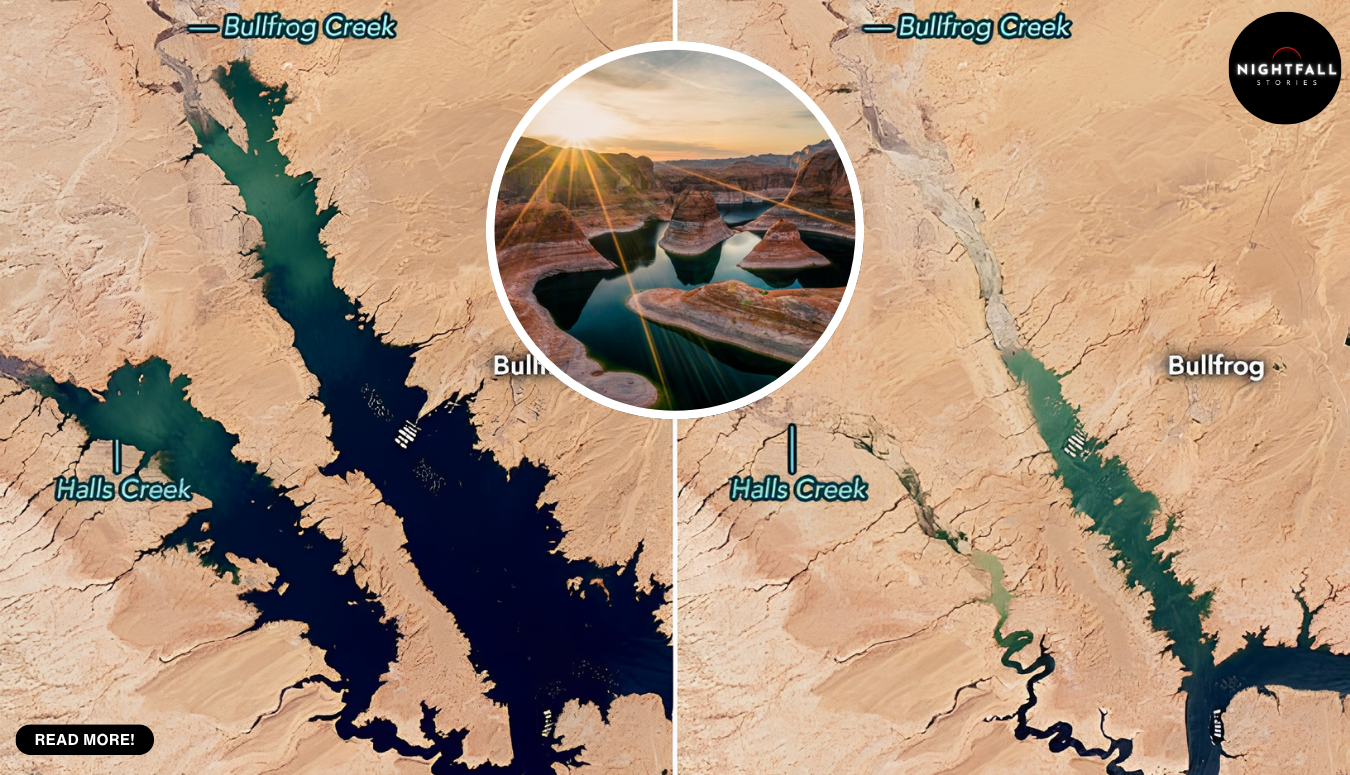
Bullfrog Marina did not close. It moved. Hundreds of boat slips, the fuel dock, the whole floating village of it, cut loose and barged across open water to Halls Crossing on the far side of Lake Powell, because if it had stayed where it was, by midsummer it would have been sitting on dry rock. The man who ran the operation for the concessionaire described it as an engineering job that had not been attempted at that scale before. The reason it had to be attempted is simple enough to fit in one line: the lake is retreating faster than the infrastructure built to serve it can follow.
Lake Powell is now the lowest it has ever been since the gates of Glen Canyon Dam closed in the nineteen sixties and the canyon began to fill. The reservoir broke its previous record in mid August this year and has stayed under it since. The old record, set in spring 2023, was an elevation of 3,519.92 feet above sea level. As of the most recent daily reading, the surface sits at roughly 3,517.7 feet. That is about 182 feet below full pool, and the reservoir is holding a little over five million acre feet of water, which works out to around twenty two percent of its live capacity.
To put that in the plainest terms available: Lake Powell is about four fifths empty.
Now here is the number that actually matters, and it is not the record. Two elevations sit below the current surface like tripwires. At 3,490 feet, Glen Canyon Dam reaches what is called minimum power pool, the point below which the turbines can no longer reliably generate electricity. At 3,370 feet, the reservoir reaches dead pool, the elevation at which water can no longer pass through the dam’s outlet works in any normal way and roughly 240 feet of water simply sits trapped at the bottom of the canyon, physically present and functionally gone.
The lake is currently somewhere in the region of twenty eight feet above the first of those thresholds.
That is the context for a federal decision made earlier this year that most people outside the Colorado River basin never heard about, and that has been widely misreported since. The Bureau of Reclamation, which operates the dam, announced an emergency package of drought response actions. The target it set is not, as has been repeated in a lot of coverage, simply keeping the lake above 3,490 feet. The stated aim is to raise Lake Powell to at least elevation 3,500 feet by April 2027.
That distinction is worth slowing down for, because it changes what the agency is admitting. Aiming to stay above minimum power pool would be a defensive crouch. Aiming for 3,500 feet by next spring is an acknowledgement that the reservoir is currently projected to fall well below that, and that closing the gap requires physically moving an enormous quantity of water around the upper basin to buy time. Reclamation’s own modelling had shown Powell dropping below minimum power pool during 2026 without intervention.
So they intervened. The package shifts roughly 2.48 million acre feet of water in Powell’s favour by two mechanisms at once. Upstream, Flaming Gorge Reservoir is releasing an extra 660,000 to one million acre feet over a twelve month window running to April 2027, water taken from one bathtub and poured into another. Downstream, Glen Canyon Dam cut its annual release to Lake Mead from 7.48 million acre feet to 6.0 million, holding water back rather than passing it on.
The second of those moves is the hard choice at the centre of this story, and nobody involved pretended otherwise. Every acre foot held in Powell is an acre foot that does not arrive at Mead. Reclamation stated openly that the reduction would accelerate the decline of Lake Mead, with a potential further reduction in hydropower capacity at Hoover Dam of up to forty percent. Two of the largest reservoirs in the hemisphere are now being managed as a single ledger, and the arithmetic has reached the point where protecting one means visibly harming the other.
Why that became necessary comes down to snow that never fell.
The Colorado River basin has been in a megadrought since around the turn of the century. That is the long background hum. What made this particular year different was the winter, which brought unusually little snow accumulation across the upper basin alongside record warmth. Snowpack is the river’s savings account, and when it is both thin and melting into warm, dry ground, very little of it ever reaches a river channel.
The resulting inflow figures are hard to overstate. Unregulated inflow to Lake Powell for the water year was forecast at around 3.5 million acre feet, about thirty seven percent of average. In July, inflow ran at roughly nine percent of the thirty year average. In August, Reclamation logged inflow to the reservoir at one thousand acre feet, which the agency’s own reporting rounds to zero percent of average. For a month, in practical terms, nothing came in.
There is a mechanism behind that collapse that is worth understanding, because it explains why a bad snow year now produces worse runoff than a bad snow year used to. Researchers tracking the basin use land surface modelling, including a system built specifically for the western United States, to follow how much moisture is sitting in the soil before the melt arrives. After two decades of drought, that soil starts the season parched. Snowmelt then has to satisfy the ground before it satisfies the river, and warmer air pulls more of it back into the atmosphere on the way down. The result is that a snowpack at, say, seventy percent of normal does not deliver seventy percent of normal runoff. It delivers far less. The river has become less efficient at converting winter into water, and that inefficiency compounds every year the ground stays dry.
The visible effects have been arriving on a steady schedule for years. Launch ramps around the reservoir have been closing in sequence as the surface dropped past each one, and a stretch of lakebed that was under a hundred feet of water in the nineties is now sun baked sediment with tire tracks on it. Each closure is a small local story. Stacked together, they are a map of the decline drawn at human scale.
Meanwhile the dam kept releasing water downstream, because tens of millions of people and several million acres of irrigated farmland are on the other end of that pipe. The reservoir serves more than forty million people across the American Southwest and irrigates roughly five million acres. You cannot simply stop.
What the satellite record shows is the arithmetic of that imbalance, and it is brutal. Two Landsat images taken nine years apart from the same orbit tell it without a word of commentary. In the earlier frame, dark blue water fills a branching network of bays and flooded side canyons, sprawling through orange desert. In the recent one, taken this month, the same landscape holds what looks less like a lake than a wide river threading a canyon, with the old shoreline standing well back from the water as a pale mineral ring. Glen Canyon Dam and the town of Page sit in the corner of both frames for scale.
Back at the water line, the consequences are less abstract and more expensive.
Bullfrog Marina had been operating on the north side of the lake for decades. As levels fell, its usable ramp retreated to the lowest reach available, and the projections made clear that by midsummer the marina would be aground. The concessionaire’s answer was to relocate the entire facility by barge to deeper water at Halls Crossing on the south side, a job completed earlier this year. A rough temporary ramp extension was opened at Bullfrog to preserve some access, and a permanent replacement ramp at Stanton Creek, budgeted at around 73 million dollars, is intended to allow boats to launch even if the lake falls to 3,500 feet. Once that exists, the marina may be able to come back north.
Read that again, because the detail is easy to skip. A major public works project is being built around the assumption that the reservoir will sit at roughly 3,500 feet. Not as a disaster scenario. As the design elevation.
The people who have been coming here for decades are watching the place they know rearrange itself. One couple has been visiting for the better part of fifty years. Another regular has been coming since the nineteen seventies. They are not tourists passing through; these are families who have measured out summers against the same rock walls, and who now arrive to find the walls considerably taller than they used to be and the water somewhere else entirely. Launch ramps that were open a few seasons ago are closed. Operators who built businesses on water recreation are being pushed to diversify into things that do not require a lake at all.
And the strangest part, the thing several visitors have remarked on, is that the retreat is revealing as much as it removes. Side canyons that have been drowned since the sixties are coming back into the light. Caves, alcoves, arches and rock formations that a generation of boaters knew only as depth readings are now dry ground you can walk on. Glen Canyon is, slowly and involuntarily, reappearing. It is not a comfortable kind of beauty, since the thing exposing it is the failure of the water supply for forty million people, but it is happening, and it complicates any simple reading of what is being lost here.
The scientists who study this system have stopped describing it as a drought that will end. Researchers at the Center for Colorado River Studies at Utah State University, the Oregon Climate Change Research Institute and Arizona State University’s Global Institute of Sustainability and Innovation have all been making a version of the same argument in public for years now: the river was divided up on the basis of an unusually wet stretch of the early twentieth century, the allocations have always exceeded what the river actually delivers in a normal year, and a warming climate is shrinking the supply further. The reservoirs were built to absorb bad years. They have now absorbed more than two decades of them and have very little absorption left.
Which is why the emergency package is best understood as a purchase rather than a solution. What Reclamation bought with Flaming Gorge water and reduced releases is time, measured in months, at the direct cost of Lake Mead’s elevation and Hoover Dam’s output.
Whether the purchase works will be visible by next spring, and it is worth knowing what to watch. The target is at least 3,500 feet by April 2027. Reclamation’s own studies already project the reservoir operating below 3,510 feet during the coming water year, placing it in what the agency calls the Low Elevation Infrastructure Protection Range, which is the bureaucratic term for the zone where keeping the dam functional starts to override other priorities. Two release scenarios for next year were modelled, one at six million acre feet and one at seven, with the final decision due in the annual operating plan. The agency is careful to say that these projections carry significant uncertainty and that real conditions can land outside the modelled range, which in recent years they have done, mostly in the wrong direction.
There is one small, cautious piece of good news buried in the daily numbers. The lake stopped falling. The record low was set in mid August; the reading in early September was 3,517.24 feet, and the most recent reading is 3,517.69 feet. That is a rise of under half a foot, which on a reservoir this size is close to nothing, but the direction of a line matters more than its slope when the line has been heading down for years. The upstream releases are arriving. Whether they arrive fast enough to add the remaining distance to 3,500 feet before next April depends almost entirely on a winter that has not happened yet.
Everything about this system now runs on snow that has not fallen, in mountains several hundred miles upstream, landing on ground that has been getting steadily warmer.
That is the honest state of it. A reservoir at twenty two percent, sitting under its all time record, roughly twenty eight feet above the elevation where the turbines stop working and about 148 feet above the elevation where the dam effectively stops passing water. A federal agency openly moving water between reservoirs to hold a line, and openly accepting damage to the reservoir downstream in order to do it. A marina that had to swim for deeper water, and a new boat ramp being engineered on the assumption that the lake will not come back to where it was.
And underneath all of it, a canyon that was flooded within living memory, coming back into view one bleached rock band at a time, on a timetable nobody chose.

A man walking a road on the eastern slope of the Andes found a kitten and did what most people would do. He took it home. He fed it what he had, which was noodles, rice and eggs, and he assumed it was somebody’s housecat that had wandered off into the cloud forest. It was not. About a year later, once it became obvious that this small spotted animal was never going to behave like a pet, he handed it over to La Senda Verde, a wildlife refuge in Bolivia’s Yungas. The sanctuary staff called a biologist who knew Bolivian cats and asked her to come and look at something odd.
That cat is now roughly ten years old, still living at the refuge, still going by the nickname the keepers gave him, Tigrino. And as of this month he is the living face of the first brand new wild cat species that science has formally described in more than a hundred years.
Its name is Leopardus tilcayo. It weighs about three to four pounds. Its head and body together run somewhere between seventeen and twenty inches, with a tail adding roughly another ten. It is smaller than the average domestic cat, with a slightly squashed face, round ears, light brown fur and unusually large rosettes scattered across it in an irregular, low contrast pattern that makes it look less like a miniature leopard and more like a leopard photographed through fog. If you passed it on a trail at dusk you would almost certainly assume you had seen a tabby.
That is precisely the problem this cat has presented for two centuries, and the reason it took a genome to notice it.
The biologist who answered the sanctuary’s call is Paola Nogales-Ascarrunz, a Bolivian scientist who founded the Bolivian Felids Research Program and works as a National Geographic Explorer. When she first examined Tigrino, she did not think she was looking at a new species. She thought she was looking at a tiger cat, a Leopardus tigrinus, that happened to be unusual. Slightly wrong colour. Spots too big. Tail a bit long and a bit thin. Cats vary, and she filed it away as a curiosity.
Then, a few years later, she was putting together a guide to the cat species of Bolivia. Work like that forces you to be precise, because a field guide has to tell a reader what to look for, and the moment she tried to write down what a tiger cat in the Bolivian Yungas actually looked like, Tigrino stopped being a curiosity. The description she was writing did not match the animal she had in front of her. Not in one detail, but in several, all at once, all pointing the same direction.
This is the unglamorous part of discovery that almost never makes it into the story. There was no moment in a jungle clearing with a torch beam falling on an unknown animal. There was a scientist trying to write an accurate caption and finding she could not.
What happened next took years and required a lot of people. Nogales-Ascarrunz went back to school for the genetics, because proving that a cat is a separate species is not a matter of opinion about spots. She joined an international team that eventually included Jonas Lescroart at the University of Antwerp, who shares lead authorship with her on the resulting paper, and Eduardo Eizirik, a geneticist at the Pontifical Catholic University of Rio Grande do Sul in Brazil who has spent much of his career untangling the small cats of South America. The wider author list runs to more than a dozen names across Bolivia, Brazil, Peru, Belgium and the United States, including the ancient DNA specialist Beth Shapiro.
Their approach was to stop arguing about fur and start reading genomes. The team assembled complete genomes from thirty eight individual cats across the genus Leopardus, sequencing twenty six of them new and pulling another twelve from existing data. Crucially, eight of those genomes came out of historical museum specimens, dusty skins and skull fragments sitting in drawers, some of them collected well over a century ago. That branch of the work has a name of its own now, museomics, and it is quietly rewriting a lot of what we thought we knew about animals nobody can easily find alive.
The museum material mattered more than it sounds, because the whole mess started with a museum problem. The original tiger cat was described in the eighteen hundreds on the basis of a single illustration of an animal from Cayenne, in French Guiana. Not a specimen. A picture. Every argument about tiger cat taxonomy since then has been anchored to a drawing, which is roughly like trying to settle a paternity case using a sketch of somebody’s cousin. Generations of biologists inherited that ambiguity and argued about whether there were one, two or three species of tiger cat, with the boundaries redrawn every couple of decades depending on who was measuring what.
The genomes ended the argument in a direction almost nobody had bet on. What had been treated as a single widespread species, or at best two, turned out to be five genetically distinct species spread across South and Central America. One of those five had never been described at all. That one lives in the Bolivian Yungas, and it is the animal at the refuge.
The team also sorted out a related population in Peru, naming it as a new subspecies, Leopardus tigrinus antisuyo. Tilcayo split off from its nearest relatives roughly one and a half million years ago, during a stretch of climate swings that repeatedly broke the montane forests of the Andes into isolated fragments. Cats got stranded on separate green islands, stayed stranded long enough, and became different animals.
The formal type specimen, the one that anchors the name in the scientific record, was not Tigrino. It was an animal documented near the village of Arapata in the Nor Yungas province of Bolivia, at about 1,570 metres of elevation, in 2021. That is cloud forest country on the eastern flank of the Andes, steep, wet, perpetually fogged in, and one of the more biologically dense places on the planet that most people outside the region have never heard of.
Which brings us to the name, and the part of this story that deserves more attention than the cat’s face is going to let it have.
The team did not invent a name. They did not use a Latin construction describing the spots, and they did not attach a donor’s surname or a colleague’s. They asked the people who live in the Yungas what they call this animal, and the answer came back the same over and over. Tilcayo. Everyone knew the word. Nobody could tell them where it came from. When researchers pressed on the etymology, the answers ran along the lines of, I do not know, my grandfather called it tilcayo, so I call it tilcayo. It does not appear to be Spanish. It does not appear to be Quechua. It is simply a word that has been passed down in that landscape for an unknown length of time, attached to a specific animal that outside science had never managed to see clearly.
So the official scientific name of the newest cat on Earth is a piece of local vocabulary of unknown origin, adopted whole, and the recommended English common name is the same word. The researchers treated it as a noun in apposition, which is the technical way of saying they did not bend it to fit Latin grammar. They left it as it was.
There is something quietly corrective in that. The communities of the Yungas were never confused about this cat. They had a word for it. They had presumably had that word for generations. What they did not have was a genome sequencer and a journal, and so the animal remained, in the official reckoning of the world, nonexistent. The paper closes a gap that only ever existed on one side.
The findings were published in the journal Current Biology, under the title Phylogenomics and museomics reveal five distinct species of tiger cats in South America. It went live earlier this month, and within days the tilcayo had been photographed, filmed and syndicated across more or less every continent, which is a strange fate for an animal whose entire confirmed wild range is a slice of Andean forest and whose only individual most people will ever see is a ten year old male in a refuge.
Now for the part that is easy to lose in the pictures.
Nobody knows how many tilcayos exist. Not approximately, not within an order of magnitude. The International Union for Conservation of Nature has not assessed the species, because until a few weeks ago it was not a species. The research team has handed its data over for a planned reassessment of the whole tiger cat group, and that reassessment is where the real consequences sit.
Eizirik has made the point bluntly. If you treat the tiger cat as one animal ranging continuously from southern Brazil all the way up to Costa Rica, you will conclude it is doing fine, because somewhere in that enormous sweep there are always populations holding on. Split that single reassuring entity into five species, each confined to its own much smaller patch of the map, and the picture inverts. Five separate, smaller, more fragile things, each of which can be lost on its own. The study’s genomic work already found evidence of severe long term population declines across tiger cat lineages through the Pleistocene and Holocene, with some of them, including the tilcayo, showing reductions of more than sixty percent.
A taxonomic revision is not a neutral bookkeeping exercise. It decides which animals are eligible for protection, which habitats get argued over, and which losses get counted. For decades the tilcayo’s decline was invisible because it was averaged into a larger group that looked healthier than it was.
The Yungas is not a stable place to be a small predator. It is being cleared, fragmented and converted, and the description of the tilcayo arrives with the blunt observation from the people who work there that its habitat is vanishing fast. A cat that weighs three pounds and hunts small rodents at night does not need a vast wilderness, but it does need connected forest, and connected forest is the thing in shortest supply on that slope.
Nogales-Ascarrunz has moved on to the next problem, which is finding the animal in the wild in any numbers. She has been setting camera traps through the Yungas forests, and the difficulty is exactly the one that hid the species in the first place. Tiger cats are routinely misidentified on camera surveys. A grainy night frame of a small spotted cat has been logged as a tigrinus for decades, and some unknown share of those frames were probably tilcayos all along. The archive of existing camera trap data across the region may already contain the answer to how widespread this animal is. Somebody now has to go back and look again with different eyes.
Her own summary of what the last decade taught her is worth sitting with, and it is not really about cats. We tend to assume, she has said, that the world is mostly known and mostly mapped, and that the era of finding new large animals ended somewhere in the colonial period. Her experience points the other way. The world is extremely complex, and most of it is not known. It only looks known because we stopped looking hard at the things we thought we had already identified.
That is what actually happened here. Nobody trekked into an unexplored valley. The cat was in a wildlife refuge with a nickname and a feeding schedule, roughly a two hour drive from a major city, being visited by tourists. It was in museum drawers, labelled as something else, in more than one country. It was on camera trap memory cards. It was in the everyday vocabulary of farming communities who had a name for it. The animal was never hidden. Our categories were just wrong, and wrong categories are far better at concealing things than dense forest is.
Tigrino will not be released. He was raised on noodles and rice by a well meaning stranger, he has spent a decade around people, and there is no version of the wild that he could survive now. He will live out his life at the refuge as the only member of his species most of the world will ever lay eyes on, which is a small and slightly melancholy irony for an animal whose name came out of a forest.
But his existence did something. A cat that nobody could classify sat in a sanctuary long enough for one biologist to keep coming back, keep failing to make the description fit, and keep going until she had the tools to prove why. The result is not just a new name in a journal. It is four other species that now have to be assessed separately, a Peruvian population with a formal identity, a century of muddled taxonomy finally resolved, and a word from the Bolivian Yungas printed permanently in the scientific record of the world.
Somewhere on that Andean slope there are more of them, moving at night, hunting rodents, being photographed by camera traps and filed under the wrong name. At least now there is a right name to file them under.








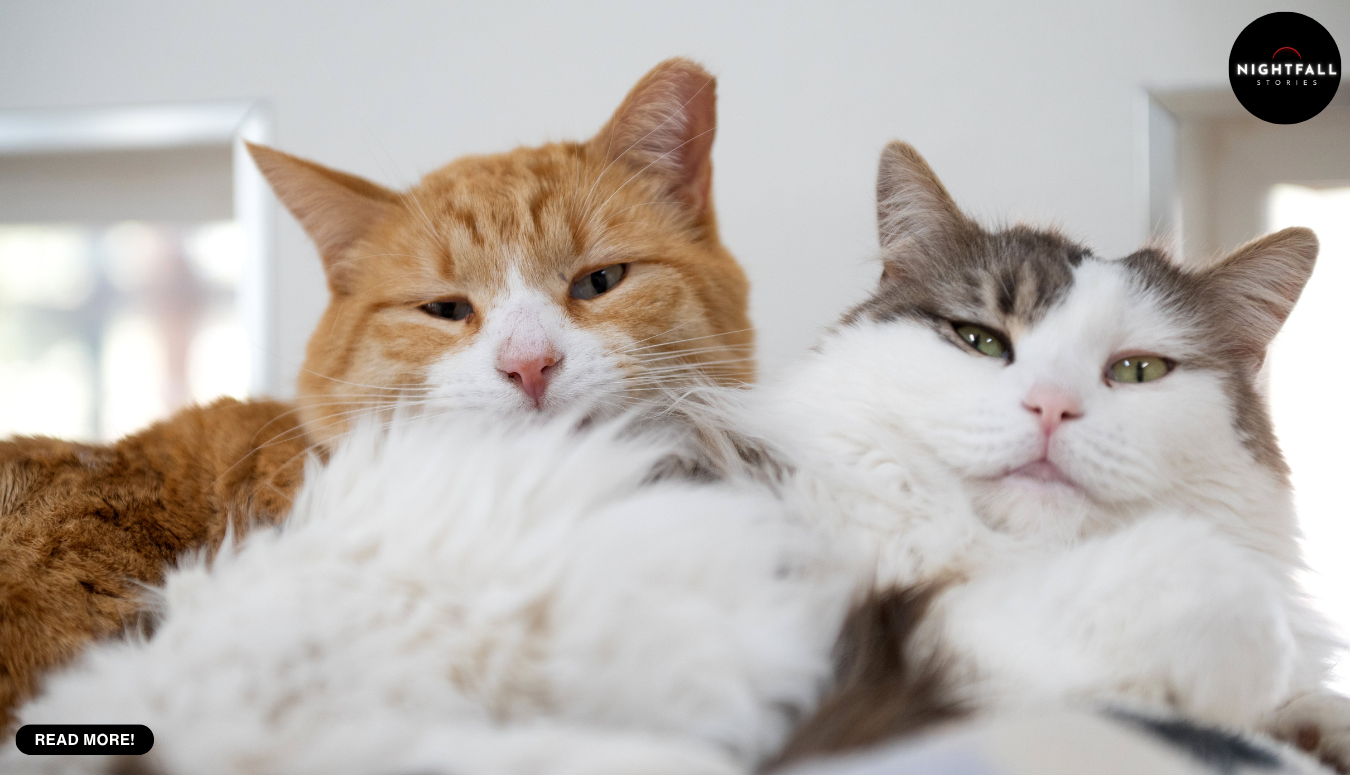
If you have ever watched a cat sniff something and then freeze with its mouth half open, upper lip curled, looking briefly like it has been personally insulted by the smell, you have seen the single most useful clue in this entire story. Cats do it at other cats’ urine more than at almost anything else. It has a name, the flehmen response, and it means the animal is not just smelling. It is pulling the molecule into a second sensory organ in the roof of the mouth and reading it properly.
For decades the obvious question sat there unanswered: reading what, exactly?
A team based at Iwate University in northern Japan, working with chemists in Germany and collaborators in Spain, now think they have the answer, and it is stranger and tidier than anyone expected. Cat urine carries a set of fatty acids that differ measurably from one individual cat to the next and, crucially, stay more or less the same in that cat over time. Not a mood. Not a health readout. An identity. A chemical name tag.
The paper went online in the journal Current Biology, and it is worth being precise about when, because most of the coverage you will have seen is a month late. It was published on 19 August. The wave of articles in September is the print issue catching up, volume 36, issue 17, which is a completely normal thing for a journal to do and a completely normal thing for readers to misread as fresh news. The science is a month old. It is not less interesting for that.
The first author is Shota Ichizawa, a graduate student in the applied biological chemistry programme at Iwate University, and his name has been quietly mangled or skipped in a lot of the write-ups. Plenty of outlets went straight to the senior author, Masao Miyazaki, the professor who runs the lab, partly because Miyazaki is already known internationally for earlier work on why cats roll in catnip and silver vine. The romanisation of Ichizawa’s surname also varies between the journal record and his own university’s release, which has not helped. The journal listing is the one to go by, and it has Ichizawa first.
The rest of the team includes Stefan Schulz and Jana Kaspers, chemists at Braunschweig in Germany, and the collaboration matters because of what the work required. This was not a behaviour study with some chemistry bolted on. It was a chemistry study with behaviour used to check the answer.
Here is the problem they were up against.
Cats mark. Everyone with a cat knows this and everyone with a garden knows this. The assumption for a long time was that the information in a scent mark lives in the volatile compounds, the light molecules that evaporate fast and hit your nose from across a room. That assumption has a serious flaw. Volatile compounds are unstable. They change with what the animal ate yesterday, with the weather, with how long the mark has been sitting on a fence post. If your identity badge rewrites itself every few hours, it is not much of an identity badge.
So the team went looking lower down the scale, at semi-volatile compounds. Heavier molecules. Slower to leave. Harder to detect with standard methods, which is part of why they had been overlooked.
They found thirteen branched-chain fatty acids. Branched, meaning the carbon chain has side spurs off it rather than running straight, which gives you an enormous number of possible variations from a small number of building blocks. The team sampled urine from 44 domestic cats and the pattern held: the particular blend and the proportions between those thirteen compounds varied clearly from one animal to another, while staying recognisably consistent within the same animal across separate collections.
Then they tested the stability directly, which is the part that turns a curiosity into a mechanism. Samples left at room temperature still carried a readable branched-chain profile after 24 hours. A mark on a wall is still saying whose mark it is a full day later, long after the sharp smell that made you wrinkle your nose has faded.
The chemistry alone would not prove cats care. So they asked the cats.
They ran behavioural trials with 27 animals, with several of the core recognition tests built around the same seven males. The design used habituation, which is a clean trick: present an animal with a smell over and over until it gets bored and stops investigating, then change one specific thing and see whether the boredom breaks. If nothing changes in the animal’s behaviour, it cannot tell the difference. If it starts sniffing hard again, it can.
They swapped out the branched-chain fatty acid fraction while holding the other lipids steady. The cats started sniffing again. Change that one component and, as far as the animal is concerned, the mark now belongs to somebody else.
It is worth pausing on how unglamorous that design is, because it is what makes the result trustworthy. There is no mind reading involved and no interpretation of feline facial expression beyond counting seconds. A cat either investigates or it does not. Habituation strips out the animal’s general curiosity, its mood that afternoon, its fondness for the researcher, and leaves one variable standing. Run it enough times with enough animals and the only thing that can explain renewed interest is that the chemistry changed and the cat noticed.
That is a tight piece of work, and it would be a decent paper if it stopped there. It does not stop there, and what comes next is the part that has people genuinely excited, with a large asterisk attached that most of the coverage has dropped.
For well over a century, anatomists have known that cat kidneys are unusual. Slice one and the cortex is packed with lipid droplets, tiny globules of stored fat, in a quantity you simply do not see in the kidneys of most other mammals. It has been written up, illustrated in textbooks, noted and shrugged at for generation after generation of veterinary students. Nobody had a convincing explanation for what all that fat was doing there. Kidneys are filters. Filters do not normally need a pantry.
When the team looked inside those droplets, they found the branched-chain fatty acids, bound up in triacylglycerols, the storage form of fat.
So the proposal on the table is this: the kidney droplets are a reservoir. A buffer. A cat’s diet swings, and the raw material in its bloodstream swings with it, but if the relevant fatty acids are being held in a slow-release store in the kidney and fed steadily into the urine, the signature stays constant even when the input does not. The identity survives a change of food.
That is an elegant idea and it would explain a hundred-year-old anatomical oddity in one stroke, which is precisely why it needs saying clearly: it is a proposed mechanism, not a demonstrated one.
The researchers themselves are careful about this in a way the headlines have not been. Miyazaki’s own framing is that the droplets have been known for more than a century, that why cats have so many has remained a mystery, and that these findings suggest one of their functions may be to support a stable chemical signature in urine. Suggest. May be. One of their functions. The team states outright that how the stored fatty acids actually get released into urine is an open question for future research. Nobody has traced that pathway. The correlation is real and it is striking. The plumbing between the store and the mark has not been shown.
If you read a headline this month announcing that a century-old mystery has been solved, that is the headline writer talking, not the scientists.
The team also looked outward, beyond the house cat, and this is where the story opens up. They checked urine and kidney lipid patterns across other members of the cat family and found the same chemistry in lions, tigers, leopards, jaguars, servals, Iberian lynxes and the leopard cats of Tsushima. The specific profiles differ by species and even by geographic population, but the underlying system appears to be shared across Felidae.
That points at something old. Not a quirk your cat picked up while being domesticated, but a signalling system that predates domestication by a very long way, running through solitary territorial hunters who needed to leave reliable information about themselves on a landscape they could not patrol continuously.
Here again, though, the honest caveat: the behavioural tests were done on domestic cats only. The compounds are there in the wild species. Whether a lion reads another lion’s mark the same way has not been tested, and the team says so.
There is one more reason the finding lands the way it does, and it is about how cats live rather than how they smell. Most of the cat family is solitary. A tiger, a leopard, a serval spends the great majority of its life alone across a range far too large to defend by being physically present in it. The only way to hold territory under those conditions is to leave messages and trust that they will still be readable when a rival arrives days later. Seen that way, a stable chemical identity is not a curiosity. It is the minimum requirement for the entire lifestyle to work, and the surprise is less that it exists than that it took this long to find the molecules carrying it.
What makes this a human story rather than a chemistry story is the shape of the lab it came out of.
Miyazaki’s group has form for taking questions that everybody else treats as too trivial or too obvious to bother with, and then refusing to let go. The catnip work is the famous example. Cats rolling in catnip and silver vine had been a party trick for centuries, filed under cats are weird. His team asked what the behaviour was actually for, and found that rubbing the plant compounds into their fur gives cats a measure of chemical protection against mosquitoes. A joke turned out to be pest control.
This is the same instinct applied to something even less glamorous. Cat urine is the least appealing research material imaginable, the sort of thing that makes people laugh when you say it at a dinner table, and the team spent years on its heavier molecular fraction because the light fraction did not add up. Somebody had to collect forty four cats’ worth of samples. Somebody had to sit through habituation trials watching whether a bored cat would bother lifting its head. That somebody, on the paper at least, is a graduate student whose name a lot of the world’s science desks did not bother to print.
There is a practical edge to it as well, and it is not trivial. Cats are notoriously difficult to assess in a clinic. They mask illness, they hate carriers, they behave nothing like themselves on an examination table, and kidney disease in particular is both extremely common in older cats and extremely hard to catch early. If the kidney really is running a lipid store that feeds this signature, and if that store is disrupted when the organ starts failing, then the chemistry of a cat’s mark might eventually carry an early warning. The researchers have not claimed this, and nothing in the paper supports it as a diagnostic yet. It is simply the obvious next question, and it is the kind of question that follows from having identified the mechanism in the first place.
There is a smaller, more domestic payoff that lands immediately, though, and it is the reason this story travelled.
If you have two cats and they have never quite settled with each other, you have probably noticed how much of the tension runs through smell. A cat comes back from the vet and gets hissed at by a housemate it has lived with for eight years. Introduce a new cat and the fight is not over the food bowl first, it is over the furniture, the doorframes, the corners of the sofa, everything that gets rubbed and marked and marked over.
That has always been treated as territorial in a vague sense. What this work suggests is much more specific. They are not just claiming ground. They are writing names on it, in a stable chemical script, in a format that survives a day of weather and a change of diet, and they are reading each other’s names off the wall every time they do that ridiculous open-mouthed face at the doorframe.
The next time you see it, the curled lip, the vacant thousand-yard stare, the expression of an animal that has just remembered something embarrassing from years ago, you are watching a cat check the signature on a message. The letter is still legible. Who wrote it, and how the ink gets made, is the part still being worked out.
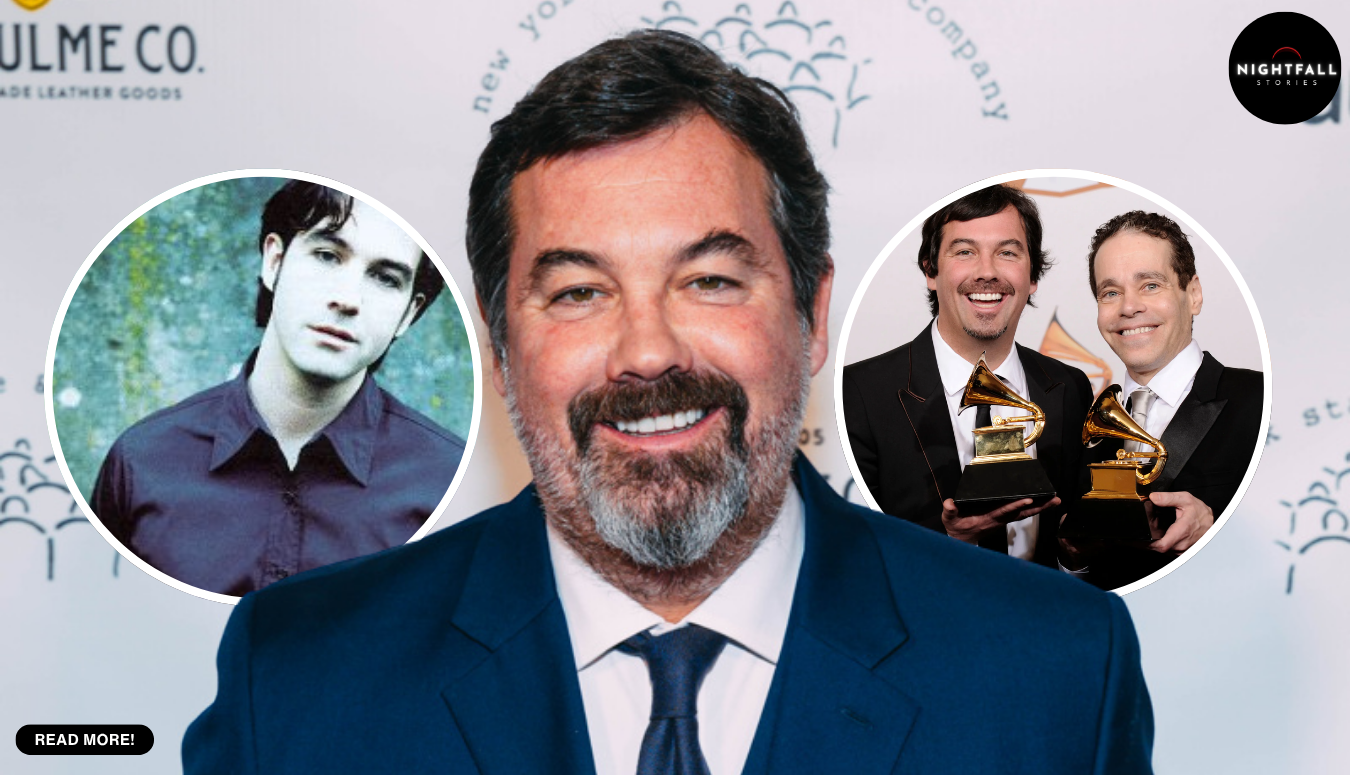
A few days after Duncan Sheik died, a young actress stood in a raw black box theatre on the west side of Manhattan and sang a song called Immured to a room of people who had just found out. The song was his. The show was his. He had chosen the room himself, had argued for it, had wanted something that felt nothing like a Broadway house. He was 56, and he had been working on the piece almost to the end.
His mother, Suzanne, confirmed the death. He died at a hospital in Manhattan, and the cause given was organ failure. The news moved through nine or ten major outlets in a matter of hours, which tells you something about how many different rooms of American culture he had been standing in at once. Rolling Stone ran it as a music story. Playbill ran it as a theatre story. Both were right.
That double life is the whole shape of him, and it is worth slowing down on, because almost nobody manages it.
If you were listening to the radio in the second half of the 1990s, you already know one half. Barely Breathing was inescapable. It peaked at number 16 on the Billboard chart, which sounds modest until you hear the other number: it stayed on the Hot 100 for fifty five straight weeks. More than a year. It outlasted songs that went to number one and vanished. It became one of those tracks that stops being a song and becomes a piece of furniture in people’s lives, the thing playing in the car, in the food court, in a bedroom where somebody was getting over somebody else.
The album went gold. He got a Grammy nomination out of it. He was in his twenties, signed, photographed, on the circuit, doing exactly the thing that a few million people would trade a kidney to be doing.
And then he did something strange with it.
He did not chase the follow up hit. He made records that got quieter and more interior, that leaned on strings and mood, that were reviewed warmly and sold modestly. He started scoring films. And he began circling a project that, on paper, was one of the worst commercial ideas anyone had ever brought to a producer: a rock musical adaptation of a German play from 1891 that had been banned for decades, about teenagers, sexuality, abortion, abuse and suicide, written by an author, Frank Wedekind, whose whole intent was to horrify respectable people.
That is not a pitch. That is a dare.
He worked on it with the lyricist Steven Sater for years. Years plural, with workshops that went nowhere, with readings, with the slow grinding process that kills most shows before anyone outside the room ever hears them. The industry logic was straightforward and it was against them. Nobody wanted a musical about nineteenth century schoolchildren. Nobody wanted the subject matter. Nobody wanted a pop songwriter’s first theatre score.
Spring Awakening opened Off Broadway in 2006 and then moved uptown, and it did not just succeed. It rearranged the furniture.
At the Tony Awards in 2007 it won eight, including Best Musical. Sheik won Best Original Score with Sater, and then won a second award, on his own, for Best Orchestrations, which is a category that rewards the actual sound of a thing rather than the idea of it. The cast album won a Grammy. It is worth noting the year, because the show is often misremembered as a 2006 winner, and worth noting the count, because it gets written down as six about as often as it gets written down correctly.
What the awards do not capture is what the show did to the people in it and the people watching it.
The trick of Spring Awakening was structural. The book scenes played period straight, stiff collars and repression and adults who would not say the word. And then a character would pull a handheld microphone out of nowhere and the band would come in and the nineteenth century would fall away and a teenager would simply say what they actually felt, in the language and the sound of now. The distance between those two registers was the entire point. It is what being young under adults who will not tell you anything actually feels like, and he found a musical grammar for it.
Audiences who had never sat through a musical in their lives sat through that one. Teenagers came back six and eight and twelve times. It travelled, got licensed, got staged in schools and regional theatres and in countries where the subject matter was still difficult, which was rather the idea.
And it made careers. Lea Michele was in the original cast. So was Jonathan Groff. So was a long list of performers who are now recognisable faces, and several of them said, in the days after, some version of the same thing: he took them seriously when they were kids and nobody else had. Michele has said she met him when she was fourteen, and that hearing his demo before her audition was one of the formative experiences of her life. Her response to the news was short and unguarded. It hurt, and it did not seem real.
Kimiko Glenn wrote that his legacy would outlive all of them. Melissa Barrera described his music as the soundtrack of her adolescence, and then, separately, how generous he had been in person with a cast he had no obligation to be generous with. Musicians outside theatre said the same thing from the other direction, that his records had been the reason they moved to New York in the first place.
There is a practical legacy too, and it is easy to miss because it looks like nothing. Before Spring Awakening, a certain kind of show had a ceiling. Producers assumed a young audience would not buy tickets, that a contemporary rock score was a gimmick, that difficult material would not sell. After it, a run of shows that would previously have died in development got made, because there was now a receipt proving the audience existed. You can argue about which ones and how directly, and people do, but the argument itself is the evidence. He moved the line of what a commercial producer would take a meeting about.
It is a particular kind of tribute list. Not the reverent, formal sort that gets issued by publicists. The kind where people mostly want to tell you about a conversation.
The years after Spring Awakening were not a straight line, and he never pretended they were. He wrote Whisper House, a ghost story with songs. He wrote Alice by Heart with Sater, a wartime Alice in Wonderland set in a bomb shelter. He wrote Because of Winn Dixie, which is about as far from Wedekind as a person can travel. He wrote Noir. And he wrote American Psycho, a musical adaptation of the Bret Easton Ellis novel, staged in cold white and neon, which ran on Broadway and closed fast and has since become the sort of show people defend passionately on the internet years later.
Some of those worked. Some did not. He kept making them anyway, and he kept making records alongside them, which is the part that people in each world tended to forget about the other. The theatre crowd sometimes treated him as a pop guy who had wandered in. The music press sometimes treated him as someone who had left. He was doing both the entire time.
His records kept coming through all of it, and they were stubbornly uncommercial by design. Orchestral arrangements where a radio single wanted a chorus. A covers album of 1980s songs rebuilt as chamber pieces, which sounds like a novelty and is not. Film scores that most listeners never connected to the man who sang the song in the food court. He was, by temperament, someone who followed the idea rather than the market, and he had the unusual luxury of a catalogue hit that kept the lights on while he did it. He was open about that. The song that people teased him about was also the song that bought him the years to write everything else.
He grew up between New Jersey, where he was born, and South Carolina, after his parents separated. A grandmother who had trained at Juilliard put him in front of a piano. He picked up an electric guitar later. He went to Brown and studied semiotics, of all things, which is the study of how signs carry meaning, and if you wanted to be neat about it you could say he spent the rest of his working life on exactly that question in a different medium. He played in a band there with Lisa Loeb, before either of them had a hit.
He practised Nichiren Buddhism for most of his adult life, a daily chanting practice, and by several accounts it was not a decorative detail. It shaped how he worked and how he handled the stretch when the industry was not returning his calls. He is survived by his parents, his wife Nora, his daughter Ines, and half siblings.
Which brings it back to that black box on West 27th Street.
The last project was called Memoirs of Amorous Gentlemen, and it is the sort of thing only he would have attempted. It is adapted from a manga by the Japanese artist Moyoco Anno, with a book by the playwright Leah Nanako Winkler, and it is believed to be the first Japanese manga adapted into an original English language American musical. The story follows Colette, a young woman in Paris at the turn of the last century, working in a house of assignation and writing down everything she observes about the men who come through it, until the watching becomes the work and the work becomes hers.
Rob Ashford directs. Scott Pask designed the set, Catherine Zuber the costumes. Sophia Anne Caruso plays Colette. The producers built a three hundred seat theatre in the round inside the Culture Club building, the space that used to house Sleep No More, because Sheik pushed hard for somewhere that was not a traditional house. One of the producers, Tony Marion, put it simply afterwards: Duncan felt strongly that they should do something untraditional, and he looked at a raw black room and saw the show.
Previews begin this week. Opening night is in October. It runs into the new year.
He will not see any of it. And there is a second one right behind it, an Off Broadway revival of Spring Awakening opening in December, which means that for the next several months there will be two productions running in the same city by a composer who is no longer alive to take a note, fix a lyric, or sit in the back of the house on a Wednesday and watch what an audience does with a bar he rewrote eleven times.
There is no way to make that fact sit comfortably, and it should not be made to. A man died at 56 with work still in his hands. His family called him a singular talent and a deeply influential voice, and said they believed his work would keep reaching people who never met him. That is the ordinary, unbearable arithmetic of it.
But there is something else in the shape of that life, and it is not consolation so much as a plain observation.
He had the thing. He had the radio hit, the gold record, the year on the chart, the version of success that the culture actually measures. He could have spent two decades chasing a sequel to it, the way a great many people from that chart did, and he would have had a perfectly decent career doing so, playing the song at festivals to people who wanted to be nineteen again for three minutes.
He went and spent years on a banned German play instead, with no evidence it would work and a great deal of evidence it would not, because he thought there was a way to make teenagers hear themselves in it. It took longer than it should have. It very nearly did not happen. And then it changed what a musical was allowed to sound like, and it put a generation of performers on stage, and it is still being staged in school halls by kids who were not born when it opened.
That was the hard choice, and he made it early, and it paid off in a currency the charts do not track.
The song at that preview was a new one, from the unopened show, sung in an unfinished room. Not a greatest hit. Not Barely Breathing. Something nobody in the audience had heard before, by a man who kept starting over right up to the end.
That is the part worth holding on to. He never treated the best thing he made as the last thing he would make.
Zach Cregger took a job directing a Resident Evil movie and then admitted, on the record, that he had never seen any of the previous Resident Evil movies. Not one. He had played the games, obsessively, but the six films that made the series a billion dollar property were a blank to him.
A week ago that sounded like a liability. As of the most recent reporting, on the twenty fourth of September, the film has taken about 118.8 million dollars worldwide, roughly 72.4 million of that in North America and 46.4 million internationally, against a production budget reported at around 75 million. It took 60 million domestically in its opening weekend alone, which is the biggest opening the franchise has ever had in the United States across twenty four years and six previous films. Its reviews are at 96 percent on Rotten Tomatoes. No earlier Resident Evil film ever cleared 37.
Those are first week numbers. The second weekend is still being counted as this is written, so the total will already be higher by the time you read it. But the shape of the thing is settled, and the shape is that a video game adaptation, an R rated one, a franchise reboot with no recognisable characters from the games in it, directed by a man with no relationship to the previous films, is the number one movie in the world.
There is a detail here that keeps getting reported wrong, and it is worth clearing up before anything else, because it has appeared in more than one write up. Cregger is not an Oscar winner. He has not won an Academy Award. What happened is that Amy Madigan, who starred in his previous film Weapons, won Best Supporting Actress earlier this year, forty years after her only other nomination. That is her award. It belongs to her and to a performance that a lot of people found genuinely startling. Cregger directed the film she won it for, which is a real and meaningful thing to have done, and it is not the same thing as winning an Oscar. The shorthand that collapses the two flatters him in a way he has not asked to be flattered.
What he has actually got is a run, and the run is the interesting part.
Cregger did not come up through film school or through the horror pipeline. He came up through sketch comedy. In 2000 he co-founded a troupe called The Whitest Kids U’ Know with Trevor Moore and Sam Brown. They won best sketch group at a comedy festival in Aspen in 2006, which got them a television series, first on Fuse and then on IFC, and it ran for five seasons until 2011. He co-wrote and co-directed a couple of comedies with Moore in that period, including a studio one that nobody remembers fondly. For most of his thirties, if you knew who Zach Cregger was at all, you knew him as a sketch guy.
Then in 2022 he made Barbarian for about four and a half million dollars, and the floor fell out of a lot of people’s assumptions. It made roughly forty six million worldwide, which for that budget is a lottery ticket, and more importantly it established a specific thing he could do: structure a horror film so that the audience is confidently wrong about what kind of film they are watching, and then move the ground.
Barbarian is worth describing a little more precisely, because it explains the trust he was later given. It begins as one kind of film, a woman arriving at a rental house that has been double booked, and it keeps resetting the audience’s sense of the genre it is in, including a mid film handbrake turn into something that plays almost as comedy before it turns again. It was a magic trick performed on structure rather than on effects, and it worked on people who thought they were unshockable. Studios noticed, because that kind of control over an audience is very hard to teach and very easy to sell.
Three years later he made Weapons for around twenty million. It made about a hundred and forty two million worldwide. It opened to roughly seventy million globally. It was the film that turned him from a promising horror director into someone studios fight over, and it is the film Madigan won her award for.
So when he pitched a Resident Evil movie at the start of last year, there was reportedly a bidding war for it. That is a remarkable sentence to write about a man whose pitch amounted to: I have never seen your movies, I do not want to use your characters, and I would like to make this story whether or not you give me the rights.
That last part is the bit worth pausing on, because he has said it more or less directly. The story he wanted to tell was a story he had already wanted to tell. The Resident Evil license was a vehicle for it rather than the origin of it. He set it in the world of the games, in a timeline running parallel to the events of the second game from 1998, but with none of the game’s characters. The protagonist is a medical courier called Bryan, played by Austin Abrams, and the supporting cast is made up of Umbrella Corporation scientists and enforcers played by Zach Cherry, Kali Reis, Paul Walter Hauser and Johnno Wilson. One of those roles, Reis’s, was written for a male actor and changed when she came in for it.
The reference point he has offered is not any previous Resident Evil film. It is Evil Dead II, the 1987 sequel, which is the film people tend to name when they want to describe horror that is having a tremendous amount of fun without stopping being frightening. He has talked about wanting the pacing of playing the game rather than the pacing of watching the older films. The result runs ninety three minutes, which for a modern studio tentpole is close to indecently short and is almost certainly part of why audiences are turning up twice.
It was shot in Prague across roughly four months from late 2025, with Dariusz Wolski, a cinematographer better known for very large scale work, behind the camera. Sony released it through Columbia, with Constantin Film, Davis Films, Vertigo Entertainment and PlayStation Productions involved. It premiered at a genre festival the night before it opened wide, which is a confident thing to do with a film you have spent seventy five million dollars on. Some reports put the budget nearer eighty million; either way it is comfortably the most expensive film the series has made.
The numbers deserve to be looked at properly rather than just admired. Thursday previews brought in 8.8 million dollars, the ninth biggest preview night of the year so far. Opening day was 26 million. The three day domestic total was 60 million, and the significance of that figure is slightly absurd: it is higher than the entire lifetime domestic gross of Resident Evil: Afterlife, which had held the franchise’s domestic record for sixteen years at 60.12 million. In other words, the new film’s opening weekend nearly matched, in three days, what the previous best performing entry made in its whole theatrical run.
Globally the opening was around 108 million. Within its first week the film had passed the lifetime worldwide gross of the 2002 original, about 103.7 million, and it had more than doubled the entire run of the 2021 reboot, Welcome to Raccoon City, which managed 41.9 million and effectively ended that attempt at restarting the series.
It also holds a narrower record that says something about where the business is: the biggest opening ever for an R rated video game adaptation. Studios have spent a decade being told that game adaptations work when they are broad, family shaped and rated for everyone. This one is not any of those things and it outgrossed the lot of them on opening.
The wider context is that video game adaptations have gone, in about six years, from a reliable punchline to one of the most dependable categories in the business. PlayStation Productions, which is a partner on this film, exists precisely because that shift happened and a platform holder decided it would rather be in the room than license its properties out and hope. What makes this particular result notable is that it did not follow the formula that produced the shift. The successful adaptations of the last few years mostly worked by being faithful, by putting the recognisable character on screen and letting the audience feel served. This one withheld the recognisable characters entirely and served the audience something else, and the audience turned up anyway.
The rest of that weekend’s chart was ordinary. Practical Magic 2 took about 12.1 million, Spider-Man: Brand New Day 6.5 million, The Odyssey 4.9 million and Coyote vs. Acme 4.5 million. Resident Evil took more than all four combined and then some.
There is a practical reason a ninety three minute horror film performs the way this one is performing, and it is not artistic purity. A short film gets more showtimes per screen per day than a long one. Exhibitors like it. Audiences who are deciding on a whim at seven in the evening like it. And a film that does not outstay its welcome is the kind people text their friends about on the way out rather than an hour later when the feeling has worn off. Cregger’s instinct to keep it tight is an aesthetic choice that happens to also be a commercial one.
The reviews are the part that would have seemed most unlikely. This is a franchise whose films were, for two decades, critic proof in the least flattering sense: they made money and nobody pretended they were good. A 96 percent rating is not a marginal improvement on a 37 percent ceiling. It is a different category of object.
What is worth saying, though, is that big openings are not the same as big films, and the honest read on this one is not in yet. Weapons opened to about seventy million globally and finished at a hundred and forty two million, which means it more than doubled its opening, the sign of a film people recommended to each other. Resident Evil opened at a hundred and eight million. Whether it has that same second life, whether the word of mouth carries it well past its opening rather than front loading, is the question the next few weekends answer. A franchise name gets you a huge first weekend almost regardless. Only the film itself gets you the fourth one.
There is also a slightly uncomfortable thing sitting underneath the success story, and it is not about Cregger. It is that the clearest route to making something strange inside the studio system in this decade appears to be to attach it to a piece of intellectual property that has nothing to do with it. Cregger wanted to make a particular horror film. He made it by putting an Umbrella Corporation logo on it. That worked brilliantly for him and for Sony, and it is also a slightly bleak description of how an original idea reaches a wide audience now.
He seems entirely relaxed about it. He has a film called The Flood set up with Amblin, and an adaptation of Siren Head, an internet horror creation, somewhere in the pipeline. Neither of those is a course correction. They are just more of what he does.
The most instructive thing about the whole episode is not that an outsider beat the insiders. That is a story people enjoy and it is only half true, since he had already made two successful horror films before anybody handed him a franchise. The instructive thing is that he was allowed to say no to the obvious version. Nobody made him put the game’s most famous characters on screen. Nobody made him stretch it to two hours and twenty minutes. Nobody made him watch the old films so he could gesture at them. He was given a very expensive toy and permitted to ignore almost everything about it except the feeling of the thing, and the feeling of the thing turned out to be what people wanted.
The franchise had been tried twice before, once successfully and stupidly, once carefully and unsuccessfully. The version that worked was made by the man who had not seen either.