Blog

  • She sang in this company’s ensemble in the 1960s. The role that brought her back is one she had never performed in her life.

    She sang in this company’s ensemble in the 1960s. The role that brought her back is one she had never performed in her life.

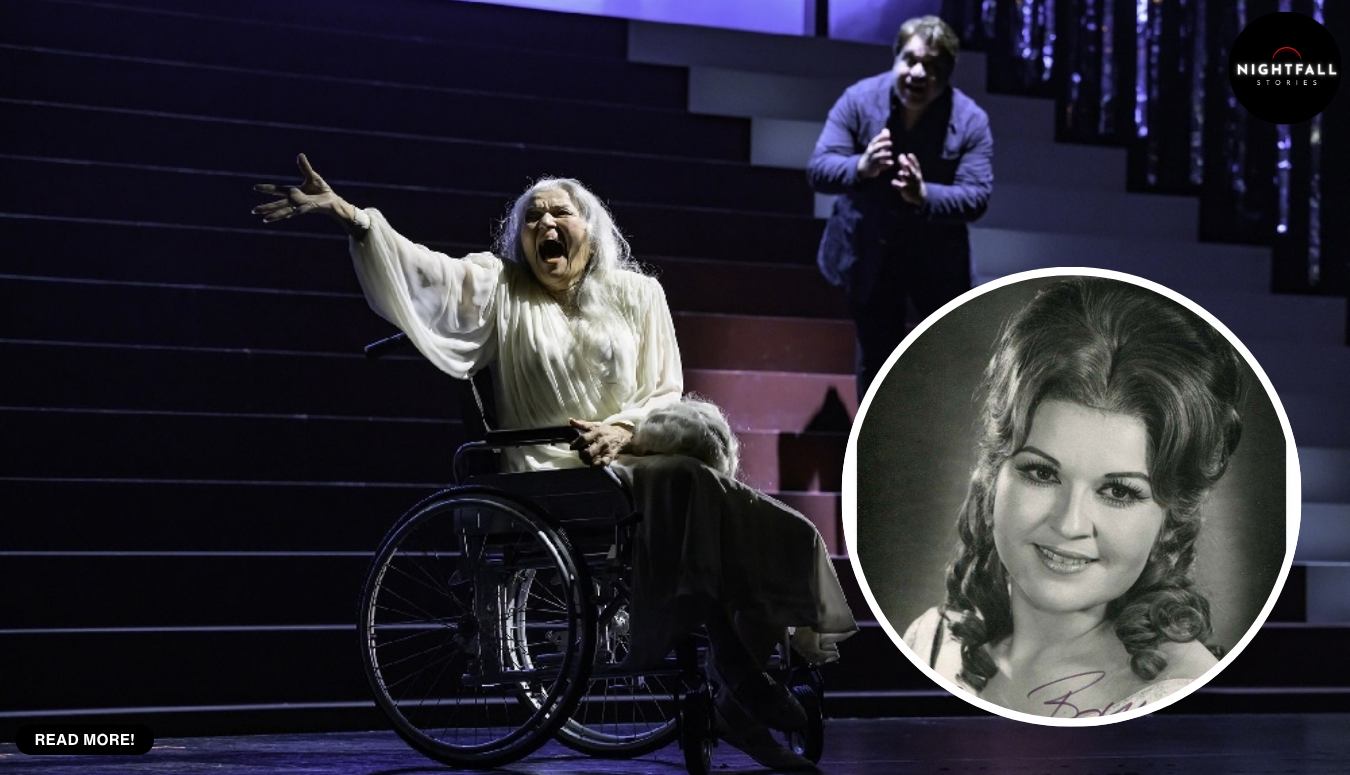
    In the cast list for the new production of Tchaikovsky’s The Queen of Spades at Staatsoper Hannover, the Countess is sung by Helen Donath. The line sits there without decoration, between the Lisa and the Hermann, and unless you happen to know the house’s history you would read straight past it. Donath was a member of that company’s ensemble from 1963 to 1968. The stage she walked out onto for this premiere is the one where her operatic career effectively began, and the German critic who reviewed the opening night noted something that even regular attenders would not have guessed: she was singing the old Countess for the first time.

    That is the part of this worth sitting with. Not the calendar, though the calendar is remarkable enough. The interesting fact is that a singer with one of the longer and better documented recorded legacies in postwar German opera reached this point in her working life with the Countess still unperformed, and that the house where she started is where she finally did it.

    The Countess in The Queen of Spades is one of a small number of roles in the standard repertoire that are written for an old woman and that genuinely require one. She is not a mother figure or a comic relative. She is the plot. The whole opera turns on a secret she is said to hold, the sequence of three cards that will win at faro, acquired long ago in Paris in circumstances the libretto leaves deliberately murky. The young officer Hermann wants it badly enough to frighten her for it, and she dies without telling him, and then she comes back, and the rest is a man being destroyed by information he obtained from a dead woman. Everything painful in the piece runs through her.

    It helps to know where she came from. Tchaikovsky’s opera is built on a Pushkin story, and in the story the Countess is a study in a particular kind of cruelty: an ancient woman who was once a celebrated beauty in Paris, now shut in a Petersburg house, tyrannising a dependent young relative and dressing every evening for a society that has long since stopped looking at her. The composer and his brother, who wrote the libretto, kept that and added music to it, which is a harder problem than it sounds. You cannot give a character like that arias. Arias make people sympathetic and coherent, and she is neither.

    Musically she is built unlike anything else on the stage. Her part is short, sits low, and is written in fragments: mutterings, half-lines, orders to servants, complaints about the modern world, stretches of something closer to speech than to song. Tchaikovsky gives her almost no conventional singing at all. What he gives her instead, in the middle of her one extended scene, is an old French air borrowed from the eighteenth-century composer Gretry, which she sings alone in her bedroom as a memory of her own youth, when she was the beauty of a foreign court and men queued to look at her. The dramatic effect depends entirely on the sound of a voice that has lived a long time reaching back for something it used to be able to do easily.

    That is why houses give the role to singers late in their careers, and why doing so is a musical judgement rather than a sentimental one. A young soprano with a gleaming instrument can be made up to look eighty and will still sound wrong, because the part is not about age as costume. It is about what time does to a voice and what a voice remembers, and those are the actual raw materials of the writing. A singer who has them does not have to act them.

    Donath had them, and the review that appeared in the German classical magazine concerti after the premiere located her performance exactly where you would hope. It praised the pianissimi in the Gretry song as the thing that got under the skin, and described a stage presence that left the writer short of breath. That is a specific technical observation, not a compliment about longevity: the hardest thing to do with a small old voice is to sing very quietly and still be heard to the back of a large room, because quiet singing is where technique either survives or does not. Two other German outlets, the public broadcaster Deutschlandfunk and the regional Hannoversche Allgemeine Zeitung, are reported to have reviewed the performance in similar terms, calling her contribution the moving surprise of an otherwise large and ambitious evening. Those two assessments reach this article at second hand, through a specialist classical aggregator rather than from the original pages, and they are described here only as reported, with no attempt to render anybody’s wording.

    The production around her is not a museum piece and was not built as a frame for her. It was staged by Roland Schwab, and the premiere was also the debut of Francesco Angelico as the company’s new general music director, which makes it one of the more consequential nights in that theatre’s recent calendar for reasons that have nothing to do with the Countess. Kiandra Howarth sings Lisa and Xavier Moreno sings Hermann. Philipp Jekal and Max Dollinger take the two aristocratic baritone parts. The run continues into the autumn with further performances in October and November. In other words, Donath was cast into a working repertory production in the ordinary way, listed in the ordinary way, and is singing a scheduled series of performances like everyone else in the building.

    Which is the most striking thing about it, and the part that has been noticed by the specialist press more than by anyone else. There was no comeback campaign. No farewell tour, no anniversary branding, no announcement treating the engagement as an event in itself. The house put her name in the cast list and on its ensemble page alongside the rest of the company and left it there. People who follow the German houses closely spotted it; the wider world largely did not, until the reviews came out. By one account in the classical press the return arrived essentially unheralded, and nothing in the theatre’s own material contradicts that, because the theatre’s own material simply treats her as a cast member.

    To understand why Hannover in particular is the right building for this, you need to know what a German ensemble contract was in the 1960s, because there is no real equivalent elsewhere and it explains her entire career. A young singer was hired not for a role or a production but by a company, for a season or several, and then sang whatever that company’s repertoire required: a small part on Tuesday, a leading role on Friday, a cover on Sunday, several dozen performances a year across a dozen operas. You learned in public, under pressure, in front of an audience that came back every week and knew exactly how good you were. It was an apprenticeship system attached to a theatre, and it produced a generation of singers with enormous repertoires and very solid nerves.

    The system also had a side effect that is relevant here. Because a singer belonged to a house rather than to an agent, the house kept a memory of her. Company archives, ensemble pages, the institutional habit of knowing who sang what and when: German theatres maintain that material as a matter of course, and a singer’s first employer stays, in a bureaucratic sense, her first employer forever. Hannover still lists Donath’s years there. That is not sentiment. It is how the institution is built, and it is the reason an engagement like this one can be arranged without anybody needing to explain the connection to anybody.

    Donath came into it from about as far away as it is possible to come. She was born in Corpus Christi, on the Texas coast, in 1940. She studied locally, then in New York, and gave her first professional concerts there as a teenager. Her European opera debut came in Cologne at the start of the 1960s, and by 1963 she was in the Hannover ensemble, where she stayed for five seasons. She also met her husband there, the conductor and pianist Klaus Donath, and it is under his surname that essentially her entire career was conducted. That detail matters more than it looks. A soprano named Helen Donath, singing in German, in German houses, season after season, was received by German audiences as one of their own. Many of the people who grew up on her Mozart had no particular reason to think of her as American at all.

    From there the career went where an ensemble career went if it worked. She became closely associated with the Salzburg Festival from the late 1960s, above all as Mozart’s Pamina, the role that defined her internationally, and she reportedly held a regular position at the Vienna State Opera across two decades from 1970. She sang at the Metropolitan Opera, Covent Garden and La Scala. She recorded extraordinarily widely, in opera, in oratorio and in song, through the period when the major labels were still documenting the central German repertoire in depth, which is why her voice is available to anyone with a streaming account and why her Pamina is still a reference. She was given the Lower Saxony state prize, later the region’s order of merit, and the Bavarian title of Kammersangerin, which is the closest thing German-speaking opera has to a knighthood for singers.

    And she never had a retirement. This is common among singers and almost never described accurately. There was no final performance, no announced withdrawal, no gala. The engagements thinned, the repertoire shifted towards concert work and teaching and the sort of character parts that do not demand a full lyric soprano, and at some point the diary was simply lighter than it had been. Nothing closed. That is the ordinary shape of the end of a singing career, and it is precisely the condition that makes a role like the Countess possible: if you never formally stopped, you have not come back from anywhere. You have been available the whole time, and somebody finally asked.

    Somebody finally asking is the decision at the centre of this story, and the person who made it does not get a name in the coverage, which is a shame, because casting the Countess is one of the genuinely difficult calls in running an opera house. Do it wrong in one direction and you get a capable middle-aged singer in grey makeup, technically fine and dramatically inert. Do it wrong in the other and you get a legend brought on for the applause, unable to carry the scene, and an audience made uncomfortable on her behalf. There is no safe version. Whoever cast this had to be confident, from hearing her, that the voice would do the quiet singing and the presence would fill the room, and then had to be willing to stake the opening night of a new music director’s first production on being right.

    The stakes were higher than usual for one more reason. A new general music director’s first premiere is the night a German house tells its city and its critics what the next several years are going to sound like. Angelico was conducting for that audience as much as for the drama. Putting an unfamiliar element into that evening, a singer making a role debut in a part that can go badly wrong in public, was not the cautious choice. It was a statement that the production trusted its own reading of the piece.

    The reviews suggest they were. But the reason this lands as more than a good night at a regional German opera house has to do with the specific geometry of it, and the geometry is unusually neat. The role’s only real aria is a woman alone, remembering being young and admired, singing a song she learned then. The building where it was sung is the building where the singer learned her trade as a young woman more than sixty years earlier, in a company that no longer contains a single person who was there with her. The stage is the same stage. The song is about exactly that gap.

    Nothing about that requires embroidering, and the production apparently did not embroider it. She came out, sat where the staging told her to sit, complained about the noise, sent the young women away, and sang an old French tune about the nights when men were afraid to speak to her. Then she died, as the part requires, and came back as the part requires, and gave Hermann the three cards that ruin him. On the evening it happened, the house’s programme listed her as the Countess and nothing more, which is very close to the correct amount of fuss. The performances run on into November, and the aria will be sung again each time, in the same room, by the woman who started there.
  • Three of the four who started in 1975 were gone. He kept the chair, then picked the concert where he would put the cello down.

    Three of the four who started in 1975 were gone. He kept the chair, then picked the concert where he would put the cello down.

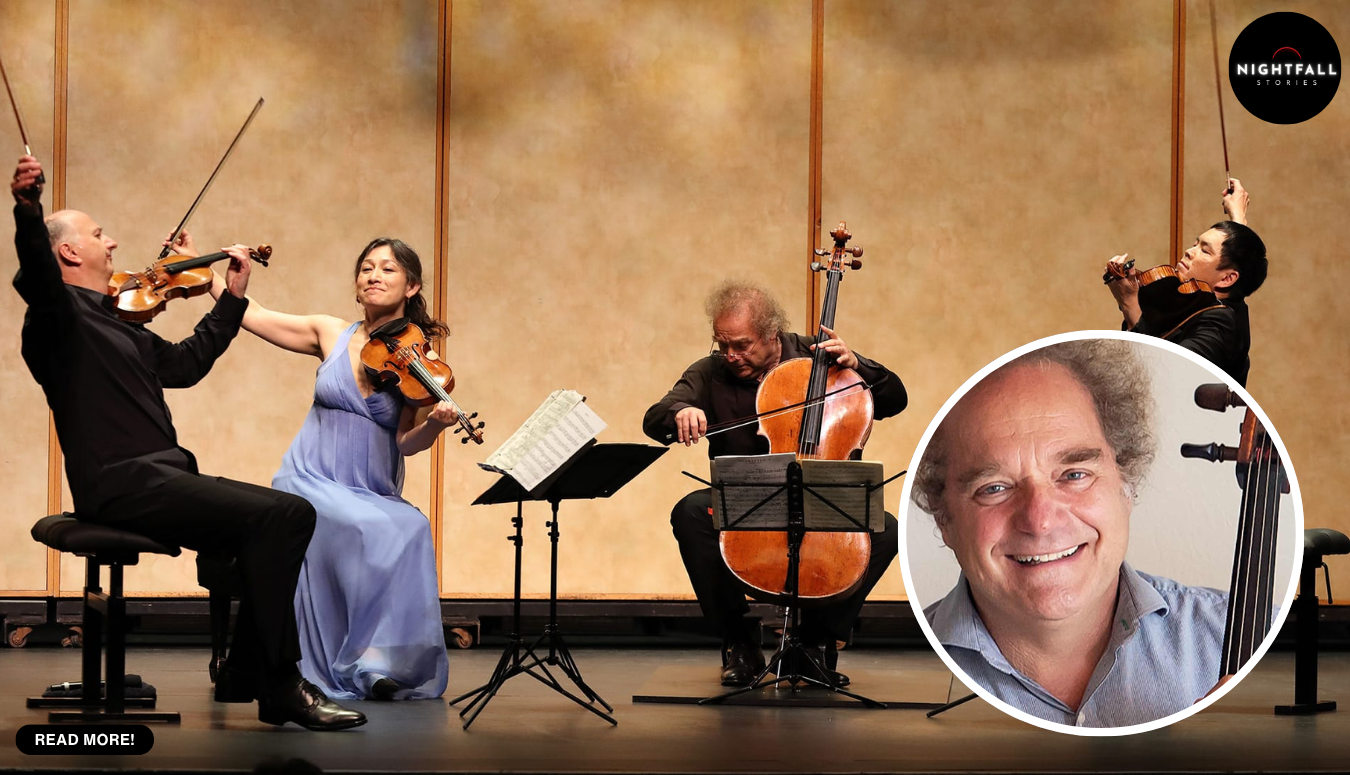
    On a Saturday evening at the end of June, in a theatre a few streets back from the ocean in Santa Barbara, a Hungarian cellist in his seventies played three Beethoven quartets and then stopped. The programme was billed plainly as his finale. It was the last time Andras Fejer would sit in the cello chair of the Takacs Quartet, a chair he had occupied without a break since 1975, and the last piece on the list was Beethoven’s Quartet in C sharp minor, Op. 131, which is the one the composer wrote when he could no longer hear any of it.

    Two months later the chair belonged to somebody else. The Romanian cellist Mihai Marica became a full member of the quartet on the first of September, and also joined the faculty at the University of Colorado Boulder, where the group has been the resident quartet since the middle of the 1980s. That is the whole event, and it is not a surprise. The retirement was made public by the quartet’s management and by CU Presents in the closing weeks of 2025, which means everyone involved had roughly nine months to get used to the idea. What happened this year was not an announcement. It was the handover.

    The number attached to it is 51 years, and it is worth pausing on, because it is not the sort of number that usually turns up in music. The Takacs Quartet was formed in 1975 by four students at the Franz Liszt Academy in Budapest: Gabor Takacs-Nagy on first violin, who gave the group its name, Karoly Schranz on second, Gabor Ormai on viola, and Fejer on cello. Counting from that year to the close of the 2025-26 season gives 51 seasons, which is how the quartet itself and Fejer himself have both described it. Every one of the other three chairs has changed hands since. His did not.

    Look at what that actually means season by season and the arithmetic starts to feel strange rather than impressive. Takacs-Nagy left in 1993 to conduct, and Edward Dusinberre took the first violin seat, where he still is. Ormai fell ill, stepped away in the mid-1990s and died shortly afterwards, and the viola chair passed to Roger Tapping, then about a decade later to Geraldine Walther, then to Richard O’Neill, who won a Grammy on the instrument in the year after he joined. Schranz, the second violinist, stayed until 2018, which is a long run by any standard, and Harumi Rhodes replaced him. Set those changes end to end and the cellist who founded the group has made music, as a full-time colleague, with seven different people in the other three seats, on top of the three he started with.

    It is worth remembering how quickly the early part of that ran. Two years after four students put the group together, the quartet won first prize and the critics’ prize at the international string quartet competition at Evian in France, which in the 1970s was one of the few doors through which a young ensemble from behind the Iron Curtain could reach a Western career. The North American debut followed in 1982. Dusinberre has described what that period looked like from the inside as four very young musicians living behind that border, working out how a quartet formed in Budapest could possibly build a life playing everywhere. Within about a decade they had moved their families across an ocean and settled into a university town in the Rocky Mountains, and the first of the original four was already on his way out.

    There is no other job quite like it. A string quartet is not a band with a leader and it is not an orchestra with a conductor to absorb the disagreements. It is four people who have to agree, in real time and in front of an audience, about matters as small as how long a note lasts and as large as what a piece is about, and who have to keep agreeing for decades in rehearsal rooms that are usually small and often hot. The quartet’s own first violinist has described the real work as the unglamorous business that happens offstage, in the rehearsal room, rather than anything that happens under the lights. When a seat changes, the negotiation starts again from the beginning, because the newcomer did not sit through the twenty years of argument that produced the current answer.

    The person who has to hold the line through all of that, in practice, tends to be the cellist. The cello carries the bass of a quartet, which means it sets the harmonic floor and, more often than people realise, the pulse. A quartet can survive a new violinist adjusting to its habits. It has a much harder time if the ground moves. Fejer was the ground for five decades, through three complete changes of personnel in every other part of the texture, and the tribute his colleagues wrote when the retirement was made public put its finger on exactly that: they thanked him for the strength and the integrity of his playing sustained across more than five decades, and then, in the same breath, for his friendship and his humour, which is a very quartet-like way of saying that the second thing is not separable from the first.

    Fejer’s own account of the 51 years is notably resistant to being made into a monument. Asked about the length of it in an interview earlier this year, he declined to treat the tenure as the interesting part and described the quartet instead as a wonderfully ever changing organism, something whose identity is renewed by whatever repertoire it takes on in a given season rather than by who is sitting in which chair. He traced his working method back to his coaching at the Liszt Academy, where the question put to the students was always what the composer actually wanted, an answer to be assembled out of other works, the history around them, and even the literature and painting of the period. And he described a change that took most of a career to arrive: when they were young, he said, the four of them assumed there was one correct solution to any musical problem, and decades of study taught them that there are several, as long as each one can be squared with what the composer seems to have asked for or can be made convincing on its own terms.

    That is a useful thing to know about him, because it explains how a person survives ten colleagues. A musician who believed in one right answer would have fought every arrival. A musician who believes there are several has something to talk about with each of them.

    His reason for stopping was, by his own telling, uncomplicated. After 51 years it felt like the right time, he said, and he described the working life he was leaving as a beautifully rewarding quality of life, spent endlessly on the most inspiring music with colleagues he liked. There is no crisis in that sentence, no injury, no falling out. He chose the season and then he chose the concert.

    The part of this that almost never gets written is the succession itself, and it is the part worth the most attention, because a quartet filling a chair is doing something no orchestra ever has to do. An orchestra audition is a competition, usually behind a screen, judged largely on playing. A quartet is choosing a colleague for what could be the next twenty years, in a job with no escape from each other, and the only meaningful test is what happens in a room when four people read something together. Dusinberre’s description of finding Marica was simply that they felt an instant musical connection from the first rehearsal, which sounds like the sort of thing people say politely until you consider that it is, in this line of work, the entire specification.

    Marica arrives with a background that rhymes with Fejer’s more closely than the map suggests. He was born in Romania and began the cello at seven in Cluj, a city with a long Hungarian history and a Hungarian name, Kolozsvar, that is still in daily use. He studied there with Gabriela Todor and then with Mihaly Guttman, in a teaching tradition that he has described as a blend of the Soviet and the Hungarian schools. So the cellist replacing a Liszt Academy graduate came up inside a version of the same pedagogy, one province over. He then went to Yale to study with Aldo Parisot, won the Irving M. Klein International Competition, came through the Chamber Music Society of Lincoln Center’s programme for young players, and spent about fifteen years building a chamber career out of New York before this call came. His reaction to the offer was not the practised humility of a press release. He said he could not believe his luck at being given it, and reached for the only comparison in his life that felt the same size, which was being invited to study at Yale.

    The handover was arranged with more care than a simple swap would have required. Before the season ended, Marica appeared with the quartet in Boulder in Schubert’s String Quintet in C major, the piece Schubert wrote for two cellos rather than the usual second viola, and one of the few works in the repertoire that puts an extra cellist on the stage as a matter of course. So the audience at the group’s last Boulder concert of the season watched both cellists at once, the one who had been there since 1975 and the one who would take the chair in September, sitting in the same texture, in a piece whose whole sound depends on two cellos holding the bottom of it together. As a way of managing a transition, it is hard to improve on. As an image, it does not need any help.

    There was one more piece of timing that nobody planned. The quartet was named the recipient of Chamber Music America’s Richard J. Bogomolny National Service Award, announced in late 2025 and formally presented in August of this year, which is to say in the last month of Fejer’s membership. The award is for service to the field rather than for a recording or a performance, and its arrival in that particular month is a coincidence that happens to be accurate. Half a century of a residency at one university, of teaching student quartets the offstage part of the job, is exactly the kind of work such a prize is meant to notice, and it is the kind of work that only exists if somebody stays.

    What Marica inherits is therefore not just a chair but a sound that has been continuous for fifty years in the one voice that anchors it, and the ordinary difficulty of his position is worth stating plainly rather than dressed up. Every listener who has followed this group has the old cello in their ear. The group’s recorded legacy, the Beethoven and the Bartok and the Haydn that made its reputation, is all built on the same instrument at the bottom. He is not being asked to imitate it, and if he tried he would be a worse colleague for it. He is being asked to be convincing enough that the quartet remains recognisably itself while sounding different, which is the job every one of the other seven arrivals also had, and which none of them had to do from the bass upward.

    What he is also inheriting is a workload. The Boulder residency is not a title. The quartet teaches there, and the part of the work its members single out is coaching student ensembles in precisely the unglamorous rehearsal-room skills that the concerts hide. On top of that the season Marica has walked into is a full one: a programme built around the music of Gabriela Lena Frank alongside Schubert, Brahms, Haydn and Carlos Simon, dates at Carnegie Hall and at Lincoln Center and at Wigmore Hall in London, and a North American tour with the pianist Jeremy Denk. A new cellist does not get a settling-in year. He gets a diary, and the diary was printed before he arrived.

    There is a version of this story that treats Fejer’s fifty-one years as a feat of endurance, and he has fairly clearly declined to tell it that way. His own framing, the ever changing organism, puts the emphasis somewhere less flattering to him and more true: the thing he stayed inside was not fixed, and staying was not the same as standing still. He played the Beethoven cycle with three different first violinists. He played the late quartets with three different violists. The continuity everyone is now praising was, from the inside, fifty-one years of adjusting.

    Which brings it back to a June evening in Santa Barbara, and to the running order. Op. 18 No. 2 first, from Beethoven’s twenties, written by a young man with everything ahead of him. Then the Harp, from the middle of his life. Then Op. 131, one of the last things he finished, seven movements that run into each other without a proper stop, written by a man who would never hear a note of it played. Whoever chose that programme was not being subtle, and did not need to be. Fejer sat down and played his way from the beginning of a composer’s life to the end of it, in the order it happened, with the colleagues who were left. Then he stood up, and in September somebody else tuned the C string.

  • Bronze nearly tripled and the churches stopped being built. So two brothers in Innsbruck changed everything except the one thing that makes the sound.

    Bronze nearly tripled and the churches stopped being built. So two brothers in Innsbruck changed everything except the one thing that makes the sound.

    The price of the metal went from about 8 euros a kilogram to about 23. In dollars, that is roughly $9.20 to roughly $26.50, for the single raw material a bell cannot be made without. Labour is up about 30 percent since 2020. And the customers who have bought bells for four centuries, which is to say churches being built, are not being built in anything like the numbers they were. That is the arithmetic sitting on the desk of a business in Innsbruck, Austria, that has been casting bells since 1599.

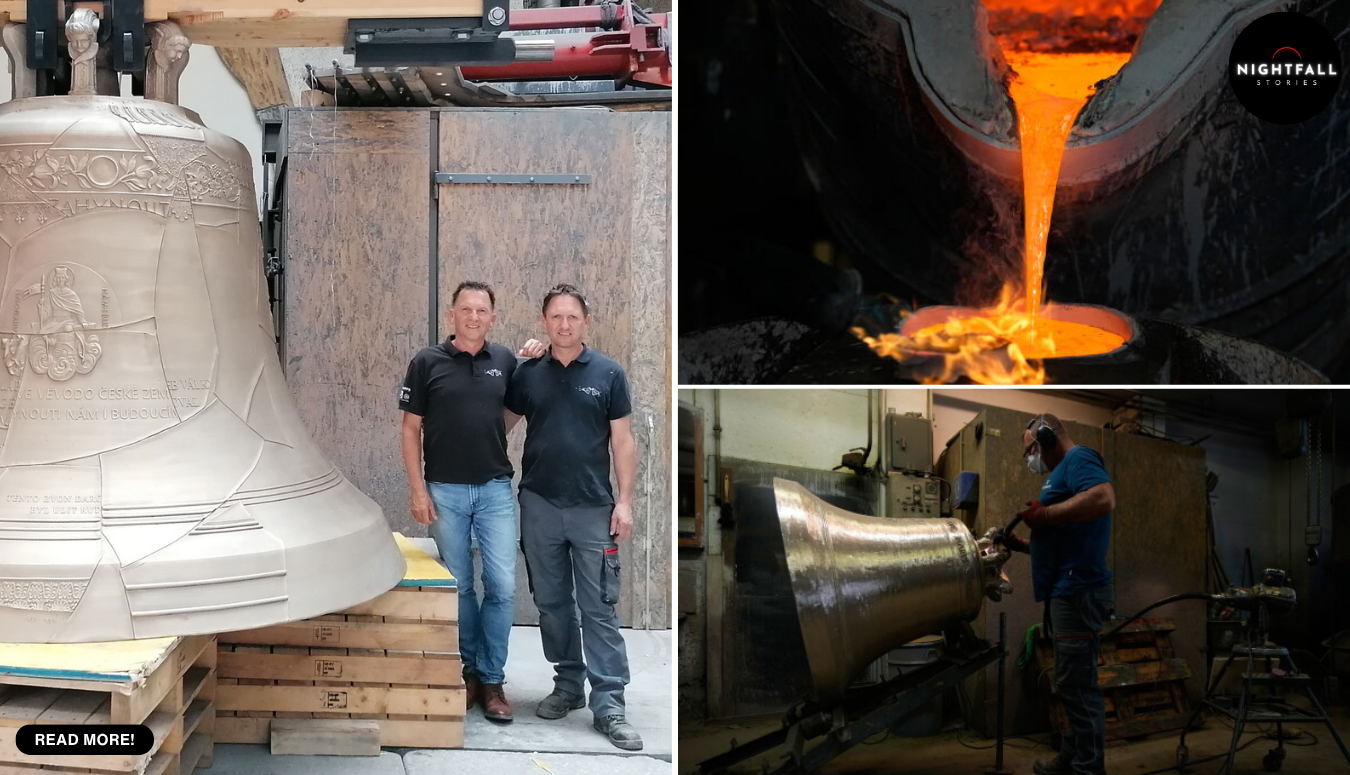
    The business is Grassmayr, and it is run by two brothers, Johannes and Peter. Johannes is the fourteenth generation of his family to do this. He has said that certain things there are just as they were 400 years ago, and also that they have innovated a great deal, and both halves of that are true at once in a way that turns out to be the entire story. What the brothers did with a 3D printer and a set of lasers is not a gadget story. It is what a family trade does when two different shocks arrive in the same decade and neither of them can be argued with.

    Start with the thing that has not changed, because otherwise none of the rest makes sense.

    A bell is a musical instrument. Not a metaphorically musical one, an actual one, and a peculiarly unforgiving one, because it is a single piece of cast metal that has to produce several pitches at once in a fixed relationship. Strike a good bell and you do not hear one note. You hear a hum well below the note you think you are hearing, the prime, a tierce a third above it, a fifth, a nominal an octave up, and a scatter of higher partials on top. Those intervals are what makes a bell sound like a bell rather than like a bucket. Get them wrong relative to each other and the bell is not flat, it is ugly, in a way that no amount of tuning the whole thing up or down will fix.

    And all of that is decided by shape. The wall of a bell is not an even thickness. It is a profile, thick at the rim and thinning as it rises, with the curve of it determining where each of those partials lands. That profile is the intellectual property of a foundry in the oldest sense, worked out over generations, and it is why bell founding survived as a family business at all: the knowledge of what curve gives what sound was not written down anywhere useful, it was held in a workshop and handed on.

    So for a large bell, designing and forming the mould can take up to six months before anything is poured. The full production cycle for a bell runs three to four months. The alloy is bell bronze, about 80 percent copper and 20 percent tin, a proportion that is high in tin by the standards of most bronze, because tin is what makes the metal ring rather than thud, and also what makes it brittle enough to crack if you get anything else wrong. A large bell goes into its mould under something in the order of 125 metric tons of pressure. There is no second attempt at a pour. You either have a bell or you have a very expensive quantity of scrap that has to be melted down and done again.

    It is worth knowing how a mould for a bell is actually built, because it explains why six months is not slow. The traditional method does not carve a bell-shaped hole. It builds the bell twice. First an inner core is formed, the shape of the inside of the bell. Over that, the founder builds a false bell, a full thickness replica in clay or loam, standing where the real metal will eventually be. Around the false bell an outer case is built, taking its inner surface from the replica’s outer surface. Then the false bell in the middle is broken out and removed, and what is left is a cavity between core and case that is precisely the shape and thickness of the bell that does not exist yet. Every inscription, every band of decoration, has to be worked onto the false bell in reverse thinking, because it will print into the case and appear on the finished metal. All of it has to dry evenly, because moisture left in a mould meets molten bronze and turns instantly into steam, and steam in a mould is how a pour goes wrong catastrophically.

    Now the part that explains why the technology mattered.

    Bells are tuned by taking metal away. Only away. Once the thing has cooled, the tuner measures the partials, works out which one is sharp, and machines metal off the inside of the wall at the precise height where that partial lives, which lowers it. You can flatten a note. You cannot sharpen one, because you cannot put bronze back. Every single cut is irreversible, on an object that took months and cannot be replaced, and each cut changes the others a little, so the order of operations is itself a skill.

    That subtractive reality is why finishing work, the cleaning and polishing and dressing of a cast bell, was historically such an enormous share of the job. Founding literature and the foundry’s own account put it at about 30 percent of the whole production cycle, and with modern tooling it now takes roughly a tenth of what it did, which puts it at something in the neighbourhood of 3 percent. One report describes the polishing time as falling by about 90 percent. Whichever way you frame it, a third of the work became a rounding error.

    So what did they actually bring in. Four things, and none of them touch the metal’s chemistry or the profile’s geometry. Digital scanning, which means an existing bell, including one that is 400 years old and up a tower, can be measured completely rather than approximately. Computer simulation, which means a proposed profile can be tested for what it will sound like before a mould is built, instead of after a pour. 3D printing, used for the pattern and mould work rather than for the bell, so the physical form that the sand is packed against can be produced directly from the design. And laser tools for the cleaning and cutting work where a man with an abrasive wheel used to spend weeks.

    Notice the line they drew. Everything they modernised is upstream or downstream of the casting. The prediction of the sound, yes. The removal of metal, yes. The alloy, the pour, the profile philosophy, no. The sound itself is still made the way it was made, and the parts of the process that determine the sound are the parts they left alone. That is the hard choice in this story and it is a genuinely difficult one to hold, because the commercial pressure on a small manufacturer is always to modernise the expensive bit, and the expensive bit is exactly the bit that is the product.

    There is a practical benefit here that is easy to miss, and it has nothing to do with speed. Simulation and scanning reduce the number of times you have to find out the hard way. In a trade where the test of the product is a several ton casting that cannot be undone and cannot be revised, every question you can answer on a screen instead of in metal is a question that does not cost you months and a furnace load of very expensive bronze. When the raw material triples in price, the value of not making a mistake goes up by exactly the same multiple. The technology and the economics are not two separate parts of this story. Each is the reason for the other.

    Then there is the money, and the money is the real reason any of this was necessary.

    Copper is a commodity, and it has spent the past few years being wanted by industries that did not previously want much of it. Electrification is hungry for copper. Grids, motors, batteries, data centres. Tin has its own tight supply story. A foundry buying bronze by the ton is competing for metal with sectors vastly larger than it, and it has no leverage whatsoever. Going from roughly $9.20 to roughly $26.50 a kilogram is not a line item moving. On a bell weighing several tons, it is the difference between a price a parish can raise and a price it cannot.

    And the price cannot be fixed in advance, which for a business that quotes a job and then spends up to six months on the mould is close to unmanageable. Johannes Grassmayr has put it about as bluntly as a manufacturer can: he cannot even say what a bell will cost in a year. Sit with that for a moment. You are being asked to quote today for an object you will deliver next year, made from a material whose price you cannot predict, for a customer who is usually a congregation raising money in small amounts. Either you quote high and lose work you would have enjoyed, or you quote fairly and absorb whatever the metal market decides to do to you in the meantime.

    Layer the second shock on top. Fewer churches are being built across Europe, so fewer new bells are needed, and the demand curve for the foundry’s original product has been bending down for decades without any prospect of bending back. There is no marketing answer to that. Nobody is going to build a church because a foundry in Innsbruck ran a good campaign.

    Which is how a business that made bells became, to a real extent, a business that saves them.

    The bells already hanging in Europe are a vast installed base, a great many of them very old, and a cracked or badly worn bell is not automatically scrap. It can be repaired. Grassmayr has taken on more than 300 defective bells from twelve European countries, which is an unusual and specialised line of work: you are dealing with objects that are often centuries old, sometimes carrying historical protection, cast by a foundry that no longer exists, to a profile nobody wrote down. This is where the digital scanning earns its place twice over, because to repair or replace a historic bell in a way that keeps the character of a peal, you first have to understand exactly what the old bell was doing acoustically, and you cannot do that by holding a tape measure up a bell tower.

    It is also a good fit with the foundry’s reach, which is genuinely large for a family firm. Grassmayr bells hang in more than 100 countries. Among the ones people point at: eight bells for Romania’s national cathedral, the largest of them upwards of 25 metric tons, a 15 ton bell for a monastery on Mount Tabor, a peace bell in the Tyrol that is the largest swinging bell in the Alpine countries, and a tubular bell for a hospital in Denmark that is rung every time a baby is born there. A company that can do those can credibly be asked to fix anything hanging anywhere.

    Here is where it would be easy to overclaim, so it is worth being straight about what did and did not happen. Nothing was saved in a dramatic sense. There was no last-minute reprieve. A very old family business looked at a material cost that nearly tripled and a shrinking market for its founding product, and responded by squeezing a third of the labour out of its process and shifting the centre of its work from making new bells to keeping old ones alive. That is not a triumph. It is competence, applied steadily, over a period long enough that the business was still standing at the end of it.

    And competence of that specific kind is rarer than triumph. Most trades that meet two structural shocks at once do not adapt. They hold their process sacred because the process is their identity, and then they close, and everybody writes fondly about them afterwards. The other failure mode is the opposite one: modernise everything, including the bit that was the actual product, and end up making something cheaper that nobody particularly wants. What the Grassmayr brothers worked out, and it required knowing their own craft well enough to identify which part of it was load-bearing, is exactly where the line runs. The profile and the pour are the trade. Everything else is just how you get there, and how you get there is allowed to change.

    The bell that comes out of that workshop this year will be tuned the same way a bell was tuned there in 1599, by someone taking metal off the inside of the wall and knowing they cannot put it back. It will just have got to that point rather faster, and the foundry doing it will still be open.

  • More than 1,300 reels were quietly rotting in the highlands. The woman who refused to let them go got one film back first.

    More than 1,300 reels were quietly rotting in the highlands. The woman who refused to let them go got one film back first.

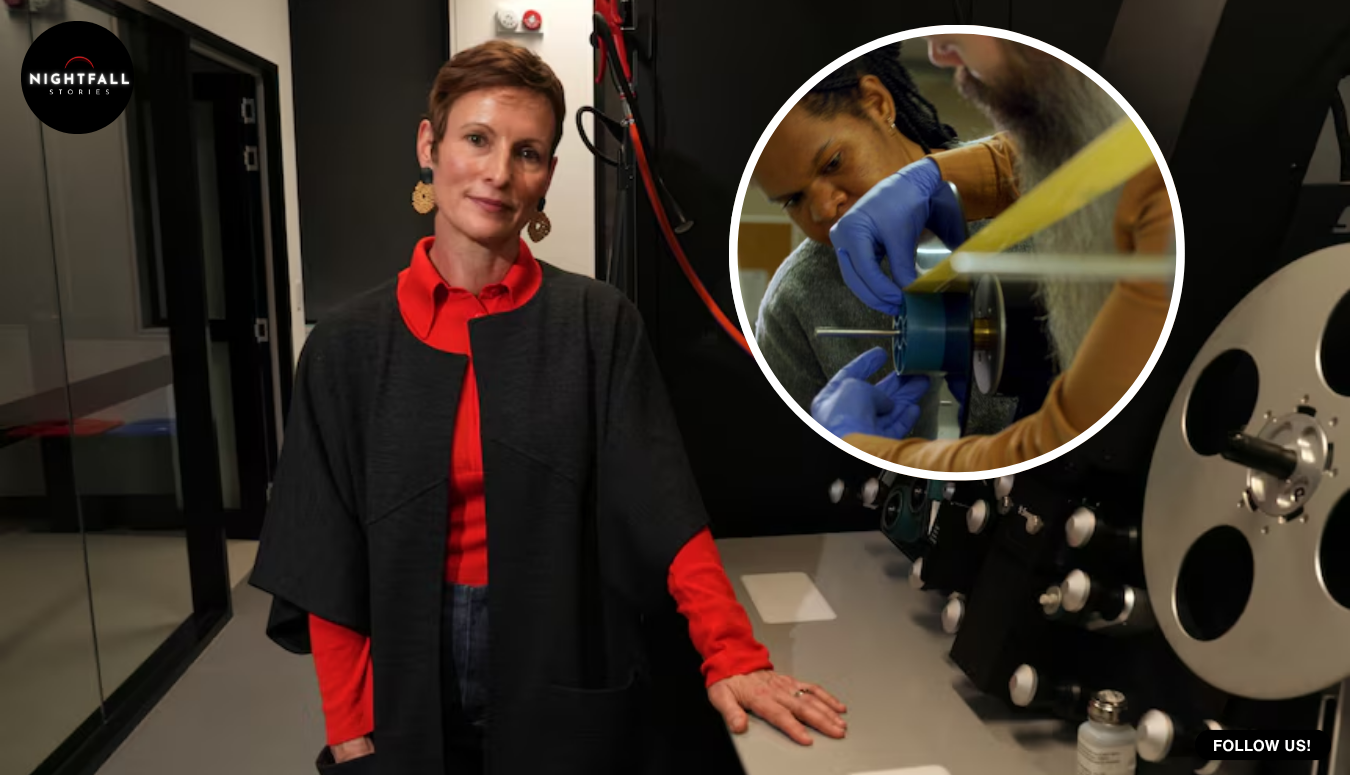
    In a building in Goroka, in the Eastern Highlands of Papua New Guinea, there are more than 1,300 film reels and video tapes that hold most of what a country has on film of itself. Weddings and funerals. Independence celebrations. Men talking to a camera about a copper mine. Village arguments about money. Children in classrooms that no longer exist. The films are there, the shelves are labelled, nobody has stolen them, and the collection has been slowly turning into something unwatchable anyway, because the air in that part of the world is warm and wet and getting warmer, and film does not care whether you meant well.

    The archivist who has been in the room with that problem is Zoe Baru, film archivist at Papua New Guinea’s National Film Institute. She has said plainly what the physical situation is: with a changing climate, the place is getting hotter. That is not an abstraction in an archive. Heat and humidity are the two things that turn a film collection into a smell.

    If you have never handled old film, the way it dies is worth understanding, because it explains why this story needed an actual plan rather than good intentions. Most of the twentieth century’s non-professional and documentary film stock is cellulose acetate, and acetate reacts with moisture. Water in the air breaks the plastic down, and one of the things the reaction produces is acetic acid, which is what gives vinegar its smell. Archivists call it vinegar syndrome for exactly that reason. Once it starts, it speeds itself up, because the acid it releases attacks the film around it. The reel shrinks. It buckles. It warps into a shape that no longer matches the spacing of the sprocket holes, so a projector or a scanner cannot pull it through evenly. It goes sticky, then brittle, then it fuses into a solid disc of plastic with a picture locked somewhere inside it that no machine can now read.

    Magnetic tape fails differently and just as completely. The picture on a tape is not printed into the plastic, it is a coating of magnetic particles stuck onto a base with a binder, and in humid heat the binder absorbs water and loses its grip. The coating starts shedding. Play the tape and it leaves powder on the heads, and each pass takes a little more of the image off. Tape also has a habit of printing itself through, so a bright image bleeds faintly onto the layer wound against it. Neither problem announces itself. A tape can look perfect in its case on the day it becomes unplayable.

    What makes all of this hard to fight in Goroka is not carelessness. It is physics and electricity. The standard answer to acetate decay is cold, dry, stable storage, and cold and dry are expensive everywhere. A climate-controlled vault is a machine that has to run continuously for decades, in a highland town, through every power interruption, in humidity that wants back in every time a door opens. Fail for a season and you have not lost a season, you have accelerated a chemical reaction that does not run backwards. There is no restoring a reel that has gone. You can only get to it before it does.

    So the National Film Institute had a collection that was legally intact, properly catalogued, and on a timer. What it did not have was the equipment to copy the films to digital, or staff trained on the specific machines that handle degraded film, because those machines cost a great deal and the training to use them is not something you pick up from a manual.

    The partnership that changed this ran for four years, and the shape of it is the reason this is worth writing about. The Institute worked with the National Film and Sound Archive of Australia, supported by the Australian government’s International Cultural Diplomacy and Arts Fund. The figure reported for the grant is about $200,000, given in Australian dollars, which is somewhere around $130,000 at recent rates. That is a real amount of money and a very small one next to 1,300 items. Jacqui Uhlmann, the Australian archive’s deputy chief executive, has been the counterpart on the other side of it.

    It would be easy, and wrong, to write this as a rescue. The films in Goroka were not found by outsiders. Many of them were made by the National Film Institute itself, which has been a working production house as well as a repository, and the collection is the Institute’s own output and its own acquisition. Baru is described in the reporting from Papua New Guinea as the project lead, not as a beneficiary of one. Her own framing of the collaboration is that it gave the Institute the practical support it needed to preserve and digitise its films, which is a careful sentence and an accurate one. The expertise that was missing was technical and specific. The ownership never moved.

    That distinction matters because of the thing that usually happens next in stories like this, and did not happen here.

    Before any of that, though, somebody had to choose. This is the part of every archive project that nobody puts in the press release, and it is the genuinely difficult part. You have 1,300 items and a budget that will handle a fraction of them. Selected films were flown to Australia for assessment, cleaning and digitisation. Selected. Which means that in a room in Goroka, a list was made, and everything not on the list stayed on the shelf in the heat for longer.

    There is no good way to make that list. Condition is one axis: the reels furthest gone are the ones that will be lost first, but they are also the ones that take the most work per minute of picture recovered, so saving the worst can mean saving the fewest. Uniqueness is another: if only one copy exists anywhere, it outranks something the Australian archive already holds a duplicate of. Then there is what the material actually is, which is where it stops being a technical decision. A feature film with a known director and an international festival history is easy to argue for. A reel of a village meeting in a language spoken by a few thousand people, shot by a crew who are no longer alive, with no title and a handwritten can label, is harder to argue for and may well be the more irreplaceable thing. Nobody outside the country is going to make that call correctly, which is the strongest practical argument for the archivist making it being local.

    It helps to know what the National Film Institute actually is, because the name suggests a vault and it was never only that. It has been a production house. It made films, in country, for people in country, at a time when almost nothing on a screen in Papua New Guinea had been made by anybody local. That is why the collection is what it is: not a set of things collected from elsewhere but a record produced from inside, which is a rarer kind of archive than it sounds and a much harder one to replace. When people talk about a national collection they usually mean a national purchase. This one is closer to a national output.

    Institute staff went to Canberra for training, in conservation, preservation, digitisation, archiving and digital access. Even now, the reporting from Papua New Guinea is candid that the training is unfinished, because handling 16mm and 35mm film specifically requires machines that are expensive and instruction that is deep, and that part of the job has not been fully transferred yet. That honesty is more useful than a declaration of success would be.

    And then there is the piece of engineering that separates this from a donation.

    Here is what normally happens. A collection in a hot country is at risk. A wealthier institution steps in, the films are shipped out, they are cleaned and scanned to a high standard, and they are preserved. Genuinely preserved. The files then live on servers in the wealthier country, because that is where the servers and the bandwidth and the staff are, and the country the films came from ends up with a promise, an email address and a request form. Its own history becomes something it has to ask permission to see. Nobody intends this. It is simply what happens when you solve the preservation problem and leave the access problem alone.

    So the Australian archive designed and built something specifically to stop it: a studio called Remote Onsite Digital Access, shortened to RODA, purpose-built and shipped to Goroka. The point of it is unglamorous and it is the whole point. It lets the National Film Institute reach and share its own digitised films from its own headquarters, in Papua New Guinea, without going through anyone. Not a viewing copy on request. Not a licence. The material, in the building, under the control of the institution that made most of it.

    That is a design decision about power, dressed up as a hardware decision, and it is the part of the story most coverage moves past quickly.

    It is worth saying too that digitising a film is not the same as finishing with it, and any archivist will tell you so before you ask. A scan is a file, and files need looking after in their own way. They have to be stored in more than one place, because a single drive is a single point of failure. They have to be checked, because data quietly corrupts. They have to be moved forward every so often onto whatever storage and whatever format the next decade uses, because a video file written for the machines of twenty years ago is already awkward to open today. Preservation is not an event, it is a standing commitment, and the institution holding the files has to be resourced to keep making it. Which is one more reason the files sitting in Goroka rather than somewhere else is the substantive point and not a courtesy.

    Which brings it to one film. In 1982, the National Film Institute produced Tukana: Husat i Asua, directed by Chris Owen with Albert Toro, who wrote it, co-directed it and played the lead. It came out of a consultation project with communities in what was then the North Solomons, and it dramatised what people there were actually worried about, which was money and change and what the two of them together do to obligation.

    The story is a young man who drops out of university and goes home to his village in Bougainville. His family wants him to marry a schoolteacher, a steady and sensible match. He goes to Panguna instead and takes work as a driver for the copper operation, and he takes up with a woman who has her own ambitions, an education she intends to finish and a clear idea of the life she wants. Nobody in it is a fool and nobody in it is a villain, and the pressure on him comes from both directions at once: the village wants what the village has always wanted, and the mine pays in cash. It does not end happily. It was the first feature from Papua New Guinea to travel internationally, and it played at festivals abroad in the years after.

    Consider what that film is, sitting on a shelf in Goroka in the 2020s. It is a portrait of the Bougainville copper economy made while that economy was running, before the conflict that came later, by the people living inside it. There is no substitute footage. You cannot reshoot 1982.

    It was digitally restored by the Australian archive, working with Spectrum Films, and then it was given back. Formally gifted to the National Film Institute to mark fifty years of Papua New Guinean independence, and screened in Port Moresby at the end of last year with a simultaneous screening in Canberra. A film the Institute made, returned to the Institute, watchable again in the country it is about, in the year that country turned fifty.

    That is a real ending and it is worth being precise about why it is a good one. Not because outsiders were generous, though money was spent and skill was shared. It is a good ending because of the direction everything ended up facing. The films stayed the Institute’s. The choosing was done by the archivist who knows the collection. The training went to Goroka. The studio went to Goroka. The restored feature went to Goroka. What was imported was capability, and capability is the only kind of help that does not need renewing.

    The rest of the collection is still on the shelves, and the air is still warm, and most of those 1,300 items have not been through a scanner yet. Anyone who tells you that problem is solved has not counted. But the difference between a collection waiting for someone to come and save it and a collection whose own archivist now has the machine, the training and the authority to work through it is not a small difference. It is the difference between a country being the subject of its films and being the keeper of them.

    Zoe Baru is still in that room. What changed is what is in the room with her.

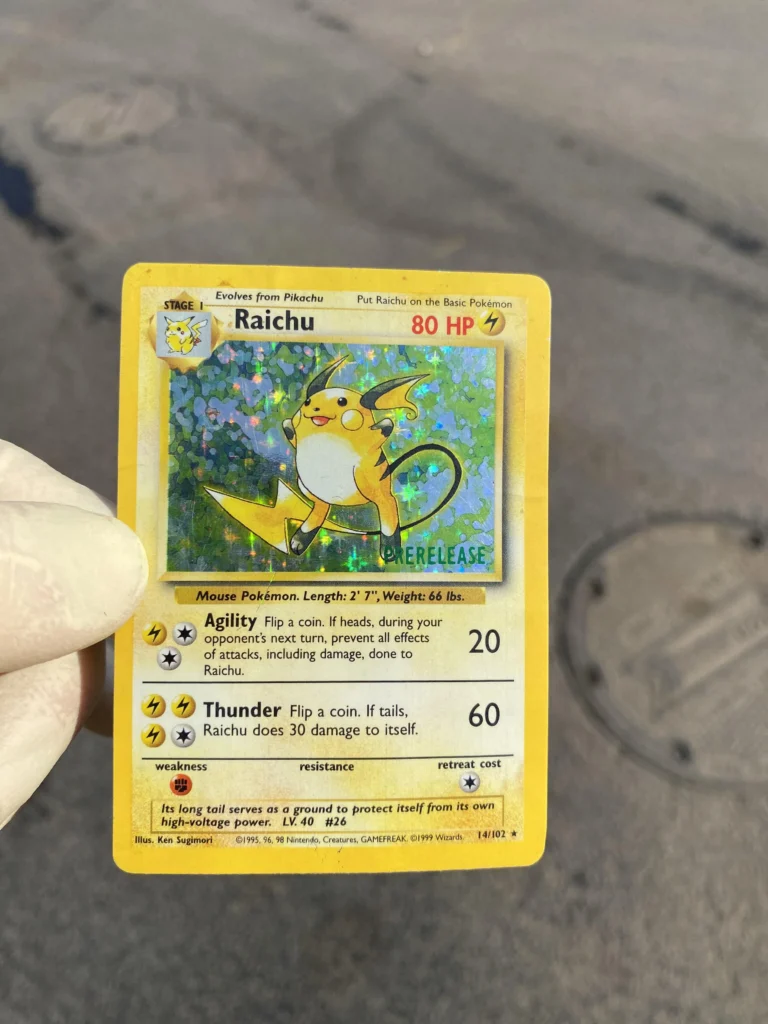
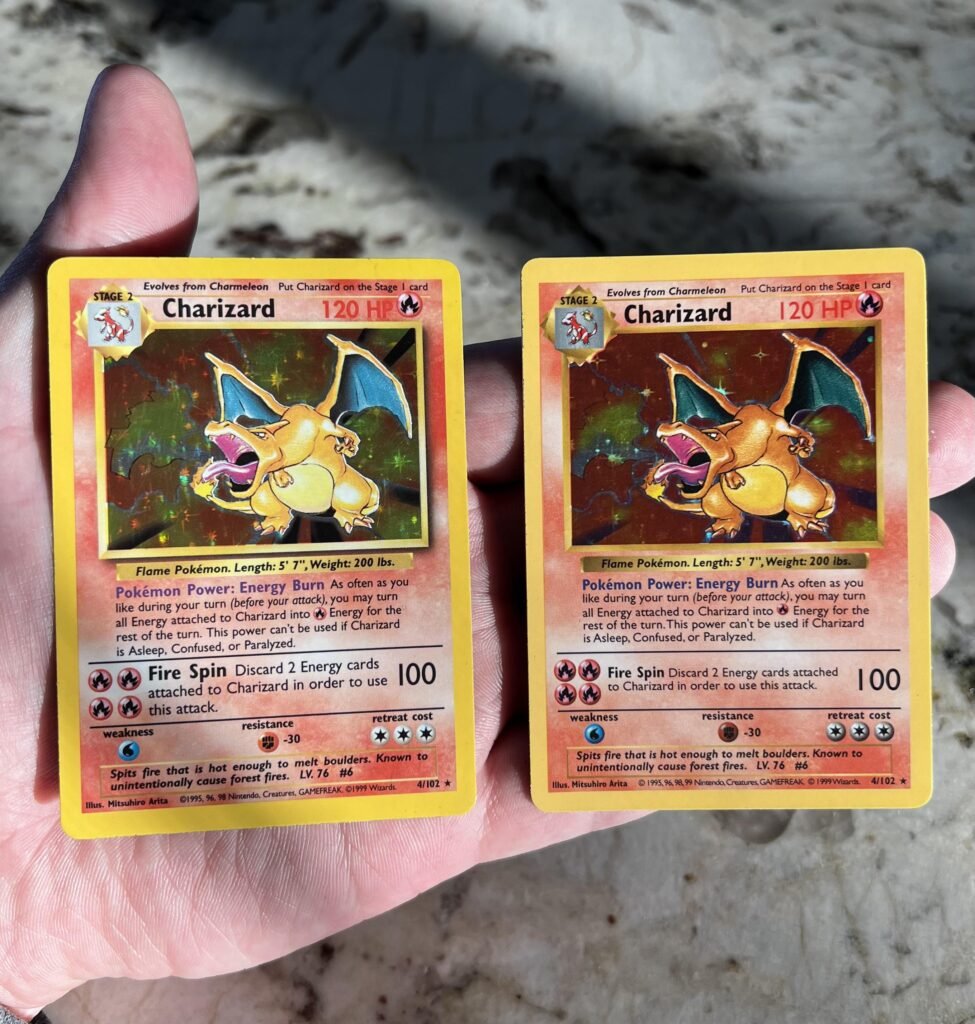
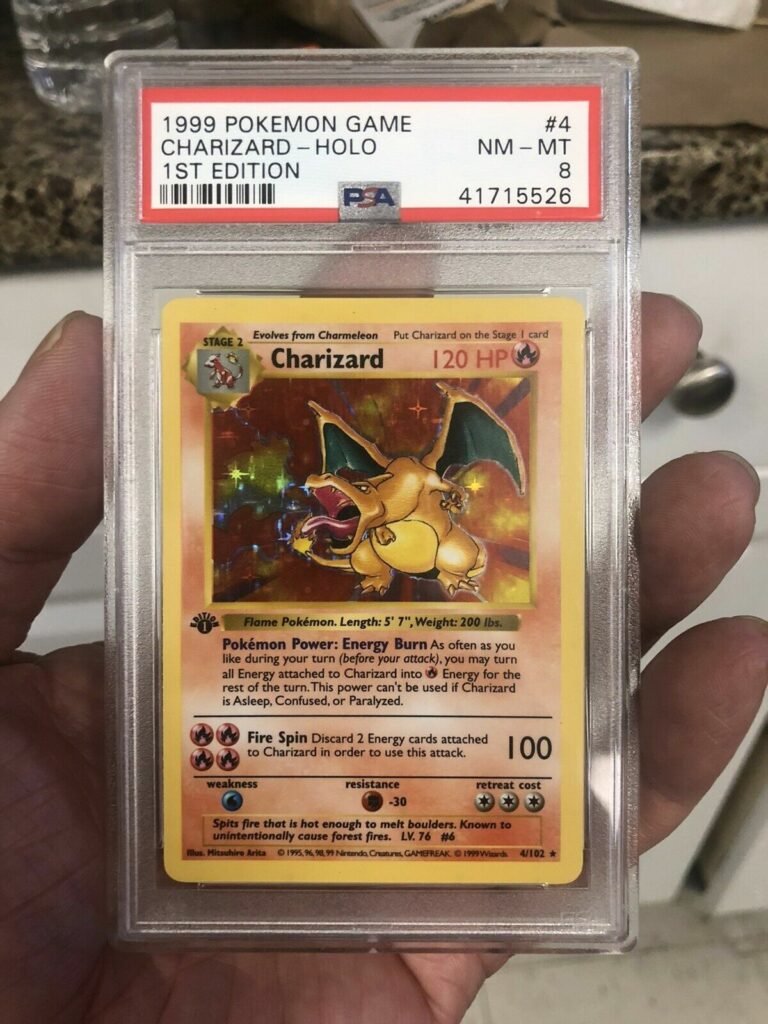
  • 10 old Pokémon cards that became extremely valuable

    10 old Pokémon cards that became extremely valuable

    Only a handful were given out as contest prizes in Japan, and it’s widely considered the most valuable Pokémon card ever sold.
  • Her mother signed the papers for her in 1976. Nobody expected the person who would undo it to be a relative who was not looking for anyone.

    Her mother signed the papers for her in 1976. Nobody expected the person who would undo it to be a relative who was not looking for anyone.

    Lillian Higgins was twenty years old when she gave birth in Louisiana, and she did not get to decide what happened next. Her mother decided. The baby was surrendered for adoption at birth, the paperwork closed behind her, and for the next forty nine years Higgins had no name for her and no legal route to one. By her own account, the reason her family gave for pushing the adoption through was that the baby was mixed race.

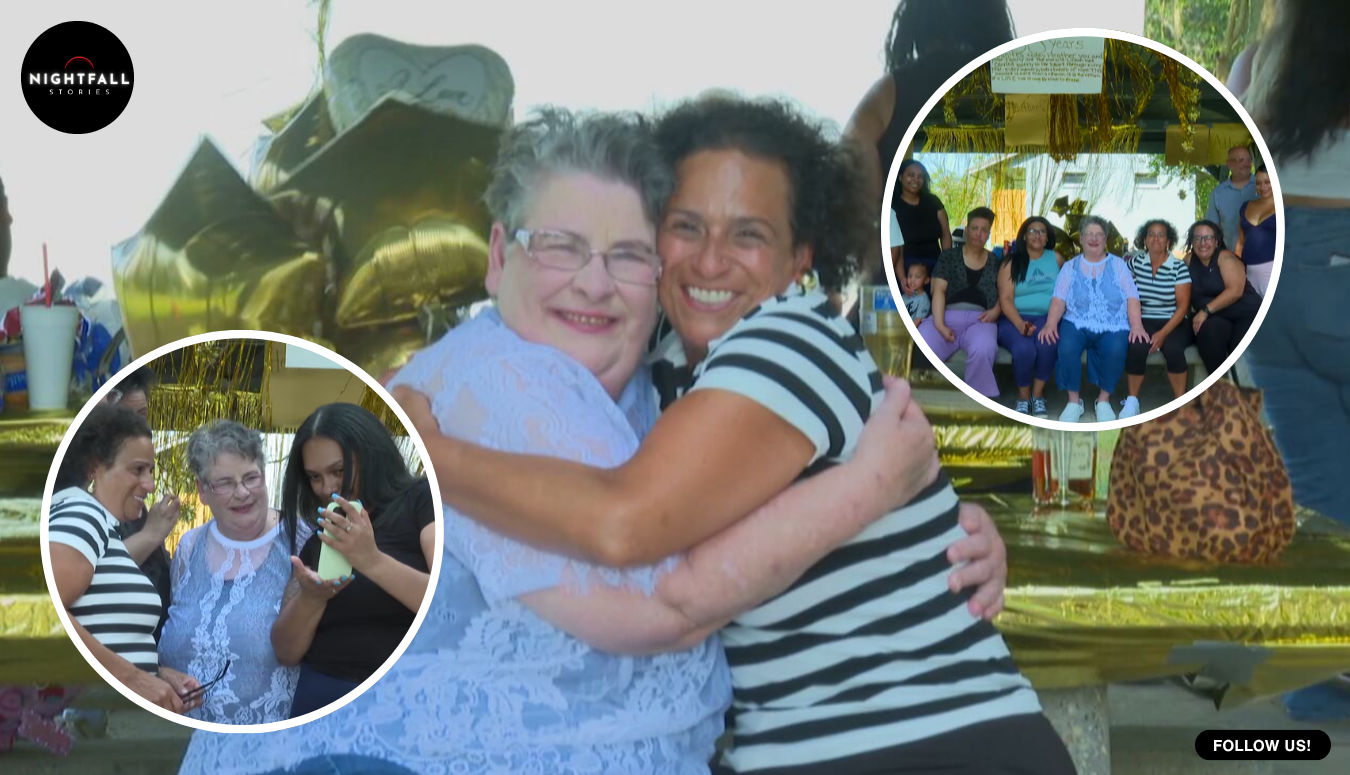
    She is about seventy now. Earlier this year a woman drove down from Oklahoma with her husband and children, parked outside Higgins’s home in Pineville, and walked up to the door. Her name is Heather Palmer. She is forty nine. She is the baby.

    What connected them was not a court, not a registry and not a private investigator. It was a saliva sample in a cardboard mailer, sent off by one of Higgins’s relatives who had no idea she was solving anything.

    That is the part of this story worth slowing down for, because the reunion itself took an afternoon and the machinery that kept it from happening took half a century to build and was dismantled almost by accident.

    Start with 1976, and with what a twenty year old in Higgins’s position could actually do. The honest answer is very little. In the United States of that period, an unmarried young woman who was pregnant and still living inside her family’s household was, in practice, subject to whatever her family arranged. She was old enough to sign her own name and young enough to have no money of her own and no standing to argue. The adoption system of the era did not treat that as a problem to be solved. It treated it as the normal way a case arrived.

    The prevailing professional theory at the time was what the literature later came to call the clean break. The idea was that everyone involved was best served by a complete and permanent severance: the child would be raised as though born to the adopting family, the birth mother would return to her life, resume it, and in the language social workers of the period actually used, go on. Grief was expected to be brief. Contact was assumed to be harmful. The record was sealed not as an accident of filing but as the point of the exercise.

    And the sealing was thorough. Across most American states, adoption records were closed by legislation passed in waves from the 1930s and 1940s onward. An adopted person received an amended birth certificate naming the adopting parents as the parents. The original certificate, the one with Higgins’s name on it, went into a sealed file. Getting it out required a court order, and a court order required what the statutes generally described as a compelling reason. In practice that meant a documented medical emergency or an inheritance dispute. Wanting to know who your mother was did not qualify. Wanting to know whether your daughter was alive did not qualify either.

    There were voluntary registries, and they are worth understanding because their design contains the whole problem. A registry works by mutual consent: the adopted person signs up, the birth parent signs up, and if both records are present the state confirms the match. The logic is respectful. The mathematics are brutal. Both sides have to be looking, at the same time, in the same place, with enough information to be recognised. A birth mother who did not know a registry existed, or who was never told her daughter had been adopted out of state, was invisible to it. Palmer had been registered on genealogy databases for years, by her own account two or three of them, and nothing came back.

    Louisiana did eventually change its rules, and the change is real. Under a 2022 state law that took effect that August, an adopted person aged twenty four or older who was born in Louisiana can request an uncertified copy of their original birth certificate directly from the state registrar. There is no birth parent veto and no judge to persuade. Birth parents can file a contact preference form saying how they would prefer to be approached, but filing one does not block anybody’s access. On paper, that reform is exactly the key that had been missing since the 1930s.

    It arrived forty six years after Higgins signed, and it is not what found her. Palmer grew up in Oklahoma and was adopted there, which puts a second state’s paperwork on top of the first, and in any case the thing that produced the match was not a record at all. It was biology, sold as a consumer product.

    Here is how that works, in plain language, because the mechanism explains why it beat the legal system so completely. A consumer DNA test of the common kind reads several hundred thousand positions scattered across your chromosomes. It then compares that pattern against every other customer in the company’s database and reports, for each person, roughly how much DNA you share and therefore how closely you are probably related. Full siblings share about half. A grandparent, an aunt or an uncle shares about a quarter. First cousins share something in the region of an eighth, and the figure keeps halving as the relationship gets more distant, with a widening margin of error as it goes.

    The crucial consequence is that you do not need the person you are looking for to be in the database. You need somebody in their family to be. A niece is enough. A cousin is enough. A second cousin who has never heard your name is often enough to narrow a search to a single household. Closed adoption law was written to control a document. It has no mechanism whatsoever for controlling what is in a stranger’s cheek cells.

    In this case the person who tipped it over was a relative of Higgins who sent a sample to 23andMe. Palmer’s account is that the hit came from a birth niece. Once the match surfaced, Higgins took a test of her own to confirm what the family arithmetic already implied. The confirmation was not the hard part. Finding one another after forty nine years was the hard part, and it was done by somebody who was not searching.

    There is a strange asymmetry buried in that. No legislature voted for it. No adoption agency consented to it. No court weighed anybody’s competing interest in privacy. A legal architecture built deliberately, over decades, to make this exact meeting impossible was rendered ineffective by millions of people independently deciding they were curious about their ancestry. Whatever you think of the outcome, and in this case the outcome is a mother and daughter sitting in the same room, it is a remarkable thing to have happened without anyone deciding it should.

    It is also more fragile than it looks. The company at the centre of this particular reunion filed for Chapter 11 bankruptcy protection in the United States in 2025. Its assets, including its genetic database, were sold for a reported 305 million dollars to a nonprofit research institute led by one of its own co-founders, a process that drew sustained scrutiny from privacy regulators and from customers who had never imagined their saliva sample as an asset in an insolvency. The reunion infrastructure that closed adoption law could not withstand is not a public service. It is a commercial product with shareholders, terms of service and a balance sheet, and families now rely on it for something no public body ever built.

    Which brings us to the forty nine years, and this is where the weight of the story actually sits. Not in the hug on the doorstep. In the two ordinary lives that ran in parallel and did not touch.

    Palmer was raised in Oklahoma in a large adoptive family. Reporting on her case puts the number of adoptive siblings at twelve, and includes a detail that is quietly devastating in its plainness: she was the only one of them without contact with any biological family. Everyone around her had a thread back to somewhere. She had a file she could not open.

    That is a specific kind of absence, and it is not mainly emotional. It is administrative. It is the medical history form at every new clinic, the one that asks about your mother’s heart and your father’s family and expects you to know. It is the school project about where your people came from. It is the mirror, and a face that resembles nobody you have ever met. Adopted adults describe this not as constant grief but as a low recurring hum, a thing that goes quiet for years and then arrives with the paperwork.

    On the other side of it, Higgins was not a woman who had gone on, whatever the theory of the era had predicted. Her own account of leaving the place where she gave birth is that she looked back at it and told herself that one day she would find her daughter, or her daughter would come looking for her. That is a promise made by somebody with no instrument for keeping it. She had no surname to search and no legal standing to ask for one. She knew the birthday. Reporting on the reunion gives Palmer’s birthday as the seventeenth of September, which means Higgins had, every year for forty nine years, a date she could count but not use.

    Think about what that does to a life at the practical level. Every form asking how many children you have has a wrong answer and a rude one. Every new relationship contains a disclosure you either make or carry. Any other children you raise grow up alongside a sibling whose existence is either a secret or a permanently open question. And the decision at the root of it was not even yours. Higgins did not choose this and then live with her choice, which is difficult enough. She lived for half a century with somebody else’s choice, made in a week, and with no mechanism to revisit it.

    The meeting, when it came, ran the way these meetings apparently often do. Palmer drove down with her own family. By her account the talking did not feel like an introduction at all, more like resuming with old family, people she already knew. Higgins, by her account, called it one of the best moments of her whole life, and the first thing she said to her daughter was that she was beautiful. They photographed the two of them together, and then the wider group, children and grandchildren included, because a reunion at this distance is never two people. It is two families discovering they are one.

    The honest thing to say next is the part that reunion coverage usually leaves out. A reunion is a beginning, not a repair.

    Nothing about that afternoon gives Higgins back the forty nine birthdays, and nothing about it gives Palmer a childhood in which she knew where her face came from. The people who meet in these rooms are not a mother and her baby. They are two adults, formed elsewhere, with different accents and different ideas about how often family should call, who happen to be related in the most fundamental way there is and to share not one single memory. Researchers who follow adoption reunions over time report a wide spread of outcomes. Some become the central relationship of both lives. Many settle into something warm and occasional. Some fade, not from anger but from the ordinary friction of two full schedules and a long drive.

    What they have said publicly is that they intend to keep visiting, in both directions, Oklahoma to Louisiana and Louisiana to Oklahoma. That is the realistic version of a happy ending and it is worth more than a grander one, because it is a thing people can actually do.

    It should be said plainly that almost everything known publicly about this reunion comes from a single local television station in Alexandria, Louisiana, whose report was then carried by sister stations across the country. That is one piece of original reporting, republished, rather than many outlets confirming each other. The core facts have been consistent everywhere they have appeared, and both women spoke on the record, but the record is thinner than the volume of coverage suggests.

    Still, one thing in it is unambiguous, and it is the right place to stop.

    In 1976 a decision about Lillian Higgins’s daughter was made by other people, in a system designed to be final, and she was given no say in it. At about seventy years old, she has reversed it. She has her daughter’s name, her phone number, her face, and her grandchildren. She did it in public, on camera, in her own front room, and she said out loud what her family would not let her say the first time.

    The paperwork was built to hold forever. It held for forty nine years, and then somebody’s cousin got curious about where their ancestors came from, and it did not hold at all.

  • A coroner decided exactly how long a heart monitor may stay silent in a delivery room. The number exists because of one baby, and her mother is still waiting on the rest.

    A coroner decided exactly how long a heart monitor may stay silent in a delivery room. The number exists because of one baby, and her mother is still waiting on the rest.

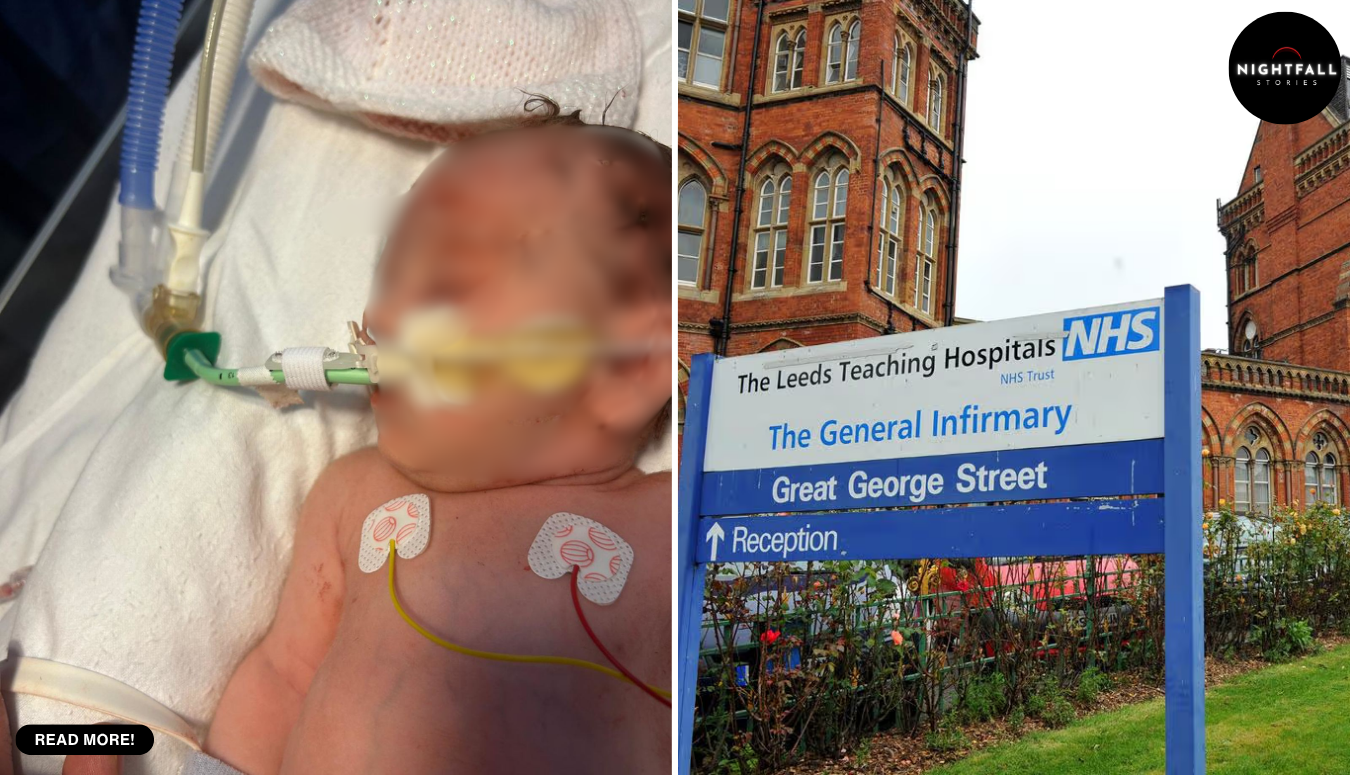
    There is now a rule in the maternity units of West Yorkshire that says three minutes. If a machine monitoring an unborn baby’s heartbeat loses its signal and staff cannot get it back, an alarm has to be raised within three minutes. Not soon. Not promptly. Not at the discretion of whoever is in the room. Three minutes, and then somebody more senior has to be told.

    Before that rule existed there was no number at all, and in late 2024, at Leeds General Infirmary, a baby’s heartbeat went unmonitored during labour for a period the coroner later put at between 33 and 42 minutes. Her name was Delilah-Jayde Arnold. She was delivered by emergency caesarean, she never recovered, and she died seven days later. She would now be nearly two years old.

    Her mother, Kelly-Marie Harris, spent two days at Wakefield Coroner’s Court last month listening to how that happened, holding a small white knitted heart. She came out of it with two things. One was the three minute rule, which is already in force across the region and did not exist when her daughter was born. The other was a finding she did not want, and the gap between those two things is what this story is actually about.

    Start with the machine, because almost nobody outside a maternity unit knows what it does or how it fails. During labour, staff watch an unborn baby’s heart rate continuously, because heart rate is the only usable window onto whether the baby is coping. Contractions squeeze the womb and briefly reduce the blood, and therefore the oxygen, reaching the baby. A healthy baby absorbs that and recovers between contractions. A baby in trouble shows it in the pattern: the rate dips after a contraction and takes too long to come back, or the baseline creeps up, or the small beat to beat variation that signals a well oxygenated nervous system flattens out. Those dips are called decelerations, and a midwife reading a trace is reading them the way a pilot reads an instrument.

    Usually the signal comes from a sensor strapped to the mother’s abdomen. It is non invasive and it is also fragile. Babies move, mothers move, fat and fluid get in the way, and the trace drops out. When a good reading matters enough, the alternative is a fetal scalp electrode, a small clip attached directly to the baby’s head through the cervix, which gives a far more reliable signal because it is not listening through anything.

    At Delilah’s birth, the inquest heard, staff tried repeatedly to attach a fetal electrode and could not get it to work. That detail matters for a reason that is not anybody’s fault in that room: the court also heard that an alternative type of electrode was not available, because of a national procurement problem. So the clinical picture was a labour where somebody had judged that a reliable trace was needed, the reliable method would not attach, and the other reliable method was not in the building.

    What follows is what the inquest called a failure to escalate. Loss of contact with a baby’s heartbeat is not itself an emergency. It happens constantly and most of the time it is resolved in seconds. The danger is that it looks identical, minute by minute, whether the baby is fine or the baby is dying. A silent monitor tells you nothing, and nothing is very easy to sit with when you are busy, because there is no alarming trace in front of you. That is the trap, and it is a human one rather than a mechanical one. The longer a gap runs, the more it feels like a technical nuisance and the less it feels like a clinical event.

    The inquest heard that midwives did raise concerns. One had noted worrying decelerations earlier and escalated; another asked for more senior support. But there was no rule that converted a certain number of minutes without a heartbeat into a mandatory alarm, and so the gap ran. On the first day of evidence the figure reported in court was around 45 minutes. In his conclusion the coroner narrowed it and put it as a range, between 33 and 42 minutes before delivery, with no monitoring of the fetal heart rate and no recognition that this was in itself a risk to the baby.

    Harris told the court she believes the emergency response was too slow, and that if an emergency bell had been pressed she might have reached theatre considerably sooner, which could have changed the outcome. A caesarean was eventually carried out that evening. Delilah was born in very poor condition, with a heart rate far below where it should have been, and she had seizures from the start. A pathologist concluded that her brain had not received enough oxygen around the time of birth. Her parents were told there was no brain activity. She lived a week.

    Oliver Longstaff, the Acting Senior Coroner for West Yorkshire Eastern, returned a narrative conclusion, which is worth explaining because the word narrative is doing real work. An inquest is not a trial. It does not decide blame or liability, and it cannot name anyone as responsible. It answers four questions: who died, and where, when and how. For that last one a coroner can use a short form conclusion, a single word or phrase from a fixed list, natural causes, accident, suicide, and so on. Or, when none of those captures it, the coroner can write a narrative, a short factual account of the sequence of events. That is what happened here. Longstaff found that the monitoring of Delilah’s heart rate had been deficient, and that this deficiency was directly causative of the condition she was born in and from which she died.

    He also said something that Harris had asked for and did not get. One of the short form options available to a coroner is neglect, and in the inquest context neglect has a narrow, demanding legal meaning. It is not the everyday sense of carelessness. It requires a gross failure to provide basic medical attention to someone in a dependent position, and a clear causal connection between that failure and the death. Gross means far beyond ordinary error. Basic means fundamental, not sophisticated. Courts have been deliberately strict about it, because a finding of neglect at an inquest carries a weight that ordinary substandard care does not.

    Longstaff declined to make that finding, and his reasoning was short. You cannot find a gross failure, he said, when something is being done, however badly it is being done. Staff were not absent. They were not ignoring the labour. They were trying, repeatedly, to attach an electrode, and failing, and not escalating. In law that is deficient care. It is not nothing being done at all.

    Harris said she was disappointed. That is the second injury families describe after an inquest, and it is worth taking seriously rather than treating as a technicality misunderstood. To a bereaved parent, a finding that care was deficient and directly caused a death, coupled with a refusal to call it neglect, can read as the system grading its own failure and awarding itself a pass. It is not that, legally. But the distinction is drawn on the shape of the failure rather than on its consequences, and consequences are all a parent has. Both things are true at once: the coroner applied the test correctly, and the test does not measure what Harris lost.

    Where she did get something is the part that will outlast the conclusion. After Delilah’s death, Leeds Teaching Hospitals NHS Trust reviewed what happened internally and externally, and changes followed. New guidance on fetal heart rate monitoring, including the three minute escalation requirement. Changes to equipment. Changes to training and staff education. And that guidance is not confined to one hospital. It is now used across West Yorkshire maternity services, which is a region of several million people and a substantial share of England’s births.

    The trust’s chief medical officer, Dr Elizabeth Garthwaite, said the trust’s thoughts remain with Harris and her family, offered its condolences, acknowledged the lasting grief, and said the trust is deeply sorry that failings in care were identified by those reviews and for the pain that has caused. That is an unusually direct acknowledgement from an English hospital trust, and it is worth recording as such, without pretending it settles anything.

    Then the coroner did the thing coroners do that has more reach than any conclusion. He issued what is formally called a report on action to prevent future deaths, known from the regulation that creates it as a Regulation 28 report. The power is simple and blunt: if an inquest reveals something that creates a risk of other deaths, the coroner must write to whoever has the power to fix it and say so. The recipient is legally obliged to respond in writing within fifty six days, either setting out what they will do or explaining why they will do nothing. Coroners have used it to change car park barriers, prison observation regimes, medicine labelling and motorway signage. It is one of the few mechanisms in English public life where a single death reliably generates a written answer from an institution.

    Longstaff sent his to the clinical director of the National Institute for Health and Care Excellence, the body that writes the clinical guidelines English maternity units are expected to follow. His question was essentially whether the West Yorkshire fix should be the national one: should there be a defined time limit, nationally, for escalating a loss of fetal heart rate monitoring.

    That referral is live. It has not been decided, and it should not be reported as though it has. NICE will consider it the way NICE considers things, which means looking at the evidence base for a specific number rather than at the merits of one case. The question it has to answer is harder than it sounds. A rule with a number in it is a genuinely different instrument from a rule without one, and that is the intellectual heart of this story.

    A guideline that says escalate promptly is unenforceable, unauditable and infinitely negotiable. Everyone agrees with it and nobody can be found to have breached it, because prompt is whatever it looked like at the time to someone under pressure. A guideline that says three minutes is a different object entirely. It can be taught in a sentence. It can be built into a machine’s alarm. It can be counted on a clock by the most junior person in the room, which means it transfers authority downward: a student midwife does not need to make a clinical judgement or win an argument, she needs to look at a watch and say three minutes, we escalate. Afterwards it can be audited from the records, and it gives anyone reviewing a case a fixed line rather than a debate about reasonableness.

    The cost of numbers is that they are arbitrary at the edges and they generate false alarms. Three minutes will sometimes summon a senior clinician for a signal that returns at three minutes and ten seconds, and in a busy unit that is a real cost. Every safety rule with a number in it buys clarity by accepting some waste. The argument for doing it here is that the failure mode being guarded against is silence, and silence is the one thing human attention is worst at noticing.

    None of this is happening in a vacuum. English maternity care has been the subject of a long run of published investigations, at Shrewsbury and Telford, at East Kent, at Nottingham, and in a national review, and the recurring findings across them are depressingly consistent: heart rate traces misread or not read, concerns not escalated, and a reluctance to interrupt the expected course of a labour. The Shrewsbury and Telford review concluded that more than two hundred babies might have survived with better care. Against that background, a single inquest producing a concrete, countable, regionally adopted rule is a small thing that actually bites, which is more than most of the reports can claim.

    Harris has said she hopes the national guidance changes so that other families do not go through this. That is the whole of her position, and it is a narrow ask from someone entitled to a much larger one.

    So here is where it stands. A rule that did not exist now exists, in a region with millions of people in it, and it exists because a woman sat through two days of evidence about the worst thing that has ever happened to her rather than letting the file close. The coroner found the care deficient and stopped short of neglect, and she has to live with that wording. The question of whether three minutes becomes the number for the whole country is sitting on a desk at NICE, waiting for a written answer.

    She changed the rule for one region. She is waiting to find out whether she changed it for everyone.

  • Her hospitals float, and the land they serve keeps disappearing. Asia’s biggest prize has just caught up with her.

    Her hospitals float, and the land they serve keeps disappearing. Asia’s biggest prize has just caught up with her.

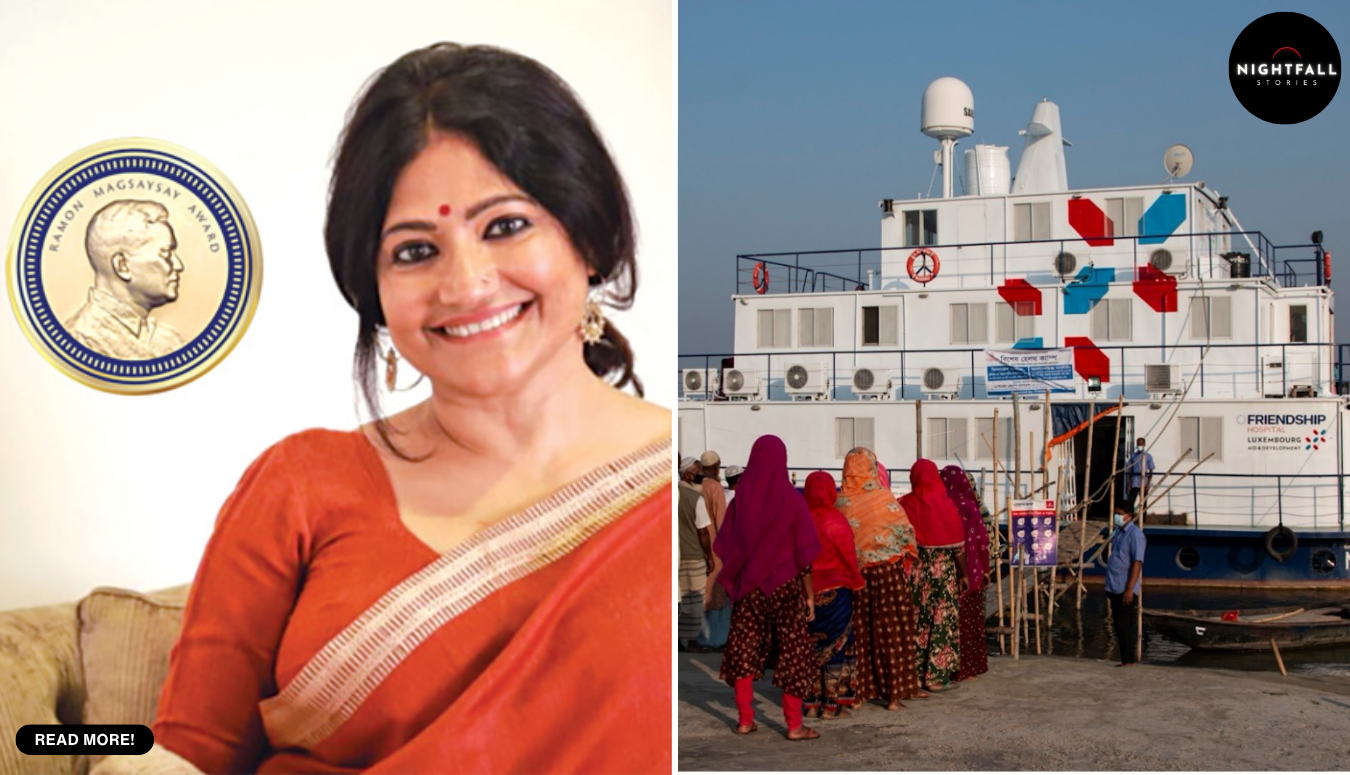
    In 2002 a woman in Dhaka took a retired river barge that a French sailor had brought halfway around the world and had it rebuilt as a hospital. Not a clinic with a few beds. A hospital, with an operating theatre inside a steel hull, so that surgeons could reach people who live on land that is not on any map because it will not be there next year. Twenty four years later there are seven of those ships, two hospitals built on solid ground, and a staff of more than seven and a half thousand. Late last month, the Ramon Magsaysay Award Foundation in Manila named Runa Khan as one of its 2026 awardees, which is the closest thing Asia has to a Nobel for public service, and the citation spent most of its words on something other than the boats.

    It spent them on where she came from.

    To understand why that matters, and why a fleet of floating operating theatres is not an eccentric idea but the only sane one, you have to understand a char. In the north of Bangladesh the Brahmaputra arrives out of the Himalaya carrying an enormous load of silt, changes its name to the Jamuna, and then spends the rest of its journey dropping that silt in the middle of itself. The result is islands. Not islands in the sense of a rock with a lighthouse on it, but low banks of sand and clay that rise out of the braided channels, hold for a few years or a few decades, and then go. Sometimes the river takes one in a season. Sometimes it takes half of one and lays down a new one a kilometre downstream. These are the chars, and hundreds of thousands of people live on them.

    They live there because the land is free and the soil is astonishingly fertile, and because the alternative is a city slum. They grow chillies and groundnuts and maize in sand that would embarrass a European farmer. They keep cattle. They build houses designed to be taken apart in a day, because a house you cannot dismantle is a house you lose. And then the water rises, or the bank starts to crumble, and a family loads the roof and the posts and the cooking pots onto a boat and starts again somewhere else that also will not last.

    Now think about what that does to a person’s relationship with a state. Almost everything a government gives a citizen is attached to a place. A school is at an address. A clinic is at an address. A land title, a voter roll, a vaccination register, a ration card, a birth certificate, all of it assumes that where you were yesterday is where you will be tomorrow. When the ground itself is temporary, the paperwork never catches up. People who have lived their whole lives inside a country can end up functionally uncounted in it, not through anyone’s malice but because the filing system was never built for a moving target. The Magsaysay citation reached for a single word to describe what Friendship changed about that, and the word was recognition.

    Khan’s own starting point was as far from a char as it is possible to get while staying in the same country. She was born in 1958 into a family with deep landed roots, descended on her father’s side from Bengal’s zamindars, the old landholding class, with a maternal line that reaches back to a sixteenth century dynasty. By her own account the house she grew up in was full of visitors who argued about ideas, and her father encouraged her to listen to all of them. She studied geography and humanities, taught small children from the late 1970s, and in her thirties and forties ran a string of small businesses that each had a social edge to them, a boutique set up partly to employ people who struggled to find work elsewhere, a spell in the family printing business, a security company, a venture running trips on traditional wooden boats.

    That last one is the hinge. Boats were already in her life when a French sailor and aviator called Yves Marre turned up having sailed a decommissioned river barge from France to Bangladesh with the intention of donating it for medical use. The vessel was there. The question was what to do with it. Khan has said she took the idea of converting it into a floating hospital to existing organisations and was told it would not work. So she started her own, and in 2002 the first ship, the Lifebuoy Friendship Hospital, went into service on the Jamuna, backed by a corporate sponsor.

    Converting a cargo barge into a surgical facility is a genuinely interesting engineering problem, and it is not just a matter of screwing beds to the deck. A barge is a flat box built to carry weight, which is exactly what you want, because it draws very little water and can sit close to a sandbank where anything with a deep keel would ground. But an operating theatre needs things a cargo hold does not have. It needs a sealed, cleanable space with controlled air. It needs power that does not flicker, which means generators and the fuel to run them, and increasingly solar. It needs clean water and a way to deal with waste, on a river that people drink from. It needs sterilisation, refrigeration for drugs and blood, oxygen, lighting bright enough to operate under, and a floor that can be washed down. It needs to hold all of that while remaining stable enough that a surgeon is not compensating for a swell. And it needs to be able to move, anchor, and become a functioning hospital again within a day.

    The medicine they do on those decks is not exotic. It is the backlog of things that are completely fixable and completely life altering if nobody ever fixes them. Cataracts, which is to say blindness that can be reversed in an afternoon. Cleft lip, which is to say a child who can eat and be looked at without flinching. Obstetric fistula, an injury from obstructed labour that can quietly end a woman’s entire social life. Hernias. Tumours. The unglamorous middle of surgery, delivered to people who would otherwise need a day of travel and a month of wages to reach a district hospital.

    The ships alone would not be enough, and the Foundation’s account of the model makes clear that they were never meant to be. Beneath the hospitals sit mobile clinics that run out into the villages, and beneath those sit Community Medic Aides, local people, mostly women, trained to handle the simple things immediately, spot the serious things early, and get someone onto a boat when it matters. That is the part that does the quiet work. A hospital ship that visits is a periodic event. A trained neighbour who lives two houses away is permanent, or as permanent as anything is on a char.

    Here the honest caveats have to be stated, because the numbers attached to all this come from one place. The Ramon Magsaysay Award Foundation’s awardee record lists seven hospital ships, two land based hospitals, 550 mobile clinics and 700 trained Community Medic Aides. It credits Friendship with putting more than 205,000 people into work through 137 economic development hubs, reaching around 30,000 students through movable schools, training more than 10,000 volunteers for rescue and relief, and planting more than 200 hectares of mangrove. It records the staff going from twenty eight people, twenty four of them medical and four in a head office, to more than 7,500 today. Those figures were supplied to the Foundation by Friendship. The Foundation is a serious institution with a serious selection process, and the award has a sixty eight year record behind it, but a citation is not an audit. Read those numbers as what the organisation says about itself, verified to the standard a prize committee applies rather than the standard a regulator would.

    One figure in particular should carry a label. The Foundation’s record states that students in Friendship’s schools average 90.05 percent in national examinations. A number precise to two decimal places invites a confidence the source does not support on its own, and it belongs to Friendship, reported by the Foundation, not to any independent examination body that has published a comparison. It may well be right. It is not independently established.

    The schools deserve attention anyway, because of the adjective. They are described as movable, and on a char that is not a marketing word, it is a design specification. A school building on land that might be in the river next year is either temporary or it is a waste. So the structures are prefabricated, made to be taken down, carried and put up again, which means a community that relocates does not automatically lose a year of its children’s education. The same logic runs through the rest of it. Solar villages, because a grid needs poles and poles need permanence. Prefabricated shelter for people the organisation describes as climate migrants, which on the chars is not a projection about the future but a description of what a family has already done two or three times. Mangrove planting on the coast, where the threat is salt and cyclones rather than shifting silt, because a belt of trees is a sea wall that repairs itself.

    Khan has not been unnoticed along the way, which is part of why the piece you are reading is about twenty four years rather than about one announcement. She was made an Ashoka fellow in the mid 1990s, before Friendship existed. She was a Rolex laureate in 2006, took a development prize for women’s contribution in 2008, and a social entrepreneurship award in 2012. A hospital Friendship built on the coast, designed by the Bangladeshi architect Kashef Chowdhury, won the Royal Institute of British Architects’ international prize for the best new building in the world, which is not a category that usually goes to a low cost facility in a cyclone zone. Last year she was recognised in the climate category of the Earthshot Prize. The Magsaysay is the biggest of them in Asian terms, and it is the reason this story is being told now, but it is a peg, not an event. Nothing changed on the chars in August.

    What the citation added was an argument rather than a statistic. The trustees wrote about her empathy for the poorest people in her country, and about courage and tenacity in building the organisation, and then they made a point about class. In her hands, they said, privilege became a responsibility rather than an entitlement, and the family legacy she inherited was treated as something to share rather than something to defend. That is an unusually pointed thing for an award committee to put in writing, and it is the most interesting sentence in the whole record. It is also a sentence that only makes sense if you know both ends of the story, the zamindar descent and the sandbank.

    Accepting the award, Khan turned the credit around, saying it belonged to the people who had let the organisation walk alongside them for twenty five years. It is the sort of line that could be polite noise, except that the model she built is unusually literal about it. The Community Medic Aides are from the communities. Most of the seven and a half thousand staff are from the communities. The economic hubs exist so that the money stays there. An organisation that flew in doctors and flew out again would be a much simpler thing to run, and it would leave nothing behind when the boat left.

    She is now the fourteenth Bangladeshi to receive the award, and she will be in Manila in November for the ceremony at the Metropolitan Theater, alongside the Singaporean diplomat and scholar Tommy Koh and the Myanmar human rights advocate Bo Kyi. That is where the formal part of this ends, with a citation read out in a theatre eleven hundred miles from the river.

    The better ending is somewhere else, and it is the thing the citation was actually pointing at. For a long time the people of the chars were a rounding error in their own country, not because anyone decided they should be but because the administrative world runs on fixed addresses and theirs kept washing away. What a hospital ship does, beyond the cataracts and the hernias, is create a record. Someone arrives, is examined, is treated, is written down. A child in a movable school sits a national exam under her own name. A woman trained as a medic aide has a job with a title. None of that stops the river. The river will keep taking land, and the families on it will keep loading their roofs onto boats, and that is not a problem seven ships can solve.

    But being seen is not a small thing when the alternative is being uncounted, and it is the one part of this that does not float away. Twenty four years ago a woman with an inherited name and a borrowed barge decided that people without a permanent address were still people with one. Asia’s biggest prize has now said so out loud. The river, characteristically, has not commented.

  • A new DNA method identified a 9/11 victim for the first time in twenty-five years. The city announced it without her name.

    A new DNA method identified a 9/11 victim for the first time in twenty-five years. The city announced it without her name.

    The announcement came out of New York’s medical examiner’s office in late August, and the strangest thing about it was what was missing. A victim of the World Trade Center attacks had been identified. She was an adult woman. Her family had been told. And her name was not in the release, because the family asked for it to be kept out, and the city did as they asked.

    It was the first identification from that day ever made using a technique called forensic investigative genetic genealogy, and it happened because of a problem that had nothing to do with chemistry.

    Mark Desire has been working on these identifications since the morning of the attacks themselves. He is now the director of forensic biology at the city’s Office of the Chief Medical Examiner, and by his own account he is the only person left from the original team. Twenty-five years is a long time to stay on one case. It is a much longer time when the case is the largest forensic identification effort ever attempted in the United States and the work consists, in large part, of going back over the same material you have already gone back over.

    To understand why this particular identification took a quarter of a century, you have to understand what the standard method needs, and what it cannot do without.

    Ordinary DNA identification is a matching exercise. You take a profile from recovered remains, and you compare it against a reference sample given by a relative. A parent, a child, a sibling. If the two are related, the profiles line up in a predictable way, and you have your answer. It is reliable, it is well understood, and it has done almost all of the work in this case for twenty-five years.

    It also has a hard floor. If no relative ever gave a sample, there is nothing on the other side of the comparison. And that happens more often than people assume. Some families were never contacted, or moved, or could not be traced. Some declined. Some had nobody close enough left to ask, because the victim had no surviving parents, no children and no siblings, and cousins alone are often too distant for the standard approach to resolve. In those cases the laboratory could hold a perfectly good DNA profile for years and still have no name to attach to it, not because the science failed but because there was no second half of the equation.

    Forensic investigative genetic genealogy attacks the problem from the other end. Instead of asking whether a profile matches a specific relative who volunteered, it asks whether the profile shows distant relatedness to anybody in large public genealogy databases, the kind people upload their consumer ancestry results to. A distant match is not an identification. It is a starting point. From there, genealogists build family trees outward and backward, looking for a branch that leads to somebody who was in Lower Manhattan that morning and never came home. That gives investigators a lead, a name to test. The laboratory then has to confirm it with DNA or other forensic evidence before anybody is told anything.

    In this case that work was done with the New York Police Department’s Investigative Genetic Genealogy Squad, with the medical examiner’s office doing the confirmation. The method is not new in itself. It has been used in criminal cases for years. What was new was applying it to remains from the World Trade Center, and the city’s chief medical examiner, Dr Jason Graham, described it as a promising addition to the office’s toolkit and as a way of generating leads that otherwise might not have been possible. Mayor Zohran Mamdani framed the announcement as what happens when new technology meets a commitment the city has not put down.

    Now the arithmetic, and one part of it does not add up, so it is being given here exactly as the two sources give it.

    The Mayor’s Office and the medical examiner’s office, in their announcement in late August, called this woman the 1,654th victim identified since 2001. In the same release they gave the total who died at the World Trade Center in New York as 2,753, and said 1,099 victims, about 40 percent, remain unidentified. Those three numbers are internally consistent with each other.

    A little over two weeks later, in a profile of Desire published by amNewYork, the figure given was 1,651 victims identified, described as about 60 percent of the 2,753. Eight days separate the two publications and the numbers move in the wrong direction. A count like this can shift for real reasons, including remains being reassigned between previously identified people, but no reconciliation has been published, so neither figure is being treated here as the settled one. The Mayor’s Office release says 1,654. amNewYork says 1,651. Both are on the record and they do not agree.

    What both agree on is the shape of what is left. Roughly 22,000 individual pieces of human remains were recovered from the site. Of those, 14,968, about 68 percent, have been linked to a specific person. Around 40 percent of the people who died have never been identified at all. And before this identification, the office had not announced a new one for close to twelve months.

    That last number is the one that explains why a new method mattered so much. The standard approach had not stopped working. It had simply run out of the cases it was capable of solving.

    The gap between those two sets of figures is worth pausing on, because it is the whole problem in miniature. Around 22,000 pieces of remains were recovered and about 14,968 of them have a name attached. That leaves something in the order of seven thousand pieces of recovered human material that the laboratory holds and cannot place. The material is there. The identity is not. In some cases that is because no usable DNA has yet come out of the sample. In others a perfectly readable profile exists and there is simply nobody to compare it to, which is the exact hole this new method was brought in to fill.

    And there is a harder truth sitting beside all of it, which is that for some of the people who died, no identifiable remains were recovered at all. That is not a failure of the laboratory. It is a fact about what happened to two buildings of that size, and it means the count will never reach 2,753 no matter how good the chemistry gets. Everyone working on this knows that, including the families, and it shapes how the office talks about what it is doing. Nobody in that building promises anyone an answer.

    Desire’s laboratory has spent much of the last twenty-five years doing something that sounds repetitive and is, in fact, the entire reason the count has kept creeping upward. The same material gets tested again. And again. Every time extraction chemistry improved, every time a new method of pulling DNA out of badly degraded samples came along, the laboratory went back to samples that had already refused to yield a usable profile and tried once more with the better tool. Some pieces have been through that cycle more than ten times. A sample that gave nothing in 2003 might give a partial profile in 2013 and a full one later. Nothing is written off.

    That is a specific kind of patience, and it is not the kind institutions are usually good at. Budget cycles do not reward going back over finished work. Careers are not built on retesting. Desire has been there through multiple mayors, multiple chief medical examiners, and a public attention span that surges every year in September and recedes by October.

    Two of the families he has spent those years talking to have been open about where they have landed, and they have landed in opposite places, which is worth sitting with.

    Charles Wolf’s wife Katherine was in the North Tower. The first plane went into her office directly, and Wolf has said he does not expect her remains will ever be identified. He has made a kind of peace with that. He is not waiting for a phone call, and he has said so publicly for years.

    Monica Iken-Murphy’s husband, Michael Patrick Iken, was a bond trader in the South Tower. They were newlyweds. She has spoken about the possibility that genealogical research might one day produce an identification and has said she would welcome it, while also saying she would rather his remains stay where they are, at the memorial. She has since remarried and has two children. Both of those things are true at once, and neither cancels the other.

    Put those two next to each other and you have the thing the medical examiner’s office has to hold in its hands every time it makes a call. An identification is not an unambiguous gift. For some families it is the end of a twenty-five-year wait. For others it reopens something they have spent a quarter of a century learning to carry, and the phone call is the last thing they want.

    Which brings the story back to the name that was not printed.

    There is a genuine ethical question inside this method, and it is not a small one. In the standard approach, a family’s participation is the thing that makes an identification possible. They chose to give a sample. They asked, in effect, to be told. Genetic genealogy inverts that. It can identify someone through the uploaded ancestry data of distant relatives who have never heard of the case, on behalf of a family that submitted nothing and made no request. The person can be found without anybody in the immediate family ever having asked to find her.

    That does not make it wrong. It does make consent something the office has to think about after the fact rather than before it, and it means the family’s wishes at the moment of notification carry more weight than usual, because that notification is the first choice they have been offered.

    The people on the other side of the database are worth a thought too. Somebody, somewhere, spat in a tube to find out where their great-grandparents came from, uploaded the result, and has no idea that their data has just been part of identifying a stranger who died in 2001. That is the bargain underneath every genetic genealogy case, criminal or otherwise, and it is the reason the field has spent years arguing about which databases should be open to investigators, what users are actually told when they tick a box, and whether an opt-in buried in a terms page is a real consent or a legal formality. Applying it to a mass fatality does not create that argument, but it does remove the usual justification, because here nobody is being caught. Somebody is being found.

    A notification, when it comes, is not a press release either. It is a phone call, and then usually a meeting, and the office has spent twenty-five years learning how to make it. Families were asked years ago to say whether they wanted to be contacted at all for future identifications, and some said no, which the office honours. The call does not come with a story attached or a ceremony arranged. It comes with a fact and a set of choices about what happens next, including the choice this family made.

    This family’s choice was privacy. They were told who she was, and they asked that she not be named publicly, and the city announced the identification without her. The release describes an adult woman and says nothing else about her. Nobody outside her family and a small number of officials knows which of the missing she is.

    It is an unusual thing for a city to do, and a good one. New York has spent twenty-five years and an enormous amount of public money on the proposition that every one of these people deserves their name back. Here was the first success of a brand new method, on the eve of a major anniversary, and the obvious institutional temptation was to make it a story with a face. Instead the announcement was written around a hole where the name should be.

    The count went up by one. The list of the missing got one line shorter. Somewhere there is a family that now knows something it did not know last year, and has told the rest of us, politely, that it is none of our business.

    That is the ending. Not a name released, but a name recovered and then deliberately withheld. After twenty-five years of a public effort conducted largely in public, the first identification by this method is the one the public will never be told.

    It is also, in a small way, a correction to how this kind of science usually gets talked about. New forensic methods almost always arrive in public attached to a name, because the cases that make headlines are criminal ones and the point of those is the identification of a person who did something. Here the method arrived attached to nobody. Its first success on this case is a blank space in a press release, and the only way anyone knows it worked at all is that a city office said so and a family, offstage, agreed to let it be said.

    And Desire is still going. Roughly eleven hundred people are still unidentified, the samples are still in the building, and the method that just worked for the first time has only been pointed at a fraction of them. The next one may take another year. It may not. The only part of this anybody in that laboratory treats as settled is that they are not finished.

  • She gave her DNA to a fifteen-year study of her own family. At ninety-eight she asked for it back, and got it.

    She gave her DNA to a fifteen-year study of her own family. At ninety-eight she asked for it back, and got it.

    Mary Lee Brady-Atkins is ninety-eight years old, and late this summer she wrote a short letter saying she was withdrawing her consent, effective immediately. Within weeks the Smithsonian Institution had destroyed her saliva samples, destroyed the DNA extracted from them, and deleted the data that went with them. A laboratory at the University of California, Santa Cruz destroyed everything it held on her too. A lecture the lead scholar was due to give under the Smithsonian’s own banner was cancelled.

    She is the oldest living descendant of Sally Hemings, the woman Thomas Jefferson enslaved at Monticello. She had given her DNA, willingly, to a study that ran for about fifteen years and was built to answer the oldest and most argued question in American ancestry. And here is the part that surprises almost everyone who hears about it: her objection was never to the answer.

    It was to the order in which the answer was being told.

    That distinction is the whole story, and it is worth slowing down for, because it is the kind of thing that gets flattened in a headline. Brady-Atkins is not a bystander who read something upsetting in a newspaper. She is a retired professor who spent roughly five decades inside academia and science. She knows exactly how a finding is supposed to travel. It goes to a journal. An editor sends it to referees the editor chooses, not referees the investigator chooses. The referees try to break it. If it survives, it is published with the data that supports it, and then, only then, it gets written up for everybody else.

    What happened instead was that a trade book came out first.

    The book is called History by a Hair: Thomas Jefferson, Sally Hemings and Solving a 200-Year-Old Mystery. Its author is Richard Kurin, a senior Smithsonian scholar, and it was published by Crown, part of Penguin Random House, in late September. The scientific paper describing the genomic work behind it was, as the coverage began, still under review. It had not been published. It had not been through referees.

    Brady-Atkins had asked for an advance copy of the book in mid-July. By the account published by The Chronicle of Higher Education, she was told yes of course, and then later told that she would have one as soon as it came out. For a participant who had handed over a biological sample and waited fifteen years, that landed badly. She has said, in substance, that she came to feel she had been treated less like a research participant and more like a prop.

    She withdrew on 24 August.

    To understand why a fifteen-year study existed at all, you have to go back to the one everybody remembers. In 1998 a Y-chromosome study compared male-line descendants of Eston Hemings, one of Sally Hemings’s sons, against the Jefferson family’s male line. The match was real and it mattered enormously. But a Y chromosome is inherited nearly unchanged down a male line, which means it identifies a family, not an individual. The 1998 work could show that Eston’s male-line descendants carried the Jefferson male line. It could not distinguish Thomas Jefferson from his brother, his nephews, or any other Jefferson man who had access to Monticello. That gap is precisely the space the argument lived in for the next quarter of a century.

    Closing it needed something the 1998 study did not have, which was Jefferson’s own genome rather than his family’s chromosome.

    That is where the hair comes in. A lock of hair held in Monticello’s collection was labelled as having been cut on the day Jefferson died in 1826. According to the published accounts, the team recovered more than half of a genome from it, working with the geneticists Richard Green and Beth Shapiro at UC Santa Cruz, both of whom are well known in the field of degraded and ancient DNA. Earlier testing on a different lock, one associated with a Jefferson Bible, had reportedly concluded it was not his hair at all, which tells you something about how thin the material evidence in this area has always been.

    The team then compared what it had pulled from the hair against samples given by living descendants, concentrating on the lines coming down from Sally Hemings’s sons Madison and Eston.

    It is worth being clear about how difficult that first half of the job is, because the phrase more than half a genome sounds modest and is not. DNA in a two-hundred-year-old lock of hair is not a tidy strand waiting to be read. It has been sitting at room temperature for generations, breaking into shorter and shorter pieces, and it is mixed in with the DNA of everybody who has handled the lock and everything that has grown on it. Recovering a usable fraction of a specific person’s genome from that kind of material is the sort of work that only became possible in the last decade or so, and Green and Shapiro both built their reputations on exactly this problem. Nobody serious is disputing that the technical achievement is real.

    What peer review would examine is not whether they got DNA out. It is the chain of inferences laid on top: which fragments were accepted and which discarded, how contamination was ruled out, which stretches of the genome the comparison actually rested on, how the descendant samples were handled, and what statistical model turned all of that into a probability. A number like more than 99.9 percent is not a measurement. It is the output of a model, and the honest way to read any such figure is to ask what assumptions the model made and whether anyone independent has been allowed to poke at them. That is not scepticism about the result. It is the ordinary question, and at the moment it has no public answer.

    The figure that has travelled fastest out of all this is a reported chance of more than 99.9 percent that Jefferson fathered a child with Hemings. It needs handling carefully, and not because anyone has suggested it is wrong. It needs handling carefully because of where it came from. As reported, Kurin gave that number during a webinar in mid-July, before the book was out and before any paper had cleared review. It has not been peer reviewed. The supporting data has not been published for other scientists to pull apart. It is, at the time of writing, a reported and unvetted number.

    Which is, word for word, Brady-Atkins’s complaint.

    The sequence matters here, so it is worth laying out in order. The number was aired in a webinar in mid-July. The book landed on 22 September. The paper was still with reviewers. Somewhere in between, a participant asked to read the book before the world did, was told she would have it when everybody else did, and withdrew on 24 August. Every one of those steps is documented and dated, and read in order they describe a finding reaching the general public through three separate channels before it reached a single independent referee.

    There is something almost too neat about that. A ninety-eight-year-old participant said the finding should not be circulating before referees had seen it, and the finding is now circulating worldwide, quoted to one decimal place, with the referees still holding the paper. Whether the number eventually survives review is a separate question, and it is not one this piece can settle. What can be said is that nobody outside the study has yet been in a position to check it, and that is an ordinary, unglamorous fact about how science works rather than an accusation about anybody’s honesty.

    The consent question underneath it is harder, and more interesting, than the publication timing.

    In most research, consent is a deal between one person and one study. You give a sample, you are told what it will be used for, and you can walk away. Family genomics does not work like that, and it cannot. A sample from one relative is also information about every other relative, because that is what shared ancestry means. It says something about siblings who never signed anything. It says something about cousins who have never heard of the study. Above all, in a case like this one, it says something about people who died two centuries ago and cannot be asked.

    There is an asymmetry in this that no institution has really solved. Brady-Atkins could ask for her sample back, and she got it. She could not ask for the inferences about her family to be unlearned, because they were never only hers to begin with. Once the shape of a family tree has been read, taking one person’s saliva out of a freezer does not take that reading back out of the world. Her withdrawal was a real act with real consequences, and it was also, by the nature of the thing, partial. She seems to have understood that perfectly well. She was not trying to erase the study. She was refusing to be part of the version of it she thought was being done badly.

    Sally Hemings herself left no consent form. Neither did the children whose paternity is the subject. The people whose bodies and lives are at the centre of this question were, in life, denied almost every form of consent there is, which is the uncomfortable weight that sits under any genetic study of an enslaved family. Brady-Atkins is one of the living people who can still speak in that chain, and she used that position in a specific and procedural way rather than a dramatic one. She did not demand the finding be suppressed. She asked that it be vetted first, and when it was not, she took her own sample out.

    The institution complied, and quickly. The Smithsonian destroyed the samples, the extracted DNA and the associated data. UC Santa Cruz destroyed its copies. Researchers have said her removal did not materially change the findings, which is almost certainly true in statistical terms and also slightly beside the point, since she was not arguing that her single sample would flip the result. The Smithsonian also cancelled the lecture Kurin had been scheduled to give at Smithsonian Associates in late September. He has continued to appear elsewhere, at museums and public venues, talking about the book.

    It is worth saying plainly that the descendant communities here are not one constituency with one view, and anyone who writes about this as Hemings descendants versus the Smithsonian has got it wrong. John H. Works Jr, a lawyer and financier who is himself a Jefferson descendant, has been pursuing competing paternity theories on a separate track. A documentary filmmaker, Sanjay Rawal, has been following the story. Other Hemings descendants gave samples and have not withdrawn them. Brady-Atkins spoke for Brady-Atkins.

    It is also worth saying that this study was not settling a question its own institutions still treated as wide open. Monticello has had an exhibit dedicated to Sally Hemings since 2018. The historical consensus had moved a long way before any hair was sequenced, on the strength of the 1998 work, the documentary record and the accounts left by the Hemings family themselves, including Madison Hemings’s own published recollection in the nineteenth century. So the genomic study was not rescuing a truth from denial. It was tightening a bolt that history had already turned most of the way. That is a perfectly good reason to do a study. It is a less good reason to publish it out of order, because the urgency that might excuse skipping a queue was not really there.

    What makes her intervention land, and what makes it more than a family disagreement, is that she picked the one lever a research participant actually holds and pulled it at the one moment it would be felt. A participant cannot stop a book. A participant cannot force a journal to publish or a referee to hurry. A participant can revoke consent, and an institution that has built its authority on doing research properly has essentially no choice but to honour that. She used the only power she had, and she used it with the timing of someone who has sat on the other side of the table for fifty years and knows exactly which week a letter matters.

    There is also a quieter argument buried in here about what a book is for. A trade book and a journal paper are not competing formats, and plenty of good science has been written up for general readers. But they carry different guarantees. A paper comes with the claim that strangers who wanted to find the flaws were given the chance. A book comes with the publisher’s confidence and the author’s reputation, which are real things but are not the same thing. When the claim in question is a paternity finding about an enslaved woman and one of the most examined men in modern history, the difference between those two guarantees stops being an academic nicety.

    So where does it actually stand.

    The book is out. The paper is not. The reported figure of more than 99.9 percent is in wide circulation and has still not been through peer review. The Smithsonian has destroyed one participant’s biological material and data at her request, cancelled one lecture, and continues to stand behind the work. And a ninety-eight-year-old woman who spent her working life around science asked an institution to follow its own rules, was told it would get to that, and then removed herself from its study rather than let her sample be part of something published in what she considered the wrong order.

    She won the thing she asked for, which was her sample back and her data gone, and she has not yet won the thing she actually wanted, which is a referee’s verdict she can read. That is still sitting with an editor somewhere. When it comes, whichever way it goes, it will arrive into a public conversation that has already had its number for months.

    Her point was never that the number was false. It was that nobody was in a position to say.