Blog

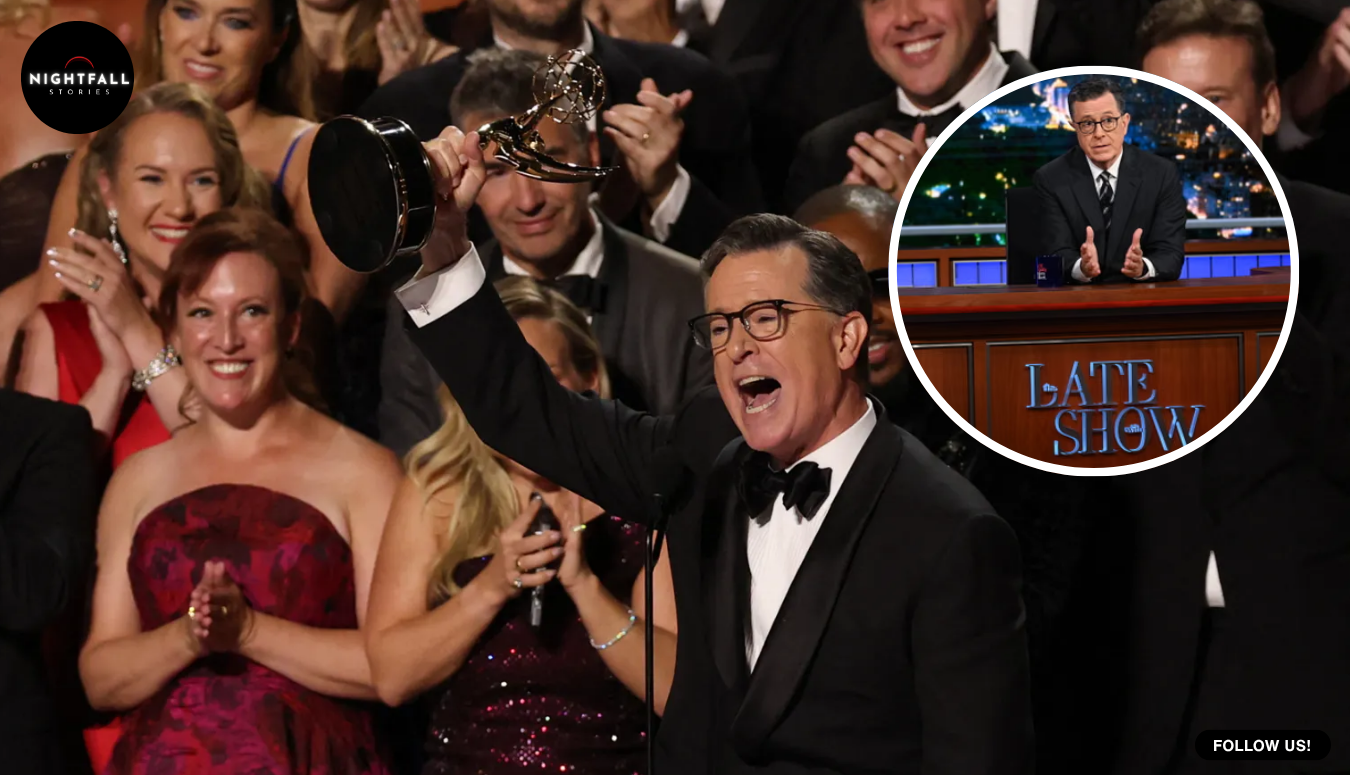
  • Stephen Colbert won an Emmy for a show that no longer exists. He spent the speech talking about everyone else in the room.

    Stephen Colbert won an Emmy for a show that no longer exists. He spent the speech talking about everyone else in the room.

    The show had been off the air for four months. The set was gone. The staff had scattered. And on a Monday night in September, the Television Academy handed The Late Show with Stephen Colbert the award for Outstanding Variety Series anyway, which meant Colbert had to walk up to a microphone and say something about a job that no longer existed.

    What he said, more or less, was this: if you laughed at anything tonight, my old writers wrote it. They are all available. Hire them.

    That was the speech. Not a political broadside, not a swipe at the network, not a farewell aria. A pitch. He stood on the stage at the 78th Primetime Emmy Awards with a crowd of his former staffers around him and used the most valuable ninety seconds of airtime he was ever going to get again to try to find them work.

    If you want to understand why that landed the way it did in the room, you have to go back further than most of the coverage did. Because this story did not start in September, and it did not start in May either.

    It started in the summer of 2025. On the seventeenth of July that year, CBS announced that The Late Show would end. Not be retooled, not move platforms, not get a new host. End. The network said the decision was purely financial, that the show was losing somewhere in the region of forty million dollars a year, and that the entire franchise would be retired when Colbert’s contract ran out. The Late Show had been on CBS since 1993, first with David Letterman and then with Colbert from 2015. It was not being replaced. The lights were going off on the whole thing.

    The timing set off an argument that never fully died down. The announcement came days after Paramount, the network’s parent company, settled a lawsuit brought by President Trump, and Colbert had spent years making the administration a central target and had criticised the settlement on air shortly before the news broke. CBS held its line throughout: money, not politics. Late night as a business had been shrinking for years, ad rates had collapsed, and the production costs of a nightly hour with a band and a staff of two hundred no longer made arithmetic sense. Plenty of people in the industry found that explanation entirely plausible and still thought the timing was awful. Both things could be true at once, and there is no version of this story where anyone outside a handful of rooms knows for certain which weighed more.

    What is certain is the gap that followed, and the gap is the part that matters.

    CBS did not pull the show off the air. It let it run. Colbert and two hundred people kept making a nightly comedy show for ten more months knowing exactly when the ending was coming and exactly what it meant for every single one of them. That is a strange and specific kind of working life. You show up, you pitch jokes, you build sets, you book guests, you cut packages, and the whole time there is a date on the calendar past which none of it exists.

    The final episode aired on the twenty first of May, 2026. More than six and a half million people watched, which made it the most watched weeknight episode in the entire history of the programme, a fact that says something uncomfortable about the business logic of cancelling it. The guest list was less a booking than a gathering. Bryan Cranston, Paul Rudd, Ryan Reynolds, Paul McCartney, Neil deGrasse Tyson, Jon Stewart, Andy Cohen, and the four other late night hosts who had spent a strike sitting around a microphone together, Jimmy Kimmel, Jimmy Fallon, John Oliver and Seth Meyers. NBC and ABC both declined to run new episodes opposite it that night. In a business that competes for every eyeball, two rival networks stepped aside so their competitor could have the room.

    Colbert opened that last show by thanking the audience and the crew and giving them credit for whatever the show had been. He closed the monologue with a joke about going back to public access television in a small town in Michigan, a running gag from years earlier. Twenty four hours later he actually did it, hosting a special edition of that tiny local programme with Jack White and Steve Buscemi turning up as if this were a perfectly normal thing to happen on public access.

    There was even a small strange postscript. A dispute over music from the Peanuts specials used without clearance in the finale got settled quietly, with the proceeds going to World Central Kitchen. It is the kind of detail that does not fit anywhere in a tidy narrative and is probably the most human thing in the whole file.

    And then everyone went home, and two hundred people started sending out resumes into an industry that was cutting, not hiring.

    It is worth sitting for a second with what those ten months were actually like, because nothing in the public conversation about the cancellation touched it. A nightly comedy show is not a thing you can coast through. The monologue has to be written on the day, against the day’s news, and thrown away by the next afternoon. The band rehearses. The graphics get built. Somebody books the guest, somebody preps the guest, somebody cuts the tape. All of that has to happen at full effort or the show is visibly bad, and a visibly bad show in its final months is a humiliating way to end eleven years. So the staff kept it at full effort. The evidence that they did is the writing Emmy, which is not a sentimental award and was voted on by people who watched the work.

    There is also the plain economic fact underneath it. Two hundred jobs in one building, most of them not glamorous, many of them held by people with mortgages and children and no public profile at all. When a scripted series ends, its crew moves to the next production. When the last show in a format ends, there is no next production in that format to move to. That is the difference between a cancellation and a contraction, and the people in that building were on the wrong side of it.

    That is the context Colbert walked into on Emmy night. The category he won had just been reunified for the first time since 2015, folding talk shows and sketch variety back into one race, so The Late Show was up against The Daily Show and Jimmy Kimmel Live and won anyway, for the second year running. The show also took Outstanding Writing for a Variety Series. A web spinoff called Colbert Before Air won for short form comedy. Before the main ceremony even started, the programme had collected five Creative Arts Emmys across directing, technical categories and writing. For a cancelled show, it cleaned up.

    The reunification of the category is a small technical detail that quietly raised the stakes. For about a decade the Television Academy had split variety into separate talk and sketch races, which meant nightly hosts mostly competed against each other and scripted variety competed in its own lane. Folding them back together made the field wider and the win harder. Colbert’s show did not get a soft trophy because it was ending. It won a combined category in a year when everyone in it was still on the air and it was not.

    Colbert’s framing of the speech was the thing that made it work. He did not treat the award as a vindication or a rebuke. He talked about what a late night show actually is as an employer, which is a rare thing in television: a steady job. Not a gig, not a six week shoot, not a contract that ends when the season wraps. A place where a writer can learn to write on a deadline every single day for years and where a lot of the people who later run the industry learned how to do it. Then he made the ask, and the ask was not charity. He told the room that hiring these people would make their shows better and their days easier. He was not asking anyone to do his staff a favour. He was telling them there was value sitting in front of them that they were about to miss.

    He made the ask in the industry’s own language, too, which is part of why it worked. In television scheduling shorthand, a performer or crew member who is free to be booked is described as tech avail, technically available. It is the phrase a production office uses when it is checking whether it can hire someone. Colbert said his people were all tech avail. It was a joke, and it was also precisely the correct term of art, and every producer in that room heard it as an actual availability notice rather than as sentiment.

    He thanked more than two hundred people who had worked on the show across nearly eleven years. And he finished by thanking his wife, saying she was the only audience he really cared about, which got the room the way it always does.

    There is a version of this story that is only about a famous man and a network and a president, and that version got written a lot. It is not the interesting version. The interesting version is about two hundred people who are not famous, who did skilled work for a decade, who knew for ten months that it was ending, who kept doing it well enough to win the award after it ended, and who then had to go and find something else in a business with fewer somethings else in it than there used to be.

    Late night is not collapsing because one show got cancelled. It has been shrinking for a decade for reasons that have nothing to do with any individual host. Audiences moved to clips, then to feeds, then to formats that never needed a studio at all. The advertising that used to pay for a house band and a writers room follows attention, and attention left. What that looks like from the inside is not a dramatic implosion. It is a slow reduction in the number of rooms where a person can build an actual career, get health insurance, and learn a craft by doing it five nights a week.

    Colbert, for what it is worth, seems to have landed somewhere unexpected. Asked what he has been doing, he has talked about writing a Lord of the Rings film for Warner Bros, reportedly with his son Peter and with Philippa Boyens, who co-wrote the original trilogy. He is a lifelong obsessive about the books, which anyone who watched the show already knew, and he has described the work as a genuine full time job rather than a hobby. He had announced the project a couple of months before the final episode aired, and has since been back and forth to New Zealand. It would follow Andy Serkis’s Gollum film, which is due at the end of next year. No release date has been set for Colbert’s.

    So he is fine. That was never in doubt. A host with eleven years of a network show behind him was always going to be fine.

    The people standing behind him on that stage are a different question, and he clearly knew it, which is why the speech went the way it did. There is a tradition in awards acceptance of thanking the crew, and it is usually a formality, a list read fast against a play off. This was not that. This was a man with a live microphone, a captive room full of the exact people who do the hiring, and a very short window, using it as a labour market intervention.

    Whether it worked is not the kind of thing that gets reported. Nobody writes a follow up piece about a staff writer who got a meeting three weeks later because somebody in that room remembered the speech. But it is the only outcome that would actually matter, and it is the reason the moment felt different from the usual awards night sentiment.

    The award itself is a strange object. It is for a show you cannot watch any more, made by a team that no longer exists, produced by a network that decided it was not worth the money. It proves the work was good and changes nothing about the decision. Trophies do not reverse cancellations.

    But a trophy does buy you a microphone, and a microphone in front of the right room is worth something real if you are willing to spend it on somebody other than yourself. Colbert spent his. That is the whole story, and it is a better one than the argument everybody was expecting him to restart.

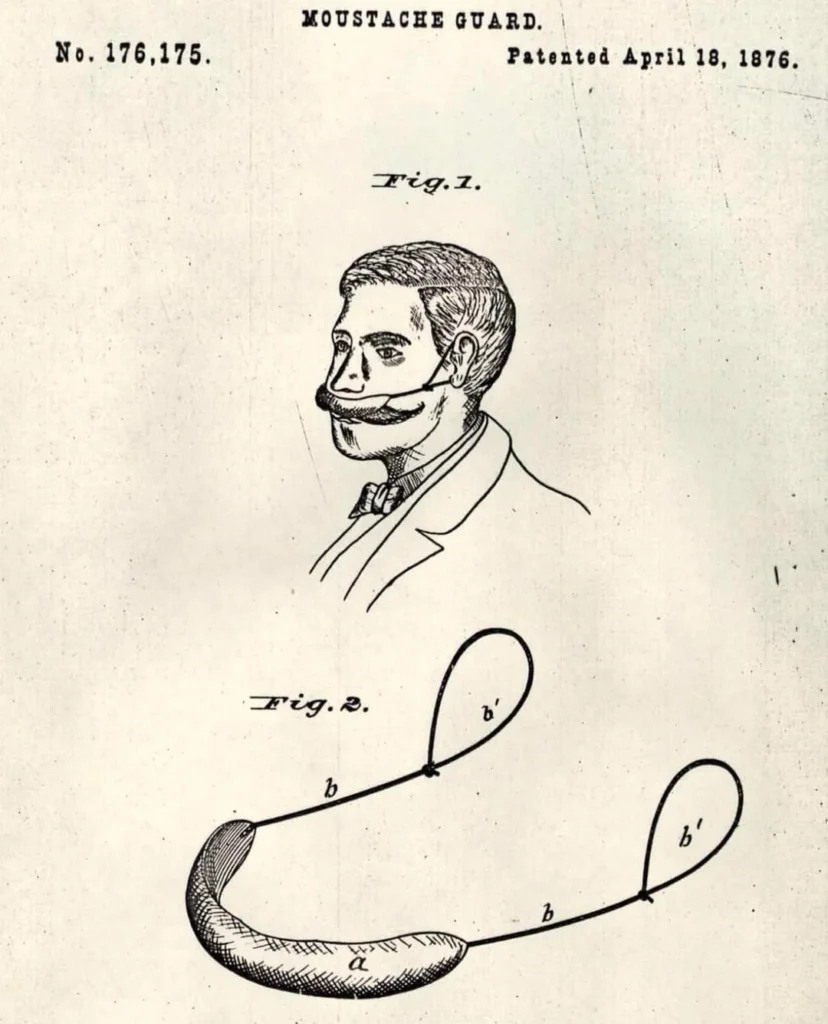
  • 12 ridiculous inventions that somehow got patented

    12 ridiculous inventions that somehow got patented

  • He died leaving six minutes of drawings on a desk in Bristol. This year they opened in a cinema.

    He died leaving six minutes of drawings on a desk in Bristol. This year they opened in a cinema.

    Richard Williams was in his late seventies when he sat down to start animating a film he had been thinking about since he was a teenager. He worked mostly alone, on paper, one drawing at a time, in a room that the studio Aardman had cleared for him, with a desk and a camera and not much else. He got roughly six minutes of it finished before he became ill, and he died in August 2019 at the age of eighty six. This year, that unfinished material opened in a cinema in Los Angeles, seven years after his death.

    The film is called Lysistrata, and the story of how it reached a screen is unusually complicated, partly because the people involved have been careful not to overclaim, and partly because the basic published facts about it do not agree with each other. Two of them, the project’s working title and the running time of the thing that finally screened, are reported inconsistently across reputable sources. It is worth saying that up front rather than picking a version and hoping nobody checks.

    Start with who Williams was, because the weight of this depends on it.

    He was one of the most technically accomplished hand-drawn animators of the twentieth century, and among the most frustrated. He won an Academy Award in the early nineteen seventies for an animated version of A Christmas Carol. He won two more, plus a special achievement award, for directing the animation on Who Framed Roger Rabbit, the film that put cartoon characters into a live-action frame convincingly enough that audiences briefly stopped asking how it was done. He wrote The Animator’s Survival Kit, which is not a coffee table book but a working manual, and which sits on the desk of essentially every serious character animator alive.

    And for close to three decades he poured himself into a feature called The Thief and the Cobbler, an intricate, hand-drawn epic that he funded partly out of his own commercial work. It was taken away from him before completion, recut by others, and released in versions he had no control over. It is one of the most painful stories in the history of the medium, and it followed him for the rest of his life.

    So when a man with that history announces in his seventies that he is starting a new hand-drawn feature, alone, the reaction in the animation world was somewhere between awe and worry.

    The project was an adaptation of Aristophanes, the ancient Greek comic playwright. Lysistrata, first staged around 411 BC, is about a woman who persuades the women of Greece to withhold themselves from their husbands until the men agree to stop fighting a war that has ground on for decades. It is a comedy, it is bawdy, and underneath the jokes it is one of the oldest surviving anti-war arguments in Western literature. Williams had wanted to animate it since he was young. He described his intention for it as grim and funny and salacious all at once.

    He began with a section he called Prologue. It ran six minutes. It contains no dialogue. It shows two pairs of Greek soldiers fighting, in full hand-drawn detail, until all of them are dead, watched by a small girl who then runs to an older woman. Released in 2015, it was nominated for the Academy Award for best animated short and for the BAFTA. Williams, who had by then made a great deal of celebrated work, said it was the only thing in his entire career he had ever really been pleased with.

    Coming from him, that is a startling sentence. This is a man who had an Oscar-winning short, the animation of one of the most technically ambitious live-action hybrids ever released, and a shelf of advertising and title-sequence work that other animators studied. He was, by common consent, near the top of his field for half a century. And in his eighties he pointed at six minutes of silent Greek soldiers and said that was the one.

    Prologue was meant to be chapter one. Lysistrata is chapter two.

    Here is the first of the two disagreements in the record, and it is a genuinely interesting one rather than a clerical slip. Sources differ on what the larger project’s working title actually was. Cartoon Brew, in its coverage of the Los Angeles opening, reports that Williams used the darkly funny title Will I Live to Finish This? for the wider undertaking. Wikipedia’s entry on Williams records the same phrase slightly differently, as a joke he made that the film ought to be subtitled Will I Live to Finish It?. Other listings and summaries circulating around the 2026 festival run attach the working title A Call to Arms to the project instead.

    None of those can be dismissed. They may all be true at different points, because a film worked on for more than a decade by one man in a room can easily have carried a gallows-humour nickname among friends and a straight-faced title on a festival form. But they are not the same title, and no source reconciles them. Readers should know the record is unsettled rather than be handed a single confident answer.

    The second disagreement is about length, and it goes to the heart of what was actually released.

    According to Imogen Sutton, Williams’ wife and his longtime producer and collaborator, he had completed approximately six minutes of what was then intended to be a ten-minute short before he fell ill in 2019. That is the figure from the person closest to the work. Wikipedia’s entries on Williams and on Prologue describe what surfaced at the 2026 Annecy International Animation Film Festival as a six-minute segment, consistent with Sutton’s account of what he had in hand. Cartoon Brew, reporting the Los Angeles theatrical opening months later, describes an eight-minute hand-drawn short.

    Six or eight is a large proportional gap on a film this short, and the sources do not explain it. There are plausible reconciliations. Six minutes of finished animation can become an eight-minute film once titles, credits, a held opening image and a musical tail are added, which is routine. A work-in-progress preview at a festival is also not necessarily the same cut as a theatrical release months later. But those are reasonable guesses, not documented facts, and nobody has published the accounting. So the honest statement is that the completed film has been reported at both six and eight minutes.

    What is not in dispute is the labour. The short is built from more than nine thousand hand-drawn images, all of them by Williams himself. He is credited as the sole animator. There is no team of assistants filling in between his key drawings, which is how commercial animation has worked for a century. Every frame that moves, he moved.

    Run the arithmetic and the figure stops being abstract. Animation for cinema plays at twenty four frames a second. A film running somewhere between six and eight minutes therefore contains roughly nine to eleven thousand frames. More than nine thousand drawings, for a single artist, means he was drawing close to every single frame himself rather than working on twos, the standard shortcut where each drawing is held for two frames and the workload is halved. That is the most expensive way to animate anything, and it is why his figures move the way they do. It is also why the great studios stopped doing it.

    There is a second reason the count matters. Williams spent the later part of his life teaching, through The Animator’s Survival Kit and a long run of masterclasses, and the central argument of that teaching is that the craft is not a matter of talent or software but of doing the work drawing by drawing until the movement is right. Finishing his own career by sitting alone at a desk producing nine thousand drawings by hand, in his eighties, is not a contradiction of the book. It is the book.

    That is a staggering amount of work for a man in his eighties, and it explains why Aardman’s contribution mattered so much. The studio, best known for Wallace and Gromit, gave Williams a large workspace, an animation desk and a camera. No budget note, no development executive, no notes process. Just a room and the equipment, which for a man who had spent thirty years fighting financiers over The Thief and the Cobbler may have been the only working arrangement he could still trust.

    How the unfinished material became a releasable film after he died has not been publicly detailed, and Cartoon Brew says so explicitly. What is known is who is credited. Imogen Sutton produced the film and prepared the material for exhibition. Fernando Lechuga handled compositing, as he had while Williams was alive, which means the person assembling the drawings into finished frames was the same person Williams had chosen and worked with. Adrian Rhodes handled sound and music design. Nobody appears to have drawn anything new. The restraint in that credit list is the point: no one finished Williams’ film for him. They finished the presentation of what he left.

    It premiered at Annecy, the most important animation festival in the world, in late June of this year, on the same festival stage where Prologue had launched eleven years earlier. Annecy is not a general film festival with an animation sidebar. It is the field’s own gathering, where the studios, the independents and the students all turn up in the same small French town, and a premiere there is judged by an audience that can tell at a glance how something was made. It is close to the toughest room in the world for this particular kind of work, and it is also the room most likely to understand what nine thousand solo drawings cost. In September it opened theatrically at the Laemmle Glendale in Los Angeles, the kind of small-house engagement that also happens to satisfy awards eligibility rules. Whether it gets a nomination is not the interesting part. The interesting part is that a film by a man who has been dead for seven years is playing to paying audiences.

    There is no indication that the rest of the Lysistrata project will ever be made. It was conceived as a full hand-drawn feature and there are now, at most, fourteen minutes of it in existence across two chapters. Williams used to say that all he needed was some time and five or six assistants who could draw like hell. He never got either in the quantity required. The feature joins The Thief and the Cobbler as the second great unfinished thing of his life, which is a hard symmetry for anyone who cares about his work.

    And yet the shape of this is not the same as the earlier story, and that difference is worth sitting with.

    The Thief and the Cobbler was taken from him. Other people cut it, changed it, added things he had not sanctioned, and put his name on results he disowned. Lysistrata was not taken. It stopped because he ran out of life, which is the one deadline nobody negotiates. And the people who handled it afterwards, led by the woman who had been his partner in the work for decades, chose the narrowest possible intervention. They did not commission anyone to draw the missing four minutes in his style. They did not stretch it into a feature with archive footage and talking heads. They took what he had drawn, finished the technical work he had already delegated to the same collaborators he had already chosen, and put it in front of people.

    It is possible to read that as a small act of repair. He spent his career watching other hands get onto his films. This time nobody else’s did.

    Williams began animating his Aristophanes in his late seventies, having carried the idea since adolescence. He knew perfectly well he probably would not finish. He made the joke about it out loud, repeatedly, and reportedly wanted it as the title. He kept drawing anyway, because, as he put it, what matters is the doing of it, and you do it for the love of it, and there is nothing else to it.

    More than nine thousand drawings by one pair of hands, and every one of them made by someone who understood he was unlikely to reach the end. That is the film. Whether it runs six minutes or eight, whether the title on the folder said Will I Live to Finish This? or A Call to Arms, the arithmetic underneath is the same, and it is the most honest thing anyone could have left behind.

  • A cello built in 1704 survived three centuries. It did not survive the Careys’ house.

    A cello built in 1704 survived three centuries. It did not survive the Careys’ house.

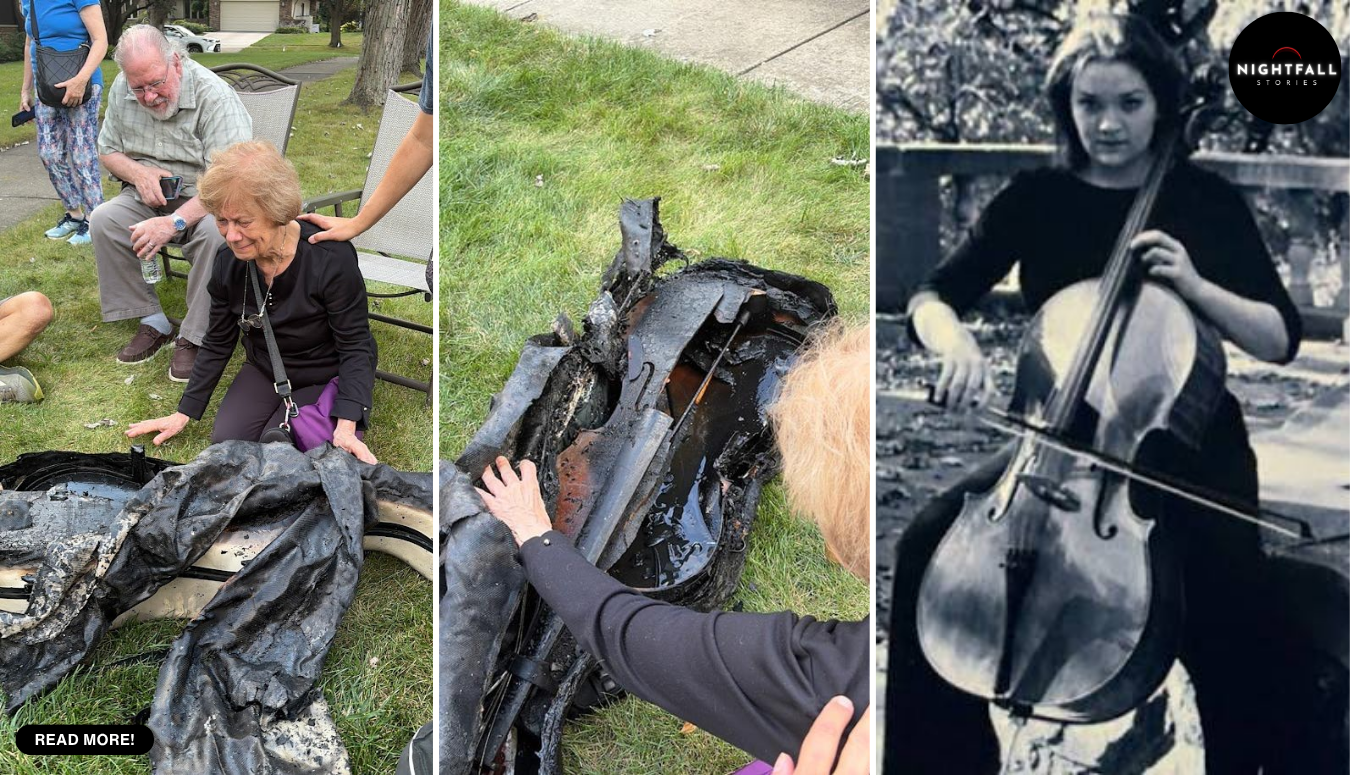
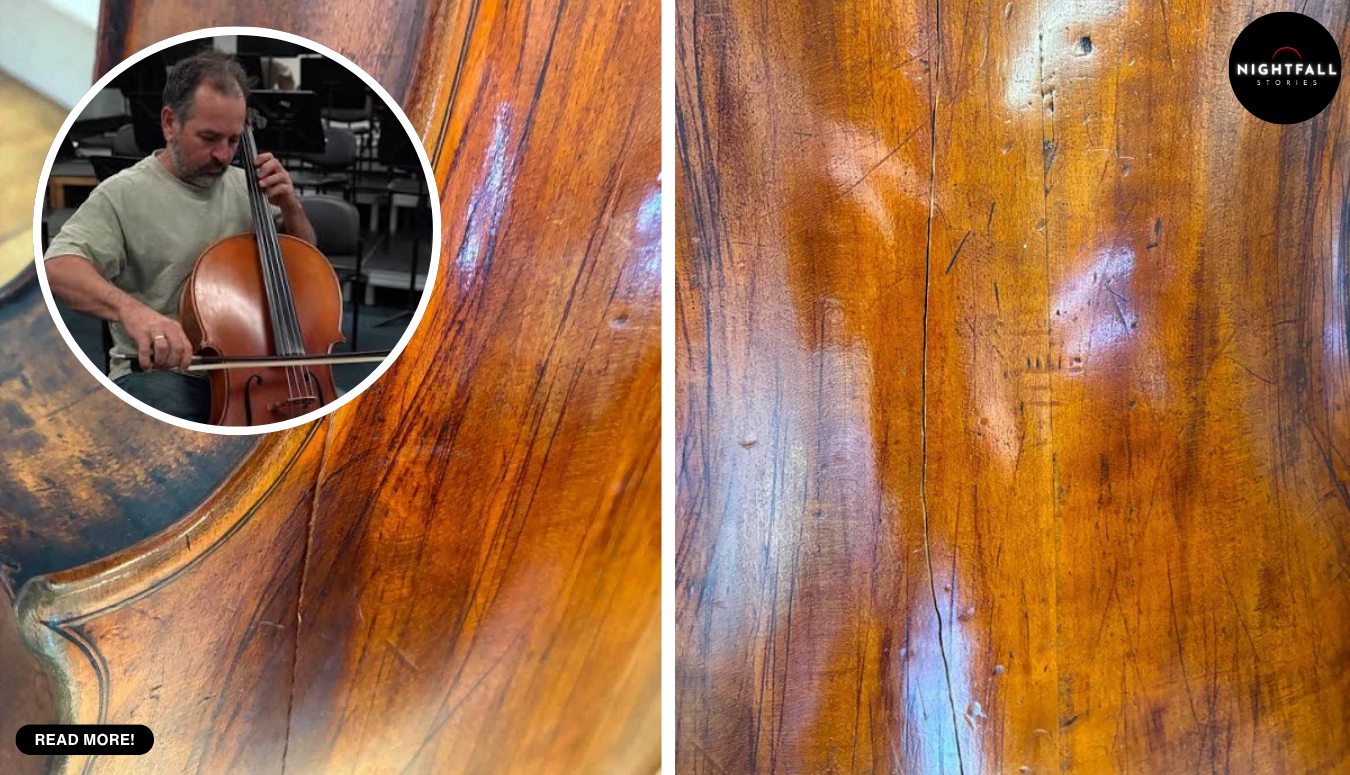
    The cello was made in Cremona, Italy, around 1704, in the workshop world that also produced Stradivari. It passed through roughly three hundred years of owners, wars, border crossings, customs desks, repair benches and concert halls, and it arrived intact in a house in Chicago, where an 87-year-old woman played it, taught on it and lived beside it. Then there was a fire, and the cello is gone.

    That sentence is the part most people have read. What it leaves out is almost everything that makes the story worth sitting with, because the instrument was not the only thing in that house, and the two people who lived there are not simply an elderly couple who lost their belongings. They are Tanya Lesinsky Carey and Gerald V. Carey, and between them they have spent something close to a hundred and twenty combined years shaping how children in dozens of countries are taught to hold a cello and a flute.

    Start with the basic, merciful fact: they were not home. Both of them were out when the fire started, and neither was hurt. In a story with this much loss in it, that is the thing to hold onto first.

    Here is what is not known, and it matters that it is said plainly rather than filled in. No public source establishes what caused the fire. No fire department finding, no insurance determination, no official statement on point of origin has been released. A family fundraising appeal circulated afterwards reportedly described the damage as beginning in the part of the house where the instruments and teaching materials were kept, but a fundraiser description written by grieving relatives is not a cause determination, and nobody outside the investigation has published one. Anybody telling you confidently why this happened is guessing. The honest position is that the cause is not public.

    What is documented is the inventory of what burned, and it is long. Tanya’s cellos. Gerald’s flutes. A piano. Decades of personal sheet music, much of it annotated in their own hands. Teaching tools built and refined over a working lifetime. Recordings. Artwork. Antique furniture and family heirlooms. Material stored in the loft. For a household that was also, functionally, an archive and a studio and a small publishing operation, the loss of the building and the loss of the career are close to the same event.

    The cello itself has been reported as a 1704 instrument attributed to Joseph filius Andreae Guarneri, one of the Guarneri family of Cremonese makers whose surviving instruments are counted in the low hundreds worldwide. Every one of them that still plays is, in a real sense, a piece of working infrastructure for classical music. They are not ornaments. Musicians perform on them, students learn from hearing them, and the supply is fixed forever, because the people who made them died three centuries ago. When one is destroyed, the total in the world goes down by one and stays down.

    It is worth being precise about the name, because the Guarneri family produced several makers and they are constantly confused with one another. Andrea Guarneri founded the workshop. His son Giuseppe, known in the trade as Joseph filius Andreae, meaning Joseph son of Andrea, ran it into the early seventeen hundreds and was the father of the maker usually called del Gesu, whose violins now trade for sums that make headlines. Instruments from the filius Andreae bench sit in that lineage. Cellos from any of these makers are far rarer than the violins, because fewer were made and fewer survived, and because a cello is large, fragile and awkward to move, which over three centuries is a slow filter.

    But an old cello is also, for the person who plays it, an extremely personal object. It has a particular response under the bow that the player has spent years learning. It has a smell. It has a place in the room. Tanya Carey did not own a museum piece she kept in a case. She owned a tool she used.

    And she used it hard, for a very long time.

    Carey holds a doctorate from the University of Iowa and both a bachelor’s and master’s degree from the Eastman School of Music, with performer’s certificates at both levels, which at Eastman is not a routine line on a transcript. She played as assistant principal cellist of the Milwaukee Symphony and as associate principal of the Quad City Symphony. She recorded with the Rochester Philharmonic. She played chamber music in the Lydian Trio alongside Almita and Roland Vamos, two of the most respected string teachers in the United States. She has given recitals at Carnegie Hall and at Alice Tully Hall.

    None of that is the reason her name is known in the cello world.

    She is known because she worked out how to teach very young children to play the cello well, and then she wrote it down. She studied directly with Shinichi Suzuki, the Japanese violinist whose teaching method spread worldwide on the premise that any child can learn music the way any child learns to speak, and with John Kendall and Doris Preucil, two of the figures who carried that method into American classrooms. Her doctoral work was on Suzuki cello instruction.

    The interesting thing about applying that approach to the cello is that it is genuinely difficult. The violin adapted to small children fairly readily once makers started building fractional sizes. A cello is a different problem. The child has to sit correctly, reach around a body that is large relative to their own, control a bow arm that works against gravity in a way a violinist’s does not, and produce a tone without the instrument sliding away. Getting a five-year-old to do that without building habits that will have to be painfully unlearned at fifteen is a real engineering question, and much of Carey’s working life went into answering it in small, teachable pieces. Out of that came the Cello Playing Is Easy series, which has been sitting on teachers’ music stands for decades, and which is the reason a cello teacher in Auckland or Seoul or Ohio might recognise her name without ever having met her.

    She served as president of the Suzuki Association of the Americas and as president of the Chicago Cello Society. She was named outstanding studio teacher of the year by the Illinois chapter of the American String Teachers Association back in the early nineteen nineties. She taught at Western Illinois University, where she holds an emeritus professorship, and at DePaul, at Wheaton College, at Roosevelt University’s Chicago College of Performing Arts, and for around twenty one years at the Music Institute of Chicago. She has given masterclasses in more than thirty American states and across Canada, Europe, Britain, Australia, China, Japan, Korea, Taiwan, New Zealand and South America.

    That is a career measured in other people. Every one of those masterclasses was a room full of teenagers who went home and played differently.

    Her husband’s career runs on a parallel track and is, in its own field, just as consequential. Gerald Carey was principal flute of the Quad City Symphony from the late nineteen seventies and professor of flute at Western Illinois University until he retired at the end of the nineteen nineties. He performed internationally and recorded for several labels. He also spent decades doing the unglamorous organisational work that keeps an entire instrument’s professional community functioning.

    He was president of the National Flute Association at the start of the nineteen nineties and chaired its board immediately afterwards. Before that he had coordinated its student competitions, then its general competitions, and served on its board of directors. He chaired a national convention programme. He worked on the convention programme books in a partnership with the flute historian Nancy Toff, and the formats they established are reportedly still in use. He pushed the association to commission new works for its high school soloist competition, and some of those commissioned pieces became standard repertoire, which means a teenager preparing an audition today may be playing music that exists because Gerald Carey argued for it.

    His presidency also included a hard stretch. The association’s executive coordinator, Myrna Brown, died during his term, and he was the person who had to hold the organisation together through the transition. In 2008 the association gave him its Distinguished Service Award, which is the flute world’s way of saying that it noticed.

    The two of them recorded together as well. They released an album called Golden Celebration, cello and flute, husband and wife, made late in two long careers.

    So the house that burned was not a house with a valuable object in it. It was the physical accumulation of two complete working lives in music, including the teaching materials of a woman who reshaped how her instrument is taught to children, and the papers and instruments of a man who helped build the professional structure of his.

    There is one more strand to the story that deserves honest handling, because it has caused confusion. In the days after the fire, word spread through the classical music press and the online forums that a fundraising appeal had been launched. Almost immediately, a family member posted publicly that no fundraiser had been started by the family, or requested by them, or set up by colleagues, at that point. Shortly afterwards, an appeal did appear, written in the first person by a relative, describing what had been lost and what the couple needed: somewhere to live, help with daily expenses, an insurance deductible, and the beginning of a rebuild.

    Both of those things can be true. Well-meaning strangers often move faster than a family does, and a family in the first week of something like this is usually not in a position to organise anything. But the sequence is worth knowing, because it is also the sequence that scammers exploit. In an emergency involving a famous instrument, appeals multiply, and not all of them are connected to the people they name. Anyone moved to help would do well to find the appeal the family itself has acknowledged rather than the first one that appears in a feed.

    It is tempting to build a redemptive ending onto this. There is not one available yet, and inventing one would be a disservice. The cello is not coming back. Neither are the annotated scores, or the recordings, or the furniture that came down through a family. The Careys are in their late eighties, staying with friends from their church, starting again with the administrative grind that follows a fire: forms, adjusters, inventories of things that cannot really be inventoried.

    That last part is worse than it sounds. Insurance works by valuation, and valuation works by comparison, and there is nothing to compare a 1704 Cremonese cello to except other instruments that almost never come to market. Owners of historic instruments are routinely underinsured for precisely this reason, and the gap is often discovered at the worst possible moment. Meanwhile the items with no market value at all, the marked-up scores, the lesson notes, the boxes of correspondence with former students, are simply written off as contents, because there is no column on any form for the working papers of a life’s teaching.

    There is also the quieter problem that nobody puts on a claim form. Two people in their late eighties have lost the room they worked in. Not the house, the room. The place where the stand was, where the light fell a certain way in the afternoon, where sixty years of muscle memory knew exactly how far to reach for the rosin. You can rebuild a house. Rebuilding that is a different task, and it is not one that money solves.

    But there is something true that is not consolation and is not nothing.

    Almost none of what Tanya and Gerald Carey actually made was in that house. The method is not in the manuscripts; it is in the hands of tens of thousands of people who were taught by them or by their students or by teachers who read their books. The commissioned pieces Gerald pushed for are in circulation on every continent. The Cello Playing Is Easy volumes exist in print runs long since dispersed across the world, and no fire reaches those. The recordings they made are copies of copies by now.

    A three hundred year old instrument is irreplaceable because it is singular. A teaching method is durable for exactly the opposite reason: it was copied, deliberately and relentlessly, for sixty years, into as many people as would take it.

    Somewhere today a seven-year-old is being shown how to relax a bow arm by a teacher who learned it from a teacher who learned it from Tanya Carey, and neither of them has any idea. That is the part of the estate that the fire could not touch, and it is by a very wide margin the larger part.

  • A pianist won a prize named after casals and gave away every cent of it before she ever collected the award

    A pianist won a prize named after casals and gave away every cent of it before she ever collected the award

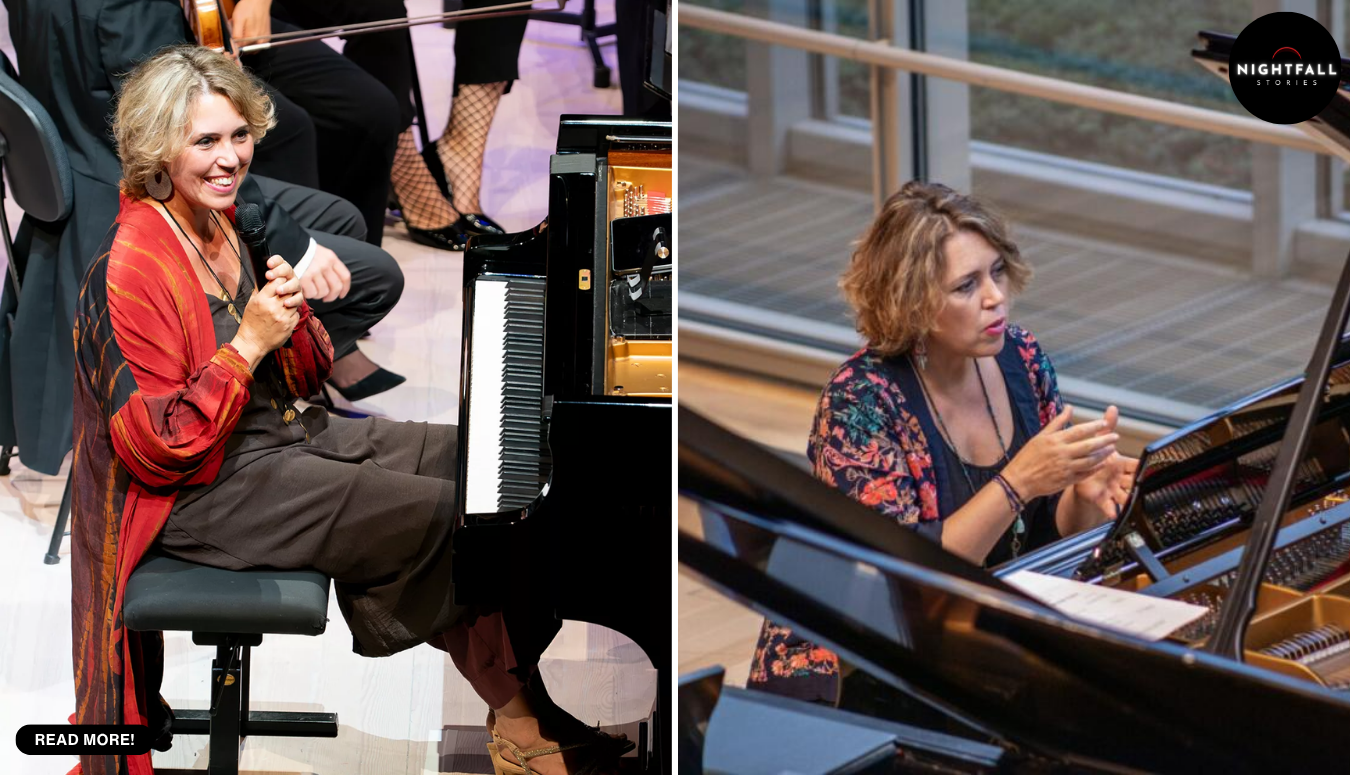
    Gabriela Montero knew she was going to win about a week before she stood up to receive anything. And in that week, rather than saying thank you and waiting for the applause, she did something that made the eventual ceremony almost beside the point. She announced, publicly and in advance, that the entire prize was already spoken for. Ten thousand euros, roughly eleven and a half thousand dollars, going to a Venezuelan lawyer most of the world has never heard of.

    Her name is Tamara Sujú Roa, and the reason so little coverage bothered with her name is itself part of the story.

    The award is the Pau Casals Award, given by the Kronberg Academy in Germany and presented during its festival. Kronberg is a serious place in the cello world, built in part around the memory of Pablo Casals, and the prize carries his name because it is meant to recognise something beyond playing well. Plenty of prizes reward technique. This one is explicitly about the other thing Casals was famous for, which was refusing.

    Casals was Catalan, one of the greatest cellists who ever lived, the man who rescued Bach’s solo cello suites from being treated as dry exercises and made them central repertoire. He was also a man who, after the Spanish Civil War, went into exile in southern France and then made a decision that cost him most of his career. He would not perform publicly in countries that extended recognition to Franco’s government. He was in his sixties. He had the sort of international reputation that would have made him welcome anywhere, on any terms he liked, and he chose instead to fall largely silent in public for years. He lived in a small town near the border, he taught, he played privately, and he made his silence into the loudest thing about him. He was still doing this in his nineties, when he addressed the United Nations and played a short Catalan folk song about birds that he had turned into a kind of portable homeland.

    So a prize with his name on it carries an implication. It is not just for the person who plays beautifully. It is for the person who has been asked to trade the playing for something and said no.

    Montero has spent most of her adult life in that position.

    She was born in Caracas, picked out melodies before she could talk, started lessons at four, and played her first concerto with a national youth orchestra at eight. At nine she had a government scholarship to study abroad. She went on to the Royal Academy of Music in London, placed at the Chopin competition in Warsaw, and built the kind of career that takes a pianist to the New York Philharmonic and the Los Angeles Philharmonic. She has a Latin Grammy. She played at Barack Obama’s presidential inauguration.

    She is also unusual among classical soloists in that a substantial part of what she does on stage is invented on the spot. Audiences suggest a theme, any theme, and she improvises on it, sometimes for a long time, in whatever direction the material takes her. It is a skill that was once entirely normal among keyboard players and then quietly disappeared from concert life for about a century, and she has spent her career insisting it belongs back there. It also means her concerts are not repeatable. What happens in the room happens once.

    And for well over a decade now, her name has been attached to something considerably less comfortable than improvisation.

    Montero became one of the most persistent public critics of the Venezuelan government from inside the classical music world, which is a small world and one that depends heavily on not upsetting anybody. She was blunt about El Sistema, the country’s celebrated youth orchestra programme, arguing that its international reputation had been used as political cover, that the world was applauding a beautiful image while looking away from what was happening around it. This was not a popular thing to say. El Sistema was, for a long stretch, one of the few unambiguously good news stories anyone could tell about the country, and a great many people in music had invested their reputations in it.

    She wrote music about it too. Ex Patria is a tone poem she composed as a protest piece, about lawlessness and killings and the ordinary violence of a collapsing state, and it is not a comfortable listen because it is not trying to be. Her first piano concerto, the Latin Concerto, does something stranger, taking dance rhythms from home and using them as the structure for a work by someone who cannot go home.

    That is the underlying fact. She lives in the United States. She has not been able to return.

    Exile of that kind does not look dramatic from the outside. There is no border scene, no dash to an airport. It is mostly an accumulation of small permanent absences. Family gatherings you hear about afterwards. A language you keep speaking to people who are all somewhere else. A hall in the city you grew up in that books other pianists. Musicians in her position often describe the strangest part as professional rather than personal, the fact that the audience who would understand exactly what you are doing, and why a particular rhythm lands the way it does, is the one audience you cannot play to.

    She has kept working anyway, and kept saying the same things, through years in which it would have been far easier and far more lucrative to stop. A soloist’s career runs on invitations, and invitations come from institutions, and institutions as a rule do not enjoy controversy. Every festival that did not call, every orchestra that quietly chose somebody less complicated, is a cost that never appears on any list of achievements because there is no way to count it.

    Along the way she was named an Honorary Consul for Amnesty International, and she received the Václav Havel Prize for Creative Dissent, which is awarded to artists whose work puts them directly at odds with the power around them. Havel, who spent years in prison before becoming a president, is not a bad patron saint for a musician who decided that a career was not worth a silence.

    Then last year, in Oslo, she closed the Nobel Peace Prize ceremony.

    The prize had gone to María Corina Machado, the Venezuelan opposition leader, who did not appear at the ceremony in person. Her daughter accepted it on her behalf. Montero, invited by Machado, sat down at the end of the proceedings and improvised on Mi querencia, a song by the Venezuelan composer Simón Díaz that is roughly about the place you belong to, and then played the Venezuelan national anthem. An exiled pianist playing her country’s anthem in Oslo, at a ceremony her country’s most prominent dissident could not safely attend in person, is the kind of image that does not need any explaining.

    Which brings us back to the ten thousand euros.

    When Kronberg named Montero as this year’s recipient, she did not wait for the ceremony to make her gesture. The announcement of the prize and the announcement of what she would do with the money arrived together, more than a week before she actually appeared in Germany to receive it. That sequencing matters more than it sounds. A donation revealed at a podium is a moment. A donation announced before anyone has clapped is a decision, made in advance, in writing, with nothing theatrical about it. It also meant that for the entire week leading up to the event, the story people were discussing was not Gabriela Montero. It was Tamara Sujú.

    Sujú is a criminal lawyer, trained in Caracas, who has spent years doing the least glamorous and most necessary work in human rights, which is documentation. Not protest, not speeches. Records. Names, dates, places, medical details, testimony taken carefully enough that it will survive being challenged by government lawyers years later in a different country.

    She has built what is generally described as the largest single archive of torture and arbitrary detention cases in Venezuela, assembled from the testimony of hundreds of victims. She testified before the Organization of American States about hundreds of documented torture cases, a large proportion of which involved sexual violence. She founded organisations to support political prisoners and their families, and previously directed a group providing free legal help to Venezuelans who had been detained or abused. She is now executive director of the CASLA Institute, and a senior fellow at a human rights centre named for Raoul Wallenberg.

    What that looks like in practice is unromantic in the extreme. It is sitting with someone who has been through the worst weeks of their life and asking them, gently and repeatedly, for specifics. Which floor. Which uniform. What time of day. How many others were in the room. It means cross-referencing accounts that were given years apart by people who have never met, so that a pattern becomes something a court can look at rather than a collection of individual horrors. It means keeping all of it secure, because the archive itself makes everyone in it a target, and because a leak would cost lives rather than credibility.

    She does this from exile. She requested asylum in Prague years ago and was granted protection there, and from that distance she has filed submissions at the International Criminal Court accusing the Venezuelan leadership of crimes against humanity. She has continued to document conditions inside specific prisons and the marking of opposition supporters’ homes. She has done all of it under the sort of threat that makes people change their routines permanently.

    Montero’s description of her work turns on that word, tirelessly, and on the image of a person assembling evidence for courts in other countries while never being certain of her own safety. It is work that produces no applause at all. Nobody stands up when a case file is completed. The entire value of it is deferred, sitting in a folder, waiting for a legal system that may or may not ever be in a position to use it.

    So a pianist who improvises for a living, whose art exists only in the moment it is made and then evaporates, handed her prize money to a woman whose entire life’s work is the opposite. Montero makes things that cannot be preserved. Sujú preserves things nobody wants recorded. It is hard to imagine two more different ways of being useful, and the gesture reads like an acknowledgment of that.

    The connection Montero drew publicly was to Casals himself, and it was not a decorative flourish. Her point was that the value of art does not separate the person who makes it from responsibility for the world they make it in. Casals could have kept performing under Franco’s recognition and been forgiven for it by almost everyone. He decided the concert hall was not a neutral space. Montero’s argument is that it still is not, and that a prize honouring him ought to end up somewhere he would have sent it. She has said, in effect, that a living Casals would not have traded his music for a regime’s gold either.

    María Corina Machado, the Nobel laureate herself, publicly praised the gesture.

    There is a practical point in here too, and it is worth being plain about. Eleven and a half thousand dollars is not a life-changing sum for an institution. For a small documentation outfit run out of exile, funding legal filings and the travel and translation and secure storage that evidence work actually requires, it is real money that arrives with no strings and no grant cycle attached. Human rights documentation is chronically underfunded precisely because it is unphotogenic. It produces no rescues, no reunions, nothing that plays well. It produces paper.

    What Montero did with the announcement was redirect a week of international arts coverage onto that paper, and onto the woman producing it, which is worth considerably more than the cheque.

    The ceremony in Germany happened as scheduled. Montero collected the Pau Casals Award, and the money went where she had already said it would go, and nothing about the evening was a surprise, because she had made sure of that in advance.

    It would be easy to read the whole thing as a nice gesture from a successful artist, filed under generosity and forgotten by the weekend. But look at what she actually gave up. Not the money, which she was under no obligation to keep but also under no obligation to give away. She gave up the moment. She gave up the version of this where she stands at a podium, pauses, and announces her donation to a room that gasps and then applauds her for it. That version would have been about her. She chose the version where the news broke in a press release a week earlier with somebody else’s name in the headline, and by the time she reached the stage the story had already moved on to a lawyer in Prague with a filing cabinet full of testimony.

    That was the point. That was always the point.

  • A cellist opened his case in Manchester and found a crack down the back. One airline said no. The other said nothing at all.

    A cellist opened his case in Manchester and found a crack down the back. One airline said no. The other said nothing at all.

    The flight case was perfect. That is the detail that keeps snagging on people who hear this story. Jon Tooby’s cello had travelled from Western Australia to the north of England inside a Presto case, the double-thick fibreglass kind that touring string players buy precisely because they expect the worst. It was still wrapped in bubble wrap when it came off the belt. Not a scuff on it. Not a crack, not a dent, not a smear of grease from a loader’s glove.

    Then he opened it, and there was a long crack running down the back of a Tyrolean cello that is more than two hundred years old.

    Tooby plays with the Darlington Quartet, a group based in Perth that had just flown halfway around the world to start a tour of the UK and Greece. They landed in Manchester at the beginning of this month with a concert schedule already locked in, including the Elgar cello concerto, which is not a piece you busk your way through on a borrowed instrument. What they had instead of a working cello was a beautiful wooden object with a fault line in it and a set of questions nobody wanted to answer.

    The crack was the visible damage. The more telling damage was invisible from the outside, and it is the part of this story that actually explains what happened in the hold.

    Inside every cello, standing upright between the back and the belly, there is a small wooden dowel called the sound post. It is not glued. It is not screwed. It is held in place purely by the tension of the instrument’s own body pressing in on it from both sides, which is why violin makers in some languages call it the soul of the instrument. Move it a millimetre and the whole voice of the cello changes. Knock it out of true and the instrument goes dead. Luthiers spend careers learning to set one properly with a long bent tool through the f-hole, by feel, because there is no other way to reach it.

    Tooby’s sound post was cracked.

    Think about what that requires. A sound post does not crack because a case slides across a floor, or because a stack of suitcases leans on it, or because the cabin got cold. It is a short, thick piece of spruce standing on end, braced at both ends, in the most protected spot inside a sealed box that was itself inside a hard fibreglass shell with bubble wrap on top. For it to fracture, a force had to arrive through the back of the instrument, travel the full depth of the body, and keep going. That is an impact, not a jostle. It is the difference between somebody leaning on your car and somebody driving into it.

    Tim Toft Violins in Staffordshire, the shop that examined it, put it plainly enough. Their assessment was that the cello had been through excessive handling in transit. Tooby’s own reading, and it is hard to argue with the physics, is that a case that strong and that completely untouched on the outside leaves only one explanation on the table. Something that heavy was dropped, and it was dropped from a decent height.

    So the cello tells you, quite precisely, what kind of event happened to it. What it cannot tell you is where.

    And that, rather than the crack itself, is where this turned into a genuinely modern kind of nightmare.

    The journey ran from Perth to London on Qantas, and then from London up to Manchester on British Airways. Two carriers, one ticket, one bubble-wrapped case that nobody in the quartet saw again from the moment it left their hands in Australia until it reappeared in Manchester. It was never unwrapped in between. Nobody flagged it at Heathrow. There is no moment in that chain where someone can point and say, it was fine here and broken there.

    Qantas declined the claim. Their stated ground was a rule that anyone who has ever filed a lost-luggage form will half recognise: the airline that operates the final flight of a customer’s journey is the one responsible for reporting and managing damaged baggage. That is a real policy, it is written down, and under the international conventions that govern this sort of thing it is not an invention. If your bag arrives broken, the carrier that handed it to you is the one you file with.

    British Airways, which operated that final flight, has not responded.

    It would be easy to write those two sentences as though they were the same sentence. Plenty of coverage has, reaching for a line about both airlines denying liability, because it scans nicely and fits the shape people expect from airline stories. But they are not the same thing at all, and the difference matters for anyone who ever has to do this themselves.

    Qantas gave an answer. It was not the answer Tooby wanted, but it was a position, stated on a ground he can now test, argue with, escalate, or take to a regulator. A refusal with a reason attached is a door. It might be locked, but it is a door, and it has a handle on it.

    Silence is a wall. There is nothing to appeal, nothing to contradict, no clause to read back to anyone. You cannot dispute a position that has never been taken. And crucially, silence is not a denial of liability. It is not a denial of anything. It is the absence of a decision, which in practice functions like a denial while carrying none of the accountability of one, because nobody has had to put their name to it.

    This is the quiet trap in how multi-carrier journeys work. The rules are genuinely designed to stop passengers being passed around forever, by naming one airline as the point of contact. The system assumes the named airline picks up the phone. When it simply does not, the passenger is left holding a pile of broken wood and a rule that points at a door nobody is standing behind. The first carrier has correctly followed procedure by pointing down the corridor. The second has not done anything wrong in any documented way, because it has not done anything at all.

    There is a further sting buried in the rulebook, and it is one most travellers never learn until they need it. Under the international convention that governs damaged checked baggage, a complaint has to be made within about a week of receiving the bag, which is a brutally short window when the object in question needs a specialist to even assess it. And the carrier’s liability for baggage is capped, at a figure the aviation authorities revise upward every few years and which currently sits at roughly two thousand dollars. Unless a passenger makes a formal special declaration of value at check-in and pays a supplementary charge, that cap applies no matter what was in the bag. A cheap suitcase and a two-hundred-year-old cello are, in the eyes of that number, the same object. So even a claim that succeeds perfectly, against a carrier that accepts fault immediately and pays without argument, would not come close to covering what has happened here.

    It is worth saying that this is not a story about villains. Nobody at either airline woke up wanting to break a two-hundred-year-old instrument. Baggage systems move an extraordinary number of objects every day with a failure rate that, statistically, is remarkably low. The problem is that the system is built around a statistical view of luggage, and a cello is not luggage in any sense the system understands. It is a single irreplaceable object with no equivalent anywhere in the world, moving through a process designed for interchangeable rolling suitcases full of interchangeable clothes.

    And the loss does not work like luggage either. When an airline breaks a suitcase, it buys you a suitcase. When an airline breaks an old cello, there is no shop to send you to. The shop that examined Tooby’s instrument said the repair will take months, that the damage severely devalues the cello, and, most painfully, that no repair can guarantee the instrument will sound the way it used to.

    That last part is the one non-musicians tend to underestimate. A cello of that age is not valuable because it is old. It is valuable because two centuries of specific wood, specific varnish, specific thickness and specific playing have produced a particular sound that exists nowhere else. The maker is gone. The trees are gone. A luthier can close the crack with skill and glue and time, and can cut and fit a new sound post, and the cello will very likely be playable again. Whether it will still be that cello, in the only sense a player cares about, nobody can promise.

    Players talk about this in terms that sound sentimental until you have watched one of them work. An instrument you have played for years is not a tool you own. It is something you have negotiated with. You learn where it resists, which notes bloom and which ones need coaxing, how it responds to a dry hall or a wet one. That knowledge is stored in your hands, not in the wood, and it is calibrated to one specific object. Hand a professional a different cello of equal quality and they will play it beautifully and still feel, for months, like they are speaking a language they know with somebody else’s mouth.

    Which is roughly what Tooby had to do, on about a day’s notice, with the Elgar concerto on the schedule.

    Here is where the story turns, and it turns because of people rather than policy.

    The same shop that delivered the bad news, Tim Toft Violins, loaned him a French cello. Not as a transaction, not as part of any claim, just because a cellist had turned up in Staffordshire with a wrecked instrument and a concert coming. He played the Elgar on it. The quartet played their scheduled concert. Then they got on another plane and went to Greece and carried on with the tour, which, given what the first week looked like, is not a small thing.

    Other offers came in too, from players and shops who heard what had happened and simply wrote to say they had an instrument sitting available if it would help. The quartet’s response to all of it was gratitude, and the thing they kept coming back to was not the cello at all. It was that a genuinely awful week had been made survivable by strangers, quickly, with no conditions attached.

    There is something clarifying about that contrast. On one side, a claims process built to allocate blame, in which one party has correctly directed you elsewhere and the other has not picked up. On the other, a small business in the English midlands that looked at a problem, handed over an expensive instrument to someone they had just met, and got a concert played. One of those responses took weeks and resolved nothing. The other took an afternoon.

    None of it fixes the cello. The repair is still months away, the devaluation is real, and the question of who pays remains exactly as unresolved as it was on the day the case came off the belt.

    Touring musicians have been raising this for years, and the pattern is familiar enough to have its own grim rhythm. Two years ago, another Australian musician’s double bass was damaged beyond repair on a Qantas flight. Cellists trade advice about buying a second seat for the instrument, which costs a fortune and which some carriers make awkward, or about which airlines have staff who understand what is in the box. None of that advice would have helped here. Tooby did what the guidance says to do. He bought the strongest case on the market, wrapped it, and checked it, and the case came back flawless with a broken instrument inside.

    What the story leaves behind, more than anger, is a useful piece of knowledge for anyone who ever hands something precious to a system that measures success in bags per hour. Get a response in writing, even a bad one. A refusal you can read is worth more than a silence you cannot. A stated reason can be challenged, corrected, escalated, or simply shown to a regulator later as evidence that a position was taken. Nothing at all is not a position. It is just an absence with your loss inside it.

    And the cracked sound post is the reason this is not simply a shrug about bad luck. That small piece of spruce, wedged inside the body, is the closest thing the instrument has to a witness. It cannot say who or when. But it says, with more authority than any claims form, that this cello did not arrive in Manchester tired. It arrived having been dropped. Somebody, somewhere along the way, knows exactly when that happened, and has not said so.

    Tooby is still playing. The borrowed French cello did its job, the tour went on, and the Elgar got its performance. The old Tyrolean is in a workshop in Staffordshire, open on a bench, waiting for the long slow work of being made whole enough to try again.

  • 11 vintage items people throw away without realizing their value

    11 vintage items people throw away without realizing their value

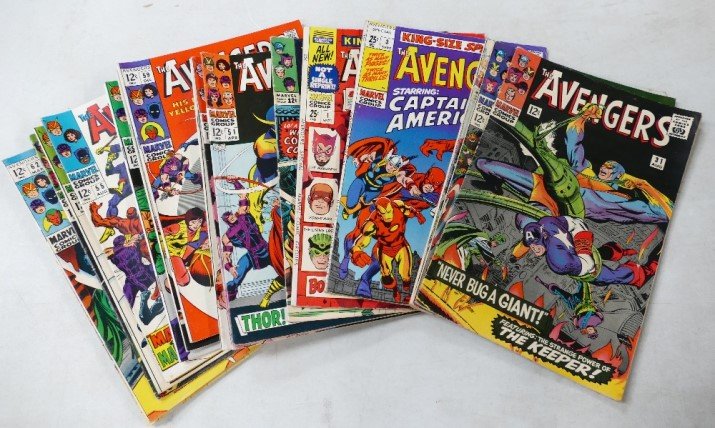
    Some rare vintage Pyrex patterns reportedly sell for hundreds of dollars or more.
  • She began nurse training in 1964. The question she carried out of that first year took six decades to answer in writing.

    She began nurse training in 1964. The question she carried out of that first year took six decades to answer in writing.

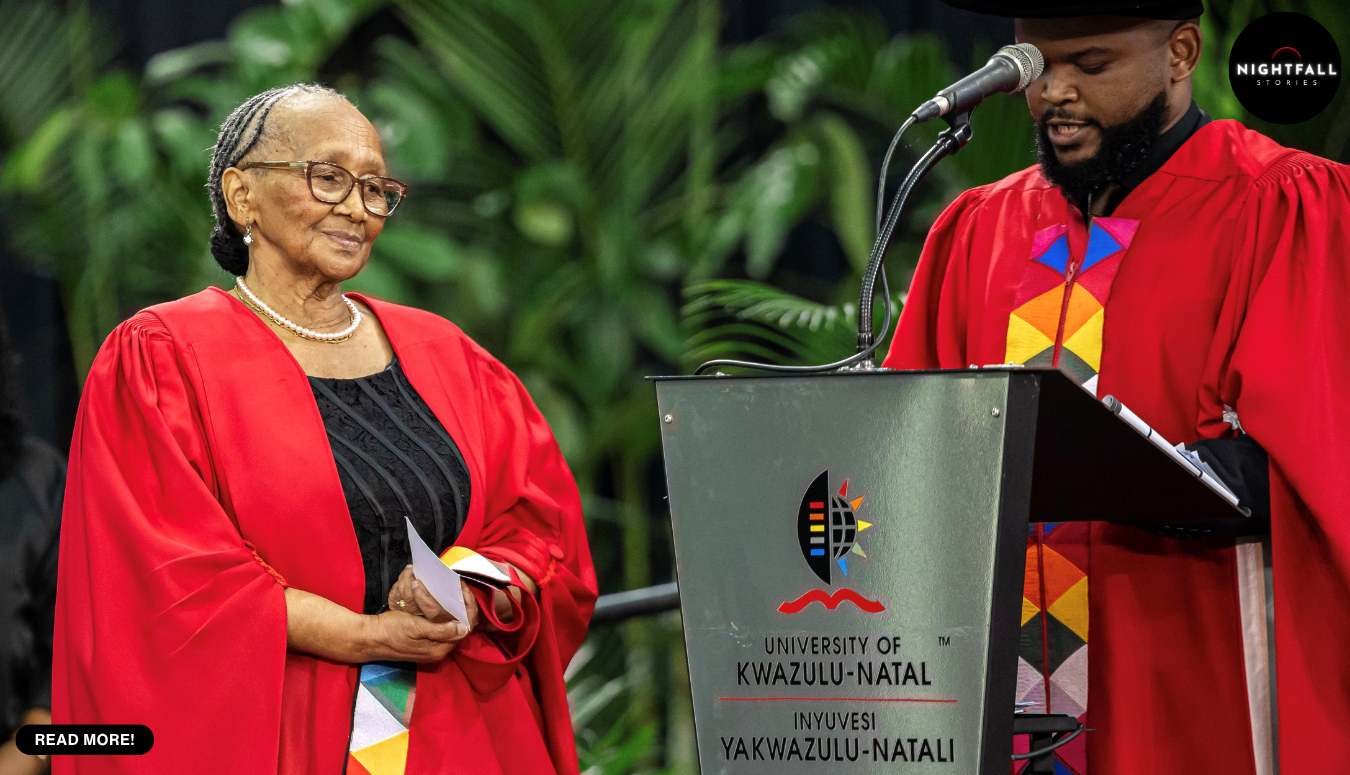
    In a graduation hall at the University of KwaZulu-Natal, a dean of research stood up and read out the title of a doctoral thesis about postnatal care in rural districts, and the woman it belonged to was 82 years old. She had first walked into a hospital as a trainee nurse in 1964. She had spent the intervening years delivering babies, teaching other people to deliver babies, and writing the provincial guidelines that told still other people how to do it. And she had only just finished putting on paper the thing she had been turning over since her first year on the wards.

    Dr Dolly Nontuthuzelo Nyasulu received her doctorate in public health earlier this month, and the detail that makes her story worth more than a nice photograph is what the thesis is actually about. It is not a memoir. It is a piece of research called a family-centred postnatal care approach in rural KwaZulu-Natal, and it asks a question that sounds almost too simple to need a doctorate: what would happen if the family were treated as part of the care team after a baby is born, rather than as visitors.

    She is the eldest of nine children, born in King William’s Town in the Eastern Cape. Accounts of her early years differ slightly on where the interest began. One national report has her growing up in Flagstaff, watching midwives work and listening to women tell their birth stories long before she had any professional reason to care. Another has the spark arriving in 1964 itself, during her general nursing training at Livingstone Hospital in Port Elizabeth, when older midwives described what a home delivery looked like: the whole household present, aunts and grandmothers and sometimes the neighbours, everybody with a job to do. The two versions are not really in conflict. Either way, the thing that stuck was the picture of a birth surrounded by people, and the contrast with what the hospital system was starting to build, which was a birth surrounded by staff.

    Entering nurse training in South Africa in 1964 meant entering a profession that was one of the very few routes into skilled work available to a Black woman, and one that was shaped at every level by the laws of the time. Training was segregated. Where you could work, what you could be promoted into and who you were permitted to supervise were all constrained. Nursing was a genuine ladder, and it was also a ladder with a ceiling, and a great many capable women spent forty years climbing it without anyone once asking them to write down what they had learned. Hold that thought, because it is the quiet argument underneath everything that happened in the graduation hall.

    What she did instead was collect qualifications the way other people collect stamps. General nursing first, then midwifery. Then psychiatric nursing, which is an unusual pairing and turns out to matter, because a great deal of what goes wrong in the weeks after a birth is not obstetric. Then advanced midwifery. Then neonatal nursing, the care of the smallest and sickest newborns. Then a nursing degree covering community health nursing and nursing administration. Then a clinical master’s specialising in maternal, child and women’s health. She worked in KwaZulu-Natal hospitals including Madadeni and King Edward, and eventually she was the provincial coordinator for maternal, child and women’s health, which is the post where you stop doing the work with your hands and start deciding how thousands of other people will do it. She contributed to midwifery education and to national and provincial guidelines.

    The psychiatric nursing is worth pausing on, because it is the qualification that looks like a detour and is not. A significant share of what damages women in the weeks after a birth is not bleeding or infection. It is depression, anxiety, and the particular isolation of a woman who is expected to be delighted and is not. A midwife who has also trained in mental health notices a different set of things in a room, and a policy written by someone with both trainings asks different questions of a follow-up visit. Sixty years later, when her research participants listed what they watch for on a household visit, the mother’s emotional state sat in the list alongside the physical checks, as though that were obvious. In a lot of systems it still is not.

    Put plainly, she was not a nurse who happened to go back to school late. She was one of the people the system consulted, and one of her former colleagues, in a public tribute after the graduation, called her the mother of midwifery in the country. That is affection rather than an official title, and it should be read as affection. But it tells you who she was to the people in the field.

    So why does someone like that need a doctorate at all. The answer is the gap between knowing something and being able to prove it.

    Postnatal care is the weak joint in maternal health almost everywhere. Pregnancy gets attention. Labour gets attention. The first six weeks after a birth get a discharge slip and a follow-up appointment that a large number of women never attend. That is the stretch where most maternal deaths and a very large share of newborn deaths occur, and it is also the stretch where the mother is at home, out of sight of the health system, with a body that has just done something enormous and a baby who cannot tell anyone what is wrong.

    On paper, most health systems in the region schedule a handful of contacts in those weeks, a visit within the first days and then a check at around six weeks. On paper is the operative phrase. A clinic appointment requires a woman who has just given birth to find money for transport, arrange care for the newborn or carry the newborn with her, and present herself somewhere she may expect to be spoken to sharply. Miss it and nothing happens, because nothing is designed to happen. The system’s answer to the riskiest weeks of a mother’s life is an invitation she may not be able to accept.

    The family-centred idea is that the people already in that house are the only continuous presence available, and that the health system should be preparing them deliberately rather than hoping for the best. Not just handing the mother a pamphlet on her way out, but working out before the birth who will be watching for heavy bleeding, who will be checking the cord, who will protect the mother’s sleep, who will notice if she stops speaking. It is the pattern those older midwives were describing in 1964, translated into something a district health service could actually run.

    Her doctoral work was supervised by Professor Myra Taylor and Dr Nelisiwe Khuzwayo at UKZN, and part of it has already been through peer review, which is the strongest thing anyone can say about a piece of research. A paper carrying her name alongside both supervisors appeared in the African Journal of Primary Health Care and Family Medicine last year, and it is worth walking through, because it shows what she was actually doing in the field rather than what a graduation write-up can convey.

    The study was set in the uMgungundlovu district of KwaZulu-Natal, a largely rural municipality of roughly a million people. The participants were 23 community caregivers drawn from seven sub-districts, the people who do household visits, almost all of them women, ranging from their twenties to their sixties. They were brought together in four focus groups, and the transcripts were worked through by hand using a grounded theory approach, which means you do not arrive with a theory and test it, you let the categories emerge from what people say. It received ethics approval from the university’s biomedical research ethics committee, and it received no external funding.

    It is worth saying why a study like that is built out of conversations rather than numbers, since to some readers that will sound like the soft option. You count things when you already know which things to count. When you do not, when the question is why a service that exists on paper is not reaching the people it was designed for, the only honest first move is to ask the people standing closest to the failure and let them tell you what the categories are. That is what a grounded theory approach is for, and it is also, not coincidentally, the method that treats community health workers as witnesses rather than as data points. Which is the same instinct that ran through the whole thesis.

    Five themes came out of it. The first was continuity: the caregivers were emphatic that what happens after the birth is set up during pregnancy, and that a mother who has been properly monitored antenatally is a different proposition afterwards. The second was the scope of their own role, which they described as far wider than the job description suggests, covering the mother’s physical recovery, her emotional state, the baby’s checks, immunisation, feeding and nutrition.

    The third theme is the uncomfortable one. Asked why young mothers do not come to the clinic, the caregivers did not talk about ignorance or distance first. They talked about judgement. Fear of being judged by health workers, by their own families, by the wider community. A young woman who expects to be lectured, or shamed, does not attend, and then she becomes a statistic about non-compliance.

    The fourth theme follows from it. When mothers miss appointments, the caregivers said, nurses can read it as the caregiver having failed, and the caregivers are then carrying blame for things outside their control, including something as small and as decisive as not having the money for transport. The fifth was practical: what these caregivers should be trained and equipped to do, from watching for postpartum bleeding to cord care to supporting feeding.

    The recommendations are correspondingly unglamorous. Train community caregivers properly in the family-centred approach, including hands-on demonstration rather than modules. Build real collaboration between them and the clinic staff through joint training and regular meetings, so the relationship is not one of quiet mutual blame. Give them workable caseloads and the resources to travel. And, the authors note themselves, do a larger study across more than one province, because 23 people in one district cannot speak for a country.

    That last point deserves saying out loud, because this is a story about research and the research should not be oversold. A qualitative study of community caregivers in one district is a piece of groundwork, not a proof. Her own position, as reported, is that a family-centred approach remains underused in the South African system and that implementing it could strengthen the chain of care and save lives. That is her professional argument, made on the basis of sixty years in the field and a doctorate, and it is reasonable. It is not yet a demonstrated outcome, and she has not claimed it is.

    The doctorate took years, and the years were not kind. Her daughter died in 2019. She lost two brothers. And her husband Guy, whom she has described as the person who backed the whole undertaking, died roughly two and a half years before she graduated. None of them saw the thesis finished.

    There is no good way to make that sound like part of a plan, and it would be wrong to try. What is on the record is narrow and worth keeping narrow: she kept working, she has said the period after her husband’s death was the hardest, and she has said that people around her carried her when she could not carry herself. She also dealt with the ordinary indignities of doing a doctorate in her eighties, including knee trouble, high blood pressure, and the software. Anyone who has watched an older relative fight with a word processor’s reference manager will recognise that last one as less trivial than it sounds.

    There is one more thing the provincial coordinator job explains. When you have written the guidelines, you know exactly where they are thin. You know which paragraph was a compromise, which recommendation was inserted because it was cheap, and which part of the document everybody nods at and nobody funds. Postnatal care is that part almost everywhere. Someone who spent years writing those documents and then chose, in retirement, to go and examine one of their weakest joints with a formal method and an ethics committee was not looking for a title. She was closing a loop she had left open on purpose.

    She has said that reaching the end felt hard to believe, and that it had been a long journey. On the day itself, the dean of research at the College of Health Sciences read out her thesis title, and a woman who started training when the guidelines she would later help write did not exist yet sat and listened to her own work being announced.

    She is a grandmother of five with two great-grandchildren. She is formally retired, and by her own account still available if anyone wants to use her in maternal, newborn and women’s health, which on the evidence would be a straightforward decision for whoever is hiring. Her advice to younger people, as reported, runs along the lines that education is a passport, and that you go on learning until you die.

    It would be easy to file this under inspiring pensioner and move on, and that would miss what is interesting about it. The remarkable part is not that an 82-year-old completed a doctorate, although that is difficult and she did it while grieving. The remarkable part is the content. The thing she researched, the idea that a family should be prepared before the birth to look after the mother and baby after it, is not new knowledge that she discovered in a library. It is what she was told by working midwives in her first year of training in 1964, describing how births had been managed in households for generations.

    That knowledge was in the room the entire time. It was held by women who were trusted enough to deliver babies and were never asked to write anything down, in a system that had no mechanism for taking them seriously as a source. It sat inside one nurse’s career for six decades while she rose to the top of a provincial health department, and it only entered the formal record, with a methodology and an ethics number and a peer-reviewed paper attached, when she was 82 and had to go and get a doctorate to put it there.

    Nobody is better placed to point out the cost of that than she is. Which is presumably part of why she bothered.

    The gown came off the same afternoon. The thesis is in the university’s record, the paper is in a journal that district health managers actually read, and the question she carried out of a hospital corridor in 1964 now has an author, a title and a citation. That is the part that outlasts the photograph.

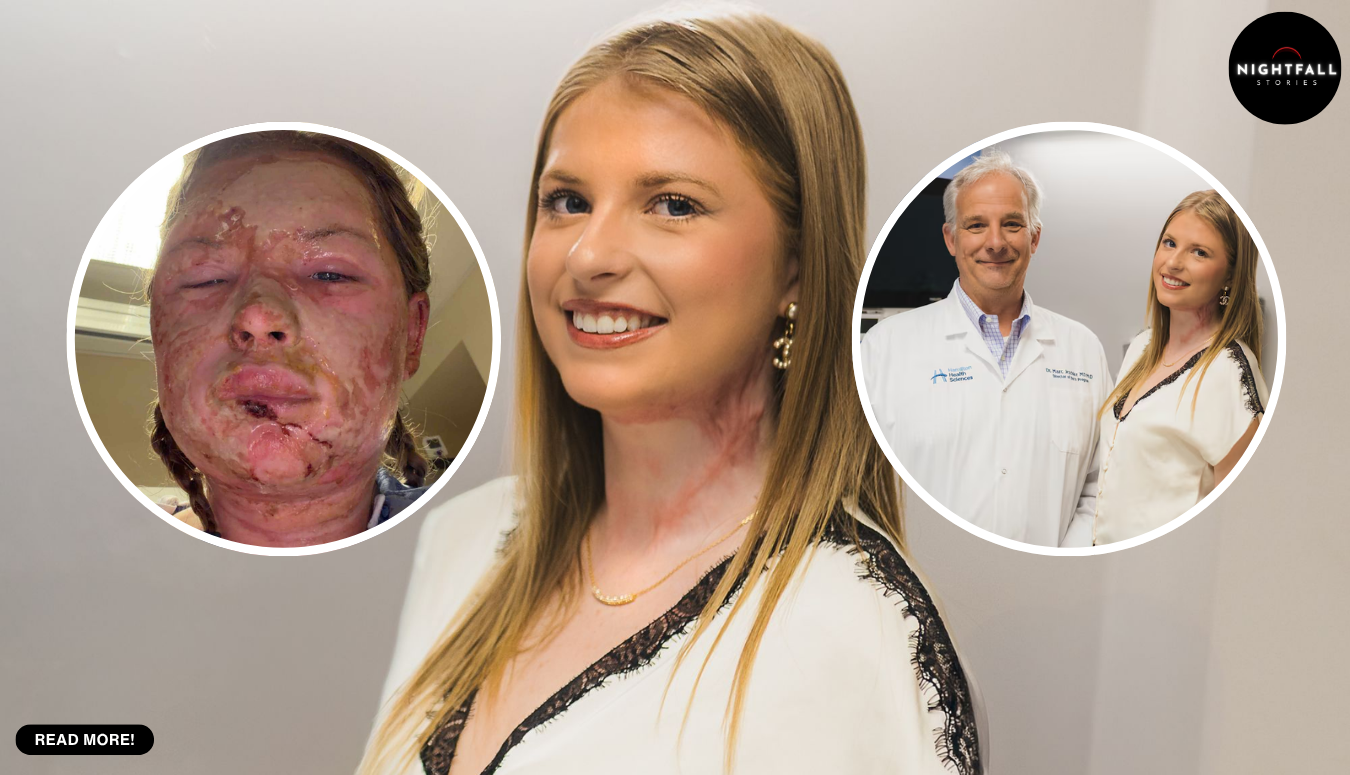
  • Her surgeon told her the best graft on Earth would not give her face back. So he asked the regulator for something no burn patient had ever had

    Her surgeon told her the best graft on Earth would not give her face back. So he asked the regulator for something no burn patient had ever had

    The offer on the table was skin grafts to her face and neck. Kaitlin Jeffrey was eighteen years old, a first-year university student, and the offer was not a mistake or a failure of care. It was the correct treatment, the standard of care, what any good burn centre anywhere in the world would have recommended for burns as deep as hers. Her surgeon simply did not want to do it, and he had a specific reason that he has said out loud since: you can perform the best skin graft on the planet and you still will not give someone their face back.

    So instead he wrote to Health Canada and asked permission to put roughly one trillion microscopic particles into her wounds, a therapy that had been studied in laboratories for years and given to a burn patient exactly zero times.

    She said yes. That is the part of this that tends to get skipped when the story travels, because the headline goes to the surgeon and the science. But the person who had to decide whether to be the first human being on Earth to receive an unproven treatment on her own face, while lying in a burn unit at eighteen, was her.

    The fire happened in a student house in London, Ontario, late in 2025. It was a flash fire at a party, and five people were taken to hospital. Jeffrey, a student at Western University and originally from Toronto, was the most seriously hurt of them. Her burns covered her face, her neck, her hands and her right arm, and they ran from deep partial thickness into full thickness, which is the clinical language for damage that has gone through the layer of skin that can regenerate itself and into the layer that cannot. Nothing about how the fire started has been established in anything I could verify, and this piece is not going to speculate about it.

    She was transferred to the regional burn centre at Hamilton General Hospital, one of only two specialist burn units in the province. There is no gentle version of what the following weeks involve, and this story is not going to walk through it in detail, because the details are not what makes it worth reading. What matters is a single decision point, and to understand it you have to understand what a graft actually costs.

    Grafting works. It has saved an enormous number of lives, and for a large burn it is not optional. But what it does is take skin from somewhere on the body that is undamaged and move it to the place that is. The donor site becomes a new wound. The grafted area heals, but it heals as something slightly other than skin. It is often a different colour and a different texture from what surrounds it. It does not sweat or move quite the same way. On an arm or a back, that is a trade almost anyone would take without hesitating.

    On a face, the arithmetic changes. A face is not a surface, it is the thing other people look at when they talk to you, and it is the thing you see when you look in a mirror for the rest of your life. Dr Marc Jeschke, the surgeon in this case, has spent his career in burn medicine and is a vice president of research and innovation at Hamilton Health Sciences, medical director of the regional burn programme, and a professor of surgery at McMaster University. He is one of the more cited burn researchers in the field. His concern was not vanity. It was that for a young patient, a facial graft carries a psychological weight that outlasts the wound by decades, and that in his judgement a good graft was still the wrong answer if there was any alternative worth trying.

    It also matters that the person making this argument was in a position to act on it. A surgeon cannot simply decide to try something unlicensed on a patient. Getting an unapproved biological product into a hospital, through a pharmacy, past an ethics review and into a wound requires a specific kind of standing: a research record long enough that regulators take the request seriously, an institution willing to carry the risk, and the administrative reach to move it in weeks rather than years, because a burn will not wait. Jeschke has spent decades on burn biology and healing, and he holds a senior research post inside the hospital organisation itself. Someone with the same idea and none of that would very likely not have been able to do this, and that is worth noticing before anyone treats the case as a template.

    There was one, and it had been sitting in research literature for years without ever being used this way.

    Exosomes are one of those biological objects that sound made up until you understand how ordinary they are. Cells talk to each other. One of the ways they do it is by packaging up molecular instructions inside tiny bubbles of membrane and releasing them, so that other cells can pick them up and act on them. Those bubbles are exosomes. They are not cells and they are not stem cells. They are messages, in the most literal sense biology allows, and the signals they carry include instructions about repair, about building new tissue and about turning inflammation down.

    The therapeutic idea follows fairly directly. If a wound heals badly partly because the signalling in the area is overwhelmed, then flooding the area with the right messages, harvested from cells that produce them in abundance, might tip the process toward proper regeneration instead of scar. Exosome preparations have been studied in wound healing for some time, with encouraging results in other kinds of wounds. Nobody had given them to a burn patient.

    The particles used in Jeffrey’s case were derived from stem cells taken from umbilical cord and amniotic tissue, and they were sourced from a supplier in the United States. That distinction matters and the article is being careful with it: she was not given stem cells. She was given the material stem cells secrete, which is a far less unpredictable proposition, and one reason Jeschke has described the treatment as extremely safe.

    Getting it into a Canadian hospital required a regulator’s cooperation. The route the team used was a compassionate-grounds application to Health Canada, and it is worth being precise about what that is, because it is routinely misdescribed. This was not a clinical trial. Nobody was randomised, there was no control group, and there was no protocol being tested. A compassionate or special-access pathway exists for the situation where a specific named patient has a serious condition, the conventional options are inadequate, and there is a plausible unapproved option available. The regulator’s part is not to declare the treatment effective. In this case, as reported, Health Canada raised no objection, and the team proceeded on that basis.

    No objection is a phrase doing a lot of quiet work. It is not an approval, not an endorsement, and not a statement that the therapy works. It means the regulator reviewed a request for one patient and did not stand in the way. Everything after that sat with the surgeon’s judgement and the patient’s consent.

    She was given two treatments, several days apart, totalling somewhere around one trillion exosomes, injected into the injured areas. Platelet-rich plasma, a preparation made from a patient’s own blood that is already used fairly widely in wound and tissue medicine, was applied topically alongside it as a complementary therapy.

    Then they waited, and the waiting is the part nobody can shortcut. Skin heals at the speed skin heals.

    What happened is that her face closed. It healed without grafting, which was the entire point of the exercise, and it healed to a standard Jeschke has publicly called absolutely remarkable, a phrase he is on the record using and which is notably strong from a researcher who spends most of his professional life being careful. Jeffrey’s own description was that it is honestly a miracle, and that you would not know from looking at her face that she had been burned at all.

    Here is where a great deal of the copy circulating about this case gets it wrong, and it is worth correcting flatly, because the wrong version is unkind to her as well as inaccurate. She has not fully recovered. That framing has appeared in wire and social copy and it overstates what happened.

    Her face healed without grafts. Her neck did not need grafting either, but it is still in an active healing phase, still scarring, and still being treated with further platelet-rich plasma and laser work. Her hands and her right arm did require grafts. And she has spoken plainly about the part of this that no photograph shows, which is that being injured in a fire has had a deep effect on her mental health and is something she is still dealing with. She has said that having good results, particularly to her face, is helping her move forward. Helping her move forward is not the same sentence as fully recovered, and she never claimed it was.

    There is one more detail that gives this case whatever early suggestion of an effect it has, and it also happens to be the detail that should make everyone cautious. Another student was injured in the same fire and did not receive the exosome treatment. By the account given at the announcement, Jeffrey healed faster and with better results. That is the closest thing to a comparison that exists here, and it is nowhere near enough to prove anything. Two people, different burn depths, different anatomy, different areas of the body, different everything. It is a hint. It is not evidence, and no one should present it as such.

    What exists in the formal record, so far, is a case report that has been submitted for publication in the scientific literature. A case report is the smallest unit of medical evidence there is. It says this happened to this person. It cannot tell you whether it will happen to the next one, or whether the outcome would have been similar without the intervention, or whether there is a rare harm that only shows up when you treat a thousand people instead of one. Burn medicine has a long history of treatments that looked transformative in a single dramatic case and did not survive a proper trial. Anyone reading this and hoping for it should hold that in mind.

    There is a harder question underneath all of this, and it is the same one that follows every compassionate-access story. Jeffrey got this because of where she happened to be taken. She was burned within reach of one of the two specialist burn centres in the province, and the surgeon on duty at that centre happened to be one of the small number of people in the world with the research standing and the institutional position to ask a national regulator for an unapproved biological product and get an answer quickly. People sustain facial burns everywhere, every day, in places where none of those conditions apply. For them the treatment did not fail. It was never on the table.

    Both Jeffrey and Jeschke have said they want exosome therapy to become standard care for severe burn patients in Canada. He wants it because he thinks he has seen what it can do to the outcome for a face. She wants it for a more specific reason, which she has expressed as a wish that when something horrific happens to someone, it does not have to change their life permanently.

    But standard care is a status a treatment earns, not one it is granted. The path from one compassionate-access case to a therapy that any burn unit can offer runs through trials, through regulators making actual approval decisions rather than raising no objection, through cost and supply and manufacturing consistency for a biological product measured in trillions of particles. That process exists for good reasons and it will take years. Nothing about this case shortens it. What this case does is make it much harder to argue that nobody should bother starting.

    So the honest place to leave this is not on her face, remarkable as the outcome there appears to be. It is on the two things running at different speeds. One of them is finished: the grafts that were scheduled for her face and never happened, and a decision made by an eighteen-year-old in a hospital bed that turned out well. The other is not finished. Her neck is still healing. The research is barely begun. And the part of this that lives behind her eyes rather than on her skin is going to take as long as it takes, on nobody’s timetable but her own.

  • His worst day held 74 seizures. Three days after a first dose, they stopped, and the drug had never been given to anyone

    His worst day held 74 seizures. Three days after a first dose, they stopped, and the drug had never been given to anyone

    Seventy-four. That is the number Stephanie Higginson counted on her son’s worst day, and it is the number that explains everything else about this story. Bohdi Higginson was a few months old. He would go still, then stiffen, then jerk, then drool, and each episode could run for minutes, and then another would come. His mother learned to count them because counting was the only thing left to do. Seventy-four in twenty-four hours.

    Then, on an evening in the Australian autumn, at 7.58pm, Bohdi had a seizure and did not have another one. He was three days into the first dose of a medicine that, until that week, no human being had ever taken.

    That is the whole story in two paragraphs, and it would be easy to stop there and call it a miracle. His mother has been careful not to. So have his doctors. Bohdi is eight months old, he is still on the drug, he is still being watched closely, and nobody involved has used the word cured. What they have said is that a baby who was seizing dozens of times a day is now a baby who babbles, holds his own head up, and kisses his mother.

    The condition is called KCNT1-related epilepsy, and the name is doing something specific. KCNT1 is a gene. It builds a potassium channel, one of the tiny gated pores in the membrane of a nerve cell that let charged particles in and out and so decide when that cell fires. When the gene carries a particular kind of fault, the channel does not just work badly. It works too well. It stays open when it should close, current flows when it should not, and the electrical traffic in a developing brain goes haywire.

    The result, for most children who have it, is seizures that begin in the first weeks or months of life and do not respond to the standard anti-seizure drugs. Clinicians describe it as a catastrophic or often fatal epileptic encephalopathy, and the word encephalopathy is the part parents come to dread, because it means the seizures are not the only problem. The same electrical chaos interferes with everything a baby brain is supposed to be learning to do. Many affected children die in infancy. Many of those who survive live with profound disability. Those are the clinicians’ characterisations of the condition, not a prediction about any individual child, and they should be read that way.

    According to the Sydney hospital network that treated Bohdi and the New South Wales government release that followed, only eighteen cases of this form of the condition have ever been recorded in Australia. That figure comes from the hospital’s own accounting rather than from an independent registry, and it is worth noting that it is reported as cases rather than families, which are not the same thing when a genetic condition is involved. In the United States, where the population is far larger, the number of people thought to be living with KCNT1-related epilepsy in all its forms is estimated at around two and a half thousand. Either way, the point is the same. This is a condition so rare that a treating doctor may see one case in a career, and so rare that there is no comfortable body of evidence to reach for when a parent asks what happens next.

    Bohdi’s seizures started at three months. The diagnosis came a little later, once genetic testing gave the family a name for what they were watching. A name, in this situation, is a strange gift. It ends the uncertainty and replaces it with something worse, because the literature a parent finds after a KCNT1 diagnosis is not encouraging reading. His aunt, writing publicly to raise money for the family, described the years of infertility and lost hope that came before Bohdi arrived at all. He was the child they had stopped expecting.

    Before any of the science enters this story, there is the ordinary domestic version of it, and it is worth sitting in for a moment because it is what most families in this position are actually living. A seizure in a small baby does not always look like the thing people picture. It can be a stillness. A change in the eyes. A stiffening that lasts a few seconds and then passes, and that you second-guess yourself about afterwards. Parents in this situation become amateur clinicians very fast. They film episodes on their phones so a neurologist can see what they saw. They learn the vocabulary. They keep a log, because the log is the only instrument they have.

    And they learn, usually within weeks, that the standard treatments are not going to be enough. Conventional anti-seizure medicines mostly work by damping down excitability across the brain in a general way. They are blunt instruments by design, and against a fault this specific they tend to do two things badly: fail to control the seizures, and sedate a baby who needs to be awake and learning. Families often cycle through several drugs and several combinations, each one carrying its own side effects, each one raising hope and then not delivering. By the time anyone starts talking about experimental options, a great deal of hope has already been spent.

    What happened next depended on a piece of institutional machinery that almost never makes the news, which is a shame, because it is the genuinely interesting part.

    Sydney Children’s Hospitals Network runs something called the Innovative Therapies Pathway. In plain terms, it is a formal route by which a team of specialists can assess whether an experimental treatment that exists somewhere in the world might be used for one specific child who has run out of approved options. It is not a single doctor making a judgement call. It brings together neurologists, pharmacists, ethicists, geneticists and administrators, and it exists because precision medicine has created a new and awkward problem: treatments are now being designed for faults so specific that the number of people who could benefit from any one of them may be small enough to fit in a room. The old model, where a drug proves itself in a large trial and then reaches patients, does not fit that reality neatly.

    Dr Michelle Lorentzos, the network’s medical lead for advanced therapeutics, has described this as the beginning of a period in which highly personalised therapies for ultra-rare conditions become genuinely possible rather than theoretical. Dr Kavitha Kothur, a paediatric neurologist at the Children’s Hospital at Westmead, led Bohdi’s case.

    The treatment they found was a compound called ABS-1230, developed by Actio Biosciences, a biotechnology company based in San Diego. It is not gene therapy and it is not an injection. It is an oral small molecule, a drug you can swallow, and what it does is block the very channel the faulty gene builds. If the problem is a potassium channel stuck too far open, the drug is a selective inhibitor designed to close it. In preclinical work the company reported that the compound inhibited every pathogenic variant of the gene it was tested against. Before Bohdi, that work had been done in laboratories and in animals. No person had taken it.

    That is the sentence a parent has to sit with. The mechanism made sense. The laboratory data looked good. But the column in the file marked, what happened when a human took this, was empty, and the first entry in it was going to be her son.

    Stephanie Higginson has been direct about how she weighed it, and her framing is the reason this story is worth telling at length. She was not choosing between a risky option and a safe one. The alternative on the table was losing him. When the choice is structured that way, the word brave stops quite fitting, because bravery implies an easier path declined. She has said she begged for it to work.

    Bohdi began on 2 milligrams a day. After three days the dose was increased to 5 milligrams twice daily. That evening, at 7.58pm, he had his last seizure.

    The precision of that timestamp is not a flourish. It is what happens when a parent has spent months logging every event, and it tells you something about what the previous weeks had been like. She did not have to check the records to know when it stopped. She knew.

    Then came the part nobody had counted on, because it was never the thing being measured. Seizure freedom was the endpoint. What his mother started noticing instead was a baby. He was alert. He was moving. He was responsive in a way he had not been. He started reaching milestones that the diagnosis had quietly written off. Dr Lorentzos described the change in ordinary, unclinical language: a gorgeous, babbling baby, controlling his head, kissing his mum. Dr Kothur said that seeing a response this early in a child with a disease this severe was extraordinary.

    The hospital and the state government have called it a world first, the first time anywhere that a precision medicine has been given for this condition on this pathway. That claim belongs to them and to the broadcasters who reported it, and it is right to attribute it rather than assert it, if only because the word first is a slippery word in medicine and depends heavily on how the category is drawn. Other teams elsewhere have tried other genetic approaches to this same gene in infants. What is not in dispute is that Bohdi was the first person to receive this particular drug.

    He is still receiving it, and that matters to how the story should be read. The compound has since entered a formal clinical programme, a phase 1b/2 trial with an open-label period, a randomised placebo-controlled period and a long-term extension for children and young people from one month to twenty-one years old. Bohdi continues on treatment through that long-term extension, which means he is not a finished case study. He is a patient in an ongoing programme, taking a drug whose full safety picture over years rather than months is not yet known, and being monitored for exactly that reason.

    Around the same time as his story became public, the company that developed the drug was acquired by a larger pharmaceutical firm in a deal reported at around 850 million dollars upfront with further payments tied to milestones, on the strength of a compound for which no clinical data had yet been published. That is a useful reality check in both directions. It tells you that people who look at these things professionally believe the drug is doing something real. It also tells you that the enthusiasm currently attached to it is running well ahead of the published evidence, because as of now there is essentially none in the public domain beyond individual cases like this one.

    So here is the careful part, and any honest version of this story has to include it. One child is not a trial. Eighteen recorded cases in a whole country means there is no comparison group, no way to know what Bohdi’s next year would have looked like without the drug, and no statistical basis for saying what it will do for the next child. Rare disease is full of responses that looked transformative in one patient and did not hold up. It is also full of children who got nothing at all because the numbers were too small for anyone to build a trial around them, which is precisely the gap pathways like the one in Sydney were built to close.

    Which raises the question the coverage mostly does not. Bohdi got access because he was diagnosed in a system that had a named medical lead for advanced therapeutics, a functioning ethics process, a neurologist willing to chase a compound halfway around the world, and a state health network prepared to back the decision. Children with the same variant in the same gene exist in places where none of that machinery is in place. The drug is identical. The access is not. A world first is also, always, a description of where the first happened to be possible.

    For his family, none of that is the point. The point is smaller and more domestic. Bohdi is in occupational therapy, physiotherapy and speech therapy now, doing the ordinary work of a baby catching up, rather than the extraordinary work of surviving dozens of seizures a day. His mother has said he is like a completely different baby, and that the neurologist who took his case changed their lives.

    She has been notably unwilling to call it a finish line. The word she uses is hope, and she means it in the exact, limited, unglamorous sense: something is working now, and nobody can promise her about later. He is watched. He is measured. Every appointment is a small held breath.

    That is where this ends, and it should. Not on a cure, because nobody has claimed one. On a number instead. It was seventy-four in a day, and then it was zero, and the zero has held. In a condition where most families are told to expect the opposite, a zero that holds is not a small thing to be living inside, even while you are still counting.