Blog

  • Three men admitted the robbery. Guy Miles still had to accept the conviction to go home.

    Three men admitted the robbery. Guy Miles still had to accept the conviction to go home.

    Guy Miles was not in Orange County on the morning of 29 June 1998. He had collected his twelve year old son from Carson at around three in the morning and driven him to Las Vegas, arriving somewhere between seven and eight. His parents said so. His son said so. A neighbour in Las Vegas said she saw him there that morning. Flight records and telephone records backed up the timeline, and the trial judge kept those documents away from the jury on the grounds that they had not been properly authenticated.

    Three men robbed a loan office in Fullerton that day and left with roughly 5,400 dollars in cash and cheques, at 1998 values. Two of the people who were in that office picked Guy Miles out. He was convicted in 1999 and sentenced to 75 years to life.

    Three other men later said, under penalty of perjury, that they had done it and that he had nothing to do with it. Bernard Teamer, who by his own account planned the robbery. Jason Steward, who went inside. Harold Bailey, the third man. None of that got Miles out of prison for another decade and a half, and when he finally did walk out, he walked out carrying a robbery conviction he had agreed to accept.

    That last part is the piece of this story most people have never heard of, and it is worth slowing down on, because it is the bargain at the centre of everything that happened to him.

    Start with how the identifications were made, because the appeal court eventually spent a great deal of time on them. The photographic lineups put more than one suspect into a single array. There were not enough filler photographs. Nobody had bothered to find people who actually resembled the description the witnesses had given, which meant that a stocky man in a six pack of thinner ones was the only face that could possibly be the answer. Miles was the stocky man. His photograph stood out.

    Then there was what happened in the courthouse hallway. One of the two witnesses, an employee of the office, could not identify Miles in the courtroom. During a morning break, with the jury out, she told the prosecutor she could not do it. The prosecutor showed her a colour photocopy of Miles’s booking photograph. After looking at it, she said she was certain. The booking photograph carried his arrest date on it, which told her, without anyone having to say a word, that the police had already decided he was the man.

    The National Registry of Exonerations lists four factors in this case: mistaken witness identification, false or misleading forensic evidence, official misconduct and inadequate legal defence. The hallway photograph is what sits behind the third of those. It is not a dramatic act. It is a tired prosecutor in a corridor handing a wavering witness the reassurance she was looking for, and it took twenty seven years to undo.

    There was no physical evidence putting Miles in that office. The prosecution leaned on the two identifications and on an argument about who he was associated with. The jury convicted.

    For the next several years he worked his own case from inside. He filed something in the order of thirteen appeals himself, without a lawyer, and lost all of them. In 2001 he wrote to the California Innocence Project, which took the case and then spent roughly fifteen years on it. Its investigators found the three men. Teamer, Steward and Bailey all gave accounts saying Miles was not there.

    And it still did not work, because of the standard that applied. For decades, a Californian prisoner bringing new evidence after conviction had to produce something that pointed unerringly to innocence and completely undermined the prosecution’s case. That is close to an impossible test. Three people saying they committed the robbery does not point unerringly at anything, because a court can always decide they are lying for a friend. Under that standard the confessions were not enough, and Miles stayed where he was.

    What changed was a piece of legislation. In 2016 California lowered the bar. The new wording asks whether the evidence is credible, material, presented without substantial delay, and of such decisive force and value that it would more likely than not have changed the outcome at trial. More likely than not is an ordinary human question. Pointing unerringly is not. The amendment took effect at the start of 2017, and by one account Miles’s case was the first to benefit from it.

    On 19 January 2017 the Court of Appeal, Fourth District, Division Three, granted his petition and vacated his convictions in a thirty five page opinion. Justices Eileen Moore, Richard Aronson and Richard Fybel sat on it. Moore wrote separately about the identifications, and her language was restrained and damning at the same time: the pretrial lineups were unduly suggestive, and the booking photograph had given the witness positive feedback that converted her doubt into false confidence.

    Here is where the story stops behaving the way people expect it to behave. The convictions were gone. Miles was not free.

    The ruling gave the prosecution a choice. It could retry him within a set period, or he had to be released. The prosecution said it would retry him. Bail was set at a million dollars, which he could not pay. So the real choice was not between freedom and a second trial. It was between sitting in custody for however long it took to get to that second trial, in front of a new jury, with the same 75 years to life waiting at the end of it, or taking a deal.

    The deal was a plea entered under a California rule known as a West plea, after the case that established it. It is a strange instrument. It lets a defendant accept a conviction and a sentence without admitting that he did the thing. On paper the conviction is real and enforceable. Underneath it, nobody has said the words. In Miles’s case it covered two counts of second degree robbery and a firearm enhancement, and it came with credit for the time he had already served, which meant he could go home.

    He took it. He was released on 20 June 2017, after 6,895 days in custody, a figure that comes from the state body that later paid him compensation and works out at more than eighteen years.

    Talk to anyone who has been through this and the plea is the part they come back to. Miles gave an interview to a prison newsroom at San Quentin later that year and he was plain about his reasoning. The prosecution was ready to take him back to trial. He needed to get back to his mother and father, and he suspected they were hiding health problems from him. He also said something that explains the shape of the whole bargain better than any legal commentary could. It felt, he said, like having to prove it all over again, starting the trial from the beginning, and that was not a good feeling.

    So he went home with a conviction. Not a cloud, not an allegation, a conviction, on a record, for a robbery that three men had sworn he had no part in. He had refused for nineteen years to say he had done it, and in order to walk out of a county jail he had to accept the court’s finding that he had.

    The organisation that eventually took over his case has a name for this. A dark plea is a plea entered not because someone committed the crime but because the alternative is too dangerous to risk, and it happens most often to exactly the people in Miles’s position: someone whose conviction has just been overturned, who is standing one inch from the door, and who is told that fighting on means years more inside and a chance of never coming out. The pressure does not appear anywhere in the paperwork. The record simply shows a plea.

    What the plea cost him was not only the record. In 2021 the California Victim Compensation Board paid him 965,300 dollars, which is calculated per day of wrongful imprisonment, and that payment reflects a state determination in his favour. But the conviction itself stayed on his file for another five years after the money arrived. A robbery conviction is a background check, a rental application, a job interview, a licence, a form that asks a question with only one honest answer. For nine years after his release he carried the thing he had never admitted to.

    Then, on 21 August 2026, something happened that does not happen very often.

    The Orange County District Attorney’s office has a Conviction Integrity Unit, a team whose job is to look back at the office’s own work. It reviewed the Miles file. It concluded, on the totality of the evidence, including the confessions of the three men and the identification procedures, that the office had lost confidence in the conviction. That phrase is doing a lot of work. It is not an apology and it is not a finding of innocence. It is a prosecuting office saying it is no longer willing to stand behind a result it obtained.

    Then it did the thing that matters more than the phrase. Rather than waiting to be sued or petitioned, the unit filed a joint motion with Miles’s own lawyers, Claudia Salinas and Audrey McGinn of The Innocence Center, asking the court to set aside his plea and vacate the conviction. District Attorney Todd Spitzer’s office put its name on the same piece of paper as the people who had spent years arguing against it.

    The court granted it, and it is worth being exact about what the court actually did, because two separate things happened that day and they are not the same thing.

    First, vacatur. The conviction was set aside. The plea Miles had accepted in 2017 was undone, which means that in law the conviction no longer exists and never did. That alone would have left the case technically open, with charges still on file and a theoretical possibility of the whole thing starting again.

    Second, dismissal. The charges themselves were dismissed. There is nothing left to retry, nothing to revive, nothing pending. The registry of exonerations records both the vacatur date and the dismissal date as 21 August 2026, which is the paperwork equivalent of closing a door and then taking the door off its hinges.

    The arithmetic of this is worth separating out, because two different numbers get quoted and both are correct. He was in custody for more than eighteen years. The conviction stood for twenty seven. The gap between those two figures is the nine years he spent at home, free, with a robbery on his record that he had accepted in order to be at home at all.

    A few things in this story remain unresolved and are worth saying rather than smoothing over. It is not established in the public record whether Teamer, Steward or Bailey were ever charged with the robbery they described. The registry’s reference to false or misleading forensic evidence is not explained in the material available, and should not be assumed to mean anything more than the registry’s own classification. And the organisations involved have themselves been inconsistent about the year of his release, with some of the 2026 material saying 2018; the court’s opinion, the contemporaneous reporting and the registry all put the appeal ruling and the release in 2017.

    What is not in doubt is that there was a robbery. Three men went into a workplace with a gun, and the people who were behind that counter had a morning they presumably still remember. Nothing that happened to Guy Miles makes that less true. Two of them gave an honest answer to a badly built question and were then nudged, by the people who were supposed to be testing their memory, toward the answer the police had already chosen. That is not a failure of the witnesses. It is a failure of procedure, and the procedure was not theirs.

    Miles is around sixty now. The lawyers who finished his case have used it to argue for something small and specific: that when a court reverses a conviction and the prosecution then offers a plea, the trade being made should be stated out loud, on the record, so that the coercion is visible rather than buried in a form. It is a modest ask. It is also an admission that the system currently has a mechanism for making an innocent person agree to a conviction and leaves no trace of having used it.

    For twenty seven years the state of California held that Guy Miles robbed a loan office in Fullerton while he was several hundred miles away with his son. He never said he did it. He agreed, once, in order to go home, to let a court say it for him. And in the end the office that had put him there was the office that stood up and asked for it to be taken back.
  • A village stopped a lake from draining away using sandbags and wood. The reason was a duck most of them had never heard of.

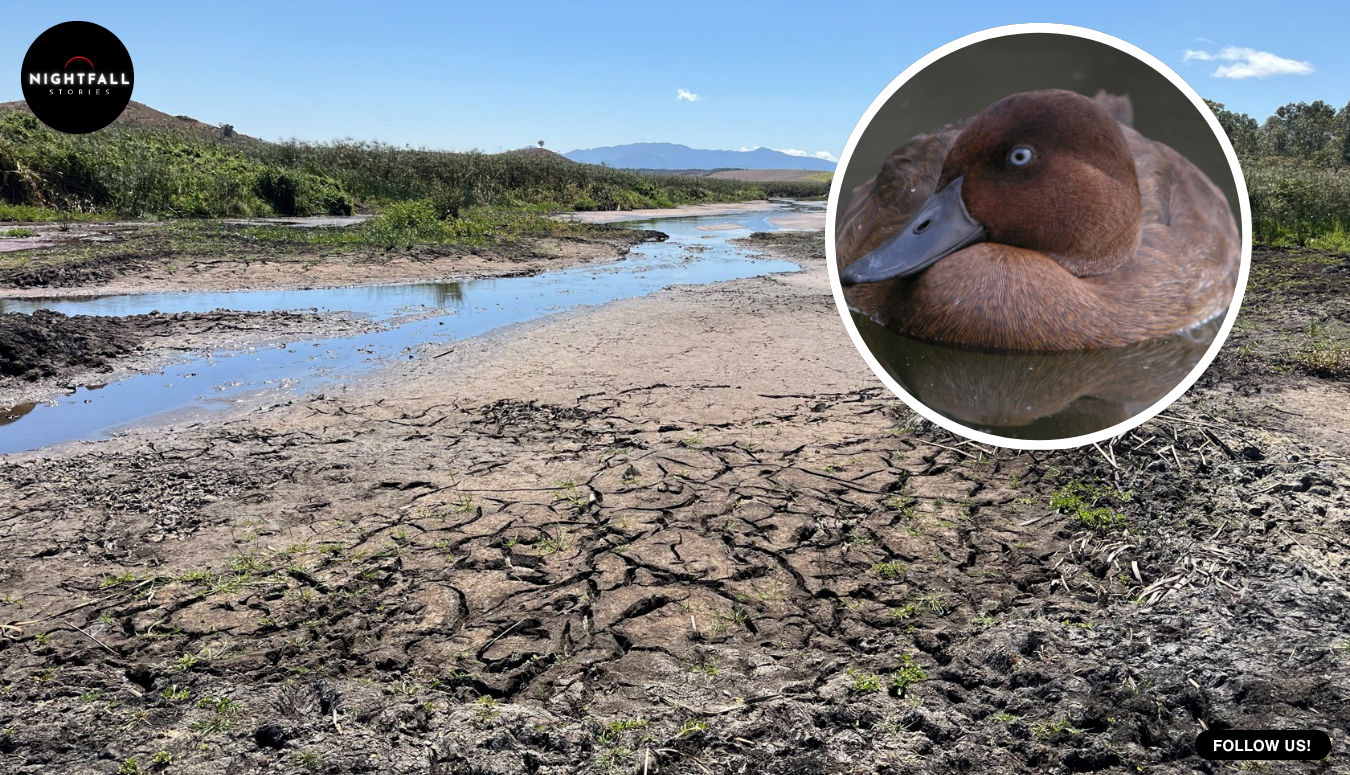
    A village stopped a lake from draining away using sandbags and wood. The reason was a duck most of them had never heard of.

    The water was going out of Lake Sofia like a bath with the plug pulled, and the people who lived around it went down to the gap with sandbags and timber and started filling it in by hand.

    The gap had been a channel about two metres wide, the sort of outlet a lake has and nobody thinks about. Heavy storms widened it. By the time anyone fully understood what was happening it was more than a hundred metres across, and the lake had lost about nine tenths of its water. What had been a wetland of international importance in northern Madagascar was becoming a bed of reeds with puddles in it.

    The temporary barrier the villagers built was around a hundred metres long and made of sandbags and wood. It was not an engineering solution and nobody pretended it was. It was a way of buying weeks.

    Among the things drying out in that lake bed was the entire free living population of the rarest duck on earth.

    The Madagascar pochard is a brown diving duck with a dark red eye, and if you saw one on a park pond you would walk past it. For most of the second half of the twentieth century it was thought to be gone. The last confirmed sighting was in the early 1990s, and the species was written off as extinct, which is a thing that happens to small brown animals in remote places far more often than it happens to tigers.

    Then in 2006 a survey team from the Peregrine Fund, working in the north of the country, found a few dozen of them on a volcanic crater lake called Matsaborimena. It was the kind of find conservationists dream about and then immediately start worrying about, because the lake was the wrong lake. It was deep, steep sided and poor in the shallow food the ducklings need, and almost none of the young were surviving. The species had not been saved by that refuge so much as parked in it.

    What followed is one of the odder rescue stories in modern conservation, and the early stages of it were genuinely improvised. Three clutches of eggs were collected from the wild and incubated, at first, in a hotel bathroom. The hatchlings were then housed for over a year in a facility that had been built for turtles. Only after funding came through from the Darwin Initiative was a purpose built breeding compound put up in northern Madagascar, and from 2012 the ducks began breeding reliably inside it.

    The whole point of a captive population, though, is to stop being one. Somewhere there had to be a lake that was actually suitable. Lake Sofia, in the Sofia region of the north, was shallow, productive, surrounded by marsh and already recognised as a wetland of international importance. In 2018 the Madagascar pochard was returned to the wild there for the first time.

    If you have not spent time with a map of Madagascar, here is what you need. It is the fourth largest island in the world, sitting in the Indian Ocean off the southeast coast of Africa, roughly four hundred kilometres from Mozambique at the nearest point. It has been separated from any continent for so long that an extraordinary share of what lives there lives nowhere else, which is why the island keeps turning up in conservation stories out of all proportion to its size. The north, where Lake Sofia is, is a long way from the capital on bad roads, and in practical terms that distance governs everything about this story. A problem at that lake cannot be fixed by driving out for the afternoon.

    So when the lake drained, the question was not simply whether the ducks could be saved. It was whether a lake could be put back, in a place where getting a bag of cement to the site is a logistical exercise.

    The population numbers at this point need handling carefully, because three different bodies have published three different figures and they do not reconcile neatly. Durrell Wildlife Conservation Trust, which runs the project with the Wildfowl and Wetlands Trust, stated in early 2025 that the breeding programme had taken the species from 26 birds to roughly 119, with around 60 of those at Lake Sofia. The Wildfowl and Wetlands Trust, writing within the same few weeks, said the duck population had come back to around 70. The Daily Maverick, reporting from the ground in Madagascar last month, put the population in the hundreds.

    As far as can be established, these are measuring different things. Durrell’s 119 reads as a total known population figure, captive and wild together, counted against the 26 birds the programme began with. The Wildfowl and Wetlands Trust’s figure of about 70 reads as the flock on the water at Lake Sofia, which matches an earlier Durrell field account describing somewhere between 40 and 60 birds visible during the drainage and about 70 regularly seen before it. The hundreds figure is the one that cannot be reconciled against the others from published material, and it is best read as a project estimate of total birds produced and surviving rather than a count of anything. An earlier report noted that more than 130 birds had been released at Lake Sofia over the years, which is at least consistent with a larger cumulative figure.

    None of which is an accounting quibble, because the practical number is the small one. A flock in the low double figures on a single body of water is the kind of population that one bad season removes.

    The decision about what to do was not made in an office. Felix Razafindrajao, who coordinates the Madagascar Pochard Project, has described starting work at Lake Sofia in 2015, when the people living around it knew essentially nothing about conserving the lake’s wildlife, and he has been explicit that when the lake collapsed the first move was to sit down with the communities and the local authorities and ask them what they wanted to do next. They wanted a dam.

    That was not altruism toward a duck. Around ten thousand people depend on Lake Sofia. It irrigates their rice paddies, it supplies domestic water, their wells were already failing as the level dropped, and it holds fish they eat and sell. It also controls flooding. The emergency grant docket that funded the repair describes the aim in flat language: conduct emergency repairs to an earth embankment to prevent the permanent loss of Lake Sofia. Both constituencies, the birds and the rice, were on the same side of that sentence, which is rarer in conservation than outsiders tend to assume and is probably the single most important reason the work got done.

    The money was unglamorous. A ten thousand dollar emergency grant, running from late 2024 into the following May, went to the Wildfowl and Wetlands Trust for the embankment work, with the larger funding coming through Durrell’s private supporters and a partnership with Oppenheimer Generations Research and Conservation. A construction company called CEDRE did the engineering, with diggers, sand and cement. The finished structure was around 140 metres wide and reportedly went up in about a hundred days.

    So the hand built sandbag barrier was never the dam. It was the thing that held the gap while the real one was arranged, and that distinction matters, because the version of this story in which villagers single handedly built a dam for a duck is more charming and less true. What the villagers actually did was plug a hole in an emergency and then agree to live with a permanent structure on their water supply. The second decision is the harder one.

    It worked, as far as it has gone. By early 2025 the main dam was essentially complete, with irrigation channels and the spillway still being finished, and the water had come back by around two thirds from the worst point. Razafindrajao has since reported the lake close to its previous depth, with better hatching rates among the pochards and the fish populations recovering. Harison Andriambelo of the Wildfowl and Wetlands Trust, who co manages the project, put the stakes in a single sentence that is worth more than any success metric: if they had not acted as they did, he said, Lake Sofia would certainly be lost by now.

    Read that again, because it is an admission as much as a boast. He is not saying the lake was at risk. He is saying there was a window, the window was short, and it closed.

    Then came the cyclones. Madagascar sits in a cyclone basin and gets storms most years, usually on the east and south coasts where the currents make landfall more likely. Early this year two came through in quick succession. According to the Daily Maverick’s account, Cyclone Fytia arrived about ten days ahead of Cyclone Gezani, which made landfall in February, and between them they affected more than 424,000 people across some 105,000 households in 25 districts, with 59 people killed and more than 800 injured. Those figures come from one source and have not been independently checked here.

    Aaron Hawkins, Durrell’s country director in Madagascar, has said the storms took out the communication infrastructure completely, no internet and no mobile service, so that for a period the organisation could not even establish whether its own staff and field centre were all right. He also noted that the area hit hardest was not one that normally gets cyclones.

    It is worth being precise about where the damage landed, because it is easy to merge it all into one disaster. The heaviest documented damage to Durrell’s own work was at Baly Bay on the west coast, where roughly two thousand households lost homes, boats and fishing gear, not at Lake Sofia. The dam held. What the storms did to the pochard project was subtler and in some ways more telling. Hawkins described it as a reality check that in the face of weak infrastructure, political instability and extreme remoteness, even something as simple as collecting an egg becomes complicated.

    That sentence is the honest centre of this whole story. Egg collection is the routine operation the entire recovery depends on. Eggs are taken from nests at the lake, carried out across rough ground, and incubated. The Daily Maverick reported fifteen eggs collected during the period with most of them hatching, which is a good result. But the fragility being described is not about ducks at all. It is about whether a van can reach a lake, whether a phone works, and whether the country is calm enough for people to do their jobs.

    The project has been getting more sophisticated in the places where technology can substitute for access. Tsito Rakotozoely, who coordinates Durrell’s drone work, has described counting animal populations using drone imagery combined with AI analysis, and thermal imaging is being used to survey the Alaotran gentle lemur. Heavy lift drones carrying up to 45 kilograms of seed are being used for mangrove and forest restoration, reaching five kilometres into terrain nobody can walk into, with a couple of hundred hectares restored in the southwest and a hundred on the west coast. There are real limits to it. Of the two mangrove species being planted, only one can survive being dropped from the air, and the seeds are available for about a month a year.

    Rakotozoely also said something that does not sound like conservation PR and is probably the most useful line in the whole project’s public record. The drone team, he said, needs to communicate more with local communities to keep them comfortable, because conservation does not mean taking anyone’s field. Someone flying a machine over your rice paddy without explanation is not obviously on your side. The project appears to know it.

    The rest of the work around the lake is the slow kind. Village savings and loan associations. Beekeeping at Lake Sofia. Sustainable fishing at Baly Bay. Brinah Razafiharimiando coordinates the community conservation side and Fidy Ralainasolso the protected areas work, and his framing of the goal is modest to the point of being easy to miss: the hope that if the restoration work continues, the plants and animals will go on living alongside the people. Hawkins describes what success would look like in similarly unexciting terms, a more stable community with the resources it needs and less pressure to exploit the protected land it lives next to.

    Which brings us to the part that should not be dressed up. This is not a rescue. It is a holding position.

    The Madagascar pochard’s recovery sits on one lake, and that lake now sits behind one earth bank, in a region where a cyclone is a normal annual event and where the nearest real road is a long way off. The crater lake where the species was found in 2006 was never going to carry it. The breeding compound is insurance, not a future. Everything about the long term depends on Lake Sofia continuing to be a lake, which depends on a structure built in a hundred days on a ten thousand dollar emergency grant and a charity’s private donors continuing to hold, through every rainy season, indefinitely.

    The people running it do not seem to be pretending otherwise. The grant paperwork named the risk as permanent loss. The country director’s summary of the storm season was that the simplest task on the project became complicated. The co manager’s verdict on the dam was that without it the lake would already be gone. That is not the language of an organisation that thinks it has won.

    What it is, instead, is a group of people who found a thing almost nobody had noticed was missing, built it back up from 26 birds by way of a hotel bathroom and a turtle shed, watched the water drain out from under it, and went down to the gap with sandbags. The ducks are breeding. The rice is being irrigated. The wells are working.

    And every year the rain comes, and somebody goes out to look at the bank.

  • A Hollywood producer cut the film on the negative. The woman who put it back together had her own reason.

    A Hollywood producer cut the film on the negative. The woman who put it back together had her own reason.

    In 1950 Michael Powell and Emeric Pressburger finished a Technicolor film in the hills of Shropshire, in the west of England, and their American producer hated it. That part is ordinary. Producers and directors have been falling out since the first week anyone pointed a camera at anything. What David O. Selznick did next was not ordinary, and it is the reason a group of archives, a studio and one of the most decorated film editors alive have spent years on a single 111 minute picture.

    Selznick had the film re-edited, had extra scenes shot in Hollywood by a different director, and released the result in 1952 under a different title, The Wild Heart, running 82 minutes instead of the original 110. And he made his changes directly onto the negative.

    If you have never worked with film, that sentence lands softly. It should land like a dropped plate. The negative is the original. It is the strip that was actually inside the camera when Jennifer Jones walked across that hillside, and it is the only piece of film in the world that holds the full image. Everything else is a copy, and every copy is a step down: a little more grain, a little less detail, a little more contrast crushed into the shadows. When an editor cuts a film, they cut a work print, a cheap positive copy made for exactly that purpose. The decisions get written down as a list of numbers, and only at the very end does a specialist cut the negative to match. You can change your mind a hundred times before that point. After it, you cannot change your mind at all, because the frames you removed are no longer attached to anything.

    So when Selznick re-cut Gone to Earth on the negative, he did not simply release a version he preferred and leave the directors’ version sitting on a shelf. He took the directors’ version apart and threw pieces of it away. There is no undo on a pair of scissors.

    It gets worse, technically, because of how the film was shot. Three strip Technicolor did not use one roll of colour film. The camera held three separate black and white negatives behind a prism that split the incoming light, so one strip recorded the red information, one the green, one the blue. Put them back together in a dye transfer printing process and you get those saturated, slightly unearthly Technicolor colours. What it means for anyone trying to repair the film seventy odd years later is that the original negative is not one object but three, and all three have to line up frame for frame, perfectly, or the image goes soft and fringed with colour. Three strips of film that have sat in cans for three quarters of a century do not shrink at the same rate. They do not pick up damage in the same places. And if someone has gone through them with a blade, they have gone through all three.

    That is the raw material. Thelma Schoonmaker has known about it for a long time, and she has said out loud, years before this restoration was finished, that it frightened her a little. Speaking to the film magazine Little White Lies a few years ago about which Powell films were still waiting to be rescued, she said that Selznick had cut into the original version, that frames and things were therefore missing, and that it was going to be a really hard one. She was not managing expectations for a press release. She was describing a job she already knew the shape of.

    Schoonmaker is 86. She has been editing Martin Scorsese’s films since his first feature in 1967, she won an Academy Award for Raging Bull and two more for The Aviator and The Departed, and she holds the record for nominations in the editing category with nine. Woodstock, the film that made her name in 1970, is still studied for what she did with split screens and superimpositions on a mountain of unruly documentary footage. If you wanted to assemble a list of the people on earth best qualified to judge where a cut belongs in a picture, you would have a very short list and her name would be on it.

    She was also married to Michael Powell. They married in 1984, when he was in his late seventies and his reputation had already been through a long cold stretch, and he died in 1990. She became his executor. In the decades since, she has worked on restoring his films the way other people tend gardens, patiently and repeatedly and for a long time with very little public reward: The Red Shoes, The Life and Death of Colonel Blimp, The Tales of Hoffmann, Peeping Tom. She has said that watching these films forty times over during a restoration does not wear her down, because they sustain her. She has also said, plainly, that when Powell died she did not much want to go on living, and that having to finish Goodfellas with Scorsese is what carried her through.

    It would be easy and wrong to write her into this story as a widow guarding a legacy. The reason her involvement matters is not sentiment. It is that the central problem of this restoration is an editing problem, and she is one of the great editors. Someone has to decide, shot by shot, where a missing piece went. Someone has to look at a sequence reassembled from a print and say that the rhythm is wrong, that the cut lands two frames late, that this is not how Powell and Pressburger would have let it play. Nobody alive is better placed to make that call, and the fact that she also knew the director personally is a bonus on top of a professional qualification, not a substitute for one.

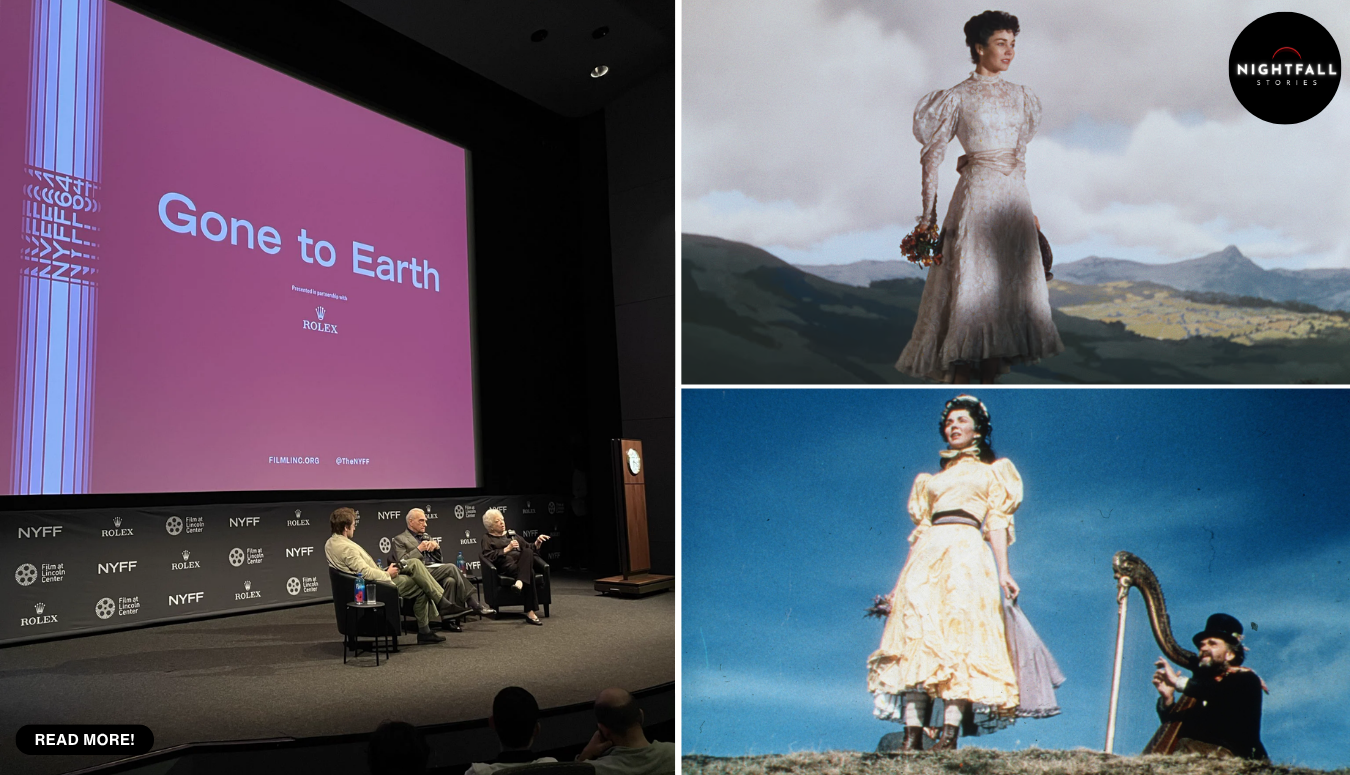
    The route back ran through positive film. The restoration, credited as the work of Walt Disney Studios in association with Martin Scorsese’s Film Foundation and with the participation of the British Film Institute, the George Eastman Museum and the Museum of Modern Art, was built from positive materials held at the BFI together with what the festival programme calls the film’s tattered negative. Image restoration was handled by Cineric in New York and the audio by Audio Mechanics, with Schoonmaker credited as supervisor and special thanks to Scorsese and Steven Spielberg.

    Unpack what that credit is actually describing. Where the negative survives, you scan the negative, and you get the best possible image. Where the negative does not survive, because somebody cut those frames out in 1952, you have to find a print that still contains them, and you scan that instead. Then you have two kinds of picture in the same film, and they do not match. A print is a generation away from the negative, so it carries different grain, different contrast, different colour. A print has also been through a projector, which means scratches, splices, dirt ground into the emulsion and sprocket damage down the edges. Matching the two so a viewer does not notice the join every time the film cuts to a repaired shot is the entire craft. It is painstaking, frame by frame work, and it is why a restoration of this kind takes years and why a list of institutions that long is on the credit.

    The colour is its own nightmare. Three strip Technicolor was never meant to be read off a print and copied. The look of the film was created at the printing stage by laying dyes onto blank film, and the person deciding how saturated that green hillside should be was working inside a system that no longer exists in commercial form. So the grade on a 4K restoration of a Technicolor film is a judgement call every single time, informed by surviving prints, by what the technology could do, and by how the people who made it said it was supposed to look. Get it wrong in one direction and the film looks like a faded postcard. Get it wrong in the other and it looks like a modern film wearing a costume.

    There is one claim around this restoration worth being careful about, and it is better to be straight about it than to repeat it. The Film at Lincoln Center programme note describes the screening as the first complete restoration of the original version of Gone to Earth. That phrasing is doing a lot of work, because the original full length version has been reassembled before. London’s National Film Archive, the BFI’s own archive, put together a full length Powell and Pressburger version decades ago, and it circulated in retrospectives; programme notes from those seasons describe the authentic version as having been triumphantly restored and revived at its original length. The BFI’s own listing for the new version, screening in London this month, calls it a major new restoration and does not claim it is the first complete one.

    So the honest version is this. The original cut has not been missing from the world entirely. What is new is the level of the work: a 4K restoration built from the best surviving elements, with the colour reconstructed and the sound repaired, supervised by an editor of Schoonmaker’s standing. That is a smaller claim than first ever, and it is still a considerable one, because the earlier reconstruction was limited by the same physical problem and by the tools of its time. A film can be put back more than once, and each time the question is how much of the original information you can recover.

    As for what Selznick actually did, the record is murkier than either side would like. He was involved during the shoot, disliked the finished picture, and went to court to force changes. He lost, but kept the right to alter the American release, which he used thoroughly. The reported alterations include a new prologue, explanatory scenes added to make the plot more legible, additional close ups of Jones, and the deletion of plot points he thought lacked impact. Rouben Mamoulian, a considerable director in his own right, shot the new material in Hollywood. Powell later claimed in his memoirs that only around thirty five minutes of the original survived in the American version and that Mamoulian had shot everything else, a claim that is hard to square with the running times and is best read as a wounded man’s estimate rather than a measurement.

    Underneath the business dispute there was something more particular at stake, which is the reason this film keeps drawing people back to it. Gone to Earth is an adaptation of Mary Webb’s novel about Hazel Woodus, a young woman who refuses to be owned, by the father who wants her settled, by the clergyman she is pushed toward, or by the squire who hunts her the way he hunts everything else. Jones plays her. The film was shot in the landscape where Powell’s own father grew up, and it was made immediately after The Red Shoes, at the point where Powell and Pressburger were at the height of their powers and interested in exactly the kind of story that does not resolve tidily. The programme note calls it a tribute to those otherworldly landscapes, and that is the thing a producer chasing dramatic impact would be most likely to cut: the long looks at hills, the bits that are not plot.

    Which is the quiet argument for why the restoration matters more than the row does. The version Selznick released was shorter, clearer and more conventional. The version he cut up was stranger, slower and more interested in a place. Those are not two edits of the same film. They are two different ideas about what a film is for.

    The restored Gone to Earth had its world premiere in the revivals section of the 64th New York Film Festival, screening at the Walter Reade Theater, and it is also playing at the BFI London Film Festival. It runs 111 minutes. It is finished, it exists, and people are sitting in dark rooms watching it.

    There is a detail in the credit that is easy to skip past. The production company behind Gone to Earth became, through decades of corporate acquisitions nobody involved in 1950 could have predicted, part of the same company that now owns the Selznick library. The studio that paid for this restoration is, in a legal sense, the inheritor of the man who took the negative apart. Whatever you think about how we got here, the bill for undoing it was paid by his successors.

    And the person who signed off on each repaired cut was an editor who happened to be married to one of the men it was done to. She was not chosen for that. She was chosen because she is Thelma Schoonmaker and because the job was an editing job of the hardest kind, where the right answer has to be inferred from a gap. That the gap was cut into her husband’s film by someone who did not understand what he was destroying is a fact she has lived with for forty years and has mostly declined to be dramatic about. She said years ago that it was going to be a really hard one. It was. It is done.

  • Things people did online before social media

    Things people did online before social media

  • Seven bears died in one small Montana town, and the state’s bear specialist told 140 locals they were the reason

    Seven bears died in one small Montana town, and the state’s bear specialist told 140 locals they were the reason

    The room at the senior center in Red Lodge, Montana was full, about 140 people in a city of 2,500, which is the kind of turnout a small town produces only when it is frightened or furious, and that night it was both. A few days earlier a black bear had followed a woman walking near the middle school. A driver coming the other way noticed the bear picking up speed behind her and swerved the car between them. She climbed in, and the bear put its paws on the vehicle and clacked its jaws at the window. Earlier in the season another black bear had bluff charged a city police officer three times in a single night.

    So people came to the meeting wanting to know what the state was going to do about the bears. What the state’s bear management specialist, Daniel McHugh, told them instead was that the community loads the gun, and that when residents are angry at wildlife officers for killing bears, everyone in the room has a hand in it.

    That is a remarkable thing for a public employee to say out loud to a crowded room of the public, and it is worth sitting with before going any further, because almost every incentive in his job pointed the other way. He could have absorbed the anger. He could have promised more traps, more patrols, more presence. Agencies do that constantly, and nobody gets fired for it. Instead he told roughly 140 of his neighbours, to their faces, that they were the mechanism.

    By the time of that meeting, Montana Fish, Wildlife and Parks had killed six bears inside the Red Lodge city limits that year, two of them grizzlies. Six dead bears in a city that covers less than three square miles. The morning after the meeting, McHugh and a state bear technician named Oliver Thomi made it seven.

    It is worth being precise about those numbers, because the figures that circulate with this story do not obviously fit together and the arithmetic is easy to get wrong. The six, two of them grizzlies, is a count of bears killed within the city limits as of the late August meeting, not six black bears plus two grizzlies on top. The seventh was the bear killed the following morning, also inside the city. Separately, officials had logged more than 200 conflict reports within fifteen miles of town since the bears came out of their dens that spring. That last figure counts a radius more than fifty times the area of the city, and it counts reports rather than animals, so it does not belong in the same column as the kill tally at all. Two numbers, two boundaries, two different things being counted. Anyone who adds them into a single total is inventing a figure that nobody has.

    The reason all of this was happening at once has very little to do with the bears being bad and almost everything to do with a failed crop.

    Bears in the northern Rockies spend the autumn in a state biologists call hyperphagia, which is a technical word for an eating problem so extreme it is better understood as a job. A bear going into its den has to carry the entire winter on its body. Everything it will burn between the first deep snow and the spring thaw, including the energy a female spends gestating and then nursing cubs in the middle of hibernation, has to be deposited as fat in the weeks before she lies down. The animal is not snacking. It is building the only resource it will have for months, against a deadline it cannot negotiate.

    In a normal year that fat comes from a predictable sequence of wild foods. Chokecherries and serviceberries in the draws, huckleberries on the slopes, and in grizzly country the fat-rich seeds of whitebark pine, which are among the most calorie-dense things a bear can find in these mountains. The sequence is what makes an autumn work. The berries are not a treat, they are the paycheque.

    Last winter in that part of Montana was dry, and a late freeze came through at exactly the wrong point in the season. Between them they took out the chokecherries, the huckleberries and the pine nuts across a wide area. Which leaves a bear with the same deadline, the same biological instruction to accumulate fat, and nothing on the hillside to accumulate it from.

    A bear in that position does not go hungry quietly. It goes looking, and it widens its search until it finds calories. And Red Lodge sits at the mouth of a drainage that funnels animals coming down out of the Beartooth Mountains straight toward the town, where a creek runs through the middle of the city and the alleys hold everything a desperate animal could want. Unsecured garbage cans. Bird feeders. Fruit trees that nobody picked. Chest freezers in open garages. Dog food on porches. Backyard chickens.

    The calories in a single poorly secured residential alley, measured against what a bear would get working a failed berry patch for the same hours, are not a close contest. Nothing about this requires a bear to be aggressive or unusual or broken. It requires a bear to be good at arithmetic, which bears are.

    That mechanism explains the whole season without anybody being to blame for it. The dry winter is nobody’s fault. The late freeze is nobody’s fault. The drainage has been pointing at that townsite since long before the town existed.

    What is somebody’s fault is what the bears found when they arrived, and that is where the story stops being about weather.

    Shawn Stewart, a state wildlife biologist who has worked for the Montana agency for more than fifty years, has seen the berry crop fail before. He told the meeting about 1986, when there were ten or fifteen black bears in the town’s alleys every night and the Beartooths lost around thirty per cent of their black bear population. So the collapse itself is not new, and that matters, because it means the thing people keep calling unprecedented is actually the familiar part.

    What Stewart said was new is the behaviour. In his telling the agency had simply never had bears approaching people. It had never had bears stalking people. And this year he watched all of those behaviours escalate in a way he described as alarming. That is a man with half a century of field experience saying the animals are doing something he has not seen them do.

    Bears get to that point by being taught, and the teaching is not a mystery to the people who study it. Montana’s own statewide grizzly management plan defines a food-conditioned bear as one that has learned to associate people, human activity, human spaces or food storage containers with food. The plan is blunt about how that association forms. If human food is easier to get than wild food, bears tend to overcome their natural wariness of people in order to reach it. The wariness is not destroyed from the outside. It is unlearned, one easy meal at a time, by an animal doing exactly what the reward structure tells it to do.

    And in Red Lodge, at least some of those meals were being put out on purpose.

    This is the part of the story with a hole in the middle of it. Officials believe somebody in or around the town has been deliberately feeding bears. The game warden working the area, Matt Heaton, said he would normally field somewhere between one and ten calls a year about people illegally feeding deer. Over the past two seasons he has been getting calls in which the caller says they believe the person is feeding bears as well. He has had photographs and video of bears coming and going from bait sites, on private ground and on public ground both. Bear baiting is illegal in Montana. The feeding is documented. The feeder has not been identified, and nobody in town who knows is saying.

    It is worth being clear that this is not a grey area in law. Under Montana Code Annotated 87-6-216, unlawful supplemental feeding, it is an offence to purposely or knowingly attract bears, ungulates, mountain lions or wild turkeys with supplemental feed attractants. The statute also catches a second, softer case. If someone has already received a warning and then negligently fails to store attractants properly, and bears get into them, that is a violation too. Conviction carries a fine of between 50 and 1,000 dollars, or up to six months in a county detention centre, or both, plus possible forfeiture of hunting and fishing licences. The law does not distinguish between malice and sentiment. A person who sets out food because they love watching bears and a person who sets out bait are committing the same offence.

    What happens next to a bear that has learned to eat from people is the question most residents get wrong, and it is the reason a meeting like that one turns hostile. The assumption in the room is almost always that the animal can be driven somewhere else. In practice that option closes early. Weeks after the Red Lodge meeting, the same agency euthanised fourteen black bears found on a single property north of Bozeman, and its explanation of why is the clearest public statement of the rule anyone is likely to get. The bears were unafraid of people and had stopped relying on wild food, which made them a human safety risk, and the agency said plainly that this behaviour cannot be corrected through rehabilitation or relocation.

    That is the sentence that makes McHugh’s line about loading the gun something other than a rhetorical flourish. Relocation works on a bear that still thinks of people as a reason to leave. Once the animal has learned that a human neighbourhood is a reliable food source, moving it changes its address and nothing else. The learning travels with it. By the time a bear is in a trap with a kill decision attached to it, the thing that determined the outcome happened months earlier, in somebody’s alley, and the officer with the needle is not the one who made it.

    Thomi put it to the meeting from the other side of the counter. What people do not see, he said, is that the team had been trying for roughly two years to keep that particular bear out of trouble.

    None of this was confined to one town. Elsewhere in the region the same autumn was producing the same results. In Colorado, by the end of last August, close to 300 bears had reportedly been killed for getting into conflict with people and property, and officials in Wyoming were describing their own conflict season in terms that amounted to calling it unprecedented. Those regional figures come from a single piece of reporting rather than from agency tallies pulled directly, so they are best read as scale rather than as audited totals. The shape they describe, a bad food year translating into dead bears across several states at once, is not in dispute.

    Red Lodge also had a specific reason to be nervous beyond property damage. Two years earlier, a black bear had got into a tent and injured a child. The fact is part of the record and it belongs in any honest account of why 140 people turned up to a meeting about garbage cans. It does not need describing further than that.

    The morning after the senior center meeting, McHugh, Thomi and a third technician named Myles Steinmetz, hired on an emergency basis because the season had outrun the staff the agency actually had, drove out before dawn to a culvert trap set in a resident’s backyard near the creek. They carried bear spray, because the bait in the trap was aging deer and a corridor known for bears does not stop being one just because a trap has gone off in it.

    Thomi had been up roughly thirty hours since the weekend. He said you do not get much sleep in years like this one, and that it takes a toll on the home life.

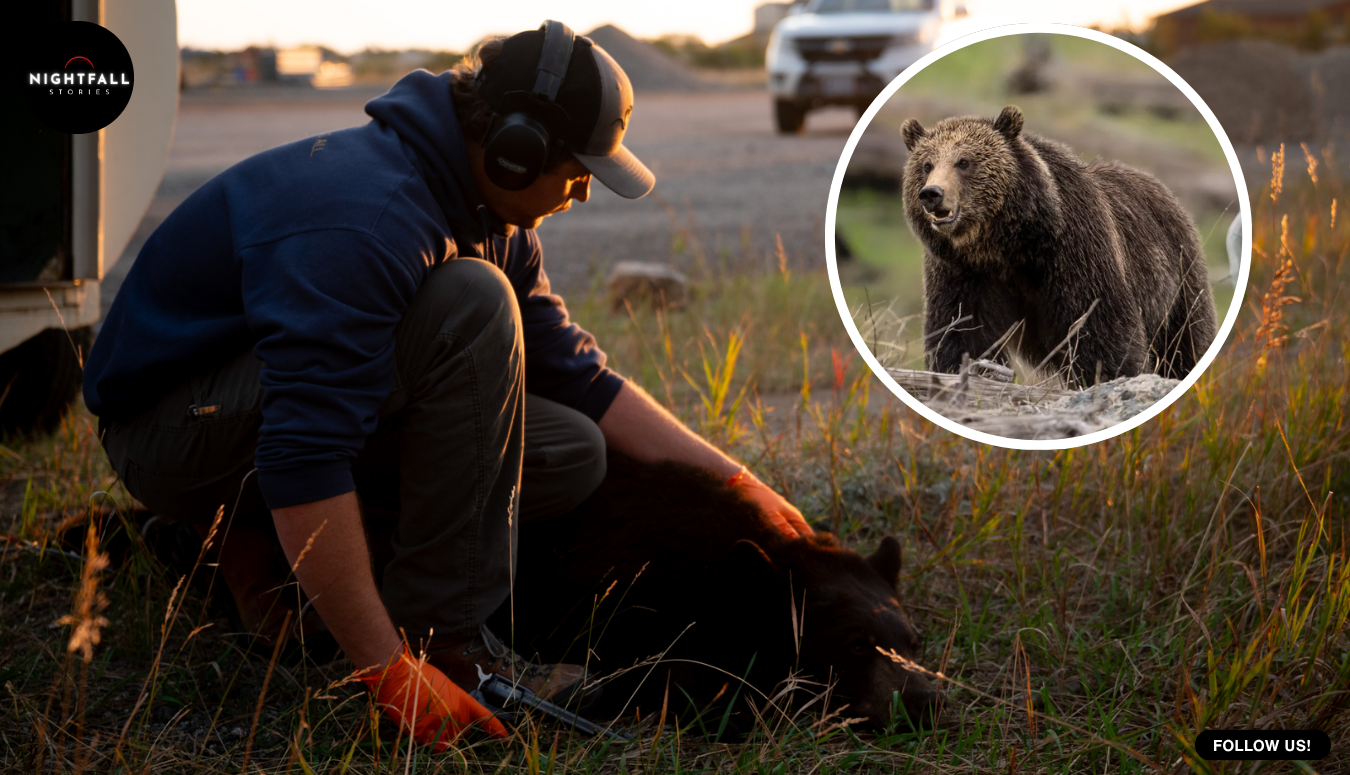
    The bear in the trap was a small male black bear with a broad head and a brown muzzle, and it looked healthy. It huffed and lunged at the cage while Thomi looked it over. They hitched the trap and drove it to a gravel parking lot outside town, because there is no facility for this and never has been. A lot of bears have died here, McHugh said when they arrived.

    They identified it as the bear that had followed the woman near the middle school, an animal with a long record behind it. McHugh said he hoped it would be a very long time before they had to do this again, and then corrected himself in the same breath, because realistically it would be two days, if they made it that long.

    He drew up Telazol and put it into the bear’s shoulder. The bear pulled the needle out with its teeth. The sedative took hold anyway within a few minutes.

    Thomi used a .22 revolver, which McHugh described as the fastest and most humane method available to them. Lethal injection was ruled out for a practical reason that tells you something about how little of this work is clean: the drugs would stay in the carcass and could kill whatever scavenged it.

    Thomi put on hearing protection, knelt down beside the sedated animal, and positioned the barrel below its ear. This was the seventh bear killed inside Red Lodge that year.

    Another wasted bear, McHugh said. This town sure likes to waste their bears.

    After the shot the lot went quiet except for traffic on the road. The sun was coming up. Thomi lowered the gun, and then he reached down and stroked the dead bear’s fur.

    He had just killed it, as part of his job, and then he touched it. That is all. It is not a redemption and it does not undo anything. It is what a person does.

    The bears are dead and there is no appeal. The question the season leaves open is not a philosophical one. Somebody in that town is still putting food out, the warden has pictures of the bait sites and not of the person, and the men who spent their summer killing bears they did not want to kill are the ones who will be out there before dawn next autumn if the berries fail again. The bears were never the problem. The problem has a name and an address and nobody is saying it.

  • A party committee buried this film in 1966. The woman at the centre of it is 89 and still walks on stage every week.

    A party committee buried this film in 1966. The woman at the centre of it is 89 and still walks on stage every week.

    The resolution is dated 30 June 1966 and its title is a piece of pure bureaucratic flatness: on serious shortcomings in the organisation of film production at the Kyiv Dovzhenko Film Studio. Inside it, the Central Committee of the Communist Party of Ukraine dealt with a 73 minute film that had been finished the year before. The director, it said, was inexperienced, and he had permitted ideological perversions. That was the finding. The film went onto a shelf and stayed there for twenty two years.

    It was called A Well for the Thirsty, and it was the first feature Yuri Illienko ever directed. He had just come off shooting Shadows of Forgotten Ancestors as cinematographer, the film that made Ukrainian poetic cinema famous outside the Soviet Union, and this was his own turn behind the camera. He never got to find out whether it worked. By the time anybody watched it, in late 1987, he was in his late forties and the movement he had helped start had been taken apart.

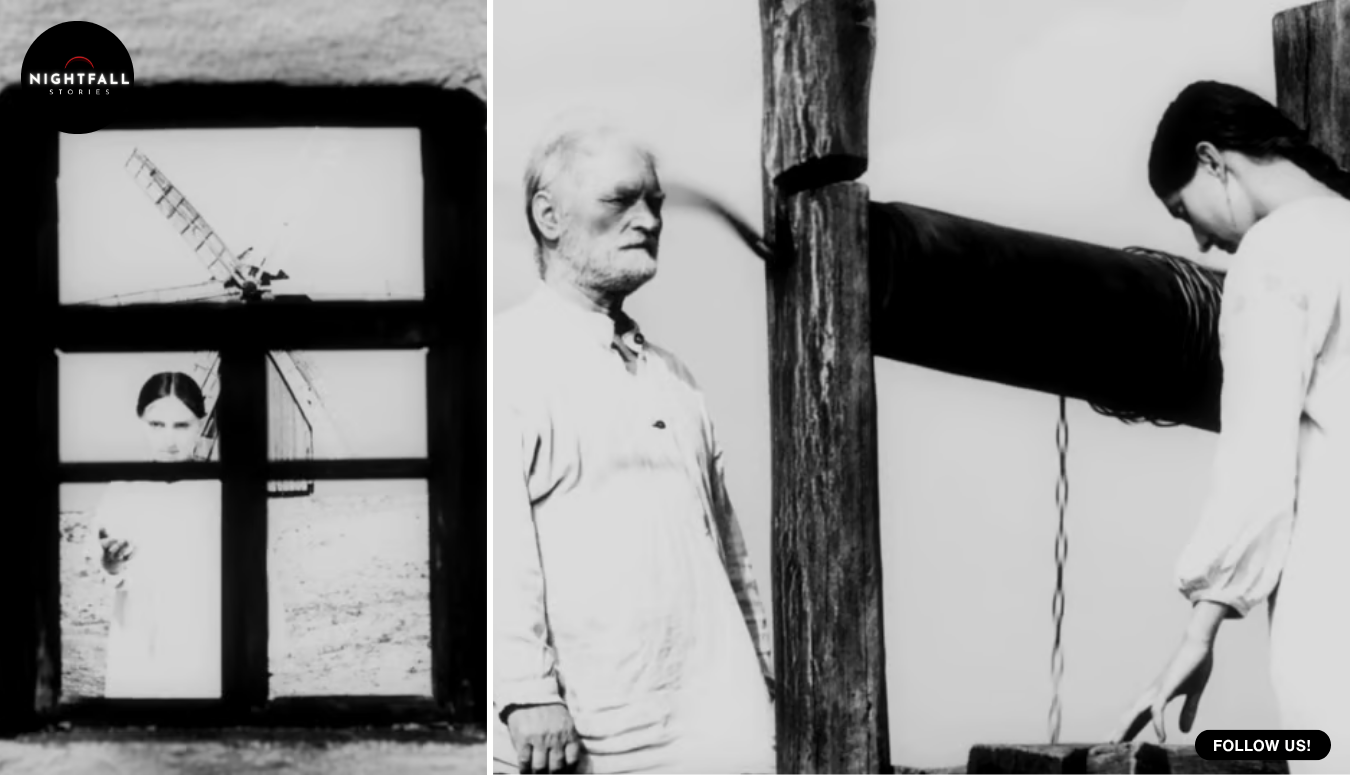
    Larysa Kadochnykova is the reason this is a story about people and not about an archive. She is in the film. She is billed first in the state catalogue’s cast list, playing the dead wife who appears to the old man in his visions. She was also Marichka in Shadows of Forgotten Ancestors, which means the same woman stands at the centre of the film that made the movement’s reputation and the film that was taken away from it. She is 89 years old. She is still a company member at the Lesya Ukrainka Theatre in Kyiv, still performing, and she gave an interview in which she called that theatre her home and said she could not imagine life without going out on its stage.

    So there is somebody alive who was there in 1965, who watched the thing be made and then watched it disappear, and who is still working in the city where it was made. That is not a footnote. That is the spine.

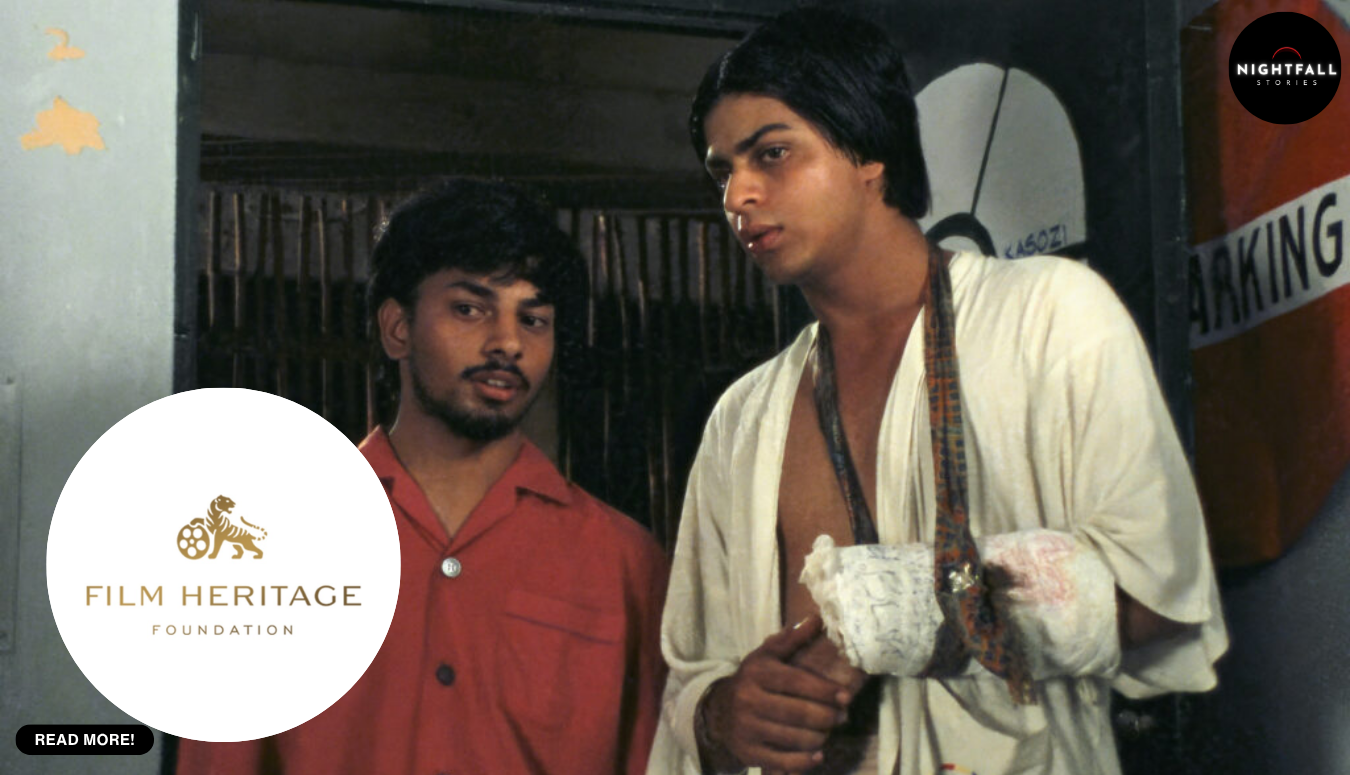
    The film itself is strange enough that you can see why a committee reached for a word like perversion. It has almost no dialogue at all. Levko, an old peasant played by Dmytro Miliutenko, lives at the edge of a desert in a village that has emptied out. His children have gone to the cities. His eldest son was killed in the war. His wife is dead. He keeps a well, and he gives water to anyone who passes, and he summons the family home in the hope that someone will drink from it and take something of his with them. Mostly he is besieged by memories and apparitions while he prepares, calmly and practically, for his own death.

    That is the plot, and calling it a plot is generous. What the film actually is, is a sequence of black and white images with a sound design that was radical for a Soviet studio feature in 1965: sand moving, a house, faces, a woman who is not there. The Ukrainian public broadcaster’s critic, writing about it decades later, called it a complex, whimsical, surrealist parable and said the censors had evidently detected something dangerously Ukrainian in its magical poetics. The programme note written for its New York screening calls it cryptic and visionary and says it announced Illienko as a worthy heir to Alexander Dovzhenko, the studio’s namesake.

    What the official objection actually was is the part most coverage skips, and it is worth being precise about, because twenty two years on a shelf is not a mood. It is an administrative act with a document behind it and the document exists. The Central Committee resolution of 1966 is not a review. It is a production audit of an entire studio, and the film is handled inside it as a symptom of poor organisation. The language is about inexperience and about ideology, not about aesthetics. That is how the system preferred to do this: not by banning a work of art, which would concede that a work of art had been made, but by filing it as evidence that a studio was being run badly.

    The composer has his own account of what the real problem was, and it is more specific. Leonid Hrabovsky wrote the score. He has said he believes the film was suppressed because of material read as anti Soviet, and he named what he meant: the poverty in it, and the marks left on Ukrainians by the famine. A film in 1965 about an emptied village, an old man with no family left and no water to spare, is a film about why the village emptied. Nobody needed to say the word out loud for a committee to hear it.

    Hrabovsky is worth a moment because of how he came to be there at all. He was one of the central figures of the Kyiv musical avant garde of the 1960s, a composer whose actual work had no commercial prospects whatsoever in the Soviet Union, and he has said plainly that he was dependent on film work because it was his only income. That is a familiar arrangement and it produced a lot of good music. An experimental composer takes a studio job, writes a score for a parable about a well, and the parable is then shelved for longer than most careers last. Everything he was doing in those years ran on the same arithmetic.

    Here a small discipline about what can and cannot be stated. Hrabovsky was born in 1935 and emigrated in 1990 at the invitation of the Ukrainian music community, becoming composer in residence at the Ukrainian Institute of America. His publisher’s own biography has him settling in the United States and currently living in New Jersey. No source available here carries a death notice, and no source available here carries a dated confirmation that he is alive now. So he is reported as living and nothing stronger than that will be claimed, and the neat coincidence that would have made a lovely sentence, the composer of a buried film watching it screen in his own city, does not survive contact with his publisher’s page. He does not live in New York. He lives across the river, which is close enough to be moving and not close enough to be a line in an article.

    The shelving happened inside a broader shutting down. The early 1960s had been unusually open by Soviet standards, and a generation of film makers in Kyiv had used that opening to make work that looked and sounded nothing like official cinema: slow, image led, drawing on folk material, visibly and unapologetically Ukrainian. Shadows of Forgotten Ancestors, directed by Sergei Parajanov with Illienko shooting it, was the breakthrough. Then the window closed. Parajanov eventually went to a labour camp. Illienko spent his career being made to argue for films. And A Well for the Thirsty, the first thing he had ever been allowed to direct, became the clearest single example of what the closing cost, because it was complete. It was not interrupted or abandoned. It was finished, it worked, and it was put away.

    Twenty two years is long enough that the film outlived the reason it was banned. Its first screenings came in November 1987, at a Ukrainian film festival in Zaporizhzhia, as the Soviet system loosened. Illienko was there to see it. But the audience it had been made for, in the year it had been made, in the cultural moment it belonged to, had been gone for two decades, and a film that arrives twenty two years late arrives as a historical document rather than as a new work. That is the quiet injury in all of this, and it is not fixable. You cannot give a film its own year back.

    There was a word for what happened to it. Soviet cinema produced a whole category of finished films that were never released, and they were spoken of as being on the shelf, which was both a literal description of where the reels went and an administrative status. A shelved film was not destroyed and not formally disowned. It was simply removed from circulation and left intact, which sounds merciful and was in some ways worse. A banned film at least has the dignity of having been fought over. A shelved film has been declared not worth the argument.

    The mercy in it, if there is any, is physical. Because shelving was filing rather than destruction, the materials usually survived, and in this case the thing that mattered survived in the best possible form. Not a battered distribution print struck for cinemas that never showed it, but the 35mm original camera negative, the element closest to what the cinematographers Feliks Rzheshutek and Hryhorii Syhalov actually exposed in 1965. Sixty years of a film sitting in a vault because nobody was allowed to look at it is also sixty years of a film not being scratched by projectors. The same indifference that kept it from an audience is the reason there is anything good enough to rebuild.

    The restoration is the part of the story where strangers do the work. The 35mm original camera negative survived, and it is held at the Oleksandr Dovzhenko Centre in Kyiv, Ukraine’s national film archive. The Polish restoration house Fixafilm did the rebuild. The scanning credit names two people, Lukasz Ceranka at Fixafilm and Oleksandr Bertman at the Dovzhenko Centre, and the grading was done with reference to an archival print the Centre lent for the purpose. Fixafilm and the Polish Film Institute funded it between them.

    That credit list repays reading slowly, because it describes an arrangement that did not exist a few years ago. A Polish laboratory and a Polish state film institute paid to rebuild a Ukrainian film frame by frame, working from a negative held in Kyiv and a reference print shipped out of Kyiv, in a period when Ukrainian archives have had rather more pressing problems than colour grading. Who keeps whose film heritage safe, and where the physical materials sit while that is being decided, is not an abstract question for a Ukrainian archive at the moment. One paragraph of that context is honest. More would turn a 1965 film into a symbol, and it was not made to be one.

    The restored version runs 71 minutes, two short of the 73 in the Ukrainian state catalogue, which is the ordinary consequence of measuring a rebuilt print properly rather than evidence that anything is missing.

    It has gone into the Revivals strand of the New York Film Festival, the section the festival keeps for restorations and recovered work, and it screens at the Walter Reade Theater at Lincoln Center with an introduction from the film historian Daniel Bird. The company it is keeping there is instructive: Ken Russell’s The Devils, Powell and Pressburger’s Gone to Earth, Hou Hsiao hsien, a Barbara Hammer, two programmes of Artavazd Pelechian. Films that were cut, suppressed, mangled on release or simply lost track of. A Well for the Thirsty fits that shelf exactly, which is both the point and a little grim: it belongs to a category defined by what was done to it rather than by what it is.

    The people who made it are mostly beyond being told. Yuri Illienko died in 2010, without seeing the negative scanned or the film graded or a New York audience sit down in front of it. Ivan Drach, the poet who wrote it, died in 2018; he had been a significant figure in Ukrainian letters and later in its politics, and the screenplay for an almost wordless film about an old man and a well was one of the first things he put his name to. Dmytro Miliutenko, who carried the whole picture on a face and very few lines, has been dead since 1966, the same year as the resolution. He never saw it either.

    Which leaves Larysa Kadochnykova, who is 89, who is in both of the films that define this entire chapter, and who still goes to work at a theatre in Kyiv. If anybody is owed an account of what happened in 1965 and what it was like to watch something you had made be filed as a shortcoming in studio organisation, it is her, and she is the only person left who can give it.

    The thing they all made, in the end, was a film about an old man who keeps a well nobody comes to drink from, and who refuses to leave it anyway on the chance that somebody eventually will. It then sat untouched for twenty two years and was rebuilt, one frame at a time, by people in another country who had never met him. Nobody planned that. It is simply what happened, and the film is better than the irony.

  • A prisoner can file an appeal by handing it to a jail officer. His took eight and a half years to arrive.

    A prisoner can file an appeal by handing it to a jail officer. His took eight and a half years to arrive.

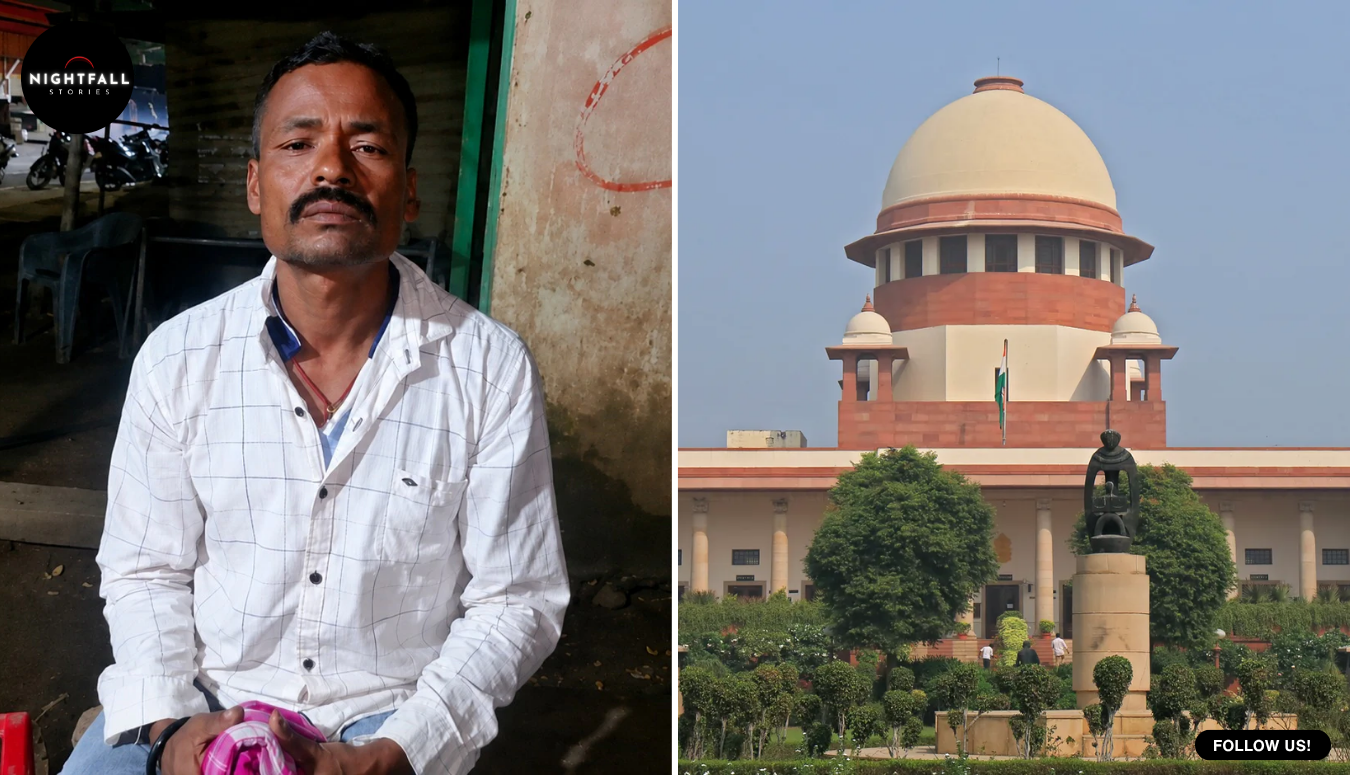
    There is a line in India’s criminal procedure law that almost nobody outside a courtroom has ever read, and it is the only thing standing between a convicted man with no lawyer and no money and a life sentence nobody ever checks. It says that if the appellant is in jail, he may present his petition of appeal to the officer in charge of the jail, who shall then forward it to the proper appellate court. That is the whole provision. One sentence, and inside that sentence is the entire safety net.

    Arjun Jani used it. He was in a prison in Odisha, in eastern India, serving life for murder, and he did the thing the statute told him he could do: he put his appeal in the hands of the jail. By the time that paper reached the Orissa High Court, it was 3,157 days late. Almost eight and a half years. The High Court did not excuse the lateness, and because it did not excuse the lateness, it never looked at whether the conviction was any good. The appeal was dismissed on the delay alone. He had already served twelve years at that point. He served ten more.

    When the Supreme Court of India finally read the evidence against him, it found one eyewitness whose account it called shaky and highly improbable, and a confession it said had been extracted by third-degree methods and could not be relied upon in any case. It set the conviction aside and acquitted him. In the judgment the court wrote that twenty-two years had been erased out of a person’s life without any reliable evidence.

    Before anything else, a distinction that matters and that readers collapse almost automatically. An acquittal is not a finding that no crime happened. Three women, Kamala, Sonbari and Ratanai, were beaten to death at night in a locality in the Koraput district of southern Odisha. That happened. Nothing in this case has ever suggested otherwise. What the Supreme Court found is that the state could not show that this man was the one who did it. Those are two completely different things, and the second one leaves three families where they have been for more than two decades, which is to say without an answer. Both facts sit in this story at once. One man lost twenty-two years. Three deaths remain unanswered for. There is no version of this where the reader gets to pick.

    Start with the mechanism, because the mechanism is where the twenty-two years actually happened.

    The provision is Section 383 of the Code of Criminal Procedure of 1973, now re-enacted as Section 424 of the Bharatiya Nagarik Suraksha Sanhita of 2023, the new code that replaced it. The logic is sound and even generous. A man who has just been convicted is, by definition, in custody. He cannot walk to a court registry. He may not be able to afford a lawyer, may not know one, may not know that a deadline exists. So the law puts the burden on the institution that is holding him. He hands his petition to the jail. The jail is duty bound to forward it.

    Think about what that means in practice. There is no receipt in the statute. There is no clock that starts ticking visibly. There is no second copy that goes to anyone with an interest in chasing it. The prisoner hands over a piece of paper and then he waits, and from that moment he has no way of knowing whether his appeal is on a desk, in a file, in a post bag, or nowhere. If it moves, it moves because somebody in an office decided to move it. If it does not move, nothing happens, and nothing continuing to happen looks exactly like the ordinary passage of time in a prison.

    That is how a delay of several thousand days is built. It is not a man forgetting to post a letter. A figure like 3,157 days is the measure of how far an unrepresented prisoner’s paperwork can fall into the gap between a jail and a court before anyone notices, which in this instance was most of a decade.

    And here the two numbers that circulate around this case need separating, because they are not two versions of the same thing and averaging them would hide the actual shape of the case. The 3,157 days is the delay in the jail appeal before the Orissa High Court, the delay the High Court refused to condone and on which it dismissed him. The 3,703 days is a different and later figure: the delay in the appeal that eventually went up to the Supreme Court, filed with the help of the legal services system after he had already served twenty-two years, and that delay was condoned, by an earlier bench of the same court, in an order made a few months before the acquittal. Two filings, two stages, two measurements. The first number is the one that cost him the merits hearing. The second is the one that got him back into a courtroom.

    That earlier order is worth sitting with, because it tells you the second court saw exactly what had happened. The bench condoned the 3,703 days, described the High Court’s approach as very disturbing, and granted him bail after twenty-two years inside. The acquittal came three months later, in a judgment by Justice J. B. Pardiwala and Justice K. Vinod Chandran, with the court invoking its constitutional power under Article 142 to do complete justice.

    Now the evidence, which is the part that makes the procedural failure unbearable rather than merely bureaucratic.

    He was picked up on suspicion. There was a recovery procedure, the kind where police produce material and witnesses attest to it, and one of the witnesses to that very procedure told the court that the police had beaten the accused to extract a confession. The Supreme Court’s position on that confession was flat: it had been obtained by third-degree methods, and in any event a confession made to police in those circumstances carries no weight. The court stated it, and it is the state’s own conduct that is being described. There is no reconstructed scene here and there should not be. The finding is the fact.

    Strip the confession out and what remains is one witness. She said she had seen the assault from inside her own house, looking through a gap in her door, at one o’clock in the night. The court noted that the locality had no electricity. Three women died that night and he was convicted for a single one of those deaths, the one this witness said she saw. The Supreme Court read her account and concluded that it was shaky and highly improbable and did not lead to any definite conclusion that the accused had murdered the three women.

    Whether he was formally convicted over one death or all three is one of the few things that was reported inconsistently, and the judgment settles it: the conviction was for one, the one the eyewitness spoke to, out of three alleged. Who, if anyone, was ever held responsible for the other two, or for any of them now that this conviction is gone, is not addressed anywhere in the record this piece rests on. It would be dishonest to imply an answer. The most that can be said is that nothing in the public record shows anyone answering for those three deaths.

    The thing that is hardest to write about this case is that there is nobody to ask what it was like, and that absence should be stated rather than covered.

    Nobody has spoken to Arjun Jani. Not in English and not, as far as can be established, in any other language. There is no interview with him anywhere. The judgment, which is effectively the only document about his life, records that he is from Koraput district and that he was about forty-five years of age. That is it. His occupation is not in it. Whether he has family is not in it. Whether anyone visited him across twenty-two years, whether anyone was waiting when the bail order came through, where he slept the first night, what he did with the first morning: none of it exists on paper, and inventing any of it would be worse than leaving the space empty.

    What the two facts that do exist will carry is arithmetic. If he was about forty-five when the court acquitted him and he had served twenty-two years, he went in at around twenty-three. Everything a person ordinarily does between twenty-three and forty-five, he did not do. He did not work, or build anything, or decide anything, or be present for anybody. Those are not the years at the start of a life or the end of one. They are the whole middle.

    The poverty in this is load-bearing and it belongs in the story as poverty, plainly. Koraput is one of the poorer districts in a poor part of the country. The court itself described the locality where the three women died as a place without electricity, lived in by people with very little. That is not background colour. It is causal. A man from that locality, convicted of murder, has no lawyer on a retainer. There is no family member with the money for train fare to a High Court registry, or the literacy to write to a judge, or the standing to telephone anybody and ask where a file has got to. The reason a jail appeal provision exists at all is to cover people in exactly that position, and the reason it failed here is the same reason it was needed. Nobody was going to chase the paper, because there was nobody whose job or means it was to chase it.

    It would be convenient to treat this as one unlucky file, except that the Orissa High Court itself has since looked at the pattern. In a separate matter the same court laid down procedural safeguards for jail appeals: registers so that a petition handed over in a prison is recorded as having been handed over, written documentation when a jail declines to forward something, and judicial inspection to check that the system is working. Those are the fixes of an institution that has concluded the old arrangement could lose a man’s appeal and that nobody would find out. Which is to say the gap Arjun Jani fell into was a known gap, and it was identified because of cases like his, which is not much comfort to someone who was inside it for ten years.

    None of this makes the Supreme Court the hero of the story, and the court does not present itself that way. Its own account is of a collective failure. Twelve years of imprisonment, then an appeal dismissed without anyone looking at it, then ten more years, then a correction. The correction is real and it is final, with no further appeal and no retrial ordered. But a system that takes twenty-two years to notice that its evidence was worthless has not been vindicated by noticing.

    Which brings the story to its last act, and to what that act quietly concedes.

    Having set the conviction aside, the court did one more thing. It cancelled the personal bond of ten thousand rupees, roughly a hundred and twenty dollars, on which he had been released. And it directed the District Legal Services Authority, Koraput, in the state of Odisha, to attempt rehabilitation or resettlement of the appellant, with the district collector’s administration directed to assist.

    Read the verb. Attempt. Not provide, not guarantee, not compensate. A court that had just removed a man’s conviction understood perfectly well that removing a conviction gives a person nothing back, and so it told an arm of the state to try to find him somewhere to live and some way to live. That is an unusual order and it is an honest one, and it is also the measure of how little the law had left to offer.

    What it did not order was money. There was no compensation. No sum for the twenty-two years, no sum for the confession the court itself said was beaten out of him, no sum for the appeal that sat somewhere for eight and a half years while he waited in a cell for an answer that never came. A rehabilitation direction and not a rupee.

    Whether the Koraput legal services authority has in fact done anything is not known. Nobody has published a word about compliance, which means that the last verifiable fact in this story is the instruction itself.

    So the ending is a man of about forty-five walking out of twenty-two years into a country that had no place prepared for him, and a court with nothing to give him except the name of an office that had been told to try.

  • He planted 130 trees on a hillside carved apart by floods. His barley nearly doubled, and researchers say that almost never happens

    He planted 130 trees on a hillside carved apart by floods. His barley nearly doubled, and researchers say that almost never happens

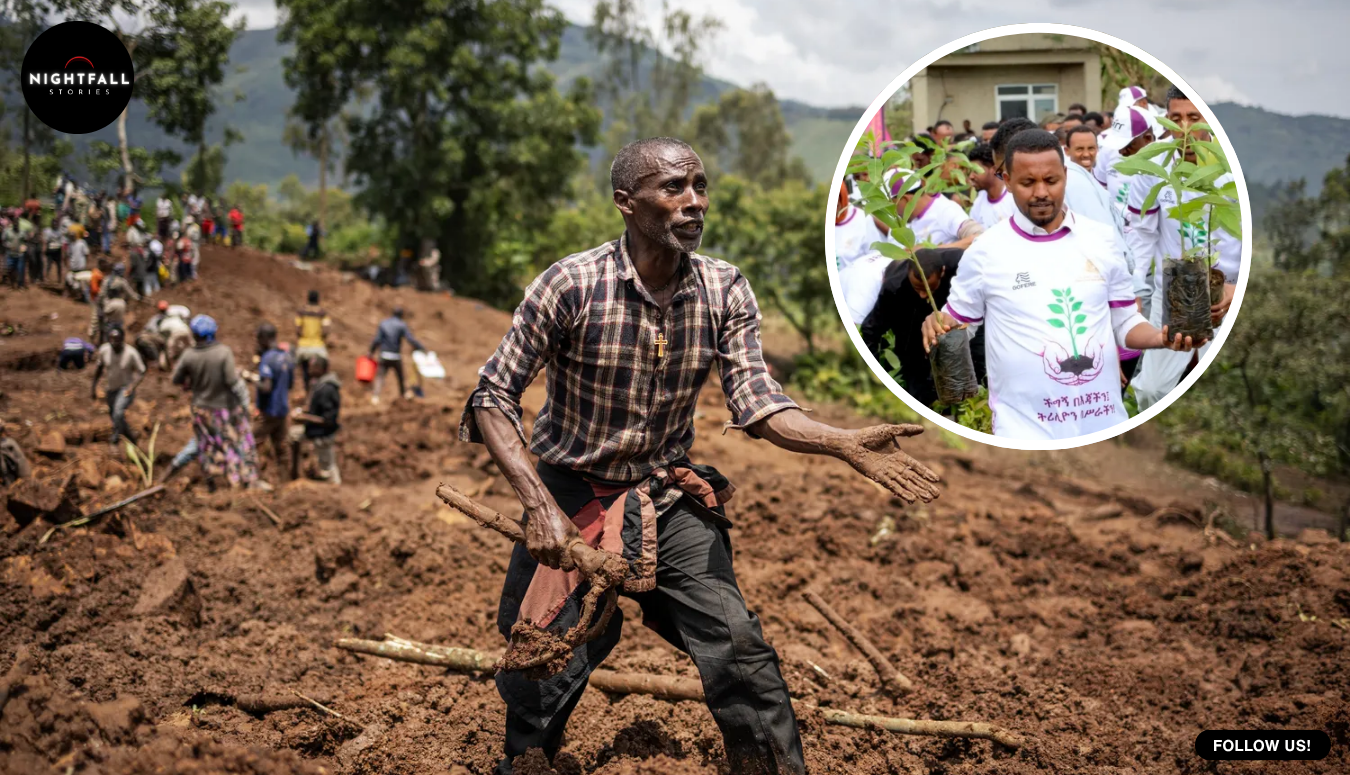
    Niku Argane’s farm sits on a steep hillside in the Gurage Zone of central Ethiopia, in a semi-mountainous stretch of country where years of flooding have cut deep gullies straight through the land. He is 32. He has a wife and four children, and the soil on that hillside used to grow enough barley and potatoes to feed all of them and leave a surplus to sell at market.

    Then it stopped doing that. The soil eroded, washing downhill every rainy season through the gullies the water had opened. Drought made what was left harder to work. As he put it to a reporter who came to the farm, they never stopped farming, but production fell because the land was degrading underneath them.

    What he did about it is unremarkable on paper. Since 2019 he has planted eighty tree seedlings on his own farmland and another fifty in a communal area nearby. Along the edges of his fields he has put in grass, fodder plants, fenugreek and fruit trees, which hold the soil in place and also feed the four cows, six goats and three sheep he keeps for milk and meat. Nothing in that list is clever. Any agricultural extension officer anywhere would recommend it.

    His barley harvest has gone from about 1,800 pounds an acre to roughly 3,200.

    That number is his own account rather than an independently measured yield, and it belongs to the whole package rather than to the trees alone: seven years of grass and fodder and fenugreek and edge trees, all working together to stop water running off a slope and taking the topsoil with it. But it is close to a doubling, on a hillside that was being written off, and that is the part worth understanding, because according to the researchers who work on this, what happened on Argane’s land is close to a statistical freak.

    Aad Kessler is a researcher at Wageningen University in the Netherlands who studies land restoration for a living, and he is broadly supportive of what Ethiopia has been attempting. Here is how he describes the thing he supports: “Reforestation is one of the most difficult things you can imagine. It almost always fails.”

    It is rare to get a sentence like that from someone on the inside. Scientists who back a programme usually defend it. Kessler’s position is that the effort is worth making precisely because it is enormous, and that at this scale even a thirty percent survival rate would still represent a vast amount of new tree cover. That is arithmetic rather than optimism, and it quietly concedes that most of what gets planted is expected to die.

    Why does tree planting fail? Not for the reasons most people assume. It is not usually about the wrong species, or bad soil, or even drought, though all of those contribute. The mechanism is simpler and more human than that.

    Emiru Birhane Hizikias, a restoration ecologist at Nord University in Norway, puts it in a single image: you cannot expect a baby to grow if you do not care for it, and that, he says, is how plantation in Ethiopia is being done. A seedling is not a finished tree. It is a fragile thing six inches tall that needs water in its first dry season, protection from grazing livestock in its first two or three years, and somebody to notice when it is failing and replace it. Planting is the easy, visible, photographable part, and it takes an afternoon. Tending is years of unglamorous attention that nobody films.

    This is where the scale comes in, and it is the only place in this article where it will. According to the Ethiopian programme’s own accounting, published by its Ministry of Agriculture and reported by Yale Environment 360, tens of millions of Ethiopians have planted more than 47 billion seedlings in the last seven years, against a stated target of 50 billion by 2030. That figure is the government’s own self-reported total for its own programme and should be read as such. It has never been independently audited at national scale, and nothing in this article depends on it being right.

    What can be checked, and has been, is what happened to the seedlings.

    A study published last year in the journal Discover Environment did the work properly on one district. Setiye Abebaw Tefera and Vijaya Lakshmi Thatiparthi, at the Centre for Environment at JNTU in Hyderabad, took satellite imagery from Landsat and Sentinel over the Gubalafto district in north-eastern Ethiopia, about a thousand square kilometres, and tracked land cover from 2013 to 2024 using machine classification and vegetation indices.

    Some of what they found is genuinely encouraging. High-density vegetation in that district went from under one percent of the land area to more than nine percent over the eleven years, a roughly tenfold increase. Woodland expanded by around forty square kilometres, mostly converted from farmland.

    And some of what they found is the uncomfortable part. Actual forest cover in the same district fell over the same period, from a little over sixteen percent to under fifteen percent. Tree planting and forest loss were happening simultaneously in the same place. More importantly, the authors put district-level seedling survival at just under forty percent on average, with a range running from under eight percent in the worst areas to around seventy-six percent in the best. They also note that armed conflict in the region after 2020 disrupted restoration work, which is a reminder that none of this happens in a vacuum.

    Just under forty percent survival, with some places losing nineteen seedlings in every twenty. Kessler’s illustrative thirty percent, which he offered as a deliberately pessimistic floor, turns out to have been close to the real figure.

    The gap between what is claimed and what survives has been pressed before. Reporting a couple of years ago found that while officials had put survival at eighty-five percent for one year’s planting, sources inside the country’s own environmental commission suggested the true rate might not pass fifty percent. The same reporting carried a far more sobering comparison from Wubalem Tadesse of the Ethiopian Environment and Forest Research Institute, who pointed out that data indicated more than ninety-two thousand hectares of forest were being destroyed every year while the country was planting roughly twenty thousand. That is a national programme of extraordinary ambition running at roughly a fifth of the speed of the damage.

    There are other structural problems, and they are the sort that explain a thirty-nine percent survival rate better than any amount of talk about rainfall. The programme has been described as lacking a dedicated budget and a single coordinating office, with responsibility split across three government ministries, which is a reliable recipe for nobody being accountable for what happens to a seedling in year two. The official species target was around thirty percent fast-growing trees, thirty percent indigenous species and forty percent fruit-bearing and ornamental, but farmers have strong economic reasons to favour fast-growing eucalyptus, which earns money and is hard on the water table and on whatever is growing near it.

    None of which is an argument that the planting days are theatre. They are not, and the people who turn up to them are not fools.

    On one day each August, millions of people across the country go out and plant. One of them, Yeshihareg Teferi, travelled at sunrise from her home in Addis Ababa out to Tulu Dimtu so that she could crouch in the rain and dig holes in the mud. It was her fifth consecutive year doing it. In previous years she had put in indigenous species, African wild olive and African fern pine among them. This time she chose juniper. Her reasoning, as she gave it, was about obligation rather than enthusiasm: that there is a responsibility to make sure the next generations inherit green and fertile ground rather than bare land.

    That is the right instinct and it is also, on its own, not enough, and the uncomfortable truth in the survival figures is that her juniper has somewhere around a two in five chance.

    It is worth holding on to how hard the underlying problem is, because nothing about this is a story of lazy farmers. Belayneh Mamo is 65 and farms in the Amhara region in the country’s north, which is drought-prone. He depends on the July rains for his teff, sorghum, maize and the wheat he turns into bulgur. He also receives seeds from the government, coffee and neem and gesho. In one recent season the rains simply did not arrive until August, and he could not plant anything until they did. By his account, in earlier years the crops would have been well along by September and food would already have been coming in; the delay hit the seedlings, the crops and the animal feed all at once.

    That is one farm in one season and it is weather, not proof that a national programme has failed. But it is a precise illustration of the ground truth. A man who has farmed for decades, who wants the trees, who was given the seed, still lost a season to rain that came a month late. Multiply that across a country and you can see where the missing sixty percent goes.

    So what actually works?

    Endalkachew Wolde-Meskel, a soil scientist with the Center for International Forestry Research, states the reframe in one line: the objective is not really to plant trees, it is to restore the functioning of an entire landscape. Those are different projects that happen to involve some of the same equipment.

    The practical version of that distinction looks like earthworks rather than saplings. Half-moon ditches, which are shallow crescent-shaped trenches dug across a slope, catch water that would otherwise sheet straight downhill and hold it long enough to soak in and feed whatever is planted inside the curve. Check dams are low barriers built across an existing gully, which slow the water travelling down it, so the gully stops cutting deeper and starts filling with the silt the water drops. Neither is a tree. Both are the reason a tree can live on a slope where it otherwise could not.

    This is exactly what Argane has been doing, in effect, with living material. Grass and fodder and fenugreek along his field edges are a soil-holding structure that happens to be edible. His trees and grasses have reduced the erosion on his land and slowed the movement of water across it during heavy rain, which is why his barley came back. The crop did not improve because he added trees. It improved because he stopped losing his soil, and the trees were part of how he stopped.

    Not everything in the national picture stands up to the same scrutiny. Kumera Wakjira, who is director-general of the Ethiopian Wildlife Conservation Authority, has spoken about wildlife returning to Abijata-Shalla National Park as restoration has progressed there. That may well be true, and it would be good news, but it is the head of a government agency describing an improvement in his own agency’s park, with no independent survey attached, and it should be read with that in mind.

    There is a temptation, writing about a programme this big, to score it. Either tens of billions of trees are a triumph or they are a state vanity project and a photo opportunity. Neither reading survives the detail.

    What survives the detail is this. The national total is a number produced by the organisation being measured. The one hard, independently measured figure available says that in one district, somewhat under two seedlings in five lived. The researcher most sympathetic to the whole effort says reforestation almost always fails and he means it literally. The ecologist says the reason is that nobody looks after the seedlings once they are in the ground, and he is describing his own country’s programme when he says it.

    And on a hillside in the Gurage Zone, a 32-year-old man with four children put a hundred and thirty trees into the ground, plus grass and fodder and fenugreek and fruit along every edge of every field, and then he stayed. He kept at it for seven years. He watched where the water went when it rained and he put something in its way. By his own reckoning the barley coming off that land has nearly doubled.

    His seedlings lived for the least mysterious reason there is, and it is the one thing no national target can deliver and no planting day can substitute for. Somebody was there the following year, and the year after that, to look after them.

    The planting was never the hard part.

  • He walked away from cinema and taught himself botany. Then a laboratory in Bologna spent eighteen months on the film he left behind

    He walked away from cinema and taught himself botany. Then a laboratory in Bologna spent eighteen months on the film he left behind

    For about a year and a half, a man in his mid seventies divided his attention between a film laboratory in the north of Italy and a slope of bare volcanic rock below a fort in the Indian desert.

    In Bologna, technicians were working through a 16mm negative he had shot in 1989. The inspection report on it read like a list of everything that can go wrong with film: perforation damage, tears, scratches, shrinkage, mould, halos. Colour had drained out of whole sections. The sound carried significant electrical noise, distortion, gaps and a great many drops. On the rock in Jodhpur, he was looking after a park that had not existed when he stopped making films, because he had built it, species by species, out of a hillside nobody had wanted.

    The man is Pradip Krishen. He made three feature films and then he stopped, and the second thing he did with his life turned out to be the thing he is now known for. That is the part of this story worth sitting with. Plenty of people quit something they were good at. Very few of them go on to write the standard reference work in an unrelated field.

    He was born in New Delhi in 1949 and educated at Mayo College, then St Stephen’s College in Delhi, then Balliol College at Oxford. In 1972 he took a temporary lectureship in history at Ramjas College in Delhi University, and then an MPhil at Jawaharlal Nehru University, where by his own later account the academic history on offer failed to hold him. He drifted toward film instead, which in the Delhi of that period was not an industry so much as a small circle of people who knew each other.

    His first feature, Massey Sahib, came out in 1985. His third, Electric Moon, in 1991. The one in between is the one that would not go away.

    In Which Annie Gives It Those Ones was made for Doordarshan, the Indian state broadcaster, and it is set in the 1970s inside a fictional architecture college in Delhi called the National Institute of Architecture, modelled closely on the real School of Planning and Architecture. It follows a group of final-year students: hostel life, unfinished thesis projects, the small cruelties of academic authority, and the specific way a certain kind of student talks when he is nineteen and convinced he can fix the country. The title comes from the main character’s habit of giving it those ones, which is the film’s phrase for his unworkable schemes to put architecture to some grand social use.

    Annie himself, whose real name in the film is Anand Grover, was played by Arjun Raina. Roshan Seth played the college principal. The cast also holds some very early screen appearances by actors who later became enormously famous in India, including Shah Rukh Khan in a small part as a senior student, which is the kind of detail that makes a lost film into a rumour.

    The screenplay was by Arundhati Roy, who was 28 at the time and had herself studied at the School of Planning and Architecture. She was not then a writer anyone had heard of. She also appears in the film as Radha, an independent and nonconformist friend of Annie’s, and she is credited with the production design on top of that. She was married to Krishen when the film was made, which is the straightforward reason a first-time screenwriter was writing for this particular director, and it is the only thing about either of their private lives that belongs in this story. Years afterwards she published a novel that made her internationally known, which is why most people now come to this film through her name rather than his.

    At the National Film Awards, the state film prizes, the film took Best Feature Film in English for Krishen and Best Screenplay for Roy. The year attached to it reads differently in different records, because the Indian awards for one year’s films are handed out in the following one. Either way, it was honoured by the national jury.

    And then it went away. Doordarshan broadcast it once, late at night, and that was essentially the end of it. There was no theatrical release. The original print was lost. What survived in public was videocassette recordings taped off that single broadcast, copied and recopied and eventually digitised and put on the internet, and for close to four decades that degraded tape was the only way anyone saw it. Krishen himself has described it as a film that virtually went underground. Its reputation grew roughly in proportion to how hard it was to see, which is what reputations do.

    He stopped making films in the first half of the nineties. The exact year is recorded inconsistently, somewhere around 1994 or 1995, and the reason he has given himself is not the one you might expect. He did not describe it as failure or as a quarrel with anybody. He said he wanted to do something internal and meditative and small, something that was not about projecting anything to anyone. Film-making had become, in his telling, simultaneously too crowded, full of collaborators who took something away rather than adding to it, and extremely lonely. One summary of his life attributes the departure to corruption in the industry, but that framing does not appear in his own extended account of it, and his own account is the one to trust.

    What he did instead was learn plants, from nothing, with no botanical training of any kind. A colleague who worked with him later put the starting point memorably: at the beginning, Pradip knew exactly one tree, and it was mango.

    His method was stubborn and unglamorous. He worked from Dietrich Brandis’s The Forest Flora of North-West and Central India, a reference book published in 1874, and he annotated his copy relentlessly, inventing his own system of symbols for leaf characteristics so he could find his way back through it. He has said the work requires a certain obsessiveness, and a willingness to keep pushing when a fog of incomprehension is sitting in front of you and nothing is resolving into sense yet. That is a precise description of self-teaching, and it is the opposite of a hobby.

    In 1993 he bought land with friends in Bariaam village near Pachmarhi, in the forested hills of central India, among them an architect named Golak Khandual, who had done the make-up on Annie four years earlier. He got involved in local heritage protection through a conservation trust, which pulled him into bureaucratic obstruction and then into litigation that was not resolved until 2012. The jungles around Pachmarhi became his classroom.

    Thirteen years after he stopped directing, the field guide appeared. Trees of Delhi was published in 2006, and it did something field guides do not do, which is sell. Close to twenty thousand copies went out. If you want to identify a tree in Delhi, that is still the book you reach for. Jungle Trees of Central India followed in 2014, and it took him four years and thirty-seven trips into central India to finish, with two thousand copies ordered before it was even printed.

    Somewhere in there, the Mehrangarh Museum Trust in Jodhpur asked him to do something about the ground around their fort, and this is the project that is hardest to picture from the outside and most worth picturing.

    Mehrangarh is a fifteenth-century fort that sits on a great rise of rock above the city of Jodhpur, at the eastern edge of the Thar desert. The rock itself is volcanic, hard, fractured, and almost entirely without soil. Around seventy hectares of it below the walls had been quarried and dumped on for generations, and the whole slope had been colonised by Prosopis juliflora, a thorny mesquite shrub originally from Central America, known locally as baavlia, which grows in dense impenetrable thickets and chokes out everything native.

    Krishen’s team did not clear it with machines, because machines on that ground would have destroyed the rock and the seed bank with it. They hired khandwaliyas, local rock chisellers whose traditional work is cutting stone, and had them take the mesquite out of the fissures in the volcanic rock by hand, root by root, so that the cracks survived. Then they put desert plants back into the same cracks: over eighty native species propagated in a nursery on site, raised in polybags under shade, planted out around the monsoon when there was a chance of rain. It took about seven years. The Rao Jodha Desert Rock Park opened to the public in 2011, and it now holds something in the region of two hundred and fifty native plant species. It is described as India’s first outdoor museum of desert plants.

    It is important not to imagine a garden in the ordinary sense. There is no lawn. There are no rows. What is there is a hillside of stone that has been persuaded back into being a desert, with the plants growing out of the same cracks they would have grown out of before anyone interfered, and paths that let you walk through it and look.

    Krishen is blunt about the distinction, and it is the single most useful thing he says. People think restoration means planting trees, he has said, largely because planting trees is what governments do. What restoration actually means is trying to return a landscape to something like what it was before it was damaged, which requires knowing what was there, what soil and shade and water each species needs, and what will simply die. At Jodhpur his team spent three years recording species, soil conditions and survival rates, and that record is what let them push survival above the sixty to sixty-five percent that counts as normal. He has also built or advised on gardens at Nagaur Fort, at the Calico Museum in Ahmedabad, on sand dunes near Jaipur, and at Sunder Nursery in Delhi, which is now one of the busiest public green spaces in the city.

    That was the life the film came back into.

    The Film Heritage Foundation, a Mumbai-based archive and restoration outfit run by Shivendra Singh Dungarpur, went looking for whatever survived. In January 2024 they acquired the director’s own materials, and in March 2024 those materials were moved to Mumbai. The 16mm original camera negative and the 16mm sound negative were preserved at the National Film Archive of India, under the NFDC. A 35mm release print was in the foundation’s own vaults. There were digital audiotapes of the whole film, and, remarkably, the surviving shooting script and dialogue script.

    The foundation’s own account of the work reads like a condition report, and it is worth taking seriously as a piece of craft documentation rather than a press release. Everything listed at the top of this article came off that inspection. The negative went to L’Immagine Ritrovata in Bologna, one of the handful of laboratories in the world that does this properly, and the repair was largely manual: physically mending the film, then digital restoration, then colour grading, because the colour had to be judged rather than calculated. Krishen worked alongside the restorers throughout, which matters, because with a film this obscure there is nobody else alive who knows what it was supposed to look like. It took about a year and a half. The result is a 4K restoration of a film shot on 16mm for television.

    It had its world premiere in the Berlinale Classics section of the Berlin International Film Festival, on a bill it would never have reached when it was new, and Krishen’s reaction was reported as straightforward delight that a film which had gone underground was being shown to the world on that kind of platform. He also made a point about why it had mattered at the time: nobody then was making films about people like them, about an English-speaking student subculture whose characters spoke their own patois. Dungarpur, for his part, has called it arguably the first English Indian film, irreverent and idiosyncratic. It went on to the New York Film Festival in the Revivals section, and it was reported as going out theatrically in India across fourteen cities and nineteen cinemas, which is more distribution than it ever had.

    Here is the part that is almost too neat to be true, and is on the record anyway.

    The daydreams that give the film its title, the ones Annie keeps giving it, are schemes for using architecture to improve the world. One of them, as the film has been described, is planting trees along the railway lines.

    The student in that film was a joke about idealism, the sort of young man everyone has met who has a plan for the country and cannot finish his own thesis. The man who directed him walked out of cinema a few years later and spent the following three decades doing a rigorous, documented, unromantic version of exactly that fantasy: learning what grows where, and putting it back.

    He did not need the film to return. He had the books and the park and a body of work that had nothing to do with anything he filmed. But it came back anyway, in better condition than he left it, and when the screenings in Berlin and New York were over he went back to the rock below the fort, where the plants are still in the cracks the khandwaliyas opened for them, and where the only thing that ever mattered was whether they lived.

  • 12 movies you probably watched on repeat growing up

    12 movies you probably watched on repeat growing up