Category: Animals

  • A man fed this stray kitten noodles and rice. A decade later, scientists gave it a name nobody had ever written down

    A man fed this stray kitten noodles and rice. A decade later, scientists gave it a name nobody had ever written down

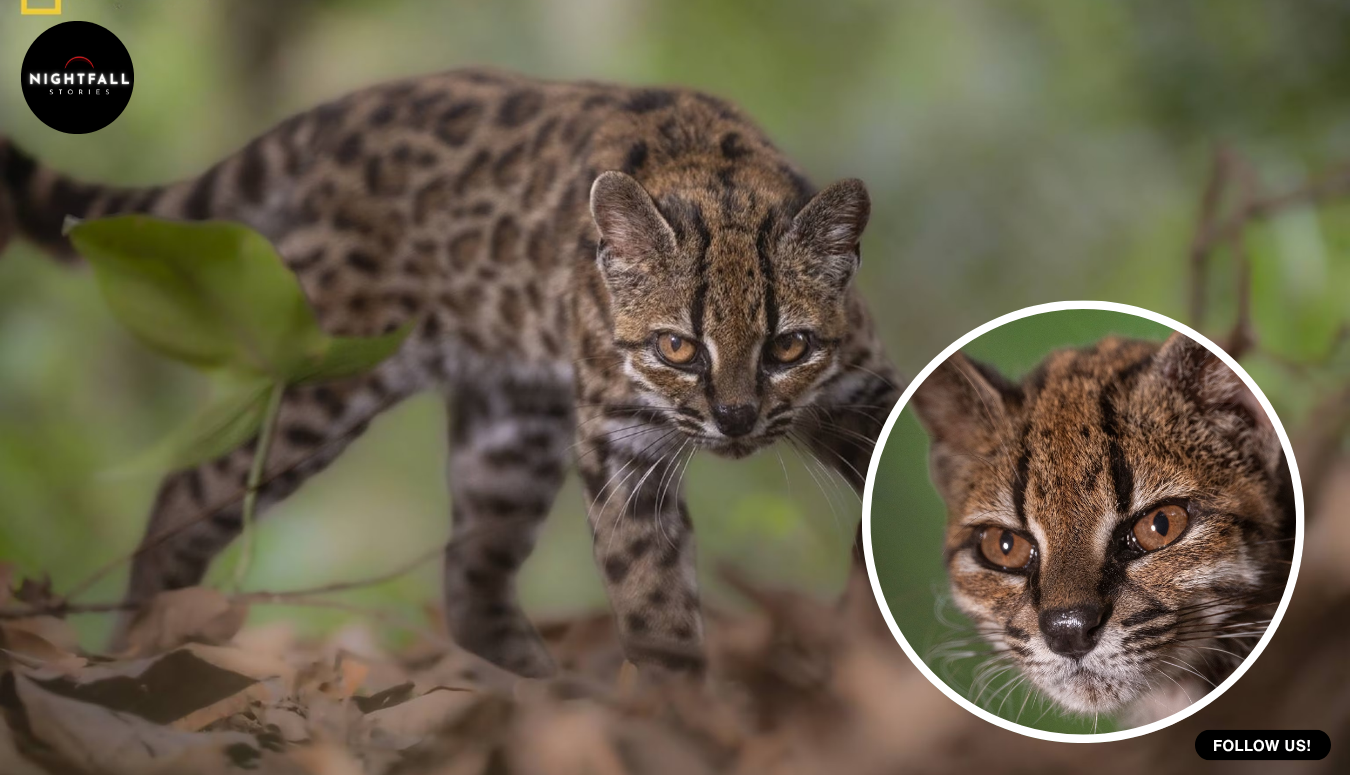
    A man walking a road on the eastern slope of the Andes found a kitten and did what most people would do. He took it home. He fed it what he had, which was noodles, rice and eggs, and he assumed it was somebody’s housecat that had wandered off into the cloud forest. It was not. About a year later, once it became obvious that this small spotted animal was never going to behave like a pet, he handed it over to La Senda Verde, a wildlife refuge in Bolivia’s Yungas. The sanctuary staff called a biologist who knew Bolivian cats and asked her to come and look at something odd.

    That cat is now roughly ten years old, still living at the refuge, still going by the nickname the keepers gave him, Tigrino. And as of this month he is the living face of the first brand new wild cat species that science has formally described in more than a hundred years.

    Its name is Leopardus tilcayo. It weighs about three to four pounds. Its head and body together run somewhere between seventeen and twenty inches, with a tail adding roughly another ten. It is smaller than the average domestic cat, with a slightly squashed face, round ears, light brown fur and unusually large rosettes scattered across it in an irregular, low contrast pattern that makes it look less like a miniature leopard and more like a leopard photographed through fog. If you passed it on a trail at dusk you would almost certainly assume you had seen a tabby.

    That is precisely the problem this cat has presented for two centuries, and the reason it took a genome to notice it.

    The biologist who answered the sanctuary’s call is Paola Nogales-Ascarrunz, a Bolivian scientist who founded the Bolivian Felids Research Program and works as a National Geographic Explorer. When she first examined Tigrino, she did not think she was looking at a new species. She thought she was looking at a tiger cat, a Leopardus tigrinus, that happened to be unusual. Slightly wrong colour. Spots too big. Tail a bit long and a bit thin. Cats vary, and she filed it away as a curiosity.

    Then, a few years later, she was putting together a guide to the cat species of Bolivia. Work like that forces you to be precise, because a field guide has to tell a reader what to look for, and the moment she tried to write down what a tiger cat in the Bolivian Yungas actually looked like, Tigrino stopped being a curiosity. The description she was writing did not match the animal she had in front of her. Not in one detail, but in several, all at once, all pointing the same direction.

    This is the unglamorous part of discovery that almost never makes it into the story. There was no moment in a jungle clearing with a torch beam falling on an unknown animal. There was a scientist trying to write an accurate caption and finding she could not.

    What happened next took years and required a lot of people. Nogales-Ascarrunz went back to school for the genetics, because proving that a cat is a separate species is not a matter of opinion about spots. She joined an international team that eventually included Jonas Lescroart at the University of Antwerp, who shares lead authorship with her on the resulting paper, and Eduardo Eizirik, a geneticist at the Pontifical Catholic University of Rio Grande do Sul in Brazil who has spent much of his career untangling the small cats of South America. The wider author list runs to more than a dozen names across Bolivia, Brazil, Peru, Belgium and the United States, including the ancient DNA specialist Beth Shapiro.

    Their approach was to stop arguing about fur and start reading genomes. The team assembled complete genomes from thirty eight individual cats across the genus Leopardus, sequencing twenty six of them new and pulling another twelve from existing data. Crucially, eight of those genomes came out of historical museum specimens, dusty skins and skull fragments sitting in drawers, some of them collected well over a century ago. That branch of the work has a name of its own now, museomics, and it is quietly rewriting a lot of what we thought we knew about animals nobody can easily find alive.

    The museum material mattered more than it sounds, because the whole mess started with a museum problem. The original tiger cat was described in the eighteen hundreds on the basis of a single illustration of an animal from Cayenne, in French Guiana. Not a specimen. A picture. Every argument about tiger cat taxonomy since then has been anchored to a drawing, which is roughly like trying to settle a paternity case using a sketch of somebody’s cousin. Generations of biologists inherited that ambiguity and argued about whether there were one, two or three species of tiger cat, with the boundaries redrawn every couple of decades depending on who was measuring what.

    The genomes ended the argument in a direction almost nobody had bet on. What had been treated as a single widespread species, or at best two, turned out to be five genetically distinct species spread across South and Central America. One of those five had never been described at all. That one lives in the Bolivian Yungas, and it is the animal at the refuge.

    The team also sorted out a related population in Peru, naming it as a new subspecies, Leopardus tigrinus antisuyo. Tilcayo split off from its nearest relatives roughly one and a half million years ago, during a stretch of climate swings that repeatedly broke the montane forests of the Andes into isolated fragments. Cats got stranded on separate green islands, stayed stranded long enough, and became different animals.

    The formal type specimen, the one that anchors the name in the scientific record, was not Tigrino. It was an animal documented near the village of Arapata in the Nor Yungas province of Bolivia, at about 1,570 metres of elevation, in 2021. That is cloud forest country on the eastern flank of the Andes, steep, wet, perpetually fogged in, and one of the more biologically dense places on the planet that most people outside the region have never heard of.

    Which brings us to the name, and the part of this story that deserves more attention than the cat’s face is going to let it have.

    The team did not invent a name. They did not use a Latin construction describing the spots, and they did not attach a donor’s surname or a colleague’s. They asked the people who live in the Yungas what they call this animal, and the answer came back the same over and over. Tilcayo. Everyone knew the word. Nobody could tell them where it came from. When researchers pressed on the etymology, the answers ran along the lines of, I do not know, my grandfather called it tilcayo, so I call it tilcayo. It does not appear to be Spanish. It does not appear to be Quechua. It is simply a word that has been passed down in that landscape for an unknown length of time, attached to a specific animal that outside science had never managed to see clearly.

    So the official scientific name of the newest cat on Earth is a piece of local vocabulary of unknown origin, adopted whole, and the recommended English common name is the same word. The researchers treated it as a noun in apposition, which is the technical way of saying they did not bend it to fit Latin grammar. They left it as it was.

    There is something quietly corrective in that. The communities of the Yungas were never confused about this cat. They had a word for it. They had presumably had that word for generations. What they did not have was a genome sequencer and a journal, and so the animal remained, in the official reckoning of the world, nonexistent. The paper closes a gap that only ever existed on one side.

    The findings were published in the journal Current Biology, under the title Phylogenomics and museomics reveal five distinct species of tiger cats in South America. It went live earlier this month, and within days the tilcayo had been photographed, filmed and syndicated across more or less every continent, which is a strange fate for an animal whose entire confirmed wild range is a slice of Andean forest and whose only individual most people will ever see is a ten year old male in a refuge.

    Now for the part that is easy to lose in the pictures.

    Nobody knows how many tilcayos exist. Not approximately, not within an order of magnitude. The International Union for Conservation of Nature has not assessed the species, because until a few weeks ago it was not a species. The research team has handed its data over for a planned reassessment of the whole tiger cat group, and that reassessment is where the real consequences sit.

    Eizirik has made the point bluntly. If you treat the tiger cat as one animal ranging continuously from southern Brazil all the way up to Costa Rica, you will conclude it is doing fine, because somewhere in that enormous sweep there are always populations holding on. Split that single reassuring entity into five species, each confined to its own much smaller patch of the map, and the picture inverts. Five separate, smaller, more fragile things, each of which can be lost on its own. The study’s genomic work already found evidence of severe long term population declines across tiger cat lineages through the Pleistocene and Holocene, with some of them, including the tilcayo, showing reductions of more than sixty percent.

    A taxonomic revision is not a neutral bookkeeping exercise. It decides which animals are eligible for protection, which habitats get argued over, and which losses get counted. For decades the tilcayo’s decline was invisible because it was averaged into a larger group that looked healthier than it was.

    The Yungas is not a stable place to be a small predator. It is being cleared, fragmented and converted, and the description of the tilcayo arrives with the blunt observation from the people who work there that its habitat is vanishing fast. A cat that weighs three pounds and hunts small rodents at night does not need a vast wilderness, but it does need connected forest, and connected forest is the thing in shortest supply on that slope.

    Nogales-Ascarrunz has moved on to the next problem, which is finding the animal in the wild in any numbers. She has been setting camera traps through the Yungas forests, and the difficulty is exactly the one that hid the species in the first place. Tiger cats are routinely misidentified on camera surveys. A grainy night frame of a small spotted cat has been logged as a tigrinus for decades, and some unknown share of those frames were probably tilcayos all along. The archive of existing camera trap data across the region may already contain the answer to how widespread this animal is. Somebody now has to go back and look again with different eyes.

    Her own summary of what the last decade taught her is worth sitting with, and it is not really about cats. We tend to assume, she has said, that the world is mostly known and mostly mapped, and that the era of finding new large animals ended somewhere in the colonial period. Her experience points the other way. The world is extremely complex, and most of it is not known. It only looks known because we stopped looking hard at the things we thought we had already identified.

    That is what actually happened here. Nobody trekked into an unexplored valley. The cat was in a wildlife refuge with a nickname and a feeding schedule, roughly a two hour drive from a major city, being visited by tourists. It was in museum drawers, labelled as something else, in more than one country. It was on camera trap memory cards. It was in the everyday vocabulary of farming communities who had a name for it. The animal was never hidden. Our categories were just wrong, and wrong categories are far better at concealing things than dense forest is.

    Tigrino will not be released. He was raised on noodles and rice by a well meaning stranger, he has spent a decade around people, and there is no version of the wild that he could survive now. He will live out his life at the refuge as the only member of his species most of the world will ever lay eyes on, which is a small and slightly melancholy irony for an animal whose name came out of a forest.

    But his existence did something. A cat that nobody could classify sat in a sanctuary long enough for one biologist to keep coming back, keep failing to make the description fit, and keep going until she had the tools to prove why. The result is not just a new name in a journal. It is four other species that now have to be assessed separately, a Peruvian population with a formal identity, a century of muddled taxonomy finally resolved, and a word from the Bolivian Yungas printed permanently in the scientific record of the world.

    Somewhere on that Andean slope there are more of them, moving at night, hunting rodents, being photographed by camera traps and filed under the wrong name. At least now there is a right name to file them under.

  • Your cat makes that weird open-mouth face for a reason, and a graduate student in Japan just worked out what it is reading

    Your cat makes that weird open-mouth face for a reason, and a graduate student in Japan just worked out what it is reading

    If you have ever watched a cat sniff something and then freeze with its mouth half open, upper lip curled, looking briefly like it has been personally insulted by the smell, you have seen the single most useful clue in this entire story. Cats do it at other cats’ urine more than at almost anything else. It has a name, the flehmen response, and it means the animal is not just smelling. It is pulling the molecule into a second sensory organ in the roof of the mouth and reading it properly.

    For decades the obvious question sat there unanswered: reading what, exactly?

    A team based at Iwate University in northern Japan, working with chemists in Germany and collaborators in Spain, now think they have the answer, and it is stranger and tidier than anyone expected. Cat urine carries a set of fatty acids that differ measurably from one individual cat to the next and, crucially, stay more or less the same in that cat over time. Not a mood. Not a health readout. An identity. A chemical name tag.

    The paper went online in the journal Current Biology, and it is worth being precise about when, because most of the coverage you will have seen is a month late. It was published on 19 August. The wave of articles in September is the print issue catching up, volume 36, issue 17, which is a completely normal thing for a journal to do and a completely normal thing for readers to misread as fresh news. The science is a month old. It is not less interesting for that.

    The first author is Shota Ichizawa, a graduate student in the applied biological chemistry programme at Iwate University, and his name has been quietly mangled or skipped in a lot of the write-ups. Plenty of outlets went straight to the senior author, Masao Miyazaki, the professor who runs the lab, partly because Miyazaki is already known internationally for earlier work on why cats roll in catnip and silver vine. The romanisation of Ichizawa’s surname also varies between the journal record and his own university’s release, which has not helped. The journal listing is the one to go by, and it has Ichizawa first.

    The rest of the team includes Stefan Schulz and Jana Kaspers, chemists at Braunschweig in Germany, and the collaboration matters because of what the work required. This was not a behaviour study with some chemistry bolted on. It was a chemistry study with behaviour used to check the answer.

    Here is the problem they were up against.

    Cats mark. Everyone with a cat knows this and everyone with a garden knows this. The assumption for a long time was that the information in a scent mark lives in the volatile compounds, the light molecules that evaporate fast and hit your nose from across a room. That assumption has a serious flaw. Volatile compounds are unstable. They change with what the animal ate yesterday, with the weather, with how long the mark has been sitting on a fence post. If your identity badge rewrites itself every few hours, it is not much of an identity badge.

    So the team went looking lower down the scale, at semi-volatile compounds. Heavier molecules. Slower to leave. Harder to detect with standard methods, which is part of why they had been overlooked.

    They found thirteen branched-chain fatty acids. Branched, meaning the carbon chain has side spurs off it rather than running straight, which gives you an enormous number of possible variations from a small number of building blocks. The team sampled urine from 44 domestic cats and the pattern held: the particular blend and the proportions between those thirteen compounds varied clearly from one animal to another, while staying recognisably consistent within the same animal across separate collections.

    Then they tested the stability directly, which is the part that turns a curiosity into a mechanism. Samples left at room temperature still carried a readable branched-chain profile after 24 hours. A mark on a wall is still saying whose mark it is a full day later, long after the sharp smell that made you wrinkle your nose has faded.

    The chemistry alone would not prove cats care. So they asked the cats.

    They ran behavioural trials with 27 animals, with several of the core recognition tests built around the same seven males. The design used habituation, which is a clean trick: present an animal with a smell over and over until it gets bored and stops investigating, then change one specific thing and see whether the boredom breaks. If nothing changes in the animal’s behaviour, it cannot tell the difference. If it starts sniffing hard again, it can.

    They swapped out the branched-chain fatty acid fraction while holding the other lipids steady. The cats started sniffing again. Change that one component and, as far as the animal is concerned, the mark now belongs to somebody else.

    It is worth pausing on how unglamorous that design is, because it is what makes the result trustworthy. There is no mind reading involved and no interpretation of feline facial expression beyond counting seconds. A cat either investigates or it does not. Habituation strips out the animal’s general curiosity, its mood that afternoon, its fondness for the researcher, and leaves one variable standing. Run it enough times with enough animals and the only thing that can explain renewed interest is that the chemistry changed and the cat noticed.

    That is a tight piece of work, and it would be a decent paper if it stopped there. It does not stop there, and what comes next is the part that has people genuinely excited, with a large asterisk attached that most of the coverage has dropped.

    For well over a century, anatomists have known that cat kidneys are unusual. Slice one and the cortex is packed with lipid droplets, tiny globules of stored fat, in a quantity you simply do not see in the kidneys of most other mammals. It has been written up, illustrated in textbooks, noted and shrugged at for generation after generation of veterinary students. Nobody had a convincing explanation for what all that fat was doing there. Kidneys are filters. Filters do not normally need a pantry.

    When the team looked inside those droplets, they found the branched-chain fatty acids, bound up in triacylglycerols, the storage form of fat.

    So the proposal on the table is this: the kidney droplets are a reservoir. A buffer. A cat’s diet swings, and the raw material in its bloodstream swings with it, but if the relevant fatty acids are being held in a slow-release store in the kidney and fed steadily into the urine, the signature stays constant even when the input does not. The identity survives a change of food.

    That is an elegant idea and it would explain a hundred-year-old anatomical oddity in one stroke, which is precisely why it needs saying clearly: it is a proposed mechanism, not a demonstrated one.

    The researchers themselves are careful about this in a way the headlines have not been. Miyazaki’s own framing is that the droplets have been known for more than a century, that why cats have so many has remained a mystery, and that these findings suggest one of their functions may be to support a stable chemical signature in urine. Suggest. May be. One of their functions. The team states outright that how the stored fatty acids actually get released into urine is an open question for future research. Nobody has traced that pathway. The correlation is real and it is striking. The plumbing between the store and the mark has not been shown.

    If you read a headline this month announcing that a century-old mystery has been solved, that is the headline writer talking, not the scientists.

    The team also looked outward, beyond the house cat, and this is where the story opens up. They checked urine and kidney lipid patterns across other members of the cat family and found the same chemistry in lions, tigers, leopards, jaguars, servals, Iberian lynxes and the leopard cats of Tsushima. The specific profiles differ by species and even by geographic population, but the underlying system appears to be shared across Felidae.

    That points at something old. Not a quirk your cat picked up while being domesticated, but a signalling system that predates domestication by a very long way, running through solitary territorial hunters who needed to leave reliable information about themselves on a landscape they could not patrol continuously.

    Here again, though, the honest caveat: the behavioural tests were done on domestic cats only. The compounds are there in the wild species. Whether a lion reads another lion’s mark the same way has not been tested, and the team says so.

    There is one more reason the finding lands the way it does, and it is about how cats live rather than how they smell. Most of the cat family is solitary. A tiger, a leopard, a serval spends the great majority of its life alone across a range far too large to defend by being physically present in it. The only way to hold territory under those conditions is to leave messages and trust that they will still be readable when a rival arrives days later. Seen that way, a stable chemical identity is not a curiosity. It is the minimum requirement for the entire lifestyle to work, and the surprise is less that it exists than that it took this long to find the molecules carrying it.

    What makes this a human story rather than a chemistry story is the shape of the lab it came out of.

    Miyazaki’s group has form for taking questions that everybody else treats as too trivial or too obvious to bother with, and then refusing to let go. The catnip work is the famous example. Cats rolling in catnip and silver vine had been a party trick for centuries, filed under cats are weird. His team asked what the behaviour was actually for, and found that rubbing the plant compounds into their fur gives cats a measure of chemical protection against mosquitoes. A joke turned out to be pest control.

    This is the same instinct applied to something even less glamorous. Cat urine is the least appealing research material imaginable, the sort of thing that makes people laugh when you say it at a dinner table, and the team spent years on its heavier molecular fraction because the light fraction did not add up. Somebody had to collect forty four cats’ worth of samples. Somebody had to sit through habituation trials watching whether a bored cat would bother lifting its head. That somebody, on the paper at least, is a graduate student whose name a lot of the world’s science desks did not bother to print.

    There is a practical edge to it as well, and it is not trivial. Cats are notoriously difficult to assess in a clinic. They mask illness, they hate carriers, they behave nothing like themselves on an examination table, and kidney disease in particular is both extremely common in older cats and extremely hard to catch early. If the kidney really is running a lipid store that feeds this signature, and if that store is disrupted when the organ starts failing, then the chemistry of a cat’s mark might eventually carry an early warning. The researchers have not claimed this, and nothing in the paper supports it as a diagnostic yet. It is simply the obvious next question, and it is the kind of question that follows from having identified the mechanism in the first place.

    There is a smaller, more domestic payoff that lands immediately, though, and it is the reason this story travelled.

    If you have two cats and they have never quite settled with each other, you have probably noticed how much of the tension runs through smell. A cat comes back from the vet and gets hissed at by a housemate it has lived with for eight years. Introduce a new cat and the fight is not over the food bowl first, it is over the furniture, the doorframes, the corners of the sofa, everything that gets rubbed and marked and marked over.

    That has always been treated as territorial in a vague sense. What this work suggests is much more specific. They are not just claiming ground. They are writing names on it, in a stable chemical script, in a format that survives a day of weather and a change of diet, and they are reading each other’s names off the wall every time they do that ridiculous open-mouthed face at the doorframe.

    The next time you see it, the curled lip, the vacant thousand-yard stare, the expression of an animal that has just remembered something embarrassing from years ago, you are watching a cat check the signature on a message. The letter is still legible. Who wrote it, and how the ink gets made, is the part still being worked out.

  • Their own dog could follow a week-old trail one time in three. They published that number anyway.

    Their own dog could follow a week-old trail one time in three. They published that number anyway.

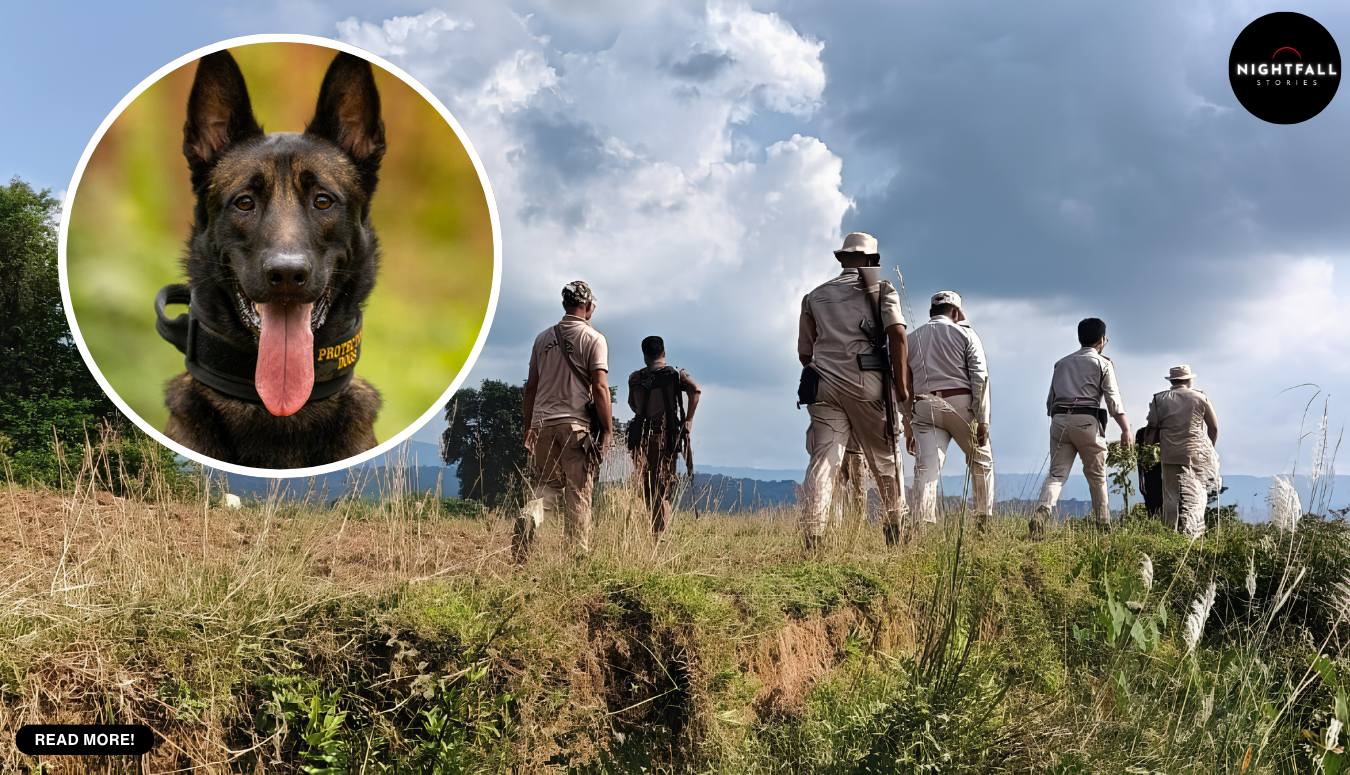
    Somewhere in a 300 square kilometre block of Malaysian rainforest, a Belgian Malinois named Phiri has spent most of his working life doing something almost no dog on earth is asked to do: follow the smell of a human being who did not want to be followed, through heat and humidity that would put most working dogs on the ground within the hour.

    His team has now published a paper about him. And the strange thing about that paper is which numbers are in it.

    A counter-poaching unit writing up its own dog has an obvious option available. You lead with the best figure. Phiri has one: on scent trails between roughly twenty-five minutes and five hours old, he located his target in about ninety-seven percent of exercises. That is a spectacular result. It would make a fine headline, and nobody outside the team would ever have known what else was in the dataset.

    Instead the authors also published what happens as a trail gets older. At thirty minutes, Phiri succeeded every time. At twenty-four hours, roughly two thirds of the time. At seven days, about one time in three.

    That last number is the one that matters, because it quietly contradicts the way this kind of work usually gets described, including by Phiri’s own organisation. The conservation group he works for has published a profile of him stating that his nose can follow a human scent trail more than seven days old, across rivers and jungle slopes and thick undergrowth. That is true in the sense that he sometimes can. The paper puts a figure on how often, and the figure is thirty-three percent.

    There is one honest caveat that has to go alongside that, and the authors state it themselves: the track-age testing was small. Twenty-three trials in total, split across age bands, which means each individual percentage rests on a handful of runs. At the three-day mark he succeeded in both of the two attempts recorded, which is why the paper’s own summary says performance was highest on tracks up to three days old rather than describing a smooth slide from perfect to poor. The decline is real and the seven-day result is genuinely weak. It is not a clean curve, and anyone who presents it as one is overselling a small sample in the opposite direction.

    It helps to understand what the dog is actually smelling, because the intuition most people have is wrong. A tracking dog is not following a smell that a person carries. It is following the disturbance a person leaves: crushed vegetation, bruised leaf litter, bacteria and skin cells shed onto the ground, soil turned over by a boot, and the chemical aftermath of all of that decaying. That is why the clock matters so much. The trail is not fading because the dog’s nose is tiring. The trail is being eaten. In a rainforest at ninety percent humidity, with rain arriving most days and an entire ecosystem of microorganisms working on the forest floor, organic traces do not sit around politely waiting to be found.

    Which means the honest way to read Phiri’s decay figures is not as a measure of one dog’s ability at all. It is a measure of how fast a rainforest erases a footprint. Another dog in the same forest would be fighting the same chemistry.

    Either way, the conclusion the team draws from its own data is a restriction on its own work. A tracking dog in this environment is a response tool, not a patrol tool. You do not send him out to wander and hope. You send him when something has just been found, and the clock starts the moment a boot leaves the ground.

    That reframing sounds technical. In practice it moves the whole problem somewhere else, onto the people who report a snare line.

    Kenyir State Park sits in the state of Terengganu in Peninsular Malaysia, and it is not a pristine wilderness. It is secondary and logged-over forest with patches of remaining lowland and hill dipterocarp forest, running from about sixty metres above sea level up to six hundred. Its real value is connective: it forms part of a forest corridor linking protected areas across three states, which is exactly the kind of ground that large cats need and exactly the kind of ground that is hardest to guard.

    The animals that corridor is meant to carry include the Malayan tiger, which is listed as critically endangered. The threat described in the paper is not glamorous. Poaching there is carried out by both local and transnational teams working inside protected forest, and the method is snaring and shooting, aimed at tigers and at the prey animals tigers depend on. A snare is a loop of cable. It costs almost nothing, it can be set in minutes, and it does not care what walks into it.

    The climate is the other adversary, and the paper is unusually specific about it. Annual rainfall of 2,500 to 3,500 millimetres. Relative humidity typically between eighty and ninety percent. Mean temperatures running from about twenty-two to thirty-three degrees Celsius. That is a difficult place for a person to work and a genuinely dangerous one for a dog bred in and for a different climate.

    Phiri came from South Africa, acquired at two years old through a specialist supplier of anti-poaching canine capability. He is an intact male Belgian Malinois, a breed chosen for this work everywhere in the world for a fairly narrow set of reasons: extreme drive, high pain tolerance, a nose that holds up under exertion, and a psychological need to work that borders on a design flaw in a pet. He is now around eight. Off duty, according to his handlers, he likes destroying coconuts.

    The heat findings in the paper are worth reading carefully because of how they are reported. Success dropped from about seventy-eight percent under moderate conditions to about fifty percent when the heat index climbed above thirty-four degrees. That is a big-looking fall. The authors ran the statistics on it and reported that the trend was not statistically significant. They published the p-value. They did not round the caveat away or describe the pattern as a finding.

    That is a small thing and it is the tell. A team writing promotional material does not include the p-value that undermines its own observation.

    The paper covers work from 2019 through 2025, with a pause across 2021 and 2022 when pandemic restrictions stopped field operations. Across that stretch there were a hundred covert-tracking trials, the twenty-three track-age trials, and nine live deployments: five routine patrols and four actual counter-poaching operations. The lead author is Sai Sanggkeeth Narayanasamy, working with colleagues across the conservation organisations Panthera and Rimba, and the field programme was funded through a United States government grant aimed at rhino and tiger conservation.

    It is also worth noting how few programmes of this kind ever get evaluated at all. Counter-poaching canine units have spread widely over the last decade or so, across Africa and increasingly into Southeast Asia, largely on the strength of the idea that a dog is obviously useful. The idea is reasonable. What has generally been missing is anyone measuring it under real operating conditions and then reporting what came back, including the parts that argue for using the dog less. An operational performance evaluation is a dull phrase for a genuinely unusual document.

    Nine live deployments over six years is not a lot. It is also, if you think about what a deployment involves, probably about right. You do not send a dog and a team of humans into that forest on a hunch.

    Buried in the trial data is the figure that most people skip and that the team almost certainly cares about most. On successful trials, Phiri and his handler remained undetected eighty-five percent of the time.

    Concealment is not a performance statistic. It is a safety statistic. A tracking team in that forest is walking towards people who are committing a serious crime in a place with no witnesses, and who are frequently armed. Being good at finding them and bad at staying hidden while you do it is not a partial success. It is the worst possible combination. Fifteen percent of successful approaches ended with the team being noticed, and the paper reports that plainly rather than leaving it out.

    The other thing the paper documents, almost in passing, is turnover. Phiri has been handled by four different people across the programme’s life, in two phases: two handlers in the early years, and two more from 2023 onwards. One of the later handlers holds international scent-work certification and has completed formal conservation-handler training.

    Four handlers is a lot for one dog. A tracking dog is not a piece of equipment that gets passed between operators without cost. The working relationship is the instrument. A dog learns to read one person’s tension in the lead, one person’s timing, one person’s way of asking. When that person leaves, the dog does not simply carry on at the same standard with the next one. It has to be rebuilt, and rebuilding it burns months.

    The paper lists handler integration among the factors that influenced performance, alongside canopy cover. Which means that part of what the numbers measure is not the dog’s nose at all. It is how well a particular human and a particular dog were working together on a particular day, years into a programme that had to keep restarting that relationship from scratch.

    The daily cost sits underneath all of this and rarely gets written down. A Malinois working in equatorial humidity needs hydration management, forced rest cycles, and veterinary attention in a place where specialist veterinary care is not next door. His handlers have said plainly that heat and humidity exhaust dogs quickly. Every deployment is therefore a negotiation between what the dog could do and what the dog should be asked to do, made by the person holding the lead, usually with nobody watching.

    It is important to be clear about what this paper does not say. It does not describe an arrest. It does not describe a prosecution. There is no named individual anywhere in this story who was caught by a dog, and nothing here should be read as implying one was. The word poacher belongs to the paper’s title and to a general description of an activity, not to any claim about a person.

    What the paper offers instead is a stated limit on deployment, which is a stranger and more useful kind of result. Tracking dogs, the authors conclude, can be a genuine force multiplier in this environment, but only when supported by clear operating procedures, skilled handlers, cultural integration with the teams they work alongside, and logistics built for multi-day tropical operations. Performance was best on trails up to about three days old. It fell under heat stress. It depended heavily on canopy cover and on the handler.

    Read that as a shopping list and it is uncomfortable reading for anyone funding this kind of unit. It says a dog alone buys you very little. The dog is the cheap part. Everything that makes the dog effective is expensive, human, and slow to build.

    And read alongside the decay curve, it points at something that no amount of canine ability can fix. If a dog’s usefulness has largely evaporated by day seven, then the binding constraint on the whole programme is not the dog. It is the gap between a poaching team walking into that forest and somebody finding evidence of it and getting word out. Shorten that gap and Phiri becomes formidable. Leave it at a week and he is a coin flip.

    That is not a conclusion that makes anybody’s programme look impressive. It makes it look contingent, and dependent on unglamorous things like patrol frequency, reporting speed and radio coverage.

    Which is exactly why publishing it counts. A small field team in a difficult forest, funded on grant cycles that reward demonstrable success, had a ninety-seven percent figure in hand and a legitimate reason to lead with it. They put the seven-day number in the same paper, with the sample sizes attached and the failed significance test printed, and then wrote a conclusion that narrows the conditions under which their own dog should be used.

    Phiri is still working. He is around eight years old now, which for a Malinois in that climate is not young, and at some point in the next few years someone will make a decision about when he stops. When that happens, the thing his team leaves behind will not be a heroic anecdote about a dog who caught a poacher, because that is not what the record contains.

    It will be a set of numbers honest enough to be useful to the next unit that tries this, including the number that says what their dog could not do. In a field that runs on donor confidence and hopeful press releases, that is the harder thing to publish, and it is worth more.

  • A zoo waited ninety-five years for these eggs. Then the keepers took the first two away on purpose.

    A zoo waited ninety-five years for these eggs. Then the keepers took the first two away on purpose.

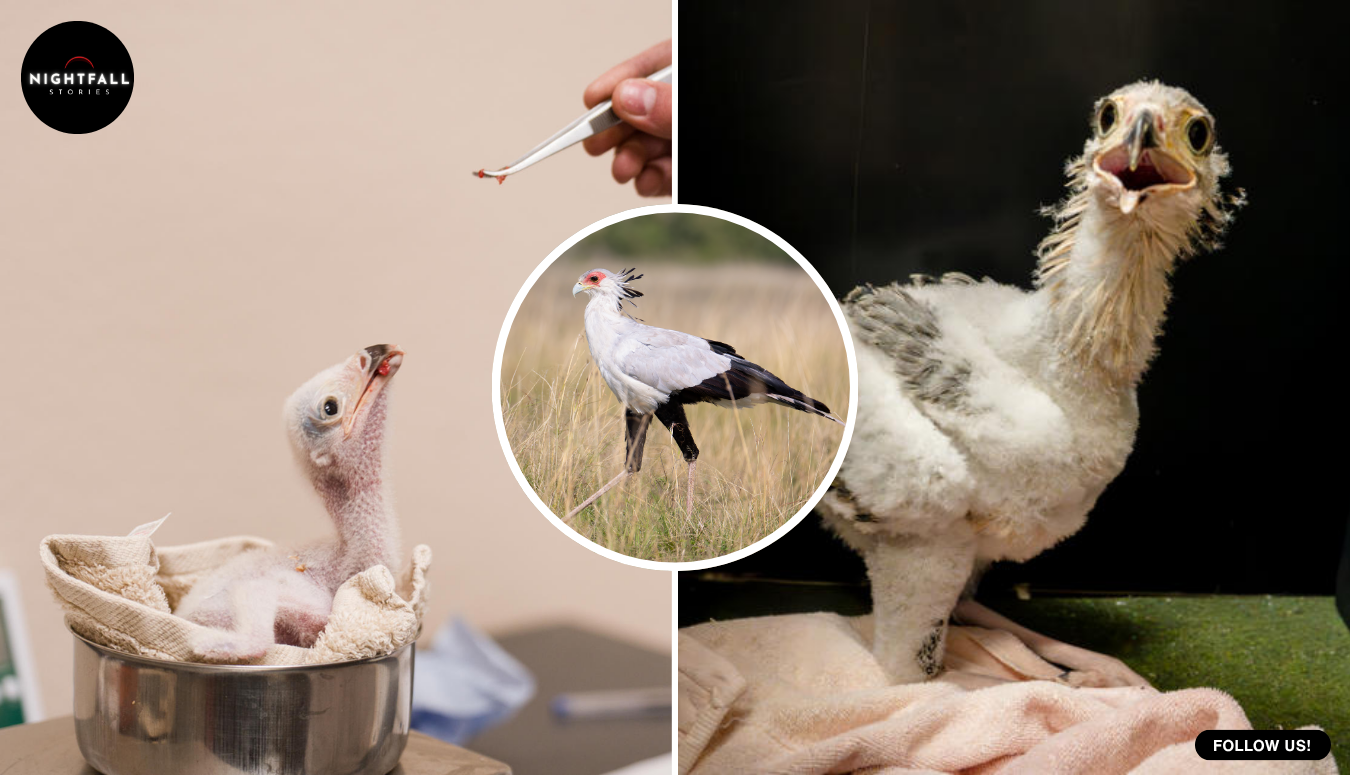
    Chester Zoo opened in 1931. In all the decades since, through every rebuild and every generation of keepers, one thing had never happened there: a secretarybird had never come out of an egg. Last year, five of them did. And the part that the bird team will tell you matters most is not the five. It is that the first two chicks were lifted out of the nest by human hands, and the last three were not.

    That decision, to take eggs away from a pair of endangered birds that had finally produced them, is the whole story. It sounds like the opposite of conservation. It is closer to a calculated bet, and the people who made it knew exactly what they were risking.

    Start with the bird, because the secretarybird is genuinely strange and most people have never really looked at one. It is a bird of prey, in the same broad family business as eagles and hawks, except that it has almost entirely given up flying to hunt. It stands roughly four feet three inches tall on legs that look borrowed from a crane, with a wingspan that can reach close to seven feet and a body weight of only about four kilograms. Nearly all of that height is leg. It walks across African grassland in long, deliberate strides, sometimes covering many miles in a day, and it kills things with its feet.

    The feet are the famous part. Researchers who measured a captive adult male striking a target found that he hit with a force equal to about five times his own body weight, and that the contact lasted only ten to fifteen milliseconds. That is an extraordinarily short window. A bird that stomps a snake has to be accurate in a fraction of the time it takes a human to blink, because the thing underfoot is also trying to kill it. The stiff black quills fanning out behind the head, the feature that probably gave the bird its name because they look like pens tucked behind a clerk’s ear, are the least interesting thing about it.

    It is also a fussier predator than its reputation suggests. The snake-killing footage does the species a slight disservice, because snakes are an occasional item rather than a staple. Most of what a secretarybird eats is small and unglamorous: insects, rodents, frogs, lizards, the occasional young bird or hare. It hunts by walking, flushing things out of the grass with its feet and then striking, and it often works in pairs or as a loose family group. That feeding style is precisely why the species is so exposed. A bird that hunts on foot across open ground needs open ground. Fence it, plough it, plant it, burn it at the wrong time of year, and the bird has nowhere to walk.

    This is also a bird that is disappearing, and it has been doing so quietly. In 2020 it was uplisted to endangered on the global red list of threatened species, which puts it one step below critically endangered. Conservation groups that follow African savannah raptors describe rapid decline across its entire range, from Senegal across to Somalia, and point to habitat loss, degradation of grassland, poisoning, poaching and general disturbance as the likely drivers, while being honest that nobody has fully pinned down which factor is doing the most damage.

    Chester Zoo’s own announcement said that as few as 6,700 birds may remain in the wild. That figure is worth handling carefully. The published estimate for the species is a very wide band, running from roughly 6,700 at the pessimistic end up to around 67,000 at the optimistic one, which tells you something uncomfortable in itself. Nobody knows, within a factor of ten, how many secretarybirds are left. The zoo quoted the low end. That is a legitimate thing to do when arguing for urgency, but it is the zoo’s framing rather than a settled count, and the honest version of the sentence is that the population is falling fast and the total is genuinely uncertain.

    Which brings us to the two adult birds at the centre of this. They are called John and Jolene, and they live in a behind-the-scenes breeding facility at the zoo rather than on the public route. That is a deliberate choice. Secretarybirds are nervous, and a pair that is being asked to do something no pair at that zoo has ever done does not need an audience.

    Secretarybirds build a wide, flat platform of sticks, up to about five feet across, usually in the crown of a thorny tree. The female typically lays one to three eggs. Both parents incubate, for roughly forty-five days. The chicks then stay in the nest for an unusually long stretch, fledging somewhere between sixty-five and a hundred and six days, most often around seventy-five to eighty. In good years, when prey is plentiful, all the chicks can make it. In bad years they do not.

    That long nestling period is exactly where inexperienced captive parents tend to fail. A pair can incubate perfectly and then lose a chick in week three because they do not feed it enough, or because they get restless, or because something spooks them at the wrong moment. For a species with this few individuals in managed care, losing a chick is not a sad footnote. It is a meaningful percentage of a year’s global output.

    So when John and Jolene produced their first eggs, the keepers made the call to hand-rear. The zoo’s account is that two of the five chicks were reared by staff and the remaining three were hatched and raised by the parents themselves. The exact split has been reported slightly differently in different places, with at least one version suggesting only the first chick came in, so the two and three figures should be read as the zoo’s own description of what happened.

    Consider what the forty-five days of incubation mean for the humans involved. A keeper watching a first-ever clutch at their institution has roughly six weeks in which they can do almost nothing except monitor, and during which the whole thing can quietly fail for reasons nobody will ever identify. Eggs go infertile. Pairs abandon. Temperature and humidity in a nest drift out of range. By the time you know something has gone wrong, the season is usually over, because these are not birds that lay again in a hurry.

    Then, if eggs do hatch, hand-rearing begins and the timetable becomes brutal. A chick that will stay in a nest for seventy-five to eighty days in the wild needs the equivalent of that entire period covered by staff. Feeds measured out, weights logged daily against a growth curve, a constant low-level judgement call about whether a chick is tracking where it should be or falling behind. Two chicks reared that way is not two weeks of extra effort. It is most of a season, for a team that also has an entire bird collection to run.

    Hand-rearing is not a shortcut and it is not a kindness. It is a lot of work, it produces a bird that has grown up around humans, and it removes the parents from the equation entirely. What it buys you is control. A chick in a brooder gets weighed, fed on a schedule, and watched around the clock. The odds of it surviving to fledging go up substantially. When the population you are working with is measured in dozens, that trade can be worth making.

    Here is how small the pool actually is. Across the entire European conservation breeding programme for this species, the zoo says, there are just seventy-nine birds. In the twelve months around these hatchings, only three other chicks hatched anywhere else in that programme. Seventy-nine individuals and three chicks a year, spread across a continent.

    Sit with that arithmetic for a second. A breeding programme is essentially a managed pedigree. Institutions across many countries pool their animals into a single studbook, and a coordinator works out which individual should be paired with which, so that the genetic diversity of the whole group does not quietly collapse over the generations. It is matchmaking with a spreadsheet, conducted across borders, over decades.

    A programme producing three chicks in a year is not a functioning population. It is a holding action. Every pair that turns out to be capable of breeding changes the shape of the plan, and every pair that cannot narrows it. Five chicks in one season from one previously unproven pair is not a rounding error in a system like that. It roughly doubles the year.

    And that is the reason the second brood matters more than the first. Two hand-reared chicks prove that the zoo’s keepers are good at their jobs. Three parent-reared chicks prove something different and far more useful: that this pair can do it without help. Jamie Cartwright-Stock, one of the bird keepers, described the team as having refined every aspect of the birds’ care to reach that point, and called it a breakthrough. Andrew Owen, the zoo’s head of birds, made the wider point that every chick hatched in a conservation zoo is becoming more important to this species’ future.

    Strip away the institutional language and the distinction is simple. A hand-reared chick is a result. A parent-reared chick is a method. The first one you can produce by trying very hard. The second one you can repeat.

    Repeatability is the thing that separates a press release from a programme. If a zoo can only get secretarybirds by pulling eggs and running an intensive round-the-clock operation on every single one, then its output is capped by staff time and it stops the moment a key keeper leaves. If the adults will incubate and rear their own young, the ceiling lifts. The keepers become supervisors instead of substitute parents. That is a structural change, and it is the sort of change that a studbook coordinator three countries away will notice and plan around.

    There is a smaller detail in this that is easy to sentimentalise and worth stating plainly instead. In secretarybirds, both parents incubate. Both parents feed. This is not a species where the male turns up for the interesting parts and vanishes for the work. So when coverage of these hatchings leaned on the idea of a father unexpectedly stepping up, it was reaching for a story that the biology does not quite support. What the keepers observed was a male taking a real share of the rearing, which in a first-time captive pair is genuinely encouraging, because plenty of inexperienced pairs do not manage it. The encouraging part is that this pair worked, not that a male did something out of character.

    It is also worth being clear about what these five chicks are not. None of them is going to Africa. Nothing in the record suggests any of them is destined for release, and it would be dishonest to imply otherwise. Releasing a large terrestrial raptor into grassland it has never walked on, with no parental training in how to hunt there, is not a thing anyone does casually, and it is not what this programme is for.

    What a breeding programme is for is holding a viable, genetically diverse group of animals in managed care while the reasons for the wild decline are addressed, or fail to be. That is a less thrilling mission than a release, and the people who run these programmes are usually the first to say so. A captive population is insurance, not a solution. The solution is grassland that has not been converted, and poison that has not been laid out, and that work happens thousands of miles from any zoo.

    So the five chicks do not save the species. They were never going to. What they do is more modest and more real: they add five birds to a group of seventy-nine, they prove that a specific pair of adults can reproduce without human hands in the nest, and they give a continent-wide programme a better year than it had any reason to expect.

    The ending here is genuinely a good one, and it does not need inflating. All five chicks came through. The pair demonstrated they could rear their own. Chester Zoo went ninety-five years without a secretarybird hatching, according to its own institutional record, and then in one season stopped needing to hand-rear in order to get one.

    Somewhere in a spreadsheet maintained for a studbook, five new lines appeared where a coordinator had been expecting none. That is what a breakthrough actually looks like most of the time. Not a rescue. A year that went better than the plan allowed for, and a method that might work again next year.

    The birds themselves have no idea any of this happened. They are long-legged, short-tempered, snake-stomping animals who will spend their lives walking in circles around an enclosure in northern England because the grassland their ancestors crossed is being taken apart faster than anyone can protect it. The keepers who took those first two eggs away were not being cruel and were not being sentimental. They were doing arithmetic on a species that has run out of room for optimism, and this time the arithmetic came out in the birds’ favour.

  • For a hundred years they called it imagination. The pattern was already inside the tusk

    For a hundred years they called it imagination. The pattern was already inside the tusk

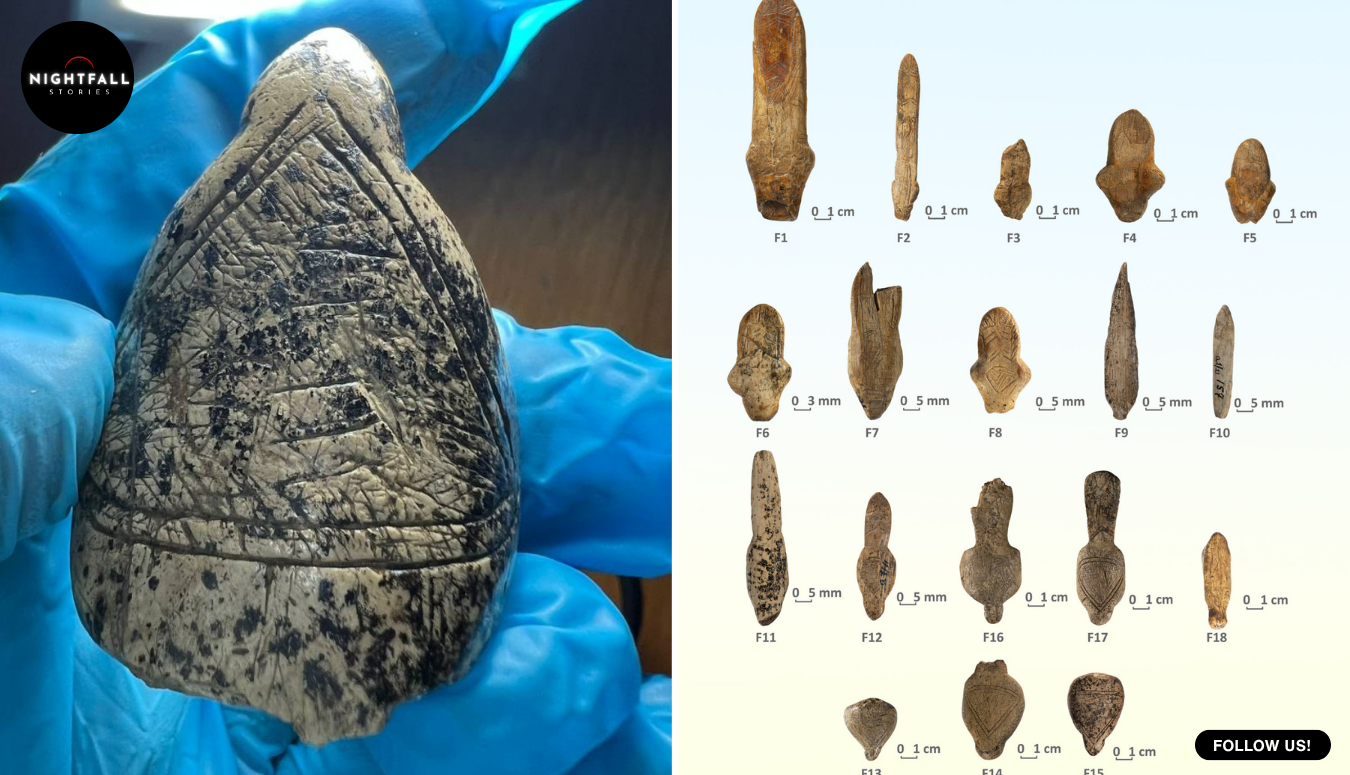
    There are eighteen of them, small enough to close your hand around, carved from mammoth ivory by people living on a cold northern plain something like eighteen thousand years ago. They are human figures, stripped back to almost nothing: a suggestion of a body, a narrowing where a waist would be, no face. What they are famous for is the decoration. Zigzags. Meanders. Parallel lines that run and turn and run again, cut into the ivory with stone tools, and so confidently done that for a century everyone who studied them treated the patterns as pure invention, the first flourishes of abstract design, geometry pulled out of a human head.

    A team led by a Ukrainian archaeologist now based in Norway has just published work suggesting that is only half right. The carvers were not only inventing. They were, at least partly, copying. The zigzags follow a pattern that was already in the ivory before anyone touched it, a hidden structure inside every mammoth tusk that only becomes visible if you cut the tusk a particular way. And the thing that makes this land oddly in the present is that the same internal pattern is now used by customs officers to catch ivory smugglers.

    The figurines come from Mizyn, a Palaeolithic camp in northern Ukraine. Eleven of them were dug up in the first decade of the twentieth century near one dwelling structure built from mammoth bone, and seven more came out a few years later near a second. A few were reportedly found beneath or inside a mammoth skull, which is the kind of detail that has kept archaeologists arguing about their purpose ever since. They have been in the National Museum of the History of Ukraine in Kyiv for generations, studied, drawn, re-drawn, published, and reproduced in textbooks as a standard example of Ice Age abstraction.

    They are also, right now, extremely difficult to get to. The war has made physical access to the collection limited, which is the reason this study exists in the form it does. Simon Radchenko, at the Museum of Archaeology at the University of Stavanger, worked with Oleksandr Naumenko at the museum in Kyiv, and the team’s way in was digital. In 2022 they were granted limited access to build high-resolution photogrammetric models, essentially three-dimensional digital copies accurate enough to substitute for the objects themselves. That work was undertaken partly as preservation, on the grim logic that a digital record survives things the original might not.

    So the analysis was carried out on models rather than in a room with the figurines, and this turned out to be an advantage rather than a compromise. On a screen you can rotate a piece to any angle, light it from any direction, and measure it in ways you cannot easily do by eye with something fragile in your hand. Combined with digital microscopy, the team worked through 97 individual engravings and tool marks across the set.

    To understand what they found, you have to know what is inside a tusk.

    Mammoth ivory is not uniform. It has a hidden architecture, and it comes in two parts. The first is a crosshatch, a lattice of fine lines that appear when the tusk is cut across its width, produced by the way the dentine tubules spiral as the tusk grows. These are Schreger lines. The second is a set of concentric rings running the other way, growth lines laid down over the animal’s life much as a tree lays down rings. These are Owen’s lines. Neither is visible from outside. A whole tusk looks like a smooth curve of cream-coloured material. The pattern only appears once you cut, and it appears differently depending on where along the tusk and at what angle you cut.

    Here is the part that connects to the present. The angle of the Schreger crosshatch differs between mammoth ivory and elephant ivory, reliably enough that it is used as a forensic test. Trade in mammoth ivory, which comes from animals that died tens of thousands of years ago, is legal in most places. Trade in elephant ivory is not. Smugglers have every incentive to pass one off as the other, and a customs inspector with a magnifier and a protractor can measure the angle where the lines intersect and tell which animal it came from. It is one of the simplest and most effective tests in the wildlife-crime toolkit.

    The same structure that is now evidence in a smuggling prosecution was, eighteen thousand years ago, functioning as a design brief.

    What Radchenko’s team did was work out, for each figurine, where in the tusk it had been cut from. Ivory’s internal geometry is systematic enough that you can read backwards from the shape and structure of a finished object to its original position in the raw material. Doing that for all eighteen produced the first result: they all came from the central portion of the tusk, with their long axes aligned the same way relative to the ivory’s own growth direction. That is not chance. Eighteen out of eighteen means somebody knew what they were looking for and went to the same part of the tusk every time.

    Then they compared the carved decoration to the natural structure of that same region. The zigzag ornaments on several of the figurines resemble Schreger lines. The meanders and parallel lines echo Owen’s lines. The engraving was concentrated where the natural pattern would have been most visible, which is to say the carvers were not decorating a blank surface, they were working with what the ivory was already showing them.

    There is a version of this finding that sounds deflating, as though it takes something away from the people who made these objects. That reading gets it backwards, and the researchers are clear about it. Noticing a structure that only appears under particular conditions, understanding it well enough to predict where in a tusk it will show up, selecting your raw material accordingly, and then amplifying it by hand with a stone blade is not less sophisticated than inventing a pattern from scratch. It is a different and arguably harder kind of attention. It requires you to have spent a long time looking at the inside of mammoth tusks and to have drawn conclusions from what you saw.

    Aimée Little, at the University of York, has framed it as a window onto how Palaeolithic people perceived and engaged with the material world around them, and that is the useful way to hold it. These were not people imposing ideas onto inert stuff. They were reading the stuff.

    The tool-mark analysis fills in the physical reality. Cross-sections of the carved lines show back-and-forth sawing and repeated cutting with sharp-edged stone tools, which is slow, deliberate work on a hard, dense material that punishes a slip. Some of the figurines are noticeably thinner than others, because they were cut from different ivory blanks, and thinness is part of why some survived intact and some did not.

    One more thing about the raw material is worth spelling out, because it explains why this was possible at all. A mammoth tusk is not a bone and not a horn. It is a tooth, an enormously elongated incisor that grew continuously throughout the animal’s life, laid down in layers from the inside out. That growth history is what produces Owen’s lines, and the spiral arrangement of the microscopic tubules running through the dentine is what produces the Schreger crosshatch. Because both are products of how the tusk grew, they are systematic rather than random, which is exactly why a modern inspector can use them as a test and exactly why a Palaeolithic carver could learn to predict them.

    Learning them would not have been quick. It would have meant breaking and cutting a lot of ivory, noticing what appeared and where, and passing that on. Mammoth ivory was not a rare curiosity to these people. It was a structural material. The camp itself included dwellings built from mammoth bone, so the animal was food, shelter, fuel and raw stock all at once, and a working familiarity with what happens inside a tusk when you cut it is exactly the kind of knowledge a community like that would accumulate and hand down.

    The other conclusion is about art history, and it quietly rearranges something.

    Simplified, near-abstract human figures of this general kind do turn up in central and western Europe, but later, roughly seventeen thousand to thirteen thousand years ago, in what specialists call the Lalinde and Gönnersdorf tradition. Because the western examples were better known and more studied, Mizyn had often been slotted in as an early or provincial version of the same thing, a precursor sitting at the start of a line that ran westward.

    There is also a gap in the record that makes Mizyn matter more than it might otherwise. Female figurines are a recurring feature of Ice Age Europe going back well before this, the objects usually filed under the catch-all label of Venus figurines, and some of the most famous of them, the ivory carvings from central Europe, are several thousand years older again. Then, during the worst of the Last Glacial Maximum, roughly twenty-three thousand to twenty thousand years ago, the evidence for them thins out dramatically. Conditions were brutal, populations contracted into refuges, and a great deal of what people had been doing simply stops showing up.

    So what comes after that gap is not a continuation. It is a restart, and the question of what the restart looked like and where it happened first is a real one. The team went back through around 650 published radiocarbon dates to place Mizyn properly in that sequence, which is the unglamorous half of the work and the half that makes the argument stick.

    The dating undercuts that. The Mizyn figurines fall between roughly 18,800 and 17,400 years ago, which puts them among the earliest anthropomorphic images known in Europe after the Last Glacial Maximum, the coldest phase of the Ice Age. They are not early members of a later western tradition. They predate it, and their method, which is built around the properties of mammoth ivory specifically, is its own thing. The team’s reading is that eastern Europe had an independent artistic development, not a derivative one.

    Andy Needham, also at York, has made the distinction plainly: the eastern European figurines used the tusk’s internal patterns in a way the western European ones did not. That is a difference in method, not just in style, and method is usually the better guide to whether two traditions are related or merely resemble each other.

    That matters beyond the objects. The story of Ice Age art has often been told from west to east, because the French and Spanish cave sites were found early, excavated thoroughly and reproduced everywhere. Eastern European material has tended to be described in relation to that centre. A finding like this, coming from a Ukrainian researcher working on a Ukrainian collection, pushes back on the geography of the narrative as much as on the chronology.

    There is something worth sitting with in the fact that this was discovered now, on objects that have been in a museum case for over a hundred years and drawn by specialists again and again. Nobody had to dig anything up. The evidence was on the surface of the figurines the entire time, in plain view, and what changed was the question being asked and the technology available to ask it with. Generations of researchers looked at the zigzags and saw decoration. Somebody looked at them and wondered where in the tusk the piece had come from.

    It is worth being honest about how modest the individual observations are. Nobody found a new object. Nobody unearthed a site. What happened is that a set of well-known pieces were measured properly, in three dimensions, against the known internal geometry of the material they were made from, and a correlation showed up that was too consistent to be coincidence. Eighteen for eighteen on tusk position, plus decoration that tracks the natural lines, plus engraving concentrated where those lines would show. Each of those on its own would be suggestive. Together they are an argument.

    It also says something about digital archaeology, which is often sold as a preservation measure or an access measure and turns out here to be a research method in its own right. The models were made because the originals were hard to reach and might not be safe. They then produced a finding that hands-on study over a century had not. Naumenko, at the museum in Kyiv, has pointed out that projects like this deepen understanding of the past and open new research possibilities, which is a careful sentence from someone whose institution is doing this work under conditions no museum should have to work under.

    The paper appeared in npj Heritage Science, with co-authors across Ukraine, Norway, Germany and the United Kingdom, including Dmytro Kiosak at the Leibniz Centre for Archaeology in Mainz, Anja Mansrud at Stavanger, and Andy Needham and Little at York. Radchenko’s own position is that this is a beginning, and that further digital work on the collection should tell us more about how artistic expression emerged and developed in Europe.

    The figurines are still in Kyiv. They are still eighteen small pieces of ivory carved by people whose names nobody will ever know, working in a landscape of mammoth-bone houses on a plain that was colder and emptier than anything in Europe today. What has changed is what we understand them to have been doing.

    Somebody held a piece of tusk and saw a pattern hiding in it that most people would never have noticed, and instead of covering it over with an idea of their own, they cut along it and brought it out. That is a recognisable impulse. Anyone who has ever worked with wood and followed the grain rather than fighting it knows exactly what that is. It has been sitting in a display case for a hundred years, waiting for somebody to recognise it.

  • They put a dental drill to a 66-million-year-old tooth, and the number that came back was 36

    They put a dental drill to a 66-million-year-old tooth, and the number that came back was 36

    For about forty years, the argument over whether Tyrannosaurus rex ran hot or ran cold was conducted entirely without a thermometer. That is the strange part. Everyone had an opinion, and the opinions were fierce, and the whole thing rested on inference: the shape of the bones, the speed of growth rings, the latitudes where the fossils turned up, the posture, the guesswork about how fast a nine-tonne animal could move without cooking itself. Nobody had a number. Nobody thought a number was possible, because the animal has been dead for 66 million years and you cannot put a probe into something that is not there.

    A team based mostly at UCLA now has the number. They took a dental drill to fossilised tooth enamel and came back with 36 degrees Celsius, about 97 Fahrenheit. That is, give or take a fraction, a human being. It is the temperature of the person reading this.

    The measurement belongs to a specific animal with a name. Thomas is the most complete tyrannosaur skeleton held by the Natural History Museum of Los Angeles County, pulled out of the Hell Creek Formation in Montana a little over two decades ago. He is a museum showpiece, which is exactly why this was so difficult. You do not get to walk into an institution and grind up a piece of a specimen like that because you have a hypothesis. The permission is the hard part, and the permission is where the story actually begins.

    Thomas was found in the early 2000s by a museum team working the badlands, and the excavation and preparation of him took years, which is the ordinary timescale for this work and the reason a specimen like him is treated the way a gallery treats a painting. Preparation means removing rock from bone at close to the scale of a grain of sand, and a single skull can absorb thousands of hours. Once that is done, the institution holding the specimen has an obligation that outlasts everyone currently employed there. The fossil is not a resource to be consumed. It is supposed to still be intact and still be answerable for questions nobody has thought of yet in two hundred years, which is why requests to sample one are refused far more often than they are granted, and why researchers spend as much effort reducing the size of the sample they need as they do on the analysis itself.

    That refusal is not obstructive. It is the whole point of a collection. Plenty of nineteenth and twentieth century specimens were damaged or destroyed by well-meaning analysis using methods that were later superseded, and the material is gone and the question is still open. Curators remember that. So the sentence that unlocked this study was not a clever hypothesis. It was a much duller one: we now need roughly a tenth of what we used to need.

    The technique is called clumped isotope palaeothermometry, and the principle is more elegant than the name. Carbon and oxygen each come in ordinary versions and rare heavy versions. When a mineral crystallises, those rare heavy isotopes occasionally end up bonded to each other rather than distributed randomly, and how often that happens depends on temperature. Cooler conditions produce more of these clumped pairings. Warmer conditions produce fewer. The ratio is not affected by what the animal ate, or what the water it drank was like, or any of the other variables that have wrecked previous attempts at ancient chemistry. It is a thermometer that reads only heat, and it has been sitting inside the tooth, locked in place, since the enamel formed in a living jaw.

    Robert Eagle, the UCLA geobiologist behind much of the work, developed an earlier version of this method roughly a decade ago using bone. Bone was the problem. Bone is porous and chemically restless, and over tens of millions of years it swaps atoms with groundwater and sediment until whatever signal it once carried has been overwritten. Enamel is the opposite. Enamel is built from unusually large, tightly packed crystals, and Eagle has described it as the part of a skeleton that most stubbornly refuses to be chemically rewritten by its surroundings. If anything in a fossil was going to hold onto a 66-million-year-old temperature, enamel was the candidate.

    The other breakthrough was subtraction. The earlier version of the technique needed a substantial amount of material, which is another way of saying it needed a museum to agree to the destruction of a meaningful piece of an irreplaceable specimen. The refined version needs roughly ninety percent less. That reduction is what unlocked the door. A curator can consider a request to remove a powder sample from portions of a couple of teeth in a way they could never consider a request that would visibly damage the animal. Luis Chiappe, who runs the museum’s Dinosaur Institute, is a co-author on the paper, which tells you how closely the institution was involved rather than merely permitting it from a distance.

    There is a small discrepancy worth naming rather than smoothing over. The university’s own account describes portions of two teeth being sampled. Some wire coverage reported three. It does not change the result, but it is the sort of detail that gets copied wrong for years afterwards, so the honest version is that it was two or three teeth and the figure is a snapshot from a small number of samples, not a survey of the species.

    What happens next is almost comically low-tech. The powder from the drill goes into phosphoric acid, which releases carbon dioxide gas. The gas goes into a mass spectrometer, which counts the isotopes and works out how often the heavy ones are bonded to each other. Out the other end comes a temperature. Published in Science Advances, the study reports an average of roughly 36.3 degrees Celsius for the tyrannosaur enamel, which the team rounds in plain language to 36, about the same as us.

    The number on its own would be interesting. What makes it evidence is the control.

    The team did not just measure the dinosaur. They measured a crocodilian from the same ancient ecosystem, an animal that was living in the same place, drinking the same water, breathing the same air, buried in the same sediment and subjected to the same 66 million years of geological weather. If the method were simply reading the temperature of the ground rather than the temperature of the animal, both results should have come out the same. They did not. The crocodilian came back at roughly 30 to 31 degrees Celsius, right where a cold-blooded reptile that regulates its heat by moving between sun and shade ought to sit. The tyrannosaur came back six degrees warmer.

    Six degrees, in the same mud, in the same climate, is the whole argument. It means the difference is coming from inside the animals.

    Put the T. rex figure next to the living world and it lands in an interesting place. Modern cold-blooded reptiles typically run somewhere around 28 to 30 degrees. Modern birds, which are the direct descendants of theropod dinosaurs and the closest living relatives T. rex has, run hot, roughly 40 to 43 degrees. The tyrannosaur sits between them, above the reptiles, below the birds, and almost exactly on the mammals. Eagle has summarised it as higher than a reptile but lower than a bird, which is a plain sentence doing a lot of work, because that gap is precisely the territory palaeontologists have been arguing about.

    It is worth remembering how long people have been shouting about this. For most of the first century of palaeontology, dinosaurs were understood as enormous reptiles, sluggish, tail-dragging, swamp-bound, essentially lizards scaled up until they became absurd. That picture started coming apart in the second half of the twentieth century, during a period researchers still call the dinosaur renaissance, when work on anatomy and on the birdlike theropods forced a rethink of how these animals stood, moved and probably lived. Out of that came the argument that at least some dinosaurs were active, fast, internally heated animals much more like birds and mammals than like crocodiles.

    The argument was never settled, because every line of evidence brought to it was indirect. Bone microstructure showed rapid growth, and rapid growth is suggestive of a high metabolism, but not proof of one. Predator to prey ratios in fossil assemblages were used as an argument, then argued back the other way. Later work looked at eggshell chemistry and at the chemical residues of metabolism in fossil bone. Every one of those approaches produced a probability and a rebuttal. Forty years of that leaves a field with strong convictions and thin evidence, which is the exact condition in which a direct measurement lands hardest.

    The old debate was usually framed as a binary. Warm-blooded, like us, generating heat internally and paying for it with a huge appetite. Or cold-blooded, like a lizard, taking heat from the environment and going still when the environment stops supplying it. The version that kept surfacing in between was gigantothermy, the idea that an animal the size of a bus does not need much of an internal furnace because sheer bulk holds heat the way a stone building holds the afternoon. A large enough body cools slowly simply because there is so little surface area relative to volume. On that reading, T. rex could have been essentially a reptile that was warm by accident of size.

    That was a respectable position, and it is hard to square with a six-degree gap against a crocodile living in the same swamp. The crocodile was not small. The mechanism that made the tyrannosaur warmer was not just being big.

    The result also tidies up a detail that had been sitting awkwardly in the record for years. Tyrannosaur fossils have been recovered from Cretaceous Alaska. The climate then was far milder than the Alaska of today, but it still had months of darkness and real cold, and it is not a place where an animal wholly dependent on ambient heat comfortably makes a living. Palaeontologists had used that as circumstantial evidence for internal heat production. Circumstantial evidence is what you fall back on when you cannot measure the thing directly. Now there is a measurement, and it points the same way.

    None of which makes the case closed, and the team has been careful about that. A temperature taken from enamel is a temperature from the window when that enamel was forming. It is not a lifetime average, and it is not a species average. A juvenile might have run differently from an adult. An animal in a heatwave might read differently from the same animal in winter. Two or three teeth from one skeleton is a beginning, not a survey. Independent labs using other approaches will produce their own estimates, and those estimates will not all agree, and the interesting science will happen in the disagreements.

    There is also a subtlety about what the number is even describing. A living body is not one temperature. The core of a large animal is warmer than its extremities, and a jaw sits somewhere in between, so a reading from enamel is a reading from a particular part of a particular body at a particular moment in its growth. Researchers using this approach elsewhere, on mammals and on ancient marine animals, have run into the same question and generally treat the enamel figure as a good proxy for core temperature rather than an exact match. It is a strong signal with a margin around it, and the honest framing is that T. rex was in the mid thirties rather than that it was precisely 36.3.

    But the ceiling has moved. The assumption underneath four decades of argument was that direct measurement of a dinosaur’s body temperature was permanently out of reach, that all anyone could ever do was reason from shape and circumstance towards a probability. That assumption was simply wrong. The information was present the whole time, in the chemistry of a tooth, waiting for someone to work out how to ask.

    The lead author on the paper is Randy Flores, with Eagle and the isotope geochemist Aradhna Tripati at UCLA, Alessandro Chiarenza at University College London, and Chiappe in Los Angeles. What they built is less a single finding than a tool, and the tool is the reason this matters more than one number about one famous animal. If enamel holds a readable temperature for 66 million years, then a great many extinct animals are carrying their own body temperatures around in museum drawers right now. The long-necked sauropods. The duck-billed hadrosaurs. The small feathered theropods at the base of the bird lineage. Each one is a separate question about when, and how often, and in which lineages, warm-bloodedness actually appeared.

    That is the question this opens up. Endothermy is expensive. Running a body several degrees above the outside world costs an enormous amount of fuel, which is why mammals eat so much more than reptiles of the same size. Something has to make that worth paying for: sustained activity, tolerance of cold, the ability to hunt at night or in winter or at latitude. Working out where on the dinosaur family tree that bargain was first struck, and whether it was struck once or repeatedly, is now something you can approach with samples rather than arguments.

    And there is the smaller, more human thing, which is probably why this story travelled so far so fast. Everything about T. rex is built for distance. The size, the teeth, the sixty-six million years, the fact that it is the standard cultural shorthand for a monster. It is not an animal most people picture as being like them in any respect.

    Then a number comes out of a lab and it is 36, and the distance collapses a little. An animal you could not have stood next to, from a world with a different sky and different plants and different air, was carrying the same internal weather you are carrying right now. Warm to the touch. Roughly your temperature. It had been true the whole time. Nobody had asked the tooth.

  • Something has been drawing perfect hexagons on the seafloor for 530 million years

    Something has been drawing perfect hexagons on the seafloor for 530 million years

    There is a pattern on the floor of the deep ocean that looks like somebody drew it. Rows of tiny holes, arranged into a honeycomb, hexagon after hexagon, each cell about the size of a fingernail, laid out with a regularity that feels like it belongs on graph paper rather than on mud three and a half kilometres beneath the Atlantic. It turns up in rock hundreds of millions of years old, pressed into stone that is now halfway up an Italian mountain. And it turns up, still fresh, in photographs taken by remotely operated vehicles in the last few years.

    Nobody has ever seen the thing that makes it.

    That is not a figure of speech. In roughly 175 years of scientific attention, across dozens of deep-sea dives, submersible sampling runs, sediment cores and DNA tests, no researcher has ever laid eyes on, filmed, netted or otherwise laid hands on whatever is responsible for the honeycomb. They have the pattern. They have never had the animal. It is the closest thing palaeontology has to a cold case with a signature and no suspect, and a team of scientists has just published an argument about who the suspect is, based on nothing but the geometry left behind.

    The pattern has a name, Paleodictyon, given to it by the Italian geologist Giuseppe Meneghini in 1850, although he was not the first person to notice it. Leonardo da Vinci appears to have sketched it around 1500, presumably while looking at the same kind of Italian rock that everyone since has looked at, and presumably with the same reaction anyone has on seeing it for the first time, which is that this cannot possibly be natural.

    For most of the time since, the guesses have been all over the place. Some early workers thought it was a chemical artefact, a pattern that emerged as soft sediment hardened and cracked. Others put it down to algae. One Italian geologist floated the idea that the honeycombs were fossilised beehives, which tells you how far people were willing to travel to explain the regularity of the thing. Tadpoles have been proposed. So have several kinds of worm.

    By the second half of the twentieth century the field had converged on something more sober. The German palaeontologist Dolf Seilacher, who spent a career reading the marks animals leave in sediment, argued in the 1970s that Paleodictyon was a burrow system, and that the network was doing a job. Maybe it was a trap, a web of tunnels a soft-bodied animal patrolled to collect whatever wandered in. Maybe it was a farm, with the tunnel walls seeded and tended so that bacteria would grow on them and the resident could graze. Either way, the assumption underneath was that the builder was worm-like, because worms are what usually make burrows in deep-sea mud and because a soft body could squeeze through tunnels that narrow.

    Then the story moved from the rock into the water. In the mid 1970s, cameras towed over the Galapagos Rift brought back photographs of the same hexagonal pattern on the living seafloor, at depths between about 2,400 and 3,700 metres. That changed everything. This was not a fossil curiosity. Something was still doing it, right now, in the dark.

    The person who made it his business to find out was Peter Rona, an American oceanographer who had already earned a place in the history of the field. In the 1980s, working for the US ocean agency, Rona located hot springs on the Mid-Atlantic Ridge, the chimneys known as black smokers, and with them whole ecosystems nobody had known existed. He was not a man who lacked for achievements. And for the rest of his life, the honeycomb was the one that got away.

    Rona and his colleagues went down in the submersible Alvin and brought up samples of the pattern from the Mid-Atlantic Ridge at depths between roughly 3,430 and 3,575 metres. What they found, in physical terms, was elegant and frustrating in equal measure. The top of the structure is a shield-shaped patch of seafloor with rows of holes about a millimetre across, meeting at neat 120 degree angles. Underneath, vertical shafts two to three millimetres wide run down and connect into the buried mesh. The whole array can sprawl across a square metre of mud.

    What was not in the samples was a tenant. Empty tunnels. No body, no shed skin, no droppings that settled the question.

    So Rona proposed something different. Maybe there was no burrowing animal at all. Maybe the honeycomb was the fossilised outline of a xenophyophore, one of the strange giant single-celled organisms that live on the deep-sea floor and build structures far larger than a cell has any business building. Or a sponge. In that reading, the pattern is not a set of tunnels dug by a creature. It is the negative space around a body that has since rotted away.

    The trouble with that idea is that the xenophyophores anyone can actually go and look at do not produce anything with this symmetry. They are irregular. They sprawl. They do not do hexagons.

    Meanwhile the farming hypothesis picked up a problem of its own. If the tunnels were being cultivated as a bacterial garden, you would expect more bacteria inside them than in the mud around them. When researchers counted, the numbers did not budge. Sediment inside, sediment outside, same microbial load. What they did find in the burrows were the tiny shells of foraminifera, which looks a lot more like a trap catching prey than a farm growing crops. DNA sampling turned up genetic material from various single-celled organisms, but nothing that could be pinned to the builder rather than to everything else drifting through deep-sea mud.

    Part of Rona’s search ended up on screen. A large-format documentary about the hot vents, made with his colleague Richard Lutz, followed the hunt for the honeycomb along with the rest of the deep-sea work, and the film has the peculiar honesty of showing a scientist looking very hard for something and not finding it. Audiences got the ridge, the chimneys, the impossible animals living on chemistry instead of sunlight, and then a patch of mud with holes in it that nobody could account for.

    It is worth being clear about why the animal is so difficult to catch, because the obvious question is why nobody has simply gone down and waited. The honeycombs sit kilometres below the surface, which means every hour of observation costs a research vessel, a crew and a vehicle capable of operating under enormous pressure. Ship time is rationed in days, not seasons. When a submersible does find a patch, the act of approaching it stirs the sediment, and anything living in millimetre-wide tunnels is not going to be standing on the doorstep. Sampling means pushing a tube into the mud and pulling up a slice, which destroys the structure in the process of collecting it. And the tunnels come up empty often enough that some researchers think the builder may not live in them at all, but visit, build, and move on.

    Rona died in 2014, still without his animal. Another researcher, Mark McMenamin, has suggested the mesh might be a nursery, a nest of microburrows that empties out once the young are grown, which would neatly explain why the tunnels are always vacant by the time anyone arrives.

    This is the state of the argument that a team led by the palaeontologist Andrea Baucon, at the University of Cagliari, has now walked into. Their paper, published in the journal Earth-Science Reviews, is titled as a question rather than an answer, which is worth knowing before anything else. It asks whether arthropods can produce Paleodictyon. The team’s position is that they can, and that they probably did, and the reasoning is a genuinely nice piece of detective work, but the title is not modest by accident.

    Their approach was to stop waiting for the animal and interrogate the crime scene instead. Working with fossil specimens from the Apennines, from Portugal and from Poland, many of them held at the natural history museum in Piacenza, they took 1,314 measurement points off the hexagons and asked what kind of body could produce those numbers.

    Two things came out of it. The first is the precision. Within a single hexagonal cell, the six sides differ from each other by about half a millimetre on average. Think about what that means for a blind animal working in mud in total darkness. It is not just building hexagons, it is correcting as it goes, keeping each cell honest rather than letting small errors compound across the mesh until the pattern drifts into nonsense. Whatever this is, it is building to a tolerance.

    The second is the corners. Paleodictyon tunnels are straight, and they meet at sharp angles. A soft-bodied animal does not dig that way. A worm makes progress by pushing and squeezing, which only works in weak sediment and which produces curves, because a hydraulic body cannot hold a hard edge. Sharp corners and straight runs suggest something with a rigid frame and jointed limbs, scraping sediment away rather than shouldering through it. One of the co-authors, Alfred Uchman, makes exactly that point, that this is the signature of a digger working with legs and an exoskeleton.

    Which puts the team’s money on an arthropod. Specifically, they suggest a small crustacean of the kind called peracarids, the group that includes isopods and amphipods. The everyday comparison is the woodlouse or pillbug you find under a flowerpot, the little armoured thing that rolls into a ball. Somewhere in the deep sea, on this reading, a distant relative of that animal is patiently drawing geometry in the mud and has been doing so, in one form or another, since the Cambrian. The oldest specimen in the study, from Portugal, is around 530 million years old. That is older than trees. It is older than anything with a backbone that walked on land.

    The team also has a new idea about why. If the farming hypothesis does not survive the bacterial counts, what is the mesh for? Their suggestion is communication. A hexagonal network radiates outward evenly in every direction, which makes it a rather good medium for passing a signal through, chemically, hydraulically or as vibration. In that picture the honeycomb is not a larder and not a trap. It is infrastructure for a colony, a way of staying in touch in a place with no light and very little of anything else.

    It is a lovely idea, and it is exactly as unproven as everything else in this story.

    That is the part worth holding onto, because the coverage of this research has had a tendency to round it up into a solved case, and it is not one. Stephen Hasiotis, a researcher at the University of Kansas who works on trace fossils, has pushed back in public, and his objection is hard to argue with. Without direct evidence, he says, there is no way to rule out that other animals, segmented worms among them, are responsible for the pattern in some settings and across some stretches of geological time. The traces span more than half a billion years and turn up in a range of marine environments. It is a large assumption that one kind of animal made all of them.

    There is also a broader caution built into this kind of science. A trace fossil is a behaviour, not a body. Palaeontologists give these things Latin names like Paleodictyon and it is easy to forget that the name belongs to the pattern, not to a species. Two entirely unrelated animals can leave a similar mark, in the same way that two unrelated people can leave a similar footprint. The Baucon team’s argument narrows the field considerably by saying that the tracemaker had to be stiff-bodied and limbed, and that is a real contribution. It does not put a creature in a jar.

    Hasiotis said something else, though, that gets at why this is worth caring about at all. Whatever else the new work does, it sends everyone back onto the trail. For decades the assumption that a worm did it was so settled that nobody was really looking for anything else. Now there is a live argument again, a specific kind of animal to hunt for, and a reason for the next research vessel that finds a patch of honeycomb to sit on it a little longer and watch.

    What would actually settle it is not complicated to describe, only to do. Somebody needs to catch the builder at work, or find a body in the tunnels, or recover genetic material from the burrow lining that clearly belongs to the resident rather than to the general traffic of the deep sea. Any one of those would end the argument in an afternoon. The Baucon team’s contribution is that it tells the next expedition what to look for, and roughly how big it ought to be, which is more than anyone had before.

    There is also a decent chance the answer is already sitting in a specimen drawer somewhere, mislabelled. That happens more often in this field than outsiders expect. Museums hold enormous quantities of deep-sea material collected decades ago by people who had no idea what they had, and the Piacenza collection that supplied much of the new measurement work is a reminder that a regional natural history museum in a small Italian city can be holding the evidence at the centre of a global scientific argument.

    Because the strangest thing about this whole story is not the geometry. It is the timescale. The pattern in the 530 million year old Portuguese rock and the pattern photographed by a robot on the Mid-Atlantic Ridge a few years ago are the same pattern. Continents have moved. Five mass extinctions have come and gone. The dinosaurs arrived and left. And through all of it, on the floor of the ocean, something has been quietly drawing the same hexagons, at the same tolerance, in the dark.

    It is still down there. Somebody is going to see it eventually.

  • Sixty-one mammoths fell into the same hole. The date on the sign was wrong.

    Sixty-one mammoths fell into the same hole. The date on the sign was wrong.

    For half a century, every school group that walked into the building at Hot Springs, South Dakota was told roughly the same thing. Below you is a sinkhole. Sixty-one mammoths went into it and none of them came out. It happened around twenty six thousand years ago, give or take, in the last ice age, and what you are looking at is one of the best preserved windows we have into that world.

    The bones are exactly as advertised. The number is right. The sinkhole is right. The part that turns out to have been wrong is the date, and it is wrong by an amount that is genuinely hard to hold in your head. New work published this year in the journal Quaternary Research argues that the trap was open and swallowing animals somewhere between about 232,000 and 160,000 years ago. Not twenty six thousand. More than a hundred thousand years earlier than that, and across a span of time so long it covers a whole glacial cycle.

    If that holds, it does not just change a placard. It moves every single thing the site has ever been used to argue about into a different chapter of the ice age.

    Start with how any of this was found, because it begins with someone about to build houses.

    In 1974, a construction worker named George Hanson was moving earth on a hillside outside Hot Springs, preparing a plot for a residential subdivision. His blade turned up bone. A lot of bone, and some of it enormous and strange looking. His son recognised one piece as a mammoth tooth. That is the entire margin by which this site exists, one person on a job site knowing what he was looking at instead of pushing it into the spoil pile.

    The landowner, Phil Anderson, stopped the development. He could have carried on. There is no law that would have forced him to stop, and a subdivision was worth real money. Instead he agreed to donate the bone bed and the mineral rights to a nonprofit set up to protect it, and the hillside that was supposed to become a street of houses became an excavation instead. It was declared a National Natural Landmark within six years. A building eventually went up over the dig so that the bones could stay where they were found, in the ground, rather than being crated off to a museum basement. Visitors walk on a raised path and look down at mammoths lying exactly where they died.

    What killed them was geology behaving like a trap.

    Deep under the hill, groundwater had been dissolving limestone for a very long time, hollowing out a cavern. Eventually the roof of that cavern gave way and the surface collapsed into it, leaving a steep sided pit at least sixty five feet deep and something like a hundred and twenty by a hundred and fifty feet across at the top. Warm artesian water welled up into the hole from the springs that give the town its name. The sides were slick sediment and shale.

    Picture what that looks like from the outside during a cold, dry stretch. A pool of warm, open, unfrozen water with green growth around its edge, in a landscape where most standing water is either frozen or gone. It is the most attractive thing for miles. An animal walks down to drink, or steps in to feed, and then discovers that the bank it came down is too steep and too slippery to climb back out of, and that there is no shallow edge anywhere around the rim.

    After that it is a question of how long the animal lasts. Exhaustion, hunger, or drowning. Sediment washed in and settled over the bodies, and the next animal came down to the water without any way of knowing what was underneath it.

    Sixty one mammoths have been recovered so far. Fifty eight of them are Columbian mammoths, the big southern species, and three are woolly mammoths, which is an unusual pairing to find together in one deposit. They are not alone down there. Excavators have pulled out giant short faced bears, extinct camels, wolves and other canids, and material representing dozens of other species of ice age animals and plants. Roughly eighty five species in total have been identified from the deposit.

    And there is one pattern in the mammoths that has fascinated people since the earliest seasons. Nearly all of them appear, from their skeletal anatomy, to be young males.

    The usual explanation offered for that is behavioural. In living elephants, adult females stay in tight family groups led by an experienced matriarch who knows the landscape, where the water is, and which water is dangerous. Young males get pushed out of those groups as they mature and spend years roaming alone or in loose bachelor associations, without that accumulated caution, and they are famously prone to taking risks that older animals do not take. Apply that to mammoths and the sinkhole starts to look like a filter that selected for adolescent overconfidence. It is a reasonable inference drawn from modern elephants rather than a directly observed fact about mammoths, and it is worth holding it a little loosely, but it fits the bones.

    Now to the number that just changed, and to why the old one was shakier than the sign suggested.

    The original chronology came largely from radiocarbon dating carried out on the bone itself, specifically on bone apatite, the mineral component. Those measurements produced ages in the range of roughly forty two thousand to twenty three thousand calibrated years before present, which placed the site in the late Pleistocene, in the stretch of climate history specialists label Marine Isotope Stages 2 and 3. That is the tail end of the last glaciation, the world of late mammoths, dire wolves and the first people in the Americas. It is also the period nearly everyone assumes when they hear the word mammoth.

    The problem is that bone apatite is a notoriously awkward thing to radiocarbon date, especially in sediments that were waterlogged. Buried bone does not sit inertly. Its mineral structure recrystallises over time and exchanges carbon with the groundwater moving through it, which means the carbon you measure may have arrived long after the animal died. The authors of the new study are blunt about this: bone apatite has repeatedly been shown to be unreliable in lake sediments precisely because of that recrystallisation. On top of that, the radiocarbon results had never sat comfortably alongside what other lines of evidence suggested about the site.

    So the team went at it with a completely different method, one that does not care about carbon at all.

    Luminescence dating reads sediment grains rather than bones. The principle is that a buried mineral grain sits in a faint natural radiation field from the surrounding soil and slowly accumulates trapped energy inside its crystal structure, like a battery charging extremely slowly. Exposure to daylight empties that trap. So if you can extract a grain in the dark, measure how much stored energy it holds and work out how fast that energy accumulates in that particular deposit, you can calculate how long it has been since that grain last saw the sun. In practice, that means how long since it was buried.

    For this site the team used infrared stimulated luminescence on potassium feldspar grains, and specifically a post infrared protocol run at 230 degrees Celsius, a technique designed to get around the tendency of feldspar signals to leak away over long timescales. They went to feldspar rather than quartz, which is the more common target, for a telling reason: the quartz signal was saturated. Quartz fills up and stops recording after a certain age, and a saturated quartz signal is itself a hint that the deposit is older than quartz can measure.

    Their results put the sediments at roughly 232,000 to 160,000 years old. In climate terms that is Marine Isotope Stages 6 and 7 rather than 2 and 3, a completely different section of the ice age, taking in both a glacial period and the warm interglacial on either side of it.

    It matters to be exact about what that does and does not establish, because a lot of the coverage has not been.

    Luminescence dates the burial of sediment. It does not date a mammoth. What the team has directly measured is when the material filling the sinkhole was last exposed to daylight, and the ages of the animals are inferred from the ages of the layers they are lying in. That inference is a strong one, since the bones are encased in those sediments rather than intrusive into them, but it is an inference and it is not the same kind of measurement as dating a bone directly. Luminescence also cannot tell you anything about how a particular animal died, how long the trap stayed open, or how the individual mammoths relate to one another in time beyond what the layering itself shows.

    And the answer is a range, not a number. Several headlines have reported the site as 232,000 years old, full stop. That is the old end of a window that runs down to about 160,000, and collapsing the range to its most dramatic edge is exactly the kind of tidying that makes a real result sound like a different result. The finding is a span. The span is the interesting part.

    Because if the sinkhole was taking in animals across tens of thousands of years rather than a few centuries, the site stops being a snapshot and becomes a sequence.

    That is the shift the researchers themselves point to. The earlier chronology implied that the trapping happened over something in the order of five hundred to eight hundred years, which makes the deposit close to a single event, a bad stretch in one landscape under one climate. Stretch that over a hundred thousand years and you are looking at a pit that kept catching animals while the world around it changed completely, through cold phases and warm ones, through shifting vegetation and shifting mammoth diets. You could, in principle, compare mammoths from the bottom of the deposit with mammoths from the top and read the difference as a record of how the species responded to climate change, over a timescale nobody thought this site covered.

    The authors are Shannon Mahan of the United States Geological Survey luminescence geochronology laboratory, who led the dating work, together with Paul Hanson of the University of Nebraska, Emma Krolczyk of the USGS, and Christopher Jass and Jim Mead, both attached to the Mammoth Site itself. Jass, who curates the collection, has said publicly that the new ages open the door to revisiting a great many of the site’s previous interpretations, which is a careful way of saying that a lot of published work now needs rereading.

    The name on that author list worth pausing on is Mead’s. He has spent a large part of his working life on this deposit and is now emeritus there. He taught the old number. He published alongside it. And he is a co-author on the paper that takes it apart.

    That is not an embarrassment and it should not be reported as one. It is the whole mechanism by which science is supposed to function, and it happens far less often than the textbooks imply, because admitting that the figure on your own museum sign is off by a factor of six takes something. The institution did not bury the result. It put the announcement on its own website and said, in effect, we were wrong, here is the better measurement, here is what we are going to have to rethink.

    None of this would have been possible if somebody had made a different choice in 1974. The re-dating worked because the sinkhole is still intact, still full, still in place, with the sediment column undisturbed enough that grains could be collected in a controlled way for measurement. If the mammoths had been dug out and shipped to institutions across the country in the seventies, which was the ordinary fate of a find like this, the bones would have survived and the context would have been destroyed, and there would have been no sediment left to date. The people running the site chose to leave things where they lay and to build the museum around the hole rather than emptying it. Fifty years later that decision handed the next generation a question they could actually answer.

    So the sign gets changed. The number on it goes up by more than a hundred thousand years, the mammoths get reassigned to a colder, stranger, less familiar chapter than the one they were filed under, and the visitors keep coming to look down at fifty eight Columbian mammoths and three woolly ones lying where they fell.

    They were still young males who went down a slope towards warm water and could not get back up it. That part has not changed at all. It just happened a very long time before anyone thought it did.

  • Everyone agreed this animal never left America. Fourteen tail bones in Spain say it did.

    Everyone agreed this animal never left America. Fourteen tail bones in Spain say it did.

    A friend of a Spanish palaeontologist called him one day to say there were bones sticking out of a hillside. That happens a lot in Teruel, a thinly populated province in eastern Spain that happens to sit on some of the best Late Jurassic rock in Europe. What was less usual was the response. Alberto Cobos drove out the same day, looked at what was poking through the slope, and confirmed it was sauropod. Big, long necked, long tailed, the kind of dinosaur a child draws when you say the word dinosaur.

    It took years to get the rest of it out of the ground and longer still to work out what it was. The answer, published now in the Journal of Vertebrate Paleontology, is one of those quiet results that makes a lot of specialists sit up. The bones belong to Diplodocus. Not a relative of Diplodocus, not something Diplodocus shaped. The genus itself, on the wrong continent.

    To understand why that is startling you have to know how narrow the Diplodocus story has been for a century and a half. Othniel Charles Marsh named it in 1878 from material in the American West, and in all the time since, every specimen anyone has been confident enough to call Diplodocus has come from the same place: the Morrison Formation, a band of Late Jurassic rock running through Colorado, Wyoming, Utah and neighbouring states. It is one of the most heavily worked fossil deposits on earth. Generations of collectors have picked over it. The animal became a fixture of museum halls worldwide, largely because one industrialist funded plaster copies of a Diplodocus skeleton and sent them to capital cities across Europe, which is why a great many Europeans have stood under a Diplodocus without any Diplodocus ever having been found in Europe.

    So the textbook position was simple. Diplodocus was an American animal. Europe had its own Late Jurassic sauropods, including diplodocids, the broader family Diplodocus belongs to. Portugal in particular has produced good diplodocid material. But the genus itself stayed on one side of the ocean.

    What came out of the hillside at a site called La Tejería, near the village of El Castellar in Teruel, was a run of fourteen tail vertebrae and several chevrons, the small V shaped bones that hang beneath the tail and carry blood vessels and muscle. The rock is the Villar del Arzobispo Formation, and the material sits at roughly 150 million years old, near the top of the Jurassic. The animal it came from would have been around 25 metres long, which is about the length of two city buses parked end to end.

    The site itself is catalogued as CT-30, one of a long list of registered fossil localities in the province, which gives a sense of how methodically this landscape has been worked. Teruel runs a full research foundation and museum around its palaeontology, and the excavation and preparation of a specimen like this is a slow institutional process rather than a lucky weekend. Bones come out in jackets, get cleaned over months in a laboratory, and only then does anyone start comparing them with material on other continents.

    One nuance about the rock is worth stating plainly, because it affects how the find is read. The Villar del Arzobispo Formation has been the subject of a long running argument about its age, with different studies placing parts of it at the very end of the Jurassic and other parts at the very beginning of the Cretaceous. The authors place this specimen at roughly 150 million years old, in the Late Jurassic, which is what makes the comparison with the Morrison fauna meaningful in the first place. A significantly younger date would change the picture, because the two continents were further apart by then. That dating is not a controversy the paper invented and it is not unique to this site, but it is part of the evidence anyone assessing the claim will want to look at.

    The team behind the study is Sergio Sánchez Fenollosa, a doctoral researcher working on biodiversity and evolution, along with Josué García Cobeña and Alberto Cobos, all at the Fundación Conjunto Paleontológico de Teruel Dinópolis, the research foundation attached to the palaeontology museum and park at Teruel. Sánchez Fenollosa is the lead author, and the identification was not something he arrived at quickly. By his account, the resemblance to diplodocine sauropods showed up early in the bone by bone study and kept getting stronger as they worked through the features, until the conclusion was hard to avoid.

    The features doing the work here are not about size. Size tells you almost nothing in sauropods, because many of them were enormous and quite a few converged on similar proportions. What the team leaned on instead is the internal architecture of the bones and a handful of specific shapes.

    The first is pneumaticity. Sauropod vertebrae were riddled with air spaces, extensions of the respiratory system that hollowed out the skeleton and kept these animals from being crushed by their own weight. How those cavities are arranged differs between groups, and the Teruel vertebrae carry large ones in a pattern consistent with diplodocines. The second is proportion and surface. The vertebral centra, the spool shaped main bodies of the bones, are elongated and lack the lateral ridges some other sauropods carry. The third is a deep groove running lengthwise along the underside of the tail bones. And the fourth, the one the team treats as the clincher, is the chevrons.

    Diplodocus and its closest relatives have forked chevrons. Instead of a simple V, the bone splits into front and rear projections, giving the underside of the tail a distinctive skid like profile. The Teruel chevrons are forked, and they carry particular hollows on their inner surfaces that the authors argue narrow the identification further. Forked chevrons are not unique to Diplodocus alone, but the combination of all these characters in one associated run of bones is what the paper is built on.

    Here is where it is worth being careful, because the headline version of this story overstates what fourteen bones can do.

    There is no skull. There is no neck, no limb, no shoulder or hip girdle. Sauropod classification leans heavily on vertebrae precisely because vertebrae are what usually survives, but the more of an animal you have, the more confident anyone can be. A run of fourteen associated caudals with chevrons is genuinely good material by the standards of European sauropod palaeontology, and the authors describe it as one of the most complete diplodocids yet recovered on the continent. That is a real statement about the Teruel specimen and also a slightly deflating statement about the European record, which is patchy.

    The authors themselves have not claimed a species. The specimen is assigned to Diplodocus at genus level, written formally as Diplodocus sp., with the note that it may well represent a new species that has not been named because there is not enough of it to name one responsibly. That restraint is the most reassuring thing in the paper. The popular coverage has described the animal as a close relative of Diplodocus hallorum, the largest of the known American species, and that phrasing comes from the team. It means the Teruel material resembles that species. It does not mean the two are the same animal, and nobody should write that it is.

    There is also the general problem of convergence. Animals that live similar lives in similar ways evolve similar bones, and sauropods did this repeatedly over a very long stretch of time. Any identification that rests on a set of characters from one region of the skeleton carries the possibility that those characters appeared independently in an animal that was not closely related. Palaeontologists argue about exactly this sort of thing constantly, and a genus level assignment on a new continent is precisely the kind of claim other specialists will go at hard. That is not a criticism of the work. It is how the field is supposed to operate, and the Teruel team has published the material in a peer reviewed journal specifically so that it can happen.

    What makes the result more than a filing exercise is the geography.

    In the Late Jurassic, the Atlantic was not the ocean it is now. It was in the process of opening, a young and comparatively narrow seaway between land masses that had until recently been joined. How narrow, and whether anything the size of a 25 metre sauropod could have got across, has been argued over for decades. Palaeontologists have long noticed family level resemblances between the Morrison fauna and the Late Jurassic faunas of Portugal and Spain, with similar groups of sauropods, similar theropods and similar plant eating dinosaurs turning up on both sides. Something was clearly moving, or had moved recently enough that the two faunas had not yet drifted apart.

    The Teruel authors propose that the crossing worked via a land connection between what is now Newfoundland and the Iberian Peninsula, a route that has been suggested before on geological grounds. That is where the current continental shelves come closest to matching up in reconstructions of the period, and the proto Atlantic in that region was far narrower than the ocean that eventually replaced it. A Diplodocus in Spain would be a strong piece of evidence for exactly that kind of dispersal, because it pushes the resemblance down from family level, which could be explained by a common ancestor long before, to genus level, which implies the two populations were connected much more recently.

    The important qualification is that the land bridge is an inference, not a finding. Nothing was dug up in Teruel that shows a migration route. What was dug up is a tail. The migration story is the explanation the authors consider most likely for how that tail ended up where it did, and it depends on the identification being right. If the identification holds, the crossing becomes considerably harder to argue against. If another team later shows the Teruel animal is a European diplodocid that only resembles Diplodocus, the geographic argument weakens with it. The two stand or fall together, which is precisely why the identification is going to be scrutinised.

    Sánchez Fenollosa has been straightforward about the limits. He has said the question of which Diplodocus species lived in Europe is still open, and that more complete specimens will be needed before anyone can say what actually happened. Teruel is a promising place to go looking. The province has produced a remarkable series of sauropods over the last twenty years, including Turiasaurus, one of the largest animals ever found in Europe, and the region’s Jurassic exposures have been worked systematically rather than opportunistically, which is part of why the finds keep coming.

    It is also worth pausing on the tail, because it is the part of Diplodocus that made the animal famous among specialists rather than among museum visitors. The tail was extraordinarily long and tapered to a whip thin tip, made up of dozens of vertebrae that shrank to little rods at the end. What it was for has been argued over for as long as the genus has existed. Proposals have included a defensive weapon, a counterbalance for the neck, a sensory organ and a noisemaker, and none of them has ever been settled to everyone’s satisfaction. The chevrons that helped identify the Spanish specimen are part of that structure, the reinforcement along the underside that carried the tail’s blood supply and its muscles. So the bones that placed this animal on a new continent are also bones from the single most debated region of its skeleton, which is a nice accident.

    There is a version of this story that is just administrative, a genus getting a new pin on a map. The more interesting version is about what a century of certainty is actually made of. Diplodocus was an American animal because every Diplodocus anyone had found was American, and everyone had been looking hardest in America. The Morrison Formation is extraordinarily productive and it was picked over early, during the era when American museums were competing to fill their halls. European Jurassic exposures are smaller, more scattered, and in many cases were not worked with the same intensity until much later. The absence of Diplodocus in Europe may always have been an absence of digging as much as an absence of animal.

    That is a fairly ordinary feature of palaeontology and it is worth keeping in mind whenever anyone says a species was found only in one place. The fossil record is a sample of a sample. It records the animals that happened to die somewhere that preserved them, in rock that happened to survive, in a place somebody happened to look. A gap on the map is not the same thing as a gap in the world.

    The bones are out of the ground now and on display at the Museo Aragonés de Paleontología at Dinópolis in Teruel, sitting alongside the local sauropods the region is better known for. Visitors will walk past a run of tail vertebrae that, for a hundred and fifty years, were not supposed to be anywhere near Spain.

    Whether the identification survives the next few years of argument is genuinely open. What is not in doubt is that a set of fourteen bones from a hillside in a quiet Spanish province has made a very settled piece of the textbook look a good deal less settled than it did, and that a friend picking up the phone about something sticking out of a slope is still how a fair amount of this science actually starts.

  • Seven women, one river, and a count nobody had bothered to keep

    Seven women, one river, and a count nobody had bothered to keep

    Two hundred and eight baby turtles went into the Aguarico River this year, and the only reason anybody knows that is because seven women decided to write it down.

    That is the whole thing, really. Not a rescue mission mounted from outside. Not a government programme. Seven women from the Siekopai nation, in the Ecuadorian Amazon, who looked at a river they have known their entire lives, noticed that something in it was quietly going missing, and took on the job of finding out how bad it had got.

    They call themselves Tari Nomiowa’i. In English, the turtle women.

    The species they are working for is the charapa, known in English as the yellow spotted river turtle and to scientists as Podocnemis unifilis, and it is listed as vulnerable on the international conservation red list. If you have never heard of it, that is a large part of the point. It is not a tiger. It is not a whale. It is a mid sized freshwater turtle with pale markings on its head that spends its life in slow brown water and comes ashore to lay eggs on sandbanks, and its decline has happened almost entirely out of sight.

    Turtles like this are extraordinarily vulnerable for a reason that sounds almost too simple. Everything about their survival strategy assumes time. They take years to reach breeding age, they can live for decades, and they compensate for losing a great many eggs and hatchlings by breeding over and over across a long life. That works beautifully in a stable river. It falls apart fast when the adults start disappearing, because an animal that slow cannot replace itself quickly enough to catch up.

    The charapa is not a small animal, either. A mature female can reach a shell length approaching half a metre, which makes her a substantial and entirely defenceless target the one time each year she has to leave the water. She is also, for that stretch of hours, stationary and predictable, on an open bank, at a known time of year, in a known kind of place. Almost every threat the species faces converges on that single night.

    And the pressures on the charapa arrive from every direction at once.

    The eggs are taken, because they always have been, and because a nest of turtle eggs on an open sandbank is one of the easiest sources of food or income in the forest. The adults are hunted. Boat traffic on the rivers has increased, and the wake from passing engines erodes exactly the soft banks the turtles need. Pollution comes down the water in the form of plastic and fuel. And the rivers themselves have become harder to predict, with rising and falling water levels flooding nests that would have been safely above the line in an ordinary year.

    Janeth Piaguaje, the Siekopai community leader behind the project, has described what the river now carries past her in the plainest possible terms. Plastic. Rubbish bags. Dead animals drifting downstream.

    None of that is dramatic enough to make international news on its own. It is just steady, and steady is how species go.

    What makes this story worth your time is not the threat, though. It is the answer, which is strange and modern and old at the same time.

    The core skill here is knowing where the nests are, and that is not a skill you can download. A female charapa comes ashore at night, digs, lays, covers the nest and leaves, and what she leaves behind on a wide sandbank is a slight disturbance in the sand that will be gone with the next rain or the next wind. Reading that is a trained eye developed over a lifetime on a specific river, and among the Siekopai it is knowledge that has largely been carried by women, passed down within families.

    Only one of the seven has been named in the coverage, which is Piaguaje herself, and the reporting describes the group as around seven women rather than fixing the figure precisely. That is worth flagging rather than glossing over, because the anonymity of the other six is quietly typical of how this kind of work gets reported. A named leader, a collective of unnamed hands, and a result that belonged to all of them.

    Piaguaje learned to find and handle eggs from her father. That is the entire technology transfer at the heart of this project, and it happened decades before anyone wrote a grant application.

    What is new is what they have bolted onto it.

    The women patrol the banks during the nesting window, locate the nests, and then, instead of simply remembering, they record. They use a field data app called Epicollect5, logging the date, the time, the location and the number of eggs in each clutch. Then they lift the eggs, carefully, and move them to a protected incubation site away from the flooding, the erosion and the collectors.

    Moving a clutch is not a trivial act, and it is worth knowing that it is a real technique with real care behind it rather than simply scooping eggs into a bucket. Turtle eggs cannot be rotated once development has begun without killing the embryo, so a relocated clutch has to be lifted in the orientation it was laid and reburied the same way up, at a comparable depth. Incubation temperature matters enormously too, because in many freshwater turtles the sex of the hatchlings is determined by how warm the nest is rather than by chromosomes. Get the shade and the sand depth wrong and you do not lose the clutch, you skew it, and produce a generation that is almost entirely one sex. This is the kind of detail that separates a project that works from one that merely looks caring.

    When the hatchlings emerge, they are not immediately dropped in the river. They are kept for about a month and fed on cassava, sweet potato and taro leaves, which gives them a size advantage against the long list of things in an Amazonian river that will happily eat a turtle the size of a coin. Then they go into the water.

    This season, the numbers were 235 eggs collected and 208 hatchlings released.

    Read that again, because the second number is the story. That is a hatch and survival rate that most wild nests on an open sandbank, exposed to flooding, predators and people, would not come close to. Twenty seven eggs did not make it, which is honest and normal, and nobody has dressed the figures up.

    The releases were done in front of the community, with schoolchildren taking part alongside workshops, which matters more than it might sound. A child who has personally carried a hatchling to the water is a different kind of adult later on. The knowledge that used to move quietly between a father and a daughter is now moving in public, in a village, with a spreadsheet behind it.

    The reason the count itself is the achievement, rather than a footnote to it, takes a moment to explain.

    Conservation runs on numbers. A species with good data gets monitoring, funding, legal protection and a line in policy documents. A species without data is invisible, and invisible animals do not get saved, because you cannot argue for a trend you cannot demonstrate. For a great many freshwater species in the Amazon, and for the charapa on this particular stretch of the Aguarico, nobody outside the region was systematically counting anything. The decline was known locally, in the way you know a road used to be quieter, and it existed nowhere on paper.

    By logging every nest they find, seven women have started turning local knowledge into the one form the wider world reliably responds to. A dataset. Next season’s figures can now be compared to this season’s. In five years there will be a trend line. Someone in a ministry or a funding body can eventually be shown a graph, and the graph will have come from women walking a riverbank at night with a phone.

    The app itself is worth a sentence, because it is not a bespoke piece of conservation software costing a fortune. Epicollect5 is a free, general purpose field data collection tool that any project can set up on an ordinary phone, and it has quietly become part of the infrastructure of community led monitoring around the world, used by people recording everything from water quality to bird counts. The barrier to this kind of work was never really the technology. It was whether anyone thought the people who already held the knowledge should be the ones holding the data.

    The project runs alongside Conservation International’s Ecuador programme, which supplies the technical side. The knowing where to look, and the deciding that it was worth doing, came from the community.

    For the Siekopai, the turtle is not only an animal that needs saving. In their own telling, the charapa sits within a relationship rather than on an inventory. Piaguaje has spoken about Koouwajëo, described as the guardian of the turtles, and has framed the work as something done to honour the spirits of the river and to strengthen the culture, saying she wants Koouwajëo to be proud. That is her framing and the community’s, offered publicly, and it is not for anyone outside to interpret, decorate or explain.

    What it does tell you is why the work is worth doing on nights when it is raining and nobody is watching.

    It also helps to know how much the Siekopai have already had to fight for the right to be on that water at all, because it puts a patrol along a riverbank in a rather different light.

    The Siekopai are a small nation, and the twentieth century went hard on them. During the border war between Ecuador and Peru in the nineteen forties, their territory became a militarised frontier zone and their freedom to move through it collapsed. Families were separated across a line drawn by two states. Later, after the conflicts ended, Ecuador claimed a large area of their ancestral land, known to them as Pë’këya and on maps as Lagartococha, as state property and folded it into a national wildlife reserve without their consent. They were kept out of it for decades. Their own land was legally protected from them.

    That only changed a few years ago. A provincial court ordered the environment ministry to grant the Siekopai legal title to roughly 42,360 hectares of Pë’këya, and to issue a public apology for violating their collective territorial rights. It was the first time an Indigenous community in the country had been granted title inside a nationally protected area, and it was understood at the time as a precedent that other peoples could use. One of their leaders, Justino Piaguaje, put it in exactly those terms, saying the titling mattered not only for the Siekopai but for others still waiting.

    So this is a nation that spent most of a century being told it did not belong on its own rivers, and that won, in court, comparatively recently.

    And what a group of its women chose to do with that hard won presence was to go out at night and count turtle eggs.

    There is something clarifying about that. The grand version of environmental action is a summit, a pledge, a signature, a headline number with a lot of zeroes. The version that actually moves a population of vulnerable animals is far less impressive to look at. It is seven people, a stretch of sandbank, a phone with a data form on it, a shaded box of sand, a month of chopping cassava and taro leaves for animals the size of a bottle cap, and then a morning where you put them in the water and most of them swim.

    Nobody gets famous for this. There is no ribbon.

    It is also worth saying clearly what this project is not. Two hundred and eight hatchlings will not, by themselves, restore a species. Most of them will not survive to adulthood, because most young turtles never do, and the ones that make it will not breed for years yet. The threats have not gone anywhere. The boats still pass, the water still rises and falls unpredictably, and the rubbish still comes downstream.

    The honest description is that this is a beginning with a number attached to it, which is more than the charapa on this river had before.

    What happens next is fairly clear, and pleasingly unglamorous. The women intend to keep going, season after season, because the value of what they are building compounds. One year of data is an anecdote. Five years of data is evidence. The hatchlings released this year will be in the river as the count continues, and the children who carried them down to the bank will be old enough to run patrols themselves by the time the first of those turtles is ready to nest.

    That is the timescale this work actually runs on, and it is one of the reasons it so rarely gets done. It requires people who intend to still be there in twenty years.

    Seven women on the Aguarico apparently do.

    They found the nests the way they were taught, they wrote down what they found, and two hundred and eight small turtles went into a river that had been quietly losing them. Somebody is finally keeping the count. That is how something stops disappearing.