Category: Animals

  • He has put a tag on the same whale shark five times in nine years. The first one lasted about two weeks

    He has put a tag on the same whale shark five times in nine years. The first one lasted about two weeks

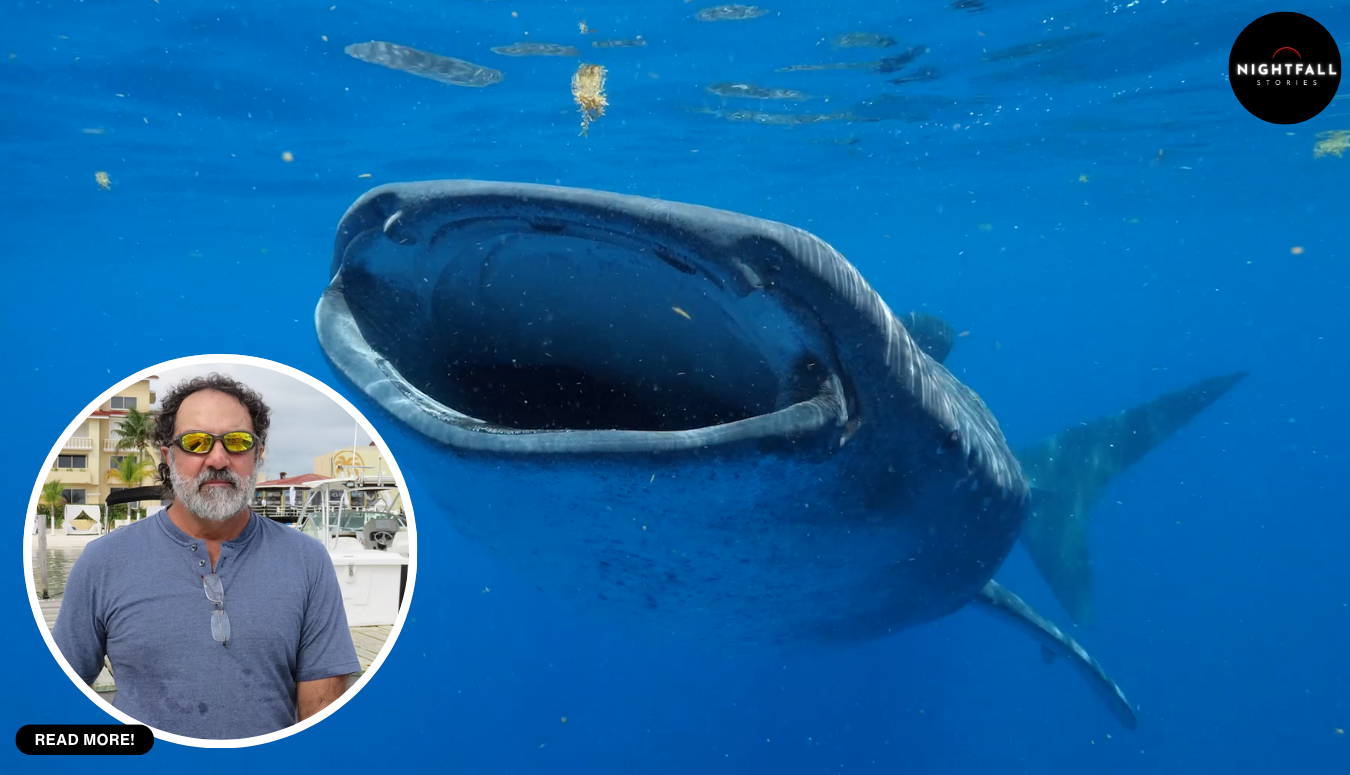
    In July, in warm green water off the Yucatan Peninsula, Rafael de la Parra swam up alongside a male whale shark roughly 26 feet long, which is about eight metres of animal, and fitted a satellite transmitter to its dorsal fin. He had done exactly that to exactly that shark four times before.

    The first was in 2017. That tag reported for something like a couple of weeks and then went quiet, which in telemetry terms is close to a total loss. The second went on in 2018. Then 2020. Then 2023. Then this one.

    Stitch the five deployments together and you get the number that put this animal into the news: more than 34,000 miles of recorded movement, accumulated across more than 3,400 days, which is a shade under a decade. The team behind it, the Guy Harvey Research Institute at Nova Southeastern University, working with the Guy Harvey Foundation, the Mexican conservation organisation Ch’ooj Ajauil AC and the University of Rhode Island, describe it as the longest record of any shark’s movements yet assembled. That claim is theirs, and it is worth saying so plainly rather than treating it as a settled entry in a book of records somewhere, because no previous benchmark is named alongside it in any of the announcements.

    The shark has a name. The researchers call him Milo, and that is where a story like this usually goes wrong, so it is worth getting the awkward part out of the way early. Nothing in nine years of satellite data tells you what a whale shark wants, prefers, remembers or feels about anything. What the data tells you is where a body was, and roughly when, and that is a narrower and more useful thing.

    Start with the water he was tagged in, because the whole project depends on it. Every summer, off the north eastern tip of the Yucatan, whale sharks gather in numbers that are genuinely hard to believe if you have only ever seen one. Hundreds of them, sometimes more, drifting at the surface in loose crowds, feeding. They are not hunting anything. They are filtering, and what they are filtering is spawn, dense clouds of fish eggs released in open water. The sharks sit there with their mouths open and strain it out.

    That aggregation is the only reason any of this is possible. A whale shark is the largest fish alive and it spends almost all of its life somewhere you cannot reach it. For a few weeks a year, in one patch of Mexican water, the largest fish alive comes to the surface and stays there, distracted, for hours. If you want to put a piece of hardware on one, that is your window, and it is the window de la Parra has been working in for years.

    Tagging it is not elegant. Someone goes into the water with the animal, swims to keep pace with it, and attaches the transmitter to the dorsal fin while the shark is moving. The tags used on Milo since 2018 are fin mounted, which matters more than it sounds. A fin mounted transmitter sits where the fin breaks the surface, so the antenna can clear the water and talk to a satellite in close to real time. That is a different and better proposition than a tag that logs quietly for months and then pops off and uploads a compressed summary, and it is the design de la Parra has said, in his own words, he first trialled on this particular shark.

    Which explains the 2017 failure, and why it is more interesting than it looks. The first attempt returned almost nothing. That is not unusual. It is close to normal. Most shark tracks in the scientific literature end in weeks or months, and the reasons are mundane and relentless. Tags shed. Attachments work loose on an animal that grows, scrapes, dives and accelerates. Saltwater corrodes. Batteries flatten. Marine growth coats the housing and the antenna until the signal cannot get out. A tag on a wild shark is a small piece of consumer electronics bolted to something enormous that does not want it there, and the surprise is not that they fail but that any of them last.

    There is also a trade off built into the hardware that most coverage skips. A transmitter has a finite power budget, so the people who deploy it have to decide in advance how often it talks. Report a position every time the fin breaks the surface and you get beautiful resolution for a short while and then a dead battery. Report on a schedule, a set number of hours a day or a set number of days a week, and the tag lasts far longer but the track comes back as a dotted line rather than a solid one. Everything you see described as a shark’s route is really a series of estimated positions with straight lines drawn between them, and the distance quoted is the sum of those straight lines. The real animal did not swim in straight lines.

    That is not a criticism of the method, it is just what the method is. But it is why a figure like 34,000 miles should be read as a floor rather than a measurement. A shark that wandered, circled and doubled back between two reported positions covered more water than the line on the map, not less.

    So a nine year record is not the result of one brilliant deployment. It is the result of four more deployments on the same animal, which raises the question that is actually the quiet achievement in this whole story. How do you know it is the same animal?

    You know because of the spots. A whale shark carries a pattern of pale spots and bars across its flanks, and that pattern is individual, in the way that a fingerprint is individual. Photograph a known stretch of flank, usually behind the gills, and you can match it against a catalogue of previously photographed animals. Add the shape of the dorsal fin, which carries its own nicks and contours, and the identification becomes solid. That is how Milo was recognised in 2018, and again in 2020, and again in 2023, and again this year, and it is a method that costs almost nothing and holds up over the length of an animal’s life.

    Without it there is no story. With it, five separate tags stop being five unrelated data sets and become one biography.

    The route that biography describes is wider than most people would guess. The recorded movements cover the Gulf of Mexico, the northern Caribbean islands, water well east of Bermuda, and a northern limit off Massachusetts. A tropical filter feeder working the latitude of New England is not a glitch. Whale sharks follow food, and productive water in the western North Atlantic in late summer is a long way north of where the postcards put them. But seeing one individual do it, repeatedly, across years, is a different kind of evidence from knowing that the species can.

    Mahmood Shivji, who directs the Guy Harvey Research Institute and runs the analysis end of the project, has made roughly that point about what the data shows. His reading is that Milo has demonstrated how flexible whale sharks can be, and that the animal is plainly capable of long range movements out into the open Atlantic rather than staying tied to the coastal systems where people usually encounter the species.

    Flexibility is the right word, and it is worth pulling apart what it can and cannot be made to mean, because this is where coverage of a story like this tends to overreach.

    What a single long track does establish is unusually clean. It shows that one identified animal used a very large area of ocean across most of a decade, crossing between the waters of many different countries and out into the high seas. It shows that the same animal returned to the same Mexican aggregation repeatedly, because that is where it was found and re tagged. And it shows behavioural range within one individual, which is something you simply cannot extract from a population average. If you tag two hundred whale sharks for three months each, you learn what whale sharks tend to do. You do not learn whether any single whale shark is capable of doing several very different things in different years. Milo’s record suggests that one is.

    What it does not establish is the part that needs saying out loud. The figure is cumulative, not continuous. Five tags across nine years means gaps, and in those gaps the animal was wherever it was and nobody knows. The 34,000 mile total is a sum of tracked distance, not a complete life route, and the round numbers in circulation, 34,000 miles and 3,400 days, both look like figures that have been tidied for a press release rather than reported to the decimal. One animal is also one animal. Milo is a male of a particular size doing particular things, and nothing about his movements tells you what female whale sharks do, or what juveniles do, or what the population as a whole does. Satellite positions are also estimates with error attached, not pins on a map, and distance calculated between successive estimates is an approximation of a path rather than a measurement of one.

    And the number that gets quoted most carelessly is the lifespan. You will see it said that Milo could live to be more than 125 years old. That estimate comes from separate research, including work from the same institute, into how long whale sharks as a species may live, and it is an estimate about the species rather than a prediction about this shark. Nobody knows how old Milo is. Nobody can tell you how long he has left.

    Set against all that, the thing the project has actually bought is less dramatic and more useful than a record. Whale sharks are listed as endangered. The pressures on them are fishing, both targeted and incidental, and ship strikes, which are a serious problem for a very large animal that spends a lot of time feeding at the surface in busy water. Protecting an animal like that is almost entirely a question of jurisdiction. You cannot protect something effectively in one country’s waters if it spends a third of its year in three others and a stretch of each year in international water where nobody is responsible for it.

    The Mexican aggregation itself is a managed and heavily visited place, with a swim with tour industry built around it, because a surface feeding whale shark is both easy to reach and easy to injure. Whatever protection applies there, none of it follows the animal when it leaves.

    Range data is the argument that forces those conversations. If you can show, with position data rather than inference, that a single protected individual from a Mexican aggregation turns up east of Bermuda and off the New England coast, then shipping lane decisions and fisheries rules thousands of miles apart stop being somebody else’s problem. That is the practical return on nine years of tags, and it is why the team keeps going back rather than banking the record and moving on.

    There is a precedent inside the same programme, which is part of why they knew it was worth the persistence. Years before this, the same institute tracked a female whale shark they called Rio Lady, tagged in the same Mexican water, who made long loops out into the Caribbean and the Gulf and came back to the place she started from more than once. At the point Milo had been tracked for 351 days, that was already being described as the longest continuous whale shark track in the Atlantic. The programme has been building toward a long individual record for a while, and Milo is what happened when the method and one cooperative animal lined up.

    Which leaves the man in the water. De la Parra has been going back to the same stretch of Yucatan coast for years, in the same few weeks of the year, looking at flanks and matching spots, and has now found and tagged the same shark five separate times. The first time he did it the tag failed almost immediately and gave him close to nothing. He went back.

    That is the part that is not a number. A record of this length does not come out of better hardware, although the hardware got better. It comes out of somebody being willing to do a difficult, repetitive thing in the same place for nearly a decade on the chance that one animal would show up again, and then doing the unglamorous photographic work to prove that it had.

    The fifth tag is on now, somewhere in the Atlantic, reporting. If it holds as long as the others have, the track gets longer, the gaps in the biography get narrower, and the argument for protecting a fish that belongs to no country at all gets a little harder to wave away. If it sheds next month, which is still the likeliest single outcome for any tag on any shark, then the plan is the one it has always been. Wait for summer, get back in the water, and look for the spots.
  • He pulled a six-inch skeleton out of the Gobi in 2004. It took twenty-two years to say what it was

    He pulled a six-inch skeleton out of the Gobi in 2004. It took twenty-two years to say what it was

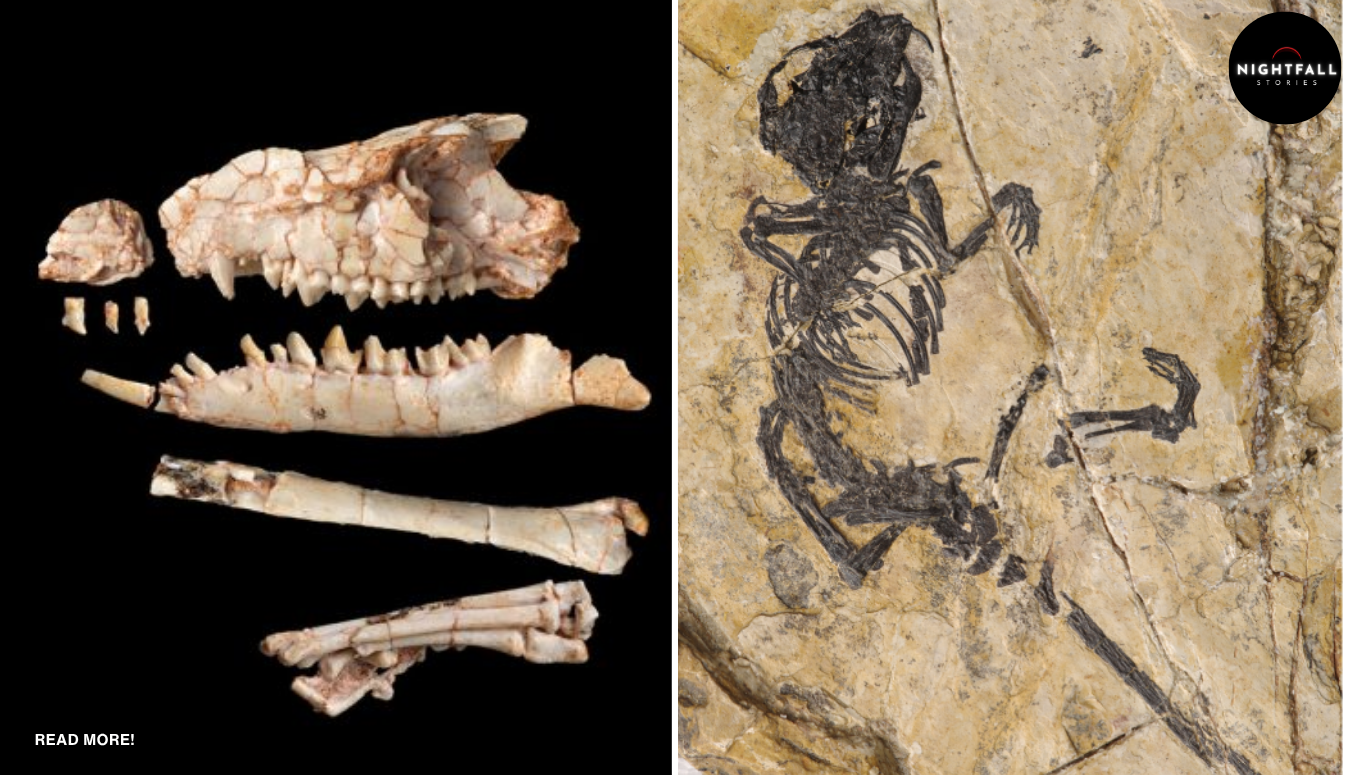
    In the summer of 2004, a graduate student working the Khugenetsavkhlant badlands in the eastern Gobi Desert of Mongolia found a small animal lying in Cretaceous rock. Not a tooth. Not a jaw fragment. Most of the animal: skull, dentition, and a good run of the skeleton behind it, including the hind legs and the ankles. It was about six to seven inches long from head to tail, roughly the size of a young rabbit, and it had been dead for something on the order of eighty million years.

    The student was Andres Giallombardo, out with an American Museum of Natural History expedition. The description of what he found was published this year, in Nature, under a title that reads like an accountant’s correction and is in fact a demolition: Cretaceous zhelestid mammals are zalambdalestoids. The animal has a name now, Tamirkhan balcarceli, and a specimen number, PSS MAE 618. And the group it belongs to has just been removed from the ancestry of almost every mammal alive, including yours.

    Twenty-two years sat between the find and the sentence. That gap is not a footnote on this story. It is the story.

    To see why one small skeleton could do that much damage, you have to understand how mammal palaeontology actually works, which is to say you have to understand teeth. Mammal teeth are enamel, the hardest tissue a body makes, and they survive conditions that destroy everything else. Skulls crush. Ribs scatter. Limb bones get chewed, rolled down rivers, weathered to powder. Teeth sit in the sediment and wait. For whole stretches of the fossil record, particularly the small-mammal record of the age of dinosaurs, teeth are not merely the best evidence available. They are very nearly the only evidence available.

    So the discipline learned to read them, and it got extremely good at it. Cusp patterns, shearing crests, the way a lower molar occludes against an upper, the wear facets that tell you whether an animal was grinding plants or puncturing insects. From a few millimetres of enamel a specialist can say a great deal about diet, and from diet and cusp architecture they build family trees. It is real science done under a real constraint. It is also a system with a known weakness, and the weakness has a name: convergence.

    Convergence is what happens when two unrelated animals, pushed by the same problem, arrive at the same solution. Dolphins and extinct marine reptiles both ended up torpedo-shaped with a dorsal fin. Birds, bats and insects all built wings independently. Australian sugar gliders and North American flying squirrels both grew a skin membrane between their limbs, and they are not close relatives at all. Shape follows function, and function does not care about pedigree. Everybody in the field knows this. The trouble is that when teeth are all you have, you cannot always tell a shared ancestor from a shared diet.

    Which brings us to the zhelestids. The family was named in the mid 1980s, by the Soviet palaeontologist Lev Nessov, from teeth collected in central Asia. The teeth were striking. Where most small mammals of that era had high sharp cusps built for shredding insects, zhelestid molars were low and rounded, the sort of blunt crushing surface you see in animals that eat plants. That was a big deal, because plant-eating is a hallmark of the modern placental mammals, the group that contains hoofed animals, carnivores, bats, rodents, primates, us. If a Cretaceous animal already had herbivore teeth, the obvious reading was that the modern groups had deep Cretaceous roots, and that zhelestids sat somewhere near the base of that radiation. They were written up as archaic hoofed mammals, or close to them. A 2001 paper in Nature carried the argument forward under a headline about Late Cretaceous relatives of rabbits, rodents and other living placental mammals. A detailed revision of the whole family followed in 2012.

    For roughly forty years, then, zhelestids held a position in the textbooks as something close to the root of the placental tree. Not unanimously, and not without revision along the way. A 2007 Nature paper on another Mongolian fossil, Maelestes, already pushed them outside Placentalia proper, into the stem. But the basic reading of what those rounded teeth meant held, and the group kept its place in the story of where mammals like us came from.

    Nobody had a skeleton. That was always the hole. Across the whole family there were jaws, teeth and almost no limbs. Ask what a zhelestid walked like and the answer was a shrug.

    Then Giallombardo picked one up in the Gobi.

    It is worth being careful about the animal itself, because the shorthand that has travelled furthest is the one the paper is least responsible for. The six to seven inch figure, and the comparison to a rabbit, come from the institutional announcements rather than from the formal description, and they are a characterisation rather than a measurement. A Cretaceous rabbit it was not. Rabbits and their relatives would not appear for tens of millions of years. What the comparison is reaching for is the general build: a small animal with long back legs and front teeth that never stopped growing, which is a rabbit-shaped way of being a mammal arrived at long before there were rabbits. The rock it came out of belongs to a sequence in the eastern Gobi generally placed in the later part of the Cretaceous, somewhere in the span between roughly eighty six and seventy two million years ago, which puts the animal comfortably inside the age of dinosaurs and well before the asteroid.

    The find itself happened in the way most important fossils happen, which is to say by walking. Gobi field seasons are a matter of crews spread out across badlands, heads down, moving slowly over surfaces where erosion has done the excavating for you. Most of what you pick up is a fragment. The expeditions that the American Museum of Natural History has run in Mongolia for decades have produced some of the best-preserved small mammals anywhere in the world, and the reason is partly the geology and partly arithmetic: enough people walking enough ground for enough summers.

    What Tamirkhan balcarceli has, alongside those diagnostic low rounded zhelestid molars, is a set of features from an entirely different group. Its upper incisors grow continuously, the way a rodent’s or a rabbit’s do, never stopping, worn down at the tip as fast as they push up from the root. Its skull carries structures that match a Cretaceous Asian lineage called the zalambdalestoids, small long-legged insect eaters with no particular claim on modern placental ancestry. And its hind legs settle it. Shawn Zack of the University of Arizona, one of the authors, put it plainly in the museum’s announcement: the hind legs are long and slender with distinctive ankles, and those traits are unmistakably zalambdalestoid.

    An ankle is a terrible thing to argue with. Teeth respond to food, and food is something many unrelated animals share. Ankle architecture responds to how an animal moves and to the particular bones its ancestors happened to have, and it is far less given to converging. If the skull and the ankle say zalambdalestoid and only the molars say otherwise, the molars are the outlier.

    So the conclusion in Nature is that the zhelestids are not a separate family sitting near the base of the placentals. They are a dental variant inside Zalambdalestoidea. Some members of a lineage of small insect eaters developed blunt, plant-crushing teeth, and because teeth were the only part of them that survived, palaeontologists spent four decades reading those teeth as a family resemblance to us. It was convergence. The sugar glider problem, played out across eighty million years and an entire branch of the mammal tree.

    Which leaves the twenty-two years.

    It is tempting to treat that as a scandal, or as proof that academic publishing is broken. It is neither. What it mostly reflects is the difference between finding something and knowing what it is. A field crew in the Gobi gets the specimen out of the ground still in its rock, jacketed and labelled. Then somebody has to take the rock off a skull the length of a thumb joint without taking the skull off with it, which is slow work done under a microscope with a needle. Then the thing has to be scanned, because the interesting anatomy is often the internal anatomy, and you only get one chance to not destroy it. Then the comparative work begins, and this is where the years really go, because you cannot overturn a family’s position by describing one animal. You have to score its anatomy against every related animal anybody has ever described, feature by feature, and feed the whole matrix into an analysis that spits out trees. The paper that resulted rests on a strict consensus of twenty four equally parsimonious trees plotted against the rock record. That is not a number you reach in a hurry.

    The team that got there is spread across institutions. Maureen O’Leary, a professor of anatomical sciences at Stony Brook University and a research associate at the museum, is on the paper; so is the comparative database she helped establish in 2013, MorphoBank, which is where this kind of character scoring now lives. Paul Velazco of Arcadia University and Zack brought comparative anatomy. Eva Hoffman, then at Yale and heading into a postdoctoral position in O’Leary’s lab, worked on it as part of the generation that inherited the specimen. And Michael Novacek, a curator in the museum’s palaeontology division, is a co-author, which is quietly the most interesting name on the list. Novacek was also an author on that 2007 Maelestes paper, the one that first pushed the zhelestids out of the placentals. He has now spent two decades moving the same group further and further from our family tree, one fossil at a time.

    The publishing record itself puts a useful frame on the pace. Nature received the manuscript in December of last year, accepted it at the end of June, and put it online in late July. The print issue followed in September, which is why a good deal of coverage reads as though the discovery is weeks old. It is not. Even the paper took seven months in review, and the paper was the last step of twenty two years.

    Giallombardo’s own reflection, given to the museum, is modest and slightly wistful. He described it as the thrill of a career to find a new species preserved so completely that it also happened to solve a long-standing scientific problem. Elsewhere he made a narrower point, that the discovery shows why fieldwork remains indispensable to understanding the history of life. It is an unfashionable thing to insist on. Funding and glamour in evolutionary biology have moved toward genomics and computation, toward what you can do with living animals and large datasets. Neither of those could have fixed this. No amount of DNA sequencing reaches an animal that has been rock for eighty million years. The only way to find out that the teeth were misleading was for somebody to walk the badlands and pick up the rest of the body.

    A fair question is how much of this sticks. Forty years of consensus does not fall to one specimen without argument, and it should be said clearly that at the time of writing no published response from outside the author group has appeared. The two researchers who produced the standing revision of the family, J. David Archibald and Alexander Averianov, have not put a counterargument into print that could be found. That may change. The usual course for a paper like this is a comment, a reanalysis with the matrix rerun under different assumptions, a counter-specimen. That is not a weakness in the finding. It is the process, and the process is slow in exactly the way the preparation was slow.

    The paper is also behind a paywall, which is worth naming, because it means the figures that carry the argument, the holotype photographs, the dentition comparisons, the ankle details, are not freely visible to anyone who wants to check the authors’ reading of the bones themselves. For a result that turns on anatomy rather than statistics, that matters more than usual.

    What remains is a fairly clean thing to hold onto. For most of the time these animals have been known to science, their teeth were asked to carry an argument about where we came from, and the teeth were answering a different question. They were answering what did this animal eat. The question palaeontologists were asking was what was this animal related to. Those two questions have the same answer often enough that the mistake was reasonable, and different enough that the mistake was eventually fatal.

    The thing that settled it had been sitting in a drawer in New York since 2004. It took a long time to prepare, a longer time to compare, and the answer, when it came, was written in an ankle.

  • Eight thousand people sent in names for a deep-sea animal. The number that decided it was eleven

    Eight thousand people sent in names for a deep-sea animal. The number that decided it was eleven

    Somewhere in the pile of more than eight thousand suggestions, eleven people who had never met each other, who had no way of coordinating and almost certainly had no idea the others existed, sent in exactly the same word.

    Populi. Latin, genitive, singular. Of the people.

    That is the detail that makes this story worth your time, and it is not the detail that got reported. The headline figure everywhere was eight thousand, which is a measure of how many people were paying attention. Eleven is a measure of something much rarer. Eleven is a crowd of strangers independently reasoning their way to the same answer, and in the end it is why a small animal recovered from five and a half kilometres down in the Pacific is now called Ferreiraella populi.

    Start with the animal, because it is genuinely strange and the strangeness is the reason anyone was asked.

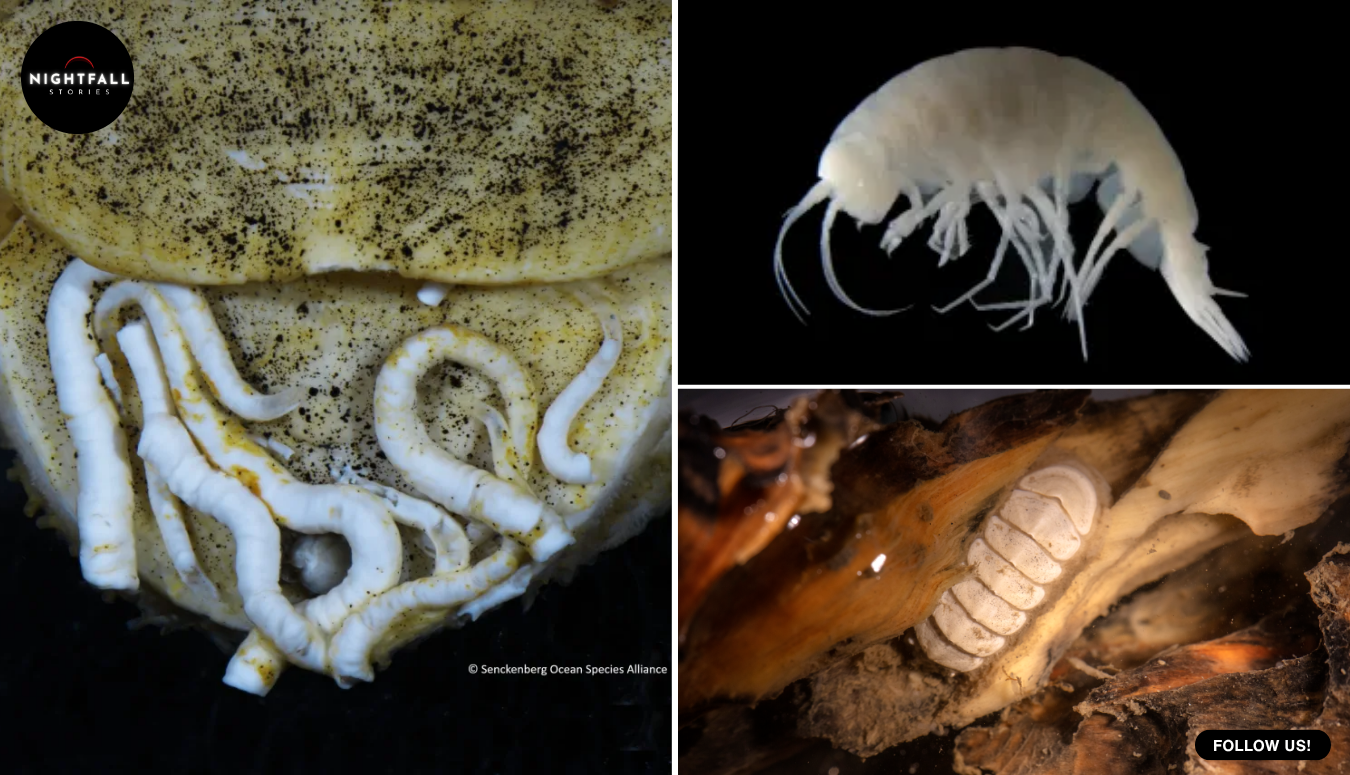
    It is a chiton. If the word means nothing to you, you have still probably seen one: an oval, slightly armoured thing clamped to a rock in a tide pool, with eight overlapping plates running down its back like a segmented shield. Chitons are molluscs, relatives of snails and clams, and they are one of the oldest designs still in service. Most of the ones people encounter live in the shallows and scrape algae off stone, which they do with a tongue reinforced with iron minerals. That is not a metaphor. Chitons grow some of the hardest teeth in the animal kingdom by incorporating iron into them, and they wear them down and replace them continuously, like a conveyor of chisels.

    This one does not live in a tide pool. The holotype, the single physical specimen that the name is permanently attached to, came up from 5,506 metres of water in the Izu-Ogasawara Trench, in the northwestern Pacific about 150 kilometres east of the trench axis, off Japan. It is small, roughly 17 millimetres by 9.5, oval, and pale. And it was not found on rock. It was found on wood.

    This is the part that makes deep-sea biologists lean forward. A tree falls into a river, washes out to sea, waterlogs, and sinks. On the way down it stops being a tree and becomes something else entirely: a parcel of concentrated food arriving in one of the emptiest habitats on the planet, where almost nothing falls and almost everything is hungry. Sunken wood on the deep seafloor builds its own ecosystem, a temporary island with specialists that exist nowhere else and that somehow find each new log across enormous distances of nothing.

    Chitons are one of the groups that made the jump, and they committed to it. There are two entire families of chiton found only on sunken wood, and the genus this new species belongs to, Ferreiraella, is the sole member of one of them. It now holds ten species, all of them wood dwellers. The evidence suggests they are not actually eating the wood. They appear to be living one step up, grazing on whatever colonises it, which is a more interesting kind of specialisation: not adapted to a food, adapted to an address.

    The new species also travels with company. Related animals in the group are frequently found hosting small tube-building worms on the rearmost plate, riding along on the back of something that is itself riding a sunken log two kilometres below the reach of light.

    So that is what eight thousand people were naming. The question is how they came to be asked, and the answer requires being precise about who did what, because this story is very easy to tell wrongly.

    The naming was run by the Senckenberg Ocean Species Alliance, a programme based at the Senckenberg Research Institute and Natural History Museum in Frankfurt, Germany, with the publisher Pensoft and with the science video channel True Facts. True Facts is made by Ze Frank, whose deadpan narration over wildlife footage has built an audience of something over four million subscribers, and whose particular gift is making people care about an animal for eight minutes without flattering them or dumbing anything down. He put the chiton in front of that audience and invited them to suggest a scientific name.

    Here is what he did not do, and what the coverage sometimes implies. There was no public vote. The audience did not choose the name, and the scientists were not bound by the result. The arrangement was an open competition for suggestions, with the authors of the scientific description selecting the final name themselves, taking into account which suggestions the participating community had got genuinely excited about. The channel supplied reach and announced the outcome in a follow-up video. The scientists supplied the animal, the description, the judgement and the legal responsibility for the name.

    One further wrinkle, and it is a nice one. The scientific paper carries nine authors, and the list includes Hosea Frank, listed as an independent researcher in New Jersey. By all public accounts that is Ze Frank, who performs under a shortening of his own first name. So the video maker is not an outside promoter attached to a science story. He is on the paper. That is unusual and worth saying plainly, and it is also worth not overstating: the taxonomic work, the dissections, the electron microscopy and the species diagnoses were done by specialists including Julia Sigwart of Senckenberg and Goethe University Frankfurt, who ran the naming and is the authority on the species, Chong Chen of the Japan Agency for Marine Earth Science and Technology, who photographed the animal where it lived, Enrico Schwabe of the Bavarian State Collection for Zoology, and colleagues at Frankfurt.

    Now, the reason eight thousand suggestions is a smaller achievement than it sounds. Most of them could never have been used, and not because they were bad.

    Naming a species is not a branding exercise. It is a legal act, governed by a rulebook called the International Code of Zoological Nomenclature, and the code is strict in ways that catch almost every enthusiastic amateur suggestion. The name has to be a two-part name, genus plus species epithet. It has to be formed in Latin or latinised, and it has to behave grammatically, which is why populi, a genitive, works and a plain English word does not. It has to be unique within the genus, forever. It has to be published in a permanent, obtainable, dated work, with a formal description attached, and tied to a designated type specimen physically deposited in a museum collection where any future scientist can go and examine it. For this chiton that specimen now sits in Frankfurt under a catalogue number, and that specimen, not the description and not the photographs, is what the name legally means.

    The code also forbids some things people find surprising. You may not name a species after yourself. You may honour anyone else, including a donor, a colleague, a spouse or a cartoon character, but your own name is off limits, which is the single most elegant rule in the whole document. Names that would give offence are prohibited. And the decision is effectively irreversible: once a name is validly published it stands, even if it turns out to be ugly, misleading, or based on a mistake about where the animal lives. Taxonomy has centuries of accumulated names that everyone agrees are wrong and nobody can change.

    There is one more requirement that did not exist a generation ago and matters enormously now. For most of the history of taxonomy, a name became real when it was printed on paper, because paper was the permanent record. The code has since been amended to accept electronic publication, but only on conditions: an electronic-only work has to be registered in an official online register of zoological names before the name counts, and it has to carry a persistent digital identifier so the publication can still be located when the journal’s website has long since changed shape. This description was published electronically in an open-access journal with a permanent identifier attached. Without that registration step the paper could have been read by a million people and the name would still have been nothing.

    Set that against eight thousand submissions arriving in roughly a week, many of them jokes, many of them references to the same handful of films and games, many of them not Latin at all, and a great many of them duplicates. The team’s job was not to pick a favourite. It was to find, inside a flood, a name that was legally valid, grammatically sound, not already taken, not offensive, meaningful about either the animal or the circumstance, and capable of being read aloud in a seminar in fifty years without anyone wincing.

    Which is where the eleven come in.

    Convergence is the most informative thing a crowd can do. When thousands of people answer an open question and the answers scatter, you learn about the range of the crowd. When eleven of them, in isolation, produce an identical answer that nobody suggested to them, you learn that the answer was sitting there in the structure of the problem, waiting to be noticed. Those eleven people were not reacting to the animal’s appearance. They were reasoning about what was actually happening: a species was being named by the public, so the species should be named for the public. The name describes the process that produced it.

    The runners-up are good enough to show by contrast why that won. One was Ferreiraella stellacadens, shooting star, after the pattern of small holes across the shell plates. The other was Ferreiraella ohmu, after a creature from a Studio Ghibli film, chosen partly to honour Japan, where the animal was found. Both are lovely. Both are also about the animal, or about a culture, and the thing that made this particular naming unusual was neither of those. Populi was the only serious contender that was about the experiment itself.

    There is a quiet argument buried in that choice, and it is aimed squarely at a practice the museum world has relied on for years. Naming rights get sold. Institutions auction the privilege of putting a donor’s surname on a new species, and the money funds real research, and nobody involved pretends it is anything other than a transaction. This naming did the inverse. It gave the privilege away, to a crowd, for free, and then recorded that fact in the name itself, permanently, in the only language taxonomy accepts.

    Not everyone in the field loves this kind of exercise, and the objection is reasonable. The scientific record is permanent and shared, and once a frivolous name enters it, every researcher for the next two hundred years is stuck writing it in their papers. There are species out there named after bands, actors and in-jokes, and a working taxonomist who has to type one of them into a grant application does not always find it funny. The counter-argument is that the alternative was never a dignified silence. The alternative was the specimen sitting unnamed in a drawer for fifteen years, which does far more damage to the record than a cheerful epithet ever has. And populi is not a joke. It is a straightforwardly formed Latin genitive that states, accurately, how the name came about. It would pass unremarked in any taxonomic paper written a century ago.

    The practical point underneath all of this is less charming and more urgent. The bottleneck in marine biology is not finding new animals, it is describing them. Expeditions return with far more unfamiliar species than there are taxonomists to formally name them, and specimens sit in jars and drawers for years waiting their turn. Sigwart has put the normal lag from discovery to published name at ten years, if not twenty. This chiton was described about two years after it was found, and the only reason is that the programme behind it was built specifically to shorten that interval. The paper it appeared in belongs to a series designed to let many taxonomists publish stand-alone species descriptions together rather than each waiting to assemble a monograph alone. This instalment described three new chitons at once: the Japanese one, another from Madagascar, and a third from Papua New Guinea. Only one of the three got a crowd.

    The urgency is deep-sea mining. The seafloor around and beyond trenches like this one is being surveyed for commercial extraction, and the regulatory machinery for deciding what may be disturbed runs entirely on names. An environmental assessment cannot list an animal it cannot call anything. A protected species list cannot include a jar labelled with a station number. A scientist cannot publish a comparison, a population estimate or a range map for something that has no handle. The name is not decoration on top of the science. It is the thing that makes the animal visible to every system humans use to count and protect anything at all.

    So there is a drawer in Frankfurt with a small pale animal in it, taken from a sunken log at the bottom of the Pacific, and a number on the drawer, and a name that will outlive everyone involved. The scientists did the work. The channel brought the audience. And the word on the label was arrived at, independently and without consultation, by eleven people scattered across the internet who each thought the same thought at roughly the same time and typed it into the same box.

    None of them will ever be identified. That, if you think about it for a second, is the most fitting possible outcome for a name that means of the people.

  • A machine in Kentucky looked inside a box of decorative masks. Nobody seized it, and that was the point

    A machine in Kentucky looked inside a box of decorative masks. Nobody seized it, and that was the point

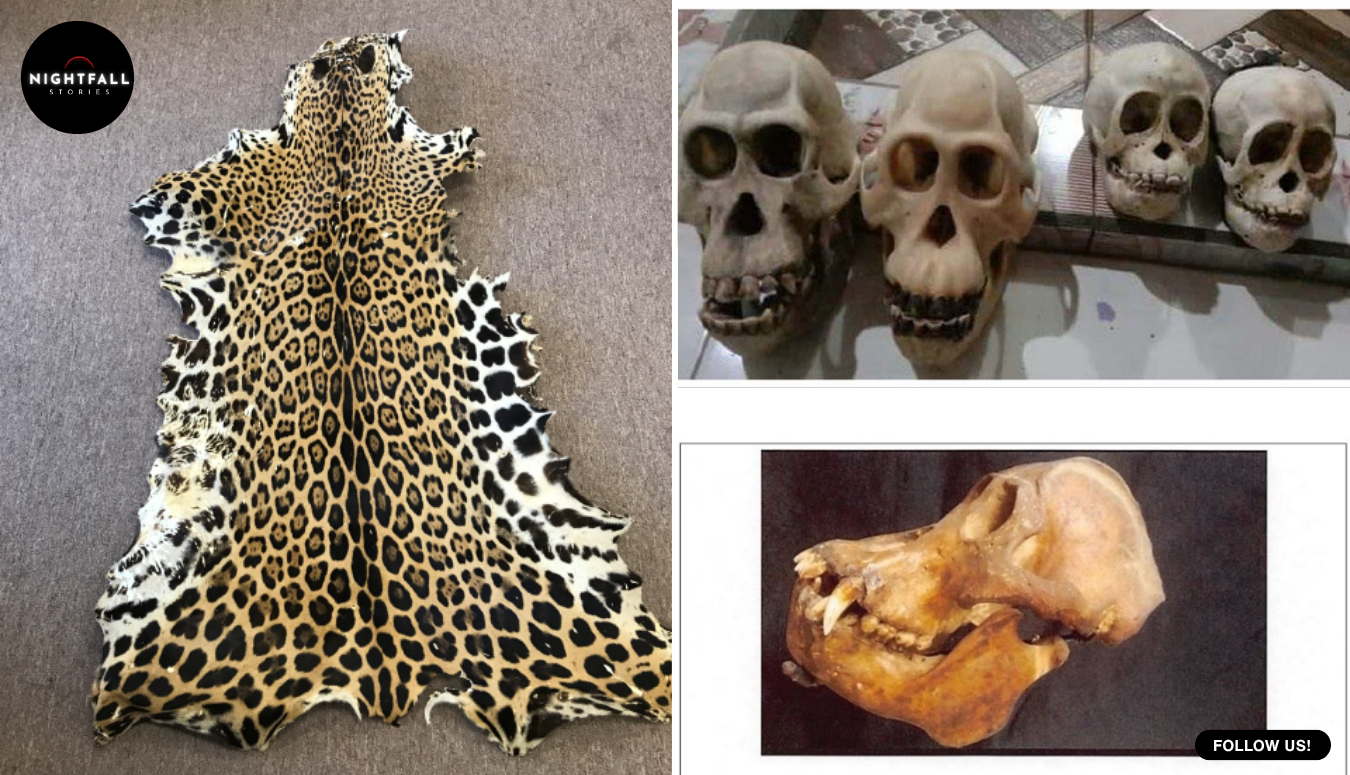
    On an ordinary shift at a mail processing facility in Louisville, Kentucky, a parcel went through an x-ray machine and came out wrong. The paperwork said decorative ceramic masks. The image said four animal skulls, tucked inside the masks, riding to an address in Massachusetts. Three of them were leopard. One was orangutan. Not one of them had a single page of import documentation behind it.

    That was five years ago. The case it started finished earlier this year, in a federal courtroom in Boston, with eight months in prison, two years of supervised release, a fine of $75,000 directed at wildlife enforcement, and the forfeiture of more than one hundred pieces of protected animals.

    And the single most important decision in the whole case was made in the first few hours, when officers decided not to keep the box.

    This is the part people find hardest to believe. The obvious move, when an x-ray catches contraband, is to pull the parcel, log it, and close the file. Someone tried to smuggle protected wildlife, the attempt failed, done. But a seized parcel proves almost nothing. It proves that something arrived. It does not prove that the person waiting at the other end knew what was inside, and knowledge is the whole case under the laws that apply here. A smuggler who says he ordered masks and has no idea why there were skulls in them is, legally speaking, annoyingly hard to contradict.

    So they let it go. Investigators from the US Fish and Wildlife Service allowed the shipment to complete its journey to the man who had ordered it. Then an undercover special agent went shopping.

    What happened next is the ordinary, unglamorous machinery of wildlife enforcement, and it worked. The agent, presenting himself as a collector, bought two leopard skulls from the same intercepted shipment, one for $1,750 and one for $1,850. The seller did not know he was selling to the government. He did know, in detail, what he was selling, where it had come from, and that none of it had papers, because he had to say so to make the sale credible. A buyer wants provenance. Provenance, in this market, is a confession.

    There is a real argument about the technique, and it deserves airing rather than skating past. An undercover purchase means the government spends public money buying contraband, and in doing so becomes, briefly, a customer in the market it is trying to shut down. Critics of the method point out that this inflates demand, however marginally, and that a sale which only happened because an agent asked for it sits uncomfortably close to manufacturing the offence. Defenders answer that the seller here was already advertising, already shipping, already pricing, and that the agent walked into an existing business rather than inventing one. The record in this case supports the defenders: the trading had been running for three years before anyone knocked, and the skulls the agent bought had arrived in a parcel that was already on its way when the x-ray caught it. Nothing was created. Something ongoing was documented.

    The man was Adam Bied, of Reading, Massachusetts. He was forty when he pleaded guilty.

    A note on that, because it matters more than it looks. In the coverage of this case, two different Massachusetts towns have circulated for him, and one outlet attached a profession to his name as well. The release issued by the US Attorney’s office, which is the document that actually has to be right, says Reading, gives his age, and says nothing whatsoever about his occupation. So that is what you will read here, and no more. A man’s job is not a detail worth guessing at in a criminal case.

    What the court record does establish is the shape of the thing, and the shape is not a single bad decision. From early 2018 through the middle of 2021, Bied bought, sold and traded in wildlife parts, with knowledge that many of those transactions broke US law. He ordered from contacts in Cameroon and Indonesia. He resold inside the United States. He never obtained the import and export licences the Fish and Wildlife Service requires, and he never obtained the international permits that protected species need in order to cross a border legally. Shipments came in described as decorative masks. At least one came in described as rodents.

    When agents eventually executed search warrants at his home and storage, they recovered more than a hundred protected wildlife parts. The forfeiture list reads like a badly organised natural history collection assembled by someone with no interest in natural history: orangutan, tiger, leopard, jaguar, African lion, polar bear, narwhal, pangolin, otter, harp seal, elephant seal, South American fur seal, babirusa, mandrill, wallaby, jackal. One item in the case file is a sun bear skull that was bought in Indonesia, smuggled into the United States, and then sold on to an American customer. Sun bears sit in the most restrictive category of international wildlife protection there is, the one reserved for species where commercial trade is essentially off the table.

    That category is worth understanding, because the entire case rests on it rather than on anything dramatic. International wildlife trade runs on a treaty with a set of appendices. The top appendix covers species threatened with extinction, where commercial international trade is prohibited and anything moving legally needs permits from both ends. The second covers species that are not necessarily threatened yet but will be if trade goes unwatched, and requires an export permit. The third covers species a single country has asked for help protecting. Almost every animal on Bied’s forfeiture list sits somewhere on those appendices, and the practical consequence is simple: the paperwork is not bureaucracy wrapped around the real rule, the paperwork is the rule. A parcel with the right permits is legal. The same parcel with the same contents and no permits is a federal offence.

    The statute that turns that into a prosecutable crime in the United States is roughly a century and a quarter old, which makes it the oldest wildlife protection law the country has. It was written in 1900, originally to stop the commercial slaughter of birds for the feather trade, and it has been quietly amended into one of the most useful enforcement tools in existence because of a single trick in how it works. It does not try to list what is protected. It borrows. It makes it a federal offence to trade in wildlife that was taken, possessed, transported or sold in violation of any other law, including the laws of other countries.

    Think about what that means in practice. A federal prosecutor in Boston does not have to argue that the United States protects sun bears. He has to argue that Indonesia does, and that the defendant traded the animal anyway. The law reaches across borders by enforcing other people’s rules. For a trade that exists precisely because it moves between jurisdictions, that is the only design that has ever had much bite.

    It helps to say plainly what market this is, because people assume it must be the obvious one. The big money in wildlife crime sits in traditional medicine ingredients, in luxury goods, in live exotic pets. This case belongs to a quieter trade: private collecting of animal bones and skins as decorative and curiosity objects, a pursuit with a long and mostly legal history, with legitimate dealers who work in domestic species and keep their paperwork, and with a fringe that does not. The fringe runs on the same tools everyone else uses, which is to say ordinary online marketplaces, social platforms, hobby forums and direct messages. Naming a specific platform as the culprit would be unfair and also beside the point. The trade is not hosted anywhere in particular. It is hosted everywhere, in private conversation, which is why interdiction keeps happening at the post office rather than online.

    The prosecutors are named in the record, which is worth noting in a story where the investigators are not. The case was brought by the office of US Attorney Leah Foley and handled by two assistant US attorneys, Jason Casey and Carol Head, with the Justice Department’s environmental crimes section involved. Wildlife prosecutions are a specialism, and a small one. The number of lawyers in any country who can confidently argue the interaction between a hundred-and-twenty-five-year-old domestic statute and the export law of two other nations is not large.

    The delivery system is the other half of the story, and it is the half that should unsettle people. There is a picture in most minds of wildlife smuggling as a shipping container full of ivory, caught by dogs at a port. Plenty of it is. But an enormous amount of it is simply posted. It travels in the same stream as birthday presents and replacement phone chargers, in small parcels, declared as handicrafts or ornaments or souvenirs, because small parcels are the one part of global logistics where volume has always beaten inspection.

    The hub where this particular parcel was stopped is one of the busiest express consignment and international mail facilities in the world. A port director there described the problem around that time in terms that stick: officers are looking for the one illegal shipment out of two hundred thousand, every night. That is not an argument that inspection is hopeless. It is an argument about what inspection has become. Nobody opens two hundred thousand boxes. Machines look through them, and people look at the images, and the skill involved is recognising, in a grey smear on a screen, the specific wrongness of a shape that should not be inside a ceramic mask.

    Someone did that. No agency release names them, and none will. The Fish and Wildlife Service credited its own Office of Law Enforcement, the US Marshals Service, the Massachusetts Environmental Police and federal wildlife officers, and named no individuals at all, which is standard and also a little unfair to whoever was looking at the screen that night.

    Then came the slow part, and it is the slow part that tells you most about how these cases actually work.

    The parcel was stopped in early 2021. Charges were filed in mid 2024. The guilty plea came in January of this year. Sentencing followed in April. Five years, start to finish, for a case that was essentially solved in its first fortnight.

    Nothing went wrong in that gap. That is simply the speed. A wildlife prosecution has to do work that an ordinary smuggling case does not. Every item has to be identified to species, and identification of a worked animal part is specialist, contested, and occasionally impossible without laboratory analysis. The prosecution’s theory depends on foreign law, which means establishing what Cameroon and Indonesia actually prohibit and when. Evidence sits in countries that have no obligation to hand it over quickly. A parallel civil action was filed to forfeit the seized collection, running alongside the criminal matter. And the whole thing competes for attention inside offices where wildlife crime, however serious, is not what the public is shouting about.

    So a five-year arc is not scandal. It is the cost of doing it properly, and it is also, bluntly, part of why the trade persists. A trafficker is pricing risk. Risk that arrives half a decade later is heavily discounted in anybody’s arithmetic.

    Which brings us to the numbers at the end, and to the honest problem with them. Each count carried a statutory maximum of five years and a quarter of a million dollars. The sentence actually imposed was eight months inside, two years of supervision afterwards, and $75,000. That fine is real money. It is also roughly twenty times what a single undercover transaction in this case cost, and that transaction involved two items out of more than a hundred. Anyone looking at this case and concluding that the economics have been fixed is not reading it carefully.

    What the case does do is harder to put a figure on. It establishes, on the record, that a private collector in a wealthy country buying skulls from suppliers abroad is not a hobbyist operating in a grey area, he is the demand side of a trafficking chain, and the demand side is now prosecutable, provable and expensive. For years the enforcement emphasis sat at the source, on poachers and exporters, because that is where the harm is visible. The buyer is harder to see and much easier to excuse. Cases like this one move the risk to the end of the chain, where the money is.

    The forfeited collection has gone where seized wildlife goes in the United States: a federal repository in Colorado that holds well over a million confiscated items. It is a strange place to think about. Everything in it was taken from someone, and almost all of it is, legally, evidence that has finished being useful. So the agency lends it out. Schools and museums borrow from it. Researchers use it. Enforcement officers train on it, learning to recognise at a glance what took a laboratory to confirm the first time.

    That is the last turn in this story, and it is the one worth holding onto. The four skulls that triggered all of it were bought to be owned, privately, as objects, by one person. They ended up in a public collection whose entire function is to make the next interception faster. The parcel was never allowed to be the end of anything. It was allowed to keep moving, on purpose, so that it could become the beginning of a case, and five years later that is exactly what it was.

  • Nobody alive had ever heard this parrot call. Five men spent fourteen nights on an Indonesian mountain to find out what it sounds like

    Nobody alive had ever heard this parrot call. Five men spent fourteen nights on an Indonesian mountain to find out what it sounds like

    On the last morning of a fourteen night expedition, high on a mountain in eastern Indonesia, somebody pressed record. A pair of small green parrots were working flowering trees in the cloud forest above them, calling in thin high notes, and for the first time in the roughly hundred years that science has known the blue-fronted lorikeet existed, a microphone was pointed at one. That recording is the thing the team came down the mountain with. It is worth more than it sounds.

    Start with what the blue-fronted lorikeet, Charmosyna toxopei, actually is, because almost everything written about it in the last few months has got the basic history wrong in a way that makes the real story smaller rather than bigger.

    It is a lime-green parrot not much longer than a sparrow, with an orange bill, a patch of blue on the back of the head and a sharply pointed tail. It lives, as far as anyone knows, only on Buru, an island in the Maluku archipelago, and it was described from a series of seven specimens collected in the 1920s. After that it dropped out of the scientific record almost entirely.

    Here is where the published accounts split from the coverage. A great deal of what has circulated describes this bird as lost for 140 years and presumed extinct. That is not what the record says, and it is worth correcting flatly rather than politely. In 2014, a Birdquest birding tour on Buru, with Craig Robson photographing, got images of the bird. Those photographs confirmed it was still alive and they are the reason the bird’s official status moved in 2024, when the IUCN reclassified it as Data Deficient. So the long silence sits between the 1920s and 2014, not between the 1920s and now. The accurate claims about what happened on that mountain are narrower and entirely sufficient: this was the first documentation of the species in over a decade, and the first known sound recordings of it ever made.

    There is something odd about that 2014 record that is worth pausing on. The only modern confirmation that this species existed, for a full decade, came from a commercial birding tour. Not a funded survey, not a university project, not a government agency. A group of paying enthusiasts on an itinerary, with a leader who knew what he was looking at and a camera ready. That is not a criticism of anyone involved, and the record is perfectly good. It is a comment on how little formal ornithological work reaches islands like Buru, and on how much of what is known about rare birds in remote places quietly depends on hobbyists being in the right place with the right lens.

    The Data Deficient category deserves a moment too, because it is widely misread as reassurance. It is the opposite. Data Deficient does not mean a species is doing fine and has been cleared. It means there is not enough information to say whether it is threatened or not, which in practice means nobody knows and nobody has the evidence to argue for protecting it. A bird sitting in that category is a bird that cannot be defended, because you cannot write a conservation plan around a photograph and seven skins in a museum drawer.

    Those skins, incidentally, are a good illustration of how thin the foundation was. Seven specimens tell you what the bird looks like, down to the feather. They tell you very little about where it lives, how many there are, what it eats, whether it moves seasonally, or what would kill it off. And crucially, the 1920s specimens came from lowland and mid-elevation forest, which set an expectation about the bird’s habitat that would turn out to matter a great deal.

    Buru itself is part of the explanation. It is a large island with a mountainous, forested interior, poor road access away from the coast and no history of being a birding destination. Visiting ornithologists have tended to work the places that are easier to get in and out of, and the result is a chunk of the Maluku archipelago where the resident birds are known mostly from old specimens and brief visits. A species can go quiet for a century on an island like that without anything having happened to it at all.

    Which brings in the people who decided to go and settle it.

    The expedition was led by Handoko, of Kanal Buru, a local Indonesian organisation with mountaineering experience on the island. That detail is not decoration. The route to the summit of Mount Kapalatmada, which stands roughly 2,700 metres above the sea, had been mapped the previous year, and without people who knew the mountain the trip simply does not happen. Sumaraja guided for Birdtour Asia. James Eaton, also of Birdtour Asia and lead author of a field guide to the birds of the Indonesian archipelago, came with the cameras. Adam Miller came from Yayasan Planet Indonesia. And John Mittermeier, who directs the Search for Lost Birds project at the American Bird Conservancy, came as the ornithologist.

    Search for Lost Birds exists because of exactly the gap this bird sat in. It is a joint effort involving the American Bird Conservancy, Re:wild and BirdLife International, and its premise is simple and slightly bleak: there is a list of bird species that nobody has documented in years or decades, and for most of them the reason is not that they are gone but that nobody has gone to look. Looking costs money and time and usually involves somewhere difficult to reach. The blue-fronted lorikeet was added to that list in 2024.

    The plan was to climb. Not to drive to a trailhead and walk in for a day, but to spend fourteen nights on the mountain, with six days of climbing before the team reached the high mossy cloud forest where they thought the bird might be, in forest that the team describes as unexplored by birders. There is no clever shortcut in this kind of work. You carry what you need, you go up, and you look, and you accept that you may come down with nothing at all, which happens far more often than the published successes suggest.

    On the sixth day, within hours of getting into the mossy forest, Mittermeier saw it. Lorikeets in flight, briefly, overhead. And then gone, with no photograph.

    That is a particular kind of moment, and anyone who has spent days looking for a specific animal will recognise it. Six days of climbing, a sighting that lasted seconds, and nothing to show anybody. A bird seen in flight by one experienced observer is a real observation, and in the field notebook it counts. As evidence that will persuade a government agency, a funder or a sceptical reviewer that a species survives in a particular place, it is close to useless. The team knew that as it happened.

    It is also a decent illustration of what the word documented is doing in all of this. Fieldwork runs on a hierarchy of evidence that outsiders rarely see. An experienced observer’s sight record is the bottom rung, credible but unverifiable. A photograph is a step up, because it can be examined by other people years later. A sound recording is a step up again in one specific way, because it can be matched against future recordings by machine. Day six had given them the bottom rung and nothing else.

    Two days later they got the picture. A lorikeet turned up while the group was gathered for breakfast, and Eaton photographed it. That image is the first documentation of the species in more than ten years, and it is the frame that has carried the story around the world.

    But the thing that will actually change what happens to this bird came on the final morning. Lorikeets were moving through flowering trees, and the team recorded their calls. High-pitched, thin, and as far as anyone can establish, never recorded before.

    It is easy to read that as the lesser result. A recording is not a photograph. It does not go on a magazine cover and it does not make anyone gasp. But consider what a known call actually does to the problem. Before this, finding a blue-fronted lorikeet required getting the right people, with the right eyes and the right cameras, into the right patch of high forest, and then having a bird fly close enough to identify and slow enough to photograph. Fourteen nights, six days of climbing, and three brief encounters was the price.

    With a known call, the method changes completely. Surveyors can learn the sound. More importantly, recorders can be hung in trees and left for weeks to listen while nobody is there at all, and the resulting audio can be searched for that specific signature. Acoustic monitoring has quietly become one of the most useful tools in tropical forest conservation for precisely this reason, because sound travels through canopy that the eye cannot see into, and a recorder does not get tired, does not need feeding and does not need to be carried back down the mountain every fortnight. A bird with no known voice is effectively invisible to that entire method. A bird with a recorded voice becomes findable.

    The team also came back with an answer to the question they went up with, which is the part that makes this a piece of science rather than an anecdote. Those 1920s specimens came from lower down. The working hypothesis was that the lorikeet is restricted to high-elevation habitat, and the expedition’s conclusion is that the hypothesis is probably correct. Across the whole trip the group estimated seeing at least nine individuals, all of them up in the montane forest rather than in the lower and more accessible country where the historical specimens were taken.

    That reframes the conservation problem in a very practical way. If the bird’s stronghold is the high forest, then the surveys that have been quietly failing to find it for decades may have been looking in the wrong altitude band the entire time, which would partly explain the silence. And it tells you which forest has to survive.

    On that, the team is direct about what is happening on Buru. Deforestation has been eating into the lowland and mid-elevation forest, and surveys by Konservasi Kakatua Indonesia documented logging in the band roughly 500 to 1,200 metres up over a recent two year stretch. Mining companies have acquired substantial areas of forest. There is hunting, both for food and for the cage bird trade, which is a long-standing pressure on Indonesian parrots generally and a reason that a small, bright, rare lorikeet is a species you do not want to publicise a precise location for.

    The high forest is harder to reach and therefore better off for now, which is cold comfort as a conservation strategy. Logging roads move upward. The reason the lorikeet is where it is may simply be that it is the last place that has not been cut.

    What makes the result more durable than a single expedition usually is is who was in the party. The climb was led by an island organisation. Burung Indonesia, the BirdLife partner, has a coordinator for Maluku in Benny A. Siregar who is part of the conversation, and Dwi Agustina coordinates conservation programmes at Konservasi Kakatua Indonesia. The team’s own framing is that protecting the bird needs stewardship on Buru and collaboration between the groups already working there, not a foreign expedition flying in, getting its photograph and leaving. On an island where the forest is being bought and cut, the people who can actually defend it live there.

    There is something clarifying about the modesty of what this trip produced. Not a rediscovery of a bird presumed extinct, because it was not presumed extinct and saying so insults the people who photographed it in 2014. Not a population estimate, because at least nine individuals seen over two weeks is not a population estimate and the team does not pretend otherwise. What it produced was a photograph ending a decade of silence, an elevation hypothesis tested and supported, and a sound file.

    Fourteen nights on a mountain for a recording of a small green parrot saying something, to nobody in particular, in a forest almost nobody has walked through. It does not sound like much until you realise it is the first time anyone has been able to tell a stranger with a recorder what to listen for.

  • They put a hundred of the last golden frogs back on a Panamanian hillside. Seven in ten died, and that number is the reason the whole plan changed

    They put a hundred of the last golden frogs back on a Panamanian hillside. Seven in ten died, and that number is the reason the whole plan changed

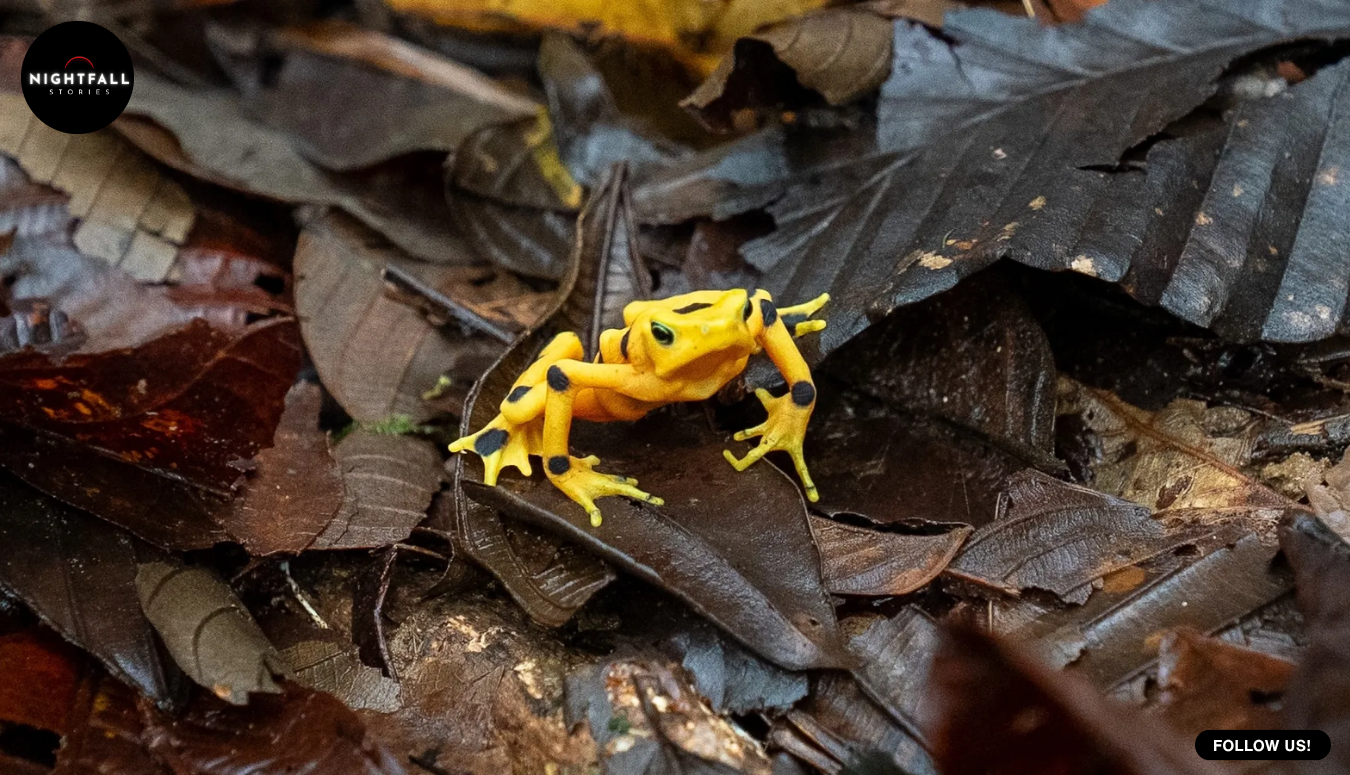
    One hundred captive bred Panamanian golden frogs were carried up into the hills above El Valle de Anton and placed inside mesh pens on the forest floor, in the same kind of ground their ancestors had lived on before the species vanished from the wild in 2009. Twelve weeks later, roughly seven out of every ten were dead, killed by the same fungal disease that had emptied those hillsides in the first place.

    Here is the part that makes this worth your time. The team that ran the trial did not bury the figure. Roberto Ibanez, who directs the Panama Amphibian Rescue and Conservation Project, and Brian Gratwicke, a conservation biologist with the Smithsonian’s National Zoo and Conservation Biology Institute, put it out in plain numbers, and then used it to argue against the thing their own programme had spent nearly twenty years preparing to do. The survivors were let out of the pens. And the strategy shifted away from putting more frogs back into the places the species used to live.

    That is not a sad twist on a hopeful release story. It is also not a failure. It is a conservation programme discovering, at considerable emotional cost to the people holding the containers, that its preferred plan does not work yet, publishing the proof, and changing course on the strength of it. That sequence is rarer in conservation than you might expect, and it is the actual story here.

    To understand why a hundred small yellow frogs matter this much, you have to understand what Atelopus zeteki is in Panama. It is not a species the general public has to be persuaded to care about. In 2010 a law was passed making the golden frog a national symbol. There is an annual day for it, with parades through the streets of El Valle de Anton, the town at the foot of the very hills where this trial took place. The frog turns up in handicrafts and local design. It is, in the most literal sense, a national emblem that stopped existing outside of glass tanks.

    The thing that removed it was a fungus called Batrachochytrium dendrobatidis, usually shortened to Bd and the cause of a disease called chytridiomycosis. It moved through southern Central America from the late 1980s onward, travelling along the mountain chain, and reached the El Valle region in the mid 2000s. Accounts differ slightly on the exact year, with the Smithsonian’s own material putting the arrival around 2004 and the rescue project’s history page putting it at 2006, so the honest version is the middle of that decade.

    What the fungus does, at the level that matters for a population rather than an individual, is attack the skin. For an amphibian, skin is not a wrapper. It is a working organ that handles water and salts and a great deal of the animal’s basic chemistry. Disrupt it badly enough and the animal cannot keep its internal balance. Scale that up across a stream valley and you do not get a gradual decline with survivors hanging on in pockets. You get a collapse that runs through a site in a single season.

    The scale of what Bd has done globally is worth holding in mind, because it explains why a hundred frogs in pens on one hillside is treated as a serious experiment rather than a local curiosity. By one widely cited assessment published in 2019, the fungus had been implicated in the extinction of around ninety amphibian species worldwide and in the decline of at least four hundred and ninety one more. It is routinely described as the most destructive wildlife disease on record. Nobody has a cure for it in the wild. You cannot spray a mountain range, and a treatment that works in a tank does not transfer to a watershed.

    Golden frogs were among the worst hit, because almost everything about them suited the fungus. They lived in cool, wet, fast running streams in the central mountains, which is close to the ideal temperature band for Bd. They were conspicuous, slow moving and gathered at streams to breed, which is exactly how a skin pathogen gets passed around. Researchers recorded severe chytridiomycosis declines at every one of the species’ known remaining sites. The last confirmed wild record was in 2009.

    It is worth being precise about that, because sources use two different phrases. Some say the species is extinct in the wild. The narrower and more defensible statement, and the one the rescue project itself uses, is that the golden frog has not been recorded in the wild since 2009. Those are not the same claim, and in a story about a team being careful with its own numbers, it would be poor form to be careless with that one.

    What saved the species from going out entirely was a decision made while the collapse was still happening. Animals were collected out of the wild and taken into captivity, a strategy the field bluntly calls an ark. It sounds dramatic. In practice it is close to two decades of unglamorous husbandry: water chemistry, feeder insects, temperature logs, quarantine, breeding records, and the slow genetic bookkeeping needed to keep a captive population from becoming a collection of cousins. The programme now holds more than a thousand adult golden frogs across more than fifty participating institutions in the United States and Canada, managed under a formal survival plan, alongside the Panamanian facilities run through the rescue project.

    There is a second cost to an ark that rarely gets counted, which is what it does to the animals. A frog raised in a tank has never hunted a wild insect out of leaf litter, never dealt with a real temperature swing, never encountered the bacterial community that lives on a wild frog’s skin. Captive amphibians tend to lose the microbial and chemical defences their wild relatives carry, partly because the diet is different and partly because the environment is clean by design. Twenty years of successful breeding can therefore produce a healthy animal that is, in the specific sense that matters outdoors, naive.

    An ark buys time. It does not solve anything. And the problem with this particular ark has always been obvious to everyone inside it: the fungus that emptied the hills is still in the hills. It did not pass through and leave. Bd persists in those watersheds, in other amphibian species that tolerate it better, in the water itself. You cannot simply open the doors on twenty years of careful breeding and hope the landscape has forgotten.

    Which is why the trial was built the way it was. The frogs did not go straight out onto open ground. They went into mesocosms, which is a technical word for a very practical object: outdoor pens, built on real forest floor, with leaf litter layered in the bottom that came with its own insect life for the frogs to hunt. The mesh held the frogs in and kept predators out. Everything else about the enclosure was deliberately the real world, including the fungus.

    That design is what makes the result usable. A soft release pen is a compromise between a tank, where you learn nothing about survival, and a free release, where you learn something but lose the animals and the data at the same time. In a mesocosm you can count. You know how many went in, you can check them, and at the end of the period you have a number rather than an impression.

    Gratwicke has been open that the trial was built as a question rather than a rescue. The point was to see what actually happens when captive bred golden frogs are put back into a wild situation: how the disease behaves, how the frogs behave, and whether the animals begin to recover their skin defences. Golden frogs carry potent skin toxins in the wild, enough that a single frog has been described as holding sufficient toxin to kill more than a thousand mice, and there has long been a question about how much of that chemistry captive animals keep or regain once they are back on natural ground and natural food.

    That question is not academic. Skin toxins are a defence against predators rather than against fungus, but the broader point behind it is the same: if an animal’s skin chemistry and skin microbiology shift back toward the wild state once it is living on wild ground and eating wild food, then time outdoors is itself part of the treatment, and a release becomes something you build in stages rather than a single event. The trial was set up to find out whether that was happening.

    So one hundred frogs went into the pens. The monitoring period was twelve weeks. At the end of it, around seventy percent had died of chytridiomycosis.

    It is worth sitting with what that figure means to the people who produced it, without making it prettier than it was. These were not anonymous units. They were animals bred inside a programme where individual frogs are tracked, by staff who have spent years keeping a species alive that no longer exists outside their care, in a town that holds a parade for it. The number was gathered by the same hands that raised the animals.

    The contrast that gives the figure its edge came from the same broader programme. Three other amphibian species had been put through release work the previous year: crowned tree frogs, Pratt’s rocket frogs and lemur leaf frogs. They did noticeably better, with the lemur leaf frogs showing what the team described as excellent survivorship. So the seventy percent was not a verdict on soft release as a technique, or on the programme’s competence. It was specific. Other species could be put back on that landscape and live. This one, in this place, could not.

    That specificity is what turned a bad result into a usable one, and it points directly at the reason the plan changed.

    Bd has a temperature preference. It does best in cool, moist conditions and it struggles as things get warmer. Push the temperature up far enough and the fungus is suppressed. Golden frogs also have a temperature range they can tolerate, and it overlaps with the fungus, which is precisely why the historic sites were such killing grounds. But the two ranges are not identical. If there are places on the landscape that are warm enough to hold the fungus back while still sitting inside what the frog can handle, those places are refuges, and the whole reintroduction problem becomes a question of finding them rather than a question of waiting for the disease to fade.

    Gratwicke’s position after the trial was that the data would set the strategy from there, and that earlier modelling had already suggested such climatic refuges might exist. The trial did not discover the idea. What it did was make the idea the main plan instead of a secondary one, by closing off the alternative with a number nobody could argue with.

    There is something genuinely uncomfortable in the logic, and it deserves to be said straight rather than smoothed over. A warming climate is, for most amphibians, bad news on every axis: drying streams, shifting breeding seasons, heat stress. For this particular species against this particular pathogen, warmth is the one lever available. The team is not celebrating that. They are using it. A conservation strategy that depends on finding somewhere hot enough to make a disease uncomfortable is a strategy built in a corner, and the people building it know exactly which corner they are in.

    The survivors were released fully, out of the pens and onto the hillside. Roughly thirty frogs out of a hundred, carrying whatever it is that let them get through twelve weeks of exposure that killed the rest. Whether that was genetics, skin chemistry, microbiology, luck or some combination is one of the open questions the programme is now chasing, because if the difference can be identified it can potentially be bred for.

    The direction of travel from there is away from more releases into the old range and toward identifying and testing climatically favourable sites. Gratwicke framed the next round explicitly as release trials in more climatically favourable places, which is a sentence that quietly concedes the historic sites are off the table for now. For a programme whose entire founding purpose was to put golden frogs back where golden frogs used to be, that is a real concession, published voluntarily, on the strength of its own unflattering data.

    It is also worth noting what this story is not. It is not a tidy redemption arc and the sources do not support one. Nobody involved has announced that golden frogs are back. The species still has no confirmed wild population. The ark is still running, still consuming money and staff time and tank space, still dependent on institutions in two countries continuing to care. And the fungus is still out there in the water, indifferent to all of it.

    What changed is narrower and more valuable than a happy ending. A conservation programme ran a test that could only tell it something it did not want to hear, heard it, said it out loud with a figure attached, and moved. The seventy percent is not a footnote to a release story. It is the finding. It is the thing that bought the next decade of work its direction, and it cost seventy animals and twenty years of preparation to learn.

    Somewhere above El Valle de Anton, around thirty small yellow frogs are living on a hillside their species had been absent from for well over a decade. They are not a recovered population and the people who put them there would be the first to say so. They are the survivors of an experiment designed to be honest, run by people who then published the part that hurt. In a field where plans tend to outlive the evidence against them, that is the result worth paying attention to.

  • A rope ran through the whale’s mouth and the boat got close to it fifty times. What finally worked came out of the whaling trade.

    A rope ran through the whale’s mouth and the boat got close to it fifty times. What finally worked came out of the whaling trade.

    The whale was eighteen feet long, which for a minke is close to full grown, and the rope had found the worst possible position on it. A buoy line from fishing gear had gone in through the animal’s mouth, wrapped around its head and trailed back along its body to a point just forward of the tail. It could still swim. It could still breathe. What it almost certainly could not do was feed.

    Getting that rope off took a crew from the Center for Coastal Studies in Provincetown about an hour and a half of searching and then roughly two hours of work, during which they brought their boat up alongside the animal somewhere close to fifty times. Not once. Not three times in a dramatic final push. About fifty approaches on a free-swimming whale in open water in Cape Cod Bay, each one a chance to catch a line with a grapple, almost all of them failures.

    That number is the whole story, and it is worth sitting with before anything else, because it is the opposite of how whale rescues are usually told. There was no moment of understanding between species. The animal was not cooperating. It was doing what an eighteen-foot wild animal does when a boat comes at it, which is leave, and the people on the boat had to come back and do it again.

    The call came in on a Saturday morning a few weeks ago. A whale watching vessel out of Hyannis had seen a minke towing a buoy, which is the classic signature of an animal dragging gear. A charter fishing boat reported a second sighting about two miles further east but could not stay with it. Both reports went to the entanglement hotline run by the Center’s Marine Animal Entanglement Response team, and that is where the first piece of luck in this story sits, because an entangled minke whale that has been seen once is usually not seen again.

    Scott Landry directs that team, and his assessment of relocating the animal at all was that it was very lucky. Minke whales are the smallest of the baleen whales in these waters and by far the hardest to work with. A North Atlantic right whale is enormous, slow and relatively predictable. A humpback is big enough to be followed and often surfaces on something like a rhythm. A minke is compact, fast, erratic and spends very little time at the surface. It can be gone in a direction nobody expected in the time it takes to coil a line. Everything that makes a minke a difficult animal to study makes it a difficult animal to save, and it is precisely why fifty approaches were needed rather than five.

    The team went out on their boat, the Ibis, with support from the Coast Guard out of Station Provincetown. Aboard were two trainees from France, part of an international exchange that moves disentanglement technique between countries: Willy Dabin from the Pelagis Observatory and the French national research agency CNRS, and Livier Schweyer from the Iroise Marine Natural Park. Whatever else those two took home, they got to watch the least glamorous and most instructive version of the job.

    Before that, though, there was the search, and ninety minutes of it is a long time on the water. Two reports two miles apart do not give you a position, they give you a direction and a guess. A minke surfaces briefly and low, shows very little of itself and leaves almost no footprint on the water. The thing the crew were actually looking for was not a whale at all. It was a buoy moving the wrong way, against the set of the tide, because that is what an animal towing gear looks like from a distance.

    It also matters that the rope was where it was. Gear wrapped around a fluke or a flipper is damaging and can be lethal over months, but an animal with its tail fouled can still eat. Gear through the mouth and around the head is the configuration responders least want to see, because a baleen whale feeds by taking in water and straining it, and rope running through that apparatus interferes with the one thing the animal has to do several times a day to stay alive. An entangled whale that cannot feed is on a clock, and nobody can read the clock from outside. That is why these responses happen on the day the report comes in, in whatever weather there is, rather than on the day conditions would be pleasant.

    The problem in front of them was not cutting the rope. Cutting rope is easy. The problem was holding on to a whale.

    This is where the technique gets genuinely strange, because the method the Center uses to control an entangled whale was borrowed, deliberately and explicitly, from the whaling trade. Nineteenth century whalers used an approach called kegging. Having harpooned an animal, they would attach large floats, kegs, to the line, so that the whale had to drag the buoyancy with it. The drag tired it out and the floats kept it at or near the surface where the boats could stay with it. The crews that now spend their lives undoing damage to whales use the same physics for the opposite purpose. Attach buoyancy to the gear the animal is already carrying, and the whale slows, surfaces and becomes something a small boat can work beside without being dragged under.

    Before you can keg anything, though, you have to get a line on the whale, and that is the part Landry described as incredibly difficult on this particular animal. The tool for it is a grapple, thrown or set to catch the trailing gear. On a fast minke surfacing briefly and unpredictably, you get a second or two of chance per approach. That is what the fifty approaches bought: not fifty attempts at a rescue, but fifty attempts at a single preliminary step.

    Once they had the line, the cutting tool was a knife on the end of a pole with a hooked blade, shaped so that it can be pushed past rope and then pulled back to slice from the inside out, cutting the line rather than the animal. Working alongside the whale from the small boat, the crew got that hook onto the rope at the head and cut it.

    What happened next took seconds. The whale opened its mouth and released all of the remaining gear. Then it swam off, free of the rope.

    That is the documented outcome, and it is important to state it precisely. The record says the whale was freed of the entangling gear and swam away. The record does not say the whale survived. Nobody followed it. Minke whales are not individually catalogued and tracked the way North Atlantic right whales are, and no re-sighting or assessment of its longer-term condition has been reported. Landry called it a nearly miraculous disentanglement, which is a statement about the operation, not a prognosis for the animal. An animal that has been unable to feed properly for an unknown period carries consequences that do not resolve the moment the rope comes off. The honest end point here is that the gear is off and the whale went away under its own power, and that is where the evidence stops.

    There is one more element in Landry’s account that changes how you read the whole thing, and it is uncomfortable. His reading of the configuration was that the whale had very likely been anchored in the fishing gear originally, held in place, and that some well-intentioned mariner had cut the rope at some point, probably believing that was help. By his assessment it made things worse for the whale and harder for the responders.

    It is worth understanding why, because the instinct behind that cut is one almost anyone would have. A whale held fast in gear is a whale in obvious distress, and cutting the rope that holds it looks like the obvious kindness. But an anchored whale is a whale you can find, a whale that is still in one place when trained responders arrive, and a whale whose gear is under tension in a known direction. Cut the anchor and you have converted a stationary problem into a mobile one. The animal is now a fast-moving target somewhere in a large bay, still wearing most of the rope, and the chances of anyone ever seeing it again drop sharply. The first sighting is usually the only sighting.

    That is the reason the entanglement response network is structured the way it is, and the reason the authorities are so insistent that the public report rather than intervene. Responders in this network train for a long time before they are authorised under a federal permit to approach an entangled whale closely, let alone cut gear off one, and the network is tiered by species and difficulty, with the most restricted level covering work on North Atlantic right whales. The federal fisheries agency’s own guidance on this is about as blunt as official guidance gets. People, including trained and authorised responders, have died attempting to rescue entangled whales.

    Hold that next to the picture of a small boat coming alongside an eighteen-foot animal fifty times. This is not a feel-good activity. It is dangerous, repetitive, technical work done close to a large frightened animal that can injure or kill a person without any intention of doing so, in a boat, on the open water, for hours.

    And it is work with a genuine lineage. The Center’s disentanglement programme is the oldest in the United States, and it began with a single humpback on Thanksgiving Day in 1984. The whale had been tangled in gill netting for months. Charles Mayo, known as Stormy, and David Mattila took a crew out, including Mayo’s father, and improvised: a grapple anchor tied to large plastic floats, buoyancy added to the gear the animal was already carrying, which is kegging in everything but name. Four hours later the whale was free. It was seen the following spring on Stellwagen Bank, breaching and swimming, which is about as good an outcome as that kind of story gets.

    Mayo had named that whale Ibis, after a mark on it that reminded him of an Egyptian hieroglyph. The boat the team works from in Cape Cod Bay today carries the same name.

    In the four decades between those two animals, a piece of improvisation became a profession. The grapple, the kegging floats, the hooked knife on a pole, the decision rules about when to approach and when to stand off, the training ladder, the permits, the hotline, the exchange programmes that put two French responders on an American boat for a season: all of it grew out of people working out, case by case, how to get rope off an animal that cannot be asked to hold still.

    The reason it had to become a profession is the scale of the underlying problem, and this is where the story stops being about one whale. Entanglement in fixed fishing gear is one of the central threats to large whales in the North Atlantic. The mechanics are grim and simple. Rope interferes with swimming, feeding and breathing. Gear that stays on an animal for months can cause infection, starvation, loss of a flipper or a fluke, blood loss, strangulation or drowning. For the North Atlantic right whale, a species down to a few hundred animals, entanglement is one of the main reasons the population has been in sustained trouble.

    The argument about what to do runs through gear design: breaking strengths in rope, vertical line reductions, seasonal closures, and on-demand or so-called ropeless systems that keep line out of the water column until a trap is retrieved. Those debates are real and they are not resolved, and it is worth being careful about how they are framed, because the people on the other side of them are working fishermen whose livelihoods depend on the answer, not villains. Nobody sets a trap in order to entangle a whale. The gear is doing what gear does.

    In this particular case, nothing in the record establishes which fishery the rope came from, and it would be unfair and unfounded to guess. The rope was a buoy line. That is as far as the documentation goes.

    What the record does establish is a sequence. Two vessels reported an animal towing a buoy. A team went out and spent about ninety minutes finding it again, which by their own account was the lucky part. They then spent roughly two hours approaching a fast, unpredictable whale close to fifty times to catch a trailing line with a grapple. They got the line, held the animal alongside, cut the rope at the head with a hooked blade, and within seconds the whale opened its mouth, dropped the rest of the gear and left.

    No one on that boat called it heroic. Landry’s own description of the hardest part, catching the line, was that it was incredibly difficult, and his description of the outcome was that it was nearly miraculous, which in context reads less like triumph and more like a man acknowledging how often this does not work. For every minke relocated after a first sighting, there are others that are seen once with a buoy behind them and never seen again. Those animals do not appear in the reporting, because nothing happened to them that anyone could write down.

    That is the real weight of the fifty approaches. Not that a whale was saved, which is more than the record supports, but that a crew kept coming back to a moving animal in open water, failing, turning the boat, and coming back, until one approach out of about fifty landed.

  • A parrot that cannot fly just passed 300 for the first time in about 75 years. The people who got it there are now worried about space.

    A parrot that cannot fly just passed 300 for the first time in about 75 years. The people who got it there are now worried about space.

    The number is 325. That is the official count of every kākāpō alive, published by New Zealand’s Department of Conservation, and it is the first time the total has been above 300 in what the department itself estimates is around 75 years. Ninety of those birds are chicks from the most recent breeding season, which is a record for a single season, and none of them were counted until they reached 150 days old, because that is the age the programme treats as the point where a chick has a real chance of making it.

    That last detail tells you most of what you need to know about how this recovery works. Nobody in the Kākāpō Recovery programme counts an egg. Nobody counts a hatchling. The number only moves when a bird has survived five months, and the people who manage this species have learned the hard way not to celebrate early.

    Deidre Vercoe is the department’s Kākāpō Recovery Operations Manager, which means the logistics of the whole operation land on her desk. Her reaction to the milestone was not triumphant. She pointed out that there had been a four-year gap between breeding seasons, so it was a relief to finally see the population move after all that waiting, and she was clear that there is still a long road of recovery ahead. Ninety chicks in one season is a record. It is not a finish line.

    To understand why a number in the low hundreds counts as good news, you have to go back to where the modern programme started. In 1995 the known population was 51 birds. Twenty of them were female. Thirty-one were male. That is the genetic base every kākāpō alive today is descended from, with the partial exception of one famous bird, and it is the single most important constraint on everything that has happened since.

    A kākāpō is a strange animal even by the standards of a country full of strange animals. It is the heaviest parrot in the world, with large males reaching around four kilograms, which is roughly nine pounds, and it cannot fly. Some of the lighter females can manage a sort of controlled glide down from a height, but that is the limit of it. They are nocturnal. They are moss green and mottled, which is beautiful camouflage against a forest floor and useless against an animal that hunts by smell. They can live for sixty to ninety years, which means a bird hatched in the programme’s early days may still be breeding now. And they have a distinctive sweet, musty smell, which is charming to the researchers who work with them and was catastrophic once rats, cats and stoats arrived.

    Their breeding biology is the other problem, and it is the one that makes the arithmetic so slow. Kākāpō do not breed every year. They breed when the rimu tree fruits heavily, a phenomenon called masting, which happens irregularly, roughly every two to four years and sometimes less often than that. When the rimu does not mast, there are no chicks at all. Not fewer chicks. None. An entire calendar year can pass in which the most intensively managed bird in the world produces nothing, and the team spends it on health checks, transmitter changes and waiting.

    So the line from 51 to 325 is not a line. It is a staircase with long flat stretches and at least one step downward. In 2019 an outbreak of aspergillosis, a fungal respiratory disease, moved through the population. More than twenty birds were taken into veterinary care, a secondary outbreak on Whenua Hou later that year killed two juveniles, and the following year there was no breeding season at all. A programme that had just come off a strong breeding year found itself losing adults and juveniles it had worked years to produce. Anyone writing this story as a smooth upward climb is writing fiction. The count is a snapshot of one moment, and the people who publish it know exactly how fast a snapshot can change.

    The most recent season gives you the honest ratio of effort to result. Seventy-nine females nested. Between them they produced 258 eggs. More than half of those eggs never hatched. By the time the dust settled, roughly a third of all eggs laid had produced a chick that survived to the 150-day mark. Ninety birds out of 258 eggs is a good season by kākāpō standards, and it is also a reminder that most of the work does not pay off.

    There were individual surprises inside that number. One male called Tūterangi, ten years old and breeding for the first time, fathered ten surviving chicks with six different females. For a species where the whole management challenge is spreading a narrow gene pool as widely as possible, a new male suddenly contributing at that scale is a genuinely useful event, not just a nice anecdote.

    The hands-on reality of this programme is hard to overstate. Essentially every adult kākāpō wears a transmitter, so the team knows where each individual bird is and can tell when a female has started nesting. Nests are monitored. Eggs are sometimes moved, swapped or incubated artificially. Chicks are sometimes hand-reared. Adults are fed supplementary pellets from smart hoppers that recognise individual birds and ration them, because a female that is too heavy produces too many male chicks and a female that is too light does not breed at all. Artificial insemination has been used to get genes from under-represented males into the next generation. Birds are weighed, blood-tested and flown between islands.

    That intensity is the reason the species still exists, and it is also a problem in itself, because a population that only survives under that level of care is not really recovered. Tāne Davis, who represents Te Rūnanga o Ngāi Tahu on the Kākāpō Recovery Group, made exactly that point about the most recent season. The programme deliberately trialled several approaches aimed at reducing intensive management, testing how much the birds can do on their own. That is the direction the whole thing has to move in eventually, and the fact that the record season was also a season of stepping back a little is more significant than the record itself.

    Ngāi Tahu’s involvement here is not a line in a press release. The iwi is a partner in the recovery of a taonga species on and around its own territory, and Davis sits on the group that makes the decisions. His contribution to the milestone announcement was a point about origins rather than numbers. All but one of the founders of the modern population came from Rakiura, the large island at the southern end of New Zealand that English speakers often call Stewart Island. That is where the birds that saved the species were found in the late twentieth century, after decades in which conservationists had feared the species was functionally gone. The one exception was a male from Fiordland, a bird named Richard Henry after the conservationist who had tried to move kākāpō to safety in the 1890s and watched the stoats follow them.

    That 1890s attempt is worth a moment, because it explains the shape of everything that came after. In 1894 Richard Henry moved several hundred kākāpō to Resolution Island in Fiordland, which was supposed to be out of reach of introduced predators. Within about six years stoats had got there, and in time the entire relocated population was gone. The first serious conservation translocation in New Zealand’s history failed completely, and it failed for exactly the reason every kākāpō decision is still made around today, which is that an island is only a sanctuary for as long as nothing swims to it.

    Then came the long search. Between 1949 and 1973 the New Zealand Wildlife Service mounted more than sixty expeditions into Fiordland looking for survivors. They found six birds. All six were male, and all but one died within months of being taken into captivity. A renewed effort from 1974 turned up another eighteen birds by 1977, and those were male too. For most of three decades, the working assumption had to be that the species was down to a handful of elderly males in the wet mountains of the southwest, booming into the dark for females that no longer existed.

    What changed it was a sound. In 1977 searchers heard booming in southern Rakiura, and the population they found there was something like two hundred birds. By 1980 females had been confirmed among them. That is the moment the species stopped being a eulogy and became a programme. Over the following years the Rakiura birds, which were being eaten by cats and were declining where they stood, were moved out to island sanctuaries in batches. Even then it kept going wrong. Rats took chicks on the islands. In the season before the modern programme began, at least a dozen chicks were produced and three survived. That is the context for the figure of 51.

    So the people reading out 325 this year are not standing at the top of a curve. They are standing at the far end of a sequence that includes one complete failure in the 1890s, sixty fruitless expeditions, three decades of finding only males, a rescued population that kept shrinking after it was rescued, and a disease outbreak within living memory of everyone currently on staff.

    Rakiura matters because it is the long-term goal. The three islands the birds currently breed on, Whenua Hou, also called Codfish Island, Pukenui, also called Anchor Island, and Te Kāhaku, also called Chalky Island, are small, intensively managed and kept free of introduced predators at considerable cost. Rakiura is the ancestral habitat, orders of magnitude larger, and nowhere near predator free. Making it safe enough for kākāpō is a project at a completely different scale from anything the programme has done so far.

    Which brings you to the part of this story that the number obscures. The three breeding islands are filling up.

    This is the awkward consequence of success, and it is the live tension inside the programme right now. Ninety new birds have to live somewhere. Kākāpō are territorial, males display at leks and need space to do it, and an island has a finite amount of rimu on it. Several commentators have reached for the phrase housing crisis, which is journalists’ shorthand rather than the department’s own framing, but the underlying constraint is real and the department does not dispute it. You can raise a record number of chicks and still be no closer to a self-sustaining species if there is nowhere new for them to go.

    The department’s early modelling suggests the next breeding season could fall in 2028, a two-year gap rather than the four-year one that just ended. On the face of it that is excellent news. In practice it sharpens the problem, because it means another cohort may arrive before the space question has been answered.

    There is one more unusual element worth explaining, because it is rare in conservation and it has mattered here. The programme’s national partner is Meridian Energy, a New Zealand electricity company, which has backed it since 2016. Over the course of that partnership the population has grown by more than 200 birds. Long-term corporate funding of a single species recovery programme is not common, and the reason it matters for kākāpō specifically is the breeding cycle. A programme that produces nothing for four years at a stretch is extremely hard to fund on annual grant cycles tied to annual results. Money that does not flinch during the flat years is worth more than its face value.

    What makes this recovery genuinely unusual is how small and how documented it is. There is no estimate here, no statistical model of an unseen population, no confidence interval. There are 325 birds and the programme knows all of them individually. It knows their parents, their weights, their genetic contribution and in most cases their personalities. The staff name them. When one dies, somebody writes it down.

    That is also why the milestone is being handled so cautiously by the people closest to it. A population of 325 individually known animals is still a population that a single bad fungal season, a single predator incursion onto a single island, or a single failed rimu mast could knock back by years. The last time the number was above 300, nobody was counting. There were no transmitters, no smart hoppers, no recovery group, no funding partner. The birds were simply still numerous enough not to have been noticed disappearing yet, and then they were not.

    So the honest version of this story is not that the kākāpō has been saved. It is that a programme which started with 51 birds and 20 females has, across thirteen breeding seasons and one disease outbreak and one entirely blank year, more than six-folded a population it can account for bird by bird. And its reward for doing that is a new problem it cannot solve on the islands it currently has.

    The number to watch next is not the population. It is the acreage.

  • Kazakhstan brought back the deer, replanted the riverside forest and waited sixteen years. Only then did it let the tiger out.

    Kazakhstan brought back the deer, replanted the riverside forest and waited sixteen years. Only then did it let the tiger out.

    Before any tiger was released into the lower Ili river delta in southeastern Kazakhstan, 205 Bukhara deer had to be put there. Then more than a hundred kulan, the wild ass of the Central Asian steppe, had to be moved in. Reed beds and tugai forest, the dense riverside woodland that gives a big cat somewhere to lie up during the day, had to be replanted, reportedly to the tune of around 37,000 seedlings and cuttings. A reserve of 450,000 hectares had to be legally created, staffed and patrolled. Compensation arrangements had to be agreed with the villages on its edge, before a single claim could be made against them. Sixteen years of this went by.

    Only at the end of all that did a female Amur tiger called Umit walk out of a holding enclosure and into open country, on the last day of July, wearing a satellite collar. She is reported to be the first tiger living wild in Kazakhstan in more than seventy years.

    The order of those events is the whole story, and it is the part that tends to get lost. Reintroducing a large predator is not an animal problem. It is a food problem, a cover problem, a law problem and a neighbour problem, and the animal is the last variable you add, not the first. Put a tiger into a landscape with nothing in it to eat and you have not restored anything. You have released a tiger into somebody’s livestock.

    Kazakhstan announced its intention at an international tiger conservation forum in 2010. What it was proposing to restore was not the Amur tiger at all. The cat that used to live along the rivers of Central Asia was the Caspian tiger, also called the Turan tiger, an animal of riverside thickets rather than mountains, which hunted wild boar and deer in the reed country around the great inland lakes. It was hunted hard, its riverside forests were cleared for cotton and cropland, and its prey was shot out from under it. In Kazakhstan the last confirmed record is from 1948. By the 1970s the subspecies was gone everywhere.

    It is worth saying what tugai forest actually is, because the word does a lot of work in this project and means nothing to most readers. Tugai is the ribbon of woodland that grows along desert and steppe rivers in Central Asia, usually a tangle of poplar, willow, tamarisk, oleaster and dense reed, fed by the river rather than by rainfall. It is narrow, it is green in the middle of country that is not, and it concentrates everything. Deer come to it for browse and shade, boar for the roots and the water, birds for the cover. A tiger in this part of the world was a tugai animal, moving along the river corridor as if along a road. Clear the tugai and you have not merely removed scenery. You have removed the corridor, the shade, the ambush cover and the prey in one operation, which is largely how the Caspian tiger was eliminated. It was shot, certainly, and shot deliberately and in organised campaigns. But what finished it was the conversion of riverside forest to farmland across its entire range.

    There is nothing left to bring back. No Caspian tigers survive in captivity. Nobody has a frozen cell line. So the entire programme rests on a substitution, and that substitution rests on a single piece of genetics.

    In 2009 a team led by Carlos Driscoll published a study in PLOS ONE that sequenced mitochondrial DNA from museum specimens of Caspian tigers, some of them more than a century old. What they found was that the Caspian tigers carried a mitochondrial haplotype differing from the one shared by every living Amur tiger by exactly one nucleotide, a single letter change at one position in one gene. In evolutionary terms that is almost nothing. The two populations were not separate lineages that had been apart for a long time. They were the ends of one continuous range that had been cut in half relatively recently, probably as human settlement spread through the corridor between them. The authors concluded that, given how close the relationship is, living Amur tigers would be an appropriate genetic source if anyone ever tried to put tigers back where the Caspian tiger used to be.

    That paper is the licence under which every spade of this project has been turned. It is worth noting that the authors were careful in a way that press coverage of their work usually is not. They said plainly that a single mitochondrial change may not be enough to settle whether the two should be treated as separate categories at all, that nuclear DNA would make the case firmer and is much harder to recover from old specimens, and that the morphological question was unresolved. In 2017 an international assessment of cat taxonomy went further and folded both into a single mainland subspecies, which on paper makes the substitution not a substitution but a reintroduction of the same animal.

    Not everyone finds that satisfying, and the objection is reasonable. A tiger from the snow forests of the Russian Far East is not behaviourally identical to a tiger that evolved in hot reed beds beside a desert lake, whatever their mitochondria say. Body size, coat, prey preference and tolerance for heat are shaped by more than one gene. The honest position is that the genetics make the attempt defensible rather than guaranteed, and that the first few animals are a test of exactly that question.

    Which is why the preparation mattered more than the paperwork. The reserve, Ile-Balkhash, sits in the delta where the Ili river runs into Lake Balkhash, and it was formally established in 2018 after years of groundwork. Between 2018 and 2024 the team released 205 Bukhara deer into it, a species that itself had been reduced to remnant populations along Central Asian rivers. More than a hundred kulan were relocated in. Roe deer and wild boar numbers were allowed to build. The tugai forest and reed beds were replanted, a figure of about 37,000 seedlings and cuttings being carried by several outlets, which should be read as the planting effort in the South Balkhash area rather than a count of surviving mature trees.

    None of that is glamorous and none of it photographs well, which is roughly why most people heard about this project only when a tiger was involved. But it is the difference between a reintroduction and a stunt. Deer take years to establish. Replanted riverside forest takes longer. You cannot compress it, and if you try to skip it the predator you release simply walks out of the reserve looking for protein, which is precisely the failure mode that turns a conservation programme into a livestock dispute within a season.

    The tigers themselves came from Russia. Four wild Amur tigers were caught in Khabarovsk Krai in the Russian Far East and flown to Kazakhstan, arriving in the spring. The handover was arranged between the two governments and was timed around a presidential visit, which is worth stating and not worth dwelling on. The animals are the same animals whoever stood next to the crate.

    Umit, whose name means hope in Kazakh, is the adult female of the group and she was judged ready first. That choice is not arbitrary, and the logic behind it is the same logic that governs most staged releases of large carnivores. A female generally holds a smaller range than a male, which means a smaller chance of her leaving the reserve in her first season. She has less reason to travel, because a male’s movement is driven largely by the search for females and there are none out there to find. And she is the half of the equation that eventually produces cubs, so establishing a settled resident female is worth more to the programme than establishing a male who has nothing to settle next to. Releasing her first means the project finds out whether the landscape works before it takes on the harder animal. Her collar is a satellite and mobile-network unit that transmits her position and a read on her condition, and the monitoring protocol around it is one of the more interesting details of the whole operation. The reserve has mapped her range into zones. While she is in what the team calls the green zone, the safe core where water and prey concentrate, the collar reports roughly every twelve hours. If she moves into a zone flagged yellow or red, meaning closer to people and livestock, the reporting interval tightens to hourly or every couple of hours, so that staff know where she is almost in real time and can get ahead of a problem rather than respond to one. Camera traps cover the rest.

    In the weeks after her release she did something the team had hoped for and could not assume. She settled. She established a territory along the reed-lined shoreline, marked it, and stayed inside it, in country that specialists noted resembles the riverside habitat she came from in the Russian Far East more than you might expect of a place two and a half thousand miles away. The prey is there: tugai deer, kulan, wild boar, all of them drawn to the same water she is. Reserve staff declined to publish how far she has ranged, which is a sensible precaution for a single collared animal in a country where she is the only one of her kind.

    The neighbours are the part of this that cannot be engineered away. There are four villages around the edge of the reserve, home to something like 6,000 people, in a region where herding and fishing on Lake Balkhash are how households eat. A tiger that takes a cow is not an abstraction to them. The programme’s answer has been to put the mechanisms in place before the risk arrived rather than after: compensation schemes agreed in advance of the release, local education work, and an early warning system built on the collar data, so that a tiger moving towards livestock generates a phone call rather than a dead animal and a furious owner. Stuart Chapman, who leads the global tiger programme at the conservation organisation WWF, has been among those pointing out that this groundwork is what makes the difference between a reintroduction that holds and one that collapses in its second year. Whether it holds here will be decided by the first serious livestock loss, not by anything written so far.

    There was also a smaller episode in the days after the release that says something about how this story travels. A photograph went around social media presented as a candid shot of the newly freed tiger in the wild. Kazakhstan’s Ministry of Ecology and Natural Resources put out a statement saying the image did not correspond to reality and showed signs of having been generated by artificial intelligence. The ministry’s reasoning was partly technical and partly logical: Umit is wearing a collar that reports her position continuously to reserve staff, so a tourist stumbling across her by chance and getting a clean frame was never a plausible account of where the picture came from. The ministry warned that circulating fabricated images could carry legal consequences and asked people to check official channels. It is a small thing, but it tells you that the demand for pictures of this animal considerably exceeds the supply, and that the gap is already being filled with invented ones.

    The real supply is thin on purpose. A single collared female in a reserve the size of a small country, monitored by camera traps and a handful of staff, is not a photogenic subject, and the ministry’s press service holds essentially all the imagery that exists of her release.

    What makes this a programme rather than a gesture is the queue behind her, and the queue has conditions attached rather than dates. The adult male of the Russian group, named Amur, is still in an adaptation enclosure. He was held back after behavioural testing and the team has not committed to when he will be retested, which is a more candid position than announcing a release window and then missing it. A male is a much bigger risk than a female: he will range further, he will come into contact with people sooner, and he is the animal that has to work for breeding to happen at all. Testing him properly is worth more than releasing him quickly.

    The two cubs, Turan and Ussuri, were around six or seven months old when they arrived and are being held in enclosures until they are at least eighteen months and possibly two years, each to be assessed individually before anything is decided. They are being fed on rabbit and boar meat, which is to say on the kind of prey they will have to catch themselves later. Separately, a pair of captive Amur tigers, Bogdana and Kuma, were transferred from the Netherlands in 2024 and are kept in an enclosure for breeding rather than release. They have not produced cubs yet.

    So the position is this. One wild tiger is out, collared, inside 450,000 hectares that were stocked with her food before she arrived. One adult male is waiting on a behavioural assessment with no promised date. Two cubs are waiting on their own growth. One captive pair is waiting on biology. And the deer, the kulan, the boar and the replanted reed beds that made any of it possible are still the only part of the project that has been running for sixteen years.

    The tiger is the headline. The deer were the work.

  • A lost elephant calf walked into a safari camp in Samburu. Working out whose she was took nearly thirty years of records.

    A lost elephant calf walked into a safari camp in Samburu. Working out whose she was took nearly thirty years of records.

    A female elephant calf about four months old walked out of the bush one morning and into Elephant Bedroom Camp, a tourist camp inside Samburu National Reserve in northern Kenya. She was on her own, which at that age is close to a death sentence, and by the account of the researchers who arrived shortly afterwards she was disoriented, reportedly after a rough ride in a vehicle before she turned up. The camp staff did the practical thing. They tied her to a tree so she could not wander back out into a landscape full of lions, and they telephoned the people who keep the files.

    That phone call is the actual beginning of this story, and the files are the reason it goes anywhere at all. Because a lost elephant calf is not a solvable problem. She cannot be asked where she came from. She cannot be matched to a parent by paperwork. She is a grey animal in a reserve with several hundred other grey animals in it, and if you cannot work out which family she belongs to, you have no option left except to raise her by hand for the next several years. The only way to give her back is to already know, in advance, who every elephant in the area is.

    In Samburu, somebody does. Save the Elephants was founded in 1993 by the zoologist Iain Douglas-Hamilton, and its research station in Samburu has been running since 1997. In the decades since, the team has built up individual records on more than 900 elephants that use the reserves along the Ewaso Nyiro river. Not estimates of how many. Not a population figure. Individuals, each one recognised on sight, each one placed inside a known family, with known associates and a known history.

    Individual identification of elephants is unglamorous and slow. It works because elephant ears are effectively fingerprints. Every nick, tear and vein pattern along the edge of an ear is permanent and slightly different, and once a researcher has photographed and drawn an animal’s left and right ears, that animal can be picked out of a crowd from a vehicle a hundred metres away. Tusks add a second layer, their length, their curve, whether one is broken and at what angle. Body size and the shape of the back help with age. None of it is clever technology. It is the same method a person uses to recognise a neighbour, applied with discipline and written down for twenty-nine years.

    The discipline is the hard part, and it is the reason this kind of archive is rare. An identification file only works if it is complete and current. Calves are born and have to be added. Young males leave their families in their teens and have to be tracked separately. Ears pick up new tears, so the drawings need updating. Animals die and the record has to say so, because a family with an unrecorded death in it will throw off every count made afterwards. A team that skips six months of this loses far more than six months of value, because the chain of who was with whom breaks. Wittemyer’s wider research programme in Samburu layers newer tools on top of the notebooks, satellite collars on selected animals, drones, acoustic recorders listening for the low-frequency calls elephants use at distance, but the collars are on a handful of individuals and the notebooks cover everybody. When a four-month-old with no collar turns up at a camp gate, it is the notebooks that answer the question.

    The families get names, usually in themes, which is how field teams keep hundreds of animals straight in conversation. The family at the centre of this story is known to the researchers as the Royals, and its members carry names to match. Anastasia is the matriarch. Among the adult females are Adelaide, Markle, Grace Kelly and Catherine. And there was Sylvia.

    When the call came in from the camp, Professor George Wittemyer of Save the Elephants, who is also a professor at Colorado State University and has tracked elephant movement in and around this reserve for more than two decades, put the team onto the only question that mattered. Not where had the calf come from, but who was missing one. The team began a systematic check of the status of every elephant in the reserve, working through roughly forty monitored family groups and accounting for every calf in each of them. It is a process of elimination done with binoculars and notebooks. Every calf you can tick off narrows the field. Eventually you are left with one family that has a gap in it.

    The gap was Sylvia’s. She had separated from the Royals about two weeks earlier while unwell. Sylvia carried an old jaw injury from a gunshot wound sustained more than a decade before, and the organisation’s read is that the injury was connected to her decline, though that chain of cause is their inference rather than a veterinary finding and is worth treating as such.

    An adult elephant leaving her family when she is in trouble is not abandonment and it is not unusual. Elephants move constantly, at a pace set by the fittest animals, and a female who cannot keep up falls behind. If she is also struggling to feed, which a damaged jaw makes likely, she will spend longer in one place working at softer vegetation while the rest of the group moves on to the next thing. A calf of four months stays with its mother because its mother is the food supply. If the mother becomes unable to travel and then dies, the calf is left in a landscape it does not know, among animals that are not obliged to feed it.

    And milk is the whole problem. An elephant calf is not weaned at four months. It is barely begun. Calves nurse for two years at minimum and often considerably longer, taking solid food alongside milk for most of that time but depending on milk for the protein and fat they need to keep growing. There is no substitute available in the wild. A four-month-old orphan is not a calf that needs company and reassurance. It is a calf that needs a lactating female willing to let it nurse, and that is a much rarer thing.

    David Lolchuragi, a research assistant with Save the Elephants, spent part of that first day cooling the calf with water while the identification work went on. Then the team loaded her up and drove out to find the Royals, who were on the GirGir plains.

    What happened next is the part that circulated widely afterwards, and it is worth describing carefully rather than sentimentally. The researchers brought the calf down from the vehicles. Adelaide, one of Sylvia’s sisters, noticed her and called. The calf responded immediately. Within moments the rest of the family converged, rumbling and trumpeting, and closed around her in the behaviour Wittemyer described as the greeting ceremony elephants perform when members of a group come back together after a long separation.

    That behaviour is well documented and it has a function. Elephant families split and recombine constantly across large distances, and the greeting is how the group re-establishes who is present and where everyone stands. The low rumbles carry information over long distances, much of it below the range of human hearing. Trumpeting, urination, defecation, ears spread wide, trunks reaching into one another’s mouths: the whole display is a rapid exchange of identity and status. It is not the elephant equivalent of a hug, and reading it that way flattens something more interesting. It is a recognition system, and the fact that it fired for a four-month-old who had been missing for a fortnight tells you the family knew exactly who she was.

    Markle, another of Sylvia’s sisters, had recently lost a calf of her own, which meant she was lactating. She let the calf nurse. On the face of it the problem had solved itself in the most economical way imaginable: the research files had located the family, the family had taken the calf back, and an aunt with milk was already feeding her.

    It did not hold.

    Markle’s milk supply was not enough. A female who has lost her own calf will not sustain production indefinitely, and a growing four-month-old needs a great deal. More seriously, the calf kept leaving. She rejoined the Royals and then wandered off, repeatedly, and at one point tourists spotted her alone in an area known for lions. Nobody has a confident explanation for why. She may simply have been too young and too recently displaced to track a moving family across open country.

    What the team had, then, was not a failed reunion but a worse kind of success. The family had accepted her. She would not stay with them. And the reserve she was wandering around in on her own contains predators that take elephant calves.

    So the hard call got made. On the fourth day the calf was handed into the care of Reteti Elephant Sanctuary, and the following day Save the Elephants confirmed what the fieldwork had already implied: Sylvia was dead, and had been for some weeks. There was no mother to go back to. There had not been one since before the calf walked into the camp.

    That is the ending, and it is a more honest one than the version that travelled. The reunion was real and it was recorded and it did not solve the problem. The decision that saved the calf’s life was the decision to overrule it.

    It is worth being plain about what the alternative was. Lions in this part of northern Kenya do take elephant calves, and a lone calf is the only realistic opportunity they get, because a calf inside a family is defended by several adults weighing a few tonnes each. The protection is the group, not the animal. A four-month-old that keeps separating from the group has effectively opted out of the only defence available to her, over and over, in open country, at the age when she is small enough to be worth the attempt. The team was not choosing between a family and a sanctuary. It was choosing between a sanctuary and the statistically likely outcome of leaving her where she was.

    Hand-rearing is not a soft option either. An elephant calf of that age needs milk feeds around the clock, every few hours, for months, and then a tapering mix of milk and solids for years. Cow’s milk is unsuitable because the fat and lactose profile is wrong for elephants and will damage a calf’s gut, so sanctuaries work with specialist formulas. Reteti’s answer to this is the most quietly impressive thing about it. During the pandemic, with imported formula expensive and hard to get and a drought hitting pastoralist families at the same time, the sanctuary and its operating partner built a feeding programme around goat milk bought from Samburu women inside the conservancy, who keep control of the supply chain and the pricing. The sanctuary developed a formula with goat milk as the base. By its operating partner’s account the programme cut the annual milk bill by more than half, ended the reliance on imports, put a weekly income into households around the sanctuary, and in its first year recorded a full success rate with calves under six months old, which had always been the hardest group to keep alive. A four-month-old is exactly the animal that programme was built for. Calves at that age also need company at night and keepers who stay with them, because an animal that has just lost its mother and its family will not settle alone. What Reteti took on when it accepted this calf was a commitment measured in years, with a release back into the wild at the far end of it.

    Reteti is worth understanding, because the choice to put her there is not the same as the choice to put her in a foreign-run orphanage. It opened in 2016 inside Namunyak Community Conservancy in northern Kenya, and it was the first community-owned elephant sanctuary on the continent. It exists because people in Namunyak asked for it. The keepers are all Samburu, drawn from inside the conservancy, trained in hand-rearing, rehabilitation and release, and Reteti was the first operation of its kind to employ women as keepers, in a region where handling livestock and wildlife had been men’s work. The Sarara Foundation acts as operating partner and covers the running costs. By Reteti’s own account, somewhere between ten and fifteen elephant calves are rescued in northern Kenya in a typical year, which gives a sense of how routine the underlying problem is and how unusual it is to know the orphan’s name.

    Which brings the whole thing back to the files. Strip the long-term monitoring out of this story and you get a different, much duller outcome. An unidentified calf turns up at a camp. Nobody can say where she came from, so nobody tries to put her back. She goes straight into hand-rearing, and in five or ten years, when she is ready to be released, nobody knows which family she should be released near, because nobody ever knew which family she came from.

    Instead, because somebody has been drawing elephant ears in Samburu since 1997, this calf has a documented mother, a documented aunt who nursed her, a documented matriarch and a documented family on the GirGir plains that recognised her by voice. Reteti’s keepers are raising an orphan whose relatives are known animals with known ranges. Elephant memory for individuals is long, which is the one piece of sentimentality in this story that the evidence actually supports. Her family will almost certainly still know her.

    There is a caution to attach to all of this. Almost everything documented here traces back to Save the Elephants’ own account of its own fieldwork, with the university press release and the science outlets that picked it up running from the same original. That is one source with a direct stake in how the episode reads, and it has not been independently verified in the field by anyone else. The dates, the names and the sequence are consistent across every version. The interpretation of why Sylvia separated and died is the organisation’s.

    But the part that is hardest to argue with is also the least dramatic. It took a tourist camp to find the calf, a research assistant with a jerrycan to keep her comfortable, a team with binoculars working through forty families to name her mother, and a community-run sanctuary staffed by local keepers to actually keep her alive. None of that is a rescue in the sense the word usually gets used. It is an archive, maintained by people who kept writing things down for twenty-nine years with no particular expectation that a frightened four-month-old would one day make the whole exercise pay off in a single afternoon.

    The quiet detail is where she went for help. Of all the places in several hundred square kilometres of reserve, the calf walked into the one with people in it.