Blog

  • Eight thousand miles of open ocean, and they knew where to knock

    Eight thousand miles of open ocean, and they knew where to knock

    There is a stretch of the North Pacific, hundreds of miles from any coastline, where the law effectively runs out. No country owns that water. No police force patrols it. A fishing boat working out there answers to exactly one government, the one whose flag is painted on its stern, and that government may be six thousand miles away and not especially interested.

    So when a small boat pulls alongside in that emptiness and officers in survival suits climb the ladder onto the deck, the first thing to understand is that almost nobody aboard the approaching boat has the power to arrest anybody. They cannot seize the catch. They cannot detain the crew. They cannot order the vessel anywhere.

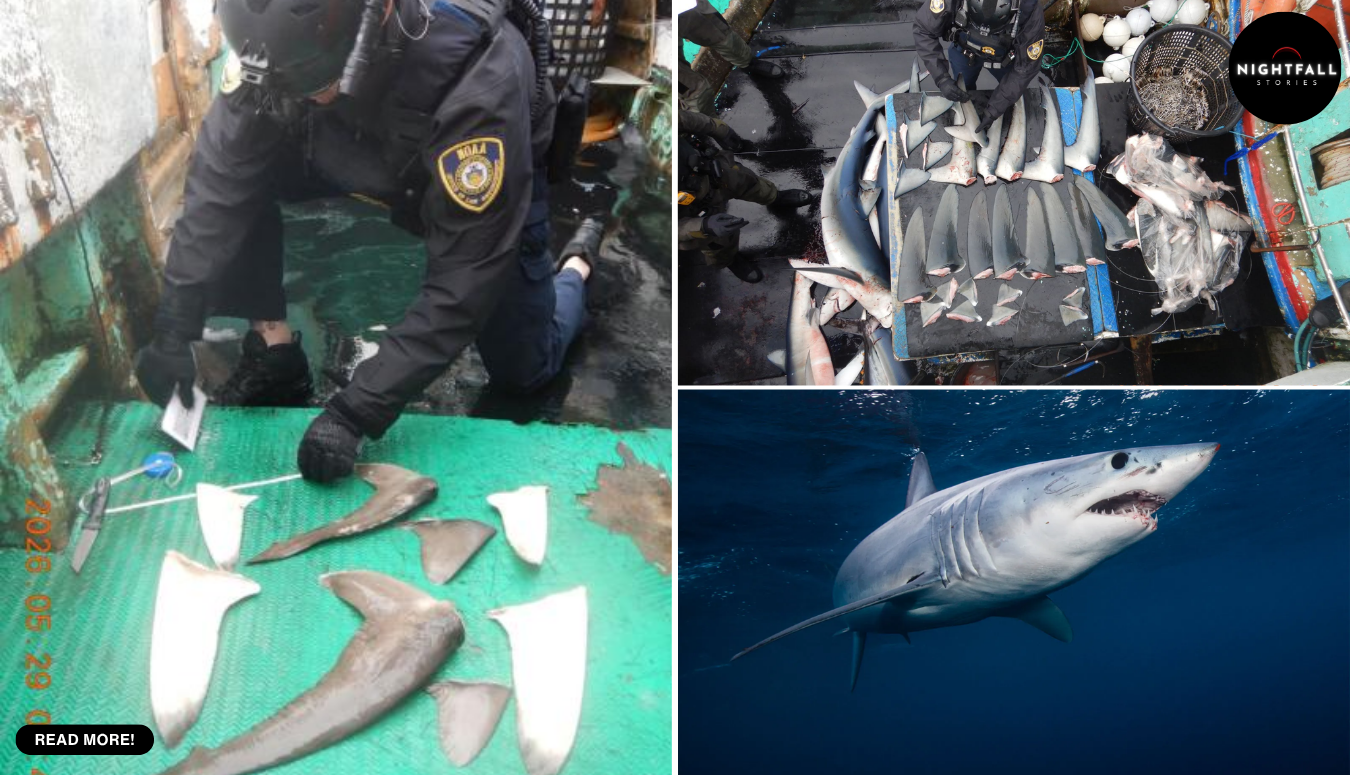
    What they can do is look. And this year, across a patrol that ran for about two months and covered a distance you would struggle to picture, what they found on dozens of those decks was dozens of apparent violations, including shark finning, gear designed to catch sharks that is not allowed to be aboard, prohibited species in the hold, catch records that did not match the catch, and vessels fishing without the simple measures that keep seabirds off the hooks.

    The operation is called North Pacific Guard, and despite how new all of this sounds, it has been running in one form or another for more than thirty years. It started as an enforcement response to the United Nations moratorium on high-seas driftnets, those enormous walls of mesh that caught everything that swam into them, and over the decades it widened into a general effort against illegal, unreported and unregulated fishing across the northern Pacific.

    It is not one country’s operation. It is a working arrangement between several, and this year the at-sea backbone of it was a Canadian ship, the coast guard vessel Sir Wilfrid Laurier, carrying Canadian fishery officers, Canadian coast guard crew, federal police, and enforcement officers from the United States, with the Japanese fisheries agency, the Japan Coast Guard and Korean authorities working the same problem from their own platforms.

    Canada’s fisheries department put the patrol at more than 23,000 kilometres over roughly two months. The American fisheries agency, describing the deployment of its own enforcement officers, gave the figure as more than 8,000 nautical miles. The two numbers cover slightly different things and should not be blended into one, but either way the distance is absurd. This was a very long time at sea to go knocking on doors.

    Nineteen Canadian fishery officers took part, five of them on the aerial side of the operation rather than the ship. Between them the sea patrol monitored several hundred fishing vessels, spoke with more than five hundred crew members, and conducted thirty full boardings on the high seas. Those thirty boardings produced fifty-two potential violations, according to the Canadian department’s own count.

    Thirty boardings sounds modest until you think about what one of them involves. You are in open ocean. You launch a small boat off a moving ship into whatever the swell happens to be doing. You come alongside a working fishing vessel that may be considerably larger than the boat you are standing in, with a crew who were not expecting you and may not share a language with you, and you climb up. Then you spend hours going through a vessel you have never seen before, in spaces that were not designed for visitors, trying to establish what has been caught, how it was caught, what is on the books and what is not.

    The violations that came back are worth reading slowly, because each one is a different kind of problem. Shark finning is the removal of fins with the rest of the animal discarded, which is prohibited under the conservation rules that apply in these waters, and it turned up in the inspection results. So did gear specifically prohibited because of what it is designed to catch. So did prohibited species aboard. So did misreporting of catch, bycatch and discards, which is the quiet one and arguably the most corrosive, because every fisheries quota in the world is calculated from numbers that boats report about themselves.

    And so did failures to use seabird protection measures, which is the violation most people have never heard of. Longline vessels set lines with thousands of baited hooks. Albatrosses and petrels follow the boats, take the bait as it goes into the water, get hooked and drown. The fixes are not exotic. Streamer lines that scare birds away from the sinking bait, weighting that gets hooks under the surface faster, setting at night. They cost very little and they work, which is why leaving them off is treated as an offence rather than an oversight.

    The air side of the operation found its own set of problems. Flying out of Hokkaido in northern Japan, surveillance crews surveyed 344 fishing vessels and identified twenty-one further potential violations, including shark finning, the killing of dolphins, pollution from vessels, and boats that were not properly marked. That last one matters more than it sounds. A vessel with no clear identifying marks is a vessel that cannot easily be reported, traced or matched to a registry, and unmarked boats are a standing feature of illegal fishing everywhere.

    Then there is the part that makes the whole enterprise feel almost fragile. Having spent two months and a very large amount of fuel documenting fifty-two potential violations at sea and twenty-one more from the air, the officers did not prosecute anyone. They could not. On the high seas, jurisdiction over a fishing vessel belongs to its flag state, and only to its flag state. So every case was packaged up and passed on, confidentially, to the government whose flag the vessel flew and to the regional fisheries management organisations that set the rules in that part of the ocean.

    The reason it works that way is not an oversight. It is the deliberate design of the law of the sea. Outside any nation’s exclusive economic zone, the flag a ship flies is the legal thread connecting it to a government, and that government is the one responsible for making it behave. The system was built on the assumption that every flag state would take that duty seriously. In practice some do, some are overwhelmed, and a few run registries that exist mainly so that a vessel can fly something, which is the weakness the whole enterprise of high-seas enforcement is built around rather than able to fix.

    The regional fisheries management organisations sit on top of that. They are treaty bodies where the countries fishing a particular stock in a particular ocean agree what the limits are, what gear is allowed, which species are off the table and what protections have to be used. They have no police force either. Their power is the power to list a vessel, to name it, and in the worst cases to cut it out of the legal market so that no member state will let it land a catch. A referral from a patrol like this one is the raw material for that.

    What happens next is somebody else’s decision, in another country, on another timetable. The referral might end in a serious penalty. It might end in a licence being pulled or a vessel being barred from fishing altogether. It might end in nothing at all, and the officers who spent hours counting fins and comparing logbook entries against what was actually in the freezer will not necessarily ever be told which.

    That is a strange job to hold. You are not building a case you will see through. You are building a case you will hand to a stranger. The entire value of your work rests on whether it is documented well enough, photographed clearly enough and written up carefully enough that an official on the other side of the world, reading it cold, decides to act.

    The Americans involved have described it in roughly those terms. An assistant director in the enforcement arm of the US fisheries agency, Benjamin Cheeseman, framed the officers’ work as directly protecting both the integrity of the oceans and the livelihoods of fishermen back home who play by the rules, which is the honest business case for all of it. Every tonne taken illegally is a tonne that comes out of a shared stock, and the people who lose most from that are the operators who report their catch accurately and stop fishing when their quota runs out.

    The United States ran a separate leg with its own vessel, the cutter Midgett, on a twenty-five day patrol that produced eight high-seas boardings and identified three potential breaches of conservation measures along with further issues including illegal shark fin harvesting. The officer who led that effort noted that the operation has been pushing back on illegal fishing on the high seas for more than three decades, with a direct effect on American fish stocks and the seafood economy that depends on them.

    What is new this year is smaller than a ship and probably more important. For the first time, a Canadian fishery officer sailed aboard a Japanese patrol vessel while a Japanese officer sailed aboard the Canadian one. That is a swap, not a policy, and it will not make any headlines. But an enforcement system that depends entirely on one country trusting another country’s paperwork gets better the moment officers have actually worked alongside each other, seen how the other side runs a boarding, and know a name to put on an email.

    Canada’s fisheries minister, Joanne Thompson, made the wider point plainly enough when the results were released, which is that protecting fish stocks does not stop at a national boundary. It is the kind of line ministers say. It also happens to be the entire technical problem. Fish do not observe borders, fleets follow fish, and the water where most of the fishing pressure lands is water nobody governs.

    The ship did other work along the way, because ships at sea always do. The Canadian coast guard crew took water samples for microplastics research and gathered environmental data while they were out there, the sort of piggybacked science that gets done because a vessel is already crossing an ocean and may as well be useful. They also rescued three people from a sailing vessel in distress, which is a reminder that a coast guard ship is a coast guard ship first, whatever else it has been sent to do.

    One detail from the patrol imagery is worth pausing on, because it explains how catch gets laundered. Fishing vessels on long voyages often do not sail home with what they have caught. They pass it across at sea to a refrigerated carrier vessel, which takes the fish to port while the fishing boat stays out working. That transfer is called transshipment, and where it is properly observed and reported it is simply efficient. Where it is not, it is the point at which the origin of a fish becomes untraceable, because several boats’ catches are mixed in one hold and nobody ashore can say which came from where.

    That is why a logbook discrepancy is treated as seriously as a net. The paperwork is the only part of a high-seas fishery that follows the fish all the way to a plate, and if the paperwork is fiction, every downstream promise about sustainable sourcing is fiction too.

    It is worth being careful about what this year’s results do and do not prove. No vessel names have been released. Nobody has been charged. The violation counts are the enforcement agencies’ own characterisation of what their officers observed, not findings of any court, and the word potential is doing real work in every one of those numbers. Some of those fifty-two will turn out to be administrative confusion. Some will turn out to be worse than they looked.

    What the numbers do show, fairly reliably, is a rate. Thirty boardings, fifty-two potential violations. That is not a picture of a handful of rogue operators in an otherwise orderly fishery. That is a picture of a place where the rules are widely treated as optional, which is what you would expect in the only large part of the planet where enforcement depends on a ship happening to be nearby and the crew of that ship having the fuel, the weather and the daylight to come and look.

    There is a version of this story that is bleak, and it is not hard to write. Two months, an ocean crossing, an international crew, and at the end of it a stack of reports mailed to governments that may or may not open them.

    But there is a better way to read it, and the officers who do this work seem to hold onto it. The high seas are not actually lawless. They are governed by rules that a lot of countries agreed to and that almost nobody is physically present to enforce. Presence is the entire product. A fleet that knows a patrol might turn up behaves differently from a fleet that knows one never will, and thirty boardings scattered across thousands of miles of water do not just generate fifty-two reports. They generate a rumour, passed between boats, that somebody is out there.

    That is a thin thing to build ocean governance on. It is also, for now, most of what exists. The alternative is nobody knocking at all, and everyone who works this stretch of water knowing it.

  • It sat in a library book for decades, about the size of a playing card

    It sat in a library book for decades, about the size of a playing card

    It is roughly the size of a playing card, stained with old moisture, written on both sides in small Greek letters, and for decades it sat inside another book in a Dutch university library while everyone who walked past it assumed it was a scrap of nothing much. The catalogue said seventh century. The catalogue said damaged. The catalogue did not say Homer.

    Then a specialist in ancient Greek sat down with it, read a few words, and realised he was looking at a piece of the Odyssey written around 1,700 years ago, one of only about thirty comparable fragments known anywhere in the world.

    The man who found it is Mark de Kreij, who teaches and researches ancient Greek at Radboud University in the Netherlands. He was not hunting for Homer. He was working through a collection of early Christian manuscripts held at Utrecht University Library, the kind of long, patient project that involves going object by object through material nobody has looked at closely in a very long time, checking what each piece actually is against what a previous generation of cataloguers said it was.

    Most of that collection is Egyptian, written in Coptic and Greek script, and most of it is exactly what it claims to be. This one slip was filed in among the rest, and because it was small and battered and covered in Greek letters, it had been slotted into the same broad category as its neighbours and left there.

    De Kreij read it and recognised the language as Homeric. Not the Greek of a Christian text, not the Greek of a letter or a receipt or a contract, but the old formulaic poetic Greek that anyone who has spent years with the epics knows on sight, the way a musician knows a melody from three notes. He worked out where in the poem it came from. It is Book 12 of the Odyssey.

    If you were going to pick one passage from the whole poem to find on a scrap of parchment, you could hardly do better. Book 12 is where Odysseus and what is left of his crew, exhausted and starving and stranded by bad wind, come ashore on the island of the sun god. Odysseus has been warned, twice, in the clearest possible terms, that the cattle grazing there belong to Helios and must not be touched. He makes his men swear they will leave the animals alone. Then he falls asleep.

    The crew, hungry and out of options, break the oath. They kill the cattle. And the verses on the Utrecht fragment sit right around the moment the sun god finds out what has happened and goes to Zeus about it, which is the point where the crew’s fate stops being uncertain. Zeus answers with a storm. Every one of those men dies. Odysseus alone survives, and everything that happens to him afterwards happens to a man travelling alone.

    Book 12 is dense with the material everyone half remembers from the Odyssey even if they have never read it. The Sirens are in it. So are Scylla and Charybdis, the six-headed thing in the cliff and the whirlpool that swallows a ship whole, and the terrible choice between them where Odysseus is told outright that he will lose six men no matter what he does. The cattle of the sun come after all of that, when the crew are already frightened and grieving and have been pinned in one place by a month of contrary wind with their supplies gone. By the time they break the oath, the reader has watched them lose almost everything else.

    It is the hinge of the entire back half of the poem, and it is also, as de Kreij has pointed out, simply a good bit. A lot of the Odyssey is slow going if you are honest about it, long stretches of sailing and genealogy and hospitality rituals. This is not one of those stretches. This is the part where the bill comes due.

    There is a second thing worth noticing about the material, which is that it is parchment rather than papyrus. Papyrus was the ordinary writing surface of Greek-speaking Egypt, cheap and locally made from a river plant. Parchment is treated animal skin, more expensive, more durable, and in this period increasingly the choice for books meant to be kept and handled rather than read once and discarded. A small parchment codex of the Odyssey is not the object of someone who wanted the text for an afternoon. It is the object of someone who wanted to own it.

    The parchment itself measures about 6.6 by 7.7 centimetres, which is roughly the size of a playing card or a small phone screen, and it is written on both sides. That detail matters more than it sounds. Writing on both sides means it came from a codex, a bound book with pages, rather than from a scroll. And a page that small means the book it came from was small too, a pocket edition, something a person carried rather than something a library shelved.

    That is a surprisingly human thing to learn about an object from around the year 300. Somebody in Egypt owned a little travel-sized copy of the Odyssey. Not a display copy, not a scholar’s edition, just Homer in a size that fits in a bag.

    The university dates it to the third or fourth century and places its origin in the Faiyum, the fertile depression southwest of the Nile valley that has given up an enormous share of what we know about everyday writing in the ancient world. The Faiyum’s dry conditions preserved paper and parchment that would have rotted almost anywhere else, which is why so much of what survives from the Greek-speaking Mediterranean survives as Egyptian rubbish.

    How this particular slip travelled from there to a library in the Netherlands is not fully documented, and it is worth being honest that the chain has gaps. What is known is that the collection it belongs to came to Utrecht in the middle of the twentieth century, bought from the heirs of the German scholar Carl Schmidt, who spent his career assembling early Christian material from Egypt. The Homer fragment was part of that batch, and it seems to have arrived tucked in with manuscripts it had nothing to do with, which is how it ended up misfiled in the first place.

    Schmidt is a name that turns up repeatedly in the history of how Egyptian Christian texts reached European institutions. He worked in the decades when a great deal of material was leaving Egypt through dealers and private buyers, often with thin or nonexistent records of where a given piece had actually come from, and much of what he handled ended up in university and museum collections across Europe after his death. That is why the provenance of individual items in such collections is so often a shrug. The purchase is documented. The excavation, if there ever was one, usually is not.

    Nobody did anything wrong, exactly. When you receive several hundred pieces of Egyptian parchment and papyrus at once, and most of them are Christian texts in Coptic, and one of them is a small damaged piece with Greek letters on it, the reasonable working assumption is that it belongs with the others. Cataloguing is triage. You record what a thing appears to be, you assign it a shelfmark, and you move on to the next one, because the alternative is that nothing ever gets catalogued at all.

    The fragment sat at Utrecht under the reference Gr. Ms. B6.39a, listed as a damaged seventh-century text, for decades. Its survival probably owes something to exactly that neglect. A piece of parchment wedged between the pages of a larger book is protected from light, from handling, from the slow grinding damage that destroys the outer leaves of any old volume first. The reason we have this scrap of Book 12 at all may be that nobody thought it was worth taking out and looking at.

    The identification happened roughly two years ago. The announcement came only recently, and the university has been straightforward that the gap exists rather than presenting it as a discovery made last week. Academic publishing runs on a slower clock than news does. De Kreij’s full treatment of the fragment is due to appear in a scholarly volume covering the hieratic, demotic, Greek and Coptic texts in the Utrecht collection, and a find like this is normally held until the proper description is ready to go with it.

    There is also a less lofty reason for the timing, reported in Dutch coverage, which is that the wider world happens to be paying attention to the Odyssey right now because of a major film adaptation. A university sitting on a genuine 1,700-year-old piece of the poem, in a year when a lot of people are suddenly curious about it, is going to choose that moment to say something. It is hard to be cynical about it. If the alternative is that the fragment gets a paragraph in a specialist volume and nobody outside a small field ever hears about it, then a bit of timing seems fair enough.

    What makes the find genuinely rare is not the age on its own. Fragments of Homer from Roman Egypt are not unheard of. The Iliad in particular turns up constantly, because it was the standard school text across the Greek-speaking world and generations of children copied out its opening lines the way children later copied out their letters. The Odyssey survives in far fewer copies, and parchment pieces from small codices of it are rarer still. The university’s own estimate is that around thirty comparable fragments exist worldwide, a figure worth attributing to them rather than treating as a hard census, since what counts as comparable depends on where you draw the line.

    Either way, the number is small enough that each one carries real weight. Every ancient copy of a text is a separate witness to what that text actually said, and the version of the Odyssey we read today is the product of centuries of scholars comparing witnesses and arguing about them. Most of those witnesses are medieval manuscripts written more than a thousand years after this fragment. A scrap from around the year 300 is closer to the source than almost anything else on the shelf.

    It also tells you something about how the poem lived. We think of Homer as monumental, as the foundation stone of Western literature, as something studied. The Utrecht fragment suggests something looser and more ordinary. Somebody in a provincial Egyptian town, a long way from Athens and a long way from anywhere that considered itself the centre of Greek culture, owned a small cheap-ish book of the Odyssey and presumably read it. Possibly on a journey. Possibly for pleasure. The poem was not only a monument. It was also just a story people liked.

    There is a symmetry in the passage itself that is hard to ignore, though it is entirely an accident of survival. The lines that came through seventeen centuries are the lines about men who could not wait. The crew on the sun god’s island are not villains. They are starving, they have been trapped by weather for a month, their leader is asleep, and they make the choice that hungry people make. The poem does not let them off, but it does not sneer at them either. It just shows you what it cost.

    Homer’s audiences would have known that story was coming, the way you know a song’s chorus. The person who owned the pocket codex in the Faiyum would have known it. A seventh-century cataloguer, if there was one, did not know what they had. A twentieth-century cataloguer in Utrecht did not know either. And then somebody who had spent his career learning to recognise that particular flavour of Greek sat down at a table with it, and the recognition took a moment.

    That is the part worth sitting with. The fragment did not change. Nothing about it was hidden. It was in a public university collection with a shelfmark, in a building people walk into every day, catalogued and accounted for and completely invisible. What changed was that the right reader finally opened it.

    Libraries and museums everywhere are full of objects in exactly that position, described a little wrong by someone doing their best under pressure a long time ago, waiting for the one person whose training happens to match the object. Most of them will wait a good while longer. There are far more uncatalogued and miscatalogued items in the world’s collections than there are specialists with time to go through them, and the work is slow, unglamorous and almost never funded on the assumption that it will produce a headline.

    This time it produced one. The fragment remains at Utrecht University Library, where it has been all along, now correctly identified, correctly dated, and about to be properly published. It will not be read for its own sake by many people. It is a few dozen letters on both sides of a stained piece of animal skin, and you need training to make sense of it.

    But it is a real, physical thing that a real person in Roman Egypt held, from a book somebody carried, containing the words of a poem that was already ancient when that book was made and that people are still queuing up to see retold. It came very close to being nothing at all, filed under the wrong century in the wrong pile, and instead it turned out to be one of about thirty.

  • A researcher at Christie’s looked up a painting for a private sale and found a 1961 crime

    A researcher at Christie’s looked up a painting for a private sale and found a 1961 crime

    The job was routine. Somebody wanted to sell a small Picasso privately, Christie’s took it in, and a researcher did what researchers at auction houses do, which is check where a painting has been. It is usually dull. You chase a name through old catalogues, you find a gallery invoice, you match a photograph, you move on to the next lot.

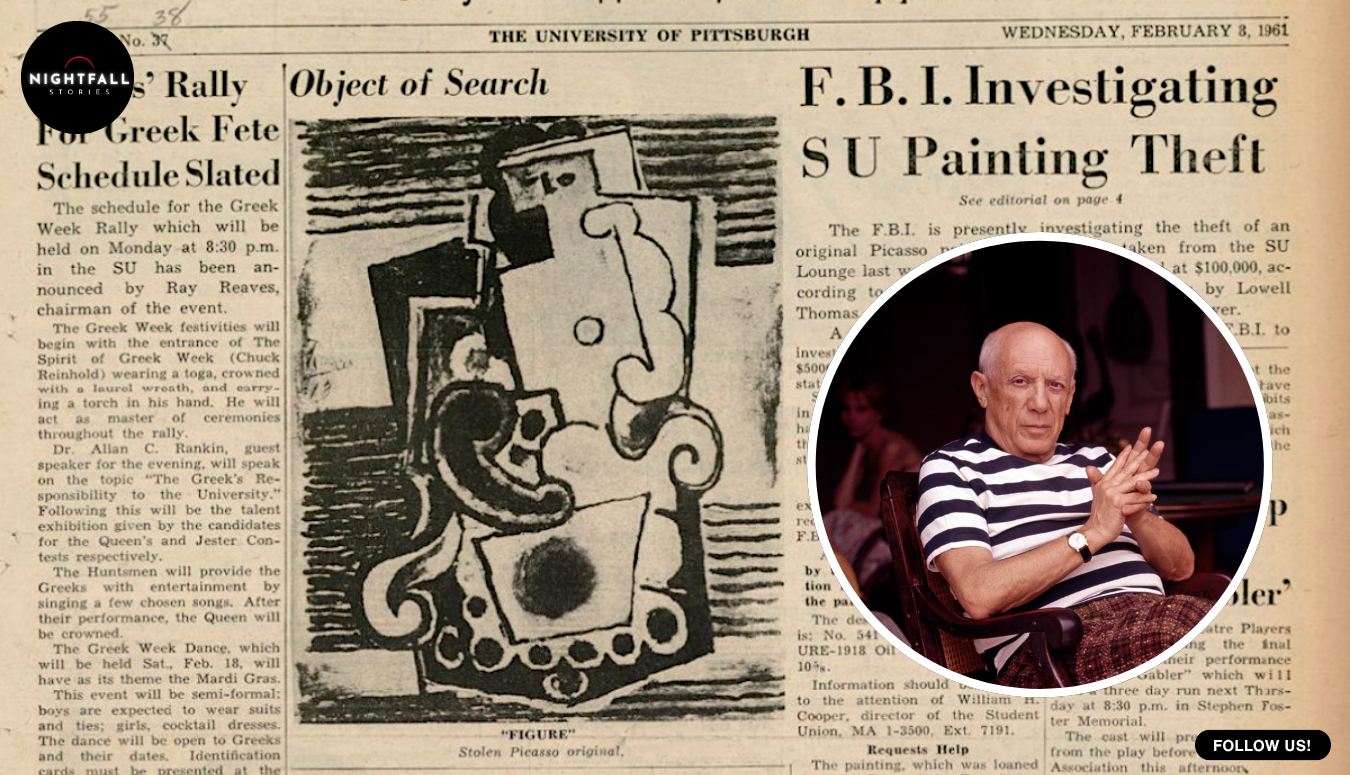
    This one did not move on. The painting in front of her was a Cubist oil of a woman in a chair, barely larger than a sheet of letter paper, and when she traced it back through the records she arrived at a specific afternoon more than sixty years earlier when it had been hanging on a wall in a student building in Pittsburgh, and then had not been.

    The painting is Femme dans un fauteuil, made in 1918, from the period when Picasso was working in flat interlocking planes and hard edges. It measures roughly 13.5 by 10.5 inches. Solomon R. Guggenheim himself acquired it in 1936, which puts it among the early bones of the collection that eventually became the museum on Fifth Avenue with the white spiral inside.

    It is also, on paper, a modest thing. Picasso made a very large number of works, and a small Synthetic Cubist oil from 1918 is not one of the monuments. That is part of why it could go missing without the art world screaming. The paintings that cannot be stolen successfully are the famous ones, because they are unsellable the moment they are gone. The ones that disappear for decades are precisely the works like this: real, valuable, catalogued somewhere, but not so instantly recognisable that a dealer would flinch at the sight of them.

    In the early 1960s it was not in a vault. It was out on loan, the way museums have always lent work, and it had travelled to the University of Pittsburgh for an exhibition. It hung in the Students Union building, which is exactly what it sounds like, a building full of young people coming and going at all hours with no particular reason to look twice at a small framed picture on a wall.

    On a February morning in 1961, someone doing their rounds noticed the space where it had been. Reporting from the time and from the museum’s later filing describes the discovery being made by a dormitory aide, which is a detail that tells you everything about the security situation. Nobody heard an alarm, because there was nothing to hear.

    What followed was the full standard response of the era. Local police investigated. The FBI came in. Newspapers carried the story, a reward was offered, and for a while there was the usual flurry of leads that go nowhere. Then the case did what nearly all stolen art cases do. It stalled, then it went quiet, then it stopped being a case at all and became a line in an old file. A Picasso does not vanish in the sense of ceasing to exist. It vanishes in the sense that nobody with any reason to look for it knows where to look, and the people who do know have every reason to say nothing.

    It is worth understanding what that researcher was actually doing, because provenance work has changed beyond recognition since 1961 and that change is the only reason this story exists. A modern auction house does not simply take a consignor’s word. Before a significant work goes to sale, someone builds its history backwards owner by owner, exhibition by exhibition, and runs it against the registers of missing and stolen art that now exist: commercial loss databases, law enforcement listings of stolen cultural property, and the catalogues raisonnes that record where a given artist’s works were last seen. Small twentieth-century paintings are exactly the category where this matters most, because they are portable, they are valuable, and they are numerous enough that memory alone cannot keep track of them.

    None of that infrastructure existed when the painting disappeared. There was no searchable list to check in 1999 that would reliably have flagged a 1961 campus theft, and the habit of checking was far from universal even where lists did exist. A gallery with a good name and a plausible story was, in practice, the due diligence. That is not an excuse for anyone in the chain, but it does explain how a well-documented theft could stay invisible through at least one open sale in a major art capital.

    Sixty-two years is a long time for a small painting to stay off the record. Somewhere in that gap it moved, more than once, and the museum’s account of the chain is incomplete in the way these accounts almost always are. What is not in dispute is where it surfaced. In 1999, a couple from Massachusetts, Lawrence Jay Handler and Wendy Cohen Handler, bought the work from Beadleston Fine Art, an established gallery in Manhattan. By any ordinary standard that is how you are supposed to buy a painting. You go to a real dealer with a real address and a reputation, you pay, you take it home.

    They had it for around a quarter of a century. Then they decided to sell, and the painting went to Christie’s, and the researcher opened the file, and the whole arrangement came apart.

    The Guggenheim says it learned the work had resurfaced in the summer of 2023. It sent a formal demand for the painting’s return not long after. That demand was refused, and the painting stayed put, physically held at Christie’s while the two sides did not agree. Last month the Solomon R. Guggenheim Foundation went to the New York State Supreme Court and sued.

    The museum’s case, as filed, is straightforward in shape. It says the painting was stolen from its custody, that title never passed to anybody down the line because a thief cannot pass good title, and that the current possessors are unlawfully withholding property that belongs to the foundation. It asks the court to declare that the museum owns the painting, to order it handed back, and to award damages. The figure most widely reported from the complaint is 3.5 million dollars, though at least one account of the filing describes the museum’s damages claim as falling somewhere between 3.5 and 5 million. Either way, that is the museum’s demand, not an appraisal of the painting, and nobody should read it as what the work would fetch. For scale, contemporary estimates around the time of the theft put its value somewhere in the range of tens of thousands of dollars, which is a reminder of how completely the market has been rebuilt underneath these objects in the intervening decades.

    All of that is the museum’s version, and it is important to keep it labelled as such. The Handlers have not filed a public answer. Nothing they have said publicly characterises their position beyond the fact that they refused to give the painting back, and it would be unfair to them to invent a defence they have not yet made. What can be said is what the documented facts allow. They bought from a named commercial gallery. They bought in 1999, thirty-eight years after the theft, with no obvious reason on the face of the transaction to suspect anything. They kept the work for about twenty-five years without hiding it, and it was their own decision to sell openly through a major auction house that exposed the history. People running a knowing fraud do not usually walk their evidence into Christie’s and ask for a provenance check.

    That is the genuine difficulty at the centre of the case, and it is not a trick or a technicality. Two parties can both be blameless and only one of them gets the painting. A museum that lent a work in good faith and had it taken, and a couple who paid a real price to a real dealer and hung it in their home for a quarter of a century. Somebody has to lose, and the law has to pick.

    New York, as it happens, has a very clear opinion about how to pick, and the museum bringing this claim is the same institution that established it.

    In the late 1960s a mailroom employee stole a Chagall gouache from the Guggenheim. It was sold on, and in 1967 a couple named Lubell bought it from a respectable Madison Avenue gallery for 17,000 dollars and hung it in their apartment for more than twenty years. The museum located it in 1986, demanded it back, and was refused. The parallels to the present case are almost uncomfortably exact.

    That dispute went to the New York Court of Appeals, and in 1991 the court set out the rule that still governs. Under New York law, the clock on a claim to recover stolen property does not start running at the moment of the theft. It starts when the true owner demands the property back and the person holding it says no. The court went further and declined to impose a duty of reasonable diligence on the victim, meaning a museum does not forfeit its claim simply because it failed to mount an energetic search for decades. Putting that burden on owners, the reasoning went, would reward whoever was best at keeping a stolen object out of sight.

    For the Guggenheim, that is close to ideal ground. Its demand was made in 2023 and refused in 2023, so on the New York rule the claim is nowhere near stale, no matter that the theft happened in 1961.

    But the same ruling left a door open, and it is the door any defence in this case would be expected to walk through. The court held that while the statute of limitations would not save the possessor, the equitable defence of laches remained available and had to be tested at trial. Laches asks whether the claimant sat on its rights in a way that unfairly prejudiced the other side. The conduct of both parties becomes relevant, including whether the owner searched with reasonable diligence, whether the theft was properly reported and circulated, and whether the delay has destroyed evidence or witnesses the possessor would otherwise have had.

    Sixty-two years destroys a great deal. The dealers who handled the painting between 1961 and 1999 are largely beyond reach. Whatever paperwork accompanied it has had decades to go missing. Anyone who could explain how a stolen Picasso arrived on a Manhattan gallery’s books is likely to be dead or unfindable. That cuts against both sides, but it cuts hardest against whoever needs to prove the innocence of a transaction that nobody alive can describe.

    The Chagall case, for what it is worth, never produced a final judgment on the merits. It settled in 1993. That is what usually happens, and it is the most likely outcome here too. These disputes are expensive, slow and reputationally awkward for everyone, and a negotiated split, a payment, a shared credit line, a sale with divided proceeds, is a far more common ending than a courtroom verdict.

    There is one more layer that rarely gets mentioned, and it explains a great deal about how the mid-century art world operated. Museums lending serious work to universities was completely normal, and so was hanging it in ordinary rooms where ordinary people were. The idea that a major collection’s holdings should only be displayed behind sensors and guards is largely a product of the losses that followed. Institutions learned the hard way, one theft at a time, and the loan agreements, condition reports, courier requirements and insurance schedules that now surround a travelling painting are essentially scar tissue. A student union in 1961 was not being reckless by the standards of 1961. It simply had no framework telling it to be anything else.

    What the whole episode exposes is how much of the art market still rests on paperwork that was never properly built. For most of the twentieth century there was no serious central register of stolen art, no habit of running a purchase against a database, no expectation that a buyer would do more than trust the gallery. The infrastructure that caught this painting, searchable loss records, institutional provenance departments, auction houses employing people whose entire job is to check, is a recent invention, and it is now being pointed backwards at decades of transactions that were made without it. Every time it catches something, the same situation arises. A work with a criminal origin sits in the hands of someone who did nothing criminal.

    That is likely to keep happening, and it is arguably a sign of the system working rather than failing. The painting only reappeared because the current owners chose the transparent route. Had they sold it quietly, privately, to someone who did not ask, it would still be off the record and the researcher would have had nothing to find.

    For now the work is not on anyone’s wall. It sits in storage at Christie’s, a small 1918 canvas that spent six decades unaccounted for, waiting for a court or a settlement to decide who has the better claim to a woman in an armchair that two sets of people are certain belongs to them.

  • Celebrity Hairstyles Everyone Thought Were Cool at the Time

    Celebrity Hairstyles Everyone Thought Were Cool at the Time

    The tight blond curls were iconic in the boy band days, and Timberlake has since joked about them himself.
  • The museum’s 120-year-old mascot is now working a poaching case

    The museum’s 120-year-old mascot is now working a poaching case

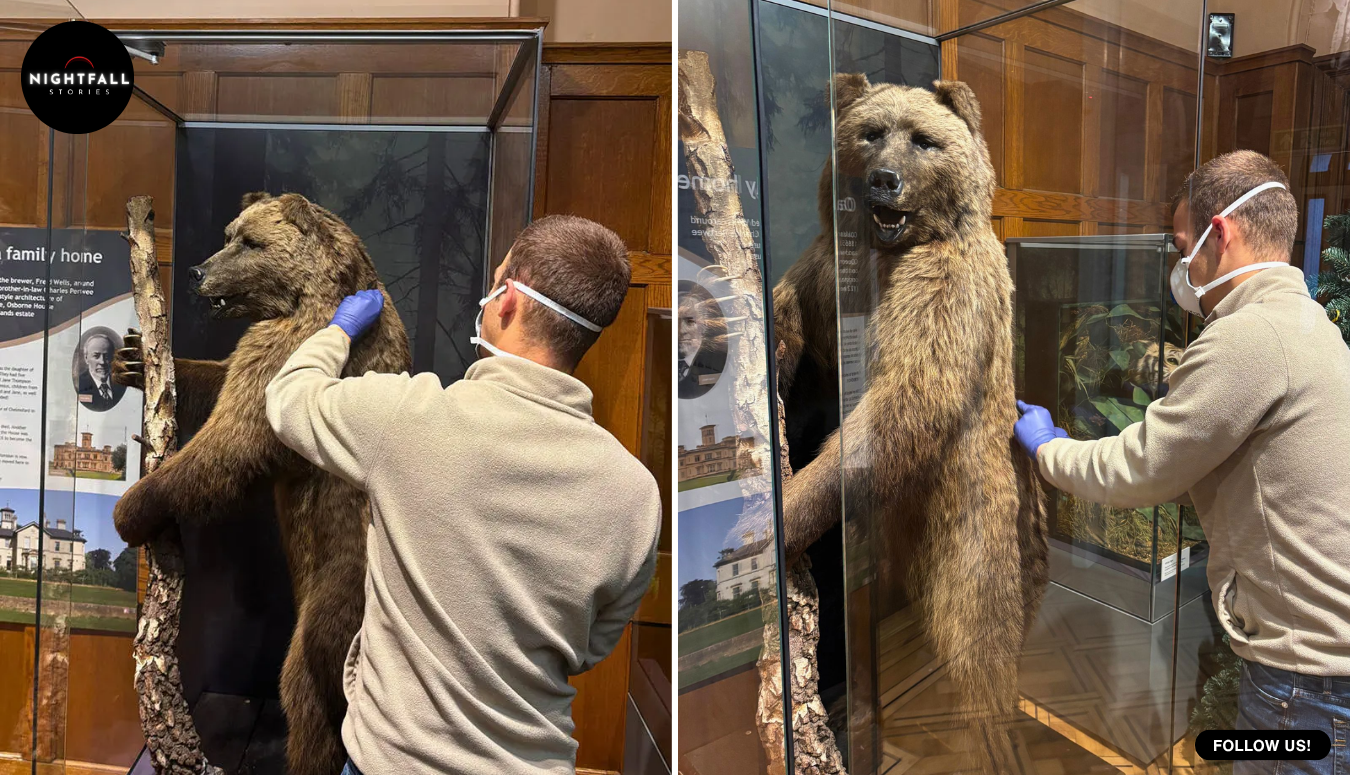
    For most of a century, the brown bear standing in a small English museum has been the least serious object in the building. Children have hugged him. Toddlers have been named after him, sort of, because the museum’s under-fives club is called Boris Bear Cubs. He has been in the same room since 1932, watching school groups file past, and nobody who patted his flank on the way to the cafe ever thought of him as evidence of anything.

    He is evidence now. A forensic science researcher asked the Museum of Chelmsford whether she could take hair from him, the museum thought about it and said yes, and those hairs are being turned into a reference library that could eventually help identify bear poaching across Europe using nothing more expensive than a microscope.

    That last part is the whole point, and it is worth slowing down on, because it explains why a 120-year-old taxidermy bear in a municipal museum suddenly matters. When wildlife officers seize a bag of fur, or find a tuft snagged on a fence, or open a crate at a border post and find something that might be bear and might be dog, the gold-standard answer is DNA. DNA is reliable, DNA is accepted in court, and DNA is also expensive and slow and requires a functioning laboratory with trained staff and a supply chain of reagents. A great deal of the world’s poaching happens a long way from any of that.

    A microscope is different. A decent comparison microscope is a one-off purchase that lasts decades, needs no consumables, and can sit in a regional office in a country where sending a sample abroad for sequencing would eat a year’s enforcement budget. If you can look at a hair down a microscope and say with confidence that it came from a brown bear rather than a boar, a dog or a cow, you have a screening tool that works where the expensive tool does not. You can triage. You can decide which seizures are worth sending for full analysis and which are not.

    The catch is that this only works if somebody has already done the boring, unglamorous work of building the reference. Microscopic hair identification is a comparison discipline. You are not reading a barcode, you are matching what is in front of you against what is known, and the known part has to exist first. For domestic animals it largely does. Hayden Leigh, the researcher behind the project, has pointed out that there are hundreds of studies on dog hair and cat hair and the general run of household species, because those are the animals that turn up in ordinary criminal casework. Somebody’s jumper has cat hair on it. A burglar’s car has dog hair in the footwell. The forensic literature followed the caseload.

    It helps to know what an examiner is actually looking at, because hair down a microscope is not the featureless thread it appears to be in daylight. There is an outer cuticle covered in overlapping scales, and the pattern those scales make differs between species in ways that are consistent enough to be diagrammed. There is a medulla running down the core, sometimes continuous, sometimes fragmented, sometimes absent altogether, and its structure is one of the strongest species indicators there is. There is pigment distribution, banding along the length, the shape of the hair in cross section, the way it tapers, the root. A trained examiner reads those features together rather than relying on any single one, and with a good reference set the species-level call can be made quickly and cheaply.

    There is a caution attached to all of this that the field has learned the hard way. Microscopic hair comparison has a bruised reputation in human forensics, because for decades examiners in some jurisdictions testified that a hair from a crime scene matched a specific person, and a major review in the United States later concluded that a large share of that testimony had overstated what the science could support. The lesson was not that microscopy is worthless. It was that microscopy cannot individualise. Saying this hair came from that one particular human being is a claim the technique cannot carry. Saying this hair came from a bear rather than a dog is a completely different order of question, and it is the question the method is genuinely good at. Work like this stays carefully on the right side of that line, which is also why the reference set has to be built properly rather than assembled from whatever was lying around.

    Wild species did not get the same treatment. The animals most likely to be trafficked are, in many cases, the animals least likely to have a published reference set, which is an absurd situation when you think about it for more than a second. Brown bears live across Romania, Bulgaria, Russia and a scatter of other countries, they are protected in most of them, and they are still killed illegally for parts and trophies. The hair is there at almost every stage of that trade. The reference to match it against largely is not.

    Which brings the problem back to a very practical question. Where do you get bear hair to study, in quantity, without harming a bear?

    You cannot walk up to a wild one. Zoo animals are possible but limited and heavily managed. Confiscated material is tied up in live cases and often degraded. The obvious remaining source is the one nobody thinks about, which is the enormous quantity of dead animals already sitting in museum cabinets, killed long ago by people with very different attitudes, and now doing nothing except being looked at.

    Leigh’s argument, made when she approached the museum, was that taxidermy specimens can do real forensic work. They let you examine authentic animal hair in a controlled and ethical way. Nothing new dies. The animal in the case was killed generations ago by somebody else for reasons that have nothing to do with science, and this at least turns that into something useful.

    The museum did not say yes automatically. Taxidermy collections sit awkwardly in modern museums, and the staff were conscious that Boris is not a specimen to the people who visit him, he is a character. Sampling a beloved object is not a small ask. After some consideration, they agreed, and a small amount of hair came off a bear who has been standing still since before most of the people in the building were born.

    The research question underneath it is narrower and more interesting than it first sounds. Leigh is not simply cataloguing what brown bear hair looks like. She is asking whether it looks the same everywhere on the same bear.

    That matters enormously in real casework, and it is the kind of thing that only becomes obvious when you imagine the actual moment of seizure. An officer does not recover a complete pelt with a map attached. They recover a tuft. A few strands. A clump from the inside of a container. Nobody knows whether that came from the shoulder, the belly, the rump or the face, and if hair characteristics vary significantly across an animal’s body, then a match against a reference built from one region might fail against a sample taken from another. The whole method would be quietly unreliable in exactly the situation it was built for.

    So the work involves comparing hair from different parts of the same animal, measuring how the microscopic features shift, and working out how wide a reference set has to be before it can be trusted. It is slow and it is repetitive, and it is the difference between a technique that stands up to cross-examination and one that does not.

    There is a second practical wrinkle that the work has to account for. Museum hair is old hair. It has been treated with whatever preservatives were normal at the time, exposed to a century of light and dust, and handled by an unknown number of hands. Any reference built from historic taxidermy has to be honest about how those decades might have altered the features being measured, and about which characteristics survive that treatment unchanged and which do not. Structural features like scale pattern and medulla tend to be more robust than colour, which is one reason the emphasis falls where it does. It is another slow question with no shortcut around it.

    Leigh graduated with first-class honours in forensic science and has carried the work forward into doctoral research at the University of Staffordshire, supervised by Professor Claire Gwinnett, who leads the university’s forensic fibre and microplastic research group. Gwinnett’s career is a good illustration of how narrow trace evidence expertise turns out to be weirdly portable. She works on fibres, hair, glass and paint, and the same skills that let you say which jumper shed which thread also let you count microplastics in seawater, which is why her group ended up doing environmental pollution work alongside criminal casework. She teaches wildlife crime investigation, and has collaborated with a wildlife forensic academy in South Africa, where the gap between what a court needs and what a field officer can actually produce is not a theoretical problem.

    There is an honest limit to state here, and it should be stated before anybody gets carried away. This is research in progress. There is no peer-reviewed paper yet, no validated protocol published for other laboratories to adopt, and no case that has gone to court on the back of it. Nobody has been convicted of anything because of Boris. What exists is a well-framed question, a growing reference set, and a plausible route from one to the other. That is how forensic methods actually begin, and most of the techniques that now look inevitable in a courtroom spent years at exactly this stage, being checked by somebody in a lab coat who was not yet allowed to claim very much.

    The museum, meanwhile, got an unexpected second story out of the whole thing. Going back through their own files while the research was being arranged, staff turned up paperwork suggesting that Boris may not have been a male bear at all, and may have been a juvenile rather than an adult. The name has been on him since long before anyone currently working there arrived, and the records behind it are thin. Settling the question properly would mean intrusive genetic testing on a historic specimen, which is not something a museum does casually to an object that generations of visitors think of as a friend. So the mystery sits there, unresolved, and the museum seems fairly relaxed about it.

    That tension is running quietly through the entire project. A taxidermy bear is a relic of an attitude to animals that most museums now find difficult, and Chelmsford has not pretended otherwise. A council representative involved in the decision acknowledged the discomfort directly while making the obvious point in its favour, which is that if a bear killed a century ago can help stop bears being killed now, that is about the best available outcome for an object that cannot be undone. It highlights, as she put it, the scientific value of historic taxidermy collections in a century that did not create them.

    The museum has leaned into it rather than hiding it. This autumn it is running a public talk with Leigh and Gwinnett called Behind the Case: A Bear Poaching Investigation, and the hook is not a slideshow. Visitors get to look at Boris’s hairs under a microscope themselves. Whatever else that does, it collapses the distance between a display case and a laboratory in a way that no amount of interpretive signage manages, because the thing under the lens is the thing in the corner of the room they just walked past.

    It is also a small correction to how people think about museum collections generally. The usual assumption is that a specimen in a case is finished, a closed book, an object whose job is to be looked at. In practice a very large amount of modern science runs on material collected by people who had no idea what it would later be used for. Natural history collections have been mined for evidence of pesticide accumulation, historic disease, shifting body size under climate change and shrinking ranges, all of it recoverable from animals gathered by Victorian collectors with completely different intentions. The collector’s purpose does not constrain the specimen’s usefulness. It just determines what happened to be kept.

    Boris is now part of that. A bear shot somewhere in Europe around 120 years ago, stuffed, sold, installed in an English market town in the 1930s, and stood in the same spot ever since while the world rearranged itself around him, has become a physical standard against which future evidence might be measured. He did not do anything. He never does. That is rather the point of him.

    What happens next is undramatic and will take years, which is the usual shape of anything that ends up being genuinely useful. The reference set grows. The variation between body regions gets measured and written up. If it holds, the work gets published, and other researchers try to break it, and if they cannot, it eventually filters into training material and then into the toolkits of people who investigate wildlife crime for a living in places where the nearest sequencing facility is a plane ride away. Somewhere down that chain, an officer looks at a hair through a lens and knows what they are holding.

    The bear will not be there for that. He will be in Oaklands Park, in the same room, being photographed by children who have no idea, and who will keep calling him Boris regardless of what the files eventually say.

  • He flew 14,100 kilometres across eight countries, then came home to the wrong meal

    He flew 14,100 kilometres across eight countries, then came home to the wrong meal

    The transmitter on his back had been sending back a dot on a map for well over a year, and for most of that time the dot did something no one had planned for. It went north. Then it kept going north. By the time it turned around, the bird carrying it had crossed eight countries and covered roughly 14,100 kilometres, which is further than the distance from London to Sydney, and he had done it in about four months of on and off travel without a single person telling him where to go.

    He came home in the middle of last month. Within days the dot stopped moving, and the same technology that had turned him into a minor conservation celebrity became the thing that led a search team up a mountain to a crime scene.

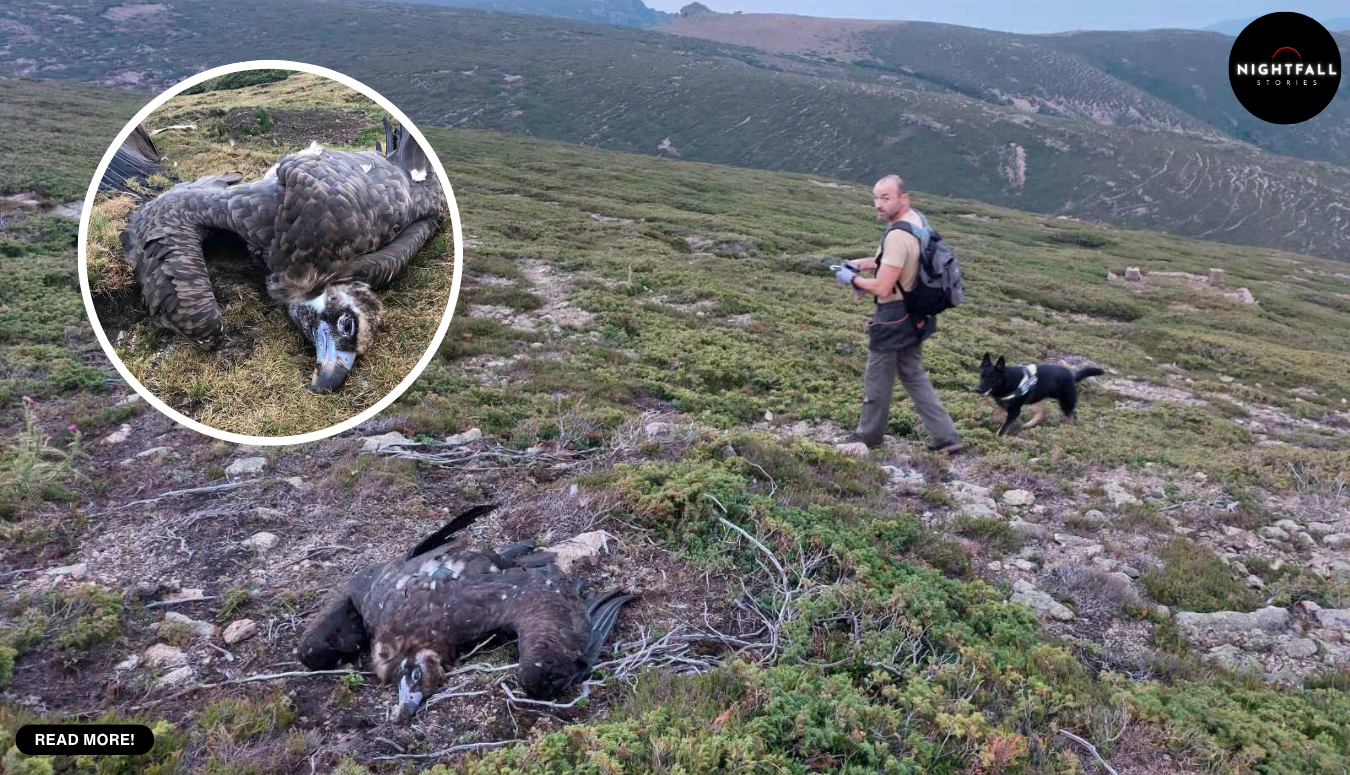
    His name was Boev. He was a bearded vulture, one of the strangest and most beautiful large birds in Europe, and he was the first of his species to fly free in Bulgaria in more than half a century. He was found dead at over 1,800 metres on the slopes below Botev Peak, in the Central Balkan National Park, alongside seven other vultures and a raven, scattered across a mountainside around the remains of a cow. A 36 year old man has since been charged. The case is live, nothing has been decided by any court, and the details below are allegations and findings in progress rather than conclusions.

    To understand why the loss of one bird set off this much activity, it helps to know what a bearded vulture actually is, because almost nothing about it is what people picture when they hear the word vulture.

    It is enormous, with a wingspan that can reach nearly three metres, and it does not have the bald head and hunched shoulders of the vultures in cartoons. It has a feathered neck, a pale head, dark bristles under the chin that give it its name, and a habit of deliberately staining its own plumage a rusty orange by bathing in iron rich mud and springs. Nobody is entirely certain why it does this.

    And then there is the diet, which is genuinely unique among vertebrates. The bearded vulture eats bones. Not meat off bones, bones. Somewhere between seventy and ninety percent of what it consumes is skeleton, which it can digest because its stomach acid is roughly as strong as battery acid and can break down a large bone inside a day. When a bone is too big to swallow, it picks the bone up, carries it fifty to a hundred and fifty metres into the air, and drops it onto rock to shatter it and get at the marrow. Young birds are clumsy at this. It can take up to seven years to get properly good at it.

    Europe nearly lost the species entirely. By the early twentieth century it had been shot, trapped and poisoned out of most of its range on the back of a false reputation for carrying off lambs and, in some folklore, children. The recovery has been one of the longest and most patient conservation projects on the continent. Captive breeding began in earnest decades ago, releases into the Alps started in the late 1980s, and more than two hundred birds have gone out there since, enough to re establish a breeding population where there was none. In Spain the number climbed from around thirty birds to over a thousand inside twenty five years. The species is still listed as near threatened, and poisoning remains one of the largest single reasons it dies.

    Bulgaria was the next chapter. The Balkan mountains are good bearded vulture country, high, rocky and full of the wild and domestic grazing animals whose remains the birds depend on, and the species had simply been erased from them. Last year, under a long running European restoration programme coordinated by Green Balkans with the Vulture Conservation Foundation and partners across Bulgaria and Romania, the first young birds were brought in and released at a nature park in the country’s east.

    Boev was one of them. He had hatched at a zoo in the Czech Republic in the winter of last year, was moved to Bulgaria, and was released at the age of ninety four days. Every released bird in a programme like this carries a satellite tag, because the entire point is to find out what they do, where they settle, and what kills them.

    What Boev did was leave.

    Beginning in the spring, according to the tracking data published by the Vulture Conservation Foundation, he went on a tour that even the people watching the map found hard to believe. Serbia. Romania. Hungary. Slovakia. Poland. Czechia, where he had hatched, though he had never seen the outside of it. Germany. And then the Netherlands, which is about as far from a Balkan crag as a mountain vulture can get, a flat, dense, sea level country with no cliffs and no mountain carrion. Over a hundred and twenty three days he covered around 14,100 kilometres. The distance figure and the country count are the programme’s own, calculated from his tag.

    This is normal for the species in one sense and extraordinary in another. Young bearded vultures wander enormously before they settle, sometimes for years, and the huge loops they make across Europe are part of how the reintroduced populations have started to find each other. But the scale of Boev’s route, in a bird from a programme trying to establish a population that has not existed in living memory, made him something of a mascot. People followed the dot.

    In the middle of last month the dot came home. He was back in Bulgaria on the thirteenth, having flown the whole way south again, and for a few days everything looked like the best possible outcome for a release programme: a bird that had seen half a continent and chosen to return to the mountains he was let go in.

    Then the tag stopped.

    A stationary transmitter is not automatically bad news. Birds roost. Tags fail. But the team went to look, and the coordinates put them high on the north side of the range in the Central Balkan National Park, on steep ground near the winter route to Botev Peak. What they found there was not one dead bird.

    Eight vultures were dead across the mountainside: Boev, five cinereous vultures, which are the largest birds of prey in Europe, and two griffon vultures. A raven was dead too. Around them, the remains of a cow.

    The terrain is the part that most people miss when they read a line like that. These are not birds that die in a tidy heap. They feed, they move off, and they come down wherever the poison catches them, which meant the search team spent days working a mountainside above 1,800 metres, walking from one GPS fix to the next, because several of the dead birds were also carrying transmitters from the same monitoring programmes. The tracking data that had been a conservation story for a year became, in the space of a morning, the evidence map for a criminal investigation. Without the tags, according to the organisations involved, nobody would have known where to look, and in all likelihood nobody would have known the birds had died at all.

    A trained detection dog was brought in to help work the site. Specialists carrying out examinations in the field reported physical reactions themselves while handling the carcasses, which is what made everyone involved certain very early that they were dealing with something potent rather than a natural die off. Samples went to three international laboratories. A vet with Green Balkans said publicly that a decoy had been found near the spot where the birds died and that she believed the poison was a serious one. Full toxicology results were still pending at the point this account was assembled, so the substance has not been independently confirmed here.

    The police moved quickly. Officers from the regional department at Karlovo, together with national police and a unit that handles organised crime, detained a 36 year old man from the area a few days after the birds were found. The case was opened as pre trial proceedings under the district prosecutor’s office in Plovdiv and referred to the environmental and wildlife crimes section of the national police. Investigators said they had found evidence connecting him to the poisoning, and, according to the police statement at the time, the detained man made admissions.

    The allegation, as the prosecution has put it, is this. A calf belonging to him had died after a bear attack. The carcass was left out in a high pasture area. The prosecutor alleges that a strong poison banned for use across the European Union was placed in the remains, and that the bait was intended for wild predators rather than for birds. Vultures found it first, because that is exactly what vultures are built to do. Anything that eats carrion in that landscape was going to reach it before a bear did.

    At the bail hearing, his lawyer put the other side of it. He argued that his client keeps horses, goats and cattle, including local breeds, and would have no reason to poison his own livestock, and that the bail figure was too heavy for the family. The court set bail at roughly the equivalent of about 3,500 US dollars, payable within a week, and released him. The judge’s reasoning, as reported, was that his family circumstances and the absence of any sign he would flee or repeat the offence did not justify holding him. The defence indicated it would appeal the amount. He is charged, he has not been tried, and both the prosecution’s account and his lawyer’s answer are on the record as claims, not findings.

    Under Bulgarian law, poisoning protected wildlife can carry up to five years in prison and fines in the region of 12,000 US dollars. Whether a case like this gets that far is a different question, and it is the reason conservation groups across Europe have been unusually loud about this one.

    Poison baiting is an old practice with an ordinary motive behind it. Someone loses livestock to a predator, or expects to, and puts out something lethal in a carcass. It is illegal essentially everywhere in Europe and it is very hard to police, because it happens on remote ground, it leaves few witnesses, and by the time anything is found the evidence has usually been eaten or has rotted. Wildlife poisoning cases mostly go unreported and unpunished, not because the laws are weak on paper but because investigations are under resourced and the different authorities involved rarely coordinate. Convictions are rare enough that when one lands it gets written up across the continent.

    One did recently, in the Czech Republic. A 52 year old hunter put carbofuran into fish remains near his pond to kill otters, and the bait killed two white tailed eagles, two otters, two foxes, a buzzard and a stone marten. He was given two years in prison and a fine of about 11,000 US dollars, with the court valuing the animals lost at over 27,000 dollars. Conservationists noted at the time that it was only the third wildlife poisoning conviction in that country, which tells you as much about the enforcement record as it does about the crime.

    What has happened since in Bulgaria is more interesting than the usual round of statements. The interior ministry asked Green Balkans for a list of every known vulture poisoning case in recent years, and the organisation handed one over. A meeting was set up between the environment ministry, the interior ministry and the Vulture Conservation Foundation about what stronger action would actually look like. Separately, conservation staff have been sitting down with the people who use the high pastures, the graziers and livestock keepers whose losses to predators are the reason poison ends up in a carcass in the first place, to talk about what poison baiting is and what it does. That last part is the one most likely to change anything, because a prosecution deters after the fact and a conversation with a herder who has just lost a calf to a bear is the only thing that works before it.

    The birds are not replaceable in a simple sense, but they are replaceable in a practical one, and that is the only comfort available here. Cinereous and griffon vultures still breed in the Balkans in numbers, and the bearded vulture programme has more young birds coming through the captive breeding network in Europe and more releases planned. The loss of eight birds in a single day is a serious setback for a population being rebuilt from nothing, and it is also the kind of setback these programmes were designed to absorb, because everyone running them has always known that poison, not weather or disease or luck, is the thing most likely to kill their birds.

    Boev’s route across eight countries is still in the data, and it is arguably worth more now than it was when it was just a good story. It showed that a bird released from a standing start in Bulgaria will range across most of Europe and come back. It showed that the population being built there is connected to everything else happening on the continent, not stranded on one mountain range. And the tag that recorded all of it did the last thing it was ever going to do, which was to put a search team on the right slope, in the right hour, next to a poisoned carcass that would otherwise have quietly disappeared into the ground with nobody ever knowing it had been there.

  • The government that wanted his film pulled, and what he did with the prize

    The government that wanted his film pulled, and what he did with the prize

    A little over a month ago, two ministries of a country at war sat down and wrote a public letter asking the oldest film festival in the world to take a film out of competition. The festival said no. Three weeks later, the jury handed that same film’s director one of the biggest prizes on the Lido, and the director, standing there with it, said the thing almost nobody expected him to say. He said he wished the government that had tried to get him removed every success in saving its country and winning its war.

    That is the whole shape of it, and almost nothing about it is simple.

    The film is called DAU, and it arrived at the 83rd Venice International Film Festival carrying about seventeen years of argument on its back. Its director is Ilya Khrzhanovsky, born in Moscow in the mid 1970s, resident outside Russia since 2007, and, since Russia’s justice ministry designated him a foreign agent, no longer a Russian citizen at all. He renounced it. He now holds British, German and Israeli citizenship and lives in Berlin. His passport, or rather the absence of the one everybody assumed he had, sits underneath every part of this story.

    Before the festival even opened, Ukraine’s foreign and culture ministries issued a joint statement objecting to DAU’s place in the main competition. Their case was not that the film was bad, and it was not, on its face, that the director was Russian. It was about money, networks and what a stage like Venice confers. At a time when Russia was continuing a war of aggression against Ukraine and systematically destroying its cities, its cultural heritage and its national identity, the ministries argued, handing one of the most prestigious cultural platforms in the world to a project linked to the Russian state and its networks of influence sent an extremely troubling signal. They said Russia treats culture as an instrument of state policy and hybrid warfare, and that accepting Kremlin adjacent projects lets Moscow test how far international institutions are willing to tolerate its crimes.

    They were specific about why they thought DAU qualified. The project’s early financing came from Sergei Adoniev, a Russian businessman later placed under sanctions. Khrzhanovsky had gone on to run a major cultural institution funded by oligarch money. And the film’s lead performer, the conductor Teodor Currentzis, had been granted Russian citizenship by presidential decree and has declined, repeatedly, to criticise Vladimir Putin. Currentzis’s orchestras have received Russian institutional funding. Ukraine’s embassy in Italy raised the same objection through diplomatic channels. Put together, the ministries’ argument was that you cannot separate a work from the pipes the money ran through, and that a festival which pretends you can is doing the propaganda work for free.

    That is a serious argument, made by a state whose cultural institutions have been bombed, and it deserves to be stated at full strength rather than waved at.

    The festival’s answer was unusually blunt. Alberto Barbera, Venice’s artistic director, refused to pull the film and said the campaign against it was a manipulation of reality. He said DAU is not pro Putin propaganda. He said it is not a Russian film at all, and that what it actually does is denounce totalitarian regimes. He called the effort to have it removed a petty and unacceptable act. Festival directors under pressure from a government usually reach for something diplomatic about artistic freedom and leave it there. Barbera did not.

    His position, stated at its strongest, is this. If the content of a film condemns authoritarian power, and if its director has renounced the citizenship of the state accused of backing him, then removing it because of where money came from nearly two decades ago is not resistance to propaganda. It is a test the festival would be failing in the other direction, by letting any government decide which artists are acceptable. And if the standard is association rather than content, it is a standard almost no international co production could survive.

    Both of those cases are coherent. Neither of them is silly. And the reason this row travelled so far beyond film people is that most of the arguments in the world right now have exactly this shape, where the question is not whether a thing is good but whether the people behind it have earned a hearing.

    To understand why DAU in particular is such a strange object to be arguing about, you have to know what it is, and almost nobody outside a fairly small circle does.

    Around 2008, Khrzhanovsky set out to make a biographical film about the Soviet physicist Lev Landau, known to colleagues as Dau. What he built instead, in Kharkiv, in Ukraine, was a twelve thousand square metre reconstruction of a Soviet research institute, and then he moved people into it. Roughly four hundred participants, most of them not professional actors, lived inside that reconstruction under period rules, in period clothing, with no modern objects permitted, for stretches at a time. The unscripted shoot ran from late 2009 to late 2011. It generated around seven hundred hours of 35mm film, which was eventually cut into fourteen features and three series plus installation work. The film that competed at Venice runs three hours and fifteen minutes and follows Currentzis as a physicist moving through Soviet life across four decades.

    It is not, by any measure, a normal movie, and it has never been treated as one.

    The project has been controversial on its own terms since long before any of this, and it would be dishonest to write about the Venice row without saying so. When an earlier DAU film screened at a major festival years ago, a group of Russian journalists published an open letter attacking its selection. There have been sustained allegations about the conditions inside the institute and about how far the line between performance and real experience was allowed to blur, including a claim that an intimate scene was filmed without the performers’ knowledge, which the lead actress herself denied. Khrzhanovsky has addressed the accusations publicly rather than ignoring them, and has argued that the emotional register of the work is meant to be hard to sit through. Nobody has ever been able to settle the argument to everyone’s satisfaction, partly because the project’s whole method was to make the boundary between the thing and the depiction of the thing impossible to locate. Anyone who tells you the ethics of DAU are a solved question is selling something.

    There is one more layer, and it is the one that makes Ukraine’s objection more complicated rather than less.

    For several years, Khrzhanovsky was artistic director of the Babyn Yar Holocaust Memorial Center in Kyiv. Babyn Yar is the ravine where tens of thousands of Jewish civilians were murdered during the German occupation, and the plan to build a major memorial there became, under his tenure, one of the loudest cultural fights in the country. Critics, including Ukrainian historians and cultural figures, objected fiercely to his proposed immersive approach to memory, and objected too to the memorial’s funding sources. Others argued that the institution was doing serious historical work that had been neglected for decades. He left the role a few years ago, saying that the war had changed a great deal about how a culture of memory can be built in Ukraine.

    So the man Ukraine’s ministries wanted removed from Venice is also a man who spent years working in Ukraine, whose defining project was built in a Ukrainian city that has since been shelled repeatedly, and who has publicly opposed the invasion since it began, including signing letters against it and helping arrange access for independent journalists to interview Ukraine’s president. His critics would say none of that cancels the money trail or the casting of Currentzis. His defenders would say it is precisely the record that the ministries’ statement leaves out. Both of those are positions people hold sincerely, and this piece is not going to pretend one of them has quietly won.

    When reporters put Ukraine’s accusations to him in Venice, Khrzhanovsky did not do what most people do under that kind of attack, which is to counterattack. On the financing, he said plainly that Adoniev was the first financier of the project, from 2008 to 2019, before sanctions existed, and that in the seven years since then the project has had a completely different life and different money. On Currentzis refusing to condemn Putin, he declined to denounce him. He said some people make choices he does not like, and that everyone is responsible for their own choices, which is either an evasion or an unusually restrained refusal to throw a colleague under a bus, depending on where you are standing.

    And then he said the line that made the story travel. Asked what he wanted, he said the only thing he could wish for was peace, and success for the Ukrainian government, that it succeed in the best possible way, that it save the country, and that it win this war.

    That is a director, under public attack from two ministries of a state, wishing that state victory.

    You can read it a few ways, and people did. The generous reading is that he refused to let a cultural row be converted into a reason to be lukewarm about a war he has been clear about for years, and that he separated a government’s decision about him from a country’s survival. The sceptical reading is that it was the single most disarming sentence available to him and he knew it. The honest position is that nobody outside his own head can settle which, and the sentence is on the record either way.

    The festival ran its eleven days. At the closing ceremony, a jury chaired by Maggie Gyllenhaal, a jury widely read going in as one likely to be attentive to ethical questions about how films get made, gave Khrzhanovsky the Silver Lion, reported as the award for best director. Of all the outcomes available, it was the one guaranteed to keep the argument alive. A quiet exit from competition would have ended the story. A prize did the opposite.

    One detail that has circulated since deserves flagging rather than repeating. Some coverage has reported that Khrzhanovsky dedicated the award to Ukraine from the stage. That claim traces back to secondary outlets and could not be confirmed against the ceremony record, so it is left where it belongs, unverified. What is solidly documented is the earlier answer, given to reporters at the festival, about wishing the Ukrainian government success in saving the country and winning the war. The reason the two keep getting fused in retellings is obvious, because the second makes a neater story, and neat is usually the first sign that something has been smoothed.

    There is a detail in all this that keeps getting lost, and it is the one that would matter most to anyone who ever walked through the set. The institute was built in Kharkiv. Kharkiv is a city that has been under bombardment on and off since the invasion began, close enough to the border that air raid warnings there have at times been measured in seconds rather than minutes. Whatever anyone thinks of the project’s methods, the place where four hundred people spent two years living inside a reconstructed Soviet institute is now a front line city, and the country that hosted the strangest film production in modern European history is the same country whose ministries asked for its result to be pulled from competition. That is not an argument for either side. It is just the fact that sits underneath both of them.

    The other thing that keeps this from being a one off is the precedent question, and everybody involved knows it. Since the invasion, every major festival, orchestra, opera house and museum in Europe has had to decide, case by case and usually without a written rule, what to do with Russian born artists, with work funded years ago by people who are now sanctioned, and with performers who will not say publicly what they think of the government at home. Some institutions drew the line at the state, some at the individual, some at the money, and a few drew no line at all and took the criticism. Venice’s decision on DAU is now one of the loudest data points in that record, and whichever way you think it should have gone, the next institution facing the same call will be looking at it.

    So where does it actually settle.

    Ukraine’s ministries did not get the film removed and have not withdrawn their objection. Their argument about cultural platforms as instruments of legitimacy is one that other institutions are going to face again, because the underlying question of whether a work can be assessed separately from its financing has no agreed answer anywhere in the arts. Barbera did not apologise and the festival’s position has not moved. The film went out into the world with a major prize attached and an asterisk that will follow it into every review. Khrzhanovsky went back to Berlin with a Lion, no Russian passport, a body of work that is still genuinely contested on its ethics, and a sentence about somebody else’s war that will probably outlast the prize.

    What is worth holding onto is how rare it is to see any of these parties behave the way they did. A state at war spent diplomatic effort on a film rather than ignoring it, because it believes culture is a front. A festival refused a sympathetic government’s request in public and gave its reasons. And a director who had every incentive to be aggrieved used his moment to wish the people who came after him well. None of that resolves anything. All of it is on the record, which, in an argument this loud, is the most anyone is likely to get.

  • Thirty-three years of not speaking, ended by four notes

    Thirty-three years of not speaking, ended by four notes

    The last time Ritchie Blackmore stood on a stage with Deep Purple, the show was in Helsinki and the year was 1993. He walked off and did not come back. For the next three decades he built an entirely different life in an entirely different kind of music, and every few years somebody would ask him whether he would ever play with them again, and the answer was always some version of no. The band kept touring. They kept playing the song with the riff he wrote. He kept not being there.

    Then, on a summer night at an outdoor amphitheatre on Long Island, he walked out during the encore, plugged in a yellow Stratocaster from the 1980s, and played Smoke on the Water with them. He is eighty-one. It had been thirty-three years.

    What makes the story better than a simple reunion headline is how little planning went into it. By Blackmore’s own account, he woke up the morning before the concert and decided he wanted to go. His wife and musical partner Candice Night got a message through to Ian Gillan, Deep Purple’s singer. Gillan said later, from the stage, that he had received a note from Blackmore saying that he lived just around the corner and asking whether they would mind if he came and jammed with them. Gillan’s reaction, as he described it afterwards, was that it made him smile. The rest of the band agreed without argument. That was the entire negotiation. Thirty-three years, undone in about a day, by a man asking politely whether he could drop in.

    He did mention one preparation, and it is the detail that tells you he was taking it seriously. Speaking on a live video stream while his guitar tech set up his gear, Blackmore said he had changed the strings on his Stratocaster, which he had not done in more than twenty-five years. He is famous for it. Old, dead strings are part of how his tone works, softer and duller than a fresh set, and he has left them on for years at a time on purpose. Changing them is not a small gesture from him. He also went lighter than usual, a set running from .010 to .046, which is a gauge choice that makes bending easier on the hands. Read it either way you like. It is a man giving himself the best possible chance of playing well in front of people who would notice if he did not.

    To understand why a single song at the end of a concert became news across every music publication in the world, you have to go back to what he built and then left behind, twice.

    Blackmore co-founded Deep Purple in 1968. He is the one who gave the band its name, borrowed from a song his grandmother loved. The group spent its first couple of years as an ornate, keyboard-heavy rock band with hit singles, and then, at his insistence more than anyone’s, turned into something far louder and heavier. The album In Rock, released in 1970, is where that turn lands, and it is one of the records that hard rock is actually built on. The lineup that made it, with Gillan singing, Roger Glover on bass, Jon Lord on organ and Ian Paice on drums, is the one everyone means when they say Deep Purple.

    Two years later came Machine Head, and on it, Smoke on the Water. The song is a true story about a fire at a casino complex in Montreux, Switzerland, where the band had gone to record, and about the smoke drifting out over Lake Geneva while they watched. What everyone knows is the riff. It is four chords, played as pairs of notes a fourth apart, moving up and then back down, and it is possibly the single most recognisable sequence in rock music. It is the first thing millions of people ever learned on a guitar. It is banned by name in the joke signs hung in guitar shops. It has been played by school bands, wedding bands and orchestras, and Deep Purple have played it live many thousands of times.

    The story behind the song is worth telling properly, because most people who can play the riff have no idea what it is about. Deep Purple had gone to Montreux, on the shore of Lake Geneva, to record an album in a casino complex that was about to close for the winter. The night before they were due to start, they went to watch Frank Zappa and the Mothers of Invention play in the same building. Somebody in the audience fired a flare gun into the ceiling, the ceiling caught, and the whole complex burned to the ground. Nobody was killed. The man who ran the festival there, Claude Nobs, helped pull people out of the building, which is why the lyric thanks a character called Funky Claude.

    With their venue gone, the band ended up recording in a mostly empty hotel nearby, running cables down corridors from the Rolling Stones’ mobile recording truck parked outside in the cold. Machine Head came out of that improvised setup, and Smoke on the Water, the song about watching their recording plans burn, was nearly left off the record. They thought it was filler.

    The riff itself is a small piece of engineering. Blackmore has said over the years that he had an inversion of a Beethoven theme in mind, and that he played it as pairs of notes rather than conventional chords so it would sound heavier and less sweet than a standard power chord. He plucked those pairs with his fingers rather than a pick on the recording, which is why the original sounds slightly rounder than every cover version of it you have ever heard. It is four movements up and back, it takes about six seconds, and it has outlived every argument anyone in that band ever had.

    Blackmore wrote it, and then in 1975 he left, because he wanted to go somewhere harder and more classical than the band was going. He formed Rainbow, with Ronnie James Dio singing, and made a run of albums that sold enormously and pushed a strain of neoclassical hard rock into existence more or less single-handedly. Rainbow’s worldwide sales run into the tens of millions. In 1984 he went back to Deep Purple, and the reunited classic lineup made Perfect Strangers, which was a considerable hit and which nobody had expected to work.

    It held for most of a decade before it stopped holding. He left again during a tour in 1993, and this time it was final. Joe Satriani finished the dates. Steve Morse then held the guitar chair for more than a quarter of a century. Simon McBride has it now, alongside Gillan, Glover, Paice and the keyboard player Don Airey, and the band has kept working at a pace that would tire musicians half their age.

    It is worth saying, given how these stories usually get told, that the band Blackmore walked back into for one song is not a nostalgia act coasting on a back catalogue. Don Airey has now been their keyboard player for more than two decades, and he plays those organ parts as himself rather than as an impression of the man who wrote them. Simon McBride came in a few years ago as a working guitarist from Northern Ireland with a serious blues-rock pedigree, and inherited the least enviable job in rock music, which is playing Ritchie Blackmore’s solos in front of people who have heard Ritchie Blackmore play them. They have kept making new records rather than simply touring old ones, which is a choice a band in its sixth decade does not have to make.

    Blackmore, meanwhile, did something almost nobody saw coming. In the mid-1990s he started Blackmore’s Night with Candice Night, who he later married, and moved into Renaissance and medieval folk. Lutes and hurdy-gurdies and acoustic guitars, played at festivals and castles, a world away from stadium volume. He has been doing that for roughly thirty years now, eleven studio albums deep, and for long stretches he seemed genuinely uninterested in going back.

    When Deep Purple were inducted into the Rock and Roll Hall of Fame a decade ago, Blackmore did not attend. The argument around who should be on stage that night was public and unpleasant and there is no useful version of rehashing it here. What matters is the shape it left: the founding guitarist of one of the most important hard rock bands ever formed was not in the room when that band was honoured, and the assumption hardened into something close to a fact. That was that. It was over.

    Which is why the note about living around the corner is the part of this story that actually sticks. It was not brokered by managers. There was no announcement, no tour, no merchandise. He lives in that part of New York, the band was playing nearby, and he asked.

    What happened on the night was short and, by all accounts, better than it needed to be. Deep Purple were on tour behind Splat!, an album released earlier this year and produced by Bob Ezrin, and by most descriptions their heaviest record in a long while. At the end of the set, with people in the crowd already shouting his name, Blackmore came out. Simon McBride, who now plays these songs every night, took the main riff and let Blackmore take the fills and the solo in the middle, which is a small act of professional grace worth pointing out. At one point during the singing, Gillan put a hand on Blackmore’s shoulder and left it there.

    That is the image people kept describing afterwards. Not the playing, which was good, but the hand on the shoulder.

    Blackmore’s own explanation of why he did it has been consistent and unfussy. He said he went to see old friends and to show that they were not at each other’s throats. He said he had gone there to heal any wounds, and then added that there were not any wounds. He also said something plainer and harder, which is that he thought they all realised it could be the last time they see each other.

    That is not morbid, it is arithmetic. Everyone in that lineup is in their late seventies or eighties. Jon Lord, the organ player whose sound is as much a part of those records as the guitar, died years ago. The window for a thing like this was never going to stay open.

    His health is part of it too, and it deserves to be handled carefully rather than dramatically. Blackmore’s Night cancelled tour dates over the past couple of years for medical reasons. Candice Night has spoken publicly about it, saying that he had a heart attack roughly a year and a half before she discussed it, that there are several issues going on at once, and that he has been advised against air travel. She has described periods where even standing with a guitar was difficult. So a man who has been told not to fly, playing a show fifteen minutes from his house, with fresh light-gauge strings on a guitar he has had since the eighties, is not a casual appearance. It is the version of this that was actually available to him, and he took it.

    There is a particular kind of ending that almost never arrives in music. Bands break up, and the people in them get older, and the argument calcifies, and then somebody dies and everyone says something gracious in a statement. The reunion that happens on stage, with the actual people, playing the actual song, is rare, and the one that happens because a man simply decided he wanted to see his friends is rarer still.

    The song itself did a lot of work here, and not by accident. Smoke on the Water is the one piece of music that belongs to all of them at once. Blackmore wrote the riff. Gillan wrote the words about a fire they all watched together. Glover and Paice played on it. It is the song that has been played nightly for thirty-three years by a band the man who wrote its riff was not in. Choosing it was not a setlist decision. It was the only possible choice.

    Since that night, nothing has been announced. There is no reunion tour. Blackmore has not rejoined Deep Purple and there is no indication from anyone involved that he intends to. The band went on with the rest of their dates. He went home. Blackmore’s Night remains what he does, when his health lets him do it, and Deep Purple remain a working band with Simon McBride playing the parts.

    It would be easy to be disappointed by that, and it would be the wrong reaction. Not everything has to become a tour. Some things are allowed to be one night, one song, one hand on a shoulder, a room full of people who had long ago stopped expecting it, and four notes that everybody in the building could have hummed from memory being played, for once, by the man who found them.

  • 15 Strange Products That Actually Existed

    15 Strange Products That Actually Existed

  • The country entered a film that takes place eight thousand kilometres away

    The country entered a film that takes place eight thousand kilometres away

    Australia has put forward a film for the Academy Award for Best International Feature, and almost nothing about it looks Australian. It was shot in the mountains of northern Luzon, in the Philippines. Its dialogue is in Tagalog. Its lead is a veteran Filipino character actress who has spent decades in supporting roles. Its cast includes some of Philippine cinema’s most recognisable names. If you stopped a hundred people on a street in Sydney and asked them to name the film representing their country at the Oscars this season, it is a safe bet that very few of them could.

    The film is called First Light, and it is the debut feature of James J. Robinson. It qualifies as Australia’s entry not by accident or loophole but by the plain text of the rules, and the selection committee that chose it called it a shining example of Australian filmmaking. That phrase is doing a lot of work, and the argument it opens up is one that film industries all over the world have been circling for years without ever quite settling.

    Here is what the film actually is. Ruby Ruiz plays Sister Yolanda, an ageing nun in a remote convent whose certainty about her own faith begins to give way after a suspicious death draws her into the corruption around her. It is a slow, watchful film about institutions and the people who have given their lives to them, and about what is left when the institution turns out not to deserve that. Robinson wrote it as well as directed it. Amy Dellar shot it. Geri Docherty edited it. The score is by Ana Roxanne. The supporting cast includes Maricel Soriano, one of the biggest stars Philippine cinema has produced, along with Rez Cortez and the filmmaker Kidlat Tahimik, whose own work helped define Philippine independent cinema decades ago.

    Robinson is Filipino-Australian. Before this he built a career as a photographer and image-maker, with editorial work for publications including The New York Times, Vogue and GQ, and commercial campaigns alongside it. First Light is the first time he has carried a feature by himself, and the way it is shot, with a photographer’s patience for a face holding still, gives that away more than any credit does.

    The money came from both sides. Screen Australia funded it. So did VicScreen and the Melbourne International Film Festival’s Premiere Fund, and so did the Film Development Council of the Philippines. It is a co-production in the formal sense, not just the sentimental one, with Australian producers and Filipino producers and an Australian director of Filipino descent telling a Filipino story with a largely Filipino cast. Split any one of those threads out and you can make the film sound like it belongs entirely to one country. Hold them all at once and the question gets harder.

    The rule that makes the submission possible is short and much misunderstood. The Academy’s category is for a feature-length film produced outside the United States with a predominantly non-English dialogue track. That is it. The language has to be mostly something other than English. It does not have to be a language spoken in the submitting country. That last part changed two decades ago, when the Academy dropped the requirement that a film use an official language of the country sending it. Before that change, a country could be blocked from submitting its own best work simply because the characters in it spoke the wrong tongue.

    What the rules do still require is that the submitting country had meaningful creative control. A film can be rejected if the Academy decides the country putting it forward did not exercise enough artistic control over it. That test has teeth, and it has been used. Films have been pulled out of the race before nominations for failing it, and others have fallen over on the language rule from the opposite direction. A Nigerian entry was famously disqualified some years ago for having too much English in it, which stung precisely because English is one of Nigeria’s own official languages. The category has always been a slightly awkward instrument, measuring language when everybody assumes it is measuring nationality.

    Each country also gets exactly one submission, chosen not by the Academy but by a national organisation, jury or committee made up of people from that country’s film industry. So the decision that put First Light forward was made in Australia, by Australians working in Australian film, weighing it against everything else the country produced that year. They described it as a meditative work about an ageing woman whose faith gives way as her world crumbles, and said it leaves an indelible mark. They also called Robinson’s debut impressive, which, given that debuts rarely get sent to the Oscars by anyone, reads as the more consequential half of the sentence.

    The objection writes itself, and it is worth stating properly rather than in caricature. A national submission is supposed to be the country showing the world what its cinema looks like right now. If the film it sends is in a language almost nobody there speaks, set in a landscape none of its audiences live in, populated by actors its audiences do not know, then what exactly is being represented? There is only one slot. Every year, a country’s committee has to tell some number of films, made by people who spent years on them, that this was not their turn. Choosing a film that a general domestic audience cannot readily identify as theirs is a real cost, and pretending otherwise would be dishonest. There is a related worry, raised in other countries about other films over the years, that funding bodies and producers can learn to game a language rule, and that the category rewards a kind of paperwork rather than a body of work.

    The defence is at least as strong, and it starts with the fact that this is what Australian cinema actually looks like. The country’s film industry is built by people whose families came from somewhere else, and the stories they most want to tell are frequently not set within its own borders. Robinson is Australian. He is also Filipino. Asking him to pick one so that a submission form looks tidier is asking him to make a smaller film than the one he made. The co-production financing was Australian public money, the producers include Australians, and the post-production and creative leadership sit inside the Australian industry, which is precisely the artistic control the rules ask about. And the film did find its audience there. It ran five weeks in Australian cinemas, which for a subtitled art-house debut is a genuine result, and it was runner-up for the audience award at the Sydney Film Festival.

    The uncomfortable footnote to all of that is what happened in the Philippines. There, the film lasted less than a week in cinemas. A Tagalog-language film with Maricel Soriano in it, made largely by Filipinos, in the Philippines, could not hold a screen in the country it is about, and then became the official Oscar submission of a different country entirely. One of the co-producers, Christelle Lou Dychangco, reflected afterwards that there is usually a larger lesson waiting on the other side of what looks like failure, which is a generous way to describe a week-long run turning into an awards campaign.

    There is a second layer to the season that makes the whole thing stranger. The Philippines submitted its own entry, Filipiñana, a satire from Rafael Manuel. So the Academy’s international race includes two Tagalog-language films, one carrying the flag of the Philippines and one carrying the flag of Australia, competing for the same handful of shortlist places. Nothing in the rules prevents it. Nothing about it feels quite normal either, and it is probably the clearest illustration available of the gap between what the category measures and what audiences assume it measures.

    If you want to know whether the committee made a defensible artistic call, the record before the submission is a reasonable guide. First Light premiered at the Melbourne International Film Festival, where Robinson won the Blackmagic Design Award for Best Australian Director and the fifty thousand dollar prize that comes with it. From there it went to the Marrakech International Film Festival, where it competed for the top prize, and on through Rotterdam, Shanghai, Glasgow and New Zealand. Reviewers have been unusually warm for a first feature. One Australian critic called it an astonishing debut. Screen International described it as assured and precisely crafted. None of that guarantees anything at the Oscars, where hundreds of films compete for a short list of ten and then five, and where campaign budgets matter more than anyone likes to admit. But it does mean the committee was not reaching.

    Ruby Ruiz’s reaction to the news was the least complicated part of the whole story. She said she felt overwhelming joy and gratitude, and that she had not expected it at all. She has worked in Philippine film and television for a very long time, largely in the kind of roles that get described as memorable without getting described by name, and she is now the lead of a film in an Oscar race. Whatever you think about which flag is flying over it, that part is unambiguous.

    There is one more piece of context that complicates the tidy version of the objection, which is that Australia has been here before. The country has a short and intermittent history in this category, and two of its most respected entries were not in English either. Ten Canoes, made two decades ago, was performed in Aboriginal languages of Arnhem Land. Samson and Delilah, a few years later, was a film with barely any dialogue at all, and what there was of it was largely in Warlpiri. Both were sent forward as Australian films precisely because the rule requires a predominantly non-English track, and nobody seriously argued that they were not Australian. The country’s relationship with this particular award has always run through the languages that are not the dominant one. That does not settle the argument about First Light, because those films were made on Australian land about Australian lives, and this one is not. But it does mean the committee was not inventing a new idea when it decided that Australian cinema and the English language are not the same thing.

    It is worth being clear about how a decision like this gets made, too, because the process is less grand than the announcement sounds. There is no government minister signing off. A committee drawn from the industry, working to the Academy’s deadline, watches the eligible field, argues, and votes. The eligible field is smaller than people assume, because a film has to have had a qualifying theatrical run in the submitting country within a set window, which immediately removes most of what a country produces in a year. Then the language rule removes almost everything else, since the overwhelming majority of what Australia makes is in English and therefore cannot be entered in this category at all. That is the part most of the commentary misses. Australia was not choosing First Light over its year’s best English-language dramas. Those were never in the running. It was choosing among a very small pool of films that satisfied a language requirement, and in that pool, First Light was the one with the festival record, the reviews and the director’s prize behind it.

    Understanding that reframes the objection without dissolving it. If you think the category should showcase a nation’s cinema, then a rule that structurally excludes most of what an English-speaking country makes is the problem, not the committee that worked within it. If you think the category should simply celebrate good films made outside the United States in languages other than English, then First Light is doing exactly what it is supposed to do, and the flag beside its name is administrative trivia. Most of the heat in this argument comes from people holding one of those definitions while assuming everyone else holds the same one.


    The submission also sits inside a longer shift in how the category works. Beginning with this coming ceremony, films that win the top jury prize at six of the largest international festivals, Berlin, Busan, Cannes, Sundance, Toronto and Venice, become eligible regardless of whether a national committee chose them. That is the Academy quietly conceding that handing one slot per country to one national committee was always going to miss things. The single-entry structure has been called fundamentally flawed by people inside the industry for years, on the grounds that a country producing five extraordinary films in a year can only send one, while a country producing none still sends one. First Light is not an abuse of that structure. It is a demonstration of how strange the structure already was.

    What happens next is a calendar. The shortlist of fifteen comes in mid-December. The five nominees are announced in late January. The ceremony is in March. Realistically, a debut feature with no major distribution muscle behind it in the United States faces very long odds against the season’s heavyweights, and the honest thing to say is that the submission itself is the achievement here, not a prediction of anything further. Whether readers can watch it easily outside Australia and the Philippines is not yet clear, and it would be unfair to promise that they can.

    But the reason this one is worth paying attention to has less to do with awards than with the definition quietly being tested. National cinema used to mean films made in a country, about that country, in that country’s language, for that country’s audience. For a long time now it has meant something looser and more accurate: films made by the people a country is actually made of, about the places those people come from. Australia sent a film set eight thousand kilometres from its own coastline, in a language most of its citizens do not speak, and called it a shining example of Australian filmmaking. You can argue with the phrase. It is harder to argue that it is untrue.