Blog

  • They put a dental drill to a 66-million-year-old tooth, and the number that came back was 36

    They put a dental drill to a 66-million-year-old tooth, and the number that came back was 36

    For about forty years, the argument over whether Tyrannosaurus rex ran hot or ran cold was conducted entirely without a thermometer. That is the strange part. Everyone had an opinion, and the opinions were fierce, and the whole thing rested on inference: the shape of the bones, the speed of growth rings, the latitudes where the fossils turned up, the posture, the guesswork about how fast a nine-tonne animal could move without cooking itself. Nobody had a number. Nobody thought a number was possible, because the animal has been dead for 66 million years and you cannot put a probe into something that is not there.

    A team based mostly at UCLA now has the number. They took a dental drill to fossilised tooth enamel and came back with 36 degrees Celsius, about 97 Fahrenheit. That is, give or take a fraction, a human being. It is the temperature of the person reading this.

    The measurement belongs to a specific animal with a name. Thomas is the most complete tyrannosaur skeleton held by the Natural History Museum of Los Angeles County, pulled out of the Hell Creek Formation in Montana a little over two decades ago. He is a museum showpiece, which is exactly why this was so difficult. You do not get to walk into an institution and grind up a piece of a specimen like that because you have a hypothesis. The permission is the hard part, and the permission is where the story actually begins.

    Thomas was found in the early 2000s by a museum team working the badlands, and the excavation and preparation of him took years, which is the ordinary timescale for this work and the reason a specimen like him is treated the way a gallery treats a painting. Preparation means removing rock from bone at close to the scale of a grain of sand, and a single skull can absorb thousands of hours. Once that is done, the institution holding the specimen has an obligation that outlasts everyone currently employed there. The fossil is not a resource to be consumed. It is supposed to still be intact and still be answerable for questions nobody has thought of yet in two hundred years, which is why requests to sample one are refused far more often than they are granted, and why researchers spend as much effort reducing the size of the sample they need as they do on the analysis itself.

    That refusal is not obstructive. It is the whole point of a collection. Plenty of nineteenth and twentieth century specimens were damaged or destroyed by well-meaning analysis using methods that were later superseded, and the material is gone and the question is still open. Curators remember that. So the sentence that unlocked this study was not a clever hypothesis. It was a much duller one: we now need roughly a tenth of what we used to need.

    The technique is called clumped isotope palaeothermometry, and the principle is more elegant than the name. Carbon and oxygen each come in ordinary versions and rare heavy versions. When a mineral crystallises, those rare heavy isotopes occasionally end up bonded to each other rather than distributed randomly, and how often that happens depends on temperature. Cooler conditions produce more of these clumped pairings. Warmer conditions produce fewer. The ratio is not affected by what the animal ate, or what the water it drank was like, or any of the other variables that have wrecked previous attempts at ancient chemistry. It is a thermometer that reads only heat, and it has been sitting inside the tooth, locked in place, since the enamel formed in a living jaw.

    Robert Eagle, the UCLA geobiologist behind much of the work, developed an earlier version of this method roughly a decade ago using bone. Bone was the problem. Bone is porous and chemically restless, and over tens of millions of years it swaps atoms with groundwater and sediment until whatever signal it once carried has been overwritten. Enamel is the opposite. Enamel is built from unusually large, tightly packed crystals, and Eagle has described it as the part of a skeleton that most stubbornly refuses to be chemically rewritten by its surroundings. If anything in a fossil was going to hold onto a 66-million-year-old temperature, enamel was the candidate.

    The other breakthrough was subtraction. The earlier version of the technique needed a substantial amount of material, which is another way of saying it needed a museum to agree to the destruction of a meaningful piece of an irreplaceable specimen. The refined version needs roughly ninety percent less. That reduction is what unlocked the door. A curator can consider a request to remove a powder sample from portions of a couple of teeth in a way they could never consider a request that would visibly damage the animal. Luis Chiappe, who runs the museum’s Dinosaur Institute, is a co-author on the paper, which tells you how closely the institution was involved rather than merely permitting it from a distance.

    There is a small discrepancy worth naming rather than smoothing over. The university’s own account describes portions of two teeth being sampled. Some wire coverage reported three. It does not change the result, but it is the sort of detail that gets copied wrong for years afterwards, so the honest version is that it was two or three teeth and the figure is a snapshot from a small number of samples, not a survey of the species.

    What happens next is almost comically low-tech. The powder from the drill goes into phosphoric acid, which releases carbon dioxide gas. The gas goes into a mass spectrometer, which counts the isotopes and works out how often the heavy ones are bonded to each other. Out the other end comes a temperature. Published in Science Advances, the study reports an average of roughly 36.3 degrees Celsius for the tyrannosaur enamel, which the team rounds in plain language to 36, about the same as us.

    The number on its own would be interesting. What makes it evidence is the control.

    The team did not just measure the dinosaur. They measured a crocodilian from the same ancient ecosystem, an animal that was living in the same place, drinking the same water, breathing the same air, buried in the same sediment and subjected to the same 66 million years of geological weather. If the method were simply reading the temperature of the ground rather than the temperature of the animal, both results should have come out the same. They did not. The crocodilian came back at roughly 30 to 31 degrees Celsius, right where a cold-blooded reptile that regulates its heat by moving between sun and shade ought to sit. The tyrannosaur came back six degrees warmer.

    Six degrees, in the same mud, in the same climate, is the whole argument. It means the difference is coming from inside the animals.

    Put the T. rex figure next to the living world and it lands in an interesting place. Modern cold-blooded reptiles typically run somewhere around 28 to 30 degrees. Modern birds, which are the direct descendants of theropod dinosaurs and the closest living relatives T. rex has, run hot, roughly 40 to 43 degrees. The tyrannosaur sits between them, above the reptiles, below the birds, and almost exactly on the mammals. Eagle has summarised it as higher than a reptile but lower than a bird, which is a plain sentence doing a lot of work, because that gap is precisely the territory palaeontologists have been arguing about.

    It is worth remembering how long people have been shouting about this. For most of the first century of palaeontology, dinosaurs were understood as enormous reptiles, sluggish, tail-dragging, swamp-bound, essentially lizards scaled up until they became absurd. That picture started coming apart in the second half of the twentieth century, during a period researchers still call the dinosaur renaissance, when work on anatomy and on the birdlike theropods forced a rethink of how these animals stood, moved and probably lived. Out of that came the argument that at least some dinosaurs were active, fast, internally heated animals much more like birds and mammals than like crocodiles.

    The argument was never settled, because every line of evidence brought to it was indirect. Bone microstructure showed rapid growth, and rapid growth is suggestive of a high metabolism, but not proof of one. Predator to prey ratios in fossil assemblages were used as an argument, then argued back the other way. Later work looked at eggshell chemistry and at the chemical residues of metabolism in fossil bone. Every one of those approaches produced a probability and a rebuttal. Forty years of that leaves a field with strong convictions and thin evidence, which is the exact condition in which a direct measurement lands hardest.

    The old debate was usually framed as a binary. Warm-blooded, like us, generating heat internally and paying for it with a huge appetite. Or cold-blooded, like a lizard, taking heat from the environment and going still when the environment stops supplying it. The version that kept surfacing in between was gigantothermy, the idea that an animal the size of a bus does not need much of an internal furnace because sheer bulk holds heat the way a stone building holds the afternoon. A large enough body cools slowly simply because there is so little surface area relative to volume. On that reading, T. rex could have been essentially a reptile that was warm by accident of size.

    That was a respectable position, and it is hard to square with a six-degree gap against a crocodile living in the same swamp. The crocodile was not small. The mechanism that made the tyrannosaur warmer was not just being big.

    The result also tidies up a detail that had been sitting awkwardly in the record for years. Tyrannosaur fossils have been recovered from Cretaceous Alaska. The climate then was far milder than the Alaska of today, but it still had months of darkness and real cold, and it is not a place where an animal wholly dependent on ambient heat comfortably makes a living. Palaeontologists had used that as circumstantial evidence for internal heat production. Circumstantial evidence is what you fall back on when you cannot measure the thing directly. Now there is a measurement, and it points the same way.

    None of which makes the case closed, and the team has been careful about that. A temperature taken from enamel is a temperature from the window when that enamel was forming. It is not a lifetime average, and it is not a species average. A juvenile might have run differently from an adult. An animal in a heatwave might read differently from the same animal in winter. Two or three teeth from one skeleton is a beginning, not a survey. Independent labs using other approaches will produce their own estimates, and those estimates will not all agree, and the interesting science will happen in the disagreements.

    There is also a subtlety about what the number is even describing. A living body is not one temperature. The core of a large animal is warmer than its extremities, and a jaw sits somewhere in between, so a reading from enamel is a reading from a particular part of a particular body at a particular moment in its growth. Researchers using this approach elsewhere, on mammals and on ancient marine animals, have run into the same question and generally treat the enamel figure as a good proxy for core temperature rather than an exact match. It is a strong signal with a margin around it, and the honest framing is that T. rex was in the mid thirties rather than that it was precisely 36.3.

    But the ceiling has moved. The assumption underneath four decades of argument was that direct measurement of a dinosaur’s body temperature was permanently out of reach, that all anyone could ever do was reason from shape and circumstance towards a probability. That assumption was simply wrong. The information was present the whole time, in the chemistry of a tooth, waiting for someone to work out how to ask.

    The lead author on the paper is Randy Flores, with Eagle and the isotope geochemist Aradhna Tripati at UCLA, Alessandro Chiarenza at University College London, and Chiappe in Los Angeles. What they built is less a single finding than a tool, and the tool is the reason this matters more than one number about one famous animal. If enamel holds a readable temperature for 66 million years, then a great many extinct animals are carrying their own body temperatures around in museum drawers right now. The long-necked sauropods. The duck-billed hadrosaurs. The small feathered theropods at the base of the bird lineage. Each one is a separate question about when, and how often, and in which lineages, warm-bloodedness actually appeared.

    That is the question this opens up. Endothermy is expensive. Running a body several degrees above the outside world costs an enormous amount of fuel, which is why mammals eat so much more than reptiles of the same size. Something has to make that worth paying for: sustained activity, tolerance of cold, the ability to hunt at night or in winter or at latitude. Working out where on the dinosaur family tree that bargain was first struck, and whether it was struck once or repeatedly, is now something you can approach with samples rather than arguments.

    And there is the smaller, more human thing, which is probably why this story travelled so far so fast. Everything about T. rex is built for distance. The size, the teeth, the sixty-six million years, the fact that it is the standard cultural shorthand for a monster. It is not an animal most people picture as being like them in any respect.

    Then a number comes out of a lab and it is 36, and the distance collapses a little. An animal you could not have stood next to, from a world with a different sky and different plants and different air, was carrying the same internal weather you are carrying right now. Warm to the touch. Roughly your temperature. It had been true the whole time. Nobody had asked the tooth.

  • Forty-seven film crews shot this movie at the same time, and the sets fit on a tabletop

    Forty-seven film crews shot this movie at the same time, and the sets fit on a tabletop

    Stop-motion animation has a reputation for being slow, and the reputation is earned. One animator sits at one set, moves a puppet a fraction of an inch, takes a frame, moves it again, takes another frame. Twenty-four of those gets you one second of film. A good day might produce three or four seconds. That is why the great stop-motion features take years, and why studios that make them tend to make one at a time and then go and lie down.

    The new Shaun the Sheep film was shot in about eight months.

    It managed that by refusing to be one production. At its peak, Aardman was running as many as forty-seven separate shooting units at once, spread across nearly fifty handmade sets, with somewhere between thirty and forty animators working in parallel rather than in sequence. Every one of those units was, functionally, its own little film crew, with its own lighting, its own camera, its own animator making his or her own hundred small judgements a day about how a sheep should shift its weight. All of them had to produce footage that cut together as though one person had made it.

    The film is called Shaun the Sheep: The Beast of Mossy Bottom, it runs eighty minutes, and it is the third feature built around a character who started life as a supporting player in a Wallace and Gromit short in the mid 1990s. It arrived in cinemas in the United States through GKIDS, with Sky handling the United Kingdom and StudioCanal the rest of the world, and it is directed by two first-time feature directors, Steve Cox and Matthew Walker, both of whom came up through the franchise as animators, story artists and episodic directors.

    Shaun’s origin is worth knowing, because it explains the silence. He turned up in 1995 as a one-joke gag in the Wallace and Gromit short A Close Shave, a sheep who gets run through a knitting machine. He was never designed to carry anything. He got a television series more than a decade later, and that series turned into one of the most widely exported pieces of children’s television anyone has made, precisely because it has no dialogue to translate. Nothing needs dubbing. Nothing needs subtitles. A show about a sheep outwitting a farmer plays identically in every country on earth, which is a commercial accident that turned into a creative discipline.

    The plot is exactly as daft as it should be. The Farmer wrecks the flock’s pumpkin patch while preparing for Halloween. Shaun, who has never once responded proportionately to anything, decides the solution is to become a mad scientist. The experiment goes the way experiments go. The Farmer vanishes. Something large and hairy starts moving around in the woods outside Mossingham. Nobody says a word for eighty minutes, because nobody in a Shaun the Sheep film ever does.

    The film was written by Mark Burton and Giles Pilbrow, produced by Richard Beek, and scored by Natalie Holt, who had not written for an animated feature before. The voice cast, such as it is, is mostly the people who have grunted and bleated their way through the franchise for years: Justin Fletcher as Shaun and as Timmy, John Sparkes as both the Farmer and Bitzer the sheepdog, Kate Harbour as Timmy’s mother. They are credited as a cast, but what they are actually providing is noise with personality in it.

    That silence is worth pausing on, because it is the constraint that makes everything else difficult. There is no dialogue. Not a line. Every joke, every scare, every beat of plot has to be carried by a puppet’s posture and the position of two little plastic eyes. When something has to be explained, it has to be shown. When something has to be funny, it has to be funny physically, in the frame, without a single word of help. That is hard when one director is watching one shot. It is a genuinely strange problem when forty-seven crews are shooting simultaneously and nobody can hear what the film sounds like yet.

    The way they solved it was structural, and it is the reason there are two directors rather than one. Cox has said plainly that a stop-motion film has to split between two people because the workload is simply too large for one. Walker described the rhythm: each morning the two of them sat down with everything shot the previous day, across every unit, compared notes, and made sure the separate pieces were still adding up to a single coherent film. Then they went back out and did it again. For eight months.

    Think about what that meant in practice. On any given morning there were up to forty-seven animators who had each spent the previous day producing a few seconds of footage, alone, at their own set, without seeing what anyone else was doing. A performance choice made at unit nineteen had to match a performance choice made at unit thirty-four, for the same character, possibly for shots that would sit next to each other in the finished film. The only thing holding that together was two people watching dailies and catching drift before it became expensive.

    Andy Brown, the art director, put the change in working method in the simplest terms. On earlier films, if you had more time, departments could take turns. Modelling would finish, then set dressing would start, then lighting. Here, everybody was there at once. That sounds like a small scheduling note. It is actually a complete inversion of how a craft-heavy production usually protects itself. Taking turns is how you catch mistakes, because each department inspects what the last one handed over. Working simultaneously removes that safety net, and the only way to replace it is to front-load the scrutiny.

    Which is what they did. Brown described the pre-filming stage as the place where the time went, checking, for instance, that there were no bubbles in the stonework of a miniature wall. Bubbles in stonework. On a set a few feet across, photographed by a camera that will be very close to it, a bubble reads as a hole. Once forty-seven units are shooting, there is no time to go back and fix a wall, so the wall has to be right before anyone turns a light on.

    The film also gave the studio an excuse to look different, which after years of a television series was apparently a relief. The Shaun series is locked into a single visual key. Brown has described it as permanently the middle of June, the middle of the day, the same light in every episode. A feature set at Halloween unlocks all of it. Oranges. Autumn. Long shadows. A gothic register the franchise has never had access to before, because you cannot do gothic at noon in June.

    The trick was making it gothic without making it frightening, and that tension ran through the whole production. Walker has said they wanted some tension and some scariness but not too much, and that early versions of several sequences went too far and had to be pulled back. Their fix was structural rather than cosmetic: any time the film built real tension, they undercut it with a joke, so the audience could laugh and feel safe again. That is a very old piece of craft, and it is the difference between a children’s film with a monster in it and a children’s film that produces a phone call from a parent.

    The photography is where the practical obsession really shows. Charles Copping, the director of photography, has described the studio’s standing rule: it has to feel in-camera and believable. The ambition, in his framing, is that the audience should feel they could walk into the laboratory set and find it looking exactly as it does on screen. That is a peculiar thing to be insisting on in 2026, when a convincing mad scientist’s lab can be generated by a computer in an afternoon and nobody would be able to tell. Aardman built one, lit it, and shot it.

    The glowing liquids in that lab are a good example of how much effort that costs. Rather than paint a glow on afterwards, the crew added ultraviolet-reactive material to the liquids themselves and shot a separate pass under pure ultraviolet light, so the actual luminescence could be captured and then used by the visual effects team. The lab was also dotted with tiny working lights, including Christmas tree bulbs, placed to sit out of focus in the background and produce soft highlights. That is not nostalgia. It is a real optical effect that a physical light source produces and a simulated one has to imitate.

    Copping made one other point that cuts against the whole narrative of stop-motion as a slow and agonised art. Squeezing the schedule, he suggested, is actually part of what gives Shaun its look. The compression produces a feeling of immediacy, something organic and slightly rough that a more comfortable timeline would sand off. Shooting a Shaun feature, in his description, is intuitive. You would expect a director of photography to complain about eight months. He argued the eight months were the point.

    It is worth remembering what the puppets themselves involve, because the number of shooting units only means something if you know what is being shot. Aardman’s characters are sculpted by hand, built around armatures, and finished in a modelling material that holds a thumbprint if you are careless. Faces come apart so that mouths and brows can be swapped between frames. A single character in heavy use needs multiples, because one puppet cannot be in two units at once and forty-seven units were running at once. Every one of those copies has to be identical enough that a cut between them does not register. That is an entire department’s worth of work that never appears in a single frame of the finished film and would collapse the whole schedule if it were even slightly wrong.

    For scale, the previous Shaun feature, Farmageddon, was in production from late 2017 through the middle of 2019, roughly nineteen months. The new film did it in a bit over a third of that time. It is genuinely faster than nearly everything comparable, and the compression came almost entirely from parallelism rather than from cutting corners on the puppets, which are still built and dressed and moved by hand exactly as they always were.

    So this is a film that solved a very hard production problem in a very clever way, and made something that critics loved. It landed at ninety-eight per cent on Rotten Tomatoes across its first wave of reviews, sitting just under the first film’s ninety-nine and comfortably above Farmageddon’s ninety-six. Both of the previous Shaun features were nominated for the Academy Award for Best Animated Feature. On the evidence of the reviews, this one has a case.

    And then the thing that actually happened, happened.

    It opened in North America to about 1.9 million dollars, across 2,183 cinemas. That is roughly 872 dollars per screen. It is, by the trade’s own accounting, the weakest North American opening for a new Aardman feature released in more than two thousand cinemas. The first Shaun film opened to around four million in 2015 from a similar number of screens, which makes this debut a little over half of it. Aardman’s previous low point was Early Man in 2018, at 3.2 million. Even Missing Link, the Laika film that became a byword for a theatrical disappointment, opened to 5.9 million, which is more than three times what Mossy Bottom took.

    There is no comfortable way to write that next to everything above it. Forty-seven units. Nearly fifty sets. Ultraviolet passes and Christmas tree bulbs and a man checking miniature stonework for bubbles. Two directors watching dailies every morning for eight months so that forty-seven separate films would turn out to be one. Ninety-eight per cent. And then a per-screen average that would embarrass a re-release.

    It is also not the whole picture, and it would be lazy to pretend it is. Shaun has never been primarily an American property. Farmageddon never had a proper American cinema run at all; it was redirected to streaming, and still finished with around 43 million dollars worldwide off a 25 million dollar budget, with its strongest business in the United Kingdom, Germany and France. Family animation now does the bulk of its work over months rather than a weekend, and a franchise built on a character with no dialogue travels further and lasts longer than an opening weekend number suggests. This film has the rest of the world, a Halloween setting with an annual second life, and a streaming afterlife that will almost certainly outperform the cinema run by a wide margin.

    But the gap between the craft and the opening is real, and it is the honest ending to this story rather than a tidy one. The people who made this film went to extraordinary lengths to do something the hard way on purpose, in a year when doing it the easy way has never been easier or cheaper. They compressed a multi-year process into eight months without giving up a single frame of physical reality. They built the lab instead of rendering it, because they wanted you to believe you could walk into it.

    Most of the audience will meet that work on a television screen, at home, on a weekday, without ever knowing that the flickering light behind the mad scientist’s bench was a real bulb the size of a grain of rice, placed there by hand by somebody who cared whether it was in focus. The work is in the film whether or not anyone counts the crews. Forty-seven of them, all shooting at once, so that a sheep who never speaks could be scared of something in the woods.

  • The film was finished, it premiered, and then the emails stopped coming back

    The film was finished, it premiered, and then the emails stopped coming back

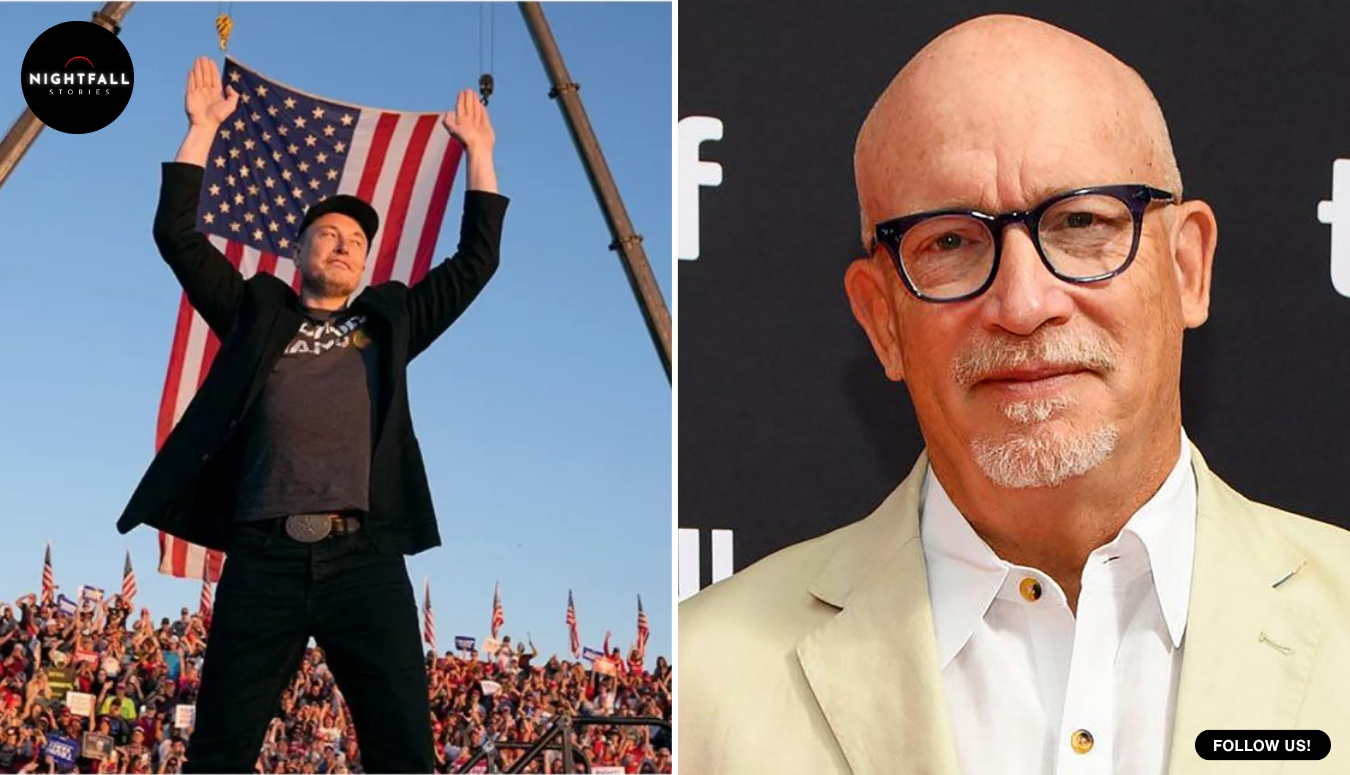
    A documentary that runs almost four hours, about the richest and arguably the most argued-over man on the planet, screened at one of the world’s oldest film festivals and then walked straight into the strangest kind of trouble a finished film can face. Nobody banned it. Nobody sued it, at least not yet. What reportedly happened instead was quieter and harder to photograph. According to trade reporting, the studio holding the rights to release it everywhere outside the United States simply became difficult to reach.

    The film is called Musk, and it is Alex Gibney’s. If you have watched documentaries at all in the last twenty years you have almost certainly watched one of his, even if the name did not stick. He made the Enron film. He made the Scientology film. He won an Academy Award for a documentary about torture and interrogation, and he has since turned out work on Lance Armstrong, on Theranos, on WikiLeaks, on the Church and the Vatican, at a pace that would be suspicious if the films were not consistently good. He works the same way every time. He gathers an enormous amount of material, he lets people talk themselves into focus, and he assembles something that is less an attack than a very long, very patient accounting.

    There is a reason his name keeps appearing. He was nominated for an Academy Award for the Enron film in the mid 2000s and won one a couple of years later for Taxi to the Dark Side, which followed the death of an Afghan taxi driver in American custody and refused to let the audience treat it as an isolated incident. Going Clear, his Scientology film, arrived in 2015 under legal pressure that began long before anyone had seen it. The Inventor took apart the Theranos story. There have been films on Julian Assange, on Russian politics and money, on Frank Sinatra, on the Catholic Church’s handling of abuse. Jigsaw Productions, his company, turns out work at a volume that would be a red flag anywhere else, and the films keep landing.

    That is what he spent roughly three years doing with Elon Musk. The project was announced publicly back in 2023, and Gibney said at the time that he was already many months into it. HBO Documentary Films took North American television and streaming rights that same year. Universal Pictures picked up international distribution later in 2023. Bleecker Street came aboard for United States cinemas in 2025. Three companies, three slices of the world, one film. That is a normal structure for a documentary with theatrical ambitions, and for a long time it looked like a normal project.

    It moved through the usual stages in the usual order. HBO Documentary Films came in first, in the spring of 2023. Universal took international that autumn. Bleecker Street signed for American cinemas in the late summer of 2025, by which point the film had been in production long enough that most documentaries would have been released, forgotten and repackaged.

    Then the subject of the film became something other than a businessman. Gibney reportedly had a two-hour version finished in late 2024. It was, by the logic of the moment, done. And then Musk moved to the centre of American politics, took on a role in the new administration’s government efficiency push, and kept being news in a way that made a completed film about him instantly incomplete. HBO financed more shooting. The production ran on for nearly two more years. The two-hour cut grew to something just under four hours, which is not an artistic flourish so much as an admission that the man would not stop generating material.

    The finished film traces the whole arc. Zip2, the first company, back when he was young and unknown. PayPal. Tesla. SpaceX, which is genuinely one of the great engineering stories of the century whatever you think of its owner. The purchase of Twitter and its conversion into X. The political turn. The government work. Daniel Pemberton wrote the score. David Byrne wrote and performed an original song built out of Musk’s own words, which tells you something about the register Gibney was aiming for, somewhere between forensic and faintly absurd.

    It premiered at the Venice Film Festival, out of competition, in early September. Almost immediately, the subject responded. Musk called Gibney a bitter old man with zero integrity, which is not a defamation claim, it is an insult, and the internet absorbed it the way it absorbs everything. He had earlier dismissed the project as a hit piece, and Gibney had answered publicly by asking how he would know, given that he had not seen it. That exchange was almost enjoyable. What came next was not.

    Musk’s attorney, Alex Spiro, sent a letter to Jigsaw Productions, Gibney’s company. The language reported from it is the language lawyers use when they want a document to do work without technically being a threat. Litigation, it said, was reasonably anticipated. That phrase is a legal preservation notice. It tells everyone named to hold on to their files, their drafts, their correspondence, because a case may be coming. The people reportedly put on notice were not just Gibney and Jigsaw. The letter is said to have named HBO, Bleecker Street and Universal too. Everybody in the chain.

    It is easy to skate past what a letter like that actually does. It does not accuse anyone of anything. It does not have to. It arrives at a company’s legal department and turns a film from a piece of work into a liability with a file number. Insurers ask questions. Lawyers review cuts line by line. Executives who were enthusiastic in a meeting six months ago start using words like timing and strategy. None of that requires anybody to say the word no, and none of it leaves a mark you could point at afterwards and call a decision.

    And here is where the story stops being about a film and starts being about a silence.

    The Hollywood Reporter reported in mid September, citing two sources, that Universal had gone quiet on the international release. Communication between the studio and the filmmakers had reportedly slowed and then stopped. No international release date had been set. There was talk, according to those sources, that Universal might hand the rights back altogether rather than put the film into cinemas overseas. Universal declined to comment.

    It is worth being precise about what was and was not reported, because this is exactly the kind of story that gets flattened into something it is not. Nobody produced evidence that Musk or anyone acting for him pressured Universal. Nobody reported a phone call, a meeting, an instruction. What was reported was an absence. Emails that used to come back stopped coming back. A release date that should exist did not exist. A partner that had been in the project since 2023 became, in the filmmakers’ reported experience, unreachable.

    You can read that any number of ways, and the honest position is that the reporting does not settle it. Studios go quiet for dull reasons all the time. Release strategies get rethought. Executives change. A nearly four-hour documentary is a genuinely awkward thing to book into cinemas in dozens of countries, and any distributor would be entitled to think hard about how to do it. What made the silence loud was the timing, arriving as it did after a public attack and a lawyer’s letter, and the fact that the people on the other end of it were the ones who noticed and said so.

    The reaction was fast and it was not kind. Within a day, the story had travelled well past the trade press, and the shape it took in the retelling was the simplest one available: a studio caving to a billionaire. That framing ran ahead of what anyone had actually established, but it ran, and it ran hard.

    Then the story turned again.

    Variety reported the following day that, contrary to the earlier account, Universal was moving forward as planned with the international release. Its sourcing was also anonymous, people familiar with the project, and Universal again declined to comment on the record. The Hollywood Reporter itself followed up with a piece describing internal discussions at the studio about keeping the film, with a studio insider saying those talks had progressed to the point where Universal would ultimately hold on to it and proceed. Shortly after, a Universal communications executive, Evan Langweiler, went on the record to say the studio remained committed to releasing the film in cinemas internationally and was currently working through a release strategy.

    So the public record now contains two versions of the same week. In one, a distributor drifted away from a finished film and might have given it back. In the other, a distributor was always going to release it and the drift was overstated. The only facts that sit outside dispute are that there was no international date, that Universal did not comment while the story was breaking, and that after several days of very loud attention the studio said on the record that it was still in.

    What that sequence cannot tell you is why. Nobody has established a motive for the quiet period, and it would be dishonest to supply one. It is possible the studio was genuinely rethinking and then changed its mind. It is possible it was never wobbling and the filmmakers misread a slow month. It is possible the noise itself did the work. Pick whichever you like, but none of them are proven, and the difference between them matters enormously to how you feel about the whole episode.

    What is not in doubt is that American audiences were never going to lose the film. This is the detail that keeps the story from being the catastrophe it was briefly described as. Universal holds international rights only. Bleecker Street has United States cinemas, and it never wavered. It had originally booked the film for the middle of October and then moved it a week earlier, to the ninth, which is not the behaviour of a company trying to bury something. Bleecker Street’s chief executive made the reasoning plain in the trades: urgency helps theatrical documentaries, because people want to be part of a conversation while the conversation is still happening. HBO holds North American television and streaming, with a release planned for early 2027. Whatever happened in Universal’s building, the film had a home.

    It helps to understand how narrow the margins are here. Documentaries do not have the cushion a franchise film has. Bleecker Street is a specialty distributor, not a major, and a four hour film about a living billionaire is not an easy booking even before anyone’s lawyer gets involved. The previous generation of theatrical documentaries that broke through did it by arriving while the argument was still hot. Wait six months and the same film is a history lesson. That is why moving the date forward rather than back was the telling choice, and why the international gap matters more than it might sound: a film like this does not get a second window.

    That is the practical answer. The interesting question the week left behind is a different one, and it has nothing to do with any particular billionaire.

    For most of the history of the movie business, the way to stop a film was to stop it being made. You bought the rights and sat on them. You leaned on a financier. You got to it early, when it was still a script and a budget and a few people’s hopes. Once something was finished, screened and reviewed, it had crossed a line, and stopping it meant an injunction, a court, a judge, a public record. Someone had to put their name on the decision.

    The version that surfaced here, if it happened at all, requires none of that. It requires nobody to decide anything out loud. A film can be complete, premiered at Venice, positively received, contractually placed in territories covering most of the world’s population, and still quietly fail to appear in any of them, because the party responsible for putting it there never quite gets round to announcing when. No ban. No ruling. No statement to be argued with later. Just a calendar with nothing written on it.

    That is not a conspiracy, and it is not new. Films fall through distribution gaps constantly for reasons no one ever writes down. What was unusual was watching it happen in real time to a film whose subject had publicly attacked it and whose lawyer had put the distributor on notice, and then watching the whole thing reverse under attention. The mechanism only became visible because people were looking.

    Gibney, for his part, has not turned the episode into a campaign. He has been through versions of this before. The Scientology film arrived under a wall of legal pressure. The Armstrong film had its subject actively working against it while it was being made. Roughly two decades of making documentaries about people with money and lawyers teaches you that the letter is part of the process, and that the only real answer is to have the film be correct.

    The film, meanwhile, is out. It opened in American cinemas in October at nearly four hours, which is an unreasonable length for anything, and which the filmmakers argue the subject earned by refusing to stand still. The international release Universal says it is working through has, at the time of writing, still not been dated. That is the loose thread, and it is worth keeping an eye on, because the difference between a studio that meant what it said and a studio that said what it needed to say will only be legible later, in a listings page, in a country that is not the United States, on a day that either arrives or does not.

    For now, the honest summary is short. A film got made. A man did not like it. A letter went out. Somebody stopped answering emails, and when enough people noticed, the answering started again. Everything after that is guesswork, and the people who know are not saying.

  • 10 old cameras that are worth more than you think

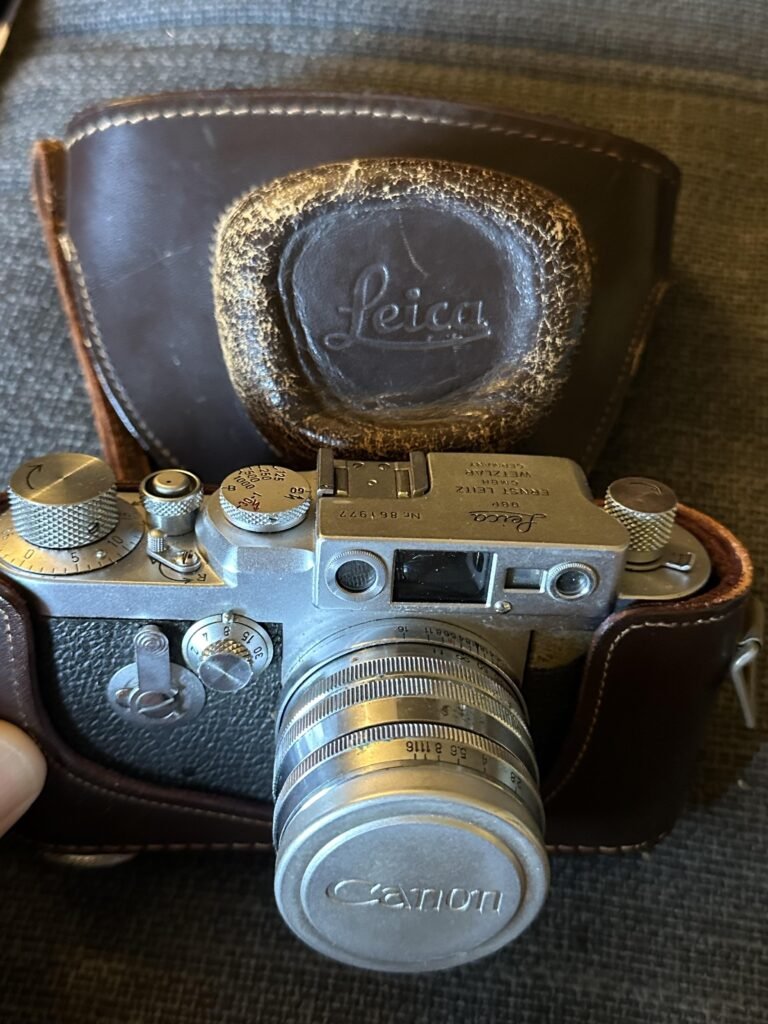
    10 old cameras that are worth more than you think

  • She got the call less than a year out, and the first question was whether she could work very, very fast

    She got the call less than a year out, and the first question was whether she could work very, very fast

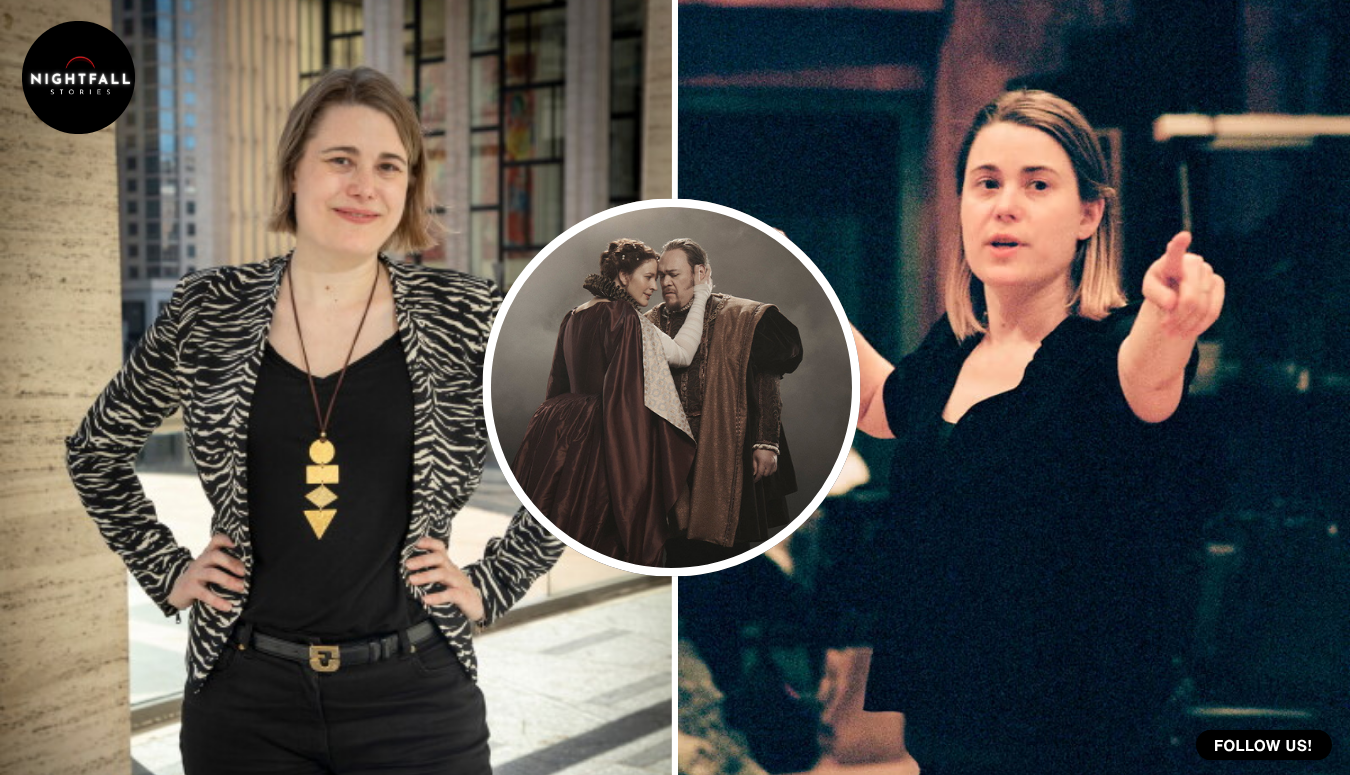
    Opening night at the Metropolitan Opera is not a normal night. It is the single most scrutinised evening in American classical music, the one with the red carpet and the international press and a house of nearly four thousand people, and it is usually locked in two or three years ahead. Directors are chosen early precisely so that nobody ever has to rush.
    This season’s opener, a new production of Verdi’s Macbeth, went to a director who got the call less than a year before curtain. When the Met’s general manager Peter Gelb reached her, his first practical question was essentially whether she could do it very, very fast, because the set designs had been due already.

    Her name is Louisa Proske, she is forty-two, and until now most of her working life had been spent a very long way from a house that size.

    It is worth being precise about how she came to be asked, because the easy version of this story is wrong. She was not a panic pick pulled out of a hat. The original director withdrew, which happens, and the Met needed somebody quickly. Gelb has said he was already aware of what Proske had done at Heartbeat Opera, and that she had been on his radar. So the speed was real and the urgency was real, but the name was not a stranger’s. It was a name he had been keeping an eye on, moved up the queue by circumstance.

    The line about working very, very fast is not a put-down either, although it reads like one if you take it out of the room. It was a straight description of the calendar. A new production at that scale is a construction job: sets have to be designed, built, trucked and hung, costumes have to be cut, lighting has to be plotted, and every one of those has a deadline that was set before anybody knew who the director would be. Gelb was not testing her nerve. He was telling her that the first thing on her desk was already overdue, and asking whether she wanted it anyway.

    She did.

    What makes the choice interesting is where she was coming from. In 2014, Proske co-founded Heartbeat Opera, a small experimental company in New York built on the idea that the classics could be torn down and rebuilt with almost no money at all. Their first work was reportedly put together in a yoga studio with an upright piano and a single violin. That is not a charming origin detail, it is a working method. When you cannot afford an orchestra, you have to find out what a piece is actually made of, because you are going to have to rebuild it from the load-bearing parts.

    Heartbeat became one of the more talked-about small companies in the city on exactly that principle. Proske left in 2021 and went back to Germany, where she spent four seasons directing at Oper Halle, a serious regional house with a serious workload. So by the time the Met rang, she had both halves of the training: the invention you learn when there is no budget, and the discipline you learn when you are turning out productions on a repertory schedule.

    And then there is the coincidence that sounds invented and is not. The opera she was handed was Macbeth. Proske wrote her university thesis, at Cambridge, on Shakespeare’s Macbeth.

    It helps to know what she was actually handed. Verdi’s Macbeth was his first attempt at Shakespeare, written when he was still in his early thirties and decades away from the late masterpieces, and he cared about it enough to come back and rebuild large parts of it for Paris nearly twenty years later. The result is a strange, uneven, unusually dark score that never quite behaves like the grand Italian opera around it. Verdi famously wanted a Lady Macbeth who sounded ugly when the drama demanded it rather than beautiful, which is a peculiar thing to ask of an opera singer and a clue about how far from convention he was reaching. It is not a comfortable piece, and it is not an obvious choice for a gala night when the house wants glamour.

    That makes it a revealing thing to open a season with. Opening night at the Met is a fundraising occasion as much as an artistic one, and the safe programming instinct is something with big tunes and an easy welcome. Macbeth offers neither. It offers a marriage decaying under the weight of a murder, a chorus of exiles singing about a ruined country, and a lead baritone who spends the evening falling apart. Whoever chose it was not playing for the gentlest possible reception.

    You could not write that into a script. Of all the titles in the repertory that could have come free at short notice, the one that did was the one she had already spent a year of her life taking apart on the page. When a director has less than a year to design, cast, rehearse and open a new production, the thing she has least of is thinking time. Proske had done a large chunk of hers two decades earlier.

    Her reading of the piece is not the conventional one, and it is not a spectacle-first one either. She has described the opera as a terrifying story for a terrifying time, which is the kind of sentence a lot of directors say, but what she has built underneath it is more specific and more uncomfortable. She is interested in the marriage. Not in the witches, not in the prophecy, not in the crown, but in what happens between two people who decide together to do something monstrous and then have to live in the same house afterwards.

    She has talked about the murder becoming their project, their secret and their crime, something you sense they had discussed in private, under the sheets, long before it happened. That turns Macbeth from a play about ambition into a play about intimacy, and it turns the two leads from a tyrant and his manipulator into a couple with a shared plan that curdles.

    The witches, in her staging, are repositioned as something closer to greedy voyeurs, watching the pair come apart and enjoying it. That is a genuinely different choice. Most productions use the witches as the engine of the plot. Proske uses them as an audience, which means the people watching in the theatre are quietly implicated too.

    The design carries the same idea. Jon Bausor’s set is a modern landscape scarred by war, dominated by a concrete wall, mostly drained to black and white, so that the few moments of colour, blood and the deep velvet of Lady Macbeth’s gown, do all the shouting. Montana Levi Blanco’s costumes pull the other way, toward the Renaissance, so that the people on stage never quite belong to the world they are standing in. The Met’s turntable does the scene changes, which on that stage means the whole world can rotate under the singers without a blackout.

    The people singing it are not small names. Quinn Kelsey takes the title role. Lise Davidsen, the Norwegian soprano who has become one of the most in-demand voices anywhere, is Lady Macbeth. Freddie De Tommaso sings Macduff and Ryan Speedo Green is Banquo. Yannick Nezet-Seguin, the Met’s music director, conducts. A first-time director at that house, on that night, is not being handed a quiet room to experiment in. She is being handed the best-resourced opera performance in the country and a cast with their own very firm ideas about the music.

    That is the part of this worth sitting with for a moment. The gap between Heartbeat Opera and the Metropolitan Opera is not a promotion, it is a change of physics. At Heartbeat, if an idea was not working at four in the afternoon, you could change it by six. At the Met, an idea has to be committed to months out because somebody has to build it, and once it is built it weighs several tonnes and is already on a truck. The invention that thrives on improvisation has to survive being decided early and then not touched.

    Proske had less than a year to make that adjustment, and she made it while the designs were already late.

    Opening night came earlier this week. The first published review did not read like a polite notice for a debut. It called the evening thrilling, praised Nezet-Seguin’s work with the orchestra, and singled out Kelsey’s Macbeth as the centre of the night, a portrait built out of weakness rather than menace, with the voice tracking every shift in the man’s collapse. De Tommaso, as Macduff, reportedly brought the house down.

    The response to Davidsen was more layered, and it is the most interesting critical note of the evening. Her singing was described in something close to rapture, gorgeous, full of a beauty that is hard to put words around. But the reviewer felt the character’s appetite and her strangeness did not fully come through, and suggested that this might be a consequence of the direction rather than the singer.

    That is a fair thing to raise, and it points straight back at Proske’s central choice. If you decide that Lady Macbeth is primarily a wife inside a conspiracy with her husband rather than a supernatural force driving him, you get depth and you get intimacy, and you may well give up some of the terror. Whether that trade is worth it is exactly the argument a new production is supposed to start. A staging that nobody wants to argue about is a staging nobody remembers.

    The reviewer also noted the production’s use of doubling, characters mirrored and repeated so that the stage begins to look like the inside of Macbeth’s head, and drew a comparison with Roman Polanski’s film version of the play. Adam Silverman’s lighting and the angular choreography were picked out as doing real work on the tension. The main reservation beyond Davidsen’s characterisation was a pacing one, a feeling that a few of the long pauses could go.

    For a debut on the biggest night of the season, delivered on roughly half the usual preparation time, that is a strong landing.

    What happens next is where this stops being an opera-world story and becomes something bigger. The production runs for ten performances, and one of the matinees will be broadcast live into cinemas around the world in October. That broadcast is the Met’s widest-reaching format by a distance, and it means Proske’s Macbeth will be seen by an audience that will never stand outside Lincoln Center, in countries where there is no opera house at all, by people for whom this may be the first Verdi they ever watch.

    A production conceived in a hurry by a director who spent most of her career making opera in rooms with no money is about to be the version of Macbeth that a global audience meets.

    There is something quietly encouraging in that, and it is not the usual underdog story, because Proske is not an underdog. She is a working professional with a Cambridge education and four seasons at a German house behind her. The encouraging part is institutional. The most conservative building in the art form had a hole in its calendar at short notice, and instead of reaching for the safest available name, it reached for somebody whose reputation was built on taking the classics apart in small rooms, and then asked her to do it at full scale in under a year.

    Houses do not usually behave that way. Emergencies normally make institutions more cautious, not less.

    The other thing worth noticing is how little of this depended on luck and how much depended on work already done. Proske could say yes to a nearly impossible timeline because she had spent a decade learning to build productions fast and cheap, four seasons learning to build them on schedule, and a year at university, long before any of it, sitting with this exact play. The call came out of nowhere. The readiness did not.

    She has said the design was due yesterday. It got done. The curtain went up on time, the house was full, the orchestra played, and the first verdict was that it was thrilling. In a run of ten performances and a cinema broadcast still ahead, that is the answer to the question Peter Gelb actually asked her.

    She could, it turns out, do it very, very fast.

  • Opening day came and there was no festival. Now he is calling every artist who will pick up.

    Opening day came and there was no festival. Now he is calling every artist who will pick up.

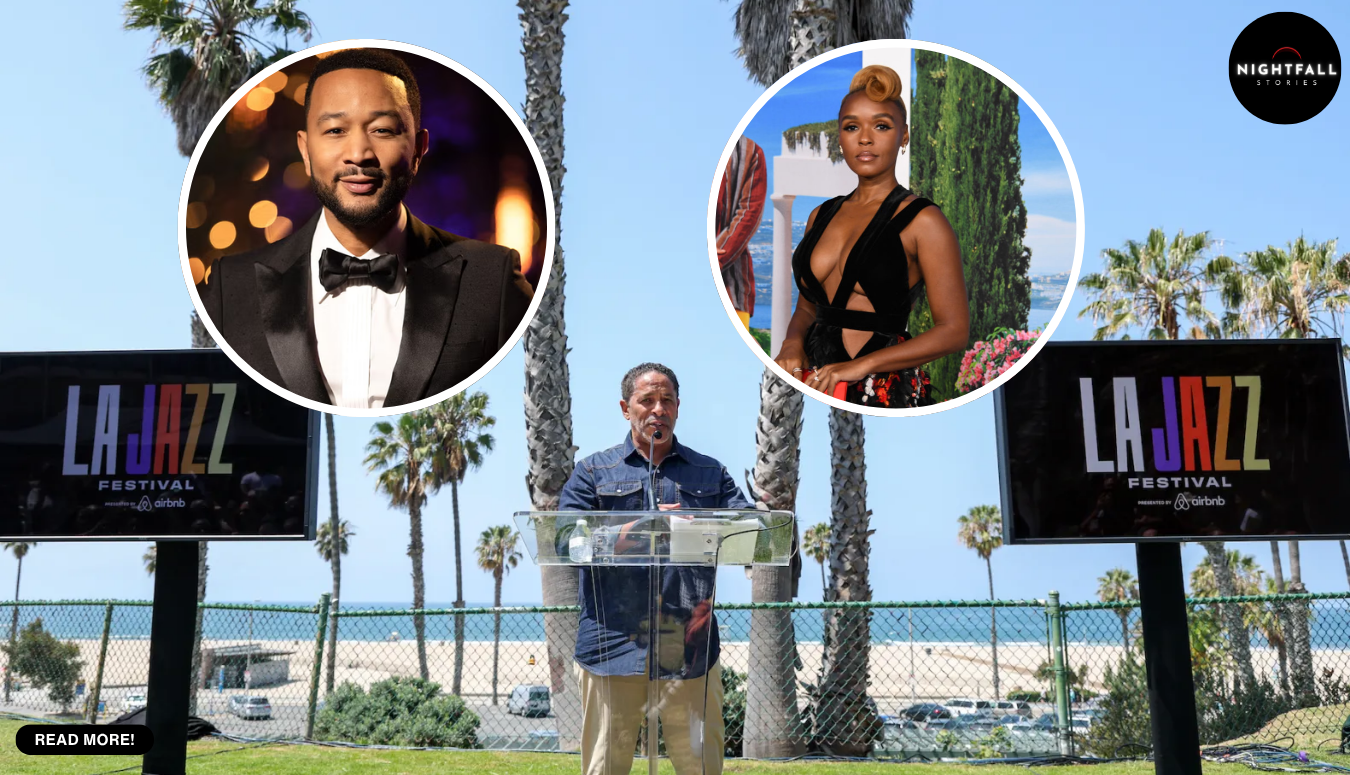
    The Los Angeles Jazz Festival was supposed to run for most of a month. More than a hundred events across the city, twenty-five free concerts in parks, a two-day conference about the state of the music, a youth camp, a Caribbean street festival with four stages, and a closing weekend on the sand at Dockweiler Beach with John Legend and Janelle Monáe on the bill. Organisers talked about a quarter of a million people coming through. Tickets went on sale. Musicians cleared their calendars. Some of them flew in.

    And then opening day arrived in early August, and there was nothing to open.

    Not a rained-out show, not a headliner pulling out at the last minute, not a stage that went dark halfway through. The whole thing, the entire month, simply did not happen. Artists had been told days earlier by email that the opening night event, the park concerts and the late-night club series were all being postponed because of what the message called unforeseen permitting and production challenges. The beach finale went a few days after that. What was left was a website, a set of ticket confirmations that pointed at nothing, and a jazz scene that had been told for months that this was finally its year.

    The man behind it is Martin Ludlow, a former Los Angeles city councilman who runs a firm called Bridge Street Inc. He had been talking about this festival for a long time. When it was announced earlier in the year, the mayor of Los Angeles stood up beside him and said she had been on a fifteen-year journey with him to get here, and that she was excited it was finally the year. Airbnb came in as the inaugural title sponsor. The framing was civic and generous: free admission for most of it, events in all fifteen council districts, deliberate bookings at venues owned by women and by people of colour, a celebration of a music that Los Angeles has a genuine claim to.

    That is a lot of promise to put into a room, and it is why the collapse landed the way it did.

    The reporting that pieced together what actually went wrong, published by the Los Angeles Times about two weeks after the cancellation, does not describe a single dramatic failure. It describes a slow one. The festival had a proposed budget of around sixteen million dollars, and according to that account the organisers were never able to finance all of it. There was a search for five million dollars of venture capital in exchange for a fifth of the company, and a hunt for a million-dollar title sponsorship. Airbnb’s contribution was reported at seven hundred and fifty thousand dollars. That is real money, and it is also a long way from sixteen million.

    Running alongside the money problem was the paperwork problem, and the paperwork problem is the one with a paper trail.

    According to the Los Angeles Times account, a lieutenant with the city’s police department wrote in late July that required documents were still outstanding despite repeated attempts to reach the organisers. A further letter at the end of that month reportedly warned that they were likely to miss the deadline. These are not accusations from a rival or a rumour from the scene. They are letters, written by the agency whose sign-off a festival of that size cannot proceed without, and they were written before anything was publicly cancelled.

    Ludlow’s own explanation, given at the time, pointed at what he called a demanding multi-agency process and significant, unanticipated last-minute public safety and municipal costs. Both things can be true at once. Permitting a month-long event spread across an entire city really is a grinding administrative job with a lot of separate desks to satisfy, and the record also shows that the desks were asking for material and not getting it.

    What that combination produced, in practice, was a festival that had committed to artists before it had secured the ground it would put them on.

    Ludlow has said he spent more than a million dollars on performance fees for shows that never took place. That figure is his own account as reported, and it has not been independently audited. Around twenty artists, by the Times’ count, had not received the advances they were owed. Some of them had already spent money of their own getting ready.

    The saxophonist Leah Concialdi’s Neighborhood Orchestra was one of them. Her group had paid out of pocket for photographers, for a video crew, for rehearsal time, all the invisible costs a band absorbs when it thinks a big date is coming. She reportedly found out the show was gone not through a phone call but because a ticket link stopped working. Her point afterwards was not a demand for money. It was closer to a warning to anybody else who wants to build something this size: you have to think about what happens to people once you have got them invested.

    That is the part of this story that does not get a headline. A cancelled festival is an inconvenience for a ticketholder and a catastrophe for a working musician, because a working musician’s year is a jigsaw. Blocking out a month for one festival means turning down the touring dates, the session work and the residencies that would have filled it. When the month disappears, the alternatives are already gone.

    The saxophonist Isaiah Collier had already flown to Los Angeles when his park show was called off. He described it afterwards as a wake-up call, and said much the same thing Concialdi did about the responsibility that comes with getting people invested. Neither of them sounded like people looking for a fight. They sounded like people doing the arithmetic on a month they were not going to get paid for.

    And here is where the story turns, because something happened next that was not in anybody’s plan.

    A New York musician and promoter called Gengis Don put together a replacement event at a Los Angeles gallery and gave it a name that told you exactly what it was for: Can’t Cancel Jazz. It was not a sixteen million dollar production. It was a room, a bill, and an audience, assembled fast by people who refused to let the month be a complete write-off. His summing up of the original festival was blunt and, in its way, fair-minded. He said the message had been right and the messenger had been wrong, and he worried aloud that a city with a genuinely rising jazz scene could be set back by a failure this public.

    That distinction matters, and it is the reason this is not a simple story about a man who let people down.

    Because the idea itself was not stupid. Los Angeles has an enormous, serious, historically deep jazz community, and it has never had a festival on the scale that community arguably deserves. Somebody was going to try. The question the collapse raised was not whether it should exist, but how you build one without breaking the people you build it on.

    There is an instructive comparison sitting right there in the same city. The bassist Stanley Clarke, a genuine elder of the instrument, staged the Santa Monica International Jazz Festival earlier in the same year, with Kamasi Washington headlining, and it went off. His account of how was almost boringly practical. He took two years to plan it. He surrounded himself with people he described as smart and ethical. And, in a line that reads like a direct if unintended note to his neighbours, he said the trick was not shooting too big.

    Two years, a realistic budget, and a smaller opening swing. That is not a glamorous recipe. It is, on the evidence, the one that works.

    There were other warning lights that only became visible once somebody went looking. Tickets for the paid events had reportedly started under seventy dollars and run up into the thousands for luxury boxes, which is the pricing of an established brand rather than a first year. When the organisers began exploring a move of some shows away from the original sites and into established venues like the Greek Theatre and the Peacock Theater, several headliners reportedly stepped away, which is what artists do when the shape of a booking changes late. The festival’s chief operating officer until a couple of years earlier had her own tax conviction on the public record. And the relationship with the title sponsor was not new money arriving from nowhere: Ludlow’s firm had reportedly earned more than two million dollars from work with the same company previously.

    None of that is proof of bad faith. Plenty of it is just how ambitious events get financed, with existing relationships doing the heavy lifting. But taken together it describes an operation that was running on optimism and personal credit rather than on locked-down funding, and an operation like that has no slack in it. The first serious delay becomes the last one.

    There is a further complication in the Ludlow story that the reporting did not leave out, and it would be dishonest to leave it out here. He pleaded guilty in 2006 to conspiring to embezzle union funds, and served probation and a substantial community service order. That is a matter of public record from two decades ago, and he has worked publicly in the city ever since. It is not the reason the festival failed. The permits and the budget are the reason the festival failed. But it is part of why some people in the scene reacted to the collapse with more anger than they might have given a first-time promoter, and any honest account of the temperature afterwards has to acknowledge it.

    What is genuinely unusual about this story is what Ludlow did once there was nothing left to save.

    He could have gone quiet. That is the normal move. Festivals collapse fairly often, a shell company absorbs the damage, the founder stops answering email, and the artists write the money off. Instead he sat down with a newspaper that had just spent weeks reconstructing everything that went wrong and answered the questions. He described the experience as a brutal fishbowl. He said he had started calling billionaires and millionaires trying to find the money in time, and that he had run out of road. He described the permit failure in physical terms, as a blow to the solar plexus, which is about as close as anybody in this story gets to saying how it actually felt.

    Then he made two commitments out loud. Refunds to ticketholders within thirty days. And a promise to call every single artist who would take the call, and settle what he owed them.

    Whether he has managed all of that is genuinely unresolved. The reporting captured the promise, not the completion, and there has been no comprehensive public accounting since of who has been paid and who has not. Anyone telling you the artists have all been made whole is guessing, and so is anyone telling you none of them have. What can be said is that the promise was made specifically, in public, with a deadline attached, which is harder to walk away from than a vague apology.

    He has also said, plainly, that he still thinks the idea is sound, and that he is living on the hope of working out how to rebuild it. That is either admirable or maddening depending on where you are standing. If you are a musician who is still owed an advance, a founder talking about the next attempt is not what you want to hear first. If you are someone who thinks a city that produced this much music ought to have a festival worthy of it, then somebody is eventually going to have to try again, and the person who has just learned the most expensive possible lesson about permits and budgets is not the worst candidate.

    The wider context is not comforting. Weeks after the jazz festival went down, another Los Angeles music festival was reported to have collapsed too, an ocean-side event that had booked major acts and then cancelled. Festivals are brutally expensive to stage, the margins are thin, the up-front costs land long before any revenue does, and a single missing approval can take the whole structure down. What looks from outside like a party is, financially, a construction project with a fixed and immovable completion date.

    What is left of the Los Angeles Jazz Festival, for now, is a set of lessons nobody wanted to pay for. That a mayor at a press conference is not a permit. That a title sponsor is not a budget. That announcing a lineup before the ground is secured shifts the risk onto the people with the least ability to carry it. And that the difference between a promoter who fails and a promoter who is finished is entirely in what happens in the weeks afterwards.

    The scene got its music anyway, in a gallery, under a name that was half a joke and half a statement of intent. It was smaller than a beach full of forty thousand people. It also actually happened, which that August the bigger version never managed.

  • He had seven weeks to prepare for the hardest role in opera. He spent them living with monks on a hill

    He had seven weeks to prepare for the hardest role in opera. He spent them living with monks on a hill

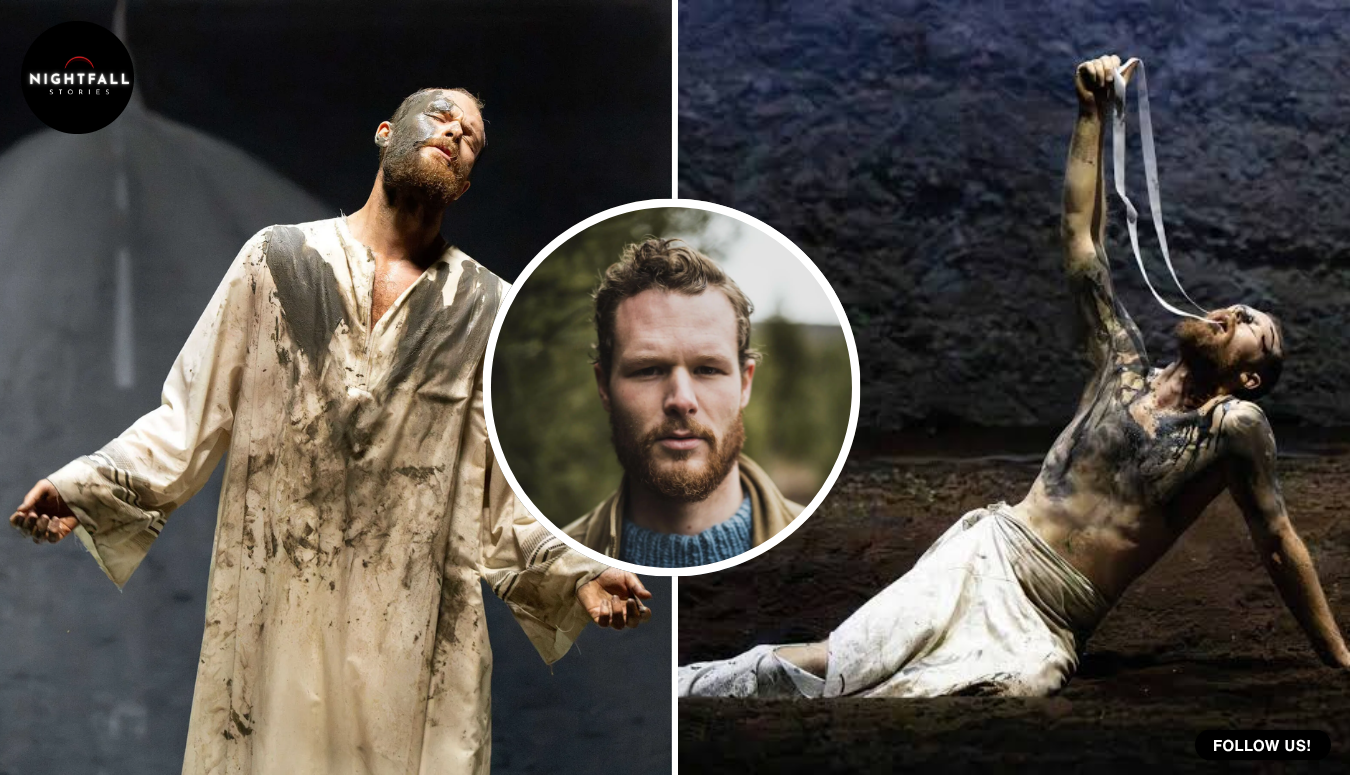
    Philippe Sly did not rent an apartment. He climbed a hill above an old European city, knocked on the door of a Capuchin monastery, and asked the friars if he could move in.

    They said yes. He stayed for seven and a half weeks, sleeping in a cell with no air conditioning through one of the hottest summers Europe has had, getting up for morning prayers with the community every single day, and walking the long stone stairway down into town and back up again several times a day. He was not on retreat. He was learning a part.

    The part was Saint Francis of Assisi, in the only opera Olivier Messiaen ever wrote, and it is widely considered one of the most punishing assignments in the repertoire. Six hours and twenty minutes of music. Eight tableaux. Two intervals of an hour each. A score that runs to around two and a half thousand pages. The title role is on stage for most of it.

    Sly is thirty-seven, a French-Canadian bass-baritone from Ottawa who trained at McGill University in Montreal, won the Metropolitan Opera National Council Auditions in his early twenties, came up through San Francisco Opera’s young-artist programmes, and has spent the years since singing Mozart in the big houses. Leporello. Guglielmo. Figaro. Don Giovanni himself at Aix-en-Provence. He is a father of two. None of that prepares you for Messiaen, because nothing does.

    What he decided, faced with this, was that the usual approach would not get him there. You can learn notes anywhere. What he could not learn from a score was what it feels like to live the way the man he was playing lived, and the Capuchins are a Franciscan order, which means they are the living continuation of exactly the movement Francis started eight hundred years ago. So he asked, and they let him in.

    His day started with Lauds, the morning prayers, and he went to them with the friars every morning for the whole stay. He joined Vespers in the evening. He went to Mass. He did not go as a tourist who watched from the back, and by his own account he did not stay separate from the rhythm of the house. He simply lived inside it for nearly two months and let it work on him.

    The monastery sits on a wooded hill above the city, reported at around 1,550 feet above sea level, which means the commute to the theatre was a stairway rather than a road. He walked it repeatedly, in high summer, in the heat. The cell had no cooling. Europe was in the middle of heatwave conditions. He did it anyway, because the discomfort was arguably the point, or at least it was inseparable from it.

    What he has said since is the part that sticks. He did not describe it as an exercise he completed. He described it as something he misses. He told a reporter that he longs for it and is excited to go back, which is not how people usually talk about a preparation method. Somewhere in seven and a half weeks the research stopped being research.

    And then he had to go and sing for six hours.

    It is worth being specific about what Messiaen wrote, because the scale of it is the reason this opera is so rarely staged. He composed it over close to a decade and finished in 1983, nine years before he died. He was a devout Catholic and a serious ornithologist, and both of those facts are all over the score. He spent years transcribing birdsong in the field and building it into his music, and the opera contains a scene in which Francis preaches to the birds, which Messiaen scored with the calls of species he had notated himself, from several continents.

    The forces required are enormous. This production used around 120 musicians and a chorus of roughly ninety. The conductor was Maxime Pascal, who has been blunt about the difficulty, pointing out that two and a half thousand pages of music, much of it extremely complex, is simply a different proposition from a standard night in the pit. The rhythmic writing is so intricate that a second conductor was stationed in the pit using a baton fitted with a white light, purely to give the percussion section beats that clash with what everyone else is counting. That is not a gimmick. That is what the notation demands.

    The staging around Sly was, if anything, more extreme than the score. The director was Romeo Castellucci, an Italian whose work tends to divide rooms, and his reading of the piece rejected the idea of telling a story in a line. He has described the opera as a deliberate counter-model to conventional opera, something Messiaen designed to be unorthodox, and said he thinks of it as a series of separate images in the way a medieval fresco cycle is a series of separate images rather than a narrative. His job, as Pascal put it, was making inner processes visible.

    So there were live animals. A Czechoslovakian wolfdog. A peahen. Seven sheep, which appeared near the end as the roof of the theatre opened above the stage, because the venue is the Felsenreitschule, a fourteen hundred seat theatre cut into the face of a rock quarry, with arcades carved into the stone behind the playing area. Older audiences know it without knowing they know it, because it is the theatre in the final act of The Sound of Music.

    And there was bread. Two industrial four-level ovens were brought onto the stage, each weighing roughly 1,200 kilograms, about 2,650 pounds. During every performance they baked thirty-three sourdough loaves. This was not mimed. The ovens worked, and the smell of baking bread filled a fourteen hundred seat auditorium while one of the most complex scores of the twentieth century was being performed in it.

    Sly connected the bread to the text rather than treating it as a stunt, pointing to the line about the kingdom of God being like yeast, the small hidden thing that transforms the whole loaf. And the loaves themselves were not thrown away. Following the Franciscan practice of giving bread to the poor, they went to the backstage crew after the show, which is a quietly perfect resolution: the most hands-on, least glamorous workers in the building eating the bread that the opera baked.

    The people around Sly mattered too. Soprano Lauranne Oliva sang the Angel. And in the smaller role of Brother Bernard was Willard White, now seventy-nine, one of the great bass-baritones of the last half century, who sang the title role himself in the only major American production this opera has ever had, in San Francisco in 2002.

    White mentored Sly through it, and the advice he gave was not technical. His point was that you cannot muscle your way through six hours of Messiaen on craft alone, and that what carries a singer is a mindset in which accepting the moment you are in is what leads you into the next one. Which is, if you think about it, almost exactly what the friars on the hill had been practising in front of Sly every morning at Lauds. The preparation and the performance advice turned out to be the same idea arriving from two directions.

    The lineage behind the role is short, because so few singers have ever done it. José van Dam created Francis at the premiere in Paris under Seiji Ozawa. Van Dam sang it again in a celebrated staging directed by Peter Sellars, with Esa-Pekka Salonen conducting the Los Angeles Philharmonic, at the same Austrian festival back in 1992. White took it on in San Francisco a decade later under Donald Runnicles, in a production championed by the company’s general director Pamela Rosenberg, who called the piece one of the two or three most compelling works of the second half of the last century. Then, for years, almost nothing. Sly now joins a list you could count on your fingers.

    There were six performances in total, each running well past six hours from curtain to curtain, delivered in a stone amphitheatre in high summer, with animals, ovens, a hundred and twenty players and a ninety-voice chorus, and a Canadian who had been getting up for dawn prayers with friars since early in the summer.

    The vocal demand is its own problem, separate from the length. Messiaen was not writing for the voice the way an opera composer usually does. He wrote long, slow, deliberately unshowy lines for Francis, often sitting in an uncomfortable middle part of the range where a singer gets no help from resonance and no chance to ride the orchestra. There are no arias to hide behind and very little repetition to lean on. The role asks a performer to stay quiet and steady for hours while the orchestra around him does enormous things, and to still have voice left at the end, when Francis dies and the whole apparatus, chorus included, opens up into a blaze of sound that the composer intended as the resurrection.

    There is also the scene most singers mention first, in which Francis forces himself to embrace a leper and is transformed by the act. It is written as the hinge of the entire piece. Messiaen, who believed all of it literally, built the opera around a handful of moments of grace rather than around events, which is exactly why Castellucci staged it as separate images. Nothing in it develops the way a plot develops. It accumulates.

    Knowing that, the choice to move onto the hill starts to look less eccentric and more like the only sensible response. An actor can research a character by reading about him. Sly was being asked to embody a specific inner state for six hours at a stretch, night after night, and there is no library that teaches that. What there is, still operating, eight centuries on, is a community of men who organise their entire lives around the same idea. The Capuchins are one of the Franciscan branches, the reformed one, historically the most austere. Their house above the city has been there for centuries. They keep the hours, they keep the poverty, they get up in the dark.

    It would be easy to write all of this as a story about excess, and plenty of the coverage did, because live sheep and industrial bakery equipment make for good headlines. But that misses what Sly actually did, which was quieter and more interesting than any of the staging.

    Actors talk about immersion constantly, and most of it amounts to a few weeks of reading and a change of diet. Sly did something that was genuinely inconvenient. He gave up comfort, privacy and air conditioning during a heatwave, accepted an externally imposed daily schedule that started before dawn and did not bend around his rehearsals, and submitted to the routines of a community he was not a member of. He did it for nearly two months. And he did it in service of a role in an opera that will probably not be staged again anywhere in the world for another decade.

    There is no career logic to that. There is no version of this that makes him more castable. Saint Francis is not a part that recurs, and the hours he put in on that hill are not transferable to the next Don Giovanni.

    The only explanation that holds is that he thought the piece deserved it, and that he could not get where he needed to be by any shorter route. Messiaen wrote an opera about a man who gave away everything he owned and went to live with nothing. It is difficult to argue that the right way to prepare for it is from a serviced apartment.

    The most telling thing is what happened to the plan afterwards. Preparation is supposed to end when the run ends. You do the work, you use it, you give it back. Instead Sly has talked about the friars in the present tense, about missing the shape of their days, about wanting to return. The habits stayed with him after the last performance, which suggests that at some point the monastery stopped being a method and started being something he actually wanted.

    Francis, the real one, was a wealthy young man who walked away from his family’s money and spent the rest of his life outdoors, talking to birds, and being regarded as either a saint or a lunatic depending on who you asked. Eight hundred years later a Canadian singer climbed a hill to try to understand him well enough to stand in a rock quarry and sing him for six hours.

    He came down changed, which is roughly what Francis tended to do to people. The sheep went home. The bread got eaten. And the friars, one assumes, kept getting up for Lauds, exactly as they had before a bass-baritone arrived on their doorstep with an unusual request and exactly as they did after he left.

  • The keyboard player collapsed at the interval. Then the composer walked to the front of the stage and asked the audience a question

    The keyboard player collapsed at the interval. Then the composer walked to the front of the stage and asked the audience a question

    Sterling Nasa had paid for his ticket like everyone else. He was twenty-one, a politics student, and he had come to a Sydney concert hall to watch La La Land on a big screen while a full orchestra played the score live underneath it. Two hours later he was sitting inside that orchestra, in front of a couple of thousand strangers, improvising a synthesiser solo on an instrument he had never touched before, with no rehearsal, no run-through, and the film rolling on above his head whether he was ready or not.

    The part that makes musicians wince when they hear this story is that he could not stop. A live-to-film concert is not a normal concert. The picture runs at a fixed speed, the orchestra is locked to it, and if the keyboard drops out the whole thing does not gently sag, it visibly comes apart in front of everybody. There is no pausing to find your place. There is no conductor slowing down to let you catch up, because the conductor is himself chasing a film that does not care.

    Here is how a student ended up in that chair. The show was La La Land in Concert, the touring version of the film in which the soundtrack is stripped out and replaced by a live orchestra playing it in real time. It had come to the theatre at Sydney’s International Convention Centre on Darling Harbour, and the man on the podium was Justin Hurwitz, who wrote the score in the first place and won two Academy Awards for it. Reports of the crowd size differ a little, with some putting it around two thousand and others at two and a half thousand. Either way, the room was full and the night was sold.

    The first half went fine. At the interval, the keyboard player fell ill and could not come back.

    That is a bigger problem in this particular score than it would be in most. Hurwitz’s music for La La Land leans hard on keyboards. There is jazz piano everywhere, there is celesta, there is synthesiser, and several of the film’s best known moments simply do not exist without a keyboard player. You cannot quietly redistribute that among the strings and hope nobody notices.

    So the break kept getting longer. What was supposed to be about ten minutes reportedly stretched towards forty while the production tried to find a professional keyboardist who happened to be free on a Saturday night in the middle of Sydney and could be in the building in under an hour. Anyone who has ever tried to book a musician at short notice already knows how that went.

    Eventually Hurwitz did the thing that composers do not do. He walked out to the front of the stage, in front of a room that by now knew something had gone wrong, and asked whether anybody out there was an amazing sight reader.

    Sterling Nasa did not put his hand up. His friend Scarlett put it up for him.

    She had a fairly specific argument for it, too, which was that whatever happened next, it would be worth telling his children about one day. That is how he has described it since, and it is a very good reason to do something terrifying. He says he was reluctant, and that the reluctance lasted about as long as it took him to realise she had already committed him. Then he found enough confidence to stand up.

    Somebody walked him backstage. And this is where the story stops being a cute anecdote about a helpful audience member and starts being genuinely absurd, because Nasa is a real musician, just not this kind of real musician. He plays piano. He plays organ. He also teaches bagpipes at a Sydney school, which is a sentence that tells you a certain amount about how his musical education went. What he had never done was play celesta, and the keyboard rig in front of him included one.

    He also had no rehearsal. Not a reduced one. Not a quick run of the tricky corners with the conductor. He was handed the second half of a film score and told the show would resume shortly.

    Then there were the page turns. In an orchestra, keyboard players and string players usually have somebody to turn pages for them, because you cannot take a hand off the instrument in the middle of a run. Nobody had arranged that. Nasa had to manage his own paper while sight reading music he had never seen, in time with a film he could not slow down.

    He has said he was properly nervous for the first ten minutes or so and then something settled, which is roughly what every musician who has ever been thrown into a deep end will tell you happens. The brain runs out of capacity for panic because it is using all of it on the notes.

    And then the second half arrived at Start a Fire.

    If you have seen the film, you know this one even if you do not know its name. It is the slick, glossy, faintly heartbreaking number that Keith’s band performs, the song that marks the exact moment Sebastian sells the thing he swore he would protect. John Legend sings it. In the middle of it there is a synthesiser solo, and it is not a polite one. It is fast, it is jazzy, it is the sort of writing that a session keyboardist prepares for.

    Nasa looked at it and made a decision that a more cautious person would not have made. He decided not to try to play what was written. He improvised instead, in the right key, in the right spirit, at the right speed, in front of the composer who wrote the piece.

    He has been refreshingly unromantic about why. Trying to sight read that solo cold would probably have produced a mess. Inventing something that fitted was, in his own assessment, simply the better option available to him at that moment. He took a creative liberty, he has said, and it turned out to be the right call.

    The room went up. Not a polite ripple of goodwill for the brave volunteer, but a genuine roar, the kind an audience gives when it has just watched somebody get away with something.

    Hurwitz found him afterwards and told him, with what sounds like complete honesty, that he had been worried Nasa would not be able to do it. Which is fair. From the podium, watching a stranger sit down at your score with a film already rolling, worry is the only reasonable emotion. He also said that being able to play a properly good solo with no rehearsal at all was remarkable. Coming from the man who wrote the notes, that is about as high as the praise goes.

    What makes this land is not that a hero appeared. It is how close it came to being nothing at all. If Scarlett had not raised his hand, he would have sat there. He has admitted as much. A reluctant twenty-one-year-old in a dark auditorium, doing the arithmetic on public humiliation, would almost certainly have let the moment pass, and the show would have been refunded, and two thousand people would have gone home mildly annoyed and forgotten about it by the following week.

    Instead there is now footage, and the footage travelled. Australian television picked it up, then the wires, and within a couple of days Nasa had been booked onto morning shows to explain how a politics and international relations student ends up rescuing an orchestra. He handled it, by all accounts, with the slightly dazed good humour of someone who has not yet caught up with his own weekend.

    It is worth saying plainly what he actually did, because the headlines flattened it into student plays piano, and that undersells it. Sight reading is a distinct skill, separate from playing well. Plenty of excellent pianists are mediocre at it, because they learn repertoire slowly and deeply rather than reading it cold. Sight reading a film score is harder again, because the music is written to serve picture rather than to sit comfortably under the hands, and it is full of sudden metre changes and rests measured in seconds rather than bars. Doing that on an unfamiliar instrument, with your own page turns, in a genre that is not your training, while a two thousand seat room waits, is an unusual amount to ask.

    It helps to understand what the format actually demands. Live-to-film concerts have become one of the steadier earners in the orchestral world over the past decade, and the reason is simple: they bring in people who would never buy a ticket to a symphony. The audience comes for the film. The orchestra is the surprise. But the musicians are doing something closer to session work than concert work, because the score has to line up with picture to within a fraction of a second, every night, without the elastic give that an orchestra normally enjoys. Many players wear an earpiece carrying a click track. The conductor watches a screen with streamers and punches on it, visual cues that tell him precisely where the beat has to land. It is a discipline, and it is unforgiving, and it is the environment a student was dropped into halfway through a Saturday evening.

    The instrument makes it stranger still. A celesta looks like a small upright piano and sounds like a music box, because inside it the hammers strike metal plates rather than strings. It turns up in film scoring constantly, wherever a composer wants that glassy shimmer, and Hurwitz uses it in the dreamier corners of the La La Land score. The keyboard layout is familiar to any pianist. The touch is not. The response under the fingers is different, the sustain behaves differently, and the sound only really works if you play it with a lightness that takes most people a few sessions to find. Nasa had no sessions. He had the second half.

    And he was not playing it for a forgiving room, either. Nobody in that audience had come to watch a plucky amateur. They had come to see a beloved film with a professional orchestra, at professional prices, and had already spent forty minutes wondering whether they were about to be sent home. Goodwill in a delayed auditorium is a finite resource.

    There is a wider thing here too, about how much of live performance is held together by people who are simply present. Orchestras run on deputies. A player falls ill, a call goes out, somebody who knows the repertoire walks in and does the job, and the audience never learns how close the evening came to collapse. That system works because the pool of available professionals is deep in most major cities on most nights. What happened in Sydney was that system failing on a Saturday, and the gap being filled by the amateur pool instead, which is the far larger and almost entirely invisible group of people who learned an instrument properly and then went and did something else with their lives.

    Nasa is one of thousands of them. He is not a conservatorium student. He is not about to abandon international relations for a career in film music. He is a young man who put in the hours as a child, kept playing because he liked it, and happened to be sitting in the right room on the night the machinery broke.

    That is the part worth holding onto. The story looks like luck, and some of it was, but the luck only paid out because the preparation was already there, laid down years earlier for no particular reason, by a kid practising scales with absolutely no idea that the payoff would be a synth solo in front of a couple of thousand people and an Oscar winner.

    He has been clear that he does not intend to change direction. He still goes to the same lectures. He still teaches bagpipes. The keyboardist recovered. The tour moved on to its next city with its regular player back in the chair, and the run continued as advertised, which is exactly how these things are supposed to end.

    What he has, instead of a new career, is the single best answer to a dinner party question that any twenty-one-year-old currently possesses. And he has Scarlett, who was right, and who now gets to say so for the rest of their friendship. The dad lore was secured. It turned out to be worth quite a lot more than that.

    There is one more detail that stays with you. When Hurwitz made the appeal, he did not ask for a pianist. He asked for an amazing sight reader, which is a much more specific and much more honest request, because he knew exactly what the job required. In a room of two thousand people, exactly one person eventually stood up, and he was not sure he could do it either.

    The gap between those two facts is where the whole story lives. Somebody has to be willing to find out.

  • 20 celebrities who started their careers as child stars

    20 celebrities who started their careers as child stars

  • He put up a closing sale sign. Two weeks later the queue was two hours long

    He put up a closing sale sign. Two weeks later the queue was two hours long

    The sign went in the window of a small shoe shop on Hackney Road in east London because there was nothing else left to try. Closing sale. Rachid Lazraq had been standing behind that counter for about thirty two years, and by the end there were winter days when not a single person came through the door. He is fifty nine. He had already started thinking about going home to Marrakech. The stock on the shelves, thousands of pairs of Italian leather shoes he had chosen himself over three decades, was simply not moving, and the honest reading of that was that nobody wanted it anymore.

    Two weeks later there were people queuing on the pavement outside for up to two hours, and he was taking the sign back down while the queue applauded.

    What happened in between was not a rescue fund or a landlord’s change of heart or a celebrity walking in. It was his twenty five year old daughter, out of work herself at the time, picking up her phone in the shop and filming the shoes the way she would show them to her own friends. That is the whole mechanism. The stock did not change. The prices did not change. The shop did not change. The only thing that changed was who was being shown it.

    Zineb Lazraq is a journalist by trade, the kind who makes short video pieces for news outlets, and she had recently lost her job. She started coming into the shop to help her dad, and what she found on the shelves genuinely surprised her. Pointed kitten heels. Slingbacks. Mules. Wedge sandals with the exact silhouette that had been everywhere around the turn of the millennium and had spent the intervening twenty years being quietly mocked before coming all the way back round into fashion. Her father had not been sitting on dead stock at all. He had been sitting on a warehouse of precisely what people her age were hunting for in vintage shops and paying a premium to find.

    The shop itself is easy to miss, which is part of the problem it had. It trades under a name that nods to where the stock comes from, the Rich Collection, Bella Italia, a small frontage at number seven on a road that people mostly use to get somewhere else. It opens in the early afternoon and closes in the evening, six hours a day, which is the timetable of a man who long ago worked out that nobody was coming in the mornings. Inside, it is shelves. Boxes stacked to the ceiling, leather that was cut and stitched in Italian workshops, in sizes and colours that were ordered by one person’s eye rather than by a buying algorithm sitting in a head office two hundred miles away.

    She has said since that she was amazed to discover what was in there. That is the part of this story that keeps nagging at me. She is his daughter. She had presumably been in and out of that shop her entire life. And she still did not know, because a shop you grew up around stops being a shop and becomes furniture. You stop looking at what is actually on the shelves.

    It helps to understand what those shoes had become worth to somebody else. The pointed kitten heel and the thin wedge sandal had been the defining shape of the early two thousands, then spent the best part of two decades as a punchline, and then came back the way everything comes back, arriving first in vintage markets and resale apps and then everywhere. By the time Zineb walked into her father’s shop, people her age were paying real money for scuffed second hand versions of exactly what he had in boxes, unworn, in every size, with the original stitching intact. He was not selling vintage. He had just never stopped selling the thing, and the world had gone away and come back.

    There was a trigger before the trigger, and it matters, because without it she might never have thought to film anything. A French content creator had already posted about the shop, treating it as a hidden gem she had stumbled on, and that post reportedly picked up well over three hundred thousand views on its own. Suddenly a handful of young women were turning up at a counter that normally served much older customers, asking for kitten heels. Rachid did not really know what to make of it. Zineb did. She recognised the shape of it immediately, because recognising that shape is literally her profession, and what she understood was that an audience for her father’s shop already existed. It just had no idea the shop existed too, and nobody had ever bothered to introduce them.

    So she filmed a simple day in the life video built around a pair of the wedge sandals. According to the agency coverage that carried the story, it did around three hundred thousand views overnight. Worth flagging honestly here: the reporting is not perfectly consistent about which video hit that number first, hers or the French creator’s earlier one, and both figures of roughly three hundred thousand appear in different accounts. What nobody disputes is what showed up outside the door.

    Within days there were lines down the pavement. People were waiting an hour, and at the peak reportedly two, to get into a shop that had recently gone whole days without a customer. They were not there for a sale. The closing sale had been running for a while and had not produced anything like this. They were there because someone had finally framed what was inside in a language they spoke.

    And then the moment that made the story travel. Rachid went to the window, took the closing sale sign out, and the people waiting outside cheered him. Zineb filmed that too. He told the crowd, in the plainest possible way, that they were not closing down anymore. If you want to understand why a shop full of shoes became an international news story, it is that four second clip of a man in his late fifties removing a sign he had genuinely expected to be the last thing he ever did in that room.

    It is worth sitting with how close to the end he actually was, because the happy version of this skips over it. Rachid opened the shop in the early nineteen nineties, when Hackney Road was lined with businesses like his. Several shoe shops on the same stretch, run by people who had come from somewhere else and built something small and specific. Zineb has described that street as it used to be, full of shops just like her father’s, and then described what happened to them one by one as the rents climbed. They closed. All of them. His was the last one standing, and not because he had cracked some formula, but because he kept turning up.

    The customers who had carried him for thirty years were mostly older, many of them from African communities that had themselves been steadily pushed out of the area as it changed and got expensive. His clientele did not abandon him. It was dispersed. The people who used to walk past his window on a Saturday moved further out, and the people who replaced them came for coffee shops and did not know a shoe shop was there, and would not have understood what was in it if they had.

    Then came the pandemic, which shut him for long stretches and taught everyone left standing to buy shoes on a phone instead. Then came the cost of living squeeze, which did the rest. He stopped restocking properly, because why would you buy in new shoes you cannot sell. The inventory on those shelves had barely been refreshed since before the world closed. Which, by a sort of accident, is exactly why it turned out to be so valuable. He had accidentally preserved a snapshot of a style era, because he could not afford to replace it.

    None of this is unusual, and that is the uncomfortable background to the whole thing. The Centre for Retail Research counted around thirteen and a half thousand shops closing permanently across the United Kingdom in a single recent year, roughly thirty seven every day, and about eleven thousand of those were independents rather than chains. Their forecast for the following year was worse again. Add in the reduction of business rates relief, which analysts at the property firm Altus Group calculated would push a typical shop’s annual bill from roughly four and a half thousand dollars to roughly ten and a half thousand, and you have an environment where a man doing everything right can still end up holding a marker pen and a sheet of paper that says closing sale.

    So the queue outside the Rich Collection is not really a story about one shop getting lucky. It is a story about the eleven thousand that did not have a daughter who makes videos for a living.

    That is the part I would push back on if anybody tries to turn this into a lesson. The tidy version says small businesses just need to get on social media. The tidy version is not true. Zineb Lazraq is a trained journalist who understands how attention actually moves, she had an unusual amount of free time because she had just lost her job, she had a genuinely rare product to show, and she had a father whose entire face on camera is the reason the footage works. Take away any one of those four and the shop is probably shut. Telling a struggling shopkeeper in their sixties to make a TikTok is not advice, it is a shrug.

    What is fair to take from it is smaller and more useful. The thing that saved this shop was not new money or new stock. It was a translation. The value was already sitting on the shelves. Somebody had to describe it to the people who would want it, in terms they recognised, in a place where they already were.

    Now for the part the cheerful headlines tend to leave out, because it matters and because being straight about it costs nothing.

    The shop is not closing. That much is documented, and Rachid said it himself with the sign in his hands. But what is actually on the record about the business is a surge in foot traffic and a surge in sales over a period of weeks, and very little else. No takings figures have been published. No revenue numbers, no profit, no rent, no lease length. Nobody has reported what the shop’s monthly costs are or whether a summer of queues covers a year of them. When the reporting says the shop was saved, what it can actually support is that the shop was, for a stretch, extremely busy. Those are not the same claim, and the second one is the only one anybody has evidence for.

    There is also the plain fact of Rachid’s age and intentions. He is approaching retirement and has spoken about eventually going back to Marrakech. A viral summer does not cancel that. It changes what he is retiring from, and possibly what he is able to hand over, but the long term future of a thirty two year old independent shop still rests on a fifty nine year old man’s knees and one family’s willingness to keep the lights on.

    What has changed structurally, and this is the genuinely hopeful bit, is the shape of the business itself. Zineb stopped being a visitor and became staff, working as shop assistant and running the social side. Her sister Maryam came in to help through the busy months. The family started talking about selling online, because the enquiries were arriving from all over the world and there was no way to serve somebody in another country who cannot stand on a pavement in east London for two hours. A shop that ran on one man and whoever walked past now has a family behind the counter and a reason to build something that is not limited by the door.

    The customer base flipped almost entirely, too. The people queueing were decades younger than the people the shop had been built for, which means Rachid is now selling to an audience whose taste he did not chase and did not predict. He simply outlasted a trend cycle until it came back to him.

    I cannot tell you where the shop stands today, and I am not going to pretend otherwise. The coverage clusters into a few weeks in the middle of the summer and then stops, the way coverage always does, because a queue is news and a functioning small business is not. Nobody has gone back to count. It is entirely possible the lines have thinned to something ordinary and sustainable, which would honestly be the best outcome available, because two hour queues are not a business model and no shop can restock at that speed forever. Sustainable is the win here. Viral was only ever the on ramp.

    What is certain is the thing Rachid did in the window. He had accepted an ending. He had written it down and put it where the street could read it. And then he got to stand in his own doorway and take it back, in front of a crowd of strangers young enough to be his grandchildren, who had queued in the sun for the chance to buy shoes he had chosen years before any of them started looking.

    He told them he was carrying on. As far as anyone has reported, he still is.