Blog

  • Troy is famous for a war. What they just dug up is the part of town where nothing happened

    Troy is famous for a war. What they just dug up is the part of town where nothing happened

    For about a century and a half, almost everybody who has put a spade into the hill at Hisarlik has been looking for the same thing: proof of a war.

    That is what Troy is for, in the public imagination. A siege, a horse, a burning citadel, Homer. Heinrich Schliemann tore into the mound in the 1870s chasing exactly that and did enormous damage in the process, damage that later teams have spent decades trying to repair. Every generation since has come back to the same question in slightly better equipment. Which layer burned. Who burned it. Whether any of it happened at all.

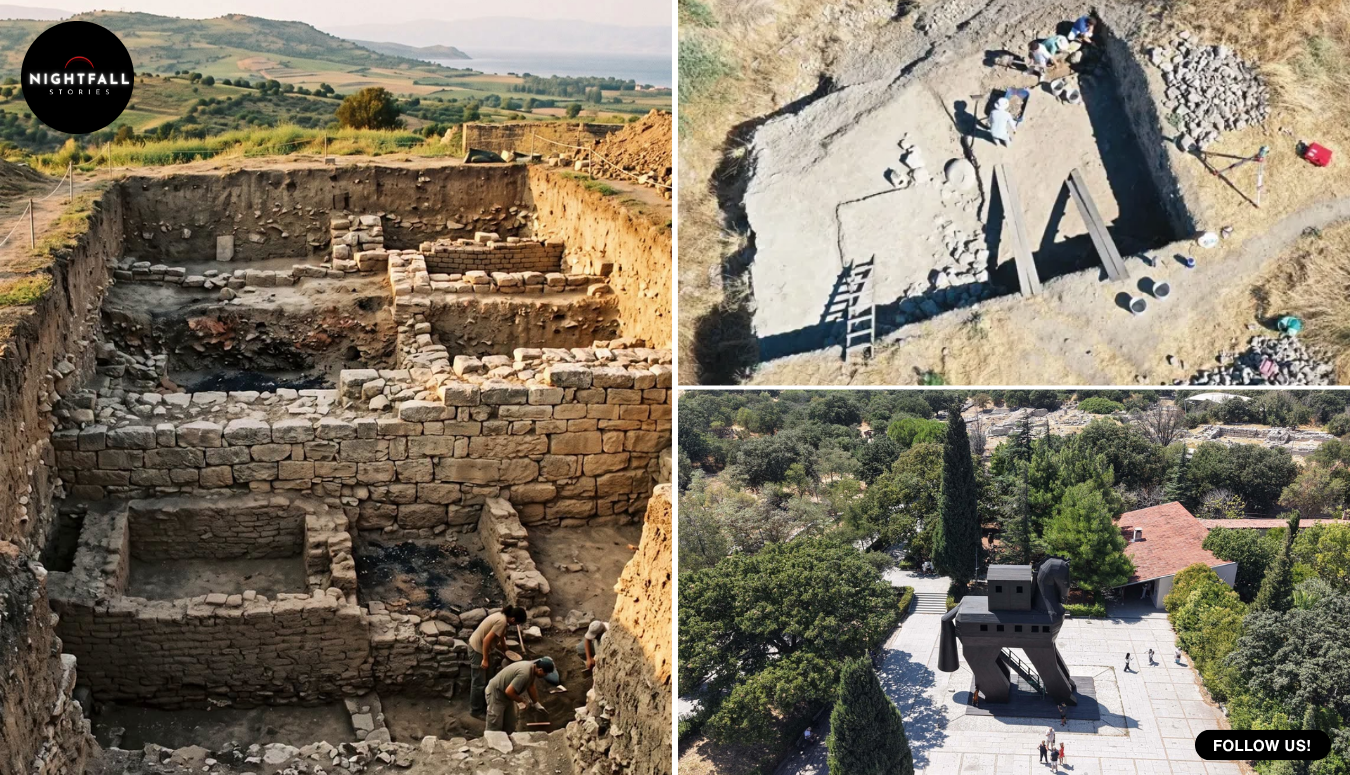
    The current team has been digging in front of the southern gate, and what they have pulled out of the ground there is not a battlefield. It is a shopping street.

    They have uncovered what they believe is the oldest public square at Troy, a marketplace roughly 2,800 years old, complete with a paved surface, an entrance structure connecting it to the gate, architectural remains of the buildings that framed it and a scatter of the sort of finds that come from ordinary commerce. Broken pottery. Amphorae, the big two-handled jars that carried wine and oil around the ancient Mediterranean, the shipping containers of their day.

    Nothing dramatic happened here. That is the whole point, and it may be the most useful thing anyone has found at Troy in years.

    To understand why a marketplace matters more than another burned wall, you have to understand the hole it fills, and to understand the hole you need a sense of how strange this site is to dig.

    Hisarlik is not a ruin lying open on a plain. It is a mound, built up over millennia out of the debris of its own rebuilt selves, and the only way to read it is in section, layer by layer, like a cake. Schliemann’s approach in the 1870s was to cut a colossal trench straight down through the middle of it in search of the oldest and richest thing he could find, which meant driving through the very layers that later turned out to be the ones connected to the Homeric period. Teams have spent the decades since trying to undo the consequences of that trench and to reconstruct what was in the material he threw away. The current excavation has put real effort into repairing that damage rather than chasing new spectacle.

    The site has also been getting older. Work under the present directorate identified a settlement phase beneath everything that had been catalogued before, pushing the founding of the place back by something like six hundred years, to around 3500 BC. A permanent museum opened beside the site around the same time, which gave the finds somewhere to live and the visiting public something to look at besides a hillside. So the twenty-first century version of Troy is a considerably longer and more complicated story than the nineteenth century version, and each layer added at the bottom makes the gap at the top look more conspicuous.

    Troy is not one city. It is at least ten cities stacked on top of each other, numbered by archaeologists from the bottom up, spanning something close to five thousand years from the Early Bronze Age down to the Byzantine period. The layer usually connected to the Homeric story is Troy VI and its successor Troy VII, the great fortified phase with the sloping stone walls that still stand at the site today.

    And then, in the conventional account, things go quiet. The Late Bronze Age collapses across the eastern Mediterranean. The palace systems fail. Troy’s fortified city ends. And for a long stretch afterwards the site appears to go dark, before eventually reappearing as a Greek town called Ilion, which grows into a respectable Hellenistic and then Roman city that trades quite profitably on its own legend.

    How long was the gap? That question has sat unresolved for a very long time, and it is not a trivial one. If Troy stood empty for three or four hundred years, then the Greek Ilion of the archaic period is essentially a new foundation built by people who found some impressive ruins and decided to move in and borrow the story. If the gap was short, then something real was handed across it. Memory. Place names. Possibly people.

    The team working the southern gate area says the gap was short. Reyhan Körpe, deputy head of the Troy excavations and a faculty member at Çanakkale Onsekiz Mart University, has put the interval at roughly eighty to ninety years. Not centuries. Less than a human lifetime stretched across two or three generations.

    The evidence for that is the least glamorous material imaginable, and that is exactly what makes it persuasive. When the new settlers arrived, they did not clear the site and start fresh. They built their houses directly on top of the surviving walls of Troy VI, reusing the old masonry as foundations, which is what people do when the walls are still standing high enough to be worth reusing rather than reduced to a grassy lump. Stonework that has been abandoned for four centuries does not usually offer you that convenience.

    And they put their marketplace in the same place the old one had been. The team’s reading is that the open area in front of the southern gate had already functioned as a place of exchange in the Late Bronze Age, and that when people came back, the ground resumed the job it had always done. A paved road and an entrance linking the lower town to the southern gate had already come up in earlier seasons. What has emerged now is the square itself and the buildings around it.

    Körpe’s summary is blunt enough. What they have excavated, he has said, can be called Troy’s oldest agora, and the finds show that Troy was not abandoned for a long period after the Bronze Age.

    There is a name buried in this that makes the continuity case more interesting than a matter of stones. In Hittite diplomatic records from the Bronze Age, there is a place in this corner of Anatolia called Wilusa. It appears in treaties. It has kings with names that scholars have spent decades arguing over. Most specialists now accept that Wilusa is Troy, or at least the kingdom Troy belonged to.

    The Greek settlers who came to this hill called their town Ilios, later Ilion. Run Wilusa and Ilios next to each other and the resemblance is hard to dismiss as coincidence, especially given the way an initial w sound behaved in early Greek. The name appears to have survived the collapse.

    Names do not travel through empty ground. Somebody has to say them out loud to somebody else. An eighty-year gap is short enough that a person who remembered the old town as a child could have described it to a grandchild who saw the new one. Four centuries of silence makes that chain very hard to build. So the marketplace, the reused walls and the name all point the same direction, which is the kind of agreement archaeologists like.

    It is worth being precise about what is and is not established here, because this has not gone through peer review. These are the excavation committee’s own findings, announced through the press rather than published in a journal. The oldest agora claim is the team’s assessment of their own trench. The eighty to ninety year figure is their interpretation of the stratigraphy and the material. Until a paper exists, every number in this story is provisional, and anyone telling you otherwise is overselling it.

    There is also a wrinkle in the geography that international coverage has tended to smooth over. The area being dug in front of the southern gate is known at the site as the agora because it is where the later Hellenistic and Roman city had its civic plaza, and the excavation has been working that zone for roughly five or six years now. What is new is not the square as a Roman feature. What is new is evidence that the function runs back far earlier than anyone had shown, into the Early Iron Age and arguably before.

    The excavation itself is run by Rüstem Aslan, a professor at Çanakkale Onsekiz Mart University who has been associated with Troy for most of his career and who has led the dig for years. It operates with the permission of the Turkish Ministry of Culture and Tourism under a national heritage programme, with university backing and a corporate sponsor, and it now runs across the full twelve months of the year rather than a short summer season. That matters practically. A site this complex rewards continuity, and a team that can work through the year builds a much finer picture than one that parachutes in for six weeks.

    Aslan has been open about what the dig is still chasing. Two questions dominate. Whether there was a substantial lower town outside the citadel during the Late Bronze Age, which would make Troy a considerably bigger and more important place than the fortress alone suggests. And what the final destruction layer of the Troy VI and VII phase actually looks like, how the city ended and when.

    That second question is the war question, and it has never gone away. Aslan has described the main goal as getting data on how the Troy associated with the Trojan War period was destroyed, and when. It is a careful way of putting it. Nobody serious is looking for Achilles. What they are looking for is whether the archaeological end of Bronze Age Troy is consistent with a siege, an earthquake, an internal collapse, or some combination, and whether the date lines up with anything.

    So the marketplace is, in a sense, a byproduct of a war hunt. The team went looking for how the old city died and found evidence of how the new one lived.

    Which is the part worth sitting with. There is something quietly moving about a public square being the thing that closes a four-hundred-year question. Not a weapon, not a treasure, not a royal tomb. A place where people stood around with jars of oil and argued about price.

    Think about what it actually means. A city falls, for whatever reason. The people who survive scatter. The walls stay up because good stone walls take a very long time to come down on their own. And then, within the span of a few generations, people move back onto the same hill, look at the ruins, and make a set of extremely ordinary decisions. This wall is sound, we will build on it. This open ground by the gate is where the market was, we will put the market there. Someone still calls the place by something close to its old name, so that is what we will call it.

    None of that requires anybody to remember a war. It only requires that the place never became completely strange.

    The other thing this find does is slightly rearrange who Troy belongs to. In the popular version, Bronze Age Troy is an Anatolian city and Greek Ilion is a later Greek arrival, and the two are separated by a clean break, which is convenient for anyone who wants to claim one and not the other. A continuous marketplace across that supposed break makes the separation look a good deal less clean. The same ground, doing the same job, for people who probably did not think of themselves as living in two different cities at all.

    The site has been on the UNESCO World Heritage list since the late 1990s, and it draws visitors who arrive largely for the story rather than the stones, which can be underwhelming if you are expecting the Colosseum. Troy is a layered mound, and layered mounds require patience and a good guide. A paved square in front of the southern gate is not going to change that. It will not photograph like a golden mask.

    But it does something the golden objects never quite manage. Schliemann’s finds told us that somebody here was rich. This tells us that somebody here came back.

    The excavation continues. The lower town question is still open, the destruction layer is still being worked, and the agora trench has more ground in it than has been opened so far. Sooner or later there will be a publication and the numbers will firm up or move. Until then, the honest version is that a team digging for a war found a marketplace, and the marketplace turned out to be the better story: not a city that ended, but one that had a gap in it, and then did not.
  • It sat under a Roman hillside for 2,000 years, and the city on it has never been identified

    It sat under a Roman hillside for 2,000 years, and the city on it has never been identified

    There is a wall under a public park in Rome, about eight metres below the joggers and the dog walkers, that carries a picture of a city nobody can name.

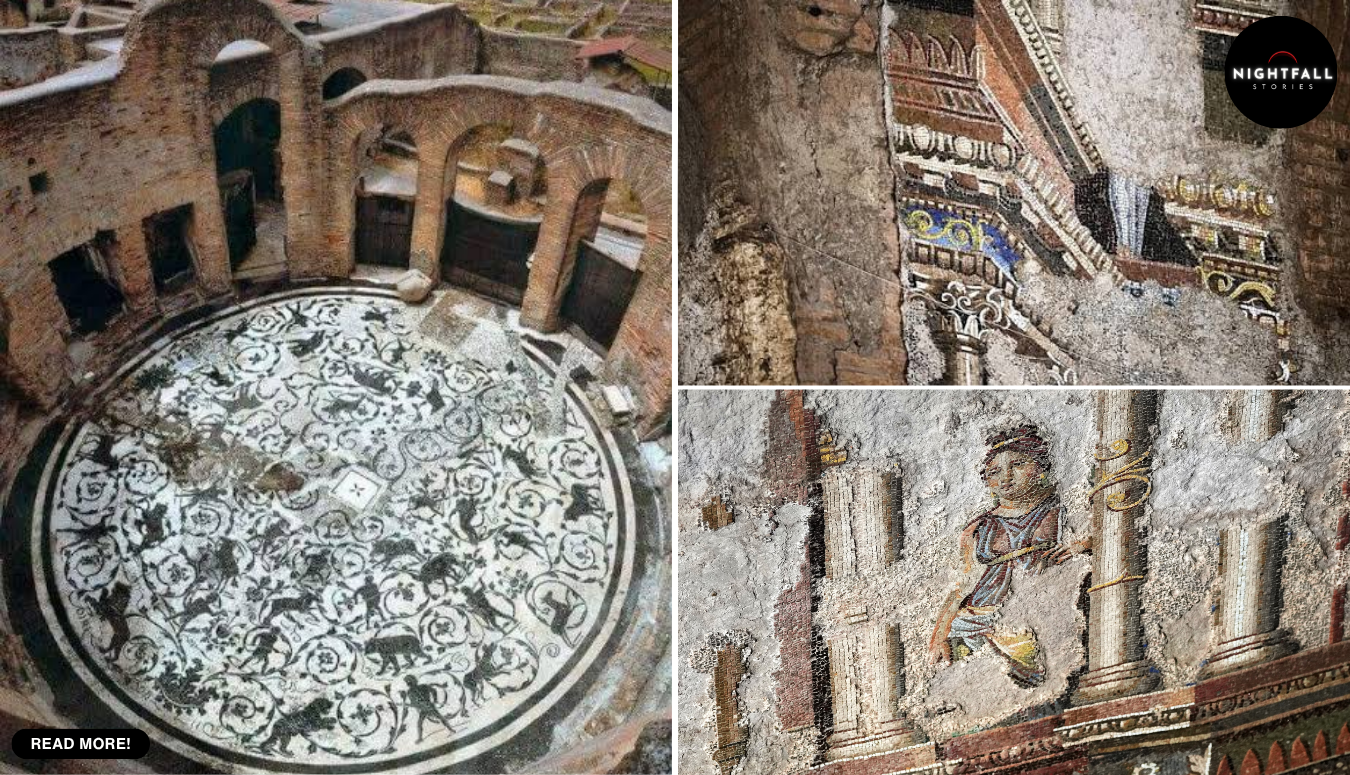
    You can see the walls of it. You can see the towers set into those walls, and the main gate, and the harbour, and the streets running back from the water. There is a theatre. There is a temple. There are ordinary houses in ordinary rows, drawn with the kind of patience that suggests the painter had actually stood somewhere and looked. It is a bird’s eye view of a working port, painted a little before the year 100, and in two thousand years of looking at it, nobody has been able to say which port it is.

    That painting has just gone on public view for the first time, along with something even stranger that shares the same underground corridor with it. And the story of how both of them got there, and why it took roughly thirty years for anyone outside a small circle of specialists to lay eyes on them, is more interesting than the usual archaeology headline, because almost nothing about it is fast.

    Start with the place. The Oppian Hill is one of the smaller rises in central Rome, a green public park a short walk from the Colosseum, the kind of spot where people eat lunch on a bench without thinking much about what is underneath them. What is underneath them is the Baths of Trajan, an enormous imperial leisure complex that opened in the year 109 and covered something on the order of sixty thousand square metres. Libraries, exercise yards, porticoes, pools. It was designed by Apollodorus of Damascus, the same engineer credited with Trajan’s bridge over the Danube, and it was the largest bathing complex the Roman world had yet produced.

    To build something that big on a hill, you first have to make the hill behave. So the architects cut into the slope and raised long vaulted galleries, essentially structural basements, to hold the terraces above them steady. One of those galleries runs about seventy metres along the southwestern side, more than eight metres wide, buried and forgotten once its job was done.

    Here is the part that matters. That gallery was not built empty. When the bath complex went up, the builders swallowed whatever was already standing on that ground, and what was already standing was decorated. The frescoed city and the mosaic beside it both date to the second half of the first century, which puts them a generation or two before Trajan’s baths existed at all. They belonged to something older and grander that was simply absorbed, walled in and used as foundation.

    Archaeologists are careful about what that older thing was, and you should be too. The strongest candidate is Nero’s Domus Aurea, the sprawling palace complex he threw up across this part of the city after the fire of 64, and which his successors deliberately buried under public buildings as a kind of political correction. The other possibility is a separate luxury residence that stood nearby and met the same fate. Nobody has settled it. What is agreed is that these are private decorations from the most extravagant decades of imperial Rome, and that they survived precisely because they were entombed.

    The painted city came out of the ground first. Excavations ran on this stretch in the early 1990s and again at the end of that decade, and the fresco surfaced in the course of that work. It is not a large painting, roughly ten square metres, which is about the size of a small bedroom wall. It is the content that makes people stare.

    Most Roman wall painting that shows architecture is doing something loose and decorative, stacking columns and porticoes into pleasant impossible arrangements. This one is not doing that. It is laid out from above, as though the viewer is hovering, and it is specific. The curtain wall runs with towers spaced along it. The gate is where a gate would be. The harbour basin sits against the town. Roads have direction. Quarters of housing are drawn with enough individual detail that it reads as a place rather than a pattern.

    Which is why the identification question will not go away. Some scholars think it is a real port, painted from knowledge, and that the puzzle is simply that too much has changed in twenty centuries for us to match it to a coastline. Others think Roman painters worked the way a film production designer works, assembling a convincing city out of remembered parts without any single real place behind it, and that hunting for the original is a category error. The superintendency’s own line is the honest one: we do not know which city is represented. It may be a portrait. It may be an ideal. It has kept its mouth shut either way.

    Then there is the other thing in the corridor, and it is the reason this story travelled around the world.

    Partway along the gallery there is a wall covered in mosaic. Not a floor. Almost every Roman mosaic anyone has ever seen is a floor, because floors are what survive when roofs come down and walls collapse. This one went up a wall, and it is still going up the wall, and by the current measurements it runs roughly sixteen metres long and around ten metres high. The archaeologist Francesco Pacetti, who has worked on it, has said the team estimates it is the biggest wall mosaic ever found in the Roman world. Note the word estimates. The full extent has not been exposed. They are still digging.

    What it shows is theatre, in the literal sense. The composition is built like a scaenae frons, the towering ornamental backdrop that stood behind the stage in a Roman theatre, stacked in tiers of columns and architraves and capitals, hung with garlands and plants and the grape and ivy imagery associated with Dionysus. Figures stand in the architecture. The pair that gave the mosaic its working name are read as a Muse and a poet, and there is a bearded older man who has the look of a portrait rather than a type, and a centaur. It is arranged across four levels, so a person standing in that room would have had to tilt their head back to take it in.

    And it is not made of ordinary tesserae. Roman floor mosaic is usually cut stone cubes, practical and hard-wearing. This is built from shells, from coral, from glass, from blue and white marble and coloured stones, the palette of a decorative style Romans used for grottoes and fountain rooms and water features, where the point was that the surface should glitter and look faintly submarine in low light. Somebody wanted this room to feel like the inside of a jewel. There is a niche in the wall over two metres high that once held marble facing and probably a statue.

    More recently, restoration work under the current project exposed a further band lower down that had not been seen before, and it shows buildings rising along a coastline, the sort of seaside villa architecture wealthy Romans built and liked to look at pictures of. So the corridor now holds two separate ancient images of settlements by water, one painted and one in shell and glass, made at roughly the same moment for people whose taste ran in a very particular direction.

    The obvious question is why, if the painting came up in the 1990s and the mosaic has been known for decades, the public is only now allowed to walk in and look.

    Part of the answer is simply that different accounts date the mosaic’s first appearance differently, and that is worth being straight about. The Italian cultural press has reported that the mosaic became visible in 2004, when a passage was opened through the gallery vault. Some international coverage has dated the find to the 1990s along with the fresco, and at least one outlet has put it at 2011. The likeliest reading is that this was not a single dramatic discovery at all but a slow uncovering across three decades, which is how most large buried structures actually come to light and which makes for a terrible headline. What is not in dispute is that the gap between knowing and showing runs to the better part of a generation.

    The rest of the answer is money and condition. An underground gallery is a hostile place for painted plaster and for a wall of glass and shell. It is damp. Things grow on it. Salts move through the masonry. Getting these surfaces to a state where visitors could be admitted meant cleaning, consolidating the plaster, treating biological growth and then building a route that lets people approach without touching or breathing all over the work. The project that finally paid for it is the recovery programme drawn up for Rome under the national post-pandemic funding plan, the strand known as Caput Mundi, and the restoration of this gallery came in at somewhere around three million dollars. That is a substantial sum for one corridor, and it is a rounding error against the wider programme, which is why it happened now rather than in 2004.

    The result opened late in the summer. The mayor of Rome, Roberto Gualtieri, and the city’s superintendent for cultural heritage, Claudio Parisi Presicce, presented the new museum space on the Oppian Hill, with the entrance set at the edge of the park. Visitors go down and walk along a suspended walkway that carries them past the painted city and the mosaic wall without putting a single foot on the ancient surfaces, and from that walkway they can also look out over the part of the excavation that is still live.

    Access started deliberately small. The first sessions were weekend only, by booking, in groups capped at fifteen, with a short window in the morning. From the start of October the schedule widened to Friday through Sunday with several time slots across the day, still fifteen people at a time. Entry is free. For a city that has spent decades being accused of sitting on its own underground and letting it rot, the choice to open a fragile space at all, rather than conserve it and keep it shut, is itself a decision worth noticing.

    Fifteen people at a time also tells you something honest about what this kind of heritage can bear. There is a version of this story where a spectacular find is opened to coach parties within weeks. That version tends to end badly for the find. What happened here instead is thirty years of nothing much, visible to specialists, invisible to everyone else, followed by a funded restoration and a door that opens for a few dozen people a day. Slow is not the same as neglect, though from outside they can look identical for a very long time.

    Stand in that corridor now and you are standing in a space that was never meant to be a space. It was fill. It was the structural underside of a bath house, built to hold up a terrace where Romans would stroll after swimming, and the only reason anything survives inside it is that somebody in the early second century decided the quickest way to deal with a beautiful older building was to brick it into a foundation and forget about it. The vandalism and the preservation were the same act.

    Above that corridor, the park goes on as normal. People walk dogs over a wall of shells and coral arranged into a theatre that nobody has seen performed for two thousand years. And on the plaster a few steps away, a port city sits with its towers and its harbour and its theatre, drawn by someone who knew exactly what they were looking at, waiting for somebody to recognise it.

    Nobody has yet. The archaeologists will keep working the trench, and the wall keeps getting longer as they go, which means the measurements in every article written about it are provisional and everyone knows it. If the city is real, the answer is probably sitting in a coastline somewhere, unrecognisable now, its harbour silted up and its walls quarried away centuries ago by people who needed stone more than they needed history.

    If it was never real, then a Roman painter invented a town so convincing that we have spent the modern era trying to find it. That would be its own kind of achievement, and it would be very much in keeping with the people who commissioned it, who built a room out of seashells and glass so that the light would move on the walls like water.

  • Everyone agreed this animal never left America. Fourteen tail bones in Spain say it did.

    Everyone agreed this animal never left America. Fourteen tail bones in Spain say it did.

    A friend of a Spanish palaeontologist called him one day to say there were bones sticking out of a hillside. That happens a lot in Teruel, a thinly populated province in eastern Spain that happens to sit on some of the best Late Jurassic rock in Europe. What was less usual was the response. Alberto Cobos drove out the same day, looked at what was poking through the slope, and confirmed it was sauropod. Big, long necked, long tailed, the kind of dinosaur a child draws when you say the word dinosaur.

    It took years to get the rest of it out of the ground and longer still to work out what it was. The answer, published now in the Journal of Vertebrate Paleontology, is one of those quiet results that makes a lot of specialists sit up. The bones belong to Diplodocus. Not a relative of Diplodocus, not something Diplodocus shaped. The genus itself, on the wrong continent.

    To understand why that is startling you have to know how narrow the Diplodocus story has been for a century and a half. Othniel Charles Marsh named it in 1878 from material in the American West, and in all the time since, every specimen anyone has been confident enough to call Diplodocus has come from the same place: the Morrison Formation, a band of Late Jurassic rock running through Colorado, Wyoming, Utah and neighbouring states. It is one of the most heavily worked fossil deposits on earth. Generations of collectors have picked over it. The animal became a fixture of museum halls worldwide, largely because one industrialist funded plaster copies of a Diplodocus skeleton and sent them to capital cities across Europe, which is why a great many Europeans have stood under a Diplodocus without any Diplodocus ever having been found in Europe.

    So the textbook position was simple. Diplodocus was an American animal. Europe had its own Late Jurassic sauropods, including diplodocids, the broader family Diplodocus belongs to. Portugal in particular has produced good diplodocid material. But the genus itself stayed on one side of the ocean.

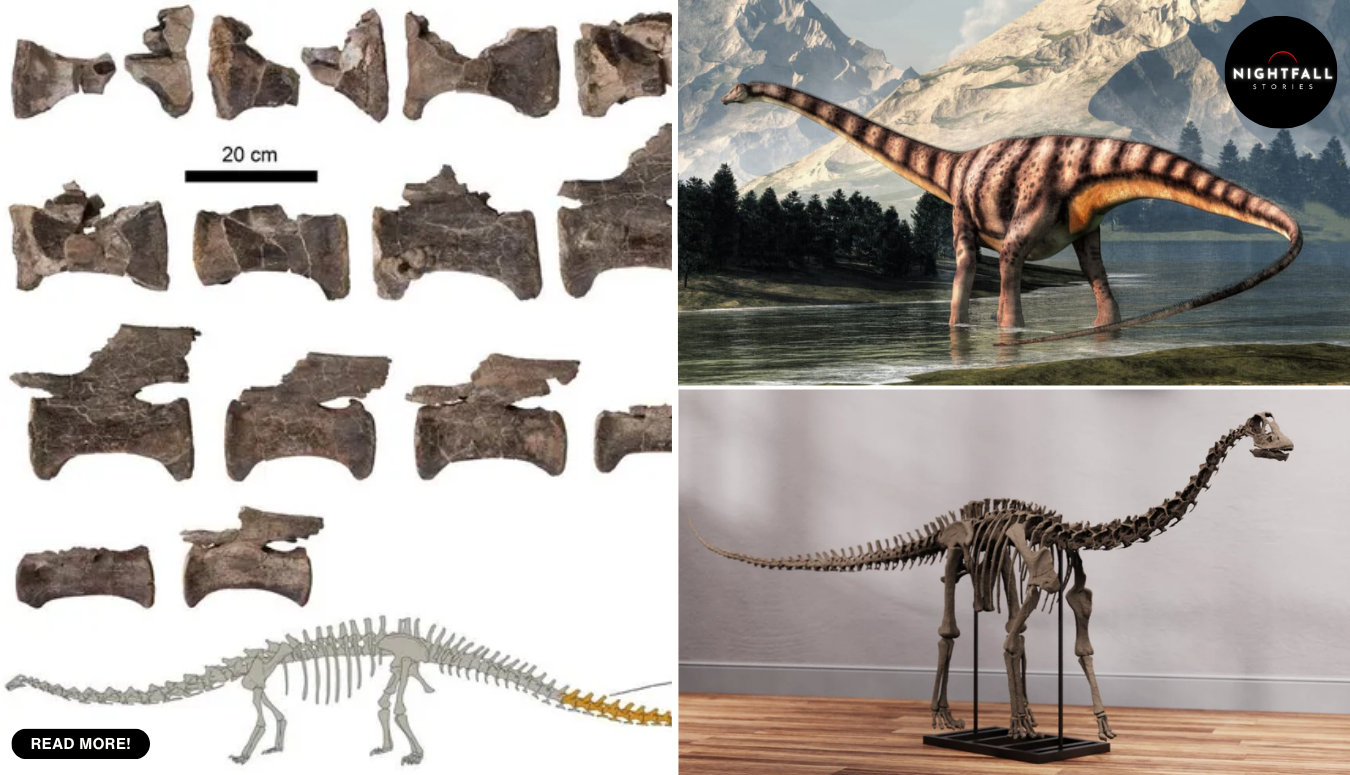
    What came out of the hillside at a site called La Tejería, near the village of El Castellar in Teruel, was a run of fourteen tail vertebrae and several chevrons, the small V shaped bones that hang beneath the tail and carry blood vessels and muscle. The rock is the Villar del Arzobispo Formation, and the material sits at roughly 150 million years old, near the top of the Jurassic. The animal it came from would have been around 25 metres long, which is about the length of two city buses parked end to end.

    The site itself is catalogued as CT-30, one of a long list of registered fossil localities in the province, which gives a sense of how methodically this landscape has been worked. Teruel runs a full research foundation and museum around its palaeontology, and the excavation and preparation of a specimen like this is a slow institutional process rather than a lucky weekend. Bones come out in jackets, get cleaned over months in a laboratory, and only then does anyone start comparing them with material on other continents.

    One nuance about the rock is worth stating plainly, because it affects how the find is read. The Villar del Arzobispo Formation has been the subject of a long running argument about its age, with different studies placing parts of it at the very end of the Jurassic and other parts at the very beginning of the Cretaceous. The authors place this specimen at roughly 150 million years old, in the Late Jurassic, which is what makes the comparison with the Morrison fauna meaningful in the first place. A significantly younger date would change the picture, because the two continents were further apart by then. That dating is not a controversy the paper invented and it is not unique to this site, but it is part of the evidence anyone assessing the claim will want to look at.

    The team behind the study is Sergio Sánchez Fenollosa, a doctoral researcher working on biodiversity and evolution, along with Josué García Cobeña and Alberto Cobos, all at the Fundación Conjunto Paleontológico de Teruel Dinópolis, the research foundation attached to the palaeontology museum and park at Teruel. Sánchez Fenollosa is the lead author, and the identification was not something he arrived at quickly. By his account, the resemblance to diplodocine sauropods showed up early in the bone by bone study and kept getting stronger as they worked through the features, until the conclusion was hard to avoid.

    The features doing the work here are not about size. Size tells you almost nothing in sauropods, because many of them were enormous and quite a few converged on similar proportions. What the team leaned on instead is the internal architecture of the bones and a handful of specific shapes.

    The first is pneumaticity. Sauropod vertebrae were riddled with air spaces, extensions of the respiratory system that hollowed out the skeleton and kept these animals from being crushed by their own weight. How those cavities are arranged differs between groups, and the Teruel vertebrae carry large ones in a pattern consistent with diplodocines. The second is proportion and surface. The vertebral centra, the spool shaped main bodies of the bones, are elongated and lack the lateral ridges some other sauropods carry. The third is a deep groove running lengthwise along the underside of the tail bones. And the fourth, the one the team treats as the clincher, is the chevrons.

    Diplodocus and its closest relatives have forked chevrons. Instead of a simple V, the bone splits into front and rear projections, giving the underside of the tail a distinctive skid like profile. The Teruel chevrons are forked, and they carry particular hollows on their inner surfaces that the authors argue narrow the identification further. Forked chevrons are not unique to Diplodocus alone, but the combination of all these characters in one associated run of bones is what the paper is built on.

    Here is where it is worth being careful, because the headline version of this story overstates what fourteen bones can do.

    There is no skull. There is no neck, no limb, no shoulder or hip girdle. Sauropod classification leans heavily on vertebrae precisely because vertebrae are what usually survives, but the more of an animal you have, the more confident anyone can be. A run of fourteen associated caudals with chevrons is genuinely good material by the standards of European sauropod palaeontology, and the authors describe it as one of the most complete diplodocids yet recovered on the continent. That is a real statement about the Teruel specimen and also a slightly deflating statement about the European record, which is patchy.

    The authors themselves have not claimed a species. The specimen is assigned to Diplodocus at genus level, written formally as Diplodocus sp., with the note that it may well represent a new species that has not been named because there is not enough of it to name one responsibly. That restraint is the most reassuring thing in the paper. The popular coverage has described the animal as a close relative of Diplodocus hallorum, the largest of the known American species, and that phrasing comes from the team. It means the Teruel material resembles that species. It does not mean the two are the same animal, and nobody should write that it is.

    There is also the general problem of convergence. Animals that live similar lives in similar ways evolve similar bones, and sauropods did this repeatedly over a very long stretch of time. Any identification that rests on a set of characters from one region of the skeleton carries the possibility that those characters appeared independently in an animal that was not closely related. Palaeontologists argue about exactly this sort of thing constantly, and a genus level assignment on a new continent is precisely the kind of claim other specialists will go at hard. That is not a criticism of the work. It is how the field is supposed to operate, and the Teruel team has published the material in a peer reviewed journal specifically so that it can happen.

    What makes the result more than a filing exercise is the geography.

    In the Late Jurassic, the Atlantic was not the ocean it is now. It was in the process of opening, a young and comparatively narrow seaway between land masses that had until recently been joined. How narrow, and whether anything the size of a 25 metre sauropod could have got across, has been argued over for decades. Palaeontologists have long noticed family level resemblances between the Morrison fauna and the Late Jurassic faunas of Portugal and Spain, with similar groups of sauropods, similar theropods and similar plant eating dinosaurs turning up on both sides. Something was clearly moving, or had moved recently enough that the two faunas had not yet drifted apart.

    The Teruel authors propose that the crossing worked via a land connection between what is now Newfoundland and the Iberian Peninsula, a route that has been suggested before on geological grounds. That is where the current continental shelves come closest to matching up in reconstructions of the period, and the proto Atlantic in that region was far narrower than the ocean that eventually replaced it. A Diplodocus in Spain would be a strong piece of evidence for exactly that kind of dispersal, because it pushes the resemblance down from family level, which could be explained by a common ancestor long before, to genus level, which implies the two populations were connected much more recently.

    The important qualification is that the land bridge is an inference, not a finding. Nothing was dug up in Teruel that shows a migration route. What was dug up is a tail. The migration story is the explanation the authors consider most likely for how that tail ended up where it did, and it depends on the identification being right. If the identification holds, the crossing becomes considerably harder to argue against. If another team later shows the Teruel animal is a European diplodocid that only resembles Diplodocus, the geographic argument weakens with it. The two stand or fall together, which is precisely why the identification is going to be scrutinised.

    Sánchez Fenollosa has been straightforward about the limits. He has said the question of which Diplodocus species lived in Europe is still open, and that more complete specimens will be needed before anyone can say what actually happened. Teruel is a promising place to go looking. The province has produced a remarkable series of sauropods over the last twenty years, including Turiasaurus, one of the largest animals ever found in Europe, and the region’s Jurassic exposures have been worked systematically rather than opportunistically, which is part of why the finds keep coming.

    It is also worth pausing on the tail, because it is the part of Diplodocus that made the animal famous among specialists rather than among museum visitors. The tail was extraordinarily long and tapered to a whip thin tip, made up of dozens of vertebrae that shrank to little rods at the end. What it was for has been argued over for as long as the genus has existed. Proposals have included a defensive weapon, a counterbalance for the neck, a sensory organ and a noisemaker, and none of them has ever been settled to everyone’s satisfaction. The chevrons that helped identify the Spanish specimen are part of that structure, the reinforcement along the underside that carried the tail’s blood supply and its muscles. So the bones that placed this animal on a new continent are also bones from the single most debated region of its skeleton, which is a nice accident.

    There is a version of this story that is just administrative, a genus getting a new pin on a map. The more interesting version is about what a century of certainty is actually made of. Diplodocus was an American animal because every Diplodocus anyone had found was American, and everyone had been looking hardest in America. The Morrison Formation is extraordinarily productive and it was picked over early, during the era when American museums were competing to fill their halls. European Jurassic exposures are smaller, more scattered, and in many cases were not worked with the same intensity until much later. The absence of Diplodocus in Europe may always have been an absence of digging as much as an absence of animal.

    That is a fairly ordinary feature of palaeontology and it is worth keeping in mind whenever anyone says a species was found only in one place. The fossil record is a sample of a sample. It records the animals that happened to die somewhere that preserved them, in rock that happened to survive, in a place somebody happened to look. A gap on the map is not the same thing as a gap in the world.

    The bones are out of the ground now and on display at the Museo Aragonés de Paleontología at Dinópolis in Teruel, sitting alongside the local sauropods the region is better known for. Visitors will walk past a run of tail vertebrae that, for a hundred and fifty years, were not supposed to be anywhere near Spain.

    Whether the identification survives the next few years of argument is genuinely open. What is not in doubt is that a set of fourteen bones from a hillside in a quiet Spanish province has made a very settled piece of the textbook look a good deal less settled than it did, and that a friend picking up the phone about something sticking out of a slope is still how a fair amount of this science actually starts.

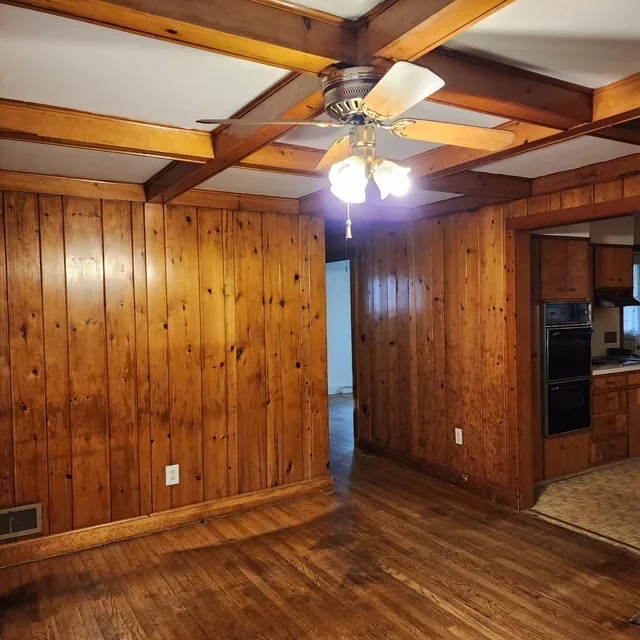
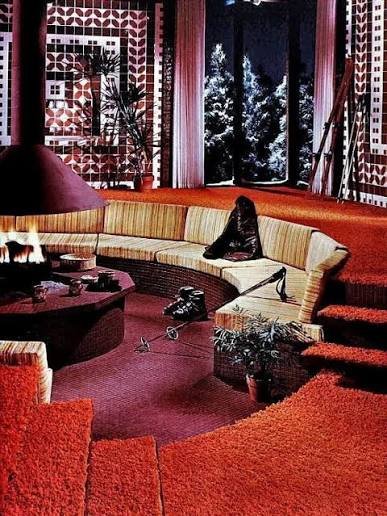
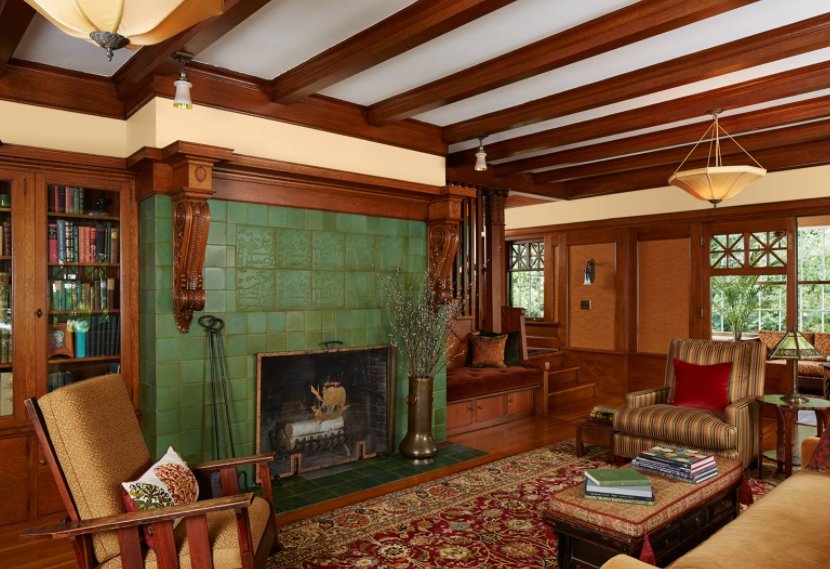
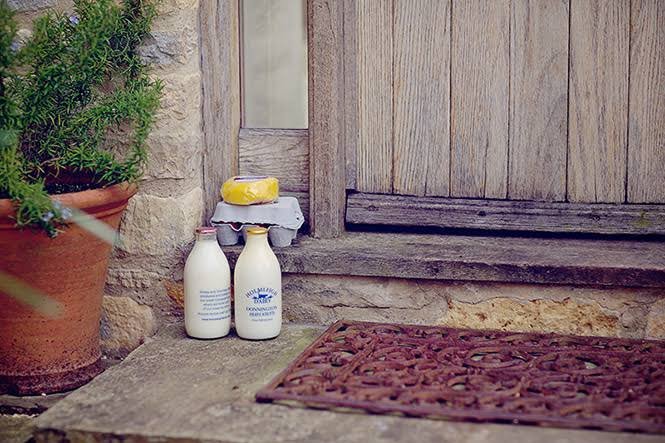
  • 15 Things that completely disappeared from American homes

    15 Things that completely disappeared from American homes

  • The archive said the camp closed in 1956. The shoes in the ground said otherwise.

    The archive said the camp closed in 1956. The shoes in the ground said otherwise.

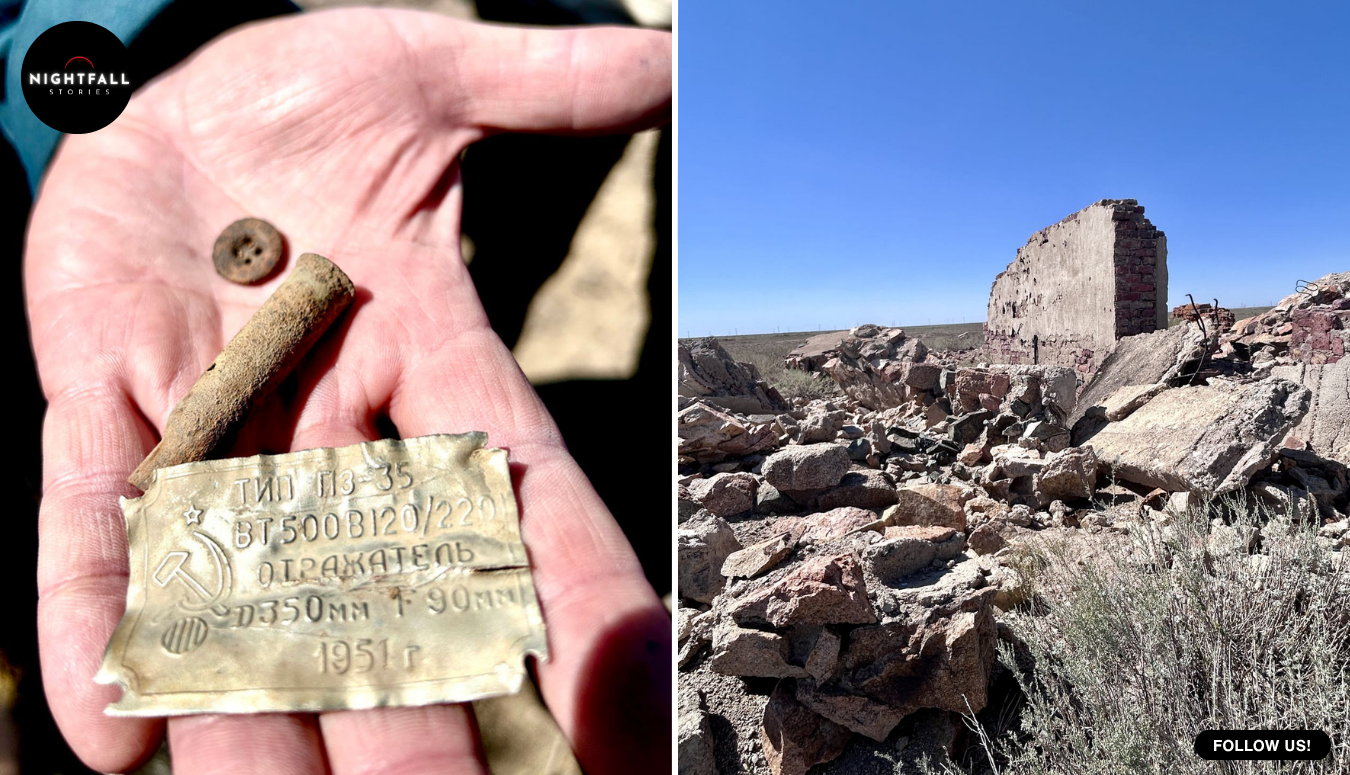
    On a stretch of Kazakh steppe where there is almost nothing to look at, a team of archaeologists picked up the sole of a woman’s shoe, a scatter of broken bottles with 1959 and 1960 pressed into the glass, and a small metal label from a lamp stamped 1951. The lamp label made sense. The bottles did not. According to every official Soviet document historians have worked from for decades, the camp those objects came from had already been shut down.

    That gap between the paperwork and the ground is the whole story. The Soviet state was one of the most obsessive record keepers in history, and its records are the main reason we know as much as we do about the Gulag. Millions of index cards, transfer orders, quotas, closure notices. Historians have spent a generation working through them. What the Czech team on the steppe has done is something different and, in its way, harder. They went and looked.

    The site is Steplag, the Steppe Camp, near Zhezkazgan in central Kazakhstan. It was one of the special camps set up after the Second World War for political prisoners, run under what the system called an intensified regime, which in practice meant numbered uniforms, barred windows and longer hours. More than 20,000 people were held there. They came from well over forty nationalities. Lithuanians, Latvians, Ukrainians, Poles, Russians, Germans and a smaller number of Czechs and Slovaks worked the copper, manganese and coal that the region was valuable for. Estimates of the Czechoslovak citizens specifically held at Steplag run to a few dozen, with hundreds more scattered across the wider network of Kazakh camps, and almost none of their individual stories were ever written down.

    The excavation is run by archaeologists from the Faculty of Arts at the University of West Bohemia, led by Pavel Vařeka, working with Gulag.cz, a Czech organisation that has spent about fifteen years documenting Soviet forced labour camps wherever they can still be reached. Štěpán Černoušek, who chairs Gulag.cz, has been going back to these landscapes for years with cameras, drones and 3D scanners. What makes this round different is a piece of paper. The team says this is the first officially licensed archaeological excavation of a Gulag site anywhere in the former Soviet Union. Not a documentation trip, not a photographic survey. A permit to put a trowel in the ground.

    That distinction matters more than it sounds. Gulag sites sit in an awkward legal and political space across the former USSR. Many are on land nobody wants, in regions nobody visits, and for a long time the practical answer to what should happen to them was nothing at all. A licence turns a ruin into a site, and a site into evidence. It also means the finds are recorded properly, with their positions logged, rather than being picked up loose and losing everything that made them useful.

    Gulag.cz did not arrive at Steplag cold either. The organisation has been running expeditions into the former Soviet camp landscape for years, including a substantial trip through Kazakhstan several years ago that covered Alzhir, the camp outside the capital that held the wives and female relatives of men the state had already condemned, and Karlag, the sprawling agricultural complex in the Karaganda region that was one of the largest camps in the entire system. That work produced a documentary film and a public online archive of the Kazakh sites, with 3D models of standing structures, panoramic photography, survivor biographies and the same declassified Western reconnaissance images the archaeologists now use as survey data. The point of putting all of it online was that most people will never stand on that steppe, and the buildings that are still standing are not going to be standing indefinitely.

    The team did not walk in blind. Before anyone dug, they worked over the landscape with drone photography and with declassified American military reconnaissance imagery from the 1950s and 1960s, the satellite photographs taken when the West was trying to work out what was going on inside the Soviet interior. Those images are now one of the most useful tools in the archaeology of the recent past, because they show what a place looked like while it was still being used. Combined with ground survey, that gave the team a map of things to go and check.

    They ended up identifying six camps in the Karaganda and Zhezkazgan regions. Three were already known. Three were not. One of the new ones, out on the open steppe, turned out to be remarkably intact, still with its working zone laid out beside the compound where the prisoners were held. There was also a cemetery that nobody had marked or maintained, where the graves are indicated by wooden posts and broken crosses, and where the count runs to somewhere near twenty visible burials. One of those carries a Lithuanian cross that was put up in 1990, by people who came back to find where somebody had been left.

    Across the sites, some things repeated. Three lines of barbed wire around every perimeter. Guard towers at every one. Isolation cells at most of them. Černoušek has said that what actually surprised the team was how much variation there was underneath that shared skeleton, in the materials the camps were built from and in how they were organised internally. The system was standardised on paper and improvised in practice, which is true of a great deal of Soviet administration and is exactly the sort of thing documents tend to hide.

    Then there are the objects. Fragments of plates and bottles. An aluminium mug. Pieces of clothing and footwear. Uniform buttons. Spent cartridge casings, concentrated near where the guard towers stood. The lamp label from 1951, from the lighting rigged along the fenced perimeter. None of it is spectacular. That is rather the point. This is the material of ordinary days in a place built to consume people, and it survives because nobody ever thought it was worth removing.

    The bottles are the part that has made this news beyond archaeology. Glass from that era was routinely dated at manufacture, which makes it an unusually honest little clock. The team recovered bottle glass marked 1959 and 1960 at a location that the archives place as closed by 1956. Alongside it, they found the remains of women’s shoes.

    Černoušek’s reading is that there had been a camp there, a women’s camp, after the date the records give, and that its existence was simply not carried into the documents historians have been using. He is careful about how he puts it, and so should anyone repeating it be. This is an interpretation drawn from a small body of material, not a settled fact. Bottles move. Sites get reused. A date on glass tells you when the bottle was made, not when it was dropped, and in a place where scrap was valuable and nothing was thrown away lightly, that gap can be years. The honest version is that the archaeology is inconsistent with the archival closure date and that the team thinks the most likely explanation is continued use.

    What raises the confidence is that the objects are not the only source. There is a man.

    Mizambai Bralin lives locally and was a child when the camp was operating. When the team brought him back to the site, he was able to walk them through it and say what each building had been for, which structure did what, where the guards were, how the place functioned. Černoušek has said he remembered it all with remarkable precision. His account and the material in the ground point the same way, and neither was derived from the other. In historical work that kind of independent agreement is worth a great deal more than either piece on its own.

    It is also, in the plainest terms, a closing window. Anyone with a first hand memory of a camp that was running in the late 1950s is now in their late seventies at the youngest. There is a reason archaeologists of the twentieth century tend to work fast and take testimony while they still can. In twenty years this excavation would have been a purely material exercise, and the ground alone would never have been able to tell them what each building was used for.

    The wider context around Steplag is well documented and does not depend on any of this. In 1954, in the months after Stalin’s death, prisoners at Steplag took control of the camp in what became known as the Kengir uprising. For about forty days they ran the place themselves, organised food and order, set up their own administration and negotiated with the authorities. It ended when the army came in with tanks. The number of people killed has been disputed ever since, with official figures far lower than the accounts of survivors, and it remains one of the episodes where the archive is least trusted even by people who work in it every day. That history is one reason the site matters, and it also explains something about why a discrepancy in a closure date does not surprise the people working there.

    The Kazakhstan fieldwork is part of a larger research project the Czech team calls Wild Land, which looks at how people held in twentieth century camps found ways to endure them. It deliberately sets the Kazakh camps against a set much closer to home, the uranium mining camps around Jáchymov in the Czech Ore Mountains, where the Czechoslovak state ran its own prison labour system in the 1950s. Putting the two side by side is a way of making a point that is easy to lose: this was not a distant thing that happened to other people somewhere cold. The same architecture of wire, tower and quota was built inside Europe, by a government, within living memory.

    It is worth being clear about why a women’s camp at Steplag is plausible rather than startling. Women were held throughout the Soviet camp system, in separate compounds and in whole separate camps, on the same political articles as men and often for nothing more than a family connection to someone already arrested. Kazakhstan in particular had a significant share of them. So the archaeologists are not proposing something the system did not do. They are proposing that one instance of something the system did routinely was either never written into the surviving paperwork or was written into files that have not been found, declassified or connected to this location. Given how the closure and reorganisation of the special camps was handled in the years after Stalin’s death, when units were merged, renumbered and transferred at speed, a site slipping out of the ledger while people were still inside it is not an extraordinary suggestion.

    There is one thing the team has been explicit about not doing. The cemetery will not be excavated. The plan is a non invasive geophysical survey, which can map what is below the surface and give a sense of how many burials there are without disturbing any of them. Nobody is going to be dug up to produce a number. That decision is worth stating plainly, because it is the kind of restraint that rarely makes headlines and is the difference between research and intrusion. The graves are the resting place of people whose families, in many cases, were never told where they were.

    What all this adds up to is a quiet argument about how we know what we know. The Gulag has been studied for decades almost entirely through paper, partly because the paper survived in enormous quantity and partly because for a long time the sites themselves were unreachable. Paper is generated by an institution, for the institution’s purposes, and it records what the institution wanted recorded. A camp that was closed on schedule looks tidy in a ledger. A camp that quietly kept operating for another three or four years with a few hundred women in it does not, and there was nobody in that chain of command with a reason to write it down.

    The ground has no such motive. It keeps a bottle because a bottle was dropped. It keeps the sole of a shoe because leather and rubber outlast almost everything in dry steppe soil. It is an indifferent witness, which in this case makes it a useful one.

    None of this rewrites the history of the Gulag, and the archaeologists have not claimed it does. The system’s scale, its purpose and its cost were established long ago by historians working with exactly the documents this find complicates. What the excavation does is smaller and more specific. It demonstrates that the archive has holes, it gives a method for finding them, and it shows that those holes can be filled by a combination of what is buried and what an elderly man still remembers about the place where he grew up.

    The team intends to go back. There is more of the steppe to survey, and the satellite imagery has flagged locations nobody has walked yet. The finds from this season are being catalogued and studied, and the results will go through the normal process of publication and challenge, where the 1959 interpretation will be tested by people whose job is to be sceptical of it. That is how it should work.

    Meanwhile the objects themselves sit in trays: buttons, casings, a label from a perimeter lamp, a piece of glass with a year on it, the sole of a shoe that belonged to a woman whose name is not in any file anyone has found. She was, according to the documents, not there. She was there.

  • The paperwork was perfect except for two things nobody was supposed to notice

    The paperwork was perfect except for two things nobody was supposed to notice

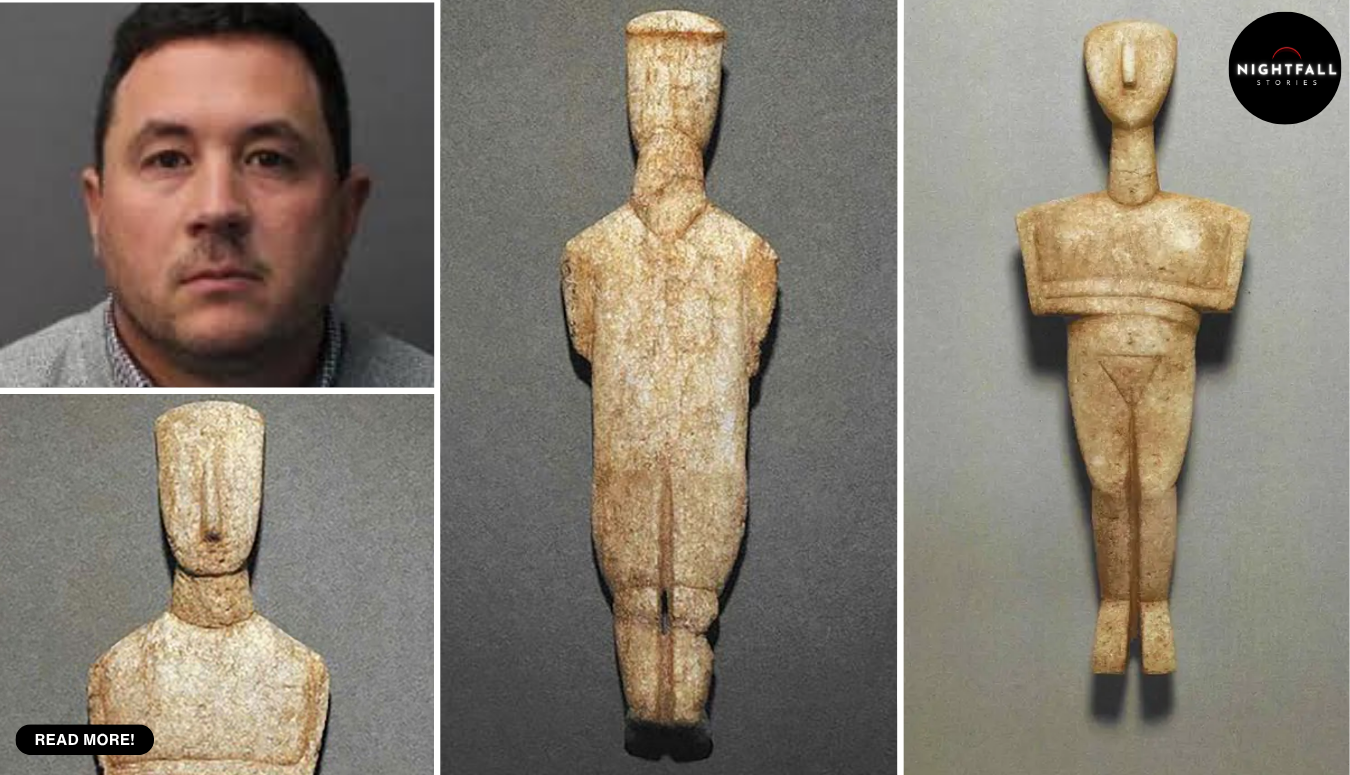
    The three little marble figures were the easy part. They were about thirty centimetres tall, a kilogram each, pale and flat-faced and folded-armed in the way that has made Cycladic sculpture one of the most recognisable shapes in the ancient world. Anybody who has walked through a museum has seen something like them. They are the objects that look four thousand years old and somehow also look like they were carved last week by a very good modernist, which is exactly why people pay enormous sums for them.

    What sank the whole thing was a folder of invoices.

    A man had approached Sotheby’s in London saying he had inherited the pieces from his late grandfather, who had bought them back in 1976, and he had the paperwork to prove it. In the antiquities trade that paperwork is not a formality. It is the entire transaction. An unprovenanced ancient object is close to unsellable at a major house, because nobody can rule out that it came out of the ground illegally. A documented purchase history going back decades is what turns a stone figure into a lot number. Which is why, when people set out to defraud this market, they have learned to spend most of their effort on the documents rather than the objects.

    There is a specific reason the date on those invoices was chosen. The market’s working convention treats 1970 as the line in the sand, the year of the international convention on the illicit trade in cultural property, and objects that can be shown to have been out of their country of origin and in private hands before that point are far easier to sell than objects that cannot. A purchase documented in the mid-1970s from an established dealer is close to the ideal story. It is recent enough for records to plausibly survive and old enough to sit on the comfortable side of everyone’s compliance policy.

    He had spent a lot of effort. The invoices named a real dealer, a genuine London firm, with an embossed company logo at the top. They were dated to a year that sat comfortably on the right side of the market’s ethical cut-off. They named an address in central London. They carried the name of a grandfather.

    The researchers at the auction house read them anyway, and two things did not survive the reading. The letters had been printed by a machine, not typed, and the printing technology involved did not exist in the mid-1970s. And the typeface, the actual shape of the letters on the page, had not been designed until 2001, twenty-five years after the documents were supposedly written.

    Then there was a third detail, and it is the one that stays with you. The embossed logo of the dealership, the raised mark that is meant to say this is a real company with a real stamp, had not been embossed at all. Somebody had drawn it by hand.

    The man was Andrew Crowley, in his mid-forties, from Longwell Green, near Bristol in the west of England. He had contacted the auction house in 2022. By October of that year the house’s own due diligence team had flagged inconsistencies in both the sculptures and the documentation, and rather than take the commission and let the problem become somebody else’s, they called the police.

    It is worth sitting with that decision for a moment, because it runs against the lazy assumption people hold about auction houses. A specialist department is measured on what it brings in. Three Cycladic figures with clean-looking 1970s paperwork is a good week. Turning it away and calling the police is a worse week, and the house did it anyway, and that choice is the reason the rest of this story exists.

    What followed was the kind of investigation that almost never gets written about, because it involves no chase and no dramatic raid. The Metropolitan Police’s Art and Antiques Unit, a small specialist team, worked the paperwork. Detective Constable Ray Swan led the case. The forensic question, essentially, was when could this piece of paper have been made, and answering it meant going after the font and the printing method. Officers worked with the FBI in New York on the typeface analysis. The answer came back unambiguous.

    The Art and Antiques Unit is a genuinely unusual outfit. It is tiny, it has been repeatedly reported to be under resource pressure over the years, and its caseload covers everything from stolen paintings to looted archaeological material passing through one of the largest art markets on earth. Most of what it does is paperwork and relationships, and most of its wins look like this one: not a recovery, but an interception.

    Researchers also went looking for the grandfather. The invoices gave a London address from which the purchase had supposedly been made, and the records showed no John Crowley registered there in the relevant period. The man on the paperwork, the one whose collection was supposed to explain how three Bronze Age figures came to be sitting in a house in the English west country, could not be placed at the address where his own documents said he had been.

    The dealership named on the invoices was K.J. Hewett Limited, and this is where the scheme reveals a certain amount of homework. Kenneth John Hewett was not invented. He was a real and well-connected London dealer who started out as a bookseller, bought a small shop in Richmond after the war, and later moved to Sydney Street off the King’s Road. He dealt in antiquities and ethnographic art, and he moved in the highest circles of the trade, doing business with Sotheby’s own chairman Peter Wilson and with the dealer John Hunt, and counting the collectors Robert and Lisa Sainsbury among his friends. Objects that passed through his hands sit in serious collections today.

    Using his name was clever for the obvious reason. Hewett is exactly the sort of figure whose 1970s paperwork ought to exist, whose stock ought to have included pieces like this, and who is no longer alive to be asked. It is also, from the point of view of everyone who works in this field, a fairly ugly thing to do to a dead man’s reputation.

    A stargazer, for anyone who has not met the term, is a small carved marble figure from Anatolia with a tilted head and an upturned face, hence the name. Like the Cycladic figures they are ancient, abstract, instantly legible to a modern eye, and fiercely contested in ownership terms. It is a very short list of object types that combine that much desirability with that much documentary murk, and this case involved two of them at once.

    Crowley was arrested on the street outside Sotheby’s premises on New Bond Street in Mayfair in the summer of 2023, having come back to the building. He pleaded guilty to fraud by false representation early in 2026, and he was sentenced at Southwark Crown Court in London a few months later.

    Here is where the story needs to be told precisely, because it has been reported loosely. He was not jailed. The sentence was two years’ imprisonment suspended for two years, together with two hundred hours of unpaid work and an order to pay costs of roughly two thousand dollars. A suspended sentence means the prison term hangs over him and activates if he offends again during that period. He walked out of the building.

    The value figures deserve the same care, because the court did not accept the number the prosecution opened with. Prosecutors put the potential value of what he was trying to sell at up to around 650,000 dollars. The judge worked from a lower figure, closer to 450,000 dollars. The auction house disputed the higher valuation and has indicated that it did not originate with them. Nothing was ever sold and no buyer ever lost money, which is a large part of why the sentence landed where it did.

    There is one further wrinkle worth flagging rather than smoothing over. The police account of the case describes three Cycladic figures. Reporting on the court proceedings also refers to an Anatolian stargazer statuette, a different and similarly coveted type of small carved figure, offered alongside them with the same forged provenance. The two accounts are not in conflict so much as differently scoped, and the safest description is three Cycladic figures at the core of the case, with a fourth object mentioned in the court reporting.

    What the court did not establish, and what nobody has claimed in public, is who actually made the figures, or who physically produced the documents. Crowley admitted representing them falsely. That is the offence he pleaded to and the only thing the record supports. Whether he carved them, commissioned them, bought them believing something else, or acquired the paperwork from somewhere upstream is not something the case determined, and it would be wrong to write it as though it had.

    It also bears saying that the sentence sits within a pattern that frustrates a lot of people who work in this field. Art and antiquities fraud is expensive to investigate, slow to prosecute, and tends to produce sentences at the lighter end, partly because the loss is often prevented rather than realised, and partly because courts weigh it against violent offending. Three and a half years passed between the arrest and the sentencing.

    The reason this matters beyond one man in one courtroom is that it is a small, unusually clear picture of how the antiquities market actually protects itself, which is not the way most people assume.

    Cycladic figurines come from the islands of the Aegean, and the classic folded-arm type belongs to roughly the third millennium BCE. They were carved from marble, most of them modest in scale, though a handful approach life size. They turn up overwhelmingly in burial contexts, and some of them show signs of having been repaired while they were still in use, which tells you they mattered to somebody while that somebody was alive. They are also, by the honest admission of the field itself, a catastrophe of documentation. The great majority of the ones in circulation were taken out of the ground without any record of where they came from, which means scholars are largely studying objects stripped of the one piece of information that would tell them the most.

    That combination, enormous desirability and almost no reliable archaeological context, is precisely the gap a forger works in. If nobody can say where a real one came from, the story attached to a fake one is harder to disprove. The only defence left is the paper.

    So the people who catch this are not detectives in the conventional sense. They are provenance researchers, and the work is dull in the way that genuinely skilled work often is. You read a document and you ask whether every single element of it could have existed on the date it claims. You check whether the named person lived at the named address. You compare the letterhead against known examples. You find out when a font was released.

    Angelina Giovani-Agha, a provenance specialist who commented on the case, made the point that the market cannot lean on the police to clean up afterwards, and that the value of provenance research lies in stopping fraudulent material before it enters circulation at all. That is not a small distinction. Once a forgery is sold at a major house, it acquires exactly the thing it was missing, which is a real, verifiable, documented sale history. It becomes legitimate by having been sold. Every later owner inherits the lie in good faith, and unwinding it can take decades, if it happens at all.

    In this instance the material never got in. The figures were never catalogued, never estimated in a printed sale, never bid on. The chain stopped at the front desk because somebody whose job is to be sceptical about paperwork did that job properly, at the cost of the commission the house would have earned had they simply believed him.

    The Met’s own assessment of the case emphasised the cross-border cooperation involved and the harm prevented to the London art market, which is exactly the right frame. Nobody recovered a stolen masterpiece. Nobody was rescued. What happened is that a fraud that had clearly taken months of preparation was stopped at the moment it tried to convert into money, and the person who tried it now has a criminal conviction and a suspended sentence attached to his name in a trade with a very long memory.

    There is a quiet lesson buried in the forensics, and it is not the one about ancient art. It is about how documents fail now. A forger in 1976 forging a document from 1946 had to worry about paper and ink and typewriter keys, and a careful one could get very close. A forger today forging a document from 1976 is fighting a much harder battle, because the file they typed it in carries a typeface with a release date, and their printer leaves a signature, and both of those facts are knowable by anybody who thinks to ask. The objects can be aged. The paperwork cannot lie about the technology that made it.

    The three figures sat at the centre of a story about a grandfather who bought beautiful things half a century ago, and the story was warm and plausible and entirely defeated by the shape of the letter A.

  • He scored all five. The song that went to number one wasn’t his.

    He scored all five. The song that went to number one wasn’t his.

    There is a moment near the end of the Toy Story 5 premiere that people who were in the room keep describing in the same slightly stunned way. An 82-year-old man sat down at a piano on the stage of the Dolby Theatre in Los Angeles, and the biggest pop star in the world walked out and sang with him. The song they sang was not the new one. It was not the track that had just gone to number one on the charts in a dozen countries. It was a soft, shuffling, faintly goofy thing he had written thirty-one years earlier for a movie about a cowboy doll, and half the audience had known it since before they could read.

    The man at the piano was Randy Newman, and the reason that duet landed the way it did has almost nothing to do with the star standing next to him. It has to do with the fact that Newman has now written the music for every single Toy Story film, from the first one in 1995 to the fifth, and that for this one, for the first time, the song everybody walked out humming was written by somebody else.

    That is the story, and it is a gentler one than the internet made it sound. Newman did not get pushed out. He scored the picture, all of it, his tenth feature for Pixar. What changed is that the emotional showpiece song, the one that plays over the closing credits and gets clipped and reposted and cried over, came from a different desk. Newman gave it his blessing, sat down at the premiere, and played his own old song instead. For a composer whose entire career has been about the distance between what a thing looks like and what it actually feels like, it is hard to imagine a more Randy Newman ending.

    To understand why that matters, you have to know how unusual his run has been. Film scoring is a business of turnover. Franchises change composers the way they change directors. Newman has held the Toy Story chair for three decades, which means the music that a five-year-old heard in 1995 is by the same person as the music their own five-year-old hears now. Almost nothing in popular culture works that way.

    Consider what that continuity actually covers. The first film arrived when computer animation was an unproven gamble and a lot of people in the business quietly expected it to look like a novelty within five years. Newman scored that one, then A Bug’s Life, then Toy Story 2, then Monsters, Inc., then Cars, then Toy Story 3, then Monsters University, then Cars 3, then Toy Story 4. Nine features for the same studio before this one, and at least one Academy Award nomination out of seven of them. The fifth Toy Story makes ten.

    He did not come to it from nowhere, either. Newman grew up inside the family business in the most literal sense. Three of his uncles, Alfred, Lionel and Emil Newman, were Hollywood film composers, and Alfred in particular was one of the towering figures of the studio era. Several of his cousins went into scoring too. Randy was the one who went sideways first, into songwriting, into records full of unreliable narrators and sly, uncomfortable characters, songs that a lot of listeners misread on first pass because he refused to tell them who to root for.

    That is the man Pixar hired in the mid-1990s to write a song for a toy. And what he handed back was “You’ve Got a Friend in Me,” which is so simple that people assume it must have been easy. It is not a clever song. It has no twist in it. It is a lazy, warm, slightly rickety promise from one friend to another, and it has outlived nearly everything else on the radio that year.

    There is a version of that story where the studio wanted something inoffensive and got it. The truer version is that a songwriter known for irony was handed a job that gave him no room for irony at all, and he simply did the sincere thing properly. It is much harder than it looks. Sincerity without sugar is the rarest register in film music, and it is why the song still works in a cinema full of adults.

    Newman’s relationship with the Academy Awards became a long-running joke because of how exactly it went wrong. He was nominated over and over and lost every time, and at one point he held the record for the most Oscar nominations without a win. Fifteen. He finally won for “If I Didn’t Have You” from Monsters, Inc., and then again for “We Belong Together” from Toy Story 3. He has been nominated twenty-two times in total. That is a career where the industry kept telling him he was among the best in the room and kept handing the trophy to somebody else, and he kept showing up anyway.

    He has also, and this is the part that gets forgotten, handed songs to other singers before. The most devastating piece of music in the entire franchise is “When She Loved Me,” the Toy Story 2 song about a cowgirl doll being outgrown. Newman wrote it. Sarah McLachlan sang it. He did not need to be the voice on it, and anybody who has watched that sequence knows the choice was correct. So when the same thing happened in a different shape on the fifth film, it was less a break with tradition than most of the coverage suggested.

    The fifth film itself is a stranger proposition than the previous four. Directed by Andrew Stanton, it picks up two years after Toy Story 4 and puts Woody, Buzz and Jessie up against something no villain toy ever managed, which is a tablet. The new arrival is a device called Lilypad, voiced by Greta Lee, and it becomes the child’s favourite thing in the house. Stanton has described the premise as an existential problem rather than a plot one, the problem being that nobody is really playing with toys anymore. Tom Hanks, Tim Allen and Joan Cusack came back. Conan O’Brien turned up as a pair of trousers. The film opened in more than four thousand cinemas and went on to take in the region of 589 million dollars worldwide, with a global opening weekend of about 310 million, the biggest the studio has ever had.

    Underneath all of that is Newman’s score, and it is not a nostalgia exercise. He wrote around twenty-five new cues for the film alongside the returning themes, and he built the toys-versus-technology conflict into the orchestration itself. One cue, written for a sequence where the toys make their move, leans on brass and percussion for something close to a military feel, with a male choir layered underneath that he compared to marine voices. The child in the film gets her own theme in the strings. Jessie gets up-tempo cowboy music, which is exactly what she has always deserved. The new device character gets a soundscape stitched together with gadget noises from the sound design team, so the machine literally does not get an orchestra of its own.

    He has talked about the mechanics of this work before in the flattest possible terms, as a craft problem rather than an act of inspiration. A cue has to start somewhere, land somewhere, and get out of the way of the dialogue. A theme has to be recognisable after four notes and still bearable after four films. The thing nobody outside the trade appreciates is that a composer on a picture like this is writing to a moving target, because animation keeps changing under the music right up until it cannot change anymore.

    That is thirty-one years of consistency delivered by a man in his eighties, recorded on a scoring stage in Culver City across two years of work, and it is the kind of labour that nobody claps for because it is doing its job when you do not notice it.

    The other song arrived late, and it arrived fast. According to the account that has been given publicly, Taylor Swift was not initially interested in the project at all. What changed her mind was reportedly a letter from one of the film’s producers, Jessica Choi, arguing that her voice mattered in an industry still weighted heavily toward men. Swift went to an early screening. By her own telling she conceived the song more or less on the spot, went home, and had it finished within about eight hours. She wrote and produced it with Jack Antonoff, who played the majority of the instruments on the recording himself.

    It is worth being precise about what that means, because the speed of it got reported as a stunt and it was not one. Sitting through a finished film and coming out with a complete song by the end of the same day is not a magic trick, it is what happens when a writer has been carrying a character around in their head for twenty years and finally gets asked the right question. Swift has spoken about how much one particular lyric about the cowgirl doll’s heartbreak affected her, which is a fairly good indication that the song came from being a fan of these films long before she was a contributor to one.

    The song is called “I Knew It, I Knew You,” and it is built around Jessie, the cowgirl doll whose entire arc across the franchise has been about being loved and then left. It was released as a single ahead of the film and went straight to number one on the Billboard Hot 100, Swift’s fifteenth chart-topper, and it went to the top in several other countries as well. It was the first song from a Pixar film ever to do that, and it topped the Billboard Global 200, another first for a Disney or Pixar film song. It plays over the closing credits and sits first on the soundtrack album, ahead of Newman’s twenty-five cues.

    The soundtrack album came out on the day the film opened in cinemas, running to twenty-seven tracks and around seventy-six minutes, and it puts the two pieces of work side by side in a way that is quietly revealing. One artist’s contribution is a single track written in a day. The other’s is most of the record, built over two years, including revisited versions of “You’ve Got a Friend in Me” and “When She Loved Me” that reach back across the entire franchise.

    Newman, for his part, has been publicly warm about the whole thing. Asked about Swift he described her as remarkably grounded and genuinely nice, which from a man whose stock in trade is withering character studies is a real compliment. He has not made any claim to have been involved in writing it, and the honest description is that the song was a late addition that was never woven into the score’s thematic architecture. It sits alongside the score rather than inside it. Swift has said that having his blessing to step into that world took the pressure off, and she has talked about his music with the specificity of somebody who has actually studied it, praising the syncopations that are unmistakably his and the chords that nobody else would reach for, and the way he writes lyrics that are intricate underneath and plain on the surface.

    That last observation is the whole thing in one sentence, and it explains why the premiere played out the way it did.

    Because when the two of them finally performed together at the Dolby Theatre, they did not do the new song. They did “You’ve Got a Friend in Me.” Newman played. Swift sang with him. A room full of people who work in this industry for a living watched a thirty-one-year-old piece of writing do what it has always done, which is disarm everybody instantly, and then they all went and watched the film.

    There is something quietly instructive in that choice. The obvious move would have been to perform the number one record in front of the people who made the film it came from. Instead the evening handed the stage to the older song, and to the man who wrote it, and let the newer artist be the one standing slightly to the side. Nobody announced it as a tribute. It just was one.

    None of this is breaking news, and it would be dishonest to present it that way. The premiere happened early in the summer, the film went out into cinemas the following week, and the chart run and the box office have long since settled. What has not settled is the odd, quiet significance of what the fifth film represents in one person’s working life.

    Newman is 82. He has been writing music for these characters since the year the first film came out, when the technology used to make it was so new that nobody was sure audiences would accept it. He has watched the franchise change directors, change its own rules about what a happy ending looks like, and arrive at a fifth instalment whose central question is whether children still want toys at all. He is still the person writing the music for it. He wrote the score while the biggest song attached to the picture belonged to somebody born decades after he started.

    A lot of long careers end with a person clinging to the part of the job that makes them visible. Newman appears to have done close to the opposite. He kept the part that is actually hard, the two years of cues and orchestration and getting a brass section to sound like a toy army, and he let the part that generates headlines go to a writer who came in with something the film needed and produced it overnight.

    The work is still there either way. It is playing under every scene in that film, and it has been playing under these characters since 1995, mostly without anybody knowing whose it is. That is the deal composers make. You get thirty-one years inside people’s memories and almost none of the credit, and if you are very lucky, one night near the end of it, a full house stands up for a song you wrote about a toy.

  • He collapsed reaching for the microphone stand. Twenty-four hours later he played anyway.

    He collapsed reaching for the microphone stand. Twenty-four hours later he played anyway.

    There is a particular kind of quiet that comes over a room when everyone realises at the same moment that what they are watching is not part of the show.

    Ray LaMontagne was near the end of his set at the Ryman Auditorium in Nashville. He reached for the microphone stand, and he went down. Emergency medical crews came into the building and treated him there. The concert ended early. A couple of thousand people walked out into the warm night with no idea whether the man they had just watched was all right.

    His management posted an update not long after. He was in the care of local emergency services, he was being treated for heat-related dehydration, he was doing well, and he was grateful to everyone for understanding. That statement is the whole of what has been said publicly about what happened to him, and it is worth being clear that it is a statement from his team rather than a medical record. Nobody outside that circle knows anything more, and the honest version of this story does not pretend otherwise.

    What makes the night stranger is that it had been going oddly for a while before that. Earlier in the set he had stopped mid-song, apparently losing his place, and stepped off the stage briefly before coming back and carrying on. Accounts from the room and from the outlets that covered it differ slightly on which songs were involved, so it is not worth pinning down precisely. What is consistent across every version is the sequence. Something was wrong, he paused, he went off, he came back, he kept playing, and then near the end of the night he did not get up.

    The following evening he was onstage at the Louisville Palace.

    That is the fact people have found hardest to process, and it deserves to be handled carefully rather than turned into a slogan. He played. There is no public account of a doctor clearing him, no public account of what he did with the intervening day, and no statement from him about the decision. So the only truthful thing to say is that twenty-four hours after emergency crews treated him in a theatre, he performed again, and that this is what happened rather than what anybody should aspire to. Playing through it is not a virtue and nobody reading this should take it as one. The reason it is interesting is not that it was brave. It is that it is a window into what a touring schedule actually does to the people inside it.

    Consider the machinery around a single night on a tour like this one. A venue with staff rostered. An opening act, in this case the Canadian songwriter Tamara Lindeman and her band The Weather Station, who have been supporting on the whole run. A crew that has already loaded in. A few thousand tickets sold to people who arranged childcare and time off. Every one of those things pulls in the same direction, which is forward. The only person in the whole apparatus whose body has a vote is the one standing at the front of it, and he is also the person with the least room to say no.

    The support act is worth a mention too, because it says something about the kind of tour this is. Tamara Lindeman, who records as The Weather Station, is a Canadian songwriter whose recent work is closer to chamber pop than to folk and who writes with a seriousness that does not obviously sell tickets. She is on every date of this run. That is not a promoter’s choice. That is an artist picking somebody he wants to listen to from the side of the stage.

    And LaMontagne is an unusually poor fit for that machine, which is what makes his presence on a long run notable in the first place.

    He has been openly, consistently uncomfortable with the performing life for more than twenty years. He describes himself as a very private person. He rarely gives interviews. The parts of a music career that involve being looked at have never sat well with him, and he has said as much often enough that it is simply part of the public record rather than a piece of mythology. He is not a man who tours because he loves the room.

    The story of how he got there at all is one of the better ones in modern folk music, and it is worth telling properly, because it explains the shape of everything since.

    He was born in New Hampshire in the early seventies, one of six children raised by a single mother, and the family moved a great deal. He spent part of his teens in Utah, where by his own telling he was more interested in drawing than in anything the school wanted from him. He ended up in Maine, and after finishing school he took a job in a shoe factory in Lewiston.

    The turn came from a clock radio. He woke up one morning to a Stephen Stills song, and something in it rearranged what he thought he was allowed to want. He left the factory. He started playing out at the end of the nineties, tutoring part time to stay afloat, recording a demo, taking opening slots wherever he could get them.

    A music executive named Ron Clayton heard him at a festival in Maine and put him in front of a publisher. That led, eventually, to Trouble, his debut, produced by Ethan Johns and released by RCA in 2004. It sold something like a quarter of a million copies in the United States and around half a million worldwide, which for a record with almost no promotional machinery behind it and a singer who would not play the game is a remarkable number. Those songs, Trouble and Jolene and Hold You In My Arms, have spent two decades turning up in other people’s most important moments.

    The songs on it have had a stranger afterlife than most. Trouble arrived without a face attached to it, at a moment when a singer was still expected to be a personality, and it spread almost entirely by people handing it to each other. It turned up in television scores and in films, in wedding first dances and at funerals, and a lot of the people who know every word of it could not pick him out of a room. That anonymity is unusual and he appears to have protected it deliberately. The record is famous. He is not, particularly, and that seems to be exactly the arrangement he wanted.

    He kept going, and the career settled into a pattern of quiet, well-made records that did better than their profile suggested. He won a Grammy for best contemporary folk album for God Willin’ and the Creek Don’t Rise. He has nine studio albums now. The most recent, Long Way Home, came out a couple of years ago and was his first without a major label behind him, released on his own imprint with independent distribution. Its lead single went to number one on the adult alternative airplay chart, his third to do that. Twenty years in, working for himself, still topping a chart.

    Which brings us to why this particular tour exists. The billing is a twentieth anniversary run for Trouble, and the draw is that he is performing the album complete, in sequence, for the first time on a tour. For an artist who has spent two decades resisting the idea that he owes anybody the old songs, that is a real concession, and a warm one. The anniversary framing is loose, since the record is from 2004 and the tour is happening now, but the branding is not the point. The point is that he decided to go back and play the thing that made him, all of it, every night.

    Playing a record front to back is a different job from playing a set, and anyone who has done it will tell you so. A setlist is built to manage a performer as much as an audience. You put the hard one early while the voice is fresh, you follow the demanding song with one that lets you breathe, you read the room and move things around. An album in sequence removes all of that. The order was decided in a studio two decades ago by a much younger man who was not thinking about how it would feel to sing it several nights a week at fifty three. You take it as it comes.

    Trouble is also not a gentle record to sing. It sits low and then asks him to push, and the thing people love about that voice, the rasp at the top of it, is produced by doing something to a throat that throats do not enjoy. Across a full run of theatre dates, an hour and forty minutes a night on average, that accumulates.

    He was supposed to do it a year earlier. The run was postponed because he needed oral surgery and a longer recovery than anyone had planned for. Ticketing pages for several of the dates still carry the original date they were moved from, including the Louisville show, which was rescheduled from almost exactly a year before the night he ended up playing it. He rebooked the whole tour and started again in late summer, opening in Salt Lake City and working east.

    So by the time he reached Nashville he was a couple of weeks into a run he had already once had to abandon, performing a full album plus a second set of catalogue material, roughly a hundred minutes of singing a night, in the back end of an American summer.

    The Ryman is not an incidental venue in any of this. It is a former tabernacle, built in the late nineteenth century, with wooden pews instead of seats and a reputation as one of the best sounding rooms in the world for exactly the kind of music LaMontagne makes. It is also a building whose acoustic virtues come from being a brick box that was never designed for air conditioning, and people in the room that night reported it was unusually warm. Playing the Ryman is a milestone for a songwriter. It is not a comfortable night’s work.

    It is also, for a performer, an exposed room in a way modern venues are not. The audience is close, in rows of church pews, and there is no darkness to hide in. The sound is so good precisely because nothing between the singer and the back wall is disguising anything. Everyone in that building could see clearly that something was happening, which is part of why the coverage afterwards was so immediate.

    What happened afterwards was, by the standards of the internet, restrained and quite decent. Footage from the audience existed within minutes, as it always does now, and most of the coverage chose not to lean on it. The man had a medical emergency in front of two thousand strangers holding cameras, which is a thing that would have been private in any other era and any other job. The kindest thing the rest of us can do with that is not watch it, and the coverage that mattered stuck to what his team actually said.

    There is no follow-up statement beyond that first one. He has not spoken publicly about it. He went to Louisville, and then he kept going, north and east through theatres and opera houses and amphitheatres, a show every second night or so. He has played through the second half of the month with no further incident reported and the tour has dates running into the autumn.

    That is the ending, and it is a quiet one, which suits him. There is no lesson here about pushing through and no arc of triumph over adversity, because neither he nor anyone around him has claimed one. A man who never much wanted to be looked at went back out to play his first record all the way through for the people who have carried it around for twenty years, his body objected in the most public possible way, his team said what it said, and he went back to work the next night.

    The nicest detail in the whole story is the one nobody planned. On the tour statistics for this run, the songs he has played most often, the ones that turn up in nearly every set, are the ones from that first record. Trouble. Jolene. Hold You In My Arms. How Come. Two decades of writing since, nine albums of it, and the songs a room full of people still wait for are the ones a man wrote after he quit a shoe factory because a clock radio went off at the right moment.

    He is still out there singing them.

  • 15 Bizarre things people used to believe were good for you

    15 Bizarre things people used to believe were good for you

  • Nine years of filming, and the hardest scene was him getting on a plane

    Nine years of filming, and the hardest scene was him getting on a plane

    A film crew followed Travis Barker for the better part of a decade, and when they finally sat down to work out how the story should end, they came back to him with an idea that seemed small. Walk onto a plane. Or, if that was too much, just stand at the airport and look at one.

    He was furious. By his own account he told them the documentary could come out after he was dead, because as far as he was concerned it was already dead to him. Part of him, he said later, wanted to tell them exactly where they could put that ending.

    You have to know what they were asking for. On a September afternoon in 2008, a chartered Learjet 60 tried to take off from Columbia Metropolitan Airport in South Carolina with six people aboard. It never got into the air. Multiple underinflated tyres came apart during the takeoff roll, the hydraulics went with them, and the captain tried to abort at a speed the aircraft was never going to stop from. The jet ran off the end of the runway, crossed a road and caught fire.

    Four of the six died. The two pilots survived the impact and were lost to the fire. Two passengers, Barker’s assistant Chris Baker and his security guard Charles Still, were killed outright. Barker and his friend Adam Goldstein, the DJ known as DJ AM, got out. Both were badly burned.

    Barker had burns across roughly sixty five percent of his body. He spent about eleven weeks in hospital and came through something in the order of sixteen operations. Goldstein survived too, and then died of an accidental overdose less than a year later, which is the kind of second blow that does not get its own headline but sits inside a person for the rest of their life.

    The four deaths were the whole point of the investigation that followed, and its findings are worth knowing, because they explain why the crash was never a freak act of nature that nobody could have seen coming. Investigators concluded that the tyres had been running badly underinflated, that they failed during the takeoff roll, and that the resulting damage took out the hydraulics and the braking. Inadequate tyre pressure checks were cited. So was the captain’s limited experience on that particular type. So was a design issue in the thrust reverser system. The abort was attempted at about 144 knots when the speed beyond which the aircraft was committed to fly was 136. Eight knots, and a set of tyres nobody had checked properly.

    Eighteen years on, that is still the shape of it. Not fate. Maintenance.

    Goldstein’s story deserves more than a clause, because the two of them came out of that fire together and only one of them is here. He went back to work, he talked publicly about being clean, and he was reportedly prescribed painkillers and anxiety medication in the aftermath like anyone with those injuries would be. He developed his own fear of flying. Less than a year after the crash he was found dead of an accidental overdose in his apartment. Barker has spoken about carrying the weight of having lived when four people did not and then losing the one person who knew exactly what that fire looked like from the inside.

    So when a documentary crew suggested that the natural final image was Travis Barker walking up an aircraft stair, they were not asking for a shot. They were asking a man to walk back into the single worst thing that had ever happened to him, on camera, for the benefit of a film.

    That film is out now. It is called Travis Barker: Louder Than Fear, directed by Justin Krook and Michael Dwyer, and it went up on Hulu in August and on Disney+ for viewers outside the United States. Nine years of filming went into it. Questlove turns up, and Stewart Copeland, and Lars Ulrich, the sort of line-up that tells you how seriously drummers take this particular drummer. And the thing everyone comes out of it talking about is not the drumming.

    What makes the story land is how ordinary the obstacle is. Plenty of people are frightened of flying. It is one of the most common fears there is, and most people who have it manage by gritting their teeth for four hours a couple of times a year. Barker’s problem was that his entire working life is built on aircraft. A touring musician who cannot fly is a touring musician who cannot work the way everyone else works, and for thirteen years he simply refused to try.

    What he did instead sounds made up until you hear his bandmate confirm it. He took a tour bus from Los Angeles to New York, six days on the road. Then he got on the Queen Mary and crossed the Atlantic, eleven days at sea. Then another bus at the other end. Seventeen days, give or take, to reach a place an eleven hour flight would have delivered him to before lunch. He did that, more than once, rather than sit in a seat with a tray table.

    And when the distances got too big even for that, he stayed home. Blink-182 toured Australia in 2013 without him, and he said plainly at the time that he had not got past what happened the last time he flew.

    It is worth pausing on what that actually meant for his working life, because “he did not fly” undersells it. A drummer at his level is not doing twenty shows a year. He is doing festivals on three continents in the same summer, session work in one city and a tour rehearsal in another, award shows, one-off appearances, the constant low-level shuttling that a career at that altitude demands. Every one of those became a logistics problem or a no. He kept building anyway, producing across hip hop and pop and everything that is not punk, running a record label and a clothing line, doing the parts of the job that can be done from the ground.

    The fear did not start with the crash, and the film is honest about that. Barker has said publicly that he was afraid of flying long before 2008, and that the way he handled it was chemical. He was taking painkillers in serious quantity, by his own account twenty to thirty pills a day at the worst of it, partly to get himself onto aircraft and partly for everything else. He has described having someone on the payroll whose actual job was to sit and watch him sleep, because nobody was confident he would wake up.

    Then came the crash, and the fear that had already been there acquired a set of memories to attach itself to. He has said since that the accident was what finally got him off the pills. Not a programme, not a clinic. The crash. He has been sober since, and the film treats that as the spine of the whole thing rather than a footnote to the drumming.

    None of that is presented as a method. It is worth saying clearly, because stories like this one get flattened into advice very quickly, and what happened to Barker is not a plan anybody should copy. He survived something catastrophic and came out the other side of a dependency at the same time, and those two facts sitting next to each other in a sentence do not make one the treatment for the other. He is describing his own life, not writing a prescription.

    To understand why the flying mattered so much, it helps to know where the drumming came from, and the film spends real time there. Barker was born in Fontana, in southern California, in the mid seventies. He has said the first thing that switched him on to drums was Animal from the Muppets, which is about as pure a four year old’s reason as you could ask for. His parents bought him a Muppets drum kit. His mother went further than encouragement and learned to read music alongside him so she could actually help.

    She had Sjogren’s syndrome, and she died the day before he started high school. Before that she told him to keep going with the music. A boy losing his mother on the eve of the most exposed week of his childhood is not a detail you dress up, and the documentary does not try to.

    What he did with the rest of his teens is the sort of decision that looks either reckless or clear-eyed depending on how it turns out. He covered his neck and hands in tattoos, on purpose, so that no ordinary employer would take him. He has explained it as removing his own plan B. If he could not get hired anywhere else, he had to make the music work.

    For a while it did not. After school he worked as a bin man in Laguna Beach, riding the truck in the mornings and playing in local punk bands at night. In the mid nineties he joined the ska-punk group The Aquabats, initially as a temporary fill-in, sleeping on a friend’s sofa. He stayed.
    The break, when it came, was almost absurd. Blink-182 lost their drummer just before a show and needed someone who could play their set that night. Barker was given the songs and a dressing room with no kit in it, and he learned the whole thing by drumming on his own knees. Accounts differ slightly on the numbers, somewhere around twenty songs in under an hour, and he played it clean. He has been their drummer since 1998, and Enema of the State the following year turned a punk band into a stadium act.

    That is the career the plane crash interrupted, and the reason the fear cost so much. He was not somebody who could quietly stop travelling.

    The film includes something from the morning of the flight that is difficult to sit with. Barker has said his daughter Alabama, who was very young, became distressed before he left and said something about a roof on fire coming off. He has said he had his own misgivings, took a photograph of the aircraft and messaged his father about not wanting to get on. People carry those moments for decades, and the documentary lets it sit rather than turning it into something mystical.

    He flew again in 2021, thirteen years after the crash. His wife was with him, and the film gives that its place without turning the whole story into a relationship one. What comes across most in the reviews is that the flight is not staged as a triumph. Nobody punches the air. He is a man with white knuckles doing a thing he does not want to do, and the honesty of that is exactly why it works as an ending.

    It is also worth being precise about what the filmmakers actually did and did not do. They did not talk him onto a plane for the cameras in one afternoon. The request landed years into a project he had already given them enormous access to, and he was the one who turned it over, got angry about it, and then decided to treat it as a challenge rather than an insult. He has compared the shift to the way he used to think about being straight edge as a younger man, a refusal to let a thing have that much power over him and over his family. The crew asked. The decision was his, and it took a long time.

    That distinction matters, because the version of this story where a documentary cures somebody is a lie, and it would be an unkind lie to anyone watching who has a fear of their own that has not moved in years. The film is not claiming that. What it shows is a very long stretch of unremarkable, unglamorous work, mostly off camera, in which nothing photogenic happens at all.

    The film itself is not shy about how it handles the crash. The sequence is cut against a drum solo, which sounds tasteless described in a sentence and works on screen, because the noise is the only language the film has for what that was. There is footage from the years he spent at sea, ocean crossings on a liner while the rest of the band flew. Reviewers have flagged that some of the injury and recovery imagery is hard to watch, and one gave it four stars while saying, fairly, that it is not a reinvention of the form. It does not need to be. It has the one thing most music documentaries cannot buy, which is time.

    What the nine years give the film is proportion. You cannot fake a decade. You can see him age across it, see the band come apart and come back together, see Mark Hoppus get a cancer diagnosis in 2021 and watch what that does to three men who had stopped speaking properly. Grief keeps arriving in this story from different directions, and Barker keeps going back to the same room and hitting things in time for a living.

    He is still doing it. Blink-182 have been touring, he has kept producing across genres that have nothing to do with punk, and the travel arrangements are now the same boring ones everybody else has. The seventeen day Atlantic crossing is a story he tells rather than a schedule he keeps.

    The documentary went up in August and has done the thing good documentaries do, which is send people back to the music with different ears. Drummers have been talking about the technique. Everyone else has been talking about the last five minutes.

    And those last five minutes are just a man at an airport. No score swelling into something enormous, no big speech. Somebody who was told by a film crew that this would make a good ending, told them where to go, thought about it for a long time, and then walked up the stairs anyway.

    Nine years of cameras, and that turned out to be the shot.