Blog

  • A scientist says Africa’s largest estuarine lake has about ten years left. Its guardians say he is wrong

    A scientist says Africa’s largest estuarine lake has about ten years left. Its guardians say he is wrong

    For the past three years, the water in South Lake, North Lake and False Bay has been coming back under 6 parts per thousand. Seawater is 35. Below 3, according to the two scientists who have been watching those readings longest, the marine fish in Lake St Lucia start dying in numbers nobody will be able to count properly.

    That is the whole story in one measurement, and it is worth sitting with for a second, because almost everything else about this argument is contested and that figure is not. Lake St Lucia, on the KwaZulu-Natal coast of South Africa, is the largest estuarine lake system in Africa. It covers roughly 35,000 hectares and is on average less than a metre deep. It accounts for about half of all the estuarine surface area in South Africa, which means it is the nursery for a very large share of the fish that eventually turn up on hooks and in nets along a long stretch of that coastline. It sits inside the iSimangaliso Wetland Park, inscribed as a World Heritage Site in 1999, and the local name translates roughly as place of wonder.

    Professor Alan Whitfield has been studying it, and estuaries like it, since 1978. That was the year he joined what was then the JLB Smith Institute of Ichthyology, which became the South African Institute for Aquatic Biodiversity. He retired from it in 2018 and holds the title of emeritus chief scientist there, along with an honorary associate professorship at Rhodes University. Four degrees, all in zoology or ichthyology, the last of them a doctorate of science awarded in 2011. If you wanted to design a person to tell you what has happened to South African estuaries over the last half century, you would end up with something close to him.

    Speaking at a seminar in Makhanda during Heritage Month, Whitfield said the lake is about to undergo what he calls an ecosystem flip. Within the next decade, on his account, the estuary becomes a freshwater wetland, the connection to the sea effectively ends, and the marine fish trapped on the wrong side of it die. He put the number at thousands and thousands, probably hundreds of thousands, and the hedge in that phrasing is his own, not something added afterwards. What replaces the system, he said, is a much simpler place with far less variety in it, and in his opinion not a place that warrants World Heritage status at all.

    The iSimangaliso Wetland Park Authority, which is responsible for the site, has said in public that it does not share the view that the St Lucia estuary is approaching an imminent ecological tipping point. That position was given to a South African newspaper by a spokesperson who was not named. When a second newsroom approached the authority months later, it did not respond before publication. So one of the two parties in this disagreement is on the record through an unnamed official and has since stopped answering questions, which is worth saying plainly because it shapes what a reader can and cannot judge here.

    It would be easy to write that as a story about a brave scientist and an institution with something to hide. It is not that, and the reason it is not is more interesting than the simple version.

    Start with how the lake got here, because the mechanism is the argument. The uMfolozi is the biggest single source of water into the system. In 1952 its mouth was diverted away from the lake, for two reasons that were both perfectly rational at the time. The river carries an enormous sediment load out of a catchment that has been getting steadily more degraded, and farmers had been planting sugar cane on the floodplain since around 1911 and did not want to be flooded when the river mouth closed. So the river was sent elsewhere, dredgers were brought in through the 1950s and 1960s, hard structures were built at the estuary mouth, and for sixty years the mouth was opened artificially whenever it closed.

    Then two things happened. In 1984 Cyclone Domoina destroyed the structures at the mouth and wrecked a canal that had been dug in the late 1970s to feed clean fresh water into the lake, and the canal was never repaired. And in the early 2000s, deprived of its largest source of fresh water, the lake came close to drying out completely for the first time anyone could remember. Parts of it dried out again in 2016. Dry means hypersaline first, and hypersaline kills things too.

    So in July 2012 the uMfolozi was reconnected to the estuary, with funding routed through the World Bank’s Global Environment Facility. It looked like a correction of a seventy year old mistake. Whitfield has said that at the time he and his colleagues thought they were finally on the right track.

    What came down the reconnected river was sediment. The mouth then stayed closed almost continuously from the beginning of 2015 to the end of 2020, and during those six years silt and clay piled up in the estuary and in the long channel called the Narrows that links lake to sea. Reeds moved out from the banks into the narrowing channel. The abandoned link canal from the 1970s, which was supposed to be decommissioned, got broken into by uMfolozi floods and now delivers sediment straight into the estuary near a spot called Honeymoon Bend, where the deposits and the reeds together have built a constriction that stops tidal water pushing upstream. Further in, vegetation has choked the Potter’s Channel and Brodie’s Shallows area so thoroughly that lake water can only seep through it rather than flow.

    That is the physical reason the salinity readings are what they are. Salt water cannot get in. And one of the clearest signs is something you can see rather than measure: freshwater reeds along the shoreline are thriving, and those reeds cannot survive water saltier than about 12 parts per thousand.

    The fish have already started voting. Adult flathead mullet used to make an annual spawning run out of False Bay and North Lake, through South Lake and down the Narrows, in such numbers that crocodiles and flocks of pelicans gathered to meet them. That run appears to have been lost in recent decades. Nobody staged it. It simply stopped happening.

    Whitfield and Dr Ricky Taylor, writing together, and with Professor Janine Adams and Caroline Fox in a paper in the African Journal of Aquatic Science, have set out three things they want done, in order. Block the two points where the uMfolozi has broken into the old link canal, and then dredge out the sediment that has built up at Honeymoon Bend. Recreate Potter’s Channel so lake water can actually move. And breach the combined mouth artificially if it stays closed for more than three years. They also want a proper hydro and ecological monitoring programme, which they say has been largely absent for the past decade, and that complaint is not a small one, because it means both sides of this argument are working with less data than they should have.

    Here is where the simple version falls apart. Whitfield’s written case and his spoken one are not the same case. In the estuaries feature he and Taylor published with SAIAB earlier this year, they describe St Lucia as close to an ecological tipping point and then say, in as many words, that when it will occur they do not know, because it depends on how connected the channels are, on episodic river floods, on sea level rise, and on how fast sediment accumulates. The decade figure is not in the paper. It is what he said at a seminar. That matters for how a reader should hold it: the mechanism is measured, the direction is measured, and the timing is a projection by one scientist with a long record rather than a consensus finding.

    The two sides are also not using the word tipping point to mean the same thing. Whitfield and Taylor use it geologically. St Lucia, they argue, has always been travelling from deep estuary towards coastal floodplain, freshwater pans and swamp, and the only question is how fast, with human decisions having compressed thousands of years of change into decades. On that reading the lake becomes an ephemeral shallow freshwater system that dries out entirely in long dry spells, there is no more seawater exchange, sediment keeps building, and the change is irreversible. The authority’s denial is about imminence. It says it does not accept that the estuary is approaching an imminent tipping point, and it says decisions about a World Heritage Site require long term monitoring, specialist investigations, environmental authorisations, independent expert review and observation of the ecosystem as it currently is. Those are two different propositions. Somebody can be right about a trajectory and wrong about a date, and an institution can be right to want authorisations before it sends in machinery and still be presiding over a decline.

    And there is a third voice that makes the custodian versus scientist frame collapse altogether. Professor Anthony Forbes, a marine and estuarine researcher, has called the new proposals fiddling with nature. His argument is not that the lake is fine. It is that the sixty year artificial breaching policy that ran from 1952 to 2012 is precisely what left the lake with no fresh water and nearly dried it out in the early 2000s, and that the people now proposing new engineering are proposing a version of the thing that caused the last disaster. When the authority assisted a breach of the mouth early this decade after river flooding, a group of scientists, some of whom had worked at St Lucia since the 1970s, said publicly that it was done in apparent disregard of the authority’s own management strategy, which since 2012 had been to stop artificial breaching and let the estuary re establish its own dynamics. Forbes was among the names attached to that criticism.

    So read those two episodes together. The authority was attacked by scientists for breaching the mouth. It is now being attacked by scientists for not being willing to intervene. Whitfield’s own recommendation includes artificial breaching under defined conditions. These are not two camps. This is a genuinely hard problem on which qualified people have been disagreeing for half a century, and the authority sits in the middle of it holding the permits.

    The government has had a look too. A panel of experts was convened to examine the scientific basis for breaching the St Lucia mouth, and its report was released by the national environment minister a few years ago. It did not side with the people who called the breach a scandal. It found ecological reasons that supported opening the mouth, including how long it had been shut off from the sea, the sediment that had accumulated, invasive species, loss of biodiversity and a weakened nursery function. It recorded that after the opening the nursery function was restored, marine fish came back in numbers that mattered to tourism and recreational fishing, large animals returned to the mouth area, and the lake shifted from fresh towards brackish. It also recorded what did not happen: no change in sediment removal, no improvement with the reeds or the invasive species, no help for the mangroves, and no relief for the farmers upstream. Its recommendations were cautious. Maintenance breaching could continue only in clearly defined exceptional circumstances, there should be an intensive monitoring plan, there should be vegetation and sediment clearing in specific channels, and technical documents should be translated so that the people who live there can read them.

    That report is the strongest thing in the authority’s hand, and it is also, read closely, an argument for something very like what Whitfield is asking for. Clear the channels. Monitor properly. Breach when the circumstances demand it. The disagreement that remains is about how close the deadline is and therefore how fast anyone has to move, and on that the authority has the slower clock.

    One thing that should be said flatly, because the language around this story invites error: iSimangaliso has not been placed on the List of World Heritage in Danger. There is no UNESCO decision doing that. The site has state of conservation reports on file, and its boundaries were substantially modified last year when it was joined with Maputo National Park across the border, but in danger is a formal designation and it has not been applied here. What exists is scientists warning that it should be in danger, which is a different sentence.

    Everything else that makes this place worth arguing about is still there, for now. More than 500 bird species. Nile crocodiles. The hippos, which are the reason a game reserve was declared here in 1896, when this was one of the last major refuges for hippo herds in the country. Pelicans, cormorants, terns, herons, gulls. A tour boat that takes visitors up the Narrows to look for them. Skiboats launching near the mouth. And out at sea to the south, on the Thukela Banks, a prawn fishery that was once very active and depends on an estuary nursery that is slowly closing.

    Whitfield is not asking for the lake to be made permanent. He is not even arguing that the flip can be prevented forever, because his own written position is that the trajectory is geological and the destination is a swamp. What he is arguing is that people pushed the system down that road faster than it was going, and that people can slow it down again, and that the window for doing so is narrower than the people responsible for the place believe.

    The last time anyone opened that mouth deliberately, they did it with backhoes, and they were criticised for it by scientists who had been working there since before the men on the machines were born. The time before that, the policy was to keep it open, and that nearly dried the lake out. Nobody in this story has a clean record, and nobody has an obviously right answer.

    What there is, is a mouth that has spent most of the last ten years shut, a channel full of reeds, a canal nobody closed, three years of readings under 6 parts per thousand, and a man who started measuring this water in 1978 saying he thinks it has about ten years left as the thing he has spent his life describing. He could be wrong about the ten years. He has been wrong before and said so, out loud, about 2012. The fish on the freshwater side of that sandbar do not get to wait and find out who wins the argument.

  • He cleared his own name after forty years. Then he went back for the two men convicted beside him

    He cleared his own name after forty years. Then he went back for the two men convicted beside him

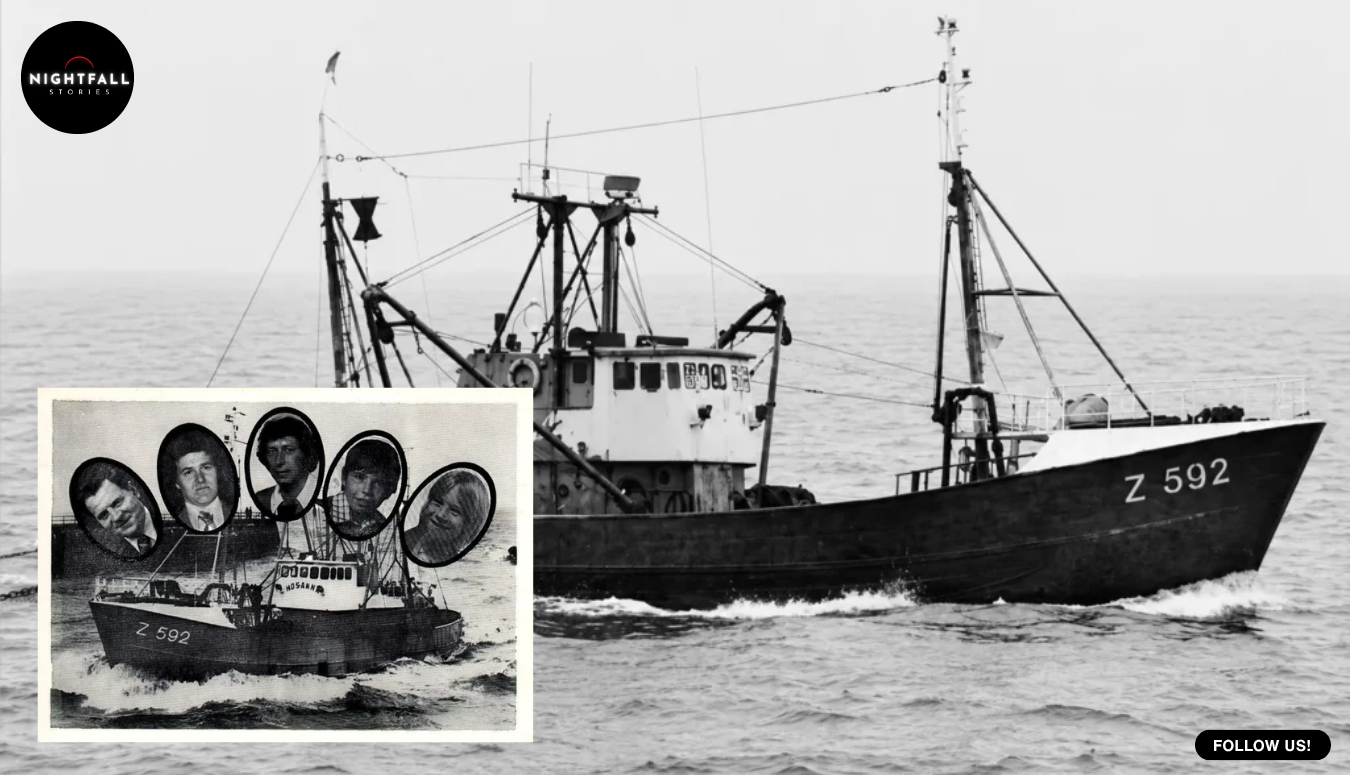
    Stephen Simmons was twenty years old when a judge at Inner London Crown Court sent him to borstal for stealing mailbags from a railway wagon. He had not done it. He said so at the time, nobody believed him, and he served the sentence. Then he went home, got on with his life, and carried the conviction for the next thirty-seven years.

    In 2013 he rang a legal phone-in show on London radio to ask whether there was anything that could be done about a wrongful conviction from the 1970s. It was not a legal strategy. It was a man in his late fifties asking a stranger on the air whether the thing that had been bothering him for four decades was fixable.

    What came out of that call was the beginning of the unravelling of one of the longest-running police corruption cases in British legal history. Simmons applied to the Criminal Cases Review Commission, the body that investigates possible miscarriages of justice, later that year. Four years after that, the Commission referred his case to the Court of Appeal. His conviction was quashed in January 2018, forty-two years after it was handed down.

    And then, last month, the Court of Appeal quashed two more convictions from exactly the same case. Christopher Poulter and Kevin Biggs were the two young men who stood in the dock beside Simmons in 1976. Poulter was twenty-one and went to prison for a year. Biggs was eighteen and was sent to borstal, as Simmons was. The three of them were convicted of stealing thirteen mailbags and their contents from a wagon at Clapham goods yard in south London.

    The officer who built the case against all three of them was Detective Sergeant Derek Ridgewell of the British Transport Police. Four years after their trial, Ridgewell was himself jailed for seven years for conspiring to steal goods in transit. The haul was valued at more than a million pounds at the time, which at the exchange rates of the day was well over two million dollars. He died in prison two years into the sentence.

    Poulter and Biggs are the fourteenth and fifteenth people whose convictions have been overturned because Ridgewell was involved in them. Nobody can say with confidence that they are the last.

    The thing worth understanding about Ridgewell is that he was not a bad officer who made mistakes. The documented record, established across multiple Court of Appeal judgments rather than in journalism, is that he fabricated confessions and planted evidence, and that he did it repeatedly over years while wearing a warrant card. In 1972 he was running what was then called an anti-mugging squad on the London Underground. The Criminal Cases Review Commission’s own account of his record states that he framed innocent people, and particularly young black men, for his own criminality. That is a statement about Ridgewell’s pattern of conduct, and it is a documented one. It is not a statement about Poulter, Biggs or Simmons specifically, and neither the Commission’s statement on their case nor the reporting of the judgment establishes anything about the ethnicity of those three men. The distinction matters, and it is the court record rather than inference that should be allowed to do the work.

    The pattern, where the courts have established it, looks like this. In February 1972, six young men were arrested at Stockwell station and accused of attempted robbery. They became known as the Stockwell Six: Ronald De Souza, Paul Green, Courtney Harriot, Cleveland Davidson, Texo Johnson and Everet Mullins. Five of them were convicted. Their appeals were refused at the time. All five of those convictions have since been quashed, the last of them only last year, after the Commission put out a public appeal to trace De Souza because it could not find him and got a result in the final weeks of 2024.

    A month after the Stockwell arrests, four men aged between nineteen and twenty-three were arrested at Oval station and accused of stealing passengers’ handbags. Winston Trew, Stirling Christie, George Griffiths and Constantine Boucher, all of Jamaican origin, were convicted at the Old Bailey in November 1972 of assaulting a police officer and attempted theft. They became the Oval Four. Every one of those convictions has been overturned. Trew spent decades writing and campaigning about what happened to him, and his work is part of the reason the pattern is now a matter of judicial finding rather than a grievance.

    Then there is the Bricklayers Arms depot case, which went to trial at the Central Criminal Court in 1977. British Rail employees were accused of conspiring to steal by re-labelling parcels. Eight people were convicted. The convictions of Saliah Mehmet and Basil Peterkin were overturned a couple of years ago, both of them posthumously. Errol Campbell’s conviction was quashed last year, also after his death.

    That is the company Poulter and Biggs now keep: a long list of people, most of them very young at the time, whose lives were rearranged by the word of one detective sergeant, and a shorter list of people who lived long enough to see it undone.

    Poulter did not live long enough to see it comfortably, but he did live. Biggs did not. He died in 2004, and the application that led to his conviction being quashed was made on his behalf earlier this year, twenty-two years after his death. The Justice Gap, which covers this area of law, put it starkly: Kevin Biggs died a convicted criminal. That is the actual cost of the delay, and it cannot be undone by a judgment.

    What is almost harder to sit with is that neither man came to the Commission on his own initiative. Poulter applied in November 2025, and he applied because the British Transport Police contacted him. The force that had employed Ridgewell was by then running its own investigation into his misconduct, and in the course of it, it went looking for the people he had put away. Half a century after the trial, Christopher Poulter received a call about a conviction he had presumably stopped expecting anyone to revisit.

    Both men, the Commission’s account notes, had previously been advised that they had no grounds to appeal.

    Finding them at all was not straightforward. The Commission has described working through ancestry websites, National Archives records and coroners’ reports to trace Ridgewell’s defendants and their families, which is genealogical research rather than legal research, and which tells you something about how cold a fifty-year-old case goes. People move, change names, emigrate and die. Some of them never told their children.

    The grounds for referring Poulter’s case were not complicated, and that is part of what is uncomfortable about it. The Commission cited three things: that Ridgewell was convicted of dishonesty offences in 1980; that his credibility was central to the prosecution case against Poulter; and that the Court of Appeal had already quashed the conviction of Poulter’s co-defendant Stephen Simmons on the basis of evidence about Ridgewell. In other words, the argument that freed Poulter and Biggs in 2026 is substantially the argument that freed Simmons in 2018, applied to the two men who had been standing next to him.

    The Court of Appeal noted as much. At the hearing last month, which was before Lord Justice Edis, Mr Justice Lavender and Mr Justice Linden, the court observed that at the time of Simmons’s appeal it had not been possible to trace any relatives of Mr Biggs or to find Mr Poulter so that they could be joined to it. The reason these are two separate judgments eight years apart is not that the law changed or that new evidence emerged. It is that in 2018 nobody knew where these two men were.

    Lord Justice Edis allowed both appeals and quashed both convictions. The whole thing, after fifty years, took the form of a short ruling in a courtroom neither man was in.

    The Commission’s chair, Dame Vera Baird, used the announcement to say plainly that anyone who believes they were convicted through Derek Ridgewell’s actions should come forward and apply. That is not a formality. It is a public body stating, in 2026, that it does not know how many more there are.

    It is worth pausing on the arithmetic of that. Fifteen convictions referred, fifteen quashed, which is a complete success rate for every case the Commission has taken on. Ridgewell served in the British Transport Police for years and ran a squad whose business was arresting people. The number of cases he touched is very much larger than fifteen. The number of those that were unsafe is unknown and probably unknowable, because the people involved would have to recognise themselves in a news story, believe that a fifty-year-old conviction can be challenged, and then write to a public body about it. Most of them will have done none of those things. Many of them are dead.

    It is also worth being clear about what the Commission can and cannot do, because it is often described as though it overturns convictions, and it does not. It investigates, and where it finds what the law calls a real possibility that a conviction is unsafe, it can refer the case to the Court of Appeal. That is the test it applied here, and it is a lower bar than proving innocence, which is deliberate. The Commission’s job is to get a case back in front of judges, not to decide it. Everything after the referral belongs to the court, which is why the gap between a referral in February and a judgment in September is simply the time it takes a listed appeal to be heard.

    The sentences themselves need a word of explanation for anyone reading this outside Britain. Borstal was not prison in the adult sense. It was a form of detention for young offenders, typically under twenty-one, built around training and discipline and generally lasting somewhere between six months and two years. It was abolished in the early 1980s, which places these three convictions in a system that no longer exists. Neither that nor the relative shortness of the terms is the point, though. The point is what the conviction did afterwards. A theft conviction recorded against an eighteen or twenty-one year old in the middle of the 1970s followed him into every job application, every reference, every form that asked. Three young men went into that courtroom with ordinary prospects and came out of it with a permanent answer to a question employers were entitled to ask. That is the sentence that ran for fifty years, and no court imposed it.

    The most unsettling fact in the whole story is not Ridgewell himself. Corrupt officers exist, and the ones who get caught are a known quantity. The unsettling part is the timing. He was jailed in 1980, which means the system identified him as a thief and a liar within four years of the Clapham trial. His dishonesty was a matter of public record, proven in a criminal court, for thirty-eight years before the first of his victims had a conviction overturned. The information needed to reopen these cases existed in 1980. Nothing was hidden after that point. What was missing was anyone whose job it was to go back and check.

    And it took a man ringing a radio station to start it. Simmons did not have evidence or a lawyer or an institution behind him. He had a conviction he knew was wrong and the eventual discovery, decades later, that the officer who secured it had been jailed for a strikingly similar kind of theft two years after he himself went to borstal. That one fact, available to anyone who looked, was enough.

    It would be easy to write his persistence as inspiring, and it is not. Forty years of not being believed is not a character-building exercise. He was in his sixties by the time a court agreed with the thing he had been saying since he was twenty, and the eight years after that were spent waiting for two other men to be found so that the same thing could be said about them. One of them had been dead for two decades before anyone started looking.

    Neither Poulter nor Biggs has been given anything back. Poulter served his year and Biggs served his borstal term in the middle of the 1970s, and both of them lived whatever working lives a theft conviction allowed them to live. A quashed conviction is a correction to a record, not a restoration. The question of whether compensation follows was not addressed in the Commission’s statement, and the British compensation scheme for wrongful conviction is narrow and frequently refuses applications, so it would be wrong to imply that anything financial is expected.

    What there is instead is a number, and the number is fifteen. Fifteen convictions obtained by one detective sergeant, undone one and two at a time across eight years, the most recent of them belonging to a man who died in 2004 and a man who had to be told by the police that he might not be guilty after all. The Commission is still asking the public for help finding the rest, which is the clearest possible statement that the counting is not finished.

  • He served a jail sentence over Everglades data on his laptop. Now he has published the number Florida would rather not discuss

    He served a jail sentence over Everglades data on his laptop. Now he has published the number Florida would rather not discuss

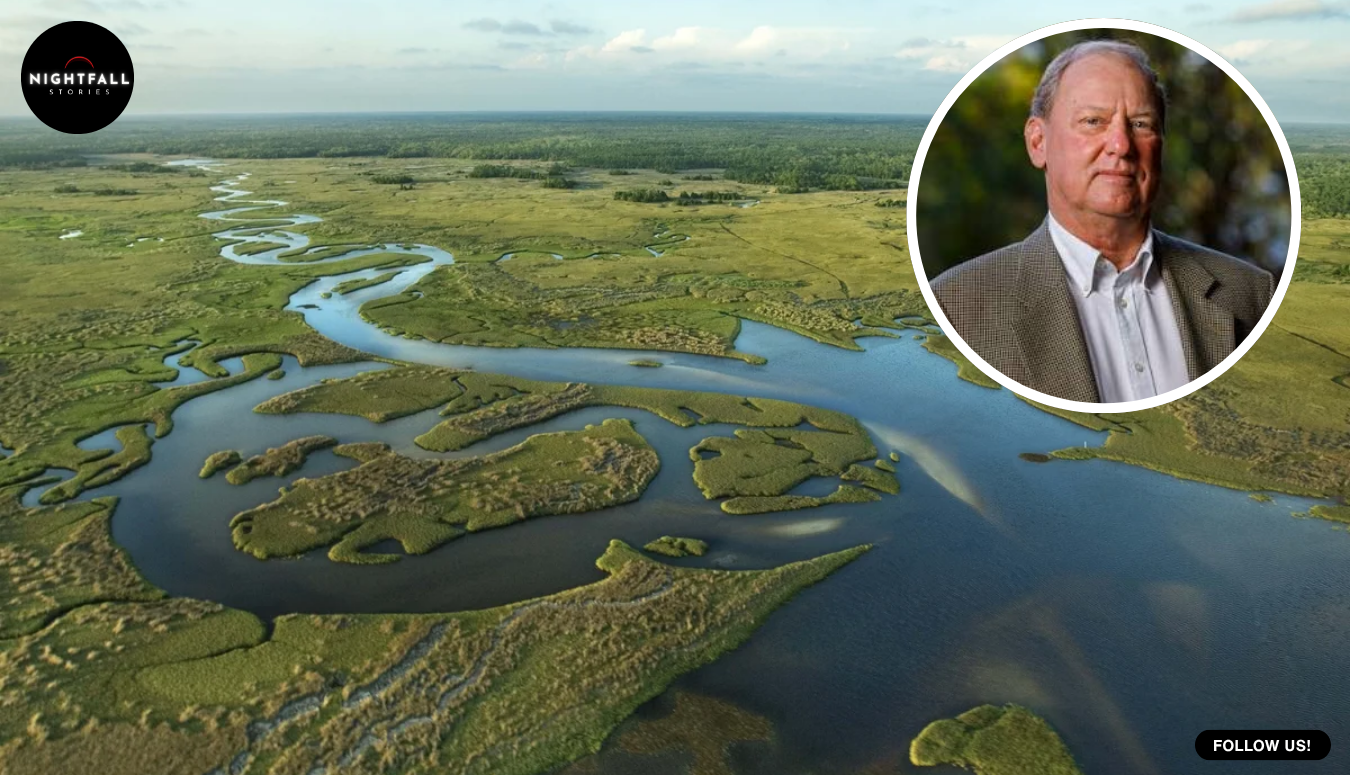
    Thomas Van Lent walked into a Miami-Dade County courtroom in the summer of last year and surrendered to serve ten days in jail. The reason was not fraud, not violence, not money. It was data. Specifically, it was what a Florida judge had concluded he did with files belonging to his former employer, and with the contents of his own laptop, after he resigned from one of the most influential conservation organisations in the United States.

    Roughly fourteen months after he walked out of that jail, his name went on a report arguing that the reservoir Florida’s governor has called the crown jewel of Everglades restoration is nowhere near large enough to do the job it was sold as doing. Not slightly undersized. Short by a factor of four or more.

    That is the shape of the story, and it is worth slowing down on both halves of it, because each one is easy to get wrong.

    Start with the thing being built, because it is genuinely enormous. In the flat sugar country south of Lake Okeechobee, in a landscape of straight canals and black soil that was swamp within living memory, the US Army Corps of Engineers and the South Florida Water Management District are digging a reservoir across about 10,500 acres. Roughly sixteen square miles of water. Around twenty-three feet deep at full capacity. It is designed to hold 240,000 acre-feet, which the agencies translate for the public as something over 78 billion gallons. Alongside it sits a 6,500-acre stormwater treatment area, an engineered marsh whose job is to strip phosphorus out of the water before it moves south. The combined price tag is given as about 3.9 billion dollars. Ground was broken on the reservoir component three years ago, and the state has since announced an agreement with the Department of the Army that pulls the completion date forward from 2034 to 2029.

    The purpose of all that earthmoving is simple to state and very hard to achieve. For more than a century, the water that once spread slowly south out of Lake Okeechobee across the Everglades has been diked, pumped and redirected. When the lake rises, water gets discharged east and west down two rivers that were never meant to carry it, and the result has been the algae blooms that periodically shut down waterfronts on both coasts of the state. The reservoir is meant to catch that water instead, clean it, and send it south where it used to go. Officials describe the finished system as delivering something like 470 billion gallons of clean water a year to the Everglades and Florida Bay.

    Van Lent’s report, written for Friends of the Everglades, does not dispute that the reservoir will help. It argues that the amount of storage in it is not remotely proportionate to the amount of water the system has to move. The figure in the report is about a million acre-feet of storage in the Everglades Agricultural Area, on top of what the current reservoir will hold. Not a deeper version of the same thing, either. What he describes is a wide, shallow sheet of water sitting on the landscape, something closer to a second and much smaller Lake Okeechobee than to a conventional engineered basin. Inside Climate News, which first reported the findings, put the alternative at something on the order of 77,000 acres at about thirteen feet deep.

    The logic behind the shallowness matters. Deep water in a sub-tropical reservoir is water under pressure, water that has to be pumped in and pumped out, water that stratifies and goes anoxic and grows the wrong things. Shallow water spread across a wide footprint behaves more like the thing being restored. It also, and this is the part that makes the number politically radioactive, requires land. Friends of the Everglades is campaigning for the acquisition of at least 100,000 acres in the Everglades Agricultural Area, which is some of the most valuable farmland in the southern United States and is held in large part by the sugar industry. The organisation’s executive director, Eve Samples, has been making that case publicly. Paul Gray, an environmental scientist who has spent thirty-eight years studying Lake Okeechobee, is among the voices in the same reporting arguing that the current design is not sized to the problem.

    To understand why 100,000 acres is a sentence that stops conversations in Florida, it helps to know what the Everglades Agricultural Area actually is. It is not ancient farmland. It was designated in 1948 by the Central and Southern Florida Project, the federal flood-control scheme that followed decades of drainage and that carved out an area originally set at 470,000 acres, something like a quarter of the pre-development Everglades, for agriculture. Today the area runs to roughly 700,000 acres, and by most accounts around 500,000 of those acres are controlled by sugar companies, principally US Sugar and Florida Crystals. Asking the state to buy 100,000 acres in that landscape is not a land transaction. It is a request that one of the most organised industries in the state give up a fifth of its ground, and everybody involved in the conversation understands that.

    It also helps to understand why the water has to go anywhere at all. Lake Okeechobee is ringed by a dike, built and rebuilt over most of a century after hurricanes pushed lake water into the towns on its southern shore and killed thousands of people. The dike does what it was built to do, and the consequence is that the lake no longer overflows south into the marsh the way it did for millennia. When the lake rises past the level engineers are willing to tolerate, the water has to be released somewhere, and the somewhere is east and west through rivers that were never designed to carry it. That is the mechanism behind the algae events that periodically close waterfronts on both coasts. Every argument about the reservoir is ultimately an argument about how much of that water can be caught and sent south instead, and how fast.

    So that is the engineering argument, and it can be assessed on its merits by anyone who wants to go and read it. What makes this more than a technical dispute between an agency and an advocacy group is who signed it.

    Van Lent is a hydrologist. He holds a doctorate and he spent years as chief scientist of the Everglades Foundation, which is a separate organisation from Friends of the Everglades and the distinction is not cosmetic. The Everglades Foundation is a large, well funded, politically connected group founded in the 1990s. Friends of the Everglades is older and smaller, founded in 1969 by Marjory Stoneman Douglas, the writer whose book gave the Everglades the phrase river of grass. Confusing the two is the single easiest mistake to make in this story, and the two organisations are on opposite sides of Van Lent’s own history.

    He left the Everglades Foundation in early 2022. On his way out he said publicly that he was going somewhere that put facts ahead of politics, a remark widely read as a criticism of his former employer’s willingness to accommodate the state’s preferred version of restoration progress. Within weeks the Everglades Foundation sued him. Its case was that he had taken trade secrets, meaning the foundation’s modelling work and data, when he went.

    Here is where precision earns its keep, because this part of the story has been described loosely in a lot of places, in both directions.

    The lawsuit itself was settled. In September 2022, a few months after it was filed, both sides reached an agreement and Van Lent signed a permanent injunction. That should have ended it. It did not, because the foundation then went back to court alleging that he had breached both the original temporary injunction and the settlement one. What followed was not a continuation of the trade secrets suit. It was a contempt proceeding, which is a different animal: the question in front of the judge was no longer whether Van Lent had stolen anything of commercial value, but whether he had disobeyed a court order.

    In the spring of 2023, Judge Carlos Lopez found him guilty of indirect criminal contempt of court. The findings were specific. The judge concluded that Van Lent had downloaded foundation files and had erased tens of thousands of items of data from his laptop computer, and wrote that he had clearly intended to take the foundation’s materials with him for future use and had intentionally deprived the foundation of those same materials. Van Lent’s own account, given in testimony, was that he had copied material in order to keep an archival record of his own working life as a scientist. Character witnesses appeared for him, among them the Duke University ecologist Stuart Pimm, who described him as a scientist of extraordinary integrity.

    The sanction was ten days in jail. That was the sentence handed down at the end of 2023, against a statutory maximum for the offence of six months or a 500 dollar fine. Separately, he was ordered to pay the Everglades Foundation about 177,700 dollars in legal fees and costs, and he filed for Chapter 7 bankruptcy. He appealed the contempt finding and lost; an appellate court upheld it in late 2024. He was ordered to surrender in the spring of last year, and he surrendered in the summer, serving the term in Miami-Dade County.

    It is worth being plain about what that is and is not. It is not a conviction for theft, and no court found that he sold, published or commercially exploited anything. It is also not a technicality or a misunderstanding, and it is not accurate to describe him as having been jailed merely for having his own work on his own computer. A judge found, after a hearing with witnesses, that he had deliberately breached an order he had signed, and that he had destroyed data in the process. Both of those sentences are true at once, and the story only makes sense if you hold them together.

    What happened next is the part that most people miss. He did not leave the field. He joined Friends of the Everglades, where the organisation’s own materials identify him as its senior scientist. He went back to doing the same arithmetic on the same watershed, for a group with a fraction of his former employer’s budget, having been through a lawsuit, a contempt finding, a bankruptcy and a jail term over the handling of exactly that kind of material.

    There is no triumphant reading of that available. Bankruptcy is not a plot point and ten days in a county jail is not a badge. A man in his sixties with a doctorate and a long technical reputation spent four years of his life in litigation with the organisation he had done his best work for, and came out of it owing money he could not pay. The only thing that can honestly be said is that the work continued, and that the report now carries his name.

    Which brings the two halves of the story into contact. The gap Van Lent’s report identifies is not a rounding error. The reservoir under construction holds 240,000 acre-feet. The figure in his report, for storage in the Everglades Agricultural Area in addition to that reservoir, is around a million acre-feet. Even allowing for every reasonable argument about how storage interacts with treatment capacity, conveyance south through the water conservation areas, and the timing of releases from the lake, a difference of that magnitude is not a disagreement about efficiency. It is a disagreement about whether the project as scoped can do the thing it is named for.

    The agencies have their answers, and they are not frivolous ones. The reservoir is one component of a decades-long plan with dozens of moving parts, some of which are finished, some of which are decades out. Storage is not the only lever; the stormwater treatment area next door is doing work the reservoir cannot do, and water quality standards for what moves south are strict enough that simply holding more water would not by itself solve the problem. Nobody involved claims the reservoir finishes the restoration. The dispute is over whether the current design leaves the system structurally short, and that question turns on modelling assumptions rather than on anyone’s good faith.

    It is also a question that will not be settled by the organisations arguing about it. It will be settled by water: by how many wet seasons arrive in a row, by how often the lake goes high and the discharges start again, and by whether the finished reservoir can absorb enough of that to change the pattern on either coast. Florida will find out in the 2030s whether the number in this report was alarmist or conservative.

    The political problem with it is that the reservoir has been a success story for years before it has been a functioning piece of infrastructure. It has a groundbreaking ceremony on film, a cost acceleration to celebrate, a governor’s phrase attached to it and a line in multiple budget cycles. A report saying the crown jewel is undersized by several hundred thousand acre-feet is not a technical footnote in that context. It is an argument that the signature project is a down payment being described as a purchase.

    And the most uncomfortable detail is the smallest one. The man making that argument is the man who was taken to court, found in contempt and jailed over how he handled Everglades data, and he is still working on the same numbers. Two hundred and forty thousand acre-feet is what is being built. A million is what his report says the Everglades needs. The distance between those two figures is the whole story, and it was published by someone who already knows exactly what it costs to hold on to Everglades data that somebody else would rather he did not have.

  • 14 things that made having a computer in the 90s so exciting

    14 things that made having a computer in the 90s so exciting

    Nobody really knew what it did, but pressing it felt powerful.
  • A painting hunted for eighty years was hanging above a green velvet sofa in a house for sale

    A painting hunted for eighty years was hanging above a green velvet sofa in a house for sale

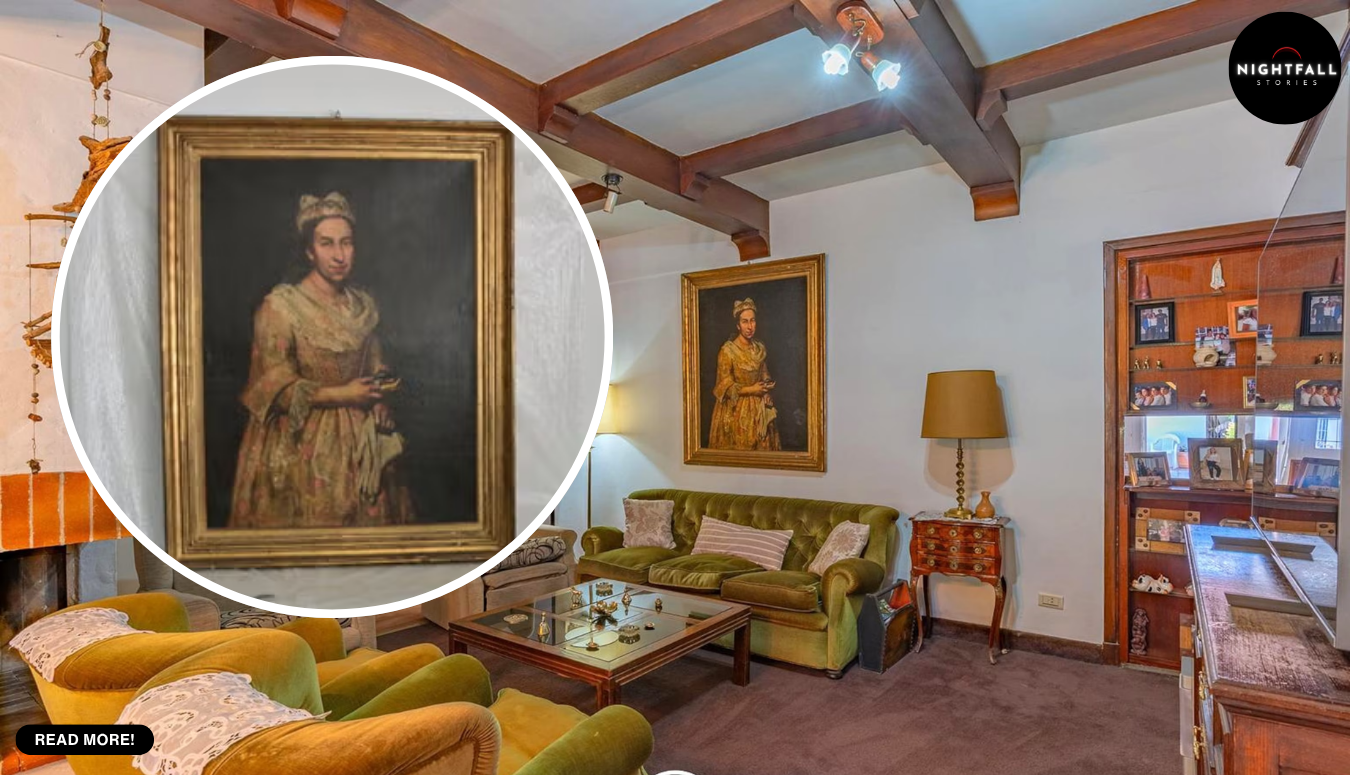
    The photograph was doing the job every estate agent photograph does. Wide angle, good light, the furniture arranged to make a living room look like somewhere you would want to live. A green velvet sofa along the wall. And above the sofa, in a dark frame, the portrait of a woman in eighteenth century dress, hung at the height people hang pictures they have stopped noticing.

    Two journalists in the Netherlands were looking at that photograph on an Argentine property website, and they recognised the painting.

    They recognised it because they had been working for a long time on the man who used to own the house. They were going through everything they could find about his family, which is why they were reading property listings in a coastal city in Argentina in the first place, and the portrait on the wall above the sofa was on a list of works looted from a Jewish art dealer in Amsterdam after the German invasion. It had been missing for about eighty years. Anybody with an internet connection and a vague interest in buying a house by the sea could have scrolled past it.

    The dealer was Jacques Goudstikker, who ran one of the most significant art businesses in Amsterdam before the war. When Germany invaded the Netherlands he fled with his wife and infant son, and he died in an accident during the escape. His gallery and its stock did not escape. The business was taken over and the inventory dispersed, and because Goudstikker had kept proper records of what he held, a great deal of that inventory remained identifiable decades later. That is the whole reason a picture on a property website could be matched to anything at all. Without the paperwork it would have been a nice old portrait above a sofa and nothing more.

    The painting is called Portrait of a Lady. For a long time it was given to the Italian painter Giuseppe Ghislandi, and it is now attributed to Giacomo Antonio Melchiorre Ceruti, another Italian of the same broad period, which is the sort of reassignment that happens to Old Masters as scholarship shifts and which matters here mainly because it means the work appears in different records under different names. By one estimate it is worth somewhere around 288,000 dollars, converting a figure of 250,000 euros at the rate prevailing when the case was decided. That number is single sourced and it is also, honestly, not the interesting part of this story.

    How it got to a living room in Mar del Plata is the next question, and the answer is one clean clause. The house had belonged to Friedrich Kadgien, a German who worked in the financial machinery of the Nazi regime and who prosecutors have described as a financial adviser to Hermann Goering. After the war he left Europe for South America and spent the rest of his life in Argentina, dying there in the late 1970s. The portrait stayed in the family. By the time the journalists spotted it, the house was in the name of his daughter, Patricia Kadgien, who lived there with her husband, Juan Carlos Cortegoso.

    The journalists published what they had found. And then the part of the story that reads like fiction began.

    Argentine prosecutors moved quickly. Police searched the house. The painting was not there. In the place on the wall where it had been hanging, there was now a tapestry. The property listing had been taken down. For a few days the single most identifiable object in the case had simply vanished from a house that investigators had photographs of it in.

    It took more than one search before the portrait was produced and handed over. The prosecutor on the case put it bluntly in the charge he brought, which was that the couple had kept the painting concealed while fully aware that the criminal justice system was looking for it, and that it only came out after repeated police visits. They were charged with aggravated concealment. Both were put under travel bans and restrictions on their movement while the case proceeded. Other nineteenth century works taken from the house went into the investigation as well.
    It is worth being precise about how long all of this took, because the speed of the first week has made the rest of it look faster than it was. The property photographs the journalists were looking at had been posted early in the year. Their story ran at the end of that summer. The searches, the missing painting, the tapestry and the eventual handover all happened within days of publication, which is the part everybody remembers. Then came a full year of ordinary legal process, with investigators valuing and authenticating the work, the National Academy of Fine Arts examining it and reporting that it had survived in good condition, lawyers in two hemispheres filing, and the question of who the court would recognise as the lawful heir being settled properly rather than assumed. The ruling came almost exactly a year after the story ran. Recognising the painting took a scroll through a property listing. Deciding what to do about it took twelve months.

    So that was the position. A woman in her late fifties was facing a criminal prosecution over a painting that had hung in her family’s home her entire life, that her father had brought out of Europe, and that was now the subject of international news coverage and an Argentine federal investigation.

    She gave it up.

    Not grudgingly, and not after years of appeals, which is what usually happens in these cases and is why they usually take a decade. She and her husband signed an agreement in which they renounced, in the explicit wording of the court record, expressly and irrevocably, any right, action or claim over the work. All of it. Not a negotiated share, not a finder’s arrangement, not a loan with their name on the label. Every claim, surrendered.

    What she got in exchange was not an acquittal. This is the part that most of the coverage has rounded off, and it should not be, because the difference between the two versions is the difference between a story that has ended and a story that has merely stopped.

    The mechanism used is called suspension of trial on probation, a provision in Argentine law that allows a prosecution for certain offences to be put on hold rather than fought, if the accused accepts a set of conditions. A judge has to approve it. In this case the federal judge in Mar del Plata, Santiago Inchausti, did, and the conditions attached were a probationary period of two years, a set of behavioural rules to comply with over that period, a payment each to the support association of a children’s hospital in the city, reported at a few thousand dollars, and the irrevocable surrender of all claim to the painting.

    For two years, then, the proceedings sit suspended rather than closed. If the conditions are kept, the case against them is extinguished at the end of it. If they are not kept, the prosecution can be revived and the trial they avoided can be put back on the calendar. There has been no conviction. There has also been no finding in their favour. Anyone writing that this couple were prosecuted over a looted painting, or that they were cleared of it, is writing something that is not true. What they did was decline to find out.

    It is worth saying plainly what that decision was and was not. Patricia Kadgien is a private person and she is not her father. Whatever he did in Europe, she was not born when he did it. What is on the record about her is narrow and it is enough: she held a painting she had no right to, including for a period after she knew the authorities were looking for it, and when she was challenged she stopped holding it rather than contest it through the courts. She could have fought. People in her position routinely do, for years, and the strategy frequently works, because heirs die and funding runs out and jurisdictions disagree. She chose the other thing. That is the pivot of the whole case and it does not need to be dressed up as a moral awakening or run down as a calculation. It was a decision made by somebody facing a criminal charge, and it is the reason this story has an ending at all.

    With the claim surrendered, the judge cleared the way for the painting to go to Marei von Saher, who the court recognised as the sole heir to the Goudstikker estate. She is the widow of Goudstikker’s only son, the infant carried out of the Netherlands in 1940, and she has been working to recover pieces of her father in law’s stock since the 1990s. That is more than thirty years of correspondence, archives, lawyers and national commissions, across multiple countries and multiple separate cases involving different paintings, most of which the public never hears about because most of them do not end.

    The lawyers involved in this one have described what happened as close to unprecedented, and that claim is worth examining rather than simply repeating. Looted art does get restituted, fairly often now. What is unusual is the route. The overwhelming majority of recoveries happen through civil claims, negotiated settlements, museum ethics panels and national restitution committees, which are slow, expensive and only really work against institutions, because institutions have reputations and legal departments and an interest in resolving things. Getting a painting out of a private living room is a different problem entirely, because a private owner can simply say no, and frequently does, and the claimant’s only lever is a lawsuit in a foreign jurisdiction that may well be time barred.

    Here the lever was a criminal charge. The state was not asking her to be fair. It was alleging an offence, with a prosecutor and a federal judge and the possibility of a trial attached, and it offered her a way out that required surrendering the object. That is a structurally different kind of pressure, and it is why the case is being read closely by people who do this work. It is not a template that transfers easily, because it needed a concealment charge to be available and provable, and that in turn needed the painting to have been moved and the listing to have been pulled after the journalists published. In a quiet way, the attempt to hide the picture is what made the recovery possible.

    The painting itself has not gone anywhere. It is in official custody in Argentina, held at the Holocaust Museum in Buenos Aires while the paperwork catches up with the ruling. Ownership has been settled. Geography has not.

    And this is where the case takes its last unexpected turn, which comes from the person with the strongest claim to simply take the thing home.

    Von Saher asked that the painting stay in Argentina for a while. Her lawyers put it to the court as her own wish: that before it comes to the family, the portrait should remain in the country temporarily and be put on public display, so that people can see it and understand how a work like this travels from a looted gallery in Amsterdam to a wall in a seaside house on the other side of the world. Several Argentine museums have been discussed, including the one currently holding it.

    Think about what that costs her. She has spent more than thirty years chasing this collection. She is in her eighties. She finally has a federal ruling in her hand recognising her as the heir and ordering the work released, and the most natural thing in the world, the thing nobody could criticise, would be to have it crated and flown out within the week. Instead she has asked for it to be hung somewhere in the country where it was hidden, with its history on a card beside it, and to wait.

    Because a painting in a family’s hands is a painting restored to one family. A painting on a wall in Buenos Aires with an explanation next to it is an argument, aimed at everyone who has an old portrait hanging above a sofa in a house their grandparents left them and has never once wondered where it came from.

    Eighty years in a living room, found in a photograph taken to sell the house, and now the last request of the person who got it back is that it stay a little longer in the country that kept it.

  • She was the first woman from her community to qualify as a lawyer, and then she stopped eating

    She was the first woman from her community to qualify as a lawyer, and then she stopped eating

    A reporter walking up to the pavement outside the press club in Quetta, in the west of Pakistan, found a camp that had been there for three days. Inside it were women who had not eaten since Saturday. Sitting among them was a lawyer in her thirties who had made exactly one condition for getting up again, and it was not a small one. She wanted the chief of Pakistan’s army to come to the city himself.

    Not an aide. Not a letter. Not a committee. Him, in person, and in civilian clothes rather than a uniform, so that he would be standing there as a man rather than as an institution, listening to the women whose husbands and sons had been killed in a long run of targeted attacks on their community. She told the reporter she would keep going until he arrived. She wanted assurances about security that were specific rather than general, and she wanted concrete steps towards finding and prosecuting the people doing the killing.

    It is worth sitting with how unpromising that looked from the outside. A hunger strike is the protest of last resort, the one you reach for when every other lever has already been pulled and nothing moved. She was not a party leader. She had no seat, no bloc of votes, no television channel. She was a lawyer with a small practice in a provincial city, sitting on concrete, making a demand of the single most powerful office in the country.

    The army chief agreed to talks. The camp came down. The Right Livelihood Foundation, which has just named her one of its laureates for this year, puts it more strongly than that in her citation and says the strike forced him to negotiate directly with the women of her community, something no woman from it had achieved before, and that attacks fell afterwards and stayed lower. What is beyond dispute from the contemporaneous reporting in Pakistan is the sequence, and the sequence is the part that matters. She set a condition that looked impossible. The condition was met.

    Her name is Jalila Haider, she was born in Quetta in the mid-1980s, and she is a member of the Hazara community, a minority that has been the target of sustained violence in that part of Pakistan for decades. That is the only time in this piece her community needs naming, because her award citation turns on it and the story is unintelligible without it. For the rest of it she is what she actually is, which is a working lawyer with a case list.

    She got there the ordinary way, which in her circumstances was not ordinary at all. She studied at University Law College in Quetta and took her law degree in 2010, the first woman from her community in the city to qualify as a lawyer. She also holds a master’s degree in international relations from the University of Balochistan, and years later won a scholarship to the University of Sussex in England. In 2011 she opened her own practice.

    Think about what being first means in practice, as opposed to in a profile. There was nobody ahead of her to ask how any of it worked. No senior woman from her background to tell her which judges were difficult, which courtrooms were safe to be seen walking into, how to answer a client’s family when they asked whether she was really the lawyer or the lawyer’s assistant. She was building the path and walking it at the same time, which is slower and much lonelier than following one.

    And then she used it on the cases nobody else wanted. The foundation’s citation says her firm has handled more than seven thousand cases since it opened, which is the foundation’s own count and has not been independently audited, so take it as the awarding body’s figure rather than an established number. The shape of the caseload is the more telling thing. A great deal of it is free. A great deal of it is family work, which is to say divorce, custody and inheritance, the cases where a woman arrives with no money of her own and a very short window in which to act.

    By the foundation’s account her firm has also restored freedom of movement for more than six hundred political activists and human rights defenders, people whose names had been put on lists that stopped them travelling. She knows what that particular problem feels like from the inside, because her own name went onto Pakistan’s exit control list after she took part in protest gatherings, and some years after the hunger strike she was held for roughly seven hours at the airport in Lahore and stopped from boarding a flight.

    That detention is worth separating out, because it has been quietly merged with the hunger strike in a lot of the summaries now circulating online, and the two are different events two years apart. The strike was the camp outside the press club. The airport was a separate afternoon of being kept in a room and then let go, which she treated roughly the way she treats everything else, as a thing that happened and then a thing to carry on past.

    Her citation also credits her with a six-year defence of fifteen boys from Balochistan accused of terrorism offences. Six years is the detail to hold onto there. Nobody does six years on a case out of enthusiasm. You do six years because you took it on and the alternative to you staying on it is nobody being on it. And in the course of a single recent year, again by the foundation’s count, she represented families in thirty killings of women, the kind of case that in many places never reaches a courtroom at all because the people who would have to bring it are the same people accused of it.

    Then there is the workshop, which is the part of her record that has least to do with law and tells you most about how she thinks.

    In 2015 she founded an organisation called We the Humans, and one of the things it runs is a rug-weaving workshop. According to the foundation, it employs around four hundred women who were widowed when their husbands were killed in attacks. Again, that is the awarding body’s figure and no independent count of it exists, so it should be read as their number rather than a verified one. The design of the place is what is interesting. Wages are set against international labour standards rather than against what the local market would get away with paying a widow with no other options. There is a free creche on site. There are literacy classes for the mothers, who in many cases never got any schooling themselves. And there is a condition attached to the work, which is that the children go to school.

    That last part is the whole argument in miniature. A charity hands out money and the money runs out. A job pays a wage, and a wage with a creche attached means the wage is actually collectable by a woman with small children, and a wage with a schooling condition attached means the next generation in that household does not arrive at adulthood unable to read. She did not design a relief scheme. She designed a way out that takes about fifteen years to work and committed to it anyway.

    The legislative work runs along the same line. She was consulted on Pakistan’s 2019 law on the rights of transgender citizens, including the provision allowing people to state their own gender on identity documents, which sounds technical until you consider that without a usable identity card a person in Pakistan cannot open a bank account, inherit, vote, or get most of what the state hands out. She helped draft Balochistan’s legislation on early child marriage, which set eighteen as the minimum age for both sexes rather than the lower age that had applied to girls. And she ran a programme on data protection and online safety which the foundation says reached more than fifteen thousand schoolgirls, which is once more their figure and not an audited one.

    She was also one of the people who got the first women’s march in Balochistan off the ground, in a province where that was not a safe thing to organise, and she co-founded a women’s political organisation, the Women’s Democratic Front, in 2017.

    About the thing she is working against, this piece is going to be deliberately sparing, because the subject of violence against a minority community attracts a particular kind of comment thread and a casualty list is what opens the gate. One figure, once, for weight, and it comes from Pakistan’s own national human rights commission rather than from any campaigner: an official of the commission, speaking at the time of the hunger strike, put the number of members of her community killed in Quetta over the preceding five years at five hundred and nine. That is a state body counting, not an activist estimating. The four hundred widows at the looms are the rest of the arithmetic and they do not need a number attached.

    What that figure is for is scale, not spectacle. It explains why women sat on a pavement for days without eating rather than filing a petition, and why the request was for the army chief rather than for a local official. It also explains the quieter cost in her own life, which is that she has worked for years under death threats and has stayed in the city anyway. She could have left. She had the degree, she had the international scholarship, and she had, after a while, the kind of profile that makes leaving straightforward. The BBC put her on its list of a hundred women in 2019. The United States named her an International Woman of Courage the following year. Pakistan gave her a national peace award a few years after that. Any one of those is a door. She kept the practice in Quetta.

    Which brings the story to Stockholm, and to an award most readers outside a fairly narrow world have never heard of.

    The Right Livelihood Award was set up in 1980 by a writer who thought the Nobel prizes had blind spots, particularly around the environment and around people doing unglamorous work a long way from any capital city. It has been called the alternative Nobel ever since, usually by everyone except the foundation itself. There is no entry fee and no public vote, which matters, because it means you cannot campaign your way to it or get your followers to click for you. A jury picks the laureates, and a good share of them are people whose own countries have not thanked them for anything.

    This year the foundation named four. A Georgian lawyers’ association recognised for holding a line on democracy under an autocratic crackdown. A rural women’s assembly in southern Africa organising around land and seed. A computer scientist in the United States recognised for her work on concentrated power in artificial intelligence. And a lawyer from Quetta, cited for breaking barriers as the first female lawyer from her community, for challenging ethnic, state and patriarchal persecution, and for working from the conviction that no human being is illegal.

    One small thing is worth being straight about, because it will not matter to most readers and will matter a great deal to anyone who goes looking. The foundation’s citation describes the hunger strike as lasting seven days. The newspapers in Pakistan reporting it as it happened recorded the camp going up at the end of April and coming down on the second day of May, which is closer to five. Nobody is lying. A strike like that has a ragged start and a ragged end, with people joining and leaving, and the organisers and the papers were plainly counting from different points. The number of days is the least interesting fact in the story and it is the one the internet has argued about.

    What is not in dispute is who was sitting on that pavement, what she asked for, and that she got it.

    The ceremony is still ahead of her. She will travel to Stockholm at the start of December, and the woman who goes up to collect it will be the first from her community to have qualified as a lawyer anywhere, who then spent fifteen years spending that qualification on people who could not pay her for it. The prize comes with money and with a platform, and on past form she will put both through the same machine as everything else: the practice, the looms, the creche, the schooling condition, the long cases nobody else will sit through.

    There is a version of her life in which none of this happened. She passes the bar, she is correctly celebrated as a first, she takes the paying work that a scarce qualification commands, and she is a respected lawyer in a difficult city. Nobody would have had a word to say against it.

    Instead she sat down on the concrete outside a press club with the women whose husbands had been killed, and she did not get up. The army chief came to the table. The looms are still running. And eight years on, a jury in Sweden went looking for people whose work had cost them something, and found a lawyer in Quetta who had never left.

  • Oxford agreed to send 39 Naga ancestors home, and the one it sent back is the reason the decision means anything

    Oxford agreed to send 39 Naga ancestors home, and the one it sent back is the reason the decision means anything

    Forty were asked for. Thirty nine were approved. One was declined, on the ground that it could not be clearly established as Naga at all.

    That single refusal is the most interesting thing in a story that is otherwise being reported as a museum handing something back. Repatriation announcements almost always arrive as a clean number and a photograph of people shaking hands, and the number is always the number that was requested. Here the number came back one short, and the reason it came back one short is what makes the other thirty nine credible. A process that can say no about one set of remains is a process whose yes about thirty nine means something. If every claim were simply granted, the grant would be an administrative courtesy. Because one was not, the thirty nine are a finding.

    The ancestors in question were taken from what is now Nagaland, in the far northeast of India, and sent to the Pitt Rivers Museum in Oxford between roughly 1910 and 1940 by two British colonial administrators and anthropologists, John Henry Hutton and James Philip Mills. Both men collected on a scale that is hard to picture now. Their material made the Pitt Rivers the holder of the largest Naga collection in the world, which is a sentence that can be read two ways and is usually only read one.

    The remains stayed in Oxford for a century. In 2020 the museum took all human remains in its care off public display, and that is the point at which this becomes an unusual story rather than a familiar one, because the next move came from the institution rather than from the community. The Naga anthropologist Dolly Kikon, now at the University of California, Santa Cruz, made contact with the museum’s director, and the museum reconnected with Naga partners rather than waiting to be asked. That is not how most of these cases begin. It deserves to be stated straight, without turning the museum into the hero of a story whose actual work happened eight thousand kilometres away.

    Because the work did happen there, and it took about six years, and it is the part that nobody reports properly.

    The Forum for Naga Reconciliation, a long established body that had spent years on peace and reconciliation work inside Naga society, began reaching out to the Naga tribe Hohos. A Hoho is an apex tribal body, the organisation that speaks for a tribe, and there are many of them, because the Naga are not one people in the way outside coverage tends to imply. They are many distinct communities with their own languages, their own customary law and their own named institutions. The Tangkhul Naga Long, the Phom People’s Council, the Angami Public Organisation, the Sumi Hoho and others each represent a different community with its own view of what ought to happen. Any decision that was going to hold had to be a decision all of them had reached, and that is exactly why it could not be done quickly.

    In 2021 the forum formed a dedicated team called Recover, Restore and Decolonise, built around the academics Dolly Kikon and Arkotong Longkumer, who teaches at the University of Edinburgh, together with coordinators on the ground. Rev Dr Ellen Konyak Jamir took on the coordination of the whole effort, and she is the person at the centre of this story in the sense that matters: she is the one who had to hold a consultation across dozens of communities together for years without it fragmenting.

    What a consultation like that actually involves is unglamorous and slow. It means getting into a village, sitting with people who have no particular reason to trust a delegation from anywhere, and explaining a situation that is genuinely hard to explain: that a person from your community, taken before most living people were born, is in a storeroom in England, and that a decision now has to be made about them by people who never knew them. Then it means listening to what the village says, which will not be the same as what the last village said, and carrying that back. Then doing it again. Across many communities, in many languages, over years, with the forum’s own standing as a reconciliation body the only thing holding the whole conversation together.

    Much of the early work happened online, during the pandemic, in conversations between the forum, the museum and Naga elders. Then it moved into the villages. The team ran participatory research with communities across the Naga homeland, working through tribal Hohos, church bodies, student organisations, elders and intergenerational sessions. The forum also started holding an annual public gathering in Dimapur, the September Dialogue on Naga repatriation, decolonisation and healing, the first of which in 2021 was described as the first Naga public lecture on repatriation. It was not a legal campaign with a public relations arm. It was a long argument conducted mostly among Naga people about Naga ancestors.

    And the question being argued was not the one you would expect. The obvious question, do you want them back, turns out to be the easy half. The hard half is what should happen to them when they arrive, and that question has no neutral answer in a society with many communities, several generations of differing belief, and a strong church presence alongside older customary practice. Ancestors taken generations ago from villages whose boundaries, names and populations have since changed cannot simply be handed back to an address. Some of them cannot be traced to a village at all.

    What the communities decided, collectively, is the detail that tells you how seriously the consultation was taken. They chose not to send individual ancestors back to individual villages. They chose a single shared burial site, with a Naga monument of healing and peace, intended to stand for all generations and to express the oneness of the Naga people. In a place defined by the distinctness of its communities, dozens of separate bodies agreed to one grave. That is a far bigger concession, and a far more interesting one, than any museum decision in this story.

    Rev Dr Ellen Konyak Jamir has been explicit that the treatment of the remains should follow what the communities themselves believe should be done, without being forced into a theological frame. Thejao Vihienuo, president of the Angami Public Organisation, has said the resting place has been identified and that the Nagaland state government is being consulted on finalising it. It is not finalised yet.

    There was also a moment of real pressure in the middle of all this. According to the museum’s own account, an auction house attempted last year to sell a Naga ancestral remain. The museum and its Naga partners moved to stop the sale, Nagaland’s chief minister, Neiphiu Rio, objected publicly, and the question of selling human remains reached a debate in the British House of Lords, led by Lord Boateng and Baroness Black. Nothing concentrates a repatriation process like the discovery that the alternative to institutional custody is not necessarily a shelf. It can be a lot.

    In June last year, a Naga delegation travelled to Oxford, the first formal delegation in the museum’s history. They were hosted for a week. On the second day they were given access to the ancestral remains, the first Naga people to see them since they were taken off display, in a ceremony that opened with an indigenous chant called Our Ancestor led by the forum elder Dr Visier Sanyu, and an invocation by Nepuni Piku. Later in the week, in a lecture theatre at the Oxford University Museum of Natural History, the tribe Hoho leaders presented the Naga Oxford Declaration on Repatriation. Twenty leaders and scholars were there. The declaration was a unanimous, intertribal statement, and the forum’s own account of it is blunt about how rare that is: nothing like it had been produced by the Naga peoples together before. Speakers at the public session included Kikon, Longkumer, Konyak Jamir, Dr Vihuto Asumi of the Sumi Hoho, Dr Akum Longchari of the forum, and the museum’s director, Professor Laura Van Broekhoven.

    Then came the paperwork, and the paperwork is where the refusal lives. Earlier this year the forum, by then representing thirty nine Naga organisations, filed a formal claim for forty ancestral human remains. Keep those two numbers apart, because they are the same number and they are not the same thing: thirty nine organisations lodged a claim about forty ancestors.

    The University of Oxford’s governing Council considered it in July and agreed to return thirty nine. The fortieth was not included, in the Council’s wording, because it does not have a clear provenance as Naga. The director confirmed the decision in writing to the forum, and in early September the forum announced it at a press conference in Dimapur, timed to coincide with that year’s September Dialogue. Van Broekhoven has described what happened over the preceding years as a Naga wide movement of healing and unification, which is a notably self effacing description from the institution that was being asked to give something up.

    So consider the fortieth. Nobody has said which community it was thought to have come from, and nobody can, because the whole point is that the record does not establish it. It has been held in a collection that was assembled by two colonial officials across three decades, labelled by them according to their own categories, and catalogued by a museum working from those labels. Somewhere in that chain the information needed to say where this person came from either was never written down or was written down wrongly. The claim rested on the collection’s own documentation, and for this one the documentation would not carry it.

    It is worth being precise about what provenance means in a museum context, because it is doing all the work here. It does not mean a scientific test. There is no procedure that reads an origin off a person. Provenance is a documentary chain: who collected this, where did they say they got it, when, from whom, and does anything else in the record support it. For remains sent out of Nagaland a century ago, that chain is only ever as good as the note the collector made at the time, and the collectors were working across a huge area with many communities whose distinctions they were not always interested in recording accurately. Where the note is thin, there is nothing behind it to fall back on.

    The honest reading of that is uncomfortable in both directions. It means the Naga claim was assessed rather than waved through, which is what gives the approval its weight, and it also means a person who may well be Naga stays in a cabinet in England because the people who took them did not keep adequate notes. There is no process available that fixes that. Nobody involved is pretending there is. And it raises the question that sits under every repatriation claim anywhere, which is who gets to decide whose ancestor is whose, and on whose evidence. In this case the evidence was the collectors’ own, which is to say the evidence belonged to one side of the transaction.

    The scale of what is not being claimed is worth sitting with too. The Pitt Rivers holds something in the order of six thousand Naga objects. The forum has deliberately not pursued them. Its position is that the priority is the ancestors, and that the object collection should remain available for Naga researchers and students to work with, which is a choice rather than an oversight, and a choice that cuts against the way these campaigns are usually imagined from outside. The museum’s listing of Naga human remains runs to two hundred and nineteen items in total, but the great majority of those, one hundred and seventy eight, are objects that contain or may contain human hair, and they are a separate question that has not been settled. The ancestral human remains themselves numbered just over forty, which is why a claim for forty was a claim for very nearly all of them.

    Other European institutions are understood to hold further Naga ancestral remains. The forum has pointed towards pursuing those rather than taking them on itself, which is a realistic position for a volunteer led body that has just spent six years on one museum.

    And the return has not happened yet. The handover will be a ceremony at the museum before the ancestors travel to Dimapur, accompanied by a delegation, and the date is still being agreed between the two sides. One report has put it in a specific month; the museum’s own account is more careful, noting that moving ancestral remains between countries requires approval under the international convention that governs trade in protected species, because of the materials involved, plus a specialist shipping agent and roughly two months of arrangement. Everyone involved expects it to be done before the end of the year. Nobody has produced a date you could hold them to.

    Which leaves this story in the right place, which is unfinished. The grave is identified but not finalised, and a state government has to sign off on it. The hair objects are unresolved. The handover has no date. And in Oxford there is one more ancestor who was asked for and not returned, because a hundred years ago two men who were very careful about shipping remains across the world were not careful enough about writing down where they came from. Thirty nine people are going home to a single resting place chosen by dozens of communities that agreed, for once, on something. The fortieth stays, unnamed and unclaimable, which is precisely the proof that the other thirty nine were properly decided.

  • Five men vanished with their trawler in 1980, and the reason nobody found them was hiding in a buoy number

    Five men vanished with their trawler in 1980, and the reason nobody found them was hiding in a buoy number

    The paperwork was right the whole time. That is the part of this story that takes a moment to sit with. When a Belgian fishing boat called the Z.592 Hosanna disappeared in the Dover Strait in the winter of 1980 with five men aboard, the people who searched for her wrote down where they looked and what they looked near, and what they wrote down was accurate. It stayed accurate. It is still accurate now. And for forty six years it sent everybody who read it to the wrong patch of sea, because two years after the boat was lost, somebody changed the labels on the water.

    The boat was found this year. She had actually been sitting on the seabed off Dover for decades, on charts, known to divers as an unidentified wreck, which is a category the English Channel has a great many of. What had been lost was not her position. It was her name. A Dutch maritime researcher and a British wreck researcher worked out why the two had come apart, divers went down twice over the summer and into the autumn, and the Hosanna now has her name back. Nobody is going to be brought up from her. That was decided early and it is not going to change.

    Start with the boat, because she was an ordinary working vessel and that matters. The Hosanna was built in Zeebrugge in 1965, twenty five metres of steel, a motor cutter of the sort that spent its life dragging gear across the southern North Sea. By the end of the 1970s she had been sold to a British company, Minerva Fisheries, and in the winter of 1980 she left Plymouth bound for the Netherlands with five people on board. She never arrived. No distress call was ever transmitted. Nothing was heard from her at all.

    Two days or so after she sailed, a liferaft marked Z.592 was recovered. Accounts of where differ, which is itself a small illustration of how thin the record is: British reporting places it near the Goodwin Sands off the Kent coast, while a Belgian regional broadcaster places it off the French coast near Cap Gris Nez. Either way it was the only hard thing anybody had. A search followed. It found nothing else. No wreckage came ashore, no bodies were recovered, and the file stayed open in two countries.

    The five men were skipper Germain Ackx, his son Piet Ackx, Hector Snauwaert, Pieter Guijt, and Pieter Albertus Guijt, who was Pieter Guijt’s nephew and who was fourteen. Three of the crew came from Knokke-Heist in Belgium and two from Scheveningen in the Netherlands, according to Flemish public broadcasting, though the English language reporting gives the five names without assigning nationalities to them, so the obvious pairing is better left unstated than printed as fact. Pieter Guijt was thirty three. Those are the facts about the crew that are in the record, and they are where the record stops.

    What filled the gap instead was rumour, and the rumours were unusually persistent. Over the years there were unconfirmed reports that the Hosanna had been seen off Morocco, off Spain, off Greece. The boat had a history that fed that sort of talk. She had reportedly been linked to smuggling and to running supplies out to the offshore ship of the pirate radio station Radio Mi Amigo, which broadcast illegally from the North Sea, and British marine police had taken an interest in her before she was lost. Once a vessel has that reputation, a disappearance without wreckage invites the theory that there was no disappearance at all, only a boat that went somewhere else under another name. Families who have no answer get offered a great many answers of that kind, and none of them is any use.

    Now the buoy, which is the actual heart of this.

    The Dover Strait is the narrowest point of the Channel and one of the busiest stretches of water anywhere on the planet. Something like four hundred commercial movements a day pass through it, crossing ferries cutting across the grain of the through traffic. To stop that turning into a permanent collision risk, the strait is run as a traffic separation scheme, which is essentially a motorway laid out on the sea: lanes going one way, lanes going the other, and a separation zone down the middle that nobody is supposed to be in. Because water takes no paint, the lanes are marked by buoys, and the buoys in the middle of that strait carry names in a series beginning with the letters CS, for Channel Separation.

    In 1980 the people searching for the Hosanna did what anybody would do and described their search area in relation to the nearest fixed thing they could name. Their records refer repeatedly to the buoy CS2. That was a perfectly sensible way to write it down. A buoy is a known object in a known place, which makes it a better reference than a string of coordinates that can be mistyped.

    Then, in 1982, the Dover Strait routing was reorganised. New traffic separation arrangements came in, the lanes shifted, and the marks that defined them were repositioned and renumbered. The buoy that is called CS2 today is not in the place where the buoy called CS2 sat in 1980. Same name, different water.

    Follow what that does to the search. A record that says the search concentrated near CS2 remains a true record of what happened. But anybody who picks it up afterwards and plots it, naturally and correctly, against a modern chart will put a mark in the place where CS2 now is. They will then look there, find nothing, and conclude that the record is unreliable or that the boat is somewhere else entirely. The error is not in the document and it is not in the reader. It sits in the gap between them, created by a change neither of them made.

    Think of a house number on a street that was later renumbered. A letter addressed to number twelve in 1979 was correctly addressed. Deliver it in 1985, after the council has run the numbers the other way, and it goes to the wrong door, and the person who finds it there has no reason to suspect the address was ever right. Nobody is wrong. The letter still ends up in the wrong hands. That is the whole mechanism, and it is why a search can be conducted by competent people with accurate paperwork and still fail for nearly half a century.

    There is a second reason the mistake was so durable. A buoy number feels like a permanent fact. Coordinates look provisional, something you check and re-check, but a named mark on a chart reads as a landmark, and landmarks are the things you trust in order to doubt everything else. So when the plotted position produced nothing, the reasonable conclusion was that the 1980 search had been loose or that the liferaft had drifted much further than anyone thought, and the search widened outwards from a point that was never the right point to begin with. Every expansion of the area made the real site relatively less likely to be covered. The further you look from the wrong centre, the more sea you have to rule out.

    It also helps to remember what sort of record this was. These were not scientific survey logs. They were the working notes of a 1980 search for a small fishing boat, written quickly by people who expected to be read within days, not in forty six years. Nobody writing them had any reason to imagine the reference frame itself would be rebuilt around them. There is no annotation to catch, no footnote saying that CS2 means the old CS2. The only way to find the problem is to already suspect that a label can move, and then to go and check the history of the labels, which is archive work rather than search work and belongs to a completely different trade.

    Mark Lewis, the British wreck researcher who worked through the historical material, has described the task in almost exactly those terms. The job, as he put it, was to take records written in 1980, work out what they actually meant geographically, and then compare that against what could be seen underwater. Once the historic changes to the Dover Strait buoy system were understood, he said, the geography of the case started to make a great deal more sense. On the Dutch side the research ran through Cees Meeldijk, a maritime researcher working with Stichting Onderzoek Maritieme Vermissen, a foundation that does nothing except investigate people lost at sea and whose name appears in some reporting with a slight spelling variation. The foundation went back through the archive material, reinterpreted it, and concluded that the search area had to be off Dover after all.

    Which brought everybody to a wreck that was already on the chart and had been for years, sitting there with no name attached, because the one thing that would have settled it was gone. The Hosanna lies upright. Her working deck is at roughly forty seven metres and the seabed beneath her runs towards fifty two, though one Dutch account puts the depth at nearer fifty five. Her wheelhouse is no longer standing. On a fishing boat the wheelhouse is where the obvious identifying features live, which is precisely why identifying her needed archive research rather than a diver with a torch reading a name off a plate.

    Forty seven metres is not recreational diving. It is technical diving, with mixed gas, planned decompression and a hard limit on how long anyone can usefully stay. Doing it in the middle of the world’s busiest shipping lane is a separate problem again, and a regulatory one. Permission to dive the site had previously been refused, according to the Belgian federal police missing persons unit, Cel Vermiste Personen, whose Gerry Van Loock has spoken publicly about the case. An exemption was eventually granted, which is the only reason any of this happened.

    And the lane itself is the reason permission is not casually given. Suspending a diving operation in the middle of the Dover Strait means putting a boat with divers in the water in a corridor that large ships cannot swerve in, cannot stop in and are legally required to keep moving through. A dive boat on station is a hazard to navigation and a hazard to itself. That is why the refusal makes sense and why the exemption was the hinge the whole thing turned on: no exemption, no dive, no identification, regardless of how good the archive work had been.

    The first dive went in during August, from a charter boat called the Maverick operated by Mutiny Diving, a technical diving outfit based in Dover. The team filmed the structure. The second went in late September from a vessel called the Renegade, and this time members of the Guijt family were aboard on the surface while the divers worked below, along with a Dutch television crew. Afterwards the family put flowers on the water above the wreck.

    What actually clinched the identification was the winch. Fishing boats are individual in their gear, and the winch on the wreck was compared against old photographs of the Hosanna until, as Meeldijk put it, it was clear that it really was her. A handful of items were brought up as well, including a radio with Oostende written on it, the Belgian port the boat worked out of in her early life.

    There is an honest caveat to put plainly rather than bury. The full underwater imagery, the video and the specific identifying features have deliberately not been published. A documentary is in production with the Dutch public broadcaster EO, reportedly produced by Mary Kragtwijk and expected to air in 2027, and the material is being held back until it is finished. That means the central claim here rests on the assertion of the divers and the researchers rather than on evidence anyone else can examine, and it is being withheld for a commercial reason. The families have been told, and a national police unit is treating the identification as real, which is not nothing. But it has not been shown.

    The cause of the sinking is the other place to be careful. In the English language reporting it is simply undetermined, and the investigators say they hope further examination of the wreck and the archives may yet answer it. The Dutch side has gone further in public. Radar at the time of the disappearance is said to have shown the echoes of two vessels, and from that it has long been assumed the Hosanna was run down. Meeldijk has said the underwater images make it clear the boat suffered a collision while she was crossing the strait, and that she was probably struck in dense fog by a large cargo ship, with a substantial dent and tear visible in one side of the hull. That is an attributed assessment from the researcher who has seen the footage, not a finding by any investigating authority, and it should be read that way. Nobody has named another ship and nobody is likely to.

    What will not happen is any recovery. The hull is filled with silt and sand, which makes going inside it too dangerous for divers, and so no remains will be brought up and no identification by DNA is possible. The site is being treated as what it is, a sailor’s grave, and the boat stays where she is. Relatives in the Netherlands had been kept informed by the foundation for years. In Belgium the federal missing persons unit has gone back to the families in Knokke-Heist with the news.

    So this ends somewhere strange. Five families now know where. They are not going to be told why by any official process, they are not getting anyone back, and nothing is going to be raised from the seabed off Dover. The answer they have is a position and a name, after forty six years of neither.

    And the thing worth carrying away from it is smaller and stranger than a shipwreck. Every search that failed was conducted properly. The 1980 searchers wrote down the truth. Everyone who came after read it faithfully. The failure was not in the record and not in the reading but in the two years between them, when a shipping lane was tidied up and a buoy quietly took its name to a different piece of water. The document never stopped being right. The world underneath it moved.

  • 15 TV shows that would break the internet if they returned

    15 TV shows that would break the internet if they returned

  • A penguin nobody had ever described was living two thousand miles from anywhere, hiding inside a species we thought we knew

    A penguin nobody had ever described was living two thousand miles from anywhere, hiding inside a species we thought we knew

    On a cluster of islands in the southern Indian Ocean, almost two thousand miles from the nearest permanently inhabited land, there are penguins that nobody had ever formally described. Not because they are rare, or shy, or hard to see. There are plenty of them and they stand around in the open. The reason is simpler and stranger. Everybody already thought they knew what they were.

    A team of researchers argue otherwise, in a paper published in Communications Biology earlier this year, and the argument is a big one. The gentoo penguin, treated for as long as anyone can remember as a single widespread species, is not one species. On their evidence it is four. The birds on the Kerguelen Islands are one of them, and they are new to science. The authors propose the name Pygoscelis kerguelensis.

    Before going further, it is worth being clear about what kind of story this is, because a species being named sounds like an event and it is not one. The paper appeared in the spring and the university announcement followed a few weeks later. Since then it has been doing what any serious taxonomic claim does, which is working its way slowly through the field while other specialists test it. Nothing has been settled by a press release. Penguin taxonomy in particular has a long history of proposed splits that were argued over publicly for years before anyone agreed. So read this as a case being made, and a strong one, rather than a decision that has been handed down.

    What makes it worth your time anyway is not the new name. It is the consequence, and the consequence is uncomfortable.

    Here is the work behind it. The team sequenced whole genomes from 64 individual birds across ten breeding colonies, covering very nearly the entire geographic range of the gentoo penguin. That is an unusual amount of coverage for a Southern Ocean animal, and it is the thing the claim rests on. What those genomes showed was four distinct groups, with no sign of ongoing gene flow between them. The populations have not been exchanging birds. They have, in effect, stopped being the same animal.

    The timescale is the part that reframes the whole thing. The divergence is estimated to have happened in the last 300,000 to 500,000 years, which in evolutionary terms is recent and in human terms is unimaginably long. Half a million years of separation, and to our eyes they still look like the same penguin.

    That is the real finding, and it is worth saying plainly. Human vision is a poor species detector. We are extremely good at telling human faces apart and surprisingly bad at telling animals apart, especially animals that are all the same shape for the same hydrodynamic reasons. A gentoo is a gentoo: black back, white front, orange bill, white patch over the eye. The differences between the four groups exist, and the researchers document them, but they are not the kind of difference that jumps out from a boat.

    Critically, the team did not argue the case on DNA alone, and that matters enormously for whether the split survives. A split proposed purely on genomic distance is a weak claim, because genomes differ between any two populations that have been apart for a while, and the question is always whether the difference amounts to separate species or just to geography. So the researchers went further. They compared coloration. They compared vocalisations, which for penguins are essential, because the birds find their mates and their own chicks in a crowd of thousands largely by voice. They compared the timing of breeding, which is one of the most powerful isolating mechanisms there is: two populations that nest at different times of year cannot interbreed even if they meet. They compared diet and feeding behaviour. And they brought in climate modelling to look at the conditions each group occupies.

    When genetics, appearance, voice, breeding calendar and ecology all line up on the same four way division, the case stops being a statistical artefact and starts looking like biology.

    It helps to know why a claim like this is contentious at all, because the sticking point is not usually the data. It is the definition. Biologists have never fully agreed on what a species is. The version most people were taught at school, that two populations are separate species if they cannot produce fertile offspring together, breaks down constantly in the real world, where plenty of recognised species interbreed where their ranges meet. Other definitions draw the line at whether populations have independent evolutionary trajectories, or at whether they form distinct genetic clusters, or at whether they are diagnosably different in appearance.

    Those definitions do not always give the same answer for the same animals, which is why taxonomy produces arguments that look, from the outside, like arguments about nothing. They are not. They are arguments about where to cut a continuum that nature did not cut for us. Populations separate gradually, and there is no moment at which a bell rings.

    What the gentoo paper does is sidestep the problem by piling up independent lines of evidence that happen to agree. If the genomes said four and nothing else did, the critics would have an easy job. When the genomes, the voices, the breeding calendar and the feeding ecology all say four, the disagreement has to be about interpretation rather than about whether the populations are really distinct. That is a much narrower fight, and narrower fights get resolved faster.

    The four, as the authors set them out, are Pygoscelis papua in the north, Pygoscelis taeniata in the east, Pygoscelis ellsworthi in the south, and Pygoscelis kerguelensis in the southeast. Three of those names were already in use, but at subspecies rank, which is a lower level of recognition. That distinction gets flattened in a lot of coverage, so it is worth keeping straight. The claim is not that three species were already recognised and a fourth was found. The claim is that three populations previously filed as varieties of one species deserve to be ranked as species in their own right, and that a fourth, on Kerguelen and probably nearby Heard Island, had not even been recognised as a variety.

    Kerguelen explains itself once you look at where it is. It is a French sub-Antarctic territory, a scatter of volcanic islands in the furthest reach of the southern Indian Ocean, with a small rotating scientific station and no permanent population. Getting there takes a ship and a serious reason. Which means that while gentoos on the Antarctic Peninsula and the Falklands and South Georgia have been watched, counted and photographed by generations of researchers and tourists, the Kerguelen birds were simply assumed to be the same as everyone else’s. Not studied and dismissed. Just assumed.

    The researchers on the paper come from institutions in at least ten countries. Daly Noll, affiliated with the University of Chile and Universidad de Los Lagos in Chile, is the first author. Juliana Vianna of Universidad Andres Bello in Santiago is the last, which in this field is the senior author position. Elie Poulin at the University of Chile and Rauri Bowie, a professor and curator at the Museum of Vertebrate Zoology at the University of California, Berkeley, are among the co-authors, along with colleagues in Australia, Spain, South Africa, the United Kingdom, France, Argentina, Monaco, Brazil, the United States and Venezuela. Twenty two names in all.

    That author list is not bureaucratic padding and it is the only reasonable way to tell the human part of this story. There was no single moment of discovery. What there was, over years, was the assembling of blood or tissue samples from ten penguin colonies spread across thousands of miles of some of the roughest water on the planet. Each one of those samples represents somebody on a beach in the wind, with permits, with a boat waiting, handling a wild bird carefully and briefly and then letting it go. Some of those colonies can only be reached in a short weather window once a year. The expedition work is the achievement, and the sequencing was the comparatively easy part.

    Now the uncomfortable consequence, which is where this stops being a taxonomy story.

    Conservation status is assigned per species. That sounds like an administrative detail and it is actually the whole machinery. When an organisation assesses extinction risk, it assesses a species, and it looks at the total population, the total range and the overall trend. A bird that is abundant somewhere and declining somewhere else can come out looking stable, because the numbers are added together before anyone looks at them.

    Gentoo penguins have long been a reassuring entry on that list. Hundreds of thousands of breeding pairs, a wide range, no alarm bells. A species you do not have to worry about.

    Split that entry four ways and the reassurance evaporates. Each of the four is, by definition, rarer than the one was. Each has a smaller range. Each faces its own local pressures: changes in sea ice and sea temperature, shifts in the krill and fish they feed on, fisheries competition, disturbance at colonies. And the authors argue that three of the four are already in trouble from climate change in the sub-Antarctic, which is warming fast.

    Be careful about how far that goes. Formal threat assessment has not been redrawn, and it cannot be until the four way split is accepted by the taxonomic authorities that conservation listings follow. There is no new official designation for any of these birds. What the researchers are saying is that the biology has moved and the paperwork has not, and that until it does, the paperwork is describing an animal that does not exist.

    That is a problem with teeth in it, because protection follows the paperwork in extremely concrete ways. Protected areas are drawn around species. Fishing quotas and exclusion zones around breeding colonies are justified by reference to species level status. Funding goes to things that are listed as being at risk. A population that is genuinely in difficulty but filed under a secure species is almost invisible to all of those mechanisms. It does not appear as a problem until the decline is large enough to drag the whole combined figure down, and by then the local population may be past saving.

    The sub-Antarctic makes this harder than it needs to be. The region is divided among numerous governments, with Chile, South Africa, France, Australia, New Zealand and the Netherlands all holding territory or jurisdiction in different parts of it, each with its own legislation, its own listing process and its own timetable. A split accepted in one country’s framework may wait years for recognition in another’s. The penguins, naturally, do not read legislation.

    It is worth adding what the next few years actually look like for a proposal like this. Names do not take effect because a paper says so in any practical sense. They take effect when the committees and checklists that the rest of the world uses adopt them, and those bodies move deliberately, reviewing proposals and sometimes rejecting them. Field guides follow the checklists. Government listings follow the field guides and the checklists. Each step adds time.

    So there is a lag built into the whole system, and the lag is not a scandal. It is the price of not rewriting the rulebook every time a paper appears. The cost of that caution, though, lands on the animals with the least margin. If one of these four populations is in genuine decline, the years spent confirming that it is a species are years during which nothing is formally protecting it as one.

    There is a wider point underneath all of this, and it has nothing to do with penguins specifically. If a large, conspicuous, intensely studied, famously photogenic bird can turn out to be four species, the obvious question is what else is hiding in plain sight. Gentoos are about the best observed wild animals in the Southern Ocean. They nest in the open, in daylight, on accessible beaches. They have been on documentaries for sixty years. If this group was concealing three additional species, the number of overlooked species in less charismatic groups, in less accessible seas, is likely to be large.

    Cryptic species, which is the term for exactly this situation, have been turning up steadily since cheap genome sequencing arrived. Frogs, bats, fish, insects. Usually it is a story about a laboratory finding something unexpected. The gentoo case is more interesting because it reverses the usual order of concern. Normally, finding new species sounds like good news, an addition to the total. Here it is a subtraction, because what has been added is four smaller problems in place of one comfortable non problem.

    The honest state of play is this. A substantial international team, using whole genomes from across almost the entire range of the animal, backed up with appearance, voice, breeding timing and feeding behaviour, argue that one penguin is four and that one of the four has never been named. Other seabird specialists will now test that, and some will disagree, and the version that settles may not be exactly four. That process is normal and it takes years.

    But the part that should stay with you does not depend on how the argument resolves. Somewhere in the far southern Indian Ocean, on islands most people will never see, there is a population of penguins that has been going about its business for several hundred thousand years without anyone noticing it was its own thing. Nobody missed it through carelessness. It was missed because it looked familiar, and looking familiar was enough.

    And the conservation file that is meant to be protecting those birds was written for a species that, if the researchers are right, is not the one standing on the beach.