Blog

  • Everyone blamed the hunters. Eleven aurochs genomes and 108 dated bones say the trap had already closed

    Everyone blamed the hunters. Eleven aurochs genomes and 108 dated bones say the trap had already closed

    There is a cupboard in a museum in southern Sweden with an aurochs skull in it. It has been there for generations, catalogued, dusted, occasionally shown to students. It is the skull of an animal that stood taller at the shoulder than a person, with horns that swept forward and in, the wild cattle that every domestic cow on earth descends from, and that no longer exists anywhere.

    The story attached to that skull for most of the last century was simple. People killed them. Humans arrived, humans hunted, the big animals went. It is a story with the advantage of being roughly true at the species level, since the very last aurochs on the planet died in a Polish forest in the seventeenth century and human pressure is what finished it. The trouble is that the Scandinavian population was gone thousands of years before that, and nobody could say with any confidence why.

    A study published this year by an international team led out of Lund University has gone at that question with a combination of tools that has not been pointed at it before, and the answer that comes back is not one thing. It is three, overlapping, in a sequence, and the most interesting of the three had already happened before the first hunter in southern Sweden ever picked up a spear for the purpose.

    The lead author is Erika Rosengren, a doctoral student in historical osteology at Lund who also works as a cultural heritage officer at the university’s historical museum. That double role is not incidental. The raw material for this kind of work is not a field site. It is drawers. Bones that somebody dug up decades or centuries ago, wrote a label for, and put away, in Sweden and in Denmark, in collections that nobody assembled with genetics in mind because genetics did not exist yet. The senior author, Mikkel-Holger Sinding, is at the University of Copenhagen, and the co-author list runs through zooarchaeologists and museum curators on both sides of the water that separates the two countries. That water is going to matter.

    Here is what they actually had to work with, because the numbers are the argument. Eleven mitochondrial genomes from Scandinavian aurochs. Twenty-eight ancient cattle genomes above a usable coverage threshold, six of them Scandinavian, with two specimens from the southern Swedish province of Scania pushed to high coverage so that the fine detail of their ancestry could be read rather than guessed. And radiocarbon dates on 108 aurochs specimens, which is the part that turns a genetic snapshot into a timeline. Separately, a set of samples sexed molecularly, which sounds like a technicality and is in fact one of the sharper instruments in the whole study.

    Those four streams answer four different questions, and the finding is what happens when you lay the answers on top of each other.

    Begin with the arrival. Aurochs came north into Scandinavia around 11,700 years ago, at the end of the last glaciation, out of a refuge population in western Europe. They walked. At that point there was land where there is now sea, and the route ran up through what is now Jutland, across what is now Zealand, and into what is now Scania. Each of those is a step, and the genetics show something at each step that nobody expected to see so clearly: diversity dropping as you go north. The population that made it to southern Sweden was already genetically poorer than the population it had left behind on the continent.

    This is the counter-intuitive part and it deserves to be said carefully, because it is easy to hear it as a story about weak animals. It is not. It is a story about the shape of the journey. When a population expands along a narrow route, only a fraction of it crosses at each stage, and the fraction carries only a fraction of the variation. Repeat that two or three times along a peninsula and a chain of islands and you have an arrival population that is a thin genetic extract of the source. The animals were fine. Their options were not.

    So the Scandinavian aurochs started with a handicap it did not earn, and for thousands of years it did not matter. The landscape was open, there was grazing, the population grew. The radiocarbon record shows what the authors describe as a classic boom and bust: a long, successful expansion, and then a decline.

    Then the second thing happened, and it happened without a single animal moving. Sea levels were rising through the early Holocene, and at some point around 8,000 years ago the ground connecting Scandinavia to the European mainland went under and the straits between Denmark and Sweden came into existence. A land population became an island population, in place, by standing still.

    It is worth resisting the urge to make this sound like a morning. It was not a flood. It was a process that ran over centuries, probably with a shifting mess of shallows and marsh and seasonal crossings before anything you could call a strait was there. What the study does is delimit the period of genetic connectivity with the continental population and show it ending. After that there is no evidence of new blood arriving. Whatever genetic variation the Scandinavian aurochs had on the day the last crossing closed was all the variation it was ever going to have.

    That is where the first finding stops being a historical curiosity and becomes a mechanism. The analyses point to inbreeding and genetic drift, made worse by the bottlenecks on the way in and then by the isolation, grinding the population’s diversity down over time. The authors talk about resilience diminishing, which is the right word for it. Diversity is not a virtue in itself. It is the stock of answers a population has to questions it has not been asked yet. A new disease, a bad run of winters, a change in the vegetation. A population with deep variation has some individuals who cope. A population that has been filtered twice and then sealed in has fewer, and eventually has none.

    It is fair to ask how anyone can claim to measure that in an animal that has been dead for six thousand years, and the answer is one of the more elegant tricks in the field. A genome has two copies of everything, one from each parent, and in a healthy outbred population those two copies differ constantly along their length. In a population where relatives have been breeding with relatives, long stretches appear where the two copies are identical, because they are both descended from the same ancestral chunk. Those stretches are called runs of homozygosity, and they are readable. Their length is a clock: long runs mean recent close relatives, shorter and more numerous runs mean inbreeding that goes back many generations. That is why the two high-coverage Scania specimens were worth the effort of pushing them to high coverage. You cannot see a run of homozygosity in a low-resolution genome, and without them the inbreeding claim would be a guess.

    The third thing is the landscape, and this is where the familiar story finally gets its part, though not the leading one it has been given.

    Aurochs are open country animals. They are grazers built for grass, river meadows, floodplain, light woodland with gaps in it. The early Holocene in southern Sweden was that kind of place. It did not stay that kind of place. As the climate warmed, forest closed in, and the open ground that had fed a large grazing animal contracted into pockets with trees between them. Nobody cut anything down and nobody drained anything. The world simply shut.

    The study’s framing of this is careful and it is the sentence worth taking away: environmental conditions initially permitted the aurochs to persist even as forest cover increased. They did not go the moment the first trees arrived. They held on in what was left. But what was left was fragmented, and the population was by then genetically thin, and that is the point at which the human part lands with real force.

    Human settlement in the region intensified, and hunting with it, and the record shows a sharp decline in the Swedish aurochs population through the same window in which the straits formed and the forest closed. On Zealand the animal disappears altogether, which is the clearest single case in the dataset, because an island is a closed accounting system. There is nowhere for a Zealand aurochs to have gone except out of existence, and nothing can walk in to replace it.

    The straits cut both ways, incidentally. The same water that isolated the cattle also concentrated people, because a coastline with estuaries and shellfish and fish runs is a far better place for Mesolithic communities to live than a dry interior, and the coastlines of the new islands were long. So the formation of the straits did not only strand the aurochs. It rearranged where the hunters were, and it put more of them nearer to the open ground the aurochs still needed. The molecular sexing is what makes this more than an association, because the age and sex structure of what hunters took can be read off the bones, and so can the age profiles from tooth wear and from the fusion of bone ends at several Mesolithic sites. You can look at what was being killed, and how old it was, and get some sense of whether a population was being skimmed or stripped.

    Set all of it side by side and the single-cause version collapses, not because hunting was unimportant but because hunting arrived at a population that had been set up to fail. Fragmented and shrinking habitat. A gene pool depleted first by the journey in and then by isolation. And then a sustained, organised predator. The paper’s own word for the combination is synergistic, which in this context means the three together did something none of the three would have done alone. An aurochs population with continental connectivity and open grassland would probably have absorbed Mesolithic hunting pressure. An isolated, inbred population in closing forest did not.

    The last Scandinavian aurochs that can be dated lived something like 6,500 years ago. After that there is nothing.

    What makes this study a particular kind of achievement is that none of its evidence was collected for it. The bones were excavated by people with completely different questions. The Scania skull in the biological collection at Lund was accessioned long before anybody could have imagined reading a genome out of it. Radiocarbon dating was not available to the first curators to handle this material, and allele sharing and runs of homozygosity are concepts from a different century. Rosengren’s work has essentially been to go back through what the discipline already owned and ask it something new, which is why a doctoral student at a university museum could lead it, and why the co-author list reads like a tour of the cupboards of two countries. There is a lesson in that for every collection sitting in a basement with a funding problem.

    It is also worth being blunt about what this does not offer. Aurochs are gone. There is no population anywhere. Various breeding projects over the past century have worked towards cattle that look something like an aurochs, and that is a separate subject with its own arguments, and it is not this. Nothing in this study recovers an animal. What it recovers is an explanation, and specifically an explanation of a shape that keeps turning up now, which is the reason anybody outside zooarchaeology should care.

    Because that shape is not a prehistoric one. A population cut off from the ones it used to exchange with. A habitat that goes from continuous to patchy without anybody deliberately destroying it. A slow loss of genetic variation that shows up in no census because the animals are still there and still breeding and still being counted. And then one more pressure arriving at the worst possible moment and taking a population that looked viable. That is a description of what happened to the wild cattle of southern Sweden over four thousand years. It is also a reasonable description of a great many protected populations today, and the aurochs is the long version of the experiment, already run, with the answer sitting in a drawer in Lund.

    The skull is the proof and the warning in the same object. Nobody hunted this species into nothing in an afternoon. The trap took thousands of years to close, and most of it closed before anybody was aiming at anything.

  • Masked men burned their home twice. The decree that finally saved their mountain reaches somewhere Brazilian decrees usually stop

    Masked men burned their home twice. The decree that finally saved their mountain reaches somewhere Brazilian decrees usually stop

    On the last day of August this year, the governor of Bahia signed a document numbered 24,778. It runs to a few pages, it uses the flat language of state administration, and it creates a wildlife refuge of roughly 18,300 hectares across four municipalities in the Chapada Diamantina. Itaete, Ibicoara, Mucuge, Iramaia. By any normal measure it is a map update, the kind of thing that appears in an official gazette and vanishes.

    The two people who spent three years getting it signed were not at home when it happened, because they do not have a home any more. Armed men came to their house at dawn in May, held them there for hours, smashed the solar panels and the batteries and the computers and the monitoring cameras, set fires, and fired weapons. The couple got out and walked more than fifteen kilometres through the hills. Five weeks later they were told by an anonymous tip that the place had burned again, and this time there was almost nothing left of it. Walls down, roof gone, beams gone, the mosaic in the kitchen with the name of the house in it deliberately broken up.

    Alcione Figueiredo Correa is an engineer. Marcos Fantini is a lawyer who works on environmental and human rights cases. Together they ran Toca do Lobo, an outpost of the UNESCO Atlantic Forest biosphere reserve network that functioned as a small eco-tourism lodge, a monitoring station, and their house. In 2023 they started a campaign with a name that was also its entire argument, Salve a Serra da Chapadinha. Save the Chapadinha range. Three years later the range is a legally constituted conservation unit and they are among the many people who cannot sleep there.

    That is the shape of the story, and it would be enough. But the thing the campaigners talk about first, when asked what they actually won, is not the perimeter. It is a single clause buried in the third article of the decree, and it concerns what is underneath the ground rather than what is on top of it.

    Start with the water, because without the water nothing about this makes sense to anyone who has never heard of the Chapadinha. The range is a block of high ground in the interior of Bahia, well away from the coast, and it is a sponge. Rain lands on it, soaks into it, and comes out lower down as springs and waterfalls that feed the Una river, which feeds the Paraguacu, which is the river that keeps a very large part of the Bahian semi-arid interior and a very large part of its coastal capital in drinking water. The figure that appears across the reporting is more than eighty municipalities, Salvador and its metropolitan region among them. Around sixty per cent of the metropolitan supply is drawn from that basin.

    So this is not a scenic question. A mountain nobody outside the state has heard of is the tap for a city of millions. That single relationship is why a public prosecutor eventually got involved, why a state deputy eventually installed a parliamentary front in the Bahia legislative assembly, and why two people who ran a small lodge found themselves at the centre of something that got them burned out.

    The sequence is documentable rather than vague, which matters in a story where almost everything else is contested. The campaign began in 2023, and in the same year the Federal Public Ministry issued a recommendation on the area. A first public hearing was held in the middle of 2024. A formal public consultation on creating the refuge opened at the start of June this year. A parliamentary front in defence of the Serra da Chapadinha was installed at the state assembly, with state deputy Hilton Coelho attached to it. And on 31 August the decree was signed, appearing in the state official gazette the following day. Three years from a pair of residents deciding to make a noise, to a numbered state instrument.

    Correa and Fantini also got in front of the people who could move it. One photograph from the process shows the pair standing with the Bahia environment secretary and with the president of Brazil. Former environment minister Marina Silva is named in the campaign’s own account of its supporters. It is worth being careful about that, because famous names tend to swallow a story. The decree is a state instrument signed by the governor of Bahia, Jeronimo Rodrigues. Federal support helped. Federal support did not do the work.

    Now the attacks, told plainly and then left alone, because there is nothing to be gained from reconstructing a fire.

    On the first of May this year, in the early hours, around seven men arrived at the house with their faces covered and with rifles. They held Correa and Fantini for roughly two hours. They destroyed the energy system and the communications gear, the hard drives, the radios and the cameras that the couple used to document what was happening on the range. The structure itself was badly damaged. According to the couple’s account, the men told them that their preservation work was getting in the way of progress and in the way of mining going in. On the fifth of June, with the public consultation on the refuge barely open, the house burned a second time, and when environmental staff reached it there was little standing.

    Who did it has not been established. The police inquiry into the first attack is under judicial secrecy, and no indictment has been reported. Every account that can be reached frames mining and land interests as the pressure on the area in general, which is a description of a context and not an identification of a person. Correa has said she believes the second attack was retaliation for the consultation opening. That is a belief, held by someone with every reason to hold it, and it is not a finding. The honest position at the time of writing is that the attacks are unresolved, and the honest thing to do with that position is to state it and stop.

    Which brings the story back to the clause.

    A conservation decree in Brazil, as a rule, governs the surface. It says what may happen on the ground inside a line. It restricts building, clearing, hunting, certain kinds of use. According to the reporting on decree 24,778, including an account from Brasil de Fato that cites the third article and its single closing paragraph, this one also expressly brings the subsoil of the defined area inside the protected perimeter. Mining is named among the activities declared incompatible with the refuge. Visiting, research and environmental education are named among the compatible ones. Management is assigned to the state environment and water resources institute, Inema, and a management plan is required within five years.

    The category itself was a choice, and it is worth a sentence. A national park is the instrument most people imagine for a landscape like this, and a park requires the state to take the land, which in practice means money, expropriation files and years. A wildlife refuge sits in the same full protection group in Brazilian law but is built to tolerate existing private holdings inside its boundary, provided their use is compatible with the refuge’s purpose. That makes it faster to declare and much harder to enforce, which is precisely the trade that has played out here.

    It also lets the line be drawn wide, which was the other thing the campaign wanted. The refuge is not a fence around one scenic valley. It spans four municipalities and is intended to work as a corridor, keeping blocks of habitat on the Chapada connected to each other rather than leaving them as islands with farmland in between. Ecologists have spent decades establishing that an isolated patch loses species it should by all rights be able to hold, simply because nothing can move in or out of it. A corridor is the cheap answer to that, and corridors only exist if somebody draws them before the gaps close.

    Claudio Dourado of the Pastoral Land Commission, who has been one of the most consistent voices on the area, is the person on record about that subsoil line. What he actually said was that he does not know of another decree that does it. That is a careful sentence by a man who works on land conflict, and it is not the same sentence as the one that has been circulating.

    The circulating version is that the clause is legally unprecedented. It is worth taking that superlative apart, because the piece that is genuinely interesting here survives the dismantling and the superlative does not.

    First, the easy part. A refuge of this category, a Refugio de Vida Silvestre, is not a loose designation. Brazil’s national system of conservation units law of 2000 lists it among five categories in the full protection group, alongside national parks and biological reserves, and the law says the basic objective of that group is to preserve nature with only indirect use of natural resources permitted. Mining inside a full protection unit is already incompatible with the category under federal law. The decree naming mining as prohibited is not an innovation. It is a restatement of what the category already means.

    Second, the harder part, and the reason the clause cannot do what the most enthusiastic readings want it to do. Under Brazil’s federal constitution, mineral resources in the ground are not an attribute of the land above them. They are the property of the Union, and the right to research and extract them is granted federally, through a federal mining authority, separately from whoever owns the surface. A state governor does not have the pen for that. So a Bahian decree declaring that the refuge includes the subsoil is not a state seizing the mineral estate. It is a state putting itself on record, in a binding instrument of its own, that in its view the rock under this particular mountain is part of a protected area and cannot be opened without colliding with that instrument.

    That is a drafting move rather than a new power, and it is a genuinely useful one. The ordinary problem campaigners run into is precisely that a surface protection leaves claims in the federal register substantially alive underneath it, so the fight has to be had again every time somebody files. Writing the subsoil into the perimeter does not cancel those claims. It does mean that anybody arguing for them has to argue against the text of a state decree, in front of prosecutors who have already taken an interest, rather than against a management preference. Whether that holds up is a question for courts, and it has not been tested.

    One thing should be said straight. The full text of decree 24,778 could not be obtained from the Bahia state official gazette or the state legislation portal while writing this. Everything above about the clause rests on reporting that cites the article and paragraph, and on a campaigner’s description of what it covers. The number, the date, the area, the four municipalities, the management body, the five-year plan deadline and the prohibition on mining are all corroborated across independent accounts including government-sourced ones. The exact wording of the subsoil paragraph is not in hand, and until it is, the clause should be read as reported rather than as quoted.

    There is one more thing in the law that explains why nobody there feels finished. The same national system statute allows private property to remain inside a wildlife refuge where its use is compatible with the refuge’s objectives, and requires expropriation where it is not. A refuge is drawn over a living landscape with owners and occupiers in it. The decree’s consultative council is designed to seat landowners, public bodies, civil society, agrarian reform settlers and traditional peoples at the same table. None of that resolves a land dispute. It formalises one.

    So the decree is a document. In the weeks after it was signed, reporting from the Chapada found the territory in roughly the condition it had been in before: no management plan written, no fixed operational base, no manager appointed, no environmental education programme for the surrounding communities, no visible enforcement presence. Gislene Moreira of the Chapada Diamantina Observatory has made the point that what the area needs is actual territorial pacification rather than a signature. Renato Cunha of the Bahia environmental group Gamba has pressed on the two concrete absences, the plan and the people on the ground. Correa’s own summary, after three years and two fires, was that it is lovely to say the decree has been made, and what is needed is for the state to occupy the territory. She described the place as a land without law. She asked for a presence within a month.

    That is where it sits. Two residents of a mountain range in the interior of Bahia started a campaign in 2023 because the springs that supply a capital city were under pressure. They were held at gunpoint and their house was burned, twice, and nobody has been charged. They kept going. They got a federal prosecutor to treat the refuge as a priority, a state deputy to open a parliamentary front, a public consultation, and finally a numbered state decree protecting about 18,300 hectares, with an unusual line in it about the rock underneath.

    They also got the only ending that is honest about what a decree is. It is not protection. It is permission to demand protection, written down somewhere that can be pointed at. The two people who won it now have the job of making the state turn up to the thing it signed, and they have to do that from somewhere other than home.

  • He paid high school students to copy Star Wars onto papyrus, then set the whole thing on fire

    He paid high school students to copy Star Wars onto papyrus, then set the whole thing on fire

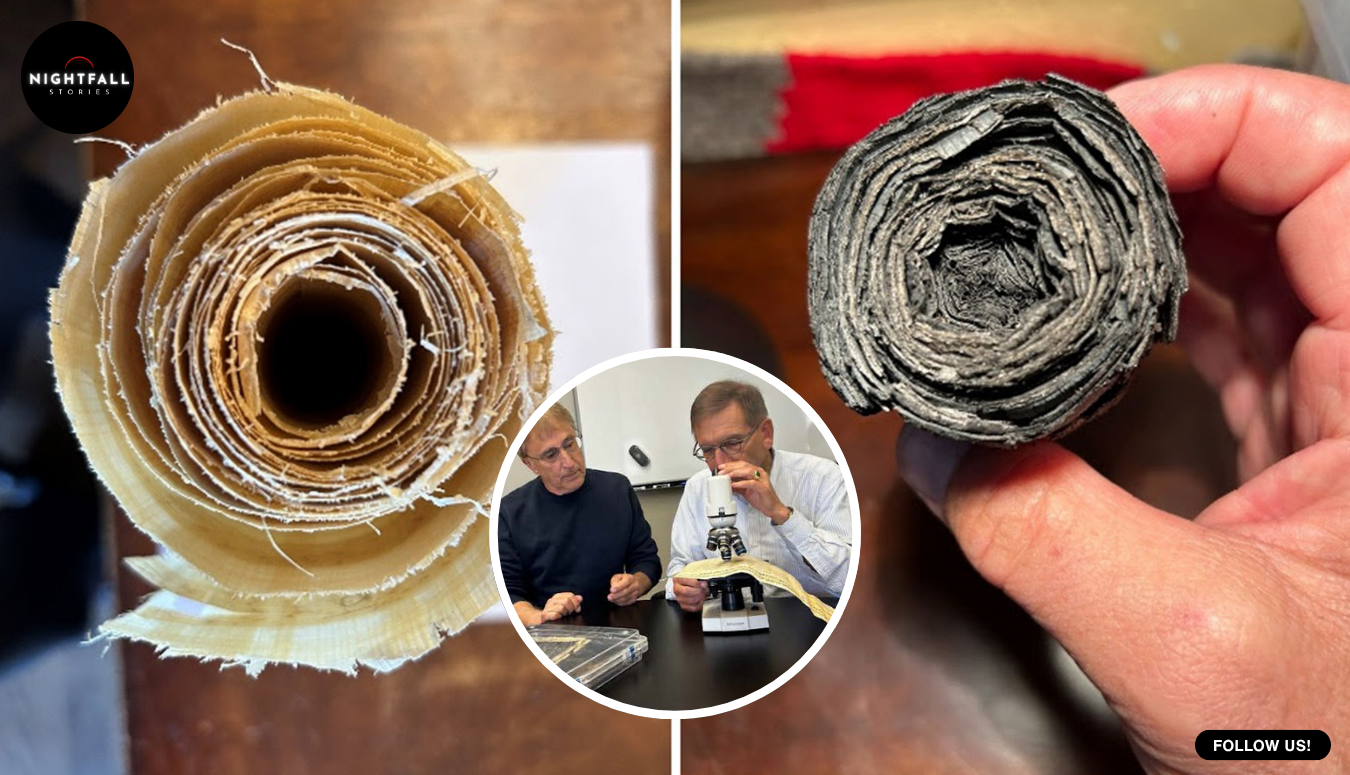
    The sentences written on the scroll were lines from Star Wars, passages from the Bible, and a stray quote from a nineteen sixties science fiction television series called The Outer Limits. They were written with reed pens on real papyrus, by high school students who were paid for the job. Then the scroll was sealed in a steel container, put in a furnace with almost no oxygen, and burned until it was a black cylinder about four centimetres across and eleven long.

    That was the point. The man behind it, Douglas Seiler, needed a charred scroll he was allowed to ruin, because the only other charred scrolls in the world are the ones nobody is allowed to touch.

    Around eighteen hundor so papyrus rolls survive from a villa at Herculaneum that was buried when Vesuvius erupted. They were not burned to ash; they were cooked into lumps of carbon, and for more than two centuries the attempts to open them physically mostly destroyed them. They are the only substantial library to survive from the ancient Mediterranean world in its original form, and almost all of them have never been read. Several collections in Italy, France and Britain hold what is left.

    The modern approach is to leave them shut and scan them. X-ray tomography takes the rolled object apart in software, layer by layer, and algorithms flatten each layer into a readable page. The Vesuvius Challenge has had real success with this, recovering portions of text that had been sealed for two thousand years. But the method is fighting its own physics. Ancient ink on these scrolls is mostly carbon black, soot and gum, sitting on papyrus that carbonisation has also turned into carbon. You are trying to photograph black writing on black paper using a technique that sees density. The letters are there. They barely register.

    Seiler’s question was not whether the scrolls could be read. It was whether some of them would be much easier to read than others, and whether you could tell which before wasting beam time on the wrong one.

    Romans did not only use soot ink. A study published a decade ago found lead in ink on Herculaneum material, and lead is a very different proposition to an X-ray machine. It is heavy, it absorbs hard, and if there is even a trace of it in the strokes of a letter, that letter stops being black on black and starts being something the scanner can actually see. Press accounts of the new work put the difference at up to twenty five times the X-ray absorption of the charred papyrus around it, which is the figure that has travelled, although the published paper itself reports the detection limits rather than quantifying that ratio.

    So: if lead ink shows up dramatically in a scan, and if you could check for lead in a scroll cheaply and without opening it, you would have a way of sorting eighteen hundred unreadable objects into the ones worth the full imaging effort and the ones that are going to stay silent.

    Testing that idea on the real scrolls is impossible, and not for want of nerve. There is no control group. Every one of them is the only copy of itself, nobody knows what any of them says, and you cannot calibrate an instrument against an unknown. To establish what lead at a given concentration looks like after carbonisation, you need an object where you already know exactly what was written, in exactly what ink, at exactly what strength.

    The hard choice in this story is the destructive one, and it is worth sitting with for a moment, because it is the opposite of how heritage science normally works. The whole discipline of reading the Herculaneum rolls has been built around not touching them. Every physical attempt to unroll one has cost material, and some of the early efforts in the eighteenth and nineteenth centuries reduced rolls to fragments in the course of getting a few lines out of them. The entire appeal of tomography is that the object survives the reading.

    Seiler’s experiment inverts that. To learn anything useful he had to build objects precious enough to behave like the real thing and then treat them as disposable. He made scrolls, wrote in them, burned them, scanned them, and will presumably never need any of them again. The destruction is the method, not an accident of it, and the reason it is defensible is that the things destroyed were his.

    Which is how a retired man with no background in papyrology ended up making papyrus and burning it.

    Seiler is an affiliate of Berkeley SETI, the search for extraterrestrial intelligence group at the University of California. He is not an astronomer by training either. He worked in real estate and banking, and he has worked as an inventor. His route into this was collaborating with the Berkeley SETI team on a telescope project, hearing about the Herculaneum scrolls along the way, and deciding more or less on a whim to find out whether the lead question could be answered experimentally.

    It would be easy and wrong to write that as an outsider embarrassing the experts. The record does not support it. What he actually did was assemble the specialists the experiment needed and put his own name first on a paper that could not have existed without them. The study was published in PLOS ONE and the author list runs six deep. Jacob LaManna, at the National Institute of Standards and Technology, ran the X-ray imaging, and is the person photographed in the paper placing the burned scroll on the instrument. Michael McOsker, a papyrologist in the Greek and Latin department at University College London, is a co author. David Kreimer, of Berkeley’s College of Chemistry microanalytical facility, handled the analytical chemistry side. Michael Cyrus Daugherty is also at NIST, and Jens Dopke is at the Rutherford Appleton Laboratory in England.

    The papyrology was inside the project from the start, in other words, not standing outside it with its arms folded. A Berkeley graduate student and papyrologist, Leah Packard-Grams, consulted on the work and described its value as practically unquantifiable, on the grounds that the stakes here are the largest in the history of Greek literature. That is a strong claim and it comes from the discipline, not from the engineer. Karl van Bibber, a nuclear engineering professor at Berkeley, advised Seiler informally on imaging and on how to get a result published. He appears in one of the paper’s photographs checking ink density, and he is deliberately not listed as an author.

    The method had to be faithful enough to be worth anything. The papyrus sheets were manufactured in and bought from Egypt, ten metres of it, about thirty centimetres wide. The reed pens came from Egypt too. The base ink was a carbon black ink made in Japan, the traditional lampblack type.
    Then came the students with the Star Wars lines. It is a funny detail and it is also a serious one, because what matters about the text is not what it says but that somebody knows, exactly and in advance, what is written in which ink at which position on which layer. A control sample has to be boring on the inside. It can be whatever it likes on the surface.

    Across the test pieces the ink was spiked with lead at controlled concentrations, with the strongest formulation carrying one hundred micrograms of elemental lead per two microlitres, equivalent to fifty grams per litre. The reference point mattered: earlier analysis of actual ancient samples had estimated lead in the letters at around eighty four micrograms per square centimetre on a larger sample and about sixteen on a smaller one. Seiler’s team needed to know whether traces at that sort of order would survive being cooked and still show.

    Carbonisation was done by heating the papyrus in a semi sealed steel container inside a high temperature furnace with little or no oxygen reaching it from outside. That is an approximation of what happened at Herculaneum, where superheated volcanic material cooked organic matter without burning it in open air.

    The scroll came out of the furnace as a black cylinder. It also came out, in the paper’s own words, with tight packing of its layers and a waviness that will challenge unrolling algorithms. That sentence is printed in the caption of the paper’s fourth figure, which is an unusual thing for a team to volunteer about its own successful experiment. The replica is not an easy object. If anything it is a reminder that the software problem and the ink problem are separate, and solving one does not retire the other.

    The replica itself was deliberately scaled to the problem. The burned cylinder measured about forty millimetres across and a hundred and ten long, which puts it in the same physical class as the objects it stands in for rather than being a convenient flat test strip. A flat strip would have answered a much easier question. The difficulty with a real scroll is that the writing is wrapped around itself dozens of times, each layer pressed against the next, with the surfaces warped by heat, and the software has to decide where one layer ends and the next begins before it can even start reading. Making a rolled, cooked, warped object was the only way to put that difficulty into the test.

    At NIST the burned scroll was scanned, and then virtually unrolled: a program follows the curvature of the layers with drawn splines, flattens them, and produces a readable surface. The leaded writing appeared. Seiler has described the letters as lighting up, and the lowest concentration the team tested, twenty five micrograms per square centimetre, was still visible. That is the number the result rests on, and it comes with an honest caveat built in: twenty five is not the detection floor, it is simply the weakest ink they tried. The method might see less. Nobody has established how much less.

    The quieter half of the work is arguably the more useful. After the scan, the team went over the carbonised scroll with a handheld X-ray fluorescence unit, an Olympus instrument of the kind used in the field, and it picked up the lead. Not a synchrotron, not a beamline with a six month waiting list. A device a person can carry into a library.

    That is what turns a laboratory finding into something a collection could act on. If a conservator can walk along a shelf of unopened Herculaneum rolls with a handheld scanner and come away with a list of which ones contain lead, then the enormously expensive imaging effort can be aimed rather than guessed. The authors are frank that this is not yet practical as described: more work is needed, they write, to develop a more efficient or automated way of scanning scrolls with a handheld unit. Walking an instrument over a fragile carbon cylinder by hand, point by point, is not a workflow.

    It is worth being exact about what has and has not happened here, because the easy version of this story is wrong in a way that matters. No new ancient text has been read. Nothing was recovered from a real Herculaneum scroll. What exists is a detection and screening method, validated on an object that was built to be destroyed, and an argument that lead in ancient ink would make reading these scrolls substantially more likely to succeed.

    The paper is careful about the gap. The real question it opens is a question about the scrolls rather than about the technique: how many of the surviving eighteen hundred contain enough lead to matter. Nobody knows. The collection has never been systematically screened for it, which is precisely the task the handheld result suggests.

    There is one image in the paper that sits slightly apart from the rest of it. Among the furnace shots and the X-ray projections and the unrolling screenshots, there is a photograph of McOsker, the papyrologist, examining a Herculaneum papyrus that was unrolled long ago, PHer. 1012, a copy of Demetrios Lacon’s work on poems. It is an object that has already been opened and read, which makes it the counterexample to everything else in the study. It is what the rest of the library is not.

    Two of the practical details are worth keeping, because they say something about how this kind of work gets done now. The journal released the whole paper under a public domain dedication, meaning the authors kept no copyright in it at all, so the figures and the data are free for anyone to build on. And the original problem was solved by someone who had no professional reason to care, who bought papyrus from Egypt and ink from Japan with his own initiative, paid teenagers to write nonsense on it in a dead medium, and then put it in a furnace.

    The Herculaneum library has defeated serious scholars for two hundred and fifty years, and it is not defeated yet. But there is now a cheap test for whether a given scroll is likely to give itself up, and the test exists because somebody was willing to make the thing he wanted to read, and then burn it.

  • Thirty-eight pups turned up on a city’s beaches, and the rule still says it does not count

    Thirty-eight pups turned up on a city’s beaches, and the rule still says it does not count

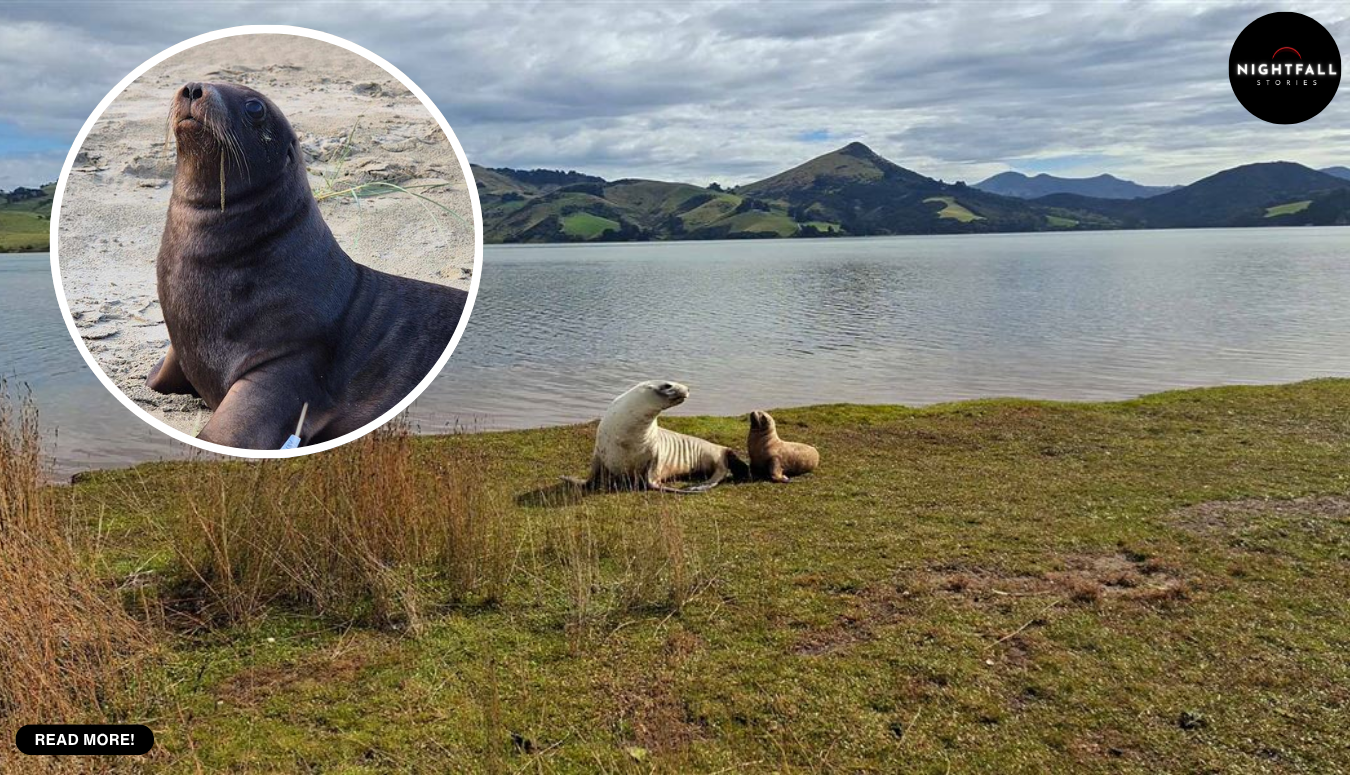
    Somebody had to kneel in the marram grass on the Otago coast, get both arms around a sea lion pup heavy enough to shove an adult off balance, and hold it still long enough for a third person to clip a tag into each flipper. That happened thirty-eight times over one southern summer. Thirty-eight pups, found, caught, tagged and written down, on a stretch of coastline where a hundred years ago there were none at all and nobody expected there ever to be again.

    Thirty-eight is the number the Department of Conservation announced earlier this year, and it is the first time in more than a century that more than thirty-five pakake, the New Zealand sea lion, have been born in a single season on the Otago coast. It is the best breeding season the mainland has had in living memory.

    It also, officially, counts for almost nothing yet. Because DOC wrote itself a rule, and the rule is unsentimental: to be considered a breeding colony, at least thirty-five pups have to be born for five consecutive seasons. Otago has done it once. There are four more to go, and if any one of them falls short, the count does not pause. It restarts.

    That is an unusual thing for a government agency to put in writing. Conservation announcements are usually built to be celebrated. This one was built to resist celebration. The number arrives already attached to the reason the number is not enough.

    To understand why the rule is written that way, you have to go back to a single animal with a tag in her flipper and a name that was barely a name at all. She was called Mum.

    She was born in the Auckland Islands, deep in the subantarctic, sometime in the nineteen eighties, and she was tagged there in 1986 as part of the long running survey work on the islands where almost all of her species breeds. Female sea lions are supposed to be faithful to their birthplace. They come back to the beach they were born on, and that loyalty is precisely why a species can be shot out of one region and simply never return to it.

    Mum did not do that. She turned up on the Otago coast around 1992, hundreds of kilometres from where she should have been, and on the first day of 1993 she gave birth at Taieri Mouth. It was the first New Zealand sea lion pup born on the mainland in well over a hundred years. Some accounts put the gap closer to a century and a half.

    She was not a conservation project. Nobody released her there. She was one animal making one decision that nothing in her biology particularly recommended, and the entire mainland population is downstream of it.

    Over the rest of her life she had eleven pups. She was last seen in 2010, aged around twenty four, and nobody knows when or how she died. By then her daughters were pupping on the same coast, and their daughters after them. There are now something like fifty breeding females on the Otago coast. Of the thirty eight pups born in that record season, by one count thirty six of them trace back to her.

    Mum’s own history is not a clean inspirational arc either. In 2007 she went to sea and left a five day old pup behind, and when she did not come back for it, rangers tried to get the pup fostered onto another female, a sea lion they knew as Lorelie. It did not work and the pup died. Mum returned thin and with a cataract in one eye. That is the texture of a founder population: a handful of individual animals, each one known, each loss arithmetically significant, and people making decisions in the field with no good options and very little precedent to go on.

    A decade ago a life sized statue of her by the sculptor Bryn Jones was put up on the esplanade at St Clair, one of the city beaches her descendants now use. It is probably the only piece of public sculpture anywhere that commemorates an animal for ignoring its own instincts.

    That is the part of this story that the number does not show you. Thirty eight pups does not mean a healthy, diverse, resilient population. It means one female’s descendants have multiplied for three decades inside a very narrow set of genes. Biologists call that a founder bottleneck, and it is a known fragility. A population built from one animal carries whatever vulnerabilities that animal happened to carry, concentrated, with nothing to dilute them.

    So one spectacular season is not evidence of recovery. It is evidence of one good year in a lineage that is still small enough to be wiped out by a bad disease, a bad fishing season, or a run of bad luck on a road. The five season rule exists because a population like this one can produce a record year and then collapse, and an agency that declared a colony after the first good count would have to unsay it.

    What makes the Otago story strange, and in some ways harder than any subantarctic count, is where these animals have chosen to live. Pakake were hunted out of mainland New Zealand entirely. The species survived in the far southern islands, the Auckland Islands and Campbell Island, which were remote enough and unpleasant enough that the animals were left mostly alone. Those islands still hold the great majority of a total population of roughly ten thousand animals, and the species is classed as Nationally Endangered in New Zealand and Endangered internationally.

    A subantarctic breeding beach is a wildlife site. The Otago coast is a city’s front garden.

    Dunedin’s sea lions haul out on urban surf beaches. They cross roads. They walk up through dune fences and into back gardens, pine plantations, campgrounds and golf courses. There is a reason for this, and it is not confusion. Adult males are large and aggressive, and a female with a newborn pup will deliberately move inland, away from the water and into human space, because human space is the one place big males are less likely to follow her. The behaviour that looks like an animal lost in town is an animal doing exactly the right thing.

    Which means every management decision about this population is a decision about people. Not about habitat, not about predators, about drivers, dog owners, surfers, greenkeepers and whoever happens to be the first person to find a half tonne animal asleep against their fence.

    The record of how that has gone is mixed and some of it is grim. A breeding female known as Matariki was killed by a vehicle along with her pup while moving between sites. Another animal was struck by a train north of Dunedin. In 2016 a young sea lion called Rua, the second pup of a well known local female, was stabbed to death, and the prosecution that followed did not succeed. Pups have been killed on Dunedin roads more than once. There is also the ordinary daily friction: dogs off leads, people crowding a sleeping animal for a photograph, a male letting himself into a shop or a swimming pool through an automatic door.

    That is the environment in which thirty eight pups were produced, and it is why the people in this story matter more than they usually would in a wildlife count.

    The counting itself is field work, not paperwork. DOC’s coastal Otago biodiversity rangers walk the coast through the pupping season, find the pups, and tag them. A pup of any size takes a small team: two people to hold an animal that can already weigh more than thirty kilograms and does not want to be held, and one to put a tag in each flipper. Tagging is what makes the long term picture possible, because a tagged pup can be resighted years later, in Otago or six hundred kilometres away in the subantarctic, and the resighting records are what turn a pile of annual counts into a demographic history. The tagging and resighting data from these surveys sit in a sea lion database built for DOC by an independent data science team.

    There is a wider reason the mainland count matters more than the raw numbers suggest. Of roughly ten thousand New Zealand sea lions, the overwhelming majority breed in two subantarctic island groups. A population that concentrated is one event away from catastrophe: a disease outbreak, a shift in the fish they depend on, a bad run of pup mortality in a single season on a single island chain. A second breeding base on the mainland, a thousand kilometres north, is not a rounding error on the total. It is a hedge. Which is also why a mainland return is a different proposition from a mainland headcount, and why DOC treats colony status as a category rather than a tally.

    Tagging is what makes any of that legible. Because every Otago pup gets a tag in each flipper, individuals can be followed for years, and the resightings are often startling. One tagged male pup was recorded six hundred and thirty kilometres from where it was tagged, moving between the subantarctic and the Otago coast inside seven months. Researchers outside DOC work the same data, including wildlife ecologists tracking where pups go once they leave the beach. Individual females become known quantities with known habits. One, called Joy, regularly uses a campground north of Dunedin and has raised multiple pups there; one of her surviving daughters pups on the same coast. When rangers can name the female and predict her beach, they can also warn the campground, move the signage and get the dogs on leads before she arrives, which is roughly the whole of mainland sea lion management in one sentence.

    It is worth being precise about what thirty eight is. DOC’s own wording for the season was that more than thirty five pups had been tagged in coastal Otago. The number is a tag count, which is the closest thing to a hard count anyone has, and it is not the same as a complete census of births. Rangers have said as much in earlier seasons. In one recent year the ranger running the work noted that despite searching the less accessible places, they never found the birthplace of at least a dozen pups. Some pups are born in gullies and plantations and under bushes that nobody walks past. The real figure in any given year is probably a little higher than the tagged figure, and the rule is applied to what can actually be verified.

    The ranger whose name is attached to this season publicly is Moss Thompson, DOC’s coastal Otago biodiversity ranger, the role that has carried the mainland sea lion work for years. The post was held for a long stretch by Jim Fyfe, who did the tagging through the slow middle years when the annual count was in the teens and twenties and the idea of a breeding colony was theoretical. Thompson’s framing of the record season was careful and worth repeating because it is unusually honest for a milestone announcement: he described it as more than thirty years in the making, and said almost every Otago pakake can be traced back to Mum. He put the achievement on mana whenua, conservationists and the wider Otago community rather than on the agency.

    That is not a formality. Te Runaka o Otakou, the mana whenua runaka for the area, is not a decorative presence on this coastline. Its members have taken part in the monitoring and the pup tagging, and pakake is a taoka species, which in practice means the runaka has standing in decisions about the animals rather than being consulted about them afterwards. Nadia Wesley-Smith, the runaka’s chief executive, described the milestone as the product of a great deal of work by many families and by the wider Otepoti community, and immediately turned to what comes next, which is strengthening the effort rather than banking the result.

    Shaun McConkey, who chairs the New Zealand Sea Lion Trust, put the hard part plainly: as the numbers keep rising, people are going to have to work out how to share the coast with large, bold animals. The Trust is the organisation that spends its time on exactly that problem, learning individual animals, tracking where particular females pup, and getting between a sleeping sea lion and a crowd. Its director has spoken about knowing the local animals by name and personality, which sounds whimsical until you realise it is the operational knowledge that lets anyone predict where a female will go next.

    So here is the honest state of it. One season has cleared the bar. The population that cleared it descends almost entirely from one female who made an unlikely choice thirty years ago and is memorialised by a life sized statue on the Dunedin waterfront. Four more seasons have to clear the same bar, consecutively, and the things most likely to stop that are not natural. They are vehicles, dogs, fishing gear, and the ordinary human impulse to get closer than you should.

    If the next four seasons hold, Otago becomes the first mainland breeding colony of New Zealand sea lions in around a hundred and fifty years, and a species that was shot off an entire coastline will have been allowed back onto it by the people who live there now. If one season falls short, the count goes back to zero and the rangers start again, and the animals carry on regardless, because they were never counting.

    That is the thing about a threshold written in advance. It takes the story out of the agency’s hands and puts it in the hands of whoever is behind the wheel on a coastal road next summer.

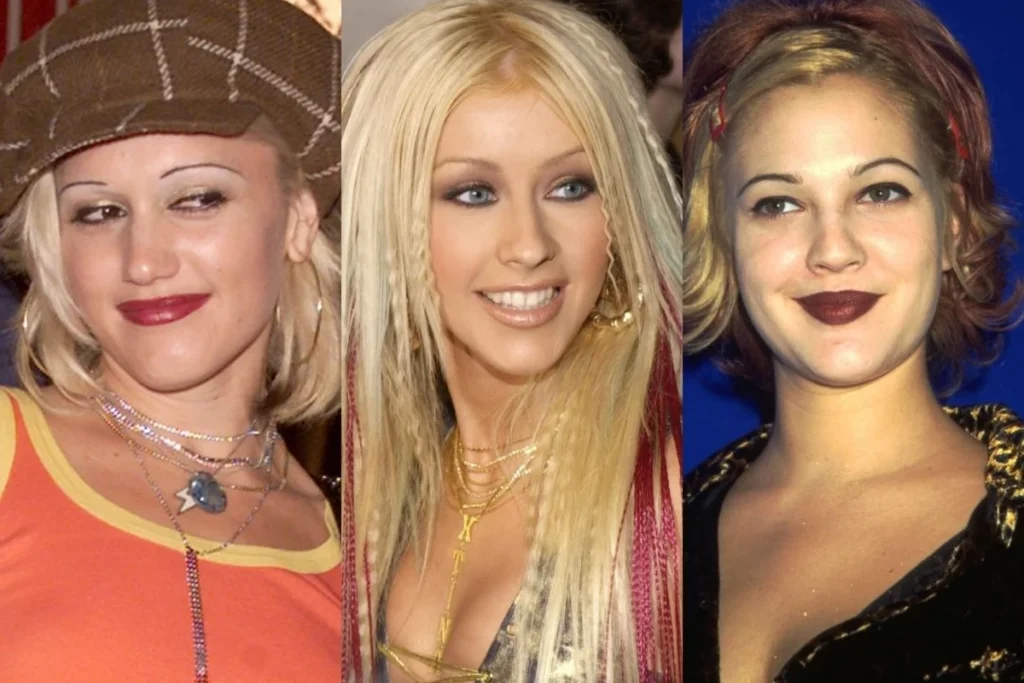
  • 13 Makeup trends that instantly take you back to the 2000s

    13 Makeup trends that instantly take you back to the 2000s

    Pale, almost-white lips were a popular look for a surprising amount of time.
  • They were taught that their minds stopped developing at 18. Then six of them walked out of a university with bachelor’s degrees

    They were taught that their minds stopped developing at 18. Then six of them walked out of a university with bachelor’s degrees

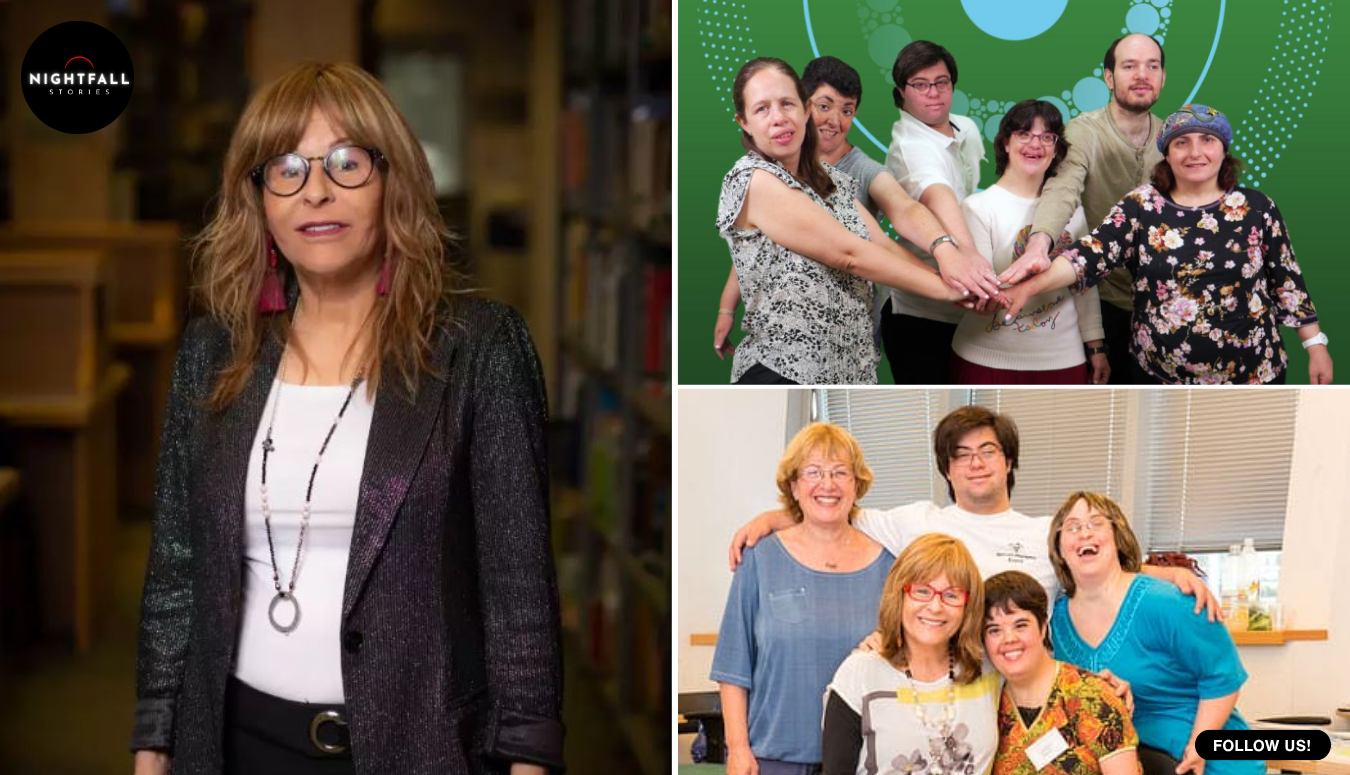
    Ruti Bar-Or was 46 when she collected a bachelor’s degree in social sciences. She is a poet and keeps a diary, she has Down syndrome, and for most of her life the standard professional literature said the thing she had just done was not possible. Not difficult. Not unlikely. Not possible, because the cognitive development of people like her was supposed to have finished somewhere around the end of adolescence, and what came after that was supposed to be a long flat line and then a decline starting in the mid thirties.

    She was one of six. Tomer Gad-Barak, 35, who has mild cerebral palsy. Hofit Gilad, 41, a mother who turned out to have a head for statistics. Henia Greengarten, 42, who has Kabuki syndrome and volunteers in preschools. Oded Naftali, 34, a military veteran with Down syndrome. Lior Shmualevitz, 35, who has Williams syndrome. All six were registered as regular students at Bar-Ilan University in Israel, all six sat the courses, and after roughly ten years of study all six were awarded a multidisciplinary BA in social sciences through the university’s Faculty of Education.

    The researcher who built the road they walked down is Professor Hefziba Lifshitz, and earlier this year the President of Israel put a medal around her neck for it. That part is easy to report. The harder and more interesting part is what she actually proved, because the temptation with a story like this is to turn it into a single heroic act of overturning, and that is not what happened. What happened was slower, more argumentative, and more useful.

    Start with the assumption, because the assumption is the story. If you trained as a special educator or a clinical psychologist in most of the second half of the twentieth century, you were taught a developmental trajectory for intellectual disability that had three parts. Restricted cognitive growth up to roughly the age of 20. Then stability. Then accelerated decline from the mid thirties or forties onward, with signs of dementia appearing in people’s thirties and forties. That was not folklore. It came out of research literature going back to the 1960s, and Lifshitz’s own papers cite it directly as the position she was arguing against.

    Think about what a trajectory like that does once it is inside a system. If development is over at 20, then everything after 20 is maintenance. You do not design a curriculum for a 35 year old, because there is nothing left to teach that will take. You design occupation, supervision, pleasant activity, safety. Money follows the model. Staffing follows the model. Expectations follow the model, and expectations are the part that gets into people’s heads and stays there. An adult with an intellectual disability who wanted to study something new was, under that framework, asking for a kindness rather than an education.

    Lifshitz’s counter-proposal has a name. She published it in 2015, under the surname Lifshitz-Vahav, as Compensation Age Theory, in the journal Education and Training in Autism and Developmental Disabilities. The core claim is deliberately modest in its wording and large in its consequences. It is that chronological age, not mental age, is the variable that matters for adult cognitive performance in this population, and that all human beings, including people with intellectual disability and including older ones, remain capable of change given the right environmental conditions and systematic intervention. Her formulation is that adulthood involves processes of development, growth and neural sprouting rather than stagnation or decline. Her clinical estimate, drawn from her own data, is that measured intelligence in this population tends to peak somewhere around 40 to 45, which is to say two decades after the textbooks had it finishing.

    The evidence behind that arrived in pieces over a long stretch, and it is worth walking through the pieces, because the quality of each one is different and an honest account says so.

    The largest single study came in 2024 in Scientific Reports, with Lifshitz as lead author alongside Roi Yozevitch of Ariel University and Shlomit Shnitzer-Meirovich of Levinsky College of Education. It compared 340 people with intellectual disability, 79 of them with Down syndrome and 261 with intellectual disability of non-specific origin, across an IQ range of 43 to 75. The sample split into an adolescent group aged 16 to 21 and an adult group aged 22 to 45, and the researchers put both through standard measures of acquired knowledge and of problem solving: vocabulary, similarities, block design, Raven’s matrices.

    The adults outperformed the adolescents on three of the four measures. That is the headline result, and it runs in exactly the opposite direction to the trajectory the field had taught. A second finding surprised the researchers more. Participants with Down syndrome, long characterised in the literature as having relatively weak non-verbal reasoning, did better than the non-specific group on block design and on Raven’s matrices, and a network analysis of how the two kinds of intelligence related to each other showed a more coherent, more integrated pattern in the Down syndrome group than in the comparison group, whose pattern was diffuse.

    Now the honesty. That study is cross-sectional. It compared different people of different ages at one moment, rather than following the same people as they aged, and the authors say plainly in their own limitations section that this design cannot establish causation and that cohort effects between the age groups are a live possibility. The adults in that sample grew up in a different service system from the adolescents, and some of the gap could be the system rather than the ageing. The Down syndrome subgroup, at 79 people, is small. The IQ range covers mild and moderate disability only. None of that is a reporter’s objection. It is the paper’s own.

    Which is why the intervention studies matter more, and they are smaller. In 2018, in PLOS ONE, Lifshitz and colleagues including Jay Verkuilen of the City University of New York compared two groups of adults who had come through different versions of university study: 10 who had been fully included in regular courses and 21 who had taken adapted enrichment courses. The fully included group, aged 26 to 51, scored a mean general IQ of 68.7 against 56.6 for the adapted group, and a mean verbal IQ of 72.9 against 59.7. That is a gap, not a change, and selection could easily explain some of it, since the stronger students were the ones who went into full inclusion in the first place.

    In 2023, in the European Journal of Special Needs Education, the team tested the same question with a before and after design. Twelve adults with mild intellectual disability who went through four and a half years of the university programme were compared with twelve who did not. The programme group’s scores rose. Lifshitz’s account of it is that among the students pursuing a BA, the second IQ measurement crossed the 70 to 75 threshold that the definition of intellectual disability itself sits on, landing at 80 and in some cases higher. One report of the programme’s third stage put the increase as high as 15 points, with verbal scores reaching the nineties.

    That finding deserves to be read carefully rather than enthusiastically. Twelve and twelve is a very small study, nobody was randomly assigned, and an IQ score crossing a diagnostic cutoff is not the same as a diagnosis being withdrawn or a life being transformed. What it does mean is that the number which the system treated as a fixed property of a person moved, measurably, in adults in their thirties and forties, after education. The flat line was not flat.

    The study that pushed hardest against the old model came last year, in Research in Developmental Disabilities, and it went after the group that the deficit framework had written off most completely. Lifshitz, with Shira Posner and Shnitzer-Meirovich, ran an introduction to sociology course, built around an e-book and a mediational teaching strategy, for nine adults with severe intellectual disability and extensive support needs, aged 27 to 58, against ten controls. The students gained academic knowledge, which you might expect from a course. More unexpectedly, the gains showed what the researchers call near transfer onto basic cognitive measures, while the control group stayed flat or slipped. Nine people. The authors say so, and say generalisation should be cautious.

    So the fair summary is this. A specific, consequential, widely taught claim about when development ends has been contradicted by a consistent body of work, most of it from one research group, much of it on small samples, with designs that establish that change is possible rather than that it is universal. That is a real result. It is not a cure, nobody involved has claimed it is, and the field’s acceptance is best measured by the fact that a mainstream academic publisher, Springer, brought out her full monograph on it in 2020, under the title Growth and Development in Adulthood among Persons with Intellectual Disability, with a chapter devoted to cognitive rehabilitation for older people with intellectual disability and Alzheimer’s disease.

    That chapter is the sign of a researcher arguing in good faith, because the decline literature did not evaporate. It is strong and it is specific. A large American cohort study published in JAMA Network Open in 2024, drawing on claims data covering 132,720 adults with Down syndrome, found that 23.3 percent had ever received an Alzheimer dementia diagnosis, with a mean age at first diagnosis of 54.5 years. Among those who were 55 to 64 when they entered the study, the probability of an Alzheimer diagnosis over the following eight years was 63 percent. Early onset dementia in Down syndrome is not an old prejudice that better research dissolved. It is a documented medical reality with a genetic mechanism behind it.

    Both things are true at once, and holding both is the whole intellectual achievement. Development can continue into the forties and the risk of a steep decline can arrive in the fifties. What the old trajectory got wrong was not the existence of decline. It was the dates, and the assumption that the two decades in between were dead ground.

    Which brings us to the second step, the one that is much harder than publishing. In 2012 Lifshitz started a programme at Bar-Ilan called Otzmot, which translates roughly as strengths or powers, and is presented in English as the Empowerment project. It did not begin as a gesture. It began as the obvious operational consequence of her own data: if adults keep developing, enrol them.

    By her own account, that drew scepticism from parts of the academy. It is not difficult to see why. A university is a machine for sorting people by measured ability, and the proposal was to run students through it whose measured ability put them outside the entry criteria by definition.

    The programme is built in three stages, and the design is the interesting part. The first stage puts students into academic courses adapted for them at the university’s school of education: introduction to psychology, introduction to sociology, self-advocacy, library and computer skills. The teaching is largely done by master’s students in the intellectual disability programme, who are trained in curriculum adaptation first, which means the adaptation is a taught professional skill rather than improvisation. The second stage puts Otzmot students into BA research seminars alongside typical students, working on research together. The third stage registers the strongest students as regular undergraduates working toward a degree.

    Note what is adapted and what is not. The route in is adapted, the materials are adapted, the pacing and the mediation are adapted. The subject matter is not watered into something else, and the degree at the end is a real degree from a real faculty, not a certificate of attendance. That distinction is the difference between a programme and a courtesy.

    It now runs at a scale that is no longer experimental. Around 120 adults are enrolled across the full range of disability severity, from mild and moderate through to severe with extensive support needs, under director Dr Shoshana Nissim. Lifshitz also heads the Machado Center for Research and Advancement of Variability and the Baker Center at Bar-Ilan, where the research and the teaching feed each other, which is why the intervention studies exist at all: the students are not case studies, they are enrolled adults whose results are measured the way any educational outcome is measured.

    The six graduates collected their degrees in 2024, at a ceremony the country’s first lady attended. Lifshitz has said she is aware of only three other people anywhere in the world who hold a BA having met comparable criteria, which is a statement about how closed the door has been rather than about how rare the people are.

    Earlier this year the Israeli Presidential Medal of Honor went to eleven people, and she was one of them. The award is the state’s highest civilian decoration, established in 2012 and revived by President Isaac Herzog after a long gap, and it is given on the recommendation of an advisory committee chaired by the retired Supreme Court justice Professor Yoram Danziger, which considers nominations against published criteria for an exceptional contribution to the country or to humanity. There is no public vote, no entry form and no fee, which is a lower bar to clear in a story than it sounds, and a lot of awards do not clear it. The others honoured alongside her were Yona Elian-Keshet, Hossam Haick, Mooli Lahad, Yossi Leshem, Abie Moses, Ziva Mekonen, Moshe Nissim, Rabbi Haim Sabato, Yehuda Eder and Uriel Reichman. Herzog told the recipients that each of them was a beacon in their field.

    The medal is the recorded ending, but it is not the point, and Lifshitz would be an odd person to turn into the moral of her own research. The point is that a number in a textbook was wrong, and that being wrong about it had a cost nobody was counting. For decades, adults who could have been learning something were handed activities instead, on the authority of a developmental ceiling that had been measured badly and then repeated confidently. Six people with a social sciences degree each are not proof that everyone should have one, and nobody serious is arguing that. They are proof that the ceiling was never where the field had drawn it, and that the only way anyone was ever going to find out was by teaching the people on the other side of it and seeing what happened.

    What happened is that they learned. The rest was paperwork.

  • A bus with 21 people aboard came down the hill with no control. The lorry driver in front could see it coming, and he chose not to get out of the way.

    A bus with 21 people aboard came down the hill with no control. The lorry driver in front could see it coming, and he chose not to get out of the way.

    At roughly twenty-six minutes past six in the evening, a dashcam in traffic on the North-South Expressway in the Malaysian state of Perak recorded something most drivers will never see and would not know what to do with. An express bus, running south out of Kedah towards Kuala Lumpur, was coming down the long descent near the Menora Tunnel and it was no longer being driven. It was simply moving. It struck a guardrail. It came close to several smaller cars. And ahead of it, in the right-hand lane, a loaded lorry slid sideways into its path rather than away from it.

    That was deliberate. The lorry driver, Wong Tuck Meng, forty, had worked out what was behind him and had decided that the back of his own vehicle was going to be the brake. The bus hit his rear. Both vehicles slowed together. He kept the pair of them against the barrier until they stopped. There were twenty-one people on the bus.

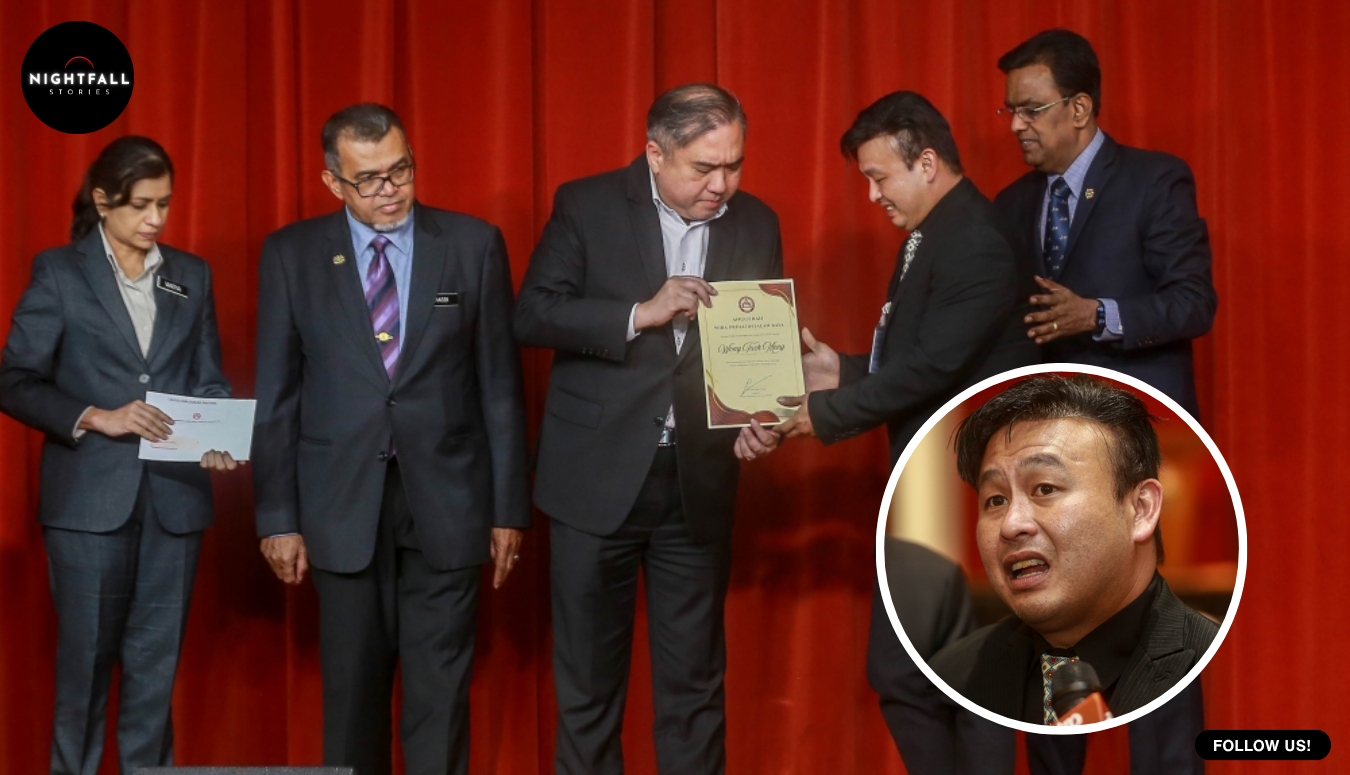
    Eight days later he was standing inside the national Parliament building in Kuala Lumpur, being handed a certificate and the equivalent of about 2,150 US dollars.

    The clean version of this story, the one that travelled, is a man who sacrificed his truck to save a bus. That version is true as far as it goes, and it is also the least interesting thing about it, because it skips the part that actually took nerve. Wong did not stop a bus. Nobody stops a bus. What he did was choose where and how it would come to rest, and he made that choice in the handful of seconds available to him while sitting inside one of the two objects involved.

    Start with what a runaway vehicle on a gradient is. A fully loaded express coach is a very large amount of mass moving at highway speed, and on a downhill run gravity is adding to that every second rather than taking from it. The only question left is what absorbs the energy. If nothing does, the vehicle keeps accelerating until the road geometry decides for it, which on a mountain descent usually means a curve it cannot hold. A guardrail is not there to stop a coach. It is there to keep one from leaving the carriageway. The barrier buys you a direction, not a halt.

    What a lorry in front offers is something a barrier cannot: it offers mass moving in the same direction. Contact between two vehicles travelling the same way is an enormously gentler event than contact between a moving vehicle and anything fixed, because the closing speed is only the difference between them rather than the full speed of the faster one. The lorry then has its own brakes and its own traction to spend, and because it is in front, every bit of braking it does is braking the thing behind it too. That is the whole mechanism. It is crude and it works and it is also the reason runaway lanes on steep highways are filled with gravel rather than walls.

    Understanding it afterwards, in writing, is easy. Working it out in the mirror is not.

    The place itself is worth a moment, because the geography is not incidental. The Menora Tunnel is a pair of eight-hundred-metre bores driven under the Keledang Range near Jelapang, two lanes in each direction, open since the late nineteen eighties. It is the point where the main expressway up the western side of the peninsula stops going around the hills and goes through them, and either side of it the road climbs and falls hard. Every express coach running between the northern states and the capital uses this stretch, which means that on any given evening there are dozens of heavy vehicles on a long gradient with a tunnel mouth at one end of it. Drivers who work the route know exactly which section they are on without looking. That is the stretch where this bus stopped being a bus and became a weight.

    Wong’s own account of the moment, as he gave it to reporters at Parliament, is unglamorous in a way that reads as honest. He said he had a little distance to work with because the bus was still some way back, so he used it to sound his horn and give the cars in front of him a chance to move out. That is the detail that tells you he was thinking about the whole road and not only about himself. His first action in a situation he had no training for was to clear the space downstream, because he already knew he was about to become an obstruction.

    He also said, more or less, that you only really think about one thing in that situation, which is that a crash with people dying in it has to be avoided if there is any way to avoid it. He did not frame it as courage. He framed it as the available option.

    There is a second driver in this story and he is usually left out of it. The man at the wheel of the bus, named in one Malaysian daily as Ahmad Yasin Ab Malek, gave his own version, and it is the version that completes the picture. He said he tried to hold himself together once he realised he had lost control, moved across into the right-hand lane, and judged that the lorry ahead of him was the safest thing available to him. That matters enormously. This was not a passive object hitting a volunteer. Two professional drivers, strangers, in different vehicles, with no radio between them, arrived independently at the same plan and executed it in traffic. One steered towards the lorry. The other steered towards the bus.

    That is the part worth sitting with. Road rescue is usually told as one hero and a crowd of victims. This one needed two people to be right at the same time, and nobody had time to agree anything.

    Now the honest limits, because this story has been circulated with more certainty than the record supports, and the gaps are not small ones.

    Nobody has published what went wrong with the bus. The Malaysian reports describe a technical failure and a loss of control on a descent, and that is as far as the sourcing goes. Whether that was a brake problem, and if so whether it was wear, overheating on the gradient, a mechanical fault, a maintenance failure or something else entirely, is not established in anything that has been made public. The operator has not been named in the coverage. No investigation finding has been released. Anyone telling you the brakes failed because of one specific cause is filling in a blank.

    More importantly, and this is the detail that keeps getting invented: it is not on the record whether anyone was hurt. When the footage first circulated, the clearest contemporaneous write-up said plainly that it remained unclear whether anyone had been injured or what had caused the bus to lose control. The later award coverage says the passengers were spared a far worse outcome and that lives were saved. It does not say that nobody was hurt, and neither does the wire copy, and neither does any of the papers. Twenty-one people were inside a large vehicle that hit a guardrail and then hit a lorry. The responsible thing to say is that no deaths have been reported from this incident and no injury figure has been published either way. The cheerful line that everyone walked away is not something anyone has actually reported.

    There is also a cost side to this that nobody has published, and it is worth naming because it is the part that makes the decision a real one rather than a free gesture. A lorry is not a prop. For a man who drives goods for a living, that vehicle is the income, and letting a coach run into the back of it is a decision to damage the thing he is paid with. Depending on how the load was secured, it is also a decision to accept whatever the impact did to the cargo. None of the reporting says what happened to his lorry, what it cost to repair, who paid, how long he was off the road, or whether the award money came anywhere near covering it. Ten thousand ringgit is a serious sum in that trade and it is also not a lot of bodywork. He will have known the general shape of that arithmetic as he moved across, and he moved across anyway.

    What is on the record, in detail, is what happened eight days afterwards.

    On the twenty-third of June, Wong was brought to the Parliament building and presented with two things from the Road Safety Council of Malaysia: a special certificate of appreciation, and a road safety hero award. With them came ten thousand ringgit, about 2,150 dollars, paid out of the council’s fund. The transport minister, Anthony Loke, said in substance that a tragedy had been avoided and many lives saved because one driver acted quickly even though doing so could have cost him his own. A letter of appreciation went into the parliamentary record.

    There is a wrinkle here that should be reported rather than smoothed over, because two Malaysian outlets do not agree on who handed over what. The national news agency, along with three separate newspaper groups that sent their own reporters, has the transport minister making the presentation, with the deputy speaker of the lower house, Ramli Mohd Nor, conveying Parliament’s own appreciation separately. One major Malay-language daily instead describes the deputy speaker as the one who presented the award. Both officials were plainly there and both plainly took part. Which hand passed the certificate is the sort of detail that gets garbled in a scrum of photographers, and the balance of the reporting favours the minister presenting, but it has not been settled by any primary document, so the fair version is that both men took part in honouring him and the accounts differ on the choreography.

    The same caution applies to his name, which is a small thing that matters a great deal if you are the person it belongs to. Five of the Malaysian outlets covering this, including the national wire and three papers working independently, spell it Wong Tuck Meng. One spells it Wong Tuck Ming. I could not retrieve a published citation from the Road Safety Council or the transport ministry that would settle it from the awarding side, which is where it should be settled. Tuck Meng is the spelling carried by the clear majority and by the wire, and it is the one used here, but it is a weight of usage rather than an official confirmation, and it is worth saying so out loud.

    It is also worth being honest about how many eyes have actually been on this. The story looks heavily covered, and in a sense it is: it appeared across a dozen sites in two languages within a day. But most of that is the same wire copy under different mastheads, and two of the titles that carried it belong to the same group. Stripped down, the real base is the national news agency plus a handful of papers that put their own reporters and photographers in the room at Parliament. That is enough to stand on. It is not the twelve independent accounts the search results suggest, and the difference matters when the thing you are checking is a detail only one of them has.

    One more thing is absent and its absence is the reason the clip travelled. Nobody knows who filmed it. The footage that put Wong on the national record came from a dashcam in following traffic, and the person behind that camera has never been identified in any of the coverage. They happened to be on that stretch of road at that moment, pointed the right way, and their recording is the only reason a lorry driver’s decision became a public act rather than a private one and an insurance claim. He got a certificate in Parliament. They got nothing, because nobody knows who to give it to.

    The backdrop to all of this is less comfortable. Almost exactly a year before, in the same state, a chartered bus carrying university students home after a holiday lost control on a dark downhill curve, hit a guardrail and came to rest near a ravine. Fifteen students died. More than thirty people were injured. The operator’s licence and permits were pulled, the driver was charged, and there was a long national argument about who is accountable when a coach full of people goes off a hill. That is the context in which a country gives a lorry driver money and a certificate for a descent that did not end that way. The Road Safety Council exists partly because these roads keep producing this exact geometry: a long gradient, a heavy vehicle, a barrier and a curve.

    Which is why the award is a slightly odd object, and interesting for it. It is not a jury prize with published judges and a methodology. It is a statutory council and a government ministry deciding, quickly, that a particular act deserved public money and the floor of Parliament. Somebody other than Wong decided it, there was no application and no nomination fee and no popularity vote, and the whole thing went on the parliamentary record with a date attached. Eight days from the deed to the certificate is fast for any government anywhere. Somebody in that system watched the clip, found the man, and pushed it through.

    What strikes me, reading all of it, is how little room there was. Wong did not have a minute. He had the length of a mirror glance to understand the problem, decide that the solution was his own vehicle, sound his horn for the cars ahead, and position himself. Whatever he feels about it now, at the time it was a small number of seconds and a choice between being somewhere else and being the thing that stopped it.

    He chose to be the thing that stopped it. And then, eight days later, a man who drives goods for a living stood on a floor built for politicians while the transport minister explained to the country what he had done, which is not where that Monday evening on the expressway looked like it was going.

  • She has taught English in the same Irpin classroom for thirty years. The rule she follows for the first two minutes of every lesson is the part nobody expected

    She has taught English in the same Irpin classroom for thirty years. The rule she follows for the first two minutes of every lesson is the part nobody expected

    Svitlana Merkulova teaches English at Lyceum No. 2 in Irpin, a town on the north western edge of Kyiv, and she has been teaching in that building for thirty years. This year a panel reviewing 1,169 applications and 1,723 nominations named her the best teacher in Ukraine and handed her a million hryvnia, a little over twenty thousand dollars at recent exchange rates, earmarked for educational projects rather than for her. The ceremony was at the National Opera of Ukraine. Her name was projected onto the Motherland Monument in a light show that night.

    The prize is the least interesting thing about her, and she more or less said so from the stage. The interesting part is the thirty years, and a set of working rules that are unusually well documented for a teacher, because she has spent a decade writing them down and teaching them to other people.

    Start with the one that governs how a lesson opens. Before any grammar, before any task, there is an emotional check in. Every pupil in the room says, briefly, where they are that day. It is not a pastoral add on wedged into a timetable. It is the first two minutes of the lesson, every lesson, treated as part of the method rather than as an interruption to it, and it comes out of trauma informed practice, a body of classroom technique Merkulova has also trained other Ukrainian teachers in.

    Then there is the rule she applies to herself. The teacher talks for twenty percent of the lesson and the pupils talk for eighty. That is a brutal constraint for anyone who has stood at the front of a room, because the easiest thing in the world is to fill the silence, and a teacher explaining is a teacher who can hear that the lesson is going well. Holding to one fifth means building the other four fifths out of something the pupils actually have to do.

    What she builds it out of is largely not a textbook. Her lessons use authentic material, the English that exists in the world rather than the English written for learners: menus from London cafes, airport announcements, the flat functional language of a place a pupil might one day be standing in. Tests are often replaced with quests, which in her classroom means a trail of QR codes that have to be worked through in sequence, so that the assessment looks like a game and the pupil is reading under pressure without the vocabulary of examination attached to it.

    There is a flipped classroom element too, which is the technique where the explaining happens at home and the lesson itself is spent doing the hard part with somebody there to help. It is a method with an obvious dependency, because it assumes a pupil can reliably reach the material before the lesson, and that assumption has not been a safe one in Ukraine for several years. None of the available accounts of her practice explain how she works around that, and it would be worth knowing. What is clear is that she has kept the method rather than abandoning it, which suggests she has found a way.

    Her pupils write guides to their own town in English. That one deserves a moment, because Irpin is the town in question, and a travel guide is a strange and specific thing to write about somewhere that was fought over four years ago. The exercise is the standard one that English departments everywhere set, describe your home town for a visitor, and it is doing considerably more work here than it does elsewhere. The pupils also run debates in English on artificial intelligence, and exchange letters with pupils abroad, which is an old technique that has not stopped working.

    The results are the kind that can be checked. Multiple pupils of hers have scored 200 out of 200 on the national external examination in English, which is the ceiling of the Ukrainian scale and the score that opens the competitive university places. Two of her former pupils have taken prizes at regional olympiad level. She was listed in the country’s top fifty teachers once before, several years ago, and reached the top fifty again this year, then the top ten, then the win.

    The pen pal exchanges deserve a line of their own, because they are the oldest trick in language teaching and the one that has aged best. A pupil writing to a stranger abroad has a reason to get a sentence right that no exercise can manufacture, and for a cohort whose classmates have scattered across a dozen countries in the past four years, correspondence in a shared second language is not a quaint exercise. It is how a number of them now talk to people they used to sit beside.

    Thirty years in one school building means she started in the middle of the 1990s, and the arithmetic of that is its own story. She began teaching English in a country where Russian was still the dominant second language in most classrooms and English was one option among several. She taught through its replacement by English as the default foreign language, through the arrival of the internet into a profession that had run on photocopies and cassette tapes, through a generation of curriculum reform, and then, in 2020, through a year in which the classroom became a video call for everyone in the world at once.

    And then 2022, which in Irpin was not an abstraction. The town sits directly on the north western approach to Kyiv, and it was contested and heavily damaged in the opening weeks of the full scale invasion. A large proportion of its residents left, many of them across a destroyed bridge that became one of the most widely published images of that period. Housing, infrastructure and schools took serious damage. Schooling in the area moved online where there was a connection, and into basements and shelters where there was not.

    Merkulova stayed in the profession and in the school. She has described, in her own remarks since, what the job now involves on an ordinary day: teachers who walk into a classroom, teachers who teach down a video link, teachers who carry on in a shelter while the alert sounds. She framed her own win as belonging to all of them rather than to her, which is the sort of thing prize winners say and is also, in this case, an accurate description of a labour market. She has said that mental health and emotional resilience now matter more in her room than grades do, which is a reordering of priorities that most education systems talk about and few actually implement in the first two minutes of a lesson.

    It would be easy to make her into a symbol at this point and she has not asked to be one. What is documented is narrower and more useful: a specific teacher, a specific building, thirty years, a method she can describe, and pupils whose examination scores are a matter of record.

    The method also leaves the English classroom fairly often. Merkulova co founded a project called M 18, which runs voting for children, and the scale of it is not token. More than 13,000 young voters have taken part across 91 polling stations in fifteen regions of the country. The point of an exercise like that is not the result of the ballot. It is that a child who has queued, received a paper, marked it privately and watched it counted has learned something about the mechanics of consent that cannot be taught from a civics worksheet. For a generation whose school years have been shaped by a war about exactly that question, it is a reasonable thing for a language teacher to have spent her evenings on.

    There is a cooking strand too. Her classes led into an international project called Kids in the Kitchen, which is the sort of thing that sounds like an indulgence until you consider that a cooking task is one of the few classroom activities where a teenager must give and follow precise instructions in a foreign language or the food will be wrong. She has presented her methods to colleagues in Florence and in Berlin.

    Now the prize itself, and the part that needs handling carefully, because there is a public vote attached to this award and it is not the thing that decided it.

    The Global Teacher Prize Ukraine is run by the education charity Osvitoria and this was its tenth edition. The main award runs on applications and nominations, 1,169 and 1,723 of them respectively this season, narrowed to a top fifty, then a top ten, then decided by a jury. PwC Ukraine acted as independent consultant on the selection, verifying the transparency and correctness of the process by which the winner was chosen. There is no entry fee. The decision was taken by people other than the recipient and audited by a firm with no stake in the outcome.

    The scale of those numbers is worth sitting with. One thousand one hundred and sixty nine applications and 1,723 nominations is a large field for any national teaching award, and it is a very large field for a profession that has spent four years losing people to displacement, to mobilisation and to better paid work. The ladder from that field down to a single name went through a published top fifty, in which Merkulova’s inclusion was announced locally in the summer, then a top ten, then the final decision. She had reached the top fifty once before in an earlier cycle and not gone further, which means she had already been looked at by this process and passed over, and came back.

    Separately from all of that, the prize runs a nomination called the choice of Ukrainians, decided by open public voting on the government’s Diia education portal. That vote opened in early September, and Irpin campaigned in it. The deputy mayor, Yuliia Osinska, publicly urged the town to go and vote for its own teacher, describing her as a tireless educator of thirty years’ standing. The town’s news service carried the appeal.

    That is the trap in this story and it is worth being explicit about it, because a popularity contest won by the candidate whose local government mobilised for her would be a much weaker ending than a juried award, and the two are easy to conflate when they are announced on the same night. They are not the same thing. The community vote is its own nomination, one of about ten category awards handed out at the same ceremony. Merkulova won the main prize, the million hryvnia, and the jury’s decision was announced as such and reported independently by outlets with no connection to the organisers. The win is the juried one.

    This was the tenth edition of the Ukrainian award, which takes its name and its basic shape from the international Global Teacher Prize, the million dollar teaching award that has run since the middle of the 2010s and that put the idea of a celebrity teacher into circulation. The Ukrainian version has a smaller purse and a harder job. Ten years of it means ten winners, which is a slowly accumulating body of documented practice rather than a single annual headline, and it is the reason a method like the eighty twenty rule gets written up and circulated at all instead of staying in one classroom until the teacher retires.

    One honest limitation. The prize does not appear to publish a named jury roster anywhere that can be retrieved, and nothing in the coverage names a single judge. So the strongest accurate statement about how this was decided is that a jury decided it and PwC Ukraine audited the process. That is a real standard and it is a good deal better than most teaching awards manage. It is not the same as being able to read the names, and anyone telling you it is has not looked.

    The ceremony fell on the eve of International Teachers’ Day, in an opera house, in a country where the Ministry of Education’s own problem is not finding the best teacher but keeping enough teachers in the profession at all. An award staged at that scale is doing a recruitment job as much as a celebratory one, and everybody in the building knew it. That is not cynicism about the prize. It is the reason a prize like this is worth a million hryvnia in a year when there is not much spare money about.

    What happens to the money is already specified. It goes to educational initiatives rather than into her pocket, which is how the award is structured, and she has not yet said publicly which ones.

    The part that will not change is the part she has been doing longest. At some point in the next few days, in a building in Irpin that has been her workplace since the middle of the 1990s, a group of teenagers will sit down in a room and the first thing that will happen is not a register, not a textbook and not the past perfect. It will be each of them saying, briefly, how they are. Then she will say a fifth of what is said for the next forty minutes, and they will say the rest, in a language she has spent thirty years convincing them is not a school subject but a way of talking about what comes next.

  • For twenty one years a Dublin zoologist argued that bats had been read wrong. Then 103 genomes and 44 fossils returned a verdict

    For twenty one years a Dublin zoologist argued that bats had been read wrong. Then 103 genomes and 44 fossils returned a verdict

    The number at the centre of all this is 99.2 percent. That is the probability a biogeographic model now assigns to Europe as the place the first bats appeared, somewhere between roughly 65 and 60 million years ago, in a study that assembled 103 bat genomes covering every one of the 21 living bat families, folded in 44 fossil species, and took 137 researchers in 64 countries to produce. It went online in Nature in late September. The senior author is Emma Teeling, professor of zoology at University College Dublin, and the reason the result lands differently for her than for almost anybody else is that she has been arguing a version of it since she was a doctoral student whom most of the field politely disagreed with.

    Bats are the hardest large group of mammals to trace backwards, and the reason is the thing that makes them bats. Powered flight demands lightness. Lightness means bones that are thin and partly hollow, and thin hollow bones are almost never what survives 50 million years in sediment. The result is a fossil record with holes in it that are not small gaps but structural absences. On the researchers’ own accounting, close to half of each bat family’s early history, 48.7 percent on average, is represented by no known fossil at all.

    Worse, the fossils that do exist arrive too late to be useful for the one question everyone wants answered. The oldest bat fossils anybody has ever found are roughly 52 to 56 million years old, and they are already finished bats. They fly properly. The inner ear anatomy says they already echolocate. There is no known fossil of a gliding proto bat, no halfway creature with a stretched hand and no sonar. The transition that produced the second most species rich group of mammals on the planet, more than 1,400 living species, around a fifth of all mammal diversity, is simply missing from the rock.

    Which is why, in the 1990s, the standard account of bats was built on anatomy and on reasonable inference rather than on evidence anybody could point at. That account split the order into two: megabats, the large fruit eating and nectar feeding bats of the Old World tropics, which navigate largely by sight and smell, and microbats, the smaller insect hunters that find prey by shouting and listening. It was tidy. It matched how the animals look and how they behave. It also implied something obvious about echolocation, namely that sonar belonged to the microbats, had evolved in that lineage, and was the thing that defined it.

    Teeling grew up in Dublin, studied zoology at University College Dublin, did a masters in animal behaviour at Edinburgh that included fieldwork with swift foxes in Canada, and then went to Queen’s University Belfast and the University of California at Riverside for a doctorate. Her thesis, finished at the start of the 2000s, was on a molecular perspective on bat systematics, which in plain terms meant testing the anatomical family tree against gene sequences. The sequences did not agree with the anatomy.

    What the molecular data kept saying was that the microbats were not a single natural group. Some of the echolocating bats, the horseshoe bats and their relatives in particular, turned out to be closer kin to the big fruit bats than to the other echolocators. That arrangement is now known as Yinpterochiroptera, and it broke the old division in half. Teeling published the microbat paraphyly result in the early 2000s, and in 2005 she and five colleagues, including the mammal geneticist William Murphy, published a molecular phylogeny of bats in Science under a title that is worth reading twice given what happened afterwards: a molecular phylogeny for bats illuminates biogeography and the fossil record.

    That paper carried an uncomfortable implication, and she said so. If horseshoe bats sit on the fruit bat side of the tree, then either laryngeal echolocation evolved twice independently, in two lineages, by two separate routes to the same extraordinary capability, or it evolved once in the common ancestor of all modern bats and was subsequently lost by the fruit bats. Teeling argued for the second. Evolved once, lost once. It was the less fashionable reading, because losing sonar sounds like throwing away a superpower, and because the convergence story had the comfort of being the default.

    There is a reason the loss argument is more plausible than it first sounds. Echolocation is expensive. It requires a larynx modified to produce calls at intensities that would be painful to stand next to if they were pitched lower, an inner ear tuned to catch the returning echo of an insect wing, and a brain able to do the arithmetic on the delay in real time while the animal is flying. All of that is worth paying for if your food is a moth that is actively trying not to be caught. It is worth considerably less if your food is a fig. Fruit does not evade. Large bats feeding on fruit and nectar have good eyes, excellent noses and no particular need to shout, and biology does not maintain costly machinery for which there is no longer a job. Framed that way, the fruit bats did not throw away a superpower. They stopped funding one they had no use for.

    For two decades that stayed an argument rather than a settled fact, and arguments in phylogenetics are usually settled by data volume. Which is roughly the premise of Bat1K. Teeling co founded the consortium with Sonja Vernes, now a professor at the University of St Andrews who studies the genetics of vocal communication, with the stated goal of sequencing the genomes of all living bat species. It is not a modest project. The consortium announced itself properly in 2020, when six high quality bat genomes made the cover of Nature and produced the findings on bat immunity and longevity that have since turned bats into a model system for research on ageing. Teeling’s own separate line of work asks how a seven gram bat can live past forty, which it should not be able to do on any mammalian metabolic logic, and appears to involve unusually well managed telomeres.

    The paper that has just appeared is the family tree Bat1K was built to produce. Of the 103 genomes, 42 are newly generated chromosome level assemblies, which means the sequence is resolved into whole chromosomes rather than scattered fragments, and 61 were already in hand. Every living family is represented. The team also reconstructed what the ancestral bat chromosome set probably looked like, reporting 26 ancestral chromosomes, which is the sort of result that only becomes possible once you have assemblies good enough to track where whole chunks of genome moved.

    It is worth pausing on what chromosome level means in practice, because it is the difference between the old molecular trees and this one. A cheap genome assembly gives you the sequence in thousands of disconnected pieces, like a shredded book you can read sentence by sentence without knowing the chapter order. A chromosome level assembly gives you the chapters. That matters for a family tree, because some of the most informative evolutionary evidence is not in the letters at all but in the order, in which blocks of genes sit next to which other blocks, and whether a whole region has been inverted or moved wholesale to a different chromosome. Rearrangements of that kind are rare, hard to reverse, and therefore unusually reliable markers of shared ancestry. You cannot see any of them in a shredded assembly.

    The method for getting a date out of this is worth following, because it is where most of the honest uncertainty lives. Genomes on their own give you a shape, not a timescale. They tell you the branching order and roughly how much sequence change accumulated along each branch, but sequence change does not come with a clock face attached. To convert it into years you need fossils: specimens whose position on the tree you can defend from anatomy and whose age you can defend from the rock they came out of. Each one pins a minimum age to a node. The model then stretches and compresses the rest of the tree around those pins. That is what the 44 fossil species are for. They are not illustrations. They are the calibration.

    Then a separate model asks where. It takes the dated tree, takes the known geographic range of every living and fossil lineage on it, and works backwards to the distribution that best explains the whole pattern with the fewest improbable moves. The answer that came out, with that 99.2 percent figure attached, was Europe, in the late Paleocene. Previous estimates had tended to put bat origins in Asia, Africa or North America, and later, around 50 million years ago.

    Sixty five million is a specific kind of interesting, because the asteroid that ended the age of the large dinosaurs struck about 66 million years ago. On this reading the first bats appear almost immediately afterwards, in the emptied world, among the mammal lineages that expanded into the space.

    Here is where precision matters more than excitement. Europe is an inference, not an observation. Nobody has found a bat fossil in Europe or anywhere else that is 65 million years old. The oldest is still the 52 to 56 million year old material, which leaves a gap of roughly a decade of millions of years between the modelled origin and the first physical bat. The 99.2 percent is a confidence figure produced inside a model, given the tree, the calibrations and the geography that went into it. It is not the probability that the conclusion is true in the way a reader might naturally hear it. Change the fossil calibrations and the number moves.

    There is a sampling problem sitting underneath it too, and it is the obvious objection. Europe has the best early bat fossils in the world largely because Europe has the right rocks. The Messel oil shale in Germany, a drowned volcanic crater lake, preserves whole articulated bats with their wing membranes and sometimes their last meal, at a level of completeness almost nowhere else matches. One of the circulating images from this study is a Messel specimen of Palaeochiropteryx tupaiodon, about 47 to 48 million years old, photographed by Matthew Jones, who is one of the paper’s authors. A region that preserves bats unusually well will also appear to have unusually many early bats. Any serious biogeographic model has to try to correct for that, and no correction is perfect.

    What the genomes plus fossils do support strongly, and what is arguably the real intellectual payoff, is the second finding. A French fossil named Vielasia, around 50 million years old, with ear anatomy indicating sophisticated echolocation already in place, sits on the oldest branch of the bat tree in this analysis. If the earliest surviving lineage was already echolocating, then echolocation and powered flight were both present before the modern bat groups began to diversify. Not acquired repeatedly afterwards. Present at the start.

    That is the 2005 position, now resting on 103 whole genomes instead of a handful of genes, and it collapses an argument that ran for a generation about which came first. The careful version of the claim is narrower than some of the coverage: the analysis supports a single early origin of both traits in the common ancestor of modern bats rather than multiple independent inventions, and it pushes the origin of echolocation earlier than many had assumed. It does not show flight and sonar appearing in the same animal in the same instant, because the fossil that would show that does not exist.

    The other thing worth saying about this paper is what it cost in logistics rather than in computation. One hundred and thirty seven researchers in 64 countries is not a figure about prestige. It is a figure about tissue. Every one of those 103 genomes started as a sample from a specific animal in a specific place, collected under that country’s permits, exported under the rules governing genetic resources, which since the Nagoya Protocol are considerably more involved than mailing a tube. The samples came from field researchers working over decades in places from New Zealand to Madagascar. Laurel Yohe, an assistant professor of bioinformatics at the University of North Carolina at Charlotte and one of the paper’s authors, is among the people who collected material that went into the database, and now works on how a gene implicated in vocal learning varies across bats with different echolocation styles. Daniel Whitby, whose photographs of British horseshoe bats have carried much of this story’s coverage, is also an author. The first author is Ariadna Morales, an evolutionary genomicist who has moved between Frankfurt, Montpellier and New York and who also runs the unglamorous infrastructure projects that make this kind of work repeatable, a database of bat occurrence records and a project digitising the scattered historical literature on bats.

    The honest state of play, then, is this. The shape of the bat family tree is now about as well resolved as the shape of any mammalian order, every living family has a reference genome behind its position, and two long running disputes have moved decisively. Echolocation almost certainly evolved once, early, and the fruit bats lost it, which is what a graduate student in Belfast and Riverside concluded from far less data and was not widely believed about. The place of origin is Europe on the strongest available model, with a specific probability attached and a specific weakness underneath it.

    And the thing that would turn the European origin from a very good inference into a fact has not been found. It would be a bat, or something on its way to being one, in a European deposit older than 56 million years, with the wrong proportions and perhaps no sonar at all. The tree now says where to look and roughly how deep. Somebody will go and look, which is the most anyone can ask of a model.

  • 12 Things that made you feel cool in middle school

    12 Things that made you feel cool in middle school