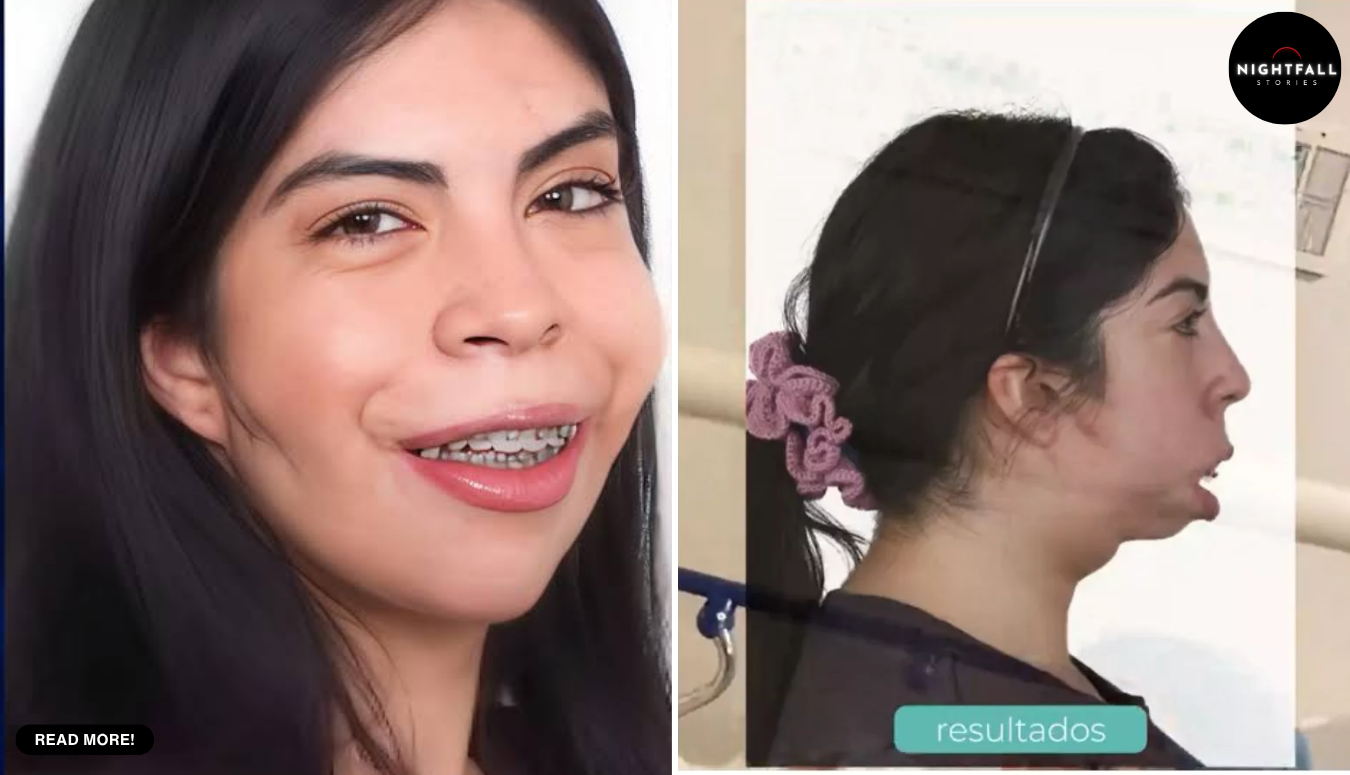
Claudia Yasmin is twenty nine. She needed thirty eight million Chilean pesos, roughly forty thousand dollars, for maxillofacial surgery on an underdeveloped lower jaw, and she did not have it, and the public health system in the country she lives in had kept her on waiting lists for years without delivering the operation. So she started running bingo nights.
Not a crowdfunding page with a slick video and a share button, or not only that. Bingo cards. Raffle tickets. The unglamorous, pay-as-you-go economy of neighbourhood fundraising, repeated over and over across the better part of a year. By the published accounts, about forty eight percent of the total came in that way, piece by piece, which is somewhere in the region of nineteen thousand dollars in cards and tickets. The other fifty two percent arrived in one go from a single anonymous donor she has described only as a very, very generous person. The target was reached on the first of December last year.
Then she had the operation. And when she published her own account of what came afterwards, she corrected the story that everyone else had been telling about her.
Before any of that, a word about how thinly this is sourced, because it changes how you should read everything below.
Claudia’s story has been carried by a string of Chilean outlets, including the state broadcaster, a commercial news channel and several digital titles, which looks from the outside like independent corroboration from five separate newsrooms. It is not. Every one of those accounts appears to derive from her own social media posts, which she published herself, first as an appeal and later as an update. One outlet explicitly embeds her video as its source material. Another credits its photograph to her own account. A Venezuelan aggregator that carried a line about the surgery being successful is a repackaging operation and is not a source at all. So this is, in substance, one person’s account of her own life, republished at scale. That is a perfectly legitimate thing to report. It is not the same as five newsrooms having each checked it.
Second, and more important: there is no clinician on the record anywhere. No surgeon is named. No hospital is named. A clinic appears in the credits of one of her own videos and nowhere else, and that is an image credit, not a medical confirmation. No surgery date has ever been published, by her or by anyone. This article therefore makes no claim about what was done to her, when, by whom, or with what clinical outcome. Everything about her own body in what follows is her account of her own experience, which she is entitled to give and which nobody else has contradicted.
What she has is Treacher Collins syndrome, and for that there is a proper named medical source. A patient booklet published by the American Cleft Palate Craniofacial Association, reviewed by named clinicians including Larry Hartzell, Cory Resnick, Carolyn Rogers-Vizena and Marie Tolarova, describes it as a rare group of facial differences present at birth, occurring in roughly one in fifty thousand births. Among its features is a small and abnormally shaped lower jaw, technically micrognathia or retrognathia, which can restrict how far the mouth opens and make eating difficult. The same booklet notes that jaw problems of this kind can cause sleep apnoea, a breathing disorder of sleep, in something like twenty five to forty percent of people with the condition. Eating can be hard because the upper and lower teeth do not meet as they should. Hearing loss is common because of underdeveloped ear structures, and speech depends heavily on hearing being addressed.
One detail in that booklet matters more than any other for understanding Claudia’s situation. The surgical lengthening of the jaw, done by cutting the bone and fitting a device that separates the ends slowly so new bone grows into the gap, and the broader reconstruction that goes with it, are normally carried out in the teenage years, once facial growth has finished.
She is twenty nine. By her own account she had been on waiting lists at various hospitals for many years.
That gap between the usual timing and her actual age is where the real cost of a waiting list shows up, and it is not a cost anybody puts on a spreadsheet. A delay in this kind of surgery is not a delay in getting a benefit. It is years of additional nights spent with a partly closed airway, years of eating being an effort, years of being tired in a way that no amount of sleep fixes because the sleep itself is the thing that is broken. People in that position are often described as patient. What they mostly are is exhausted.
The fundraising she turned to instead deserves to be described properly rather than waved at, because the word fundraising has been colonised by platforms and buttons. A solidarity bingo is a genuine institution across much of Latin America, and it is work. Somebody books a hall or borrows one. Somebody prints the cards. Somebody chases donated prizes from local businesses, which means asking, and being turned down, and asking again. Somebody sets out the chairs, runs the night, calls the numbers, counts the takings, and then does the whole thing again the following month because one evening does not raise forty thousand dollars. Raffle books get carried around and sold to colleagues, neighbours and relatives who have already bought two.
Nineteen thousand dollars assembled that way is not a gesture. It is closer to a part-time job held down for months by a woman who was, at the same time, not sleeping properly.
And here is the reason given for the delay, reported in Chilean coverage of her appeal: the procedure she needed was treated as dental aesthetic surgery rather than as a medical necessity, which put it outside what the public system would fund. That classification is the whole story in one line. A jaw that is too small to let you breathe properly in your sleep, chew normally, or exercise without trouble is a structural problem with your airway and your digestion. Filed under aesthetics, it becomes a nice-to-have, and a nice-to-have waits forever.
It is worth being precise about the system rather than vague, because vagueness here is a way of being unfair to everybody involved. Chile’s public health system guarantees legally binding maximum waiting times for a defined list of conditions under a scheme usually shortened to GES. Anything outside that list, which is most things, has no guaranteed timeframe at all. The scale of the non-guaranteed queue is not a rumour. Figures published by the Chilean health ministry’s subsecretariat for assistance networks, reported earlier this year, put more than four hundred and twelve thousand people on the non-guaranteed surgical waiting list, up close to fourteen percent in a single year, with a median wait of around two hundred and seventy seven days. The headline specialties are the ones you would expect: orthopaedics, digestive surgery, dermatology, with tens of thousands waiting for a single knee replacement or a gallbladder removal.
Nothing about those numbers is an argument about Claudia specifically. She is one person, her file is private, and no one outside her clinical team knows why her case sat where it sat. But the numbers are the weather she was living in, and they explain why a woman in her twenties with a breathing problem concluded that the realistic route to an operating theatre ran through bingo cards rather than through a referral.
She is also not an argument. That needs saying plainly, because a story like this gets picked up and used, and the person at the centre of it gets flattened into evidence for whatever point someone wants to make about public healthcare. She did not set out to become a case study. She set out to be able to sleep.
Which brings us to what she actually said when it was over.
Chilean coverage of her outcome, published late last summer, ran on a before-and-after framing. That is the obvious frame, and it is the wrong one, and the reason it is wrong is that it is not the frame she used.
What she set out, in her own account, was a list of functions. She can breathe better. She can eat normally. She can sleep without choking. Those are not cosmetic outcomes. Those are three things most people never have to think about, delivered to an adult who had apparently gone her whole life without reliably having any of them. If you have never experienced an airway that partly closes when you lie down, the phrase sleeping without choking will read as a turn of phrase. It is not one. It is a description of what the night had been.
She did also talk about her face, and the way she put it is more honest than the headlines it generated. She said that she had spent her whole life learning to live with one face and was now learning to recognise herself in a new one. That is not triumph. It is a considerable amount of work, described as work. A person whose features have been structurally altered in adulthood has to rebuild the automatic, unthinking relationship everybody else has with their own reflection, and she was open about being in the middle of that rather than at the end of it.
She is also still in speech rehabilitation, which is the least dramatic and most informative fact in the whole story. Nothing was finished when the stitches came out. Jaw position affects how sounds are formed, twenty nine years of compensating habits do not dissolve because the underlying anatomy changed, and relearning speech is months of unphotogenic repetition in a small room. There is no before-and-after image of that.
The before-and-after framing fails on a second count too, and it is the count that matters commercially to everyone who shares this kind of story. A composite of two photographs of a woman’s face invites the audience to judge an improvement. It makes the viewer an assessor of her appearance, which is precisely the position she has presumably spent her life being put in without being asked. Her own account does the opposite. It moves the subject from how she looks to what she can do, and it is a small act of authorship on her part that the coverage mostly ignored.
Then there is the anonymous donor, who is the most interesting unresolved figure in the story.
Think about the arithmetic for a second. Claudia and whoever helped her organised bingo nights and raffles for months and raised, call it, nineteen thousand dollars. That is a serious amount of money to assemble from cards sold in ones and twos, and it represents an enormous number of evenings, an enormous amount of begging favours, printing, chasing, setting out chairs. Then one person, who has never been identified, wrote a cheque for slightly more than everything she had raised the hard way, and the campaign closed.
Both halves of that are true at once, and you cannot take one without the other. A country where strangers will quietly cover half of a woman’s surgery is a generous country. A country where the realistic route to a jaw operation with a breathing indication involves a year of raffles and then a lottery win from an unnamed benefactor is not a functioning system, however generous its citizens. Private kindness filled a gap. It did not close it, because the next person in the same position is back at the beginning, printing bingo cards, hoping that the same stranger is still reading.
A last note on the thin sourcing, since it affects even her name. She publishes as Claudia Yasmin. Her surname appears in the Chilean reporting as Poblete, carried by at least two of the outlets that covered the completion of her fundraising, and it is absent from the later accounts of her recovery, which use only her first names. There is no reason to force it. The name she uses publicly is the name she chose, and it is the one used here.
What is documented, then, and the only thing that should be said with confidence, is this. A woman in her late twenties who had spent years on a public waiting list that did not move raised about half the cost of her own operation by selling bingo cards and raffle tickets, received the other half from someone who has never given their name, met her target on a December afternoon, had the surgery, and afterwards published an account of what had changed. Her account was not about her face. It was that she can eat, and breathe, and that she no longer wakes in the night unable to get air.
She is still in speech therapy. The story is not finished, and she did not pretend it was.