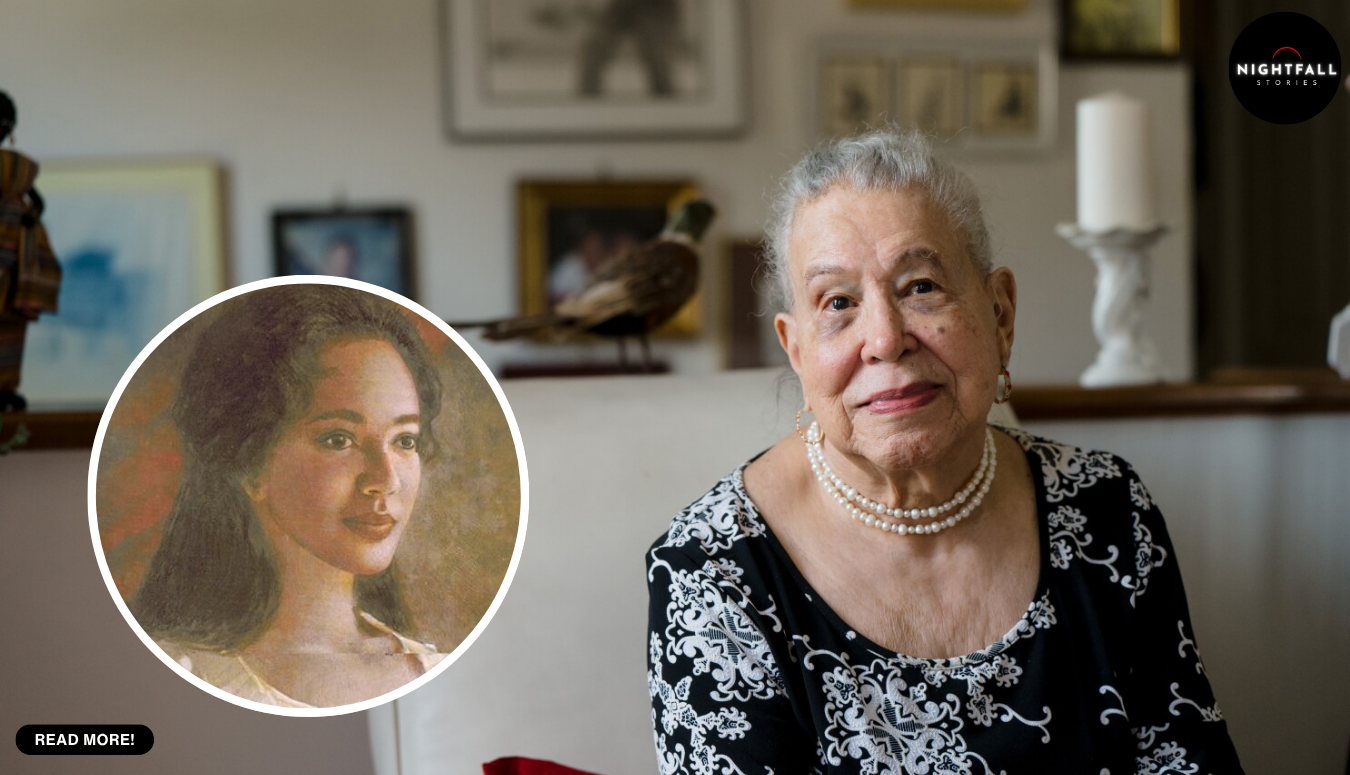
Mary Lee Brady-Atkins is ninety-eight years old, and late this summer she wrote a short letter saying she was withdrawing her consent, effective immediately. Within weeks the Smithsonian Institution had destroyed her saliva samples, destroyed the DNA extracted from them, and deleted the data that went with them. A laboratory at the University of California, Santa Cruz destroyed everything it held on her too. A lecture the lead scholar was due to give under the Smithsonian’s own banner was cancelled.
She is the oldest living descendant of Sally Hemings, the woman Thomas Jefferson enslaved at Monticello. She had given her DNA, willingly, to a study that ran for about fifteen years and was built to answer the oldest and most argued question in American ancestry. And here is the part that surprises almost everyone who hears about it: her objection was never to the answer.
It was to the order in which the answer was being told.
That distinction is the whole story, and it is worth slowing down for, because it is the kind of thing that gets flattened in a headline. Brady-Atkins is not a bystander who read something upsetting in a newspaper. She is a retired professor who spent roughly five decades inside academia and science. She knows exactly how a finding is supposed to travel. It goes to a journal. An editor sends it to referees the editor chooses, not referees the investigator chooses. The referees try to break it. If it survives, it is published with the data that supports it, and then, only then, it gets written up for everybody else.
What happened instead was that a trade book came out first.
The book is called History by a Hair: Thomas Jefferson, Sally Hemings and Solving a 200-Year-Old Mystery. Its author is Richard Kurin, a senior Smithsonian scholar, and it was published by Crown, part of Penguin Random House, in late September. The scientific paper describing the genomic work behind it was, as the coverage began, still under review. It had not been published. It had not been through referees.
Brady-Atkins had asked for an advance copy of the book in mid-July. By the account published by The Chronicle of Higher Education, she was told yes of course, and then later told that she would have one as soon as it came out. For a participant who had handed over a biological sample and waited fifteen years, that landed badly. She has said, in substance, that she came to feel she had been treated less like a research participant and more like a prop.
She withdrew on 24 August.
To understand why a fifteen-year study existed at all, you have to go back to the one everybody remembers. In 1998 a Y-chromosome study compared male-line descendants of Eston Hemings, one of Sally Hemings’s sons, against the Jefferson family’s male line. The match was real and it mattered enormously. But a Y chromosome is inherited nearly unchanged down a male line, which means it identifies a family, not an individual. The 1998 work could show that Eston’s male-line descendants carried the Jefferson male line. It could not distinguish Thomas Jefferson from his brother, his nephews, or any other Jefferson man who had access to Monticello. That gap is precisely the space the argument lived in for the next quarter of a century.
Closing it needed something the 1998 study did not have, which was Jefferson’s own genome rather than his family’s chromosome.
That is where the hair comes in. A lock of hair held in Monticello’s collection was labelled as having been cut on the day Jefferson died in 1826. According to the published accounts, the team recovered more than half of a genome from it, working with the geneticists Richard Green and Beth Shapiro at UC Santa Cruz, both of whom are well known in the field of degraded and ancient DNA. Earlier testing on a different lock, one associated with a Jefferson Bible, had reportedly concluded it was not his hair at all, which tells you something about how thin the material evidence in this area has always been.
The team then compared what it had pulled from the hair against samples given by living descendants, concentrating on the lines coming down from Sally Hemings’s sons Madison and Eston.
It is worth being clear about how difficult that first half of the job is, because the phrase more than half a genome sounds modest and is not. DNA in a two-hundred-year-old lock of hair is not a tidy strand waiting to be read. It has been sitting at room temperature for generations, breaking into shorter and shorter pieces, and it is mixed in with the DNA of everybody who has handled the lock and everything that has grown on it. Recovering a usable fraction of a specific person’s genome from that kind of material is the sort of work that only became possible in the last decade or so, and Green and Shapiro both built their reputations on exactly this problem. Nobody serious is disputing that the technical achievement is real.
What peer review would examine is not whether they got DNA out. It is the chain of inferences laid on top: which fragments were accepted and which discarded, how contamination was ruled out, which stretches of the genome the comparison actually rested on, how the descendant samples were handled, and what statistical model turned all of that into a probability. A number like more than 99.9 percent is not a measurement. It is the output of a model, and the honest way to read any such figure is to ask what assumptions the model made and whether anyone independent has been allowed to poke at them. That is not scepticism about the result. It is the ordinary question, and at the moment it has no public answer.
The figure that has travelled fastest out of all this is a reported chance of more than 99.9 percent that Jefferson fathered a child with Hemings. It needs handling carefully, and not because anyone has suggested it is wrong. It needs handling carefully because of where it came from. As reported, Kurin gave that number during a webinar in mid-July, before the book was out and before any paper had cleared review. It has not been peer reviewed. The supporting data has not been published for other scientists to pull apart. It is, at the time of writing, a reported and unvetted number.
Which is, word for word, Brady-Atkins’s complaint.
The sequence matters here, so it is worth laying out in order. The number was aired in a webinar in mid-July. The book landed on 22 September. The paper was still with reviewers. Somewhere in between, a participant asked to read the book before the world did, was told she would have it when everybody else did, and withdrew on 24 August. Every one of those steps is documented and dated, and read in order they describe a finding reaching the general public through three separate channels before it reached a single independent referee.
There is something almost too neat about that. A ninety-eight-year-old participant said the finding should not be circulating before referees had seen it, and the finding is now circulating worldwide, quoted to one decimal place, with the referees still holding the paper. Whether the number eventually survives review is a separate question, and it is not one this piece can settle. What can be said is that nobody outside the study has yet been in a position to check it, and that is an ordinary, unglamorous fact about how science works rather than an accusation about anybody’s honesty.
The consent question underneath it is harder, and more interesting, than the publication timing.
In most research, consent is a deal between one person and one study. You give a sample, you are told what it will be used for, and you can walk away. Family genomics does not work like that, and it cannot. A sample from one relative is also information about every other relative, because that is what shared ancestry means. It says something about siblings who never signed anything. It says something about cousins who have never heard of the study. Above all, in a case like this one, it says something about people who died two centuries ago and cannot be asked.
There is an asymmetry in this that no institution has really solved. Brady-Atkins could ask for her sample back, and she got it. She could not ask for the inferences about her family to be unlearned, because they were never only hers to begin with. Once the shape of a family tree has been read, taking one person’s saliva out of a freezer does not take that reading back out of the world. Her withdrawal was a real act with real consequences, and it was also, by the nature of the thing, partial. She seems to have understood that perfectly well. She was not trying to erase the study. She was refusing to be part of the version of it she thought was being done badly.
Sally Hemings herself left no consent form. Neither did the children whose paternity is the subject. The people whose bodies and lives are at the centre of this question were, in life, denied almost every form of consent there is, which is the uncomfortable weight that sits under any genetic study of an enslaved family. Brady-Atkins is one of the living people who can still speak in that chain, and she used that position in a specific and procedural way rather than a dramatic one. She did not demand the finding be suppressed. She asked that it be vetted first, and when it was not, she took her own sample out.
The institution complied, and quickly. The Smithsonian destroyed the samples, the extracted DNA and the associated data. UC Santa Cruz destroyed its copies. Researchers have said her removal did not materially change the findings, which is almost certainly true in statistical terms and also slightly beside the point, since she was not arguing that her single sample would flip the result. The Smithsonian also cancelled the lecture Kurin had been scheduled to give at Smithsonian Associates in late September. He has continued to appear elsewhere, at museums and public venues, talking about the book.
It is worth saying plainly that the descendant communities here are not one constituency with one view, and anyone who writes about this as Hemings descendants versus the Smithsonian has got it wrong. John H. Works Jr, a lawyer and financier who is himself a Jefferson descendant, has been pursuing competing paternity theories on a separate track. A documentary filmmaker, Sanjay Rawal, has been following the story. Other Hemings descendants gave samples and have not withdrawn them. Brady-Atkins spoke for Brady-Atkins.
It is also worth saying that this study was not settling a question its own institutions still treated as wide open. Monticello has had an exhibit dedicated to Sally Hemings since 2018. The historical consensus had moved a long way before any hair was sequenced, on the strength of the 1998 work, the documentary record and the accounts left by the Hemings family themselves, including Madison Hemings’s own published recollection in the nineteenth century. So the genomic study was not rescuing a truth from denial. It was tightening a bolt that history had already turned most of the way. That is a perfectly good reason to do a study. It is a less good reason to publish it out of order, because the urgency that might excuse skipping a queue was not really there.
What makes her intervention land, and what makes it more than a family disagreement, is that she picked the one lever a research participant actually holds and pulled it at the one moment it would be felt. A participant cannot stop a book. A participant cannot force a journal to publish or a referee to hurry. A participant can revoke consent, and an institution that has built its authority on doing research properly has essentially no choice but to honour that. She used the only power she had, and she used it with the timing of someone who has sat on the other side of the table for fifty years and knows exactly which week a letter matters.
There is also a quieter argument buried in here about what a book is for. A trade book and a journal paper are not competing formats, and plenty of good science has been written up for general readers. But they carry different guarantees. A paper comes with the claim that strangers who wanted to find the flaws were given the chance. A book comes with the publisher’s confidence and the author’s reputation, which are real things but are not the same thing. When the claim in question is a paternity finding about an enslaved woman and one of the most examined men in modern history, the difference between those two guarantees stops being an academic nicety.
So where does it actually stand.
The book is out. The paper is not. The reported figure of more than 99.9 percent is in wide circulation and has still not been through peer review. The Smithsonian has destroyed one participant’s biological material and data at her request, cancelled one lecture, and continues to stand behind the work. And a ninety-eight-year-old woman who spent her working life around science asked an institution to follow its own rules, was told it would get to that, and then removed herself from its study rather than let her sample be part of something published in what she considered the wrong order.
She won the thing she asked for, which was her sample back and her data gone, and she has not yet won the thing she actually wanted, which is a referee’s verdict she can read. That is still sitting with an editor somewhere. When it comes, whichever way it goes, it will arrive into a public conversation that has already had its number for months.
Her point was never that the number was false. It was that nobody was in a position to say.