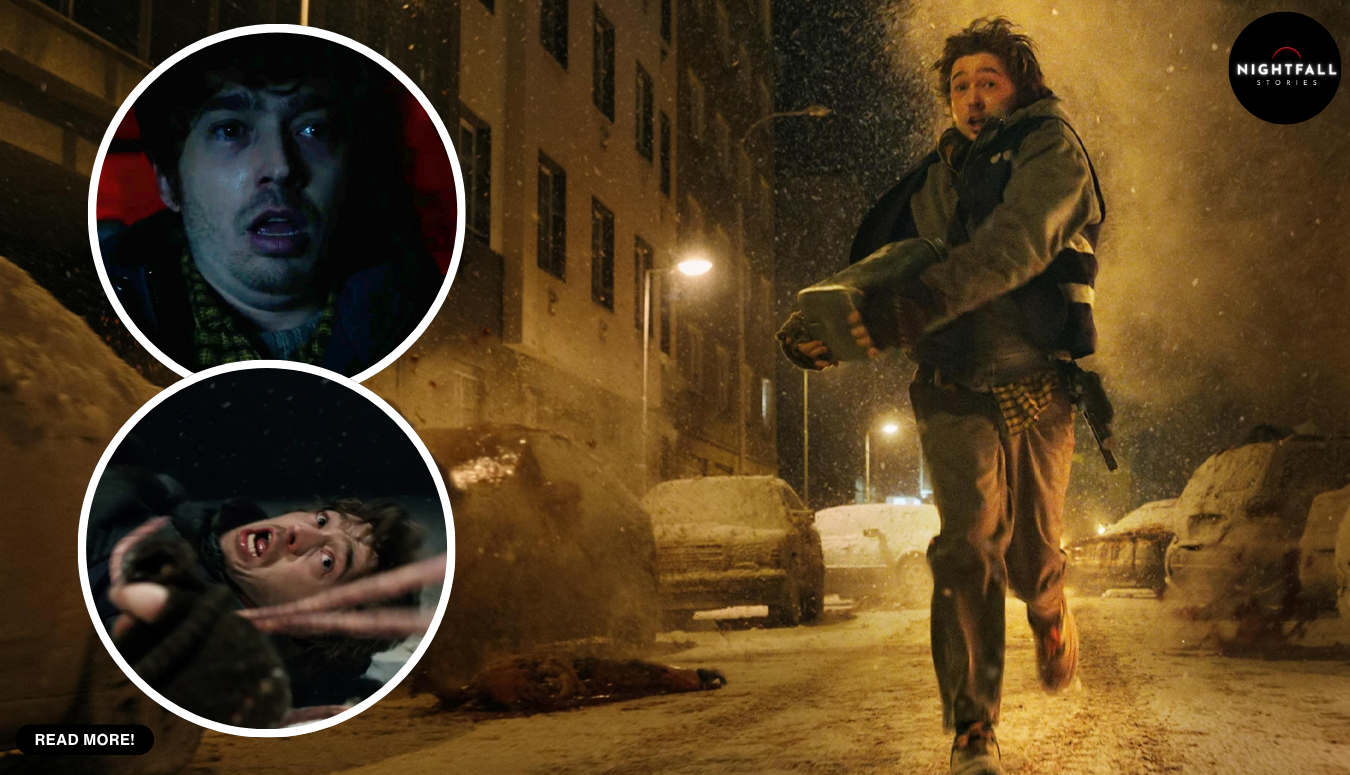
Zach Cregger took a job directing a Resident Evil movie and then admitted, on the record, that he had never seen any of the previous Resident Evil movies. Not one. He had played the games, obsessively, but the six films that made the series a billion dollar property were a blank to him.
A week ago that sounded like a liability. As of the most recent reporting, on the twenty fourth of September, the film has taken about 118.8 million dollars worldwide, roughly 72.4 million of that in North America and 46.4 million internationally, against a production budget reported at around 75 million. It took 60 million domestically in its opening weekend alone, which is the biggest opening the franchise has ever had in the United States across twenty four years and six previous films. Its reviews are at 96 percent on Rotten Tomatoes. No earlier Resident Evil film ever cleared 37.
Those are first week numbers. The second weekend is still being counted as this is written, so the total will already be higher by the time you read it. But the shape of the thing is settled, and the shape is that a video game adaptation, an R rated one, a franchise reboot with no recognisable characters from the games in it, directed by a man with no relationship to the previous films, is the number one movie in the world.
There is a detail here that keeps getting reported wrong, and it is worth clearing up before anything else, because it has appeared in more than one write up. Cregger is not an Oscar winner. He has not won an Academy Award. What happened is that Amy Madigan, who starred in his previous film Weapons, won Best Supporting Actress earlier this year, forty years after her only other nomination. That is her award. It belongs to her and to a performance that a lot of people found genuinely startling. Cregger directed the film she won it for, which is a real and meaningful thing to have done, and it is not the same thing as winning an Oscar. The shorthand that collapses the two flatters him in a way he has not asked to be flattered.
What he has actually got is a run, and the run is the interesting part.
Cregger did not come up through film school or through the horror pipeline. He came up through sketch comedy. In 2000 he co-founded a troupe called The Whitest Kids U’ Know with Trevor Moore and Sam Brown. They won best sketch group at a comedy festival in Aspen in 2006, which got them a television series, first on Fuse and then on IFC, and it ran for five seasons until 2011. He co-wrote and co-directed a couple of comedies with Moore in that period, including a studio one that nobody remembers fondly. For most of his thirties, if you knew who Zach Cregger was at all, you knew him as a sketch guy.
Then in 2022 he made Barbarian for about four and a half million dollars, and the floor fell out of a lot of people’s assumptions. It made roughly forty six million worldwide, which for that budget is a lottery ticket, and more importantly it established a specific thing he could do: structure a horror film so that the audience is confidently wrong about what kind of film they are watching, and then move the ground.
Barbarian is worth describing a little more precisely, because it explains the trust he was later given. It begins as one kind of film, a woman arriving at a rental house that has been double booked, and it keeps resetting the audience’s sense of the genre it is in, including a mid film handbrake turn into something that plays almost as comedy before it turns again. It was a magic trick performed on structure rather than on effects, and it worked on people who thought they were unshockable. Studios noticed, because that kind of control over an audience is very hard to teach and very easy to sell.
Three years later he made Weapons for around twenty million. It made about a hundred and forty two million worldwide. It opened to roughly seventy million globally. It was the film that turned him from a promising horror director into someone studios fight over, and it is the film Madigan won her award for.
So when he pitched a Resident Evil movie at the start of last year, there was reportedly a bidding war for it. That is a remarkable sentence to write about a man whose pitch amounted to: I have never seen your movies, I do not want to use your characters, and I would like to make this story whether or not you give me the rights.
That last part is the bit worth pausing on, because he has said it more or less directly. The story he wanted to tell was a story he had already wanted to tell. The Resident Evil license was a vehicle for it rather than the origin of it. He set it in the world of the games, in a timeline running parallel to the events of the second game from 1998, but with none of the game’s characters. The protagonist is a medical courier called Bryan, played by Austin Abrams, and the supporting cast is made up of Umbrella Corporation scientists and enforcers played by Zach Cherry, Kali Reis, Paul Walter Hauser and Johnno Wilson. One of those roles, Reis’s, was written for a male actor and changed when she came in for it.
The reference point he has offered is not any previous Resident Evil film. It is Evil Dead II, the 1987 sequel, which is the film people tend to name when they want to describe horror that is having a tremendous amount of fun without stopping being frightening. He has talked about wanting the pacing of playing the game rather than the pacing of watching the older films. The result runs ninety three minutes, which for a modern studio tentpole is close to indecently short and is almost certainly part of why audiences are turning up twice.
It was shot in Prague across roughly four months from late 2025, with Dariusz Wolski, a cinematographer better known for very large scale work, behind the camera. Sony released it through Columbia, with Constantin Film, Davis Films, Vertigo Entertainment and PlayStation Productions involved. It premiered at a genre festival the night before it opened wide, which is a confident thing to do with a film you have spent seventy five million dollars on. Some reports put the budget nearer eighty million; either way it is comfortably the most expensive film the series has made.
The numbers deserve to be looked at properly rather than just admired. Thursday previews brought in 8.8 million dollars, the ninth biggest preview night of the year so far. Opening day was 26 million. The three day domestic total was 60 million, and the significance of that figure is slightly absurd: it is higher than the entire lifetime domestic gross of Resident Evil: Afterlife, which had held the franchise’s domestic record for sixteen years at 60.12 million. In other words, the new film’s opening weekend nearly matched, in three days, what the previous best performing entry made in its whole theatrical run.
Globally the opening was around 108 million. Within its first week the film had passed the lifetime worldwide gross of the 2002 original, about 103.7 million, and it had more than doubled the entire run of the 2021 reboot, Welcome to Raccoon City, which managed 41.9 million and effectively ended that attempt at restarting the series.
It also holds a narrower record that says something about where the business is: the biggest opening ever for an R rated video game adaptation. Studios have spent a decade being told that game adaptations work when they are broad, family shaped and rated for everyone. This one is not any of those things and it outgrossed the lot of them on opening.
The wider context is that video game adaptations have gone, in about six years, from a reliable punchline to one of the most dependable categories in the business. PlayStation Productions, which is a partner on this film, exists precisely because that shift happened and a platform holder decided it would rather be in the room than license its properties out and hope. What makes this particular result notable is that it did not follow the formula that produced the shift. The successful adaptations of the last few years mostly worked by being faithful, by putting the recognisable character on screen and letting the audience feel served. This one withheld the recognisable characters entirely and served the audience something else, and the audience turned up anyway.
The rest of that weekend’s chart was ordinary. Practical Magic 2 took about 12.1 million, Spider-Man: Brand New Day 6.5 million, The Odyssey 4.9 million and Coyote vs. Acme 4.5 million. Resident Evil took more than all four combined and then some.
There is a practical reason a ninety three minute horror film performs the way this one is performing, and it is not artistic purity. A short film gets more showtimes per screen per day than a long one. Exhibitors like it. Audiences who are deciding on a whim at seven in the evening like it. And a film that does not outstay its welcome is the kind people text their friends about on the way out rather than an hour later when the feeling has worn off. Cregger’s instinct to keep it tight is an aesthetic choice that happens to also be a commercial one.
The reviews are the part that would have seemed most unlikely. This is a franchise whose films were, for two decades, critic proof in the least flattering sense: they made money and nobody pretended they were good. A 96 percent rating is not a marginal improvement on a 37 percent ceiling. It is a different category of object.
What is worth saying, though, is that big openings are not the same as big films, and the honest read on this one is not in yet. Weapons opened to about seventy million globally and finished at a hundred and forty two million, which means it more than doubled its opening, the sign of a film people recommended to each other. Resident Evil opened at a hundred and eight million. Whether it has that same second life, whether the word of mouth carries it well past its opening rather than front loading, is the question the next few weekends answer. A franchise name gets you a huge first weekend almost regardless. Only the film itself gets you the fourth one.
There is also a slightly uncomfortable thing sitting underneath the success story, and it is not about Cregger. It is that the clearest route to making something strange inside the studio system in this decade appears to be to attach it to a piece of intellectual property that has nothing to do with it. Cregger wanted to make a particular horror film. He made it by putting an Umbrella Corporation logo on it. That worked brilliantly for him and for Sony, and it is also a slightly bleak description of how an original idea reaches a wide audience now.
He seems entirely relaxed about it. He has a film called The Flood set up with Amblin, and an adaptation of Siren Head, an internet horror creation, somewhere in the pipeline. Neither of those is a course correction. They are just more of what he does.
The most instructive thing about the whole episode is not that an outsider beat the insiders. That is a story people enjoy and it is only half true, since he had already made two successful horror films before anybody handed him a franchise. The instructive thing is that he was allowed to say no to the obvious version. Nobody made him put the game’s most famous characters on screen. Nobody made him stretch it to two hours and twenty minutes. Nobody made him watch the old films so he could gesture at them. He was given a very expensive toy and permitted to ignore almost everything about it except the feeling of the thing, and the feeling of the thing turned out to be what people wanted.
The franchise had been tried twice before, once successfully and stupidly, once carefully and unsuccessfully. The version that worked was made by the man who had not seen either.