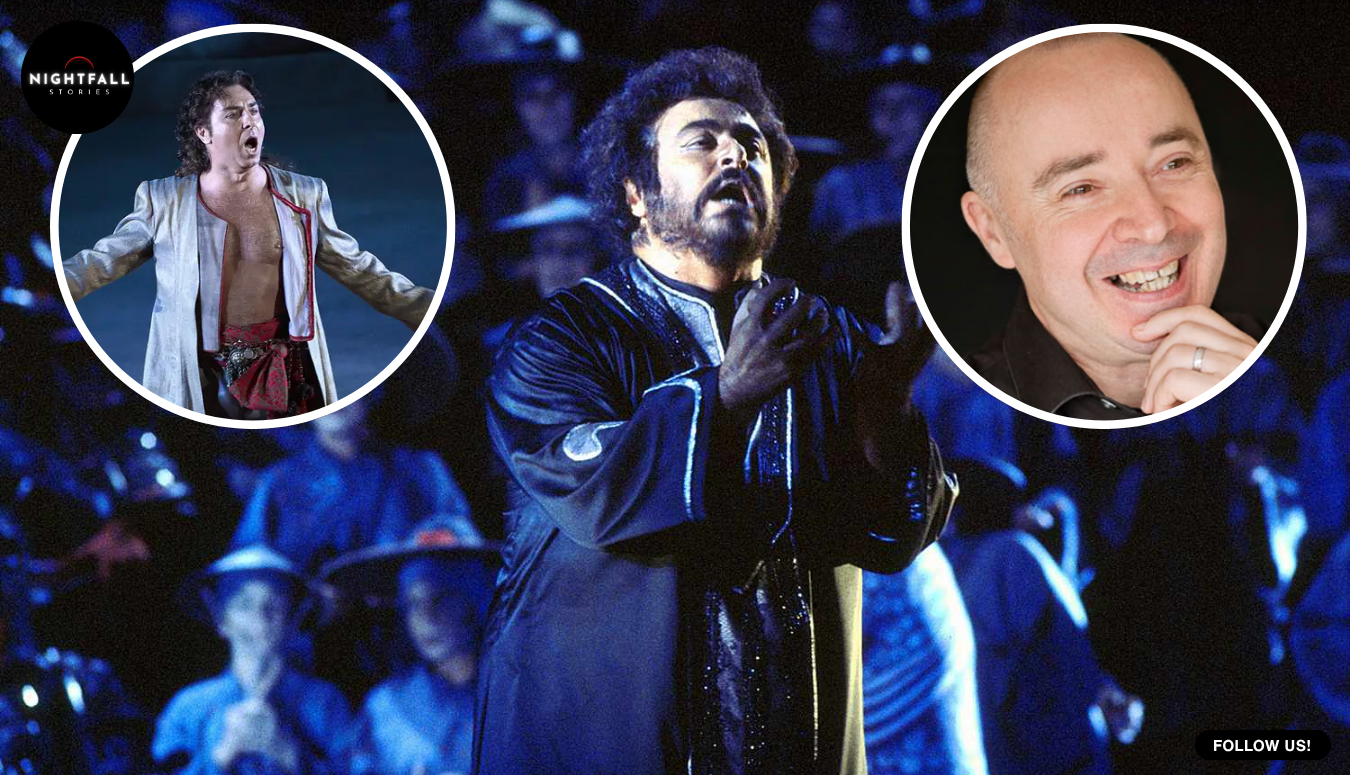
Somewhere in the wings of the Royal Opera House in London, a man who had not sung a leading role on that stage in his life stood in the dark with a score and began singing Calaf. Out in the light, twenty or so feet away, a woman in Calaf’s costume walked the part, turned when he should turn, reached when he should reach, and did not open her mouth. The audience had been told what was about to happen. They had also been told that the most famous four minutes in the opera were not going to happen at all.
That was the night, earlier this year, when Roberto Alagna could not finish a performance of Puccini’s Turandot, and the Royal Opera had to decide in the space of one interval whether to send everyone home or try something nobody in the building had rehearsed.
They tried it. And the honest ending, the one worth staying for, is that it did not turn into a triumph. Some of the house booed. Some walked out. The opera stopped short of its final scenes, the aria everybody had come for was cut, and the next day the company wrote to ticket holders offering half their money back. Two things were true at the same time, and both of them were defensible, which is exactly why the night is still worth talking about.
Start with the two people who ended up carrying it, because neither of them is a performer in the way the word is usually meant.
Richard Hetherington is the Royal Opera’s head of music. If you have never thought about what that job is, that is the point of it. A head of music sits at a piano for hours with singers who are about to go on and takes their roles apart with them. He hears the entrance that is always a shade flat, the consonant that is landing late, the breath that will not survive the third performance of the week. He works the room in rehearsal, coaches the covers, keeps the musical standard of an entire opera company from sagging, and then, on the night, he sits in the dark and listens to other people do it. He trained at the Royal College of Music and at the National Opera Studio, he joined the Royal Opera early in this century, and he has held the head of music post since 2017. He is a very serious musician. He is not a dramatic tenor, and Calaf is a dramatic tenor role.
Tatiana Novaes Coelho is a choreologist. That word does real work in an opera house and almost nobody outside one has heard it. A choreologist is the person who writes movement down. Dance and staged movement can be recorded in notation the way music can, and a choreologist is the specialist who reads and writes that notation, holds the staging of a production in their head and on paper, and can rebuild it months or years later when a different cast arrives. She had the production in her body because knowing exactly where every figure goes and when is literally the job. When you needed someone who could put on a costume and be Calaf physically, with no notice, in a staging she already knew from the inside, there was arguably nobody in the building better placed.
So here is how it reached that point. Alagna sang the first two acts. By the interval he was unwell, and he was not going to be able to carry the last act. The company’s own statement afterwards said he was taken unwell during the performance and that it prevented him from completing it, and wished him a swift and full recovery. That is where the record stops on his health, and that is where this piece stops too. He is a singer who got ill at work. Nothing else about it is anybody’s business.
What happened next is the part that makes opera people wince in recognition, because the question the audience asked immediately is the question the industry has been quietly avoiding for years. Why was there nobody else who could sing it?
The blunt answer is that a house does not keep a spare dramatic tenor sitting in a dressing room every night. Calaf is a punishing role. It sits high, it is loud, it fights an enormous orchestra, and the pool of singers on earth who can actually do it in a large house is small. Covers cost money, and a cover for a role like this is not a junior member of the chorus who has learned the notes. It is a specialist who has to be paid to sit in a building and probably never sing. Major international houses routinely run certain roles without a cover on every date, and the Royal Opera said as much. The Times noted the same thing: this is a specialised role and emergency cover for it is genuinely unusual across the industry.
That is a real answer, and it is also an uncomfortable one, because it means the risk of exactly this night is priced in. Houses accept it because the odds are good. Most of the time the singer finishes. When he does not, the audience discovers that the safety net they assumed existed was a line item somebody decided not to buy.
It is worth being precise about the arithmetic, because it is not villainy, it is a genuinely hard sum. A house running a long revival of a popular title puts on a lot of performances. This Turandot ran across two seasons. To guarantee cover on every date for a role at this weight, you would need a singer capable of walking on cold into a major house and being credible in it, which is a small and expensive group of people, and you would need them physically present and warm, in the building, night after night, for a job they would almost certainly never do. Multiply that by every high-risk role in every title in a season and the number stops being a rounding error. So houses cover some dates and not others, and they cover some roles and not others, and they take the bet. The bet is usually fine. On this night it was not.
Which is how a head of music and a choreologist ended up doing a job neither of them signed up for.
Before the last act resumed, staff came out and explained to the audience what they were about to see. That matters, because the alternative was to simply start and let people work it out. Instead the house told them: the voice will come from offstage, the body will be on stage, and the aria is not being performed.
The aria is Nessun dorma. It is probably the single most recognisable piece of music in opera. It is the reason a large slice of any Turandot audience is in the room. People who have never seen a staged opera in their lives know it, can hum it, have cried at it in a stadium or an advert or a talent show. And it was cut.
You can see why the boos came. If you have bought a ticket, arranged a babysitter, travelled in, dressed up, and possibly spent a serious amount of money for one evening, and the thing you came for is announced as not happening, disappointment is not unreasonable. One attendee said afterwards that people threw things, though that account was not independently confirmed. Some booed the announcement. Some got up and left rather than sit through an act without its centre.
And you can equally see why cutting it was almost certainly the kind decision. Think about what the alternative was. You would be asking a coach who had not warmed up, who does not sing that repertoire, who was standing in the wings with adrenaline in his hands, to deliver the most exposed four minutes in the tenor literature, cold, to a house of two thousand people who know every note of it and would compare him instantly to the greatest voices of the last century. He would have been humiliated for trying, and the audience would have been given something worse than nothing. Cutting it protected him, and it also protected the piece. Act III was substantially shortened, and the performance stopped at the point where Liu takes her own life rather than give up Calaf’s name, before the final scenes. It ended on a death rather than on a resolution.
The writer Kenan Malik, who was there, described the evening as disappointing and dramatic and, in a strange way, appropriately ended, and he called Hetherington’s intervention hugely brave and impressive. Both halves of that are honest. It was a diminished evening. It was also a remarkable one.
Try to sit inside it for a second, because the craft of what those two did is easy to skate past.
Hetherington had to sing a role he was not prepared to sing, in the wings, in the dark, without being able to see the conductor in the way a soloist on stage sees him, with an orchestra in a pit he was not standing in front of, and he had to stay in time with a body on stage that was not his. Singers are used to matching their movement to their breath. He had none of that. His phrasing had to fit someone else’s walking. If he breathed early, she looked wrong. If she moved early, he looked wrong.
Novaes Coelho had the mirror of the same problem, and arguably the harder one. Acting a sung role in silence means every impulse a singer uses to justify a gesture is missing. She had to look like the source of a sound coming from offstage, in costume, in front of the same two thousand people, with other principals singing directly at her and needing something back. Anyone who has ever had to lip sync a single line at a wedding knows how quickly the body stops believing it. She had to do it for an act.
They had no rehearsal. They had an interval.
And they were not the only two people improvising. Everybody else on that stage was still singing a full role, and singing it at a silent partner. Turandot herself has to interrogate Calaf and be answered. Liu has to plead with him. The whole shape of the last act is built on people pushing against that one man and getting resistance back. On this night the resistance was arriving from the side of the stage, from a voice the other singers could hear but not see properly, attached to a body that could not answer them. Whatever adjustments those principals made in real time, they made without being asked and without being credited, and the audience mostly did not notice, which is what a good save looks like.
There is also the orchestra and the conductor, holding a tempo for a soloist who was not where a soloist is supposed to be, in a shortened act whose cuts had been decided in a corridor.
And then there is the refund, which is where the honesty of the whole episode lives. The next day the company wrote to ticket holders calling it an exceptionally rare situation and offering fifty percent of the ticket price back. Accounts differ slightly on whether this was framed as a refund or as a credit, and different outlets reported it both ways, which is worth saying plainly rather than smoothing over.
Read what that gesture actually does, though. In one document the house both defended its staff and conceded that it had not delivered what it sold. It did not pretend the evening was complete. It did not tell the audience that the show going on was a gift they should be grateful for. It said, in effect: you paid for a Turandot with Calaf and Nessun dorma, you did not get one, here is half of it back, and also, what our staff did in there was extraordinary.
Both of those statements are true. That is the whole story, and it is rarer than the triumph version would be.
There is a version of this night that gets written as a feel-good moment. Plucky staff save the day, audience rises in ovation, art conquers all. That version is a lie, and it is a lie that would insult the two people who actually went out there, because it would turn a genuinely difficult professional judgment into a greeting card. What they did was not save the evening. The evening was not savable. What they did was stop it from being nothing.
That distinction is the interesting one. In most jobs, when the person who is meant to do the thing cannot do it, the work simply stops and everyone goes home. In live performance the alternative is always visible and always embarrassing: an announcement, a cancelled house, refunds, a hole in the schedule. Opera has a long institutional memory for these moments, and it tends to remember the ones where somebody stepped forward. Alagna, as it happens, was on the other side of one of them years ago, when he left a performance of Aida and an understudy went on in street clothes and finished it.
The difference is that the understudy in that case was an understudy. On this night there was not one, and the two people who filled the gap were a coach and a movement specialist whose careers are built entirely on making other people look good from a position the audience never sees.
For one act, the audience saw them. Some of that audience booed. Some of it left. Some of it understood exactly what it was watching and will talk about it for the rest of their lives. The house gave back half the money. The company wished a sick singer well. Nobody got the evening they had paid for.
And in a building whose entire business is the illusion that everything is under control, two members of staff who never, ever go on went on, and the illusion held together just long enough to reach the end of a shortened act.