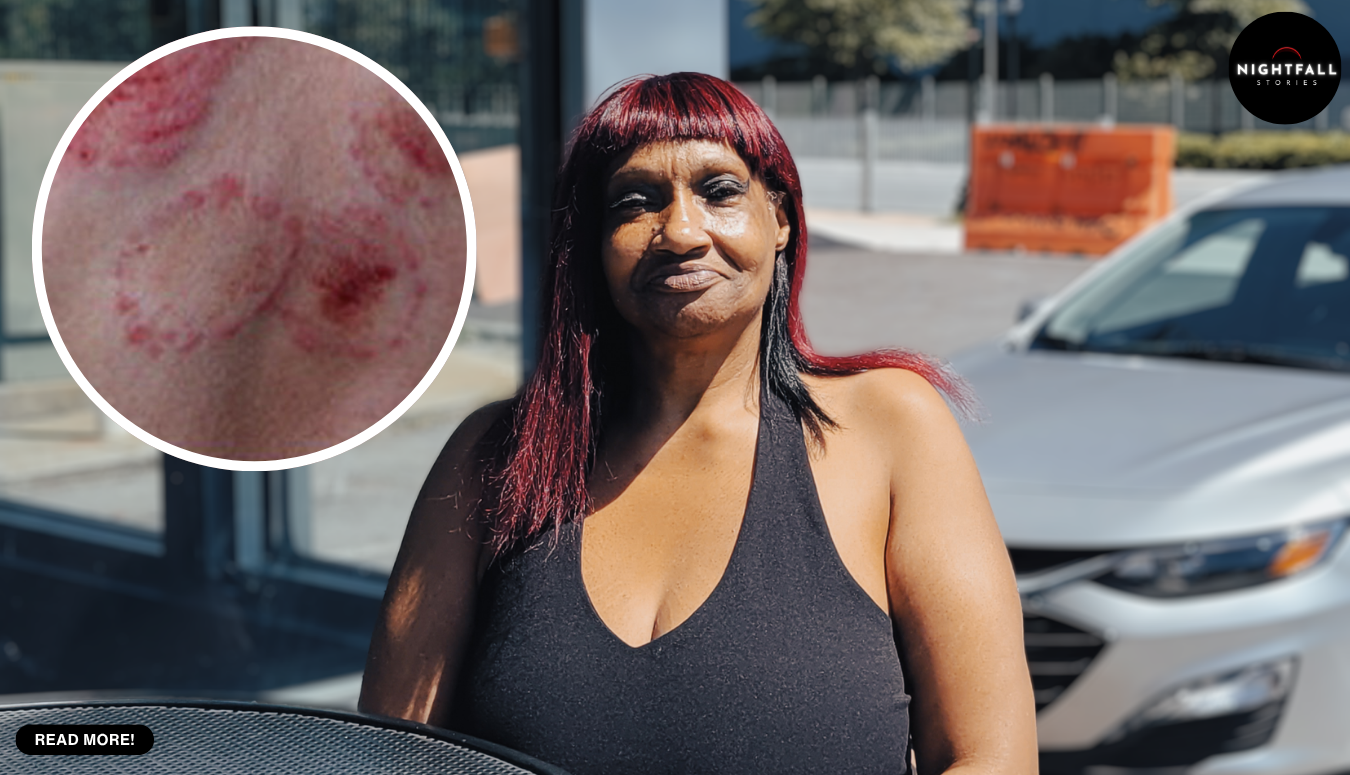
The order ran to twenty five pages, and the judge who wrote it did not hedge. Bite mark comparison, Chief Judge Dwayne Gillis found, was not competent evidence. Such evidence would seldom, if ever, prove anything. The dental profession’s own recognition that the method was inadequate, he wrote, was profound and undisputed. Proven unreliable scientific evidence, he added, should never serve as the basis of a conviction.
That order came down in February 2020. Two months later Sheila Denton walked out of a Georgia prison. She was fifty three years old, and she had been in custody since 2004.
And then, for six more years, she was still a woman facing a murder charge.
That is the part of this story almost nobody tells, because almost nobody writes about what happens after the gate. A reversal is not an acquittal. When a judge grants an extraordinary motion for a new trial, the conviction is wiped out and the case does not end; it goes backwards, to the position it was in before the trial happened. The charge is live again. In theory the state can try you a second time. In practice it often does nothing at all, for years, and you live inside the gap.
Denton lived inside it until September of this year, when the charge against her was finally dismissed. The arithmetic, counted from the day it was brought in 2004, is twenty two years.
The case began with the death of a seventy three year old man named Eugene Garner, who was found dead at his home in Ware County, in southern Georgia, in the spring of 2004. He had been killed. That is as much detail as this story needs, and more than it would be decent to add.
Denton became a suspect in the days that followed. The state’s case against her, as the Georgia Supreme Court later summarised it when it affirmed her conviction, was circumstantial and had several strands. She had previously sold Garner food items and knew he kept large sums of cash. She turned up at a house where crack cocaine was sold, with cuts on her arms, legs and hands and a bite mark on her. A witness said she had admitted killing a man who lived nearby. She bought three hundred dollars of crack shortly afterwards. She gave police a false name and ran when they came for her.
It should be said plainly that this was not a case with no evidence in it. It is important to say so, because the easy version of a wrongful conviction story is one where the state had nothing and invented everything, and that version is rarer than people think. What the state had here was a pile of circumstance, much of it ambiguous, some of it genuinely bad for her, and none of it putting her in that house.
What put her in that house was a dentist.
Dr Thomas David, a forensic odontologist and a diplomate of the American Board of Forensic Odontology, examined marks on Garner’s body, compared them with impressions of Denton’s teeth, and told the jury she was the probable biter. That was the bridge. Everything else was a woman who knew the victim, needed money and behaved like someone in trouble. The dental testimony was the piece that said: this specific person, these specific teeth, that specific body.
The jury convicted her of felony murder in March 2006, and acquitted her of malice murder, which is to say it was not satisfied she had intended to kill him. She also picked up a conviction for giving a false name to police. She was sentenced to life imprisonment with a consecutive twelve month term. In 2010 the state’s highest court heard her appeal, considered her arguments about the sufficiency of the evidence, and affirmed the conviction, finding no reversible error.
At which point the law had finished with her, and the science started catching up.
It is worth being precise about why bite mark comparison does not work, because the detail is more interesting than the slogan, and because a reader who understands the reasoning understands why this was never only Sheila Denton’s problem.
The method rests on a chain of three assumptions, and each one has to hold or the whole thing collapses. First, that every person’s set of teeth is unique, in a way that can actually be measured. Second, that teeth transfer that uniqueness faithfully onto skin when they bite it. Third, that a trained examiner can read the resulting mark and work backwards to the mouth that made it.
Take them in order. On the first, the National Institute of Standards and Technology, reviewing the published criticism of the field, pointed to the conclusion of researchers that the notion of dental uniqueness, which is central to the entire discipline, had been brought into considerable doubt, and that no sound evidence exists that forensic odontologists can accurately link a bite mark to one individual’s dentition to the exclusion of everyone else. Teeth may well vary enormously. Nobody has demonstrated that the variation is unique in any usable sense, which is a different claim.
The second assumption is the one that ought to have been obvious from the beginning. Skin is a terrible recording medium. It stretches. It is not flat. It sits on top of muscle that moves. It responds to injury by swelling and then by healing, so the thing being measured is changing while it is being measured. NIST’s summary put the problem directly: there has been no demonstration that teeth can transfer a unique pattern to skin, or that skin can hold one, and the substrate itself distorts the pattern because of its elasticity, its unevenness and its healing response. Comparing a mark on human skin to a dental impression is like comparing a signature to a photograph of a signature written on a balloon that someone is inflating.
The third assumption failed in the most damaging way, because it failed at a stage earlier than anyone had been testing. The 2016 report of the President’s Council of Advisors on Science and Technology concluded that the available scientific evidence suggests examiners cannot accurately identify the source of a bite mark, and cannot accurately determine whether a mark was made by human teeth at all. Read that twice. The question is not whether an expert can tell you whose bite it was. The question is whether an expert can reliably tell you that it was a bite.
Seven years before that, the National Research Council’s landmark 2009 review of forensic science in the United States had already called bite mark comparison the most controversial area of forensic odontology, and found that it had shown no evidence of a scientific basis for identifying an individual to the exclusion of all others. In April 2016 the Texas Forensic Science Commission recommended that bite mark comparison not be admitted in Texas criminal cases unless and until a list of conditions including validated proficiency testing was met. Those conditions have not been met, and the Texas position has stood ever since. NIST’s own summary of the criticism, published in 2022, catalogued the rest: no agreement among examiners about what the standards of comparison even are, and a large potential for examiner bias.
The damage this method did is countable. The Innocence Project’s register of bite mark cases documents thirty one exonerations and a further seven wrongful indictments, roughly four hundred and fifty six years of wrongful imprisonment between them, and four people sentenced to death on the strength of it. Sheila Denton is case twenty six.
Dr David appears twice in that same register. He testified in the Pennsylvania case of John Kunco as well as in Denton’s, and in Kunco’s case he gave his opinion to a reasonable degree of dental certainty, which is the phrase the discipline used to mean something firmer than a guess.
He also, and this deserves to be recorded rather than buried, changed his mind. After the 2009 National Research Council report, David disavowed bite mark evidence as unvalidated and unreliable. At an evidentiary hearing in Denton’s case in May 2018, he said that his testimony today would not be what it was at her trial, and that he would no longer compare marks to teeth, because he could not be certain what had caused the injury in the first place. The man whose testimony convicted her went into a courtroom twelve years later and said he had been wrong about the whole method.
Five forensic dentists reviewed her case. One of them, Dr Rick Cardoza, put the problem about as plainly as it can be put: in his view the injury simply did not contain enough information to say whether it was a bite mark or not.
Judge Gillis granted the motion in February 2020, finding that a trial held today would probably produce a different verdict. The Ware County district attorney’s office, then led by George Barnhill, had opposed the motion. Denton was released on the ninth of April 2020, having been behind bars since 2004, which is close to sixteen years.
And here the story goes quiet, which is exactly what makes it worth writing.
Consider what she actually was at that point, legally. She was not a convicted murderer. She was also not an innocent woman, in the specific sense the law cares about, because no court had said so and the charge was still on the books. She had no conviction to appeal and no acquittal to produce. She was a person under indictment for murder, at liberty, waiting for a prosecutor to decide something.
That condition has practical teeth. A pending murder charge shows up on a background check, and it looks worse than a resolved one, because it is unresolved. It complicates work, housing, licences, insurance, travel, custody arrangements, anything where a form asks whether you have charges outstanding. It does not entitle you to anything either. Exoneration programmes, compensation schemes and the modest reentry help that sometimes follows a clearing are generally keyed to a final disposition, and she did not have one. She was out, and she was in limbo, and the two are not the same as being free.
It also sits in your head. A retrial that is theoretically possible is a retrial you cannot stop thinking about, and the state is under no obligation to tell you it has lost interest. Nobody has to send a letter. The silence is the process.
Six years of it.
What appears to have changed, as far as the public record shows, is the office rather than the law. Barnhill, who fought her motion for a new trial, no longer runs the Waycross Judicial Circuit, which has since been led by an acting district attorney. The dismissal came under different management. That is a correlation and should be read as one; no order explaining the decision has been published, and no prosecutor has said publicly why it took from 2020 to 2026. The charge was dismissed on the ninth of September this year, according to the Southern Center for Human Rights and the Innocence Project, whose lawyers, Mark Loudon-Brown and Katherine Moss for the Southern Center and Chris Fabricant for the Innocence Project, had carried the case.
Twenty one years, the Innocence Project called it. Fifteen, said the headline, counting differently. Both numbers are doing honest work on different clocks, and the cleanest way to say it is this: she was taken into custody in 2004, convicted in 2006, released in 2020 and cleared in 2026.
There is one more piece of arithmetic, and it is the reason the dismissal matters practically and not just symbolically.
For most of the time Sheila Denton was in prison, Georgia had no general scheme for compensating people whose convictions had been overturned. Last year that changed. The Wrongful Conviction and Incarceration Compensation Act now provides seventy five thousand dollars for each year of wrongful incarceration, with a further twenty five thousand dollars for each year spent on death row, with claims heard by administrative law courts. Five million dollars was appropriated to fund it, and payouts began this year. A handful of people have been approved so far, among them Kelvin Bradley, the first, and Mario Stinchcomb, approved for around one point four million dollars. Dozens of claims are reportedly still pending.
Close to sixteen years, at seventy five thousand dollars a year, comes to something in the region of one point two million dollars.
But the statute does not pay out because a judge threw out the evidence against you, and it does not pay out because a prosecutor finally dropped the case. Under the Act, as reported, a claimant has to prove their innocence, by a preponderance of the evidence, in front of an administrative law court. The burden is on her. The state that put her away on a method its own expert later disowned, and then left the charge hanging for six years without explaining why, does not have to prove anything. She does. There is no public record of a claim having been filed.
And nothing in any of this amounts to a national rule. Texas has kept bite mark evidence out of its criminal courts for a decade. The 2009 and 2016 reviews are advisory. Judge Gillis’s finding that such evidence will seldom if ever be probative binds his own courtroom. Across the rest of the country the method has no general prohibition, which means it remains available to a prosecutor with an ambiguous mark and a willing expert, and it remains on the record in cases where nobody has gone back to look.
Twenty two years from charge to dismissal. Close to sixteen of them behind bars, six of them in a condition the law does not really have a name for, and all of them traceable to a comparison that could not have been reliably made by anyone, with any amount of training, from any mark, on any skin.