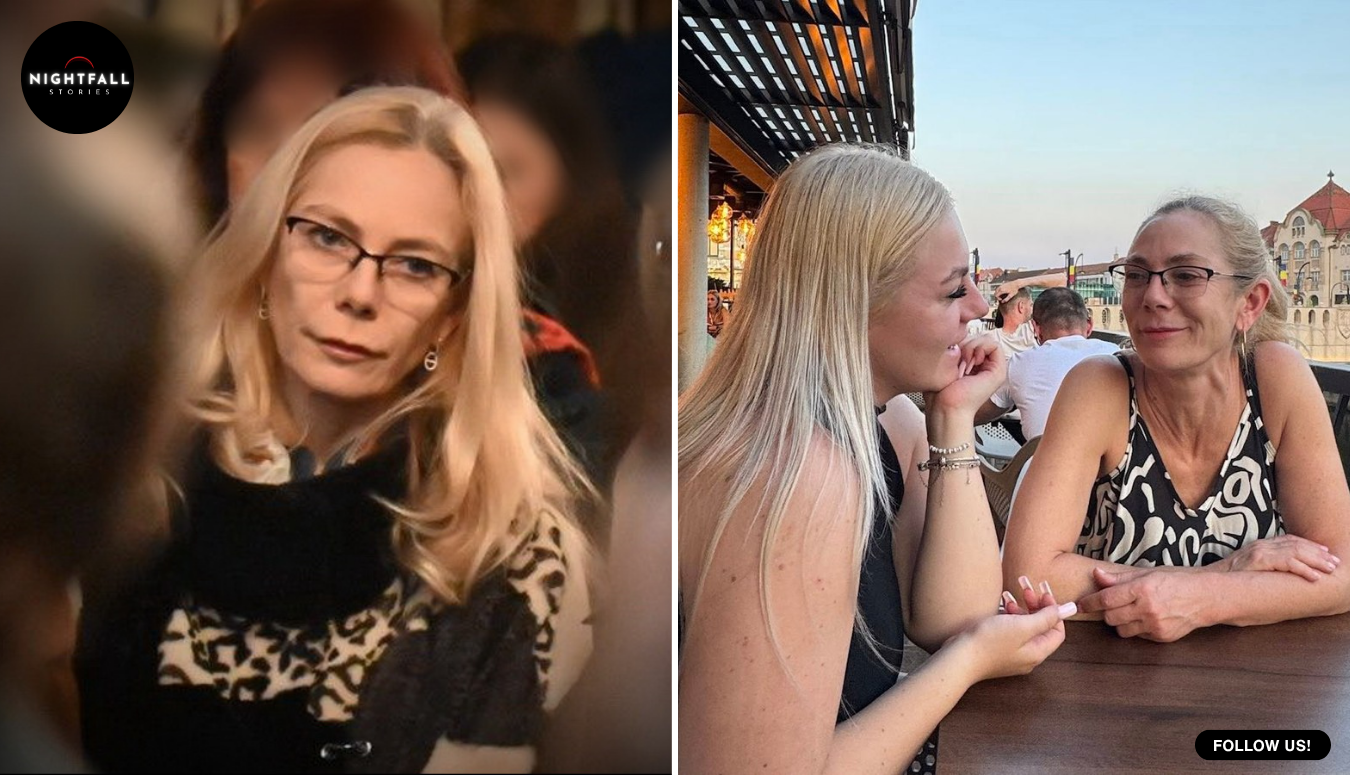
Daniela Jovrea was a consultant urologist at the Bihor County Emergency Clinical Hospital in Oradea, in the far north west of Romania, close enough to the Hungarian border that you can drive across it in half an hour. She was 53. She also kept a small private clinic across town where she saw patients on Tuesday afternoons. Then a cerebral aneurysm ruptured, her colleagues in the same building fought to keep her alive, and the thing they were eventually required to tell her family was that her brain had stopped.
The family in question was one person. Jovrea had one child, a daughter called Brigita Lovas, who was nineteen and a first year medical student. She had been enrolled for a matter of months. The first consent form of her medical life was the one authorising the removal of her mother’s organs, and she signed it.
What happened next is unusually well documented, because the Romanian press followed the organs rather than stopping at the funeral notice. A liver went to the Fundeni Clinical Institute in Bucharest and into a 43 year old woman who worked as a nursing assistant. She had terminal hepatopulmonary syndrome, had been on the waiting list for four years, and by the reporting of the national broadcaster Digi24 she was dependent on oxygen and down to her last hours. Two kidneys went to the Clinical Institute of Urology and Renal Transplantation in Cluj Napoca, to a recipient of 65 who had been on dialysis for three years, and to a recipient of 48 who had waited six years and had twice been called in only to be found incompatible. Two corneas went to the Institute of Ophthalmology in Bucharest. The liver operation was carried out by a team under Professor Vlad Brasoveanu, with Professor Dana Tomescu in intensive care. Brasoveanu described the transplant afterwards as the patient’s last chance, which in a case of terminal hepatopulmonary syndrome is a clinical statement rather than a flourish.
So a urologist in a county hospital in the north west of Romania, a woman most of the country had never heard of, ended up keeping a nursing assistant alive in a transplant institute six hundred kilometres away. That is the part of the story the Romanian papers landed on, and they were right to. One healthcare worker’s liver going into another healthcare worker is not a metaphor anybody had to reach for.
But the person actually making a decision here was the teenager.
This is worth being careful about, because it would be very easy to write a sentence that turns a nineteen year old signing her mother’s donation consent into something uplifting, and it is not. It is an administrative act performed in the worst week of someone’s life. What makes it a story rather than a notice is narrower and more specific than any of that, and it comes from Brigita herself. Speaking to Digi24, she said her mother had prepared her for this since she was small, telling her what she wanted if the moment ever arrived. She was not improvising. Her mother had made sure, years in advance, that the answer would already be settled before anybody was in a position to have to think about it.
That is a thing a doctor can do for her own family and almost nobody does. Transplant coordinators across Europe will tell you, repeatedly and wearily, that the single biggest determinant of whether a donation happens is not the donor’s registered wish or the hospital’s capability. It is whether the family has ever had the conversation. Doctor Guenadiy Vatachki, president of Romania’s National Transplant Agency, made exactly that point in the coverage of this case: what matters is families talking to each other about it before the question arrives, rather than being handed it cold at three in the morning in a corridor.
In Brigita’s case the conversation had been happening since childhood. Her mother had built the answer into her, deliberately, as a piece of parenting.
Her own published message about her mother is substantial and she wrote it herself, so it should be paraphrased rather than mined. The weight of it is that her mother’s whole working life had been spent doing good and saving lives, and that at the point of leaving she carried on doing precisely the same thing. Brigita wrote that she liked to believe her mother would go on looking after people. There is nothing to add to that, and anyone who adds to it is writing about themselves.
What can be said is what the record shows, and the record here has a gap in it that deserves to be stated rather than smoothed over.
The published chronology does not line up. The Oradea local paper eBihoreanul, which is the outlet closest to the family and the one that carried Brigita’s message, gives 14 April 2026 as the date tied to the ruptured aneurysm and the brain death declaration, and in the same piece says she died on the Friday morning, which was 1 May. Those two things cannot both be descriptions of the same event, because brain death is not a condition a person remains in for seventeen days before dying. One of those dates is almost certainly something else, most plausibly the day the aneurysm ruptured or the day she was admitted, and at least one downstream outlet frames 14 April as the date she was hospitalised, which would resolve it neatly. But that is an aggregator reading the same local report, not an independent confirmation, and guessing which of two published dates is the real one is how errors get laundered into permanence. So the honest version is this: the aneurysm and the hospital admission belong to the middle of April, the death and the recovery of the organs belong to the start of May, and the sources do not agree about which date attaches to the brain death declaration. If that gap matters to you, it matters because of what it implies about how long one teenager sat in a hospital in Oradea with a question she had already been taught the answer to.
The count is unsettled too. Digi24 says five patients received transplants, and its own organ by organ breakdown adds up to that: two kidneys, one liver, two corneas. One aggregator’s headline says four lives were saved. A television news site declined to give a number at all. The organ by organ list is the part every outlet agrees on, so that is the part worth printing, and the arithmetic can be left where it belongs, which is with the reader.
The detail in the Digi24 account that sticks is not the liver. It is the 48 year old waiting for a kidney. Six years on the list, and twice in those six years the phone rang, which means twice a family somewhere in Romania had said yes, twice the tissue matching was run, and twice the answer came back that this particular pair did not fit. A call like that is not a near miss. It is being told that the thing you have organised your life around has happened to somebody else. By Digi24’s account that patient was dialysing seven times a week by the end, which is not a maintenance schedule, it is a holding pattern.
The third time the phone rang, the organ was in Oradea and the match held.
It is worth saying plainly that none of the five operations was a close run thing in the logistical sense, because all of them happened. The reason transplant coordinators talk about a chain rather than a procedure is that each link has a different clock. A cornea can wait. A kidney has hours of slack. A liver has very little, and the liver in this case was going into a patient who, by the surgeon’s own description, had no slack at all. Getting all three categories out of one hospital in the north west and into the right theatre in two other cities required the recovery team, the agency, three receiving institutes, and transport, to be lined up before anybody knew whether the family would consent. That is the uncomfortable mechanic of the whole system. The preparation has to be complete before the question is asked, and most of the time the answer makes all of it unnecessary.
Underneath the family story there is a national one, and it is the reason a single consent in a county hospital is newsworthy in Romania in a way it would not be in Spain.
Romania has sat at or very near the bottom of the European table for deceased organ donation for years. The scale of it is easy to miss until the numbers are side by side. In early June 2025, the National Transplant Agency’s director put the country’s running total for the year at 42 deceased donors. A good year, by his account, looks like around a hundred. Spain, which is the system every other European country measures itself against, runs at better than forty deceased donors per million population, and in recent years has gone above fifty. Romania’s equivalent figure is a small fraction of that.
Meanwhile the waiting lists are not small. The same agency figures put more than four thousand people waiting for a kidney, several hundred waiting for a liver, a couple of hundred waiting for a cornea, and a handful waiting for lungs, which is the shortest list only because almost nobody gets that far.
Run those two sets of numbers against each other and the arithmetic of this one case becomes uncomfortable. If a strong year for the whole country is somewhere near a hundred deceased donors, then one family in Oradea saying yes is roughly one per cent of a national annual total. A single conversation between a mother and a small child, held years before it was needed, moved the national figure by a measurable amount. That is not a sentimental claim. It is just what happens when the denominator is that low.
The other thing the case demonstrates is that the machinery works when it is given something to work with. A donor in Oradea is about as awkward a starting point as Romania offers. The city is in the far north west corner of the country. Cluj Napoca, where the kidneys went, is a three hour drive east through the Apuseni mountains. Bucharest, where the liver and the corneas went, is the better part of a day away by road, and a liver does not have the better part of a day. Three separate institutes in two separate cities had to be matched, staffed, and standing ready, and the organs had to be moved inside the window in which they are still worth transplanting. Doctor Carmen Pantis, the national transplant programme coordinator for Bihor county, runs that end of it from Oradea. The recovery happened and every organ reached a recipient, which means the limiting factor in Romania is not logistics and not surgical capability. It is consent.
There is one more line in the local coverage that is easy to read past. The Bihor medical community was described as being in mourning again. Colleagues named two other doctors from the same hospital who had died not long before. Jovrea was the third loss in a short run for a single county hospital’s medical staff, which is the sort of detail that explains why the tributes from her colleagues were as heavy as they were. Former patients wrote too. The words that recur in what they posted are calm, patient, and unhurried, which is a specific kind of compliment to pay a surgeon.
What the clinic listing for her private practice shows is mundane and somehow more informative than any of the tributes. Tuesdays, three until five. Every other day closed, because every other day she was at the county hospital. That was the shape of her week.
None of this was framed in Romania as a story about a brave teenager, and it should not be framed that way here either. Brigita Lovas did not do something remarkable under pressure. She did something her mother had spent years making sure she would not have to decide under pressure, which is a different and much more replicable thing. The replicable part is the conversation, not the courage. That is also precisely what the transplant agency’s president was asking families to take from it.
She is now continuing a medical degree, in a country whose transplant programme her mother just contributed about one per cent of a year to, having signed the form herself. She has not said anything publicly about what she wants to specialise in, and it would be an invention to guess.
The nursing assistant in Bucharest was 43 and on oxygen and had been waiting four years. She has a liver now. Somewhere in Cluj Napoca a 65 year old is off dialysis after three years of it, and a 48 year old is off it after six years and two false alarms. Two people in Bucharest can see. Every one of them is a stranger to the family in Oradea and will stay one, because that is how the system is built, and none of them will ever be able to say thank you to the person who actually decided it.
She was nineteen. Her mother had told her what to say.