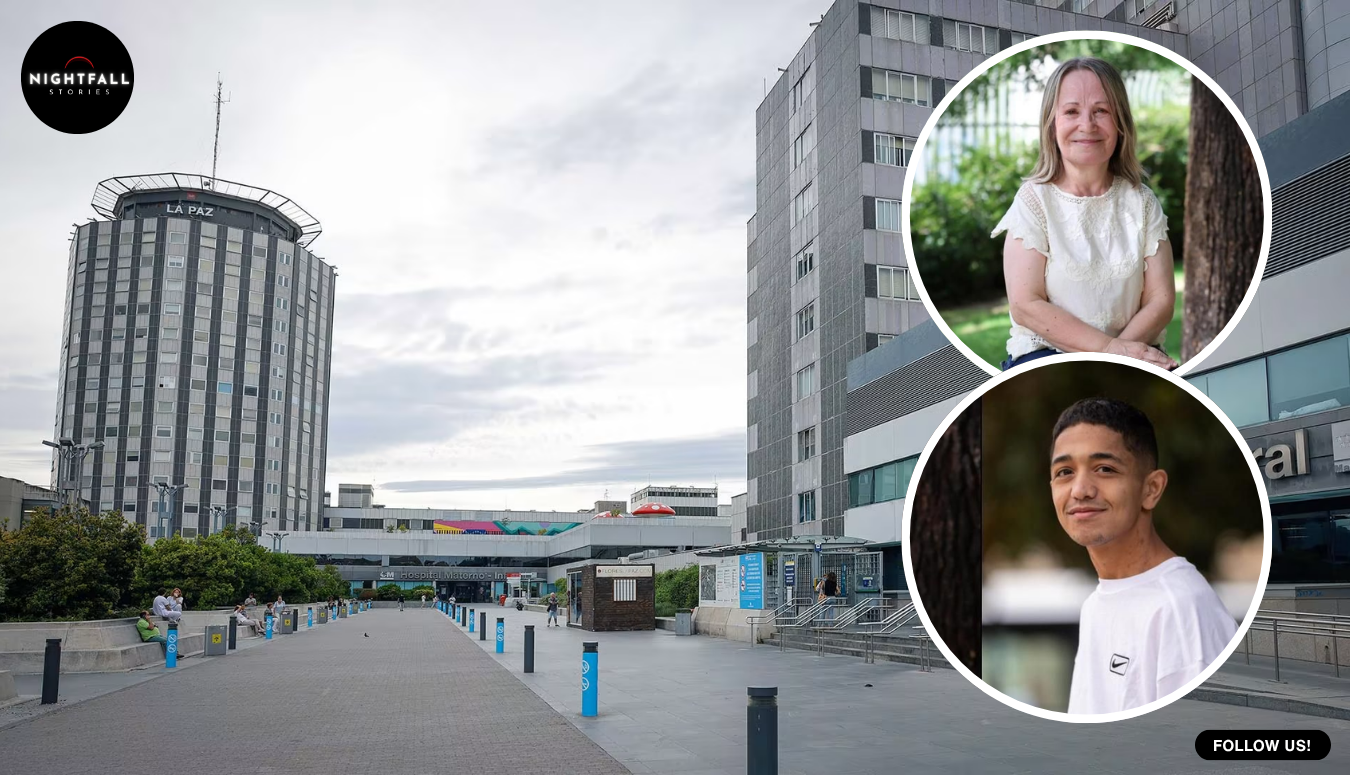
Nora is 55 and lives in Madrid, and for roughly two decades her body destroyed every kidney anyone gave her. Three transplants from deceased donors, three failures. By the time the fourth was being considered, her immune system had been sensitised to the point where a laboratory panel showed she would react against about 89 percent of the population. In transplant terms that is close to unmatchable. She was the patient surgeons look at and talk quietly about whether another attempt is justified at all.
Her brother offered her a kidney. That part is not unusual; a living sibling donor is the best news a patient in her position can get. What was unusual is what else came out of her brother in the same operation, and what happened to it in a laboratory before it went into her.
Alongside the kidney, the team at Hospital Universitario La Paz in Madrid harvested blood-forming stem cells from the same donor. Those cells were then filtered, not transplanted raw. The specific thing taken out of them was a population of immune cells called naive T cells, the ones that have never yet met anything and are therefore the ones most likely to launch an attack on unfamiliar tissue. What was left behind, the stem cells themselves and the memory cells that carry a lifetime of learned defences against infection, was infused into Nora over the weeks and months that followed.
The intention was not to suppress her immune system. It was to teach it. Five years on, the kidney is working, there has been no rejection, and Nora takes a fraction of the medication she would otherwise be on for the rest of her life.
That last sentence is the one that needs saying carefully, because it has been reported in places as something stronger than it is. Nora is not off her drugs. Neither is the other patient in this case. The paper the La Paz team published in late September says so in its own title: the aim described is to minimise immunosuppression after a solid organ transplant, not to abolish it. Nora has come down from the standard combination of roughly three immunosuppressant drugs to about one. Her doctors, by the account of the Spanish news agency that covered the publication, are reluctant to take away the last of it, because five years of good behaviour is five years and not thirty. If you have read a headline saying two Madrid patients have lived for years with no anti-rejection medication at all, that headline overshot.
What is actually remarkable is less tidy and more interesting, and to see why it matters you have to understand what the alternative looks like from inside.
A transplant is not an ending. It is a trade. The organ that saves your life is, to your immune system, foreign tissue that has no business being there, and the only way to stop your body from dismantling it is to spend the rest of your life taking drugs that hold your immune system down. Those drugs work. They are also, in the plainest possible terms, a long-term cost you agree to pay. A suppressed immune system is worse at fighting infections, which turns ordinary illnesses into hospital admissions. It is also worse at finding and killing early cancers, which is why transplant recipients carry a measurably raised lifetime cancer risk. Some of the most widely used anti-rejection drugs are themselves toxic to kidneys, which produces the particular cruelty of a kidney recipient whose medication is slowly damaging the organ it is protecting.
Day to day it is less dramatic than that sounds and more relentless. The medication is taken on a schedule rather than when convenient, because blood levels matter and a late dose is not a neutral event. Blood tests are a permanent fixture of the calendar. A chest infection that a colleague shrugs off becomes a reason to call the transplant unit. People avoid crowds in winter, think about food preparation in a way most of us never have to, and get sun damage and skin checks taken seriously because the cancer risk is not theoretical. None of this is suffering, exactly. It is a life shaped at the edges by a prescription, and it does not end.
So the patient takes the pills every day, on time, forever, because missing them risks the organ, and the pills are quietly taxing the rest of the body. Transplant medicine has known this for fifty years. The thing it has wanted for fifty years is a way to make the body accept the organ on its own, so the drugs are not needed. Within the field that goal has a nickname, and it is not a modest one. People call it the holy grail.
The man who has spent much of his career chasing it at La Paz is Antonio Pérez Martínez, who heads the paediatric haemato-oncology service at the hospital. He co-leads the project behind this work, called OneTrasplant4Life, with the surgeon Francisco Hernández-Oliveros. Pérez Martínez’s route into the problem came from both directions. Professionally he had spent years doing bone marrow transplants in children, which is to say years of working on the immune system itself rather than on the organ. Personally, by his own account in Spanish reporting, his father died of a second cancer caused by the chronic immunosuppression he was on after a liver transplant. That is the cost of the trade, in one family.
The biological idea underneath the technique is old and slightly absurd, which is part of its charm. Decades ago, researchers noticed that cattle twins which had shared a blood supply in the womb would afterwards accept skin grafts from each other. Each calf had been exposed to its sibling’s cells early enough that its immune system had filed them as self rather than as intruder. The lesson was that tolerance is not a fixed inheritance. It is something an immune system learns, and in principle it can be taught later.
Turning that into a transplant protocol took the rest of the twentieth century and work by researchers including Megan Sykes and Sam Strober, who showed in animals and then in kidney recipients that you could establish what is called mixed chimerism, a state in which donor and recipient immune cells coexist in one body, and that tolerance could follow. The problem has always been that getting there safely is hard. Push donor marrow cells into a recipient and you risk the reverse of rejection, graft-versus-host disease, in which the donor’s immune cells attack the patient. That can be worse than the thing you were trying to avoid.
The La Paz contribution is specific and narrow, and that is why it is credible. Rather than infusing whole donor marrow, they strip out the naive T cells and keep the rest. The reasoning is that naive T cells are the aggressors in graft-versus-host disease, while memory T cells carry the recipient’s practical protection against viruses and bacteria and are less inclined to start a war. By their account, the chimerism this produces is temporary, on the order of two hundred days, which is apparently long enough for the immune system to reset its idea of what belongs. Pérez Martínez has described the donor cells as an immunological passport travelling with the organ.
Nora’s five years are one half of the published evidence. The other half is a young man the Spanish press has called Yassine, who is now 21.
His case is the harder one and it came first. He had a condition affecting the lining of his intestine that left him unable to absorb nutrition, and by his mid-teens he had already been through two multivisceral transplants, both of which failed. A multivisceral transplant is about as large an operation as transplant surgery performs: in his case the organs replaced included stomach, intestine, pancreas, liver and kidney. A third attempt at 15, after two rejections, is the kind of decision made because the alternative is worse.
That third transplant, in 2020, was paired with the same naive-T-cell-depleted stem cell infusion from the same donor. More than five years later his transplant is functioning, he has had no rejection, and according to the Spanish reporting he developed neither graft-versus-host disease nor the viral reactivations that are a constant hazard in heavily immunosuppressed patients. He is on a minimal dose of a single drug. He has spent the years from 15 to 21 doing the ordinary things that a boy on his third multivisceral transplant was not expected to get to do.
It would be easy to write this story around him, and most coverage has. A teenager, five organs, a world first, a happy ending. But Nora is the more informative patient, and the reason is slightly deflating and extremely important. Immune systems get less flexible with age. A tolerance-induction technique that works in a 15-year-old might work precisely because the patient is 15, and would then be a paediatric curiosity. Nora was 49 when she received her kidney and is 55 now. Her immune system was not young, and it was aggressively sensitised by twenty years of rejecting other people’s kidneys. If the approach can get a result in her, it is not simply exploiting the plasticity of a child.
Now the limits, which the authors themselves are clear about and which are the actual spine of this story rather than a disclaimer at the end of it.
This is a case report. Two patients. It is not a trial, it has no control group, and a case report’s job is to say here is something that happened and deserves testing, not here is a treatment. The published paper is the reason any of this is sayable, and it is also the reason nobody should oversell it.
The logistics are genuinely constraining. The stem cells have to come from the same donor as the organ, which means harvesting marrow or blood stem cells from that donor as part of the procurement, and then processing them in a specialised cell therapy laboratory. With a living relative, as in Nora’s case, that is awkward but arrangeable. The team has reported doing it with a deceased donor too, which is a bigger logistical feat and matters enormously for scale, because most organs come from deceased donors and most hospitals do not have a cell therapy facility on standby at three in the morning.
And the drugs have not actually been withdrawn. Both patients remain on reduced regimens. The published work describes minimising immunosuppression, and the next phase of the research is the one designed to test whether it can be stopped. A phase I trial is now under way at La Paz, registered as NCT06997471, split between living and deceased donor recipients, with the enrolment target reported variously as ten and as fourteen patients in different accounts. A phase I trial asks whether something is safe and feasible. It does not ask whether it works better than the current standard. That question is at least one study further down the road.
It is also worth being clear about why a two-patient report gets published in a journal at all, since that can look like thin gruel next to a trial. Case reports exist to put an observation on the permanent record in a form other researchers can scrutinise and attempt to repeat. The value is not statistical. It is that the method is now written down, the follow-up duration is stated, and anyone who thinks the result is explained by something other than the technique can go and argue with the published detail. That is a meaningful step up from a hospital press announcement, which is how a great deal of medical news reaches the public and then evaporates.
Spain is a reasonable place for this to be happening. It has run the highest deceased-donor transplant rate in the world for years, which means a large, well-organised system with a national coordinating body, and the director of that body, Beatriz Domínguez-Gil, has given the work a careful endorsement: if it is verified, she has said, it could radically change the lives of transplant patients. If is doing a lot of work in that sentence, and she chose to include it.
There is one group for whom even a partial result like this is not incremental. A child who receives a kidney at eight years old is not expected to keep it for sixty years. They are likely to need another, and then possibly another, and each cycle of rejection makes the next transplant harder to match, exactly as it did for Nora over her twenty years. Every one of those decades is also a decade of immunosuppression, with the infection risk and the cancer risk compounding across a whole life rather than a late stretch of one. Reducing the drug burden in a patient who is going to be a transplant patient for seventy years is a different proposition from reducing it in someone who received an organ at 60.
Which leaves the thing this comes down to, and it is a gap rather than a triumph. On one side there are two people in Madrid who are alive, whose transplanted organs are working, and who are taking considerably fewer drugs than the rule of transplant medicine says they should have to. One of them is a young man who got his adolescence. The other is a woman in her fifties whose body had refused three kidneys before this one. On the other side there is a published case report, a phase I trial that has barely started, a technique that needs a cell therapy laboratory and the right donor, and a team of doctors who will not yet take away the last tablet.
Both of those things are true at once, and the honest version of this story is the distance between them. Nora’s kidney has lasted five years, which is longer than any of the three before it. What nobody can tell her, and what her doctors are too careful to pretend, is whether it will last the next thirty.